Emergency & Urgent Care
Common Household Poisons for Pets in the UAE
Your home contains more dangers than you think. A room-by-room guide to the most common pet toxins in UAE households.
If your pet is in distress right now, stop reading and call a vet. This article helps you recognise an emergency and act while you get help. It does not replace hands-on veterinary care.
Every year, thousands of pets across the UAE are treated for accidental poisoning. The most heartbreaking part: nearly every case is preventable. The toxins are in your kitchen, your bathroom, your garden, and sometimes in the communal areas of your building. Knowing what they are is the first step.
Chocolate is the most commonly reported canine toxin worldwide, and the UAE is no exception. The toxic compound is theobromine, which dogs metabolise far more slowly than humans. Dark chocolate and baking chocolate are the most dangerous. A 10kg dog eating 50g of dark chocolate can experience vomiting, rapid heart rate, seizures, and potentially death. Milk chocolate is less concentrated but still dangerous in quantity. White chocolate contains negligible theobromine.
Grapes and raisins cause acute kidney failure in dogs. The toxic mechanism is still not fully understood, and there is no safe dose. Some dogs eat grapes without apparent effect; others develop fatal kidney failure from a small handful. Because the response is unpredictable, all grape and raisin ingestion should be treated as a potential emergency.
Xylitol is a sugar substitute found in sugar-free gum, mints, some peanut butters, toothpaste, and baked goods. In dogs, xylitol causes a rapid release of insulin, leading to dangerous hypoglycaemia (low blood sugar) within 10 to 60 minutes. Higher doses can cause liver failure. A single piece of sugar-free gum can be life-threatening for a small dog. Check labels carefully, particularly on products imported from the US where xylitol use is widespread.
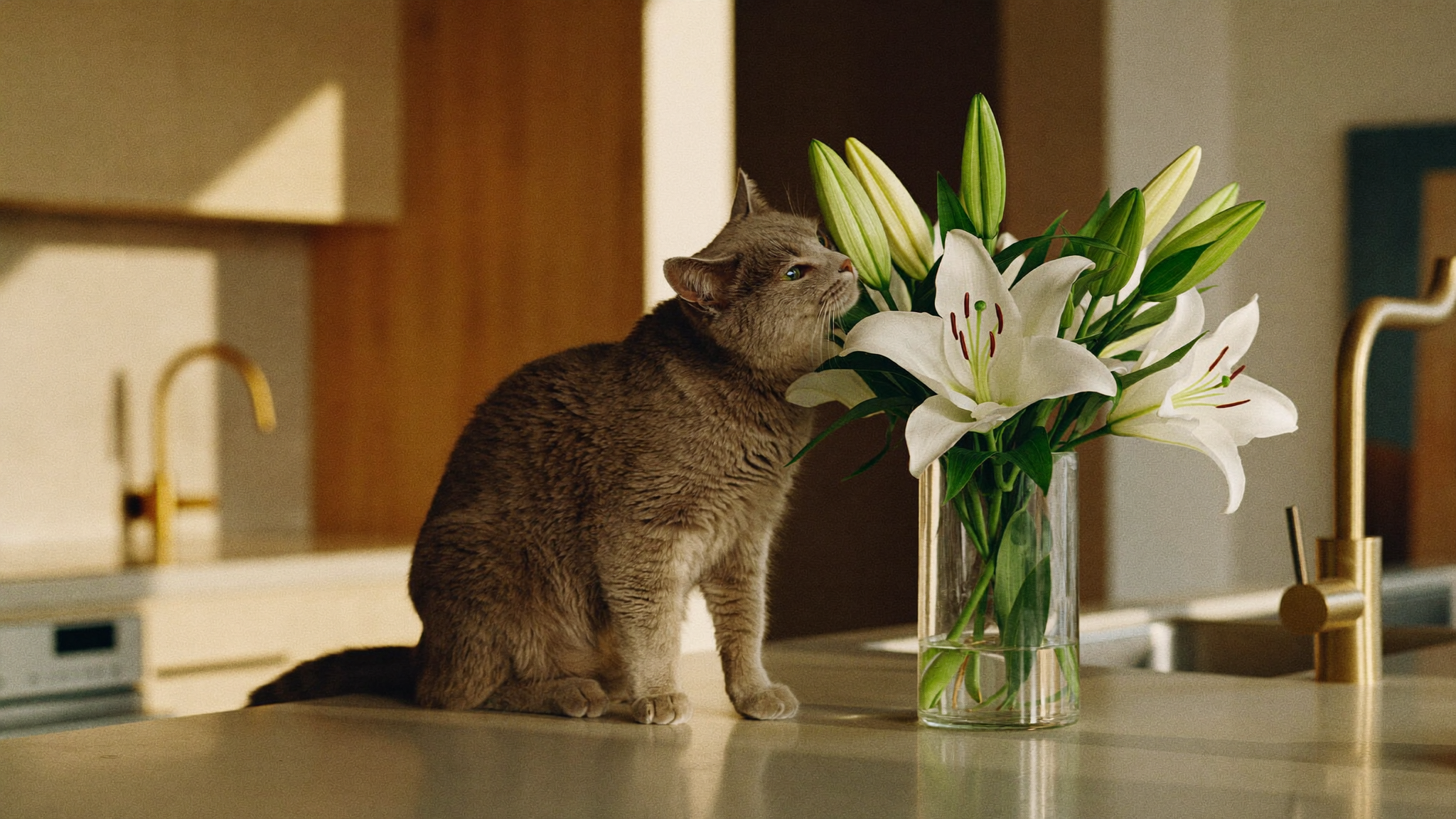
Lilies are catastrophically toxic to cats. All parts of true lilies (Easter lily, Tiger lily, Asiatic lily, Daylily) are poisonous. Even small exposures, including pollen on fur that is groomed off, or water from a vase containing lilies, can cause fatal kidney failure within 24 to 72 hours. If you have cats, do not have lilies in your home. Full stop.
Onions and garlic are toxic to both dogs and cats, damaging red blood cells and causing anaemia. The effect is cumulative, meaning small amounts over time are as dangerous as a large single dose. Cooked, raw, powdered, or dehydrated forms are all toxic. Many pre-prepared foods, sauces, and baby foods contain onion or garlic powder.
Rat poison (rodenticide) is placed in communal areas of many UAE apartment buildings and villa compounds, often without adequate signage. Anticoagulant rodenticides cause internal bleeding that may not become apparent for several days. If you suspect your pet has ingested rat poison, treatment is most effective when started early, before symptoms appear. Bring the packaging if possible, as different formulations require different treatments.
Antifreeze (ethylene glycol) has a sweet taste that attracts animals. It is found in car radiators, some windshield washer fluids, and can pool in car parks and garages. Even a small amount can cause fatal kidney failure. Symptoms appear in stages: initial apparent drunkenness, then apparent recovery, then rapid kidney failure 24 to 72 hours later. Early treatment is critical.
Medications top the list of accidental pet poisonings. Paracetamol (acetaminophen) is extremely toxic to cats and can damage a dog's liver. Ibuprofen causes kidney failure and stomach ulcers in both species. Antidepressants, ADHD medications, and heart medications are frequently ingested by curious pets. Keep all medications in closed cabinets, never on countertops or bedside tables.
Cleaning products, insecticides, and garden chemicals round out the household dangers. Store all chemicals out of reach. Be cautious with floor cleaners, as pets walk on treated surfaces and then groom their paws. If your pest control company treats your home, ask about pet-safe products and keep animals away from treated areas for the recommended period.
If you suspect poisoning, do not try to induce vomiting unless specifically instructed by a vet. Some substances cause more damage coming back up. Note what was ingested, how much, and when. Bring the packaging. Call your emergency vet immediately. Time is the most important factor in poisoning outcomes.
If your pet is in distress right now, stop reading and call a vet. This article helps you recognise an emergency and act while you get help. It does not replace hands-on veterinary care.
Keep Reading
Heatstroke in Dogs: A Dubai Pet Parent's Guide
Dubai summers are dangerous for dogs. Heatstroke kills faster than most owners realise. This guide covers prevention, recognition, and what to do.
Emergency & Urgent CareSigns Your Pet Needs Emergency Care Immediately
Some symptoms can wait until morning. These cannot. A species-by-species guide to recognising a true pet emergency.
Emergency & Urgent CareEmergency Vet Care in Dubai: What Every Pet Parent Needs to Know
A comprehensive guide to emergency veterinary care in Dubai. Know the signs, know what to do, and know where to go when your pet needs urgent help.
Care that thinks years ahead, not just weeks.
Paws & Co is a subscription-first veterinary brand opening in Dubai. Join the waitlist and be first through the door.