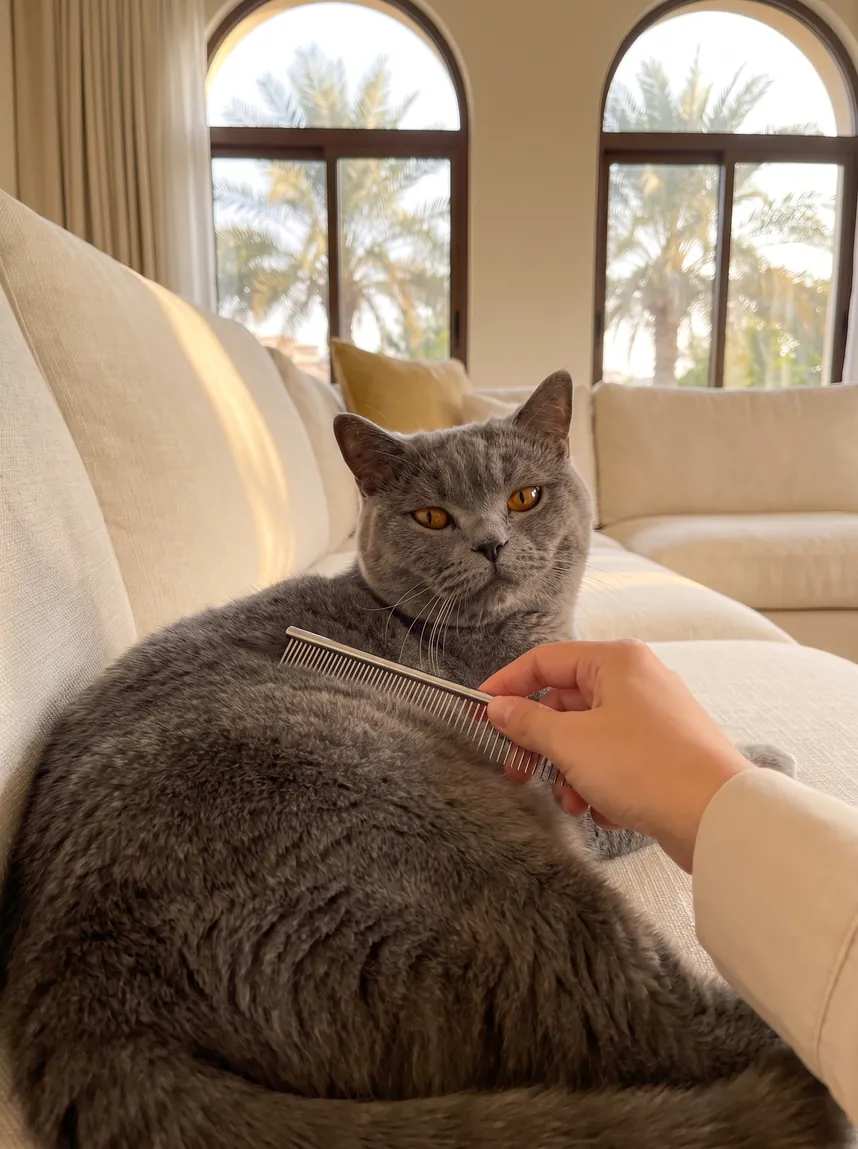
Short-haired cats
British Shorthairs, Abyssinians and most domestic shorthairs
A brush once a week cuts down on hairballs and lets you check the skin. Most rarely need a professional groom, though a deshed helps in the heavy shedding months.
We will be in touch soon to confirm.
Our Services
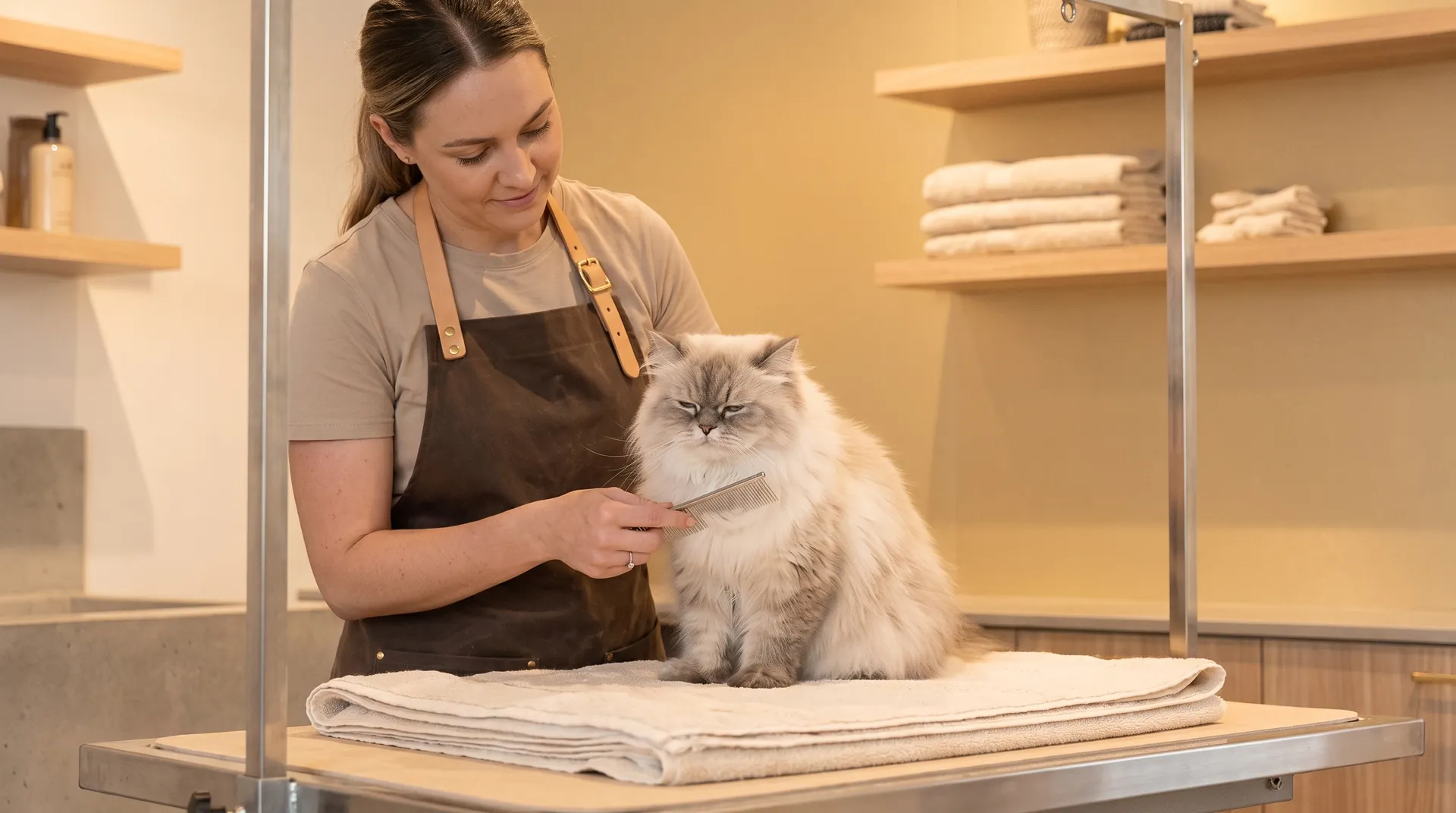
She treats the brush like a declaration of war.I found a groomer who negotiates.
We will be in touch soon to confirm.
Home / Our Services / Pet grooming / Cat grooming
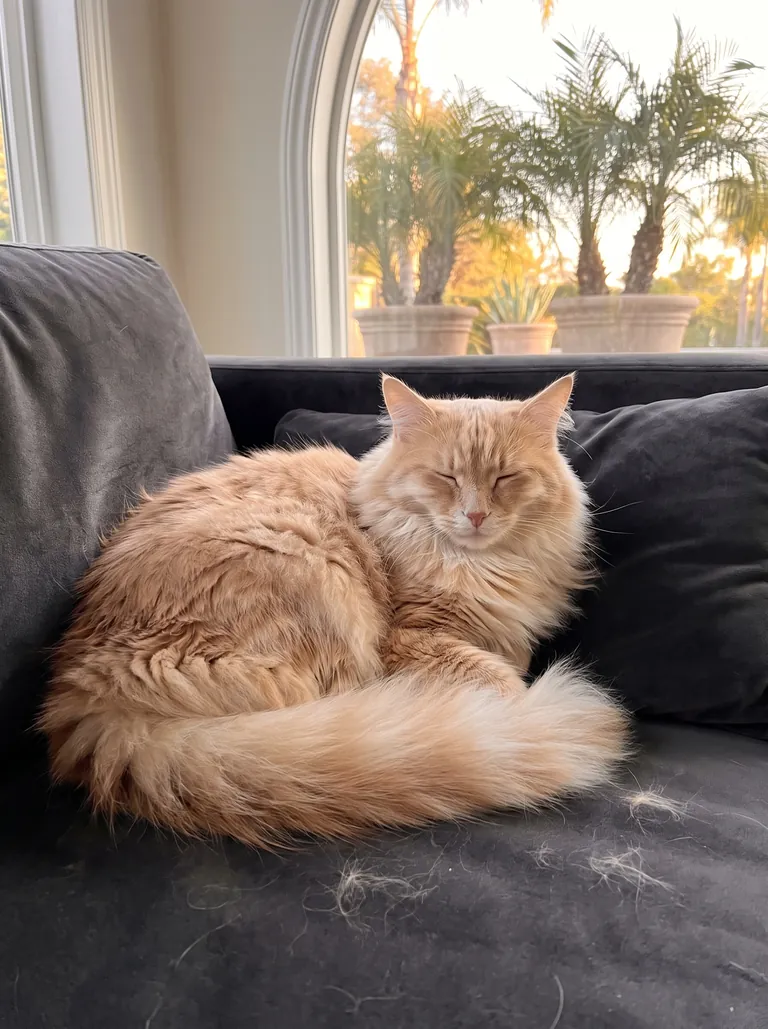
Cats are famously good at grooming themselves, until they can't.
Long coats outgrow what a tongue can manage, and older, arthritic or overweight cats stop reaching their backs and back ends. That is usually where the first mats appear.
Mats pull on a cat's thin skin and trap moisture against it. A groomer also sees the skin, ears and claws up close, and can spot fleas or a lump early.
Cat grooming will be available at our Motor City clinic, and depending on the coat and on what your cat will take, a grooming visit includes:
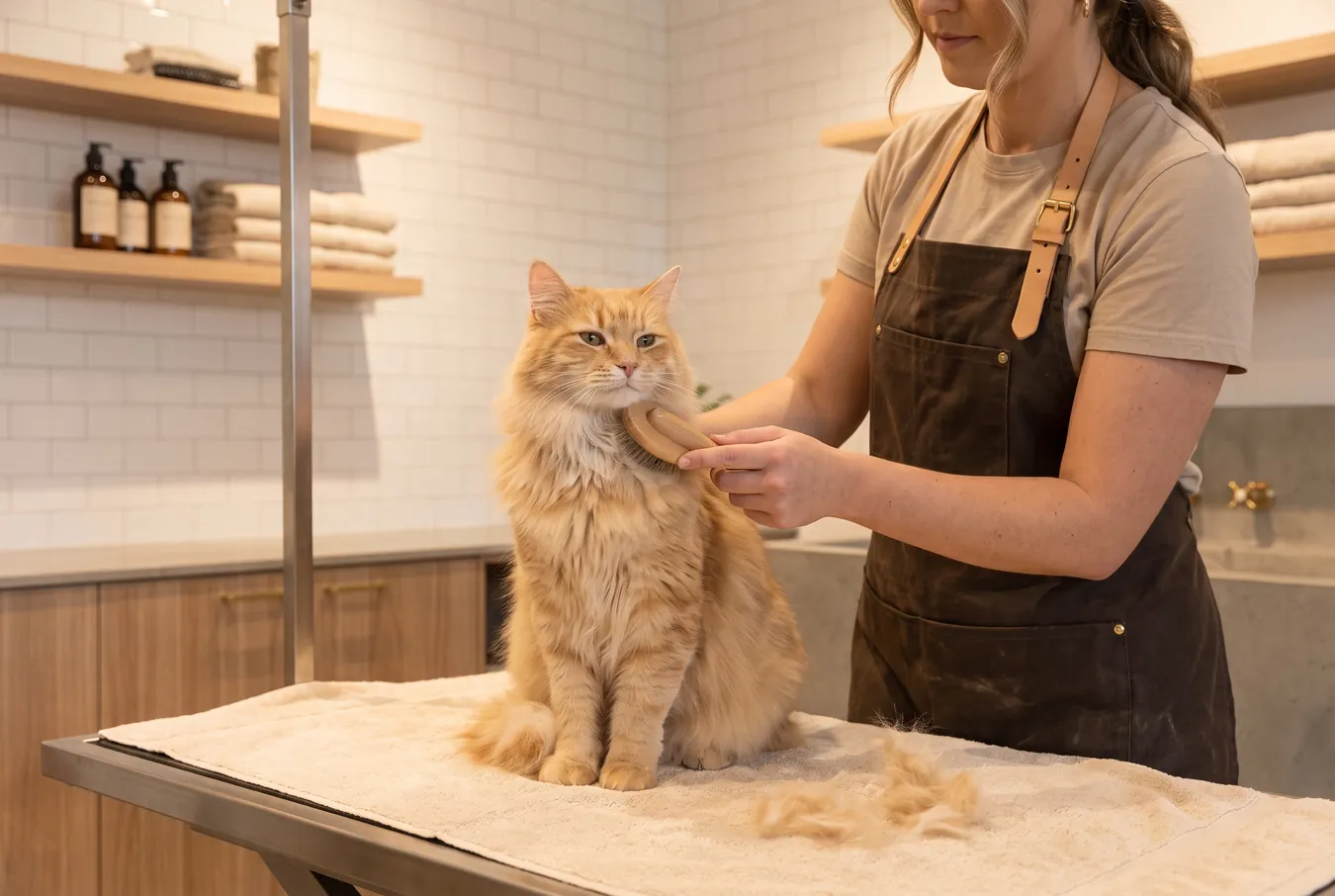
Every coat needs its own routine. Find your cat's below, or look up their breed guide.
Short-haired cats
A brush once a week cuts down on hairballs and lets you check the skin. Most rarely need a professional groom, though a deshed helps in the heavy shedding months.
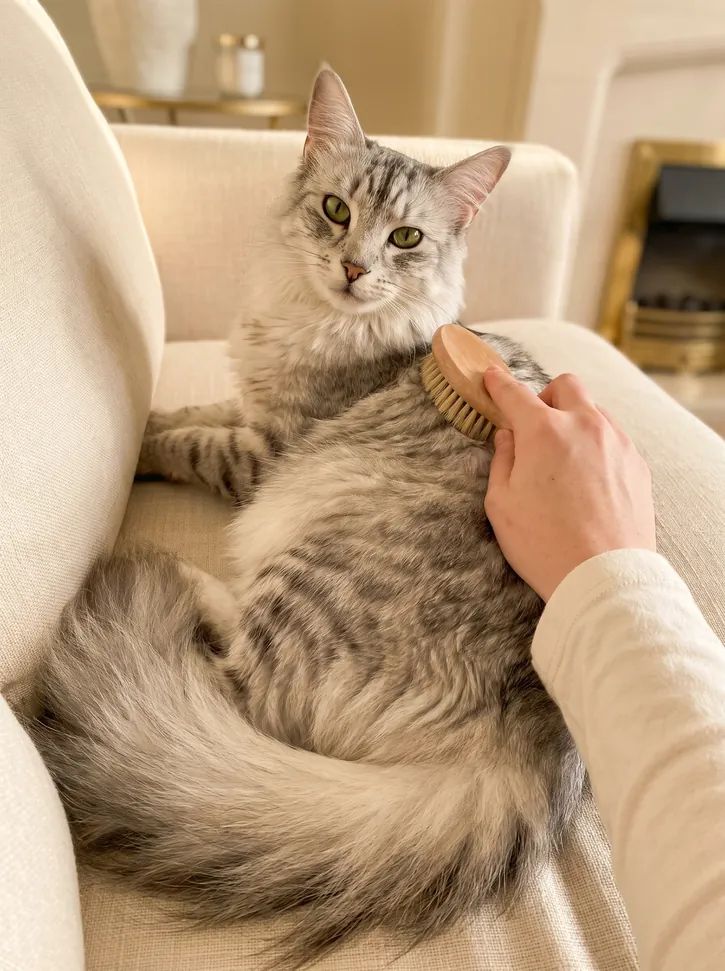
Semi-long coats
Brush two to three times a week, paying attention behind the ears, under the legs and the tummy, where mats start. A professional groom every eight to twelve weeks keeps on top of it.
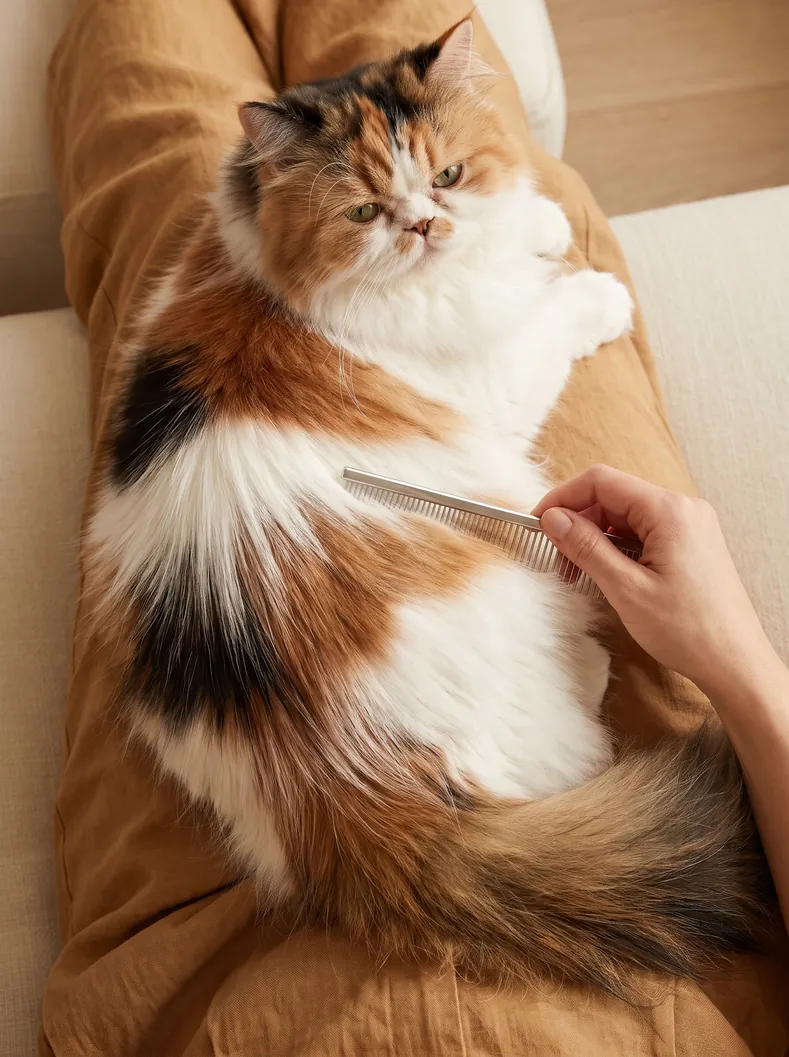
Long-haired cats
Brush every day at home to stop matting, with a professional groom every four to eight weeks and a hygiene trim so the back end stays clean.
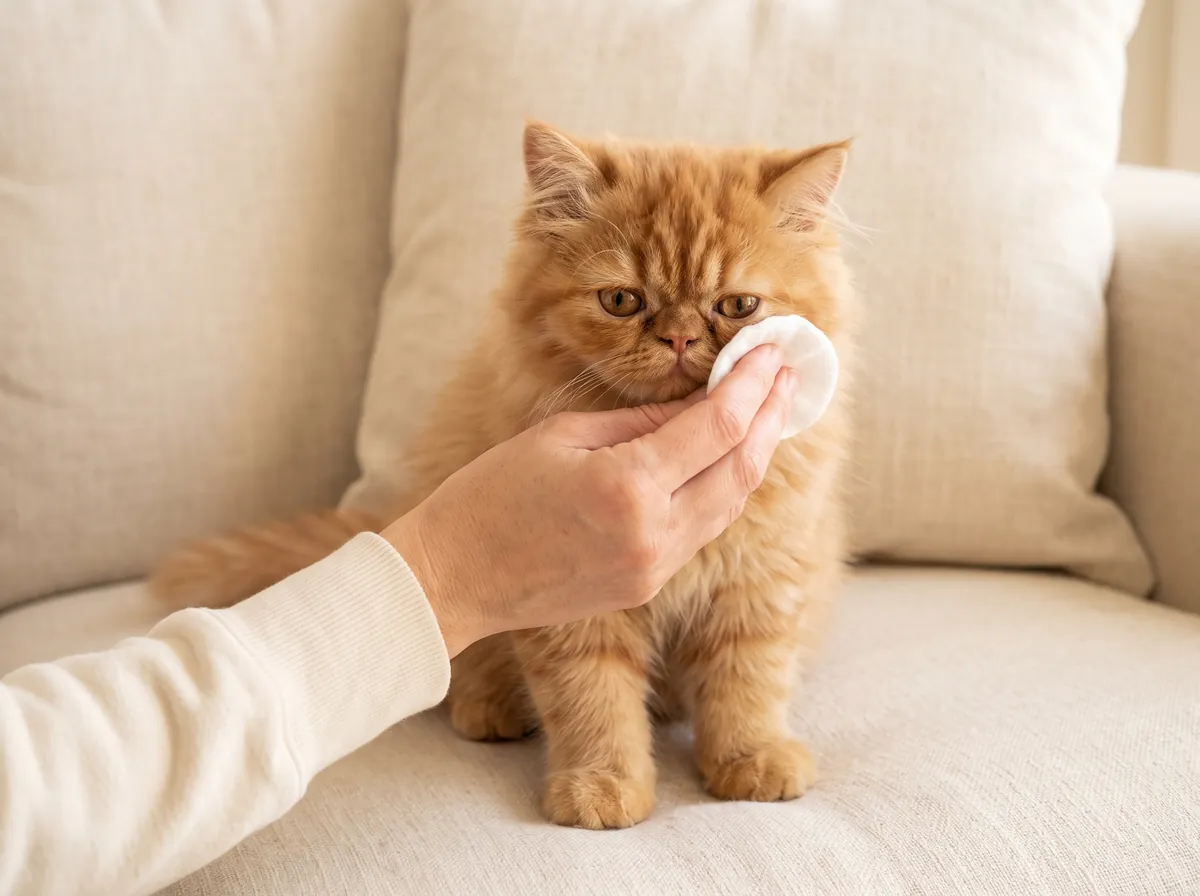
Flat-faced breeds
Their eyes tend to water and stain the fur. Wipe gently around the eyes every day with a soft, damp cloth, and keep the skin folds on the face clean and dry.
Hairless cats
No coat to brush, but their skin makes oil that a coat would normally soak up, so they usually need a gentle bath every week or two, and their ears cleaned often. Ask our vets how often is right for your cat.
Older cats
A gentle brush more often, and shorter professional grooms, keep them comfortable.
Where the cat will take it
If your cat has had enough, the groomer stops, and the groom can carry on another day. If a coat needs a clinical plan rather than a grooming table, we say so.
Sedation, only if needed
If a cat ever needs sedation, we will recommend a blood test first, to check they are healthy enough for it. One of our vets confirms, authorises and gives it, and one of our nurses monitors your cat. How sedation works at Paws & Co
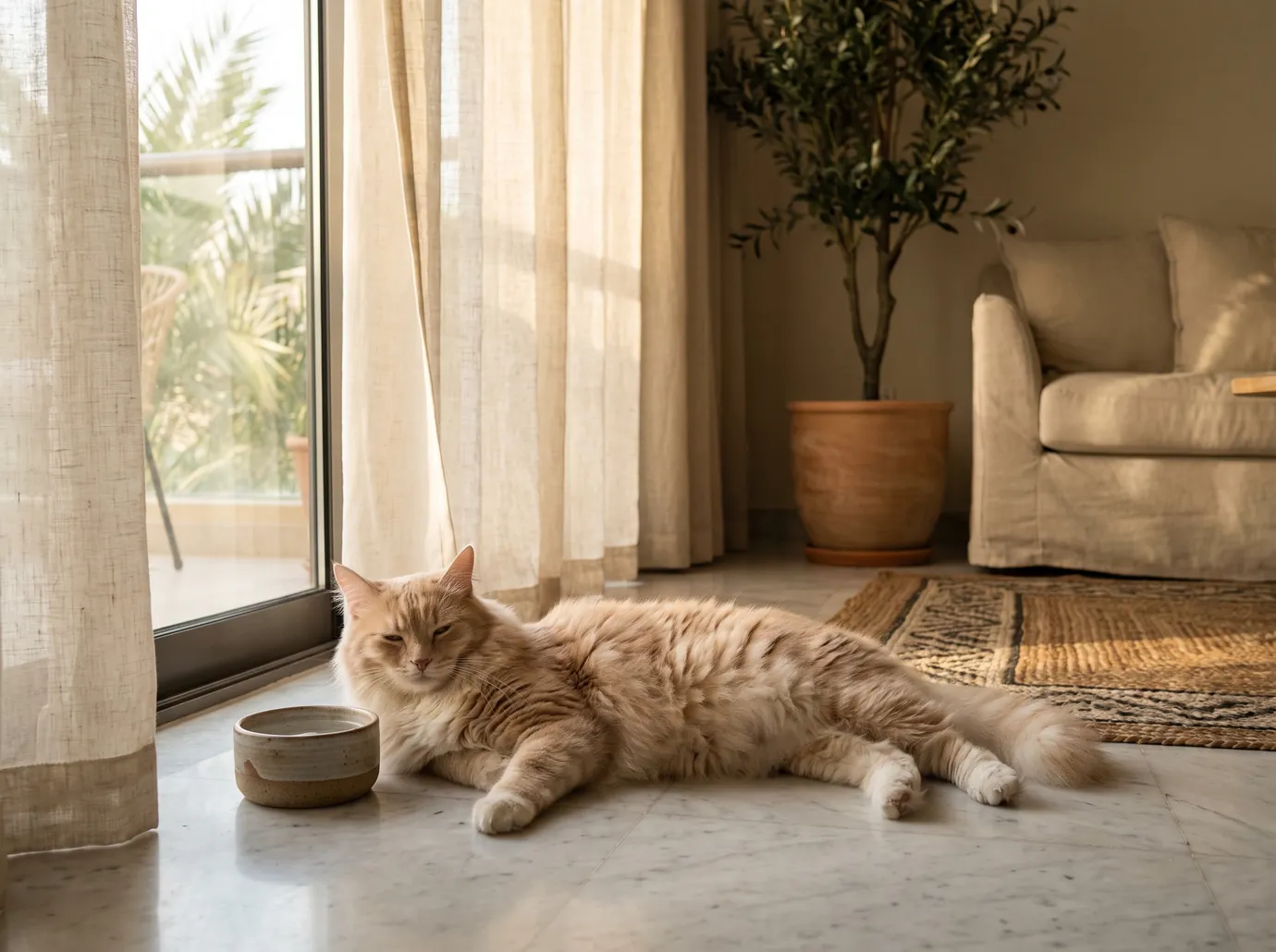
Most cats here live indoors, but the heat and the air conditioning still reach the coat.
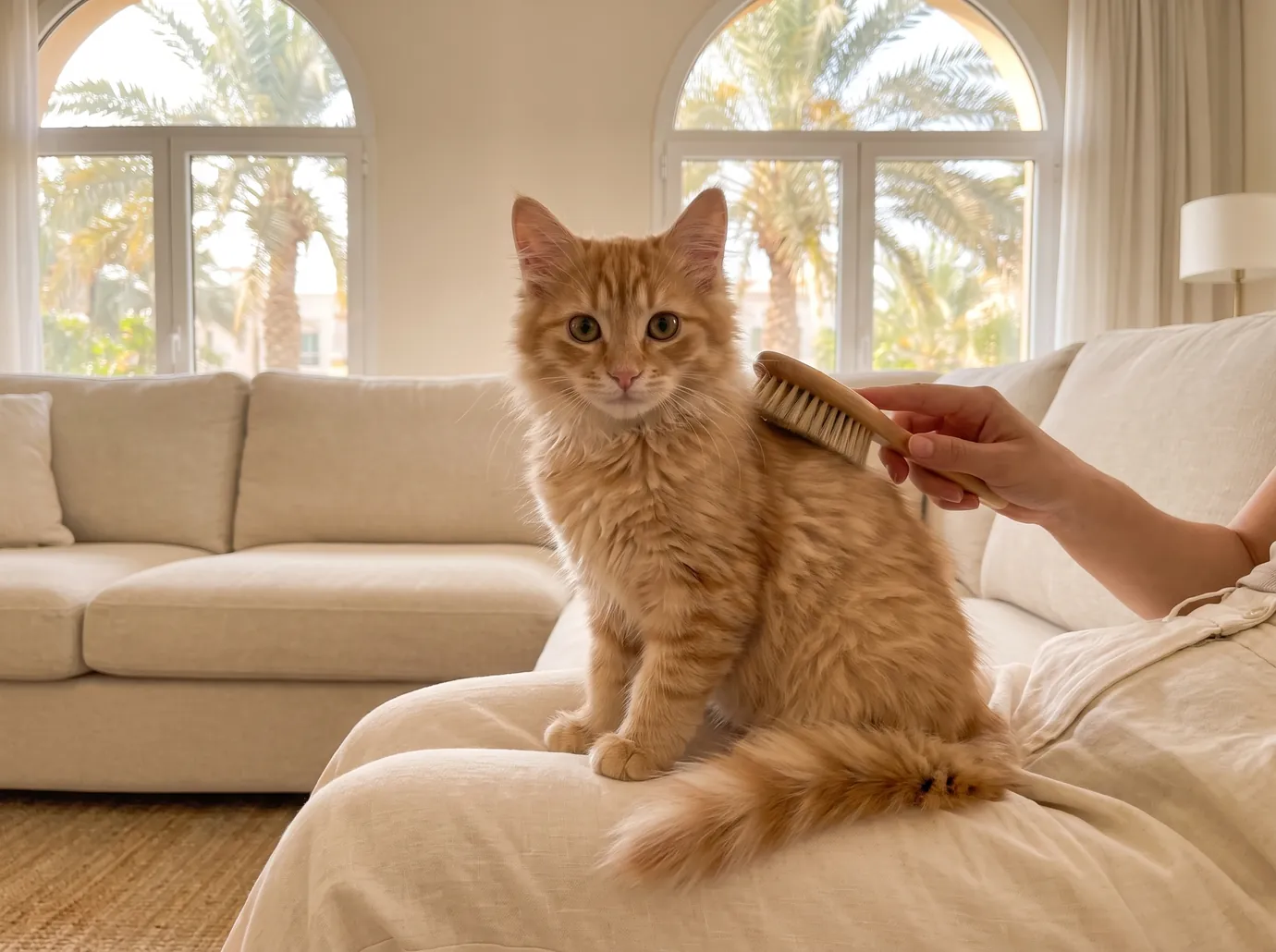
Kittens
Start at home, early. Short, gentle brushing and handling their paws, ears and mouth from the first weeks teaches a kitten that grooming is nothing to fear. A first professional groom can be short and simple, once their kitten vaccinations are done.
On the day
Bring your cat in a secure carrier, and tell us about anything that's changed since their last visit: a lump, a sore spot, a change in appetite. What the groomer finds goes on your cat's record, so your vet sees it too.
It depends on your cat's coat and what the groom needs. We agree the groom and the price with you before we start, and members pay member prices.
It depends on the coat. Long-haired cats every four to eight weeks, semi-long coats every eight to twelve weeks, and most short-haired cats only now and then.
Most cats do not need a bath unless there is a medical reason. Hairless cats, like the Sphynx, are the exception and need a gentle bath every week or two.
Yes. Even short-haired cats benefit from a regular brush, which cuts down on hairballs and lets you check their skin. Long-haired cats need brushing every day to stop matting.
It depends on the cat. Some cats, especially long-haired or matted ones, are more comfortable with a shorter coat in the hot months. How short depends on your cat's coat and skin, so ask our groomer or vet rather than clipping at home. Regular brushing helps keep any cat cooler.
Don't try it at home. Mats sit tight against a cat's thin skin, and it is easy to cut the skin by mistake. A professional groomer decides whether to brush out or clip out.
We go at the cat's pace, one pet at a time. If a cat has had enough, our groomer shortens the groom, splits it across two visits or stops, and we back that call.
At Paws & Co, a cat is sedated for grooming only if it is necessary. One of our vets confirms, authorises and gives it, and one of our nurses monitors your cat.
This page is general advice. It cannot replace a vet seeing your pet.