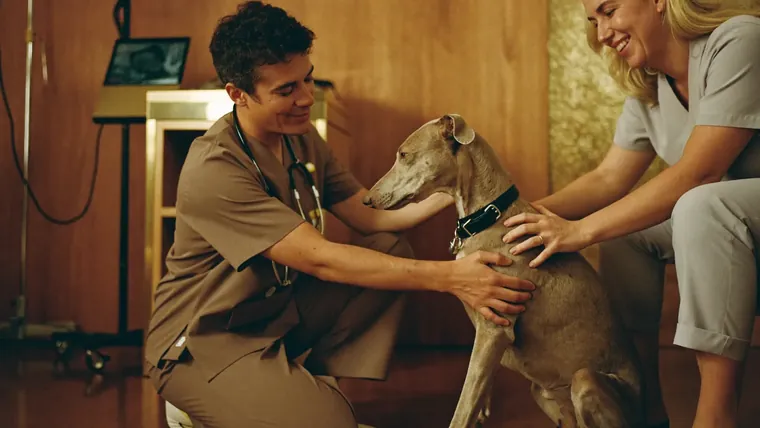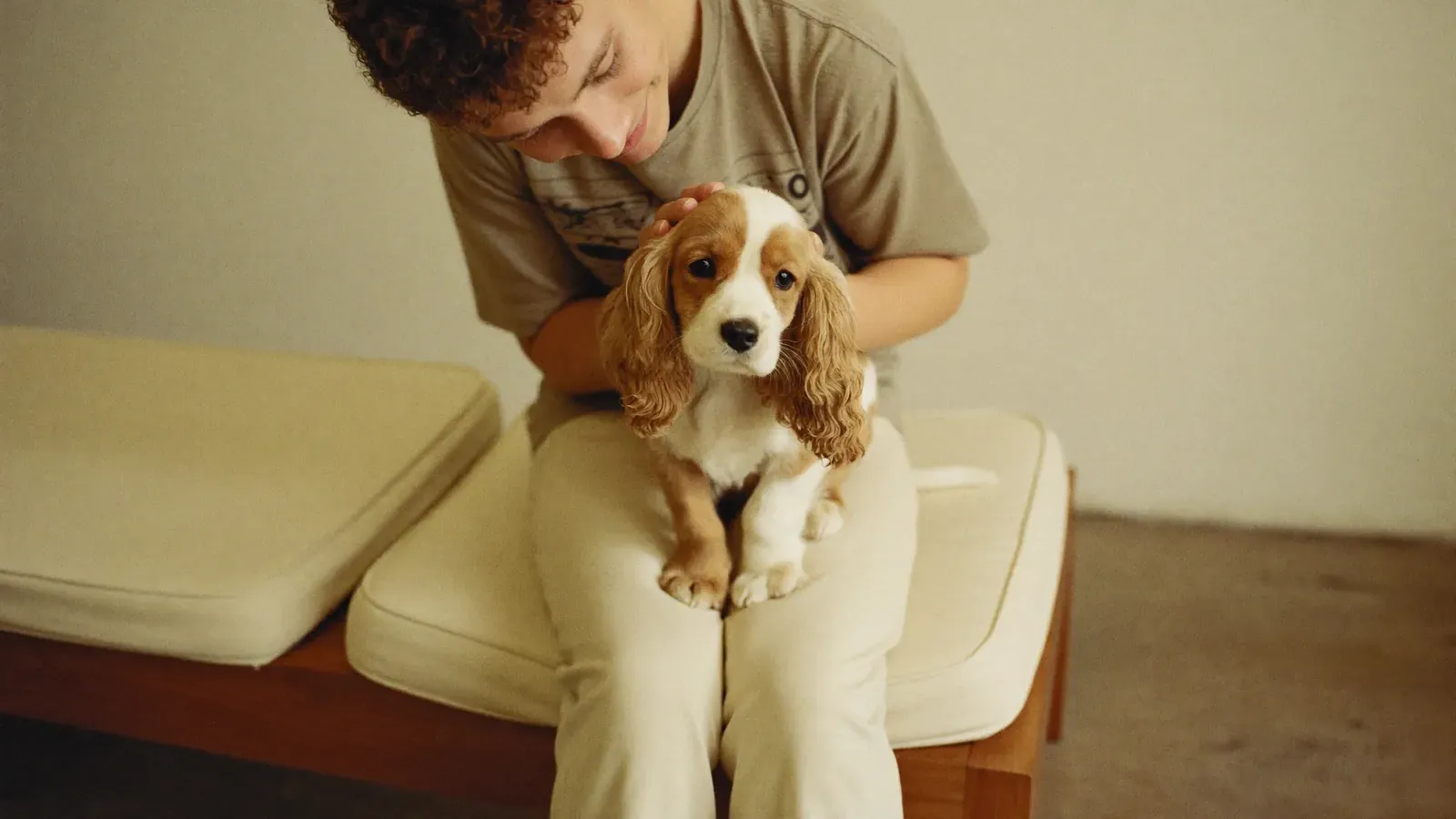
Puppies are curious about everything, and their immune system is still catching up. Without vaccination they are open to diseases that are common, highly contagious and often fatal. Here is the puppy vaccination schedule in the UAE: what each vaccine protects against, when it is due, and when your puppy can safely go out.
Why puppies need a course, not one injection
Puppies are born with some protection from their mother's first milk (maternal antibodies). It fades over their first weeks, but in some puppies it lasts to 16 weeks or longer, and while it lasts it can block the vaccine. So puppies have a course of vaccines rather than a single injection, timed to take over as that protection fades.
The puppy vaccination schedule
The core course is given at 8, 12 and 16 weeks, followed by an antibody titre test at 18 weeks. Every visit starts with a physical examination (a full health check), so your vet knows your puppy is well enough for the vaccine. If your puppy is older than 8 weeks at their first visit, the course starts from there. The full schedule, visit by visit, is on our vaccinations page.
8 weeks: the first DHPPi and Lepto
DHPPi is the combination core vaccine for puppies. It protects against Distemper, Hepatitis (canine adenovirus), Parvovirus and Parainfluenza, one of the causes of Kennel Cough. Lepto, given alongside it, protects against Leptospirosis. Parvovirus is the one to watch in the UAE. It is still common here, it can survive in the environment for months, and it is often fatal in unvaccinated puppies. Leptospirosis is a bacterial infection spread through infected animals' urine, often in water or wet soil, and it can pass to people.
12 weeks: the second DHPPi and Lepto, and Rabies
Your puppy has their second DHPPi and Lepto, and their Rabies vaccine. Dubai law requires every dog to be microchipped, vaccinated and registered, and to wear their Dubai Municipality registration tag. Our microchipping page walks you through registration, step by step.
16 weeks and the titre test
Your puppy has their third DHPPi, which may be the last vaccine of the course. Two weeks later, at 18 weeks, an antibody titre test (VacciCheck, from a small blood sample) shows whether the course has worked. If your puppy has not built up enough antibodies, your vet will recommend a fourth DHPPi, with another titre test two weeks after that. Full protection comes about two weeks after the last dose.
When your puppy can go out
7 to 10 days after the 12-week vaccines, your puppy can go out on walks and to play dates at people's houses, mixing with fully vaccinated dogs. Keep them away from dog parks, daycare and kennels until the titre test shows they are protected. That way they get the socialisation they need without the risk of picking up viruses. Our first 30 days with a new puppy guide covers socialisation in that first month.
Kennel Cough
The Kennel Cough (Bordetella) vaccine is not a core vaccine. It is recommended if your dog goes to daycare, kennels, grooming salons or dog parks, and it can be given from 8 weeks. Your vet will decide it with you, based on how your dog lives.
Boosters every year
After the course, vaccines are repeated every year while your dog lives in the UAE, as Dubai Municipality requires. If a booster is late, it is rarely a reason to start again: a titre test tells your vet how far back in the course to go. Daycare and grooming salons usually ask to see an up-to-date record too.
Vaccines are one part of keeping a puppy well. The first six months bring four health checks, and parasite prevention runs all year round here. The kitten vaccination schedule covers the course for cats, and our guide to preventive care sets out the years after.
Adopting a puppy in the UAE
Ask the rescue or shelter for their vaccination history. Most will have started the course, and your vet will pick up where they left off. If there is no history, the course starts from the beginning, guided by a titre test. Bring their vaccination card to the first visit, along with any other paperwork you were given.
After a vaccination
Most puppies are fine. Some are more tired than usual for a day or two, or a little sore where the injection went. A small lump at the injection site can appear up to 2 weeks later, and usually fades within a few weeks. A swollen face or hives within 4 hours needs a vet straight away. Vomiting, collapse or difficulty breathing within 30 minutes is an emergency: our emergency page shows what to do right now.
That is three vaccine visits, a titre test and a booster every year. strong>The hardest part is the wait before they can sniff every lamp post on the street./strong>