If your pet has swallowed something right now, stop reading and go to our emergency page, which shows what to do. Most pet poisonings can be prevented. The dangers sit in your kitchen, your bathroom, your garden, and sometimes in the shared areas of your building. Here is what to keep out of reach, and what to do if something gets eaten anyway.
Chocolate
Chocolate is one of the most common poisons in dogs. The harmful part is theobromine, which dogs break down far more slowly than people do, and the darker the chocolate, the more of it there is. Dark chocolate, baking chocolate and cocoa powder are the most dangerous. Milk chocolate is less concentrated but still dangerous in quantity, and white chocolate is low risk. Any real amount of dark chocolate, any amount in a small dog, or an amount you do not know is an emergency. Signs include vomiting, a racing heart, trembling and seizures.
Grapes and raisins
Grapes, raisins, sultanas and currants can cause sudden kidney failure in dogs. Nobody fully understands why, and there is no safe amount. Some dogs eat grapes with no apparent effect, while others become seriously ill after a small handful. Because you cannot predict which, treat any grape or raisin your dog eats as an emergency. Treat a cat the same way, to be safe.
Xylitol
Xylitol, also sold as birch sugar, is a sweetener in sugar-free gum, mints, sweets, some peanut butters, toothpaste and baked goods. In dogs it causes a sudden crash in blood sugar within 15 to 30 minutes, and at higher doses it can damage the liver. Even a small amount can be dangerous for a small dog, so do not wait for signs. Check labels carefully, especially on imported products, and brush your pet's teeth with a pet toothpaste, never your own. Our dental care page covers brushing at home.
Onions and garlic
Onions, garlic, leeks, chives and shallots harm both dogs and cats, cats more so. They damage red blood cells and cause anaemia. Raw, cooked, powdered and dried forms are all harmful, the damage can take days to show, and small amounts eaten again and again add up. Many ready meals, sauces and baby foods contain onion or garlic powder. For the other foods to keep out of reach, see what to feed your pet.
Lilies and cats
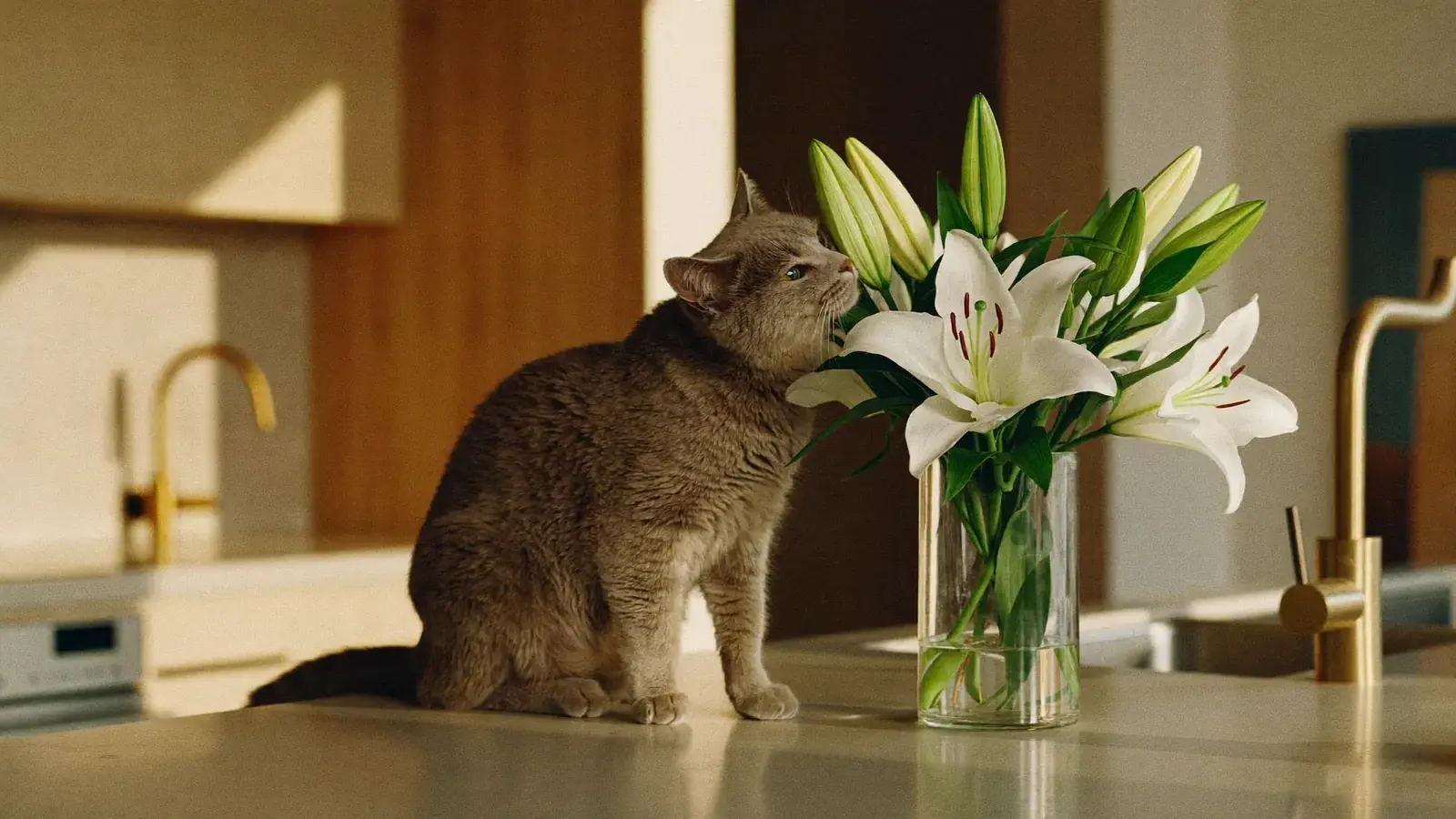
Lilies are an emergency for cats. Every part of a true lily or daylily is toxic, including the Easter lily, Tiger lily and Asiatic lily. Even pollen licked off the fur or water from the vase can cause kidney failure, and treatment within a few hours changes the outcome. If you are not sure what plant your cat touched, treat it as an emergency. If you have cats, keep lilies out of your home altogether, cut flowers included. In dogs, lilies usually cause an upset stomach rather than kidney failure.
Human medicines
Human medicines are among the most common causes of poisoning in pets. Paracetamol has no safe dose in cats and can damage a dog's liver. Ibuprofen and aspirin cause stomach ulcers and kidney damage in both, and cats are far more sensitive. Never give your pet a human painkiller. Prescription medicines are just as risky, and curious pets will chew through a blister pack. Keep every medicine in a closed cabinet, never on a kitchen worktop or a bedside table, and keep vapes and nicotine pouches out of reach too.
Rat poison, antifreeze and slug pellets
Rat poison is often put down in the shared areas of apartment buildings and villa compounds, and it is not always clearly marked. Some types cause internal bleeding that can take days to show, so treatment works best when it starts early, before any signs appear. Take the packet, or a photo of it, to the vet, because the active ingredient changes the treatment.
Antifreeze (ethylene glycol) is found in car coolant, tastes sweet and can pool in car parks and garages. Even a small amount can cause fatal kidney failure, and it takes less to poison a cat than a dog. An early sign is wobbling, as if drunk. Treatment only works if it starts within hours, so do not wait to see what happens. Slug and snail pellets act fast too, and are always an emergency.
Cleaning products, garden chemicals and flea treatments
Cleaning products, insect sprays and garden chemicals are dangerous to dogs and cats, so store them all out of reach. Take care with floor cleaners, because pets walk on treated floors and then lick their paws. If a pest control company treats your home, ask about pet-safe products and keep your pets away from treated areas for as long as they advise. Oleander, a common garden and street plant here, is poisonous to dogs and cats.
Cats need extra care. Never use a dog's flea and tick treatment on a cat: many contain permethrin, and a cat can be poisoned just by rubbing against a freshly treated dog. Essential oils such as tea tree oil are dangerous to cats as well.
What to do if you think your pet has been poisoned
Call a vet straight away, even if your pet seems fine. Do not try to make them sick, and do not give a home remedy. Work out what they ate, how much and when, and keep the packaging or take a photo of it. If you do not know what they ate, or how much, treat it as an emergency. Until our first clinic opens, go to the nearest open emergency vet, and call before you set off so the team can get ready. Our guide to emergency vet care in Dubai covers what to expect, and the signs your pet needs emergency care lists the others that cannot wait.
strong>With poison, minutes matter. Call first, and let the vet be the one to tell you it was nothing./strong>