If your dog is in distress right now, stop reading and call a vet. This guide helps you recognise heatstroke and act while you get help.
Why Dubai summers are so hard on dogs
Dubai's summer temperatures regularly exceed 45 degrees Celsius. Ground surface temperatures can reach 70 degrees or higher. Your dog cannot sweat. They cool themselves almost entirely through panting and through the pads of their paws. In a UAE summer, that system is overwhelmed within minutes.
Heatstroke is not gradual. It can progress from early signs to organ failure in under 30 minutes. Understanding the risk factors, recognising the signs, and knowing what to do are not optional for dog owners in the UAE. They are essential.
Which dogs are most at risk
Some dogs are at higher risk than others. Brachycephalic breeds (flat-faced dogs like Bulldogs, Pugs, Boxers, and Shih Tzus) have compromised airways that make cooling through panting less efficient. Overweight dogs, senior dogs, dogs with thick or dark coats, and dogs with existing heart or respiratory conditions are also at elevated risk. But any dog can suffer heatstroke in Dubai conditions.
Safe walking times in a Dubai summer
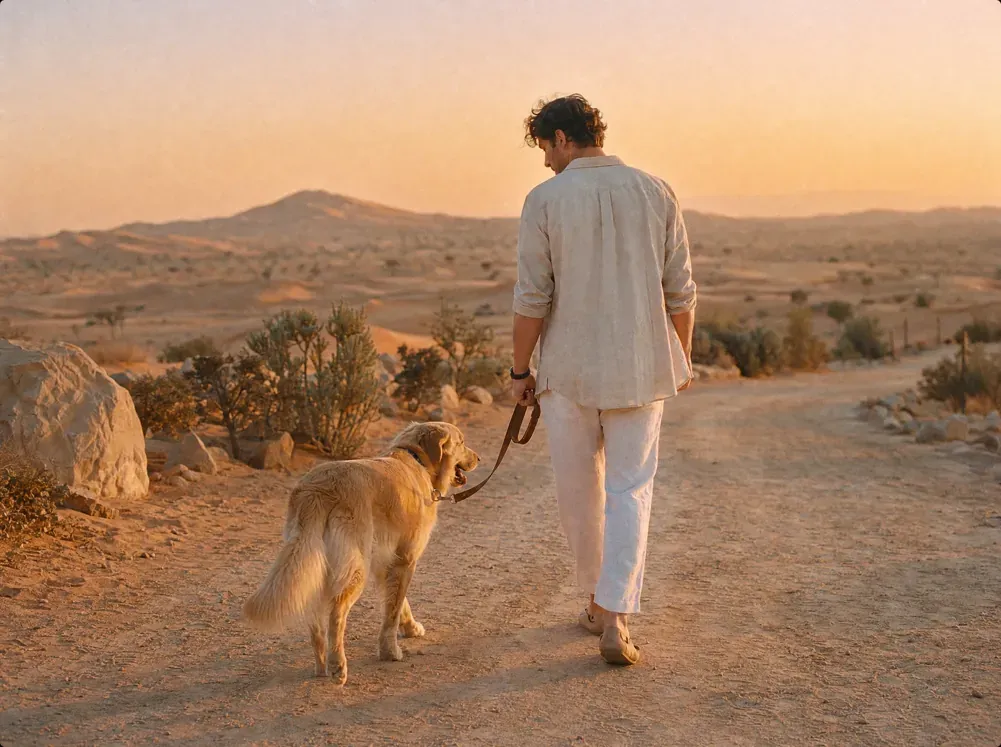
The number one rule: never walk your dog between 10am and 5pm from May to September. This is non-negotiable. Early morning walks (before 8am) and late evening walks (after 7pm) are the only safe options during summer. Even then, test the pavement with the back of your hand. If you cannot hold it there for seven seconds, it is too hot for paws.
Paw pad burns are a separate but related danger. Pavement, sand, and metal surfaces absorb and radiate heat. Burns can occur in under 60 seconds on hot surfaces. Symptoms include limping, licking paws, blistering, and discolouration of the pads. Protective booties can help, but many dogs resist them. The simpler solution is to avoid hot surfaces entirely.
Signs of heatstroke in dogs
Early signs
Early signs of heatstroke include excessive panting that seems disproportionate to activity level, thick, ropy drool, and a bright red tongue and gums. The dog may seem restless or anxious. These are the warning signs. If you see them, stop all activity, move to shade or air conditioning, and begin cooling.
As it gets worse
As heatstroke progresses, you may see vomiting (sometimes with blood), diarrhoea, staggering or disorientation, glazed eyes, and weakness. The gums may change from bright red to purple or grey. Collapse and seizures indicate severe, life-threatening heatstroke. At this point, organ damage may already be occurring. For the other signs that cannot wait, read Signs Your Pet Needs Emergency Care Immediately.
What to do if you think your dog has heatstroke
If you suspect heatstroke, act immediately and cool your dog on the way to the vet. Do not hold off leaving until they have cooled down. Move them into shade or air conditioning straight away. Wet their coat and skin with cool water, not ice-cold, especially the belly, and keep water away from their face.
If they are awake, offer small sips of water, but do not force it. Travel to the nearest open emergency vet with the air conditioning on, and keep their coat wet on the way. A wet towel left lying on them traps heat, so keep it moving or rewet it often. Our emergency care guide covers what to do on the way.
How to prevent heatstroke
Prevention is everything. Keep fresh water available at all times, both indoors and outdoors. Provide shade and ventilation. Never leave a dog in a parked car, even for a minute, even with windows cracked. A closed car heats up by about 10 degrees in ten minutes, and in the sun the air inside can reach 47 degrees within an hour. Consider a cooling mat or vest for walks. Monitor your dog closely for signs of discomfort. A coat kept in good condition helps too: see Summer Coat Care in Dubai, and for cats too, Summer Safety: Protecting Your Pet in UAE Heat.
Across Dubai and the UAE, vets see heatstroke every summer, and most cases are preventable. They usually start with a walk at the wrong time of day, a few minutes in a parked car, or too much exercise in the heat. Walk early or late, keep water close, and never leave your dog in the car.