If your pet is in distress right now, stop reading and get them to a vet. Our emergency page shows what to do next. This guide helps you recognise an emergency and act while you get help. It does not replace a vet seeing your pet.
Not every worry is an emergency. A mild limp while they still put weight on the leg, or a quiet day with no other signs, can usually wait for a normal appointment. A cat who has stopped eating needs a vet the same day. The signs below are different. They mean you act now, day or night.
Difficulty breathing
Any real difficulty breathing is an emergency: struggling to breathe, choking, panting hard at rest, or blue, grey or very pale gums. In a cat, open-mouth breathing or panting is a red flag at any time. Cats normally breathe through their nose, so a cat breathing through their mouth needs a vet straight away. Keep them calm and cool on the way.
Collapse or sudden weakness
If your pet collapses, stops responding to you, or suddenly cannot stand, get them to a vet now. In cats, watch for sudden weakness or paralysis in the back legs, often with cold paws and crying in pain. Move them as little as you can, and if their back or neck might be hurt, slide them onto something flat and firm.
Seizures
A first seizure, a seizure that lasts more than two minutes, or more than one in a day is an emergency. While it is happening, keep your pet away from walls and corners, and keep your hands away from their mouth. Time it on your phone, note what your pet was doing beforehand, then travel. Your vet will want to know both.
Bloat in dogs
Bloat (gastric dilatation-volvulus) is when the stomach fills with gas and can twist on itself. The signs are a swollen, hard belly and retching that brings nothing up. Large, deep-chested dogs, such as German Shepherds, Weimaraners and Akitas, are most at risk. If you suspect bloat, do not wait to see if it settles. Go now.
A male cat who cannot wee
A male cat straining in the litter tray with little or nothing coming out may have a blocked bladder, which can be fatal within a day. If he keeps going back to the tray, cries, or licks his genital area and passes little or no urine, get him to a vet straight away. A dog or female cat straining to wee needs a vet the same day.
Bleeding and injuries
For heavy bleeding, press firmly on the wound with a clean cloth or gauze and keep pressing on the way to the vet. Bleeding that does not stop with pressure, a deep wound, any bite wound and an injured eye all need a vet now. If your pet has been hit by a car, fallen from a height or been in a fight, treat it as an emergency even if they look fine. Internal injuries do not always show. A pet first aid kit keeps the gauze where you can find it.
Poisoning
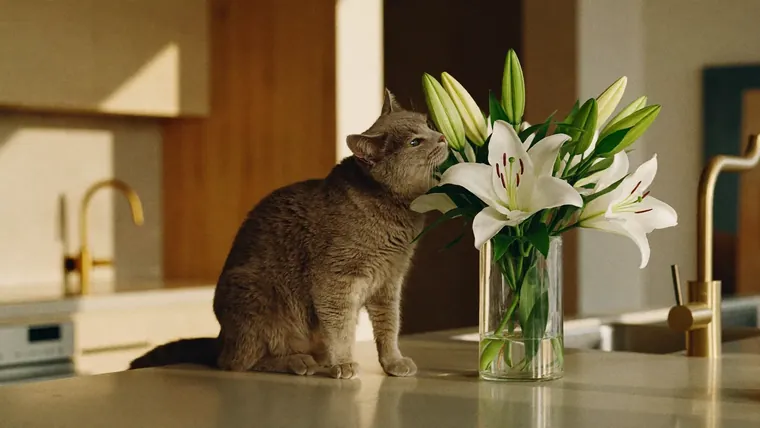
Signs vary, but vomiting, diarrhoea, trembling, seizures, heavy drooling or sudden tiredness are common. Some poisons take days to show, so call a vet straight away even if your pet seems fine. In the UAE, watch for chocolate, grapes and raisins, and xylitol in sugar-free products, which can affect a dog within 15 to 30 minutes. Lilies are an emergency for cats, even the pollen or the vase water. Rat poison is often put down in shared areas of buildings, and antifreeze pools in car parks. Do not try to make your pet sick, and never give a human painkiller. Bring the packaging, or a photo of it. More in Common Household Poisons for Pets in the UAE.
Heatstroke
Heatstroke is common in the UAE, and often preventable. Signs include heavy panting, drooling, bright red gums, vomiting, stumbling and collapse. Flat-faced breeds like Pugs and French Bulldogs are among the most at risk. Cool your pet on the way to the vet, and do not hold off leaving until they have cooled down. Move them into shade or air conditioning, wet their coat with cool water, not ice-cold, especially the belly, and keep water away from their face. Offer small sips if they are awake, and travel with the air conditioning on. More in Heatstroke in Dogs.
When you are not sure
Repeated vomiting or weakness in a puppy, a kitten, an older pet or one who is already unwell is an emergency. Cats hide how unwell they are, so with a cat, act a step sooner. If you are not sure, treat it as urgent and call a vet. A five-minute conversation can tell you whether your pet needs to be seen now. For where to go, read Emergency Vet Care in Dubai.
strong>Read this on a calm day, so you are not reading it for the first time in a panic./strong>