
We’re hiring people who love them like we do. Join us careers@pawsandco.comSee open roles
UAE Government Licensed MOCCAE
French Bulldog in Dubai, studio portrait of a fawn adult sitting calmly against a dark background

Breed guide  ·  Dogs

French Bulldog

He was bred to sit on a lace maker's lap. I keep him out of the August sun.

Lifespan
10 to 12 years
Size
Small
Weight
Up to 12.7 kg
Shedding
Moderate

Last updated 14 October 2026

Join the founding families. AED 1,999 of essential care for AED 199.

No payment now. We'll be in touch by email and WhatsApp as we open enrolment.

✓
Thank you.

We will be in touch soon to confirm.

Frenchie traits

What they brought with them.

Tap a card to see what is going on.

French Bulldog, a pied adult lying on a bath mat by an open bathroom door, keeping watch

At home

They follow you to the bathroom

Room to room all day, and they settle best when they are touching you.

What's going onFrench Bulldogs were bred to keep someone company, and they take the job seriously. Wanting to be near you is normal. Panic when you leave is something else, and worth a conversation with your vet.

French Bulldog in Dubai, a fawn adult in a harness sitting on a shaded pavement lined with palms at dawn

At home

They sit down halfway through the walk

Keen at the door, then ten minutes out they stop and will not move.

What's going onIt looks like stubbornness. Often they are out of breath, not tired. Let them stop, and tell your vet if it keeps happening.

French Bulldog, a fawn adult asleep on a linen sofa, chin propped on a knitted cushion

At home

Why French Bulldogs snore

Snoring through the night, snorting when excited, a grunt every time they lie down.

What's going onIt is easy to find it funny. It is also the sound of air squeezing through a narrow airway. Noisy breathing while they rest awake, or snoring that is getting louder, is worth a word with your vet.

French Bulldog, a white adult sitting on a kitchen floor, eyeing a hand holding a treat

At home

They look at you, then ignore you

They learn fast when it suits them, and look straight at you while they ignore the cue.

What's going onThey were bred for company, not for taking orders. Short sessions and small rewards work better than repetition, and keep them from getting out of breath.

French Bulldog, a pied adult lying flat on a woven rug beside a rope toy after play

At home

Full speed, then flat on the floor

A minute racing round the flat, then they collapse on the floor, panting.

What's going onThe burst is normal. Watch how long they take to get their breath back. If it is slow, noisy or getting slower, tell your vet.

French Bulldog, a red fawn adult lying belly down on cool floor tiles at home

At home

Flat on the tiles, legs out behind

Belly down on the kitchen tiles, back legs stretched out like a frog.

What's going onThey are pushing heat out through their belly into the cold floor. If they sleep sitting up, or with their chin propped high, they may be working to keep their airway open. Film it and show your vet.

A Frenchie in Dubai

The bit nobody tells you.

Their brief

Built for: Company and a lap, never a job.

In Dubai: Company in a flat, which suits them.

Their cooling

Built for: Panting, through a short nose and a narrow airway.

In Dubai: A summer that runs from May to September.

Their walk

Built for: Play in bursts, then a rest.

In Dubai: Walks ended by their breathing, long before their energy.

The snoring and the flop on the cold tiles are their body managing that gap.

You cannot give them a longer nose. You can plan their day around the one they have, and the ten things below are how.

Your plan is built around their breed: the health risks for a French Bulldog at every age, and the care that goes with each one.

Join the founding families. AED 1,999 of essential care for AED 199.

Daily care for a Frenchie

Ten things that make their life better.

Many of them are free, and most matter at every age.

  1. Heat is the thing their body handles worst, and heatstroke can come on during an ordinary walk.

    Every age, most of all puppies and from 7 years

    Free

    Why

    Heat is the thing their body handles worst, and heatstroke can come on during an ordinary walk.

    What to do

    From May to September, walk before sunrise and after dark only, and keep it short. When they sit down, let them. Put the back of your hand on the pavement for five seconds: if you cannot keep it there, they cannot walk on it. Carry water. Never leave them in the car, even with the engine running.

  2. Extra weight around the neck and chest narrows an airway that is already narrow. In a Frenchie, half a kilo makes a real difference to their breathing.

    Every age, most of all 2 to 7 years

    FreeIn your plan

    Why

    Extra weight around the neck and chest narrows an airway that is already narrow. In a Frenchie, half a kilo makes a real difference to their breathing.

    What to do

    Weigh them every month and write it down. Measure meals with a cup and count treats as food. From above you should see a waist, and you should feel their ribs without pressing.

  3. A collar pulls on the part of them that already struggles.

    Every age

    The cost of a harness

    Why

    A collar pulls on the part of them that already struggles.

    What to do

    Use a harness that sits across their chest, not their throat. Keep a collar for their tag if you like, and never clip the lead to it. Refit the harness as they grow, and again if their weight changes.

  4. They will keep playing after their airway has had enough, because they are enjoying themselves.

    Every age, most of all under 2 years

    Free

    Why

    They will keep playing after their airway has had enough, because they are enjoying themselves.

    What to do

    Two or three minutes of play, then a rest. Stop while they still want more, and before their breathing gets loud. Tug and hide-and-seek indoors suit them better than fetch outside.

  5. Snoring and sleeping sitting up are easy to laugh at, and easy to miss as signs that their airway is working too hard.

    Every age, screening at 12 to 18 months

    Free to filmIn your plan

    Why

    Snoring and sleeping sitting up are easy to laugh at, and easy to miss as signs that their airway is working too hard.

    What to do

    One night, film two minutes of them asleep, sound on. Watch for snoring, pauses in their breathing, waking with a start, or sleeping with their chin propped up. Show the video to your vet. Between 12 and 18 months they should be screened for BOAS (the flat-faced breathing problem), because if surgery will help, earlier is better.

  6. Most French Bulldogs swim badly. Their front end is heavy, their legs are short and their nose is short.

    Every age, most of all puppies and from 7 years

    The cost of a life jacket

    Why

    Most French Bulldogs swim badly. Their front end is heavy, their legs are short and their nose is short.

    What to do

    Fence the pool or keep them out of the pool area. Near water, on a boat or at the beach, put them in a dog life jacket with a handle and keep hold of it. Do not throw toys into the pool for them.

  7. Lying flat on the tiles is how they get heat out. In a warm room, they have nowhere left to put it.

    Every age, more so every year from 7

    Free, or the cost of a cooling mat

    Why

    Lying flat on the tiles is how they get heat out. In a warm room, they have nowhere left to put it.

    What to do

    Keep their room air-conditioned from May to September. Leave them a tiled spot or a cooling mat, and water in two places. If they always end up on the same cold patch of floor, move their bed next to it.

  8. The folds on their face trap moisture and infection. Paw licking, scratching and head shaking are often the first sign of skin or ear trouble, and they look like habits.

    Every age, eyes most of all from 6 months to 2 years

    The cost of wipes and ear cleaner

    Why

    The folds on their face trap moisture and infection. Paw licking, scratching and head shaking are often the first sign of skin or ear trouble, and they look like habits.

    What to do

    Every day, wipe their facial folds with a vet-approved antiseptic wipe, then dry them. Once a month, clean their ears with a vet ear cleaner. If they rub or squint at an eye, or you see a red lump in the corner of it, contact your vet.

  9. French Bulldogs are prone to disc disease in the spine. Jumping off the sofa, again and again, adds up.

    Every age

    Free, or the cost of a ramp

    Why

    French Bulldogs are prone to disc disease in the spine. Jumping off the sofa, again and again, adds up.

    What to do

    Put a ramp or step up to the sofa and bed, and lift them down. Carry them with one hand under the chest and one under the back end. If they suddenly will not jump, yelp when you pick them up, or hide and shake, contact your vet the same day.

  10. They learn fast when it suits them. Long sessions leave them panting and bored, and the treats add up.

    Every age, easiest under 2 years

    Free

    Why

    They learn fast when it suits them. Long sessions leave them panting and bored, and the treats add up.

    What to do

    Two or three minutes, indoors in the cool. Tiny rewards, taken out of their daily food. Say a cue once, reward what you like straight away, and stop while they are getting it right. Teach them early to be lifted and wiped. They will need both for life.

Two of these are in your plan. The rest you can do at home.

Join the founding families. AED 1,999 of essential care for AED 199.

Frenchie health by age

Their health, at every age.

In a French Bulldog, a change in breathing, sleep or how they move is often the first sign that something is wrong. Choose their age to see what to watch for, and the care that goes with it.

French Bulldog, an older red fawn dog with a greying muzzle resting on a soft raised bed

How old are they?

Their age

Frenchie Puppy health

the first six months

What to watch for

  1. Early or congenital expression of Brachycephalic Obstructive Airway Syndrome (BOAS, flat-faced breathing difficulty)
  2. Juvenile onset of skin fold dermatitis
  3. Juvenile onset of allergies (environmental & food)
  4. Early or congenital expression of Intervertebral Disc Disease (IVDD, slipped disc in the back)
  5. Congenital or early inherited ocular disease related to Eye Conditions (Cherry Eye, Entropion)

The care that goes with it

  1. Core vaccinations, microchip and Dubai Municipality registration
  2. Deworming, and flea and tick prevention
  3. Growth and nutritional evaluation, and early socialisation
  4. Brachycephalic Obstructive Airway Syndrome (BOAS, flat-faced breathing difficulty) screening, as a baseline
  5. Early follow-up for any signs of skin fold dermatitis (infection in the folds of the face)
The full care detail
  • Core vaccination programme, microchipping and Dubai Municipality registration. Titre testing discussion where clinically appropriate; not a substitute for completing the core vaccine series
  • Deworming and external parasite prevention tailored to Dubai exposure
  • Body Condition Score (BCS, a check on whether they are the right weight), Muscle Condition Score (MCS, a check on their muscle), dental, growth and nutritional evaluation, and early socialisation
  • Baseline screening focused on Brachycephalic Obstructive Airway Syndrome (BOAS)
  • Early diagnostic follow-up for signs suggestive of Skin Fold Dermatitis

Their age

Frenchie Juvenile health

6 months to 2 years

What to watch for

  1. Young-dog presentation of Brachycephalic Obstructive Airway Syndrome (BOAS, flat-faced breathing difficulty)
  2. Recurrent or persistent skin fold dermatitis
  3. Recurrent or persistent allergies (environmental & food)
  4. Young-dog presentation of Intervertebral Disc Disease (IVDD, slipped disc in the back)
  5. Progression or first clinical detection of Eye Conditions (Cherry Eye, Entropion)

The care that goes with it

  1. BOAS screening at 12 to 18 months, with corrective surgery considered early if it will help
  2. Daily skin fold cleaning with vet-approved antiseptic wipes
  3. Neutering or spaying, timed for a small breed
  4. A food elimination trial (a diet test for allergies) if allergies are suspected, then a special diet
  5. Finding the cause of any flare that keeps coming back, rather than treating it as allergies again
The full care detail
  • Brachycephalic Obstructive Airway Syndrome (BOAS) screening at 12-18 months; consider corrective surgery early to prevent lifelong respiratory compromise
  • Clean skin folds daily with veterinary-approved antiseptic wipes to prevent bacterial and yeast infections
  • Neuter/spay timing discussion that accounts for small-breed growth and disease risk
  • Conduct food elimination trials if allergies are suspected; transition to hydrolysed protein or novel protein diet
  • Investigate recurrent signs rather than repeatedly treating presumed Allergies (Environmental & Food)

Their age

Frenchie Young Adult health

2 to 4 years

What to watch for

  1. Brachycephalic Obstructive Airway Syndrome (BOAS, flat-faced breathing difficulty)
  2. Skin Fold Dermatitis
  3. Allergies (Environmental & Food)
  4. Intervertebral Disc Disease (IVDD, slipped disc in the back)
  5. Eye Conditions (Cherry Eye, Entropion)

The care that goes with it

  1. BOAS screening if it was not done by 18 months, with corrective surgery considered early
  2. Daily skin fold cleaning with vet-approved antiseptic wipes
  3. A food elimination trial (a diet test for allergies) if allergies are suspected, then a special diet
  4. Ramps instead of jumps and stairs, to protect the spine
  5. Annual ophthalmic evaluation (eye exam) to catch cherry eye or entropion (an eyelid that rolls inwards) early
The full care detail
  • Brachycephalic Obstructive Airway Syndrome (BOAS) screening at 12-18 months; consider corrective surgery early to prevent lifelong respiratory compromise
  • Clean skin folds daily with veterinary-approved antiseptic wipes to prevent bacterial and yeast infections
  • Conduct food elimination trials if allergies are suspected; transition to hydrolysed protein or novel protein diet
  • Avoid high-impact exercise and jumping from heights to reduce Intervertebral Disc Disease (IVDD) risk; use ramps instead of stairs
  • Annual ophthalmic evaluation to detect cherry eye or entropion before they cause corneal damage

Their age

Frenchie Prime Adult health

4 to 7 years

What to watch for

  1. Brachycephalic Obstructive Airway Syndrome (BOAS), Progressive Respiratory Decline
  2. Allergic Skin Disease (Atopic Dermatitis)
  3. Intervertebral Disc Disease (IVDD)
  4. Obesity
  5. Ear Infections (Otitis Externa)

The care that goes with it

  1. A lean, healthy weight: even 500 g extra makes their breathing harder
  2. Monthly ear cleaning with a vet ear cleaner
  3. Allergy management: allergen-specific immunotherapy (to build tolerance), if atopic dermatitis (itchy allergic skin) is confirmed
  4. Annual neurological evaluation (nerve and brain exam) for early signs of IVDD (slipped disc in the back)
  5. Air conditioning from May to September, to prevent heatstroke
The full care detail
  • Maintain strict healthy weight; even 500g overweight significantly worsens breathing in brachycephalic breeds
  • Monthly ear cleaning with veterinary ear solution to prevent chronic otitis externa
  • Allergy management: allergen-specific immunotherapy (daily or monthly) if atopic dermatitis is confirmed
  • Spinal health monitoring: annual neurological evaluation to detect early Intervertebral Disc Disease (IVDD) signs before paralysis risk
  • Keep the dog in air-conditioned environments during UAE summer months (May-September) to prevent heat stroke

Their age

Frenchie Senior health

7 to 10 years

What to watch for

  1. Dilated Cardiomyopathy (DCM, enlarged, weakened heart)
  2. Chronic Respiratory Disease (Brachycephalic Obstructive Airway Syndrome (BOAS) complications)
  3. Arthritis / Joint Disease
  4. Chronic Skin Allergies
  5. Kidney Disease

The care that goes with it

  1. Annual echocardiogram (an ultrasound scan of the heart) from age 7, to find Dilated Cardiomyopathy (DCM, an enlarged, weakened heart) early
  2. Omega-3 supplements for the heart, skin and joints
  3. A senior diet, and kidney blood tests twice a year
  4. Hydrotherapy or gentle physiotherapy, to keep joints moving without straining their breathing
  5. Ongoing skin care with medicated shampoos and treatments
The full care detail
  • Annual echocardiogram from age 7 to detect Dilated Cardiomyopathy (DCM) before clinical signs appear
  • Introduce omega-3 fatty acid supplementation (EPA/DHA) to support heart, skin, and joint health simultaneously
  • Transition to a senior diet with controlled sodium and phosphorus; monitor kidney values bi-annually
  • Hydrotherapy or gentle physiotherapy to maintain joint mobility without respiratory stress
  • Ongoing dermatological management with medicated shampoos and topical treatments for chronic skin conditions

Their age

Frenchie Geriatric health

10 years and over

What to watch for

  1. Congestive Heart Failure
  2. Severe Respiratory Compromise
  3. Chronic Kidney Disease (CKD, long-term kidney failure)
  4. Spinal Cord Degeneration
  5. Cancer

The care that goes with it

  1. Comfort-first care: pain management, rest and emotional wellbeing
  2. Monthly vet visits to adjust medication as things change
  3. Soft, raised bedding, and as little physical effort as possible
  4. Quality-of-life assessments
  5. Palliative care (comfort care), and end-of-life planning with your vet team
The full care detail
  • Comfort-first care plan focusing on pain management, rest, and emotional wellbeing
  • Monthly vet visits to manage multi-system disease and adjust medications as condition evolves
  • Provide soft, elevated bedding and minimise physical exertion to conserve energy
  • Quality-of-life assessments
  • Tailored palliative and comfort-focused care plan
  • Compassionate end-of-life planning with your veterinary team

Breed predispositions indicate an increased risk rather than certainty of disease. What is right for them always comes from their own history and an evaluation.

Getting a Frenchie puppy in Dubai

Before they come home.

French Bulldog, a white mother lying on a fleece blanket with two puppies tucked close

Two kinds of breeding

Bred with care, or bred fast

Since the boom in demand, Frenchies come from two kinds of breeder. Careful breeders have their dogs' breathing graded on a scale from 0 (no signs) to 3 (severe), and breed from the dogs who breathe best. Others breed fast, for the look.

French Bulldog, a brindle adult with a white chest patch sitting on a woven rug

Colours

Fawn, cream, brindle and more

French Bulldogs come in white, cream and fawn, on their own or together, often with brindle, white patches or a black mask. Blue and merle were once rare and are far more common since the boom. Whatever the colour, the question that matters is how the parents breathe.

French Bulldog, a fawn adult resting the dog's chin on a pet parent's knee on the sofa

The first six months

Caring for French Bulldog puppies

Their full vaccination course, microchip and Dubai Municipality registration come first, with a baseline BOAS screening of their breathing. Keep play to a few minutes at a time and indoors in summer, because puppies overheat fastest.

Puppy health, 0 to 6 months
French Bulldog, a pied puppy stepping from a cream sofa onto a carpeted ramp

Getting the flat ready

A cool room and a ramp

Give them an air-conditioned room with a tiled spot or a cooling mat, and water in two places. Put a ramp up to the sofa and bed, and a gate across any way to the pool.

Ten things that make their life better
French Bulldog, a fawn adult greeting a pet parent kneeling on grass in a shaded garden

Before you commit

Ask how the parents breathe

Ask the breeder how both parents breathe, and whether their breathing has been formally graded. Two Frenchies from the same street can breathe very differently, and it shapes their whole life.

The reception of a Paws & Co clinic, with long cream benches and a stone reception desk

Before the clinics open

Join the founding families

AED 1,999 of essential care for AED 199. No payment now.

When to see a vet

When it is not behaviour.

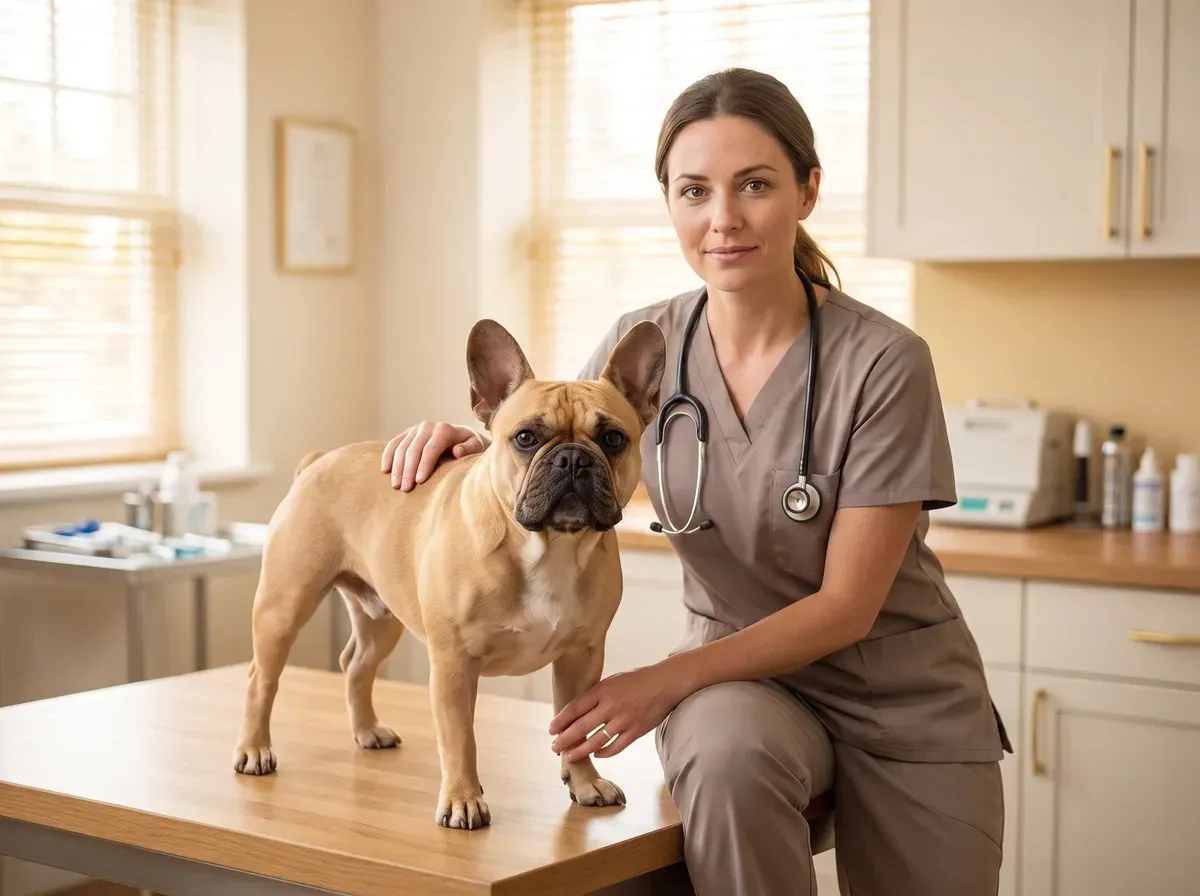
French Bulldog, a fawn adult standing on a consulting table, a vet in taupe scrubs with a hand on the dog's back

Some of this is not a training problem, and treating it like one wastes time your dog may not have. If they are distressed when you leave, if they growl or guard their food, their toys or you, if they are frightened on the lead, or if anything about them changes suddenly at any age, contact your vet the same day. A tip from a website, ours included, is not the answer. If it cannot wait, contact your nearest emergency vet now.

With a French Bulldog, the things that look like character are often their body. Noisier sleep can be their airway. Not wanting to jump, or a yelp when you pick them up, can be their spine, and that is a same-day call. If their breathing turns loud and they cannot settle after a walk in the heat, get them somewhere cool and contact your vet now. Bloat (GDV, a twisted stomach) needs the same speed: a swollen, tight belly, retching with nothing coming up, sudden restlessness or drooling. It can happen in any dog, though it is most common in large, deep-chested breeds.

Keep them in the cool from May to September. If their snoring gets louder, film two minutes of it for your vet.

Frenchie history

Before they were yours.

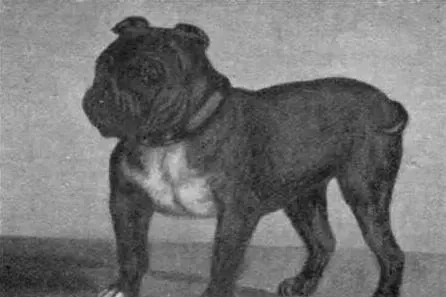
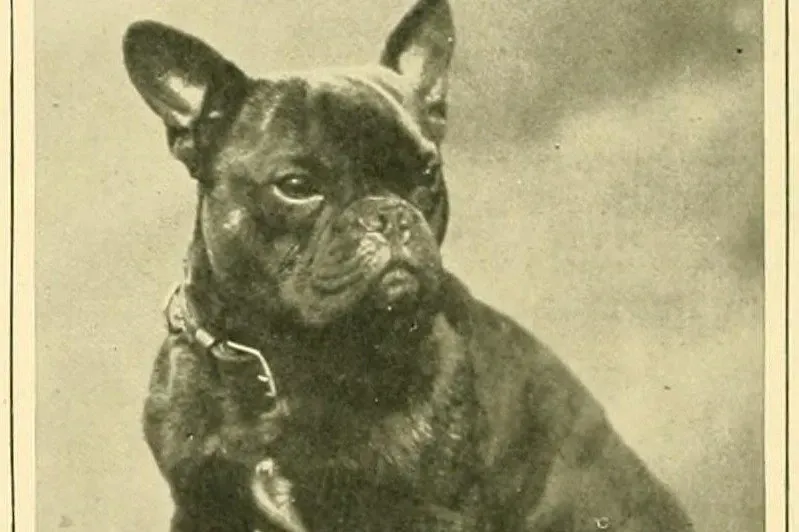
  1. French Bulldog history, Little Knot, a toy bulldog champion, in a British dog book, 1903
    Little Knot, a toy bulldog champion, in W. D. Drury's British Dogs, 1903.

    1835 to 1860

    England, the toy bulldog

    Once bull-baiting was banned in Britain in 1835, some breeders bred the bulldog smaller, as a companion rather than a fighter.

    What they still carryThe lap. Their need to be near you starts here.

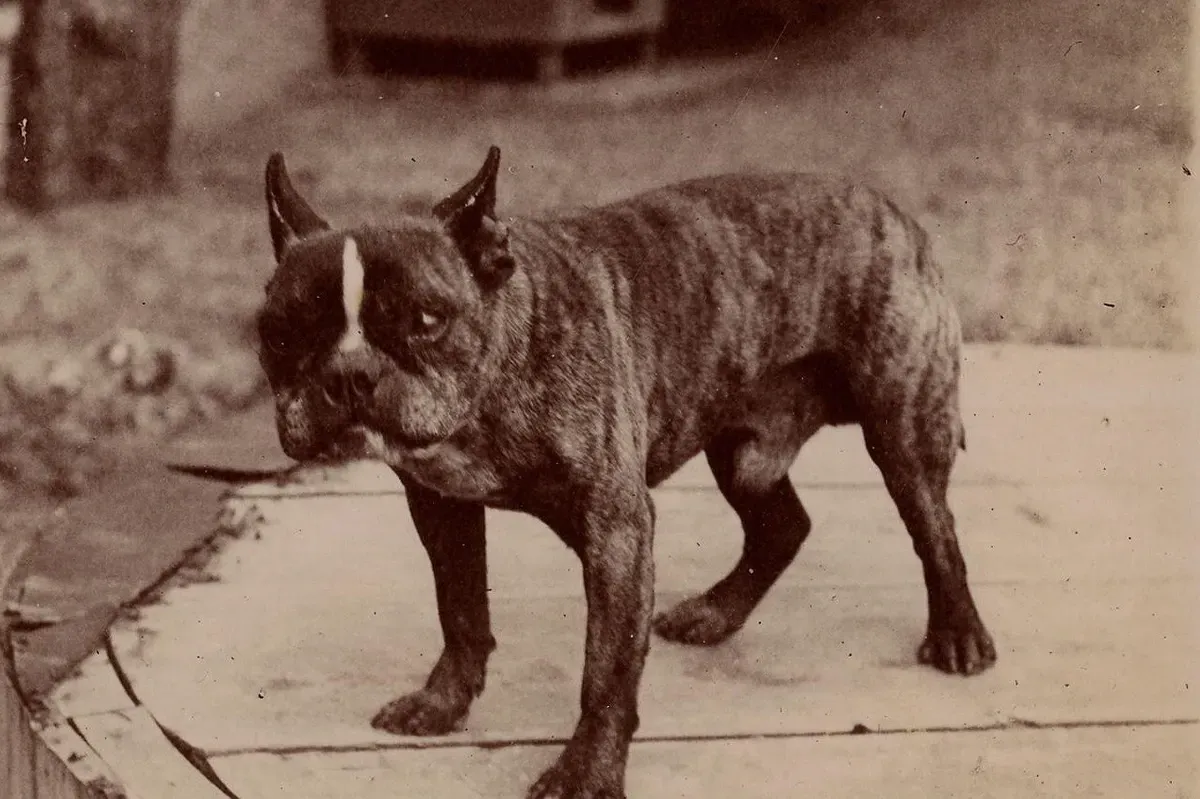
  2. French Bulldog history, Voriot, a brindle bat-eared bulldog, photographed by Émile Zola, Paris, around 1895 to 1900
    Voriot, Émile Zola's bulldog, in a photograph Zola printed himself, around 1895 to 1900.

    1850 to 1890

    Paris

    The little bulldogs took hold in France. Shopkeepers, café owners and butchers in Paris kept them, and they became the bouledogue français.

    What they still carryThe comedian, a dog kept to be enjoyed rather than to work.

  3. French Bulldog history, Ch. Stanmore Argus, a bat-eared dog, in The New Book of the Dog, 1911
    Ch. Stanmore Argus, a French Bulldog, in The New Book of the Dog, 1911.

    1896 to 1912

    The bat ear

    American fanciers showed the breed at Westminster in 1896 and fixed the upright bat ear. The American Kennel Club recognised them in 1898, and in 1912 the UK Kennel Club named them French Bulldogs.

    What they still carryThe ears they have now, and a breed first defined by how it looks.

  4. French Bulldog history, a fawn adult standing on a garden path in low sun, 2022 onwards

    2022 onwards

    The most popular dog in America

    In 2022 the French Bulldog became the American Kennel Club's most registered breed, and held the top spot in 2023. In the UK, the University of Cambridge and the Kennel Club now grade how well Frenchies breathe.

    What they still carryA lot of Frenchies bred fast, which is why two can breathe so differently.

  5. French Bulldog history, the breed today, a white adult sitting by a water bowl, the Dubai skyline behind

    Today

    In Dubai

    In the UAE a Frenchie lives in a flat or a villa, as company, in a city where summer runs from May to September.

    What they still carryA dog who handles heat badly, which is why their whole day is planned around the cool.

Frenchie questions

The ones you type at midnight.

Most of these get asked late at night, by someone watching their dog and not sure what they are seeing.

French Bulldog in Dubai, a cream adult asleep against a pet parent's leg on a dark sofa at night, city lights behind
How long do French Bulldogs live?

Many French Bulldogs live 10 to 12 years. In a large UK study of more than 11,000 French Bulldogs, half lived to nearly 10.

How big is a full grown French Bulldog?

A fully grown French Bulldog is small, compact and heavy at the front, and usually weighs up to 12.7 kg. At the right weight you can see a waist and feel their ribs.

What is the French Bulldog temperament like?

French Bulldogs are playful, affectionate and sociable, gentle with children, and form strong bonds with their families. They learn fast when it suits them, so keep training short and fun.

Do French Bulldogs shed?

Yes, French Bulldogs shed moderately, all year round. A weekly brush is enough for that short coat.

What colours do French Bulldogs come in?

French Bulldogs come in white, cream and fawn, often with brindle, white patches or a black mask. Blue and merle have become far more common since the boom in demand.

Can a French Bulldog live in Dubai?

Yes, a French Bulldog can live happily in Dubai, but the heat is genuinely dangerous for them. Keep them in air conditioning from May to September, and walk only before sunrise and after dark.

Why does my French Bulldog snore?

Many French Bulldogs snore because air is squeezed through a narrow airway. Noisy breathing while they rest awake, or snoring that gets louder, is worth a word with your vet.

Why does my French Bulldog sleep sitting up?

A French Bulldog who sleeps sitting up, or with their chin propped high, may be working to keep their airway open. Film two minutes of it and show your vet.

Can French Bulldogs swim?

Most French Bulldogs swim badly, because of their heavy front end, short legs and short nose. Fence the pool, and near water use a dog life jacket with a handle.

Worried about them? Contact your vet today.