We’re hiring people who love them like we do. Join us careers@pawsandco.comSee open roles
UAE Government Licensed MOCCAE
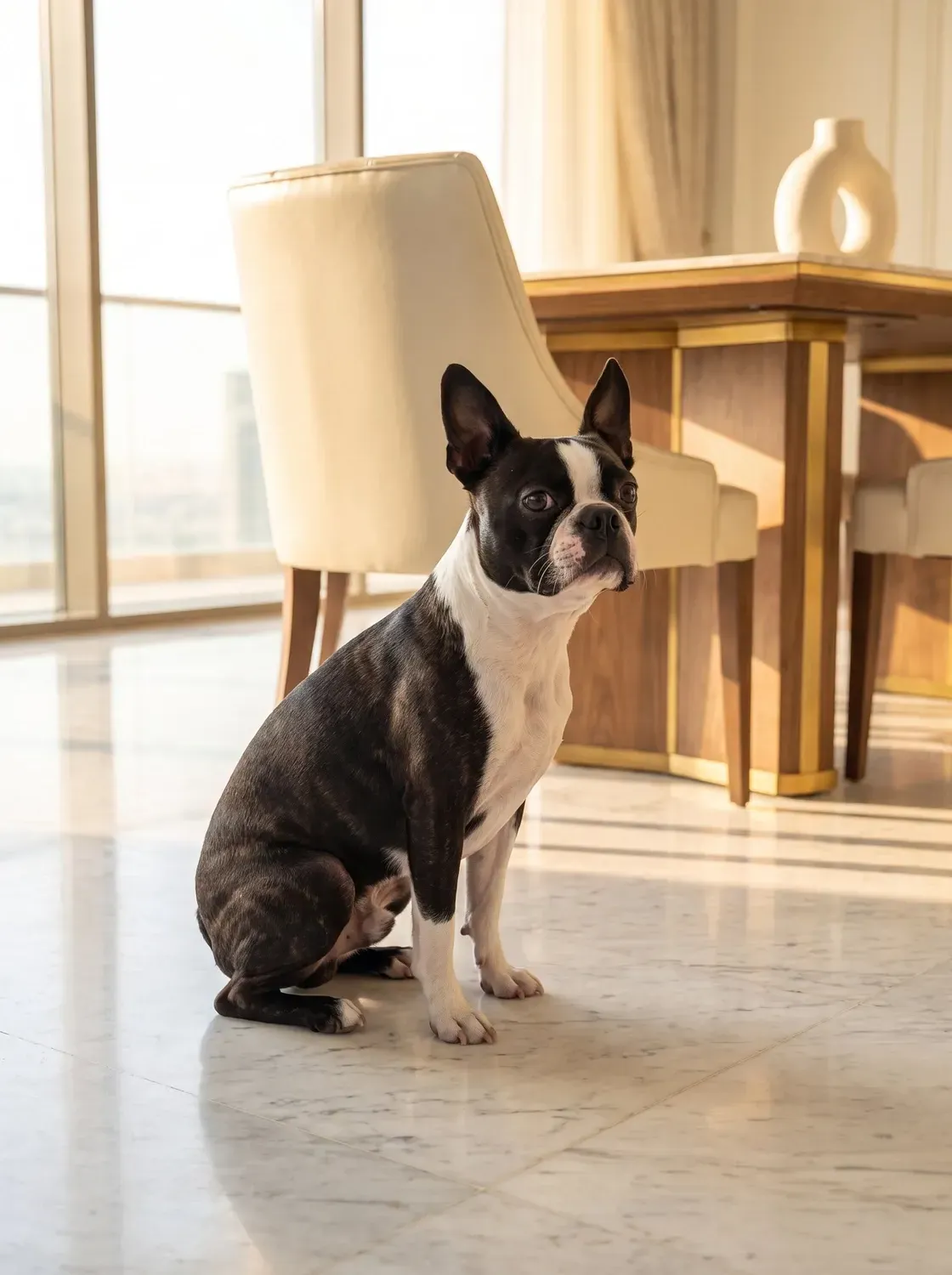
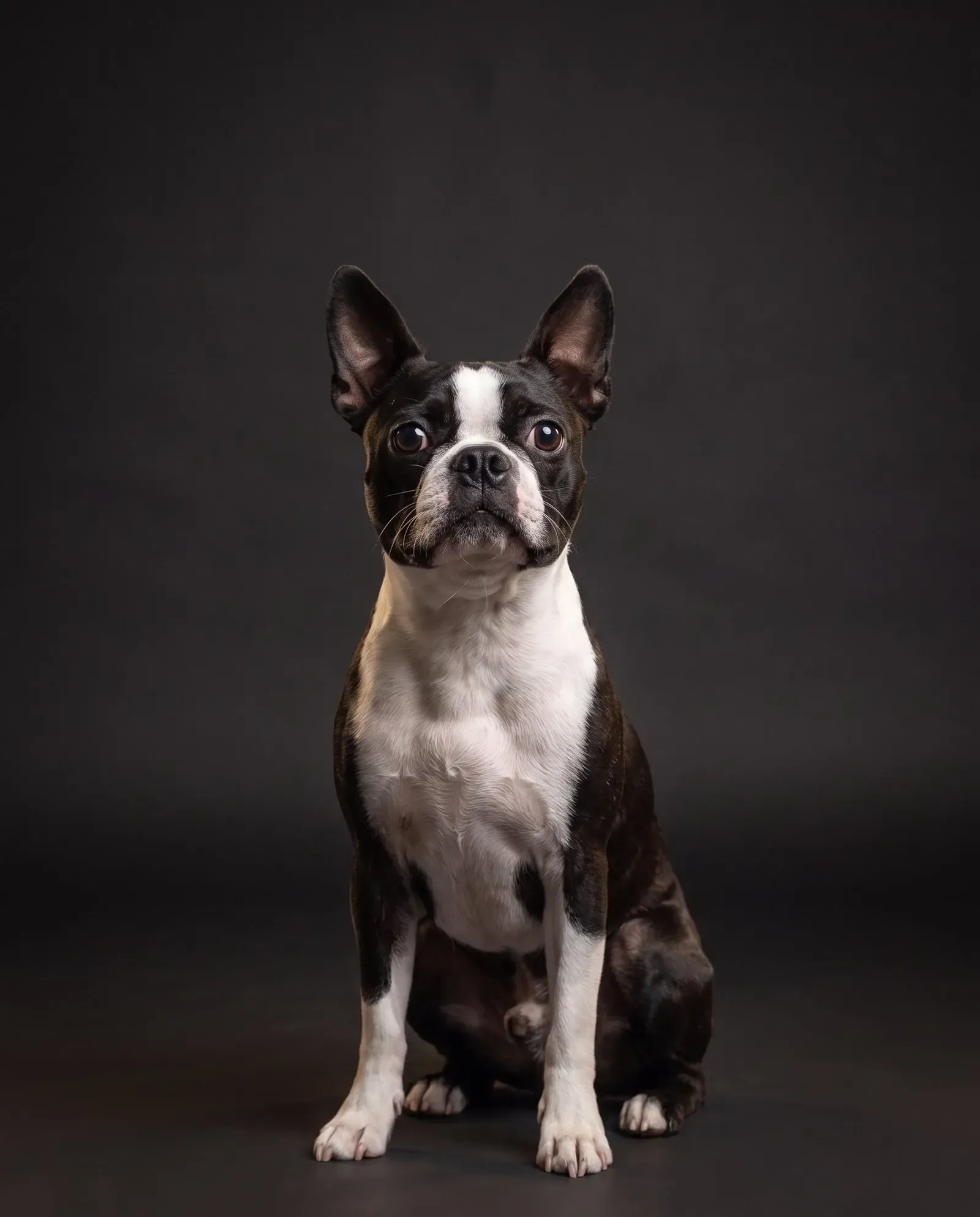
Boston Terrier in Dubai, studio portrait of a black and white adult sitting against a dark background

Breed guide  ·  Dogs

Boston Terrier

She was bred down from fighting dogs to fit on a lap. She fits on mine, under the air conditioning.

Lifespan
11 to 15 years
Size
Small
Weight
Up to 11.3 kg
Shedding
Light to moderate

Last updated 14 October 2026

Join the founding families. AED 1,999 of essential care for AED 199.

No payment now. We'll be in touch by email and WhatsApp as we open enrolment.

✓
Thank you.

We will be in touch soon to confirm.

Boston traits

What they brought with them.

Tap a card to see what is going on.

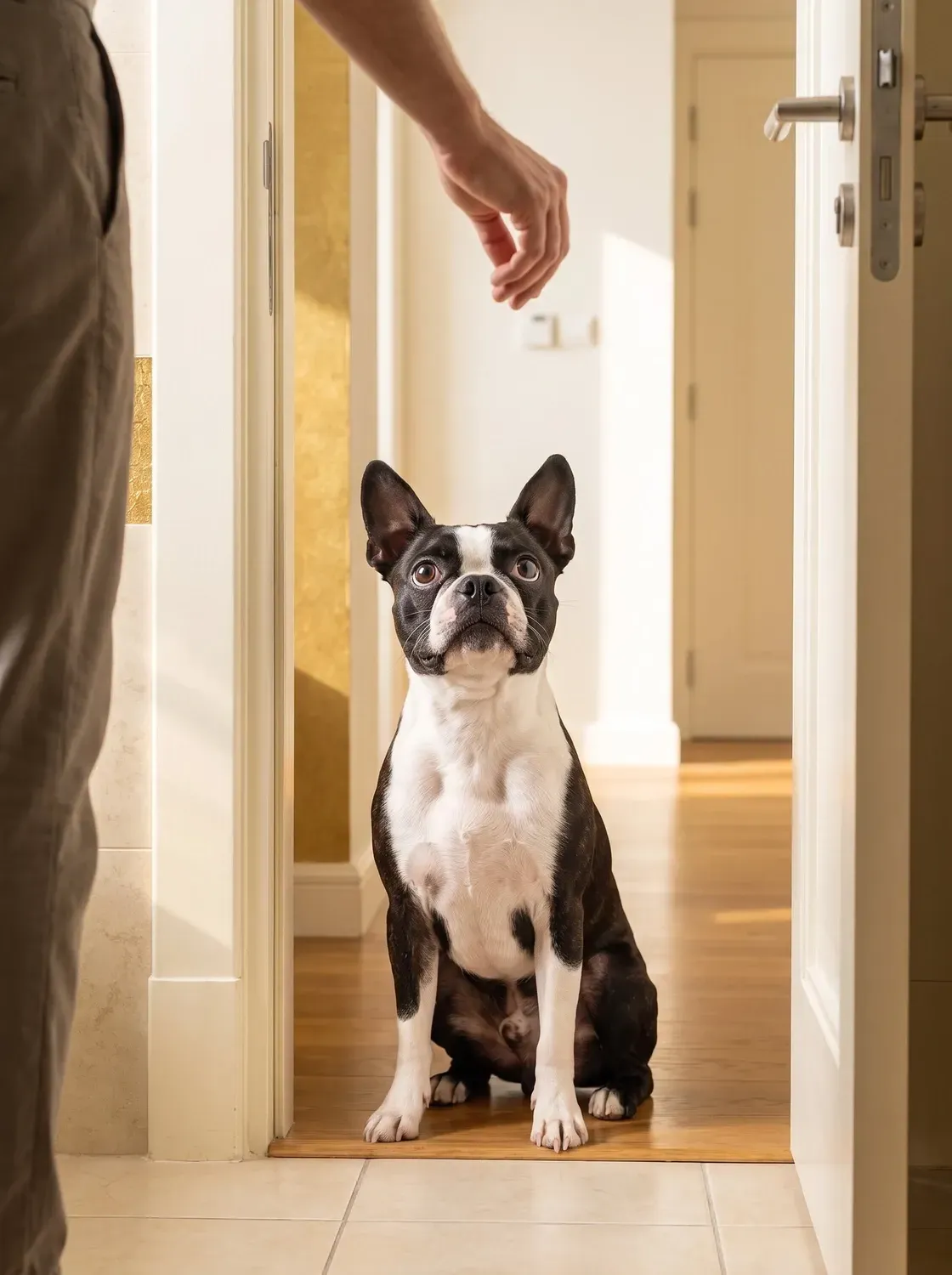
Boston Terrier, a black and white adult sitting in an open front doorway, looking up at a hand reaching down

At home

Why Boston Terriers love everyone

They greet the whole building like old friends, then follow you from room to room.

What's going onBostons were bred as companions, and wanting to be near you is normal. If they are truly upset when you leave, that is a reason to contact your vet.
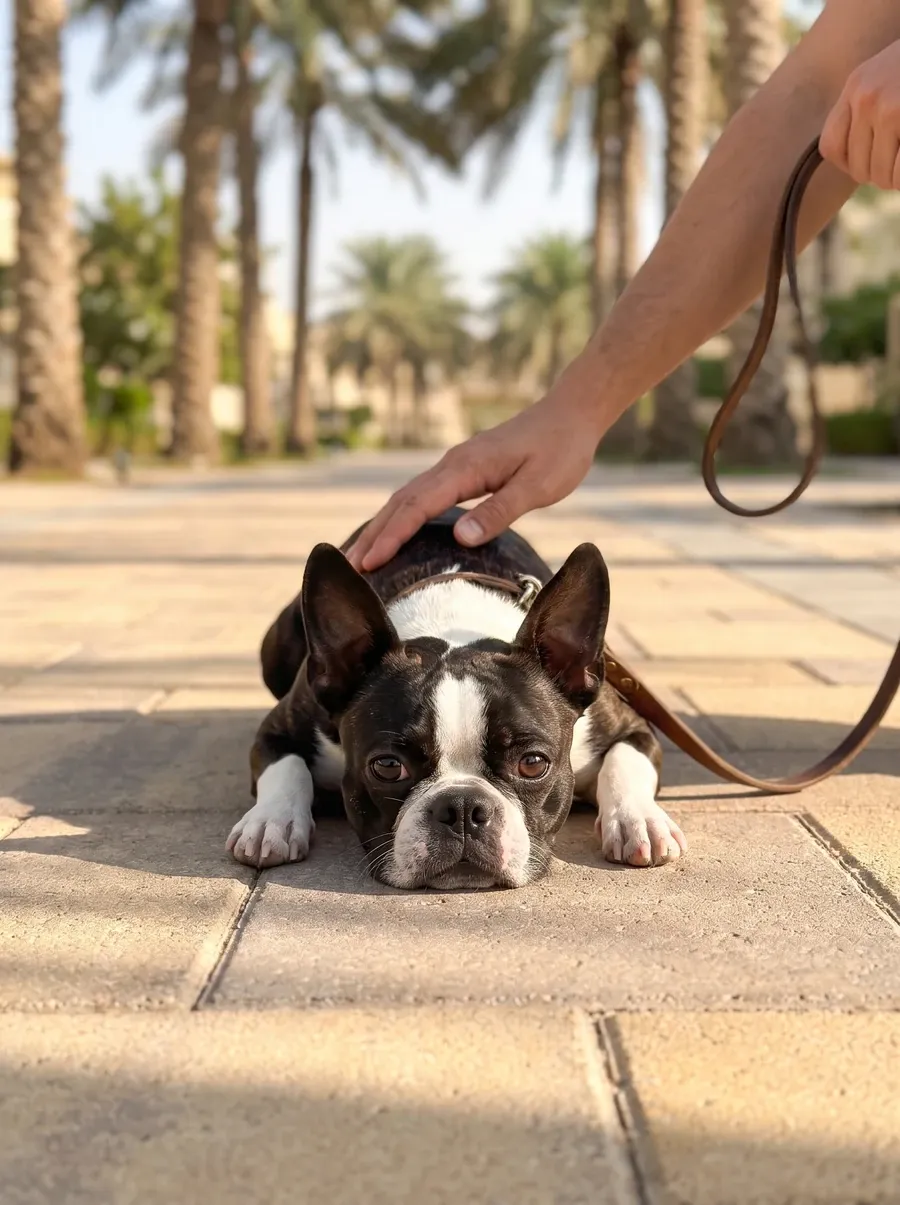
Boston Terrier in Dubai, a brindle and white adult lying flat on a palm-lined path at dawn, a hand on the dog's head

At home

They keep going, until they don't

Full of beans on the walk, then suddenly flat on the pavement.

What's going onThey are lighter and livelier than a Pug or a Bulldog, so they will run on when their airway has had enough. If they suddenly flop, or their breathing turns loud, that is the walk done. Get them somewhere cool.

Boston Terrier, a black and white adult asleep on a cream sofa cushion, chin resting on a paw

At home

Why Boston Terriers snort and reverse sneeze

Snorts when excited, snores at night, and now and then a loud, honking sneeze backwards.

What's going onSome Bostons make a reverse sneeze (sharp snorting breaths in). Loud breathing at rest, or breathing that gets louder over time, is worth telling your vet about. Snoring at night is worth filming and showing your vet too.

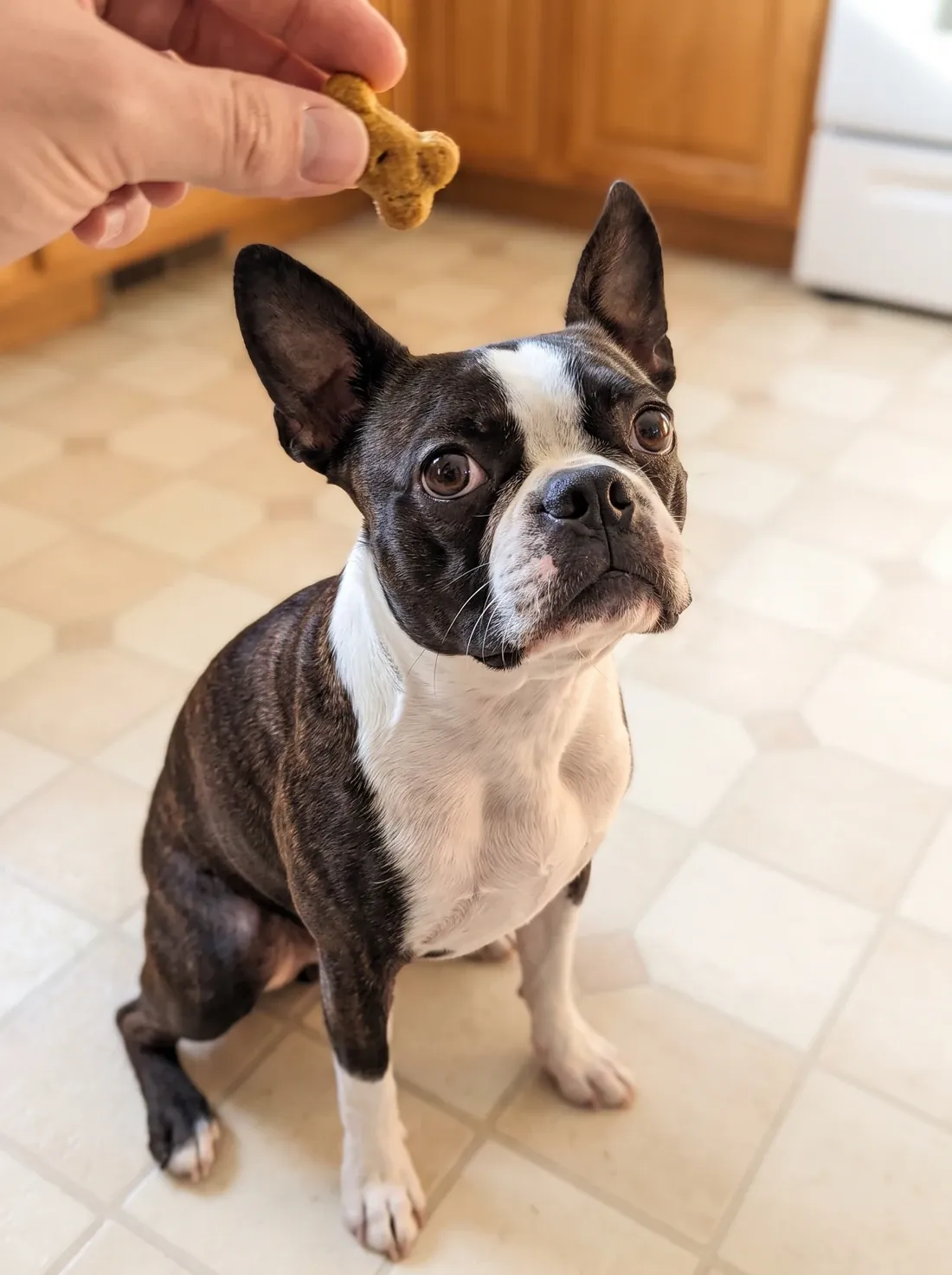
Boston Terrier, a brindle adult sitting on a kitchen floor, looking up at a treat in a hand

At home

The comedian in a dinner suit

Quick to learn, quicker when you are laughing, and keen to make you smile.

What's going onThey are bright and learn fast. Short sessions with small rewards keep them keen, and keep them cool.

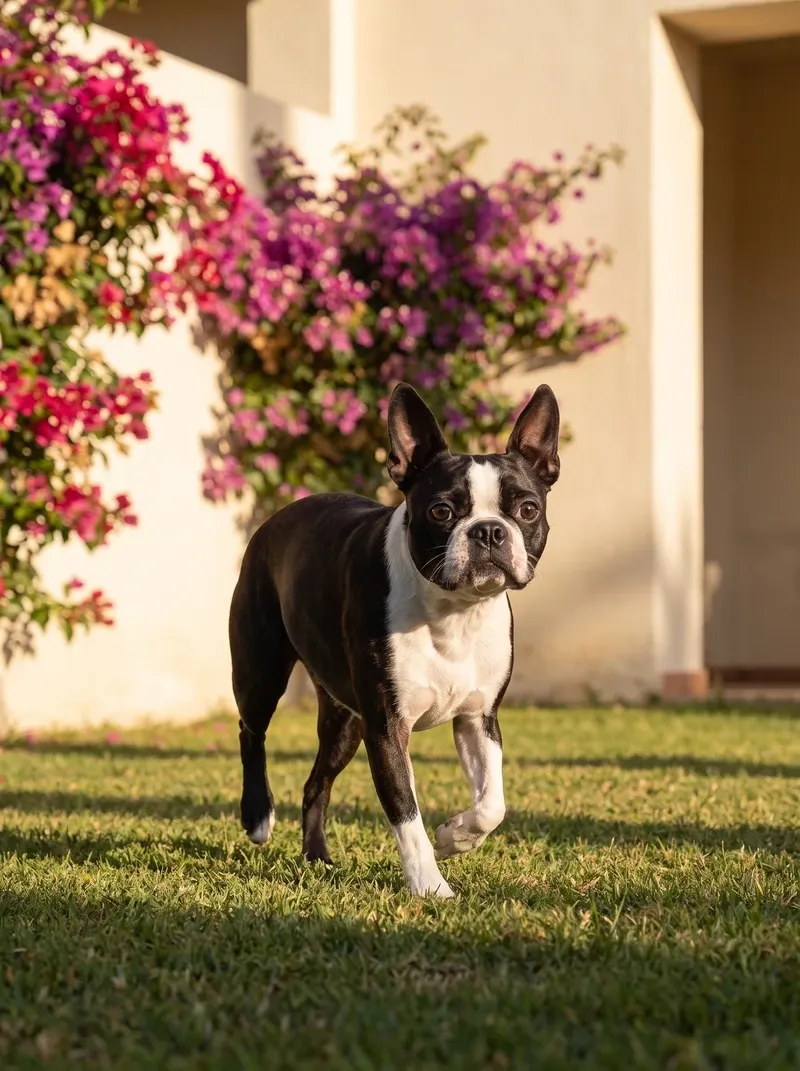
Boston Terrier, a black and white adult trotting across a villa lawn, bougainvillea on the cream wall behind

At home

Why does my Boston Terrier skip when running?

They run, lift one back leg for a few steps, then carry on as if nothing happened.

What's going onIt looks like a funny run. It can be a kneecap slipping out of place and back again. Tell your vet, keep them lean, and cut out repeated jumping.

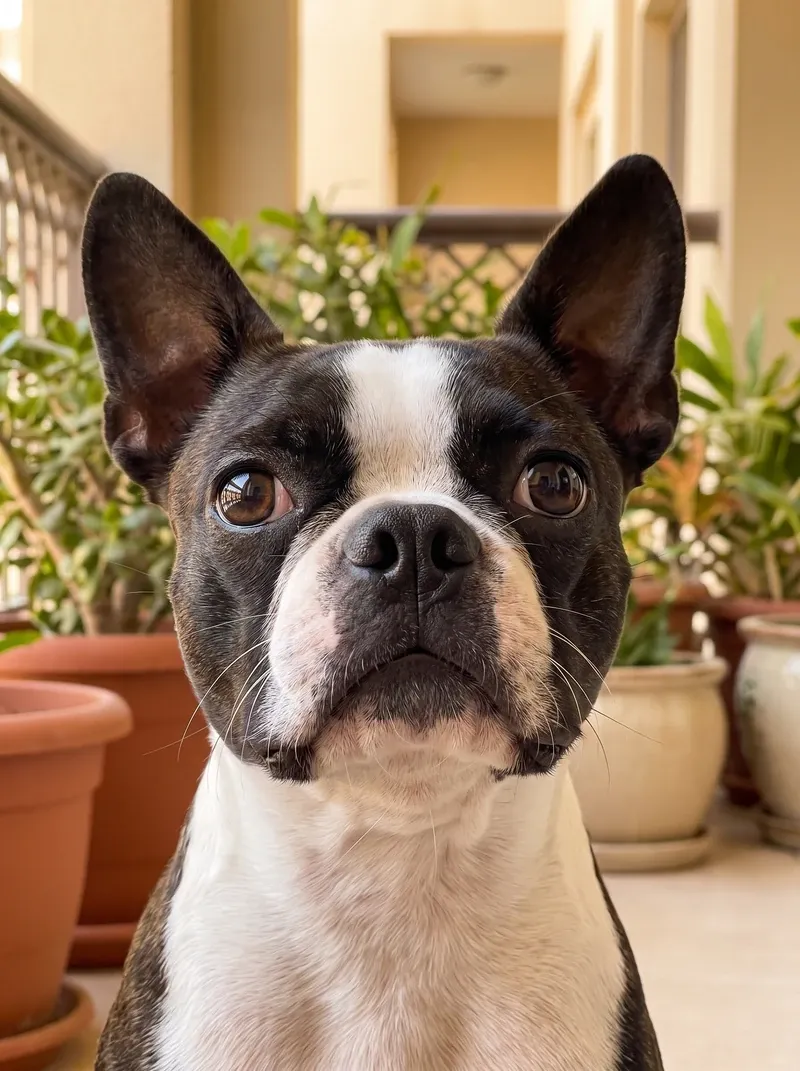
Boston Terrier, a close view of the face and large round eyes on a shaded balcony

At home

Those big eyes

Big, round and set right out in front, watching everything you do.

What's going onTheir eyes sit forward and take knocks from grass, branches and other dogs' paws. Squinting, rubbing or a weeping eye is worth showing your vet straight away.

A Boston in Dubai

The bit nobody tells you.

Their brief

Built for: Company, a fighter's descendant made small and gentle.

In Dubai: Company in a flat, which suits them.

Their cooling

Built for: Panting, through a short nose and a narrow airway.

In Dubai: A summer that runs from May to September.

Their eyes

Built for: Big and round, out in front of that face.

In Dubai: Grass, branches and other dogs' paws.

Their breathing usually ends the walk, and they are too keen to tell you in time.

You cannot change their face. You can plan their day around it, and the ten things below are how.

Your plan is built around their breed: the health risks for a Boston Terrier at every age, and the care that goes with each one.

Join the founding families. AED 1,999 of essential care for AED 199.

Daily care for a Boston

Ten things that make their life better.

Many of them are free, and most matter at every age.

  1. Heat is the thing their airway handles worst, and they will not always slow down by themselves.

    Every age, most of all puppies and from 7 years

    Free

    Why

    Heat is the thing their airway handles worst, and they will not always slow down by themselves.

    What to do

    From May to September, walk before sunrise and after dark only, and keep it short. Put the back of your hand on the pavement for five seconds: if you cannot keep it there, they cannot walk on it. Carry water, and never leave them in the car.

  2. Extra weight makes their airway work harder and puts more load on knees that are prone to slipping.

    Every age, most of all 2 to 7 years

    FreeIn your plan

    Why

    Extra weight makes their airway work harder and puts more load on knees that are prone to slipping.

    What to do

    Measure their meals and count treats as food. You should see a waist from above and feel their ribs without pressing. Weigh them once a month and write it down.

  3. A collar pulls on their throat, the part of them that already works hardest.

    Every age

    The cost of a harness

    Why

    A collar pulls on their throat, the part of them that already works hardest.

    What to do

    Use a harness that sits across their chest. Keep a collar for their tag if you like, and never clip the lead to it. Refit the harness as they grow.

  4. They will play on after their airway has had enough, and scrambles with bigger dogs risk their eyes.

    Every age, most of all under 2 years

    Free

    Why

    They will play on after their airway has had enough, and scrambles with bigger dogs risk their eyes.

    What to do

    Short bursts of play with rests between. Stop before their breathing gets loud. Keep their games with dogs their own size, and away from thorny hedges.

  5. Snoring and restless sleep are easy to miss as signs of Brachycephalic Airway Syndrome (the flat-faced breathing problem).

    Every age, screening as a puppy, evaluated again as a juvenile

    Free to filmIn your plan

    Why

    Snoring and restless sleep are easy to miss as signs of Brachycephalic Airway Syndrome (the flat-faced breathing problem).

    What to do

    One night, film two minutes of them asleep, sound on. Note snoring, pauses in their breathing or waking with a start, and show your vet. Their airway is screened as a puppy and evaluated again as a juvenile.

  6. Many Bostons swim poorly. Their nose is short and they tire quickly in water.

    Every age, most of all puppies and from 7 years

    The cost of a life jacket

    Why

    Many Bostons swim poorly. Their nose is short and they tire quickly in water.

    What to do

    Fence the pool or keep them out of the pool area. Near water, on a boat or at the beach, put them in a dog life jacket with a handle, and keep your hand on it.

  7. In a warm room they have no way to shed the heat they build up.

    Every age, more so every year from 7

    Free, or the cost of a cooling mat

    Why

    In a warm room they have no way to shed the heat they build up.

    What to do

    Keep their room air-conditioned from May to September, with a tiled spot or a cooling mat, and water in two places.

  8. Their eyes sit forward and scratch easily, and cataracts (clouding of the lens) can start young.

    Every age, cataracts from 6 months on

    FreeIn your plan

    Why

    Their eyes sit forward and scratch easily, and cataracts (clouding of the lens) can start young.

    What to do

    Each evening, look at both eyes in good light. Wipe away any discharge with a clean, damp cloth. For squinting, rubbing, a weeping eye or any cloudiness, contact your vet.

  9. Patellar Luxation (PL, a slipping kneecap) is common in the breed from puppyhood.

    Every age, most of all under 4 years

    Free, or the cost of a rampIn your plan

    Why

    Patellar Luxation (PL, a slipping kneecap) is common in the breed from puppyhood.

    What to do

    Put rugs down where they run on marble, use a ramp or lift them down from the sofa, and cut out repeated jumping. If they skip a step with a back leg, tell your vet. An orthopaedic evaluation (a joint and bone exam) is in your plan from six months to four years.

  10. They are quick and keen, and long sessions leave them panting.

    Every age, easiest under 2 years

    Free

    Why

    They are quick and keen, and long sessions leave them panting.

    What to do

    Two or three minutes indoors, paid with pieces of their dinner. Teach them early to let you look into their eyes, hold their face and brush their teeth every day. It makes eye drops, health checks and tooth brushing easy later on.

Four of these are in your plan. The rest you can do at home.

Join the founding families. AED 1,999 of essential care for AED 199.

Boston health by age

Their health, at every age.

In a Boston Terrier, a squint, a skip in their run or tiring sooner on a walk can be the first sign that something needs a look. Choose their age to see what to watch for, and the care that goes with it.

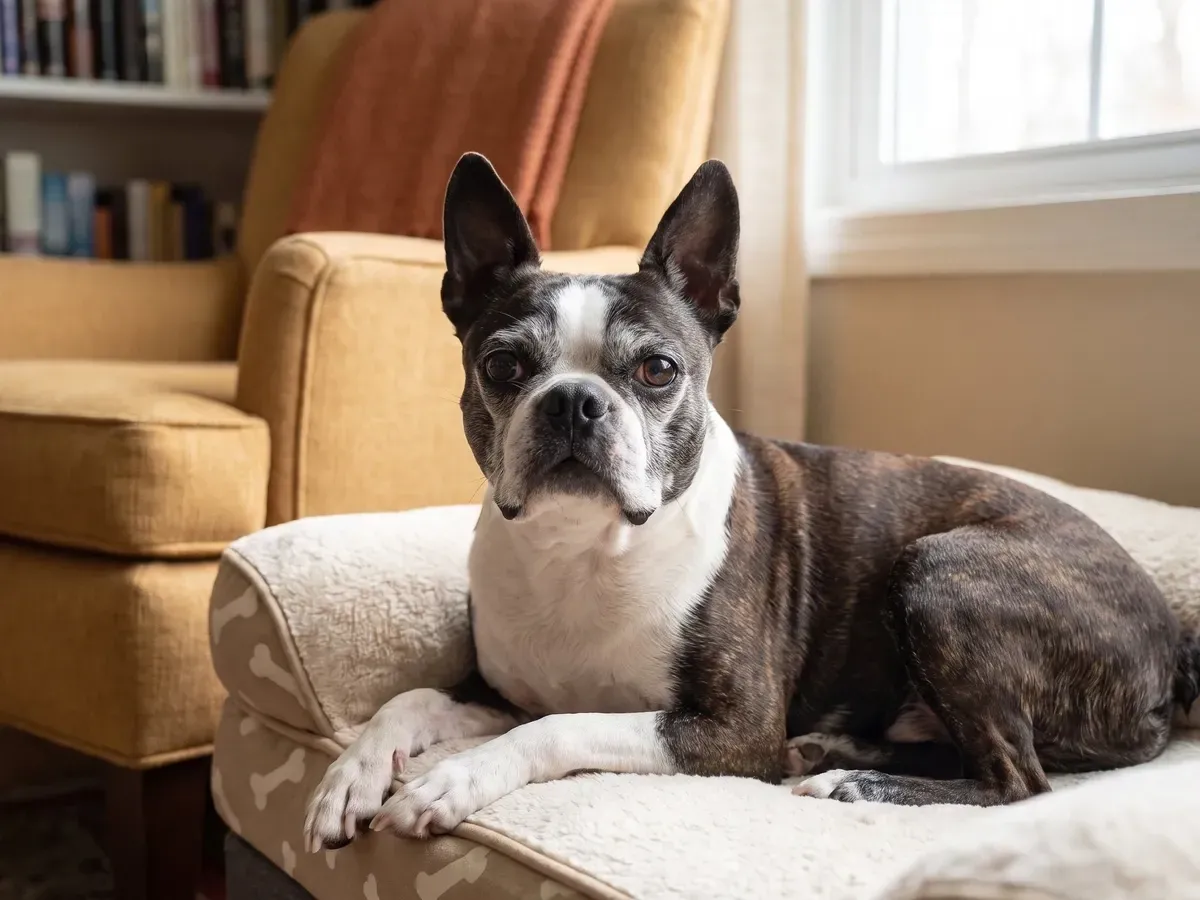
Boston Terrier, an older brindle dog with a greying muzzle resting on a soft bed by an armchair

How old are they?

Their age

Boston Puppy health

the first six months

What to watch for

  1. Early or congenital expression of Brachycephalic Airway Syndrome (flat-faced breathing difficulty)
  2. Developmental or early clinical signs of Patellar Luxation (PL, slipping kneecap)
  3. Juvenile onset of allergies
  4. Congenital or early inherited ocular disease related to Eye Conditions (Corneal Ulcers, Proptosis)
  5. Congenital murmur or early cardiac abnormality related to Heart Murmurs

The care that goes with it

  1. Core vaccinations, microchip and Dubai Municipality registration
  2. Deworming, and flea and tick prevention
  3. Body Condition Score (a check on whether they are the right weight), growth and nutritional evaluation, and early socialisation
  4. Brachycephalic Airway Syndrome (flat-faced breathing difficulty) screening, as a baseline
  5. Early follow-up for any signs of Patellar Luxation (PL, a slipping kneecap)
  6. Regular ophthalmic evaluation (eye exam), skin and allergy evaluation, and cardiac evaluation (heart check)
The full care detail
  • Core vaccination programme, microchipping and Dubai Municipality registration. Titre testing discussion where clinically appropriate; not a substitute for completing the core vaccine series
  • Deworming and external parasite prevention tailored to Dubai exposure
  • Body Condition Score (BCS), Muscle Condition Score (MCS), dental, growth and nutritional evaluation, and early socialisation
  • Baseline screening focused on Brachycephalic Airway Syndrome
  • Early diagnostic follow-up for signs suggestive of Patellar Luxation (PL)
  • Regular ophthalmic evaluation, skin and allergy evaluation and cardiac evaluation

Their age

Boston Juvenile health

6 months to 2 years

What to watch for

  1. Young-dog presentation of Brachycephalic Airway Syndrome (flat-faced breathing difficulty)
  2. Emerging Patellar Luxation (PL, slipping kneecap) with exercise intolerance or lameness
  3. Recurrent or persistent allergies
  4. Progression or first clinical detection of Cataracts (clouding of the lens)
  5. Early clinical or screening evidence of Heart Murmurs

The care that goes with it

  1. Airway evaluation
  2. Orthopaedic evaluation (joint and bone exam)
  3. Neutering or spaying, timed for a small breed
  4. Allergy testing, and finding the cause of any flare that keeps coming back
  5. Cardiac monitoring (regular heart checks)
The full care detail
  • Airway evaluation
  • Orthopaedic evaluation
  • Neuter/spay timing discussion that accounts for small-breed growth and disease risk
  • Allergy testing, Investigate recurrent signs rather than repeatedly treating presumed Allergies
  • Cardiac monitoring

Their age

Boston Young Adult health

2 to 4 years

What to watch for

  1. Brachycephalic Airway Syndrome (flat-faced breathing difficulty)
  2. Patellar Luxation (PL, slipping kneecap)
  3. Allergies
  4. Cataracts (clouding of the lens)
  5. Heart Murmurs

The care that goes with it

  1. Airway evaluation, and surgery to open the airway if it will help
  2. Orthopaedic evaluation (joint and bone exam)
  3. Allergy testing
  4. Ophthalmic evaluation (eye exam)
  5. Auscultation (listening to the chest)
The full care detail
  • Airway evaluation, Surgical airway correction
  • Orthopaedic evaluation
  • Allergy testing
  • Ophthalmic evaluation
  • Cardiac auscultation

Their age

Boston Prime Adult health

4 to 7 years

What to watch for

  1. Brachycephalic Airway Syndrome (flat-faced breathing difficulty)
  2. Patellar Luxation (PL, slipping kneecap)
  3. Allergies
  4. Cataracts (clouding of the lens)
  5. Heart Disease

The care that goes with it

  1. Surgery to open the airway, if it will help
  2. Orthopaedic monitoring of their knees and joints
  3. Allergy management
  4. Eye care
  5. Cardiac evaluation (heart check)
The full care detail
  • Surgical airway correction
  • Orthopaedic monitoring
  • Allergy management
  • Eye care
  • Cardiac evaluation

Their age

Boston Senior health

7 to 10 years

What to watch for

  1. Heart Disease
  2. Brachycephalic Airway Syndrome (flat-faced breathing difficulty)
  3. Cataracts (clouding of the lens)
  4. Arthritis
  5. Allergies

The care that goes with it

  1. Treatment for the heart, where it is needed
  2. Airway management
  3. Treatment for the eyes, where it is needed
  4. Pain control
  5. Allergy treatment, where it is needed
The full care detail
  • Cardiac therapy
  • Airway management
  • Ophthalmic treatment
  • Pain control
  • Allergy treatment

Their age

Boston Geriatric health

10 years and over

What to watch for

  1. Heart Failure
  2. Brachycephalic Airway Syndrome (flat-faced breathing difficulty)
  3. Cataracts (clouding of the lens)
  4. Arthritis
  5. Cognitive Dysfunction (dementia in older pets)

The care that goes with it

  1. Advanced heart care
  2. Airway support
  3. Eye surgery, where it will help
  4. Pain management
  5. Support for changes in behaviour as they age
  6. Quality-of-life assessments
  7. Palliative care (comfort care)
  8. End-of-life planning with your vet team, when the time comes
The full care detail
  • Advanced cardiac care
  • Airway support
  • Eye surgery
  • Pain management
  • Behavioural therapy
  • Quality-of-life assessments
  • Tailored palliative and comfort-focused care plan
  • Compassionate end-of-life planning with your veterinary team

Breed predispositions indicate an increased risk rather than certainty of disease. What is right for them always comes from their own history and an evaluation.

Getting a Boston puppy in Dubai

Before they come home.

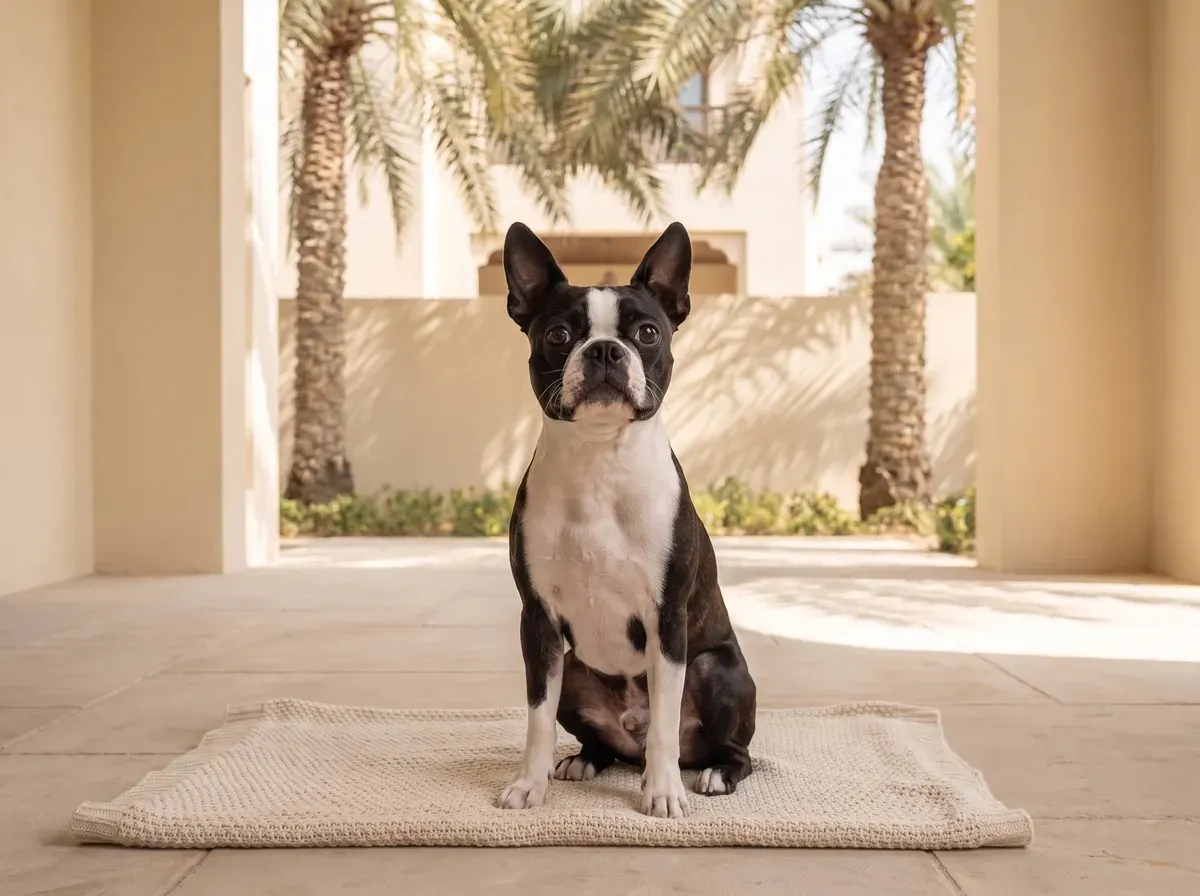
Boston Terrier in Dubai, a black and white adult sitting on a cream blanket on a shaded villa terrace, palms behind

Three sizes

Small, smaller and smallest

Bostons range from very small, under 6.8 kg, up to 11.3 kg. Whatever the size, it is the same friendly, lively dog in the same tuxedo, with the same need for a cool room.

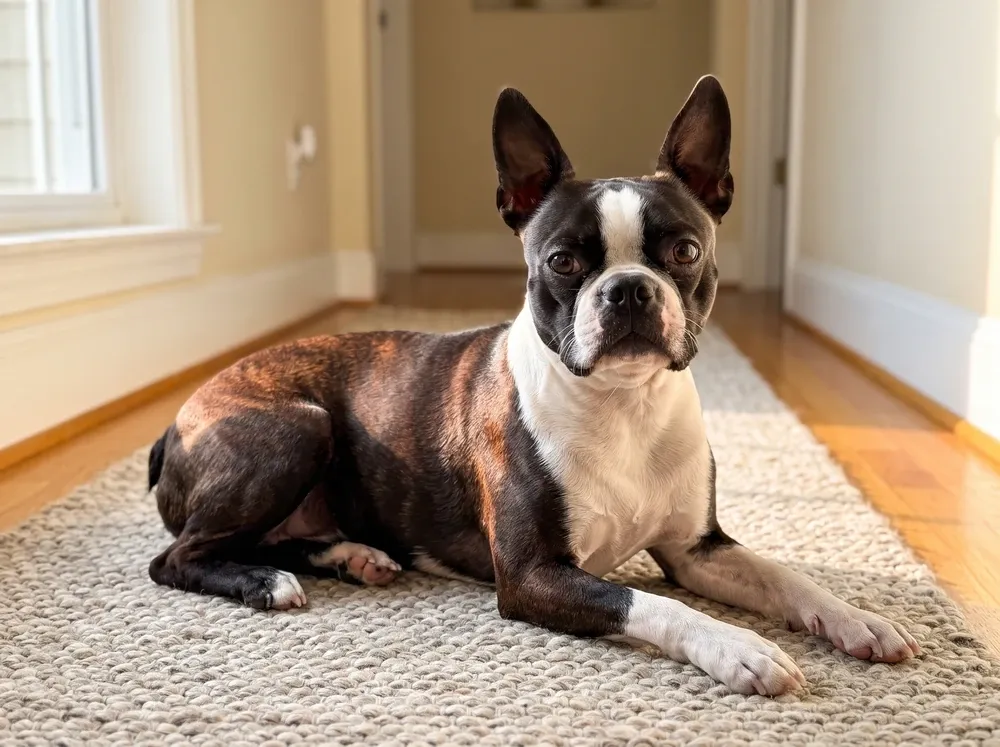
Boston Terrier, a seal and white adult lying on a woven rug in a bright hallway

Colours

Brindle, seal or black, in a tuxedo

Bostons come in brindle, seal (a black with a red glow in bright light) or black, usually with white on the muzzle, between the eyes and across the chest. That white is the dinner suit the breed is known for.

Boston Terrier, a brindle and white puppy asleep in a pet parent's lap in a linen armchair

The first six months

Boston Terrier puppy care

Their full vaccination course, microchip and Dubai Municipality registration come first, with a baseline screening of their breathing and regular evaluations of their eyes, skin and heart. Keep play to a few minutes at a time, indoors in summer, because puppies overheat fastest.

Puppy health, 0 to 6 months
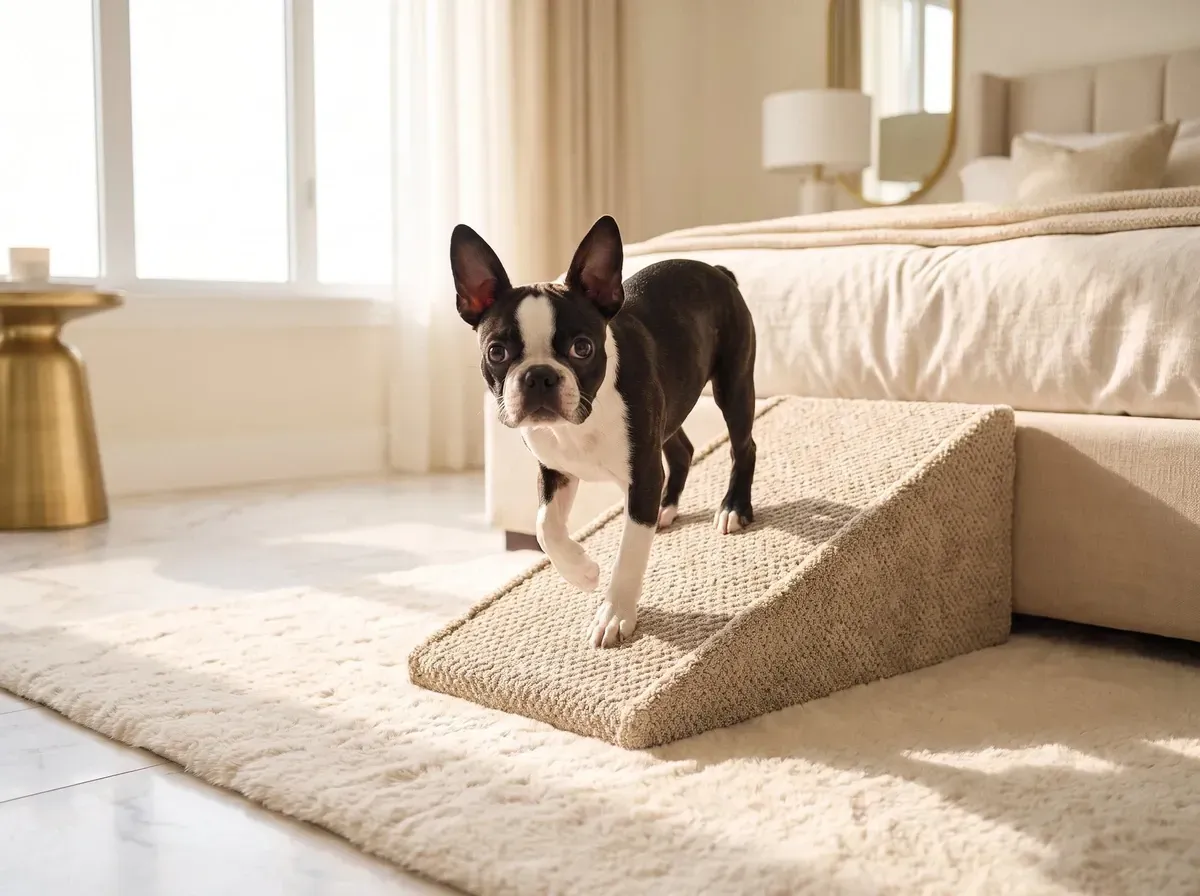
Boston Terrier, a black and white puppy stepping off a low ramp beside a bed in a bright bedroom

Getting the flat ready

A cool room, rugs and a ramp

Give them an air-conditioned room with a tiled spot or a cooling mat, and water in two places. Put rugs down where they run on marble, a ramp up to the sofa, and a gate across any way to the pool.

Ten things that make their life better
Boston Terrier in Dubai, a brindle mother lying beside a puppy in a shaded villa courtyard with a date palm

Before you commit

Ask about breathing and eyes

Ask the breeder how both parents breathe, and how their eyes have been. It shapes the whole life of the puppy you take home.

The reception of a Paws & Co clinic, with long cream benches and a stone reception desk

Before the clinics open

Join the founding families

AED 1,999 of essential care for AED 199. No payment now.

When to see a vet

When it is not behaviour.

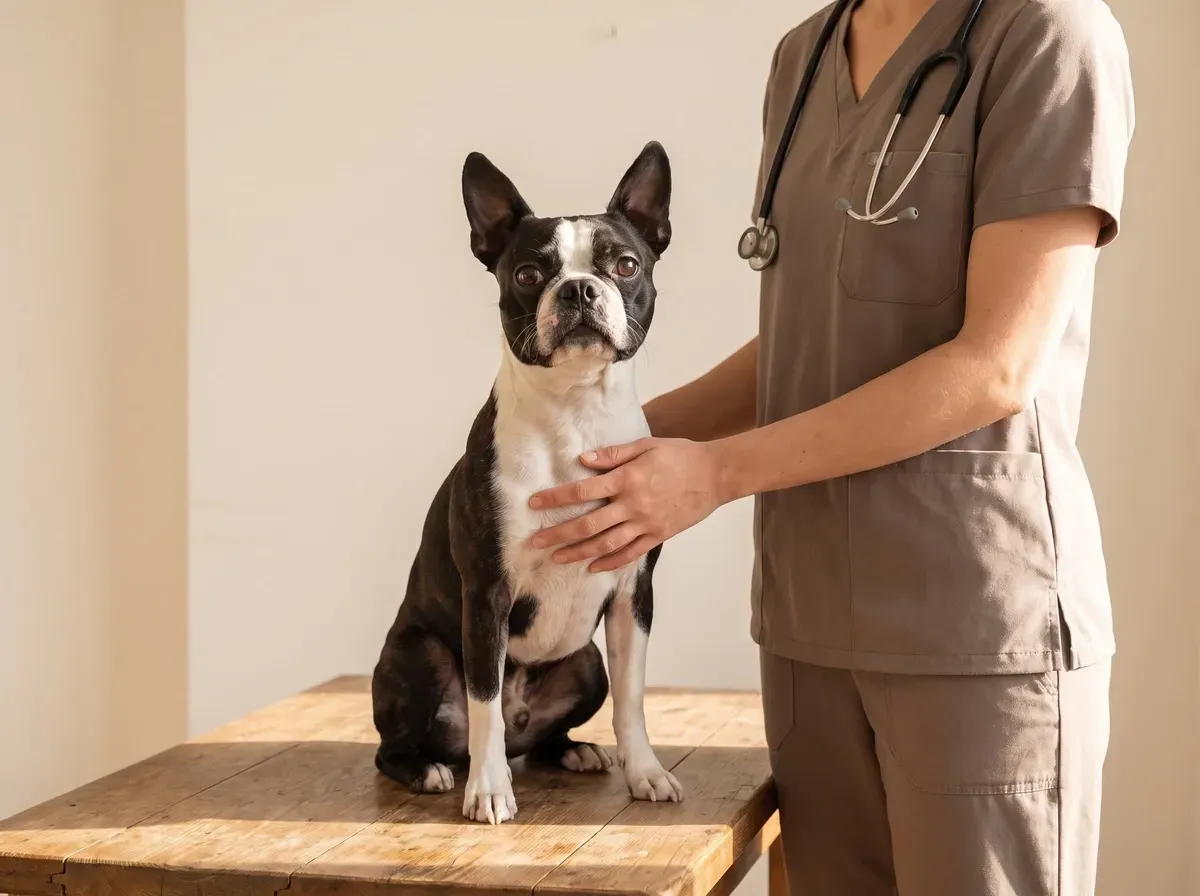
Boston Terrier, an adult sitting on a low timber table with a hand from a vet in taupe scrubs on the dog's chest

Some of this is not a training problem, and treating it like one wastes time your dog may not have. If they are distressed when you leave, if they growl or guard their food, their toys or you, if they are frightened on the lead, or if anything about them changes suddenly at any age, contact your vet the same day. A tip from a website, ours included, is not the answer. If it cannot wait, contact your nearest emergency vet now.

With a Boston, watch the eyes and the breathing. A squint can be a scratched eye, and an eye that suddenly bulges or pops forward is an emergency. Tiring sooner can be their airway or their heart. If their breathing turns loud, or they cannot settle after a walk in the heat, get them cool and contact your vet now. Bloat (GDV, a twisted stomach) needs the same speed: a swollen, tight belly, retching with nothing coming up, sudden restlessness or drooling. It can happen in any dog, though it is most common in large, deep-chested breeds.

They'll keep claiming your lap. Walk them before sunrise, then let them have it.

Boston history

Before they were yours.

  1. Boston Terrier history, Rose, a white bull and terrier with dark patches, at the Paris dog show, May 1863
    Rose, a bull and terrier, photographed at the Paris dog show in May 1863.

    Around 1870

    Boston, and a dog called Judge

    A Boston man called Robert Hooper bought Judge, a cross between an English Bulldog and a white English Terrier. Nearly every Boston alive today traces back to that one dog.

    What they still carryA bulldog's face on a lighter, livelier terrier body.

  2. Boston Terrier history, Champion Remlik Bonnie, an early dog of the breed with cropped ears, standing side-on, 1890
    Champion Remlik Bonnie, an early Boston Terrier, photographed in 1890.

    1870s to 1890

    Bred down to a companion

    Breeders in Boston made Judge's descendants smaller and gentler, a companion rather than a fighter.

    What they still carryThe friendly, lively dog who is easy in a flat.

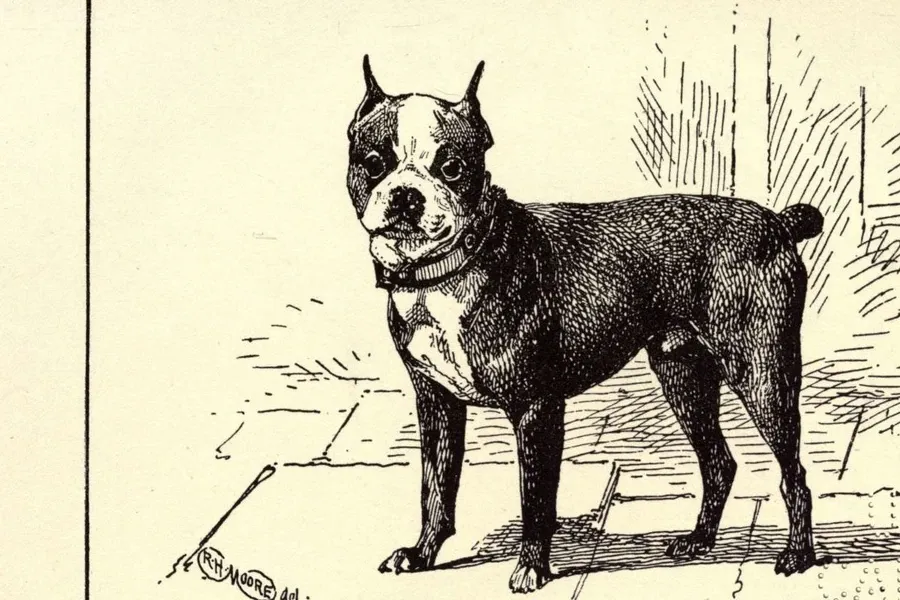
  3. Boston Terrier history, an ink drawing of Turpin, with white tuxedo markings, standing on a pavement, 1900
    Turpin, a Boston Terrier, drawn by R. H. Moore for All About Dogs, 1900.

    1891 to 1893

    An American first

    The Boston Terrier Club of America formed in 1891, and the American Kennel Club recognised the breed in 1893, one of the first breeds developed in the United States.

    What they still carryThe neat black and white markings, and their nickname, the American Gentleman.

  4. Boston Terrier history, the breed today, a brindle adult lying on a Dubai park lawn under date palms

    Today

    In Dubai

    In the UAE a Boston lives as company in a flat or a villa, in a city where summer runs from May to September.

    What they still carryA small, lively dog who feels the heat quickly, which is why their day is planned around the cool.

Boston questions

The ones you type at midnight.

Most of these get asked late at night, by someone watching their dog and not sure what they are seeing.

Boston Terrier in Dubai, asleep on a dark rug under a lamplit desk in the evening, the skyline beyond
How long do Boston Terriers live?

Many Boston Terriers live 11 to 15 years. In a large UK study of almost 2,000 Bostons, half lived to nearly 12.

How big do Boston Terriers get?

A fully grown Boston Terrier weighs up to 11.3 kg. Some are much smaller: the breed runs from under 6.8 kg up to 11.3 kg.

What is the Boston Terrier temperament like?

Boston Terriers are friendly, intelligent and lively, brilliant with families and content in a flat. Known as the American Gentleman, they are bright, quick to learn and love to make you laugh.

Do Boston Terriers shed?

Boston Terriers shed lightly to moderately. A brush several times a week keeps that short coat looking sharp.

What colours do Boston Terriers come in?

Boston Terriers come in brindle, seal or black, usually with white on the muzzle, between the eyes and across the chest.

Can a Boston Terrier live in Dubai?

Yes, a Boston Terrier can live happily in Dubai, but their flat face means they feel the heat quickly. Keep them in air conditioning from May to September, and walk only before sunrise and after dark.

Why does my Boston Terrier reverse sneeze?

Some Boston Terriers make a honking reverse sneeze, sharp snorting breaths in, which comes with the flat face. Loud breathing at rest, or breathing that gets louder over time, is worth telling your vet about.

Why is my Boston Terrier squinting?

A Boston Terrier who squints, rubs an eye or has a weeping eye may have scratched it, because their eyes sit forward and take knocks. Contact your vet rather than waiting to see.

Can Boston Terriers swim?

Many Boston Terriers swim poorly: their nose is short and they tire quickly in water. Fence the pool, and near water use a dog life jacket with a handle.

Worried about them? Contact your vet today.