We’re hiring people who love them like we do. Join us careers@pawsandco.comSee open roles
UAE Government Licensed MOCCAE
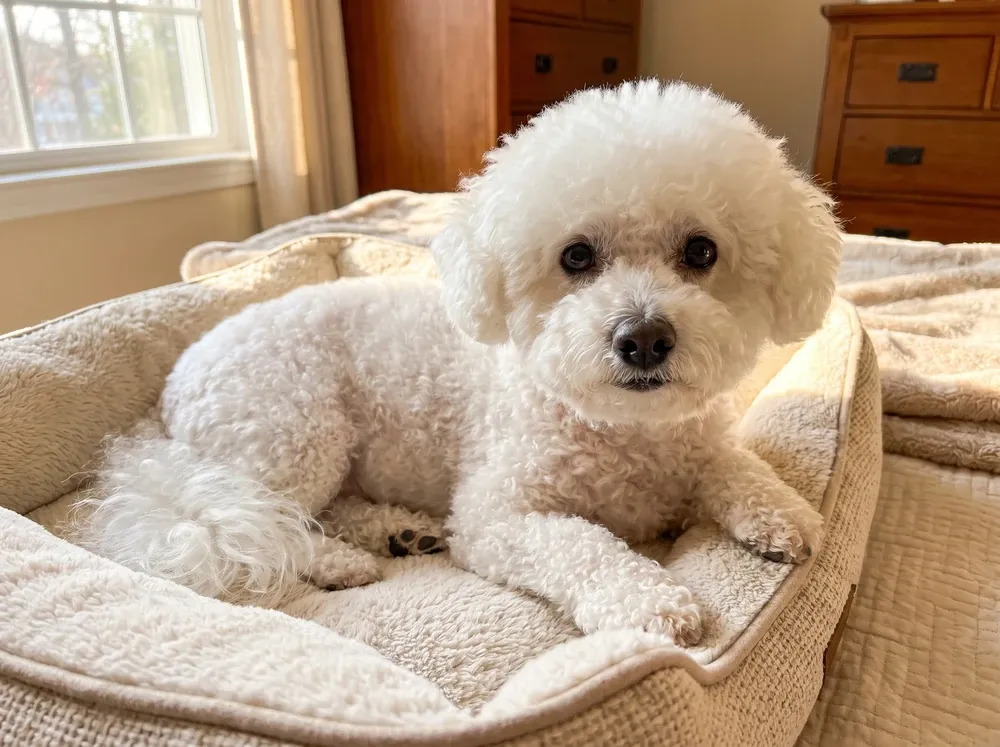
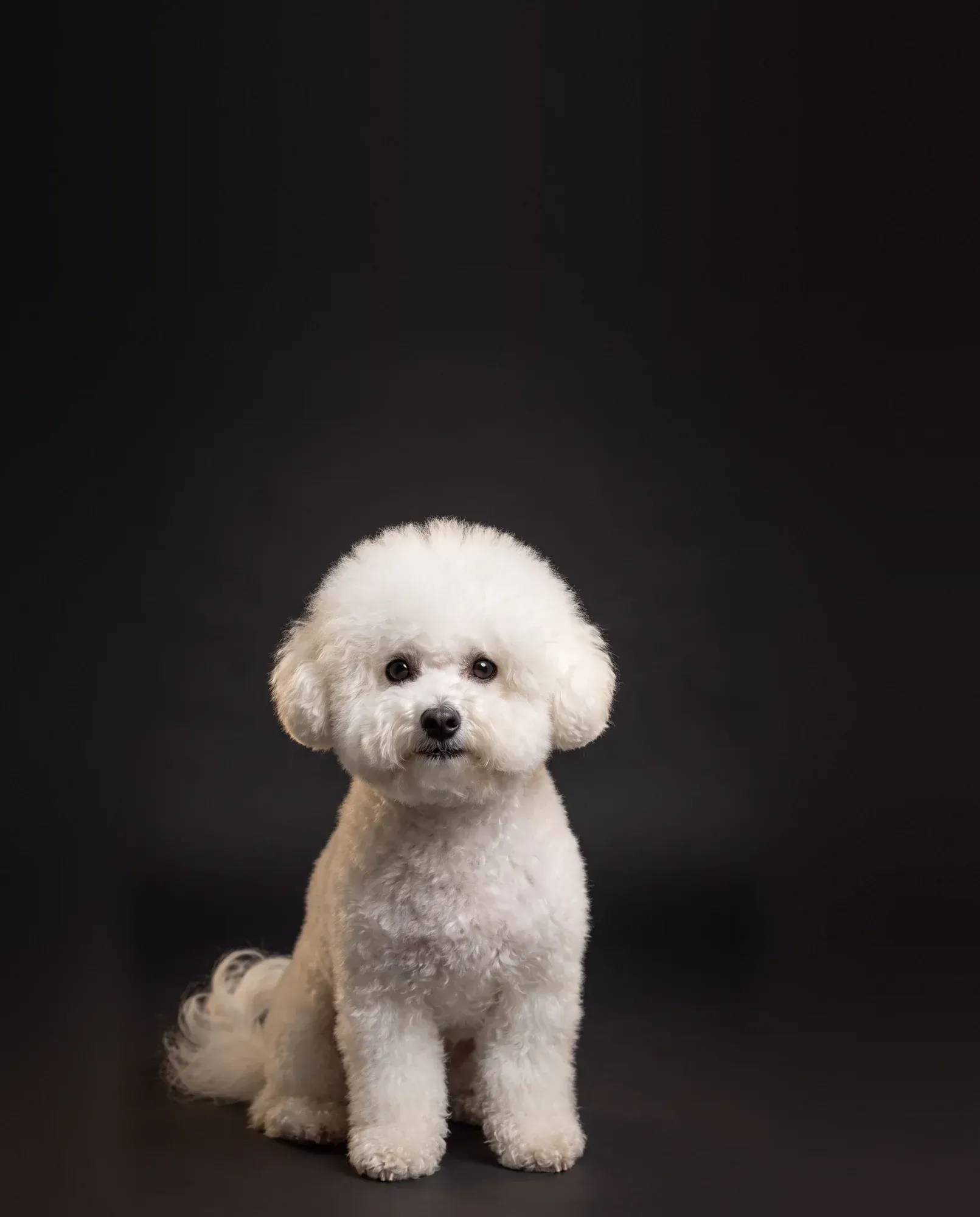
Bichon Frise in Dubai, studio portrait of a white adult with a rounded trim, sitting

Breed guide  ·  Dogs

Bichon Frise

His ancestors did tricks in the circus. I pay him in his own dinner.

Lifespan
14 to 15 years
Size
Small
Weight
5.5 to 8 kg
Shedding
Very low

Last updated 14 October 2026

Join the founding families. AED 1,999 of essential care for AED 199.

No payment now. We'll be in touch by email and WhatsApp as we open enrolment.

✓
Thank you.

We will be in touch soon to confirm.

Bichon Frise traits

What they brought with them.

Tap a card to see what is going on.

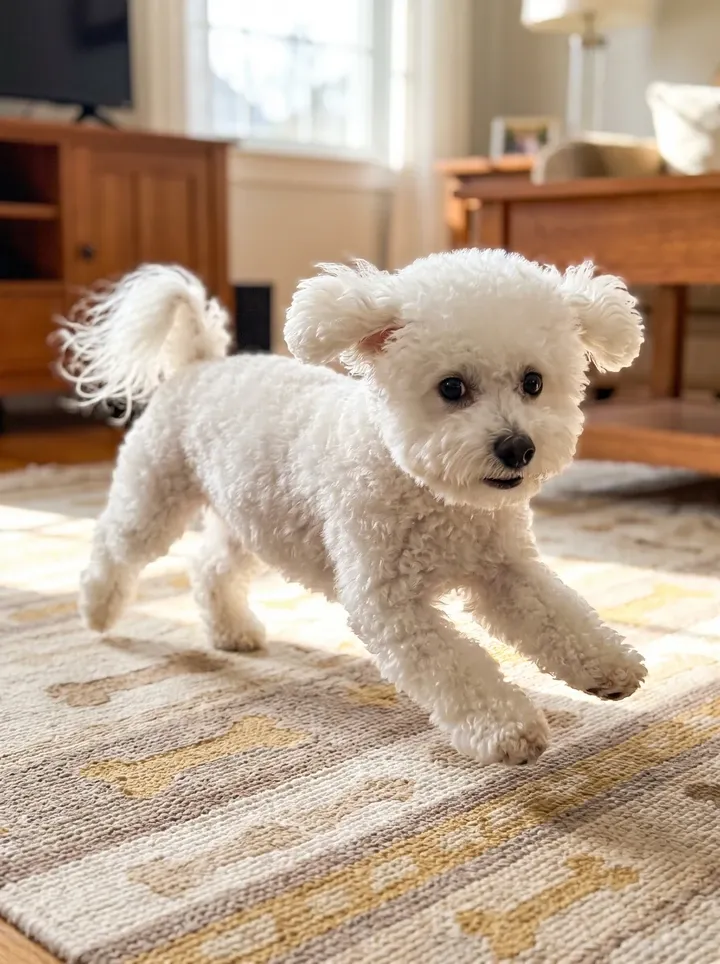
Bichon Frise, a white puppy mid-run across a woven living room rug

At home

Why does my Bichon do zoomies?

Out of nowhere, flat-out laps round the flat, then straight back onto your lap.

What's going onOwners call it the Bichon blitz, and it is play, often after a bath, a meal or a long rest. Give them a rug to run on, because slipping on marble is hard on small knees.

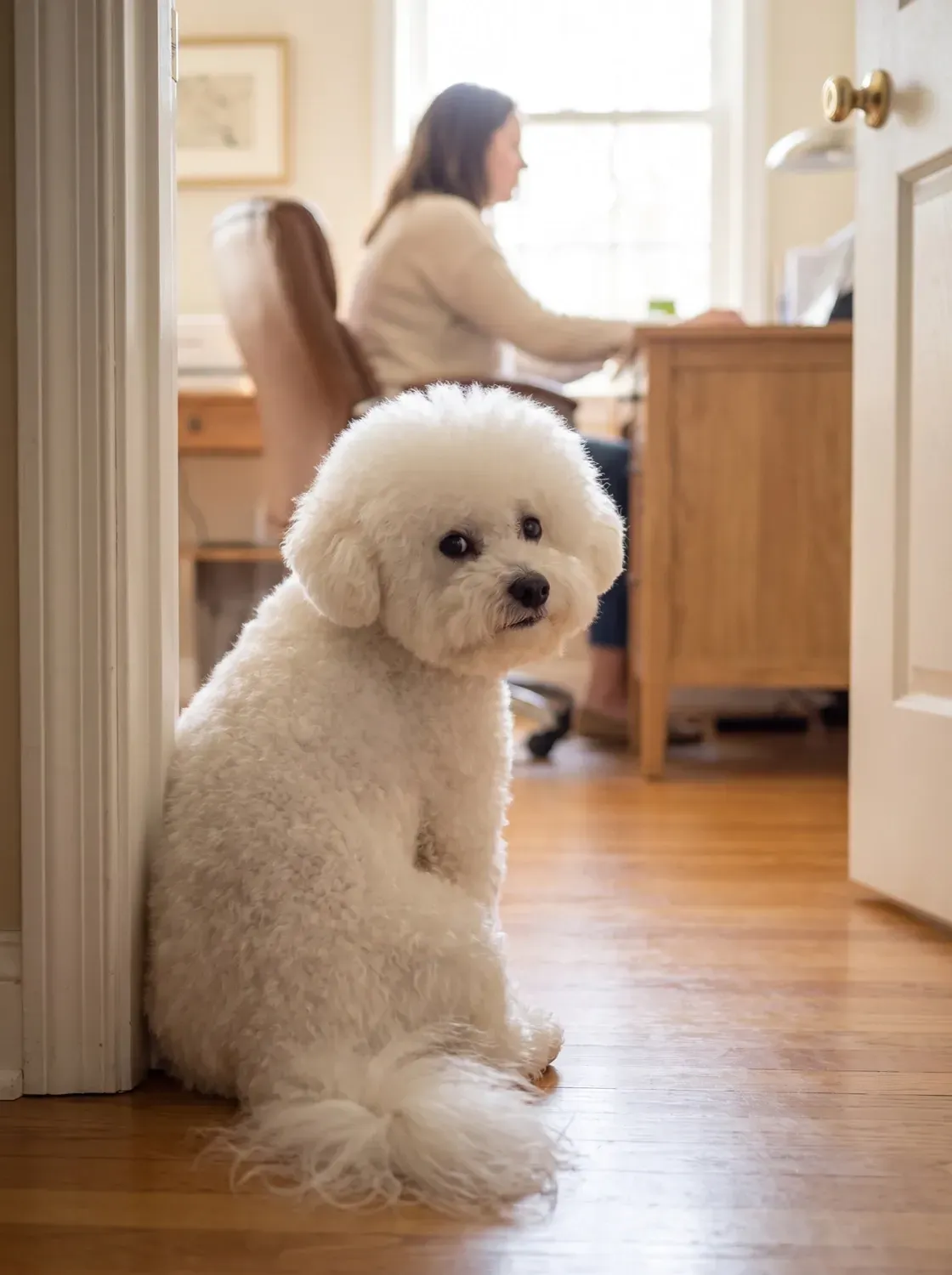
Bichon Frise, an adult sitting in a home office doorway, looking back at a pet parent at a desk

At home

Why does my Bichon follow me everywhere?

Room to room all day, and waiting outside the bathroom door until you are back.

What's going onBichons were kept as lap dogs at court for centuries, so wanting to be with you is the breed doing its job. Teach short spells alone while they are a puppy, and if they are distressed when you leave, contact your vet.

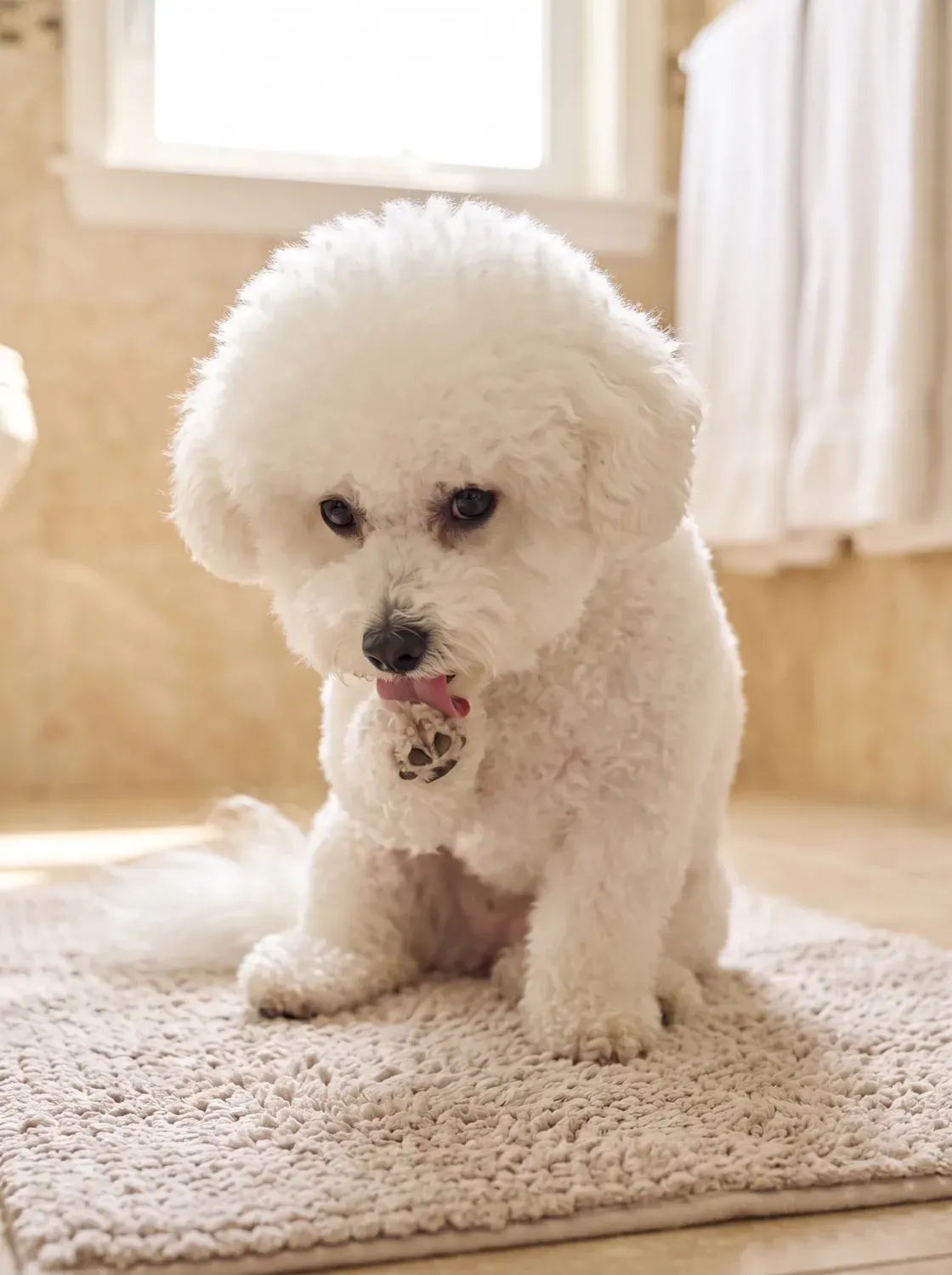
Bichon Frise, an adult sitting on a bath mat, licking a front paw

At home

Why does my Bichon lick their paws?

Licking their paws for ages, rubbing their face along the carpet, shaking their head.

What's going onItchy skin and ear infections are known risks for a Bichon from puppyhood. Tell your vet, so they can find the cause rather than treat the same itch every month.

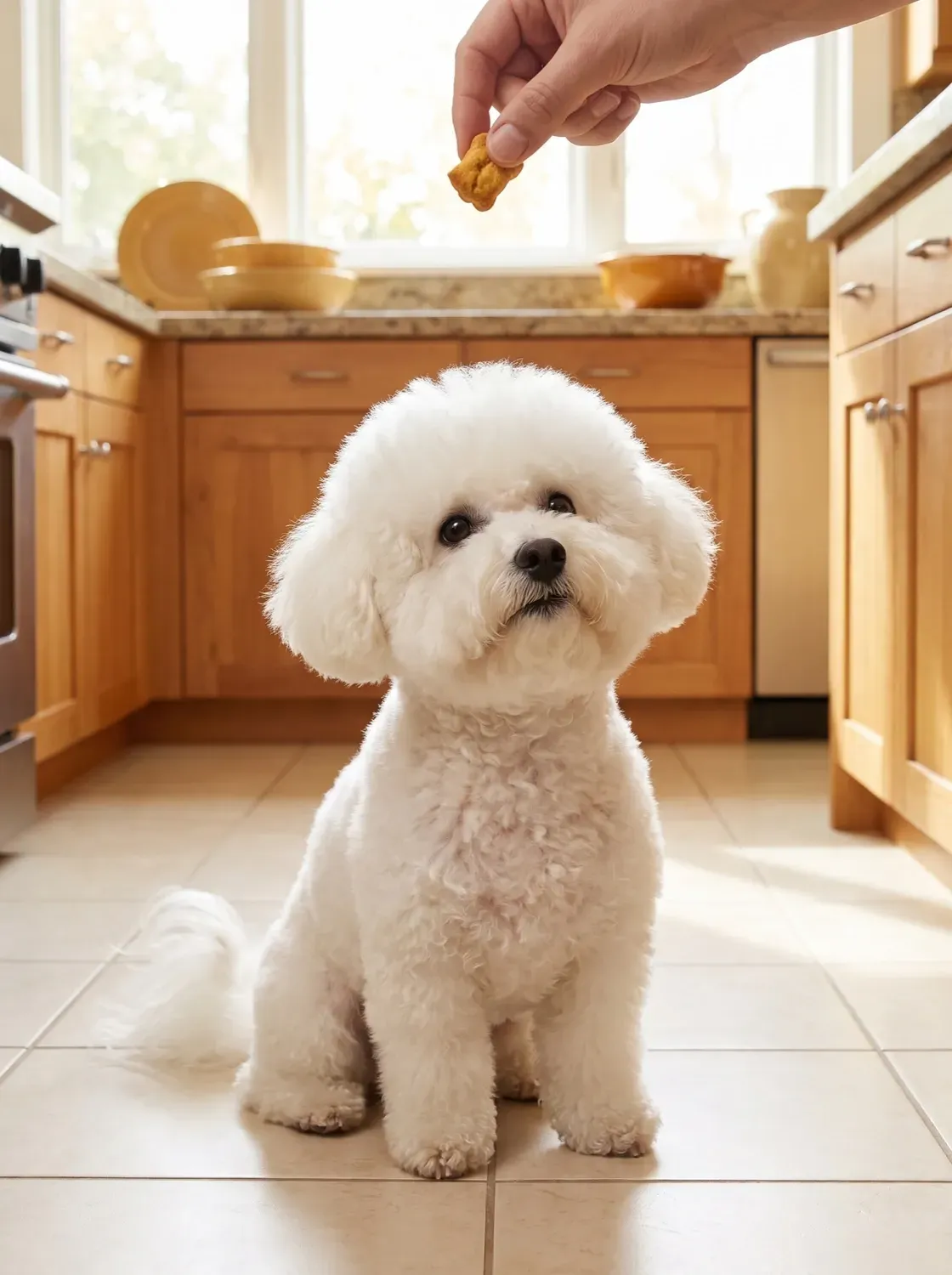
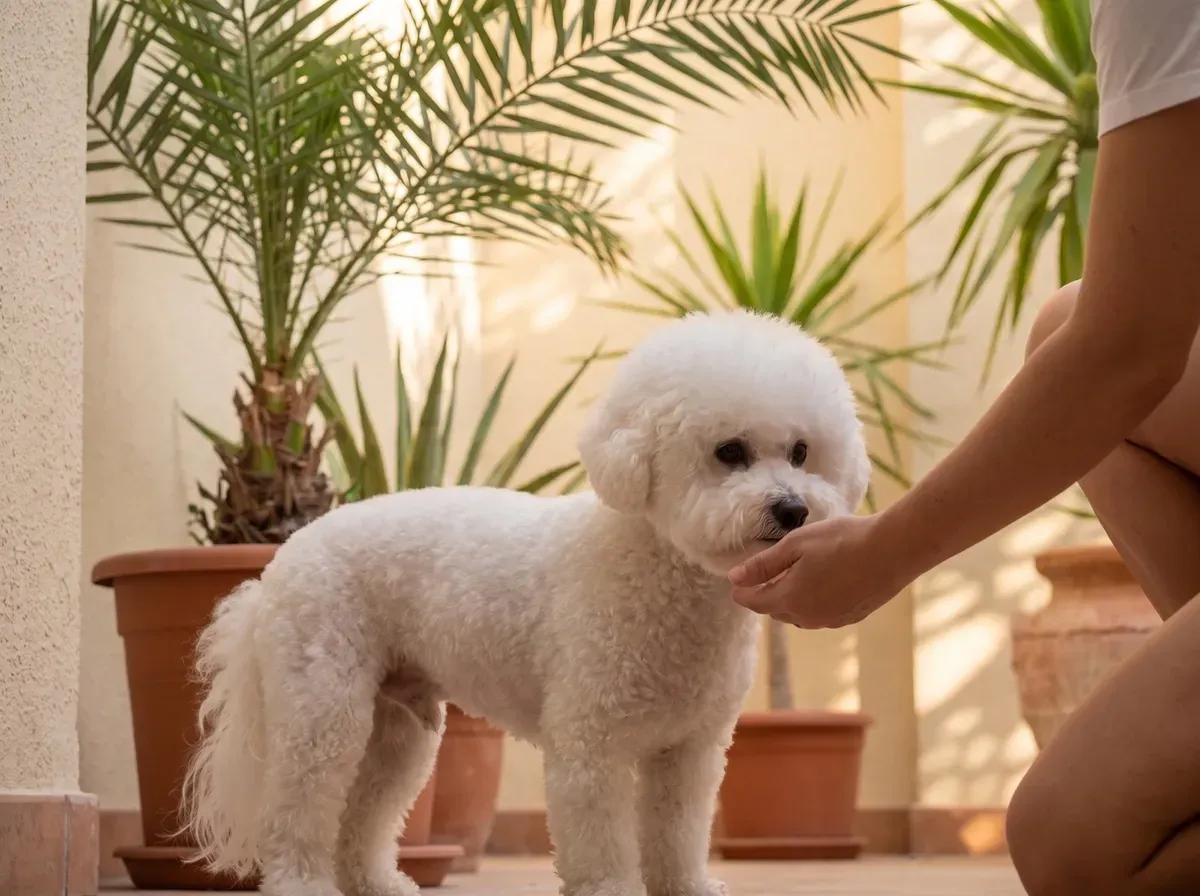
Bichon Frise, a white adult sitting neatly on a kitchen floor, watching a hand holding a treat

At home

A circus dog at heart

A new trick learned in an afternoon, and that barking gets your attention learned just as fast.

What's going onBichons once worked for street performers, doing tricks for a reward. Reward the quiet, and teach them a new trick each week, paid with part of their dinner.

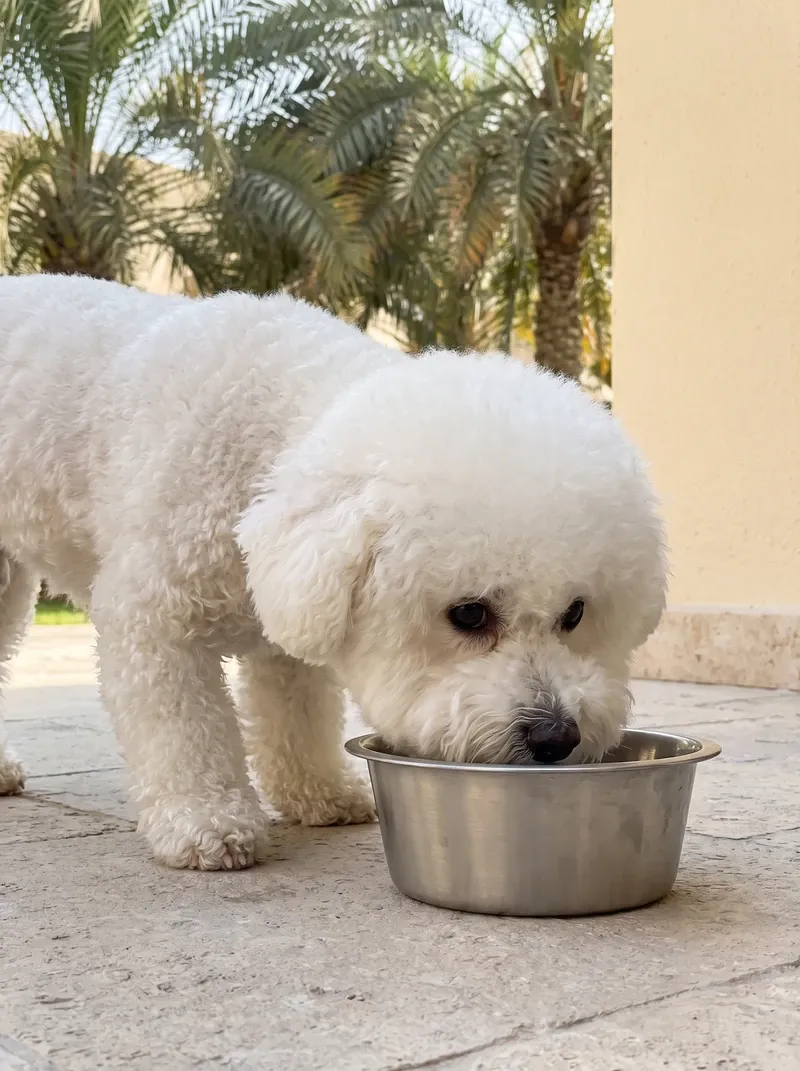
Bichon Frise in Dubai, an adult drinking from a steel bowl on a shaded villa terrace, palms behind

At home

Plenty of water

A small dog who would rather drink from your glass than their own bowl.

What's going onBladder stones are a known risk for a Bichon, and drinking well helps. Keep fresh water in more than one room, and tell your vet if they strain to wee or start drinking much more than usual.

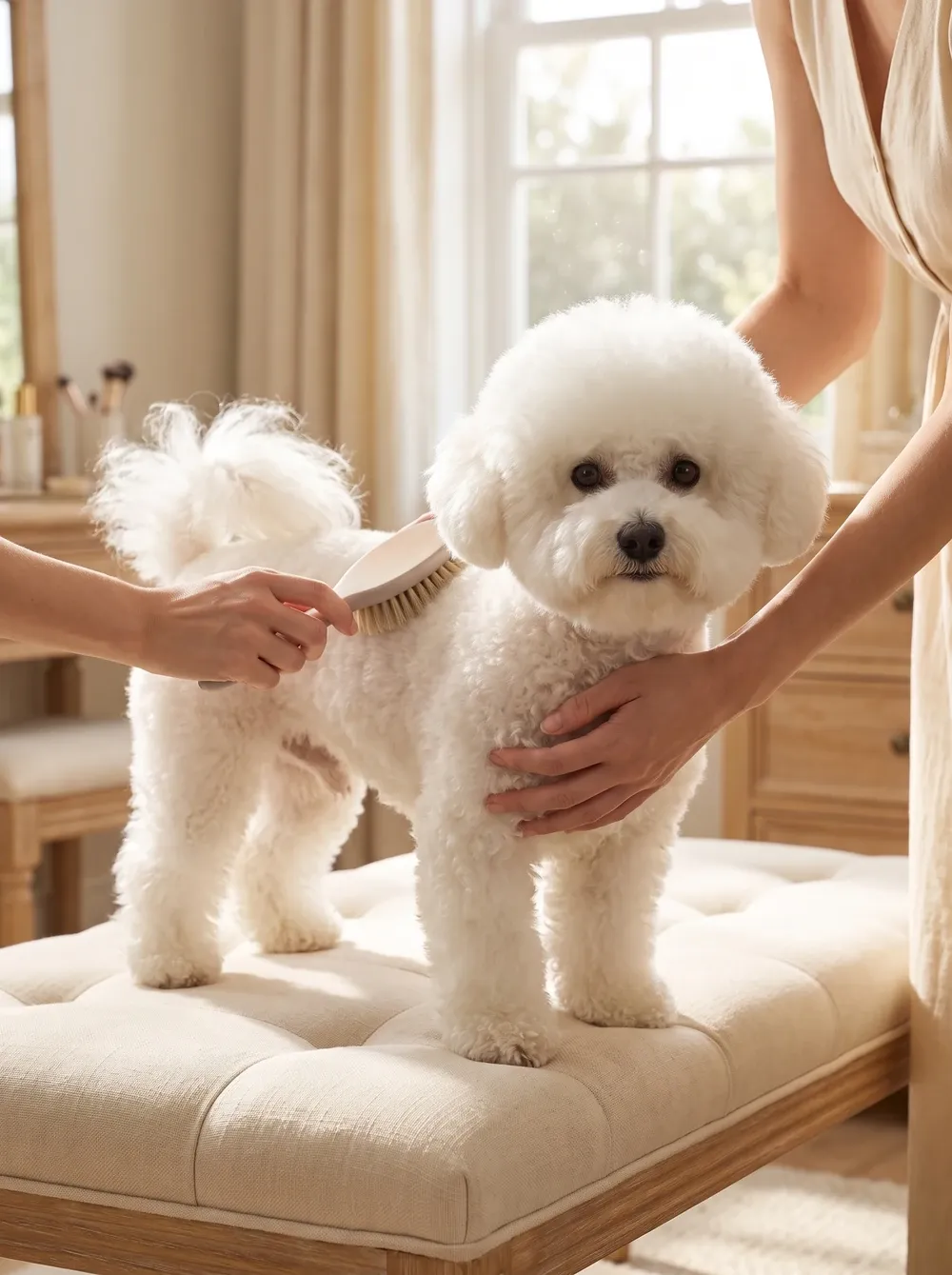
Bichon Frise, a pet parent brushing a white adult standing on an upholstered bench

At home

A coat that never stops growing

Hardly a hair on the sofa, and a tangle behind the ears by the weekend.

What's going onThe curly white coat barely sheds, so it mats instead. Brush them several times a week, keep their ears dry after a groom, and make handling a treat while they are small, so the groomer is easy for life.

A Bichon Frise in Dubai

The bit nobody tells you.

Their day

Built for: On a lap at court, then performing for a crowd.

In Dubai: Often alone in a flat for the working day.

Their audience

Built for: In both jobs, never alone.

In Dubai: No one home to watch them.

Their treats

Built for: A reward for every trick.

In Dubai: A treat every time they ask nicely.

The barking and the weight mostly come from that gap.

You cannot give them a court or a circus. You can give them company and a job for their brain, and the ten things below are how.

Your plan is built around their breed: the health risks for a Bichon Frise at every age, and the care that goes with each one.

Join the founding families. AED 1,999 of essential care for AED 199.

Daily care for a Bichon Frise

Ten things that make their life better.

Many of them are free, and most matter at every age.

  1. They were bred to be with people, and time alone is easiest to learn as a puppy.

    From the first week, and for life

    Free

    Why

    They were bred to be with people, and time alone is easiest to learn as a puppy.

    What to do

    From their first week, leave them in a safe room with a chew for a few minutes while you are home, then a little longer. Come and go without a fuss, and go back a step if they cry.

  2. Separation distress is treatable, and home fixes can make it worse.

    Any age

    Free

    Why

    Separation distress is treatable, and home fixes can make it worse.

    What to do

    Film them for twenty minutes after you leave. If you see howling, pacing, scratching at the door or accidents, don't punish it, and skip the anti-bark collar. Show the film to your vet.

  3. Extra weight loads their knees, and diabetes (where the body cannot control blood sugar) becomes a risk from 4 years.

    Every age, most of all from 4 years

    Under AED 100, once, for kitchen scalesIn your plan

    Why

    Extra weight loads their knees, and diabetes (where the body cannot control blood sugar) becomes a risk from 4 years.

    What to do

    Weigh their daily food on kitchen scales. Use part of it for training, and take any treats out of the same amount. Swap table scraps for a game or a brush. A Body Condition Score (a check on whether they are the right weight) is in your plan from their puppy visits.

  4. Patellar Luxation (a slipping kneecap) is a known risk from puppyhood to young adult.

    Every age, most of all up to 4 years

    Free to AED 500 for rugs and dog stepsIn your plan

    Why

    Patellar Luxation (a slipping kneecap) is a known risk from puppyhood to young adult.

    What to do

    Put rugs down where they run, and give them steps up to the sofa and bed. Lift them with one hand under the chest and one under the back end. If they skip a step or hold up a back leg after a run, tell your vet. An orthopaedic evaluation (a joint and bone exam) is in your plan every year from age two to four.

  5. A collar presses on a small neck every time they pull.

    Every age

    Under AED 150

    Why

    A collar presses on a small neck every time they pull.

    What to do

    Clip the lead to a well-fitted harness, and keep the collar for their ID tag. Check the fit as they grow.

  6. Gum disease and dental crowding are the first risk to watch in a Bichon, from puppyhood.

    Every age, from the week they come home

    Under AED 100 for a toothbrush and dog toothpasteIn your plan

    Why

    Gum disease and dental crowding are the first risk to watch in a Bichon, from puppyhood.

    What to do

    Brush daily with a dog toothpaste. Start with a few seconds and a reward, and build up. Watch for baby teeth that do not fall out. A professional dental clean every 6 to 12 months is in your plan from six months old.

  7. Ear infections are a known risk from puppyhood, and damp ears after a groom make them more likely.

    Every age, most of all 6 months to 7 years

    Under AED 150 a year for ear cleanerIn your plan

    Why

    Ear infections are a known risk from puppyhood, and damp ears after a groom make them more likely.

    What to do

    Handle their ears every day while they are small, with a reward. After a bath or a groom, dry inside the ear flaps, and clean them monthly with the solution your vet gives you. Monthly ear cleaning is in your plan from six months old.

  8. A Bichon carried past everything can turn barky and nervous.

    Every age, most of all up to 2 years

    Free

    Why

    A Bichon carried past everything can turn barky and nervous.

    What to do

    Walk them on their own feet. Let them meet calm dogs, new people and new places at their own pace, with a treat for staying calm.

  9. They walk close to hot ground, and pavement heat reaches them before it reaches you.

    Every age, most of all puppies and from 7 years

    Free

    Why

    They walk close to hot ground, and pavement heat reaches them before it reaches you.

    What to do

    From May to September, walk before sunrise and after dark. Put the back of your hand on the pavement for five seconds. If you cannot keep it there, they cannot walk on it. Carry water.

  10. Bladder stones and, later, diabetes are known risks, and both can change how much they drink.

    Every age, most of all from 2 years

    FreeIn your plan

    Why

    Bladder stones and, later, diabetes are known risks, and both can change how much they drink.

    What to do

    Notice how often you fill their bowl. If they drink or wee much more than usual, or strain to wee, tell your vet that week. Once a week, run your hands over them and look at their ears and paws.

Five of these are in your plan. The rest you can do at home.

Join the founding families. AED 1,999 of essential care for AED 199.

Bichon Frise health by age

Their health, at every age.

In a Bichon, licked paws, a shaken head or a fuller water bowl is often the first sign that something is wrong. Choose their age to see what to watch for, and the care that goes with it.

Bichon Frise, an older white dog resting on a cushioned bed in a sunny bedroom

How old are they?

Their age

Bichon Frise Puppy health

the first six months

What to watch for

  1. Retained deciduous teeth, malocclusion (teeth that do not meet properly) or early dental crowding
  2. Juvenile onset of allergies / atopic dermatitis (itchy allergic skin)
  3. Juvenile onset of ear infections
  4. Developmental or early clinical signs of Patellar Luxation (PL, slipping kneecap)
  5. Early or congenital expression of Bladder Stones

The care that goes with it

  1. Core vaccinations, microchip and Dubai Municipality registration
  2. Deworming, and flea and tick prevention
  3. Growth and nutritional evaluation, and early socialisation
  4. Dental and gum disease screening, as a first baseline
  5. Early follow-up for any signs of allergies or atopic dermatitis (itchy allergic skin)
The full care detail
  • Core vaccination programme, microchipping and Dubai Municipality registration. Titre testing discussion where clinically appropriate; not a substitute for completing the core vaccine series
  • Deworming and external parasite prevention tailored to Dubai exposure
  • Body Condition Score (BCS, a check on whether they are the right weight), Muscle Condition Score (MCS, a check on their muscle), dental, growth and nutritional evaluation, and early socialisation
  • Baseline screening focused on Dental Disease / Periodontal Disease
  • Early diagnostic follow-up for signs suggestive of Allergies / Atopic Dermatitis

Their age

Bichon Frise Juvenile health

6 months to 2 years

What to watch for

  1. Early periodontal disease (gum disease) and dental crowding
  2. Recurrent or persistent allergies / atopic dermatitis
  3. Recurrent or persistent ear infections
  4. Emerging Patellar Luxation (PL) with exercise intolerance or lameness
  5. Young-dog presentation of Bladder Stones

The care that goes with it

  1. Daily tooth brushing, and a professional dental clean every 6 to 12 months
  2. Allergy triggers found early, with a food elimination trial (a diet test for allergies) if skin or ear trouble keeps coming back
  3. Neutering or spaying, timed for a small breed
  4. Monthly ear cleaning with a vet solution, and ears kept dry after grooming
  5. Ear infections that keep coming back, properly investigated rather than treated again and again
The full care detail
  • Daily dental brushing from puppyhood; professional dental cleaning every 6-12 months
  • Identify allergens early; conduct food elimination trial if recurrent skin or ear issues are present
  • Neuter/spay timing discussion that accounts for small-breed growth and disease risk
  • Monthly ear cleaning with veterinary solution; keep ear canal dry after grooming
  • Investigate recurrent signs rather than repeatedly treating presumed Ear Infections

Their age

Bichon Frise Young Adult health

2 to 4 years

What to watch for

  1. Dental Disease / Periodontal Disease
  2. Allergies / Atopic Dermatitis
  3. Ear Infections
  4. Patellar Luxation (PL)
  5. Bladder Stones

The care that goes with it

  1. Daily tooth brushing, and a professional dental clean every 6 to 12 months
  2. A food elimination trial (a diet test for allergies) if skin or ear trouble keeps coming back
  3. Monthly ear cleaning with a vet solution, and ears kept dry after grooming
  4. Annual orthopaedic evaluation (joint and bone exam) for the kneecaps, and a lean weight
  5. Annual urinalysis (a urine test) to catch bladder crystals early, and plenty of water
The full care detail
  • Daily dental brushing from puppyhood; professional dental cleaning every 6-12 months
  • Identify allergens early; conduct food elimination trial if recurrent skin or ear issues are present
  • Monthly ear cleaning with veterinary solution; keep ear canal dry after grooming
  • Annual orthopaedic evaluation for Patellar Luxation (PL); maintain lean body weight to protect joints
  • Annual urinalysis to detect early bladder crystal formation; ensure adequate water intake

Their age

Bichon Frise Prime Adult health

4 to 7 years

What to watch for

  1. Dental Disease (Advanced)
  2. Allergic Skin Disease (Atopic Dermatitis)
  3. Bladder Stones (Recurrent)
  4. Ear Infections (Chronic)
  5. Diabetes Mellitus (where the body cannot control blood sugar)

The care that goes with it

  1. Annual dental X-rays, and damaged teeth removed before infection spreads
  2. Allergy management with allergen-specific immunotherapy (to build tolerance)
  3. A prescription urinary diet if bladder stones keep coming back, and more water
  4. Lab testing of the ear, to choose the right treatment for long-term ear trouble
  5. Blood glucose monitoring every year, as diabetes becomes a risk in middle age
The full care detail
  • Annual dental X-rays; extract compromised teeth to prevent systemic infection
  • Allergy management: allergen-specific immunotherapy (daily or monthly)
  • Prescription urinary diet if bladder stones are recurrent; increase water intake
  • Chronic ear management: culture and sensitivity testing to guide appropriate therapy
  • Annual blood glucose monitoring; Bichons have elevated diabetes risk in middle age

Their age

Bichon Frise Senior health

7 to 10 years

What to watch for

  1. Mitral Valve Disease (MVD, leaky heart valve)
  2. Dental Disease (Tooth Loss)
  3. Kidney Disease
  4. Diabetes Mellitus
  5. Arthritis

The care that goes with it

  1. An echocardiogram (an ultrasound scan of the heart) every year from 7, and heart medication when a cardiologist advises it
  2. A renal panel (a kidney blood test) twice a year, and a senior diet with controlled phosphorus and sodium
  3. Insulin twice a day if diabetes is diagnosed, with glucose curve monitoring every 3 months
  4. Joint supplements and gentle daily exercise
  5. Cognitive enrichment and a steady daily routine
The full care detail
  • Annual echocardiogram from age 7; cardiac medication when indicated by cardiologist
  • Bi-annual renal panel; transition to senior diet with controlled phosphorus and sodium
  • Twice-daily insulin if diabetes is diagnosed; glucose curve monitoring every 3 months
  • Joint supplements and gentle daily exercise to maintain mobility
  • Cognitive enrichment and consistent daily routine to slow cognitive dysfunction progression

Their age

Bichon Frise Geriatric health

10 years and over

What to watch for

  1. Congestive Heart Failure
  2. Chronic Kidney Disease (CKD, long-term kidney failure)
  3. Diabetes Mellitus (Advanced)
  4. Severe Arthritis
  5. Cognitive Dysfunction Syndrome (dementia in older pets)

The care that goes with it

  1. Fluid therapy at home for the kidneys, if prescribed, with appetite and drinking watched every day
  2. Close diabetes management, with home glucose monitoring
  3. Orthopaedic bedding, ramps and non-slip floors
  4. Quality-of-life assessments
  5. Palliative care (comfort care), and end-of-life planning with your veterinary team
The full care detail
  • Home fluid therapy for kidney support if prescribed; monitor hydration and appetite daily
  • Intensive diabetes management with home glucose monitoring; adjust insulin with vet guidance
  • Orthopaedic bedding, ramps, and non-slip surfaces to support mobility safely
  • Quality-of-life assessments
  • Tailored palliative and comfort-focused care plan
  • Compassionate end-of-life planning with your veterinary team

Breed predispositions indicate an increased risk rather than certainty of disease. What is right for them always comes from their own history and an evaluation.

Getting a Bichon Frise puppy in Dubai

Before they come home.

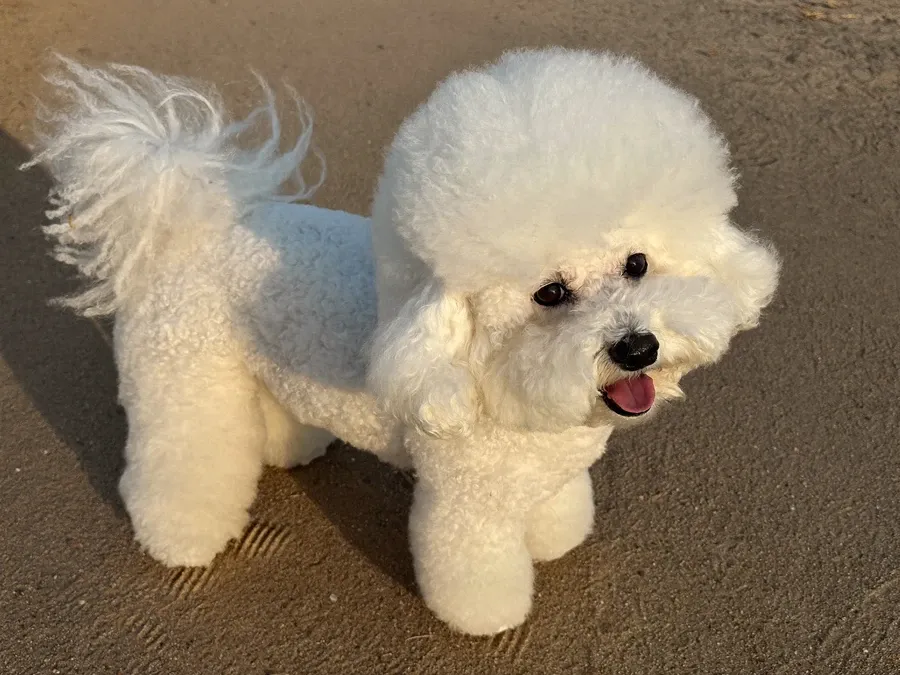
Bichon Frise, a white adult with a rounded powder-puff head standing on a sandy path

Types of Bichon

One breed, and a family of cousins

There is one Bichon Frise: a small white dog with a soft, curly coat, usually 5.5 to 8 kg when grown. They belong to a family of small white dogs that also gave us the Maltese and the Havanese. A "mini" Bichon is a seller's word, not a separate type, so ask how big both parents are.

Bichon Frise in Dubai, a puppy with pale apricot ears lying on a balcony daybed, palms and towers behind

Colours

White, with a whisper of apricot

Every Bichon Frise is white. Some carry a gentle shading of buff, cream or apricot around the ears or across the body. If a puppy sold as a Bichon is brown, ask the breeder what else is in the family.

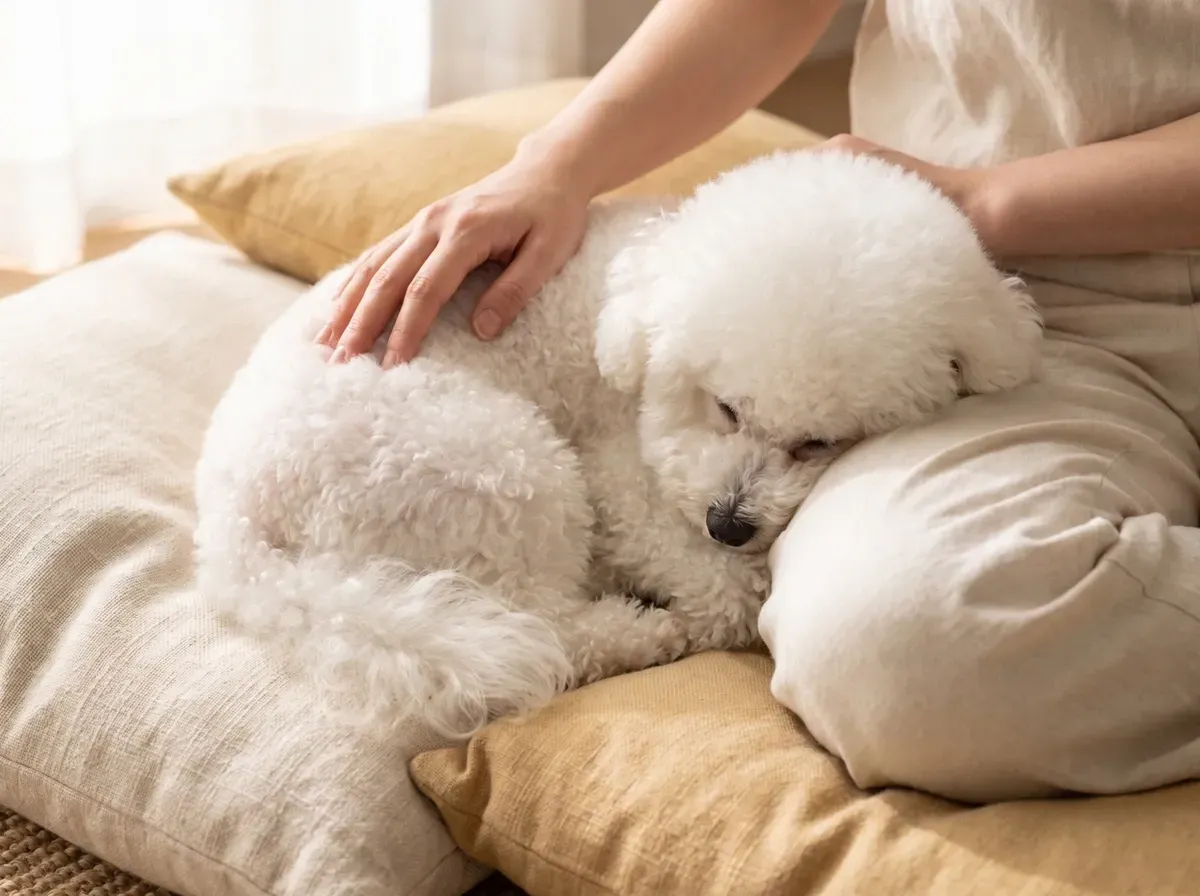
Bichon Frise, a puppy asleep in a pet parent's lap on linen floor cushions

The first six months

Caring for a Bichon Frise puppy

Their full vaccination course, microchip and Dubai Municipality registration come first. Start brushing their teeth the week they come home, and make handling a treat: paws, ears and mouth, a few seconds at a time.

Puppy health, 0 to 6 months
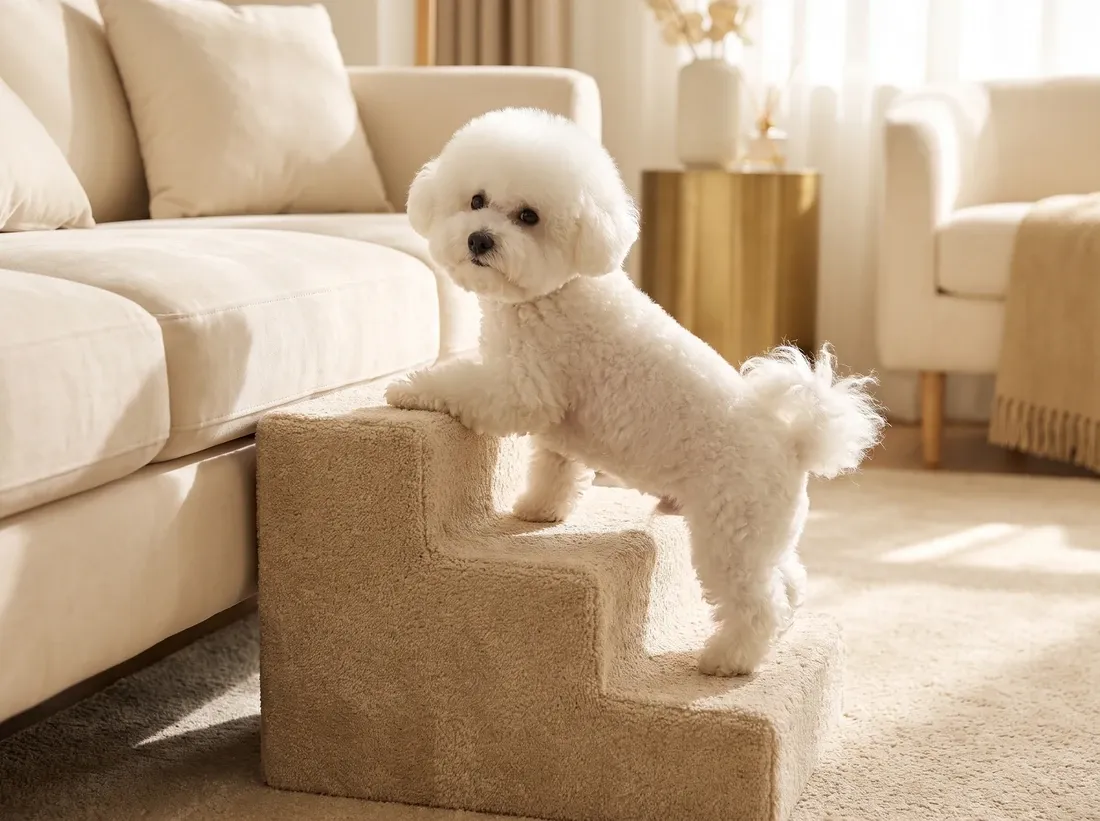
Bichon Frise, a puppy climbing small pet steps up to a cream sofa

Getting the flat ready

Rugs, steps and two water bowls

Put rugs down where they will run on marble, steps up to the sofa and bed, and fresh water in more than one room. Add a well-fitted harness, kitchen scales for their food, and a soft brush.

Ten things that make their life better
Bichon Frise, a pet parent holding a hand out to a calm adult beside potted palms

Before you commit

Ask about knees, skin and ears

Ask the breeder what health tests the parents had, for their knees in particular, and whether either parent has had itchy skin, ear trouble or bladder stones. A good breeder will be glad you asked.

The reception of a Paws & Co clinic, with long cream benches and a stone reception desk

Before the clinics open

Join the founding families

AED 1,999 of essential care for AED 199. No payment now.

When to see a vet

When it is not behaviour.

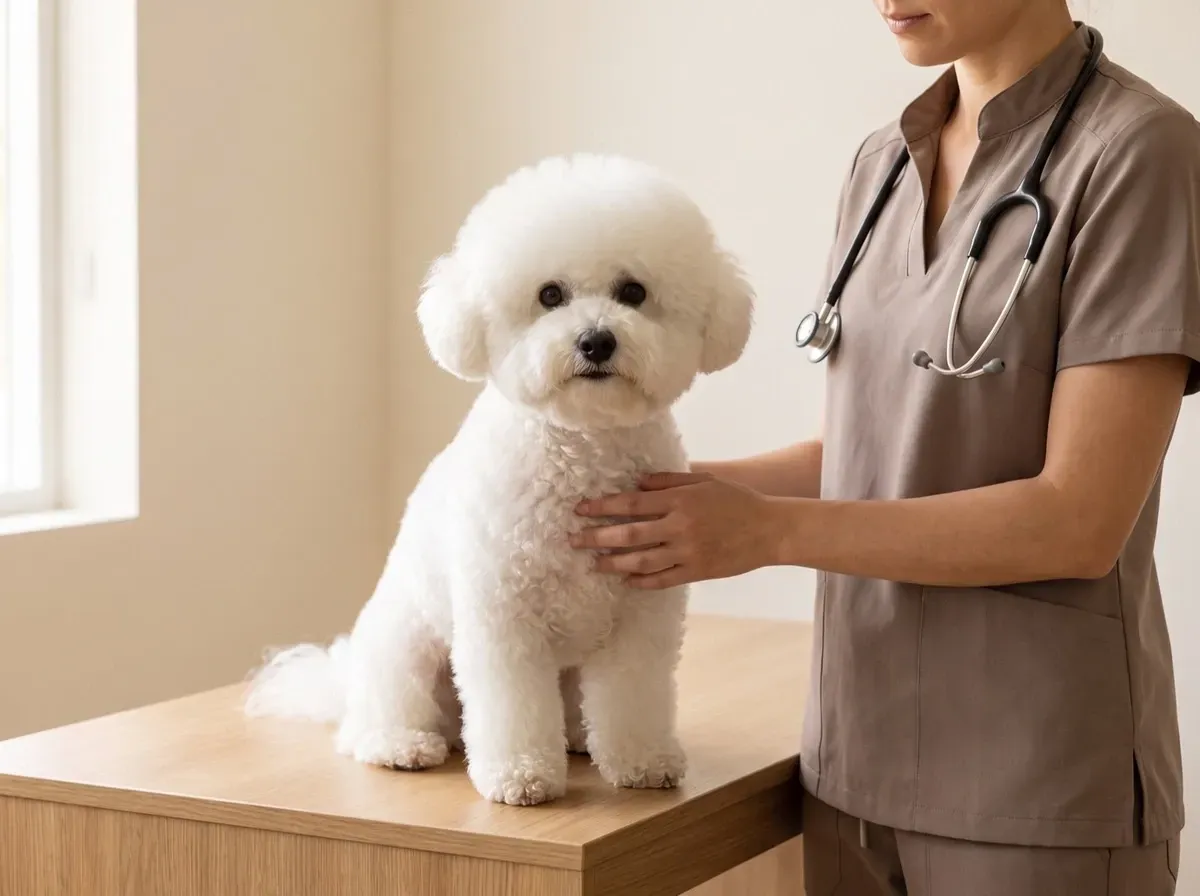
Bichon Frise, a white adult sitting on a table as a vet in taupe scrubs rests a hand on the dog

Some of this is not a training problem, and treating it like one wastes time your dog may not have. If they are distressed when you leave, if they growl or guard their food, their toys or you, if they are frightened on the lead, or if anything about them changes suddenly at any age, contact your vet the same day. A tip from a website, ours included, is not the answer. If it cannot wait, contact your nearest emergency vet now.

With a Bichon, watch their skin, their water and the way they move. Licking their paws for hours, or shaking their head, is usually itch or ear trouble. Straining to wee, blood in their wee, or drinking far more than usual needs looking at the same week. A skip in their step after a run can be their kneecap. In an older Bichon, pacing or staring at night can be the start of Cognitive Dysfunction Syndrome (dementia in older pets). Bloat (GDV, a twisted stomach) can happen in any dog, though it is most common in large, deep-chested breeds. A swollen, tight belly, retching with nothing coming up, sudden restlessness or drooling is an emergency: contact your vet now.

They'll keep working for their dinner. If they stop doing the tricks, or limp afterwards, tell your vet.
Bichon Frise history

Before they were yours.

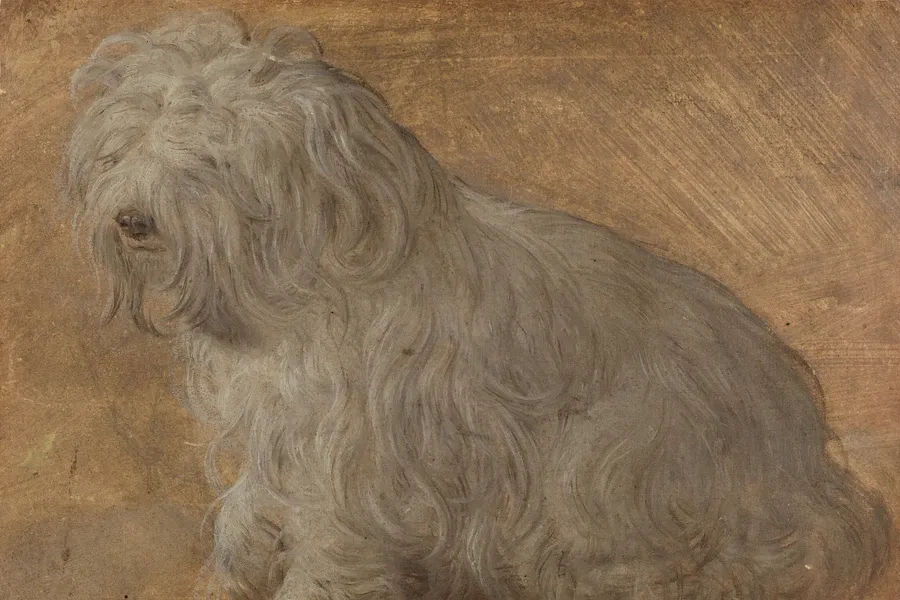
  1. Bichon Frise history, a small long-coated lap dog, attributed to Titian, Venice, before 1576
    A small long-coated lap dog, attributed to Titian, Venice, before 1576.

    Antiquity to the Middle Ages

    The Mediterranean

    Small, curly white dogs were kept round the Mediterranean and traded by sailors. One type became so linked with Tenerife that it was called the Bichon Tenerife.

    What they still carryA small dog who travels well and makes friends easily.

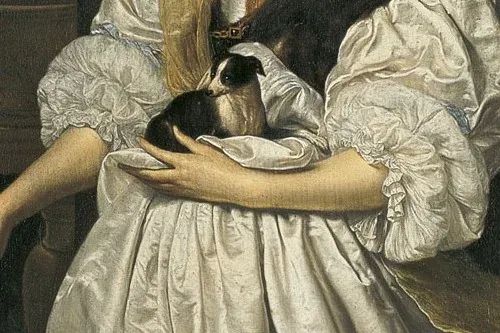
  2. Bichon Frise history, a lady holding a small lap dog, Frans van Mieris the Elder, 1672
    Portrait of a Lady by Frans van Mieris the Elder, 1672, with her small lap dog.

    1500s to 1700s

    The royal courts

    Bichons became lap dogs for the nobility of Spain, Italy and France, and appear in paintings of court life.

    What they still carryA dog bred to be groomed and admired, and to enjoy it.

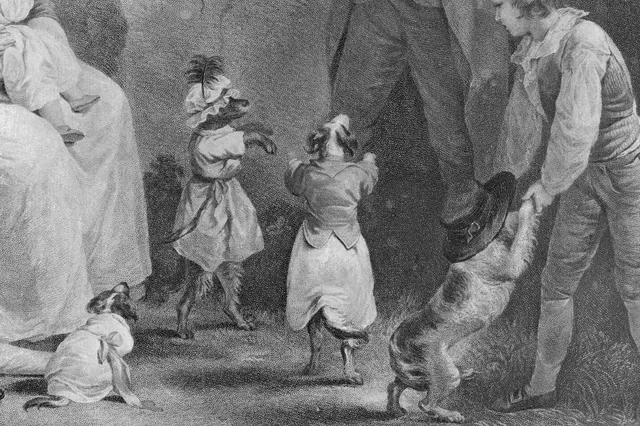
  3. Bichon Frise history, an engraving of small dogs in costumes dancing on their hind legs for a crowd, 1790
    Dancing Dogs, an engraving by Thomas Gaugain after George Morland, 1790.

    The 1800s

    The street and the circus

    When court fashion moved on, Bichons found work with street performers and in circuses, doing tricks for the crowd.

    What they still carryA clever, food-loving dog who plays to a room.

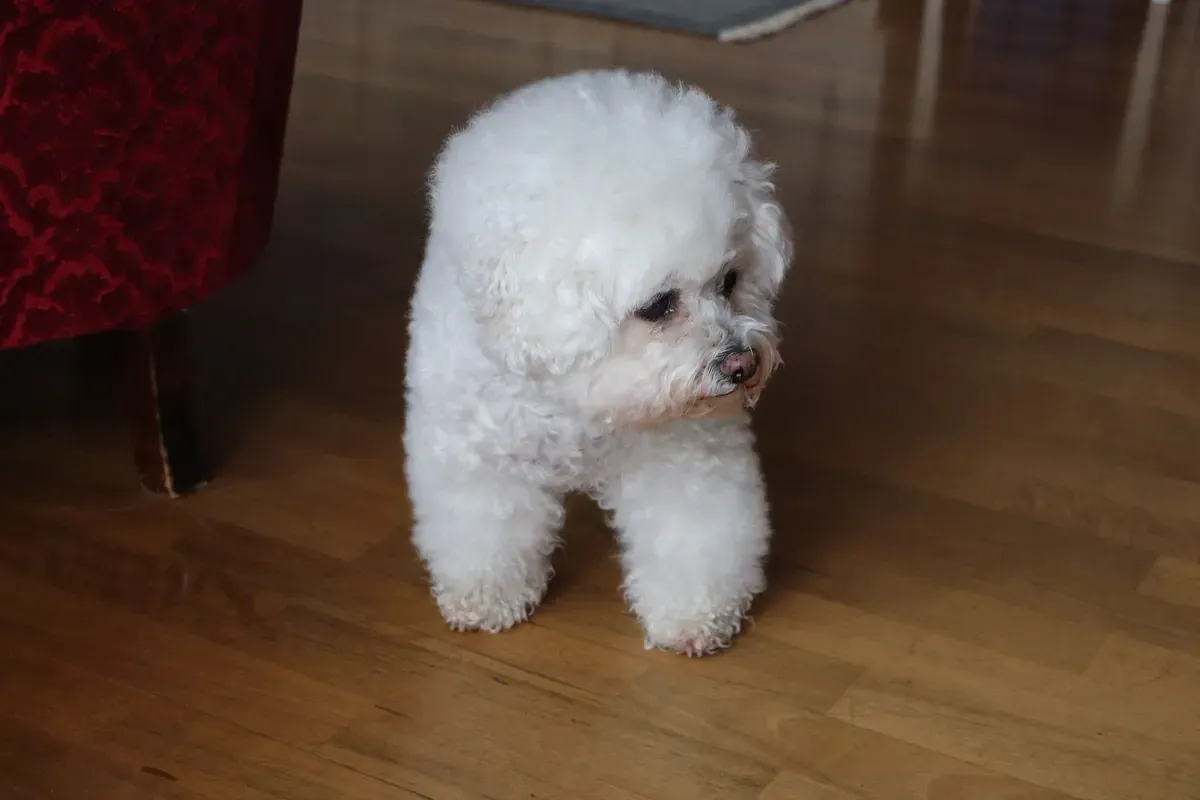
  4. Bichon Frise history, a white dog standing on a wooden floor at home, photographed in 2019
    A white Bichon Frise at home, photographed in 2019. Photo: Bernt Fransson, CC BY-SA 4.0, via Wikimedia Commons (cropped)

    1933 to 1973

    A name of their own

    France adopted the breed standard in 1933, as the Bichon à poil frisé, the curly-coated Bichon. The American Kennel Club recognised the breed in 1973.

    What they still carryThe rounded white look, and the grooming it needs.

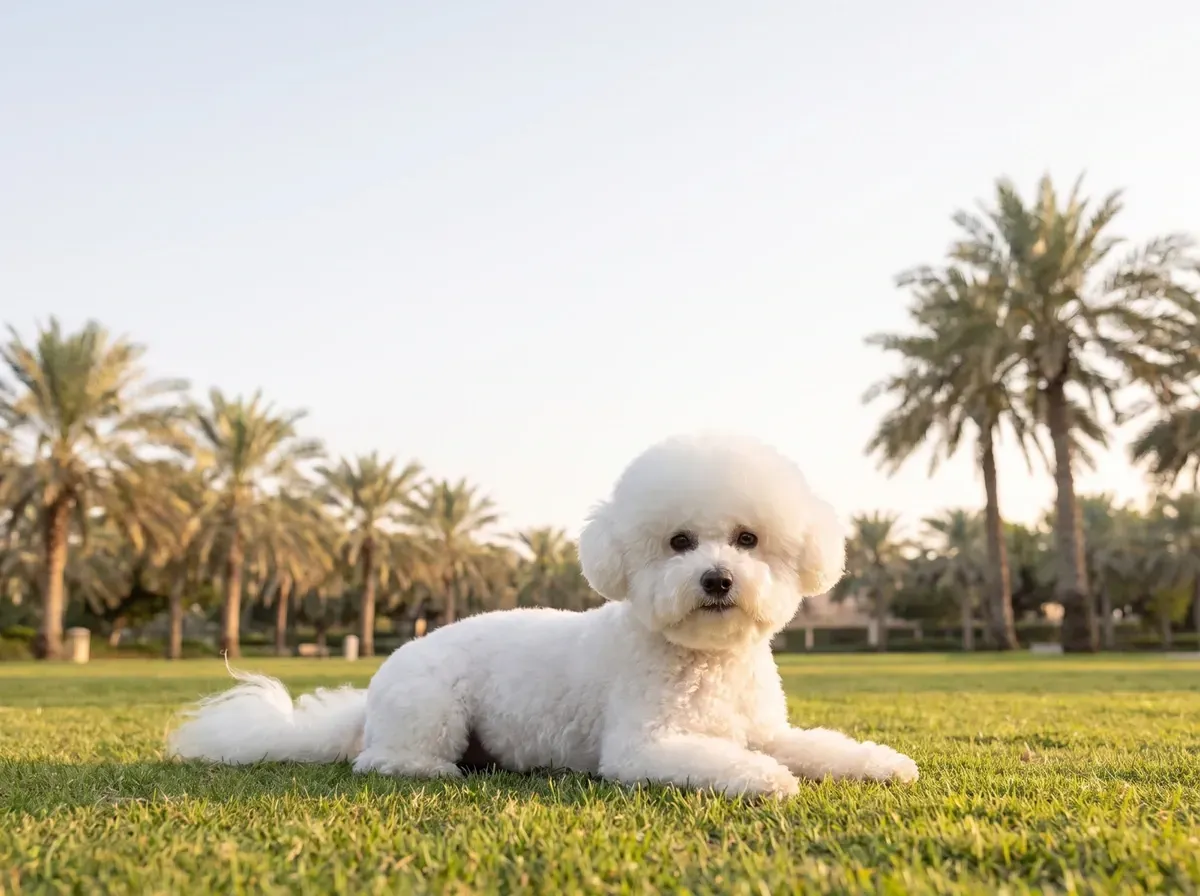
  5. Bichon Frise history, the breed today, a white adult lying on a Dubai park lawn with date palms behind

    Today

    In Dubai

    In the UAE a Bichon lives in a flat or a villa, and still wants what the breed was made for: their people close by, and someone watching.

    What they still carryA dog made for company and an audience.

Bichon Frise questions

The ones you type at midnight.

Most of these get asked late at night, by someone watching their dog and not sure what they are seeing.

Bichon Frise in Dubai, asleep on a leather footstool at night beside a pet parent reading, the skyline behind
What is the average lifespan of a Bichon Frise?

A Bichon Frise usually lives 14 to 15 years, a long life for a dog. Daily tooth brushing and a lean weight help make those years good ones.

How big is a full grown Bichon Frise?

A full grown Bichon Frise usually weighs 5.5 to 8 kg. They are small enough for a lap, and well suited to life in a flat.

Is a Bichon Frise a hypoallergenic dog?

The Bichon Frise is often called hypoallergenic because the curly coat sheds very little. No dog is 100% allergy-free, though, so if someone at home has allergies, spend time with a Bichon before you commit.

What is the Bichon Frise temperament like?

A Bichon Frise is cheerful and affectionate, and happiest close to you. They learn fast, especially when dinner is the reward, and most get on well with children and other pets.

Is there a brown Bichon Frise?

A Bichon Frise is always white, sometimes with soft buff, cream or apricot shading around the ears or on the body. If a puppy sold as a Bichon is brown, ask the breeder what else is in the family.

How often does a Bichon Frise need grooming?

A Bichon Frise needs brushing several times a week, plus regular professional grooming, because the coat barely sheds and mats instead. Dry inside their ears after every bath or groom.

Why does my Bichon lick their paws?

Paw licking in a Bichon is often itchy skin, because allergies and atopic dermatitis are known risks from puppyhood. Tell your vet, so the cause is found rather than the same itch treated every month.

Can a Bichon Frise live in Dubai?

Yes, a Bichon Frise is happy in a Dubai flat, as long as they are not alone all day. Walk them before sunrise and after dark from May to September.

What are some Bichon Frise fun facts?

The Bichon Frise descends from small white dogs that sailors carried round the Mediterranean. They later sat on royal laps and did tricks in the circus, which is why they learn tricks so fast.

Worried about them? Contact your vet today.