From May to September, Dubai temperatures pass 45 degrees. Your pet's coat is their main defence against the heat, but only if it is looked after. A matted or dirty coat traps heat instead of letting it out. In a UAE summer, grooming is how you keep your pet cool. For the rest of the year, our grooming and lifestyle guide covers the basics.
Never shave a double coat
The most common summer mistake is shaving a double-coated dog. Huskies, German Shepherds, Golden Retrievers, Samoyeds and similar breeds have an undercoat that protects them from heat as well as cold, and shields their skin from the sun. Shaving takes that away, and the coat may never grow back the same.
Deshed instead
A professional deshed takes out the loose undercoat and keeps the guard hairs that shield the skin from the sun. Through the hot months, that means a deshed every four to six weeks, with a brush two to three times a week at home. Our grooming page sets out how often each coat needs a groom.
A summer cut for coats that keep growing
Coats that keep growing are different. Poodles, Maltese, Bichons and Doodles can go shorter for summer, which cuts the bulk and still protects the skin. The right length depends on your dog's coat and how much time they spend outdoors, so agree it with your groomer. The breed-by-breed grooming guide has more on each coat type.
Baths in summer
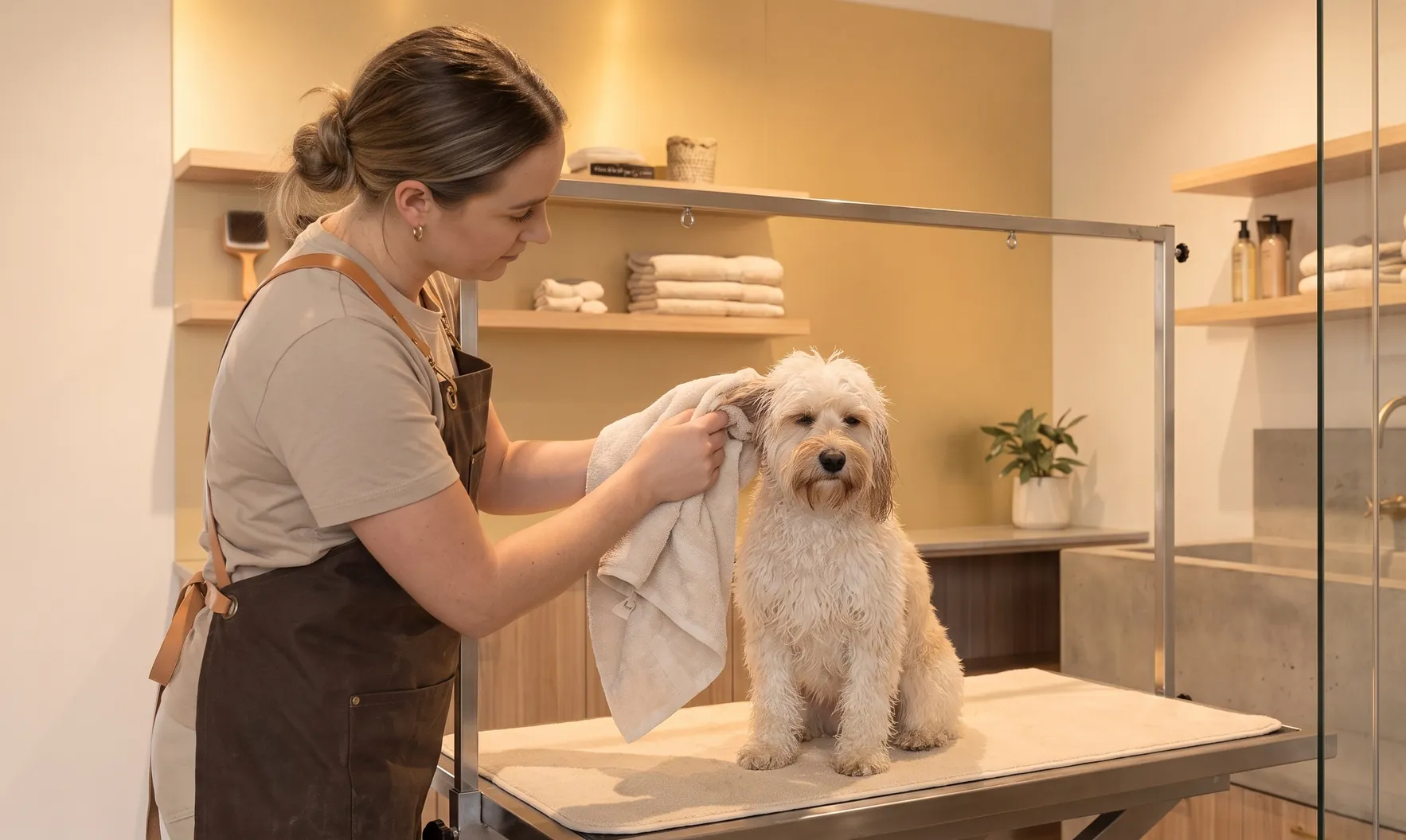
Sand, swimming and sweaty paw pads mean more baths in summer, usually every two to three weeks. Use a gentle pet shampoo, never your own: human shampoo strips the coat's natural oils. Too many baths dry the skin, so keep to that rhythm rather than bathing more. After every bath or swim, dry your dog right through, down to the undercoat. In the humidity, a damp coat can turn into hot spots (sore, inflamed patches of skin).
Water, air conditioning and dry skin
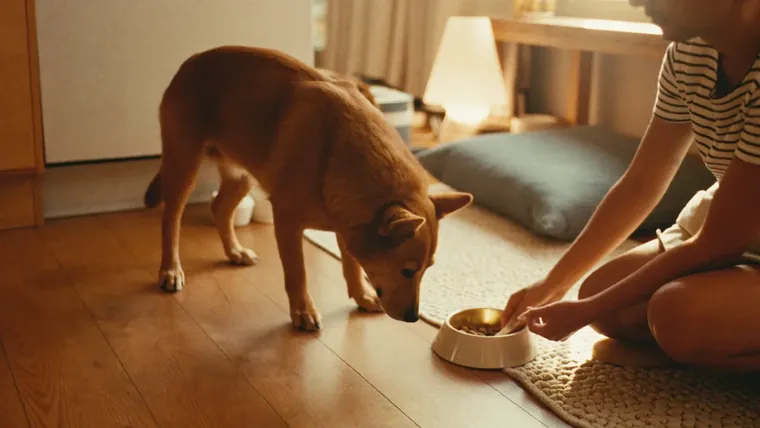
Make sure your pet always has fresh, cool water, indoors and out. Air conditioning is essential in a UAE summer, but moving between the heat outside and the cold air inside is hard on skin and coat. If your pet's skin looks dry or flaky, or their coat turns dull, talk to your vet before you change their food or add a supplement.
Paws on hot ground
Press the back of your hand on the pavement for seven seconds. If it is too hot for you, it is too hot for their paws: on a hot day, pavement and sand can burn paws in about a minute. Walk before 8am or after 7pm. After every walk, rinse off the sand and check the pads for cracks, blisters or burns. A pet-safe paw balm keeps pads supple. Booties can help, but many dogs will not wear them, so the simpler answer is to keep off hot ground. Our emergency page covers what to do if the heat gets too much.
Ears after a swim
Swimming and humidity raise the risk of ear infections. Check your dog's ears every week for redness, a smell or discharge, dry them after every swim and bath, and contact your vet if you see any of these. Floppy-eared breeds, such as Cocker Spaniels, Basset Hounds and Cavalier King Charles Spaniels, are most at risk.
Cats in a Dubai summer
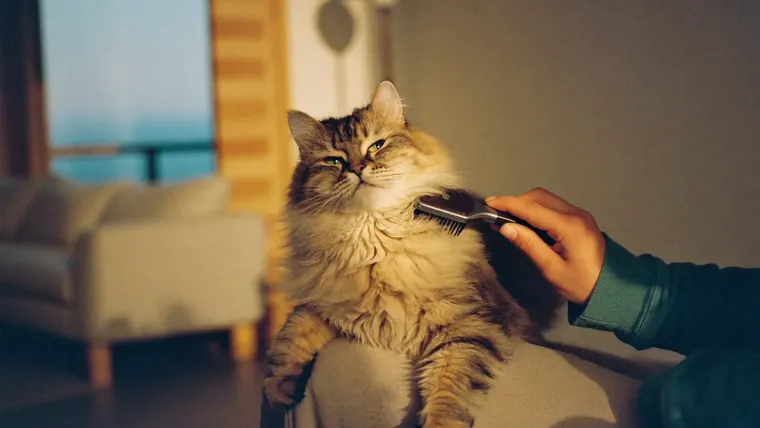
Most cats here live indoors, but the heat and the air conditioning still reach the coat. Some cats, especially long-haired or matted ones, are more comfortable with a shorter coat through the hot months. How short depends on your cat's coat and skin, so ask a groomer or vet rather than clipping at home. Regular brushing, to lift out the loose undercoat, keeps any cat cooler. Our cat grooming page covers each coat type.
A well-kept coat helps your pet cope with the heat, but it cannot do it alone. Walk in the cool hours, keep water close, and know the signs of heatstroke. Our summer safety guide covers the rest. strong>Of all the summer jobs, brushing is the one they might actually enjoy./strong>