We’re hiring people who love them like we do. Join us careers@pawsandco.comSee open roles
UAE Government Licensed MOCCAE
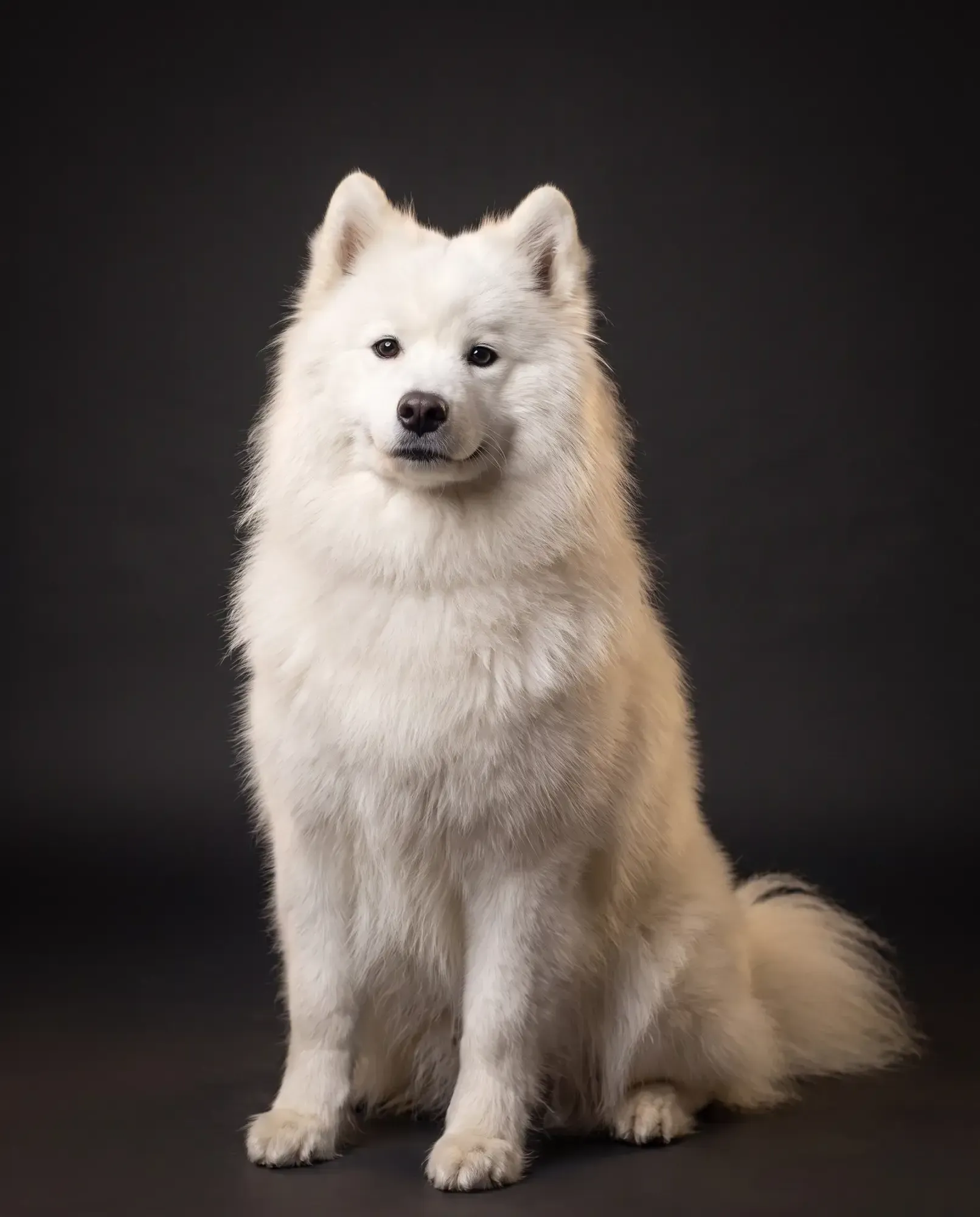
Samoyed in Dubai, studio portrait of a white adult with a thick fluffy coat and a soft smile, sitting

Breed guide  ·  Dogs

Samoyed

She smiles at every stranger in the lift. I've taught her to keep four feet on the floor.

Lifespan
12 to 14 years
Size
Large
Weight
16 to 29.5 kg
Shedding
Moderate

Last updated 12 October 2026

Join the founding families. AED 1,999 of essential care for AED 199.

No payment now. We'll be in touch by email and WhatsApp as we open enrolment.

✓
Thank you.

We will be in touch soon to confirm.

Samoyed traits

What they brought with them.

Tap a card to see what is going on.

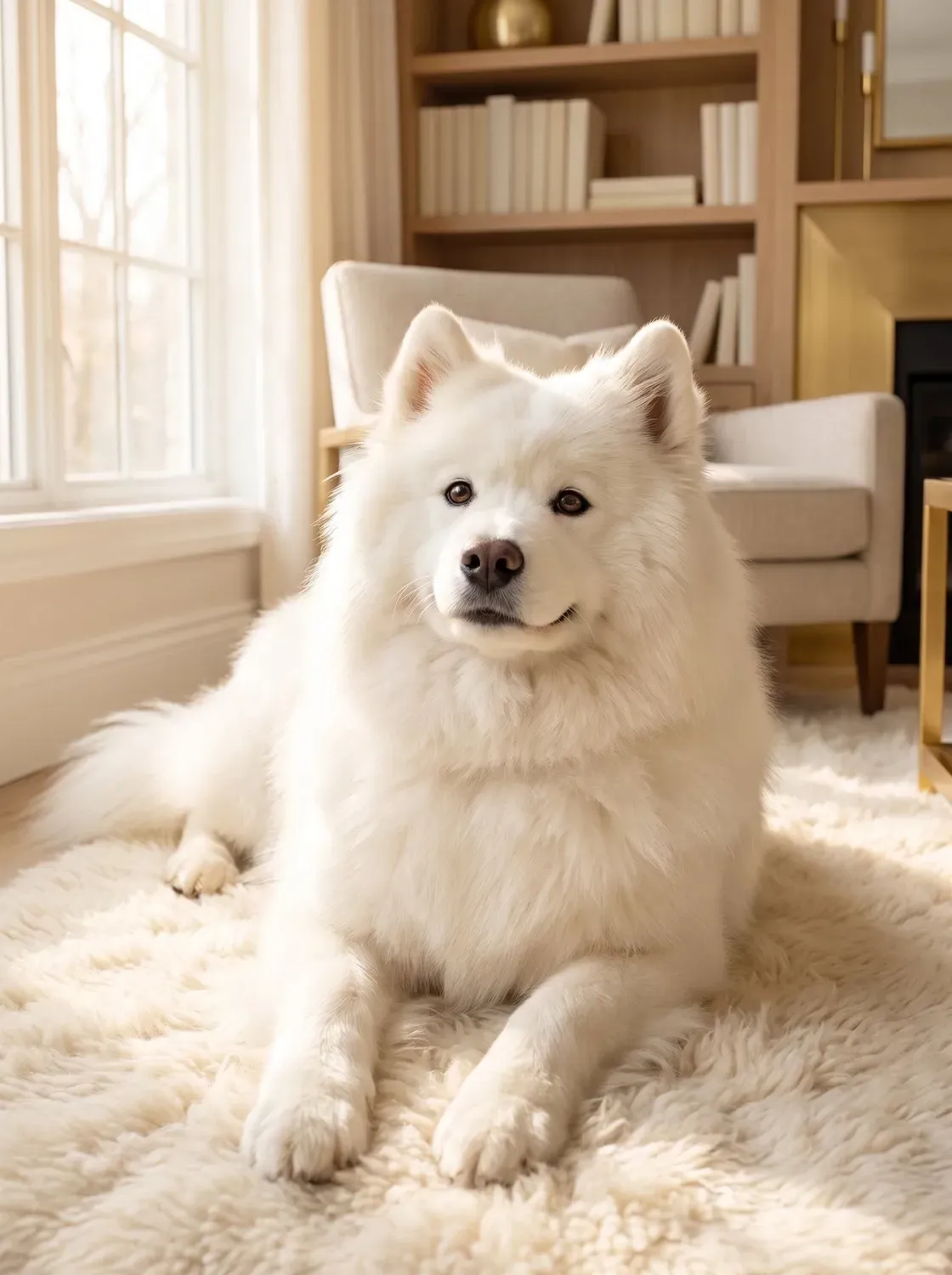
Samoyed, a white adult lying on a fluffy rug in a reading nook, looking up with a soft smile

At home

Why do Samoyeds smile?

The upturned corners of the mouth: the famous Sammy smile.

What's going onThe smile is real, and it has a job. Those upturned black lips helped stop drool and ice forming in the Siberian cold. They smile their way through life, and they expect you to smile back.

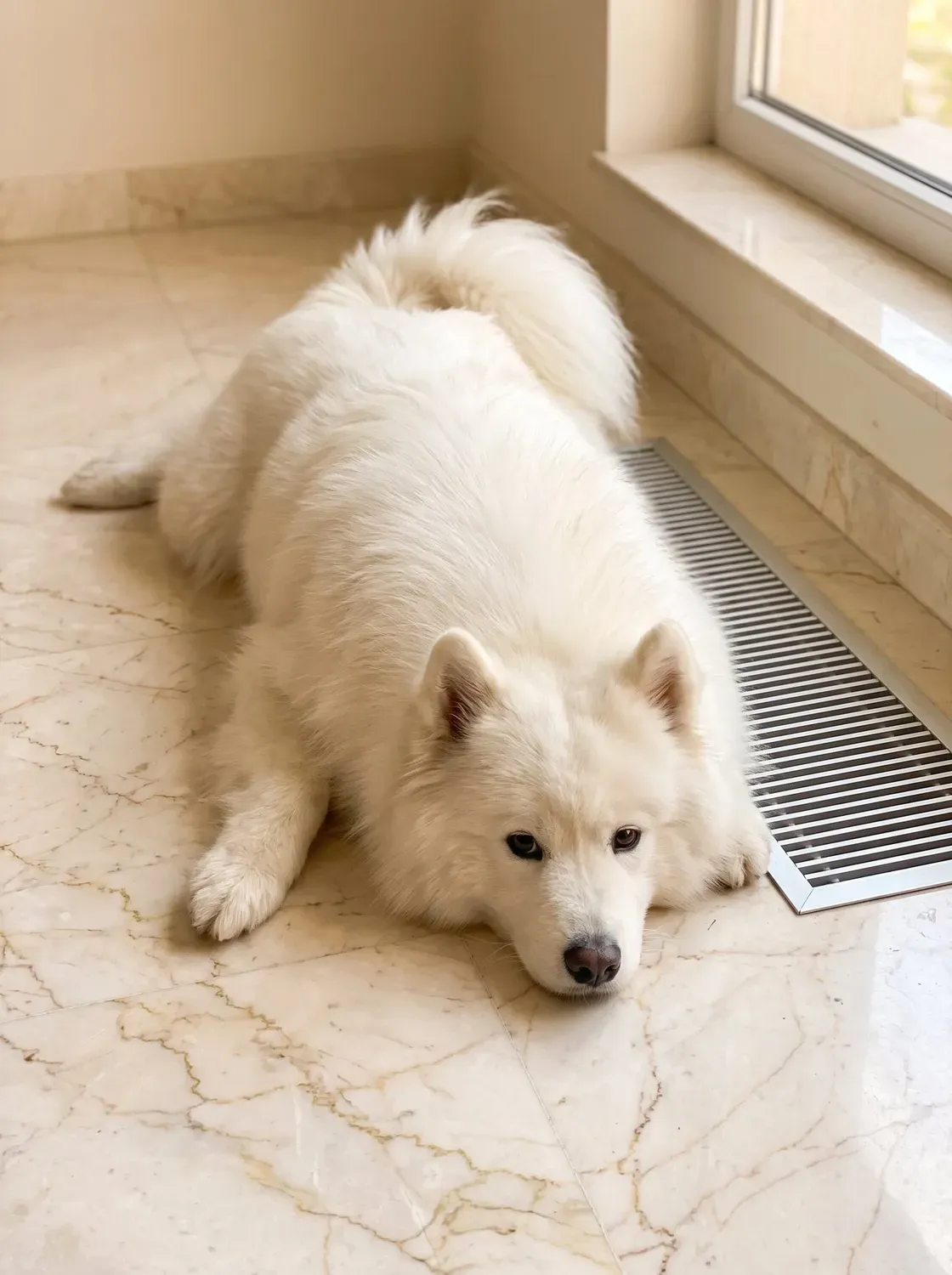
Samoyed, a cream adult stretched out on cool marble beside an air-conditioning grille

At home

Why does my Samoyed lie on the floor all day?

Flat on the marble, across the air-conditioning vent, or in the shower tray.

What's going onTheir thick white double coat was made for Siberian winters, and they are getting rid of heat. Air conditioning, cool-hour walks and a brush through to the skin help, and never clip or shave the undercoat.

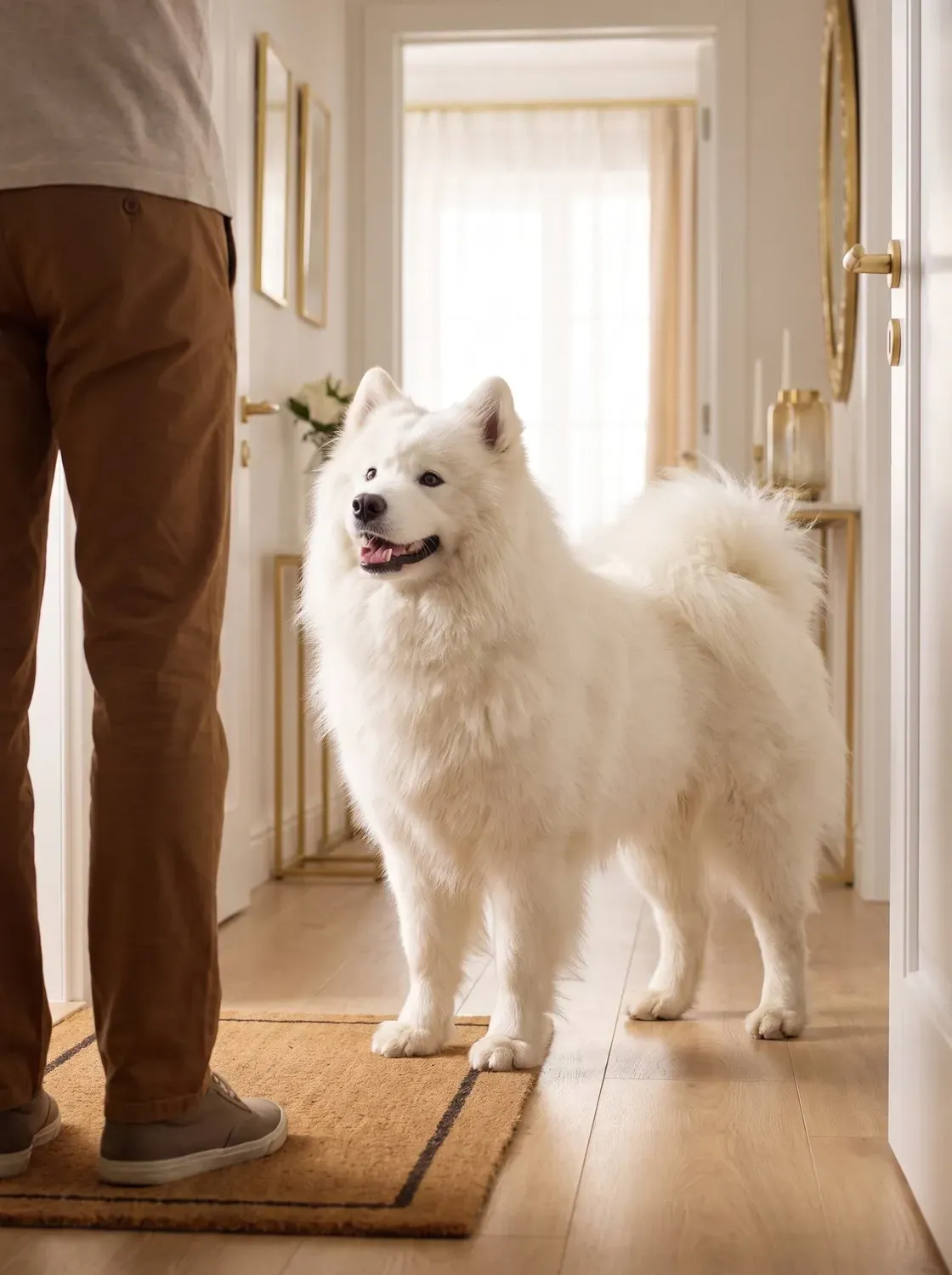
Samoyed, a white adult greeting a guest at the open front door of a bright flat

At home

Why does my Samoyed jump up at everyone?

Every guest and every delivery greeted like family, front feet first.

What's going onFriendliness was part of the job: their ancestors lived and slept in the family tent. Teach four feet on the floor while they are small, and reward it every time someone says hello.

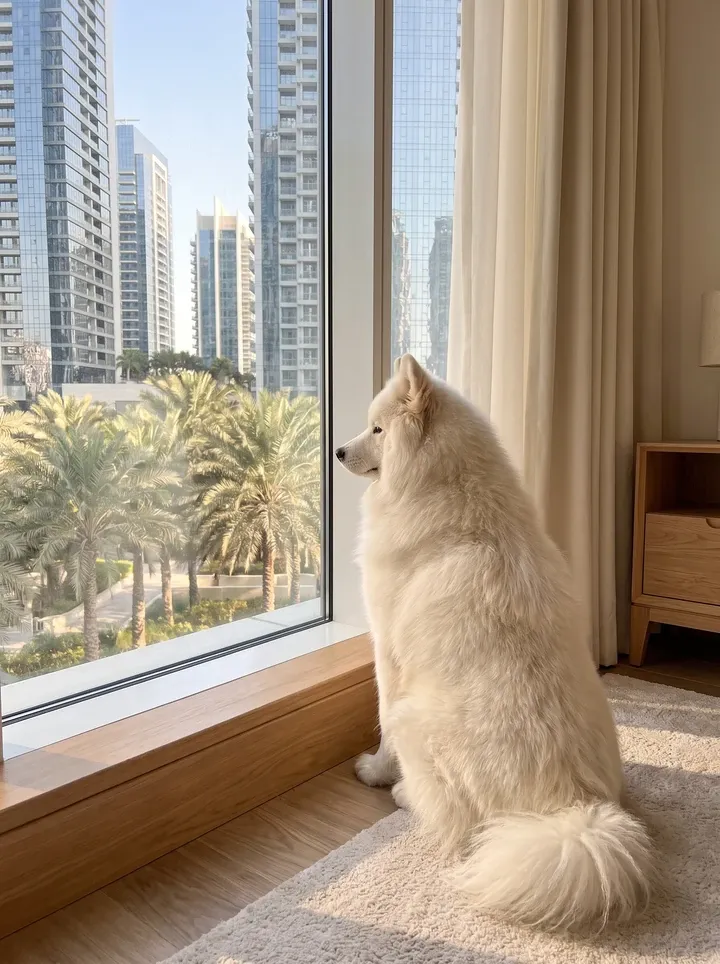
Samoyed in Dubai, a cream adult sitting alone at a tall window, looking out at towers and palms

At home

Why does my Samoyed bark when I go out?

Barking at the window, and a full chorus when the door closes.

What's going onA dog bred to live in the middle of a family finds a long day alone hard, and a bored Samoyed barks. A midday visit, a stuffed chew or a scatter of their lunch breaks the day up.

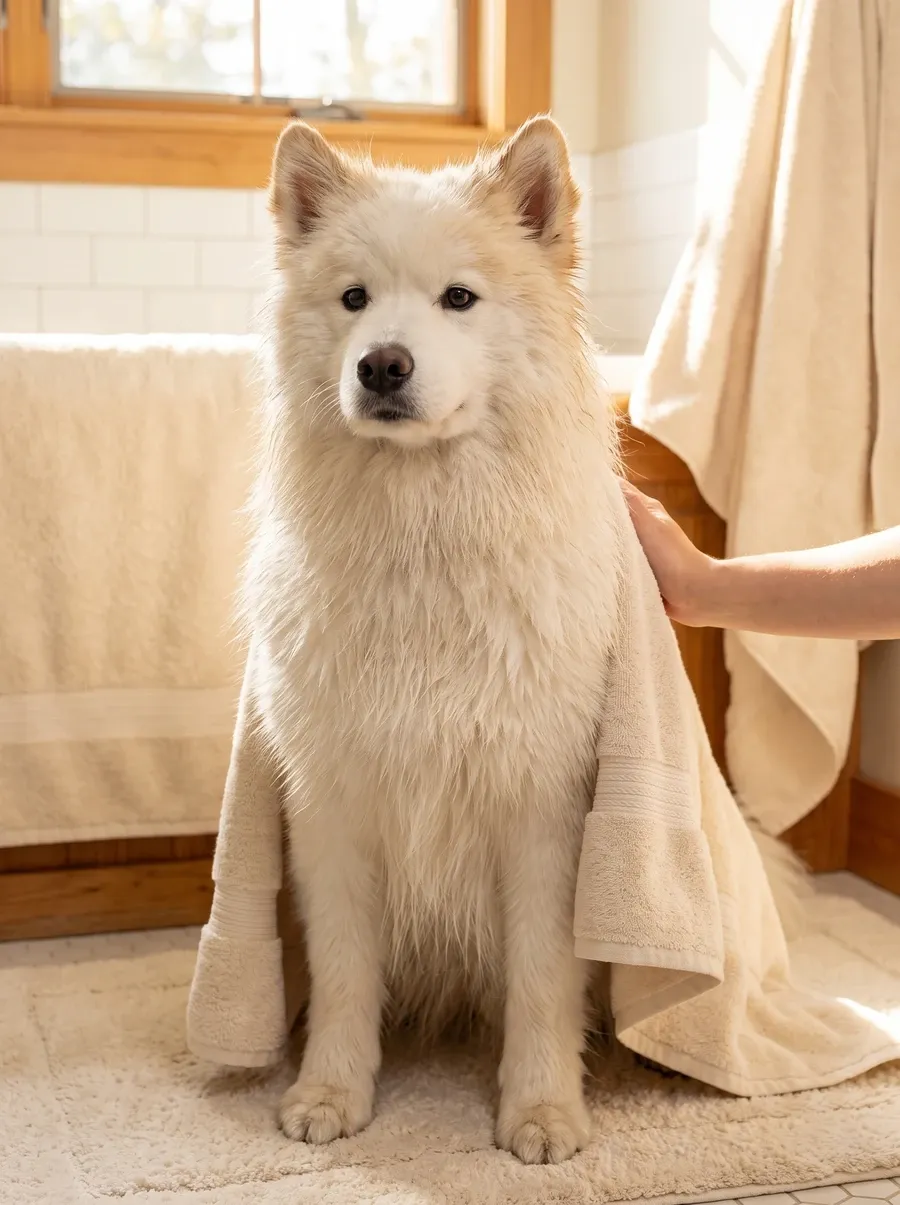
Samoyed, a damp white adult sitting on a bath mat while a pet parent dries the dog with a towel

At home

Why does my Samoyed stay damp after a bath?

Soft and dry on top, still damp underneath an hour later.

What's going onTheir undercoat is dense, and a damp one sits against the skin for hours in the heat. After a bath or a swim, dry them right down to the skin, not just the top coat.

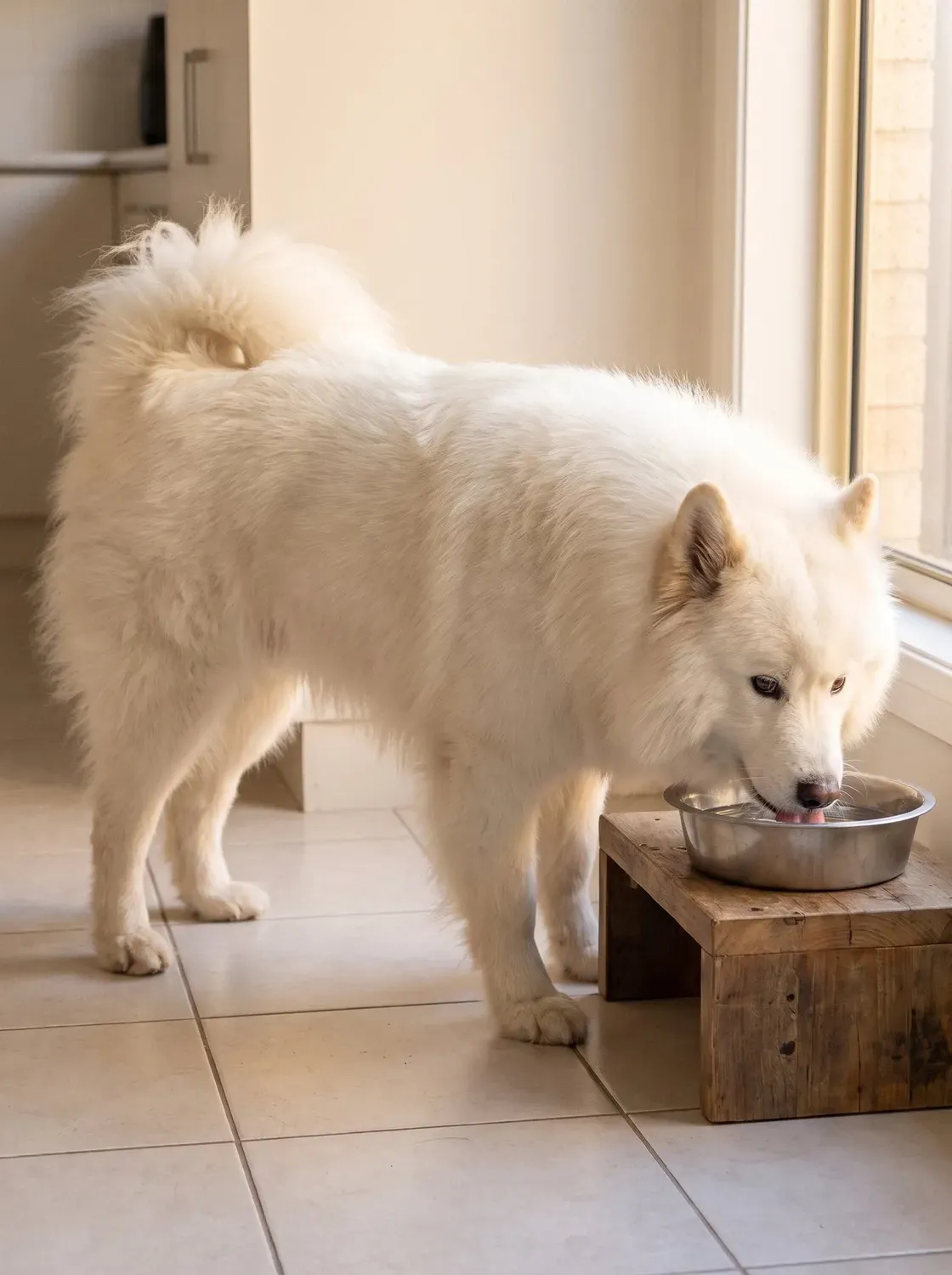
Samoyed, a white adult drinking from a steel bowl on a timber stand in a tiled kitchen

At home

Why is my Samoyed drinking more?

The water bowl that needs filling more often than it used to.

What's going onDiabetes Mellitus (sugar diabetes) is a risk for Samoyeds from puppyhood to young adulthood. If they drink and wee much more than usual, or lose weight while eating well, tell your vet that week.

A Samoyed in Dubai

The bit nobody tells you.

Their cold

Built for: Siberian winters.

In Dubai: Summers of 45 degrees, in a coat made for the Arctic.

Their work

Built for: Herding reindeer and pulling sleds.

In Dubai: Mostly in the air conditioning.

Their family

Built for: Sleeping in a tent in the middle of the family.

In Dubai: Often alone for part of the day.

The barking, the jumping up and the flat-on-the-marble days mostly come from that gap.

You cannot give them a reindeer herd. You can give them a cool home and company, and the ten things below are how.

Your plan is built around their breed: the hips, eyes, thyroid and diabetes a Samoyed is prone to, at every age.

Join the founding families. AED 1,999 of essential care for AED 199.

Daily care for a Samoyed

Ten things that make their life better.

Many of them are free, and most matter at every age.

  1. Their coat was made for Siberia, and it needs real care in a Dubai summer.

    Every age, most of all puppies and from 7 years

    Free

    Why

    Their coat was made for Siberia, and it needs real care in a Dubai summer.

    What to do

    Keep them in air conditioning through the day, with a cool tiled floor to lie on. From May to September, walk before sunrise and after dark, and check the pavement with the back of your hand first. If they pant hard, drool thickly or wobble, move them into shade or air conditioning straight away, wet their coat and skin with cool water, not ice-cold, and contact your vet now. Keep cooling them on the way, with the air conditioning on in the car.

  2. They need a lot of brushing, so it helps if they learn to enjoy it.

    Every age, starting the day they come home

    Free

    Why

    They need a lot of brushing, so it helps if they learn to enjoy it.

    What to do

    Every day, touch their paws, lift their ears and open their lips for a few seconds, then give a treat. Show them the brush and the nail clippers before you use them. Stop before they wriggle.

  3. They love everyone, and at full size a happy Samoyed can knock a child over.

    Every age, most of all puppies

    Free

    Why

    They love everyone, and at full size a happy Samoyed can knock a child over.

    What to do

    Reward four feet on the floor every time someone says hello. Two short sessions a day, paid with part of their dinner.

  4. Many Samoyeds bark for company, and your neighbours share the wall.

    Every age, loudest from 6 months to 2 years

    Free

    Why

    Many Samoyeds bark for company, and your neighbours share the wall.

    What to do

    Give them the walk and the company before they ask. When they bark for something, wait for a moment of quiet before you give it. Long barking or howling while you are out can be distress, so contact your vet.

  5. Eye disease, diabetes and an underactive thyroid are all risks for a Samoyed.

    Every age

    FreeIn your plan

    Why

    Eye disease, diabetes and an underactive thyroid are all risks for a Samoyed.

    What to do

    Once a week, as you brush, look at their eyes for redness, cloudiness or squinting, and at the skin under the coat. Notice how often you fill the water bowl. If anything about the eyes changes, call your vet that day. Weigh them once a month.

  6. Dead undercoat and damp fur both hold heat against the skin.

    Every age, more as the adult coat comes in

    Under AED 200, once

    Why

    Dead undercoat and damp fur both hold heat against the skin.

    What to do

    Brush them through to the skin several times a week with an undercoat rake and a slicker brush, and every day when they shed. After a bath, dry them all the way down. Do not clip or shave the undercoat. De-shed and de-mat with the right tools, and keep up the brushing and bathing, so the coat stays clear and skin problems are easier to spot.

  7. They were bred to live in the middle of a family, and a bored Samoyed barks.

    Every age, most of all 6 months to 2 years

    Free, or the cost of a walker

    Why

    They were bred to live in the middle of a family, and a bored Samoyed barks.

    What to do

    If they are alone for more than a few hours, arrange a visit or a walk. On hot days, give them indoor work: a scatter of part of their food, a stuffed chew, a sniffing game.

  8. They were herding dogs, and many Samoyeds will chase what runs. Street cats are everywhere in Dubai, and a running one is hard to resist.

    Every age, for life

    Under AED 200

    Why

    They were herding dogs, and many Samoyeds will chase what runs. Street cats are everywhere in Dubai, and a running one is hard to resist.

    What to do

    Walk them on a lead, with a harness if they pull. In open spaces, use a long line of 5 to 10 metres, and practise calling them back on it.

  9. They are friendlier than most of their sled-dog cousins, but they were still bred to cover ground, and a loose dog near a Dubai road is in danger fast.

    Every age, most of all puppies and young dogs

    Under AED 300 for a gate

    Why

    They are friendlier than most of their sled-dog cousins, but they were still bred to cover ground, and a loose dog near a Dubai road is in danger fast.

    What to do

    Check the gap under the gate, the height of the wall and the balcony rails. Keep a baby gate inside the front door for deliveries.

  10. Hip Dysplasia (a poorly fitting hip joint) is one of the first risks for a Samoyed, from puppyhood, and arthritis follows with age.

    Every age, screening before 2 years

    Free to AED 1,000 for rugsIn your plan

    Why

    Hip Dysplasia (a poorly fitting hip joint) is one of the first risks for a Samoyed, from puppyhood, and arthritis follows with age.

    What to do

    Keep them lean. Put rugs where they turn and run on marble. Book their hip screening before they are two.

Two of these are in your plan. The rest you can do at home.

Join the founding families. AED 1,999 of essential care for AED 199.

Samoyed health by age

Their health, at every age.

In a Samoyed, a change in thirst, eyes or coat is often the first sign that something is wrong. Choose their age to see what to watch for, and the care that goes with it.

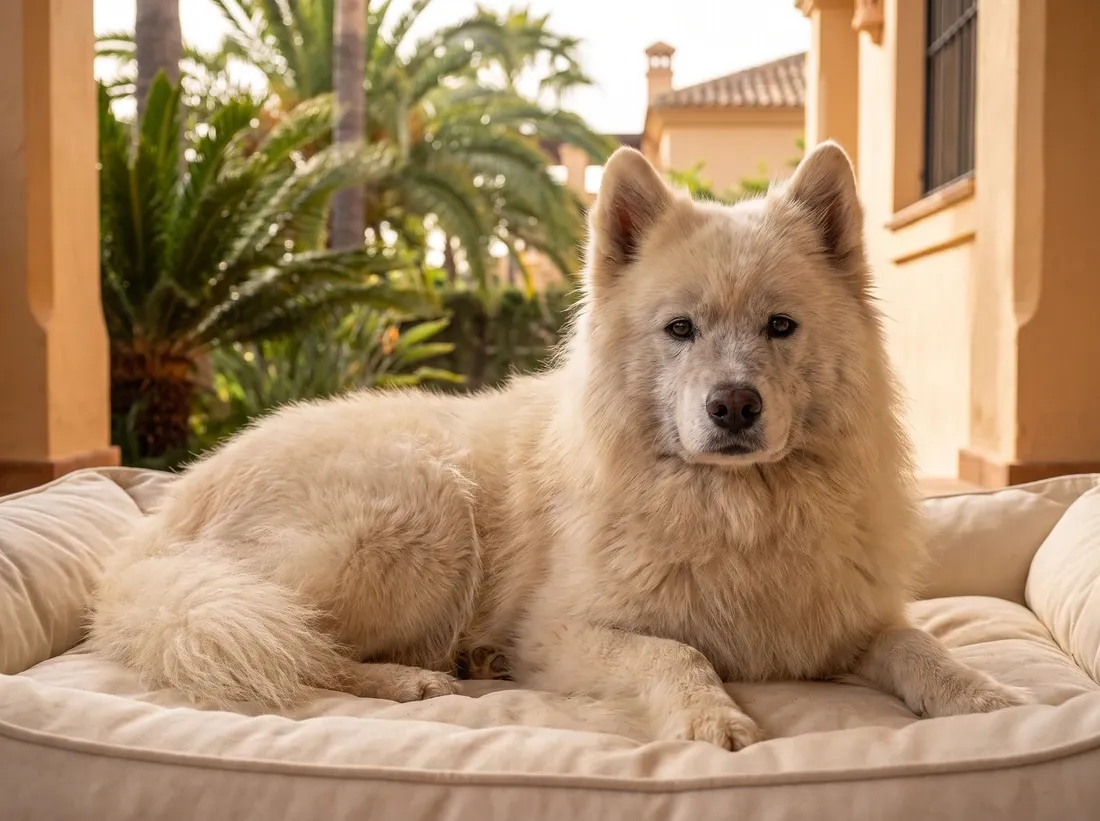
Samoyed in Dubai, an older cream dog resting on a padded bed on a shaded terrace, palms behind

How old are they?

Their age

Samoyed Puppy health

the first six months

What to watch for

  1. Developmental or early clinical signs of Hip Dysplasia (HD, a poorly fitting hip joint)
  2. Congenital or early inherited ocular disease related to Progressive Retinal Atrophy (PRA, gradual loss of sight)
  3. Genetic predisposition to Hypothyroidism (an underactive thyroid), no clinical disease expected at this stage
  4. Congenital or early inherited ocular disease related to Glaucoma (raised pressure inside the eye)
  5. Early or congenital expression of Diabetes Mellitus (sugar diabetes)

The care that goes with it

  1. Core vaccinations, microchip and Dubai Municipality registration
  2. Deworming, and flea and tick prevention
  3. Weight, muscle, dental, growth and nutritional evaluation, and early socialisation
  4. Hip Dysplasia (HD, a poorly fitting hip joint) screening, as a first baseline
  5. Early follow-up for any signs of Progressive Retinal Atrophy (PRA, gradual loss of sight)
The full care detail
  • Core vaccination programme, microchipping and Dubai Municipality registration. Titre testing discussion where clinically appropriate; not a substitute for completing the core vaccine series
  • Deworming and external parasite prevention tailored to Dubai exposure
  • Body Condition Score (BCS, a check on whether they are the right weight), Muscle Condition Score (MCS, a check on their muscle), dental, growth and nutritional evaluation, and early socialisation
  • Baseline screening focused on Hip Dysplasia (HD)
  • Early diagnostic follow-up for signs suggestive of Progressive Retinal Atrophy (PRA)

Their age

Samoyed Juvenile health

6 months to 2 years

What to watch for

  1. Emerging Hip Dysplasia (HD, a poorly fitting hip joint) with exercise intolerance or lameness
  2. Progression or first clinical detection of Progressive Retinal Atrophy (PRA, gradual loss of sight)
  3. Genetic predisposition to Hypothyroidism (an underactive thyroid), monitoring only
  4. Progression or first clinical detection of Glaucoma (raised pressure inside the eye)
  5. Young-dog presentation of Diabetes Mellitus (sugar diabetes)

The care that goes with it

  1. Hip screening, usually by age 2
  2. Ophthalmic evaluation (eye exam)
  3. Neutering or spaying, timed for a large breed
  4. Thyroid screening, with treatment only if signs are confirmed
  5. Signs that keep coming back, looked into fully rather than put down to the thyroid each time
The full care detail
  • Hip screening
  • Ophthalmic evaluation
  • Neuter/spay timing discussion that accounts for large-breed growth and disease risk
  • Thyroid screening for breed predisposition; treat only if clinical signs are confirmed
  • Investigate recurrent signs rather than repeatedly treating presumed Hypothyroidism

Their age

Samoyed Young Adult health

2 to 4 years

What to watch for

  1. Hip Dysplasia (HD, a poorly fitting hip joint)
  2. Progressive Retinal Atrophy (PRA, gradual loss of sight)
  3. Genetic predisposition to Hypothyroidism (an underactive thyroid)
  4. Glaucoma (raised pressure inside the eye)
  5. Diabetes Mellitus (sugar diabetes)

The care that goes with it

  1. Hip screening
  2. Ophthalmic evaluation (eye exam)
  3. Thyroid screening, with treatment only if signs are confirmed
  4. Glaucoma monitoring (the pressure inside the eye, measured over time)
  5. Diabetes management (sugar diabetes)
The full care detail
  • Hip screening
  • Ophthalmic evaluation
  • Thyroid screening for breed predisposition; treat only if clinical signs are confirmed
  • Glaucoma monitoring
  • Diabetes management

Their age

Samoyed Prime Adult health

4 to 7 years

What to watch for

  1. Hip Dysplasia (HD, a poorly fitting hip joint)
  2. Hypothyroidism (an underactive thyroid)
  3. Progressive Retinal Atrophy (PRA, gradual loss of sight)
  4. Arthritis
  5. Dental Disease

The care that goes with it

  1. Joint care
  2. Thyroid therapy (treatment for an underactive thyroid)
  3. Eye monitoring
  4. Pain management
  5. Dental cleaning
The full care detail
  • Joint care
  • Thyroid therapy
  • Eye monitoring
  • Pain management
  • Dental cleaning

Their age

Samoyed Senior health

7 to 10 years

What to watch for

  1. Arthritis
  2. Dental Disease
  3. Heart Disease
  4. Kidney Disease
  5. Hypothyroidism (an underactive thyroid)

The care that goes with it

  1. Pain relief
  2. Dental care
  3. Cardiac monitoring (heart checks)
  4. Renal support (care for the kidneys)
  5. Thyroid therapy (treatment for an underactive thyroid)
The full care detail
  • Pain relief
  • Dental care
  • Cardiac monitoring
  • Renal support
  • Thyroid therapy

Their age

Samoyed Geriatric health

10 years and over

What to watch for

  1. Kidney Disease
  2. Heart Disease
  3. Cognitive Dysfunction (dementia in older pets)
  4. Arthritis
  5. Dental Disease

The care that goes with it

  1. Renal therapy (treatment for the kidneys)
  2. Cardiac care (care for the heart)
  3. Cognitive support (for dementia in older pets)
  4. Pain management
  5. Dental maintenance
  6. Quality-of-life assessment
  7. Palliative care (comfort care)
  8. End-of-life planning with your veterinary team
The full care detail
  • Renal therapy
  • Cardiac care
  • Cognitive support
  • Pain management
  • Dental maintenance
  • Quality-of-life assessments
  • Tailored palliative and comfort-focused care plan
  • Compassionate end-of-life planning with your veterinary team

Breed predispositions indicate an increased risk rather than certainty of disease. What is right for them always comes from their own history and an evaluation.

Getting a Samoyed puppy in Dubai

Before they come home.

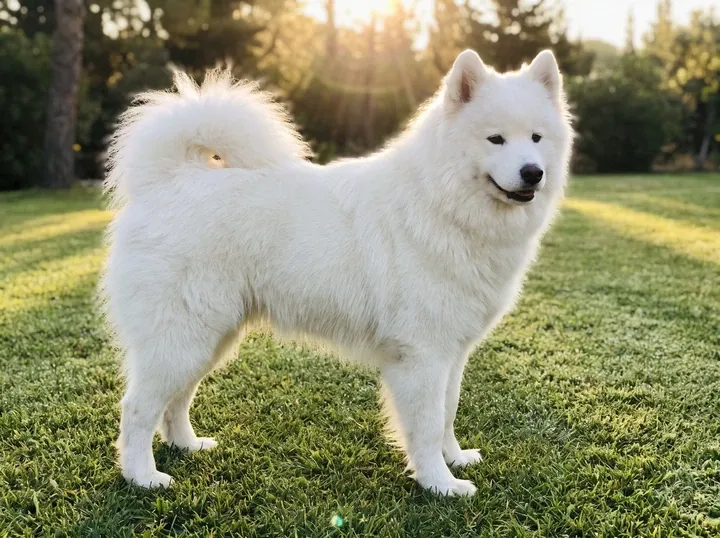
Samoyed, a white adult standing on a sunny garden lawn, tail curled over the back

The working dog and the family dog

A herding dog under the white coat

The Samoyed you meet today was built in England from a handful of imported dogs, bred for the white coat, the smile and a calm, friendly nature. Underneath is still a dog who herded reindeer and pulled sleds, and wants a job to do.

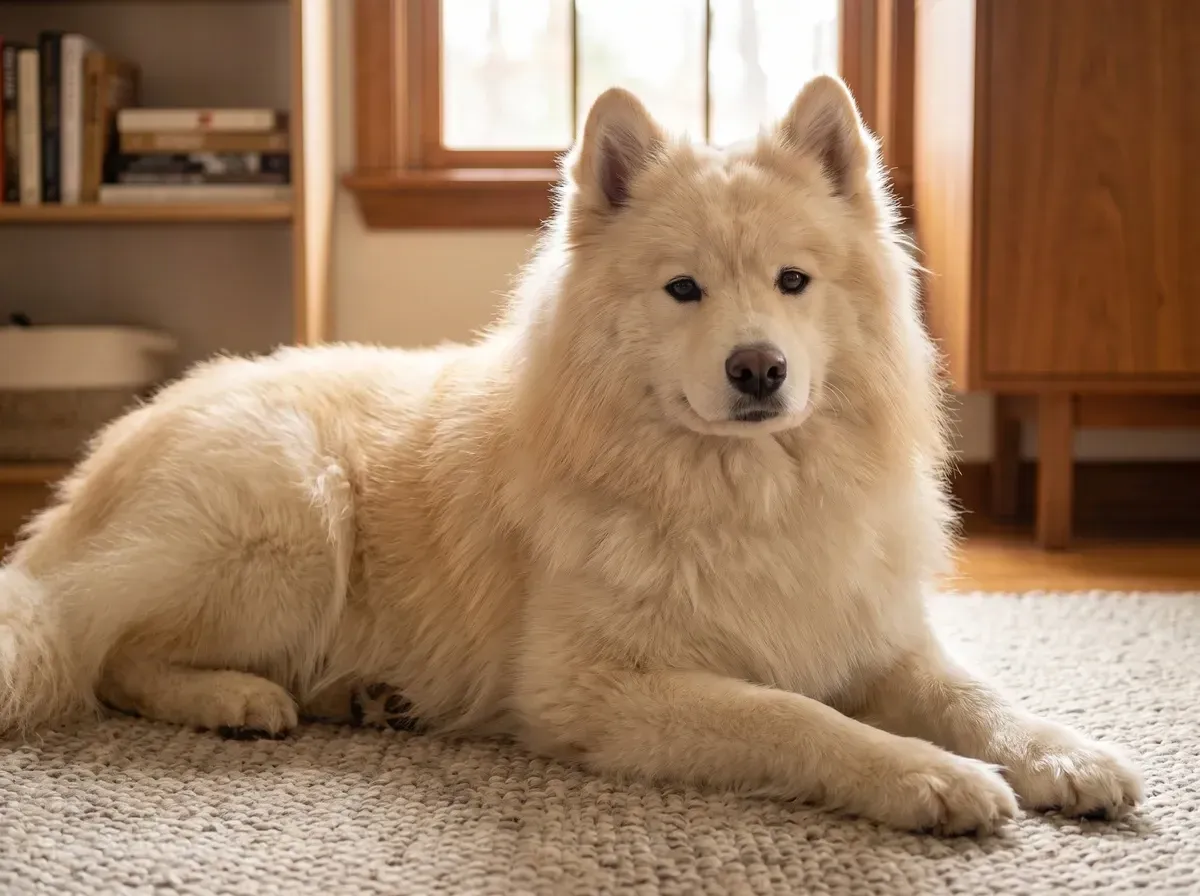
Samoyed, a biscuit adult lying on a stone-coloured wool rug in a quiet study

Samoyed colours

Every shade from pure white to biscuit

Pure white, cream, white with biscuit, or biscuit all over. The earliest Samoyeds were sometimes black and white or brown and white, but every Samoyed today is a pale shade.

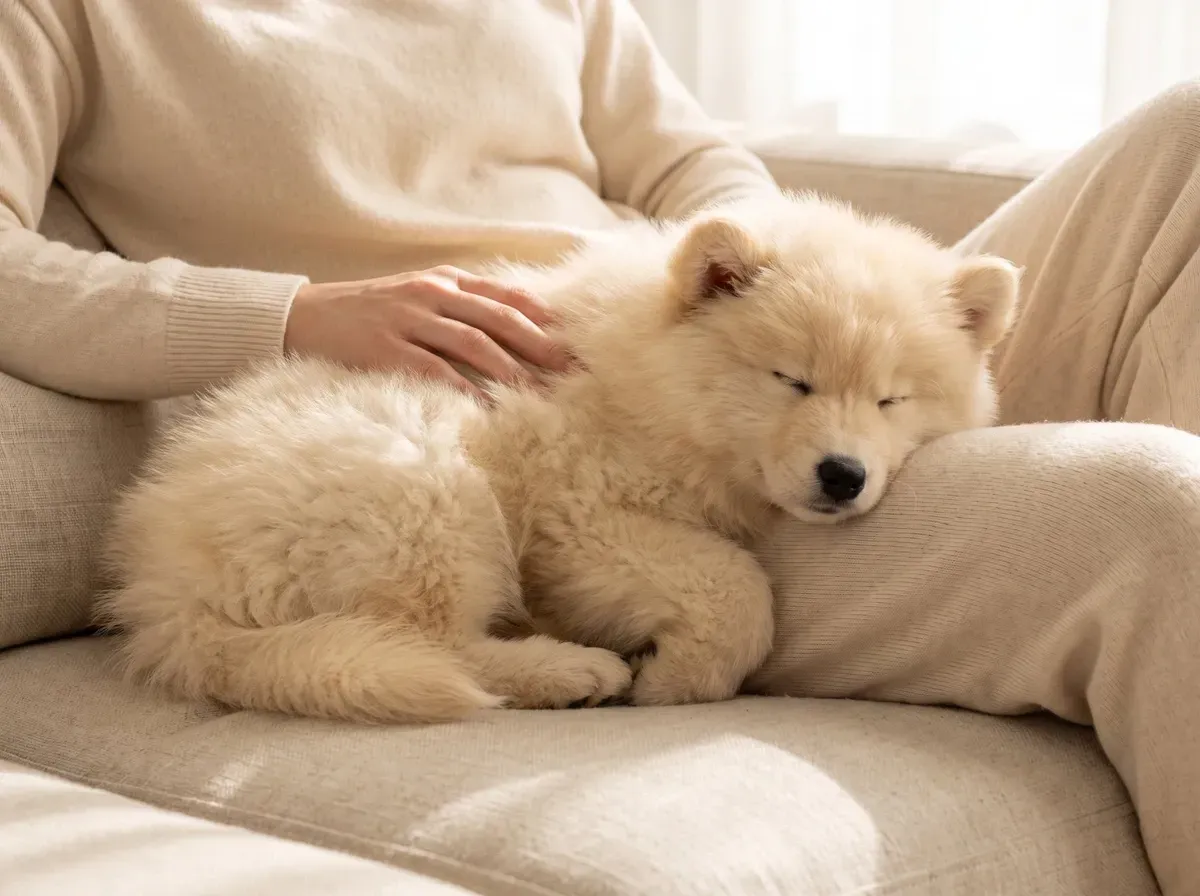
Samoyed, a cream puppy asleep in a pet parent's lap on a linen sofa

The first six months

Caring for a Samoyed puppy

Their full vaccination course, microchip and Dubai Municipality registration come first. Keep time outside short in summer, because puppies overheat quickly, and start short, gentle sessions with the brush.

Puppy health, 0 to 6 months
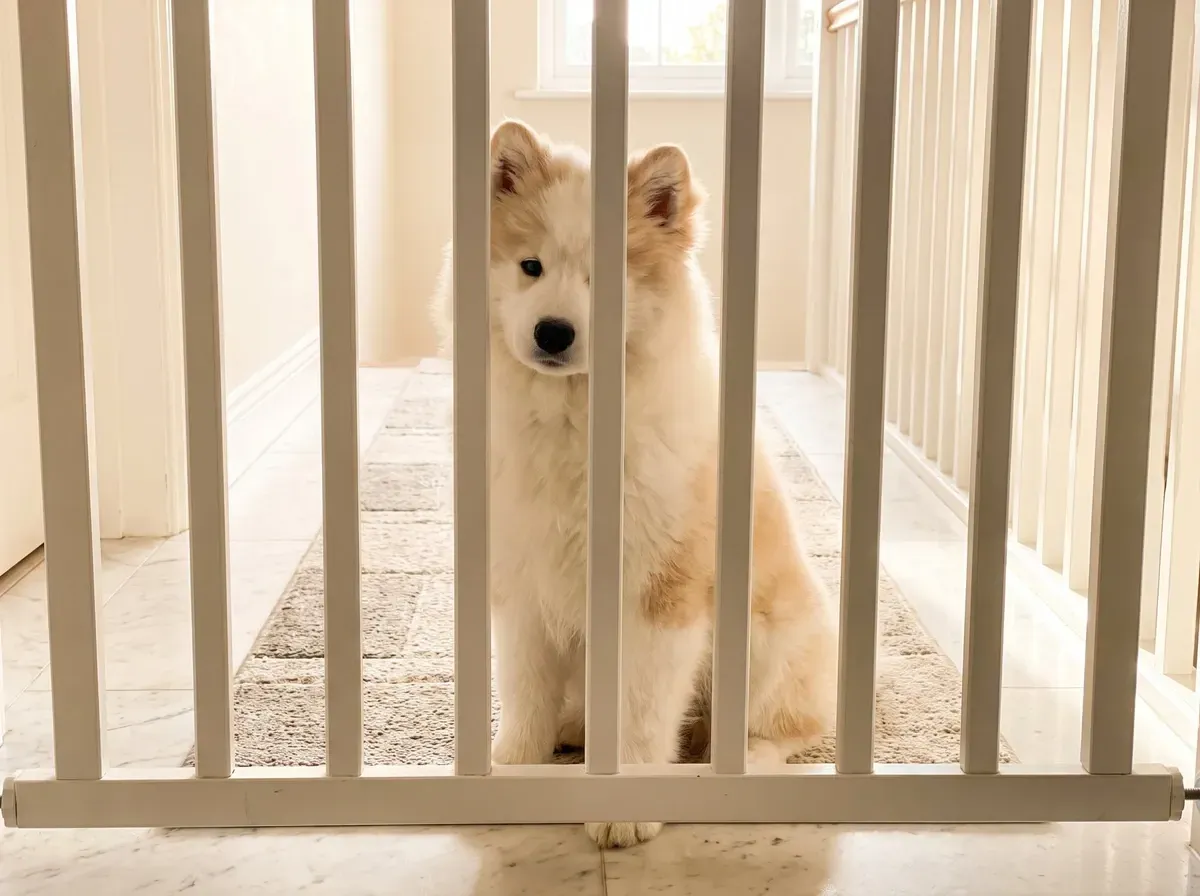
Samoyed, a white and biscuit puppy sitting behind a baby gate in a marble corridor

Getting the home ready

Cool floors, rugs and a second door

Give them a tiled floor in an air-conditioned room, and rugs where they turn and run on marble. Check the gate and the balcony at puppy height, and put a baby gate inside the front door.

Ten things that make their life better
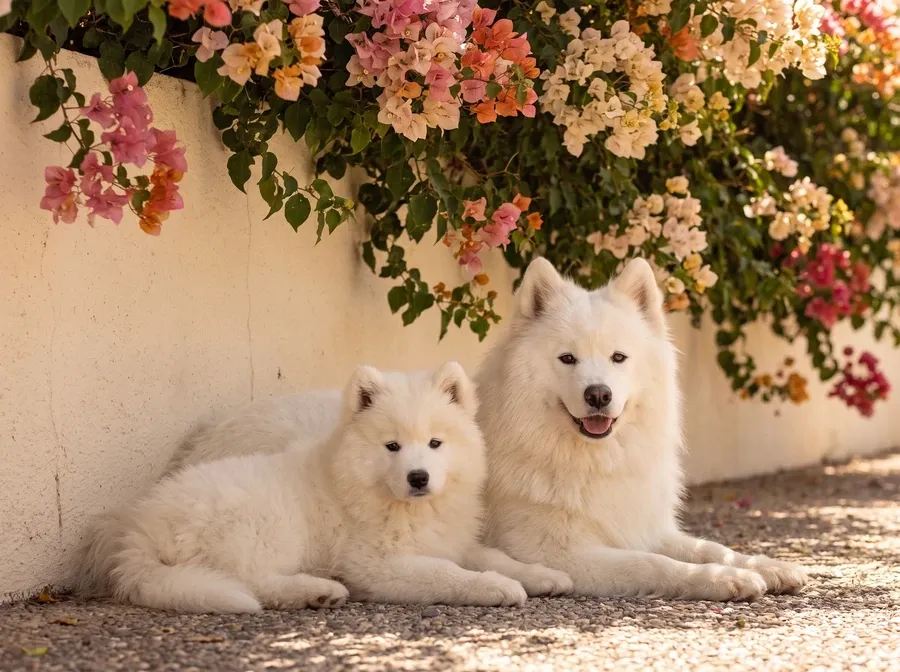
Samoyed, a white mother and puppy lying in the shade of a wall hung with bougainvillea

Before you commit

Ask about the parents' hips and eyes

Ask the breeder whether both parents have had their hips scored and their eyes evaluated. Hip Dysplasia and eye disease are the first risks for a young Samoyed.

The reception of a Paws & Co clinic, with long cream benches and a stone reception desk

Before the clinics open

Join the founding families

AED 1,999 of essential care for AED 199. No payment now.

When to see a vet

When it is not behaviour.

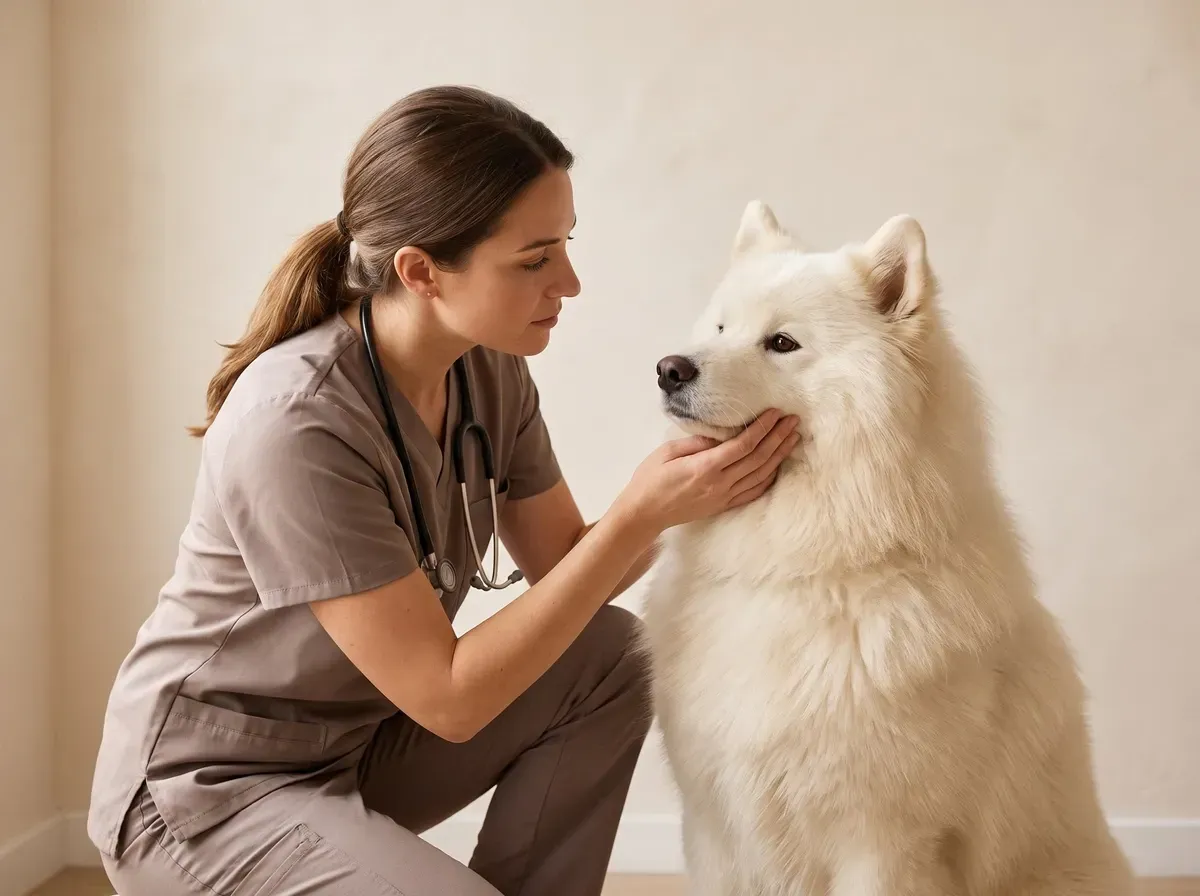
Samoyed, a white adult with a vet in taupe scrubs kneeling alongside, a hand under the dog's chin

Some of this is not a training problem, and treating it like one wastes time your dog may not have. If they are distressed when you leave, if they growl or guard their food, their toys or you, if they are frightened on the lead, or if anything about them changes suddenly at any age, contact your vet the same day. A tip from a website, ours included, is not the answer. If it cannot wait, contact your nearest emergency vet now.

With a Samoyed, watch their thirst, their eyes and their coat. Drinking and weeing much more than usual, or losing weight while eating well, can be diabetes. A red, cloudy or squinting eye can be raised pressure inside it, which needs seeing quickly. A thinning coat and a slower dog can be their thyroid. Bloat (GDV, a twisted stomach) is most common in large, deep-chested dogs, so skip walks and hard play shortly before and after meals. A swollen, tight belly, retching with nothing coming up, sudden restlessness or drooling is an emergency: contact your vet now. It is easy to put any of it down to the heat, but with diabetes or the thyroid weeks matter, and with an eye, hours do.

They'll keep smiling in the lift. If the smile comes with a squint, call your vet that day.
Samoyed history

Before they were yours.

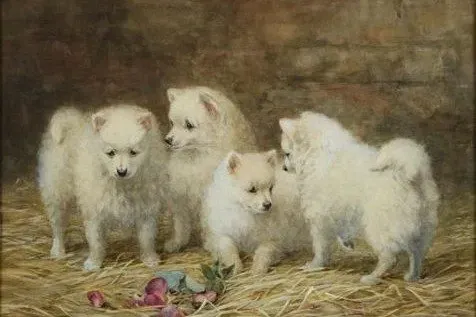
  1. Samoyed history, a painting of four white puppies on straw by Frances C. Fairman, England, 1896
    Four white Samoyed puppies, painted by Frances C. Fairman, England, 1896.

    The beginning

    With the Nenets people

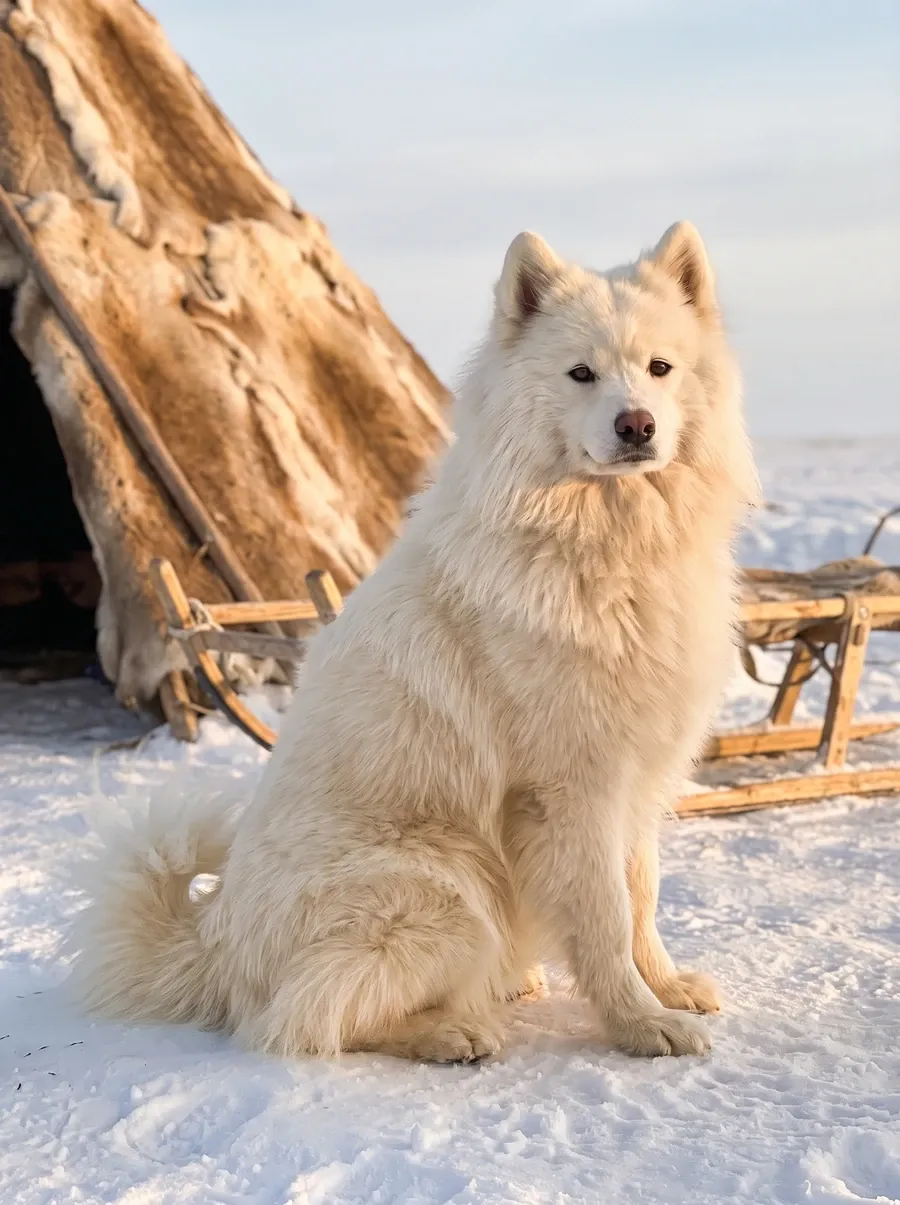
    The Samoyed comes from northern Siberia, where the Nenets people kept the dogs to herd reindeer and pull sleds. At night the dogs slept in the tents with the family.

    What they still carryThe friendliness, the coat, and a dog who expects to be part of the household.

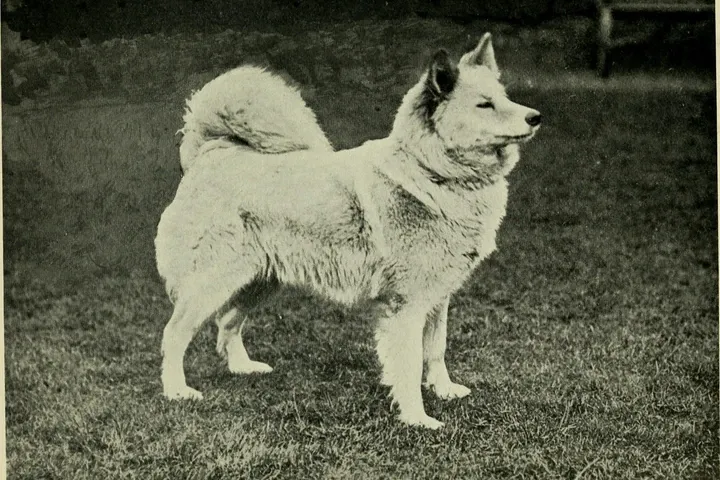
  2. Samoyed history, an early show dog standing side-on on a lawn, tail curled over the back, 1913
    An early show Samoyed, from The Encyclopaedia of the Kennel, 1913.

    1889

    To England

    In 1889 the explorer Ernest Kilburn-Scott brought a puppy home to England from Archangel. He and his wife built the breed from a handful of imported dogs.

    What they still carryThe white Samoyed you know, bred for looks and temperament as much as work.

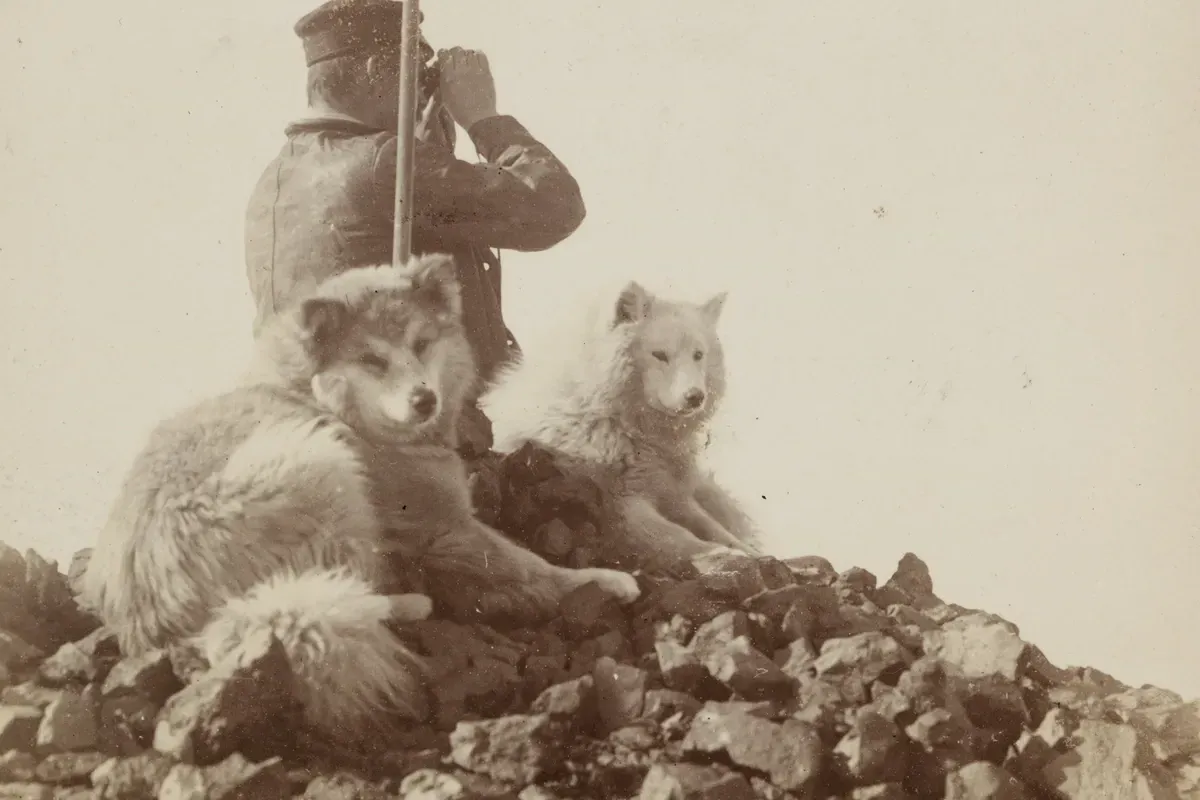
  3. Samoyed history, two sledge dogs resting on rocks beside an explorer with binoculars, Antarctica, 1899
    Sledge dogs with an explorer on the British Antarctic (Southern Cross) Expedition, 1899.

    1890s to 1910s

    Polar expeditions

    Samoyeds pulled sleds on several early polar expeditions, in the Arctic and in Antarctica.

    What they still carryProof of a working dog under the white coat.

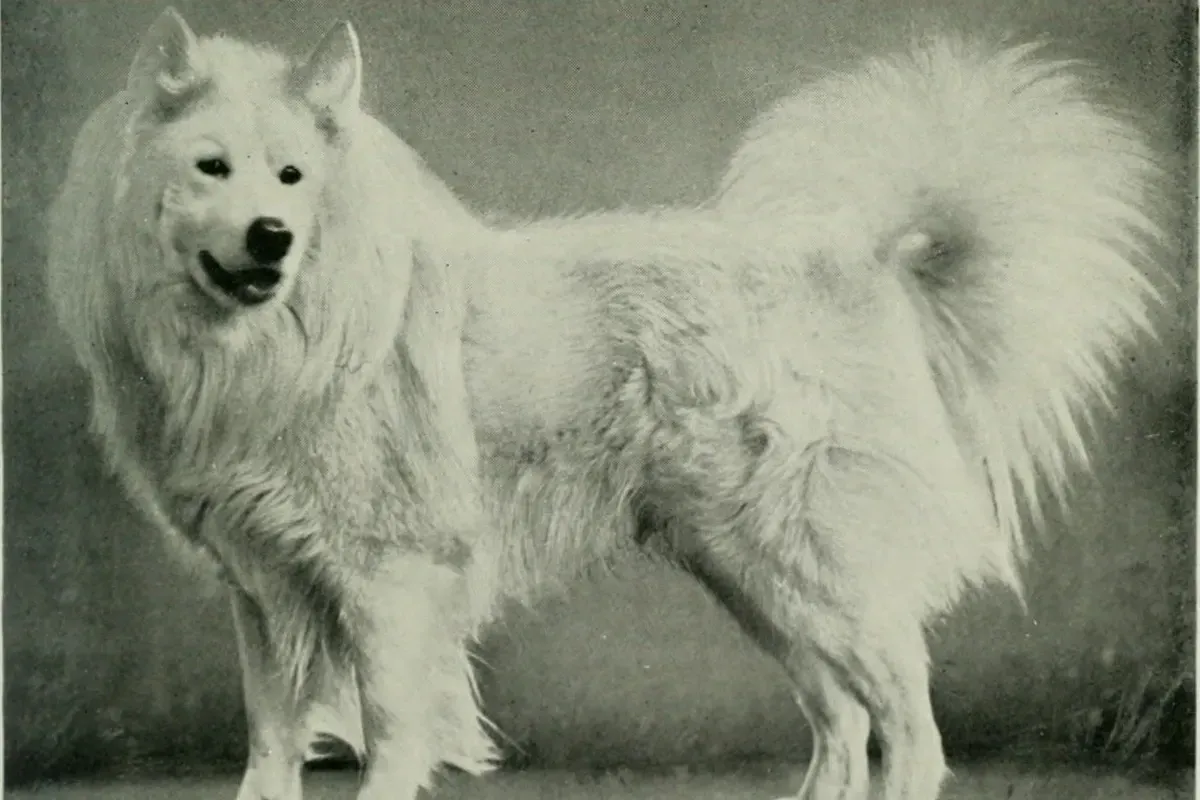
  4. Samoyed history, an old photograph of a show dog with a full white coat and plumed tail, 1922
    A show Samoyed in full coat, from The Complete Book of the Dog, 1922.

    1906 to 1912

    Recognised

    The American Kennel Club registered its first Samoyed in 1906, and The Kennel Club in England recognised the breed in 1912.

    What they still carryThe calm, friendly temperament breeders chose them for.

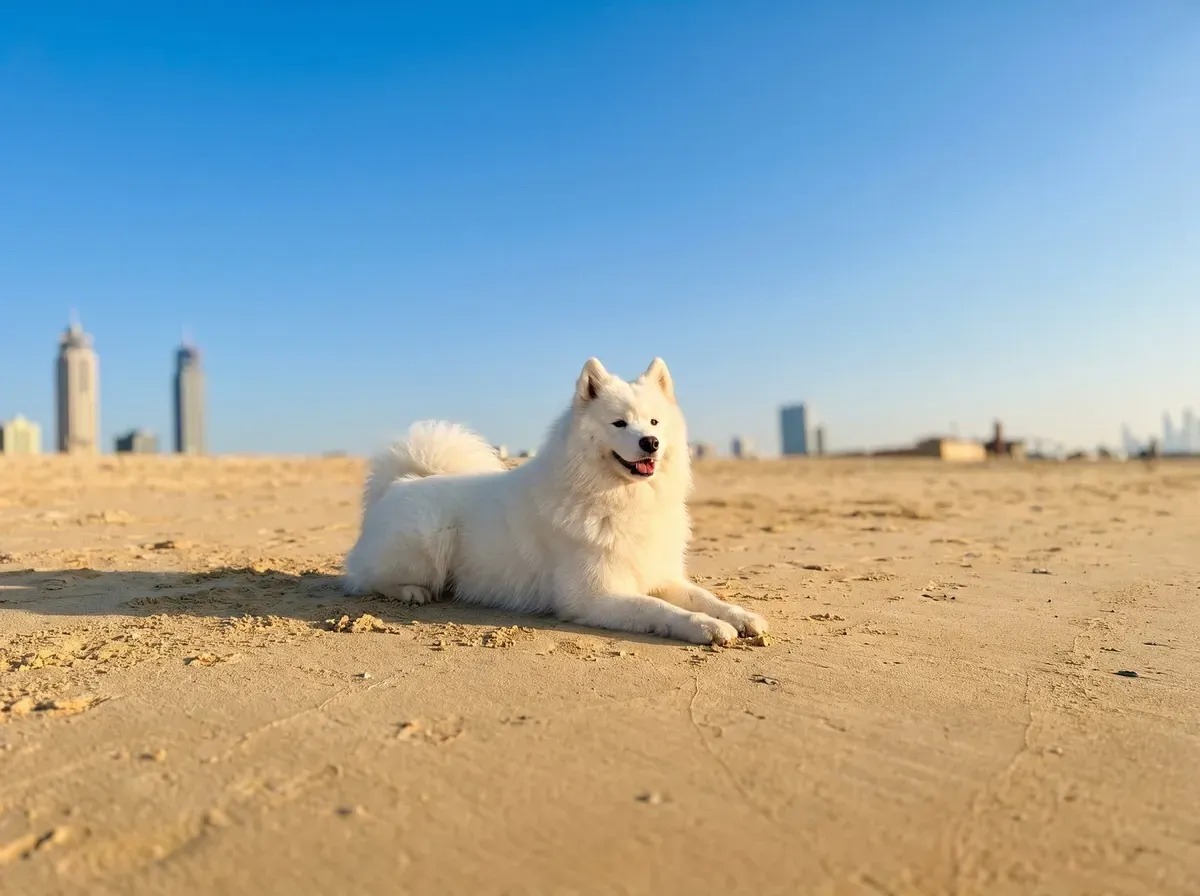
  5. Samoyed history, the breed today, a white adult lying on a Dubai beach in the morning, the skyline behind

    Today

    In Dubai

    Here most Samoyeds are family dogs, chosen for the white coat and the smile.

    What they still carryAn Arctic coat, and a dog who wants to be in the middle of everything, in a 45-degree summer.

Samoyed questions

The ones you type at midnight.

Most of these get asked late at night, by someone watching their dog and not sure what they are seeing.

Samoyed in Dubai, asleep across a pet parent's feet on a dark rug at night, the skyline behind
What is the Samoyed lifespan?

Samoyeds usually live 12 to 14 years. In a UK study of more than 700 Samoyeds, half lived past 13.

How big does a full grown Samoyed dog get?

Male Samoyeds usually weigh 20.5 to 29.5 kg and females 16 to 22.5 kg. They are a large breed, and the coat makes them look bigger still.

Do Samoyeds shed a lot?

Moderately for most of the year, then heavily in a big moult once or twice a year. Brush them through to the skin several times a week, and every day through the shed.

Can a Samoyed dog live in Dubai's heat?

Yes, a Samoyed can live in Dubai with real care in the heat. Keep them in air conditioning through the day, and from May to September walk before sunrise and after dark.

Should I shave my Samoyed in summer?

No, never shave or clip a Samoyed's undercoat. Dead undercoat left in holds heat and mats against the skin, and skin problems are easier to spot when the coat is kept clear. De-shed and de-mat with the right tools, brush the double coat out down to the skin, dry it fully after a bath, and let the air conditioning do the cooling.

Is a Samoyed dog hypoallergenic?

No dog is fully hypoallergenic, and a Samoyed sheds. If anyone at home has a dog allergy, spend time with a Samoyed before you commit.

Is there a black Samoyed?

Not today. The earliest Samoyeds were sometimes black and white or brown and white, but every Samoyed now is a pale shade: pure white, cream, white with biscuit, or biscuit all over.

Are Samoyeds good with children?

Samoyeds are affectionate and good with families. At full size a happy Samoyed can knock a small child over, so teach four feet on the floor from puppyhood.

Why does my Samoyed bark so much?

Many Samoyeds bark for company, most of all when they are bored or alone. Give them the walk and the company before they ask, and wait for quiet before you give what they are barking for.

Worried about them? Contact your vet today.