We’re hiring people who love them like we do. Join us careers@pawsandco.comSee open roles
UAE Government Licensed MOCCAE
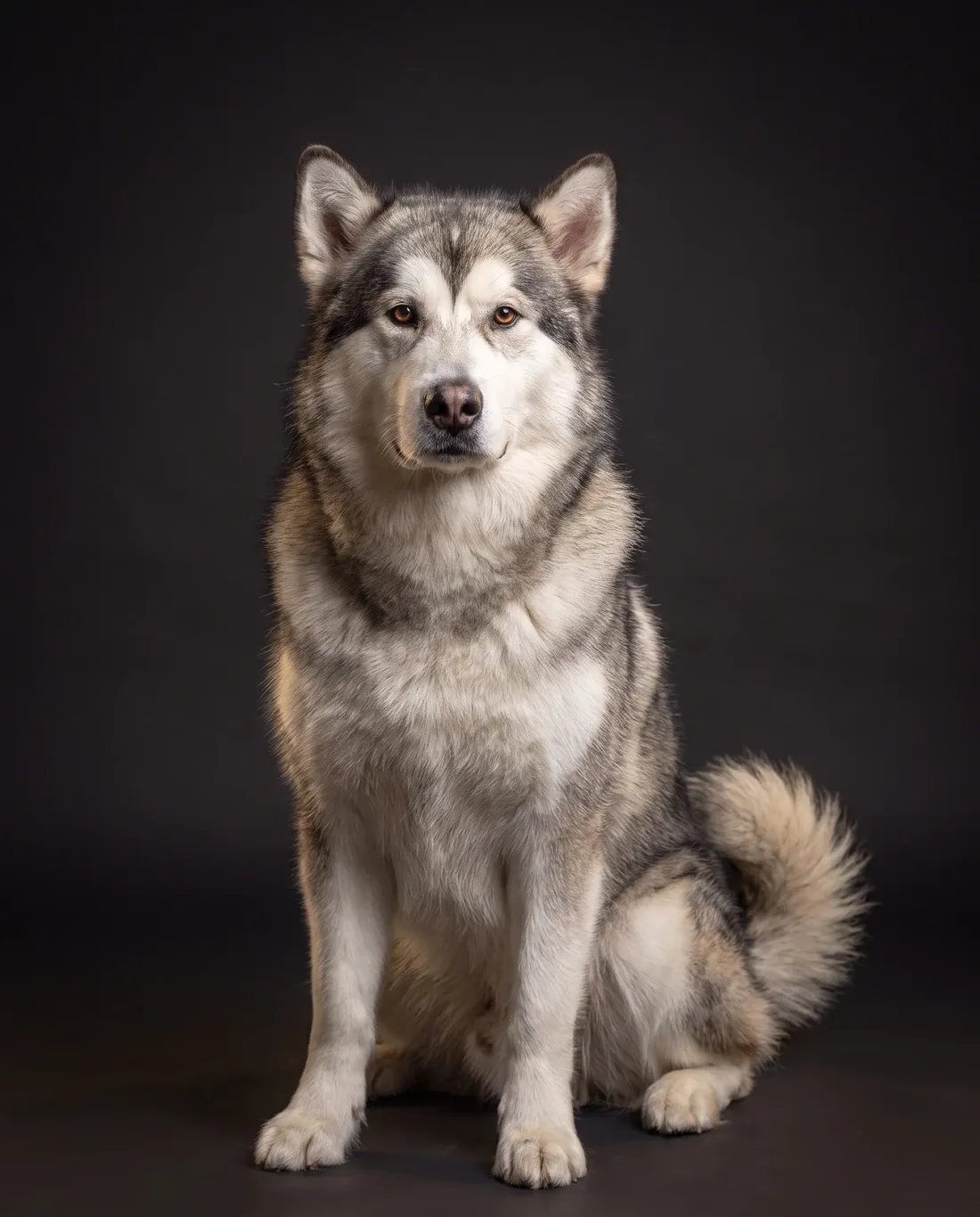
Alaskan Malamute in Dubai, studio portrait of a calm grey and white adult sitting

Breed guide  ·  Dogs

Alaskan Malamute

She answers every no with a low woo-woo. I've stopped winning the argument.

Lifespan
10 to 14 years
Size
Large
Weight
About 34 to 38.5 kg
Shedding
Heavy, all year

Last updated 14 October 2026

Join the founding families. AED 1,999 of essential care for AED 199.

No payment now. We'll be in touch by email and WhatsApp as we open enrolment.

✓
Thank you.

We will be in touch soon to confirm.

Malamute traits

What they brought with them.

Tap a card to see what is going on.

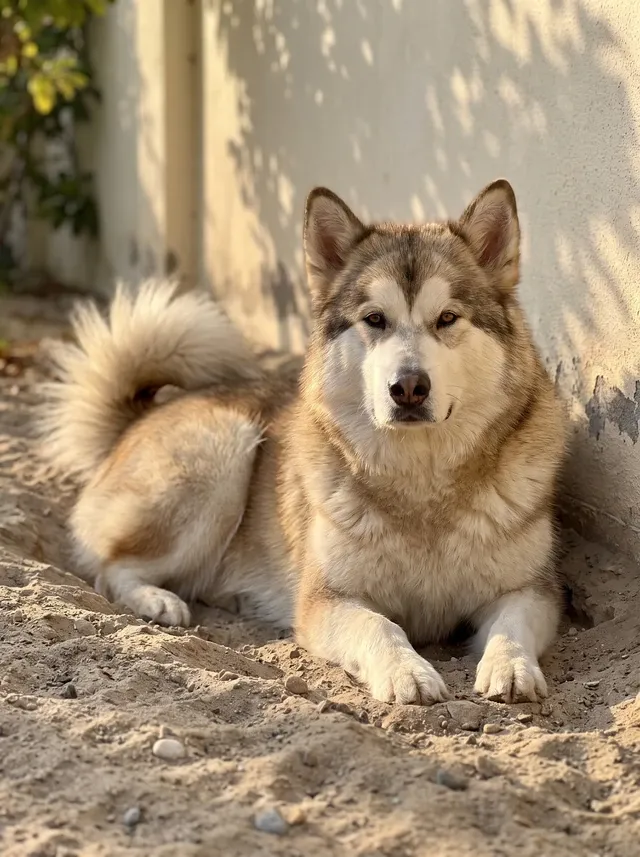
Alaskan Malamute, a sable and white adult lying in a cool sand scrape by a villa garden wall

At home

Why does my Malamute dig holes?

A fresh hole in the flowerbed, or a scrape at the tiles in the shade.

What's going onMalamutes dig down to cooler ground. In a Dubai garden that is the flowerbed. Give them a tiled corner in the air conditioning instead, and from May to September, keep their walks to before sunrise and after dark.
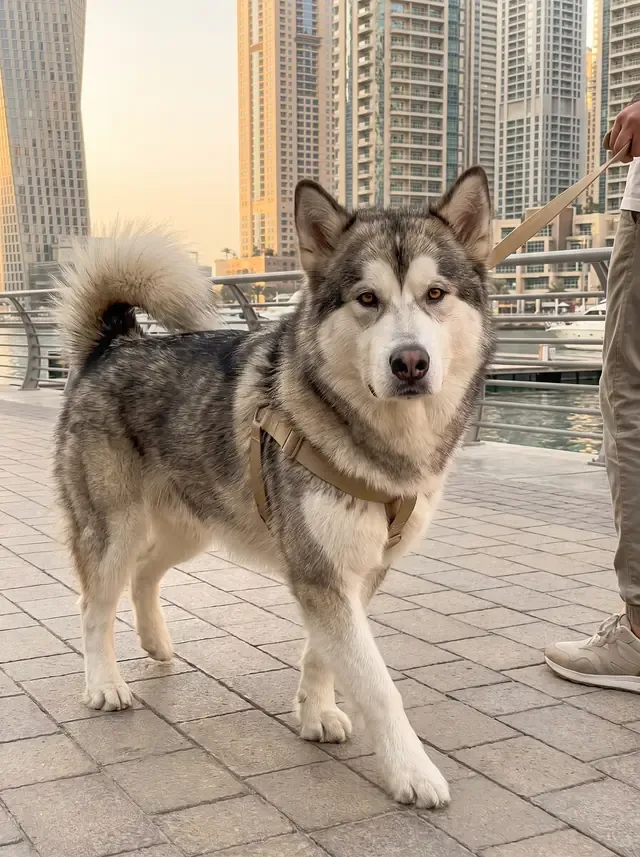
Alaskan Malamute in Dubai, a grey and white adult in a tan harness on the Marina promenade at dawn

At home

Why does my Malamute pull so hard on the lead?

Every walk starts with you being towed to the end of the road.

What's going onBecause they are a sled dog, bred to haul heavy loads. Start lead training while they are small, and use a harness that fits well. At full size a Malamute is stronger than many of the people walking them.

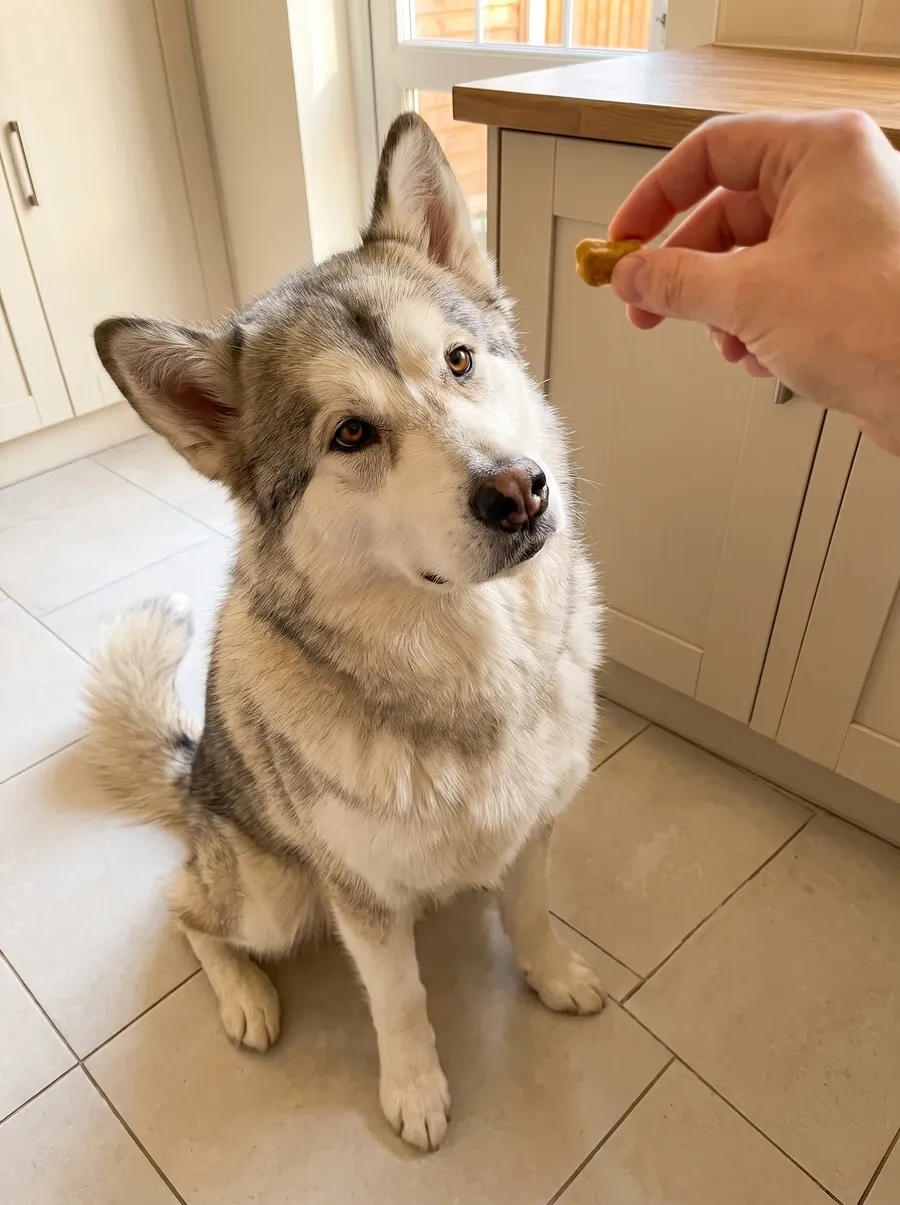
Alaskan Malamute, a silver and white adult on a tiled kitchen floor, head tilted at a treat

At home

Why does my Malamute ignore me?

They hear the cue, look at you, and decide whether it is worth it.

What's going onMalamutes were bred to make their own choices on the trail. They listen when it pays. Keep sessions short, reward what you want, and never repeat a cue they have ignored.

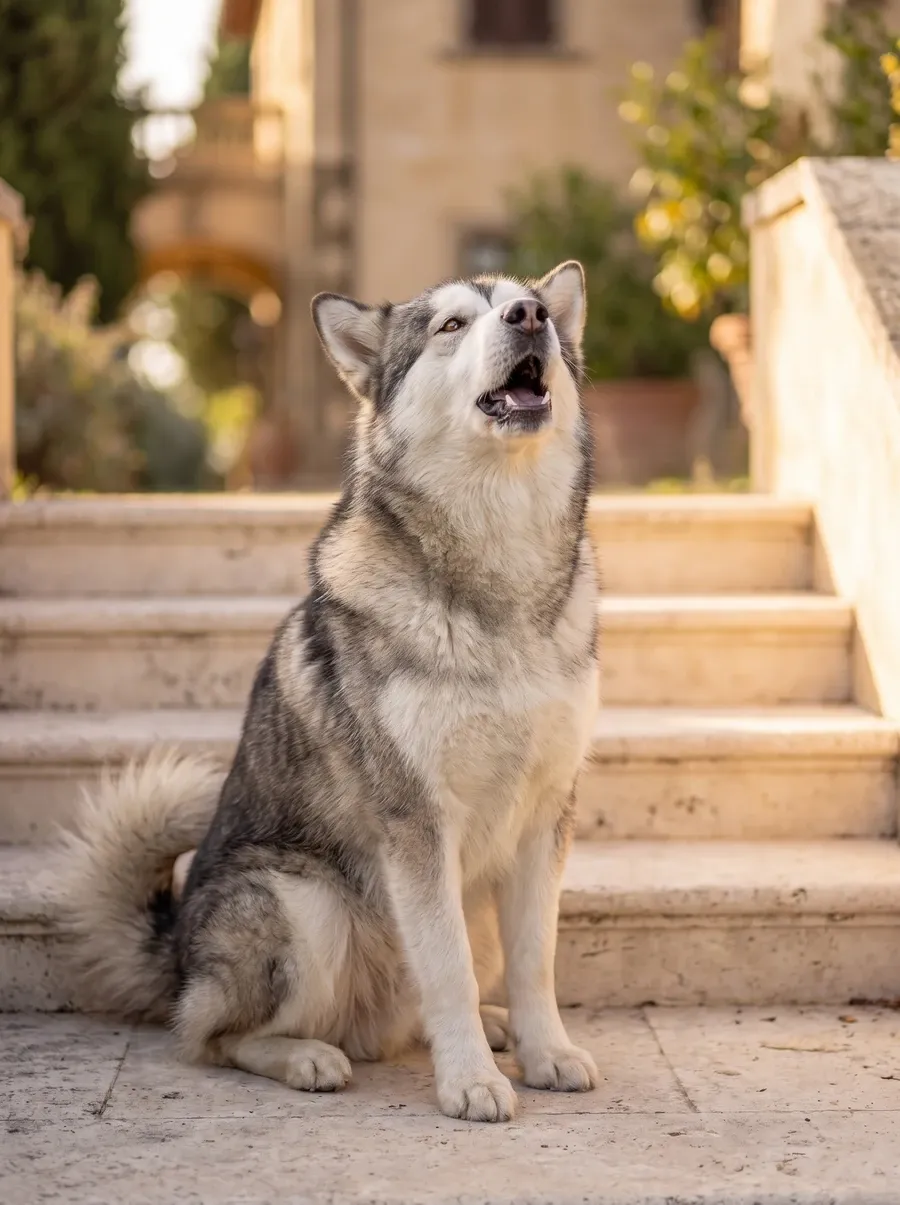
Alaskan Malamute, a grey and white adult howling on pale stone villa steps

At home

Why does my Malamute woo-woo at me?

A low woo-woo every time you say no, and a full howl when the door closes.

What's going onThey are talking, and they usually want something: a walk, company, dinner, the door open. Work out what the noise is for before you try to stop it, and do not reward the howl with the thing it asked for.

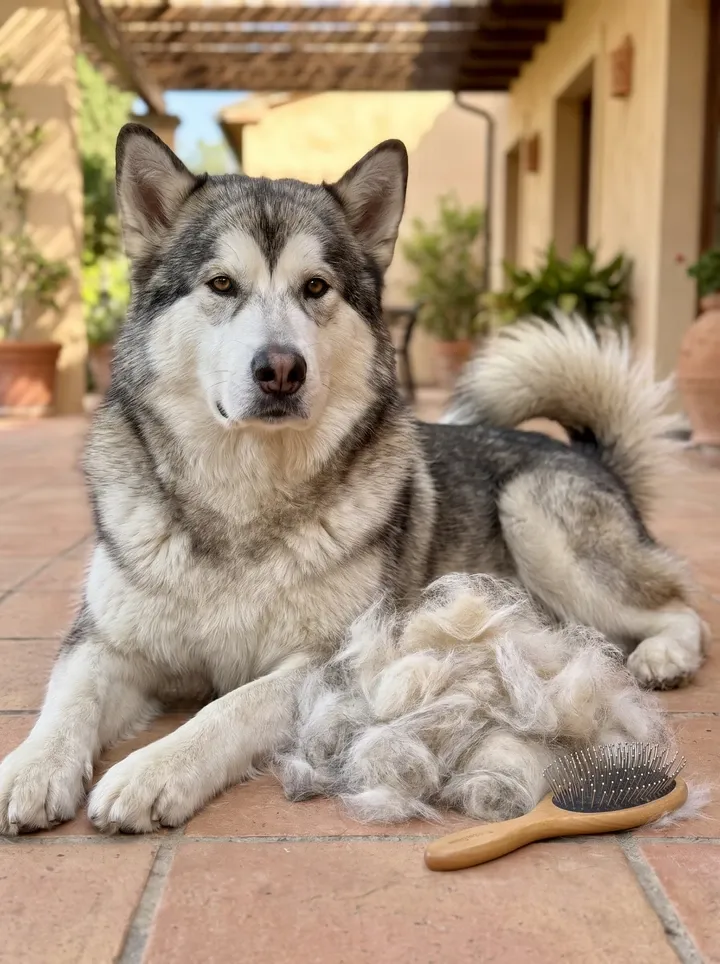
Alaskan Malamute, a grey and white adult on a shaded terrace beside a pile of brushed-out undercoat

At home

Why is my Malamute shedding so much?

Tufts of undercoat on the sofa, the rug and your clothes, all year.

What's going onA Malamute sheds all year and heavily once or twice a year, when the woolly undercoat comes out. Brush it out down to the skin, and never clip or shave it.

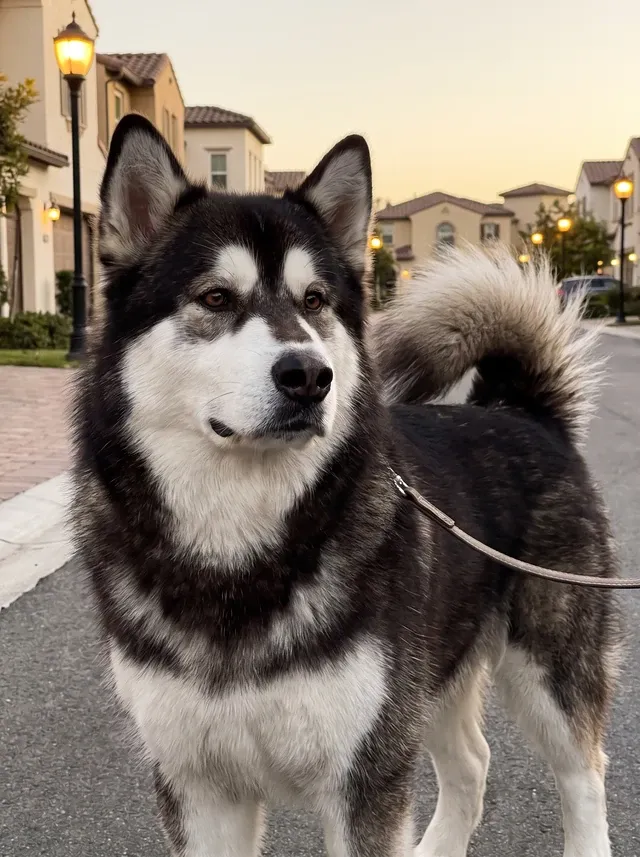
Alaskan Malamute, a seal and white adult on a lead watching across a villa street at dusk

At home

Why does my Malamute chase cats?

Locked on to the cats by the bins, and nothing you say gets through.

What's going onMany Malamutes chase small animals hard. It is an old hunting instinct, not bad temper. Keep them on a lead where street cats live, and take introductions to small pets at home slowly.

A Malamute in Dubai

The bit nobody tells you.

Their work

Built for: Hauling heavy loads across the Arctic.

In Dubai: Little to pull.

Their climate

Built for: Sleeping in the snow.

In Dubai: 45-degree summers, with nowhere cold to dig.

Their day

Built for: Working steadily for hours.

In Dubai: Indoors for most of the day.

The digging, the pulling on the lead and the arguments mostly come from that gap.

You cannot give them a sled and a winter. You can give them a cool home and a steady job, and the ten things below are how.

Your plan is built around their breed: the hips, thyroid, eyes and stomach a Malamute is prone to, at every age.

Join the founding families. AED 1,999 of essential care for AED 199.

Daily care for a Malamute

Ten things that make their life better.

Many of them are free, and most matter at every age.

  1. Their coat was made for Arctic winters. Here, air conditioning and cool-hour walks are essential.

    Every age, most of all puppies and from 7 years

    Free

    Why

    Their coat was made for Arctic winters. Here, air conditioning and cool-hour walks are essential.

    What to do

    Keep them in air conditioning through the day, with a cool tiled floor to lie on. From May to September, walk before sunrise and after dark, and check the pavement with the back of your hand first. Never leave them on a balcony, in a garden or in a car in the heat. If they pant hard, drool thickly or wobble, move them into shade or air conditioning straight away, wet their coat and skin with cool water, not ice-cold, and contact your vet now. Keep cooling them on the way, with the air conditioning on in the car.

  2. A Malamute who objects to being handled is very hard to groom or examine at full size.

    Every age, starting the day they come home

    Free

    Why

    A Malamute who objects to being handled is very hard to groom or examine at full size.

    What to do

    Every day, touch their paws, ears and mouth for a few seconds and give a treat. Practise standing still for the brush. Once they accept a toothbrush, brush their teeth every day. Build it up before they outgrow you.

  3. They are big, bright and sure of their own mind, and the house rules are easier to agree while you can still lift them.

    Every age, most of all 6 months to 2 years

    Free

    Why

    They are big, bright and sure of their own mind, and the house rules are easier to agree while you can still lift them.

    What to do

    Two or three five-minute sessions a day, paid with food or the thing they want most at that moment. Stop while they are still keen. Say a cue once, and reward them when they get it right. Keep the same rules for everyone in the house.

  4. Gastric Dilatation-Volvulus (GDV, bloat, a twisted stomach) is a risk for Malamutes as prime adults.

    Every age, most of all from 4 years

    Free

    Why

    Gastric Dilatation-Volvulus (GDV, bloat, a twisted stomach) is a risk for Malamutes as prime adults.

    What to do

    Two or three smaller meals a day rather than one big one, and no running or rough play for an hour after eating. If they retch with nothing coming up, or their belly swells, it is an emergency: contact your vet now.

  5. An underactive thyroid and gradual loss of sight are both risks for a Malamute, and both can show at home before anything else.

    Every age

    FreeIn your plan

    Why

    An underactive thyroid and gradual loss of sight are both risks for a Malamute, and both can show at home before anything else.

    What to do

    Once a week, as you brush, look at their coat and skin, and at their eyes in dim light. Weigh them once a month. A slower, heavier Malamute with a thinner coat is worth showing your vet.

  6. They shed all year, and dead undercoat left in holds heat against the skin and mats.

    Every age, more as the adult coat comes in

    Under AED 200, once

    Why

    They shed all year, and dead undercoat left in holds heat against the skin and mats.

    What to do

    Brush them through to the skin several times a week with an undercoat rake and a slicker brush, and every day when they shed. Do not clip or shave the undercoat. De-shed and de-mat with the right tools, and keep up the brushing and bathing, so the coat stays clear and skin problems are easier to spot.

  7. They were bred for steady work all day, and summer keeps them inside.

    Every age, most of all 6 months to 2 years

    Under AED 150

    Why

    They were bred for steady work all day, and summer keeps them inside.

    What to do

    Scatter part of their food, hide treats for them to find, and give them a stuffed chew to work at. Keep games calm after meals, because of the bloat risk. Arrange a midday visit if they are alone for most of the day.

  8. They pull with the strength of a freight dog, and many Malamutes chase cats.

    Every age, for life

    Under AED 200

    Why

    They pull with the strength of a freight dog, and many Malamutes chase cats.

    What to do

    Use a well-fitted harness. Teach loose-lead walking from puppyhood. In open spaces, use a long line of 5 to 10 metres so they can explore safely.

  9. They are strong, clever and bred to cover ground, and they will find a gap or a weak latch.

    Every age, most of all 6 months to 2 years

    Under AED 300 for a gate

    Why

    They are strong, clever and bred to cover ground, and they will find a gap or a weak latch.

    What to do

    Check the gate, the wall, the balcony rails and any spot they could dig under. Keep a baby gate inside the front door for deliveries.

  10. Hip Dysplasia (a poorly fitting hip joint) is one of their first health risks, from puppyhood, and arthritis follows with age.

    Every age, hip evaluation before 2 years

    Free to AED 1,000 for rugs and a rampIn your plan

    Why

    Hip Dysplasia (a poorly fitting hip joint) is one of their first health risks, from puppyhood, and arthritis follows with age.

    What to do

    Keep them lean. Put rugs where they turn on marble, and lift them or use a ramp for the car. No repeated jumping while a puppy's joints are forming. Book their hip evaluation before they are two.

Two of these are in your plan. The rest you can do at home.

Join the founding families. AED 1,999 of essential care for AED 199.

Malamute health by age

Their health, at every age.

In a Malamute, a change in coat, energy, eyes or appetite is often the first sign that something is wrong. Choose their age to see what to watch for, and the care that goes with it.

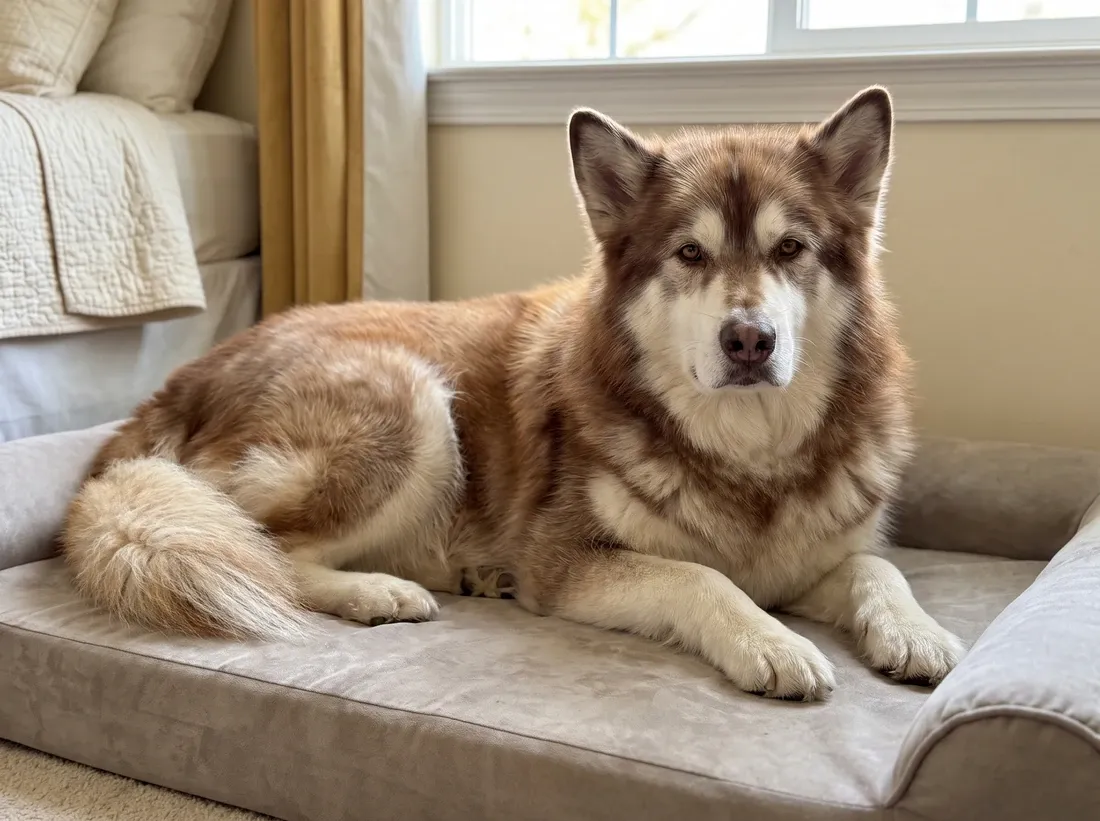
Alaskan Malamute, an older red and white dog resting on an orthopaedic bed, eyes bright

How old are they?

Their age

Malamute Puppy health

the first six months

What to watch for

  1. Developmental or early clinical signs of Hip Dysplasia (HD, a poorly fitting hip joint)
  2. Genetic predisposition to Hypothyroidism (an underactive thyroid), no clinical disease expected at this stage
  3. Congenital or early inherited ocular disease related to Progressive Retinal Atrophy (PRA, gradual loss of sight) and Cataracts (cloudy lenses in the eye)
  4. Early or congenital expression of Chondrodysplasia (Dwarfism)
  5. Retained deciduous teeth (baby teeth that stay put), malocclusion (teeth that do not meet properly) or early dental crowding

The care that goes with it

  1. Core vaccinations, microchip and Dubai Municipality registration
  2. Deworming, and flea and tick prevention
  3. Weight, muscle, dental, growth and nutritional evaluation, and early socialisation
  4. Hip Dysplasia (HD, a poorly fitting hip joint) screening, as a first baseline
  5. Their thyroid risk noted now, ready for screening later
The full care detail
  • Core vaccination programme, microchipping and Dubai Municipality registration. Titre testing discussion where clinically appropriate; not a substitute for completing the core vaccine series
  • Deworming and external parasite prevention tailored to Dubai exposure
  • Body Condition Score (BCS, a check on whether they are the right weight), Muscle Condition Score (MCS, a check on their muscle), dental, growth and nutritional evaluation, and early socialisation
  • Baseline screening focused on Hip Dysplasia (HD)
  • Note the breed predisposition to Hypothyroidism; thyroid screening from the 4-7 year stage

Their age

Malamute Juvenile health

6 months to 2 years

What to watch for

  1. Emerging Hip Dysplasia (HD, a poorly fitting hip joint) with exercise intolerance or lameness
  2. Genetic predisposition to Hypothyroidism (an underactive thyroid), monitoring only
  3. Progression or first clinical detection of Progressive Retinal Atrophy (PRA, gradual loss of sight) and Cataracts (cloudy lenses in the eye)
  4. Young-dog presentation of Chondrodysplasia (Dwarfism)
  5. Early periodontal disease (gum disease) and dental crowding

The care that goes with it

  1. Hip evaluation by age 2, and a lean body to ease the hips
  2. Thyroid panel (a thyroid blood test) every year from age 2, with treatment only if it is confirmed
  3. Neutering or spaying, timed for a large breed
  4. Ophthalmic evaluation (eye exam) every year from age 1, for PRA and cataracts
  5. Eye signs that keep coming back, looked into fully rather than treated again and again
The full care detail
  • Hip evaluation (OFA or PennHIP) by age 2; maintain lean body weight to reduce hip stress
  • Annual thyroid panel (T4) from age 2; levothyroxine if hypothyroidism is confirmed
  • Neuter/spay timing discussion that accounts for large-breed growth and disease risk
  • Annual ophthalmic evaluation for PRA and cataracts from age 1
  • Investigate recurrent signs rather than repeatedly treating presumed Progressive Retinal Atrophy (PRA) and Cataracts

Their age

Malamute Young Adult health

2 to 4 years

What to watch for

  1. Hip Dysplasia (HD, a poorly fitting hip joint)
  2. Genetic predisposition to Hypothyroidism (an underactive thyroid)
  3. Progressive Retinal Atrophy (PRA, gradual loss of sight) and Cataracts (cloudy lenses in the eye)
  4. Chondrodysplasia (Dwarfism)
  5. Dental Disease

The care that goes with it

  1. Hip evaluation, if it was not done by age 2, and a lean body to ease the hips
  2. Thyroid panel (a thyroid blood test) every year
  3. Ophthalmic evaluation (eye exam) every year
  4. Genetic testing for chondrodysplasia before any breeding
  5. Daily tooth brushing, and a professional dental clean every 6 to 12 months
The full care detail
  • Hip evaluation (OFA or PennHIP) by age 2; maintain lean body weight to reduce hip stress
  • Annual thyroid panel (T4) from age 2; levothyroxine if hypothyroidism is confirmed
  • Annual ophthalmic evaluation for Progressive Retinal Atrophy (PRA) and cataracts from age 1
  • Genetic testing for chondrodysplasia if breeding; avoid affected lines
  • Daily dental brushing; professional dental cleaning every 6-12 months

Their age

Malamute Prime Adult health

4 to 7 years

What to watch for

  1. Hip Dysplasia (HD, a poorly fitting hip joint), Progressive
  2. Hypothyroidism (an underactive thyroid)
  3. Eye Conditions (Progressive)
  4. Bloat / Gastric Dilatation-Volvulus (GDV, a twisted stomach)
  5. Dental Disease (Advanced)

The care that goes with it

  1. Hip care: joint supplements, physiotherapy and weight management, with surgery if it is severe
  2. Thyroid monitoring every year, with the dose adjusted as needed
  3. Ophthalmic evaluation (eye exam) every year
  4. A talk about a preventive gastropexy (an operation that tacks the stomach in place), and two or three smaller meals a day
  5. Annual dental x-rays, and damaged teeth removed before infection spreads
The full care detail
  • Hip management: joint supplements, physiotherapy, and weight management; surgical options if severe
  • Ongoing thyroid management: annual T4 monitoring; adjust levothyroxine dose as needed
  • Annual ophthalmic evaluation; monitor for progressive Progressive Retinal Atrophy (PRA) development
  • Consider prophylactic gastropexy; feed 2-3 smaller meals daily; avoid exercise after meals
  • Annual dental X-rays; extract compromised teeth to prevent systemic infection

Their age

Malamute Senior health

7 to 10 years

What to watch for

  1. Hip Dysplasia (HD, a poorly fitting hip joint), Severe Arthritis
  2. Cancer
  3. Kidney Disease
  4. Heart Disease
  5. Cognitive Dysfunction Syndrome (dementia in older pets)

The care that goes with it

  1. Hip care: hydrotherapy, acupuncture, anti-inflammatory pain relief and joint supplements
  2. A full physical examination every year, with the lymph nodes felt, to catch cancer early
  3. A renal panel (kidney blood tests) twice a year, and a senior diet lower in phosphorus and salt
  4. An echocardiogram (an ultrasound scan of the heart) every year from age 7
  5. Brain games and a steady daily routine, to slow Cognitive Dysfunction (dementia in older pets)
The full care detail
  • Advanced hip management: hydrotherapy, acupuncture, NSAIDs, and joint supplements
  • Annual full physical examination with lymph node palpation for cancer screening
  • Bi-annual renal panel; transition to senior diet with controlled phosphorus and sodium
  • Annual echocardiogram from age 7; cardiac medication when indicated
  • Cognitive enrichment and consistent daily routine to slow cognitive dysfunction progression

Their age

Malamute Geriatric health

10 years and over

What to watch for

  1. Severe Arthritis / Mobility Loss
  2. Cancer (Advanced)
  3. Chronic Kidney Disease (CKD, long-term kidney failure)
  4. Cognitive Dysfunction Syndrome (Advanced) (dementia in older pets)
  5. Heart Disease

The care that goes with it

  1. Mobility support: orthopaedic bedding, ramps, slings and physiotherapy
  2. Kidney and heart care, with medication adjusted as needed
  3. Brain games and a steady daily routine
  4. Quality-of-life assessment
  5. Palliative care (comfort care)
  6. End-of-life planning with your veterinary team
The full care detail
  • Mobility support: orthopaedic bedding, ramps, slings, and physiotherapy for arthritic dogs
  • Renal and cardiac management with regular medication adjustments
  • Cognitive enrichment and consistent daily routine to slow cognitive dysfunction progression
  • Quality-of-life assessments
  • Tailored palliative and comfort-focused care plan
  • Compassionate end-of-life planning with your veterinary team

Breed predispositions indicate an increased risk rather than certainty of disease. What is right for them always comes from their own history and an evaluation.

Getting a Malamute puppy in Dubai

Before they come home.

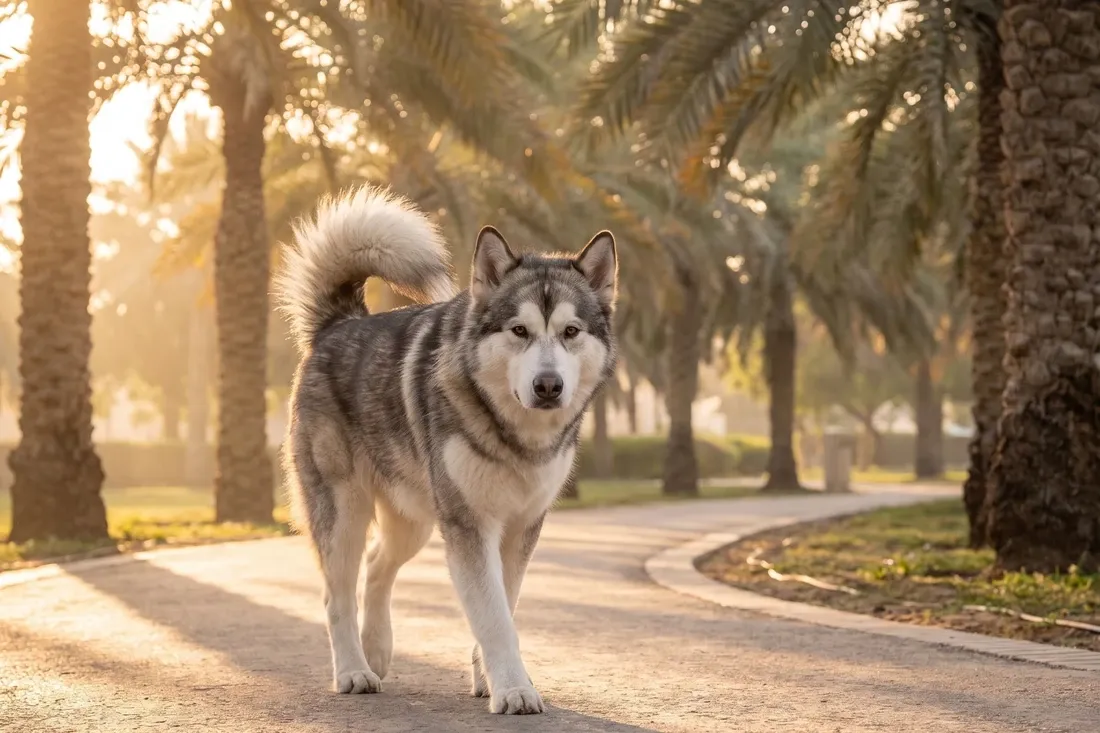
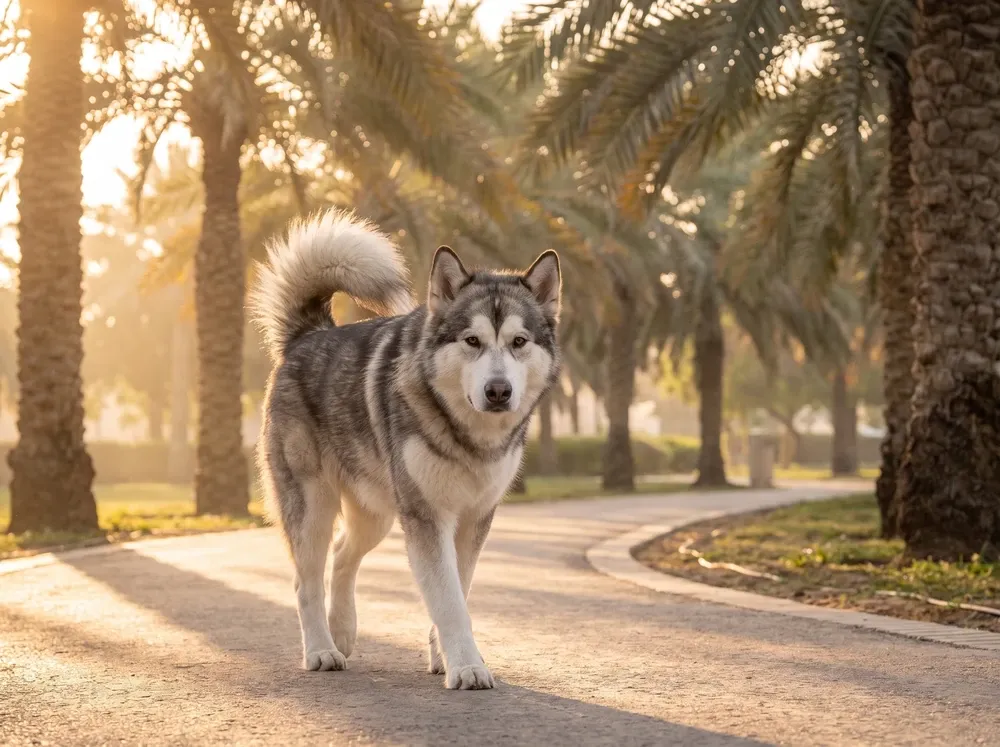
Alaskan Malamute in Dubai, a grey and white adult walking along a park path under date palms at sunrise

One breed, a range of sizes

Built to haul, not to race

The Malamute is the heaviest and strongest of the northern sled dogs, bred to pull loads rather than to run fast. There is one Alaskan Malamute, with a natural range in size, so the dogs some people call giant Malamutes are simply bigger dogs of the same breed.

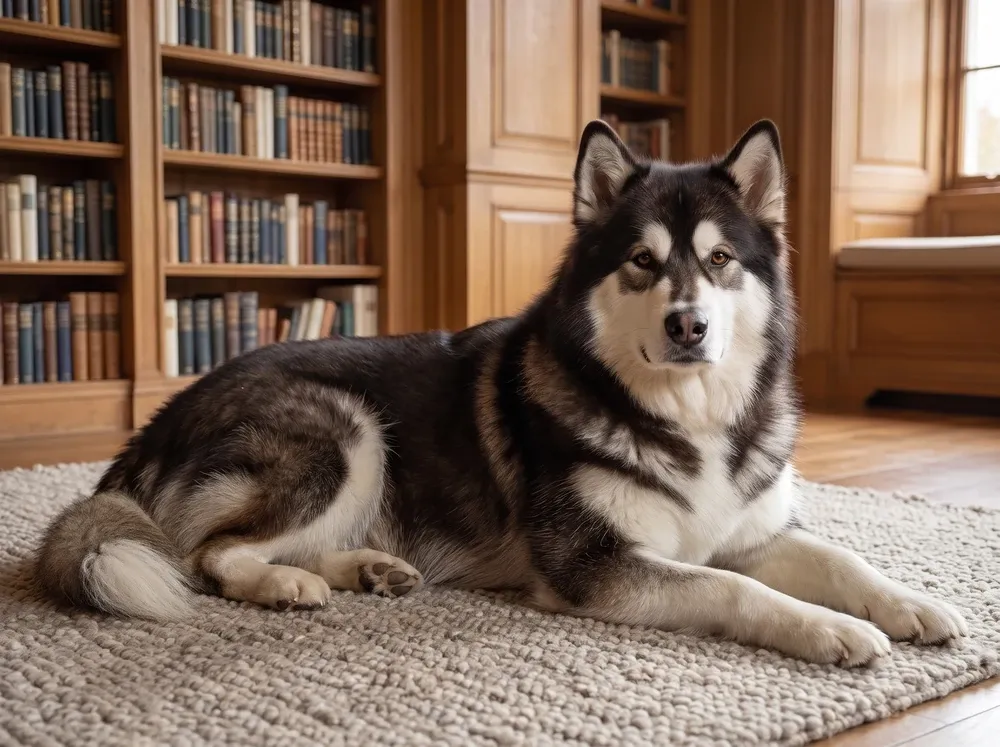
Alaskan Malamute, a seal and white adult lying on a stone wool rug in front of timber bookshelves

Alaskan Malamute colours

Every shade from light grey to red, and all white

No two Malamute faces are quite the same: a cap, a bar or a full mask, on a coat anywhere from light grey to black, sable or red, with white underneath. Some Malamutes are white all over.

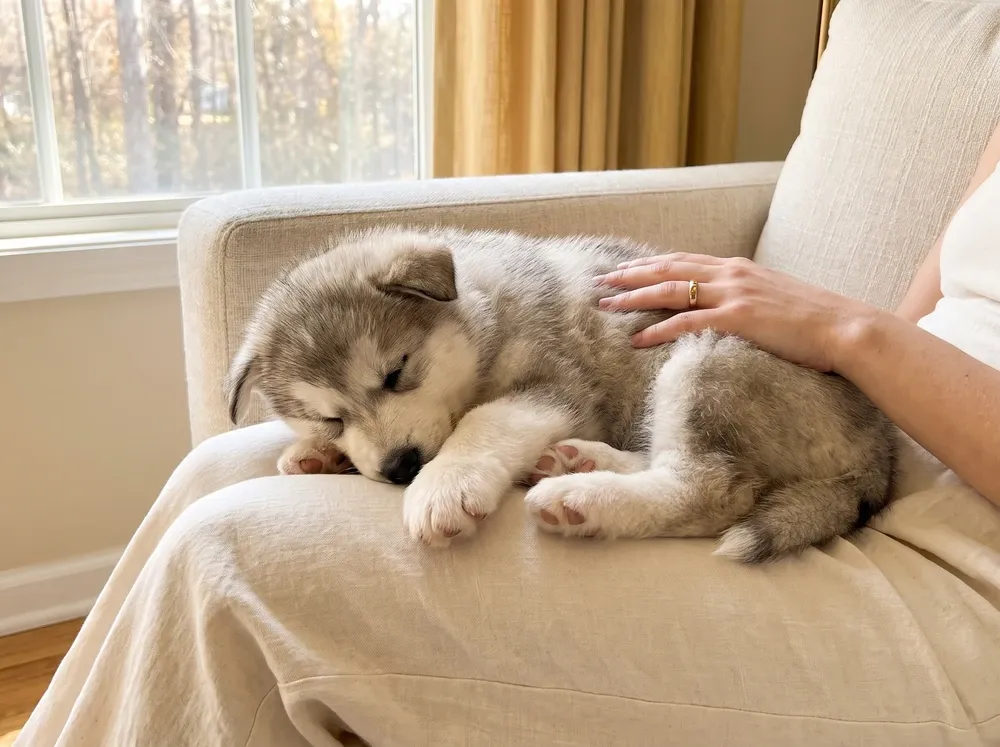
Alaskan Malamute, a silver and white puppy asleep in a pet parent's lap in a linen armchair

The first six months

Caring for an Alaskan Malamute puppy

Their full vaccination course, microchip and Dubai Municipality registration come first. Keep time outside short in summer, because puppies overheat quickly. Start the lead, the brush and gentle handling while they are still small enough to lift.

Puppy health, 0 to 6 months
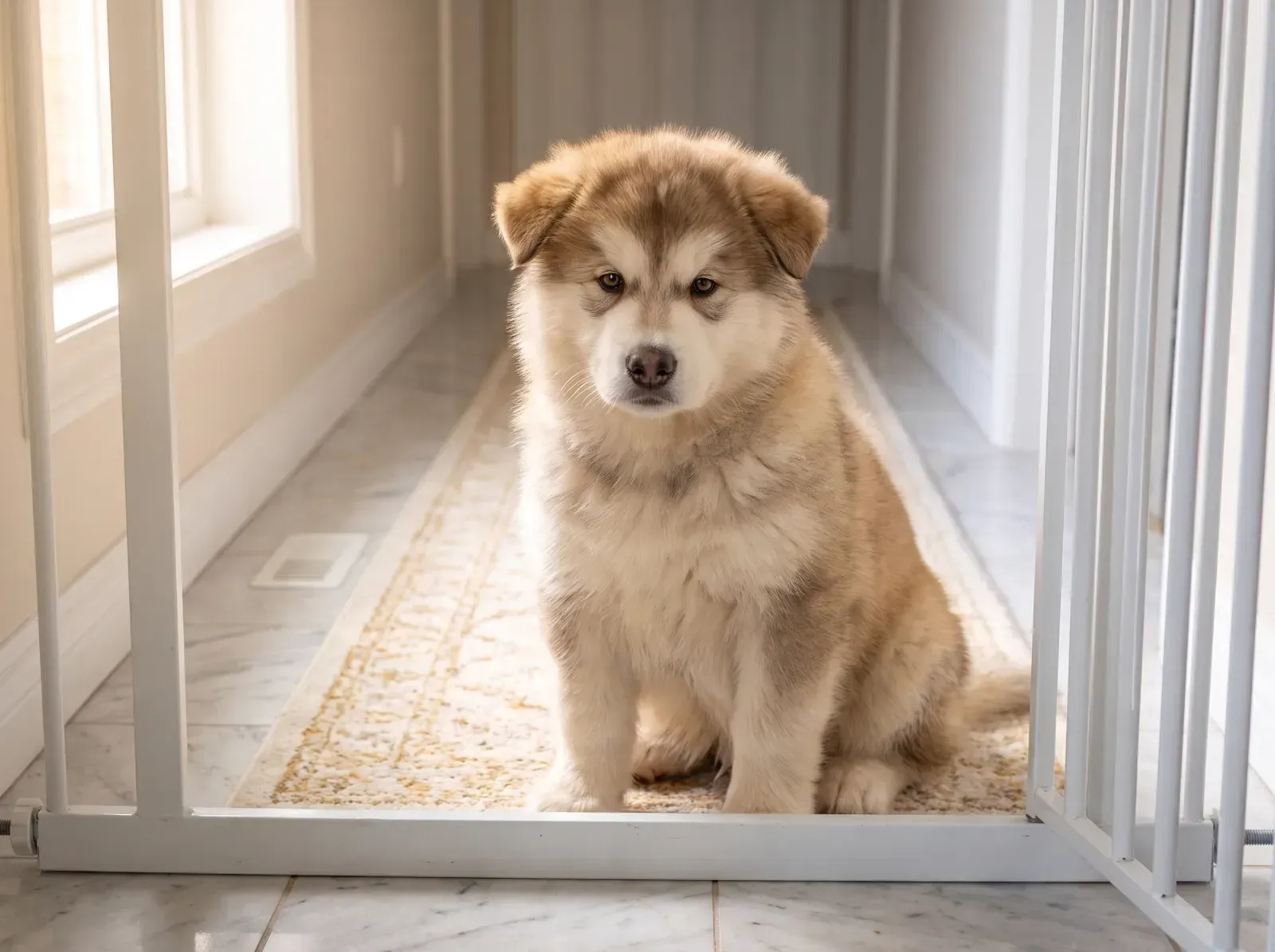
Alaskan Malamute, a sable and white puppy at a baby gate on a runner rug over cool marble

Getting the home ready

Cool floors, a strong gate and a baby gate

Give them a tiled floor in an air-conditioned room, and rugs where they turn on marble. Check the gate, the wall and anywhere they could dig under, and put a baby gate inside the front door.

Ten things that make their life better
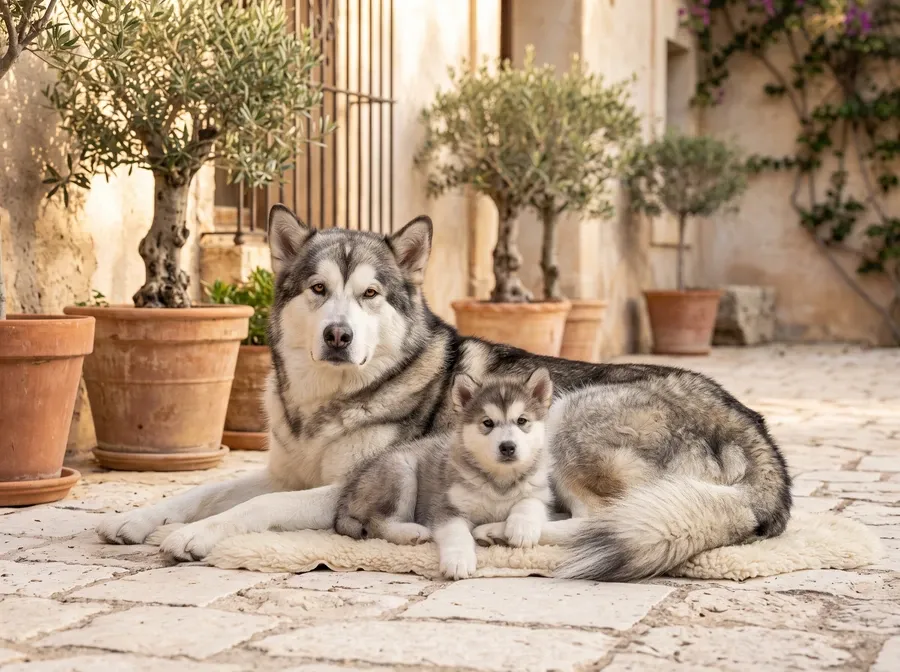
Alaskan Malamute, a grey and white mother and puppy lying in a shaded villa courtyard

Before you commit

Ask about the parents' hips, eyes and legs

Ask the breeder whether both parents have had their hips and elbows scored and their eyes tested, and whether the line has been tested for chondrodysplasia (dwarfism). Hip Dysplasia and eye disease are among the first risks for a young Malamute.

The reception of a Paws & Co clinic, with long cream benches and a stone reception desk

Before the clinics open

Join the founding families

AED 1,999 of essential care for AED 199. No payment now.

When to see a vet

When it is not behaviour.

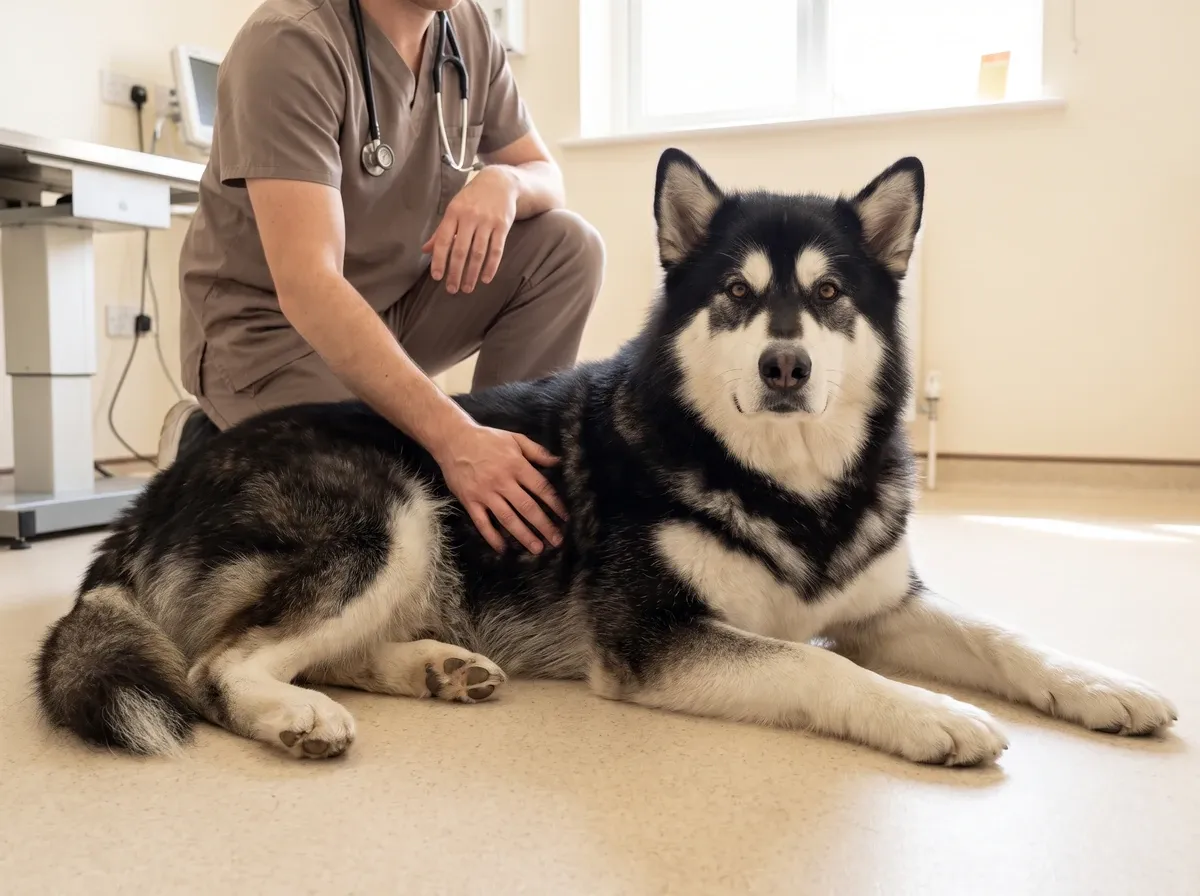
Alaskan Malamute, a black and white adult lying calmly as a vet in taupe scrubs rests a hand on its side

Some of this is not a training problem, and treating it like one wastes time your dog may not have. If they are distressed when you leave, if they growl or guard their food, their toys or you, if they are frightened on the lead, or if anything about them changes suddenly at any age, contact your vet the same day. A tip from a website, ours included, is not the answer. If it cannot wait, contact your nearest emergency vet now.

With a Malamute, watch their stomach, their energy and their eyes. Retching with nothing coming up, a swollen, tight belly, restlessness or drooling after a meal is an emergency, not an upset tummy: contact your vet now. A Malamute who slows down, gains weight and loses coat may have an underactive thyroid. Bumping into things in dim light can be their eyes. It is easy to put it down to mood or age. That can cost months, and with bloat, hours.

They'll keep winning the argument. If they stop arguing, call your vet.

Malamute history

Before they were yours.

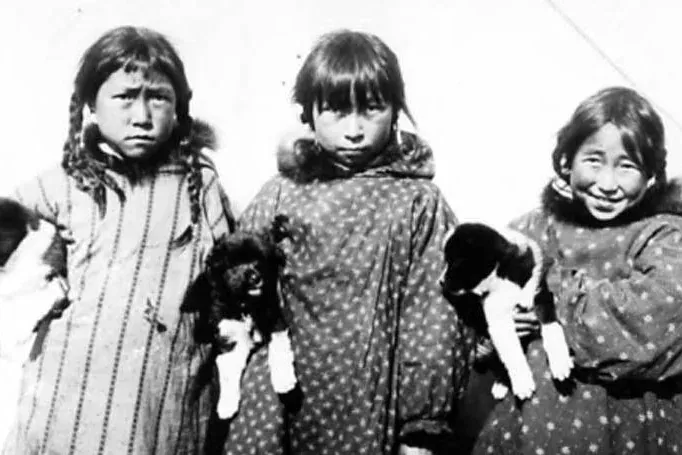
  1. Alaskan Malamute history, three girls holding sled dog puppies in Alaska, about 1913
    Girls holding sled dog puppies, Alaska, about 1913. University of Washington Libraries.

    The beginning

    With the Mahlemut people

    The Alaskan Malamute takes its name from the Mahlemut, an Inupiat people on the shores of Kotzebue Sound in north-west Alaska. Their dogs hauled heavy loads across the ice and lived close to the family.

    What they still carryThe power, the coat, and a dog who wants to live with their people.

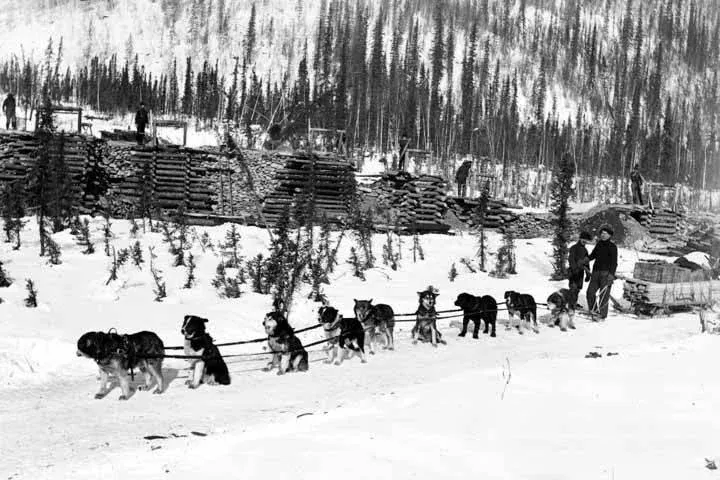
  2. Alaskan Malamute history, a freight dog team hauling lumber at a mining camp, probably Yukon, about 1898
    A freight dog team hauling lumber at a mining camp, probably in the Yukon, about 1898. University of Washington Libraries.

    Late 1800s

    The gold rush

    The gold rush brought a huge demand for sled dogs, and dogs of every kind were crossed with the native dogs to meet it. The breed nearly disappeared.

    What they still carrySome variety between lines, from a breed rebuilt from the few dogs of the old type.

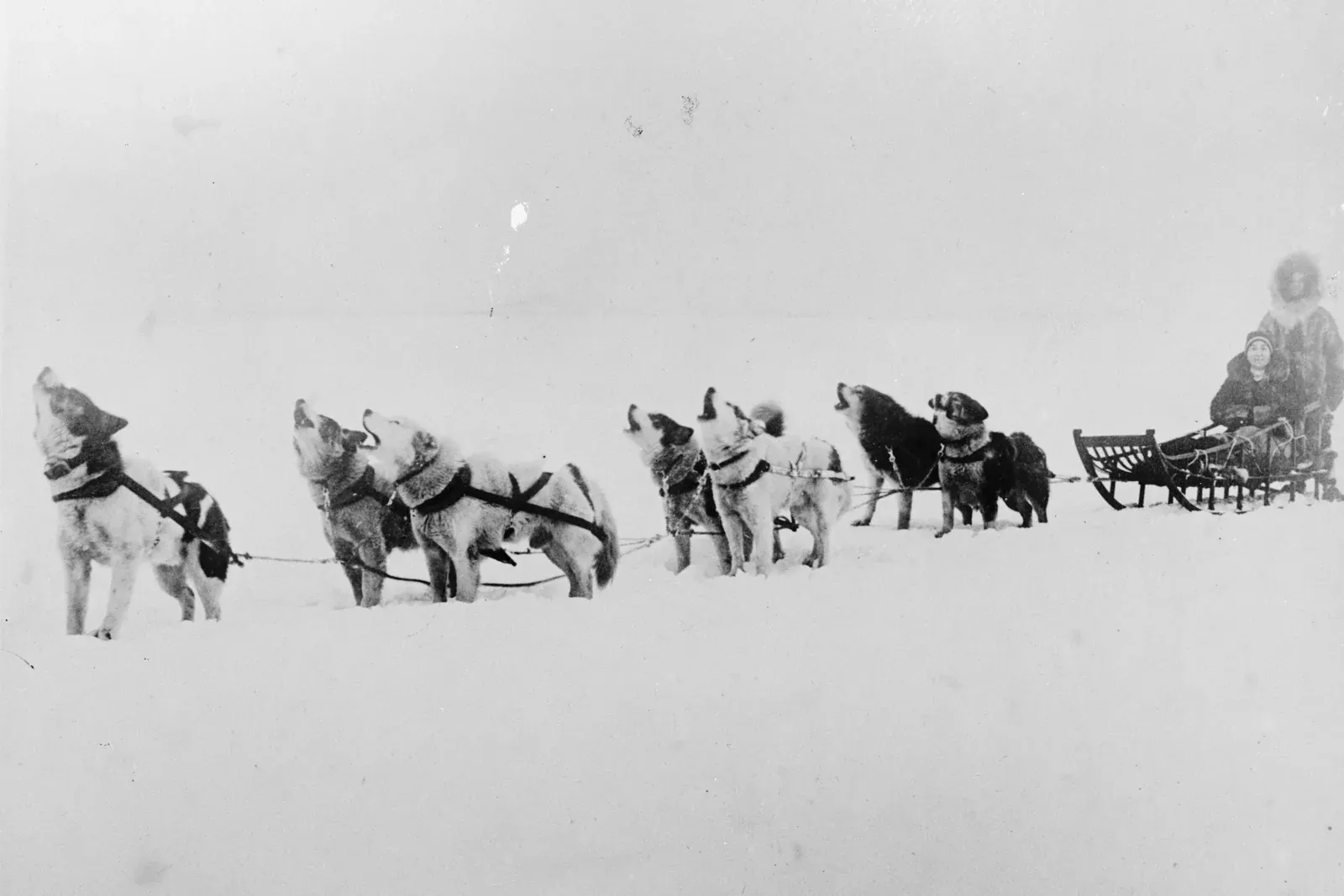
  3. Alaskan Malamute history, a Malamute sled team howling in harness in the snow, print copied between 1918 and 1920
    The Malamute Chorus: a sled team howling in harness, from a print copied by the National Photo Company between 1918 and 1920. Library of Congress.

    1920s

    Bred back

    Breeders in New England gathered dogs of the old freighting type and bred them back.

    What they still carryThe heavy build and a steady temperament.

  4. Alaskan Malamute history, a grey and white adult walking along a park path under date palms
    An Alaskan Malamute today.

    1935

    Recognised

    The American Kennel Club recognised the Alaskan Malamute in 1935, and the breed's first championship was awarded the same year.

    What they still carryA big, strong dog, calm with family and firm about what they want.

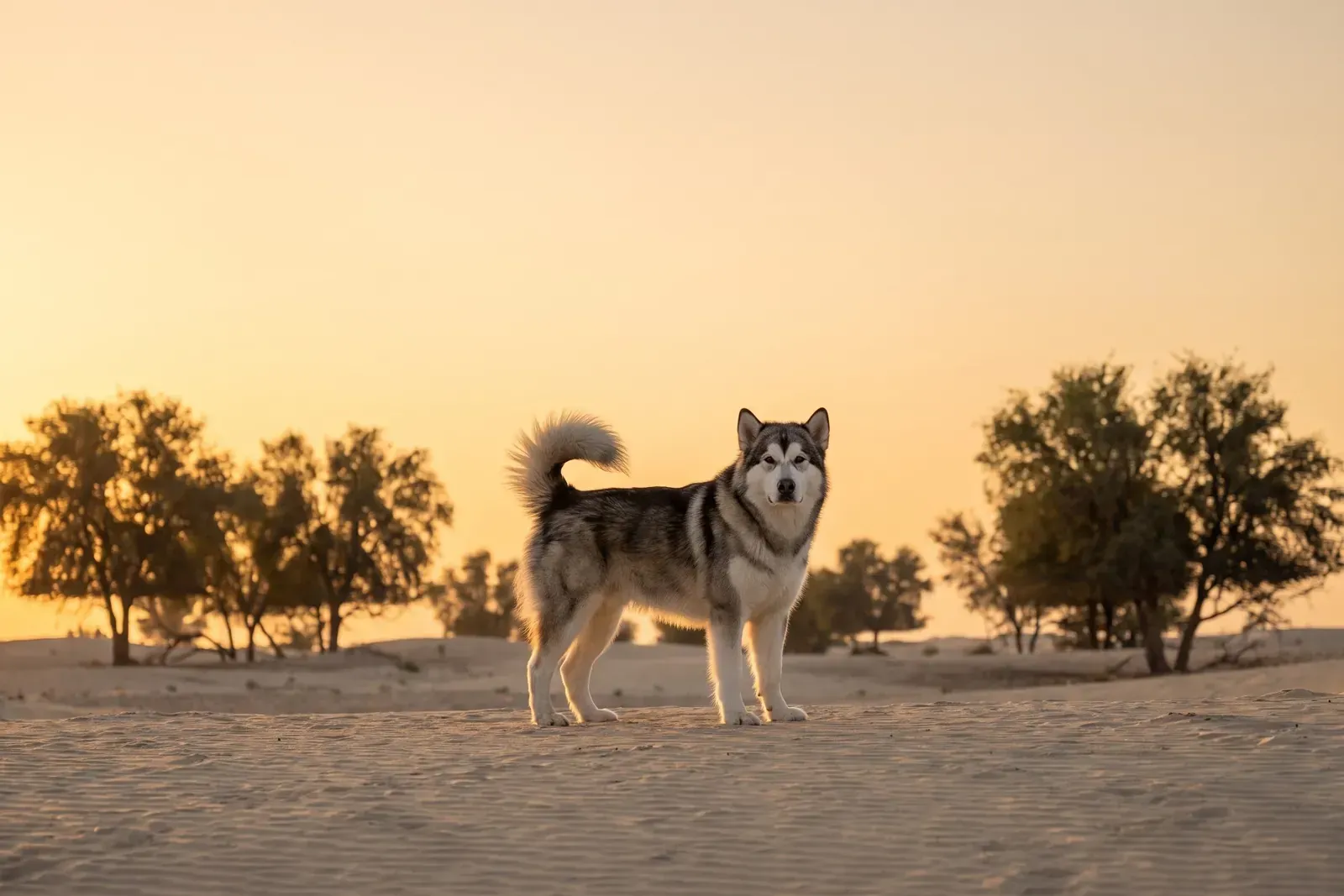
  5. Alaskan Malamute history, the breed today, a black and white adult on desert sand in the UAE at first light

    Today

    In Dubai

    Here most Malamutes are family dogs, in villas and flats.

    What they still carryThe heaviest sled dog of the northern breeds, built for Arctic hauling, living through a 45-degree summer.

Malamute questions

The ones you type at midnight.

Most of these get asked late at night, by someone watching their dog and not sure what they are seeing.

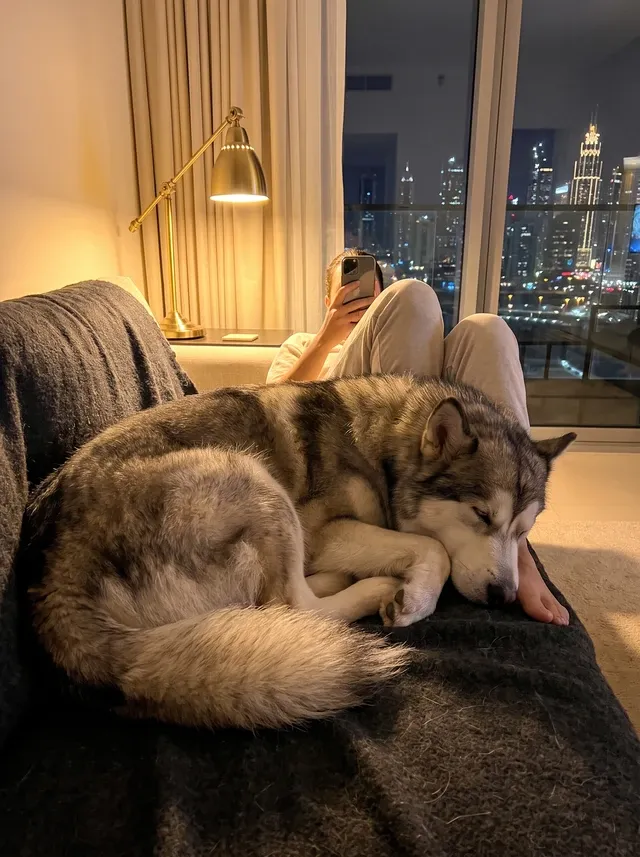
Alaskan Malamute in Dubai, a grey and white adult asleep at a pet parent's feet at night, the skyline behind
What is the Alaskan Malamute lifespan?

Alaskan Malamutes usually live 10 to 14 years. In a UK study of nearly 2,000 Malamutes, half lived past 11.

What is the Alaskan Malamute size?

An Alaskan Malamute usually weighs about 34 to 38.5 kg: females nearer 34 kg, males nearer 38.5 kg. They are a large, heavily built breed, and plenty of healthy dogs sit either side.

Is there a giant Alaskan Malamute?

There is one Alaskan Malamute breed, with a natural range in size, so a giant Malamute is a bigger dog of the same breed. A healthy, well-built Malamute matters more than a big one.

What is the difference between a Husky and a Malamute?

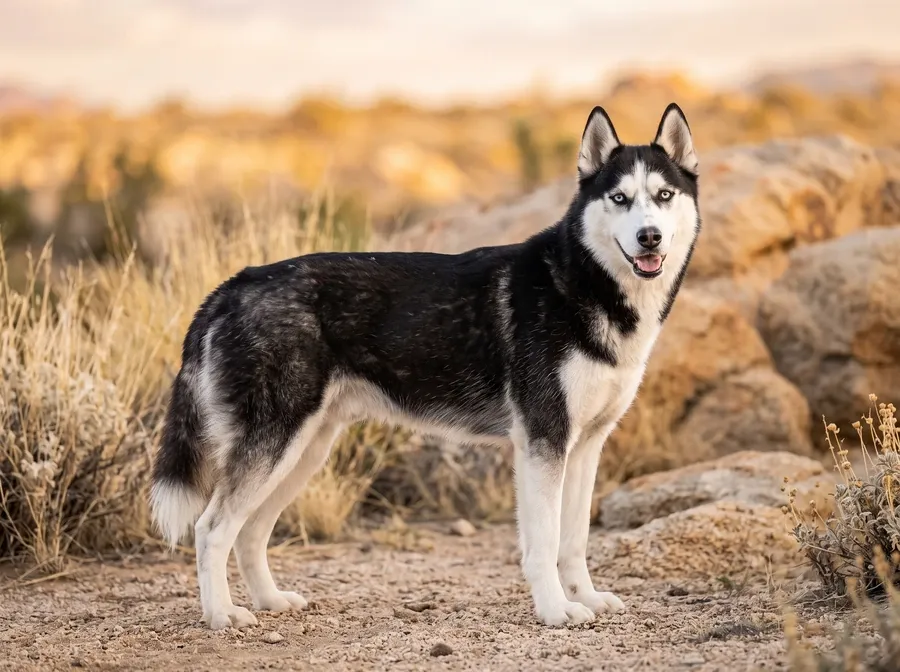
The Alaskan Malamute is the heavier, stronger sled dog, bred to pull freight; the Siberian Husky is lighter and was bred to run fast. Malamutes usually have brown eyes. A Husky's can be blue.

Do Alaskan Malamutes shed a lot?

Yes. Alaskan Malamutes shed heavily all year, and most of all in a big moult once or twice a year. Brush them through to the skin several times a week, and every day through the shed.

Can an Alaskan Malamute live in Dubai's heat?

Yes, an Alaskan Malamute can live in Dubai with careful heat management. Air conditioning is essential, and from May to September walks belong before sunrise and after dark.
Should I shave my Malamute in summer?

No, never shave or clip a Malamute's undercoat. Dead undercoat left in holds heat and mats against the skin, and skin problems are easier to spot when the coat is kept clear. De-shed and de-mat with the right tools, brush the undercoat out down to the skin, bathe them, and let the air conditioning do the cooling.

Is there a white Malamute?

Yes, a white Malamute is a true Alaskan Malamute, white all over. Most are light grey through to black, sable or red, with white on the underbody, legs and face.

What is the Alaskan Malamute temperament like?

Alaskan Malamutes are loyal and affectionate with their family, and sure of their own mind. Short, patient sessions from puppyhood, paid with something they want, work better than repeating yourself.

Worried about them? Contact your vet today.