We’re hiring people who love them like we do. Join us careers@pawsandco.comSee open roles
UAE Government Licensed MOCCAE
Cocker Spaniel in Dubai, studio portrait of a golden buff adult with long silky ears sitting against a dark background

Breed guide  ·  Dogs

Cocker Spaniel

He sniffs every doorway in the building on the way to the lift. I leave ten minutes early for everything now.

Lifespan
12 to 15 years
Size
Small to medium
Weight
9 to 15.5 kg
Shedding
Moderate

Last updated 14 October 2026

Join the founding families. AED 1,999 of essential care for AED 199.

No payment now. We'll be in touch by email and WhatsApp as we open enrolment.

✓
Thank you.

We will be in touch soon to confirm.

Cocker traits

What they brought with them.

Tap a card to see what is going on.

Cocker Spaniel, a red adult sitting on a woven rug, long ears falling over the shoulders

At home

American or English Cocker Spaniel?

Some Cockers are small and round-headed, with a short muzzle and a lot of coat. Others are taller, with a longer muzzle and less coat.

What's going onThose are the American and the English Cocker, separate breeds since 1946. The English one is usually busier and needs more to do. Both have a nose that wants a job, and ears that need looking after.

Cocker Spaniel, a black and white adult shaking off after a bath, wet ears flying out

At home

Why does my Cocker Spaniel shake their head?

Head shaking, scratching at an ear, or a dog who suddenly does not want their head touched.

What's going onThey have narrow ear canals under long, heavily feathered ears, and ear inflammation is the first risk on their health record as a puppy. Check and dry their ears every week, and after every bath.

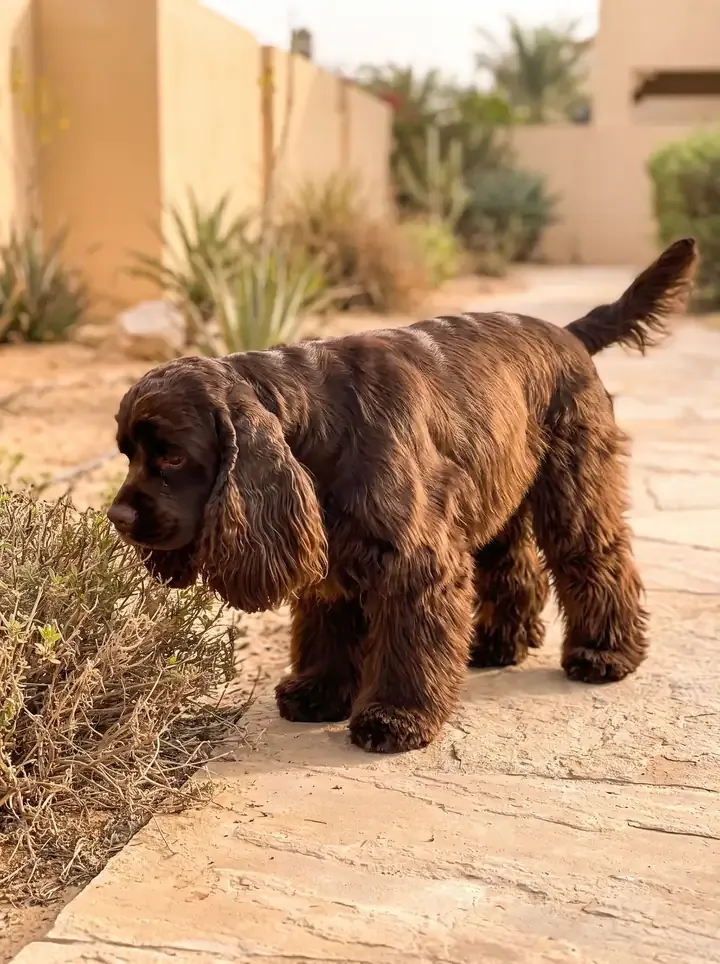
Cocker Spaniel, a chocolate adult sniffing a low shrub on a sunny villa garden path

At home

Why does my Cocker Spaniel sniff everything?

Nose down from the moment the door opens, through every flower bed and under every parked car.

What's going onTheir ancestors were bred to find birds in the woods, and the nose still works. Ten minutes of finding their breakfast around the flat does more for them than another lap of the building.

Cocker Spaniel, a red and white adult lying on a cream towel, the coat damp and wavy after a bath

At home

Why does my Cocker Spaniel smell musty?

Scratching, licking their paws, and a musty smell that comes back soon after a bath.

What's going onAllergic skin is on their record from adolescence, and greasy skin from young adulthood. A matted coat hides both. Brush them several times a week and part the coat to look at the skin.

Cocker Spaniel, a close portrait of a black adult with large dark eyes

At home

Those big, dark eyes

Squinting, rubbing their face along the sofa, or an eye that looks red or cloudy.

What's going onCataracts (cloudy lenses), raised pressure inside the eye and dry eye are all on their record. A painful eye can look like a change in mood first. Squinting or a red, cloudy eye means contacting your vet now.

Cocker Spaniel, a tricolour adult lying on a tiled floor, chin resting against a pet parent's foot

At home

Why does my Cocker Spaniel follow me everywhere?

Head on your foot, in the kitchen the second you move, and flat on the floor after a raised voice.

What's going onThey were bred to work close to one person, and they take a raised voice to heart. Reward what you want, calmly. A Cocker who suddenly snaps when their head is touched may well be sore, not cross: think ears and eyes first.

A Cocker in Dubai

The bit nobody tells you.

Their past

Built for: Finding birds by scent, close to one person.

In Dubai: A family dog.

Their looks

Built for: Long, heavy ears, a thick coat and big round eyes.

In Dubai: Humidity, which makes that care harder.

Their nose

Built for: Following scent all day.

In Dubai: Needing a job to do near you.

Those looks came with care the old field dogs never needed.

You cannot change their ears. You can keep them clean and dry and give their nose a job, and the ten things below show you how.

Your plan is built around their breed: the risks on a Cocker Spaniel's record at every age, and the care that goes with each one.

Join the founding families. AED 1,999 of essential care for AED 199.

Daily care for a Cocker

Ten things that make their life better.

Many of them are free, and most matter at every age.

  1. They still have a spaniel's nose, and searching settles them.

    Every age, with easy searches at floor level from 7 years

    Free, or under AED 100 for a snuffle mat

    Why

    They still have a spaniel's nose, and searching settles them.

    What to do

    Scatter part of their breakfast on a towel, or hide a toy in another room and let them find it. On the hottest days, do ten minutes of searching indoors instead of a walk.

  2. A sniffing walk tires them more than a fast one.

    Every age, most of all 6 months to 2 years

    Under AED 150

    Why

    A sniffing walk tires them more than a fast one.

    What to do

    A harness and a five-metre line, somewhere quiet, early in the day. Let them set the pace and follow their nose, and call them back every few minutes for a reward.

  3. Once their nose is on something, their name stops working.

    Every age, starting at mealtimes in puppyhood

    Under AED 50

    Why

    Once their nose is on something, their name stops working.

    What to do

    Use one whistle sound for "come back". Start at mealtimes indoors, pay them every time, and use it outside only once it works at home. As they get older, add a hand signal in case their hearing fades.

  4. They will still chase a cat, and they are small enough to be hurt by one, or by a car.

    Every age, most of all 6 months to 2 years

    Free

    Why

    They will still chase a cat, and they are small enough to be hurt by one, or by a car.

    What to do

    Keep the lead on near roads and bins. At a distance where they can still listen, reward them for looking at a cat and turning back to you, and close the gap slowly over weeks.

  5. They carry things gently to you, the way their ancestors carried birds.

    Every age, most of all 6 months to 2 years

    Under AED 100

    Why

    They carry things gently to you, the way their ancestors carried birds.

    What to do

    Keep a soft toy that is theirs, and give it a few short throws along the floor. When they pick up something they should not have, swap it for a treat or their toy. Do not chase them for it.

  6. Ear inflammation is the first risk on their record from puppyhood, and their ear canals are narrow.

    Every age, for life

    Under AED 150 a year for ear cleanerIn your plan

    Why

    Ear inflammation is the first risk on their record from puppyhood, and their ear canals are narrow.

    What to do

    Lift the flaps, look and smell. Dry inside after every bath. Use the cleaner your vet recommends, keep the hair under the flaps short, and use a snood at mealtimes. Head shaking or a smell means telling your vet that week. Regular ear cytology (a swab from the ear looked at under a microscope) is in your plan from age two.

  7. A Cocker in a thick coat heats up fast, and a busy nose does not notice.

    Every age, most of all puppies and from 7 years

    Free

    Why

    A Cocker in a thick coat heats up fast, and a busy nose does not notice.

    What to do

    From May to September, walk before sunrise and after dark. Put the back of your hand on the pavement for five seconds: if you cannot keep it there, they cannot walk on it. Keep walks short in the heat, carry water, and head home before they slow down.

  8. They want to be wherever you are.

    Every age, most of all 6 months to 2 years

    Free, or the cost of a walker

    Why

    They want to be wherever you are.

    What to do

    If you are out for more than a few hours, arrange a visit, a walker or daycare. Hide part of their lunch before you go, and keep leaving and coming home calm. If they are distressed when you leave, contact your vet.

  9. Yeast and allergies are on their record from adolescence, and greasy skin from young adulthood.

    Every age, most of all from 6 months

    Under AED 150 for brushes, plus a groomer at Dubai ratesIn your plan

    Why

    Yeast and allergies are on their record from adolescence, and greasy skin from young adulthood.

    What to do

    Brush them several times a week, keep the hair between their pads and under their ears short, and book a regular groom. Part the coat as you go and look for red, greasy or smelly skin. Long-term allergy control and skin support are in your plan from age two.

  10. All four are on their record, and a weekly look helps you spot a change early. Pale or yellow gums can be a sign of immune-mediated haemolytic anaemia (the immune system destroying red blood cells), so contact your vet now.

    Every age

    FreeIn your plan

    Why

    All four are on their record, and a weekly look helps you spot a change early. Pale or yellow gums can be a sign of immune-mediated haemolytic anaemia (the immune system destroying red blood cells), so contact your vet now.

    What to do

    Look at their eyes in good light. Lift their lip: teeth clean, gums pink. Brush their teeth daily if they will let you, and watch for a skip on a back leg for a stride or two. Squinting, pale or yellow gums, or a red, cloudy eye mean contacting your vet now. Weigh them monthly.

Three of these are in your plan. The rest you can do at home.

Join the founding families. AED 1,999 of essential care for AED 199.

Cocker health by age

Their health, at every age.

In a Cocker, a change in mood is often the first sign of a sore ear, eye or patch of skin. The ages below follow the American Cocker's health record. The English Cocker's health record also starts with the ears, and adds hip dysplasia (a poorly fitting hip joint). Choose their age to see what to watch for, and the care that goes with it.

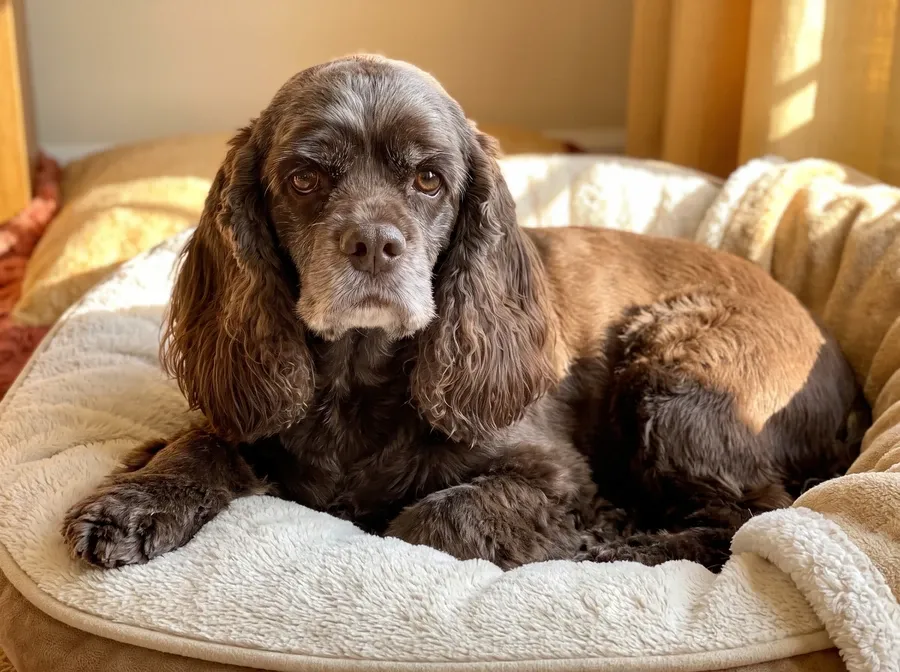
Cocker Spaniel, an older chocolate dog with a greying muzzle resting on a soft bed

How old are they?

Their age

Cocker Puppy health

the first six months

What to watch for

  1. Otitis externa (inflammation of the outer ear canal) associated with narrow, heavily feathered ear canals
  2. Retained deciduous teeth (baby teeth that stay put) and early dental crowding
  3. Congenital cataract (a cloudy lens) or other inherited ocular disease
  4. Patellar Luxation (PL, slipping kneecap)
  5. Food-responsive diarrhoea or parasitism

The care that goes with it

  1. Core vaccinations, microchip and Dubai Municipality registration
  2. Deworming, and flea and tick prevention
  3. Growth and nutritional evaluation, and early socialisation
  4. Learning to look inside their ears, and to dry them after every bath
  5. Adult teeth followed as they come in, and baby teeth that stay put removed when needed
  6. Baseline ophthalmic evaluation (eye exam)
  7. Patellar and gait evaluation (a kneecap and walking exam) at vaccination visits
The full care detail
  • Core vaccination programme, microchipping and Dubai Municipality registration. Titre testing discussion where clinically appropriate; not a substitute for completing the core vaccine series
  • Deworming and external parasite prevention tailored to Dubai exposure
  • Body Condition Score (BCS, a check on whether they are the right weight), Muscle Condition Score (MCS, a check on their muscle), dental, growth and nutritional evaluation, and early socialisation
  • Teach routine ear inspection and drying after bathing
  • Check dental eruption and remove retained deciduous teeth when indicated
  • Baseline ophthalmic evaluation, especially in breeder-sourced puppies
  • Patellar and gait evaluation during vaccination visits

Their age

Cocker Juvenile health

6 months to 2 years

What to watch for

  1. Recurrent otitis (ear inflammation) and Malassezia-associated dermatitis (a yeast skin infection)
  2. Allergic skin disease
  3. Cataract, glaucoma (raised pressure inside the eye) or progressive retinal disease
  4. Patellar Luxation (PL, slipping kneecap)
  5. Obesity and early dental disease

The care that goes with it

  1. Ear treatment guided by cytology (a look at a swab from the ear under the microscope), and ear trouble that keeps coming back investigated
  2. A dermatology work-up for itching that will not settle
  3. Neutering or spaying, timed for a small breed
  4. Orthopaedic evaluation (joint and bone exam) for a skipping step or a limp
  5. Tooth brushing at home, and calories kept under control
The full care detail
  • Cytology-led ear treatment and investigation of recurrent disease
  • Dermatology work-up for persistent pruritus
  • Neuter/spay timing discussion that accounts for small-breed growth and disease risk
  • Orthopaedic evaluation for skipping gait or lameness
  • Dental home care and calorie control

Their age

Cocker Young Adult health

2 to 4 years

What to watch for

  1. Chronic otitis externa and media (long-term inflammation of the outer and middle ear)
  2. Atopic or seborrhoeic skin disease (allergic, or greasy and flaky, skin)
  3. Cataract, glaucoma (raised pressure inside the eye) and dry eye
  4. Dental disease
  5. Immune-mediated haemolytic anaemia (the immune system destroying red blood cells)

The care that goes with it

  1. Regular ear cytology (a look at a swab from the ear under the microscope), and treatment aimed at what it finds
  2. Long-term allergy control and skin-barrier support
  3. A specialist eye vet straight away for an eye that is painful or changing
  4. Professional dental treatment, and daily tooth brushing at home
  5. An urgent blood count for pale or yellow gums, or sudden weakness
The full care detail
  • Regular ear cytology and targeted therapy
  • Long-term allergy control and skin-barrier support
  • Prompt ophthalmology referral for painful or visual eyes
  • Professional dental treatment and daily home care
  • Urgent CBC evaluation for pallor, jaundice or acute weakness

Their age

Cocker Prime Adult health

4 to 7 years

What to watch for

  1. Chronic otitis externa and media (long-term inflammation of the outer and middle ear)
  2. Atopic or seborrhoeic skin disease (allergic, or greasy and flaky, skin)
  3. Cataract, glaucoma (raised pressure inside the eye) and dry eye
  4. Dental disease
  5. Immune-mediated haemolytic anaemia (the immune system destroying red blood cells)

The care that goes with it

  1. Regular ear cytology (a look at a swab from the ear under the microscope), and treatment aimed at what it finds
  2. Long-term allergy control and skin-barrier support
  3. A specialist eye vet straight away for an eye that is painful or changing
  4. Professional dental treatment, and daily tooth brushing at home
  5. An urgent blood count for pale or yellow gums, or sudden weakness
The full care detail
  • Regular ear cytology and targeted therapy
  • Long-term allergy control and skin-barrier support
  • Prompt ophthalmology referral for painful or visual eyes
  • Professional dental treatment and daily home care
  • Urgent CBC evaluation for pallor, jaundice or acute weakness

Their age

Cocker Senior health

7 to 10 years

What to watch for

  1. Atopic or seborrhoeic skin disease (allergic, or greasy and flaky, skin)
  2. Osteoarthritis and mobility decline
  3. Immune-mediated haemolytic anaemia (the immune system destroying red blood cells)
  4. Chronic Kidney Disease (CKD, long-term kidney failure)
  5. Neoplasia (tumours)

The care that goes with it

  1. Long-term allergy control and skin-barrier support
  2. A senior physical examination twice a year, with blood tests, urinalysis (a urine test) and blood pressure
  3. An urgent blood count for pale or yellow gums, or sudden weakness
  4. Pain relief, and help to stay mobile
  5. Nutrition, and a quality-of-life assessment
The full care detail
  • Long-term allergy control and skin-barrier support
  • Biannual senior physical examination with CBC, chemistry, urinalysis and blood pressure
  • Urgent CBC evaluation for pallor, jaundice or acute weakness
  • Pain and mobility management
  • Nutrition and quality-of-life assessment

Their age

Cocker Geriatric health

10 years and over

What to watch for

  1. Multimorbidity and frailty
  2. Advanced atopic or seborrhoeic skin disease
  3. Cancer
  4. Cardiac or renal failure (heart or kidney failure)
  5. Cognitive and sensory decline

The care that goes with it

  1. Pain relief and mobility support that combines several treatments
  2. Kidney, heart and hormone monitoring
  3. Help with eating, confusion and care at home
  4. Quality-of-life assessments
  5. Palliative care (comfort care), and end-of-life planning with your veterinary team
The full care detail
  • Multimodal pain and mobility support
  • Renal, cardiac and endocrine monitoring
  • Nutrition, cognition and home-care support
  • Quality-of-life assessments
  • Tailored palliative and comfort-focused care plan
  • Compassionate end-of-life planning with your veterinary team

Breed predispositions indicate an increased risk rather than certainty of disease. What is right for them always comes from their own history and an evaluation.

Getting a Cocker puppy in Dubai

Before they come home.

Cocker Spaniel, a red puppy lying on a cream knitted blanket

American or English

Two Cockers, one name

There are two Cockers, separate breeds since 1946. The American Cocker is smaller, with a rounder head, a shorter muzzle and a much heavier coat. The English Cocker is taller and busier, with a longer muzzle and less coat, and hip dysplasia (a poorly fitting hip joint) is on its health record. Ask which one you are being offered.

Cocker Spaniel, a buff adult standing on a lawn in early morning light

Colours

From pale buff to black, and plenty in between

Cockers come in every shade from pale buff and silver to red, brown and black, though the silver and buff are American. Some are black and tan, and some are patched with white, or flecked with it (roan). Whatever their colour, their ears need the same care.

Cocker Spaniel, a pet parent drying a black and white puppy's long ears with a cream towel

The first six months

Caring for Cocker Spaniel puppies

Their vaccinations, microchip and Dubai Municipality registration come first, with a baseline ophthalmic evaluation (eye exam). Handle and dry their ears from the first week, so it is never a fight later.

Puppy health, 0 to 6 months
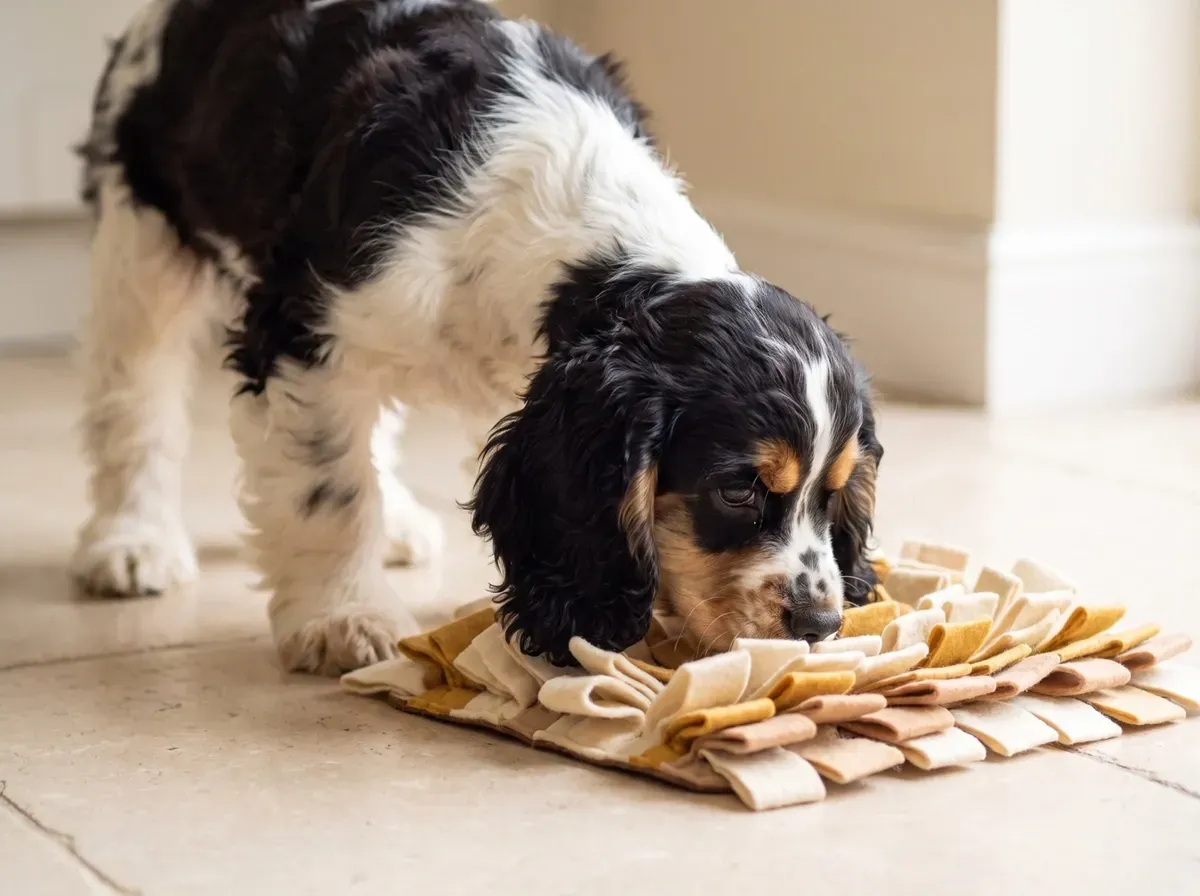
Cocker Spaniel, a tricolour puppy sniffing a felt snuffle mat on a tiled floor

Getting the home ready

A towel, ear cleaner and a snood

Keep a soft towel by the bath for their ears, the ear cleaner your vet recommends, and a snood for mealtimes. Find a groomer early, and a snuffle mat for the hottest days.

Ten things that make their life better
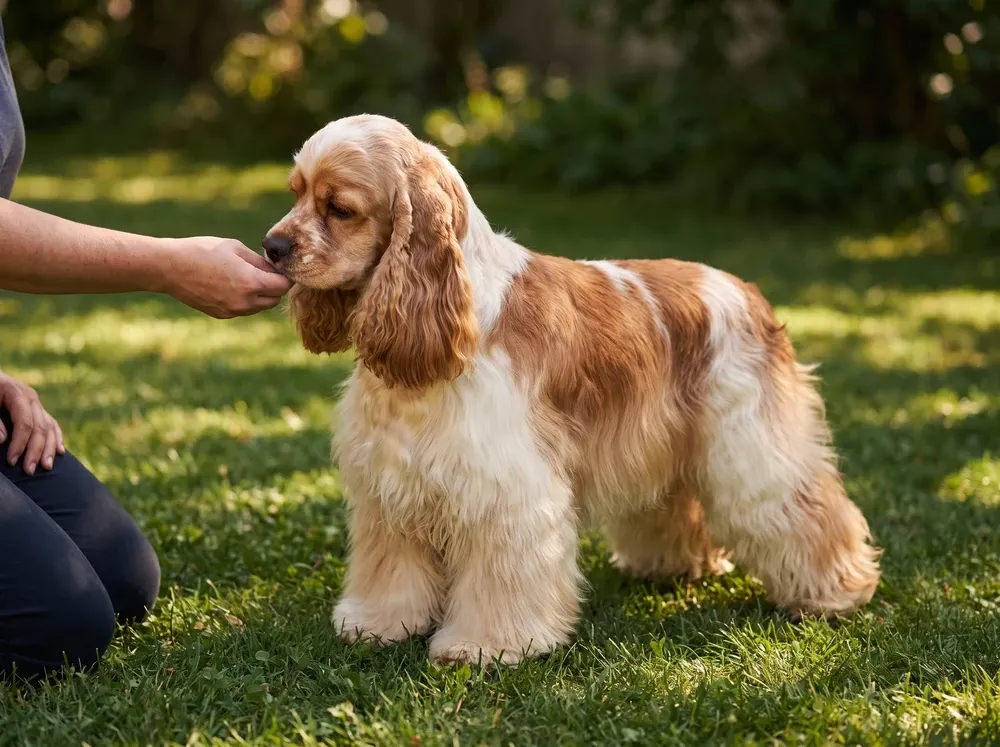
Cocker Spaniel, a red and white adult on a garden lawn sniffing a kneeling pet parent's hand

Before you commit

Ask about the parents

Their health runs in families, so the parents matter a great deal. Ask the breeder about both parents' eyes, ears and skin, and meet the mother if you can.

The reception of a Paws & Co clinic, with long cream benches and a stone reception desk

Before the clinics open

Join the founding families

AED 1,999 of essential care for AED 199. No payment now.

When to see a vet

When it is not behaviour.

Cocker Spaniel, a chocolate adult standing on a clinic table as a vet in taupe scrubs steadies the dog

Some of this is not a training problem, and treating it like one wastes time your dog may not have. If they are distressed when you leave, if they growl or guard their food, their toys or you, if they are frightened on the lead, or if anything about them changes suddenly at any age, contact your vet the same day. A tip from a website, ours included, is not the answer. If it cannot wait, contact your nearest emergency vet now.

With a Cocker, think ears, eyes and skin before you think training. A Cocker who suddenly snaps when you touch their head, hides, rubs their face on the floor or will not let you near their ears may well be in pain. One who is suddenly tired, weak or off their food may be unwell. For squinting, sudden weakness, pale or yellow gums, or a red, cloudy eye, contact your vet now. Bloat (GDV, a twisted stomach) needs the same speed: a swollen, tight belly, retching with nothing coming up, sudden restlessness or drooling. It can happen in any dog, though it is most common in large, deep-chested breeds. The rest is easy to read as temper, so tell your vet that week, and you will both know sooner.

They'll keep sniffing every doorway. If they start shaking their head, tell your vet.

Cocker history

Before they were yours.

  1. Cocker Spaniel history, a painting of a small spaniel flushing a woodcock in woodland, 1824
    Charles Towne, Spaniel Putting Up a Woodcock, 1824. Walker Art Gallery, Liverpool.

    Before the 1880s

    The cocking spaniel

    A small British spaniel found woodcock by scent and flushed them for the gun. Dogs of this type went to North America with settlers and sportsmen.

    What they still carryThe nose, the soft mouth and the wish to be close to you.

  2. Cocker Spaniel history, a drawing of Champion Obo II, a black dog standing side on, 1890
    Champion Obo II, drawn for F. H. F. Mercer's The Spaniel and its Training, 1890.

    The 1880s

    Obo II

    An English-bred dog called Obo II is credited as the founding sire of the American line, a smaller Cocker than the British dog from the start.

    What they still carryA compact size that suits a flat.

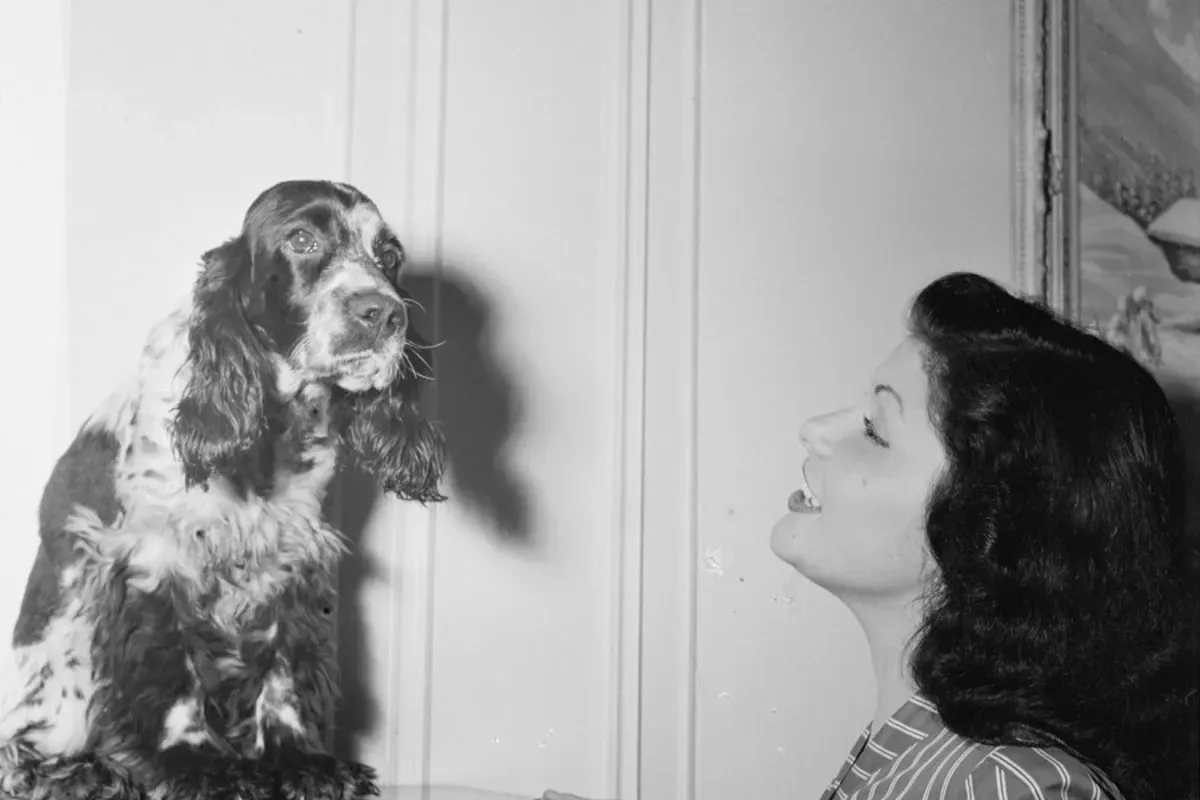
  3. Cocker Spaniel history, a parti-colour dog on a cabinet beside a smiling woman, New York, 1946
    An American Cocker Spaniel in New York, 1946. Photo: William P. Gottlieb, Library of Congress.

    1920s to 1950s

    From the field to the family

    American breeders moved the Cocker towards the show ring and the home: smaller, with a rounder head, large eyes and a much heavier coat. By the late 1930s it was the most popular breed in the United States.

    What they still carryThe ears, coat and eyes that need so much care.

  4. Cocker Spaniel history, two breeds, a black American dog beside a blue roan English Cocker on a lawn

    1946

    Two breeds

    The American Kennel Club recognised the American and English Cocker Spaniels as separate breeds. In Britain, the English one is still simply the Cocker Spaniel.

    What they still carryTwo breeds with one name.

  5. Cocker Spaniel history, the breed today, a freshly groomed chocolate and white adult on a grooming table

    Today

    In Dubai

    In the UAE a Cocker, American or English, is a family dog in a flat or a villa, often groomed in a salon.

    What they still carryLong, heavy ears and a thick coat in a humid city.

Cocker questions

The ones you type at midnight.

Most of these get asked late at night, by someone watching their dog and not sure what they are seeing.

Cocker Spaniel in Dubai, a buff adult asleep beside a pet parent on a dark sofa at night, city lights behind
How long do Cocker Spaniels live?

Cocker Spaniels usually live 12 to 15 years: American Cockers 12 to 15, English Cockers 12 to 14. In a large UK study, half the dogs of each type lived past 13.

American Cocker Spaniel vs English Cocker Spaniel: what is the difference?

The American Cocker Spaniel is smaller than the English Cocker Spaniel, with a rounder head, a shorter muzzle and a much heavier coat. They have been separate breeds since 1946, and the English Cocker is usually taller and busier.

How big is a Cocker Spaniel?

An adult Cocker Spaniel weighs 9 to 15.5 kg, depending on the type. American Cockers usually weigh 9 to 13.5 kg, and English Cockers 12 to 15.5 kg.

Do Cocker Spaniels shed?

Cocker Spaniels shed moderately. Their long, silky coat needs brushing several times a week to stay free of knots.

What colours do Cocker Spaniels come in?

Cocker Spaniels can be solid black, red or brown, and American Cockers also come in buff and silver. Many are black and tan, patched with white, or flecked with it (roan).

What is a working Cocker Spaniel?

A working Cocker Spaniel is an English Cocker bred for the shooting field: light, fast and busy, often with less coat. A show Cocker carries more coat, is usually calmer and is easier in a flat.

What is the best Cocker Spaniel haircut for Dubai?

For a Cocker Spaniel in Dubai, ask your groomer for a cut you can brush through several times a week. Keep the hair under the ears and between the pads short, because a matted coat hides sore skin.

Why does my Cocker Spaniel's ear smell?

A smell from a Cocker Spaniel's ear often means ear inflammation, the first risk on their health record. Tell your vet that week, because treated early it is simpler.

Can a Cocker Spaniel live in Dubai?

Yes, a Cocker Spaniel can live happily in Dubai with some extra care. Dry their ears after every bath, keep their coat groomed, and from May to September walk before sunrise and after dark.

Worried about them? Contact your vet today.