We’re hiring people who love them like we do. Join us careers@pawsandco.comSee open roles
UAE Government Licensed MOCCAE
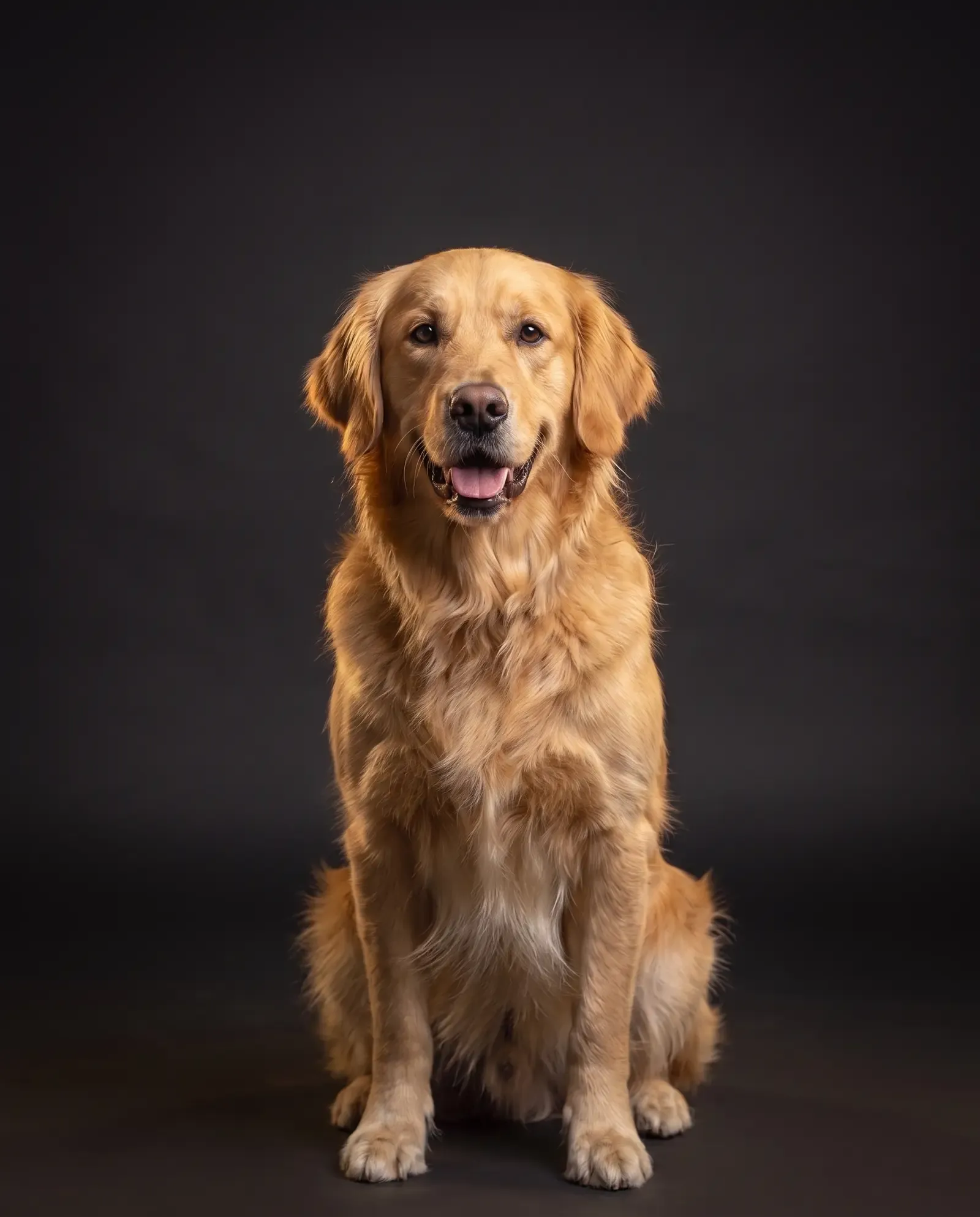
Golden Retriever in Dubai, studio portrait of a smiling adult sitting against a dark background

Breed guide  ·  Dogs

Golden Retriever

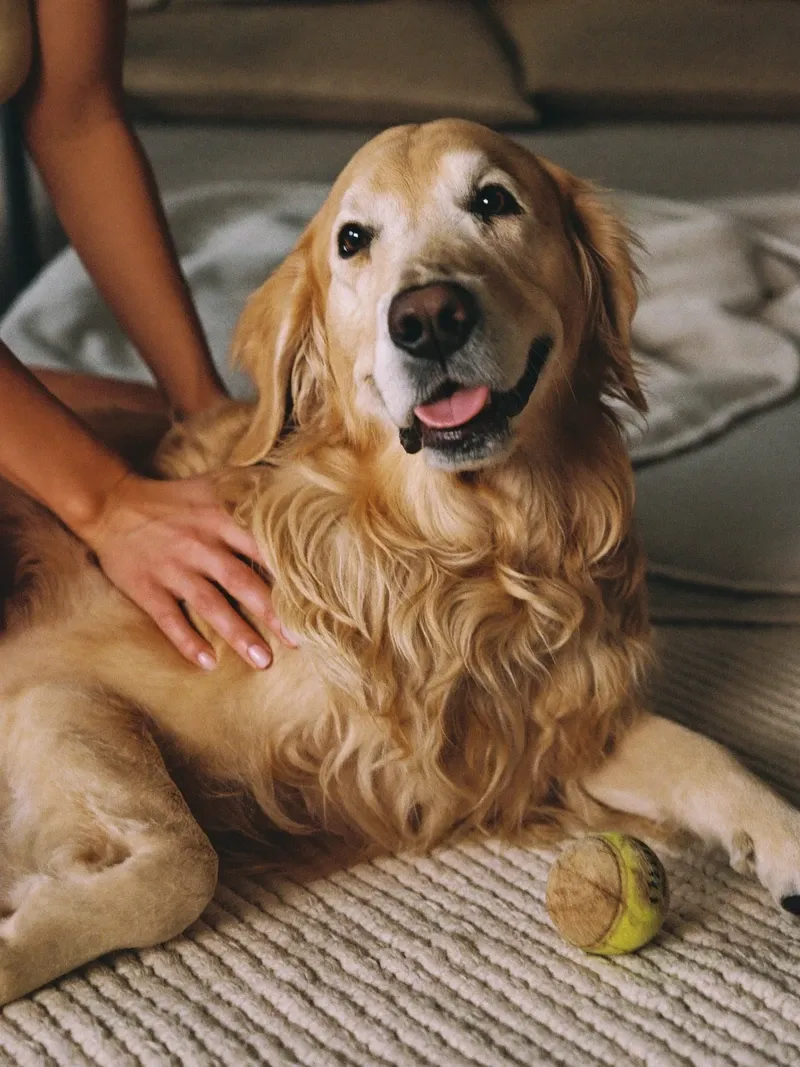
He carries the same tennis ball on every walk. I carry his water.

Lifespan
10 to 12 years
Size
Large
Weight
25 to 34 kg
Shedding
Heavy

Last updated 14 October 2026

Join the founding families. AED 1,999 of essential care for AED 199.

No payment now. We'll be in touch by email and WhatsApp as we open enrolment.

✓
Thank you.

We will be in touch soon to confirm.

Golden Retriever traits

What they brought with them.

Tap a card to see what is going on.

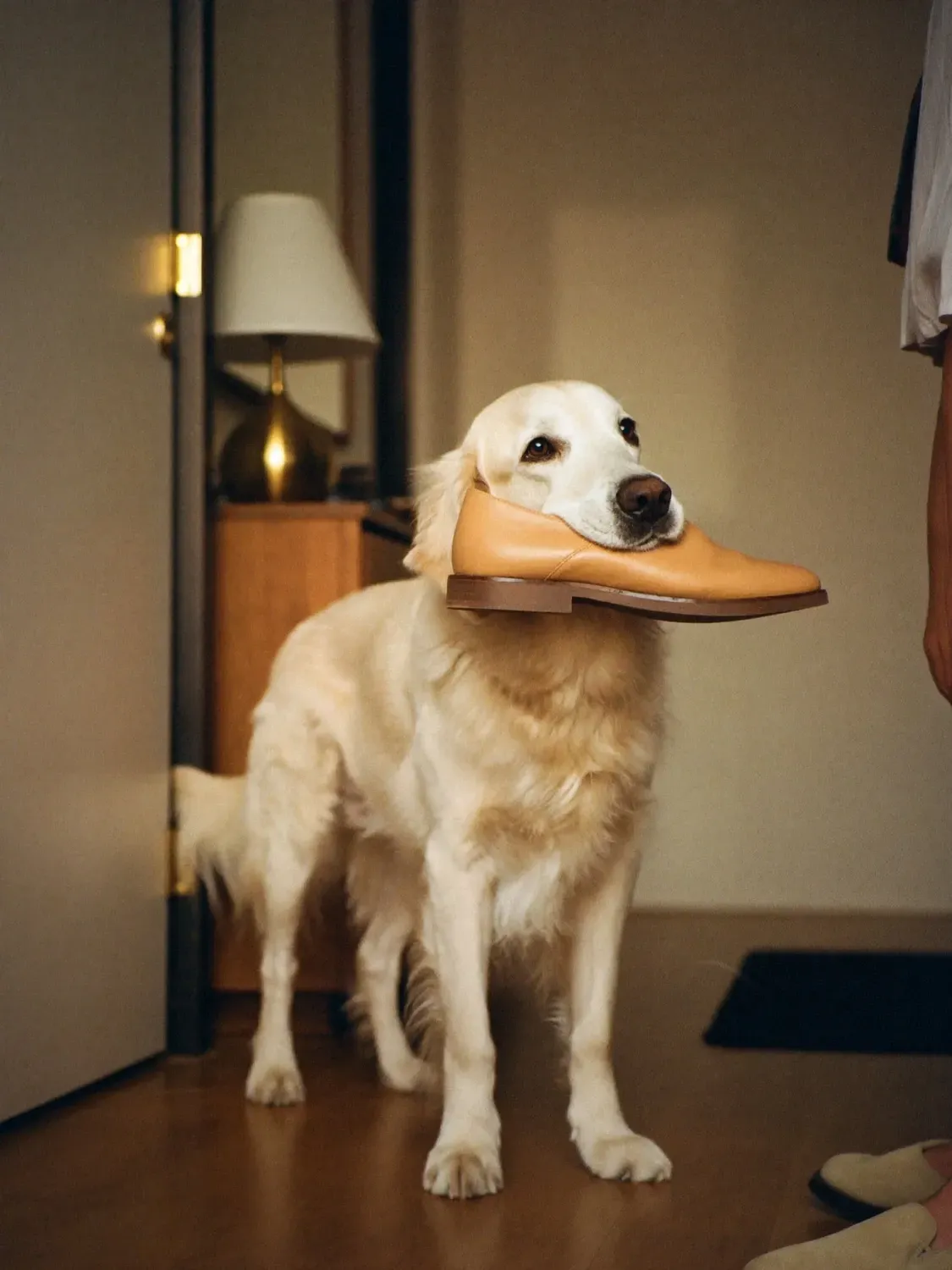
Golden Retriever, a cream adult at the front door of a flat holding a shoe

At home

Something in their mouth, always

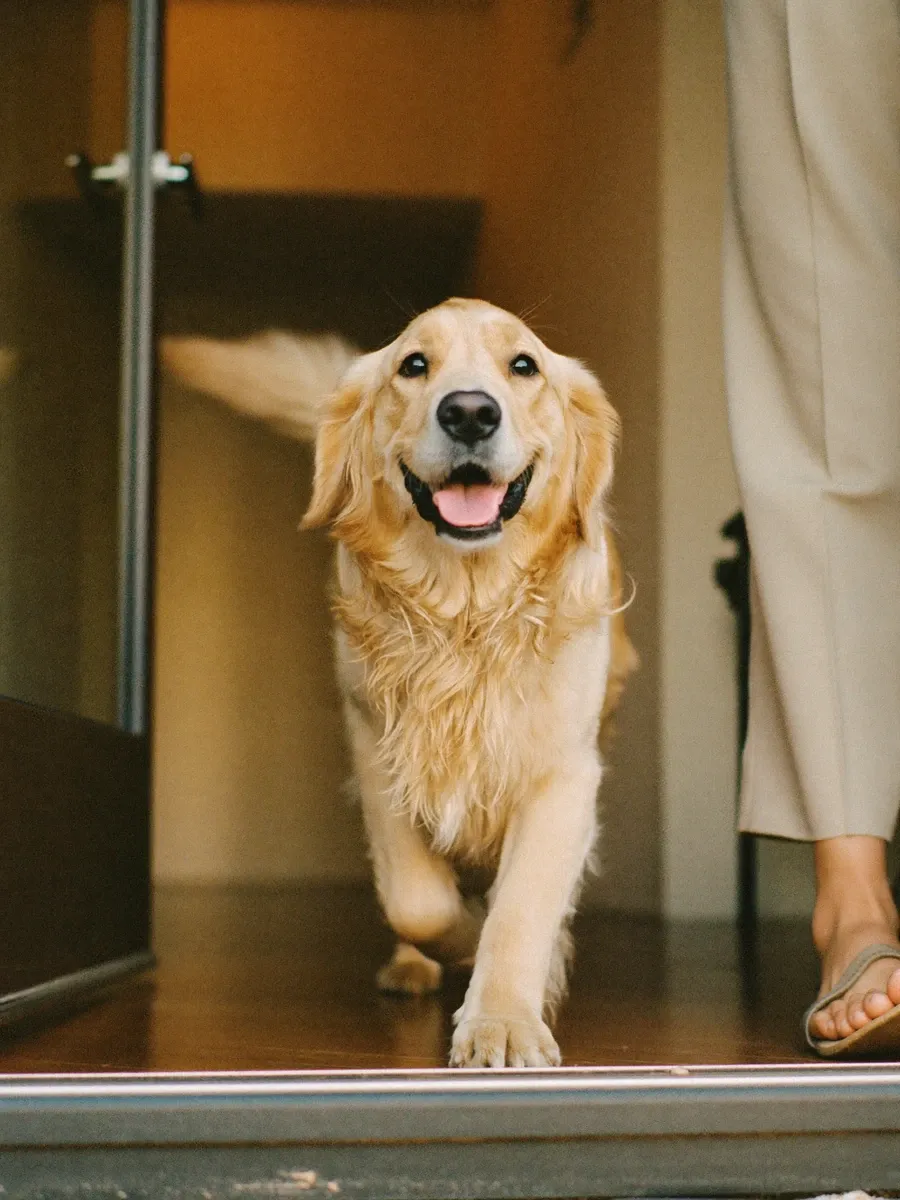
Guests get handed a slipper at the door, with great ceremony.

What's going onGoldens were bred to carry a bird back so gently it had no mark on it. Give them a toy that is theirs, and swap it for whatever they have taken.

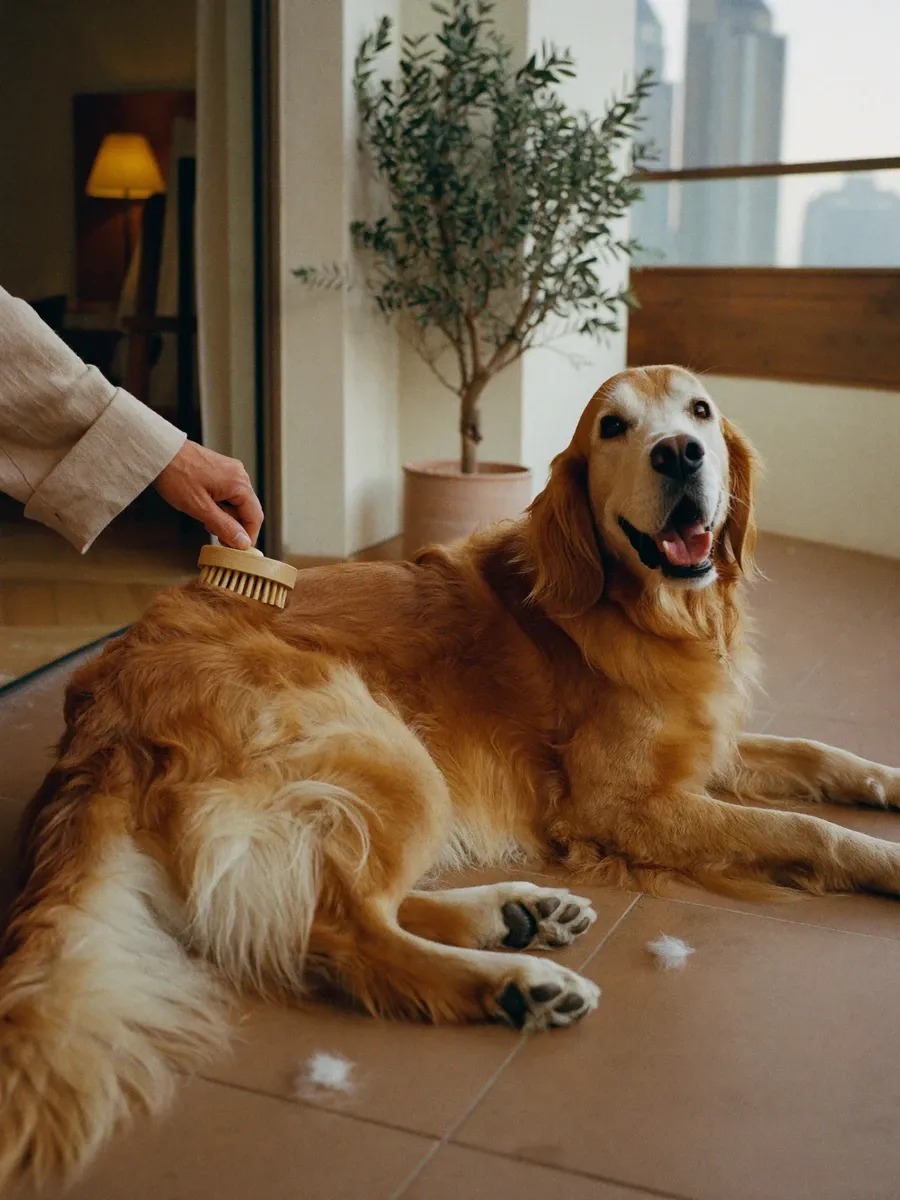
Golden Retriever in Dubai, a pet parent brushing the dog's coat on a balcony, the skyline behind

At home

A coat made for Scotland

Half the beach comes home in their feathering after every walk.

What's going onTheir thick double coat was made for cold Highland rivers. In Dubai it holds on to heat, so brush them through several times a week and walk in the cool.

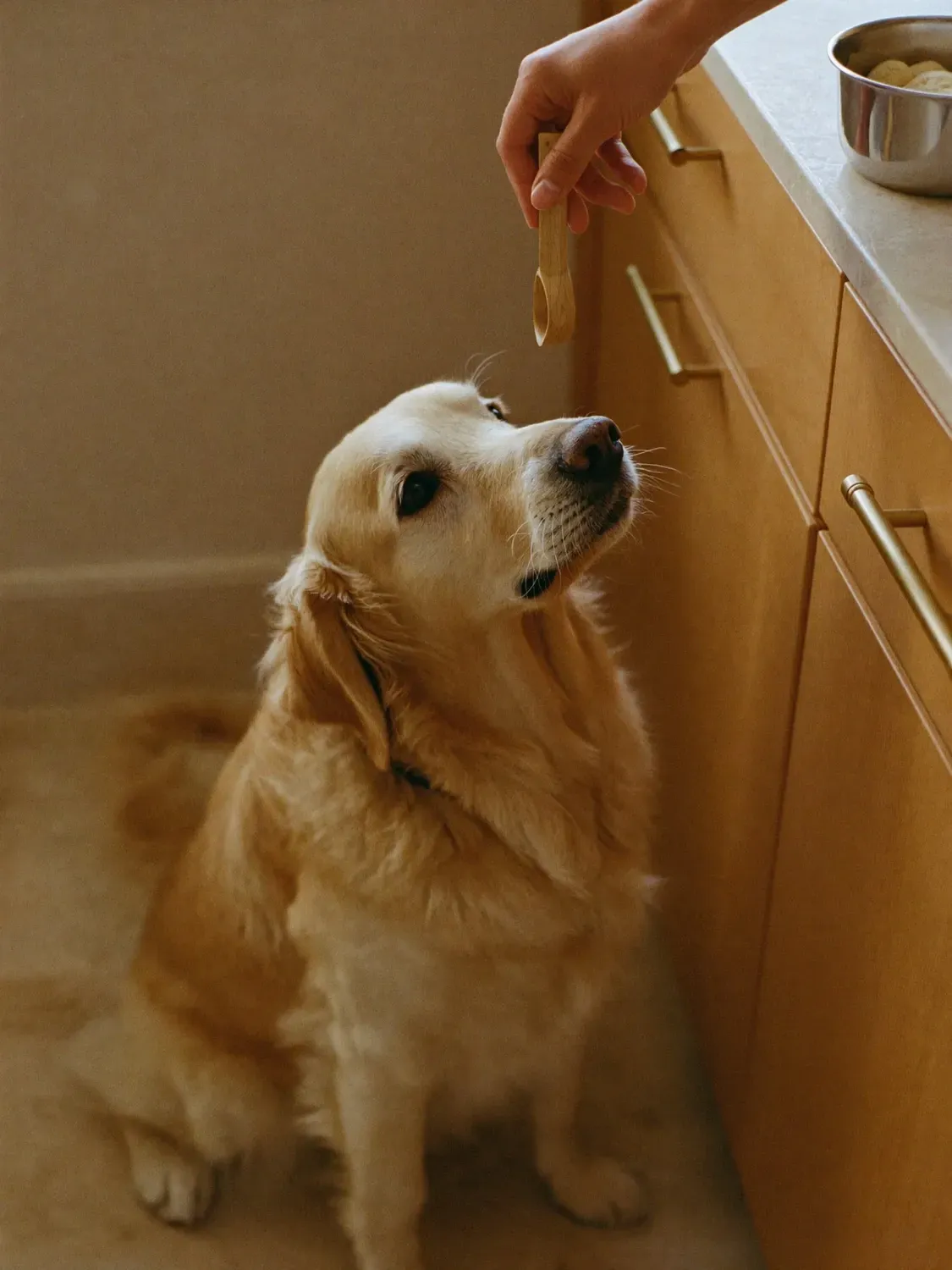
Golden Retriever, an adult sitting on a kitchen floor, looking up at a hand holding a food scoop

At home

They hear every packet in the kitchen

One rustle and they are at your feet, sure that dinner never happened.

What's going onExtra weight strains hips and elbows that are already a risk. Weigh their food, and take treats out of the daily amount.

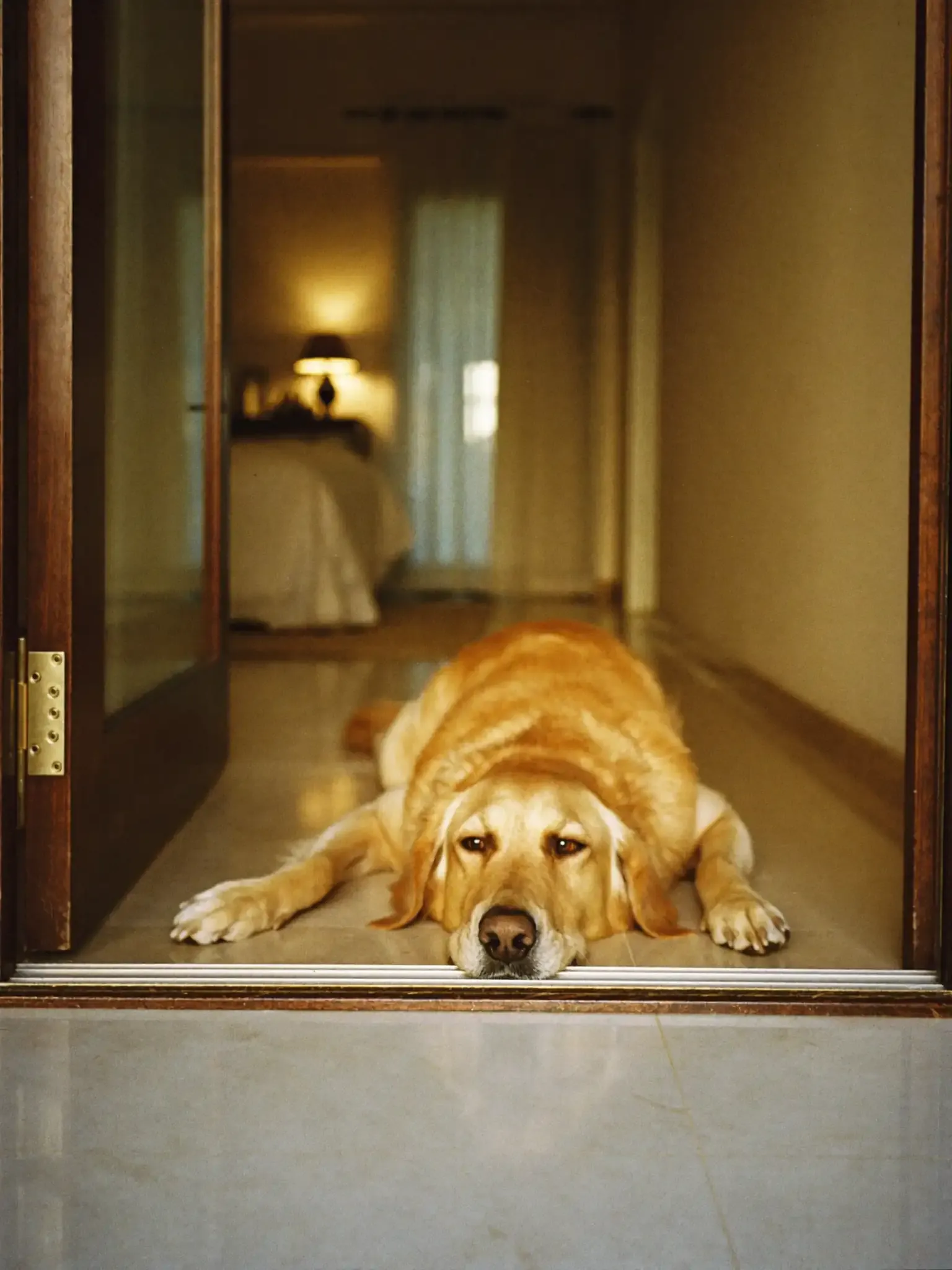
Golden Retriever, an adult lying across a doorway on a marble floor

At home

They follow you from room to room

Room to room all day, then flat out across the bathroom doorway.

What's going onGoldens were bred to spend the whole working day beside one person. A midday walk or a visit breaks up a long day alone.

Golden Retriever, a pet parent's hands resting in the thick coat of a relaxed adult on a rug

At home

So cheerful you would never know

Tail going, ball in mouth, even on a day they feel unwell.

What's going onGoldens carry a higher cancer risk than most breeds. Run your hands over them once a week, and photograph any new lump to show your vet.

Golden Retriever, an adult bounding to the front door to greet a guest

At home

They love everyone, including the delivery driver

Every guest is an old friend, and gets greeted by jumping up.

What's going onThe friendliness was bred in. The jumping is learned, so teach four feet on the floor while they are small. A grown Golden can knock a child over.

A Golden Retriever in Dubai

The bit nobody tells you.

Their day

Built for: The whole day outdoors, beside a person.

In Dubai: Often the day in a flat, until you get home.

Their water

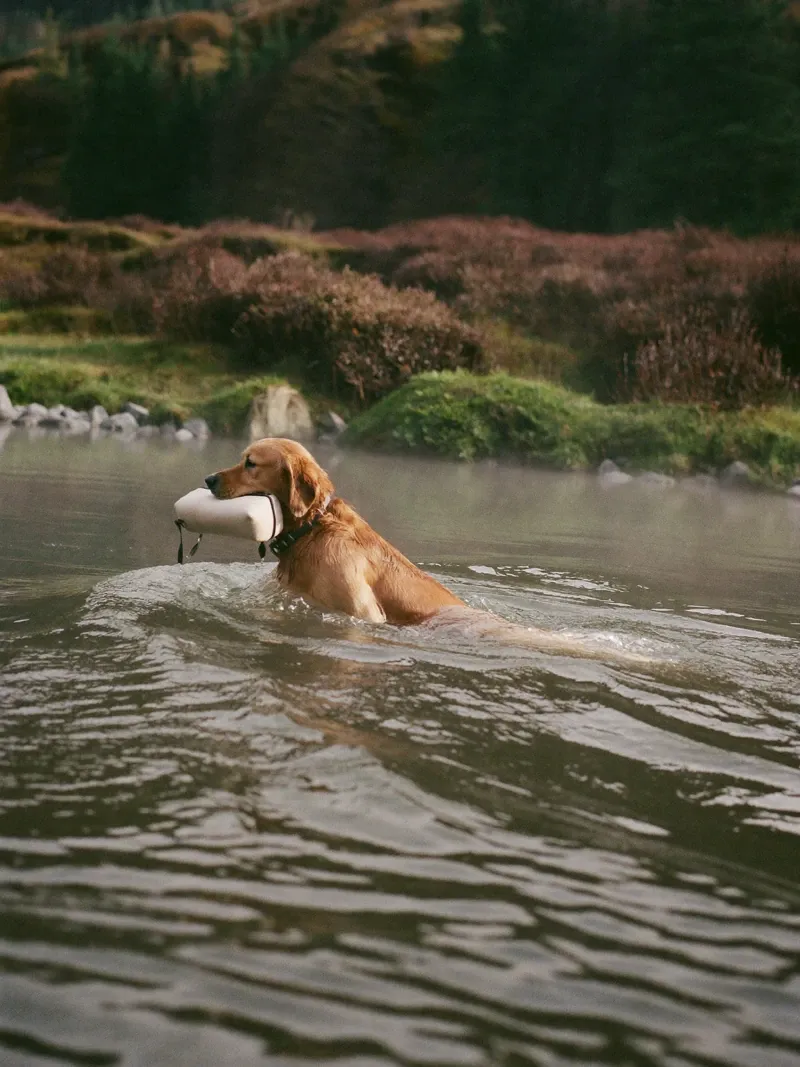
Built for: Wading into cold Highland rivers.

In Dubai: Very little water they are allowed into.

Their coat

Built for: A thick coat for Scottish winters.

In Dubai: The same coat, in 45°C heat.

The stolen slippers, the teenage chaos and a lot of the heat trouble start in that gap.

A flat will never be a Highland river. What you can give them is a job, and the ten things below are how.

Your plan is built around their breed: the health risks for a Golden Retriever at every age, and the care that goes with each one.

Join the founding families. AED 1,999 of essential care for AED 199.

Daily care for a Golden Retriever

Ten things that make their life better.

Many of them are free, and most matter at every age.

  1. Food they find on the pavement adds calories you never counted.

    Every age

    Free

    Why

    Food they find on the pavement adds calories you never counted.

    What to do

    Practise "leave it" every day, at home first and then outside. If someone else does the walking, give the walker the rules: the treats you hand over and nothing else.

  2. Their thick double coat holds on to heat, and they will keep playing long after they should stop.

    Every age, most of all puppies and from 7 years

    Under AED 150 for a brush and comb

    Why

    Their thick double coat holds on to heat, and they will keep playing long after they should stop.

    What to do

    From May to September, walk before sunrise and after dark. Put the back of your hand on the pavement for five seconds. If you cannot keep it there, they cannot walk on it. Keep games in the heat short, take water, and brush out their undercoat several times a week.

  3. They were bred to work beside a person from first light. A long, empty day is where the chewed cushion comes from.

    Every age, hardest from 6 months to 2 years

    Free, or the cost of a walker

    Why

    They were bred to work beside a person from first light. A long, empty day is where the chewed cushion comes from.

    What to do

    If you are out for more than a few hours, arrange a midday walk, a visit or daycare. Leave a stuffed chew when you go. Keep leaving and coming home low-key. If they are distressed when you leave, contact your vet rather than trying to fix it at home.

  4. A Golden grows into a big, strong dog who still thinks they are a puppy.

    6 months to 2 years

    Free

    Why

    A Golden grows into a big, strong dog who still thinks they are a puppy.

    What to do

    From six months to two years, expect pulling, jumping and selective hearing. Reward four feet on the floor every time someone says hello. Two short training sessions a day, paid with part of their dinner.

  5. In a breed with a higher cancer risk than most, a new lump is worth finding early.

    Every age, most of all from 4 years

    Free

    Why

    In a breed with a higher cancer risk than most, a new lump is worth finding early.

    What to do

    Once a week, run your hands over their whole body, including under the feathering on their chest, legs and tail. Smell their ears, look between their toes, and note any new lump. Weigh them once a month.

  6. They were bred to carry things. If you do not give them something, they will choose it themselves.

    Every age, most of all 6 months to 2 years

    Under AED 100

    Why

    They were bred to carry things. If you do not give them something, they will choose it themselves.

    What to do

    Keep a soft toy or a canvas dummy that is theirs, and hand it over when guests arrive or you come home. If they take a slipper, swap it for a treat. Do not chase them, because that makes it a game they win.

  7. Retrieving is the job they were bred for, and they will not stop by themselves.

    Every age, gentler from 7 years

    Under AED 100

    Why

    Retrieving is the job they were bred for, and they will not stop by themselves.

    What to do

    Five to ten throws, then stop. Ask for a sit and wait before you send them, and throw along the ground or into water rather than high in the air. Skip the ball launcher.

  8. Extra weight strains their joints, and in Goldens it is linked to a higher cancer risk.

    Every age

    Under AED 150, once, for kitchen scales and a slow feederIn your plan

    Why

    Extra weight strains their joints, and in Goldens it is linked to a higher cancer risk.

    What to do

    Weigh their daily food on kitchen scales. Take treats out of that amount, not on top of it. Feed part of each meal by hand while you train, or from a slow feeder. A Body Condition Score (a check on whether they are the right weight) is in your plan at their puppy visits.

  9. Swimming is the easiest exercise on their joints, and water left in their ears makes infections more likely.

    Every age

    Under AED 150 a year for ear cleanerIn your plan

    Why

    Swimming is the easiest exercise on their joints, and water left in their ears makes infections more likely.

    What to do

    Use any water they are allowed into. Show them the steps out of the pool every time, and never leave them near one alone. After every swim, dry inside their ear flaps, use the ear cleaner your vet gives you, and dry their coat right through to the skin. Monthly ear cleaning is in your plan from age two to four.

  10. Hip and elbow problems are the first two health risks for a young Golden, and marble floors do not help.

    Every age, evaluation before 2 years

    Free to AED 1,000 for rugs and a rampIn your plan

    Why

    Hip and elbow problems are the first two health risks for a young Golden, and marble floors do not help.

    What to do

    Put rugs or runners where they turn and run. Lift them in and out of the car, or use a ramp. Keep stairs to a minimum while they are growing, and book their hip and elbow evaluation before they turn two.

Three of these are in your plan. The rest you can do at home.

Join the founding families. AED 1,999 of essential care for AED 199.

Golden Retriever health by age

Their health, at every age.

In a Golden Retriever, a change in energy or skin is often the first sign that something is wrong. Choose their age to see what to watch for, and the care that goes with it.

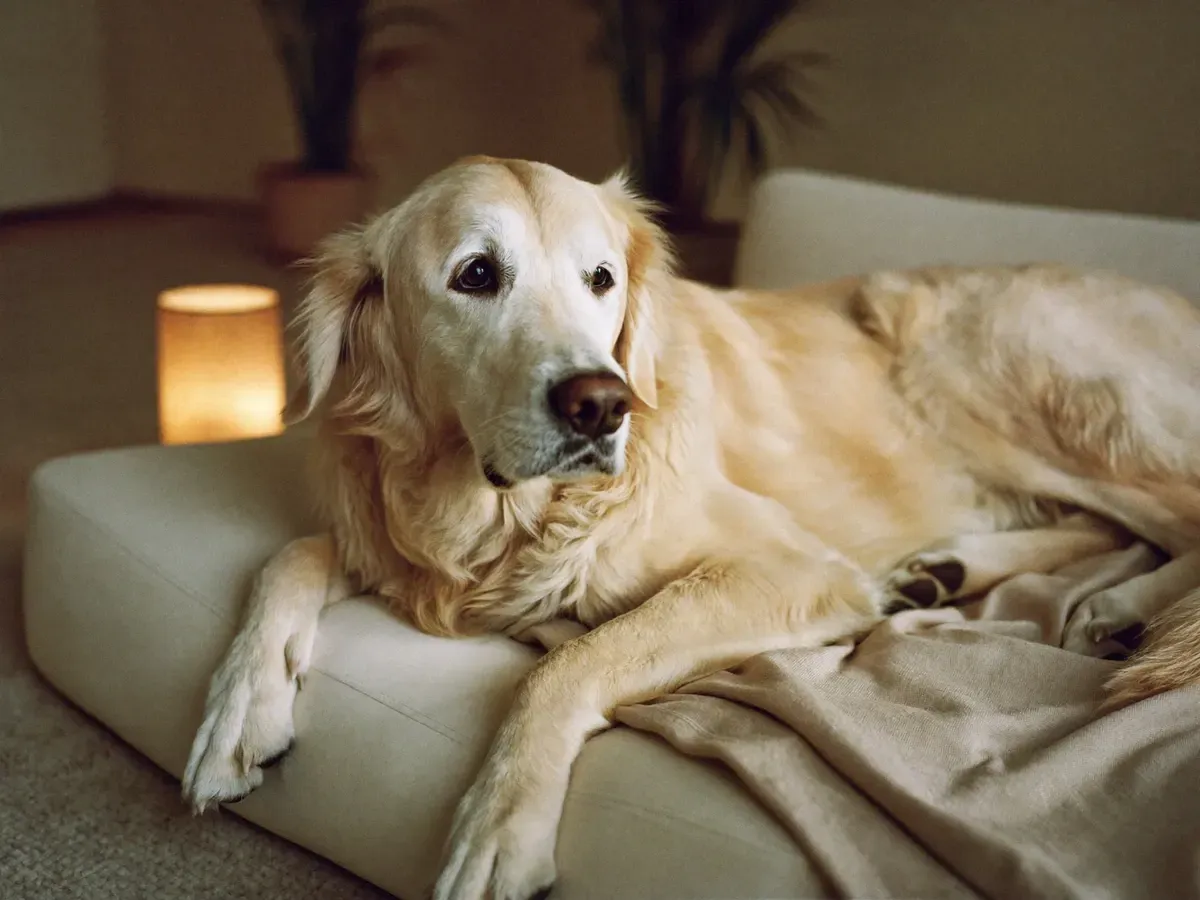
Golden Retriever, an older dog with a pale face resting on a cushioned bed

How old are they?

Their age

Golden Retriever Puppy health

the first six months

What to watch for

  1. Developmental or early clinical signs of Hip Dysplasia (HD)
  2. Developmental or early clinical signs of Elbow Dysplasia (ED)
  3. Juvenile onset of allergies / atopic dermatitis
  4. Juvenile onset of ear infections
  5. Congenital murmur or early cardiac abnormality related to Subvalvular Aortic Stenosis (SAS, narrowing below the heart valve)

The care that goes with it

  1. Core vaccinations, microchip and Dubai Municipality registration
  2. Deworming, and flea and tick prevention
  3. Growth and nutritional evaluation, and early socialisation
  4. Hip Dysplasia (HD, a poorly fitting hip joint) screening
  5. Early follow-up for any signs of Elbow Dysplasia (ED, a poorly fitting elbow joint)
The full care detail
  • Core vaccination programme, microchipping and Dubai Municipality registration. Titre testing discussion where clinically appropriate; not a substitute for completing the core vaccine series
  • Deworming and external parasite prevention tailored to Dubai exposure
  • Body Condition Score (BCS, a check on whether they are the right weight), Muscle Condition Score (MCS, a check on their muscle), dental, growth and nutritional evaluation, and early socialisation
  • Baseline screening focused on Hip Dysplasia (HD)
  • Early diagnostic follow-up for signs suggestive of Elbow Dysplasia (ED)

Their age

Golden Retriever Juvenile health

6 months to 2 years

What to watch for

  1. Emerging Hip Dysplasia (HD) with exercise intolerance or lameness
  2. Emerging Elbow Dysplasia (ED) with exercise intolerance or lameness
  3. Recurrent or persistent allergies / atopic dermatitis
  4. Recurrent or persistent ear infections
  5. Early clinical or screening evidence of Subvalvular Aortic Stenosis (SAS)

The care that goes with it

  1. Hip and elbow evaluation (x-rays that grade the joints) by age 2
  2. Cardiac auscultation (listening to the chest) at age 1, and an echocardiogram (an ultrasound scan of the heart) if a murmur is heard
  3. Neutering or spaying, timed for a large breed
  4. A food elimination trial (a diet test for allergies) if skin or ears keep flaring
  5. Finding the cause of any flare that keeps coming back, rather than treating it as allergies again
The full care detail
  • Hip and elbow evaluation (OFA or PennHIP, x-ray schemes that grade how well the hips fit) by age 2; maintain lean body weight to reduce joint stress
  • Cardiac auscultation at age 1 to detect Subvalvular Aortic Stenosis (SAS) murmur; echocardiogram if murmur is detected
  • Neuter/spay timing discussion that accounts for large-breed growth and disease risk
  • Identify allergens early; conduct food elimination trial if recurrent skin or ear issues are present
  • Investigate recurrent signs rather than repeatedly treating presumed Allergies / Atopic Dermatitis

Their age

Golden Retriever Young Adult health

2 to 4 years

What to watch for

  1. Hip Dysplasia (HD)
  2. Elbow Dysplasia (ED)
  3. Allergies / Atopic Dermatitis
  4. Ear Infections
  5. Subvalvular Aortic Stenosis (SAS)

The care that goes with it

  1. Hip and elbow evaluation if not done by age 2, and a lean weight
  2. Cardiac auscultation (listening to the chest) for a murmur, and an echocardiogram (an ultrasound scan of the heart) if one is heard
  3. A food elimination trial (a diet test for allergies) if skin or ears keep flaring
  4. Monthly ear cleaning with a veterinary solution, and dry ears after every bath or swim
  5. Annual orthopaedic evaluation (a joint and bone exam)
The full care detail
  • Hip and elbow evaluation (OFA or PennHIP, x-ray schemes that grade how well the hips fit) by age 2; maintain lean body weight to reduce joint stress
  • Cardiac auscultation at age 1 to detect Subvalvular Aortic Stenosis (SAS) murmur; echocardiogram if murmur is detected
  • Identify allergens early; conduct food elimination trial if recurrent skin or ear issues are present
  • Monthly ear cleaning with veterinary solution; keep ear canal dry after bathing
  • Annual orthopaedic evaluation to track joint health and intervene before arthritis develops

Their age

Golden Retriever Prime Adult health

4 to 7 years

What to watch for

  1. Hip Dysplasia (HD), Progressive
  2. Allergic Skin Disease (Atopic Dermatitis)
  3. Cancer (Early Detection Priority)
  4. Elbow Dysplasia (ED), Progressive
  5. Hypothyroidism

The care that goes with it

  1. Annual physical examination with the lymph glands felt, and an abdominal ultrasound (a scan of the belly) for early cancer detection
  2. Hip and elbow management: supplements, physiotherapy and weight control
  3. Allergy management: allergen-specific immunotherapy (to build tolerance), daily or monthly
  4. Annual thyroid panel (a blood test for thyroid hormone), and treatment if hypothyroidism (an underactive thyroid) is confirmed
  5. A lean weight, because extra weight raises the cancer risk in Golden Retrievers
The full care detail
  • Annual full physical examination with lymph node palpation and abdominal ultrasound for early cancer detection
  • Hip and elbow management: joint supplements, physiotherapy, and weight management
  • Allergy management: allergen-specific immunotherapy (daily or monthly)
  • Annual thyroid panel (T4); levothyroxine if hypothyroidism is confirmed
  • Maintain lean body weight: obesity significantly increases cancer risk in Golden Retrievers

Their age

Golden Retriever Senior health

7 to 10 years

What to watch for

  1. Cancer (Haemangiosarcoma, Lymphoma, Osteosarcoma)
  2. Arthritis (Hip & Elbow)
  3. Heart Disease
  4. Kidney Disease
  5. Cognitive Dysfunction Syndrome (dementia in older pets)

The care that goes with it

  1. Abdominal ultrasound and chest x-ray twice a year for cancer surveillance, from age 7
  2. Arthritis management: hydrotherapy, acupuncture, pain relief and joint supplements
  3. Annual echocardiogram (an ultrasound scan of the heart) from age 7
  4. Renal panel (a kidney blood test) twice a year, and a senior diet
  5. Cognitive enrichment (games that keep their mind busy) and a steady daily routine
The full care detail
  • Bi-annual abdominal ultrasound and chest X-ray for cancer surveillance from age 7
  • Advanced arthritis management: hydrotherapy, acupuncture, NSAIDs, and joint supplements
  • Annual echocardiogram from age 7; cardiac medication when indicated
  • Bi-annual renal panel; transition to senior diet with controlled phosphorus and sodium
  • Cognitive enrichment and consistent daily routine to slow cognitive dysfunction progression

Their age

Golden Retriever Geriatric health

10 years and over

What to watch for

  1. Cancer (Advanced)
  2. Severe Arthritis / Mobility Loss
  3. Congestive Heart Failure
  4. Chronic Kidney Disease (CKD, long-term kidney failure)
  5. Cognitive Dysfunction Syndrome (Advanced)

The care that goes with it

  1. Mobility support: orthopaedic bedding, ramps, slings and physiotherapy
  2. Kidney and heart medication, reviewed regularly
  3. Cognitive enrichment (games that keep their mind busy) and a steady daily routine
  4. Quality-of-life assessments
  5. Palliative care (comfort care), and end-of-life planning with your vet team
The full care detail
  • Mobility support: orthopaedic bedding, ramps, slings, and physiotherapy for arthritic dogs
  • Renal and cardiac management with regular medication adjustments
  • Cognitive enrichment and consistent daily routine to slow cognitive dysfunction progression
  • Quality-of-life assessments
  • Tailored palliative and comfort-focused care plan
  • Compassionate end-of-life planning with your veterinary team

Breed predispositions indicate an increased risk rather than certainty of disease. What is right for them always comes from their own history and an evaluation.

Getting a Golden Retriever puppy in Dubai

Before they come home.

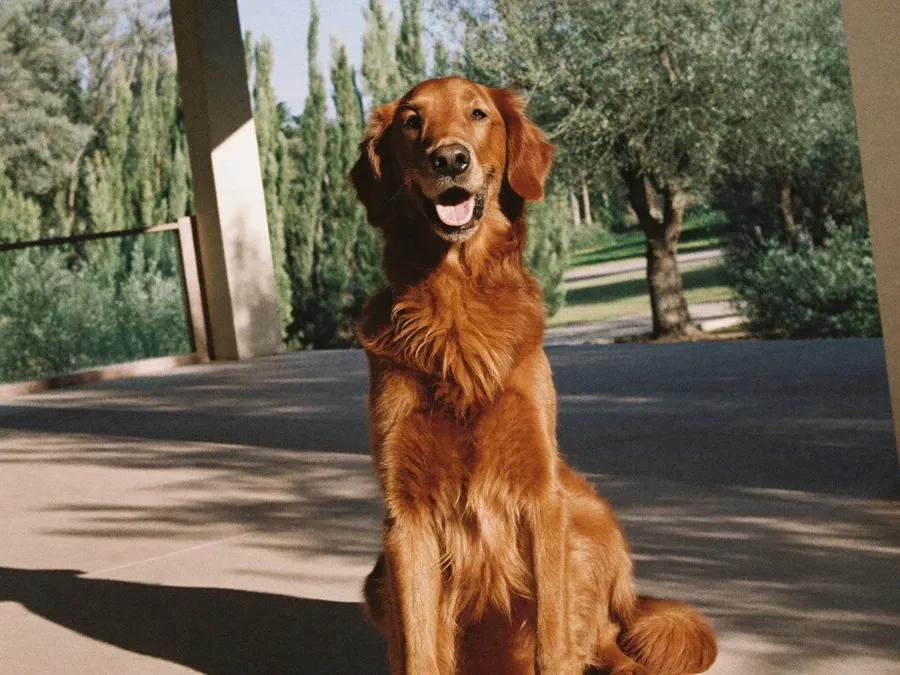
Golden Retriever, a red-gold adult sitting on a shaded villa terrace

Field or show line

Two kinds of Golden

Field lines come from Goldens bred to work as gundogs: lighter, busier and keen to be doing something. Show lines are bred for the show ring: usually heavier, with a fuller coat.

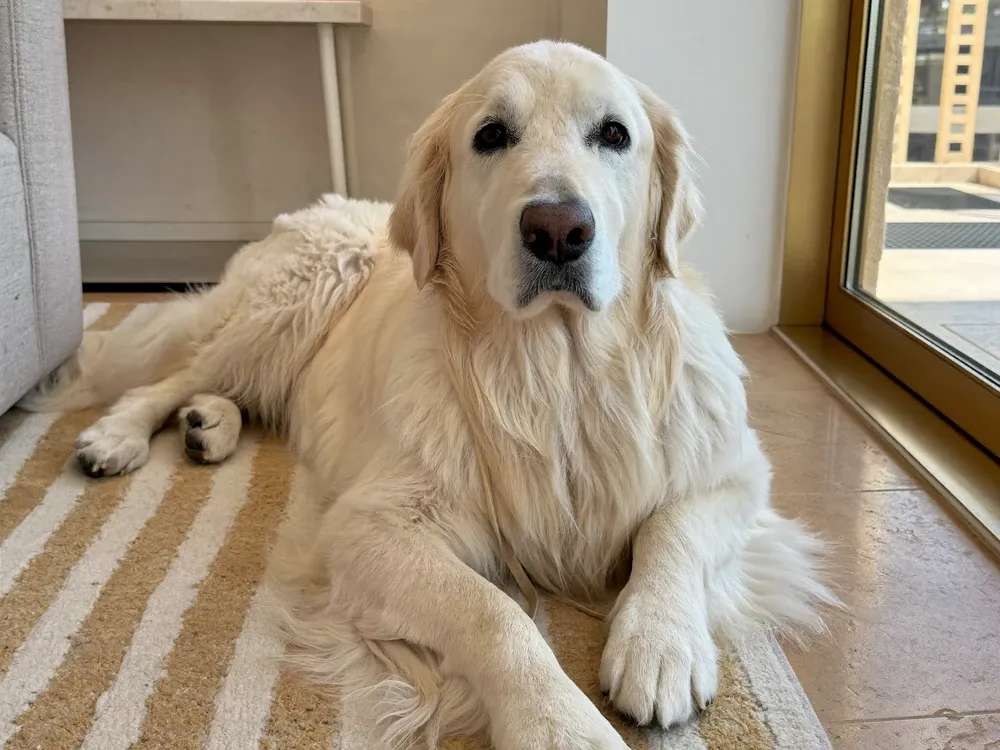
Golden Retriever, a pale cream adult lying on a striped rug by a sunny window

Colours

Every shade of gold

Goldens come in every shade of gold, from the palest cream to a deep, rich gold. The lightest are often called English cream or white Goldens. They are the same breed, just a lighter coat.

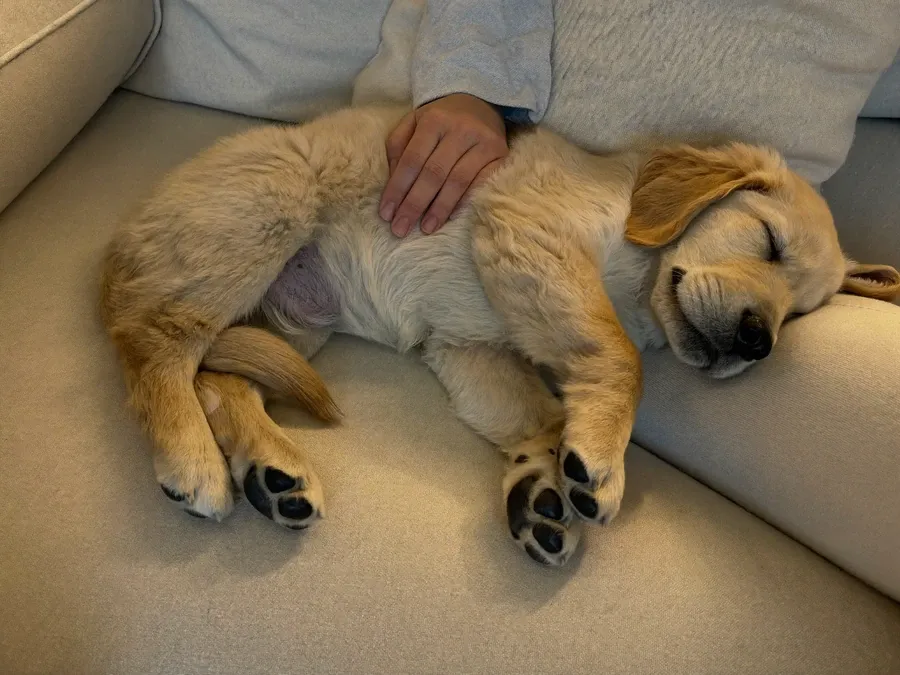
Golden Retriever, a puppy asleep in a pet parent's lap on the sofa

The first six months

Caring for a Golden Retriever puppy

Their full vaccination course, microchip and Dubai Municipality registration come first. A heart murmur can show up from puppyhood in this breed, so keep every visit, even when they seem perfectly well.

Puppy health, 0 to 6 months
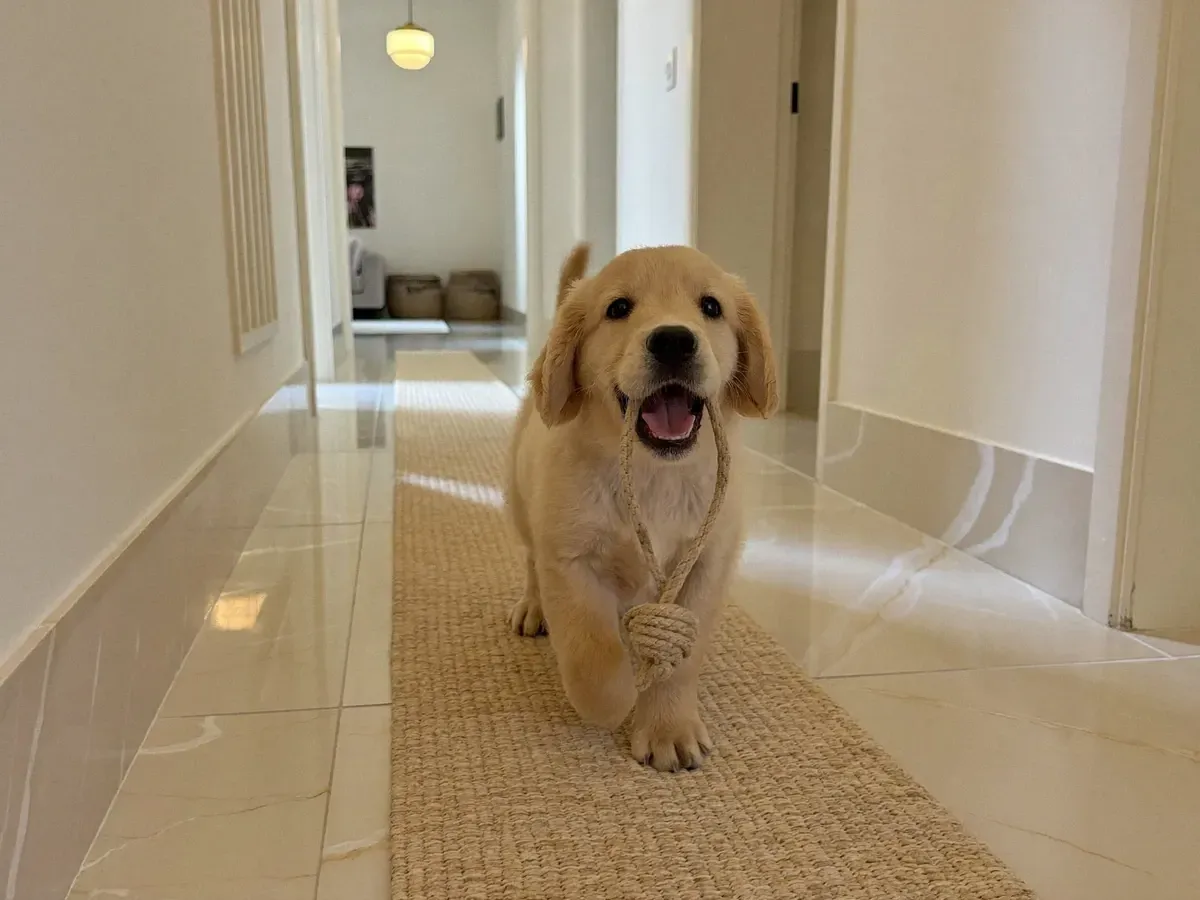
Golden Retriever, a puppy trotting along a runner in a marble hallway

Getting the flat ready

Soft landings on the marble

Put rugs or runners where they turn and run, and lift them in and out of the car, or use a ramp. Marble floors are hard on young hips and elbows.

Ten things that make their life better
Golden Retriever, a mother curled around a sleeping puppy on a cream blanket

Before you commit

Ask for the parents' scores

Ask the breeder for both parents' hip and elbow scores, the x-ray grades of how well the joints fit. Hip and elbow problems are the first two health risks for a young Golden.

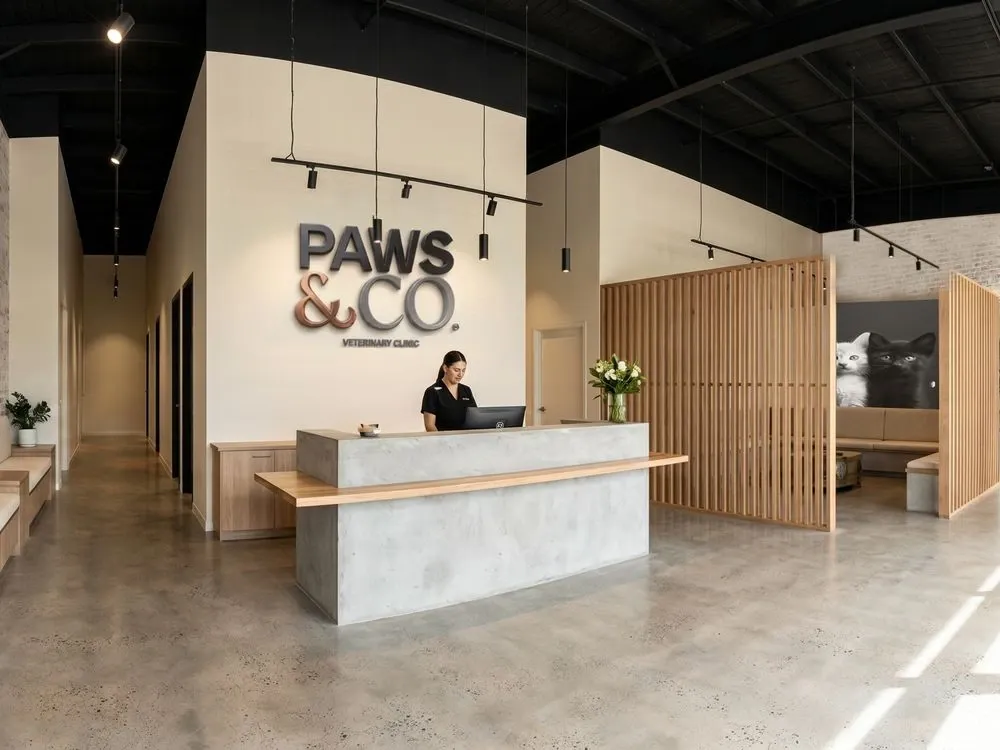
The reception of a Paws & Co clinic, with long cream benches and a stone reception desk

Before the clinics open

Join the founding families

AED 1,999 of essential care for AED 199. No payment now.

When to see a vet

When it is not behaviour.

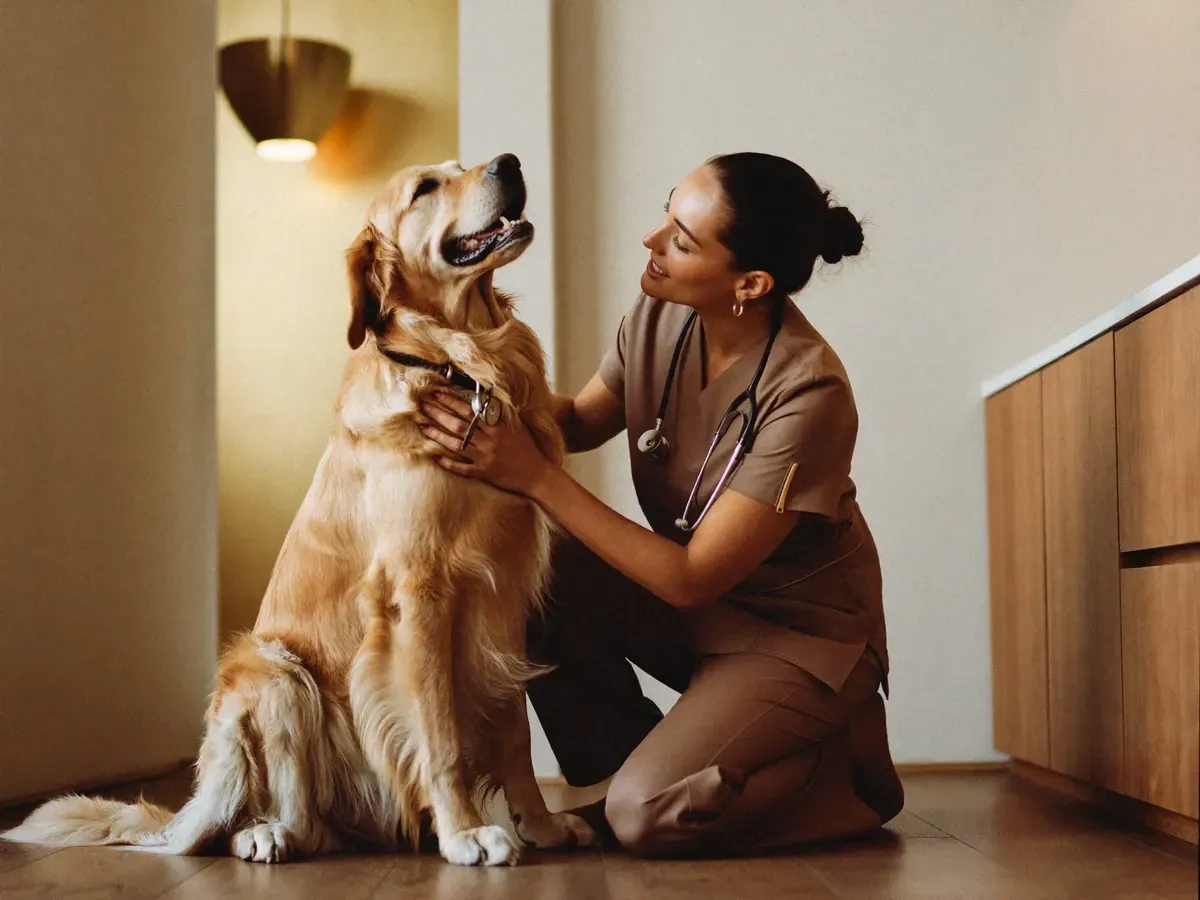
Golden Retriever, an adult sitting as a vet in taupe scrubs kneels alongside, a hand on the dog's chest

Some of this is not a training problem, and treating it like one wastes time your dog may not have. If they are distressed when you leave, if they growl or guard their food, their toys or you, if they are frightened on the lead, or if anything about them changes suddenly at any age, contact your vet the same day. A tip from a website, ours included, is not the answer. If it cannot wait, contact your nearest emergency vet now.

With a Golden Retriever, watch their energy and their skin. A Golden who is suddenly quiet, goes off their food, or has a lump that was not there last week is telling you something. So is one who licks their paws for hours, shakes their head after every walk, or gains weight without eating more. In an older Golden, pacing at night can be the start of cognitive decline. Bloat (GDV, a twisted stomach) is most common in large, deep-chested dogs, so skip walks and hard play shortly before and after meals. A swollen, tight belly, retching with nothing coming up, sudden restlessness or drooling is an emergency: contact your vet now. It is easy to put the rest down to age. Tell your vet anyway, because early makes a difference.

They'll keep carrying that ball. If they drop it and won't pick it up again, tell your vet.
Golden Retriever history

Before they were yours.

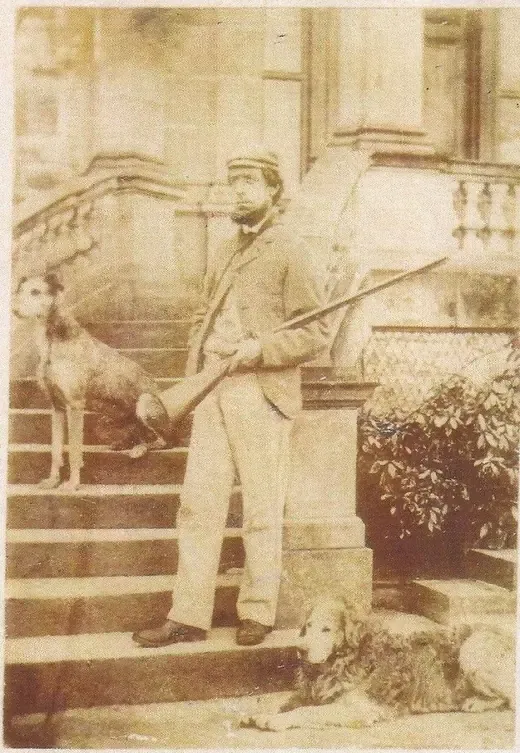
  1. Golden Retriever history, Nous, the founding dog, on the steps beside a gamekeeper, Guisachan, around the 1870s
    Nous, the founding dog, with a gamekeeper at Guisachan, around the 1870s.

    1868

    Guisachan, the Scottish Highlands

    The Golden Retriever was made on one estate. At Guisachan, Dudley Marjoribanks bred a yellow retriever called Nous to a Tweed Water Spaniel called Belle, and their puppies founded the breed.

    What they still carryA soft mouth, a love of cold water, and a wish to work beside a person.

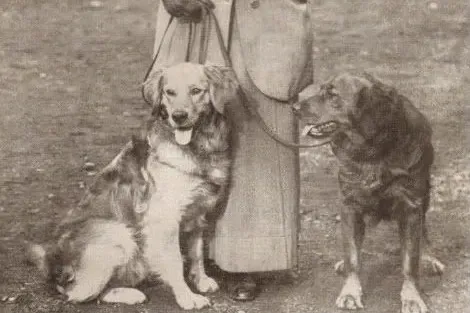
  2. Golden Retriever history, Normanby Sandy and Normanby Balfour with Mrs Winifred Charlesworth, around the 1910s
    Mrs Winifred Charlesworth with Normanby Sandy and Normanby Balfour, around the 1910s.

    1911 to 1925

    Recognised as a breed

    In 1911 the Kennel Club listed them as Yellow or Golden Retrievers, and in 1920 the name became Golden Retriever. The American Kennel Club followed in 1925.

    What they still carryA gundog at heart, whichever line they come from.

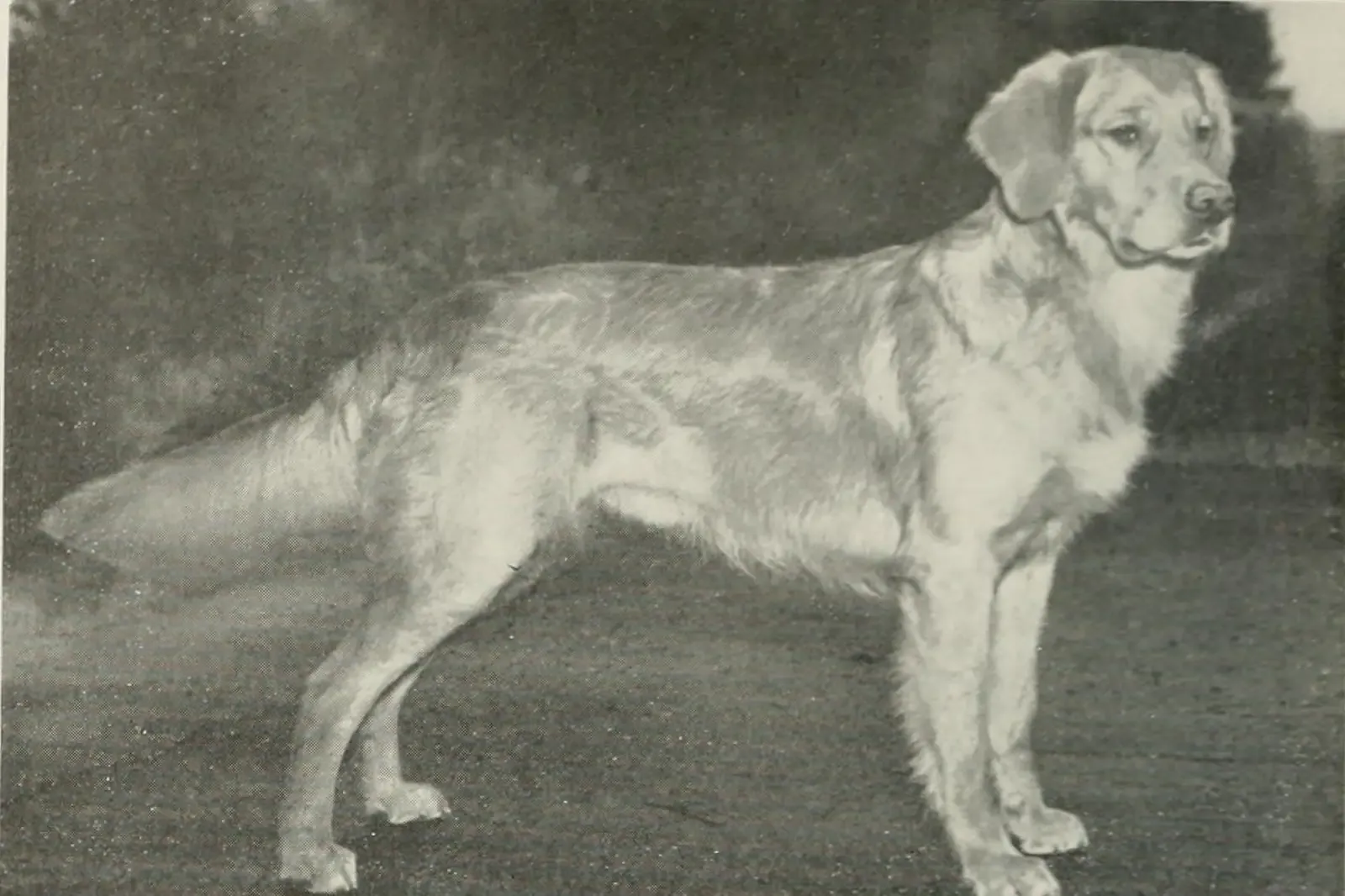
  3. Golden Retriever history, an adult standing in profile, from a book on gundogs, Illinois, 1948
    From Bird dogs in sport and conservation, Illinois Natural History Survey, 1948.

    The 20th century

    New jobs with people

    Goldens moved from the shooting field into homes, and the breed split into lighter field lines and heavier show lines.

    What they still carryA dog chosen for how easy they are to live with, and for a lot of coat.

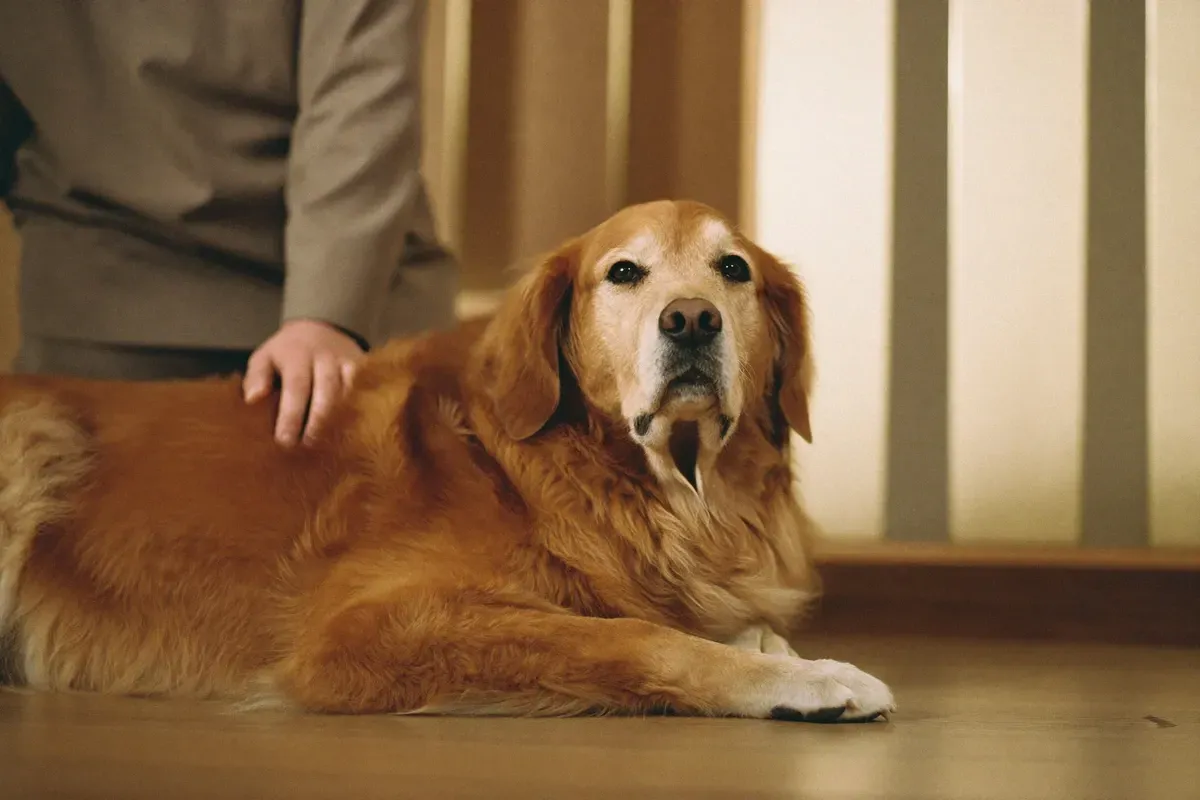
  4. Golden Retriever history, an older red-gold dog lying on a clinic floor, a hand on the dog's back, 2012 onwards

    2012 onwards

    The cancer question

    Owners and breeders kept losing their dogs to cancer. In 2012 the Morris Animal Foundation began following thousands of Goldens for life, to find out why.

    What they still carryA breed with a higher cancer risk than most, which is why their body is worth knowing.

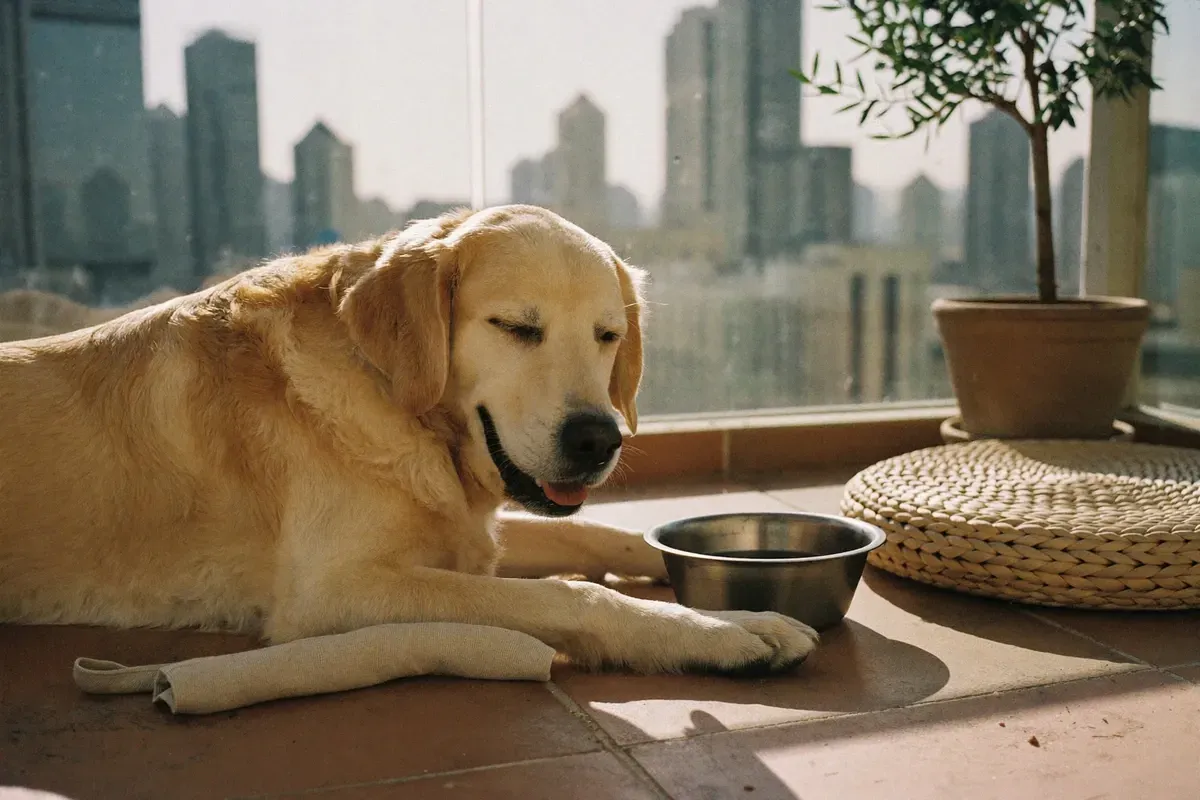
  5. Golden Retriever history, the breed today, an adult lying on a Dubai balcony beside a water bowl

    Today

    In Dubai

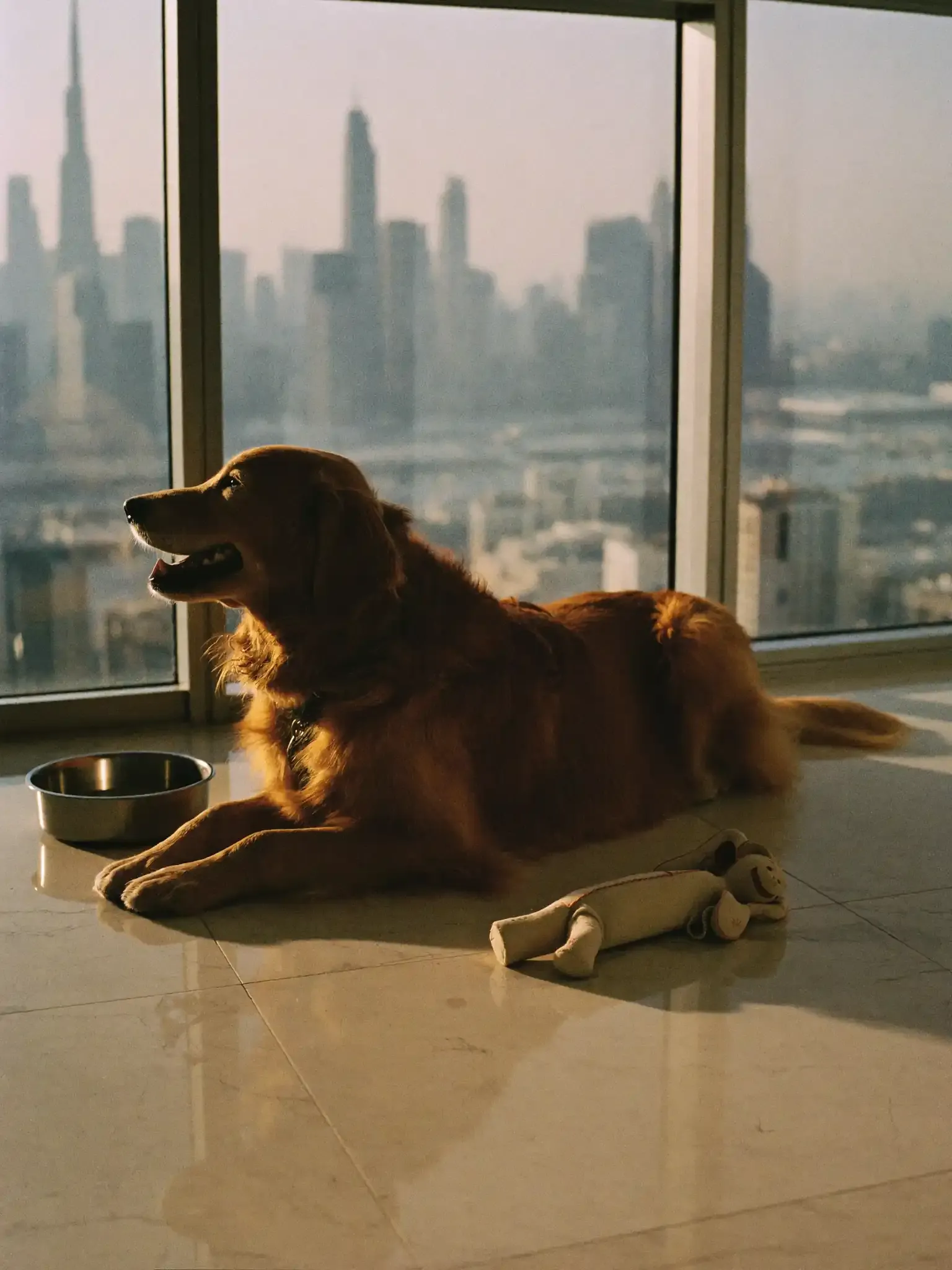
    In the UAE a Golden lives in a flat or a villa, carrying slippers instead of grouse.

    What they still carryA dog bred to work in cold rivers, now in 45°C heat with very little water they are allowed into.

Golden Retriever questions

The ones you type at midnight.

Most of these get asked late at night, by someone watching their dog and not sure what they are seeing.

Golden Retriever in Dubai, asleep beside a pet parent reading a phone on the sofa at night, city lights behind
How long do Golden Retrievers live?

Expect 10 to 12 years, and many live longer: in a UK study of more than 11,000 Goldens, half lived past 13.

Are Golden Retrievers good family dogs?

Yes. Golden Retrievers are gentle and patient, and good with children. The jumping up is learned, so teach four feet on the floor while they are small, because a grown Golden can knock a child over.

How big do Golden Retrievers get?

Most males weigh about 30 to 34 kg and stand 56 to 61 cm at the shoulder. Females are a little smaller, about 25 to 30 kg and 51 to 56 cm.

Do Golden Retrievers shed?

Yes, heavily, and more so twice a year when the undercoat comes out. Brushing several times a week keeps most of it off the sofa.

What colours do Golden Retrievers come in?

Every shade of gold, from the palest cream to a deep, rich gold. The lightest are often called English cream or white Goldens, and they are the same breed with a lighter coat.

Is a Golden Retriever dangerous?

No. Golden Retrievers were bred to work calmly among strangers and other dogs, and most greet every visitor as an old friend. A sudden change in their temper is a reason to contact your vet.

Why does my Golden Retriever always carry something?

Golden Retrievers were bred to carry a shot bird back so gently it had no mark on it. They still want to hold something, so give them a toy that is theirs and swap it for whatever they take.

Can a Golden Retriever live in Dubai?

Yes, with care in the heat. Their thick double coat was made for cold Highland rivers, so walk them before sunrise and after dark from May to September and brush the undercoat out several times a week.

Worried about them? Contact your vet today.