We’re hiring people who love them like we do. Join us careers@pawsandco.comSee open roles
UAE Government Licensed MOCCAE
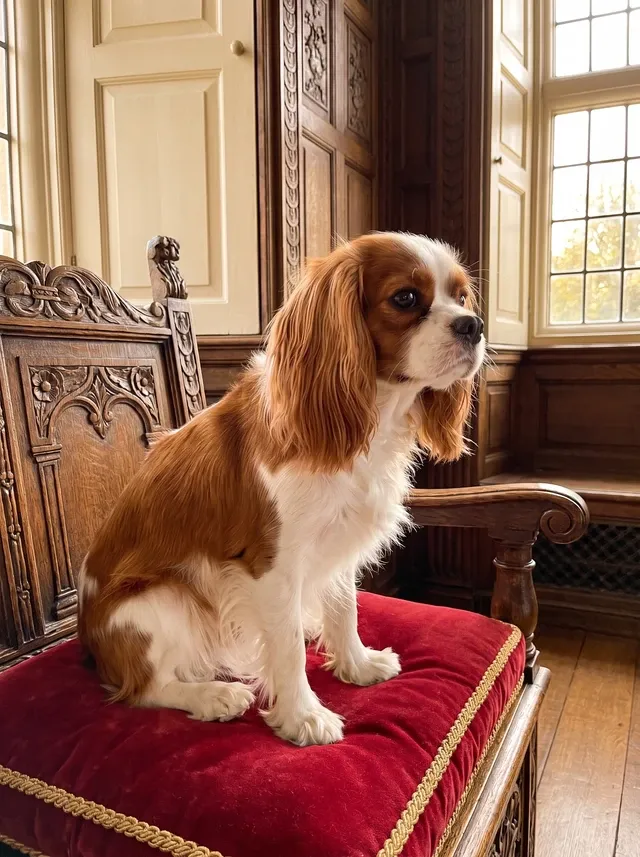
Cavalier King Charles Spaniel in Dubai, studio portrait of a Blenheim adult sitting calmly

Breed guide  ·  Dogs

Cavalier King Charles Spaniel

Her ancestors sat on a king's lap. I've given her mine.

Lifespan
9 to 14 years
Size
Small
Weight
6 to 8 kg
Shedding
Light to moderate

Last updated 14 October 2026

Join the founding families. AED 1,999 of essential care for AED 199.

No payment now. We'll be in touch by email and WhatsApp as we open enrolment.

✓
Thank you.

We will be in touch soon to confirm.

Cavalier traits

What they brought with them.

Tap a card to see what is going on.

Cavalier King Charles Spaniel, a Blenheim adult lying on a bath mat by an open door in a bright flat

At home

Why does my Cavalier follow me everywhere?

Waiting outside the bathroom door, never more than a cushion away on the sofa, and at the window when you leave.

What's going onCavaliers were bred to be close to a person, and nothing else. Waiting at the door is the breeding at work. Teach short spells alone while they are a puppy, and if they are distressed when you go out, contact your vet.

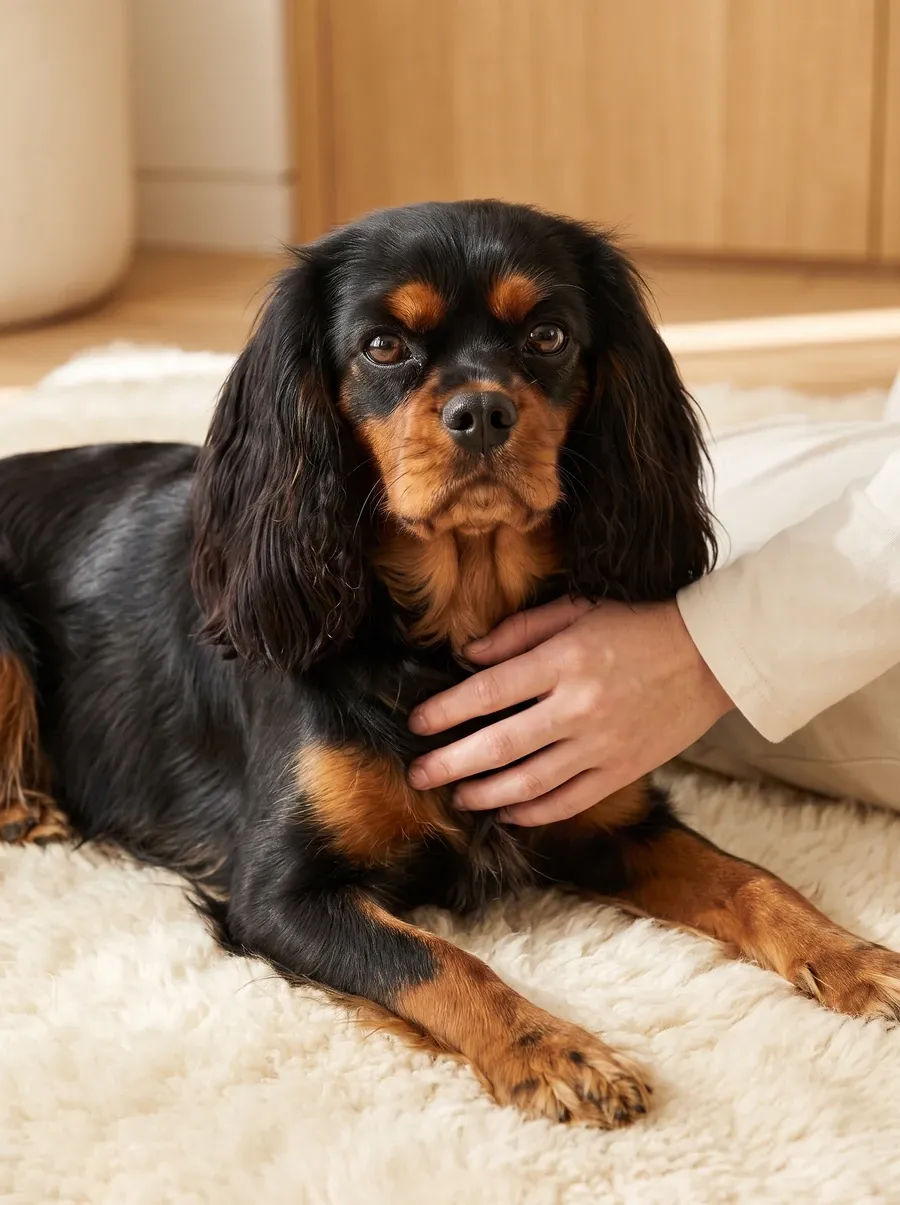
Cavalier King Charles Spaniel, a black and tan adult on a cream rug, a hand on the dog's chest

At home

Why does my vet listen to my Cavalier's heart every year?

A young Cavalier who seems perfectly well, and a vet who still wants to listen to their heart.

What's going onMitral Valve Disease (MVD, a leaky heart valve) starts early in Cavaliers and leads their health record. Their care includes cardiac screening (listening to the heart) every year from age one, and an echocardiogram (an ultrasound scan of the heart) by two and a half.

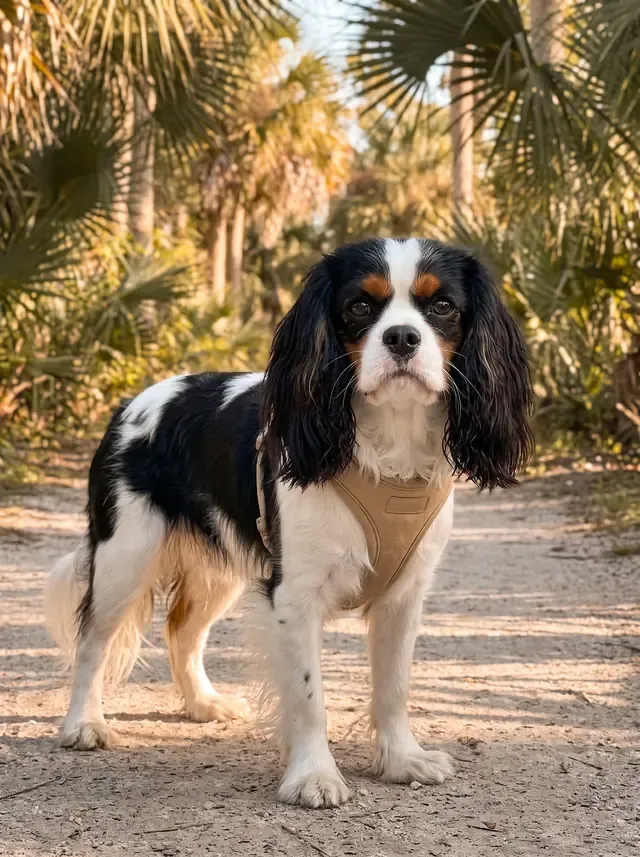
Cavalier King Charles Spaniel in Dubai, a tricolour adult in a soft harness on a palm-lined walk

At home

Why does my Cavalier scratch at their neck?

Scratching at the neck or an ear on walks, often without touching the skin, or flinching when you touch their head.

What's going onIn Cavaliers it can be Syringomyelia (fluid-filled pockets in the spinal cord). It is painful, and the pain can be managed. Only an MRI scan can confirm it, so tell your vet. Walk them on a harness rather than a collar, so nothing presses on their neck.

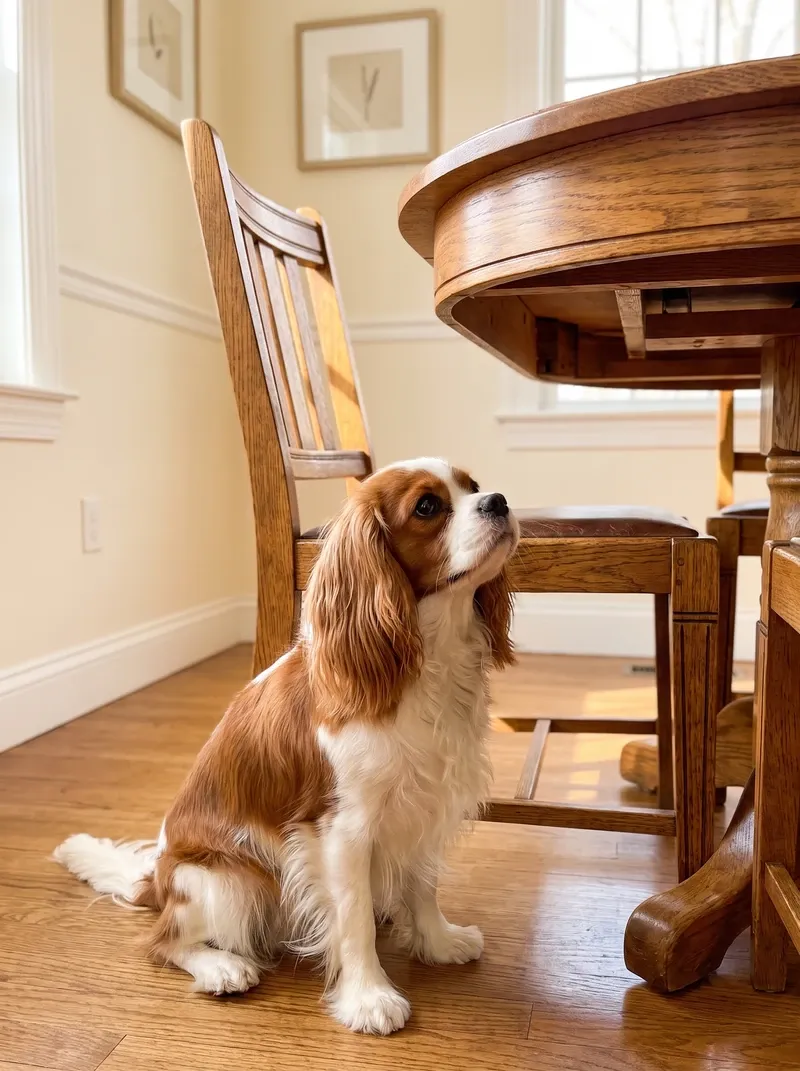
Cavalier King Charles Spaniel, a Blenheim adult sitting by a dining chair, looking up at the table

At home

Why does my Cavalier beg at the table?

Sitting by your plate all evening with those big, dark eyes.

What's going onLap dogs were fed by hand for centuries, and the habit stuck. Extra weight speeds up heart disease in Cavaliers, so weigh their food and show the affection with a game or a walk instead.

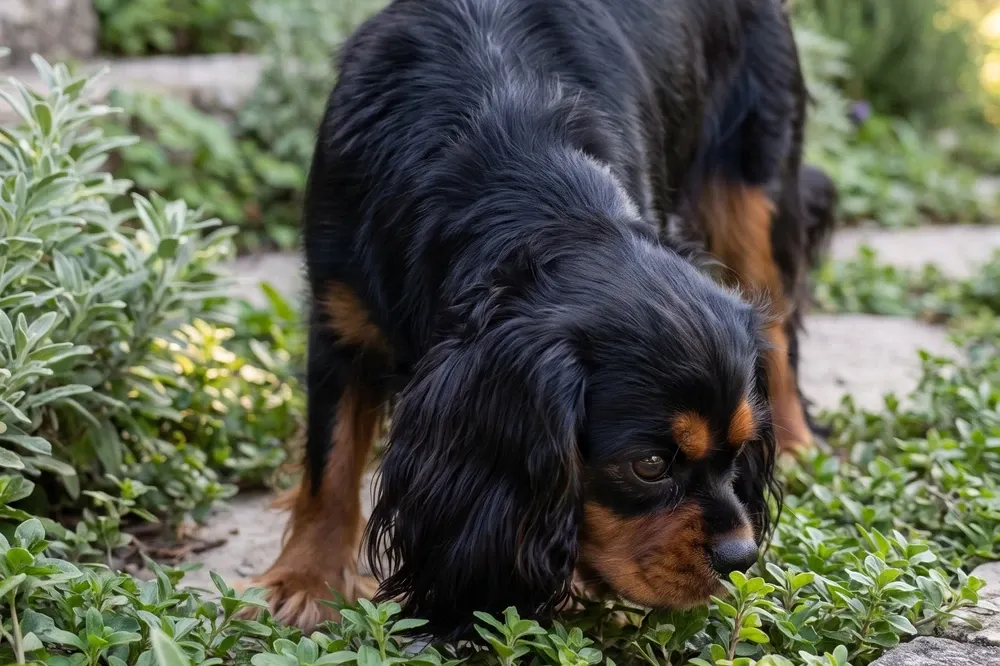
Cavalier King Charles Spaniel, a black and tan adult sniffing a flowering shrub in a garden

At home

Why does my Cavalier sniff everything?

Nose down on every walk, and a sudden, keen interest in the pigeons and the building's cats.

What's going onThe Cavalier came from hunting spaniels, and many still love a good sniff. Give them time to follow their nose on walks, and keep them on the lead near roads until their recall is solid.

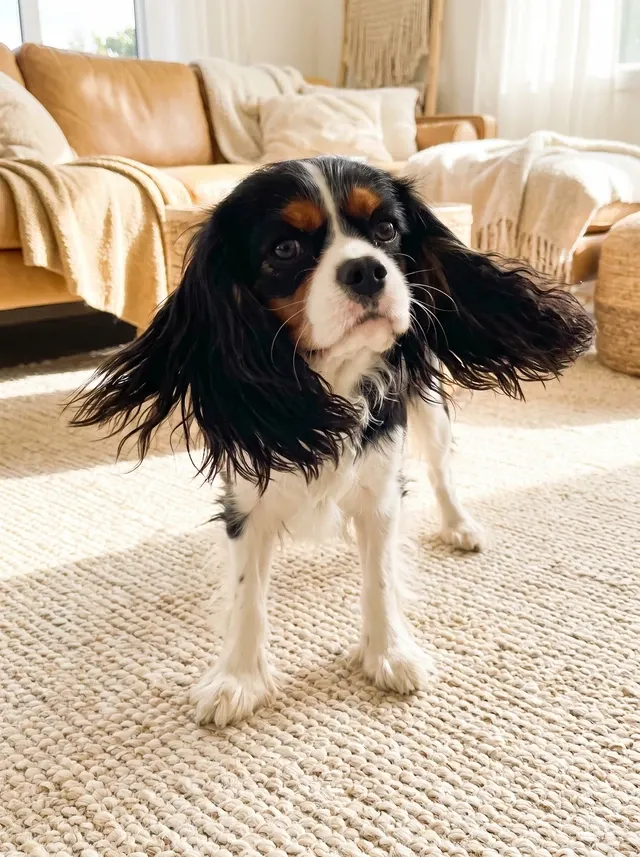
Cavalier King Charles Spaniel, a tricolour adult mid head shake on a woven rug, long ears flying

At home

Why does my Cavalier shake their head?

Head shaking, scratching at one ear, or a warm, damp smell from under those long ears.

What's going onLong, heavy ears trap warmth and moisture, and ear infections are on their record from puppyhood. Clean them monthly with the solution your vet gives you, and have a look inside every week.

A Cavalier in Dubai

The bit nobody tells you.

Their day

Built for: The whole day on a lap, next to one person.

In Dubai: Often the working day alone in a flat.

Their food

Built for: Fed from the hand, at the table.

In Dubai: A share of every plate, because they are so easy to love.

Their body

Built for: Small enough to be carried everywhere.

In Dubai: A heart and a neck that need watching from the first year.

Missing you and the extra weight mostly come from that gap.

You cannot be home all day. You can make the time apart easier and keep their heart in view, and the ten things below show you how.

Your plan is built around their breed: the risks on a Cavalier King Charles Spaniel's record at every age, and the care that goes with each one.

Join the founding families. AED 1,999 of essential care for AED 199.

Daily care for a Cavalier

Ten things that make their life better.

Many of them are free, and most matter at every age.

  1. They were bred to be with you. Time alone is a skill, and it is easiest to learn as a puppy.

    Every age, most of all in the first six months

    Free

    Why

    They were bred to be with you. Time alone is a skill, and it is easiest to learn as a puppy.

    What to do

    From the first week, leave them in a safe room with a chew for a few minutes while you are home, then a little longer. Come and go without a fuss, and go back a step if they cry.

  2. Separation distress is common in lap dogs, and it is treatable. Home fixes can make it worse.

    Every age. A move, a new job or a new baby can set it off

    Free

    Why

    Separation distress is common in lap dogs, and it is treatable. Home fixes can make it worse.

    What to do

    Film them for twenty minutes after you leave. If you see howling, pacing, scratching at the door or accidents, do not punish it and do not buy an anti-bark device. Show the film to your vet.

  3. Extra weight speeds up heart disease in Cavaliers.

    Every age, most of all after neutering and from 4 years

    Under AED 100, once, for kitchen scalesIn your plan

    Why

    Extra weight speeds up heart disease in Cavaliers.

    What to do

    Weigh their daily food on kitchen scales and take treats out of that amount. When they ask at the table, answer with a game or a brush rather than a bite. A Body Condition Score (a check on whether they are the right weight) is in your plan from their puppy visits.

  4. Hip Dysplasia (HD, a poorly fitting hip joint) is on their record from puppy to young adult, and arthritis as a senior.

    Every age, with the hip evaluation by age two

    Free to AED 500 for rugs and dog stepsIn your plan

    Why

    Hip Dysplasia (HD, a poorly fitting hip joint) is on their record from puppy to young adult, and arthritis as a senior.

    What to do

    Give them steps up to the sofa and bed, and put rugs down on marble. Lift them with one hand under the chest and one under the back end, and book their hip evaluation by age two.

  5. Syringomyelia (fluid-filled pockets in the spinal cord) can make their neck painful, and a collar presses right there.

    Every age

    Under AED 150

    Why

    Syringomyelia (fluid-filled pockets in the spinal cord) can make their neck painful, and a collar presses right there.

    What to do

    Clip the lead to a well-fitted harness, and keep the collar for their ID tag only. Get them used to the harness indoors, with treats, and refit it as they grow.

  6. Baby teeth that stay put and crowding are on their record as a puppy.

    Every age, starting in puppyhood

    Under AED 100 for a toothbrush and dog toothpasteIn your plan

    Why

    Baby teeth that stay put and crowding are on their record as a puppy.

    What to do

    Brush daily with a dog toothpaste, a few seconds at first. Once a week, lift their lip and look for red gums or a loose tooth. A dental evaluation (teeth and gum check) is in your plan at their puppy visits.

  7. Ear infections are on their record from puppyhood to prime adult, and that silky coat knots behind the ears.

    Every age, most of all from 2 to 7 years

    Under AED 150 a year for ear cleanerIn your plan

    Why

    Ear infections are on their record from puppyhood to prime adult, and that silky coat knots behind the ears.

    What to do

    Handle their ears every day while they are small, with a reward. Brush their coat and feathered ears several times a week. Clean the ears once a month with the solution your vet gives you, and look inside every week. Monthly ear cleaning is in your plan from age two to seven.

  8. A Cavalier carried past everything never learns what is safe, and the spaniel in them loves to follow a smell.

    Every age, most of all in the first six months

    Free

    Why

    A Cavalier carried past everything never learns what is safe, and the spaniel in them loves to follow a smell.

    What to do

    Walk them on their own feet, let them sniff, and let them meet calm dogs. If they are worried, give them more space instead of scooping them up.

  9. Heat and excitement are hard on the heart, and the heart is this breed's biggest risk.

    Every age, most of all puppies and from 7 years

    Free

    Why

    Heat and excitement are hard on the heart, and the heart is this breed's biggest risk.

    What to do

    From May to September, walk before sunrise and after dark. Put the back of your hand on the pavement for five seconds: if you cannot keep it there, they cannot walk on it. Keep summer walks short and carry water.

  10. You see them every day, so you are the first to notice a change in their breathing, a new cough or tiring early.

    Every age, weekly

    Free

    Why

    You see them every day, so you are the first to notice a change in their breathing, a new cough or tiring early.

    What to do

    Once a week, run your hands over them and look in their ears and eyes. Faster breathing while they sleep, or a new cough, means call your vet.

Four of these are in your plan. The rest you can do at home.

Join the founding families. AED 1,999 of essential care for AED 199.

Cavalier health by age

Their health, at every age.

In a Cavalier, the heart leads their care from the first year. Choose their age to see what to watch for, and the care that goes with it.

Cavalier King Charles Spaniel, an older tricolour dog resting on a soft cushioned bed

How old are they?

Their age

Cavalier Puppy health

the first six months

What to watch for

  1. Congenital murmur or early cardiac abnormality related to Mitral Valve Disease (MVD, a leaky heart valve), Early Onset
  2. Congenital or early inherited ocular disease related to Eye Conditions: Cataracts (cloudy lenses) and Retinal Dysplasia (a malformed retina)
  3. Developmental or early clinical signs of Hip Dysplasia (HD, poorly fitting hip joint)
  4. Juvenile onset of ear infections
  5. Retained deciduous teeth (baby teeth that stay put), malocclusion (teeth that do not meet properly) or early dental crowding

The care that goes with it

  1. Core vaccinations, microchip and Dubai Municipality registration
  2. Deworming, and flea and tick prevention
  3. Body Condition Score (a check on whether they are the right weight), dental, growth and nutritional evaluation, and early socialisation
  4. Baseline heart screening for Mitral Valve Disease (MVD, a leaky heart valve)
  5. Baseline ophthalmic evaluation (eye exam) at the puppy visits
  6. Baseline orthopaedic evaluation (joint and bone exam) at the puppy visits
The full care detail
  • Core vaccination programme, microchipping and Dubai Municipality registration. Titre testing discussion where clinically appropriate; not a substitute for completing the core vaccine series
  • Deworming and external parasite prevention tailored to Dubai exposure
  • Body Condition Score (BCS), Muscle Condition Score (MCS), dental, growth and nutritional evaluation, and early socialisation
  • Baseline screening focused on Mitral Valve Disease (MVD), Early Onset
  • Baseline ophthalmic and orthopaedic evaluation at the puppy visits

Their age

Cavalier Juvenile health

6 months to 2 years

What to watch for

  1. Early clinical or screening evidence of Mitral Valve Disease (MVD, a leaky heart valve), Early Onset
  2. Young-dog presentation of Syringomyelia / Chiari-Like Malformation (fluid-filled pockets in the spinal cord, with a skull too small for the back of the brain)
  3. Progression or first clinical detection of Eye Conditions: Cataracts (cloudy lenses) and Retinal Dysplasia (a malformed retina)
  4. Emerging Hip Dysplasia (HD, poorly fitting hip joint) with exercise intolerance or lameness
  5. Recurrent or persistent ear infections

The care that goes with it

  1. Cardiac screening every year from age one, with auscultation (listening to the chest), and an echocardiogram (an ultrasound scan of the heart) by two and a half
  2. MRI screening (a detailed scan) for Syringomyelia if they scratch at their neck or are sensitive around the head
  3. Neutering or spaying, timed for a small breed
  4. Ophthalmic evaluation (eye exam) every year from age one, by a specialist eye vet
  5. Eye trouble that keeps coming back investigated, not just treated again
The full care detail
  • Cardiac screening from age 1 (annual auscultation); echocardiogram by age 2.5 per breed health protocol
  • MRI screening for Syringomyelia/Chiari-Like Malformation if scratching at neck or head sensitivity observed
  • Neuter/spay timing discussion that accounts for small-breed growth and disease risk
  • Annual ophthalmic evaluation by a certified ophthalmologist from age 1
  • Investigate recurrent signs rather than repeatedly treating presumed Eye Conditions (Cataracts, Retinal Dysplasia)

Their age

Cavalier Young Adult health

2 to 4 years

What to watch for

  1. Mitral Valve Disease (MVD, a leaky heart valve), Early Onset
  2. Syringomyelia / Chiari-Like Malformation (fluid-filled pockets in the spinal cord)
  3. Eye Conditions: Cataracts (cloudy lenses) and Retinal Dysplasia (a malformed retina)
  4. Hip Dysplasia (HD, poorly fitting hip joint)
  5. Ear Infections

The care that goes with it

  1. Cardiac screening every year, with auscultation (listening to the chest), and an echocardiogram (an ultrasound scan of the heart) by two and a half
  2. MRI screening (a detailed scan) for Syringomyelia if they scratch at their neck or are sensitive around the head
  3. Ophthalmic evaluation (eye exam) every year, by a specialist eye vet
  4. Hip evaluation by age two, to find Hip Dysplasia early
  5. Ear cleaning every month with a veterinary ear cleaner, and a look for ear polyps
The full care detail
  • Cardiac screening from age 1 (annual auscultation); echocardiogram by age 2.5 per breed health protocol
  • MRI screening for Syringomyelia/Chiari-Like Malformation if scratching at neck or head sensitivity observed
  • Annual ophthalmic evaluation by a certified ophthalmologist from age 1
  • Hip evaluation (PennHIP or OFA) by age 2 to detect early Hip Dysplasia (HD)
  • Monthly ear cleaning with veterinary solution; check for ear polyps in this floppy-eared breed

Their age

Cavalier Prime Adult health

4 to 7 years

What to watch for

  1. Mitral Valve Disease (MVD, a leaky heart valve), Progressive
  2. Syringomyelia (fluid-filled pockets in the spinal cord), Progressive
  3. Obesity
  4. Ear Infections (Chronic)
  5. Skin Allergies

The care that goes with it

  1. An echocardiogram (an ultrasound scan of the heart) twice a year, and heart medication started when the scans show it is time
  2. Pain relief for Syringomyelia, and surgery if it is severe
  3. Careful weight control, because extra weight speeds up heart disease in Cavaliers
  4. Monthly ear cleaning, and a skin specialist for ear trouble that will not settle
  5. Finding and managing what they are allergic to, around them or in their food
The full care detail
  • Bi-annual echocardiogram; begin Pimobendan when indicated (ACVIM guidelines: Stage B2)
  • Pain management for Syringomyelia: gabapentin, NSAIDs, or surgical decompression if severe
  • Strict weight management: obesity accelerates cardiac disease progression significantly in Cavaliers
  • Monthly ear cleaning; consider referral to dermatologist for chronic otitis management
  • Allergen identification and management; Cavaliers are prone to environmental and food allergies

Their age

Cavalier Senior health

7 to 10 years

What to watch for

  1. Congestive Heart Failure (the heart no longer keeping up), Early
  2. Syringomyelia, Advanced
  3. Kidney Disease
  4. Arthritis
  5. Cognitive Dysfunction Syndrome (dementia in older pets)

The care that goes with it

  1. Heart medication as the cardiologist (heart specialist) directs
  2. Stronger pain relief for Syringomyelia, and an MRI (a detailed scan) to follow its progress
  3. A renal panel (kidney blood tests) twice a year, and a senior diet lower in salt and phosphorus
  4. Joint supplements and gentle physiotherapy, kept easy on the heart
  5. Brain games and a steady routine to slow cognitive decline
The full care detail
  • Full cardiac medication protocol: Pimobendan, ACE inhibitors, diuretics as directed by cardiologist
  • Advanced pain management for Syringomyelia; MRI to assess progression and guide surgical decisions
  • Bi-annual renal panel; transition to low-sodium, phosphorus-controlled senior diet
  • Joint supplements and gentle physiotherapy to maintain mobility without cardiac stress
  • Cognitive enrichment and consistent routine to slow cognitive dysfunction progression

Their age

Cavalier Geriatric health

10 years and over

What to watch for

  1. Congestive Heart Failure (the heart no longer keeping up), Advanced
  2. Chronic Kidney Disease (CKD, long-term kidney failure)
  3. Severe Syringomyelia / Neurological Decline
  4. Cognitive Dysfunction Syndrome (dementia in older pets), Advanced
  5. Cancer

The care that goes with it

  1. Fluids at home for the kidneys if prescribed, with appetite and drinking watched every day
  2. A calm, familiar home, and gentle time together every day
  3. Quality-of-life assessments
  4. Palliative care (comfort care) planned around them
  5. End-of-life planning with your veterinary team
The full care detail
  • Home fluid therapy for kidney support if prescribed; monitor appetite and hydration daily
  • Maintain calm, familiar environment; gentle daily interaction to support emotional wellbeing
  • Quality-of-life assessments
  • Tailored palliative and comfort-focused care plan
  • Compassionate end-of-life planning with your veterinary team

Breed predispositions indicate an increased risk rather than certainty of disease. What is right for them always comes from their own history and an evaluation.

Getting a Cavalier puppy in Dubai

Before they come home.

Cavalier King Charles Spaniel, a Blenheim puppy sitting on a cream blanket on the sofa

Cavalier or King Charles

Types of King Charles dogs

Two breeds carry the King's name. The Cavalier King Charles Spaniel has the longer nose and flatter head of the old court paintings. The King Charles Spaniel, called the English Toy Spaniel in the US, has a shorter face and a domed head. They have been separate breeds since 1945, so check which one you are meeting.

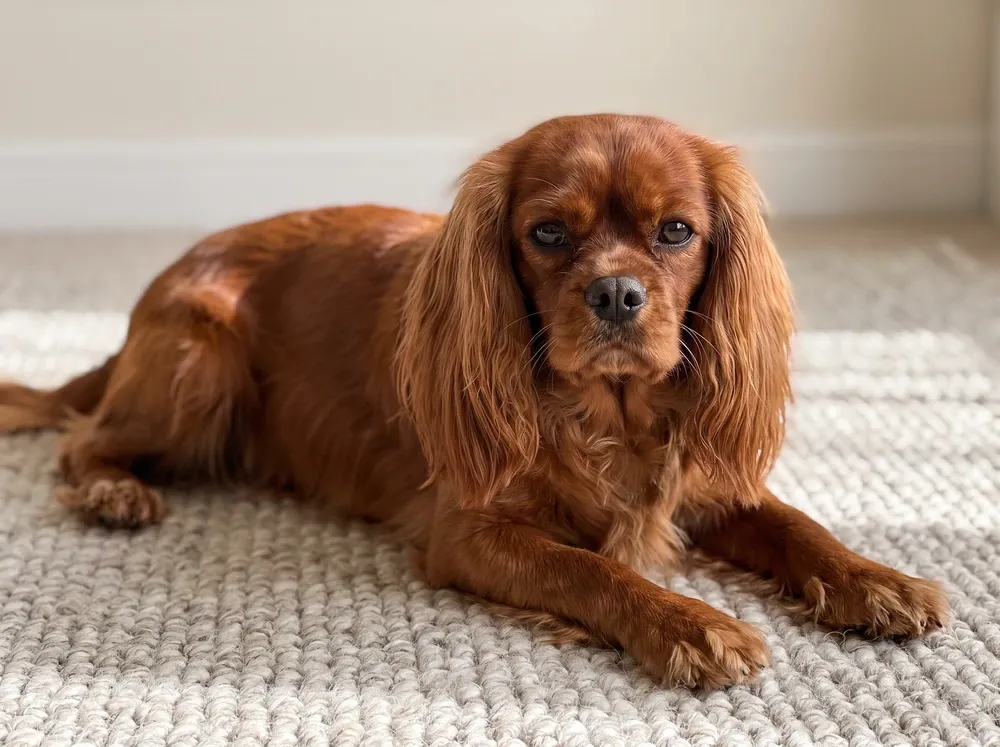
Cavalier King Charles Spaniel, a ruby adult, red all over, lying on a stone-coloured rug

Colours

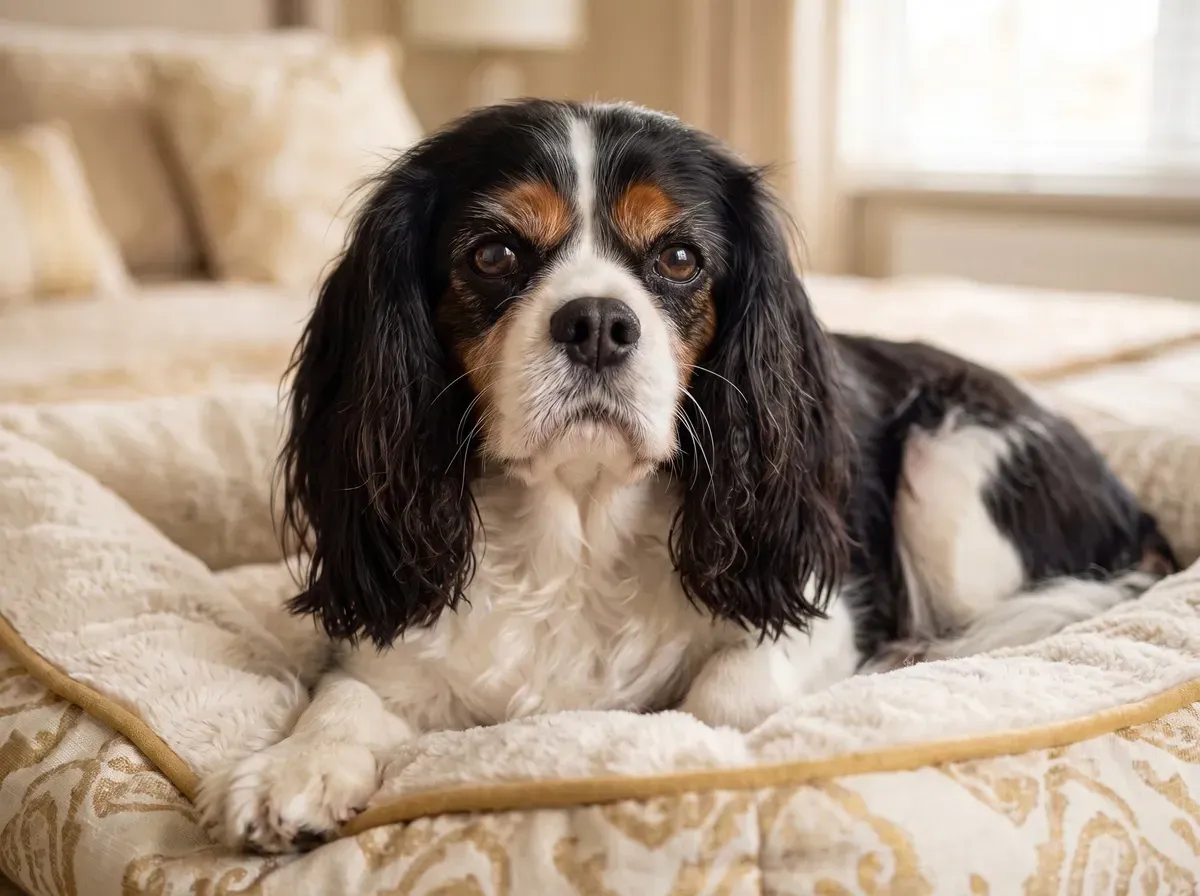
Blenheim, tricolour, ruby, and black and tan

Cavaliers come in four lovely shades. Blenheim is rich chestnut on pearly white, often with a small chestnut spot on the top of the head. Tricolour is black and white with tan over the eyes. Ruby is a deep red all over, and black and tan is glossy black with warm tan points.

Cavalier King Charles Spaniel, a black and tan adult asleep against a pet parent on the sofa

The first six months

Caring for King Charles Cavalier puppies

Vaccinations, microchip and Dubai Municipality registration come first, with a baseline heart screening and their first eye and joint evaluations. Start short spells alone from the first week, and let them get used to a harness indoors.

Puppy health, 0 to 6 months
Cavalier King Charles Spaniel in Dubai, a tricolour adult on pet steps to a sofa, the skyline behind

Getting the home ready

Steps, a harness and a quiet corner

Dog steps up to the sofa and the bed, rugs on marble floors, a well-fitted harness, kitchen scales for their food, and a safe room with a chew for the times you go out.

Ten things that make their life better
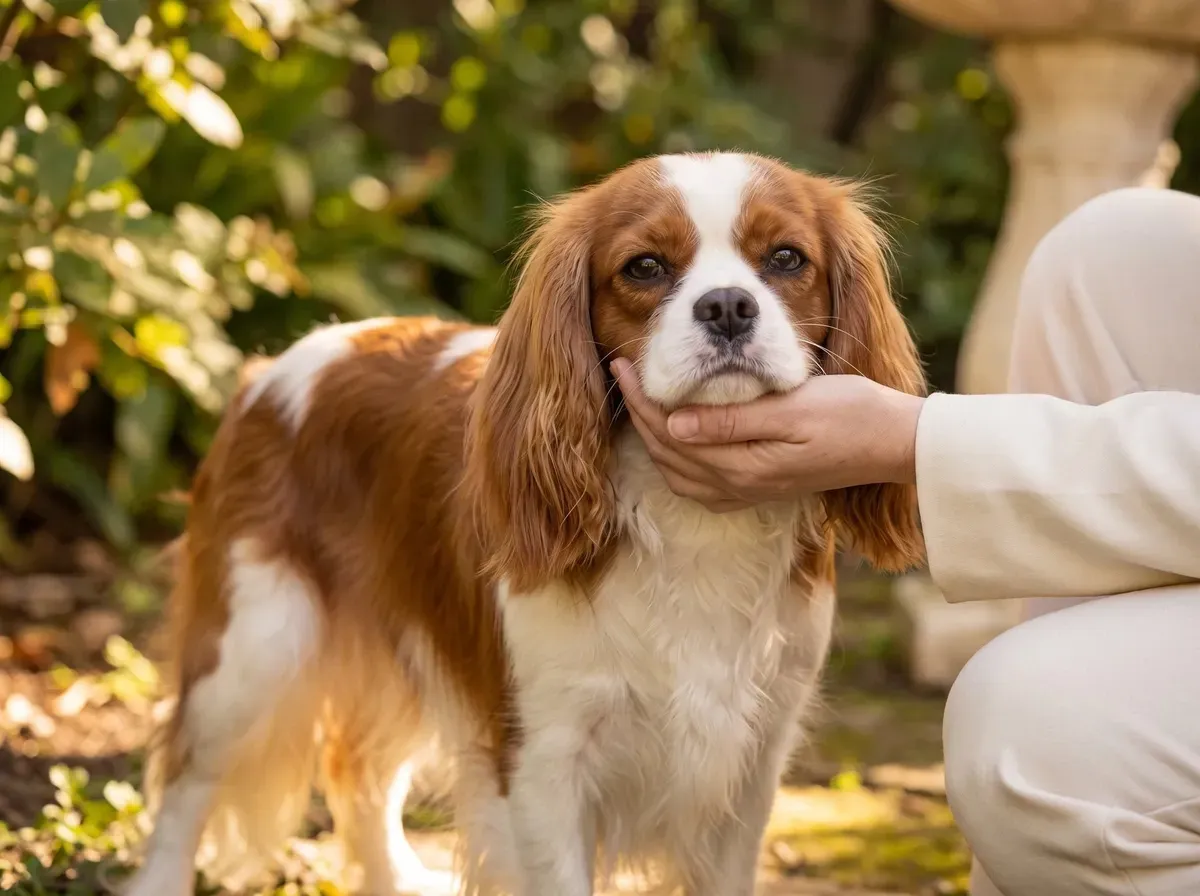
Cavalier King Charles Spaniel, a Blenheim adult in a garden, a kneeling pet parent's hand under the chin

Before you commit

Plan for their heart

Every Cavalier needs their heart looked after for life: cardiac screening every year from age one, an echocardiogram by two and a half, and one every six months in their prime. Knowing that before they come home means nothing about their care is a surprise. Ask the breeder whether both parents have had their hearts screened and an MRI scan for Syringomyelia (fluid-filled pockets in the spinal cord), and ask to see the results.

Their health, at every age
The reception of a Paws & Co clinic, with long cream benches and a stone reception desk

Before the clinics open

Join the founding families

AED 1,999 of essential care for AED 199. No payment now.

When to see a vet

When it is not behaviour.

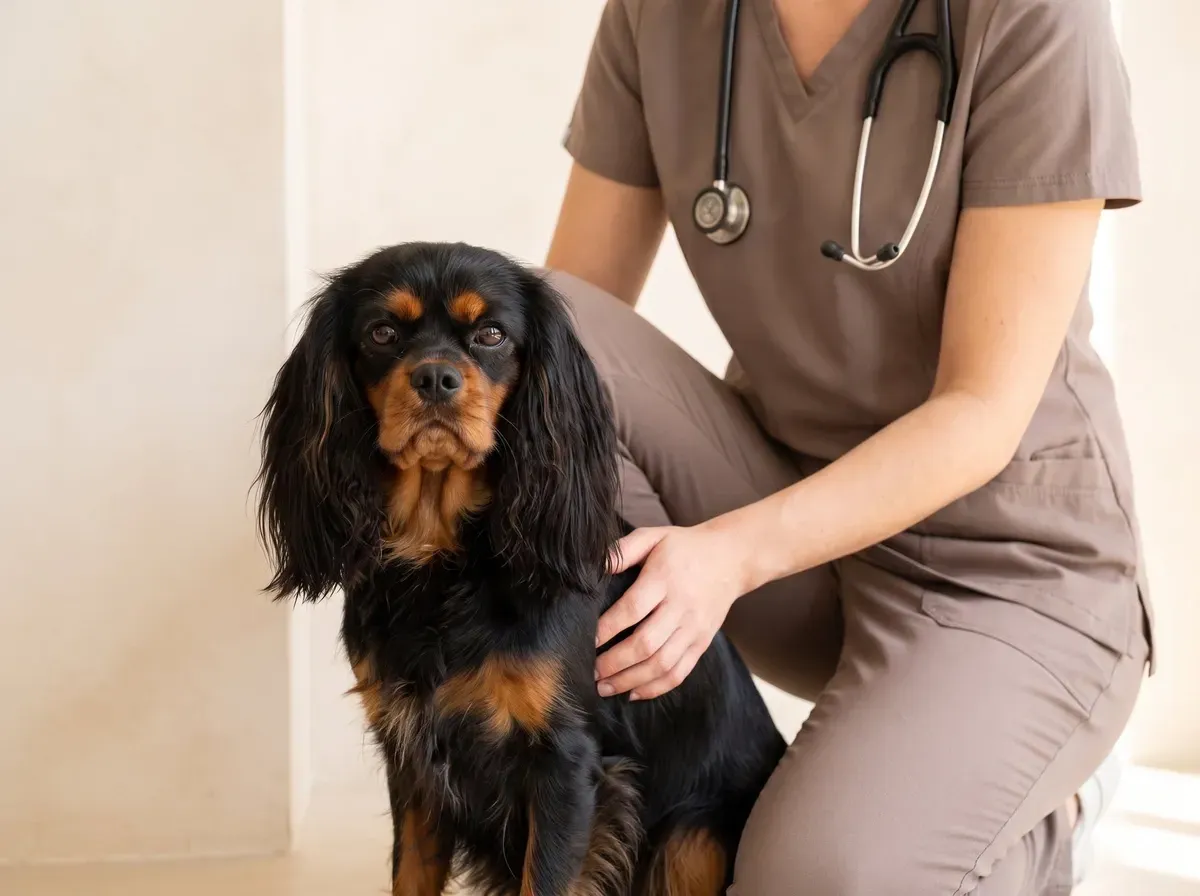
Cavalier King Charles Spaniel, a black and tan adult beside a kneeling vet in taupe scrubs

Some of this is not a training problem, and treating it like one wastes time your dog may not have. If they are distressed when you leave, if they growl or guard their food, their toys or you, if they are frightened on the lead, or if anything about them changes suddenly at any age, contact your vet the same day. A tip from a website, ours included, is not the answer. If it cannot wait, contact your nearest emergency vet now.

With a Cavalier, watch their breathing and their neck. Faster breathing while they sleep, a cough, tiring early on walks or fainting can all be the heart. Scratching at the neck or ear, yelping when the head is touched, or not wanting a collar on can be Syringomyelia (fluid-filled pockets in the spinal cord). In an older Cavalier, pacing or staring at night can be the start of Cognitive Dysfunction Syndrome (dementia in older pets). Bloat (GDV, a twisted stomach) can happen in any dog, though it is most common in large, deep-chested breeds. A swollen, tight belly, retching with nothing coming up, sudden restlessness or drooling is an emergency: contact your vet now. It is easy to put the rest down to habit or age, and that can cost months.

They'll keep your lap. If their breathing changes while they sleep on it, call your vet.

Cavalier history

Before they were yours.

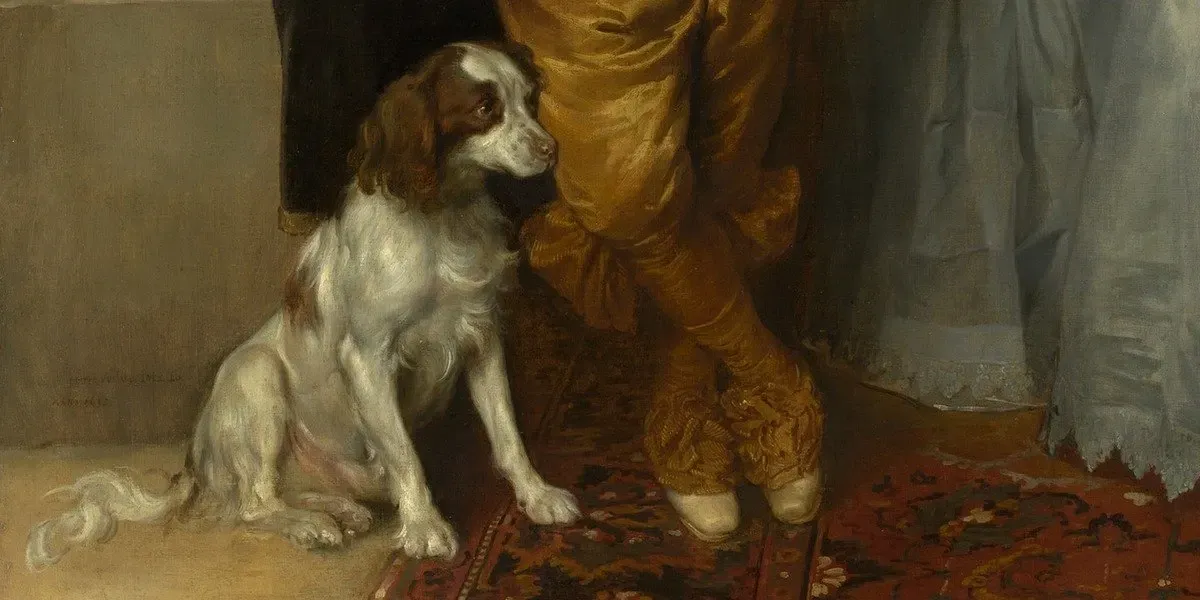
  1. Cavalier King Charles Spaniel history, a red and white spaniel at the feet of Charles I's children, 1635
    The Three Eldest Children of Charles I, Anthony van Dyck, 1635. Royal Collection.

    1500s to 1700s

    Spaniels at court

    Small spaniels kept the English court company for centuries. Charles II, king from 1660 to 1685, was so fond of these little dogs that the breed still carries his name.

    What they still carryA whole life's work of being near a person.

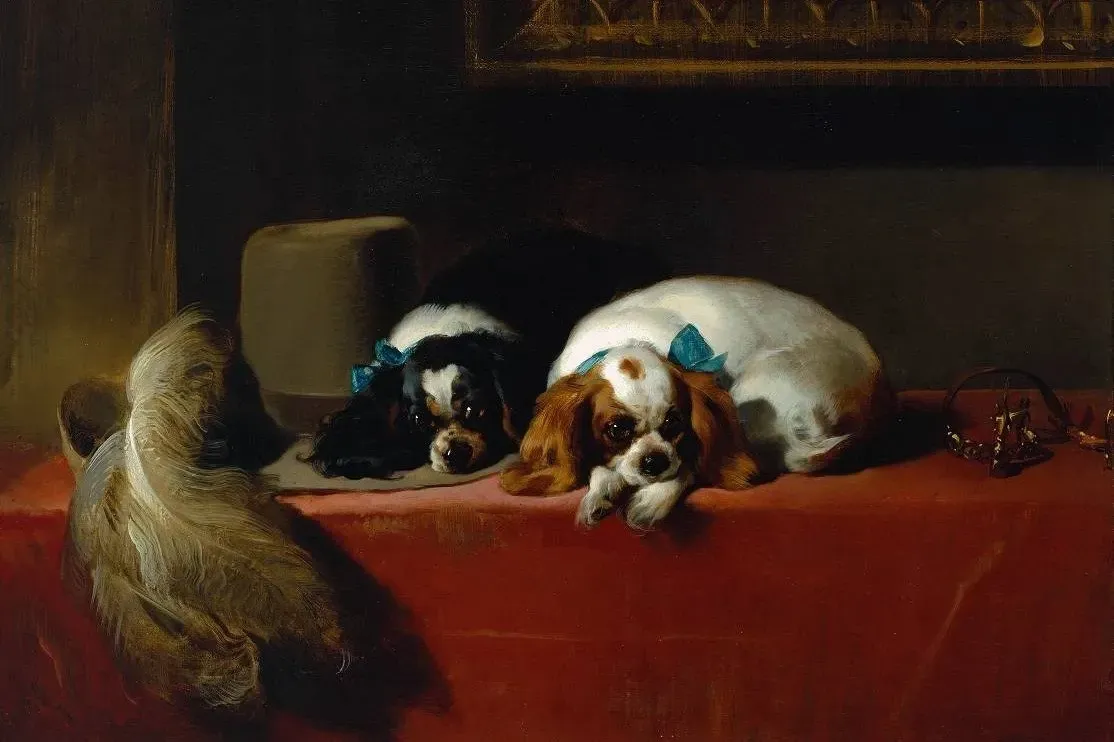
  2. Cavalier King Charles Spaniel history, two toy spaniels on a red cloth, Edwin Landseer, 1845
    King Charles Spaniels ('The Cavalier's Pets'), Edwin Landseer, 1845. Tate.

    The 1800s

    A shorter face

    Fashion bred the toy spaniel a shorter face and a domed head, and the longer-nosed type almost disappeared. The red and white dogs at Blenheim Palace gave the Blenheim colour its name.

    What they still carryThe chestnut and white Blenheim coat.

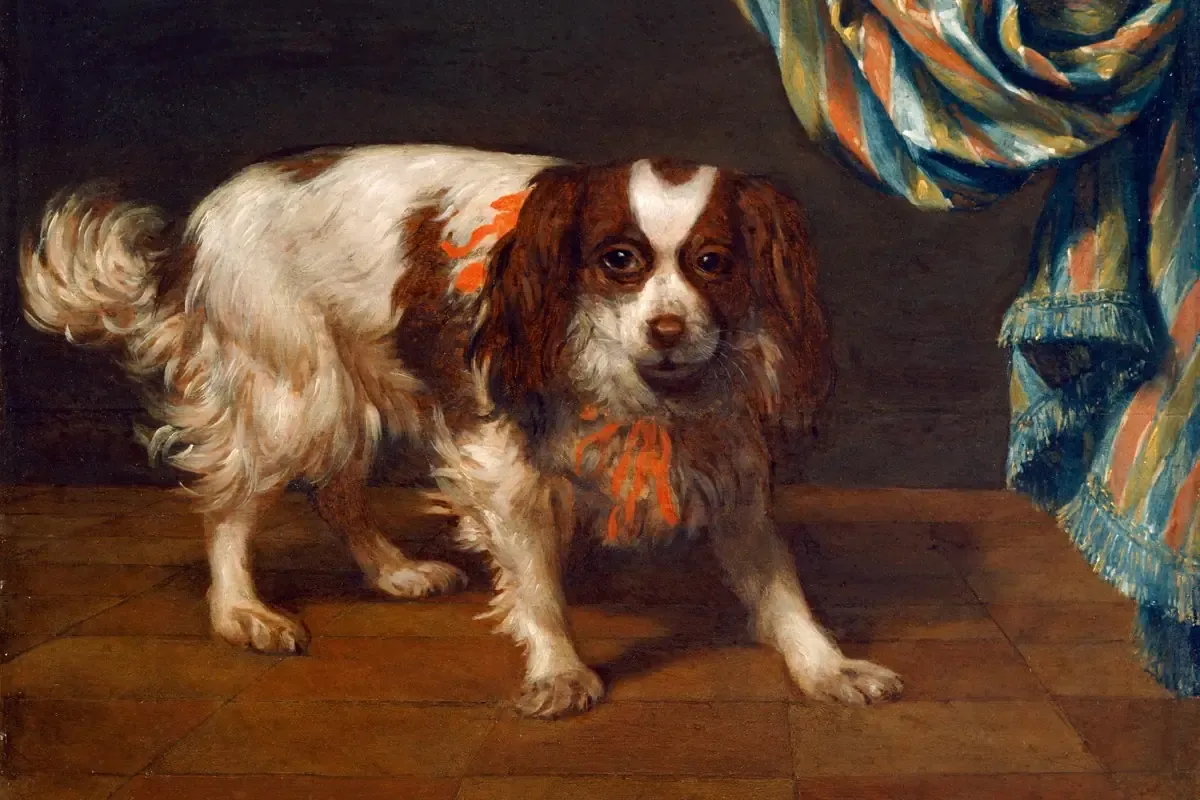
  3. Cavalier King Charles Spaniel history, a toy spaniel with the older, longer nose, painted in 1665
    A King Charles Spaniel with the older, longer nose. Gysbrecht van der Kuyl, 1665. English Heritage, Marble Hill.

    1926 to 1928

    A prize for the old type

    An American, Roswell Eldridge, offered prize money at Crufts for spaniels like those in the old paintings. In 1928 a dog called Ann's Son won, and the breed club was founded the same year.

    What they still carryThe longer nose and flatter head of the court paintings.

  4. Cavalier King Charles Spaniel history, a black and tan adult sniffing along a garden border

    1945

    A breed of their own

    The Kennel Club recognised the Cavalier as a separate breed in 1945. The American Kennel Club followed in 1995.

    What they still carryA name of their own, apart from the King Charles Spaniel.

  5. Cavalier King Charles Spaniel history, the breed today, a tricolour adult on a lawn in soft light

    Today

    In Dubai

    In the UAE a Cavalier is a family dog in a flat or a villa, often while their people are out at work.

    What they still carryA wish to spend the whole day on a lap.

Cavalier questions

The ones you type at midnight.

Most of these get asked late at night, by someone watching their dog and not sure what they are seeing.

Cavalier King Charles Spaniel in Dubai, a Blenheim adult asleep against a pet parent at night, Burj Khalifa behind
How long do Cavalier King Charles Spaniels live?

Cavalier King Charles Spaniels usually live 9 to 14 years. In a large UK study of more than 13,000 Cavaliers, half lived to nearly 12.

Is a King Charles Cavalier the same as a King Charles Spaniel?

No. The Cavalier King Charles Spaniel and the King Charles Spaniel have been separate breeds since 1945. The King Charles Spaniel has a shorter face and a domed head.

How big is a full grown King Charles Cavalier?

A fully grown Cavalier King Charles Spaniel usually weighs 6 to 8 kg and stands about 30 to 33 cm at the shoulder.

Is the Cavalier King Charles Spaniel hypoallergenic?

No. Cavalier King Charles Spaniels shed lightly to moderately, and their silky coat and feathered ears need brushing several times a week.

What colours do Cavalier King Charles Spaniels come in?

Cavalier King Charles Spaniels come in four colours: Blenheim, tricolour, ruby, and black and tan. Blenheim is chestnut and white, tricolour is black, white and tan, and ruby is a deep red all over.

What heart problems do Cavaliers have?

Mitral Valve Disease (MVD, a leaky heart valve) is the first risk on a Cavalier King Charles Spaniel's health record. Their care includes cardiac screening every year from age one and an echocardiogram (an ultrasound scan of the heart) by two and a half.

Why does my Cavalier scratch at thin air by their ear?

In a Cavalier King Charles Spaniel, scratching at the neck or ear without touching the skin can be Syringomyelia (fluid-filled pockets in the spinal cord). Tell your vet: it is painful, and the pain can be managed.

Is a Cavalier King Charles Spaniel good for Dubai?

Yes, a Cavalier King Charles Spaniel can live happily in a Dubai flat. From May to September, walk before sunrise and after dark, keep summer walks short, and keep the hours alone short too.

Worried about them? Contact your vet today.