We’re hiring people who love them like we do. Join us careers@pawsandco.comSee open roles
UAE Government Licensed MOCCAE
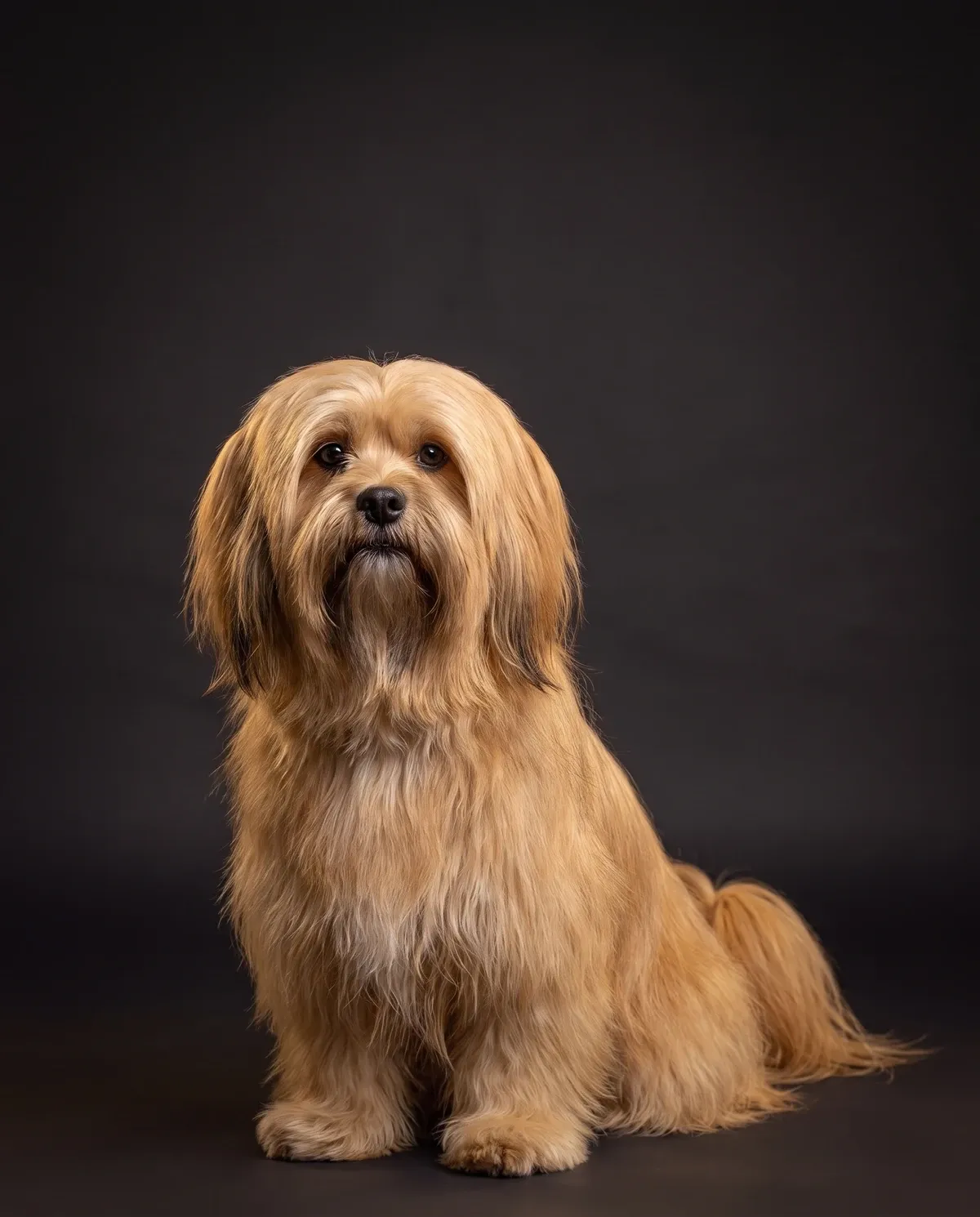
Lhasa Apso in Dubai, studio portrait of a calm honey-gold adult sitting

Breed guide  ·  Dogs

Lhasa Apso

Tibetan monks kept Lhasas to raise the alarm. I get told about every courier.

Lifespan
12 to 15 years
Size
Small
Weight
5.5 to 8 kg
Shedding
Very low

Last updated 12 October 2026

Join the founding families. AED 1,999 of essential care for AED 199.

No payment now. We'll be in touch by email and WhatsApp as we open enrolment.

✓
Thank you.

We will be in touch soon to confirm.

Lhasa traits

What they brought with them.

Tap a card to see what is going on.

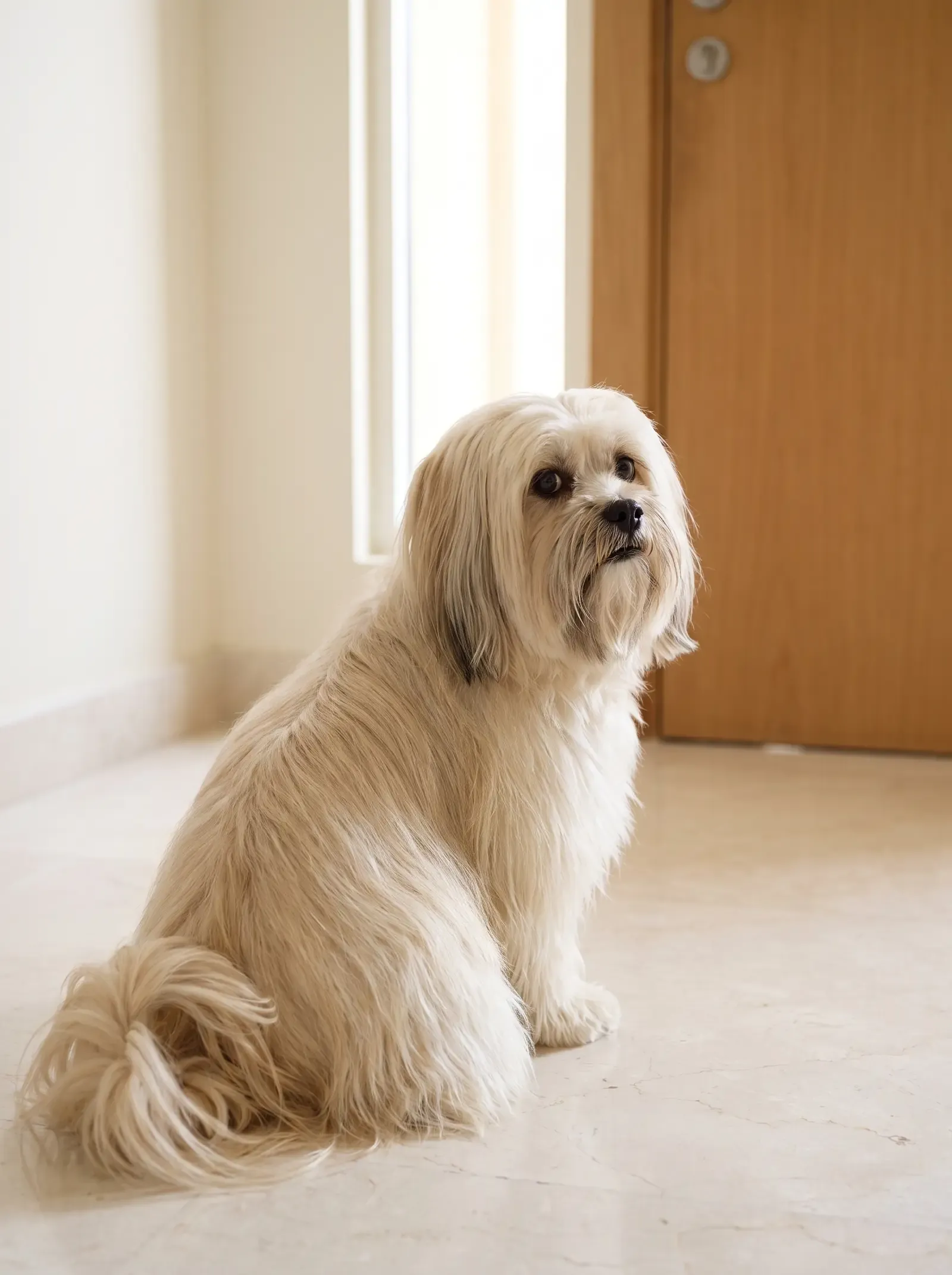
Lhasa Apso, a cream adult sitting on a marble floor in a hallway, looking towards the front door

At home

Why does my Lhasa Apso bark at every footstep?

A bark at every footstep in the corridor, every ping of the lift and every courier.

What's going onLhasas were bred to raise the alarm at strangers, and they are doing the job. Thank them for the first bark, then call them away and reward the quiet.

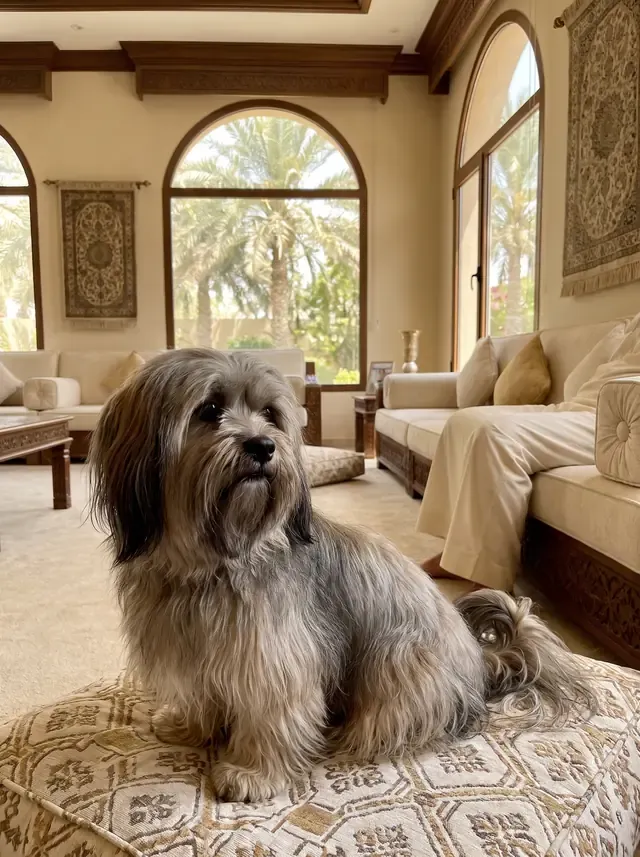
Lhasa Apso in Dubai, a grizzle adult on a floor cushion in a majlis with date palms through the arched windows

At home

Why is my Lhasa wary of strangers?

Polite with visitors at best, and slow to warm to anyone new.

What's going onThey were kept to watch for anyone who did not belong. Let visitors ignore them, and let them come over in their own time for a treat you have handed to the visitor. If they growl or snap at visitors or at their own family, tell your vet rather than trying to fix it yourself.

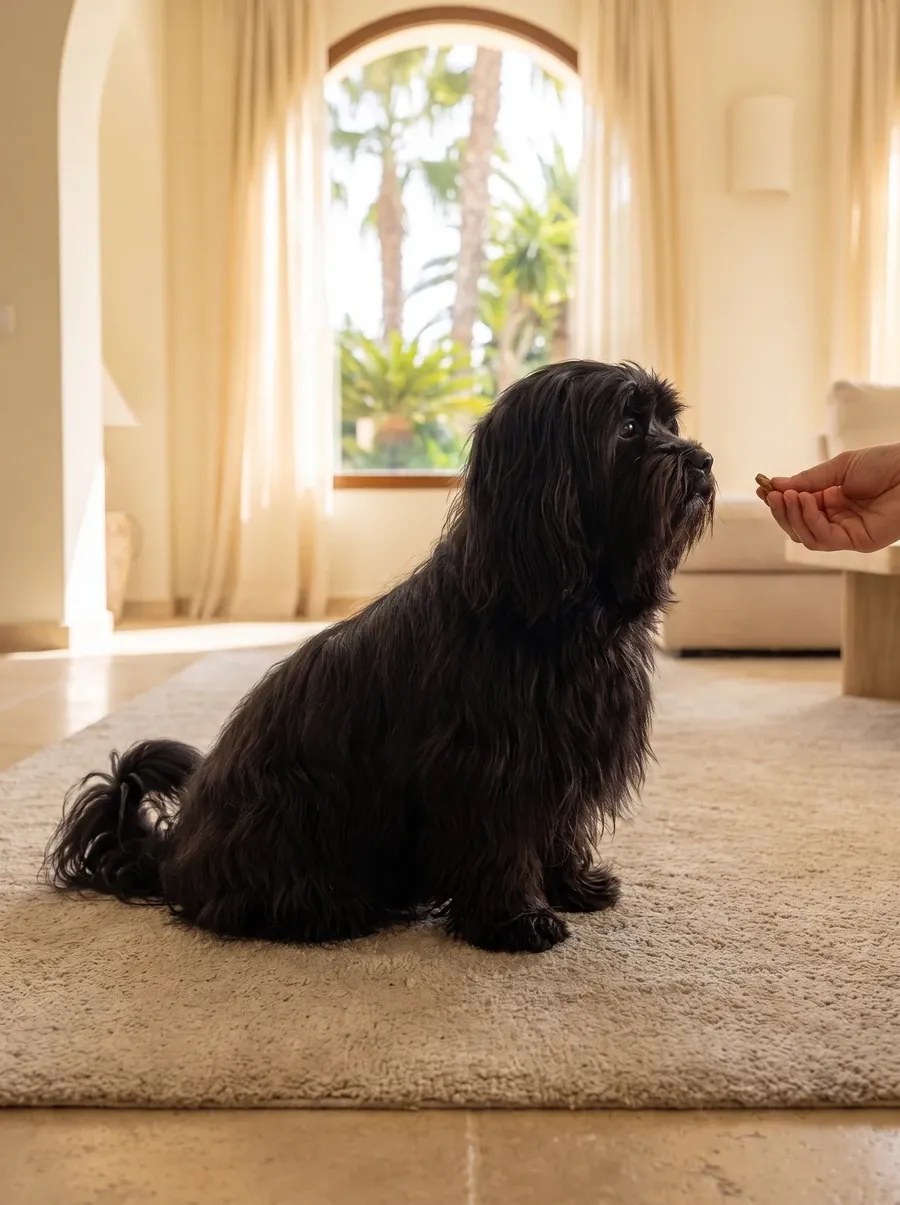
Lhasa Apso in Dubai, a black adult sitting on a rug, looking calmly at a hand holding a treat, palms behind

At home

Why won't my Lhasa Apso listen?

They come when called, when it suits them.

What's going onPleasing you is not their first thought. Keep training short, rewarding and the same from everyone in the house, and they will meet you halfway. Harsh handling makes a Lhasa dig in.

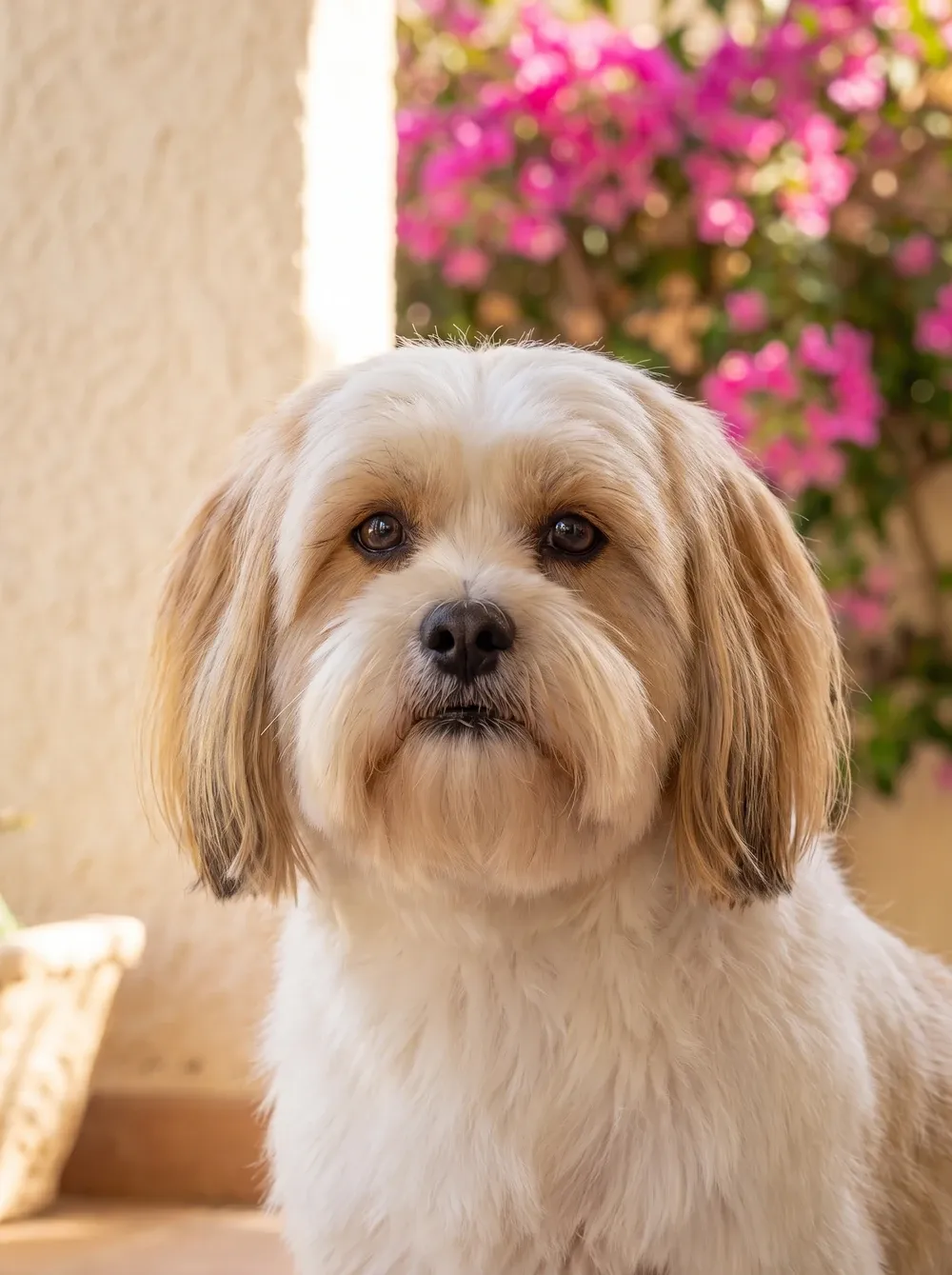
Lhasa Apso, close portrait of a white and gold adult with a trimmed fringe by pink bougainvillea

At home

Hair out of their eyes

A long fringe falling over their eyes, and a dog who peers out from underneath it.

What's going onCorneal ulcers (a sore on the surface of the eye) and extra eyelashes that rub the eye are on their health record. Keep the hair on their face trimmed away from their eyes, and for a squint, contact your vet now.

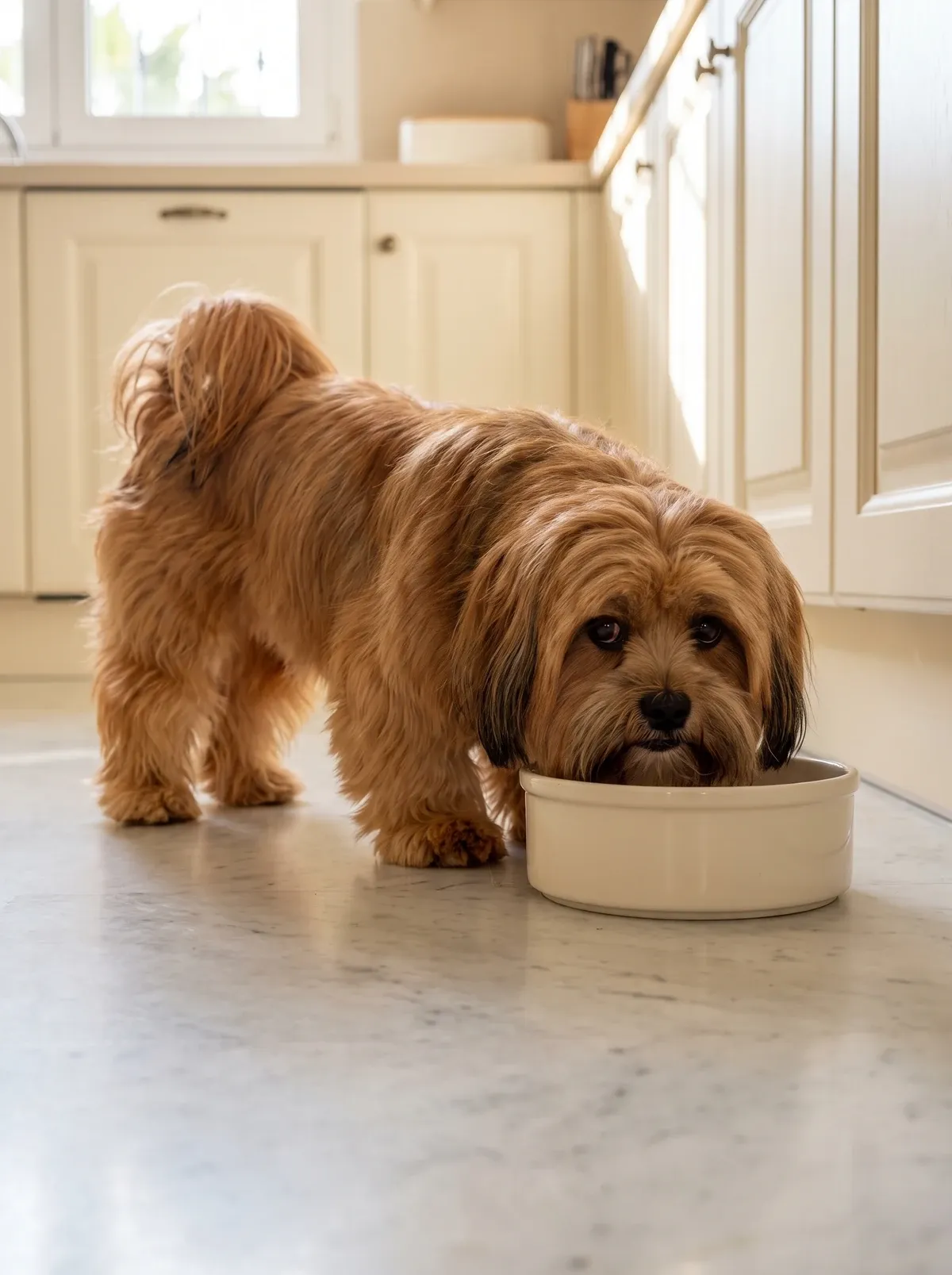
Lhasa Apso, a red-gold adult drinking from a cream ceramic bowl on a cool kitchen floor

At home

Watch the water bowl

You find yourself filling the water bowl more often than you used to.

What's going onKidney trouble is on their record from about four. If you are filling their bowl far more often than usual, tell your vet.

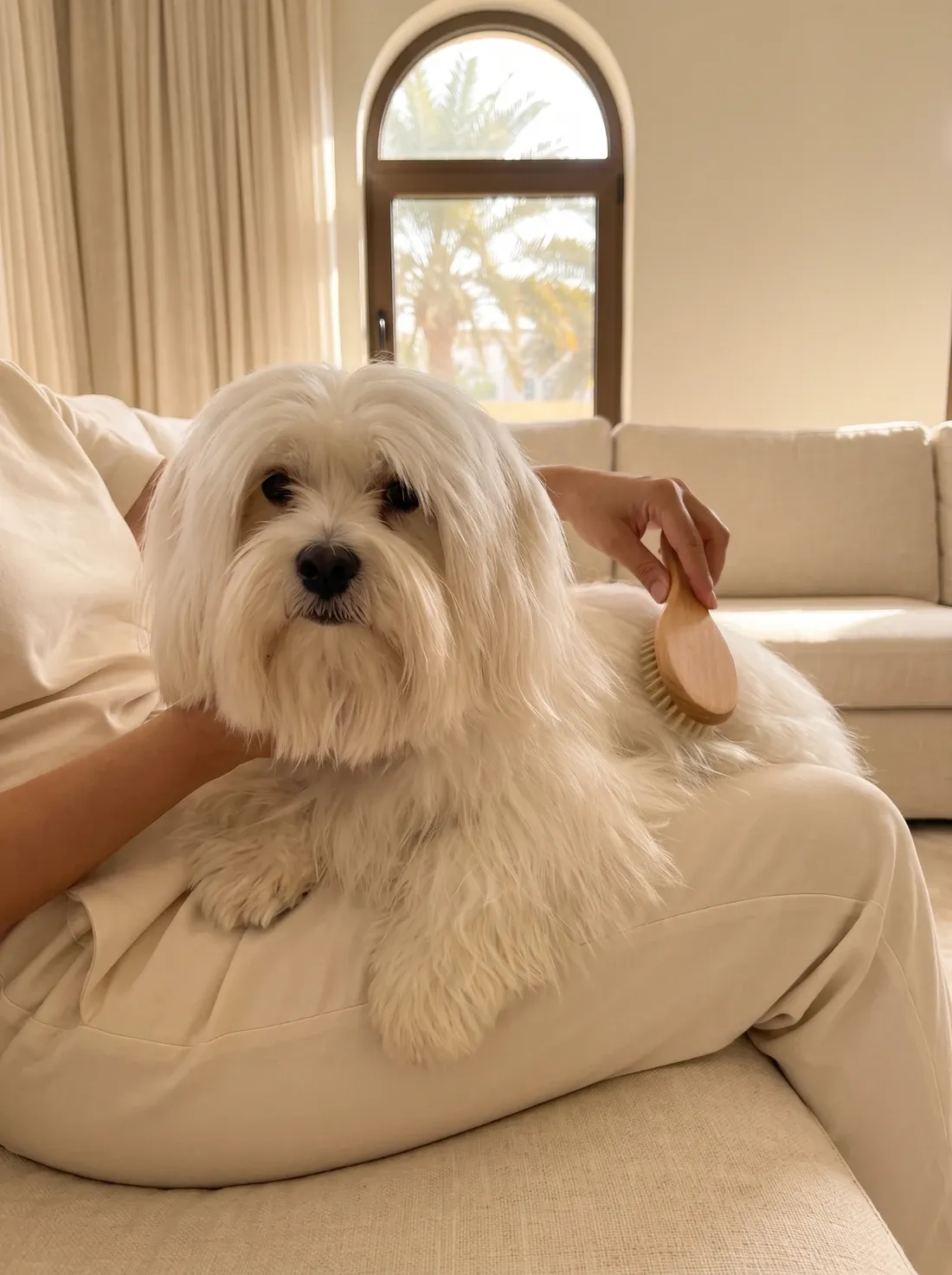
Lhasa Apso in Dubai, a white adult lying across a lap having the long coat brushed, palms through the window

At home

A coat built for Tibet

Knots behind the ears, and a dog who hides when the brush comes out.

What's going onTheir dense double coat was made for mountain cold and needs regular professional grooming here. Make handling a treat while they are small, so the groomer is easy for life.

A Lhasa in Dubai

The bit nobody tells you.

Their watch

Built for: Keeping watch inside a monastery.

In Dubai: A building where a stranger walks past the door every few minutes.

Their job

Built for: Barking at anyone who did not belong.

In Dubai: Lifts, couriers and neighbours.

Their coat

Built for: Mountain winters.

In Dubai: A Dubai summer.

The barking and the suspicion of visitors mostly come from that gap.

You cannot give them a monastery. You can give them a calm way to do their job, and the ten things below are how.

Your plan is built around their breed: the health risks for a Lhasa Apso at every age, and the care that goes with each one.

Join the founding families. AED 1,999 of essential care for AED 199.

Daily care for a Lhasa

Ten things that make their life better.

Many of them are free, and most matter at every age.

  1. They are devoted to their family. Time alone is easiest to learn as a puppy.

    Every age, most of all as a puppy

    Free

    Why

    They are devoted to their family. Time alone is easiest to learn as a puppy.

    What to do

    From their first week, leave them in a safe room with a chew for a few minutes while you are home, then a little longer. Come and go without a fuss, and go back a step if they cry.

  2. Separation distress is treatable, and home fixes can make it worse.

    Any age, and new distress in an older dog matters most

    Free

    Why

    Separation distress is treatable, and home fixes can make it worse.

    What to do

    Film them for twenty minutes after you leave. If you see howling, pacing, scratching at the door or accidents, do not punish it, and skip the anti-bark collar: it adds fear to the worry. Show the film to your vet.

  3. A lean body protects their knees, and their back is a risk from about four.

    Every age, most of all 6 months to 2 years and from 7 years

    Under AED 100, once, for kitchen scalesIn your plan

    Why

    A lean body protects their knees, and their back is a risk from about four.

    What to do

    Weigh their daily food on kitchen scales and take treats out of that amount. Reweigh after neutering. As a senior, move to the kidney-friendly diet your vet sets. A Body Condition Score (a check on whether they are the right weight) is in your plan from their puppy visits.

  4. Patellar Luxation (a slipping kneecap) is on their record as a young dog, and Intervertebral Disc Disease (IVDD, a slipped disc in the back) as a prime adult.

    Every age, most of all from 4 years

    Free to AED 500 for ramps and rugsIn your plan

    Why

    Patellar Luxation (a slipping kneecap) is on their record as a young dog, and Intervertebral Disc Disease (IVDD, a slipped disc in the back) as a prime adult.

    What to do

    Give them ramps up to the sofa and bed, and put rugs down on marble. Lift them with one hand under the chest and one under the back end, keeping their back level. Once a week, run your hands along their back, and tell your vet if they flinch. An orthopaedic evaluation (a joint and bone exam) is in your plan every year from age two to four.

  5. A harness spreads the pull across their chest instead of their neck and spine.

    Every age, start as a puppy

    Under AED 150

    Why

    A harness spreads the pull across their chest instead of their neck and spine.

    What to do

    Clip their lead to a well-fitted harness and keep their collar for the ID tag. Check the coat under the straps for knots, and refit it as they grow.

  6. Dental disease is on their health record from puppyhood, and in later years bad teeth add to kidney and heart trouble.

    Every age, start as a puppy

    Under AED 100 for a small brush and dog toothpasteIn your plan

    Why

    Dental disease is on their health record from puppyhood, and in later years bad teeth add to kidney and heart trouble.

    What to do

    Brush daily with a dog toothpaste and a small brush. Start with a few seconds and a reward, and build up. Watch for baby teeth that stay put. A professional dental clean every 6 to 12 months is in your plan from six months old.

  7. Eye trouble leads their health record, ear infections are on it from puppyhood, and that long coat knots fast.

    Every age, start as a puppy

    Under AED 150 a year for ear cleaner and eye wipesIn your plan

    Why

    Eye trouble leads their health record, ear infections are on it from puppyhood, and that long coat knots fast.

    What to do

    Brush their coat several times a week. Every day, look at their eyes and wipe round them, with a reward. Keep the hair on their face trimmed away from their eyes. Clean their ears monthly with the solution your vet gives you, and book the groomer for the full groom. An ophthalmic evaluation (eye exam) is in your plan every year from six months, and monthly ear cleaning from age two to four.

  8. They were bred to be suspicious of strangers, and forcing a meeting makes it worse.

    Every age, most of all as a puppy

    Free

    Why

    They were bred to be suspicious of strangers, and forcing a meeting makes it worse.

    What to do

    Let them walk rather than carrying them, so they meet the world at their own height. Ask visitors to ignore them, and let them approach for a treat you have handed over. Reward calm, not bravery.

  9. Their dense double coat was made for Tibet, and pavement heat reaches them before it reaches you.

    Every age, most of all puppies and from 7 years

    Free

    Why

    Their dense double coat was made for Tibet, and pavement heat reaches them before it reaches you.

    What to do

    From May to September, walk before sunrise and after dark. Put the back of your hand on the pavement for five seconds: if you cannot keep it there, they cannot walk on it. Carry water.

  10. Kidney trouble is on their health record from prime adulthood.

    Every age, most of all from 4 years

    FreeIn your plan

    Why

    Kidney trouble is on their health record from prime adulthood.

    What to do

    Notice how often you fill their bowl, and tell your vet if it changes.

Five of these are in your plan. The rest you can do at home.

Join the founding families. AED 1,999 of essential care for AED 199.

Lhasa health by age

Their health, at every age.

Three things to know by heart: their eyes, their back and their water bowl. A squint, a yelp when picked up or a thirst that will not stop is often the body talking, not the temperament. Choose their age to see what to watch for, and the care that goes with it.

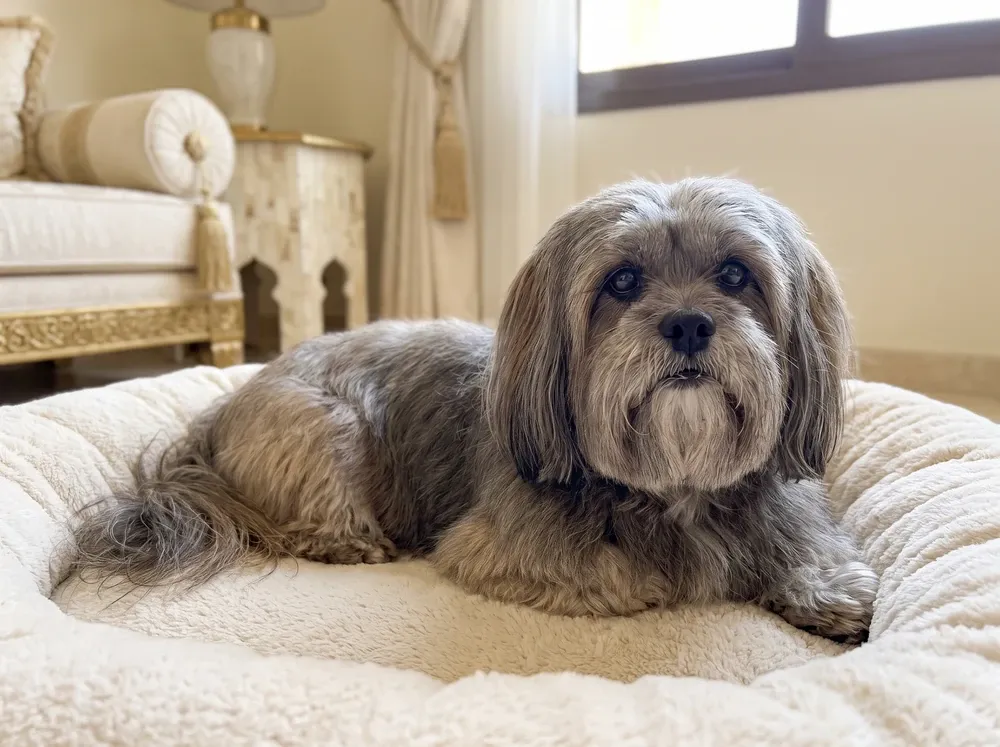
Lhasa Apso, an older grizzle adult with a greying face resting on a thick cream bed

How old are they?

Their age

Lhasa Puppy health

the first six months

What to watch for

  1. Congenital or early inherited ocular disease related to Eye Conditions (Corneal Ulcers, a sore on the surface of the eye; Distichiasis, extra eyelashes that rub the eye)
  2. Retained deciduous teeth (baby teeth that stay put), malocclusion (teeth that do not meet properly) or early dental crowding
  3. Juvenile onset of skin allergies
  4. Juvenile onset of ear infections
  5. Developmental or early clinical signs of Patellar Luxation (PL, slipping kneecap)

The care that goes with it

  1. Core vaccinations, microchip and Dubai Municipality registration
  2. Deworming, and flea and tick prevention
  3. Body Condition Score (a check on whether they are the right weight), dental, growth and nutritional evaluation, and early socialisation
  4. Baseline screening for eye conditions, including distichiasis (extra eyelashes that rub the eye)
  5. Early follow-up for any signs of dental disease
The full care detail
  • Core vaccination programme, microchipping and Dubai Municipality registration. Titre testing discussion where clinically appropriate; not a substitute for completing the core vaccine series
  • Deworming and external parasite prevention tailored to Dubai exposure
  • Body Condition Score (BCS), Muscle Condition Score (MCS), dental, growth and nutritional evaluation, and early socialisation
  • Baseline screening focused on Eye Conditions (Corneal Ulcers, Distichiasis)
  • Early diagnostic follow-up for signs suggestive of Dental Disease

Their age

Lhasa Juvenile health

6 months to 2 years

What to watch for

  1. Progression or first clinical detection of Eye Conditions (Corneal Ulcers, Distichiasis)
  2. Early periodontal disease (gum disease) and dental crowding
  3. Recurrent or persistent skin allergies
  4. Recurrent or persistent ear infections
  5. Emerging Patellar Luxation (PL, slipping kneecap) with exercise intolerance or lameness

The care that goes with it

  1. Ophthalmic evaluation (eye exam) every year, with the hair on their face kept trimmed away from their eyes
  2. Teeth brushed every day, and a professional dental clean every 6 to 12 months
  3. Neutering or spaying, timed for a small breed
  4. Finding the cause of skin trouble early, with a food trial if it keeps coming back, rather than treating it again and again
The full care detail
  • Annual ophthalmic evaluation; keep facial hair trimmed away from eyes to prevent corneal irritation
  • Daily dental brushing; professional dental cleaning every 6-12 months
  • Neuter/spay timing discussion that accounts for small-breed growth and disease risk
  • Identify allergens early; conduct food elimination trial if recurrent skin issues are present
  • Investigate recurrent signs rather than repeatedly treating presumed Skin Allergies

Their age

Lhasa Young Adult health

2 to 4 years

What to watch for

  1. Eye Conditions (Corneal Ulcers, Distichiasis)
  2. Dental Disease
  3. Skin Allergies
  4. Ear Infections
  5. Patellar Luxation (PL, slipping kneecap)

The care that goes with it

  1. Ophthalmic evaluation (eye exam) every year, with the hair on their face kept trimmed away from their eyes
  2. Teeth brushed every day, and a professional dental clean every 6 to 12 months
  3. Finding what they are allergic to early, with a food trial if skin trouble keeps coming back
  4. Ears cleaned every month with a vet's ear solution, watching for hair growing in the ear canals
  5. Orthopaedic evaluation (joint and bone exam) every year for Patellar Luxation, and a lean body weight
The full care detail
  • Annual ophthalmic evaluation; keep facial hair trimmed away from eyes to prevent corneal irritation
  • Daily dental brushing; professional dental cleaning every 6-12 months
  • Identify allergens early; conduct food elimination trial if recurrent skin issues are present
  • Monthly ear cleaning with veterinary solution; check for hair growth in ear canals
  • Annual orthopaedic evaluation for Patellar Luxation (PL); maintain lean body weight to protect joints

Their age

Lhasa Prime Adult health

4 to 7 years

What to watch for

  1. Dental Disease (Advanced)
  2. Kidney Disease (Renal Dysplasia, kidneys that did not develop properly)
  3. Eye Conditions (Progressive)
  4. Hypothyroidism (an underactive thyroid)
  5. Intervertebral Disc Disease (IVDD, slipped disc in the back)

The care that goes with it

  1. A kidney panel (a set of blood and urine tests) twice a year, because kidneys that do not form properly run in the breed
  2. Dental X-rays every year, and removal of any tooth that could spread infection
  3. Ophthalmic evaluation (eye exam) every year, watching for eye conditions that progress
  4. A yearly thyroid panel, with treatment if hypothyroidism (an underactive thyroid) is confirmed
  5. Ramps instead of high jumps, and a spinal evaluation if they show back pain
The full care detail
  • Bi-annual kidney function panel (BUN, creatinine, urine specific gravity), renal dysplasia is breed-specific
  • Annual dental X-rays; extract compromised teeth to prevent systemic infection
  • Annual ophthalmic evaluation; monitor for progressive eye conditions
  • Annual thyroid panel (T4); levothyroxine if hypothyroidism is confirmed
  • Avoid high jumps and use ramps to reduce Intervertebral Disc Disease (IVDD) risk; spinal health evaluation if back pain observed

Their age

Lhasa Senior health

7 to 10 years

What to watch for

  1. Kidney Disease (Chronic)
  2. Heart Disease
  3. Arthritis
  4. Dental Disease (Tooth Loss)
  5. Cognitive Dysfunction Syndrome (dementia in older pets)

The care that goes with it

  1. Kidney blood tests twice a year, a kidney-friendly senior diet and regular urine tests
  2. An echocardiogram (an ultrasound scan of the heart) every year from age 7, with heart medication when it is needed
  3. Joint supplements and gentle daily exercise
  4. Teeth kept clean, because mouth bacteria make kidney and heart disease worse
  5. Brain games and a steady daily routine, to slow cognitive dysfunction (dementia in older pets)
The full care detail
  • Bi-annual renal panel; transition to renal-supportive senior diet; monitor urine specific gravity
  • Annual echocardiogram from age 7; cardiac medication when indicated
  • Joint supplements and gentle daily exercise to maintain mobility
  • Maintain dental hygiene; oral bacteria worsen kidney and heart disease
  • Cognitive enrichment and consistent daily routine to slow cognitive dysfunction progression

Their age

Lhasa Geriatric health

10 years and over

What to watch for

  1. Chronic Kidney Disease (CKD, long-term kidney failure), Advanced
  2. Congestive Heart Failure
  3. Cognitive Dysfunction Syndrome (Advanced)
  4. Severe Arthritis
  5. Cancer

The care that goes with it

  1. Fluids under the skin at home, if your vet prescribes them, to support the kidneys
  2. A calm, familiar home and a gentle daily routine
  3. An orthopaedic bed, ramps and non-slip floors
  4. Quality-of-life assessments
  5. Palliative care (comfort care)
  6. End-of-life planning with your vet team, when the time comes
The full care detail
  • Subcutaneous fluid therapy at home (if prescribed) to support kidney function and hydration
  • Maintain calm, familiar environment and gentle daily routine for cognitively impaired dogs
  • Orthopaedic bedding, ramps, and non-slip surfaces to support mobility safely
  • Quality-of-life assessments
  • Tailored palliative and comfort-focused care plan
  • Compassionate end-of-life planning with your veterinary team

Breed predispositions indicate an increased risk rather than certainty of disease. What is right for them always comes from their own history and an evaluation.

Getting a Lhasa puppy in Dubai

Before they come home.

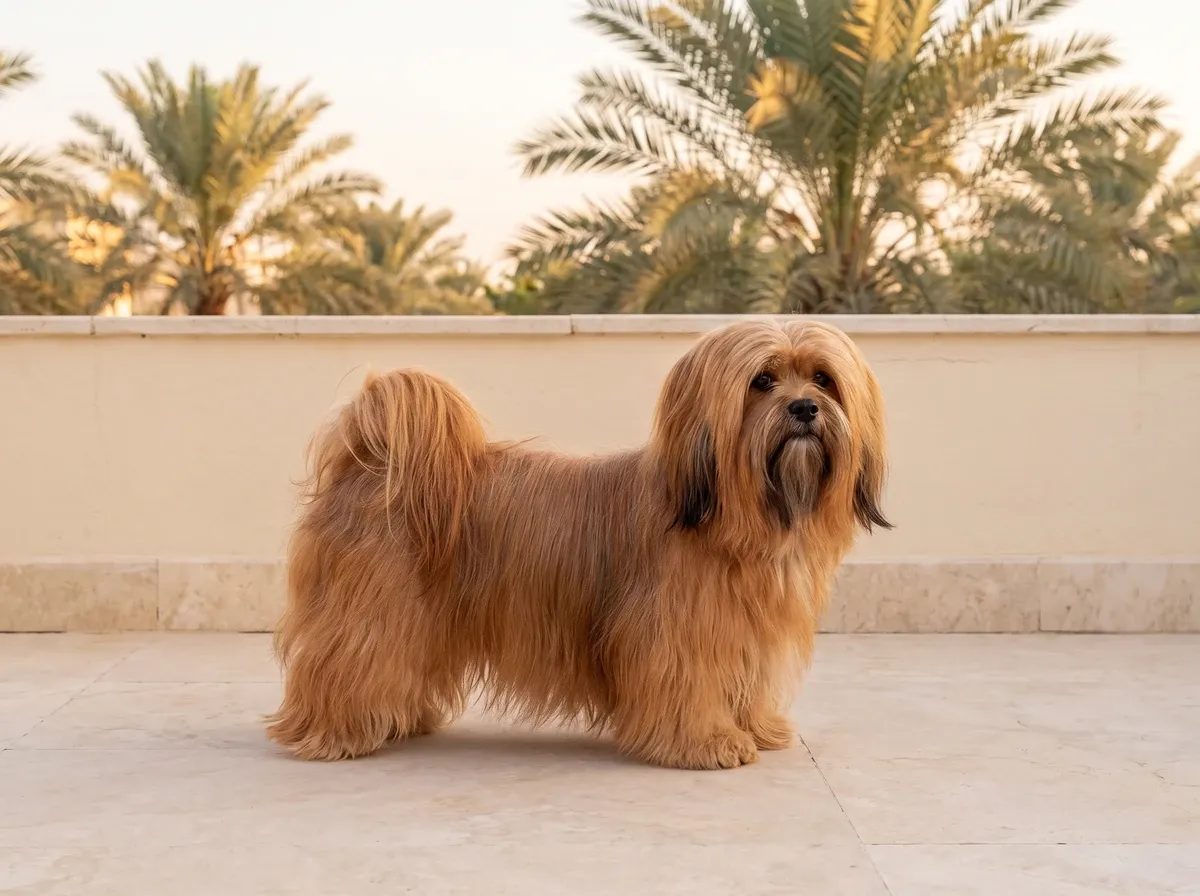
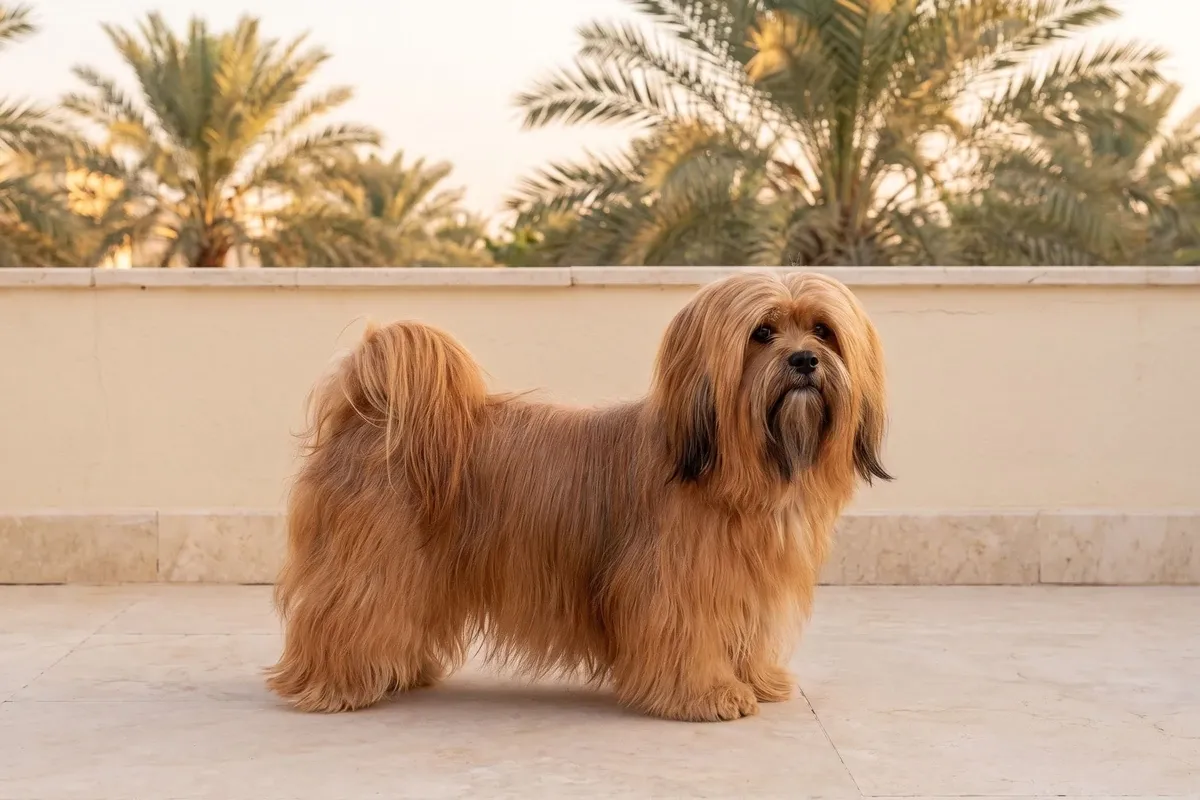
Lhasa Apso in Dubai, a red-gold adult standing on a villa terrace at dawn with date palms behind

One breed, one job

A small watchdog in a long coat

A small, sturdy dog from Tibet, kept in monasteries to raise the alarm. Expect a confident, devoted dog who is assertive for their size, loyal to the family and wary of strangers, under a coat that needs regular professional grooming.

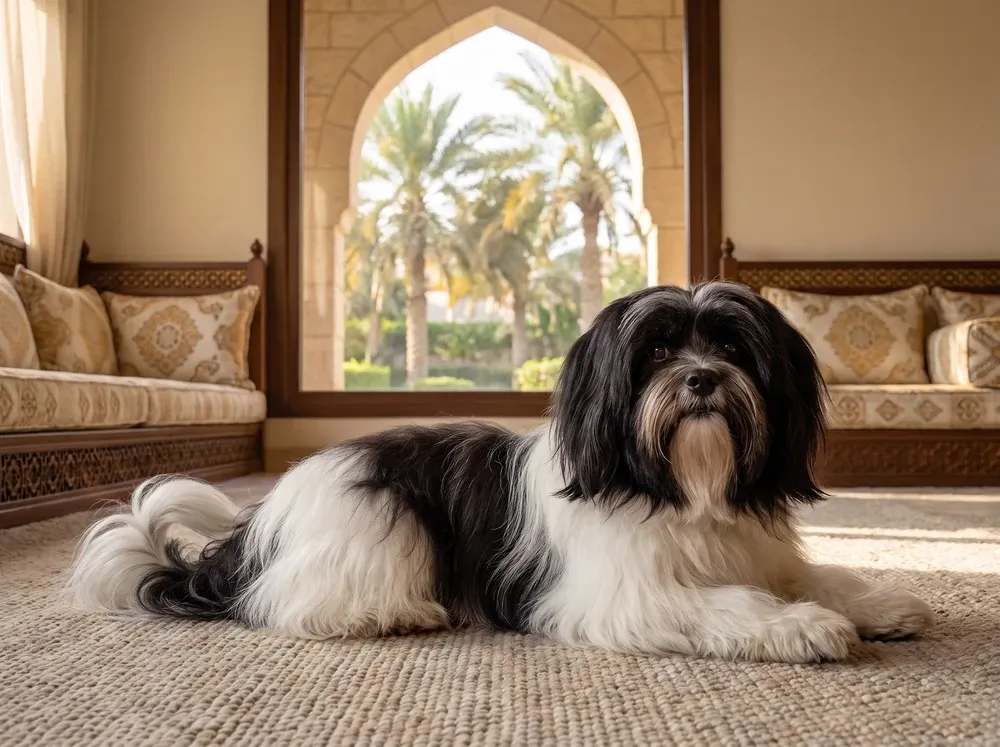
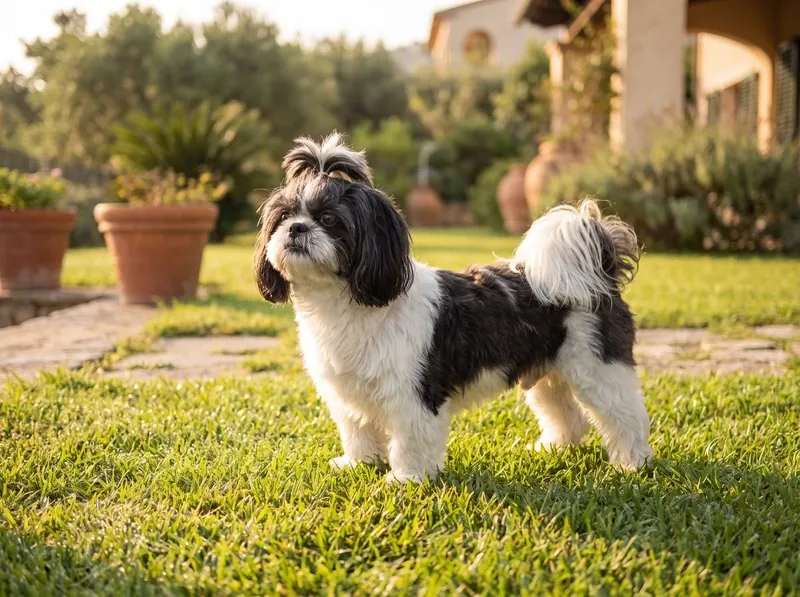
Lhasa Apso in Dubai, a black and white adult lying on a rug in a majlis, palms through the arch

Colours

Gold, honey, black and white, and everything between

Lhasas come in almost every shade, from gold, honey and cream to red, grey, brindle, solid black and solid white, and plenty wear two at once, like black and white or gold and white. No colour is better than another.

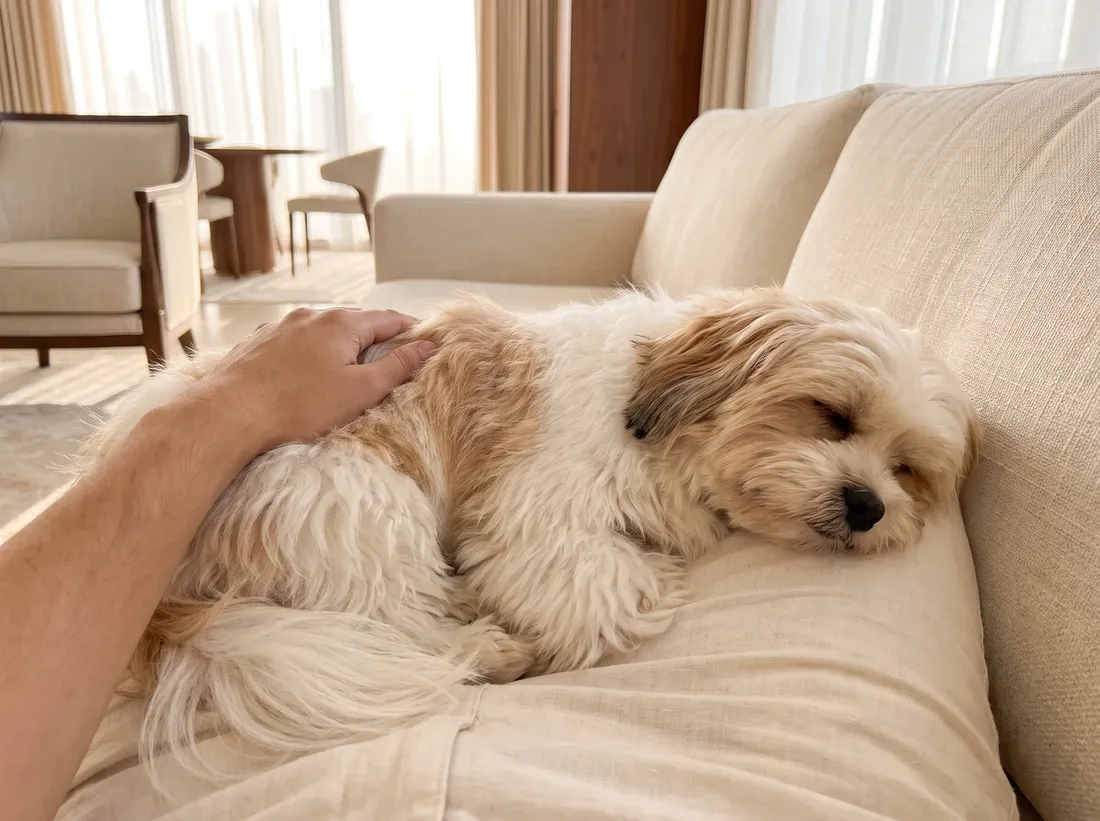
Lhasa Apso, a white and gold puppy asleep on a pet parent's lap on a cream sofa

The first six months

Lhasa Apso puppy care

Core vaccinations come first, with a microchip and Dubai Municipality registration and a baseline look at their eyes. Short spells alone from the first week, gentle handling of their face, paws and coat, and calm new people at a distance matter most now.

Puppy health, 0 to 6 months
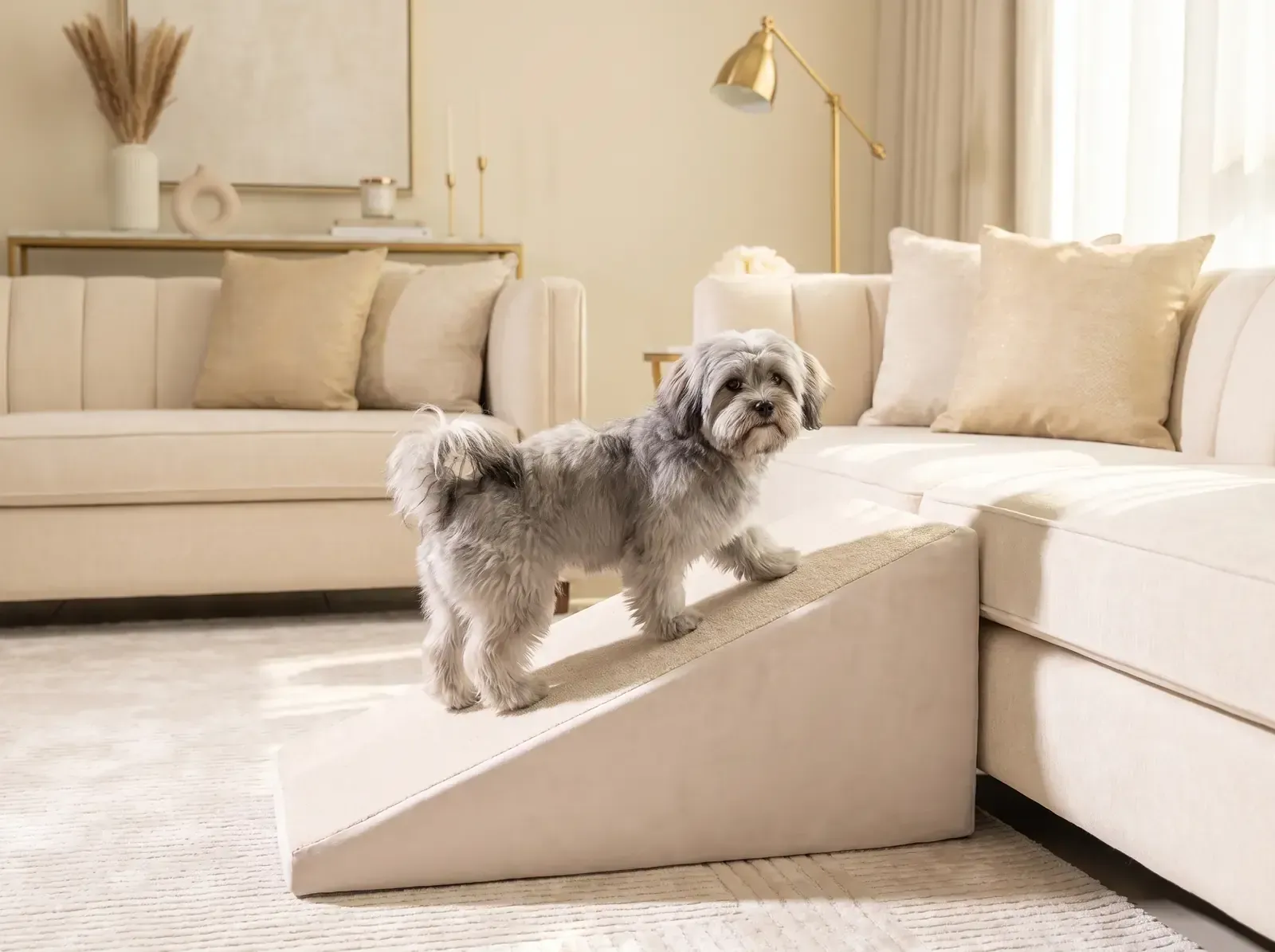
Lhasa Apso, a silver grey puppy walking up a low pet ramp beside a cream sofa

Getting the home ready

Ramps, rugs and a quiet room

Put ramps or steps up to the sofa and bed, and rugs on the marble, before they arrive. Set up a safe room or pen with something to chew, where they can learn short spells alone. Find a groomer early for short, easy visits.

Ten things that make their life better
Lhasa Apso in Dubai, a white mother lying on a blanket with one white puppy, palms behind

Before you commit

Ask about eyes and kidneys

Ask the breeder whether the parents' eyes have been looked at by a vet, and whether there is any kidney trouble in the family, because both sit high on the breed's health record. Then meet the mother. A calm, relaxed mother is a good sign, even one who is slow to say hello.

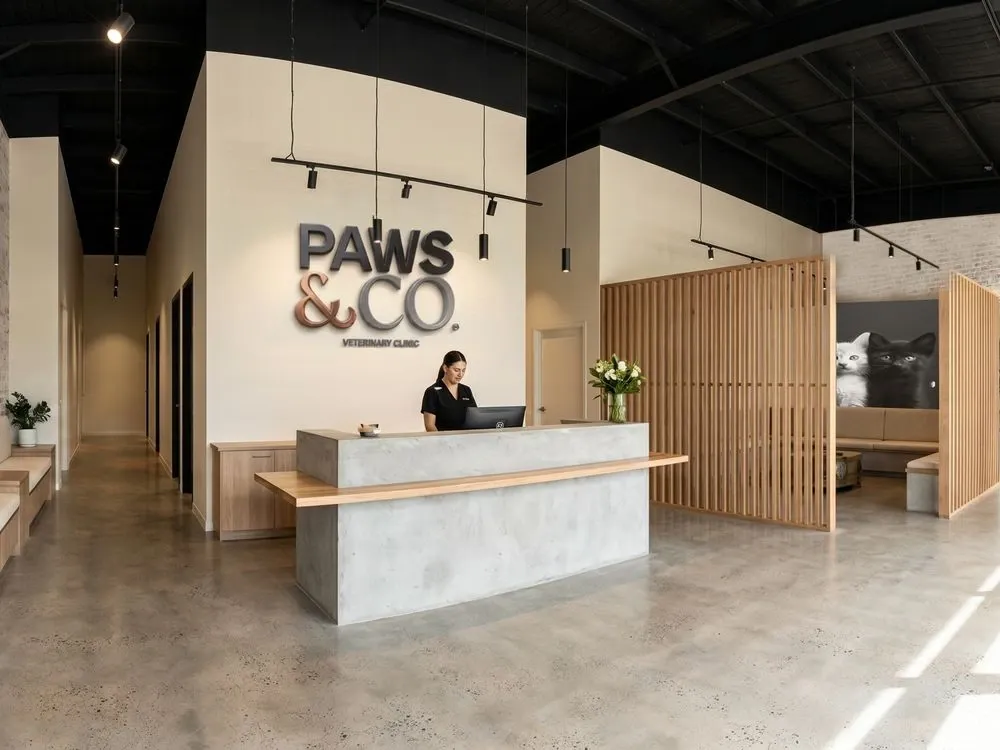
The reception of a Paws & Co clinic, with long cream benches and a stone reception desk

Before the clinics open

Join the founding families

AED 1,999 of essential care for AED 199. No payment now.

When to see a vet

When it is not behaviour.

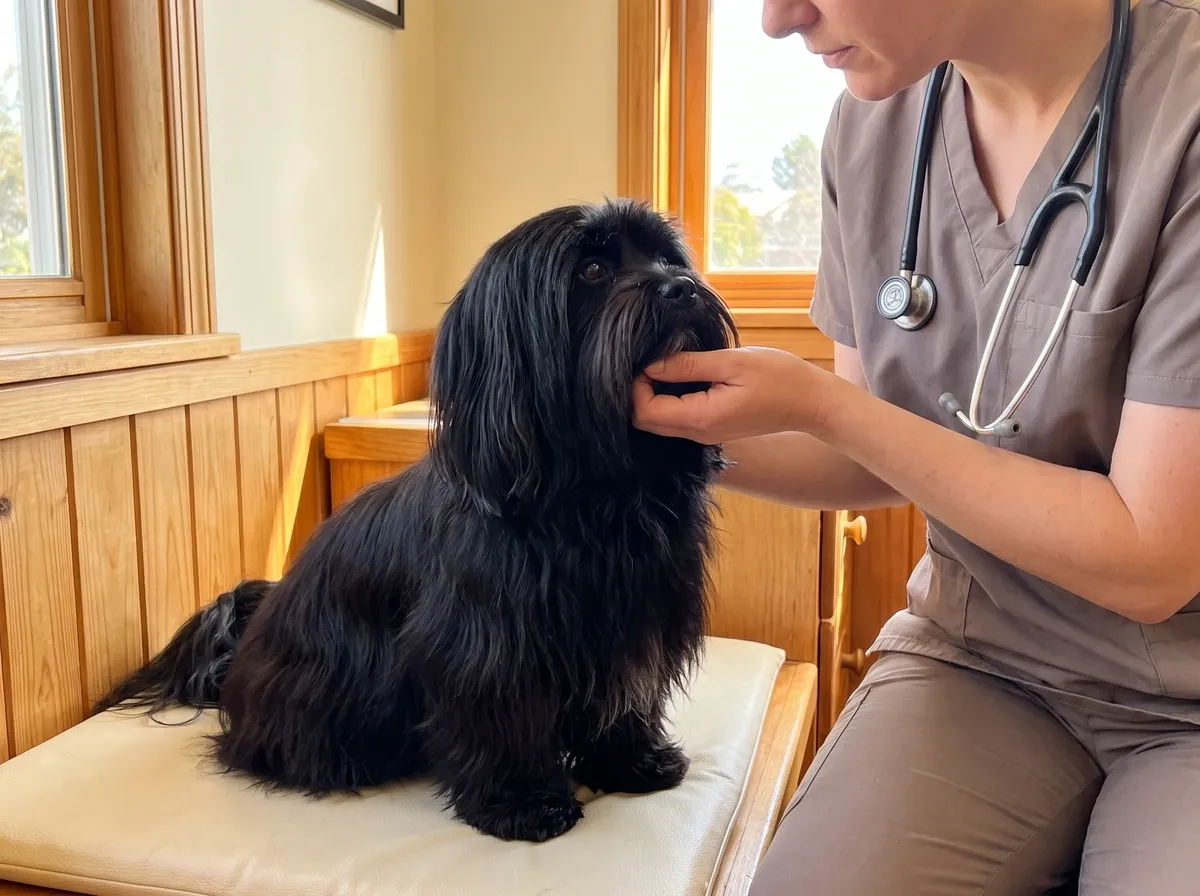
Lhasa Apso, a calm black adult on a padded mat while a vet in taupe scrubs gently cups their chin

Some of this is not a training problem, and treating it like one wastes time your dog may not have. If they are distressed when you leave, if they growl or guard their food, their toys or you, if they are frightened on the lead, or if anything about them changes suddenly at any age, contact your vet the same day. A tip from a website, ours included, is not the answer. If it cannot wait, contact your nearest emergency vet now.

With a Lhasa Apso, watch their eyes, their back and their water bowl. For squinting, a watering eye or pawing at their face, contact your vet now, because an ulcer can get worse quickly. Yelping when picked up, a hunched back or wobbly back legs can be their spine. Drinking much more than usual can be their kidneys. And growling at their own family is never just them being a Lhasa. Bloat (GDV, a twisted stomach) can happen in any dog, though it is most common in large, deep-chested breeds. A swollen, tight belly, retching with nothing coming up, sudden restlessness or drooling is an emergency: contact your vet now.

They'll keep reporting every courier. If they ever growl at you, tell your vet.
Lhasa history

Before they were yours.

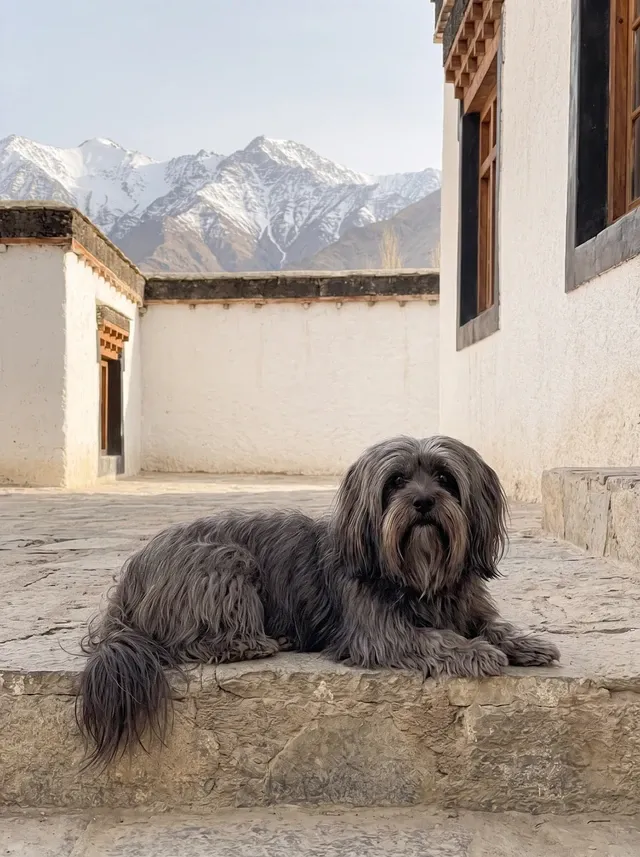
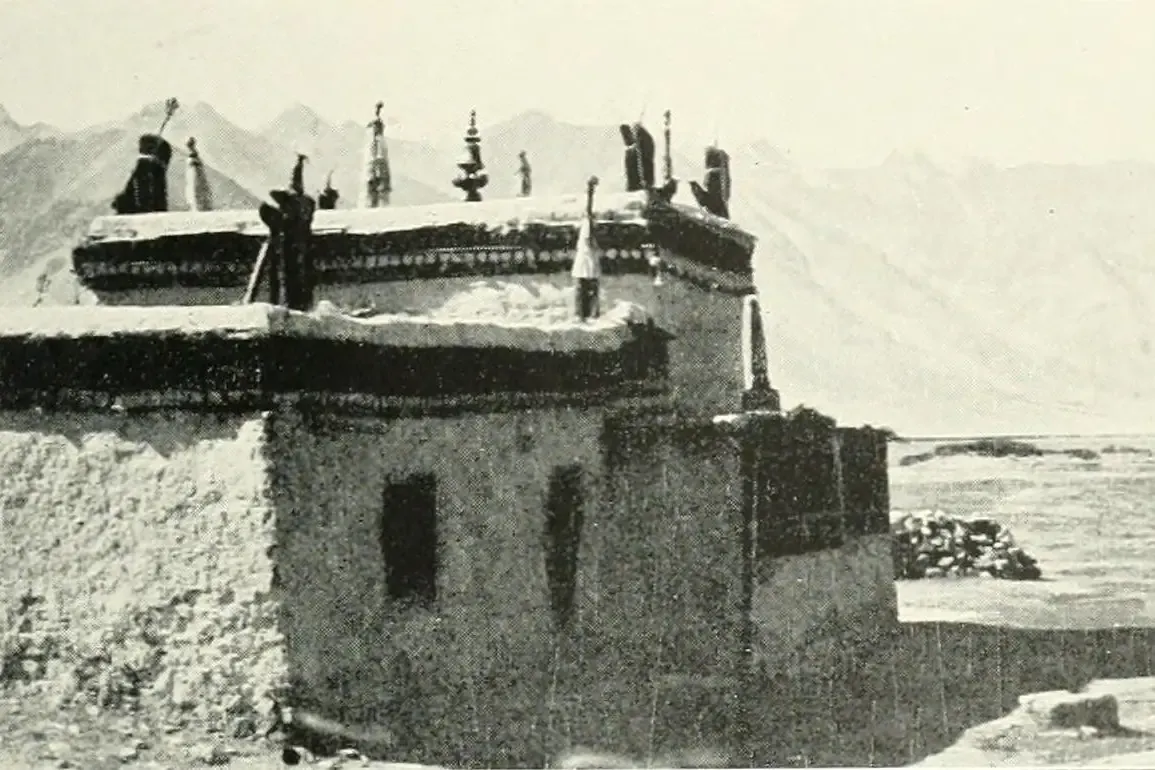
  1. Lhasa Apso history, a whitewashed monastery building with mountains behind, Tibet, 1909
    A monastery building in Tibet, photographed for Sven Hedin's Trans-Himalaya, 1909.

    For centuries

    Inside the monastery

    Lhasa Apsos were kept inside Tibetan Buddhist monasteries and noble houses, to raise the alarm at anyone who got past the large mastiffs guarding the outside.

    What they still carryA small dog who watches the door and decides for themselves who is welcome.

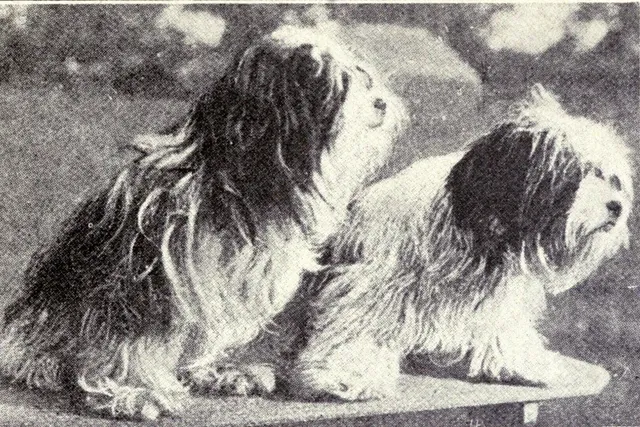
  2. Lhasa Apso history, two long-coated Lhassa Terriers sitting on a table, from a dog book, 1915
    Two Lhassa Terriers, the breed's old name, in W. E. Mason's Dogs of All Nations, 1915.

    Before the 1930s

    Given, never sold

    In Tibet the dogs were given as tokens of goodwill, often by the Dalai Lama, rather than sold.

    What they still carryA breed that left Tibet in very small numbers.

  3. Lhasa Apso history, a red-gold adult standing on a villa terrace at dawn with date palms behind
    A Lhasa Apso today.

    1933 to 1935

    To America

    In 1933 the 13th Dalai Lama gave a pair to C. Suydam Cutting, and they founded the breed in America. The American Kennel Club registered the first Lhasa in 1935.

    What they still carryThe same watchdog temperament, unchanged by the show ring.

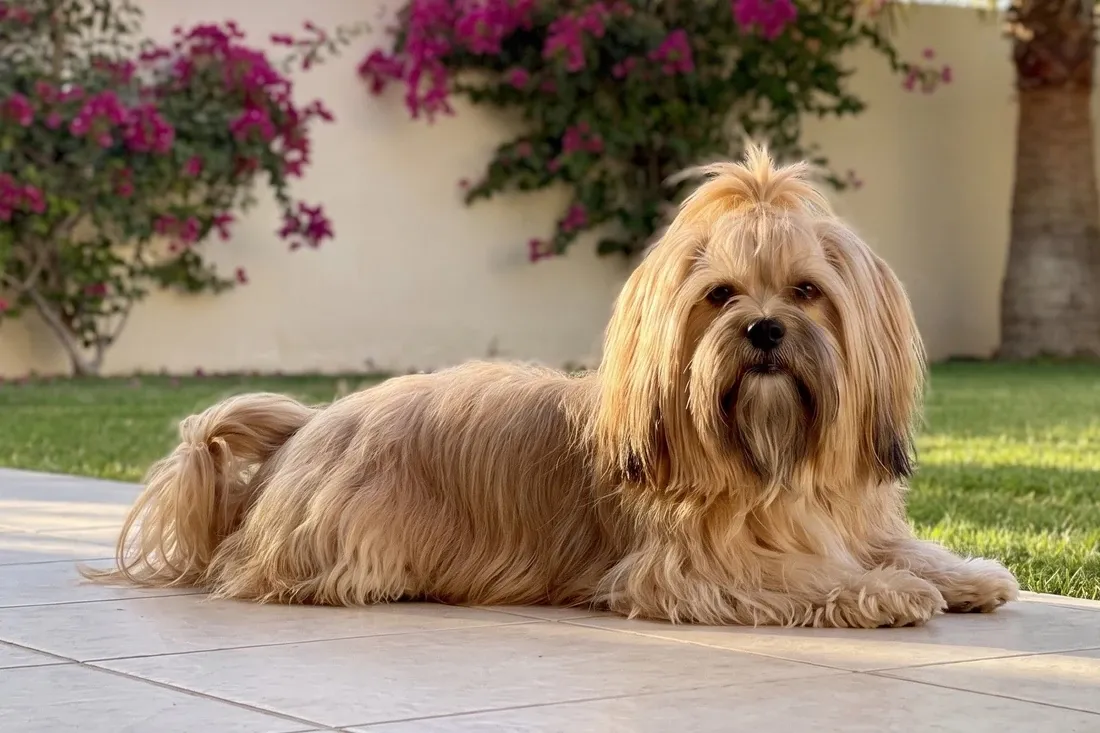
  4. Lhasa Apso history, the breed today, a honey-gold adult lying in a villa garden with bougainvillea, Dubai, 2026

    Today

    In Dubai

    Today a Lhasa lives in a flat, not a monastery, and still keeps watch: devoted to their family, and taking their time with everyone else.

    What they still carryA monastery sentinel in a building full of lifts, couriers and neighbours.

Lhasa questions

The ones you type at midnight.

Most of these get asked late at night, by someone watching their dog and not sure what they are seeing.

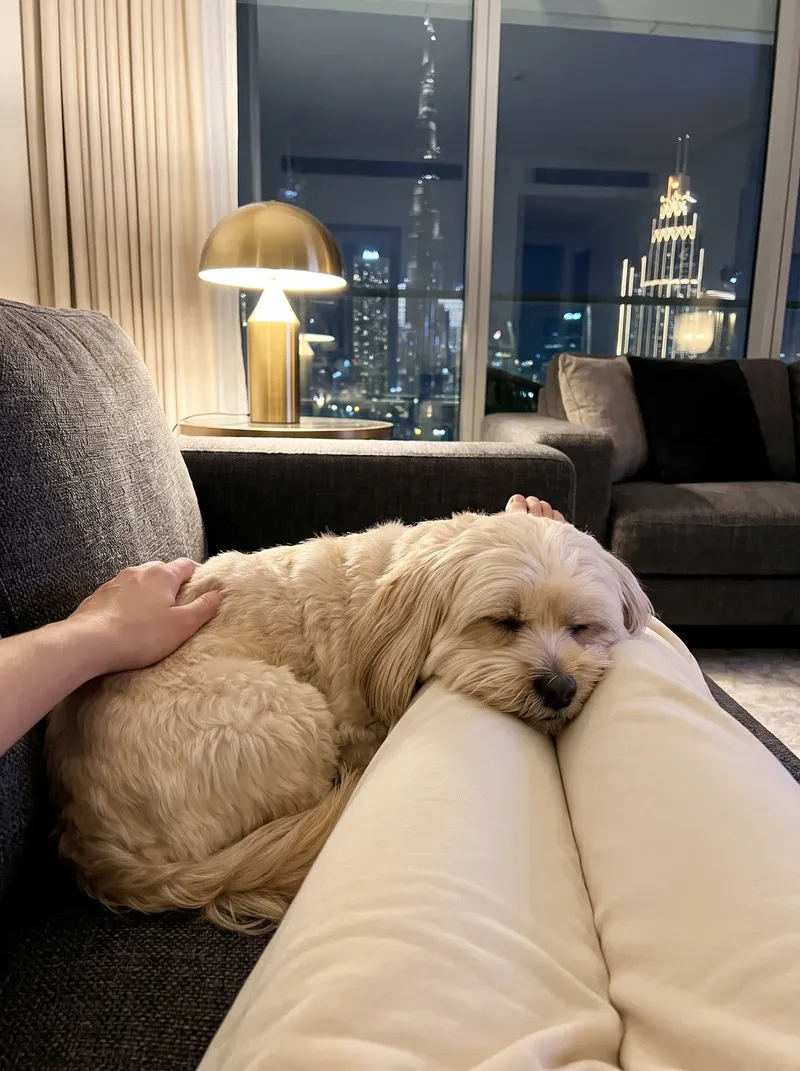
Lhasa Apso in Dubai, a cream adult asleep against a pet parent's knees on a sofa at night, skyline lit behind
How long do Lhasa Apsos live?

Most Lhasa Apsos live 12 to 15 years. In a UK study of over 7,000 Lhasa Apsos, half lived to about 14.

How big is a Lhasa Apso?

An adult Lhasa Apso usually weighs 5.5 to 8 kg. Small, but sturdy for their size.

Is a Lhasa Apso dog hypoallergenic?

A Lhasa Apso sheds very little, but that long coat needs brushing several times a week to stay free of knots, and a groomer regularly.

Do Lhasa Apsos come in black and white?

Yes, black and white is one of many Lhasa Apso colours, alongside gold, honey, cream, red, grey, brindle, solid black and solid white.

Are Lhasa Apsos good with strangers?

Lhasa Apsos are loyal to their family but can be wary of strangers, because they were bred as monastery watchdogs. Let visitors ignore them, and let them come over in their own time.

Can a Lhasa Apso live in Dubai?

Yes, a Lhasa Apso is well suited to flat living in the UAE. Walk before sunrise and after dark from May to September, and keep that dense coat groomed.

Why is my Lhasa Apso squinting?

If a Lhasa Apso is squinting, has a watering eye or paws at their face, contact your vet now. Corneal ulcers are on the breed's health record, and an ulcer can get worse quickly.

Why does my Lhasa Apso drink so much water?

If a Lhasa Apso is drinking far more than usual, contact your vet, because kidney disease is on the breed's health record from about four. Note how often you fill the bowl, so you can tell your vet how much.

Worried about them? Contact your vet today.