We’re hiring people who love them like we do. Join us careers@pawsandco.comSee open roles
UAE Government Licensed MOCCAE
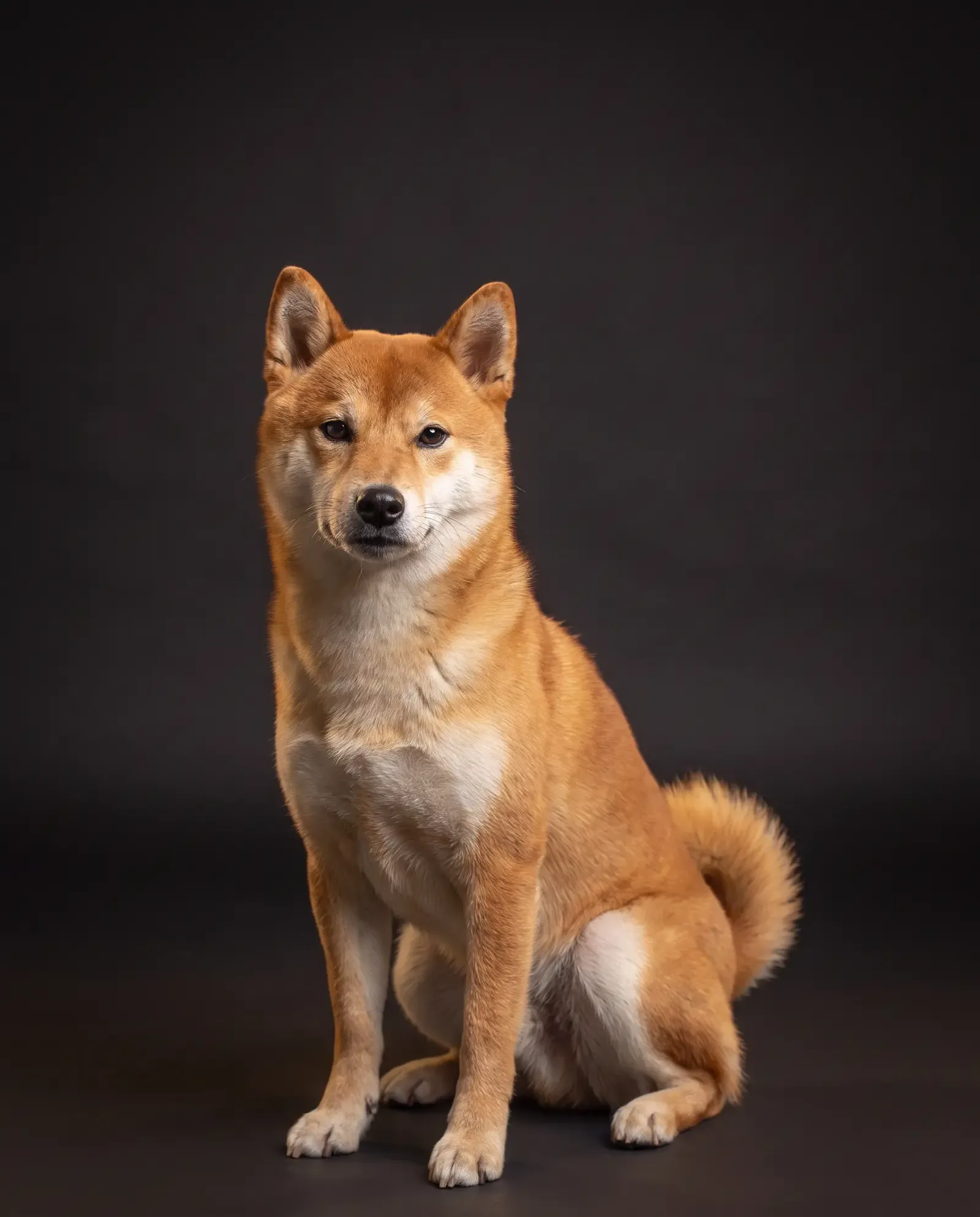
Shiba Inu in Dubai, studio portrait of a red adult with cream cheeks and a curled tail, sitting

Breed guide  ·  Dogs

Shiba Inu

She hears me say come, and waits for a better offer. I carry chicken on every walk.

Lifespan
13 to 16 years
Size
Small
Weight
About 8 to 10.5 kg
Shedding
Heavy, twice a year

Last updated 12 October 2026

Join the founding families. AED 1,999 of essential care for AED 199.

No payment now. We'll be in touch by email and WhatsApp as we open enrolment.

✓
Thank you.

We will be in touch soon to confirm.

Shiba traits

What they brought with them.

Tap a card to see what is going on.

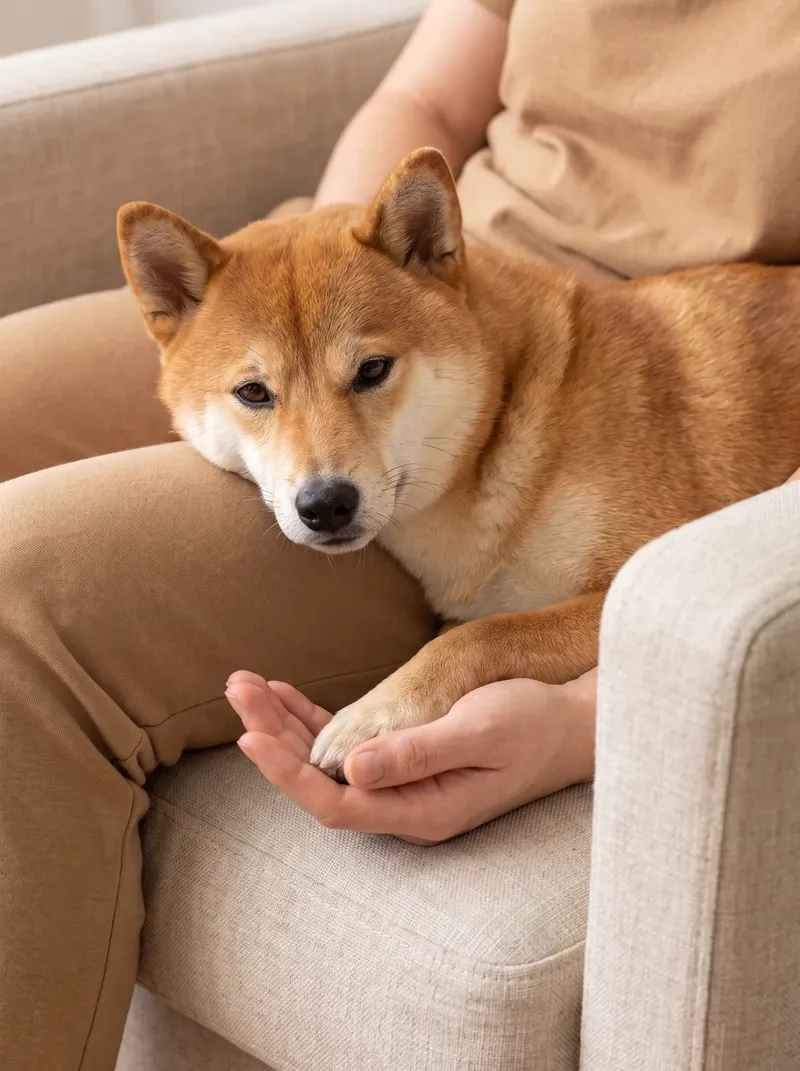
Shiba Inu, a red adult lying calmly across a pet parent's lap, one paw resting in a hand

At home

Why Shibas scream

You pick up a paw for a nail trim and get a scream the whole building can hear.

What's going onShibas are known for a loud, high scream when they are held or handled. Usually it is protest, not pain. Practise touching their paws and ears for a few seconds every day, with a treat, and the scream gets rarer.

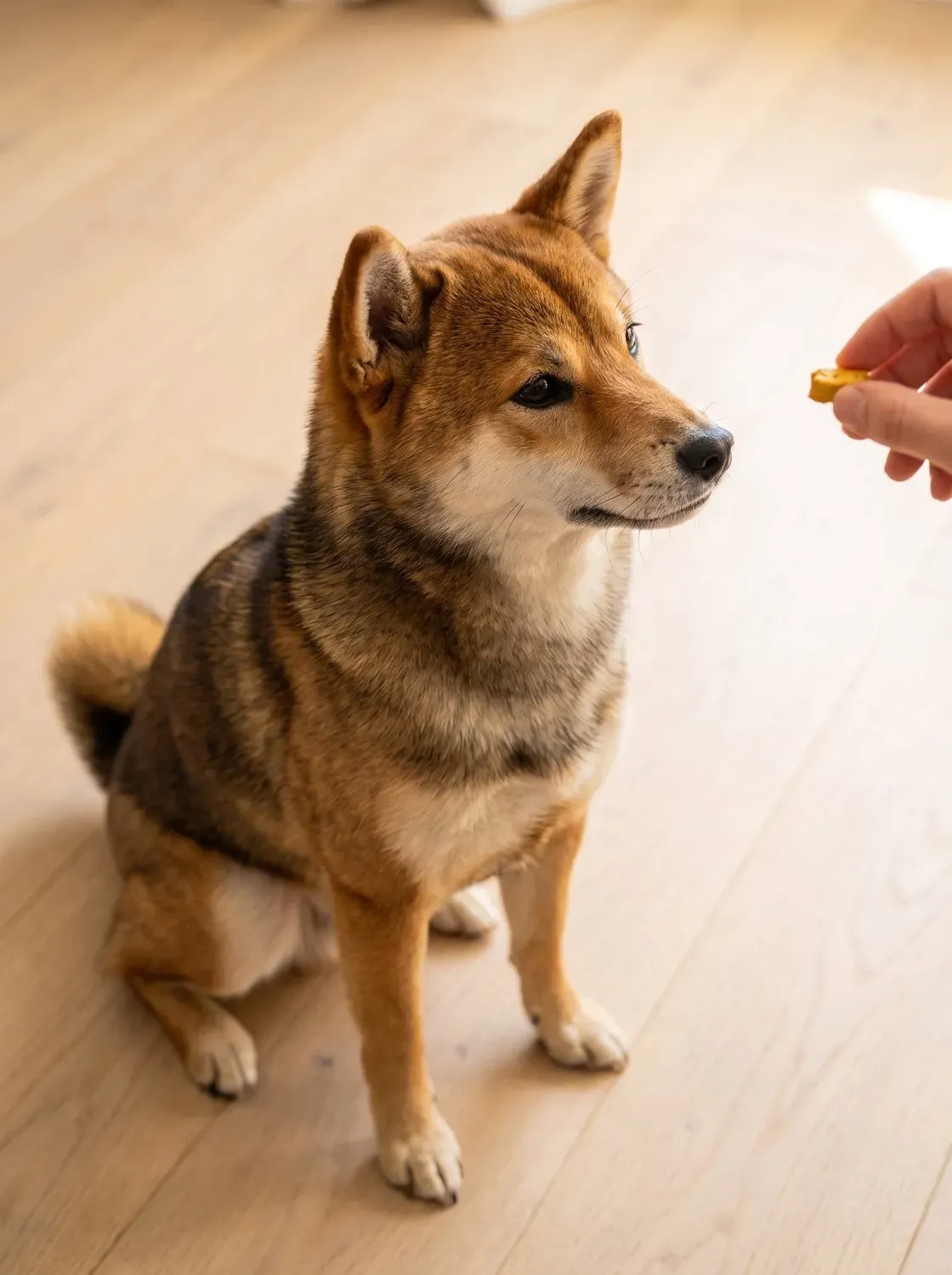
Shiba Inu, a sesame adult sitting on a living room floor, eyeing a treat in a pet parent's hand

At home

They heard you

You say sit. They look at you, look at the door, and think about it.

What's going onThey heard the cue. They are deciding whether it is worth it. Make the thing you want the thing that pays, and keep sessions short enough that they are still interested at the end.

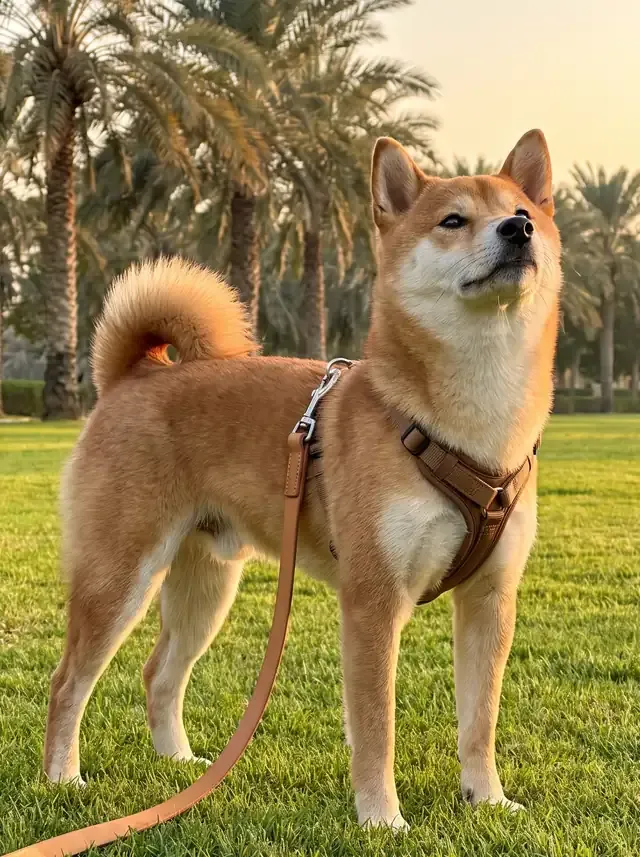
Shiba Inu in Dubai, a red adult on a long line in a park lined with date palms, nose lifted to a scent

At home

Why Shibas don't come back when called

Perfect recall in the flat. Gone the moment something runs past outside.

What's going onThey were bred to hunt ahead of a person, not beside one. Keep them on a lead or a long line outside, however well they come back at home.

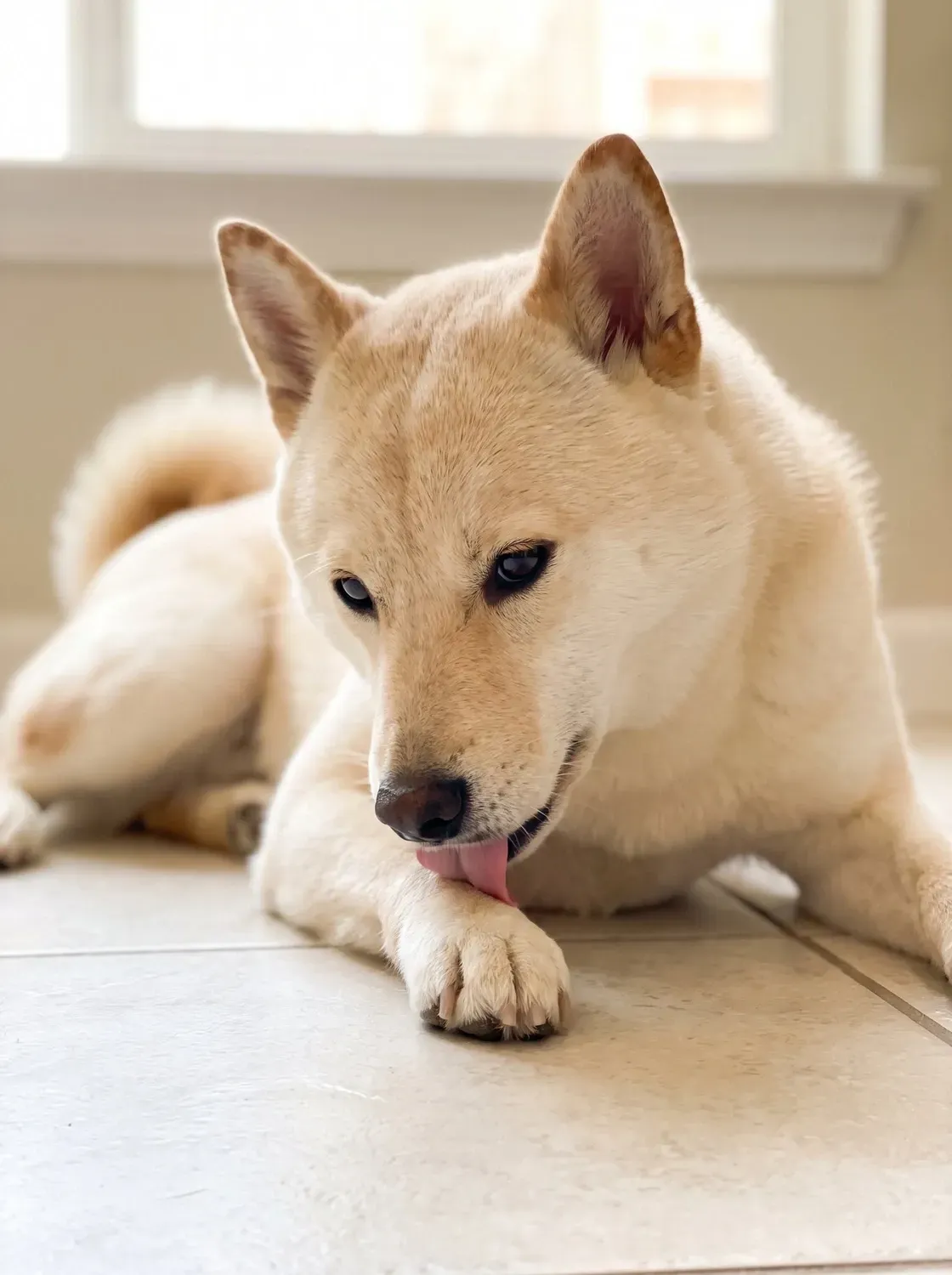
Shiba Inu, a cream adult lying on cool kitchen tiles, licking one front paw

At home

The itch comes first

Licking their paws after every walk, chewing at a leg, scratching behind an ear.

What's going onItchy allergic skin is their first health risk from puppy to prime adult. Paw licking and scratching are worth telling your vet about early, before they become a habit.

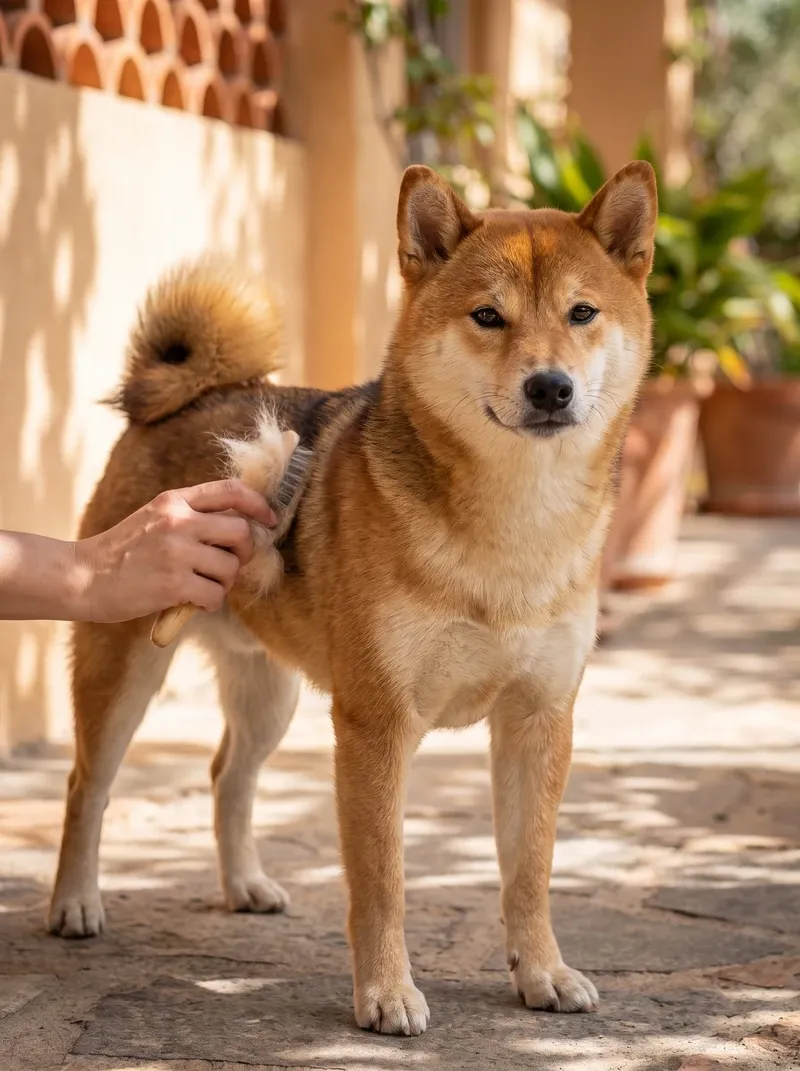
Shiba Inu, a pet parent brushing loose undercoat from a red adult on a shaded terrace

At home

Twice a year, the coat goes

Clumps of soft undercoat on the sofa, the rug and everything you own.

What's going onThey shed heavily twice a year, and regular brushing through each shed keeps their skin healthy. Brush the undercoat out, and never clip or shave it.

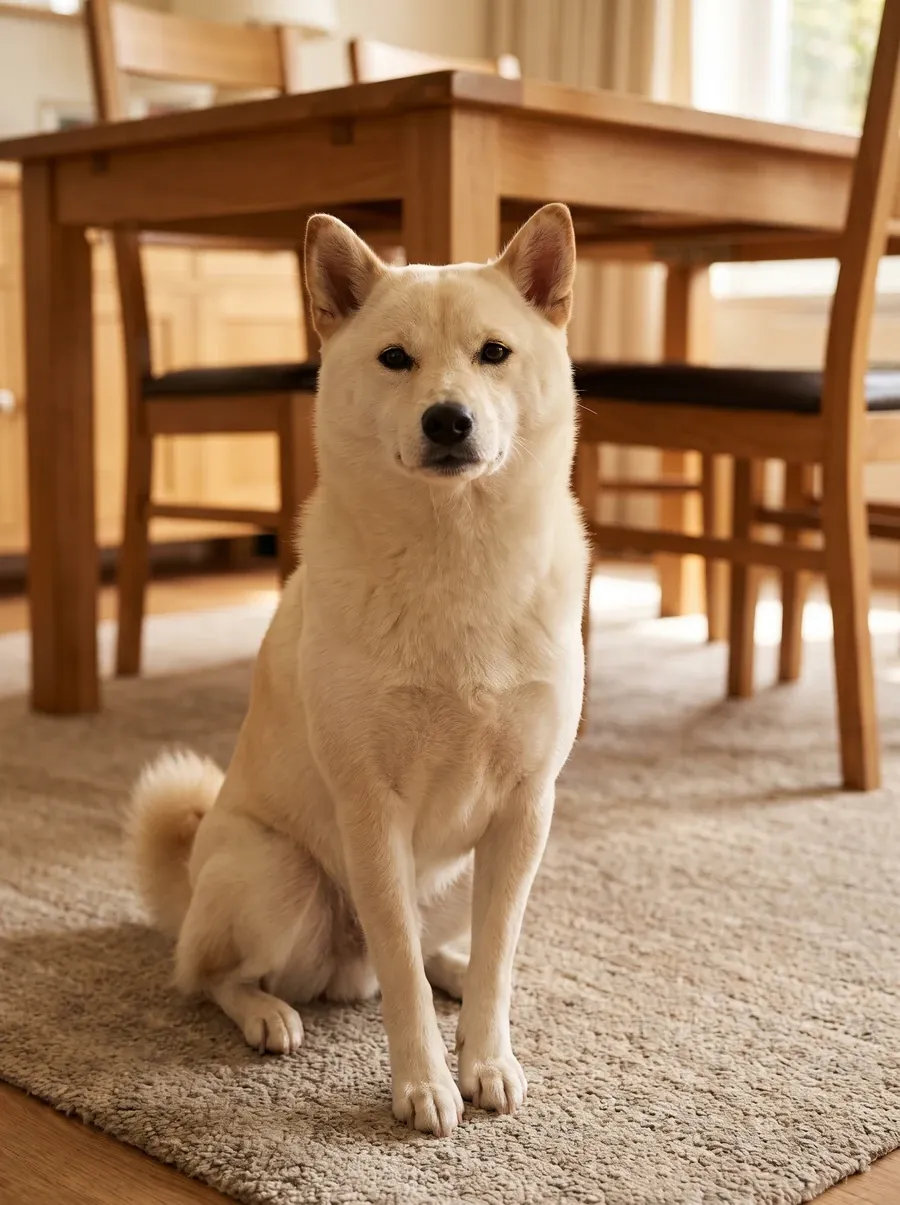
Shiba Inu, a cream adult sitting neatly on a rug in a dining room, watching across the room

At home

A cat in a fox costume

They clean themselves, step around puddles and keep strangers at a distance.

What's going onShibas are tidy by nature and slow to warm to new people. Let visitors ignore them until they decide to say hello, and they usually will, in their own time.

A Shiba in Dubai

The bit nobody tells you.

Their ground

Built for: Hunting through mountain brush on their own judgement.

In Dubai: A flat, with a lead on every walk.

Their coat

Built for: Made for snow.

In Dubai: 45°C summers.

Their handling

Built for: Handled as little as possible.

In Dubai: Nail trims and vet visits in the diary.

The scream and the selective hearing mostly come from that gap.

You cannot give them a mountain. You can give them a cool home, safe outings and handling they can predict, and the ten things below are how.

Your plan is built around their breed: the risks on a Shiba Inu's record at every age, and the care that goes with each one.

Join the founding families. AED 1,999 of essential care for AED 199.

Daily care for a Shiba

Ten things that make their life better.

Many of them are free, and most matter at every age.

  1. Their double coat was made for mountain winters.

    Every age, most of all puppies and older dogs

    Free

    Why

    Their double coat was made for mountain winters.

    What to do

    Keep them in air conditioning through the day, with a cool tiled floor to lie on. From May to September, walk before sunrise and after dark, and check the pavement with the back of your hand for five seconds. Never leave them on a balcony or in a car in the heat. If they pant hard or wobble, move them into shade or air conditioning straight away, wet their coat and skin with cool water, not ice-cold, and contact your vet now. Keep cooling them on the way, with the air conditioning on in the car.

  2. Regular brushing through each shed stops their skin getting irritated and their coat matting.

    Every age, most of all from 6 months

    Under AED 200, once, for a rake and a brush

    Why

    Regular brushing through each shed stops their skin getting irritated and their coat matting.

    What to do

    Brush them several times a week with an undercoat rake and a slicker brush, and every day through each shed, down to the skin. Do not clip or shave the undercoat: dead undercoat left in holds heat and mats against the skin. De-shed and de-mat with the right tools, and keep up the brushing and bathing, so the coat stays clear and skin problems are easier to spot.

  3. The Shiba scream is real, and their teeth need brushing every day for life.

    Every age, start the day they come home

    Under AED 50 for a toothbrush and dog toothpasteIn your plan

    Why

    The Shiba scream is real, and their teeth need brushing every day for life.

    What to do

    Touch one paw, one ear or their lips for a few seconds, then give a treat. One nail a night is plenty. Brush their teeth every day, building up slowly. Stop before they scream, not after. From two years, a professional dental clean every 6 to 12 months keeps the rest in order.

  4. They are small, quick and curious, and many Shibas slip out the moment a door opens.

    Every age, most of all 6 months to 2 years

    Under AED 300 for a gateIn your plan

    Why

    They are small, quick and curious, and many Shibas slip out the moment a door opens.

    What to do

    Walk round your home as if you were them: the gap under the villa gate, the balcony rails, the front door when a delivery arrives. Keep a baby gate inside the front door, so there are two doors between them and the street. If one does slip out, their microchip and Dubai Municipality registration, done at their puppy visits, help bring them home.

  5. Many Shibas do not come back when called, and some are experts at reversing out of a collar.

    Every age, most of all 6 months to 2 years

    Under AED 200 for a harness and a long line

    Why

    Many Shibas do not come back when called, and some are experts at reversing out of a collar.

    What to do

    Use a snug harness and a lead. In open spaces, use a long line of 5 to 10 metres, and practise coming back to you on it, paid well. Keep them on it near cats.

  6. They were bred to search and chase, and summer keeps them inside.

    Every age, most of all 6 months to 2 years

    Under AED 150 for a puzzle feeder and chews

    Why

    They were bred to search and chase, and summer keeps them inside.

    What to do

    Hide part of their dinner around the flat and let them find it. Leave a puzzle feeder or a stuffed chew when you go out, and arrange a midday visit if they are alone most of the day.

  7. They understand you perfectly. They are deciding whether to bother.

    Every age

    Free

    Why

    They understand you perfectly. They are deciding whether to bother.

    What to do

    Three five-minute sessions a day, paid with the best food you have. Stop while they are keen. Do not repeat a cue they have ignored: make it easier and try again.

  8. Shibas bark little, but they scream, yodel and grumble.

    Every age

    Free

    Why

    Shibas bark little, but they scream, yodel and grumble.

    What to do

    A scream while you hold them is usually protest: slow down and pay more. A scream when you touch one new spot, or from nowhere, can be pain, so tell your vet. New noise at night in an older Shiba is worth mentioning too.

  9. Hip Dysplasia (a poorly fitting hip joint) is on their record from puppy into their senior years, and Patellar Luxation (a slipping kneecap) from puppy to young adult.

    Every age, evaluation by 2 years

    Free to AED 500 for rugsIn your plan

    Why

    Hip Dysplasia (a poorly fitting hip joint) is on their record from puppy into their senior years, and Patellar Luxation (a slipping kneecap) from puppy to young adult.

    What to do

    Keep them lean. Rugs on marble, and no repeated jumping off the sofa while they grow. If they skip on a back leg, tell your vet. Their hip and patellar evaluation (a check of hips and kneecaps) is due by age two.

  10. Itchy allergic skin is their first health risk, and Progressive Retinal Atrophy (PRA, gradual loss of sight) is on their record too.

    Every age

    FreeIn your plan

    Why

    Itchy allergic skin is their first health risk, and Progressive Retinal Atrophy (PRA, gradual loss of sight) is on their record too.

    What to do

    Once a week, when you brush them, look between their toes and under the coat for redness, and watch for bumping into things in dim light. Weigh them once a month. Their ophthalmic evaluation (eye exam) is every year from age one, and a thyroid panel (a thyroid blood test) every year from four.

Four of these are in your plan. The rest you can do at home.

Join the founding families. AED 1,999 of essential care for AED 199.

Shiba health by age

Their health, at every age.

In a Shiba Inu, itchy skin, a change in the coat or a new scream at being touched is often the first sign that something is wrong. Choose their age to see what to watch for, and the care that goes with it.

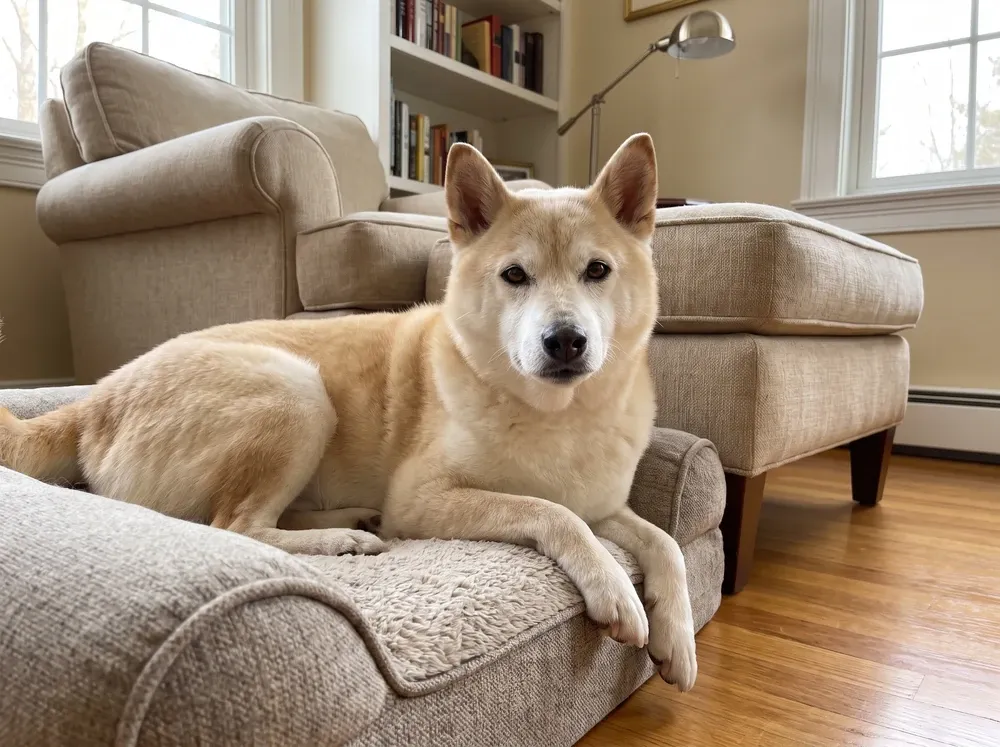
Shiba Inu, an older cream dog resting on a sofa in a sunny living room

How old are they?

Their age

Shiba Puppy health

the first six months

What to watch for

  1. Juvenile onset of allergies / atopic dermatitis (itchy allergic skin)
  2. Developmental or early clinical signs of Hip Dysplasia (HD, poorly fitting hip joint)
  3. Developmental or early clinical signs of Patellar Luxation (PL, slipping kneecap)
  4. Congenital or early inherited ocular disease related to Progressive Retinal Atrophy (PRA, gradual loss of sight)
  5. Retained deciduous teeth (baby teeth that stay put), malocclusion (teeth that do not meet properly) or early dental crowding

The care that goes with it

  1. Core vaccinations, microchip and Dubai Municipality registration
  2. Deworming, and flea and tick prevention
  3. Growth and nutritional evaluation, and early socialisation
  4. Allergy screening, as a first baseline
  5. Early follow-up for any signs of Hip Dysplasia (HD, a poorly fitting hip joint)
The full care detail
  • Core vaccination programme, microchipping and Dubai Municipality registration. Titre testing discussion where clinically appropriate; not a substitute for completing the core vaccine series
  • Deworming and external parasite prevention tailored to Dubai exposure
  • Body Condition Score (BCS, a check on whether they are the right weight), Muscle Condition Score (MCS, a check on their muscle), dental, growth and nutritional evaluation, and early socialisation
  • Baseline screening focused on Allergies / Atopic Dermatitis
  • Early diagnostic follow-up for signs suggestive of Hip Dysplasia (HD)

Their age

Shiba Juvenile health

6 months to 2 years

What to watch for

  1. Recurrent or persistent allergies / atopic dermatitis
  2. Emerging Hip Dysplasia (HD) with exercise intolerance or lameness
  3. Emerging Patellar Luxation (PL) with exercise intolerance or lameness
  4. Progression or first clinical detection of Progressive Retinal Atrophy (PRA)
  5. Early periodontal disease (gum disease) and dental crowding

The care that goes with it

  1. Finding their allergy triggers early: Shibas are prone to environmental and food allergies
  2. Hip and patellar evaluation (a check of hips and kneecaps) by age 2, and a lean weight
  3. Neutering or spaying, timed for a small breed
  4. Annual ophthalmic evaluation (an eye exam) for PRA, from age 1
  5. A limp that keeps coming back properly investigated, rather than assumed to be Patellar Luxation
The full care detail
  • Identify allergens early; Shibas are prone to environmental and food allergies from a young age
  • Hip and patellar evaluation by age 2; maintain lean body weight to reduce joint stress
  • Neuter/spay timing discussion that accounts for small-breed growth and disease risk
  • Annual ophthalmic evaluation for Progressive Retinal Atrophy (PRA) from age 1
  • Investigate recurrent signs rather than repeatedly treating presumed Patellar Luxation (PL)

Their age

Shiba Young Adult health

2 to 4 years

What to watch for

  1. Allergies / Atopic Dermatitis
  2. Hip Dysplasia (HD)
  3. Patellar Luxation (PL)
  4. Progressive Retinal Atrophy (PRA)
  5. Dental Disease

The care that goes with it

  1. Finding their allergy triggers early
  2. Hip and patellar evaluation (a check of hips and kneecaps) by age 2, and a lean weight
  3. Annual ophthalmic evaluation (an eye exam)
  4. Daily tooth brushing, and a professional dental clean every 6 to 12 months
  5. Regular brushing through each shed, to keep the skin healthy and the coat free of mats
The full care detail
  • Identify allergens early; Shibas are prone to environmental and food allergies from a young age
  • Hip and patellar evaluation by age 2; maintain lean body weight to reduce joint stress
  • Annual ophthalmic evaluation for Progressive Retinal Atrophy (PRA) from age 1
  • Daily dental brushing; professional dental cleaning every 6-12 months
  • Regular brushing during shedding seasons to prevent skin irritation and coat matting

Their age

Shiba Prime Adult health

4 to 7 years

What to watch for

  1. Allergic Skin Disease (Atopic Dermatitis)
  2. Hip Dysplasia (HD), Progressive
  3. Eye Conditions (Progressive)
  4. Hypothyroidism (an underactive thyroid)
  5. Dental Disease (Advanced)

The care that goes with it

  1. Allergen-specific immunotherapy (treatment that slowly teaches the body to tolerate an allergen), daily or monthly
  2. Hip care: joint supplements, physiotherapy and weight control
  3. Annual ophthalmic evaluation (an eye exam)
  4. Annual thyroid panel (a thyroid blood test), and medication if the thyroid is underactive
  5. Annual dental x-rays, and damaged teeth removed early
The full care detail
  • Allergy management: allergen-specific immunotherapy (daily or monthly)
  • Hip management: joint supplements, physiotherapy, and weight management
  • Annual ophthalmic evaluation; monitor for progressive Progressive Retinal Atrophy (PRA) development
  • Annual thyroid panel (T4); levothyroxine if hypothyroidism is confirmed
  • Annual dental X-rays; extract compromised teeth to prevent systemic infection

Their age

Shiba Senior health

7 to 10 years

What to watch for

  1. Hip Dysplasia (HD), Severe Arthritis
  2. Hypothyroidism
  3. Kidney Disease
  4. Cancer
  5. Cognitive Dysfunction Syndrome (dementia in older pets)

The care that goes with it

  1. Hydrotherapy, acupuncture and pain relief for arthritis in the hips
  2. Annual thyroid panel (a thyroid blood test), with the dose adjusted as needed
  3. Renal panel (kidney blood tests) twice a year, and a senior diet
  4. A full physical examination every year, with the lymph nodes felt, to catch cancer early
  5. Cognitive enrichment (games that keep their mind busy) and a steady daily routine
The full care detail
  • Advanced hip management: hydrotherapy, acupuncture, NSAIDs, and joint supplements
  • Ongoing thyroid management: annual T4 monitoring; adjust levothyroxine dose as needed
  • Bi-annual renal panel; transition to senior diet with controlled phosphorus and sodium
  • Annual full physical examination with lymph node palpation for cancer screening
  • Cognitive enrichment and consistent daily routine to slow cognitive dysfunction progression

Their age

Shiba Geriatric health

10 years and over

What to watch for

  1. Severe Arthritis / Mobility Loss
  2. Chronic Kidney Disease (CKD, long-term kidney failure)
  3. Cancer (Advanced)
  4. Cognitive Dysfunction Syndrome (Advanced)
  5. Heart Disease

The care that goes with it

  1. Mobility support: orthopaedic bedding, ramps and physiotherapy
  2. Kidney and heart medicine, adjusted regularly
  3. Cognitive enrichment and a steady daily routine
  4. Quality-of-life assessments
  5. Palliative care (comfort care), and end-of-life planning with your vet team
The full care detail
  • Mobility support: orthopaedic bedding, ramps, and physiotherapy for arthritic dogs
  • Renal and cardiac management with regular medication adjustments
  • Cognitive enrichment and consistent daily routine to slow cognitive dysfunction progression
  • Quality-of-life assessments
  • Tailored palliative and comfort-focused care plan
  • Compassionate end-of-life planning with your veterinary team

Breed predispositions indicate an increased risk rather than certainty of disease. What is right for them always comes from their own history and an evaluation.

Getting a Shiba puppy in Dubai

Before they come home.

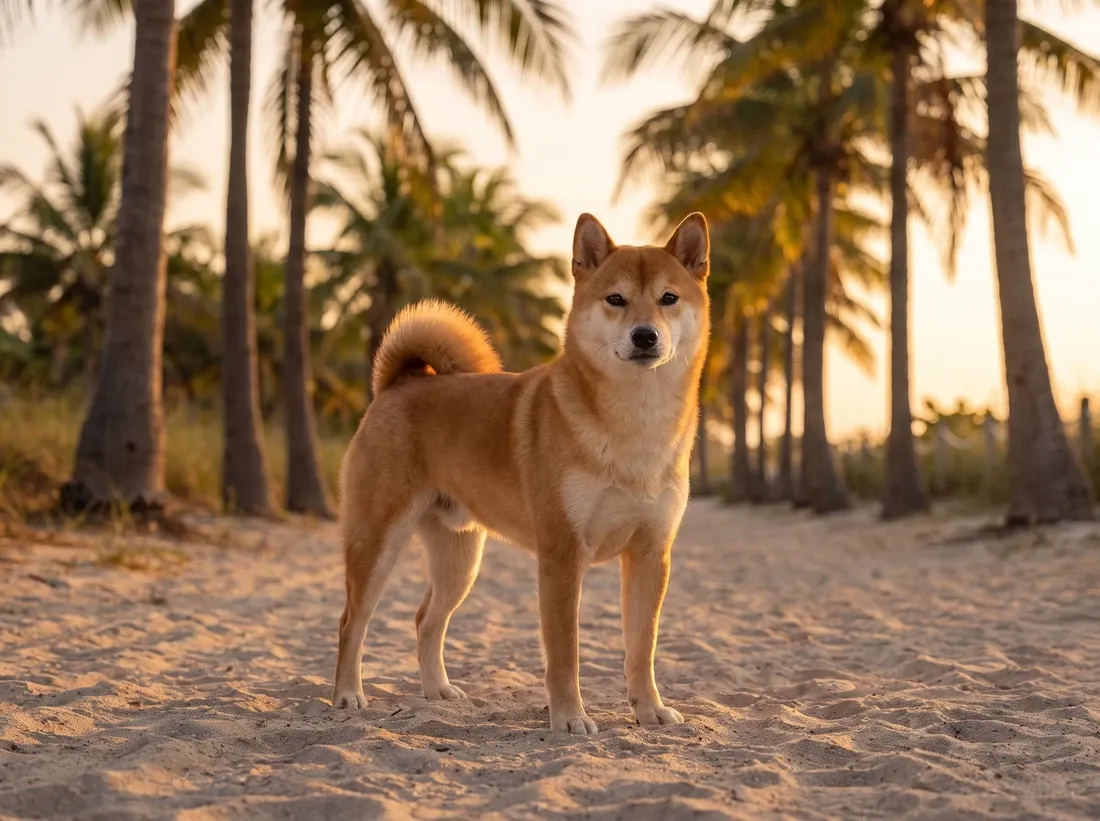
Shiba Inu in Dubai, a red adult standing alert on a palm-lined sandy path at dawn, tail curled over the back

Types of Shiba dogs

One breed, three old lines

There is one Shiba Inu, in one small size. After the Second World War, breeders rebuilt the breed from three surviving regional lines, Shinshu, Mino and San'in, and merged them into the fox-faced dog you see today.

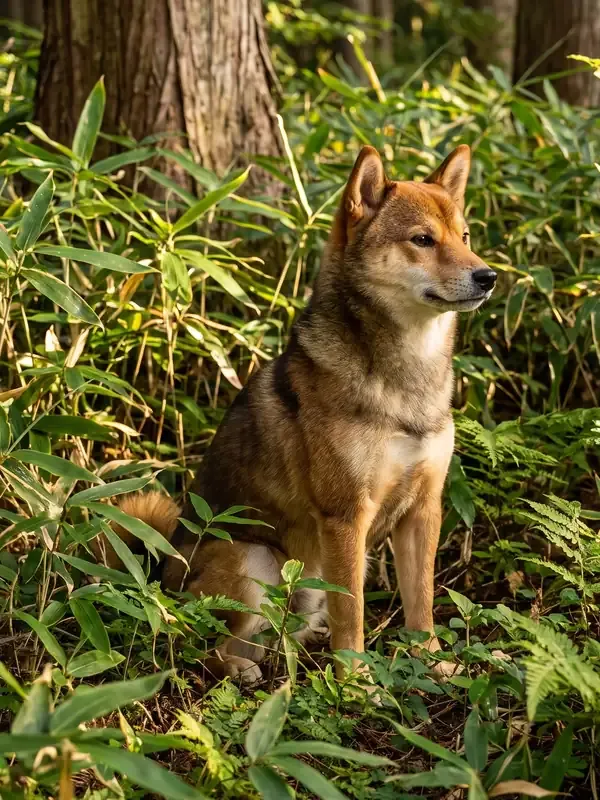
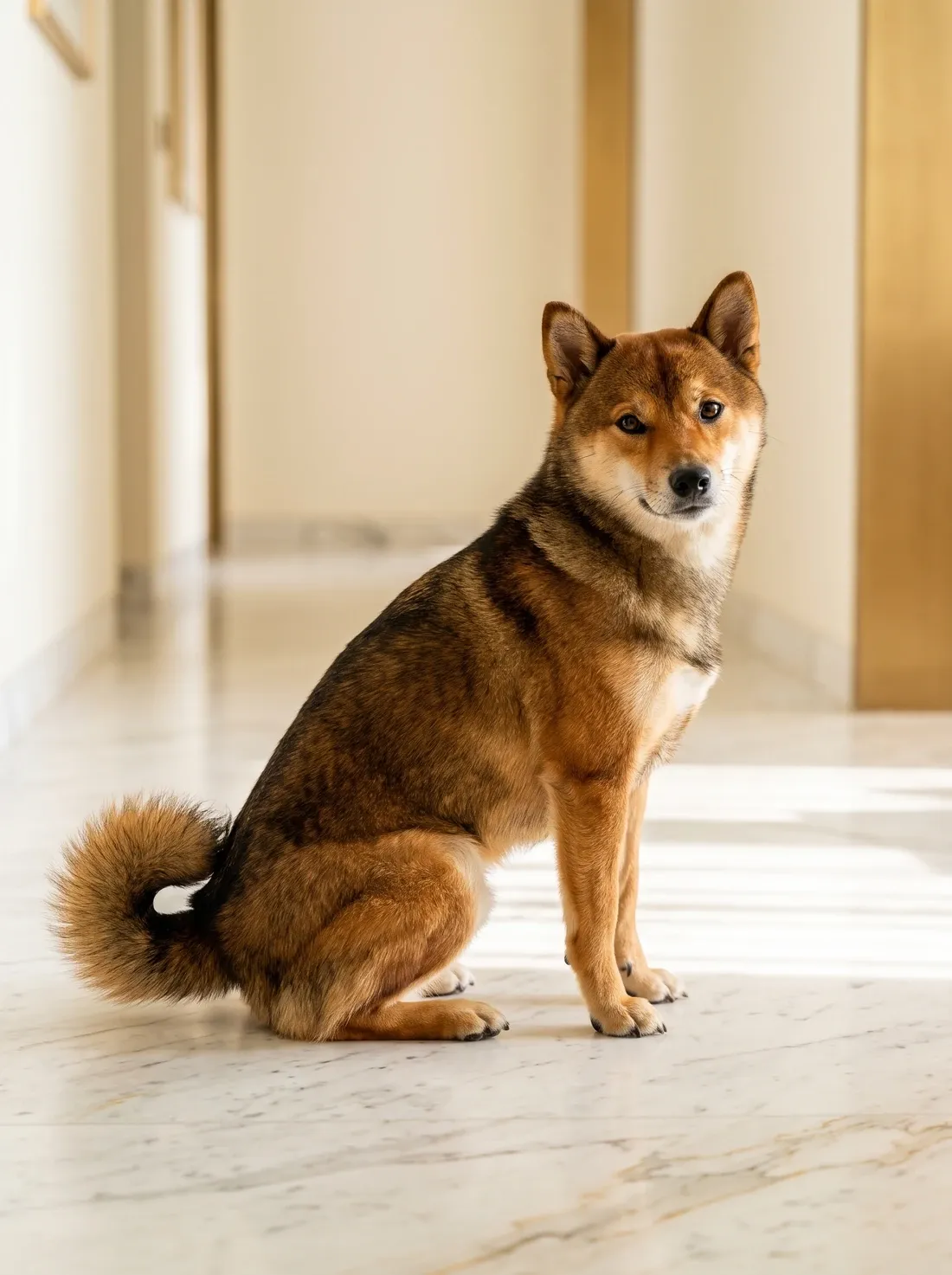
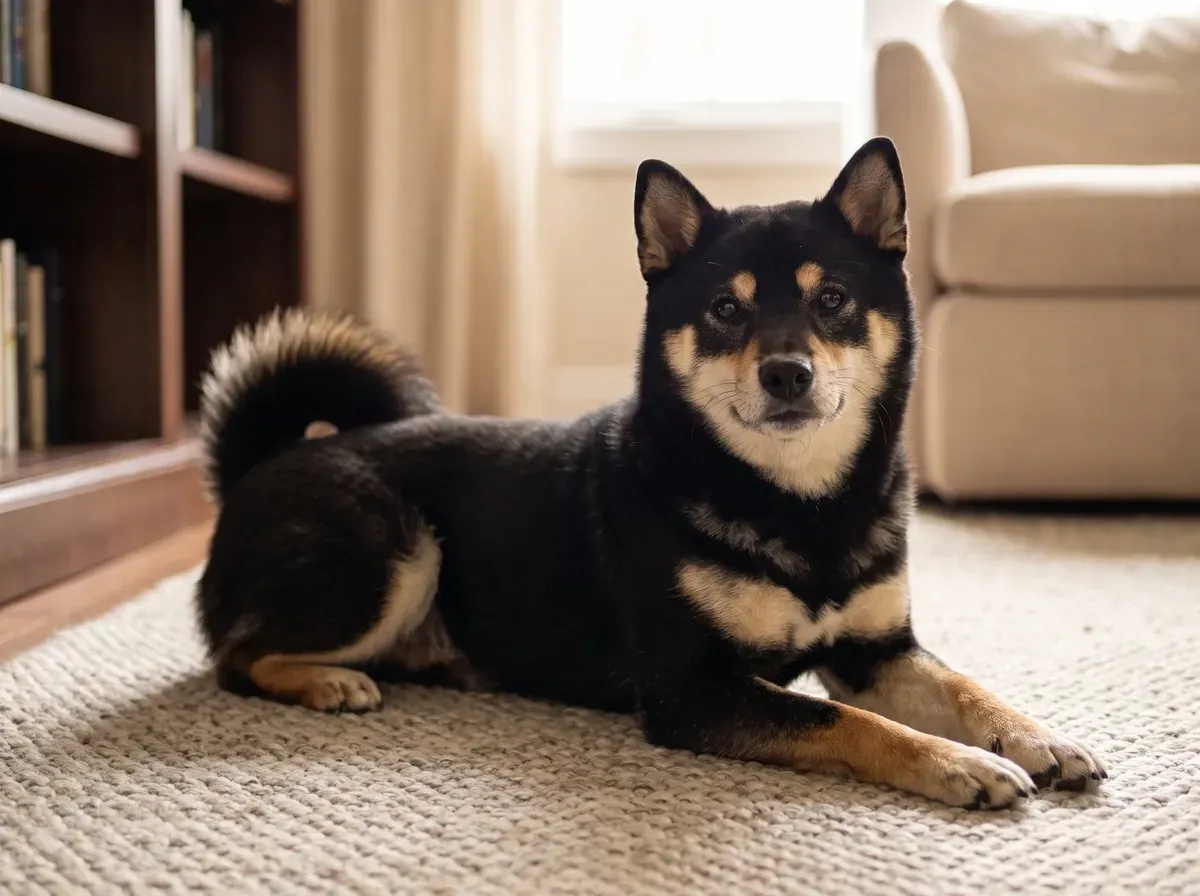
Shiba Inu, a black and tan adult lying on a stone-coloured rug in a study

Colours

Red, sesame, or black and tan

Shibas come in fox red, sesame (red with black tips to the hair), or black and tan, always with soft cream markings on the cheeks, chest and belly. Cream Shibas are much loved too.

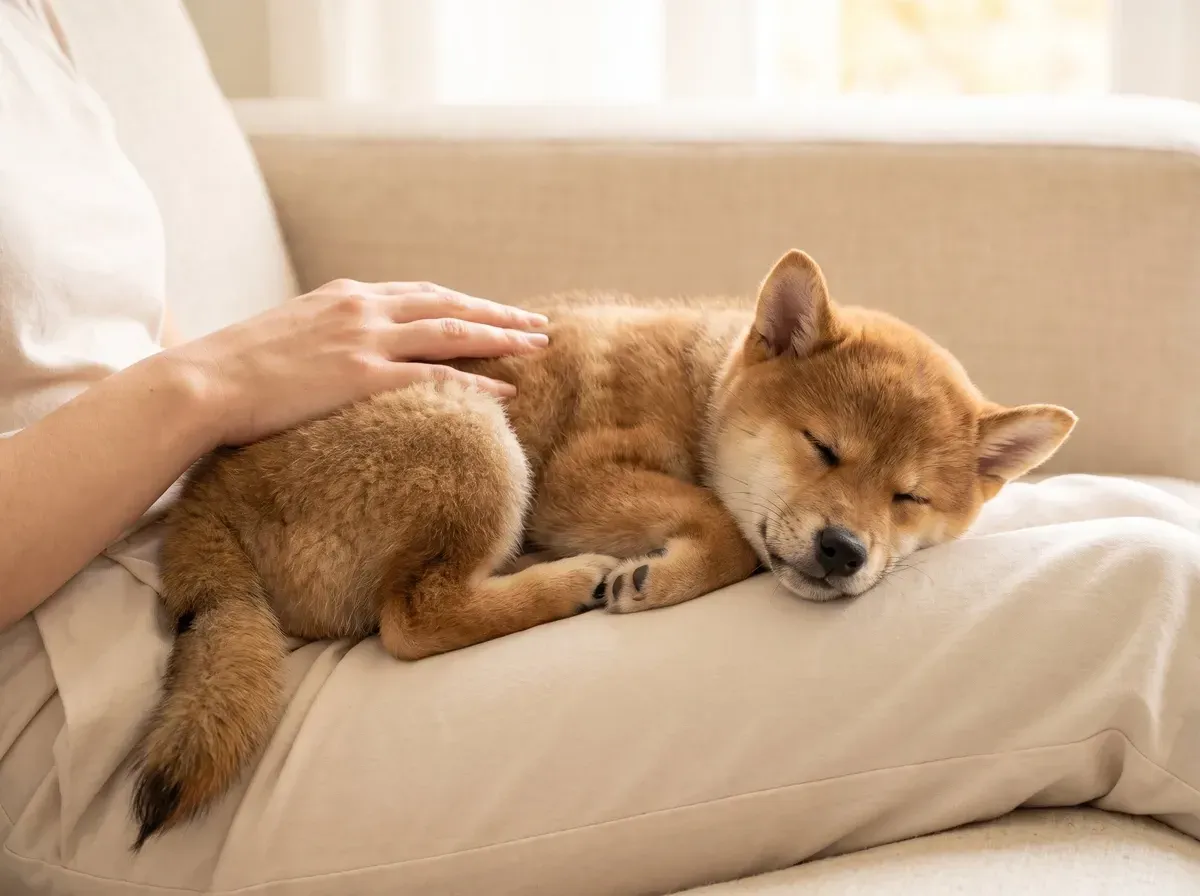
Shiba Inu, a red puppy asleep in a pet parent's lap on a linen sofa

The first six months

Caring for a Shiba Inu puppy

Their full vaccination course, microchip and Dubai Municipality registration come first. Then one paw, a few seconds, one treat, every day, so that nail trims and tooth brushing never become a fight.

Puppy health, 0 to 6 months
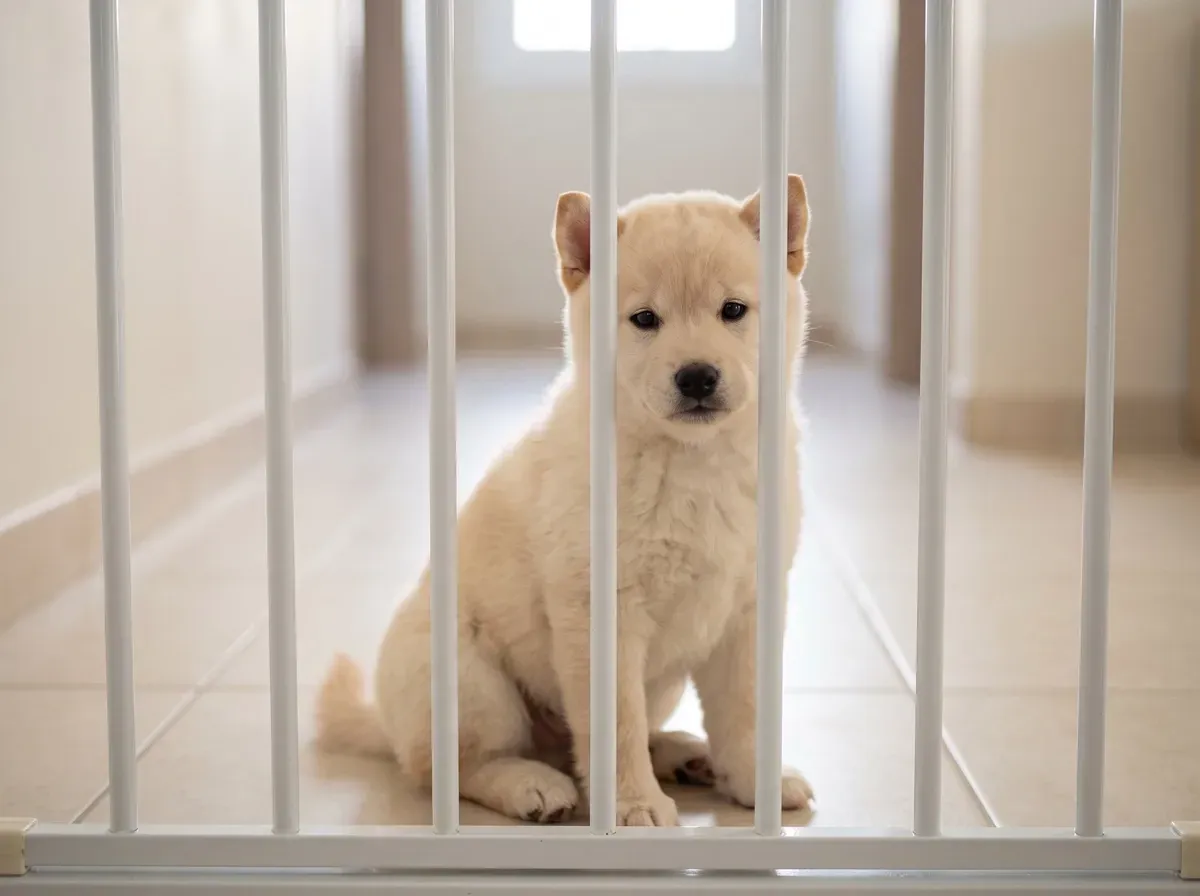
Shiba Inu, a cream puppy sitting behind a white baby gate in a tiled hallway

Getting the flat ready

Two doors between them and the street

Put a baby gate inside the front door before they arrive, and check the balcony rails and the gap under the gate: a puppy fits through gaps you have not noticed. Lay rugs where they run on marble.

Ten things that make their life better
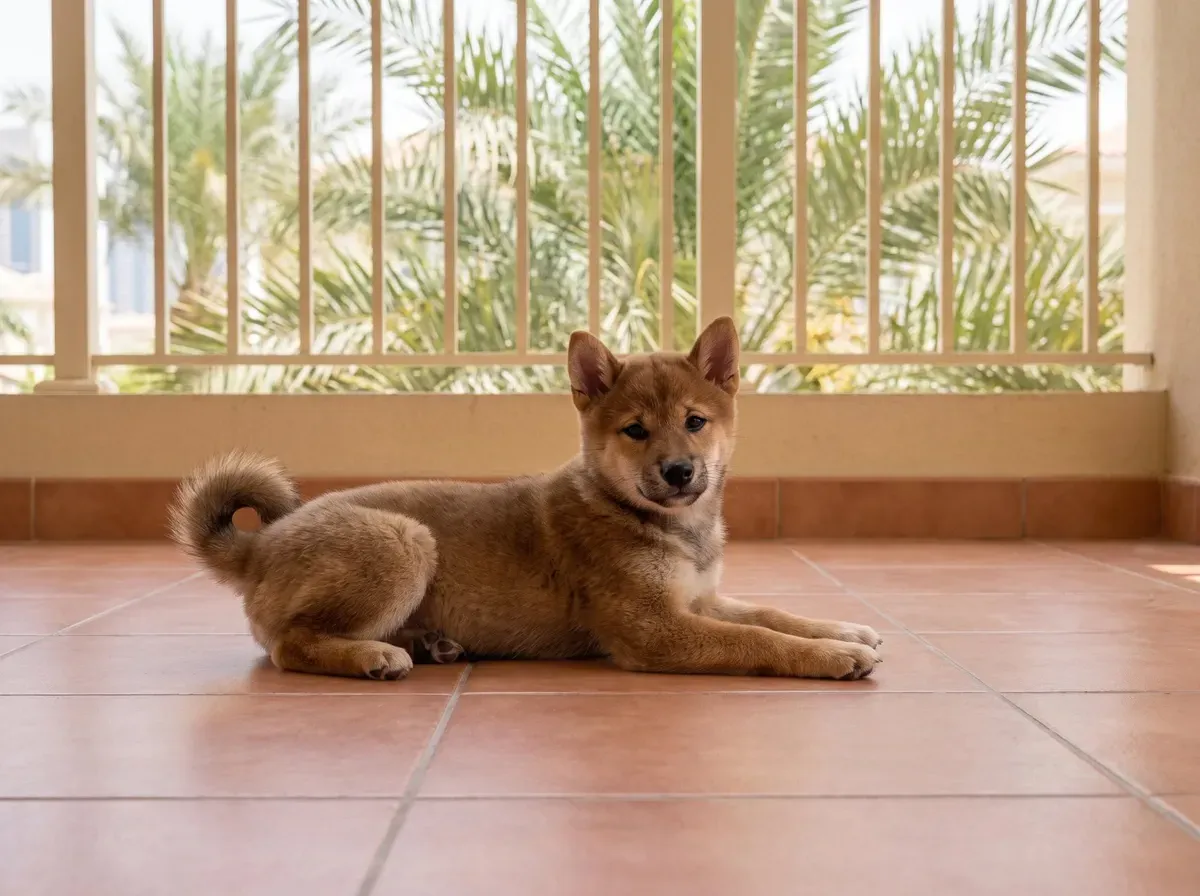
Shiba Inu in Dubai, a red puppy lying on a shaded balcony, palms behind the railing

Before you commit

Ask about eyes, hips and knees

Ask the breeder what eye, hip and knee results both parents have, and whether they have had skin problems. Itchy allergic skin, Progressive Retinal Atrophy (gradual loss of sight), Hip Dysplasia and Patellar Luxation (a slipping kneecap) can all show up in a young Shiba.

The reception of a Paws & Co clinic, with long cream benches and a stone reception desk

Before the clinics open

Join the founding families

AED 1,999 of essential care for AED 199. No payment now.

When to see a vet

When it is not behaviour.

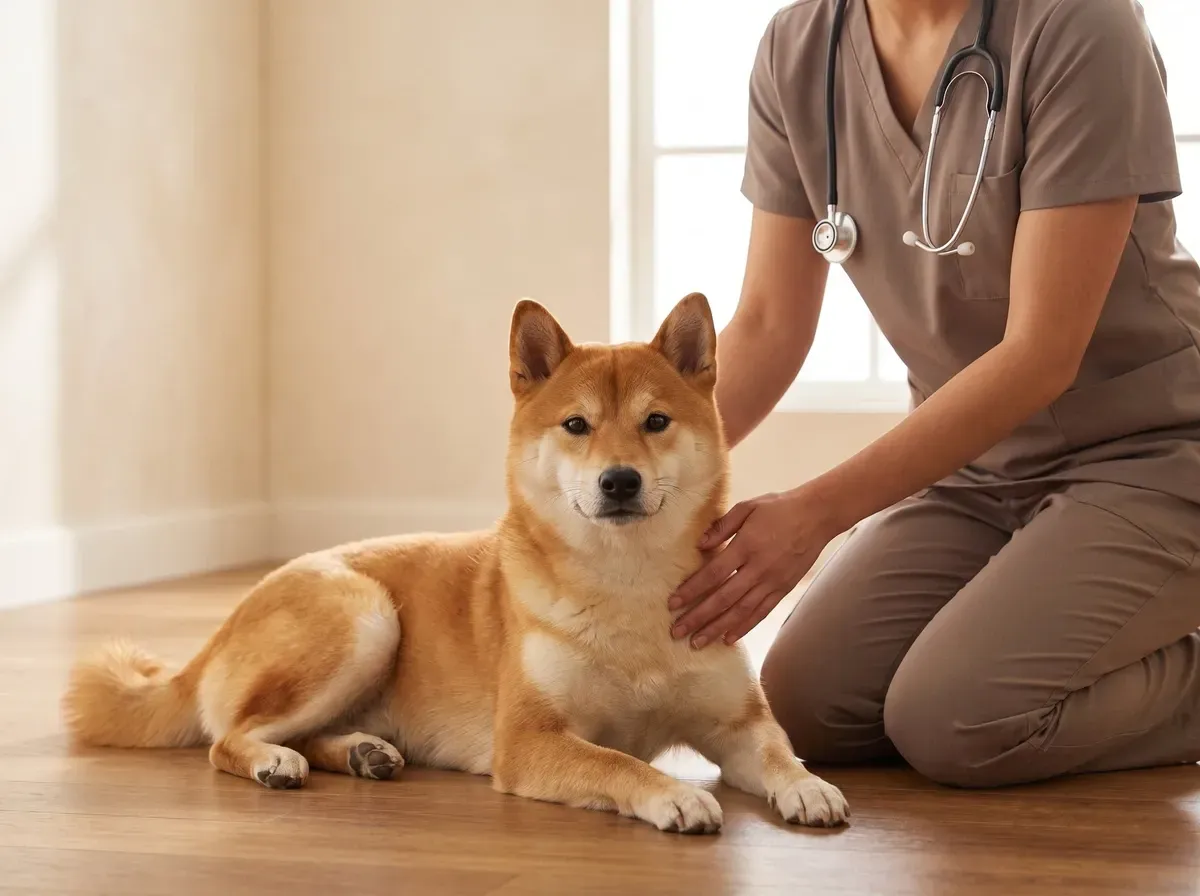
Shiba Inu, a red adult lying beside a vet in taupe scrubs, a hand on the dog's shoulder

Some of this is not a training problem, and treating it like one wastes time your dog may not have. If they are distressed when you leave, if they growl or guard their food, their toys or you, if they are frightened on the lead, or if anything about them changes suddenly at any age, contact your vet the same day. A tip from a website, ours included, is not the answer. If it cannot wait, contact your nearest emergency vet now.

With a Shiba, the hard part is telling protest from pain. A scream when you pick them up the way you always do, a new sore spot, or a Shiba who stops grooming themselves is telling you something. So is paw licking that goes on for hours, or skipping on a back leg. In an older Shiba, slowing down and gaining weight can be an underactive thyroid, and pacing at night can be the start of cognitive decline. Bloat (GDV, a twisted stomach) can happen in any dog, though it is most common in large, deep-chested breeds. A swollen, tight belly, retching with nothing coming up, sudden restlessness or drooling is an emergency: contact your vet now. It is easy to put the rest down to attitude, and that can cost months.

They'll keep holding out for chicken. If they stop coming for it, tell your vet.
Shiba history

Before they were yours.

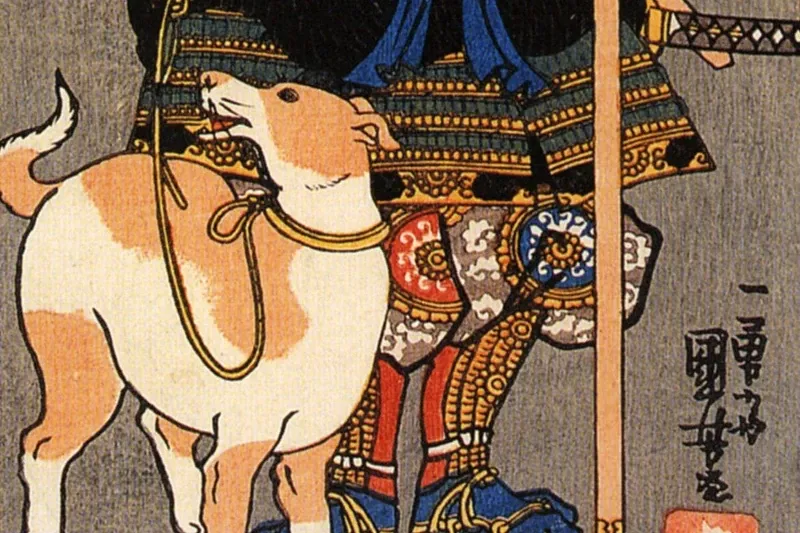
  1. Shiba Inu history, a woodblock print of a pale hunting dog at a warrior's feet, by Utagawa Kuniyoshi, about 1840
    Hata Rokurozaemon with his dog, woodblock print by Utagawa Kuniyoshi, about 1840.

    Before 1900

    The mountains of central Japan

    Small, tough hunting dogs worked ahead of the hunter through the thick brush of Japan's mountains, after small game and birds.

    What they still carryThe independence, the chase, and a dog who works things out for themselves.

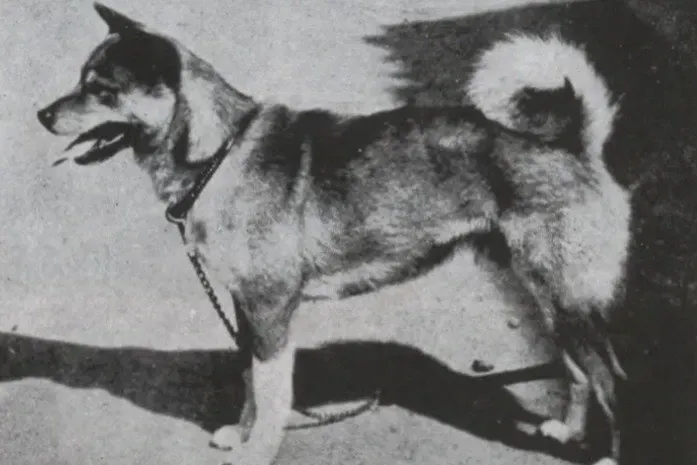
  2. Shiba Inu history, Aka standing side-on on a lead, photographed in Japan, 1953
    Aka, a Shiba Inu, photographed in Japan in 1953.

    1928 to 1936

    A national treasure

    With the native type fading, the Japanese Dog Preservation Society was founded in 1928, wrote the first standard in 1934, and in 1936 the Shiba was named a Natural Monument of Japan.

    What they still carryThe fox face, the curled tail and the bold, alert nature.

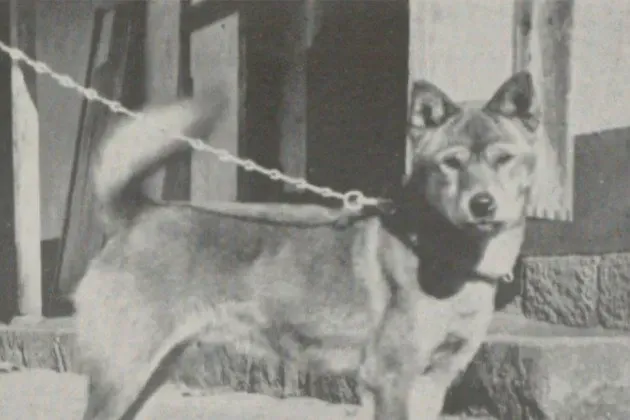
  3. Shiba Inu history, Riki, an Inaba dog from the San'in region, standing on a chain, Japan, 1936
    Riki, an Inaba dog from the San'in region, photographed in Japan in 1936.

    1940s to 1950s

    Rebuilt from three lines

    Wartime bombing, hunger and disease left very few Shibas. Breeders rebuilt the breed from three surviving lines, Shinshu, Mino and San'in.

    What they still carryA breed rebuilt from a small number of dogs.

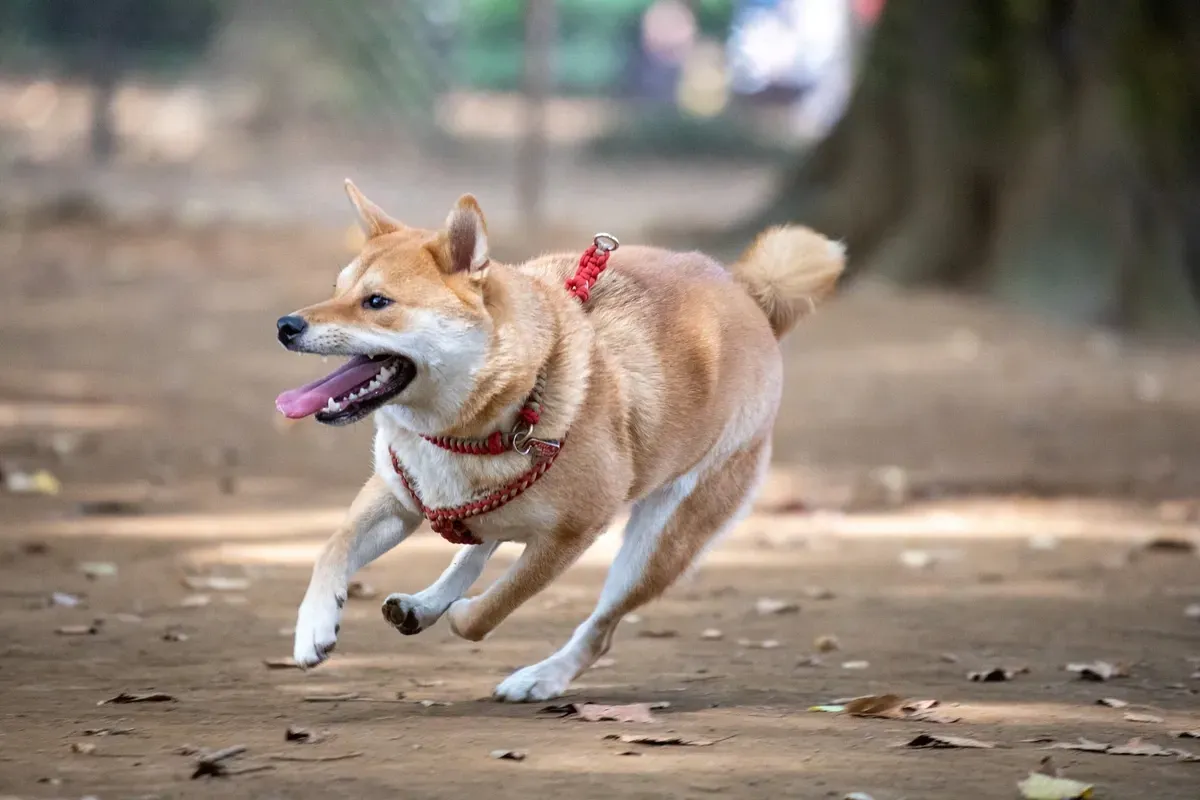
  4. Shiba Inu history, a red adult running along a leafy park path in a red harness, 2020
    A red Shiba Inu out for a run, photographed in 2020. Photo: whity, CC BY 2.0, via Wikimedia Commons

    1954 to 1992

    To America

    A US military family brought the first Shiba to the United States in 1954. The American Kennel Club recognised the breed in 1992.

    What they still carryA hunting dog's mind in a companion's life.

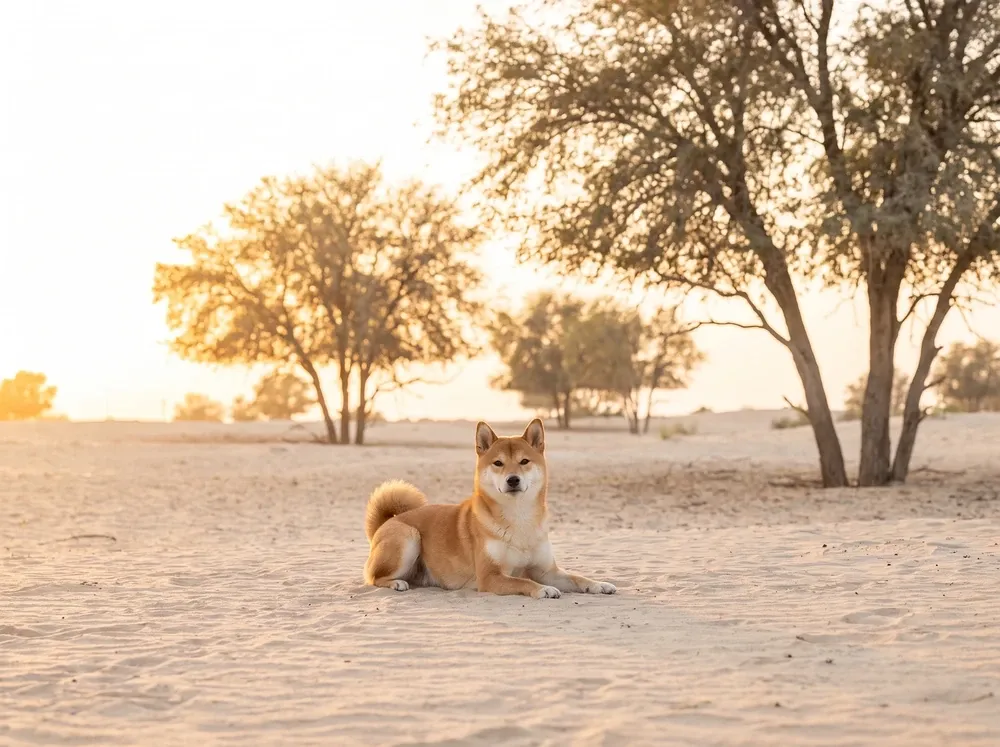
  5. Shiba Inu history, the breed today, a red adult lying on pale sand at the desert edge at sunrise

    Today

    In Dubai

    In the UAE a Shiba is a family dog, chosen for the fox face and the size, living in flats and villas.

    What they still carryA mountain hunter with a winter coat and strong opinions, now in 45°C heat.

Shiba questions

The ones you type at midnight.

Most of these get asked late at night, by someone watching their dog and not sure what they are seeing.

Shiba Inu in Dubai, a cream adult asleep at the foot of a bed at night, the skyline beyond
How long do Shiba Inus live?

Shiba Inus usually live 13 to 16 years. In a small UK study of about 420 Shibas, half lived past 14 and a half.

How big is a full grown Shiba dog?

A full grown Shiba dog is small and sturdy. Males weigh about 10.5 kg and females about 8 kg.

Do Shiba Inus shed a lot?

Yes, Shiba Inus shed heavily twice a year, when the undercoat comes out in clumps. Brush them several times a week, and every day through each shed.

Is a Shiba Inu dog hypoallergenic?

No, a Shiba Inu dog is not a low-shedding breed. Their thick double coat sheds heavily twice a year, so there is plenty of hair around the home.

What colours do Shiba Inus come in?

Shiba Inus come in fox red, sesame (red with black tips) or black and tan, always with cream markings on the cheeks, chest and belly. Cream Shibas turn up too, and are much loved.

Why do Shiba Inus scream?

Shiba Inus scream when they are held, handled or stopped from doing what they want, and usually it is protest, not pain. A scream at a new spot, or from nowhere, needs your vet.

Is a Shiba Inu a good family dog?

A Shiba Inu is loyal to their family and aloof with strangers, and gives affection on their own terms. They suit a patient pet parent who enjoys a strong personality.

Are Shiba Inus easy to train?

Shiba Inus are intelligent but strong-willed, so training takes patience. Short sessions paid with the best food work best, and recall is the weak spot: keep a lead on outside.

Can a Shiba Inu live in Dubai?

Yes, a Shiba Inu can live well in Dubai with care in the heat. Keep them in air conditioning through the day and walk before sunrise and after dark from May to September.

Worried about them? Contact your vet today.