We’re hiring people who love them like we do. Join us careers@pawsandco.comSee open roles
UAE Government Licensed MOCCAE
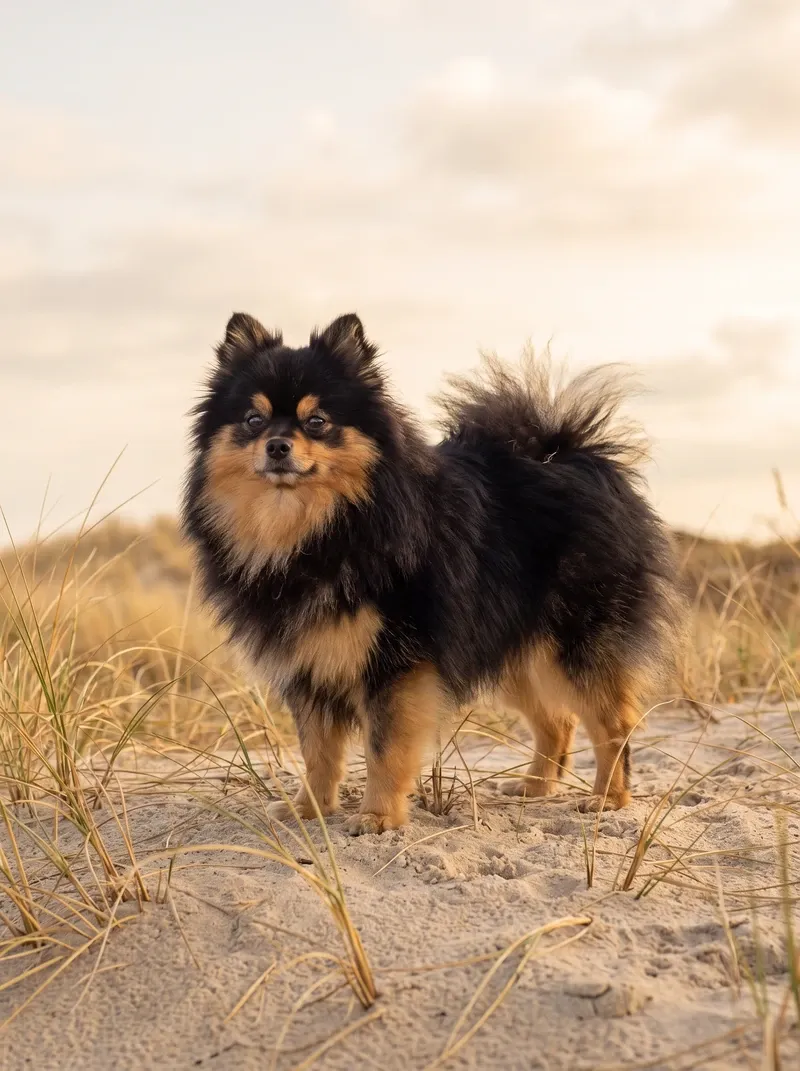
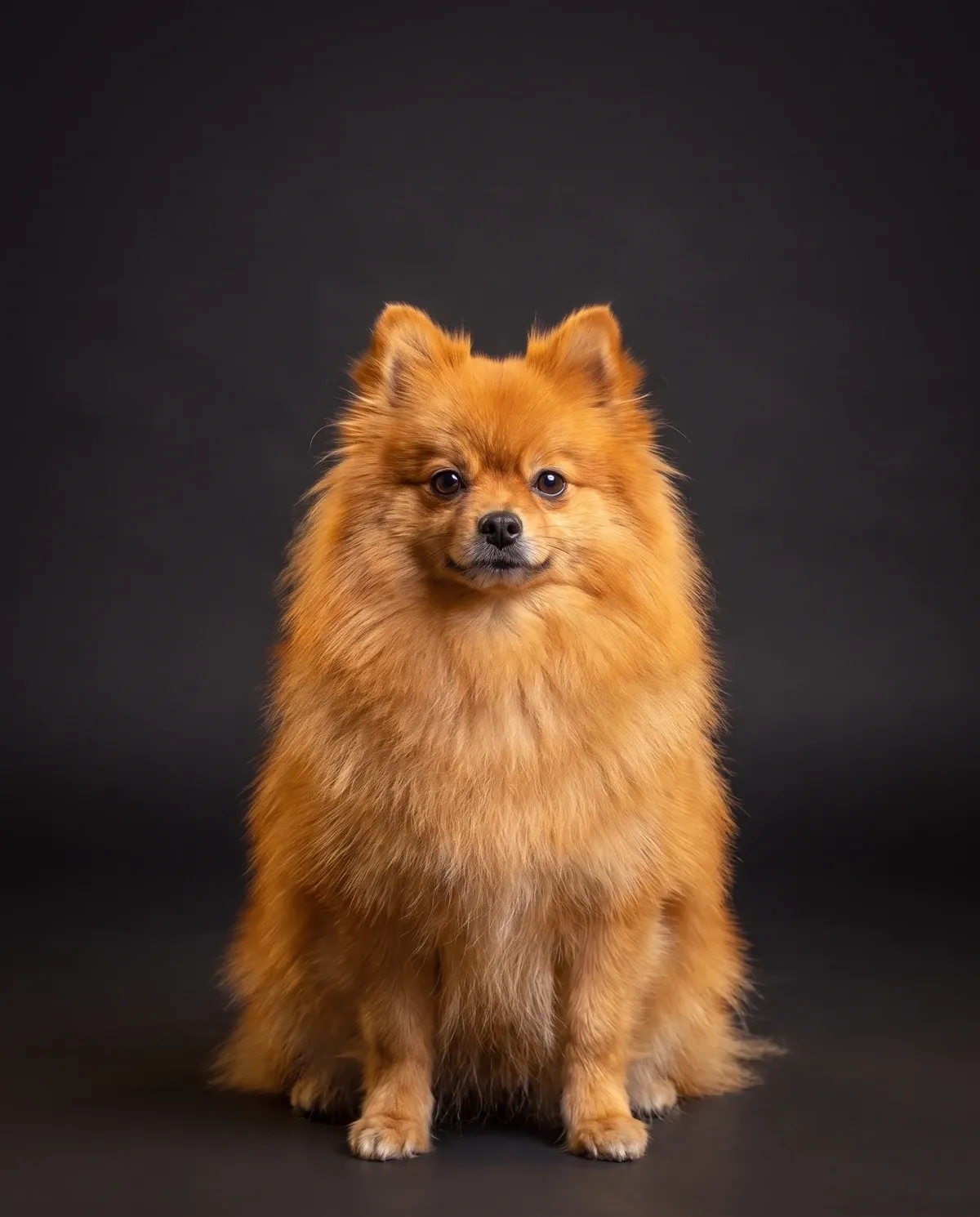
Pomeranian in Dubai, studio portrait of an orange adult with a thick ruff against a dark background

Breed guide  ·  Dogs

Pomeranian

She pulls towards every dog on the street. I walk her on a harness, so the pulling never presses on her throat.

Lifespan
12 to 16 years
Size
Small
Weight
1.4 to 3.2 kg
Shedding
Light to moderate

Last updated 14 October 2026

Join the founding families. AED 1,999 of essential care for AED 199.

No payment now. We'll be in touch by email and WhatsApp as we open enrolment.

✓
Thank you.

We will be in touch soon to confirm.

Pomeranian traits

What they brought with them.

Tap a card to see what is going on.

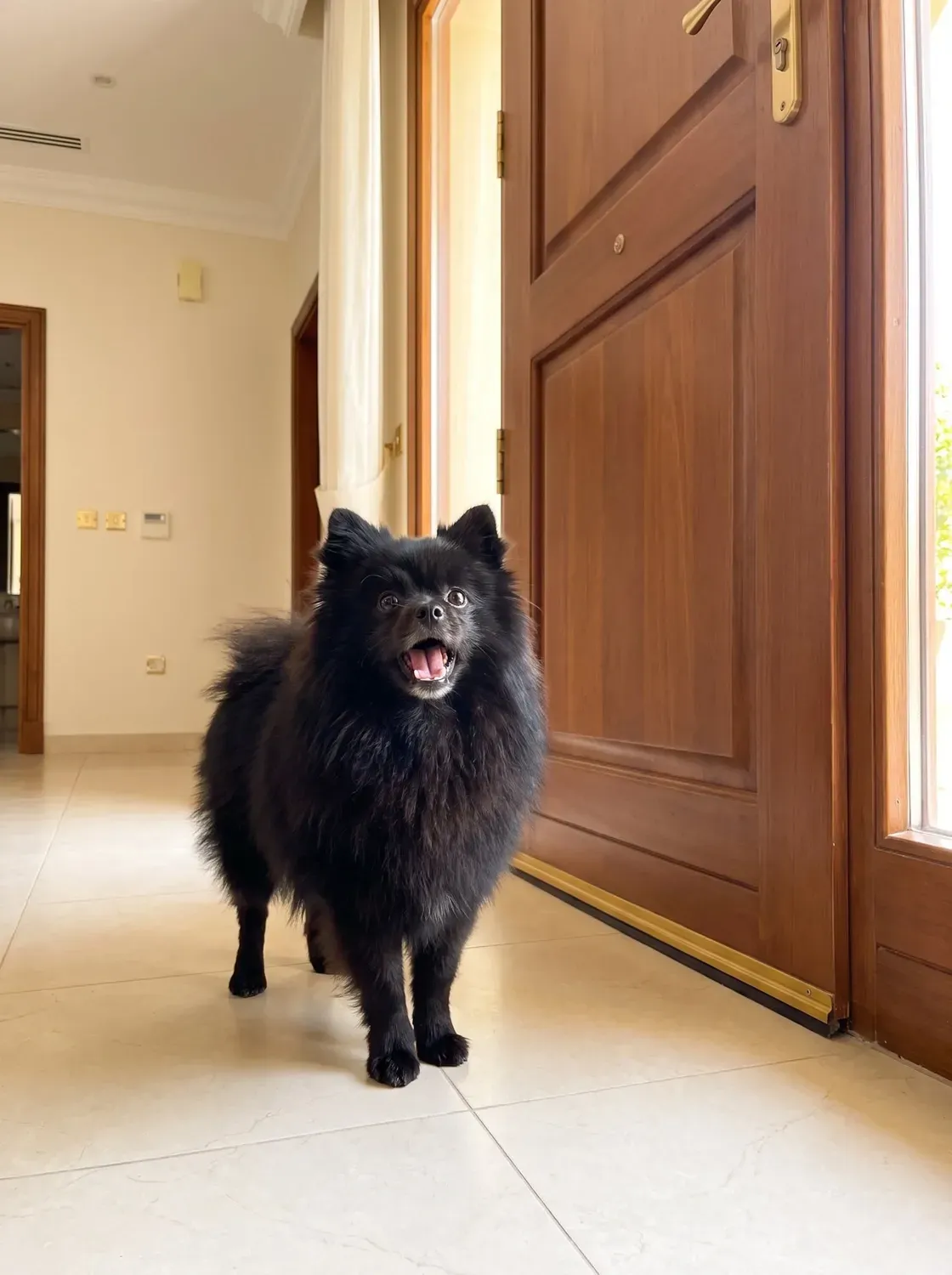
Pomeranian, a black adult barking by an open front door on a marble floor

At home

Why does my Pomeranian bark at everything?

Every knock, every delivery and every footstep in the corridor gets announced.

What's going onTheir ancestors were alarm dogs, bred to bark at the door. Thank them, call them away, and reward them when they stop.
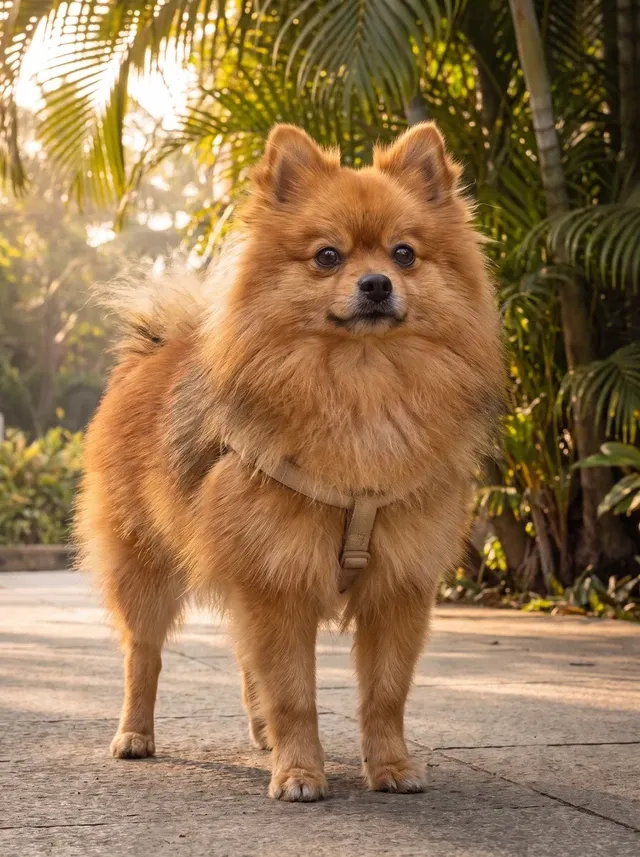
Pomeranian in Dubai, an orange adult in a plain harness standing tall on a shaded path under palms

At home

The big dog in a small body

Squaring up to dogs ten times their weight, and pulling towards every one on the street.

What's going onThey come from spitz guard dogs, and they are bold, alert and often unaware of their size. Call them away, and pick them up calmly if a big dog comes too close.

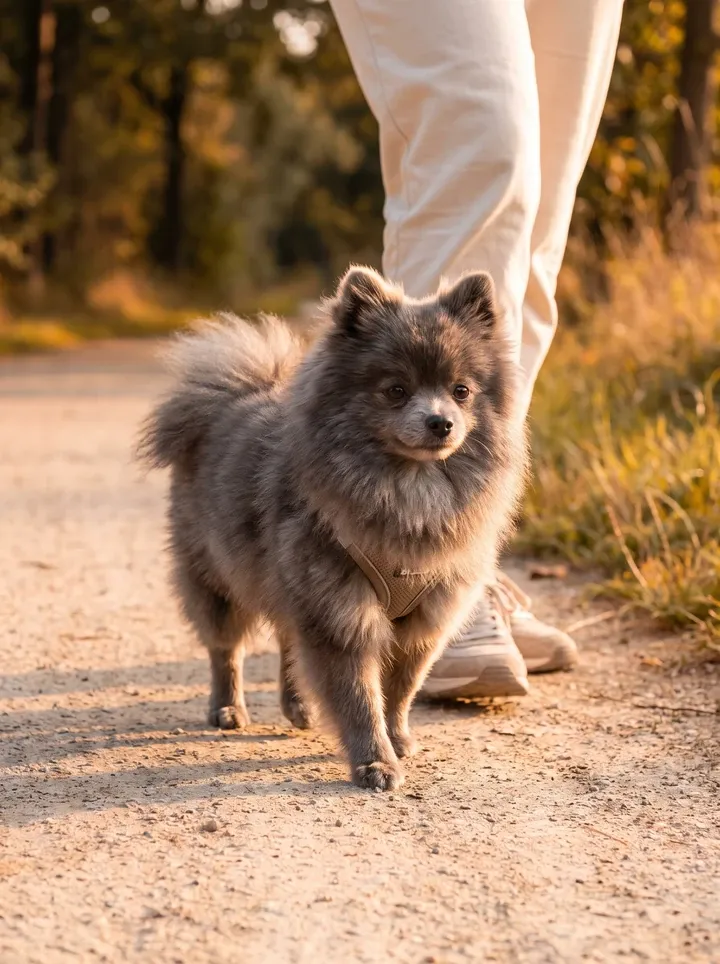
Pomeranian, a blue grey adult trotting beside a pet parent on a dirt path at dusk

At home

Why does my Pomeranian cough like a goose?

A honking cough, often when they are excited or pulling on the lead.

What's going onTracheal Collapse (a weak windpipe) is on their health record from puppy to prime adult. Walk them on a harness, so the lead never presses on their throat, and show the cough to your vet.

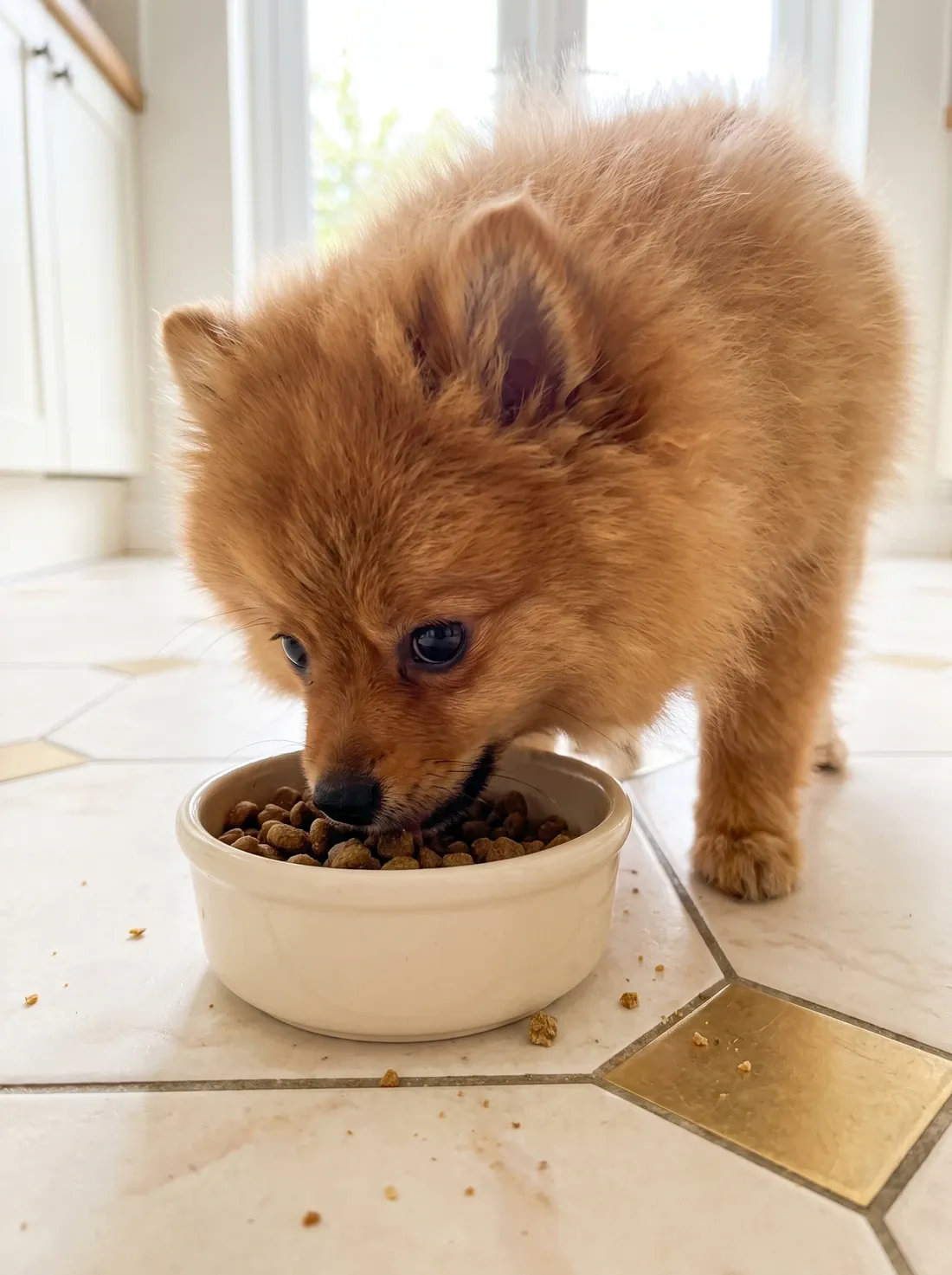
Pomeranian, a red puppy eating from a small ceramic bowl on a kitchen floor

At home

Little meals, often

Small meals, several times a day, through the first years.

What's going onLow blood sugar is on their record in their first years, and small, frequent meals keep them steady. If a young Pomeranian goes weak or wobbly, contact your vet now.

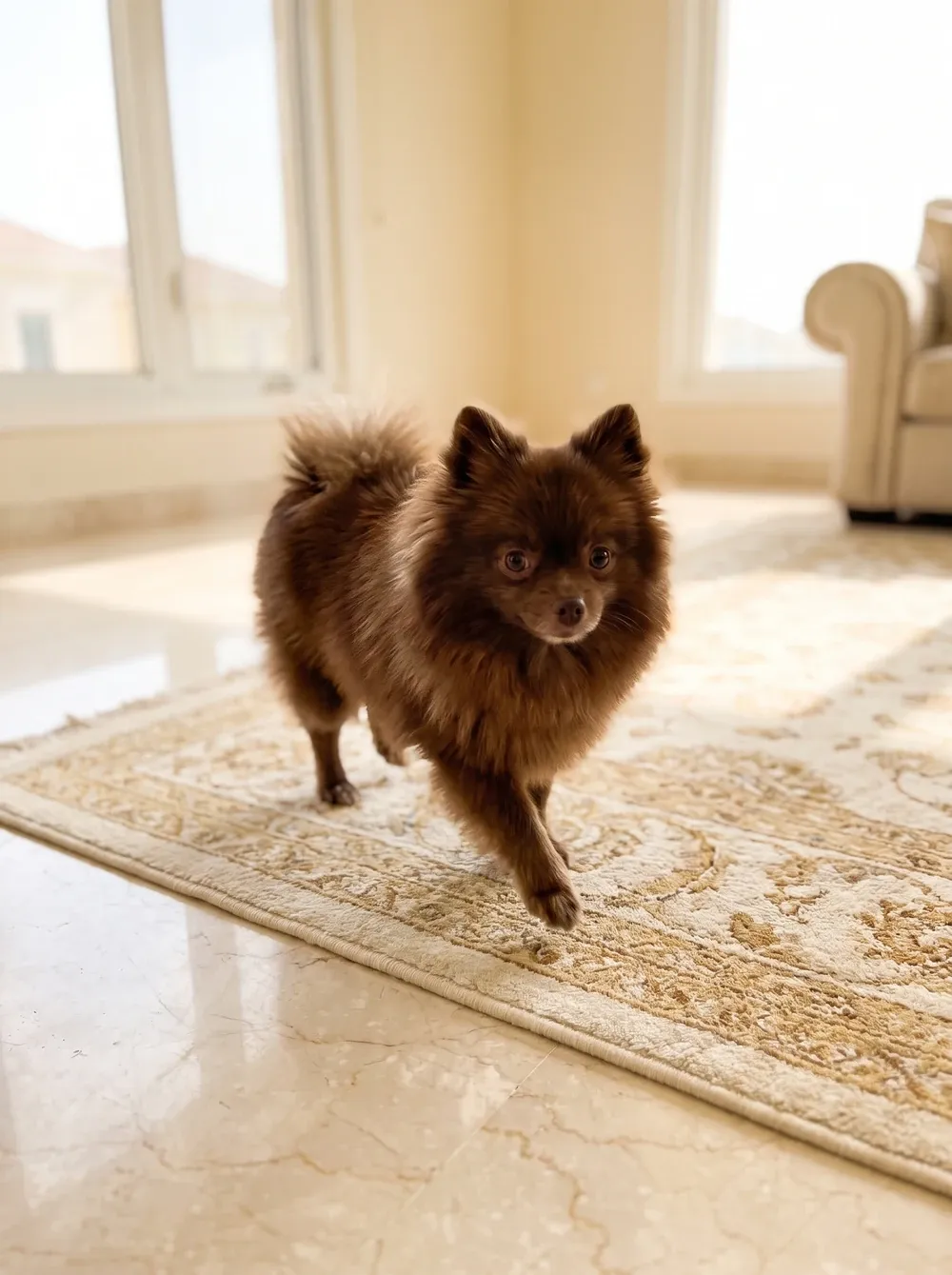
Pomeranian, a chocolate adult trotting across a rug laid over a cream marble floor

At home

Why does my Pomeranian skip on a back leg?

A few hopping steps on one back leg, then carrying on as if nothing happened.

What's going onPatellar Luxation (a slipping kneecap) is on their record from puppy to prime adult. It is worth showing your vet, and keeping them lean helps.

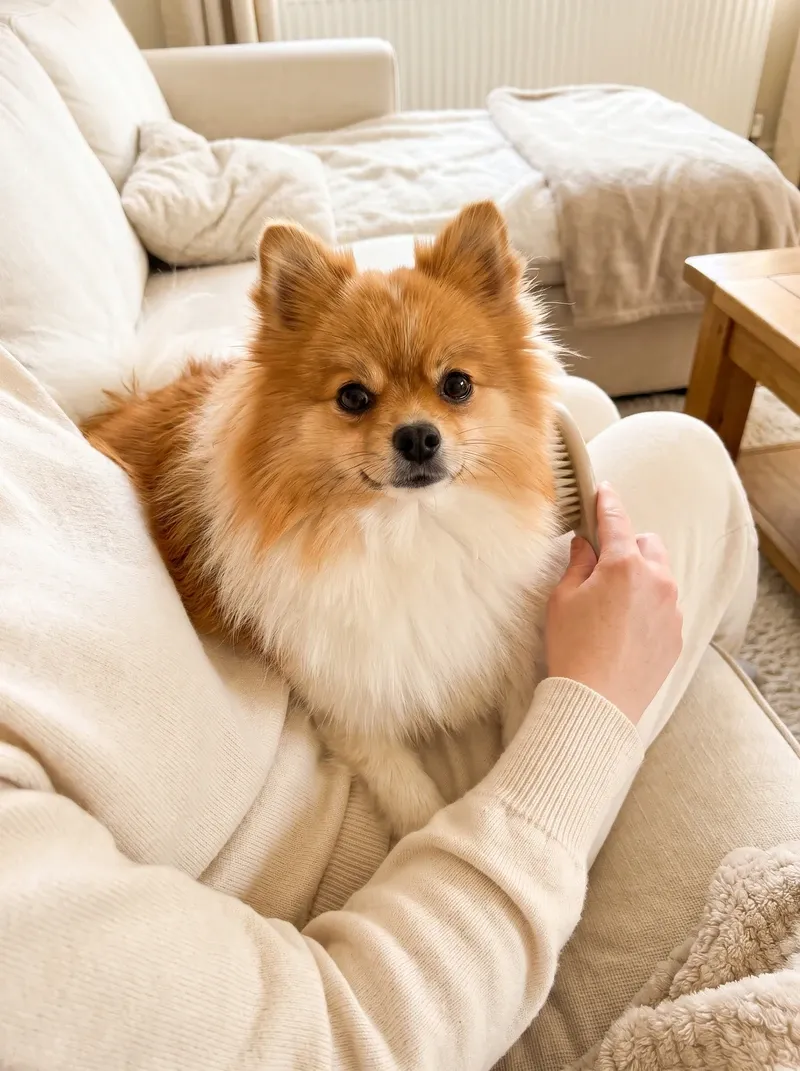
Pomeranian, a pet parent brushing the ruff of an orange and white adult sitting on a lap

At home

The coat that hides everything

A cloud of fluff that can knot underneath while the top still looks perfect.

What's going onTheir spitz double coat needs brushing down to the skin to stop mats. If you see thinning, darkening patches, contact your vet. Never clip or shave the undercoat.

A Pomeranian in Dubai

The bit nobody tells you.

Their job

Built for: Guarding and raising the alarm.

In Dubai: A flat, with a delivery at the door every hour to bark at.

Their size

Built for: A spitz made small for a lap.

In Dubai: A small body that carries crowded teeth, loose kneecaps and a delicate windpipe.

Their coat

Built for: A thick double coat made for the cold.

In Dubai: A summer lived in the air conditioning, with walks in the dark hours.

The barking and the cough mostly come from that mix.

You cannot make them bigger. You can protect the parts that are small, and the ten things below are how.

Your plan is built around their breed: the risks on a Pomeranian's record at every age, and the care that goes with each one.

Join the founding families. AED 1,999 of essential care for AED 199.

Daily care for a Pomeranian

Ten things that make their life better.

Many of them are free, and most matter at every age.

  1. They wear a double coat made for the cold, and their small body is close to the hot pavement.

    Every age, most of all puppies and from 7 years

    Free

    Why

    They wear a double coat made for the cold, and their small body is close to the hot pavement.

    What to do

    Keep them in air conditioning through the day. From May to September, walk before sunrise and after dark. Put the back of your hand on the pavement for five seconds. If you cannot keep it there, they cannot walk on it. If they pant hard or cough, move them into shade or air conditioning straight away, wet their coat and skin with cool water, not ice-cold, and contact your vet now. Keep cooling them on the way, with the air conditioning on in the car.

  2. Small dogs often get away with things a big dog never would. Give a Pomeranian an inch and they will take a mile.

    Every age, most of all 6 months to 2 years

    Free

    Why

    Small dogs often get away with things a big dog never would. Give a Pomeranian an inch and they will take a mile.

    What to do

    Two or three five-minute sessions a day, paid with part of their meals. Teach sit, wait and a quiet greeting, just as you would with a much bigger dog.

  3. They were bred from alarm dogs, and a flat gives them something to bark at every hour.

    Every age, loudest from 6 months to 2 years

    Free

    Why

    They were bred from alarm dogs, and a flat gives them something to bark at every hour.

    What to do

    When they bark at the door, say thank you, call them to you and reward them for the quiet. Do not shout back. They hear it as you joining in.

  4. Tracheal Collapse (a weak windpipe), Alopecia X (hormonal coat loss) and, as they get older, heart disease are all on their record.

    Every age, most of all from 4 years

    FreeIn your plan

    Why

    Tracheal Collapse (a weak windpipe), Alopecia X (hormonal coat loss) and, as they get older, heart disease are all on their record.

    What to do

    A honking cough, thinning dark patches in the coat, or tiring faster on walks are all worth telling your vet about. Weigh them once a month.

  5. Dental disease is their first health risk from puppy to prime adult.

    Every age

    Under AED 50 for a toothbrush and dog toothpasteIn your plan

    Why

    Dental disease is their first health risk from puppy to prime adult.

    What to do

    Brush their teeth every day, building up slowly, with a treat after. Touch their paws and lift their lips for a few seconds as part of the same routine. A dental evaluation (teeth and gum check) is in your plan at their puppy visits, and dental cleaning every 6 to 12 months from a young age.

  6. They are bright and busy, and they do best on short bursts of play.

    Every age, gentler games from 7 years

    Under AED 100

    Why

    They are bright and busy, and they do best on short bursts of play.

    What to do

    Hide a few pieces of their food, play two minutes of fetch in the corridor, or give them a small puzzle feeder.

  7. Their coat mats quickly, and mats hold heat and hide the skin.

    Every age, more as the adult coat comes in

    Under AED 150, once

    Why

    Their coat mats quickly, and mats hold heat and hide the skin.

    What to do

    Brush them through to the skin two or three times a week, and every day when they shed. Do not clip or shave the undercoat. De-shed and de-mat with the right tools, and keep up the brushing and bathing, so the coat stays clear and skin problems are easier to spot.

  8. Tracheal Collapse (a weak windpipe) is on their record, and a harness keeps the pressure off their throat.

    Every age

    Under AED 150

    Why

    Tracheal Collapse (a weak windpipe) is on their record, and a harness keeps the pressure off their throat.

    What to do

    Walk them on a well-fitted harness. Keep them on the lead near cats and big dogs, and pick them up calmly if a big dog comes too close.

  9. They are small enough to slip through balcony rails and under gates you would never notice.

    Every age, most of all puppies and young dogs

    Under AED 300 for a gate

    Why

    They are small enough to slip through balcony rails and under gates you would never notice.

    What to do

    Check the balcony, the gate and the front door at their height. A baby gate inside the front door keeps them in when a delivery comes.

  10. Patellar Luxation (a slipping kneecap) is on their record from puppy to prime adult, and arthritis comes later.

    Every age, most of all puppies, young dogs and from 7 years

    Free to AED 500 for rugs and a rampIn your plan

    Why

    Patellar Luxation (a slipping kneecap) is on their record from puppy to prime adult, and arthritis comes later.

    What to do

    Keep them lean. Lay rugs on marble, and put a ramp or steps up to the sofa and bed. If they skip on a back leg, tell your vet. An orthopaedic evaluation (a joint and bone exam) is in your plan every year from age two to four.

Three of these are in your plan. The rest you can do at home.

Join the founding families. AED 1,999 of essential care for AED 199.

Pomeranian health by age

Their health, at every age.

In a Pomeranian, a change in behaviour is often the first sign that something is wrong. Choose their age to see what to watch for, and the care that goes with it.

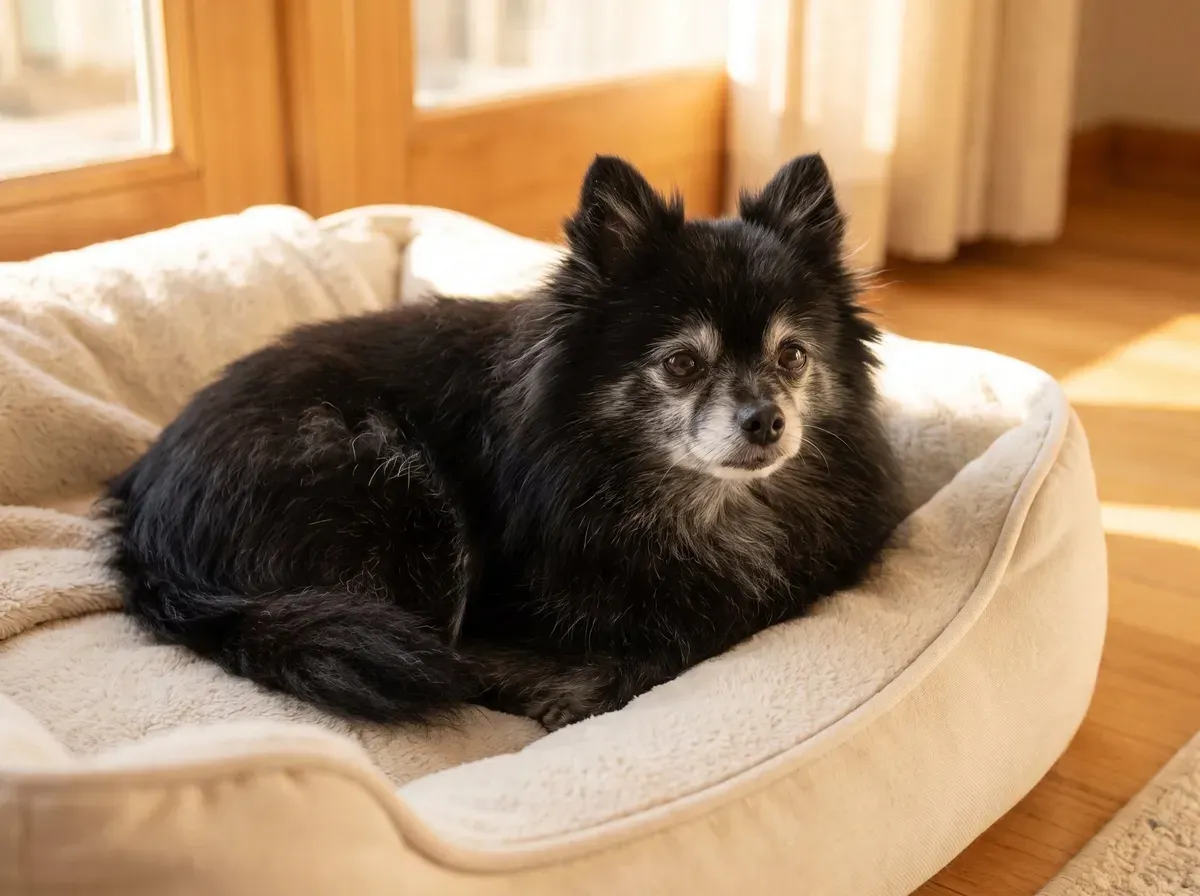
Pomeranian, an older black dog with a greying face resting in a cushioned bed

How old are they?

Their age

Pomeranian Puppy health

the first six months

What to watch for

  1. Retained deciduous teeth, malocclusion (teeth that do not meet properly) or early dental crowding
  2. Developmental or early clinical signs of Patellar Luxation (PL, slipping kneecap)
  3. Early or congenital expression of Tracheal Collapse (TC, weak windpipe)
  4. Juvenile onset of alopecia x (black skin disease)
  5. Early or congenital expression of Hypoglycaemia (low blood sugar)

The care that goes with it

  1. Core vaccinations, microchip and Dubai Municipality registration
  2. Deworming, and flea and tick prevention
  3. Growth and nutritional evaluation, and early socialisation
  4. Dental Disease screening, as a first baseline
  5. Early follow-up for any signs of Patellar Luxation (PL, slipping kneecap)
The full care detail
  • Core vaccination programme, microchipping and Dubai Municipality registration. Titre testing discussion where clinically appropriate; not a substitute for completing the core vaccine series
  • Deworming and external parasite prevention tailored to Dubai exposure
  • Body Condition Score (BCS, a check on whether they are the right weight), Muscle Condition Score (MCS, a check on their muscle), dental, growth and nutritional evaluation, and early socialisation
  • Baseline screening focused on Dental Disease
  • Early diagnostic follow-up for signs suggestive of Patellar Luxation (PL)

Their age

Pomeranian Juvenile health

6 months to 2 years

What to watch for

  1. Early periodontal disease (gum disease) and dental crowding
  2. Emerging Patellar Luxation (PL, slipping kneecap) with exercise intolerance or lameness
  3. Young-dog presentation of Tracheal Collapse (TC, weak windpipe)
  4. Recurrent or persistent alopecia x (black skin disease)
  5. Young-dog presentation of Hypoglycaemia (low blood sugar)

The care that goes with it

  1. Daily tooth brushing, and a professional dental clean every 6 to 12 months from an early age
  2. A harness, never a collar, to protect the windpipe
  3. Neutering or spaying, timed for a small breed
  4. Small, frequent meals, to keep blood sugar steady
  5. A cough that keeps coming back fully investigated, rather than assumed to be Tracheal Collapse (TC, weak windpipe)
The full care detail
  • Daily dental brushing; professional dental cleaning every 6-12 months from an early age
  • Use a harness rather than a collar to protect the trachea from collapse
  • Neuter/spay timing discussion that accounts for small-breed growth and disease risk
  • Feed small, frequent meals to prevent hypoglycaemia in young dogs
  • Investigate recurrent signs rather than repeatedly treating presumed Tracheal Collapse (TC)

Their age

Pomeranian Young Adult health

2 to 4 years

What to watch for

  1. Dental Disease
  2. Patellar Luxation (PL, slipping kneecap)
  3. Tracheal Collapse (TC, weak windpipe)
  4. Alopecia X (Black Skin Disease)
  5. Hypoglycaemia (low blood sugar)

The care that goes with it

  1. Daily tooth brushing, and a professional dental clean every 6 to 12 months
  2. A harness, never a collar, to protect the windpipe
  3. Small, frequent meals, to keep blood sugar steady
  4. Annual orthopaedic evaluation (joint and bone exam) for the kneecaps, and a lean weight
  5. Coat watched closely, with a dermatological evaluation (skin exam) for Alopecia X (hormonal coat loss)
The full care detail
  • Daily dental brushing; professional dental cleaning every 6-12 months from an early age
  • Use a harness rather than a collar to protect the trachea from collapse
  • Feed small, frequent meals to prevent hypoglycaemia in young dogs
  • Annual orthopaedic evaluation for Patellar Luxation (PL); maintain lean body weight to protect joints
  • Monitor coat health; Alopecia X (hormonal coat loss) is breed-specific and requires dermatological evaluation

Their age

Pomeranian Prime Adult health

4 to 7 years

What to watch for

  1. Dental Disease (Advanced)
  2. Tracheal Collapse (TC, weak windpipe), Progressive
  3. Heart Disease (Early)
  4. Alopecia X
  5. Patellar Luxation (PL, slipping kneecap), Progressive

The care that goes with it

  1. Annual cardiac auscultation (listening to the chest), and an echocardiogram (an ultrasound scan of the heart) if a murmur is heard
  2. Tracheal Collapse (TC, weak windpipe) management: weight control, a harness, and medicines for the cough and inflammation
  3. Dermatological evaluation (skin exam) and hormone testing for Alopecia X
  4. Annual dental x-rays, and damaged teeth removed early
  5. A lean, healthy weight, to protect the windpipe and the joints
The full care detail
  • Annual cardiac auscultation to detect early heart murmurs; echocardiogram if murmur is detected
  • Tracheal Collapse (TC) management: weight control, harness use, cough suppressants, and anti-inflammatories
  • Dermatological evaluation for Alopecia X; hormonal testing (cortisol, sex hormones) to guide treatment
  • Annual dental X-rays; extract compromised teeth to prevent systemic infection
  • Maintain strict healthy weight to protect both trachea and joints simultaneously

Their age

Pomeranian Senior health

7 to 10 years

What to watch for

  1. Mitral Valve Disease (MVD, leaky heart valve)
  2. Dental Disease (Tooth Loss)
  3. Kidney Disease
  4. Arthritis
  5. Cognitive Dysfunction Syndrome (dementia in older pets)

The care that goes with it

  1. An echocardiogram (an ultrasound scan of the heart) twice a year, and heart medication when a cardiologist advises it
  2. A senior diet with controlled sodium and phosphorus
  3. Blood and urine panels twice a year, for the kidneys
  4. Joint supplements, to support ageing joints
  5. Cognitive enrichment: puzzle feeders, new scents and a steady routine
The full care detail
  • Bi-annual echocardiogram; begin cardiac medication when indicated by veterinary cardiologist
  • Senior diet transition: controlled sodium, phosphorus, and high-quality protein sources
  • Bi-annual blood and urine panels to monitor kidney function
  • Introduce joint supplements (glucosamine, chondroitin, omega-3s) to slow arthritic progression
  • Cognitive enrichment: puzzle feeders, new scents, and consistent daily routines

Their age

Pomeranian Geriatric health

10 years and over

What to watch for

  1. Congestive Heart Failure
  2. Chronic Kidney Disease (CKD, long-term kidney failure), Advanced
  3. Cognitive Dysfunction Syndrome (Advanced)
  4. Severe Arthritis
  5. Cancer

The care that goes with it

  1. Fluid therapy at home for the kidneys, if prescribed, with appetite and drinking watched every day
  2. A calm, familiar home and a gentle daily routine
  3. Orthopaedic bedding, ramps and non-slip floors
  4. Quality-of-life assessment
  5. Palliative care (comfort care)
  6. End-of-life planning with your veterinary team
The full care detail
  • Home fluid therapy for kidney support if prescribed; monitor hydration and appetite daily
  • Maintain calm, familiar environment and gentle daily routine for cognitively impaired dogs
  • Orthopaedic bedding, ramps, and non-slip surfaces to support mobility safely
  • Quality-of-life assessments
  • Tailored palliative and comfort-focused care plan
  • Compassionate end-of-life planning with your veterinary team

Breed predispositions indicate an increased risk rather than certainty of disease. What is right for them always comes from their own history and an evaluation.

Getting a Pomeranian puppy in Dubai

Before they come home.

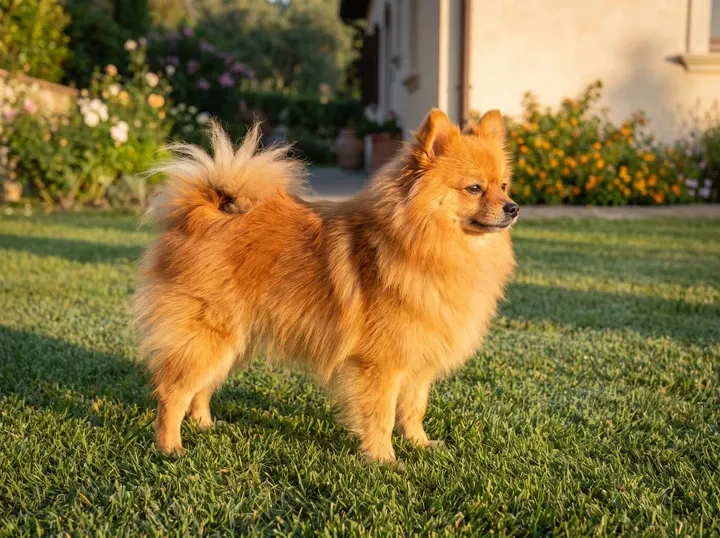
Pomeranian, an orange adult standing on a villa lawn in the early sun

Mini, toy or pocket

One breed, one small size

There is one Pomeranian, a toy spitz: adults weigh 1.4 to 3.2 kg. Mini, toy, pocket and tiny are all words for that same small dog, not separate types. What changes from dog to dog is the coat colour, and the personality.

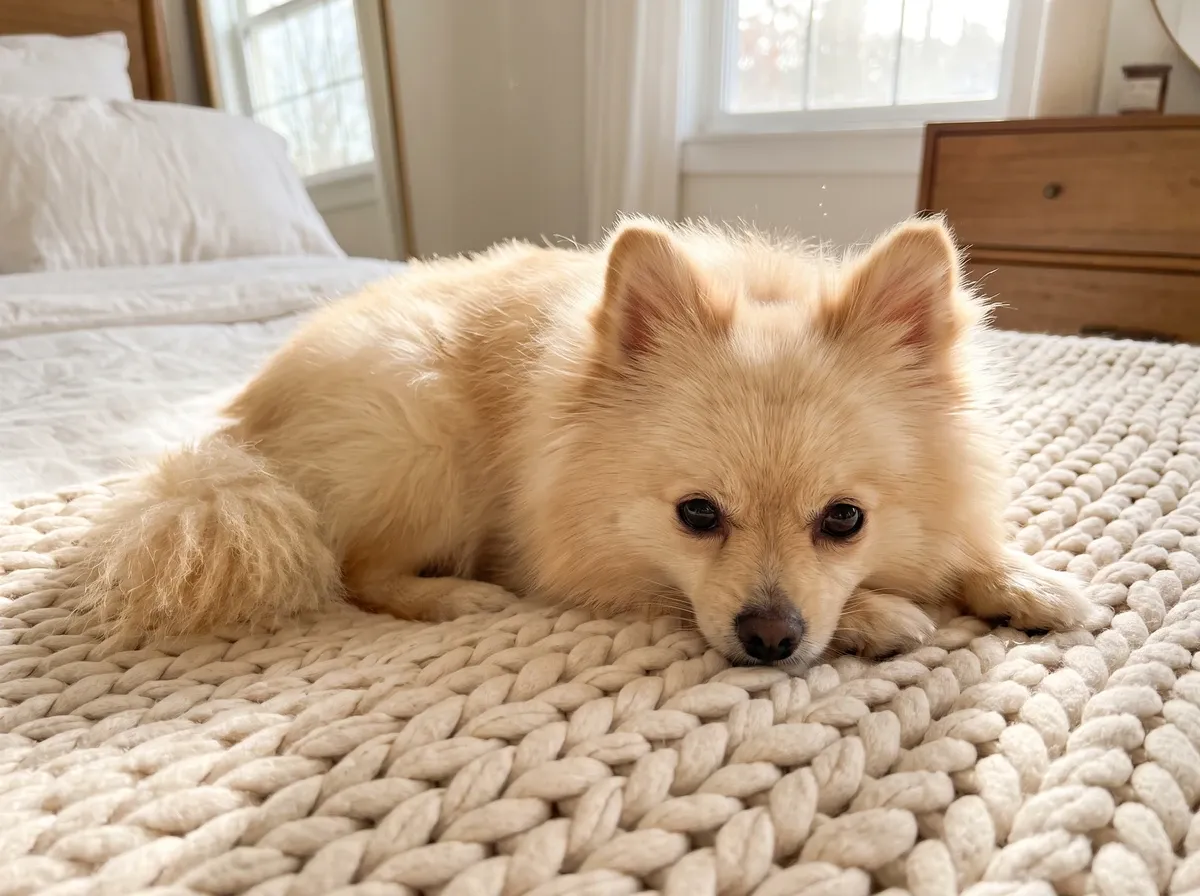
Pomeranian, a cream adult lying on a bone-coloured knitted blanket

Colours

Orange, cream, and every shade between

Pomeranians come in almost every colour: orange, red, cream, white, black, brown and blue, with brindle, parti-colour and tan points too. Whatever the shade, the care is the same.

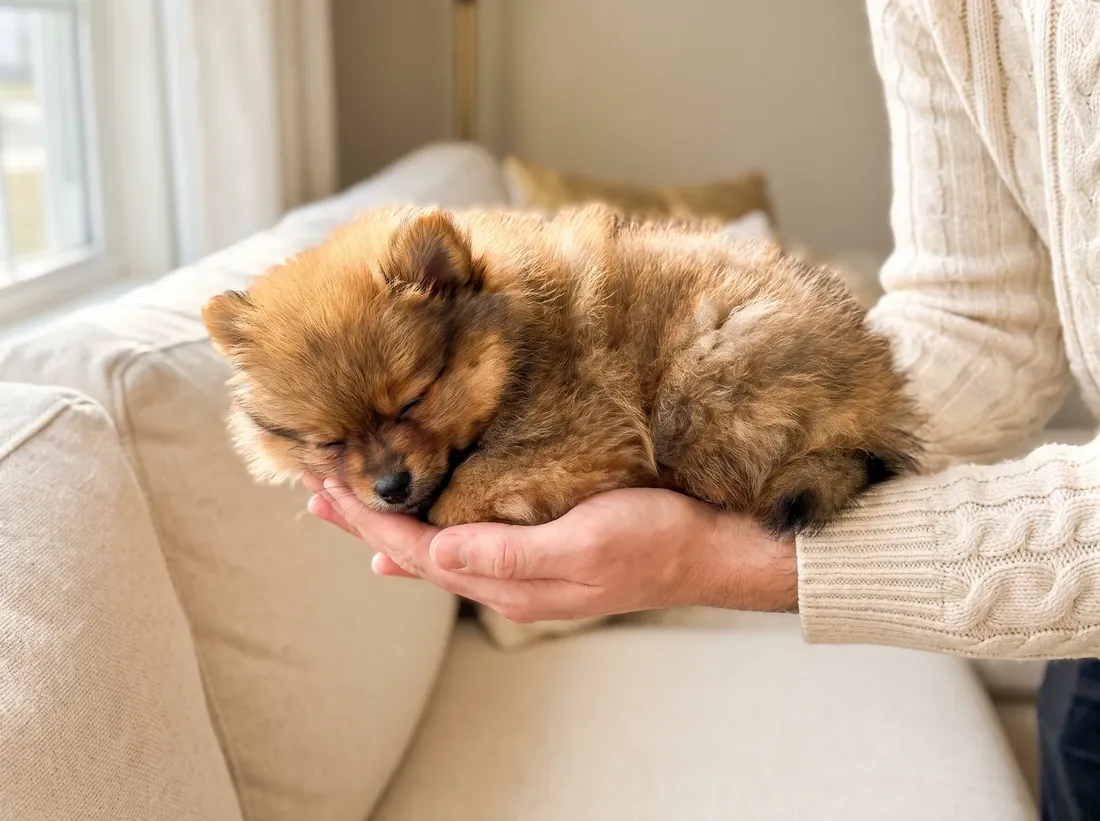
Pomeranian, a sable puppy asleep in a pet parent's cupped hands

The first six months

Caring for a Pomeranian puppy

Their full vaccination course, microchip and Dubai Municipality registration come first. Feed small meals often, because low blood sugar is on a young Pomeranian's record, and start the toothbrush early.

Puppy health, 0 to 6 months
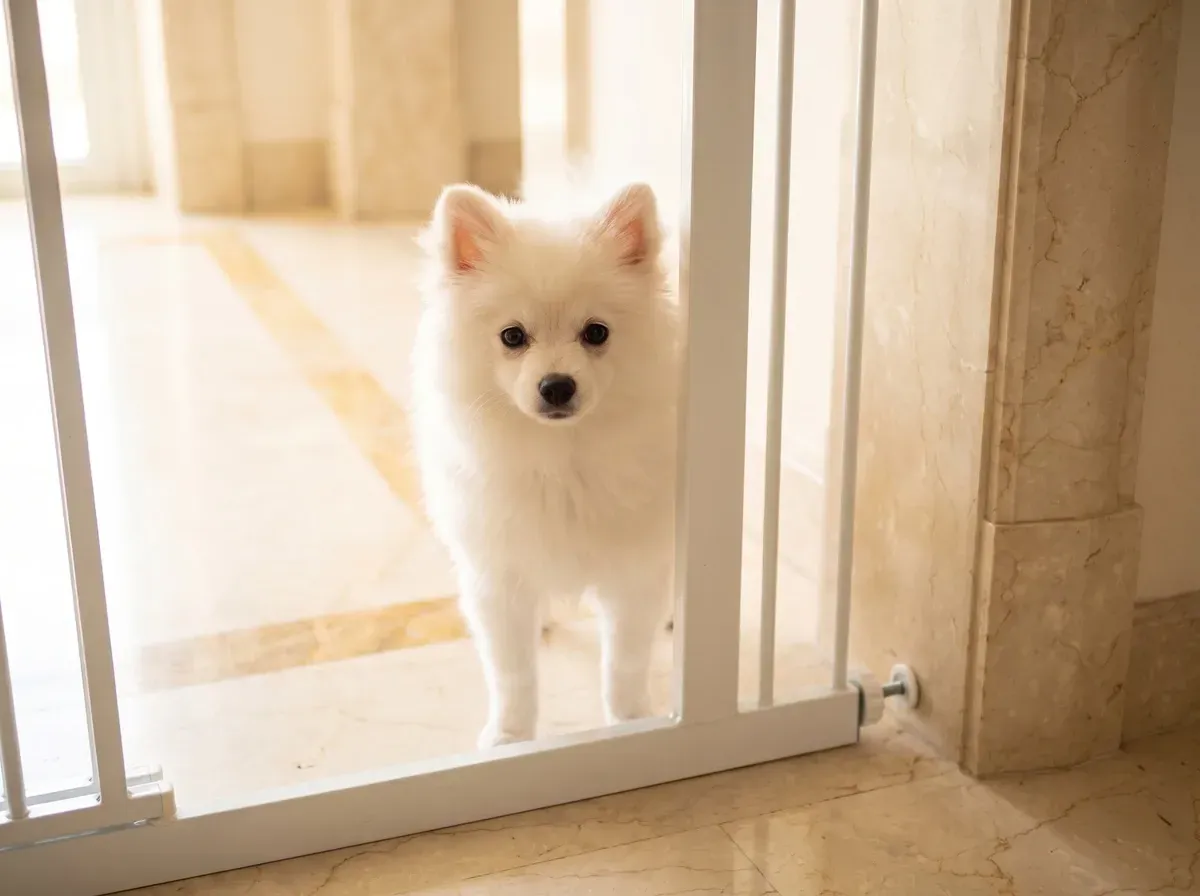
Pomeranian, a white puppy standing at an open baby gate in a marble hallway

Getting the home ready

Check every gap at their height

Look at the balcony rails, the gate and the front door from their height, and put a baby gate inside the front door. Lay rugs on the marble and a ramp up to the sofa, for their knees.

Ten things that make their life better
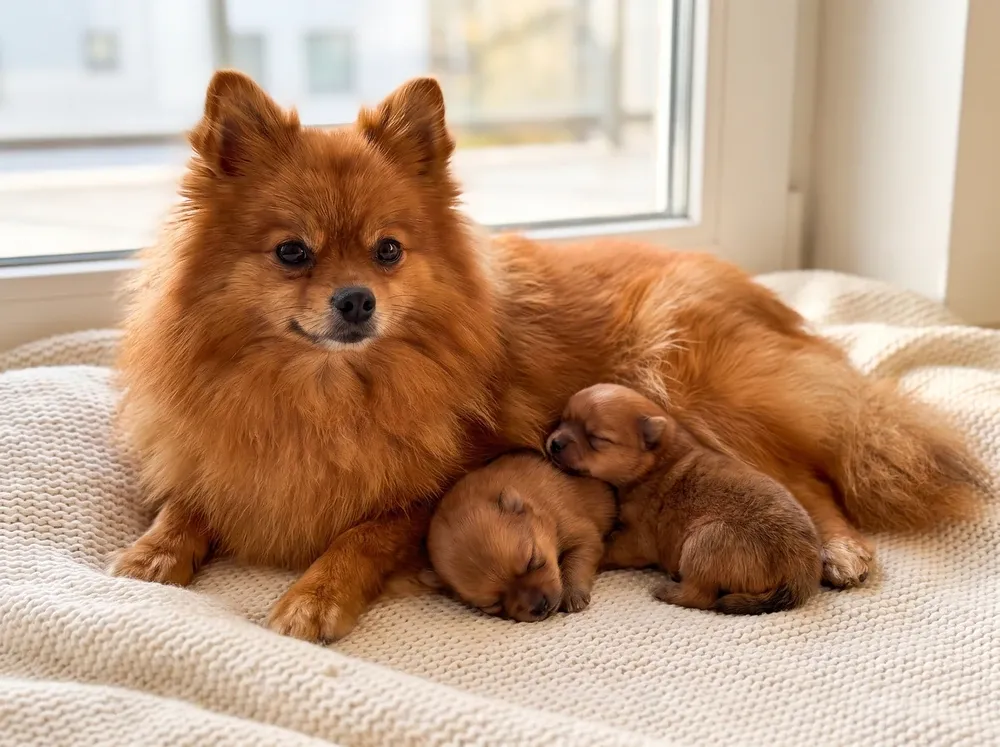
Pomeranian, a red mother lying on a blanket with two sleeping puppies close by

Before you commit

Ask about the parents' knees and teeth

Ask the breeder whether both parents have had their knees evaluated, and how their teeth have been. Slipping kneecaps and dental disease are among the first risks on a young Pomeranian's record.

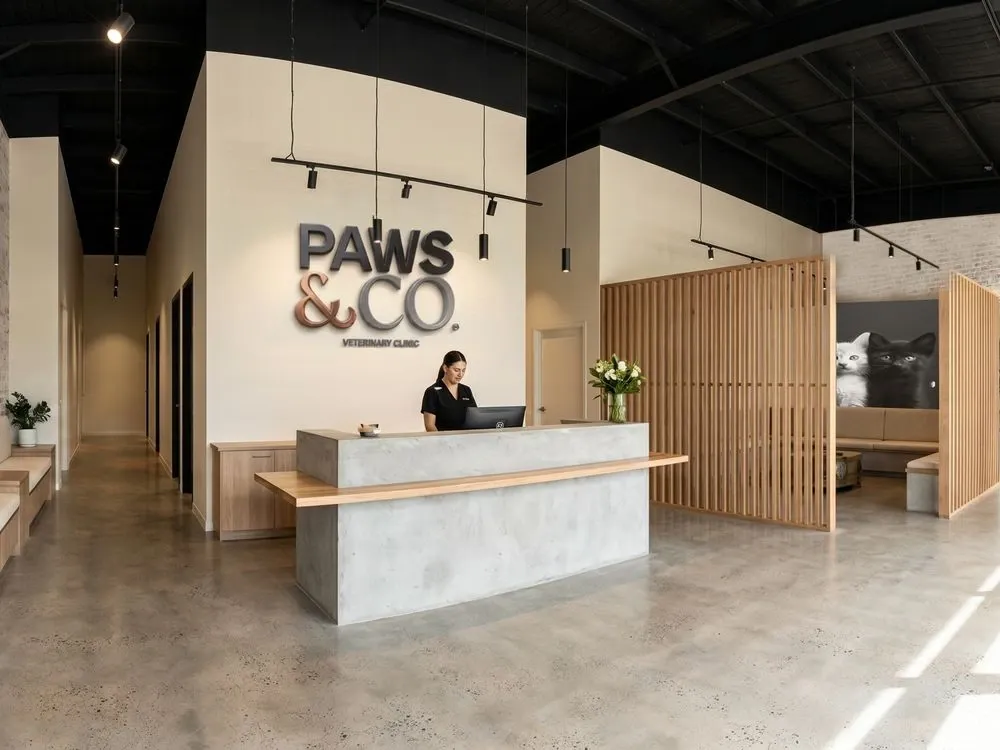
The reception of a Paws & Co clinic, with long cream benches and a stone reception desk

Before the clinics open

Join the founding families

AED 1,999 of essential care for AED 199. No payment now.

When to see a vet

When it is not behaviour.

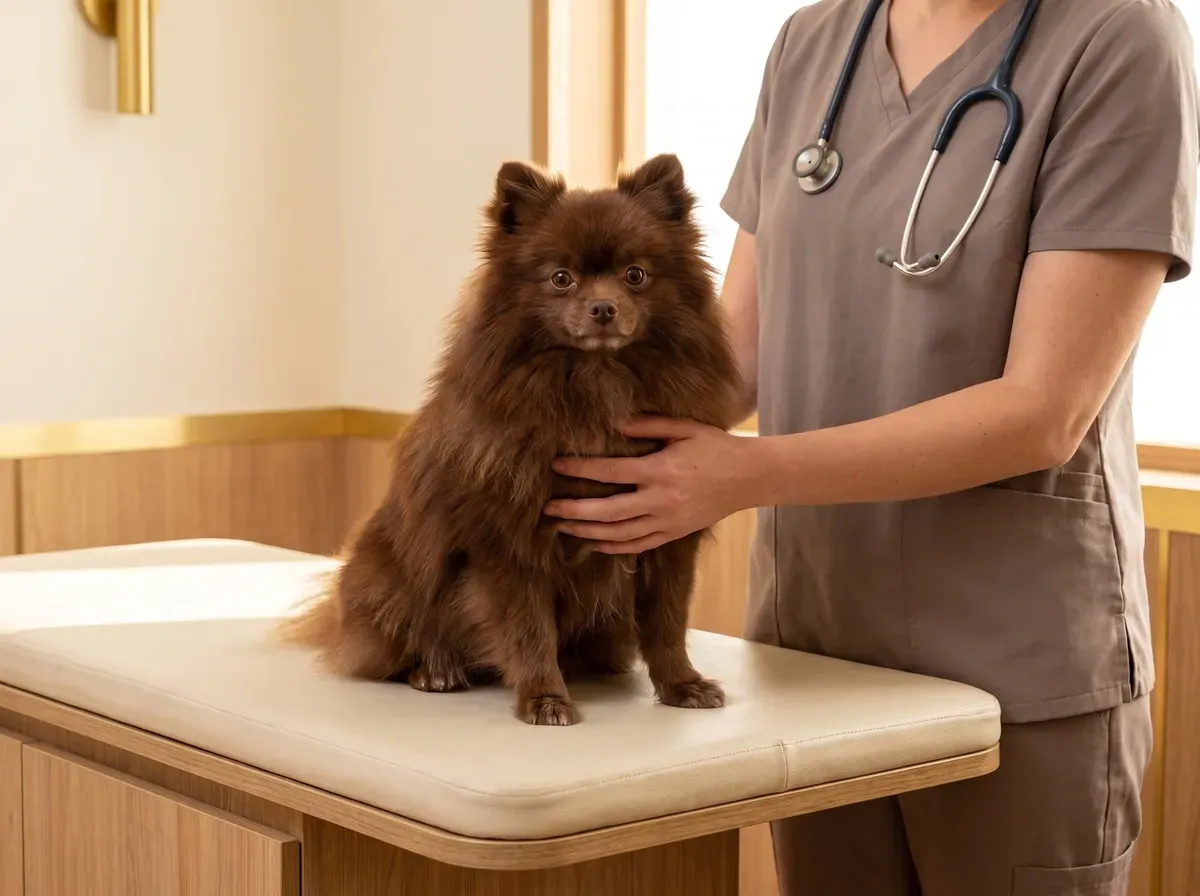
Pomeranian, a calm chocolate adult on a padded table, a vet in taupe scrubs resting a hand on the dog's chest

Some of this is not a training problem, and treating it like one wastes time your dog may not have. If they are distressed when you leave, if they growl or guard their food, their toys or you, if they are frightened on the lead, or if anything about them changes suddenly at any age, contact your vet the same day. A tip from a website, ours included, is not the answer. If it cannot wait, contact your nearest emergency vet now.

With a Pomeranian, listen to their breathing and watch their mouth. A honking cough can be their windpipe. Pawing at their face or dropping food can be their teeth. A young Pomeranian who goes weak or wobbly may have low blood sugar: contact your vet now. Bloat (GDV, a twisted stomach) needs the same speed: a swollen, tight belly, retching with nothing coming up, sudden restlessness or drooling. It can happen in any dog, though it is most common in large, deep-chested breeds. In an older one, a cough at night or tiring faster on walks can be their heart, not their age. It is easy to put it down to a small dog being dramatic. Tell your vet anyway, and early.

They'll keep pulling towards every dog. If they start coughing on the walk, tell your vet.

Pomeranian history

Before they were yours.

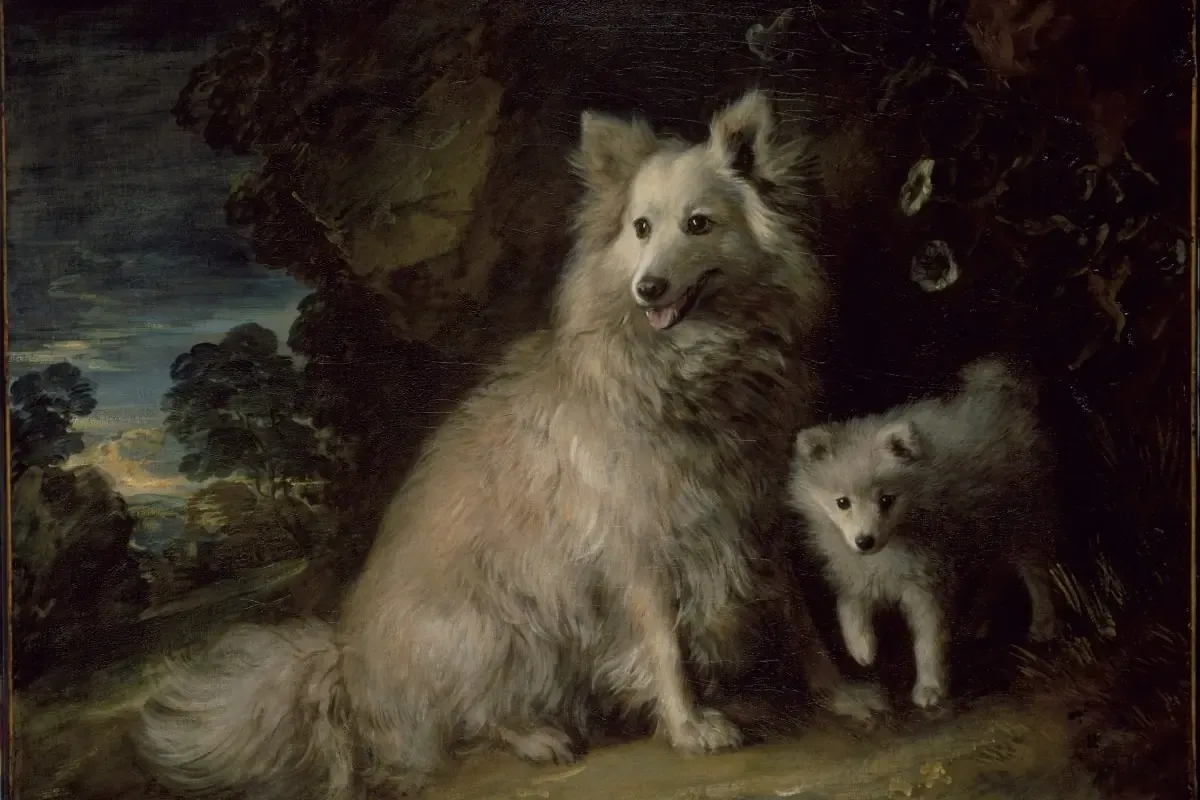
  1. Pomeranian history, Pomeranian Bitch and Puppy, a white spitz and pup by Thomas Gainsborough, around 1777
    Pomeranian Bitch and Puppy, Thomas Gainsborough, around 1777. Tate, London.

    The beginning

    Spitz dogs of the Baltic coast

    The Pomeranian descends from larger spitz dogs, named after the Pomerania region on the Baltic coast. They guarded, herded and barked at anything that came near.

    What they still carryThe bark at the door, the confidence and the coat.

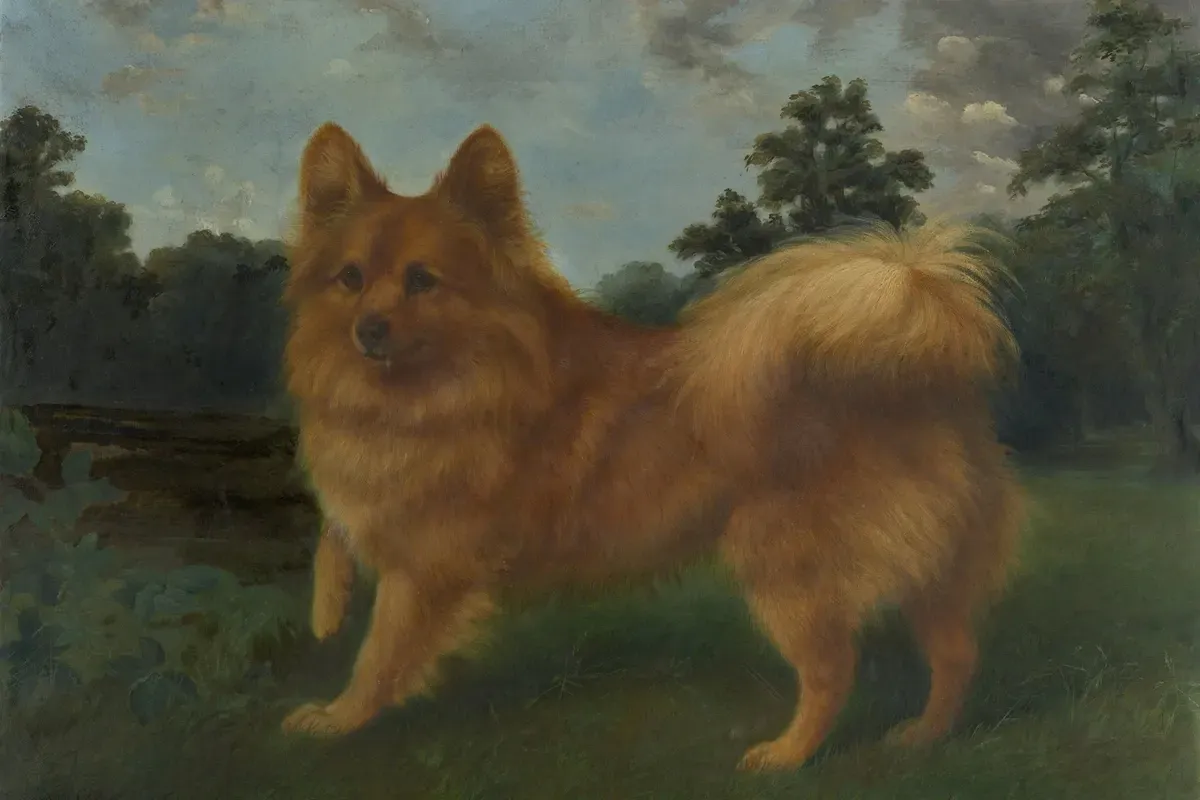
  2. Pomeranian history, Marco, Queen Victoria's red dog, painted by Reuben Cole, 1890
    Marco, Queen Victoria's Pomeranian, by Reuben Cole, 1890. Royal Collection.

    1888 to 1900

    Queen Victoria's small Pomeranian

    In 1888 Queen Victoria brought a small Pomeranian called Marco home from Florence, and the small type became the fashion. Breeders chose smaller and smaller dogs.

    What they still carryA lap dog with a spitz coat and a guard dog's voice.

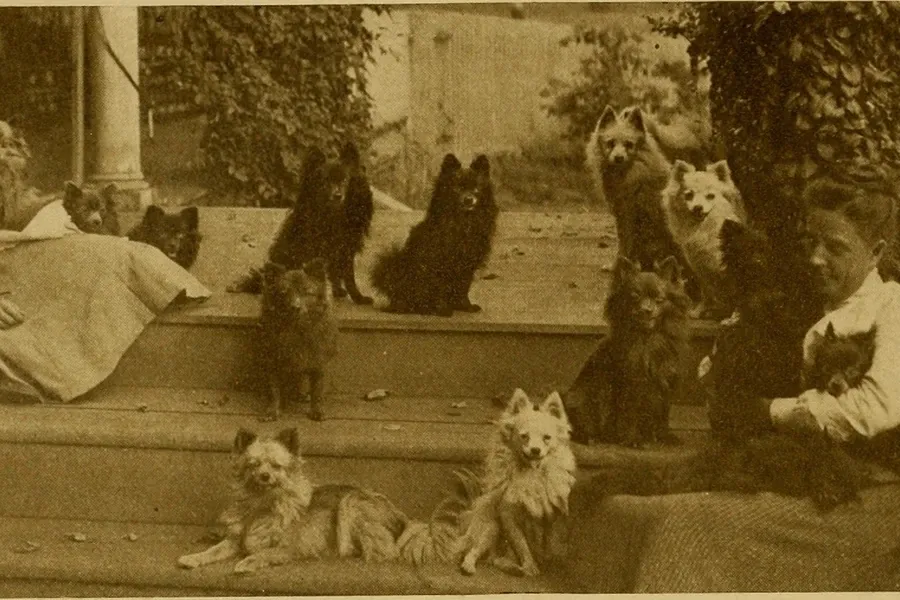
  3. Pomeranian history, two women on porch steps with many small dogs, Swiss Mountain Kennel, Pennsylvania, 1906
    Pomeranians of the Swiss Mountain Kennel, Pennsylvania, from The Dog Book, 1906.

    1900 onwards

    America, and fame as a toy breed

    The American Kennel Club recognised the breed in 1900, the year the American Pomeranian Club was formed, and it became one of the best-known toy breeds.

    What they still carryThe problems of a very small body: crowded teeth, loose kneecaps and a delicate windpipe.

  4. Pomeranian history, the breed today, a wolf sable adult lying on cool marble beside a water bowl in a Dubai flat

    Today

    In Dubai

    Here a Pomeranian lives indoors, often in a flat, which suits them well.

    What they still carryA spitz in a small body, with a coat made for the cold.

Pomeranian questions

The ones you type at midnight.

Most of these get asked late at night, by someone watching their dog and not sure what they are seeing.

Pomeranian in Dubai, a white adult asleep on a pet parent's lap at night, Burj Khalifa behind
What is the average Pomeranian lifespan?

Pomeranians usually live 12 to 16 years. Daily tooth brushing, a harness and a lean weight look after the parts that need it most.

How big do Pomeranians get?

Adult Pomeranians weigh 1.4 to 3.2 kg, males and females alike. They are a toy breed, and one of the smallest of the spitz family.

Do Pomeranians shed?

Pomeranians shed lightly to moderately, with a bigger moult once or twice a year. Brush them a few times a week, down to the skin.

Is a Pomeranian haircut a good idea in summer?

No, never clip or shave a Pomeranian's undercoat short. Dead undercoat left in holds heat and mats against the skin, and skin problems are easier to spot when the coat is kept clear. De-shed and de-mat with the right tools, brush the double coat out down to the skin, bathe them, and let the air conditioning and cool-hour walks do the cooling. For thinning patches, contact your vet rather than reaching for a clipper.

What is the Pomeranian temperament like?

Pomeranians are bold, bright and alert, loyal and affectionate with their families, and can be wary of strangers. Many seem to have no idea how small they are.

Is a Pomeranian a good dog for a flat in Dubai?

Yes. Pomeranians adapt well to flat life and the UAE's indoor lifestyle. Short bursts of play, a harness and air conditioning in summer matter more than space.

Why does my Pomeranian need small meals?

Young Pomeranians can get low blood sugar, which is on their health record in their first years. Small, frequent meals keep them steady. If one goes weak or wobbly, contact your vet now.

What colours do Pomeranians come in?

Pomeranians come in almost every colour, including orange, red, cream, white, black, brown and blue, plus patterns such as brindle, parti-colour and tan points.

Where does the Pomeranian come from?

The Pomeranian is named after Pomerania, on the Baltic coast, where its larger spitz ancestors guarded and raised the alarm. Queen Victoria made the small type fashionable in the 1880s.

Worried about them? Contact your vet today.