We’re hiring people who love them like we do. Join us careers@pawsandco.comSee open roles
UAE Government Licensed MOCCAE
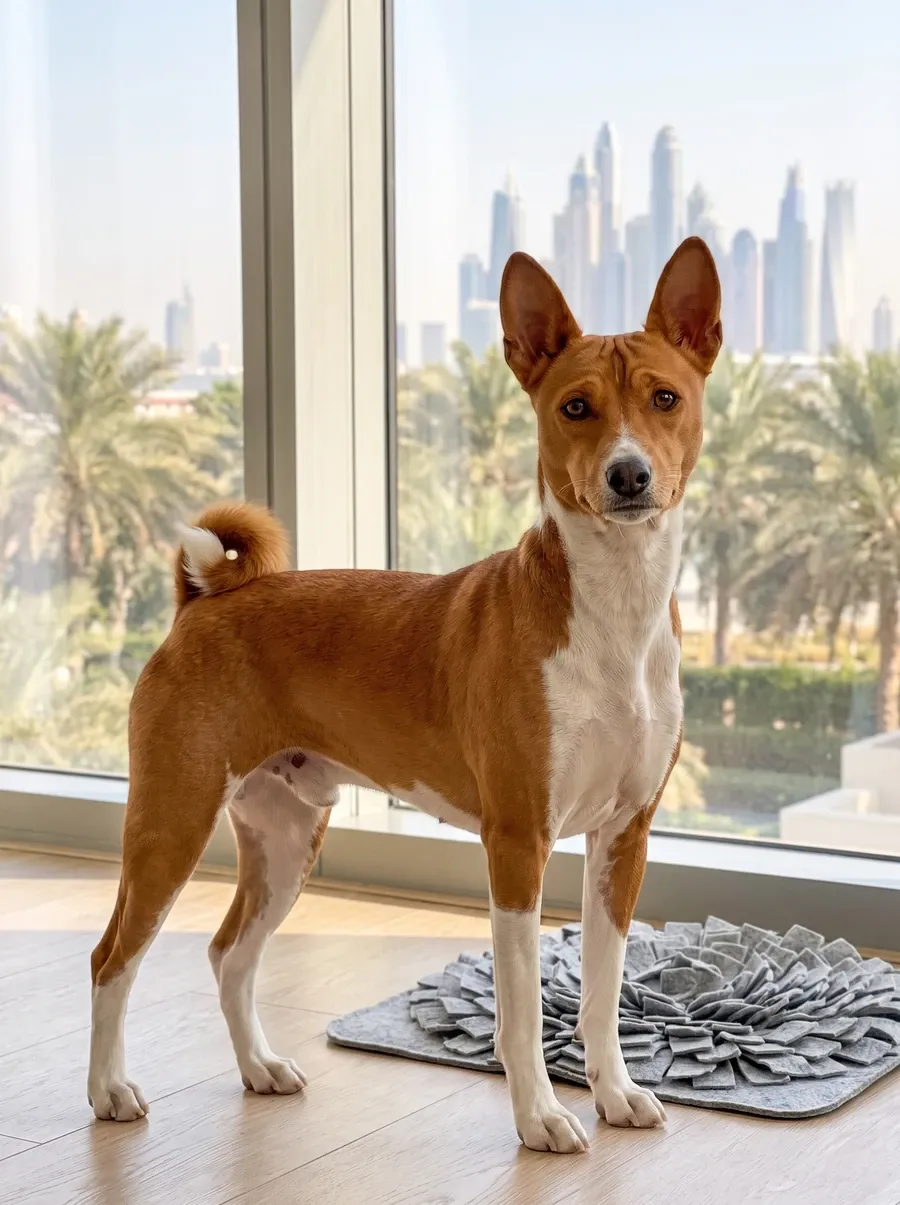
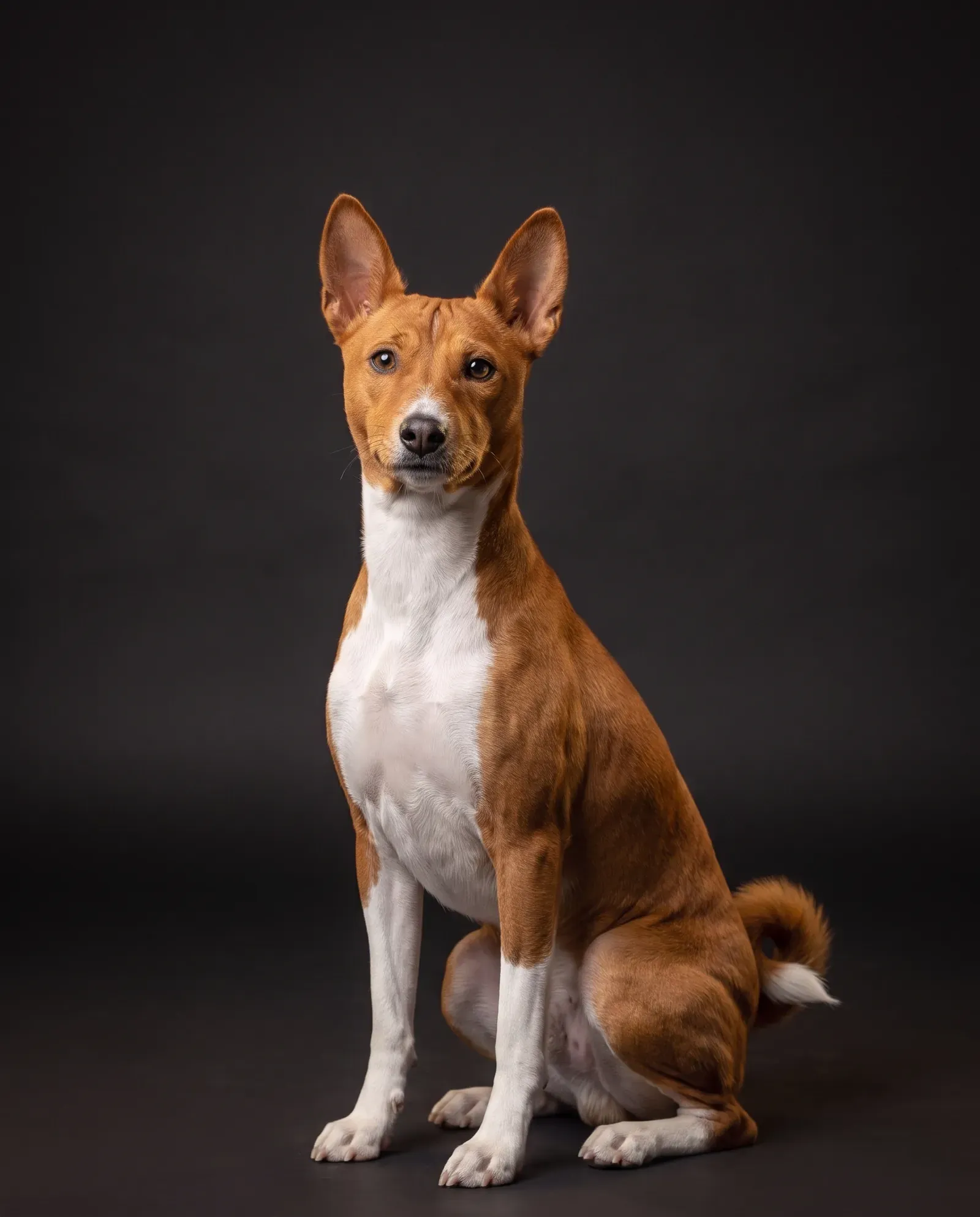
Basenji in Dubai, studio portrait of a calm red and white adult sitting

Breed guide  ·  Dogs

Basenji

He grooms himself like a cat. I still look between his toes every week.

Lifespan
12 to 16 years
Size
Medium
Weight
About 10 to 11 kg
Shedding
Light to moderate

Last updated 12 October 2026

Join the founding families. AED 1,999 of essential care for AED 199.

No payment now. We'll be in touch by email and WhatsApp as we open enrolment.

✓
Thank you.

We will be in touch soon to confirm.

Basenji traits

What they brought with them.

Tap a card to see what is going on.

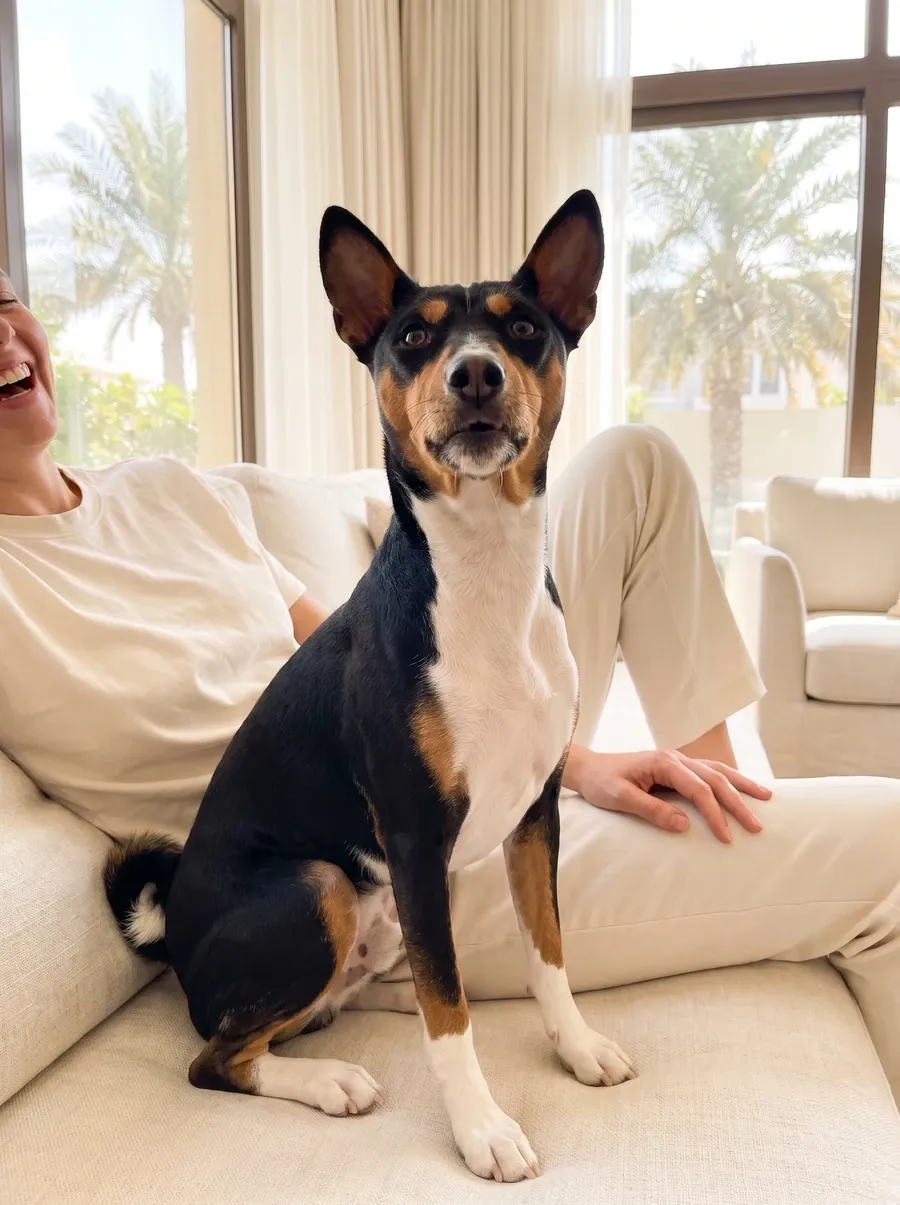
Basenji in Dubai, a tricolour adult on a cream sofa mid-yodel, a pet parent laughing beside them, palms outside

At home

Why does my Basenji yodel instead of barking?

No bark at the door. Instead, yodels, howls and the odd scream when they are bored.

What's going onA Basenji's voice box is shaped differently. A sudden scream can mean frustration as easily as pain, so learn their sounds early.
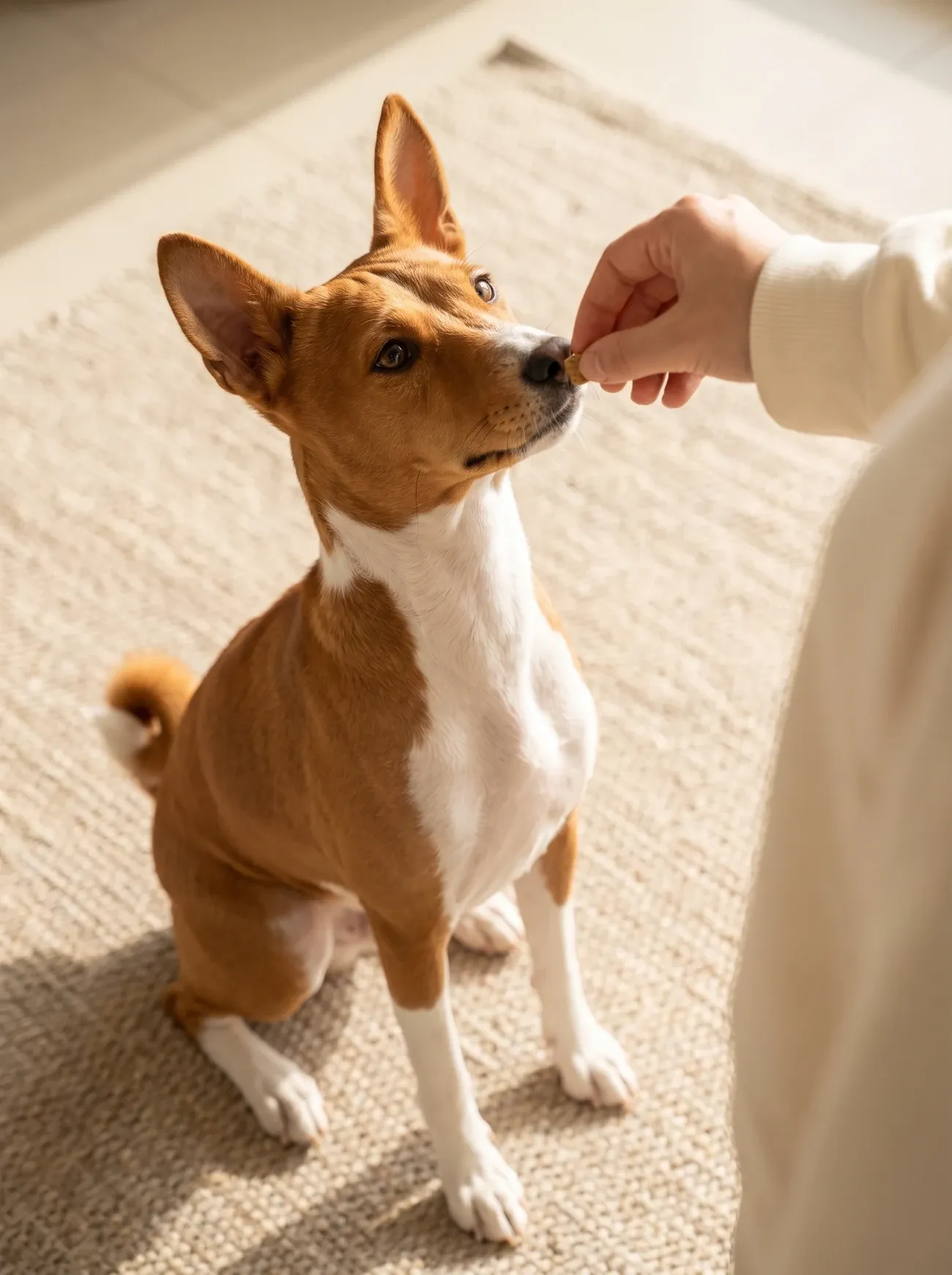
Basenji, a red and white adult sitting on a woven rug, eyeing a treat in a pet parent's hand

At home

They hear you, then decide

You ask for a sit. They look at you, and think about it.

What's going onForest hunters needed a dog that made their own decisions a few metres ahead. Keep sessions short and rewards good, and do not repeat yourself, because they get bored before you do.

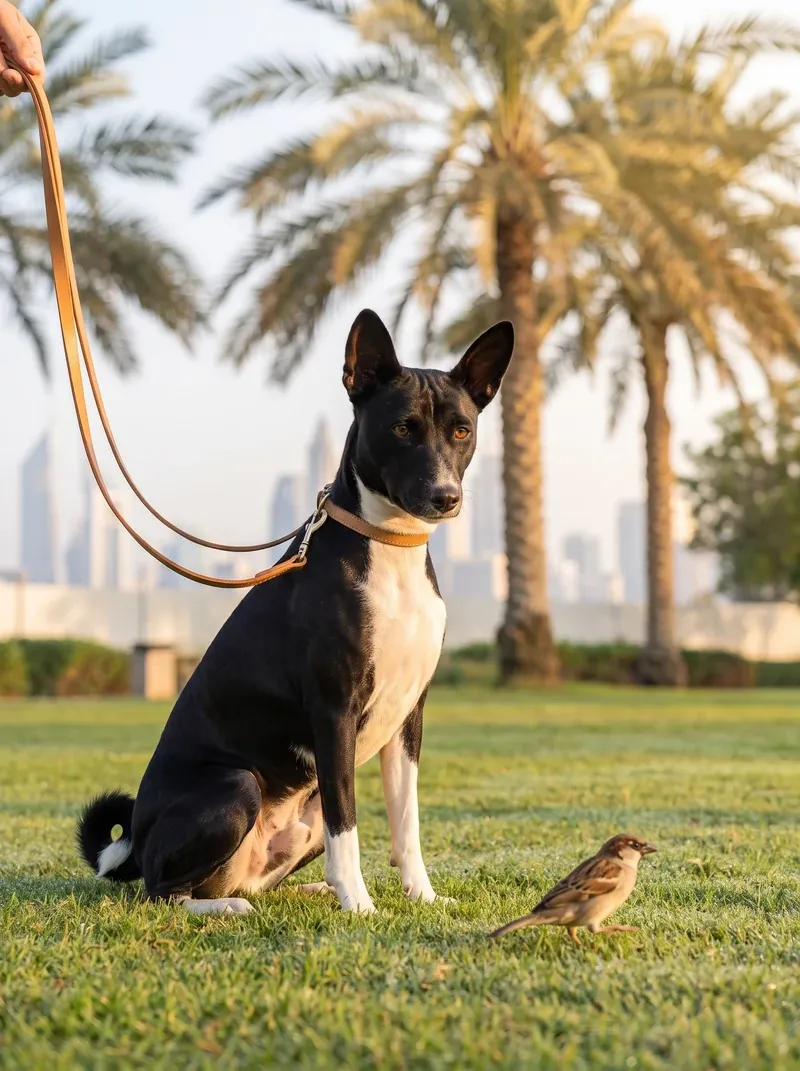
Basenji in Dubai, a black and white adult on a lead in a park at dawn, a sparrow on the grass, the skyline behind

At home

Why won't my Basenji come back when called?

A cat, a bird or a plastic bag moves, and they are gone.

What's going onThey were bred to chase what they see. Keep them on a lead, or in a space fenced high enough, because many of them climb.

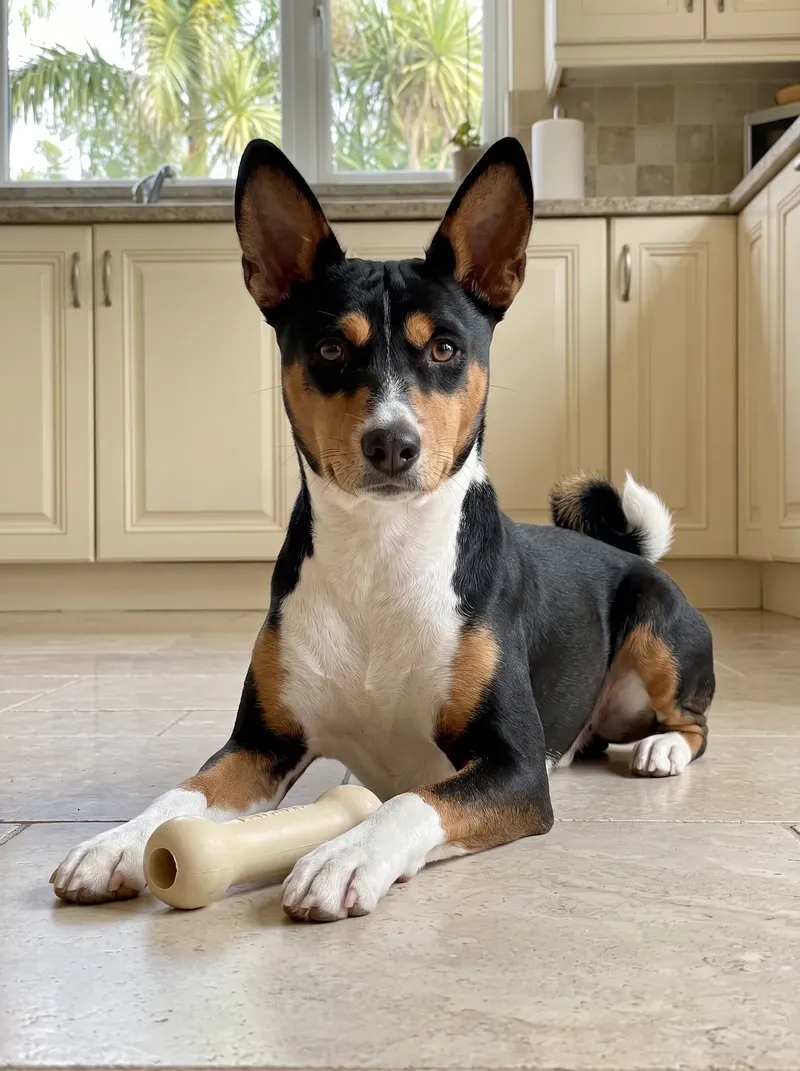
Basenji in Dubai, a tricolour adult lying on kitchen tiles with a chew toy between the paws, palms outside

At home

The remote control is not safe

Cupboards opened, cables chewed, something taken off the kitchen counter.

What's going onA bored Basenji goes looking for work. Clear the counter, put the cables away, and give them something that is theirs to destroy.

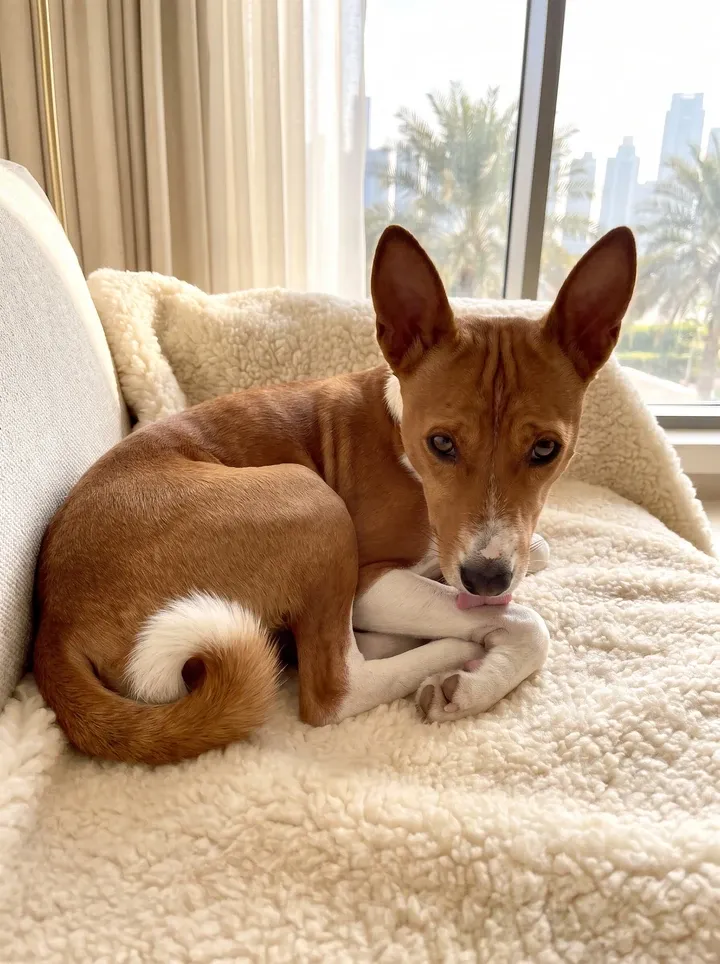
Basenji in Dubai, a red and white adult curled on a cream blanket licking a paw, palms and the skyline outside

At home

Why does my Basenji clean themselves like a cat?

They groom themselves, dislike getting wet and step round puddles.

What's going onThe short coat is easy. The weekly look over them still matters, because a Basenji will often hide a sore paw or a stiff joint without a sound.

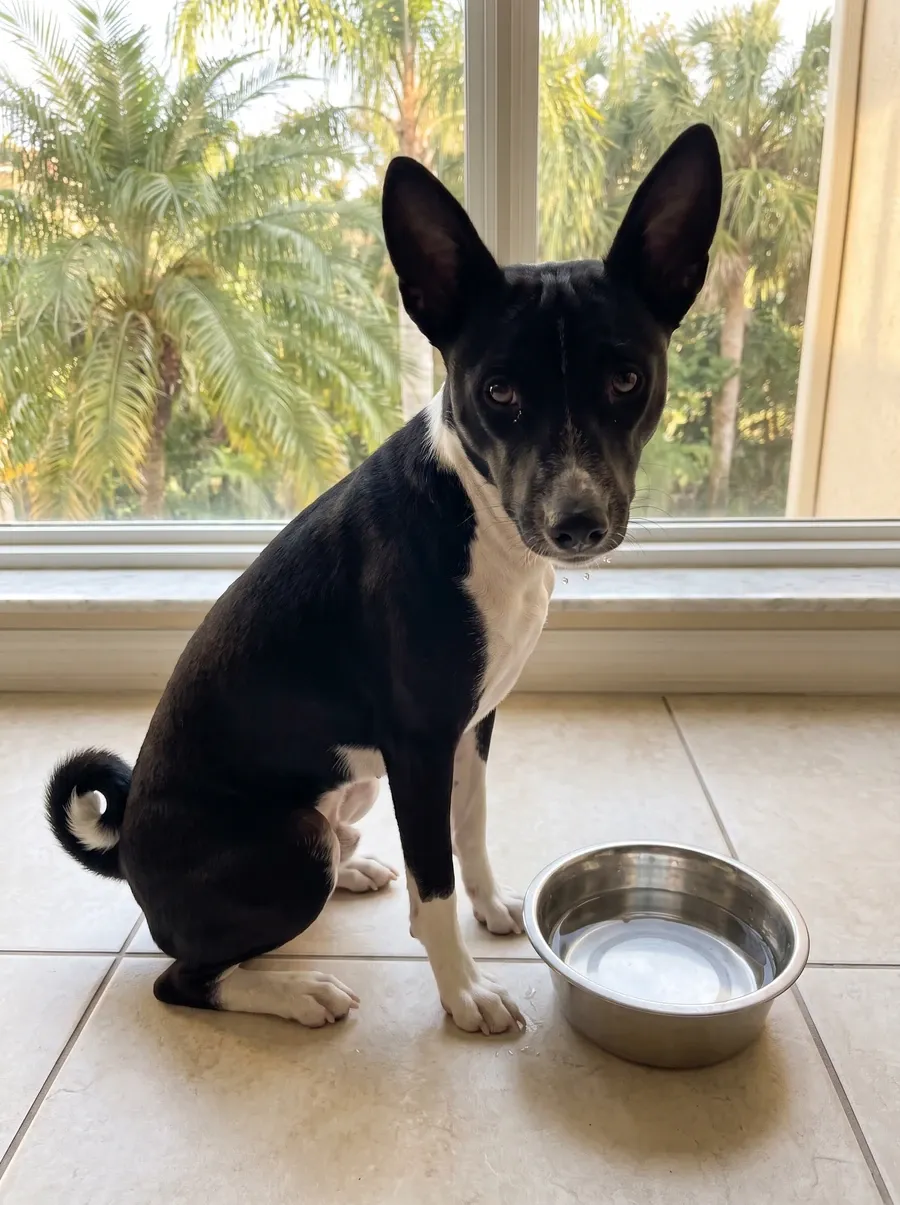
Basenji in Dubai, a black and white adult sitting beside a steel water bowl on a tiled floor, palms outside

At home

Why is my Basenji drinking so much water?

The water bowl empties faster, and there are accidents in the flat.

What's going onFanconi Syndrome (a kidney disorder that lets sugar and salts leak into the urine) runs in the breed. In a Dubai summer it is easy to blame the heat, so keep a note and tell your vet.

A Basenji in Dubai

The bit nobody tells you.

Their day

Built for: In the forest, a few metres ahead of a hunter.

In Dubai: Much of the day in a flat.

Their work

Built for: Finding things, and deciding for themselves what to do about them.

In Dubai: Your shoes.

What they hunt

Built for: Game, for the hunter's nets.

In Dubai: The cables behind the television.

The chewing, the escapes and the yodelling at the lift mostly come from that gap.

You cannot give them a forest. You can give them things to find and puzzles to solve, and the ten things below are how.

Your plan is built around their breed: the risks on a Basenji's record at every age, and the care that goes with each one.

Join the founding families. AED 1,999 of essential care for AED 199.

Daily care for a Basenji

Ten things that make their life better.

Many of them are free, and most matter at every age.

  1. Fanconi Syndrome (a kidney disorder that lets sugar and salts leak into the urine) is the first risk on a Basenji puppy's health record, and their puppy plan includes screening for it.

    First fortnight, then every year

    In your plan

    Why

    Fanconi Syndrome (a kidney disorder that lets sugar and salts leak into the urine) is the first risk on a Basenji puppy's health record, and their puppy plan includes screening for it.

    What to do

    Take them to your vet within two weeks of bringing them home. Bring every paper the breeder gave you, and ask for both parents' Fanconi DNA results and eye results if you do not have them.

  2. Many Basenjis are aloof with people they do not know, and a greeting they are pushed into makes the next one harder.

    Every age, most of all puppies

    Free

    Why

    Many Basenjis are aloof with people they do not know, and a greeting they are pushed into makes the next one harder.

    What to do

    Ask visitors to ignore them and drop a treat on the floor. Give them a bed or a crate that is theirs, and never pull them out of it. They will come over when they have decided you are worth it.

  3. Many Basenjis hate being held still, and they will need nail trims, eye drops and vet visits all their life.

    Every age, easiest as a puppy

    Free

    Why

    Many Basenjis hate being held still, and they will need nail trims, eye drops and vet visits all their life.

    What to do

    Touch a paw, an ear or their collar for one second, then give a treat. Build up over weeks. If they pull away, go back a step. Never hold them down to get a nail trim done at home.

  4. A bored Basenji eats cables, remote controls and whatever is on the counter, and opens cupboards to find more.

    Every age, most of all up to 2 years

    Under AED 100

    Why

    A bored Basenji eats cables, remote controls and whatever is on the counter, and opens cupboards to find more.

    What to do

    Clear the counter, lid the bin, tie cables up out of reach, and use child locks on low cupboards. On walks, swap anything they pick up for something better rather than pulling it out of their mouth.

  5. They were bred to find things. Ten minutes of searching tires their head in a way a walk round the block does not.

    Every age, simpler puzzles from 7 years

    Under AED 150, once

    Why

    They were bred to find things. Ten minutes of searching tires their head in a way a walk round the block does not.

    What to do

    Feed at least one meal from a puzzle feeder or a snuffle mat, or hide portions round the flat. Make the puzzles harder as they solve them, because a Basenji who has worked it out stops bothering.

  6. Their short coat suits a warm climate, and they still need shade and cool hours in a Dubai summer. They cannot pick the time of their walk, so pick it for them.

    Every age, most of all puppies and from 7 years

    Free

    Why

    Their short coat suits a warm climate, and they still need shade and cool hours in a Dubai summer. They cannot pick the time of their walk, so pick it for them.

    What to do

    From May to September, walk before sunrise and after dark. Put the back of your hand on the pavement for five seconds. If you cannot keep it there, they cannot walk on it. Take water.

  7. A Basenji who sees a cat does not hear you call. This is about traffic, not obedience.

    Every age

    Free

    Why

    A Basenji who sees a cat does not hear you call. This is about traffic, not obedience.

    What to do

    Lead on every time the front door opens, and on every walk. Off lead only in a space fenced high enough that they cannot climb it. Make sure their microchip is registered to you with your current number.

  8. They tell you quietly before they tell you loudly, and in a Basenji the loud version is a scream.

    Every age, and new signals in an older dog can mean pain

    Free

    Why

    They tell you quietly before they tell you loudly, and in a Basenji the loud version is a scream.

    What to do

    Watch for lip licking, turning their head away, the whites of their eyes and going still. Give them more room when you see them. Never punish a growl. Learn which of their sounds means excited and which means hurt.

  9. Worming and parasite prevention start on their puppy plan, set for what dogs meet in Dubai.

    Every age

    In your plan

    Why

    Worming and parasite prevention start on their puppy plan, set for what dogs meet in Dubai.

    What to do

    Give prevention on the schedule your vet sets, every month of the year. After walks on grass or sand, look in their ears and between their toes.

  10. A Basenji rarely makes a fuss when something is wrong, and drinking and peeing more can be the first sign of Fanconi Syndrome or, later, kidney disease.

    Every age, most of all from 7 years

    Free

    Why

    A Basenji rarely makes a fuss when something is wrong, and drinking and peeing more can be the first sign of Fanconi Syndrome or, later, kidney disease.

    What to do

    Once a week, run your hands over their ribs, spine, hips and feet. Weigh them once a month. If they start emptying their water bowl faster or have accidents indoors, note it and tell your vet.

Two of these are in your plan. The rest you can do at home.

Join the founding families. AED 1,999 of essential care for AED 199.

Basenji health by age

Their health, at every age.

In a Basenji, a change in behaviour is often the first sign that something is wrong. Choose their age to see what to watch for, and the care that goes with it.

Basenji in Dubai, an older tricolour dog with a greying muzzle resting on a cream bed, palms outside

How old are they?

Their age

Basenji Puppy health

the first six months

What to watch for

  1. Early or congenital expression of Fanconi Syndrome (a kidney disorder that lets sugar and salts leak into the urine)
  2. Congenital or early inherited ocular disease related to Progressive Retinal Atrophy (PRA, gradual loss of sight)
  3. Developmental or early clinical signs of Hip Dysplasia (HD, a poorly fitting hip joint)
  4. Genetic predisposition to Hypothyroidism (an underactive thyroid), no clinical disease expected at this stage
  5. Early or congenital expression of Cryptorchidism (an undescended testicle), likely to happen

The care that goes with it

  1. Core vaccinations, microchip and Dubai Municipality registration
  2. Deworming, and flea and tick prevention
  3. Body Condition Score (a measure of whether they are the right weight), dental, growth and nutritional evaluation, and early socialisation
  4. Baseline screening for Fanconi Syndrome
The full care detail
  • Core vaccination programme, microchipping and Dubai Municipality registration. Titre testing discussion where clinically appropriate; not a substitute for completing the core vaccine series
  • Deworming and external parasite prevention tailored to Dubai exposure
  • Body Condition Score (BCS), Muscle Condition Score (MCS), dental, growth and nutritional evaluation, and early socialisation
  • Baseline screening focused on Fanconi Syndrome

Their age

Basenji Juvenile health

6 months to 2 years

What to watch for

  1. Young-dog presentation of Fanconi Syndrome
  2. Progression or first clinical detection of Progressive Retinal Atrophy (PRA)
  3. Emerging Hip Dysplasia (HD), with exercise intolerance or lameness
  4. Genetic predisposition to Hypothyroidism, monitoring only
  5. Young-dog presentation of Cryptorchidism, likely to happen

The care that goes with it

  1. Neutering or spaying, timed for a medium breed
  2. Orthopaedic evaluation (a joint and bone exam)
  3. Hip problems that keep coming back are investigated properly, not just treated again
The full care detail
  • Neuter/spay timing discussion that accounts for medium-breed growth and disease risk
  • Orthopaedic evaluation
  • Investigate recurrent signs rather than repeatedly treating presumed Hip Dysplasia (HD)

Their age

Basenji Young Adult health

2 to 4 years

What to watch for

  1. Fanconi Syndrome
  2. Progressive Retinal Atrophy (PRA)
  3. Hip Dysplasia (HD)
  4. Genetic predisposition to Hypothyroidism
  5. Cryptorchidism, likely to happen

The care that goes with it

  1. Genetic testing
  2. Ophthalmic evaluation (an eye exam)
  3. Orthopaedic evaluation (a joint and bone exam)
  4. Thyroid blood tests (T4), and lifelong medication if needed
  5. Cryptorchidism (a testicle that has not come down), treated with castration
The full care detail
  • Genetic testing
  • Ophthalmic evaluation
  • Orthopaedic evaluation
  • Blood tests, T4 testing, early detection, goes on lifelong medication.
  • Surgical correction for Cryptorchidism, castration

Their age

Basenji Prime Adult health

4 to 7 years

What to watch for

  1. Fanconi Syndrome
  2. Progressive Retinal Atrophy (PRA)
  3. Hypothyroidism, likely to happen
  4. Hip Dysplasia (HD), likely to happen
  5. Epilepsy (seizures)

The care that goes with it

  1. Kidney function monitoring, with supportive treatment if needed
  2. Ophthalmic evaluation (an eye exam), to catch changes in their sight early
  3. Thyroid treatment, if needed
  4. Joint support, or hip surgery in severe cases
  5. Neurological evaluation (a brain and nerve exam), and medication if needed
The full care detail
  • Renal function monitoring, lifelong supportive treatment
  • Ophthalmic evaluation, but can help client prepare and know what to expect
  • Thyroid therapy, lifelong
  • Orthopaedic care, joint support or Femoral Head Excision (FHE) surgery in severe cases
  • Neurological evaluation, lifelong medication

Their age

Basenji Senior health

7 to 10 years

What to watch for

  1. Chronic Kidney Disease (CKD), likely to happen
  2. Progressive Retinal Atrophy (PRA), some may experience it
  3. Arthritis, likely to happen
  4. Hypothyroidism, likely to happen
  5. Epilepsy, likely to happen

The care that goes with it

  1. Kidney support: blood tests, medication and diet
  2. Regular ophthalmic evaluation (an eye exam), with advice on helping them as their sight changes
  3. Pain relief, joint supplements and diet
  4. Thyroid medication, blood tests and weight management
  5. Seizure control, with blood tests and lifelong medication
The full care detail
  • Renal support, blood test monitoring, lifelong supportive treatment (medication and diet)
  • Ophthalmic care, regular ophthalmic evaluation, client guidance
  • Pain management, joint supplements, diet
  • Thyroid medication, laboratory blood tests, lifelong medication, weight management
  • Seizure control, laboratory blood testing, lifelong medication

Their age

Basenji Geriatric health

10 years and over

What to watch for

  1. Chronic Kidney Disease (CKD), likely to happen
  2. Vision Loss, likely to happen if they had it
  3. Arthritis, likely to happen
  4. Cognitive Dysfunction (a slow loss of memory and routine), likely to happen
  5. Epilepsy, may happen by this age

The care that goes with it

  1. Advanced kidney care
  2. Supportive care for their sight
  3. Pain control
  4. Behavioural therapy and supportive medication
  5. Neurological care
  6. Quality-of-life assessment
  7. Palliative and comfort-focused care
  8. End-of-life planning with your veterinary team
The full care detail
  • Advanced renal therapy
  • Supportive vision care
  • Pain control
  • Behavioural therapy, supportive medication
  • Neurological management
  • Quality-of-life assessments
  • Tailored palliative and comfort-focused care plan
  • Compassionate end-of-life planning with your veterinary team

Breed predispositions indicate an increased risk rather than certainty of disease. What is right for them always comes from their own history and an evaluation.

Getting a Basenji puppy in Dubai

Before they come home.

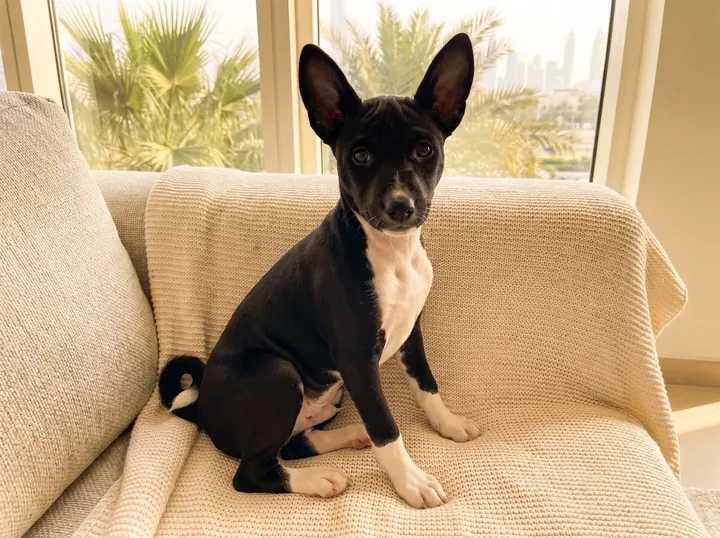
Basenji in Dubai, a black and white puppy sitting on a cream blanket, palms and the skyline outside

Basenji dog breed

One breed, with African roots

There is one Basenji, with two kinds of family tree. Most lines go back to a handful of dogs brought to England in the 1930s. Newer lines come from dogs brought out of Africa since the 1980s to widen the breed. Ask the breeder where their dogs come from, and for the health results that go with them.

Basenji in Dubai, a brindle adult lying on a stone-coloured rug in a villa living room, palms outside

Colours

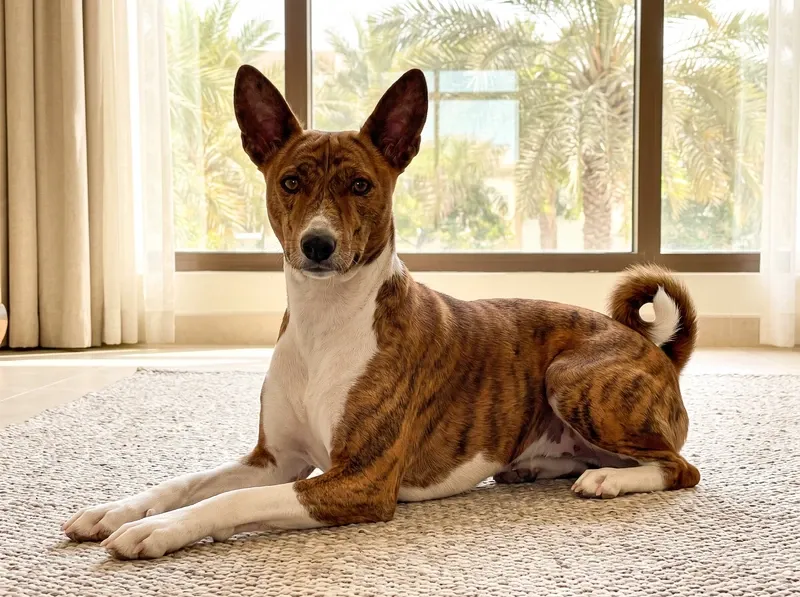
Red, black, tricolour or brindle

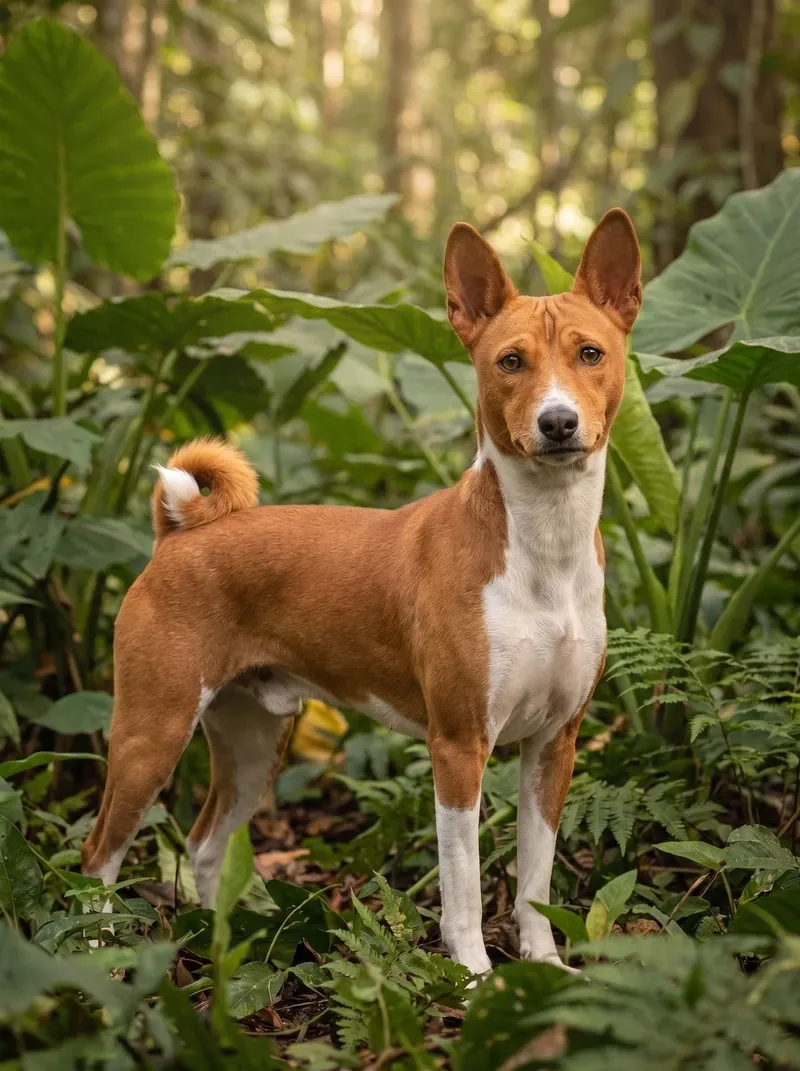
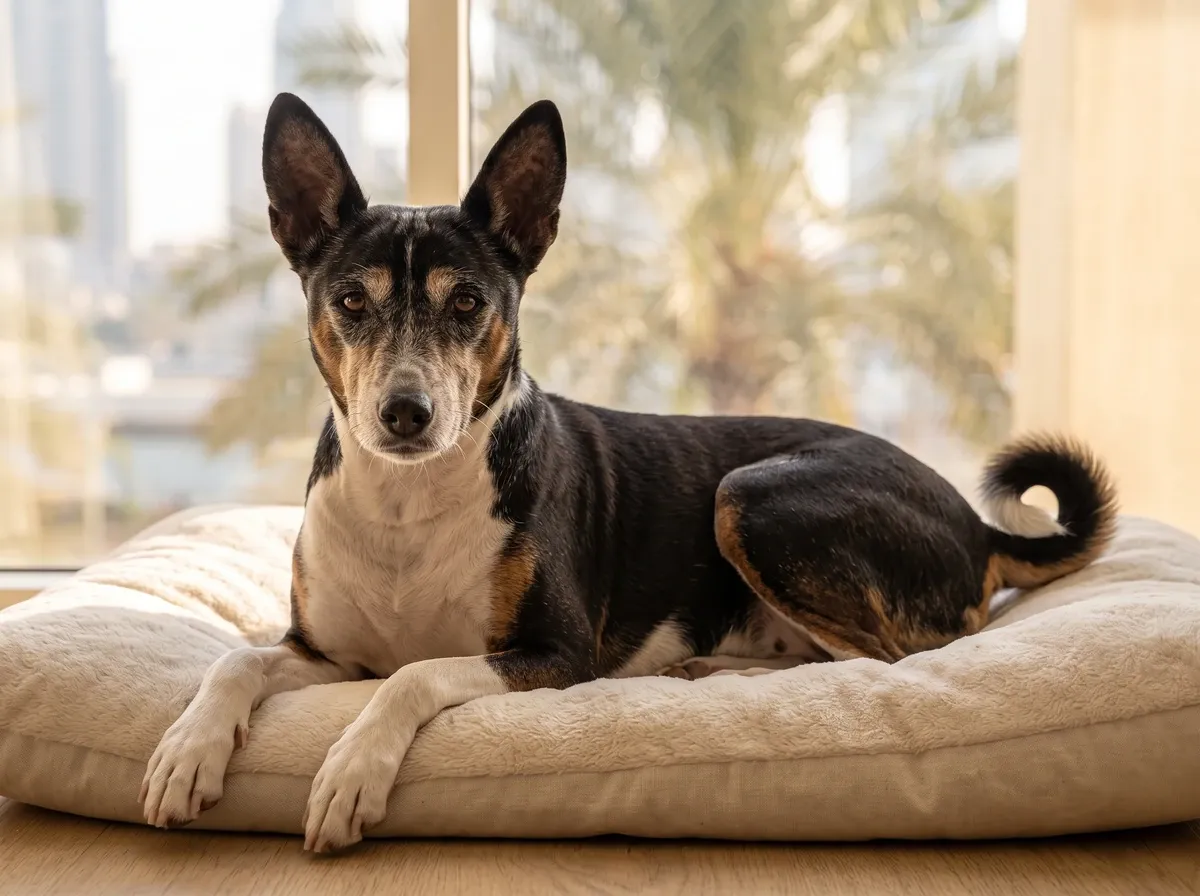
Basenjis come in chestnut red, pure black, tricolour (black and chestnut red) or brindle, black stripes over chestnut red. Whatever the colour, look for the white feet, the white chest and that white tip on a curled tail.

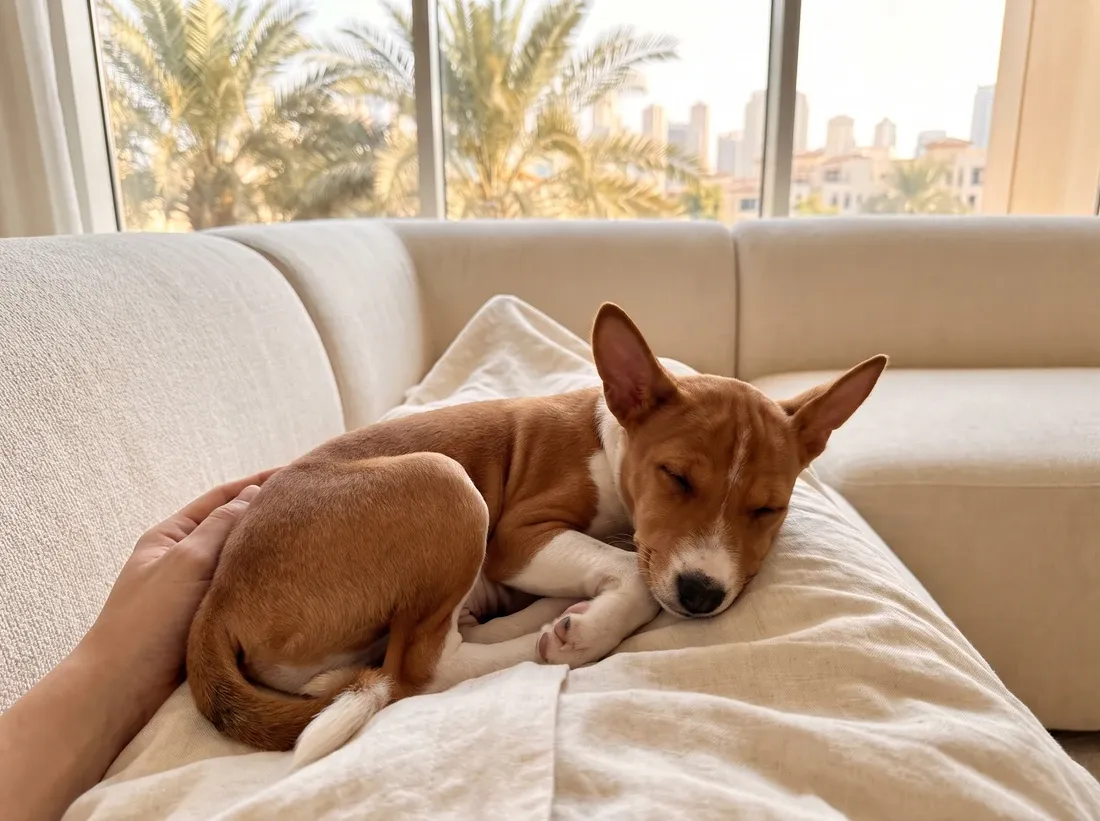
Basenji in Dubai, a red and white puppy asleep in a pet parent's lap, palms and the skyline outside

The first six months

Caring for a Basenji puppy

Vaccinations, microchip and Dubai Municipality registration come first, with screening for Fanconi Syndrome in their first months. Start touching their paws, ears and collar for a second at a time, with a treat, while it is easiest.

Puppy health, 0 to 6 months
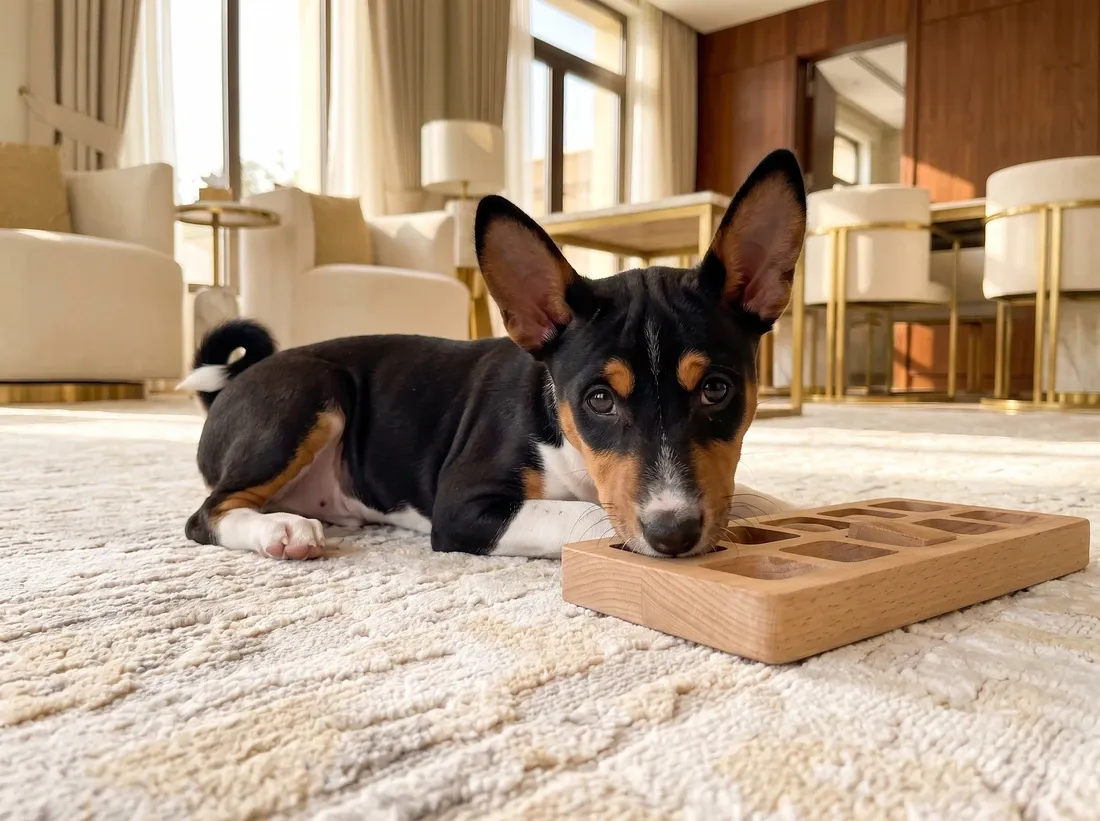
Basenji, a tricolour puppy lying on a pale rug, nose in a wooden puzzle feeder

Getting the flat ready

Child locks and a lidded bin

Clear the kitchen counter, lid the bin, tie cables up out of reach and put child locks on low cupboards. Then add a puzzle feeder, a bed or crate that is theirs, and a harness for every walk.

Ten things that make their life better
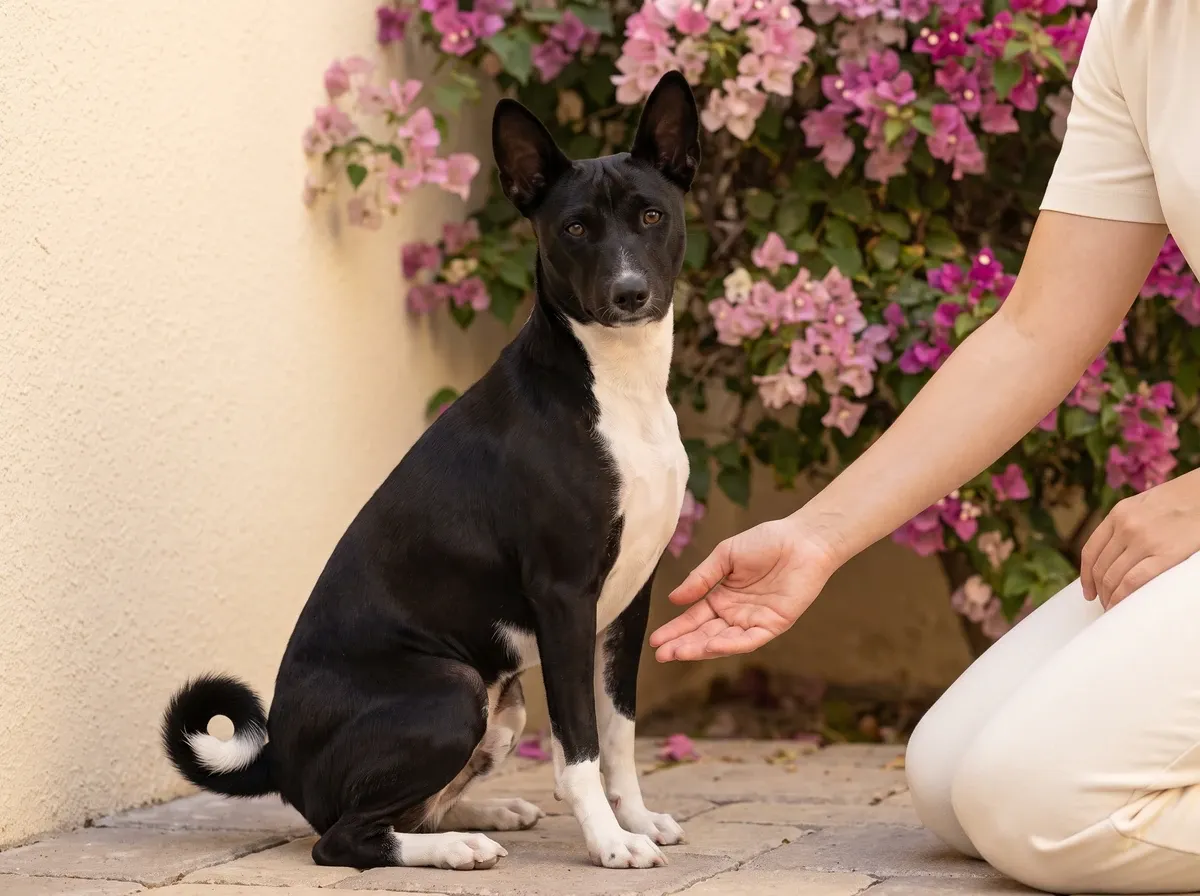
Basenji, a calm black and white adult meeting a pet parent's open hand by a bougainvillea wall

Before you commit

Ask for the Fanconi DNA results

Fanconi Syndrome (a kidney disorder) and Progressive Retinal Atrophy (gradual loss of sight) are on a Basenji's record from puppyhood. Ask the breeder for both parents' Fanconi DNA results and eye results, and meet the mother if you can.

The reception of a Paws & Co clinic, with long cream benches and a stone reception desk

Before the clinics open

Join the founding families

AED 1,999 of essential care for AED 199. No payment now.

When to see a vet

When it is not behaviour.

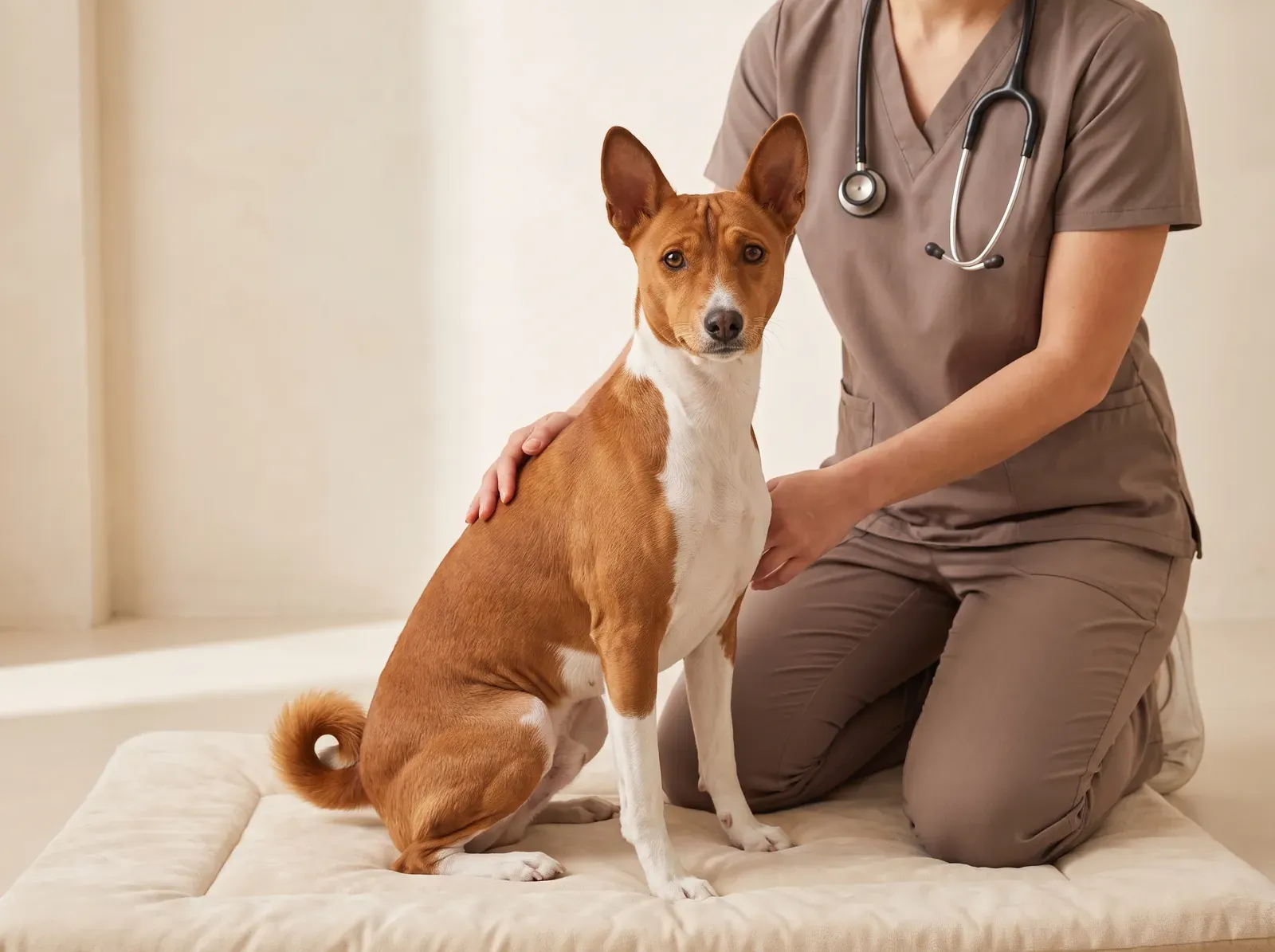
Basenji, a red and white adult sitting on a padded mat as a vet in taupe scrubs rests a hand on their back

Some of this is not a training problem, and treating it like one wastes time your dog may not have. If they are distressed when you leave, if they growl or guard their food, their toys or you, if they are frightened on the lead, or if anything about them changes suddenly at any age, contact your vet the same day. A tip from a website, ours included, is not the answer. If it cannot wait, contact your nearest emergency vet now.

With a Basenji, watch their water and their toilet habits. A Basenji who suddenly has accidents in the flat is more likely to be drinking more than to have forgotten their training, and in this breed that can be Fanconi Syndrome (a kidney disorder that lets sugar and salts leak into the urine). Bumping into furniture at dusk or gaining weight without eating more are both reasons to contact your vet the same day. A staring spell or a fit is not a wait-and-see: contact your vet now. A first seizure, one that lasts more than two minutes, or more than one in a day is an emergency. So is bloat (GDV, a twisted stomach): a swollen, tight belly, retching with nothing coming up, sudden restlessness or drooling. It can happen in any dog, though it is most common in large, deep-chested breeds.

He'll keep grooming himself like a cat. Keep checking between his toes anyway.

Basenji history

Before they were yours.

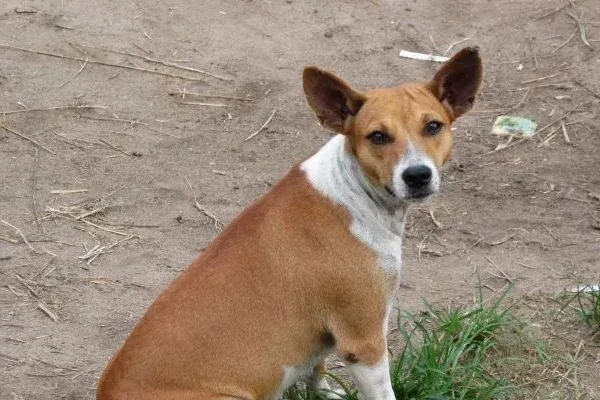
  1. Basenji history, a red and white dog sitting on bare earth, Basankusu, Democratic Republic of the Congo
    A Basenji in Basankusu, Democratic Republic of the Congo. Photo: Francis Hannaway, CC BY-SA 3.0, via Wikimedia Commons (cropped).

    No one knows when

    The Central African forest

    In the forests of the Congo basin, hunters used Basenjis to find game and drive it into their nets. Some tied wooden bells round their necks, to follow a dog that makes very little noise.

    What they still carryA hunter that decides for themselves, follows anything that moves, and rarely barks.

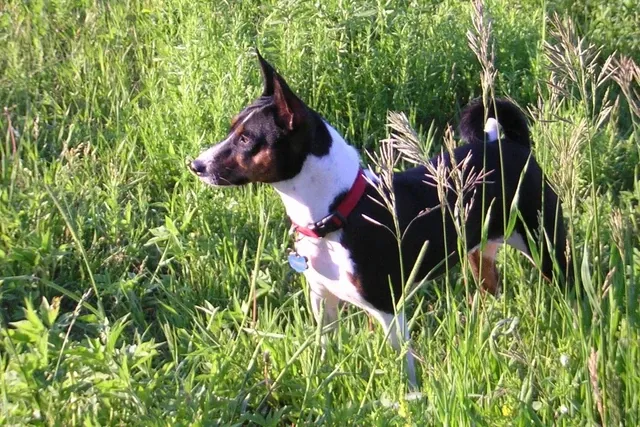
  2. Basenji history, a tricolour brindle dog out hunting in long grass, a photograph, 2003
    A tricolour brindle Basenji out hunting, 2003. Photo: Mark Kahn, CC BY-SA 3.0, via Wikimedia Commons (cropped).

    What genetics says

    An early branch

    Genome studies place the Basenji among the breeds that split earliest from the rest of the modern breeds, alongside the Akita and the Saluki.

    What they still carryA yodel instead of a bark, and one breeding season a year.

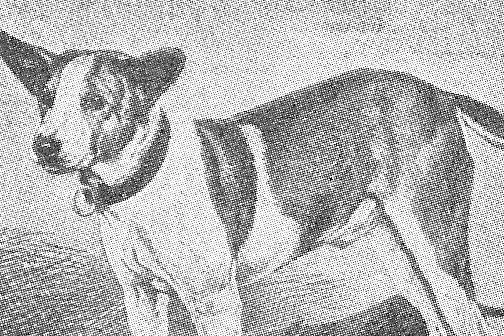
  3. Basenji history, a Congo Terrier standing side-on, a picture from a Swedish dog book, Stockholm, 1932
    A Basenji, then called the Congo Terrier, from Carl Leuhusen's Rashundar i ord och bild, Stockholm, 1932.

    1895 to 1937

    To England, and Crufts

    The first Basenjis brought to England died of distemper. In the 1930s Olivia Burn brought dogs from the Congo, and at Crufts in 1937 the crowds were big enough to need the police.

    What they still carryA breed built from a handful of dogs, which is why a few inherited diseases run through it.

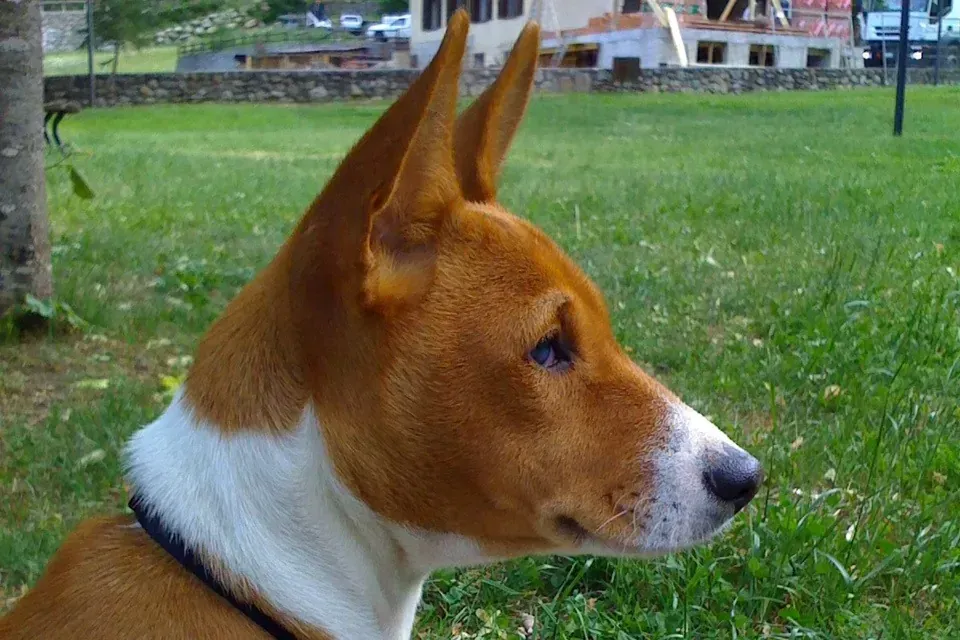
  4. Basenji history, head of a red and white dog in profile on a lawn, a photograph, 2011
    A Basenji photographed in 2011. Public domain, via Wikimedia Commons.

    1980s to 2011

    New blood, and a test

    Breeders went back to Africa for new dogs to widen the small founder stock. In 2011, researchers at the University of Missouri found the gene change behind Fanconi Syndrome, and a DNA test followed.

    What they still carryThe first question to ask a breeder.

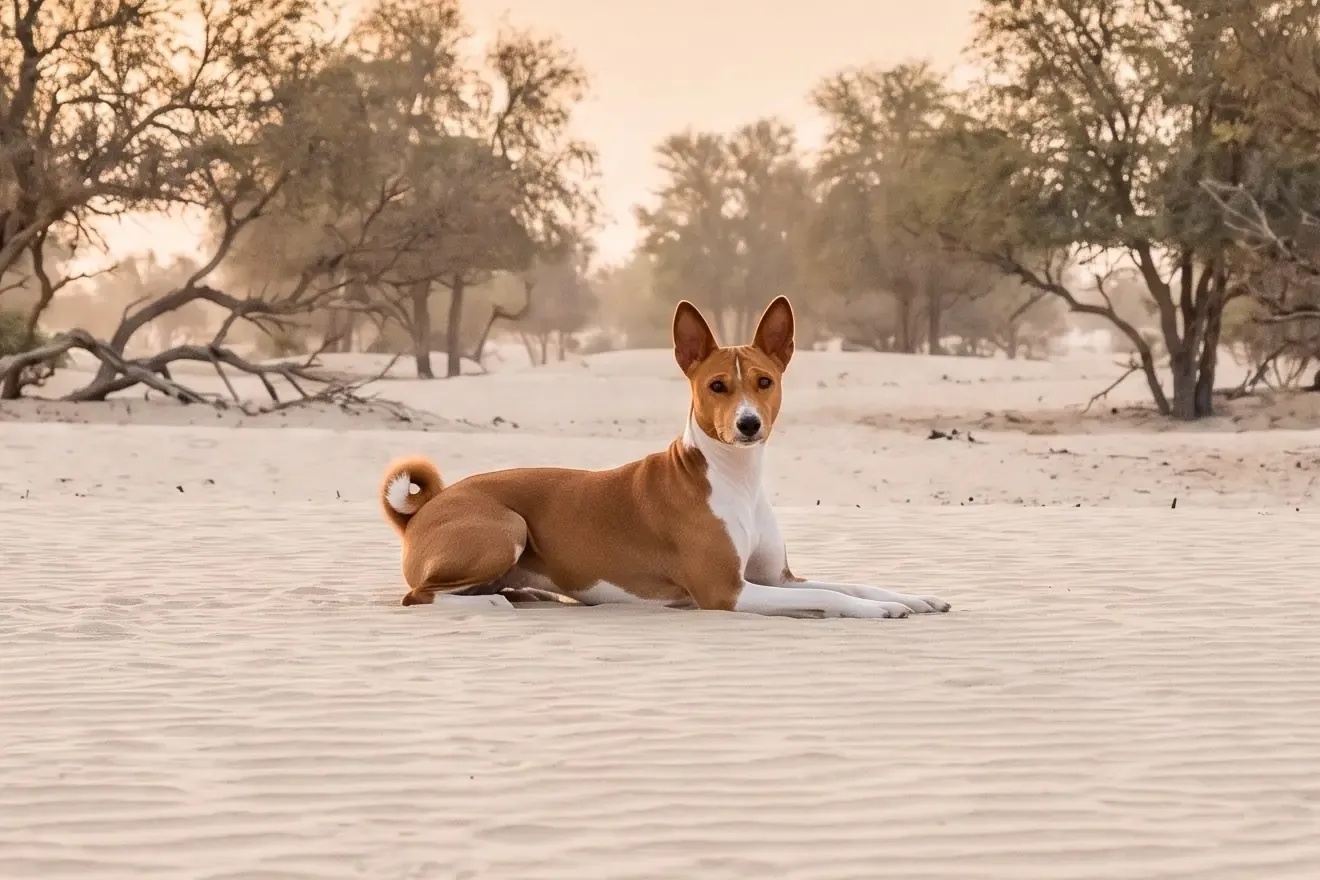
  5. Basenji history, the breed today, a red and white adult lying on desert sand, Dubai, 2026

    Today

    In Dubai

    In the UAE a Basenji is rare, usually imported, and lives in a flat with nothing to hunt but your shoes.

    What they still carryA forest hunter who likes to work things out, with very little to chase.

Basenji questions

The ones you type at midnight.

Most of these get asked late at night, by someone watching their dog and not sure what they are seeing.

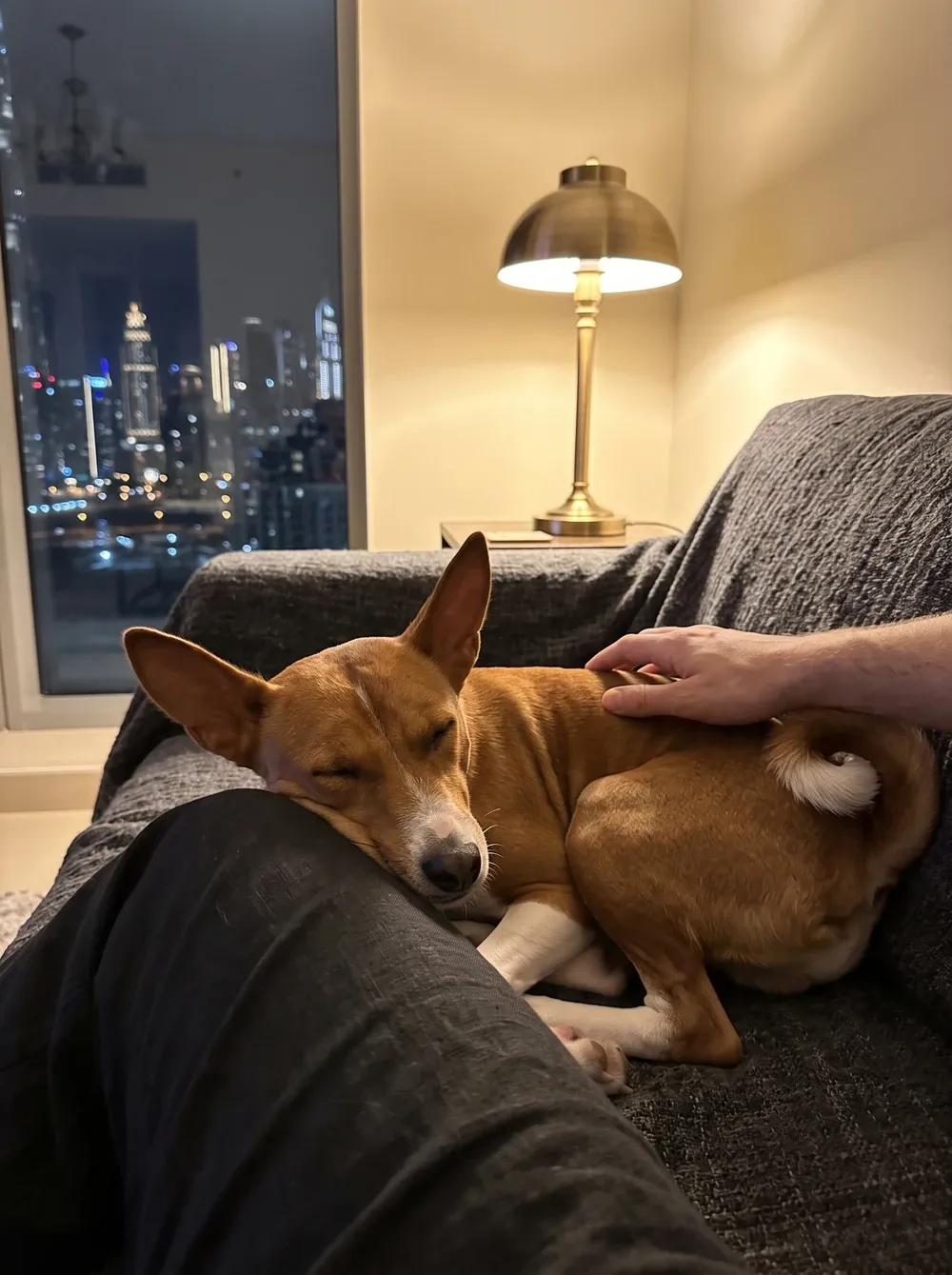
Basenji in Dubai, a red and white adult asleep on a charcoal throw against a knee, a brass lamp and the lit skyline behind
How long do Basenjis live?

Basenjis usually live 12 to 16 years.

How big does a Basenji get?

A Basenji is a light, medium-sized dog, usually about 10 to 11 kg, with males a little heavier than females.

Do Basenjis shed?

Basenjis shed lightly to moderately. Their short, fine coat needs only a weekly brush, and they keep themselves clean like a cat.

Why don't Basenjis bark?

A Basenji's voice box is shaped differently, so they yodel, howl, chortle and scream instead of barking. They are quiet at the door, not quiet in general.

Is a Basenji dog easy to train?

Not easy, but a Basenji is quick to learn when it pays. They decide whether a cue is worth it. Keep sessions short and rewards good, and do not repeat a cue they have ignored.

What colours do Basenjis come in?

Basenjis come in chestnut red, pure black, tricolour or brindle, always with white feet, a white chest and a white tail tip.

What is Fanconi Syndrome in Basenjis?

Fanconi Syndrome is a kidney disorder that runs in Basenjis, letting sugar and salts leak into the urine. The first signs are often drinking more and peeing more. A DNA test has existed since 2011, so ask the breeder for both parents' results.

Where do Basenjis come from?

Basenjis come from the forests of Central Africa, where hunters used them to find game and drive it into their nets.

Are Basenji puppies easy to find in the UAE?

No. Basenjis are rare in the UAE and usually imported, so ask early about the parents' Fanconi DNA and eye results.

Worried about them? Contact your vet today.