We’re hiring people who love them like we do. Join us careers@pawsandco.comSee open roles
UAE Government Licensed MOCCAE
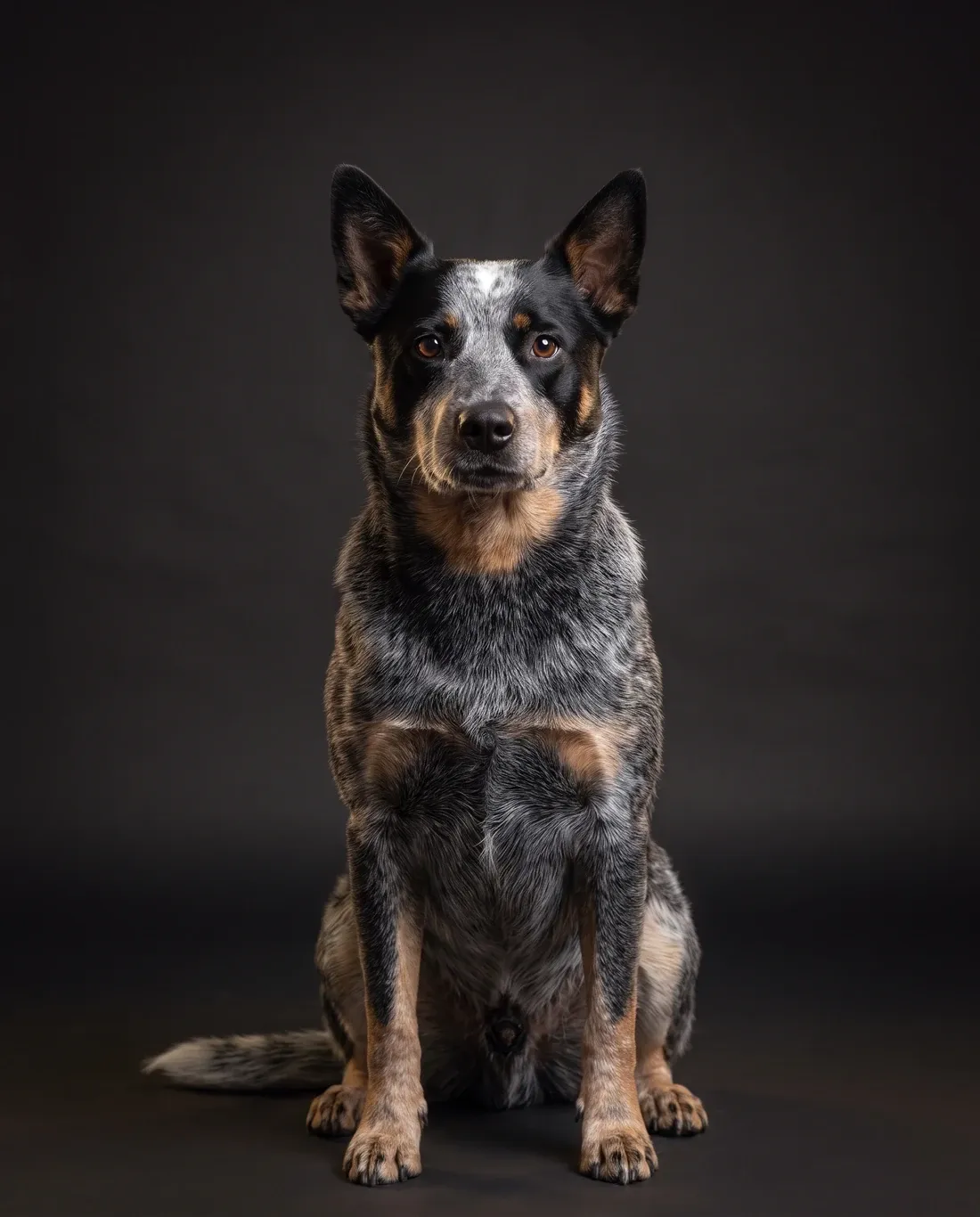
Australian Cattle Dog in Dubai, studio portrait of a calm blue heeler with tan points sitting

Breed guide  ·  Dogs

Australian Cattle Dog

She pretends she can't hear me. I had her hearing tested anyway.

Lifespan
12 to 16 years
Size
Medium
Weight
16 to 22.5 kg
Shedding
Moderate

Last updated 14 October 2026

Join the founding families. AED 1,999 of essential care for AED 199.

No payment now. We'll be in touch by email and WhatsApp as we open enrolment.

✓
Thank you.

We will be in touch soon to confirm.

Cattle Dog traits

What they brought with them.

Tap a card to see what is going on.

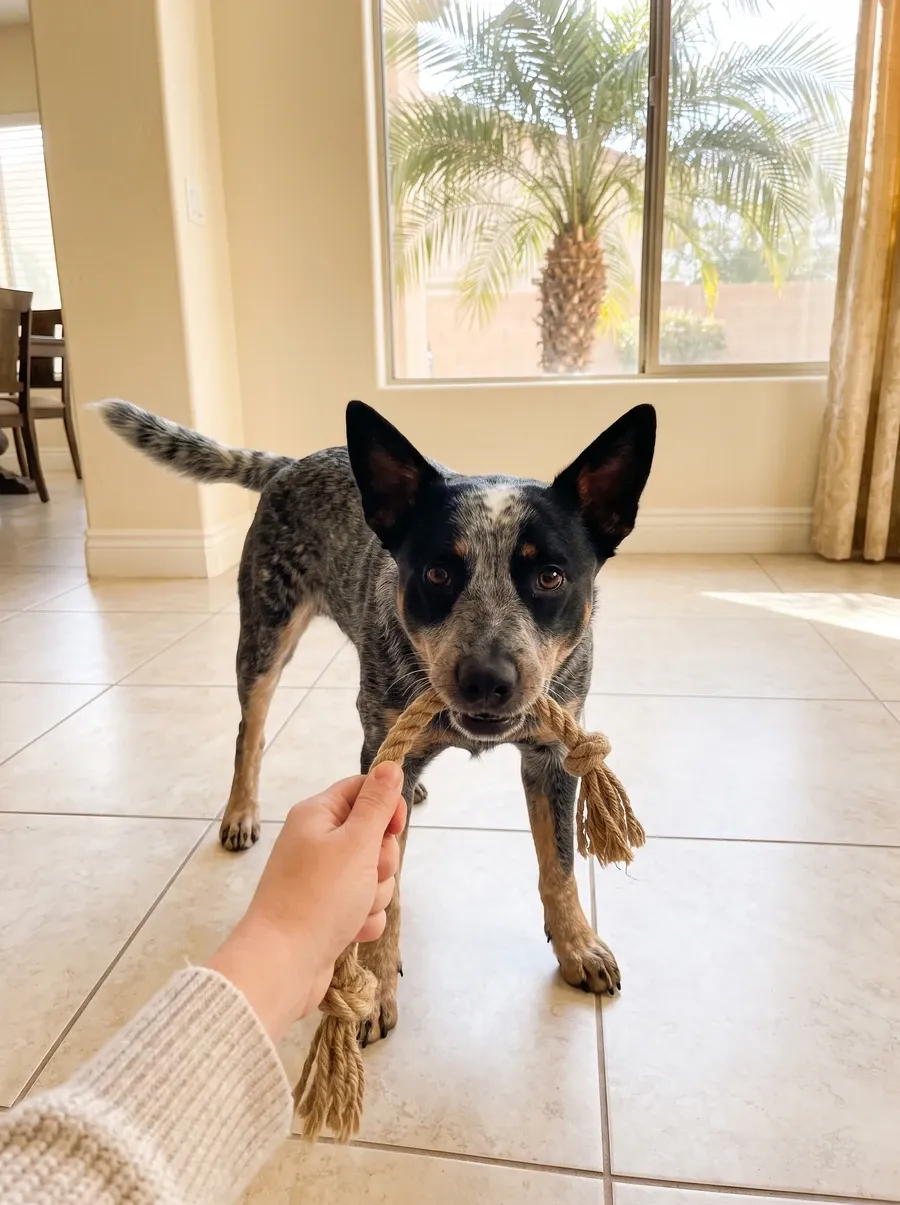
Australian Cattle Dog in Dubai, a young blue heeler tugging a rope toy held low, a date palm outside

At home

Why does my Australian Cattle Dog nip at heels?

Nipping at ankles, trouser legs and running children, worst in puppyhood and the teenage months.

What's going onThey were bred to bite the heel of a cow and drop low to miss the kick. At home that aim lands on ankles, so skip the chasing games and give them a tug toy to grip instead.

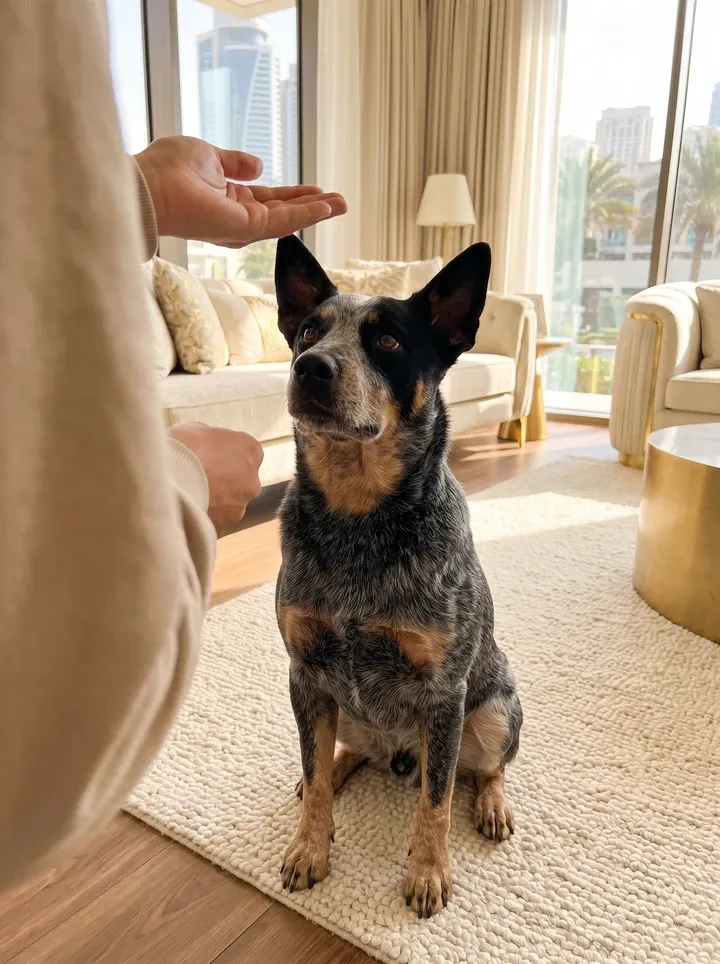
Australian Cattle Dog in Dubai, a blue heeler on a cream rug watching a raised hand, towers outside

At home

Is my blue heeler ignoring me, or can't they hear?

Not turning when you call from behind, and only answering when they can see you.

What's going onSome Cattle Dogs are born deaf in one or both ears, and a dog deaf in one ear can seem completely normal. Their plan includes hearing tests. A deaf dog learns hand signals well.

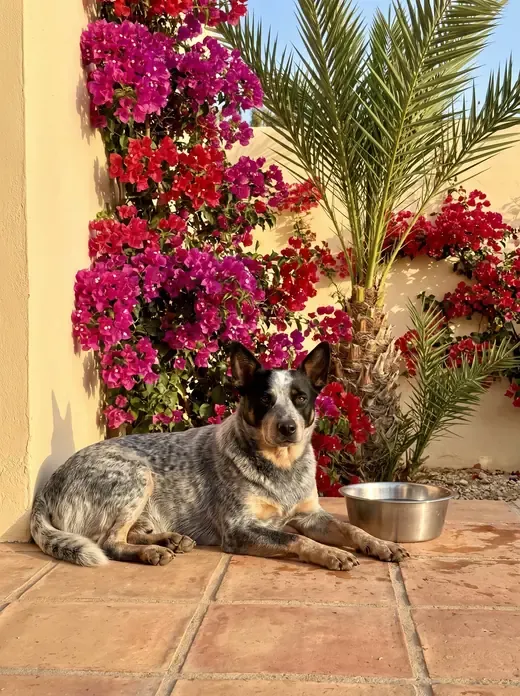
Australian Cattle Dog in Dubai, a blue heeler resting by a water bowl on a villa terrace under a date palm

At home

Can a blue heeler handle the heat?

Still chasing the ball long after you have had enough, whatever the temperature.

What's going onTheir short, dense coat copes with heat better than most herding dogs, but they were bred not to stop. Walk in the cool, and you decide when the game is over.

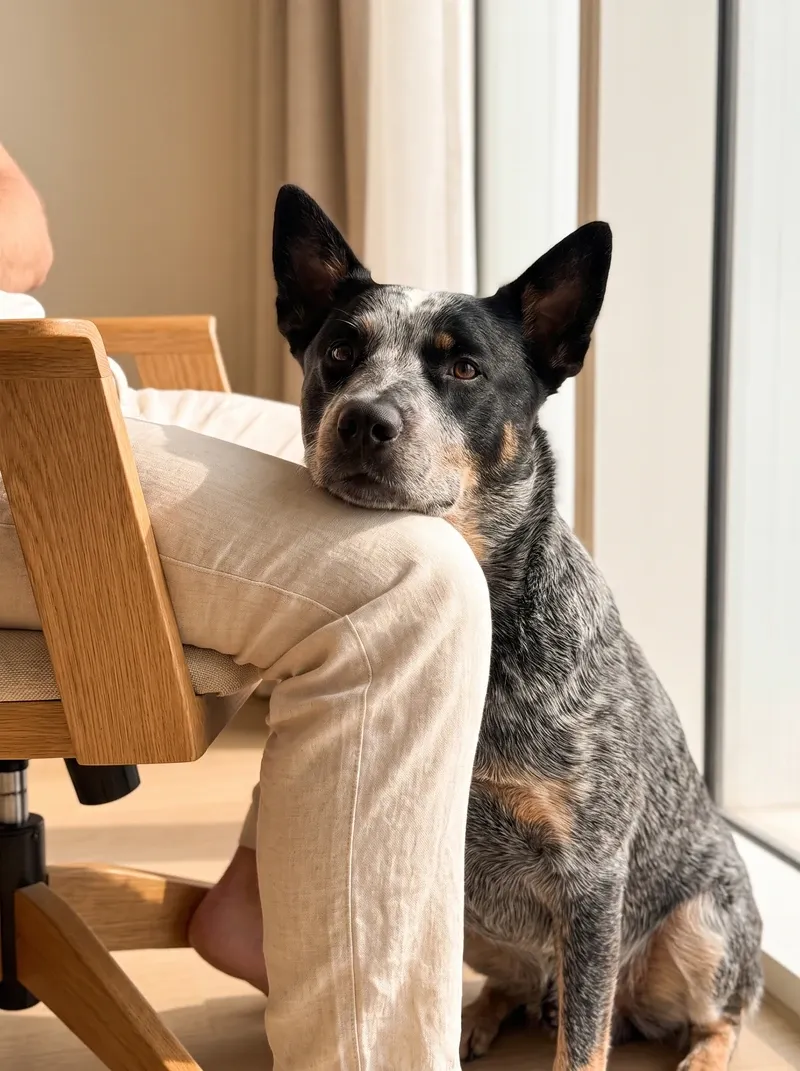
Australian Cattle Dog, a blue heeler resting their chin on a seated pet parent's knee

At home

Why is my Cattle Dog so attached to one person?

Following one person room to room, and taking their time with everyone else.

What's going onMany Cattle Dogs attach closely to one person and are wary of strangers. Meet visitors calmly and let them approach at their own pace. If they start guarding you or the door, contact your vet.

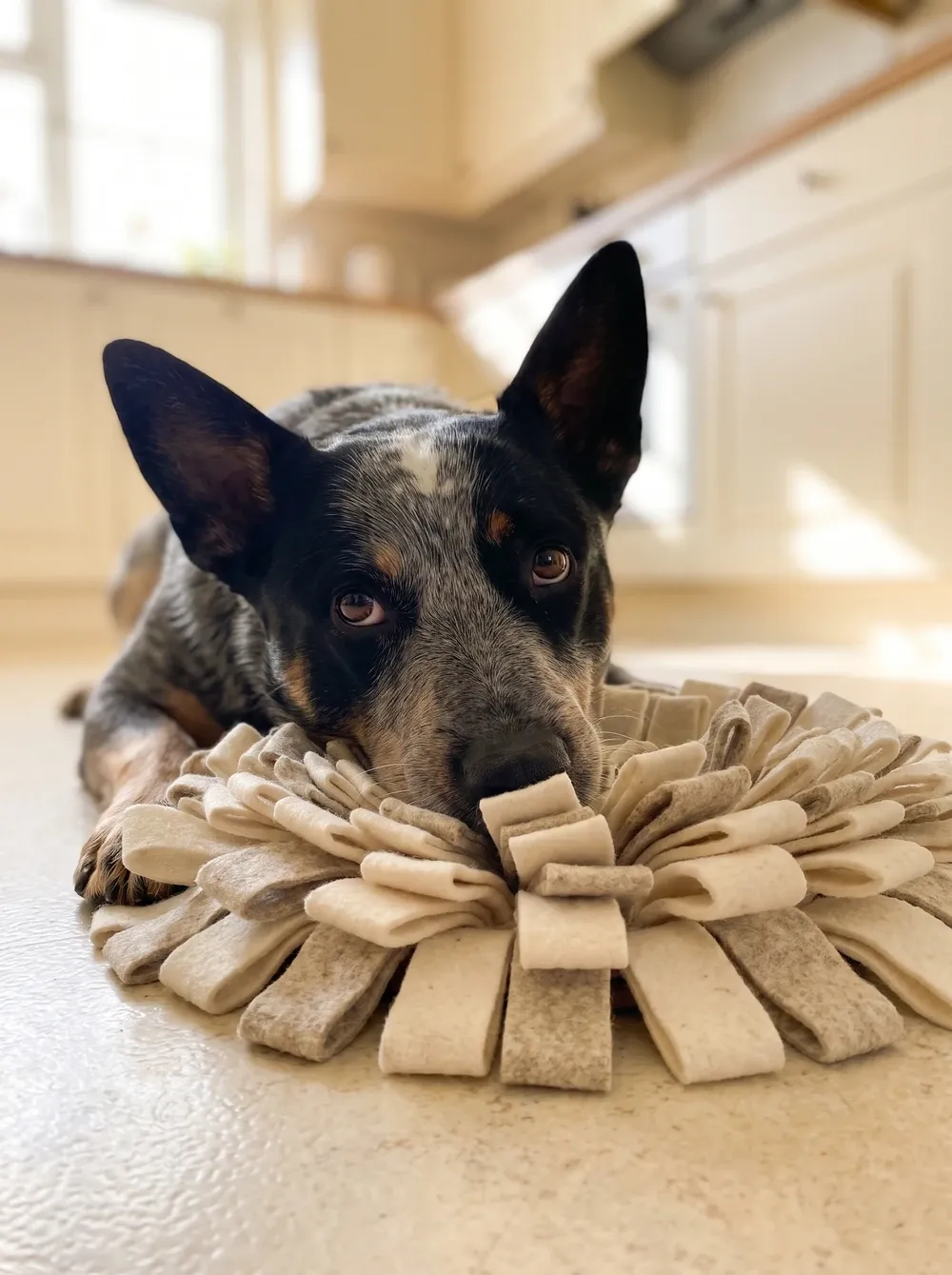
Australian Cattle Dog, a blue heeler lying with their nose in a felt snuffle mat on a kitchen floor

At home

Why does my Australian Cattle Dog chew everything?

Shredded cushions, the post in pieces and barking at the door after a long, quiet day.

What's going onA bored heeler finds work. Twenty minutes of training, or sniffing out their dinner, tires them more than another run.

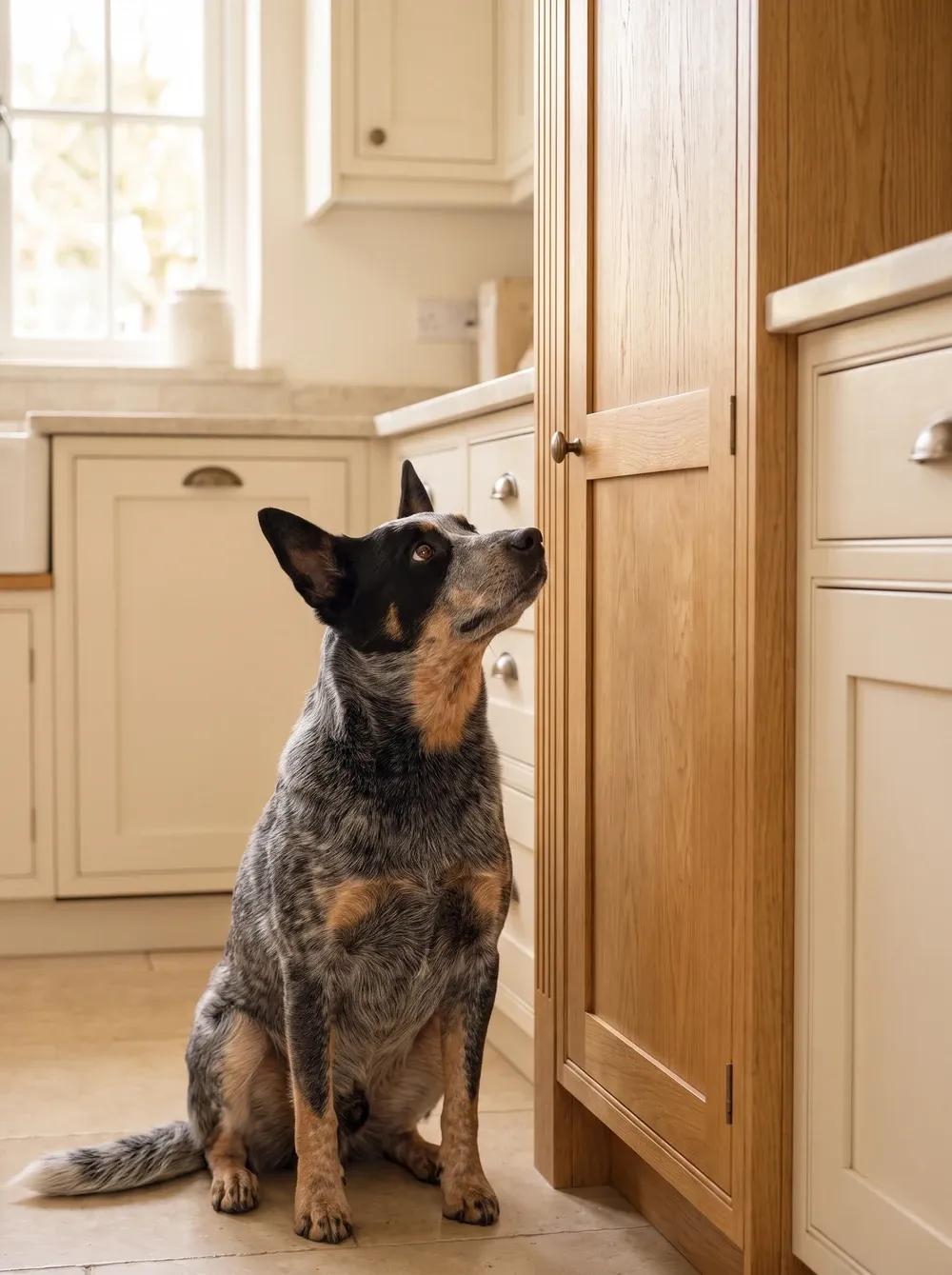
Australian Cattle Dog, a blue heeler sitting by an oak kitchen cupboard, looking up at it

At home

Why can my Australian Cattle Dog open doors?

Lifting latches, finding the treat cupboard after one look, and waiting by the front door the moment the keys come out.

What's going onCattle Dogs solve problems for a living. Latches, cupboards and your routine are all fair game. Keep the house rules the same for everyone, or they will find the gap.

A Cattle Dog in Dubai

The bit nobody tells you.

Their day

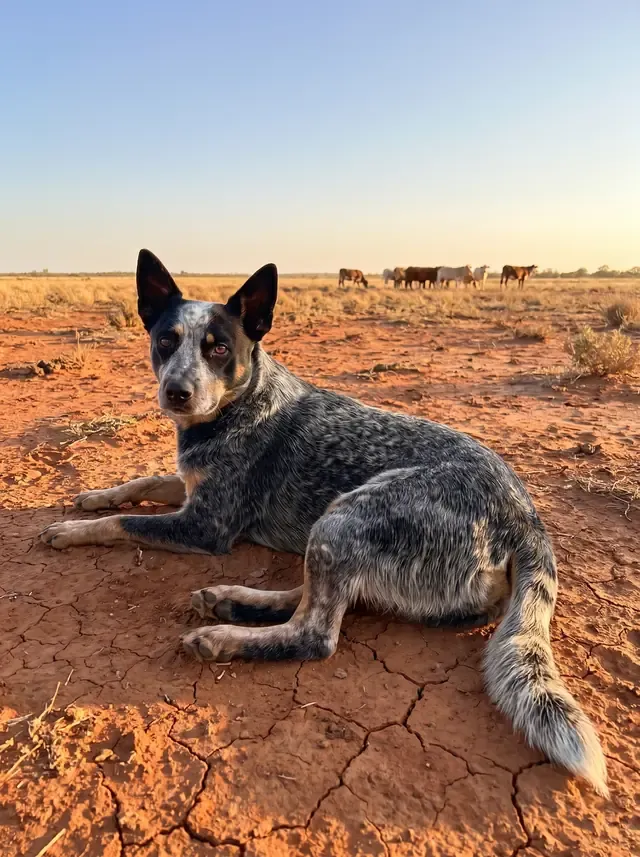
Built for: Moving stubborn cattle across hot, open country, all day.

In Dubai: Often a day in a flat.

Their work

Built for: Quietly, with a nip to the heel when it was needed.

In Dubai: Nothing to move, and nobody to work beside.

What runs past

Built for: Cattle that would not move for a stare.

In Dubai: Children and scooters.

The nipping, the chewing and the barking at the door mostly come from that gap.

You cannot give them a cattle station. You can give them a job, and the ten things below show you how.

Your plan is built around their breed: the risks on an Australian Cattle Dog's record at every age, and the care that goes with each one.

Join the founding families. AED 1,999 of essential care for AED 199.

Daily care for a Cattle Dog

Ten things that make their life better.

Many of them are free, and most matter at every age.

  1. A Cattle Dog with nothing to solve will find their own problems.

    Every age, most of all 6 months to 2 years

    Under AED 150

    Why

    A Cattle Dog with nothing to solve will find their own problems.

    What to do

    Twenty minutes a day, split into two or three sessions: short training, a puzzle feeder, part of their dinner scattered in the grass to sniff out. For a puppy, keep each session to a couple of minutes. If they are deaf, train with hand signals.

  2. They were bred to keep going, so resting has to be taught.

    Every age, most of all 6 months to 2 years

    Under AED 200

    Why

    They were bred to keep going, so resting has to be taught.

    What to do

    Reward them for lying on a mat while you eat or read, and build the time up slowly. After a busy day, give them a quiet one.

  3. They need to move something, and it should not be your feet.

    Every age, with slower games on soft ground from 7 years

    Under AED 250

    Why

    They need to move something, and it should not be your feet.

    What to do

    A big herding ball to push, a flirt pole, or tug with a clear start and stop. When the vacuum comes out, put them in another room at first, then teach them to wait on their mat.

  4. The nip was the job they were bred for. On a child's ankle it is a bite.

    Every age, most of all in the first two years

    Free

    Why

    The nip was the job they were bred for. On a child's ankle it is a bite.

    What to do

    Keep chasing games away from running children, with an adult watching. Teach children to stand still and fold their arms. Move every nip on to a tug toy, and contact your vet if the nips get harder.

  5. Bikes and scooters move like a cow breaking away, and a deaf dog cannot hear them coming.

    Every age, most of all 6 months to 2 years

    Under AED 150

    Why

    Bikes and scooters move like a cow breaking away, and a deaf dog cannot hear them coming.

    What to do

    On the lead near roads and car parks, always. Reward a sit as things go past. In the lift, keep them close until the doors are fully open.

  6. Their coat copes with heat better than most herding dogs. Their drive does not know when to stop.

    Every age, most of all puppies and from 7 years

    Free

    Why

    Their coat copes with heat better than most herding dogs. Their drive does not know when to stop.

    What to do

    From May to September, walk before sunrise and after dark. Put the back of your hand on the pavement for five seconds: if you cannot keep it there, they cannot walk on it. Carry water, and keep hard play short.

  7. Harsh handling makes a tough dog tougher, and a wary one warier.

    Every age

    Free

    Why

    Harsh handling makes a tough dog tougher, and a wary one warier.

    What to do

    Train with food and play rather than a raised voice or a tug on the lead. Let them meet visitors at their own pace, and never force a greeting. Set up a quiet room before firework nights.

  8. Hip Dysplasia (HD, a poorly fitting hip joint) and Elbow Dysplasia (ED, a poorly fitting elbow joint) are on their record from puppyhood.

    Every age, most of all 6 months to 4 years

    Free to AED 1,000 for rugsIn your plan

    Why

    Hip Dysplasia (HD, a poorly fitting hip joint) and Elbow Dysplasia (ED, a poorly fitting elbow joint) are on their record from puppyhood.

    What to do

    Keep them lean: you should feel their ribs easily. Rugs on slippery floors, no repeated jumping while they grow, and tell your vet if they limp or tire early. Your plan includes a check on how they walk, and joint x-rays when your vet sees a reason.

  9. Progressive Retinal Atrophy (PRA, gradual loss of sight) and deafness are both on their record from puppyhood.

    Every age, most of all 6 months to 4 years

    FreeIn your plan

    Why

    Progressive Retinal Atrophy (PRA, gradual loss of sight) and deafness are both on their record from puppyhood.

    What to do

    Book the eye evaluations and hearing tests their plan sets. At home, watch for hesitation in dim light, and for a dog who does not turn when you call from behind.

  10. Tough dogs hide discomfort, and itchy skin, weight and joints all change slowly.

    Every age, most of all from 4 years

    Free

    Why

    Tough dogs hide discomfort, and itchy skin, weight and joints all change slowly.

    What to do

    Run your hands over their ribs, spine, hips and paws. Look at their skin for itching and their teeth for tartar. Weigh them monthly, because unexplained weight gain in their prime can be the thyroid.

Two of these are in your plan. The rest you can do at home.

Join the founding families. AED 1,999 of essential care for AED 199.

Cattle Dog health by age

Their health, at every age.

In an Australian Cattle Dog, the hips, elbows, eyes and hearing lead the record, and a dog bred not to stop can hide a sore joint. Choose their age to see what to watch for, and the care that goes with it.

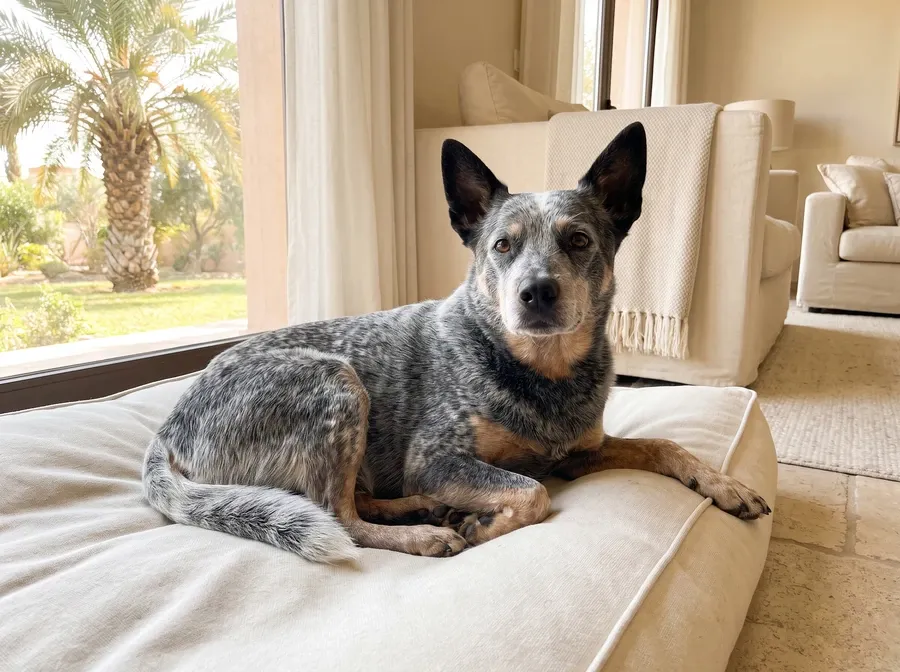
Australian Cattle Dog in Dubai, an older blue heeler with a whitening muzzle on a cream bed, a date palm outside

How old are they?

Their age

Cattle Dog Puppy health

the first six months

What to watch for

  1. Developmental or early clinical signs of Hip Dysplasia (HD, poorly fitting hip joint)
  2. Congenital or early inherited ocular disease related to Progressive Retinal Atrophy (PRA, gradual loss of sight)
  3. Early or congenital expression of Deafness
  4. Developmental or early clinical signs of Elbow Dysplasia (ED, poorly fitting elbow joint)
  5. Juvenile onset of allergies

The care that goes with it

  1. Core vaccinations, microchip and Dubai Municipality registration
  2. Deworming, and flea and tick prevention
  3. Body Condition Score (a check on whether they are the right weight), dental, growth and nutritional evaluation, and early socialisation
  4. Baseline screening for Hip Dysplasia (HD, a poorly fitting hip joint)
  5. Follow-up for any early sign of Progressive Retinal Atrophy (PRA)
The full care detail
  • Core vaccination programme, microchipping and Dubai Municipality registration. Titre testing discussion where clinically appropriate; not a substitute for completing the core vaccine series
  • Deworming and external parasite prevention tailored to Dubai exposure
  • Body Condition Score (BCS), Muscle Condition Score (MCS), dental, growth and nutritional evaluation, and early socialisation
  • Baseline screening focused on Hip Dysplasia (HD)
  • Early diagnostic follow-up for signs suggestive of Progressive Retinal Atrophy (PRA)

Their age

Cattle Dog Juvenile health

6 months to 2 years

What to watch for

  1. Emerging Hip Dysplasia (HD, poorly fitting hip joint) with exercise intolerance or lameness
  2. Progression or first clinical detection of Progressive Retinal Atrophy (PRA, gradual loss of sight)
  3. Young-dog presentation of Deafness
  4. Emerging Elbow Dysplasia (ED, poorly fitting elbow joint) with exercise intolerance or lameness
  5. Recurrent or persistent allergies

The care that goes with it

  1. A lean body, a watch on how they walk, and joint x-rays when a vet sees a reason
  2. Ophthalmic evaluation (eye exam), with any sore eye or change in sight looked at promptly
  3. Neutering or spaying, timed for a medium-sized breed
  4. Hearing tests
  5. If they seem not to hear, a vet finds out why, rather than assuming deafness
The full care detail
  • Maintain lean body condition; monitor gait and mobility; perform orthopaedic imaging when clinically indicated.
  • Routine ophthalmic evaluation; investigate ocular discomfort or vision changes promptly.
  • Neuter/spay timing discussion that accounts for medium-breed growth and disease risk
  • Hearing Tests
  • Investigate recurrent signs rather than repeatedly treating presumed Deafness

Their age

Cattle Dog Young Adult health

2 to 4 years

What to watch for

  1. Hip Dysplasia (HD, poorly fitting hip joint)
  2. Progressive Retinal Atrophy (PRA, gradual loss of sight)
  3. Deafness
  4. Elbow Dysplasia (ED, poorly fitting elbow joint)
  5. Allergies

The care that goes with it

  1. A lean body, a watch on how they walk, and joint x-rays when a vet sees a reason
  2. Ophthalmic evaluation (eye exam), with any sore eye or change in sight looked at promptly
  3. Hearing tests
  4. Elbow x-rays
  5. Allergy testing
The full care detail
  • Maintain lean body condition; monitor gait and mobility; perform orthopaedic imaging when clinically indicated.
  • Routine ophthalmic evaluation; investigate ocular discomfort or vision changes promptly.
  • Hearing Tests
  • Elbow X-rays
  • Allergy Testing

Their age

Cattle Dog Prime Adult health

4 to 7 years

What to watch for

  1. Progressive Retinal Atrophy (PRA, gradual loss of sight)
  2. Hip Dysplasia (HD, poorly fitting hip joint)
  3. Hypothyroidism (an underactive thyroid)
  4. Elbow Dysplasia (ED, poorly fitting elbow joint)
  5. Heart Disease

The care that goes with it

  1. Ophthalmic evaluation (eye exam), with any sore eye or change in sight looked at promptly
  2. Hip care
  3. Thyroid testing
  4. Orthopaedic evaluation (joint and bone exam)
  5. Auscultation (listening to the chest) at every wellness visit, and an echocardiogram (an ultrasound scan of the heart) if a murmur, an irregular heartbeat or a breed risk is found
The full care detail
  • Routine ophthalmic evaluation; investigate ocular discomfort or vision changes promptly.
  • Hip Care
  • Thyroid Testing
  • Orthopaedic evaluation
  • Cardiovascular auscultation at routine wellness visits; perform echocardiography if a murmur, arrhythmia or breed-specific risk is identified.

Their age

Cattle Dog Senior health

7 to 10 years

What to watch for

  1. Arthritis
  2. Cataracts (a cloudy lens)
  3. Heart Disease
  4. Kidney Disease
  5. Dental Disease

The care that goes with it

  1. Mobility evaluation, weight control, pain relief and physiotherapy where it helps
  2. Eye surgery, if their sight needs it
  3. Cardiac support (care for the heart)
  4. Renal therapy (kidney care)
  5. Dental cleaning
The full care detail
  • Routine mobility evaluation, weight optimisation, multimodal analgesia and physiotherapy where appropriate.
  • Eye Surgery
  • Cardiac Support
  • Renal Therapy
  • Dental Cleaning

Their age

Cattle Dog Geriatric health

10 years and over

What to watch for

  1. Cognitive Dysfunction (dementia in older pets)
  2. Arthritis
  3. Heart Failure
  4. Kidney Failure
  5. Cancer

The care that goes with it

  1. Behavioural therapy for confusion or restlessness at night
  2. Pain relief
  3. Cardiac support (care for the heart)
  4. Renal therapy (kidney care)
  5. Oncology care (cancer care)
  6. Quality-of-life assessments
  7. Palliative care (comfort care) planned around them
  8. End-of-life planning with your veterinary team
The full care detail
  • Behavioural Therapy
  • Pain Relief
  • Cardiac Support
  • Renal Therapy
  • Oncology Care
  • Quality-of-life assessments
  • Tailored palliative and comfort-focused care plan
  • Compassionate end-of-life planning with your veterinary team

Breed predispositions indicate an increased risk rather than certainty of disease. What is right for them always comes from their own history and an evaluation.

Getting a Cattle Dog puppy in Dubai

Before they come home.

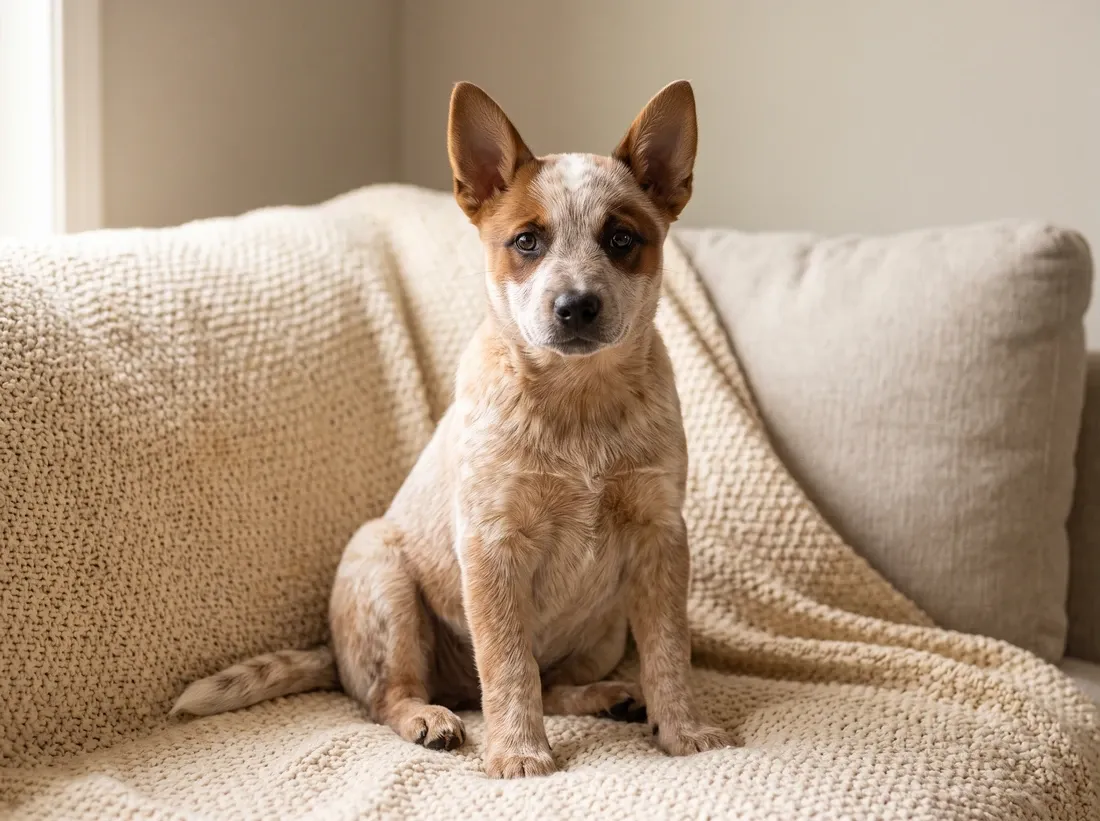
Australian Cattle Dog, a red heeler puppy sitting on a cream blanket on the sofa

Types of Australian Cattle Dogs

Blue heeler or red heeler

There is one Australian Cattle Dog, in two coats. A blue heeler's coat is flecked or mottled with blue, and a red heeler's is speckled red all over. Both come from the same working heelers of New South Wales, and both need the same daily job.

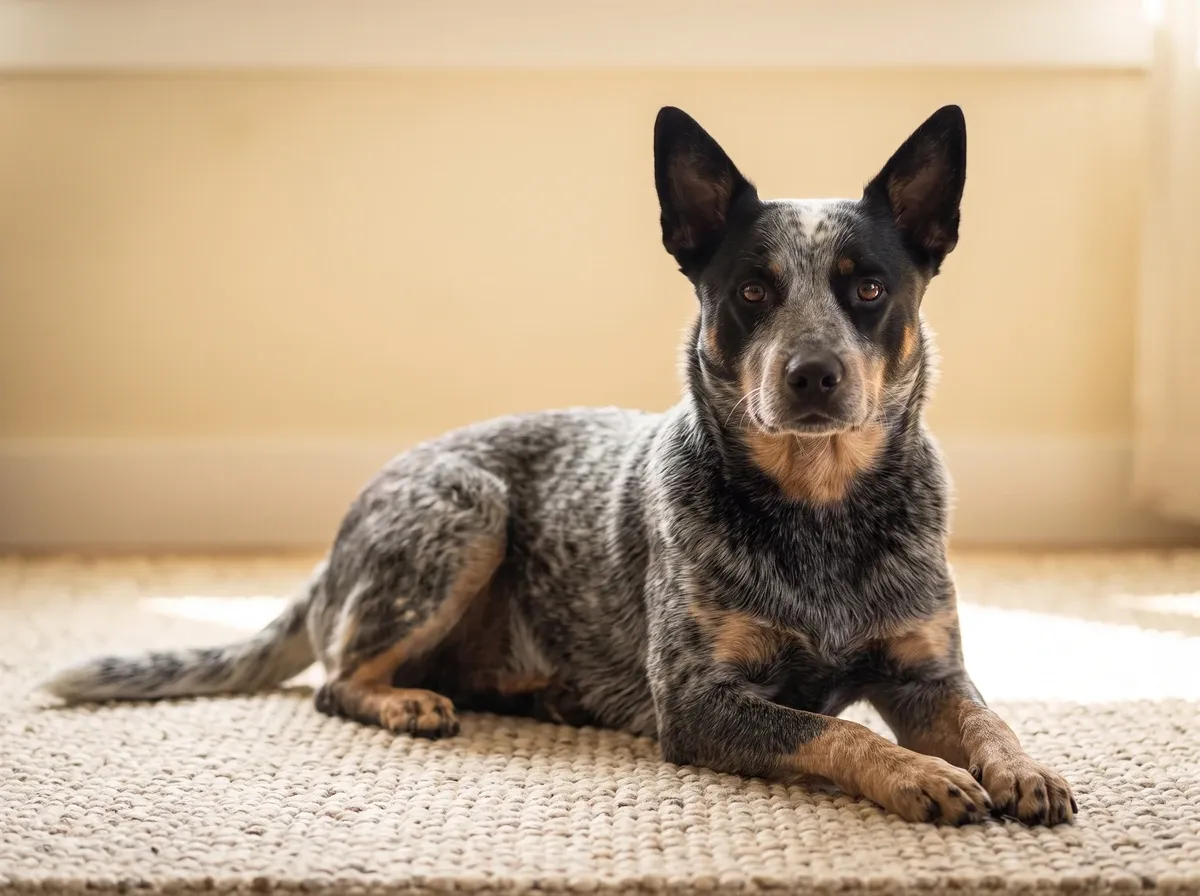
Australian Cattle Dog, a blue heeler with tan markings lying on a stone-coloured rug

Colours

Speckles, masks and tan

Look closely and the coats are full of detail. A blue coat often carries black, blue or tan markings on the head, with tan on the legs, chest and throat, and a red coat often has darker red markings on the head. Whatever the coat, the nip comes with it.

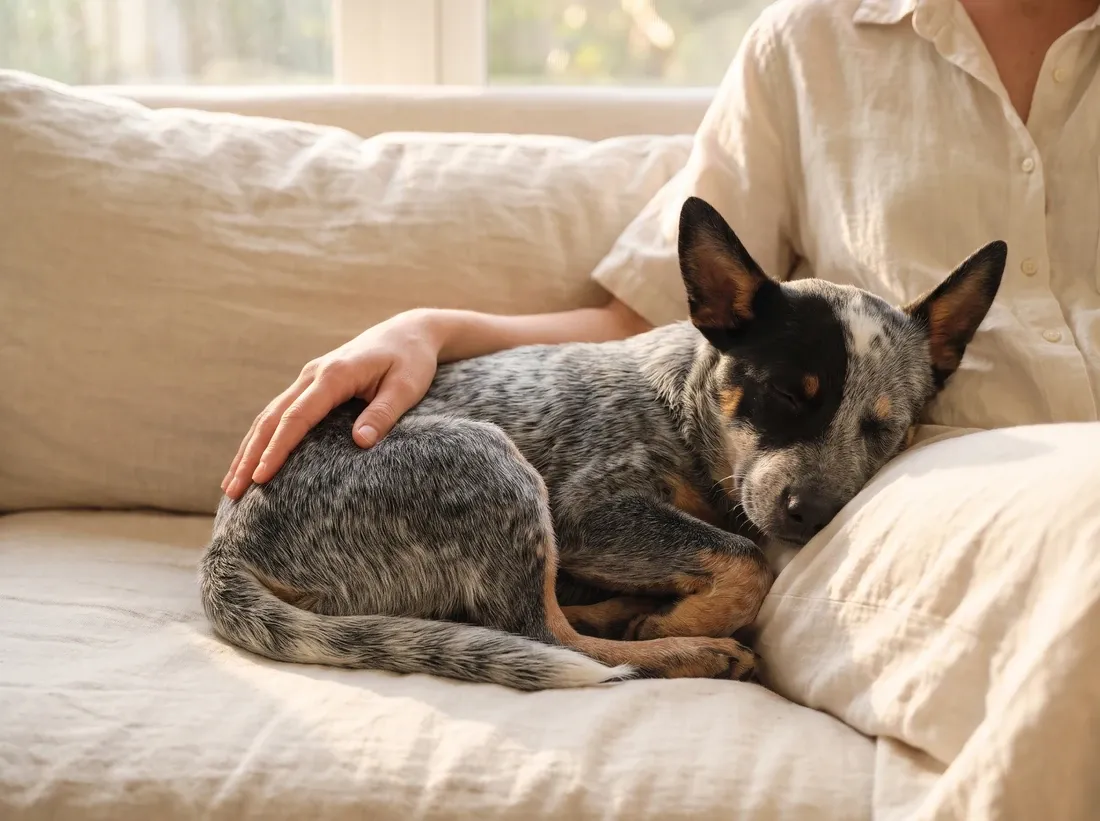
Australian Cattle Dog, a young blue heeler asleep against a pet parent on a linen sofa

The first six months

Blue heeler puppy care tips

Vaccinations, microchip and Dubai Municipality registration come first. Notice whether your puppy wakes when you come in, or turns when you call from behind, and mention it to your vet: hearing tests follow in the juvenile months. Move every nip on to a toy from day one, and keep puppy training to two-minute sessions, a few times a day.

Puppy health, 0 to 6 months
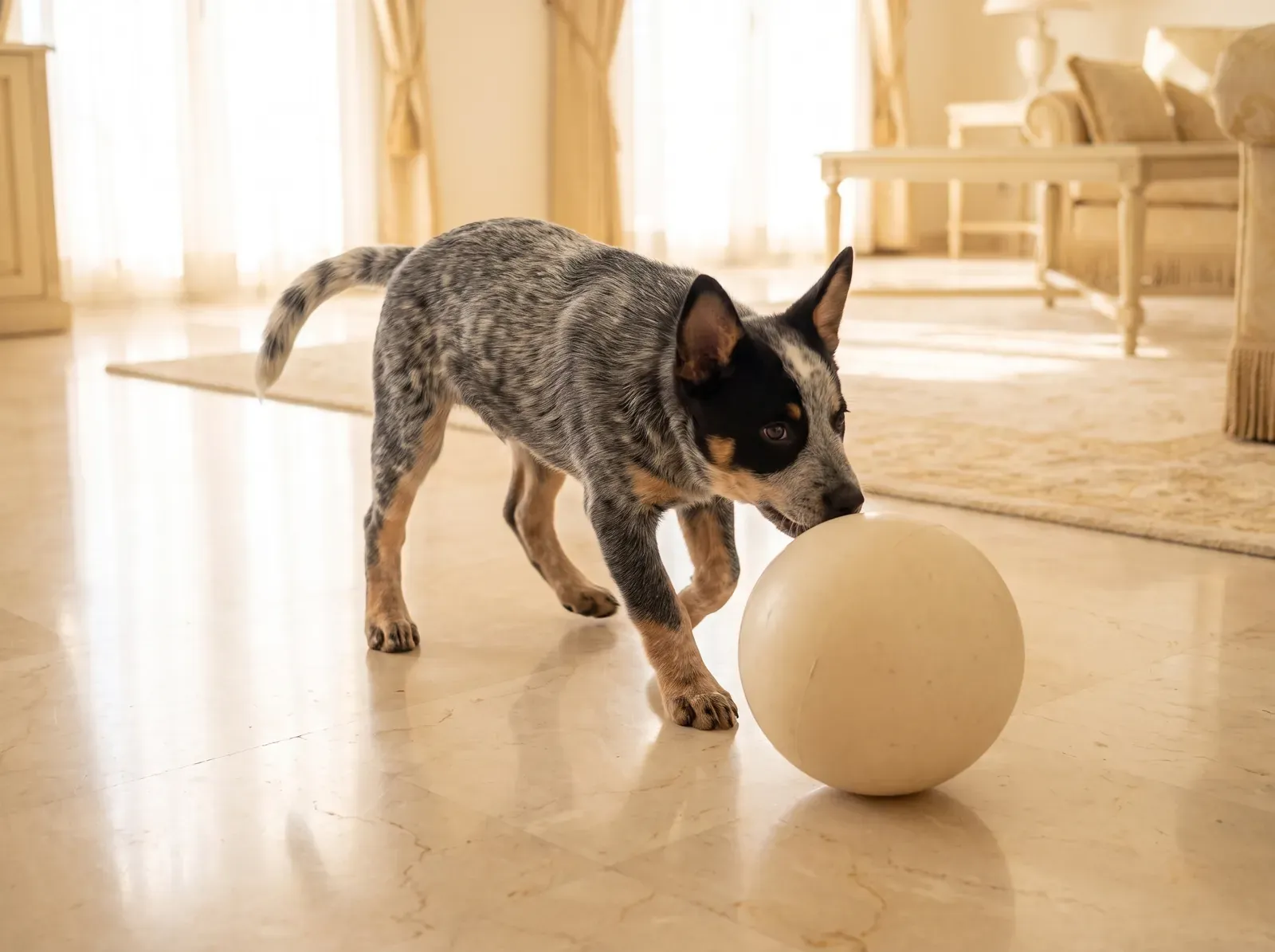
Australian Cattle Dog, a blue heeler puppy nosing a large cream herding ball across a marble floor

Getting the home ready

A mat, a herding ball and a good harness

A mat or bed for learning to rest, a puzzle feeder and a snuffle mat, a big herding ball, a harness and lead for every walk near wheels, and rugs where they turn on marble.

Ten things that make their life better
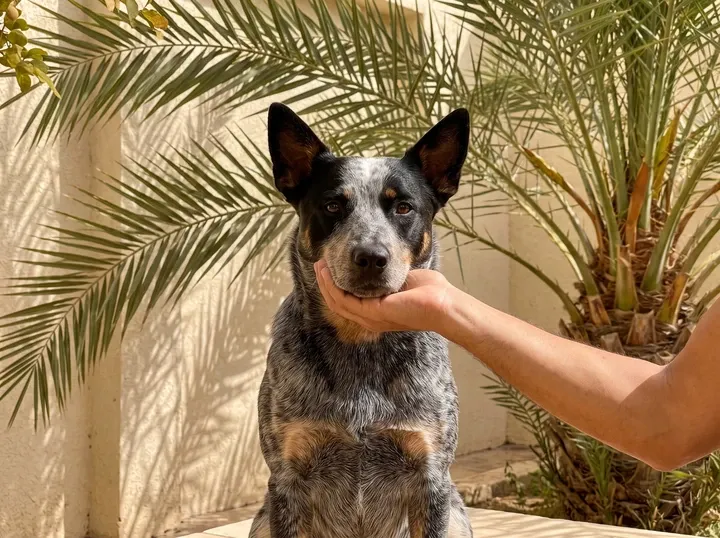
Australian Cattle Dog in Dubai, a blue heeler in a villa garden, a pet parent's hand under the chin

Before you commit

Ask about hearing and eyes

Deafness and Progressive Retinal Atrophy (gradual loss of sight) are on their record from puppyhood. If you are choosing a puppy, ask the breeder about the parents' hearing and eye results, and meet the mother if you can.

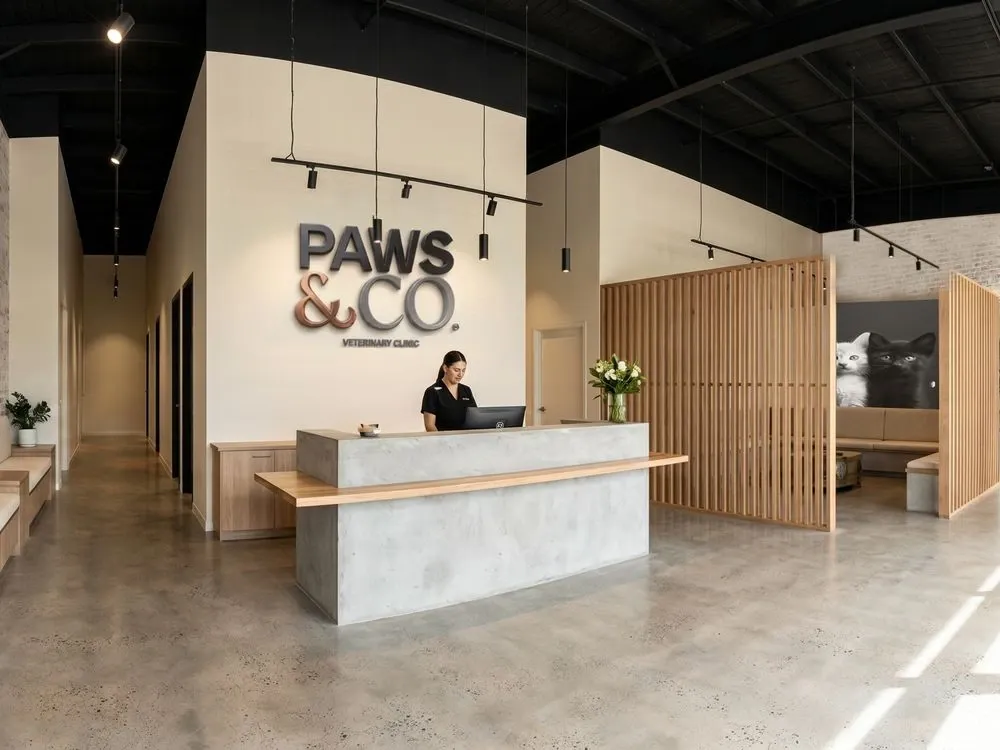
The reception of a Paws & Co clinic, with long cream benches and a stone reception desk

Before the clinics open

Join the founding families

AED 1,999 of essential care for AED 199. No payment now.

When to see a vet

When it is not behaviour.

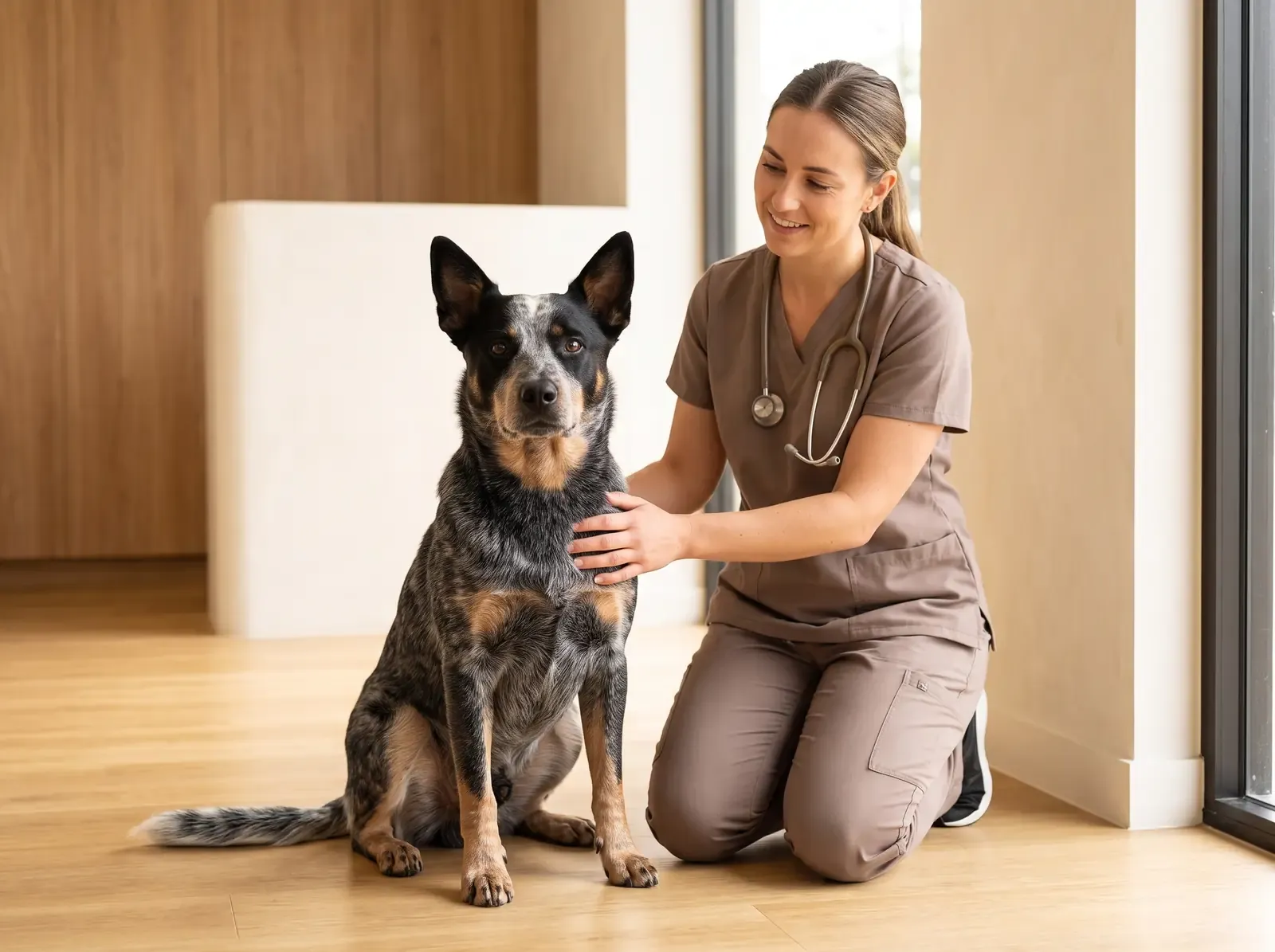
Australian Cattle Dog, a vet in taupe scrubs kneeling with a hand on a calm blue heeler

Some of this is not a training problem, and treating it like one wastes time your dog may not have. If they are distressed when you leave, if they growl or guard their food, their toys or you, if they are frightened on the lead, or if anything about them changes suddenly at any age, contact your vet the same day. A tip from a website, ours included, is not the answer. If it cannot wait, contact your nearest emergency vet now.

With a Cattle Dog, check their hearing before you call it stubbornness. A puppy who does not wake when you come in, or a dog who only responds when they can see you, may be deaf in one or both ears. In their prime, weight gain, a dull coat and less energy can be an underactive thyroid. A new reluctance to jump, or stopping on walks, can be the hips or elbows. In an older Cattle Dog, restlessness at night or getting lost in the house can be the start of cognitive decline. Bloat (GDV, a twisted stomach) can happen in any dog, though it is most common in large, deep-chested breeds. A swollen, tight belly, retching with nothing coming up, sudden restlessness or drooling is an emergency: contact your vet now.

They'll keep choosing when they hear you. If they stop hearing the treat bag, call your vet.
Cattle Dog history

Before they were yours.

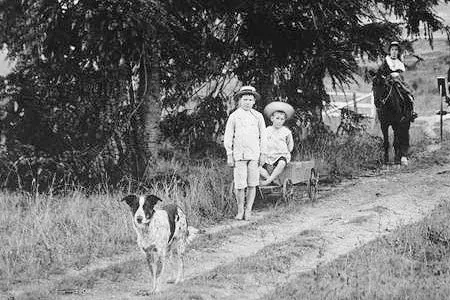
  1. Australian Cattle Dog history, a cattle dog leading the way up a farm drive, Queensland, 1902
    A cattle dog leads the way up the drive at Sedgley Grange, Queensland, in 1902.

    The 1800s

    Hall's Heelers

    In New South Wales, the pastoralist Thomas Hall crossed blue-speckled collie-type dogs from Britain with dingoes, to move half-wild cattle across hot, open country.

    What they still carryThe nip, the stamina and a head for heat.

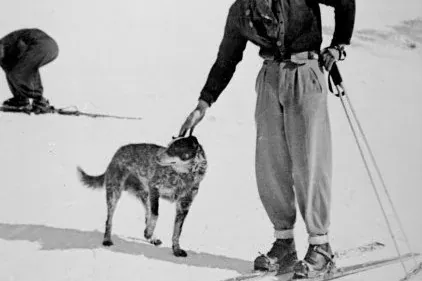
  2. Australian Cattle Dog history, a speckled cattle dog patted by a skier, Snowy Mountains, New South Wales, about 1930
    A cattle dog with a skier in the Snowy Mountains, New South Wales, around 1930.

    1903

    The first standard

    Robert Kaleski wrote the first standard for the breed in 1903. It was later called the Australian Heeler, then the Australian Cattle Dog.

    What they still carryThe heeler's job, still built in.

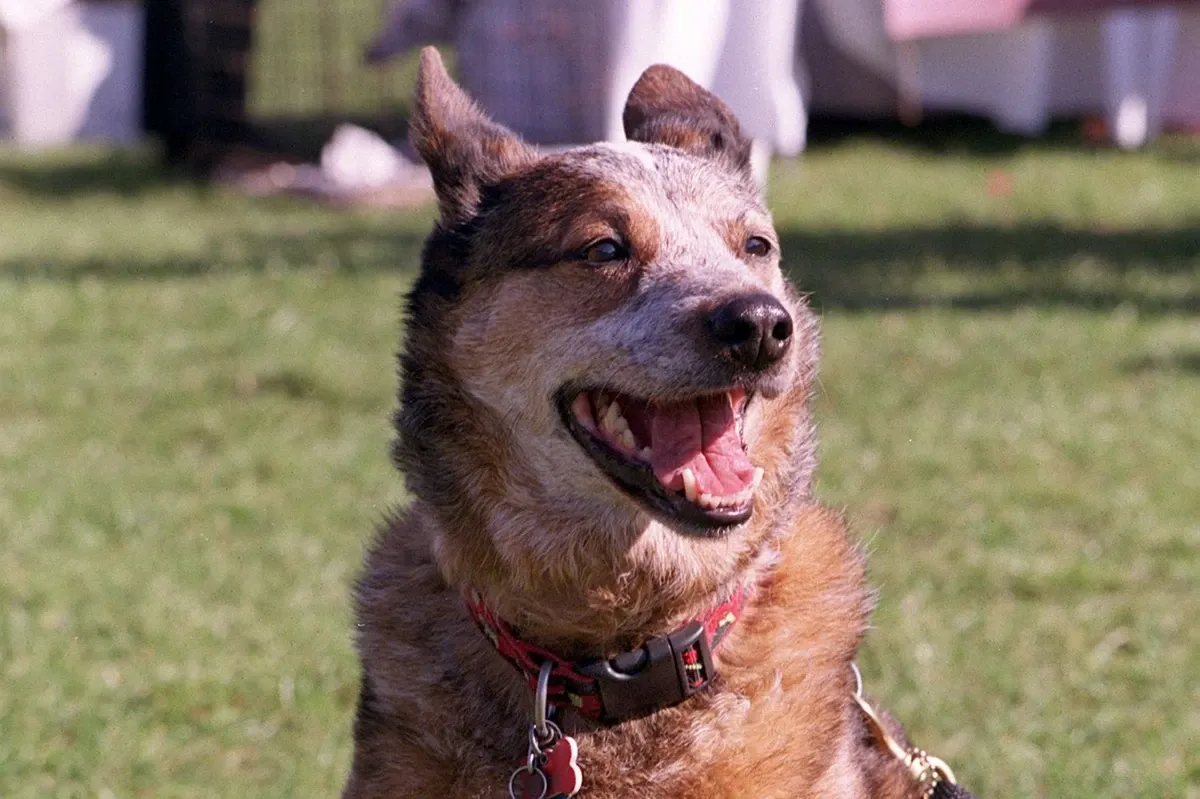
  3. Australian Cattle Dog history, a red heeler sitting on the grass at Pet Pride Day, San Francisco, 2002
    A Cattle Dog at Pet Pride Day in San Francisco, 2002. Photo: Nancy Wong, CC BY-SA 4.0, via Wikimedia Commons (cropped).

    1980

    Recognised in America

    The American Kennel Club accepted the breed on 1 May 1980, and the Cattle Dog spread from cattle stations to family homes around the world.

    What they still carryA working dog, now living with a family.

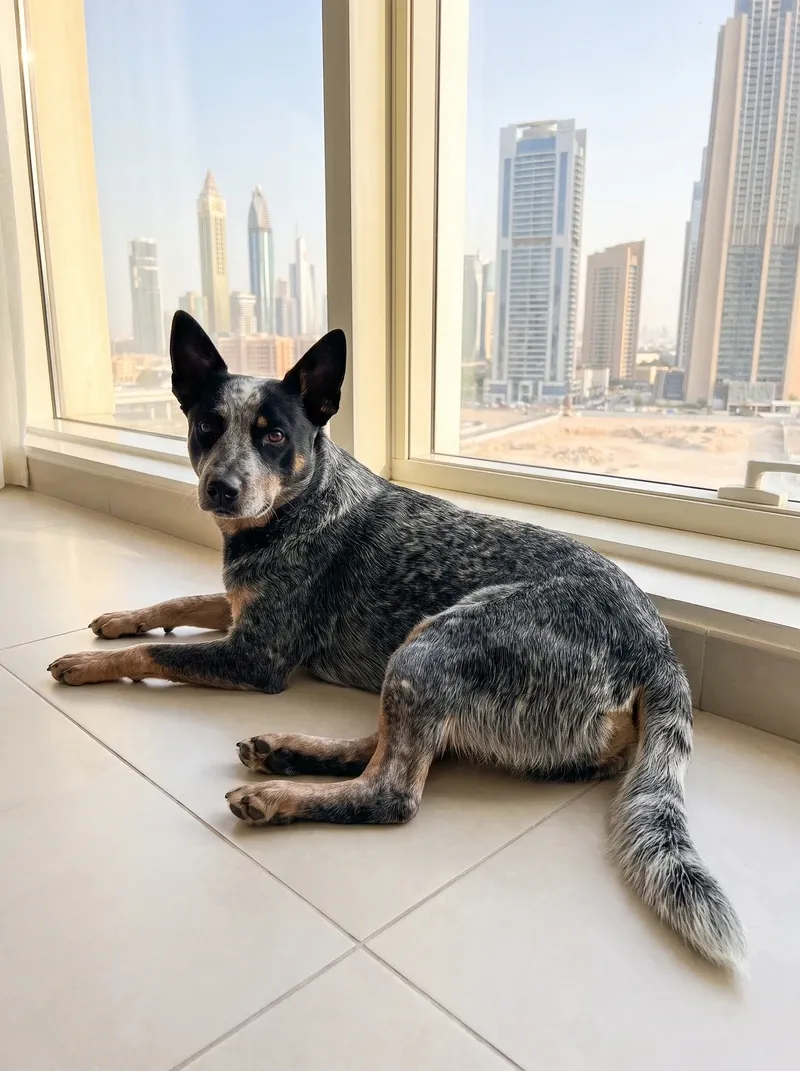
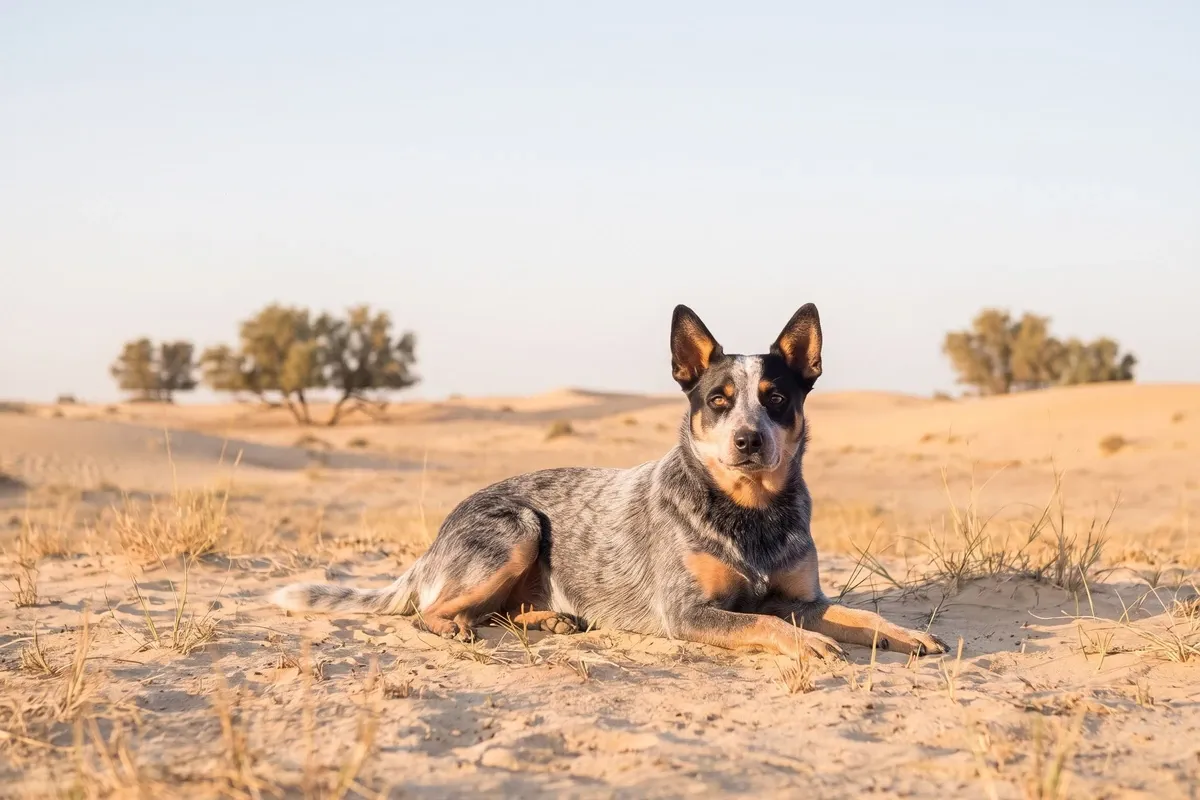
  4. Australian Cattle Dog history, the breed today, a blue heeler lying on desert sand, Dubai, 2026

    Today

    In Dubai

    In Dubai a Cattle Dog lives in a flat or a villa, with a coat that copes with heat better than most herders, and no cattle to move.

    What they still carryA drive to work all day, whatever the weather.

Cattle Dog questions

The ones you type at midnight.

Most of these get asked late at night, by someone watching their dog and not sure what they are seeing.

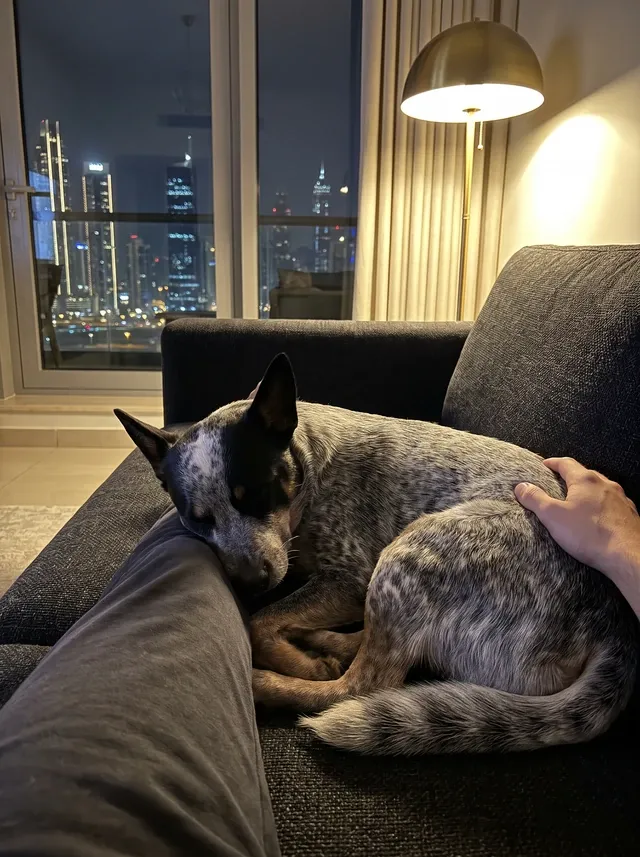
Australian Cattle Dog in Dubai, a blue heeler asleep against a pet parent's knee at night, city lights beyond
How long do Australian Cattle Dogs live?

Australian Cattle Dogs usually live 12 to 16 years. In a small UK study of about 120 Cattle Dogs, half lived to 14 or more.

How big does an Australian Cattle Dog get?

An adult Australian Cattle Dog usually weighs 16 to 22.5 kg: a medium-sized dog.

Do Australian Cattle Dogs shed?

Australian Cattle Dogs shed moderately, all year round. A weekly brush keeps it down.

Are blue heelers and red heelers Australian Cattle Dogs?

Yes, blue heeler, or Australian blue heeler, is another name for the Australian Cattle Dog, after the blue coat. Red heeler is the name used for the red-speckled coat.

What are the different types of Australian Cattle Dogs?

Australian Cattle Dogs come in two coats, blue and red speckle, often called blue heelers and red heelers. They are the same breed, with the same needs.

Why does my Australian Cattle Dog nip?

An Australian Cattle Dog nips because the breed was made to bite the heels of cattle. On a child's ankle it can hurt, so stop chasing games and give them a tug toy to grip.

Are Australian Cattle Dogs often deaf?

Some Australian Cattle Dogs are born deaf. In a study of 899 Cattle Dogs, about one in ten was deaf in one or both ears, so hearing tests are part of their plan.

Can an Australian Cattle Dog live in Dubai?

Yes, an Australian Cattle Dog can live in Dubai, and their short, dense coat copes with heat better than most herding dogs. From May to September, walk before sunrise and after dark, and end the game yourself.

Worried about them? Contact your vet today.