We’re hiring people who love them like we do. Join us careers@pawsandco.comSee open roles
UAE Government Licensed MOCCAE
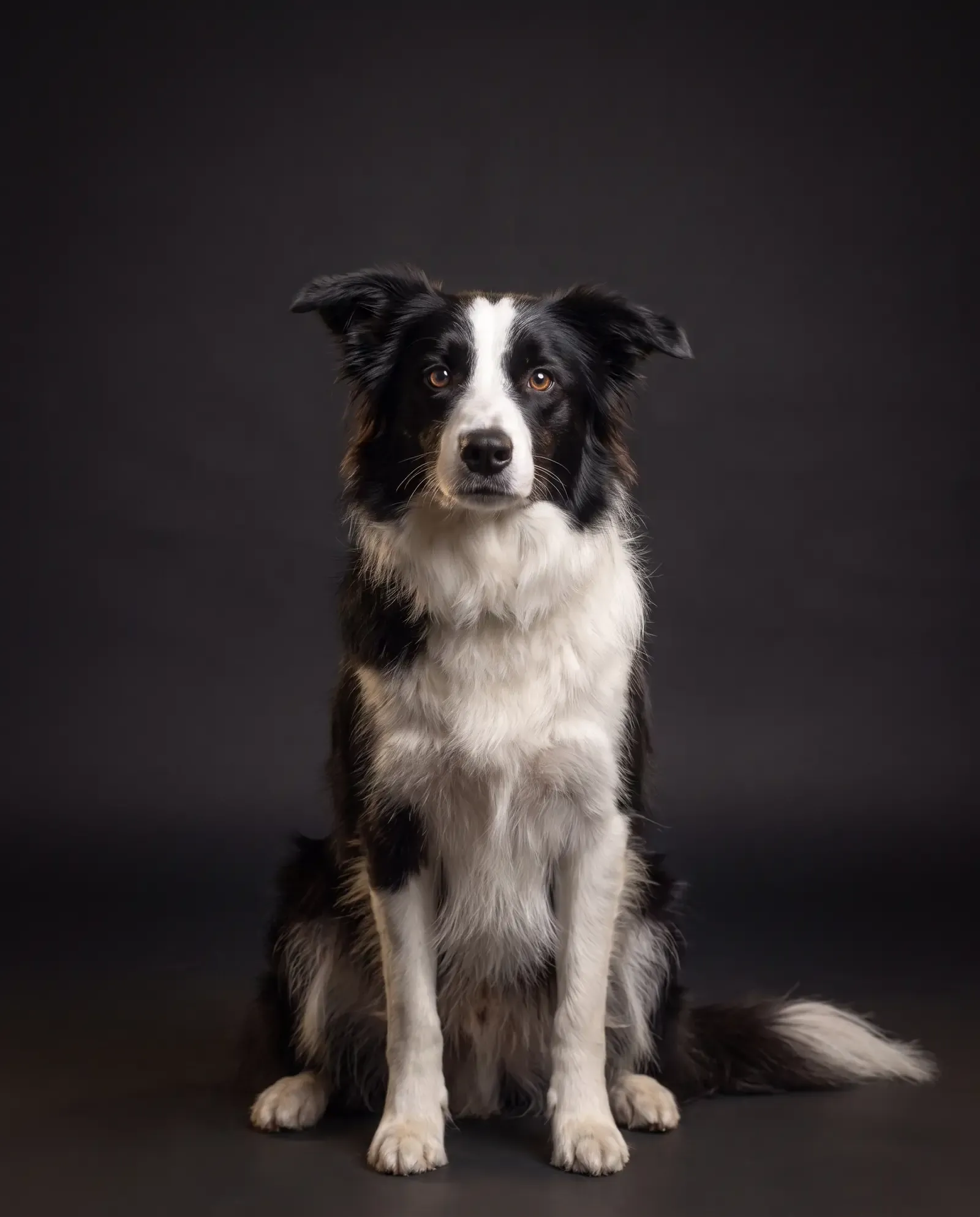
Border Collie in Dubai, studio portrait of a black and white adult sitting alert against a dark background

Breed guide  ·  Dogs

Border Collie

She knows shoes on means a walk. I put mine on in the dark, before the heat.

Lifespan
12 to 15 years
Size
Medium
Weight
13.5 to 25 kg
Shedding
Moderate

Last updated 14 October 2026

Join the founding families. AED 1,999 of essential care for AED 199.

No payment now. We'll be in touch by email and WhatsApp as we open enrolment.

✓
Thank you.

We will be in touch soon to confirm.

Border Collie traits

What they brought with them.

Tap a card to see what is going on.

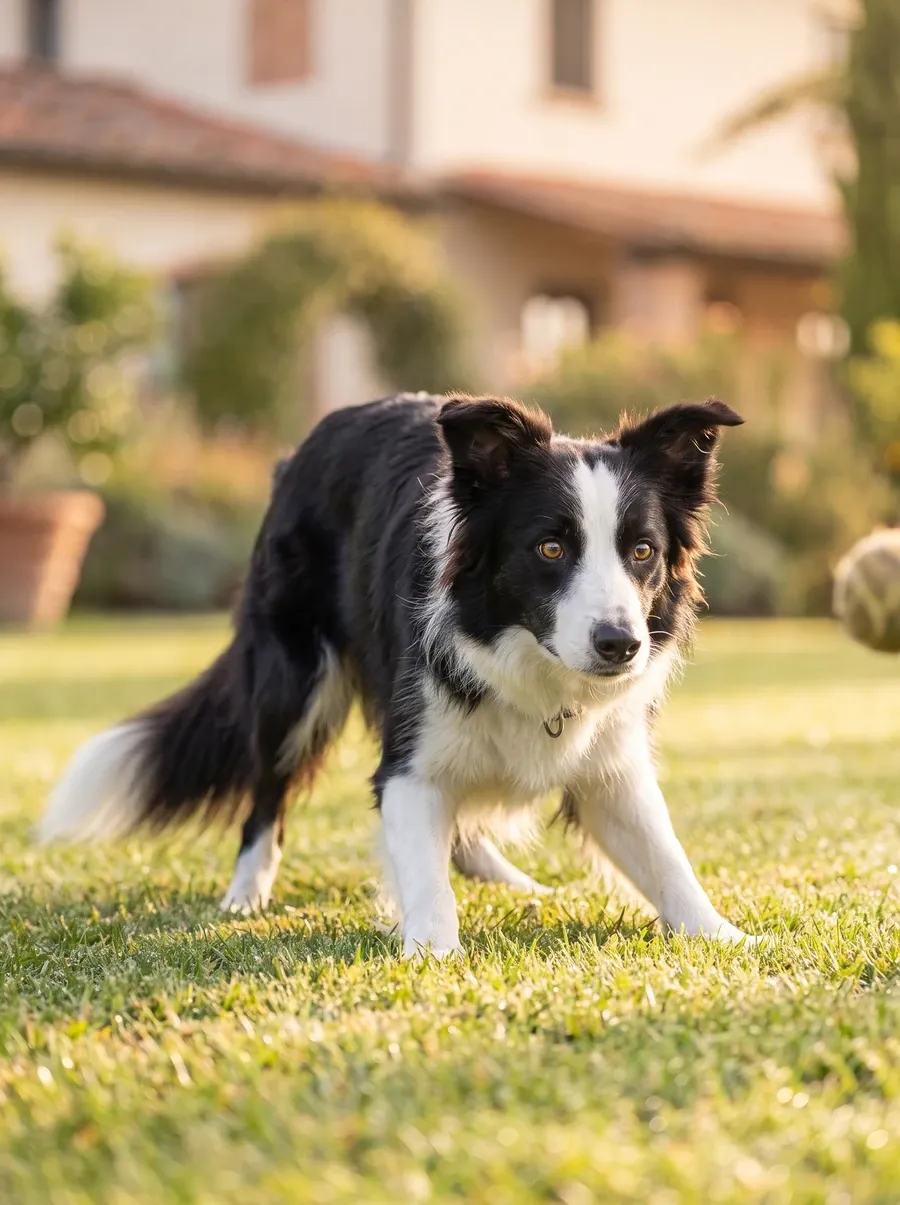
Border Collie, a black and white adult crouched low on a villa lawn, eyes fixed ahead

At home

Why does my Border Collie stare?

Crouched low, eyes fixed on the ball, or on another dog across the park, creeping slowly forward.

What's going onThe crouch and the hard stare are how a Border Collie moves sheep without touching them. At home they are concentrating, not threatening. If they start fixing on shadows or lights instead of the ball, contact your vet early.

Border Collie, a tricolour adult watching a robot vacuum cross a tiled floor in a bright flat

At home

Why does my Border Collie chase the vacuum?

Circling the robot vacuum, lunging at delivery bikes and rushing the lift doors.

What's going onThey were bred to stop anything that moves out of line. In a flat that means the vacuum, the bikes downstairs and the lift doors. Give them something they are allowed to herd.

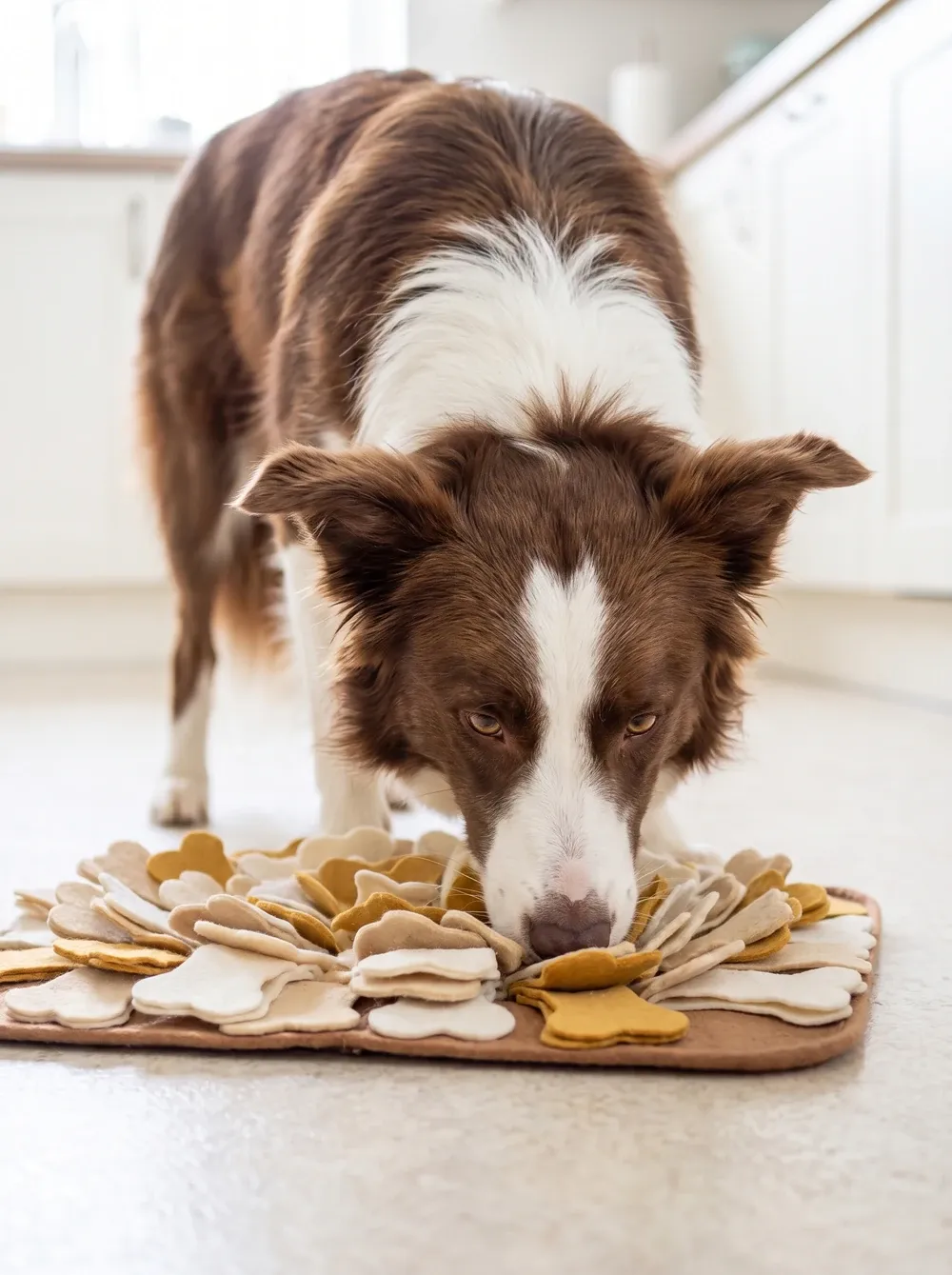
Border Collie, a red and white adult foraging in a snuffle mat on a kitchen floor

At home

Why is my Border Collie never tired?

Back from a long run and ready for more, then shredding the post on a quiet afternoon.

What's going onRunning builds a fitter Border Collie who wants more running. Twenty minutes of sniffing out their dinner or learning a trick tires them more than another lap of the park.

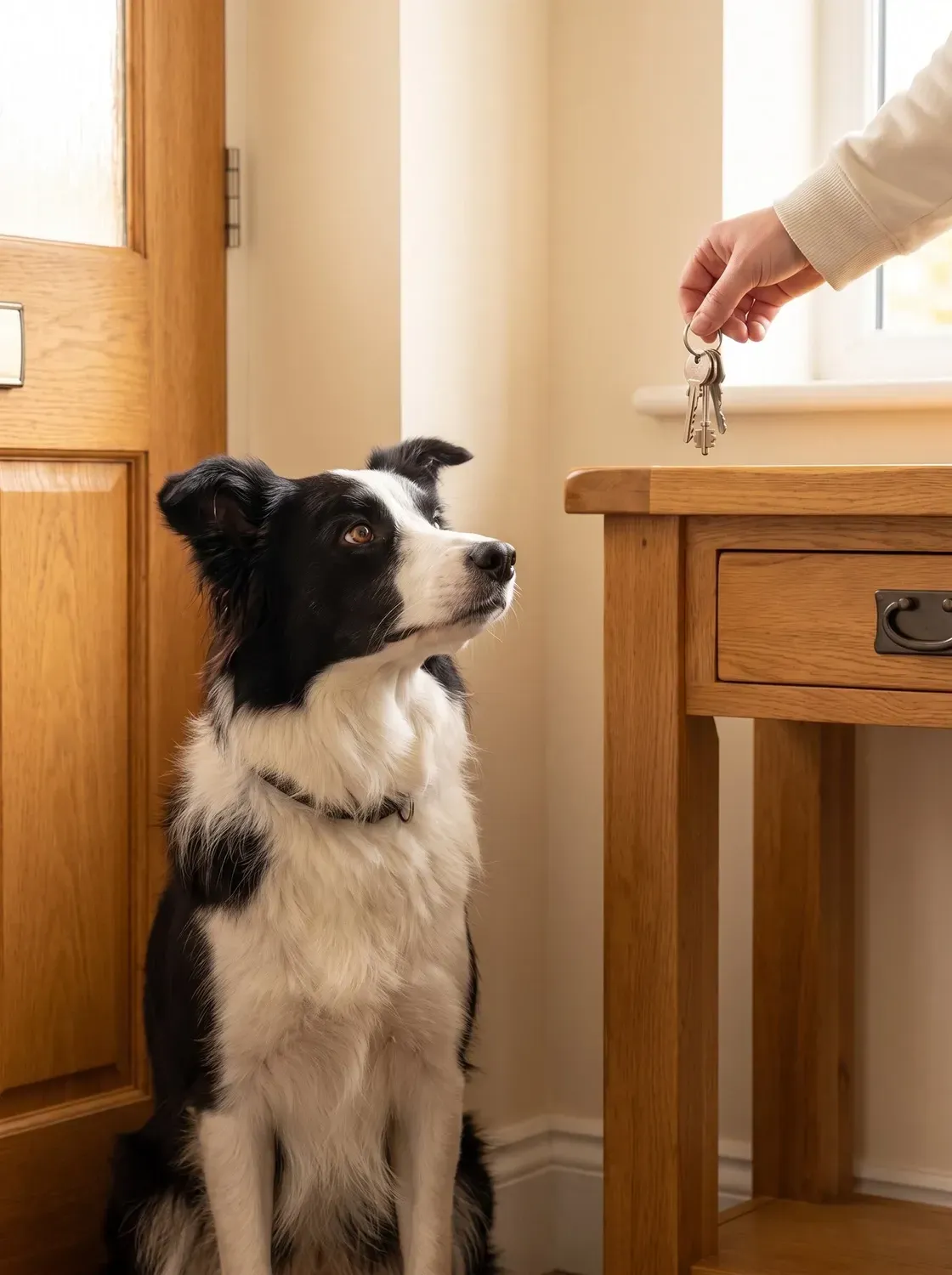
Border Collie, a black and white adult by the front door, watching a hand lift the keys

At home

Why does my Border Collie know when I'm leaving?

At the door the moment you pick up your keys, and already sitting by the treat cupboard.

What's going onThey learn that your keys mean you are leaving, and which cupboard the treats live in, faster than they learn sit. Everyone at home needs the same rules, or they will find the gap.

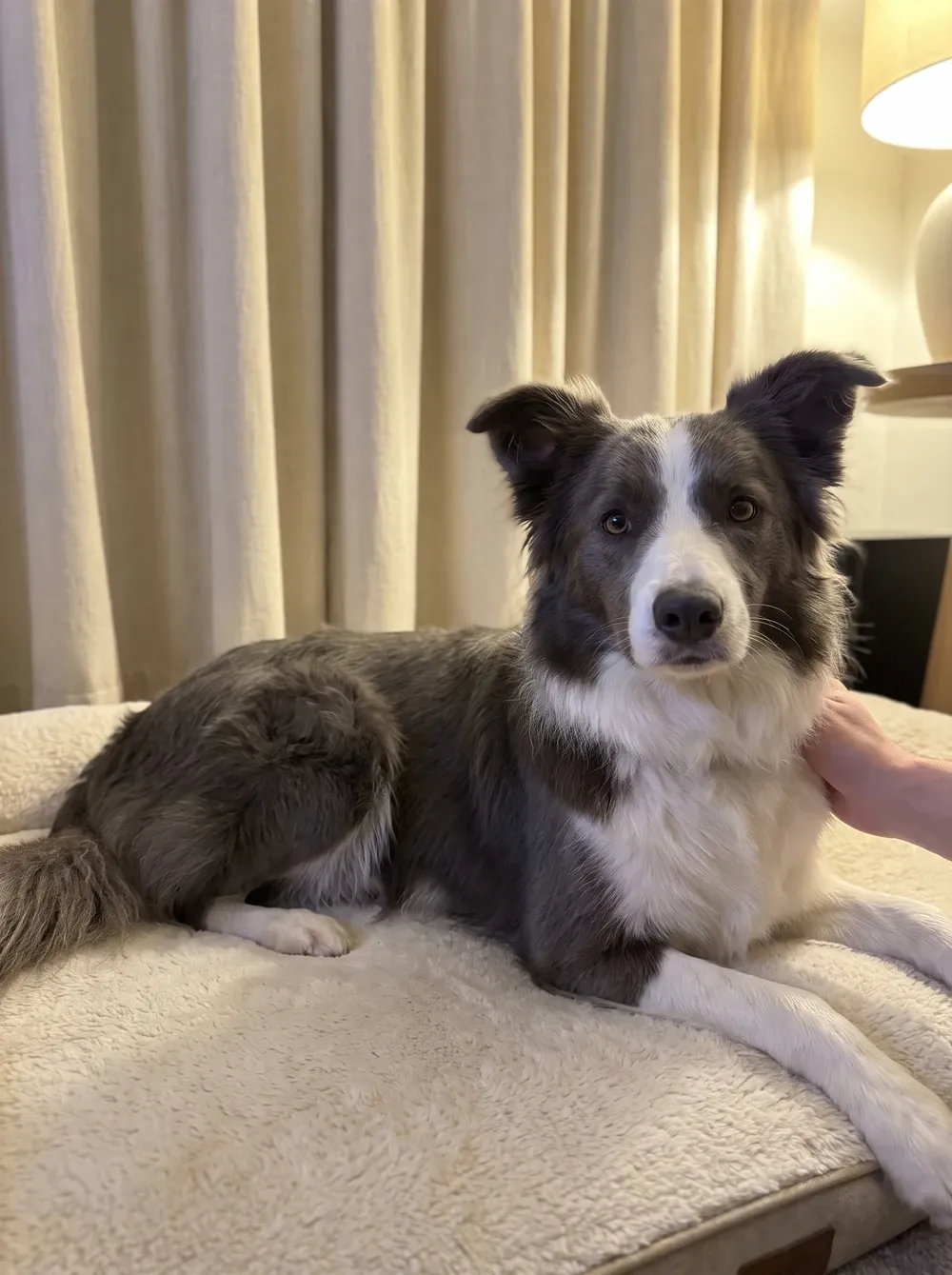
Border Collie, a blue and white adult resting on a cream bed, a pet parent's hand alongside

At home

Why is my Border Collie scared of fireworks?

Shaking on New Year's Eve, and hiding from thunder, the smoke alarm or a dropped pan.

What's going onMany Border Collies are frightened by loud noise, and it rarely gets better by itself. Set up a quiet room before firework nights. A fear of noise that starts suddenly can be a sign of pain, so tell your vet.

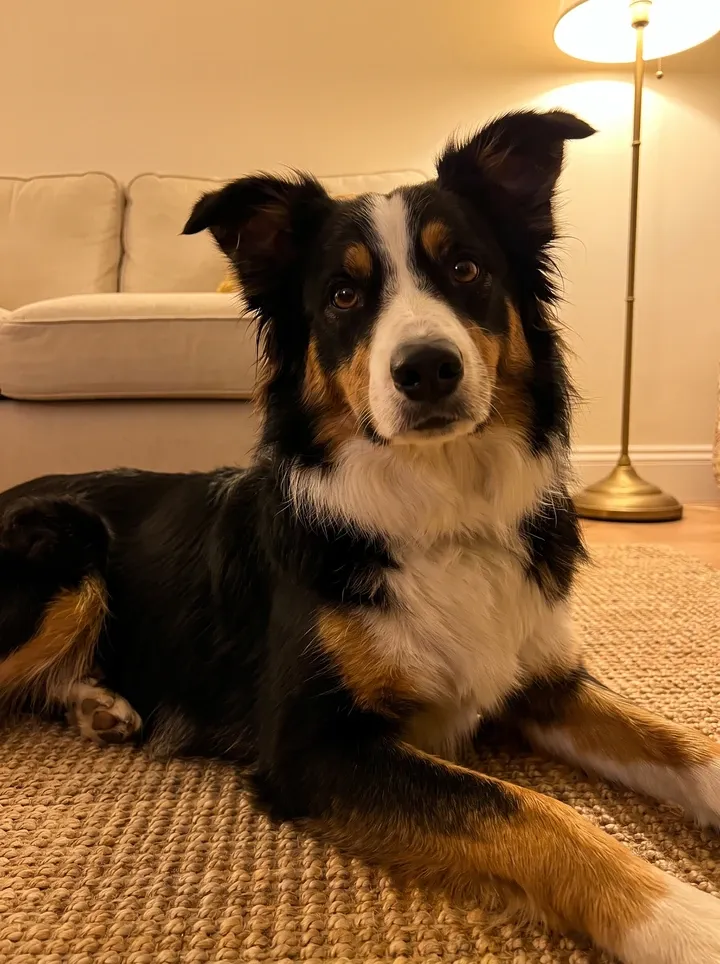
Border Collie, a tricolour adult lying calmly on a woven mat beside the sofa in the evening

At home

Why won't my Border Collie settle?

Following you round the flat all evening, ears up, waiting for the next job.

What's going onNobody bred an off switch into a Border Collie. Teach them to lie on a mat while you eat or read, and reward the calm, a minute longer each week.

A Border Collie in Dubai

The bit nobody tells you.

Their day

Built for: Running the hills from first light.

In Dubai: Often a day in a flat.

Their work

Built for: Reading a flock and fixing the problem first.

In Dubai: Only the vacuum and the children to herd.

Their weather

Built for: Wind and rain on the border hills.

In Dubai: A summer too hot to run in, for months at a time.

The herding, the fixation on the ball and the chewed skirting board mostly come from that gap.

You cannot give them a hillside of sheep. You can give them a job, and the ten things below show you how.

Your plan is built around their breed: the risks on a Border Collie's record at every age, and the care that goes with each one.

Join the founding families. AED 1,999 of essential care for AED 199.

Daily care for a Border Collie

Ten things that make their life better.

Many of them are free, and most matter at every age.

  1. Thinking tires a Border Collie in a way running does not.

    Every age, most of all 6 months to 2 years

    Under AED 150

    Why

    Thinking tires a Border Collie in a way running does not.

    What to do

    Split it into two or three sessions: a few minutes of training, part of their dinner scattered in the grass, a puzzle feeder, a new trick each week.

  2. They will not rest by themselves, and an overtired collie is quicker to react.

    Every age, most of all 6 months to 2 years

    Under AED 200

    Why

    They will not rest by themselves, and an overtired collie is quicker to react.

    What to do

    Pick a mat. Reward them for lying on it calmly while you eat or read, and build the time up slowly. After a busy day, give them a quiet one.

  3. The drive to control movement does not go away, so it needs somewhere to go.

    Every age, with slower games on soft ground from 7 years

    Under AED 250

    Why

    The drive to control movement does not go away, so it needs somewhere to go.

    What to do

    A big herding ball to push, or fetch with a sit and wait before every throw. Mix it up so the ball is not their only game. When the vacuum comes out, put them in another room at first, then teach them to lie on their mat while it runs.

  4. A running child looks like a sheep breaking away, and they will try to bring it back.

    Every age, most of all in the first two years

    Free

    Why

    A running child looks like a sheep breaking away, and they will try to bring it back.

    What to do

    An adult watches whenever they are together. Teach the children to stand still and fold their arms if the dog circles or nips, and give the dog a tug toy to grip instead.

  5. Scooters and delivery bikes are the fastest-moving things in their day.

    Every age, most of all 6 months to 2 years

    Under AED 150

    Why

    Scooters and delivery bikes are the fastest-moving things in their day.

    What to do

    On the lead near roads and car parks. When something goes past, ask for a sit and reward them for watching it go. In the lift, keep them close until the doors are fully open.

  6. Their double coat was made for wet hills, and they were bred not to stop.

    Every age, most of all puppies and from 7 years

    Free

    Why

    Their double coat was made for wet hills, and they were bred not to stop.

    What to do

    From May to September, walk before sunrise and after dark. Put the back of your hand on the pavement for five seconds: if you cannot keep it there, they cannot walk on it. Carry water, and stop the ball before they ask.

  7. A Border Collie shuts down under harsh handling, and many are frightened of loud noise.

    Every age

    Free

    Why

    A Border Collie shuts down under harsh handling, and many are frightened of loud noise.

    What to do

    Train with food and play, never shouting or jerking the lead. Before firework nights, set up a quiet room with the curtains closed and some background sound. If a fear of noise starts suddenly, contact your vet, because it can be a sign of pain.

  8. Hip Dysplasia (HD, a poorly fitting hip joint) is on their record from puppyhood, and Osteochondritis Dissecans (OCD, a joint cartilage problem) in the shoulder in their prime.

    Every age, most of all 6 months to 2 years and 4 to 7 years

    Free to AED 1,000 for rugsIn your plan

    Why

    Hip Dysplasia (HD, a poorly fitting hip joint) is on their record from puppyhood, and Osteochondritis Dissecans (OCD, a joint cartilage problem) in the shoulder in their prime.

    What to do

    Keep them lean: you should feel their ribs easily. Rugs where they turn on marble, no repeated jumping while they grow, fast play in short sets, and their hip evaluation booked before they turn two.

  9. Collie Eye Anomaly (CEA, an inherited eye defect in collie breeds) is on their record from birth.

    Every age, starting at six weeks

    FreeIn your plan

    Why

    Collie Eye Anomaly (CEA, an inherited eye defect in collie breeds) is on their record from birth.

    What to do

    Book the eye evaluations their plan sets. At home, watch for bumping into things in dim light or hesitating on the stairs at night.

  10. A working breed keeps going through discomfort, so small changes are easy to miss.

    Every age, most of all from 7 years

    Free

    Why

    A working breed keeps going through discomfort, so small changes are easy to miss.

    What to do

    Run your hands over their ribs, spine, hips and paws, and look at their skin. Brush their teeth every day and their coat several times a week. Weigh them monthly. If they ever have a seizure, time it, film it if you can, and contact your vet. A first seizure, one that lasts more than two minutes, or more than one in a day is an emergency: contact your vet now.

Two of these are in your plan. The rest you can do at home.

Join the founding families. AED 1,999 of essential care for AED 199.

Border Collie health by age

Their health, at every age.

In a Border Collie, the hips, the eyes and epilepsy lead the record, and a dog who never stops can hide a sore joint. Choose their age to see what to watch for, and the care that goes with it.

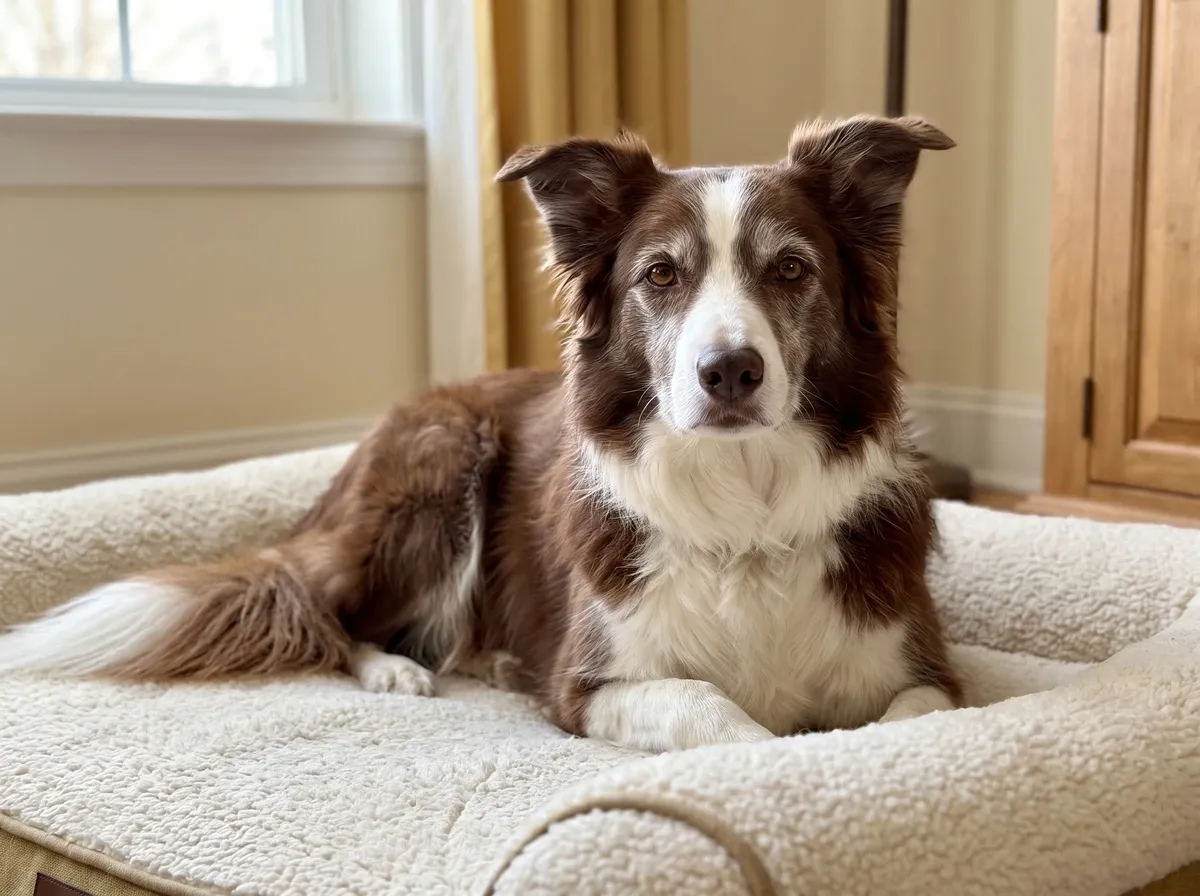
Border Collie, an older red and white dog with a greying muzzle resting on a soft bed

How old are they?

Their age

Border Collie Puppy health

the first six months

What to watch for

  1. Developmental or early clinical signs of Hip Dysplasia (HD, poorly fitting hip joint)
  2. Congenital or early inherited ocular disease related to Collie Eye Anomaly (CEA, an inherited eye defect in collie breeds)
  3. Early neurological signs or inherited risk related to Epilepsy (Idiopathic, seizures with no other cause found)
  4. Juvenile onset of allergies / atopic dermatitis (itchy allergic skin)
  5. Retained deciduous teeth (baby teeth that stay put), malocclusion (teeth that do not meet properly) or early dental crowding

The care that goes with it

  1. Core vaccinations, microchip and Dubai Municipality registration
  2. Deworming, and flea and tick prevention
  3. Body Condition Score (a check on whether they are the right weight), dental, growth and nutritional evaluation, and early socialisation
  4. Baseline screening for Hip Dysplasia (HD, a poorly fitting hip joint)
  5. Follow-up for any early sign of Collie Eye Anomaly (CEA)
The full care detail
  • Core vaccination programme, microchipping and Dubai Municipality registration. Titre testing discussion where clinically appropriate; not a substitute for completing the core vaccine series
  • Deworming and external parasite prevention tailored to Dubai exposure
  • Body Condition Score (BCS), Muscle Condition Score (MCS), dental, growth and nutritional evaluation, and early socialisation
  • Baseline screening focused on Hip Dysplasia (HD)
  • Early diagnostic follow-up for signs suggestive of Collie Eye Anomaly (CEA)

Their age

Border Collie Juvenile health

6 months to 2 years

What to watch for

  1. Emerging Hip Dysplasia (HD, poorly fitting hip joint) with exercise intolerance or lameness
  2. Progression or first clinical detection of Collie Eye Anomaly (CEA, an inherited eye defect in collie breeds)
  3. Typical age-of-onset presentation of Epilepsy (Idiopathic, seizures with no other cause found)
  4. Recurrent or persistent allergies / atopic dermatitis (itchy allergic skin)
  5. Early periodontal disease (gum disease) and dental crowding

The care that goes with it

  1. Hip evaluation by age two, and a lean body to ease the strain on the hips
  2. Ophthalmic evaluation (eye exam) by a specialist eye vet, from six weeks old, for Collie Eye Anomaly
  3. Neutering or spaying, timed for a medium-sized breed
  4. Neurological evaluation (nerve and brain exam) if seizures happen: epilepsy can be managed with medication
  5. If seizure signs keep coming back, the cause is investigated, not simply assumed to be epilepsy again
The full care detail
  • Hip evaluation (OFA or PennHIP) by age 2; maintain lean body weight to reduce hip stress
  • Ophthalmic evaluation by a certified ophthalmologist from age 6 weeks for Collie Eye Anomaly (CEA)
  • Neuter/spay timing discussion that accounts for medium-breed growth and disease risk
  • Neurological evaluation if seizures occur; idiopathic epilepsy is manageable with medication
  • Investigate recurrent signs rather than repeatedly treating presumed Epilepsy (Idiopathic)

Their age

Border Collie Young Adult health

2 to 4 years

What to watch for

  1. Hip Dysplasia (HD, poorly fitting hip joint)
  2. Collie Eye Anomaly (CEA, an inherited eye defect in collie breeds)
  3. Epilepsy (Idiopathic, seizures with no other cause found)
  4. Allergies / Atopic Dermatitis (itchy allergic skin)
  5. Dental Disease

The care that goes with it

  1. Hip evaluation by age two, and a lean body to ease the strain on the hips
  2. Ophthalmic evaluation (eye exam) by a specialist eye vet for Collie Eye Anomaly
  3. Neurological evaluation (nerve and brain exam) if seizures happen
  4. Finding allergens early, with a food elimination trial (a strict diet test) if skin trouble keeps coming back
  5. Daily tooth brushing, and a professional dental clean every 6 to 12 months
The full care detail
  • Hip evaluation (OFA or PennHIP) by age 2; maintain lean body weight to reduce hip stress
  • Ophthalmic evaluation by a certified ophthalmologist from age 6 weeks for Collie Eye Anomaly (CEA)
  • Neurological evaluation if seizures occur; idiopathic epilepsy is manageable with medication
  • Identify allergens early; conduct food elimination trial if recurrent skin issues are present
  • Daily dental brushing; professional dental cleaning every 6-12 months

Their age

Border Collie Prime Adult health

4 to 7 years

What to watch for

  1. Hip Dysplasia (HD, poorly fitting hip joint), Progressive
  2. Epilepsy (Ongoing Management)
  3. Allergic Skin Disease
  4. Osteochondritis Dissecans (OCD, a joint cartilage problem)
  5. Dental Disease (Advanced)

The care that goes with it

  1. Hip care: joint supplements, physiotherapy and weight control, and a hip replacement if it is severe
  2. Epilepsy medicine levels measured every 6 months, and doses adjusted
  3. Allergen-specific immunotherapy (treatment that slowly teaches the body to tolerate an allergen), daily or monthly
  4. Orthopaedic evaluation (joint and bone exam) every year for OCD, especially in the shoulder
  5. Plenty of work for their brain, to keep anxiety away
The full care detail
  • Hip management: joint supplements, physiotherapy, and weight management; total hip replacement if severe
  • Epilepsy management: drug level monitoring every 6 months; adjust medication as needed
  • Allergy management: allergen-specific immunotherapy (daily or monthly)
  • Annual orthopaedic evaluation for Osteochondritis Dissecans (OCD), especially in the shoulder joint
  • Provide adequate mental stimulation to prevent anxiety-driven behavioural issues

Their age

Border Collie Senior health

7 to 10 years

What to watch for

  1. Hip Dysplasia (HD), Severe Arthritis
  2. Epilepsy (Age-Related Changes)
  3. Cancer: Osteosarcoma (bone cancer) and Lymphoma (a cancer of the white blood cells)
  4. Kidney Disease
  5. Cognitive Dysfunction Syndrome (dementia in older pets)

The care that goes with it

  1. Hydrotherapy, acupuncture and pain relief for severe arthritis
  2. A full physical examination every year, with the lymph nodes felt, to catch cancer early
  3. A renal panel (kidney blood tests) twice a year, and a senior diet lower in phosphorus and salt
  4. New training challenges, puzzle feeders and a steady routine for an ageing brain
  5. Epilepsy medicine adjusted as the kidneys and liver change with age
The full care detail
  • Advanced hip management: hydrotherapy, acupuncture, and pain medication for severe arthritis
  • Annual full physical examination with lymph node palpation for cancer screening
  • Bi-annual renal panel; transition to senior diet with controlled phosphorus and sodium
  • Cognitive enrichment: new training challenges, puzzle feeders, and consistent daily routines
  • Adjust epilepsy medication as renal and hepatic function changes with age

Their age

Border Collie Geriatric health

10 years and over

What to watch for

  1. Cancer (Advanced)
  2. Severe Arthritis / Mobility Loss
  3. Chronic Kidney Disease (CKD, long-term kidney failure)
  4. Cognitive Dysfunction Syndrome (dementia in older pets), Advanced
  5. Heart Disease

The care that goes with it

  1. Orthopaedic bedding, ramps and physiotherapy for stiff joints
  2. Kidney and heart medicine, adjusted regularly
  3. Brain games and a steady daily routine to slow cognitive decline
  4. Quality-of-life assessments
  5. Palliative care (comfort care) planned around them
  6. End-of-life planning with your veterinary team
The full care detail
  • Mobility support: orthopaedic bedding, ramps, and physiotherapy for arthritic dogs
  • Renal and cardiac management with regular medication adjustments
  • Cognitive enrichment and consistent daily routine to slow cognitive dysfunction progression
  • Quality-of-life assessments
  • Tailored palliative and comfort-focused care plan
  • Compassionate end-of-life planning with your veterinary team

Breed predispositions indicate an increased risk rather than certainty of disease. What is right for them always comes from their own history and an evaluation.

Getting a Border Collie puppy in Dubai

Before they come home.

Border Collie, a tricolour puppy sitting on a cream blanket on the sofa

Working, sport and show lines

Long coat, short hair, and everything between

Border Collies were bred for work alone for most of their history, so they still vary a lot in size, coat and ears. Coats can be long, medium or smooth, the short-haired collie. Working lines come from farm dogs, sport lines are bred for speed and focus in agility, and show lines for a consistent look. A sport-line dog can be even busier than a farm dog.

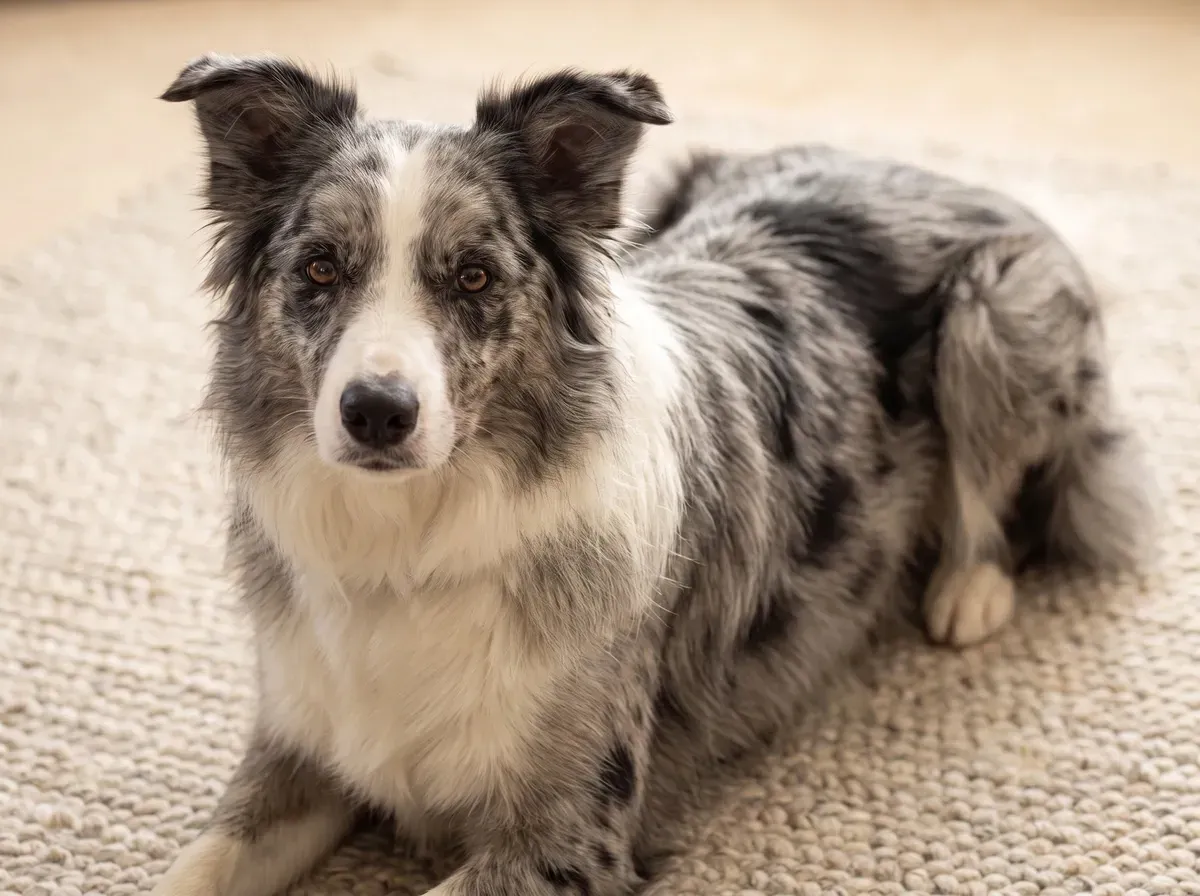
Border Collie, a blue merle adult lying on a stone-coloured rug

Colours

Black and white, and far beyond

The classic Border Collie is black and white, but they come in a whole palette: red or brown and white, blue, lilac, gold, sable, and merle patterns such as the marbled blue merle, sometimes with tan points. Whatever the coat, every one of them needs the same daily work.

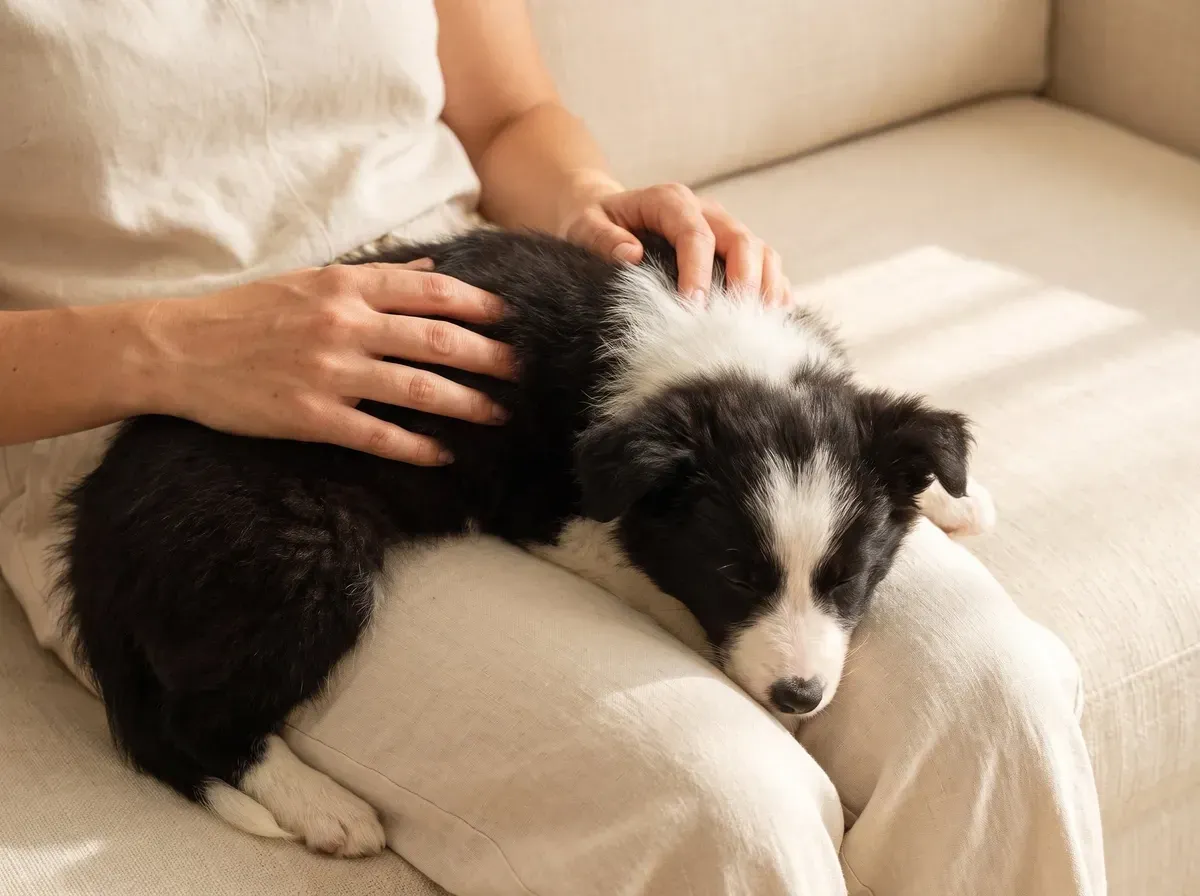
Border Collie, a black and white puppy asleep in a pet parent's lap on the sofa

The first six months

Border Collie puppy care tips

Vaccinations, microchip and Dubai Municipality registration come first. Their first ophthalmic evaluation (eye exam) can be from six weeks old, for Collie Eye Anomaly. Keep training to two-minute sessions, many times a day, and move every nip on to a toy from day one.

Puppy health, 0 to 6 months
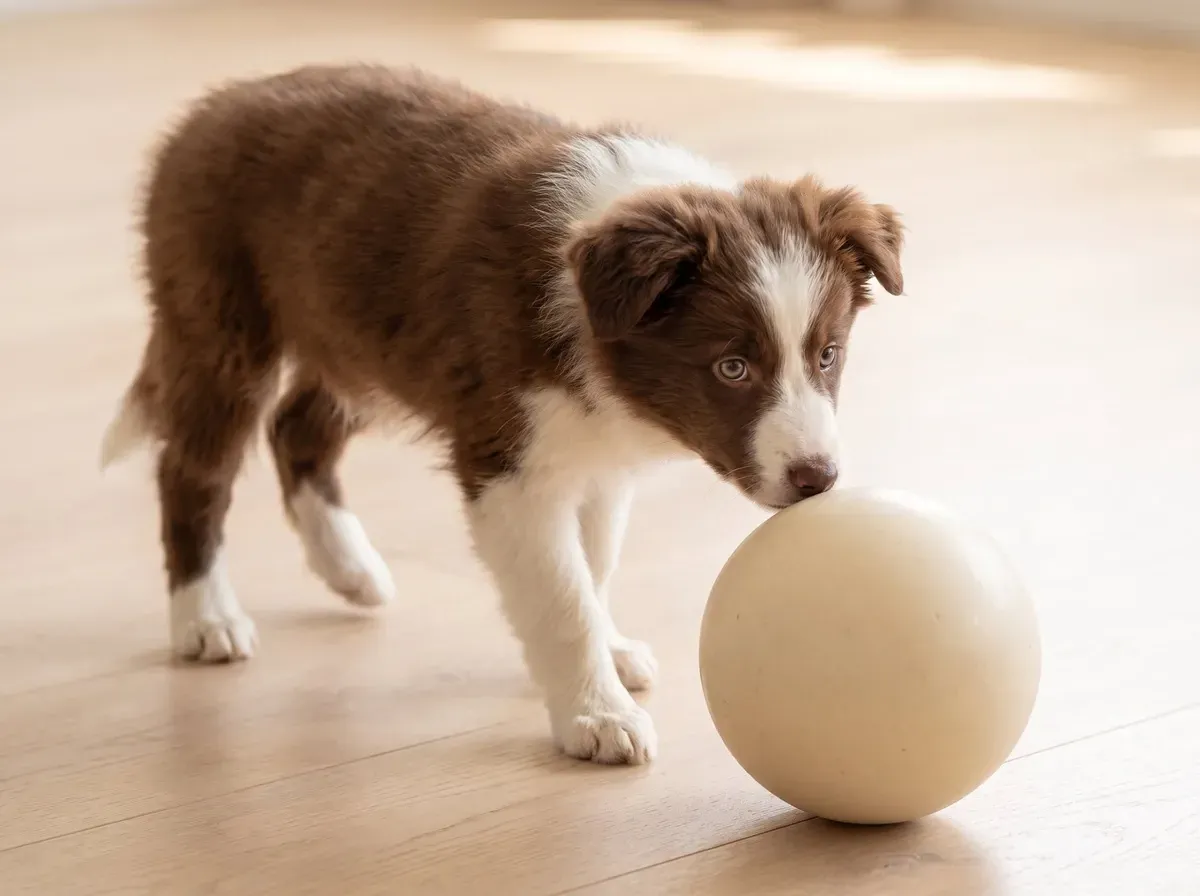
Border Collie, a red and white puppy nosing a large herding ball across the floor

Getting the home ready

A mat, a herding ball and a quiet room

A mat or bed for learning to rest, a puzzle feeder, a big herding ball, a harness and lead, and rugs where they turn on marble. Choose a quiet room for firework nights before the first one comes.

Ten things that make their life better
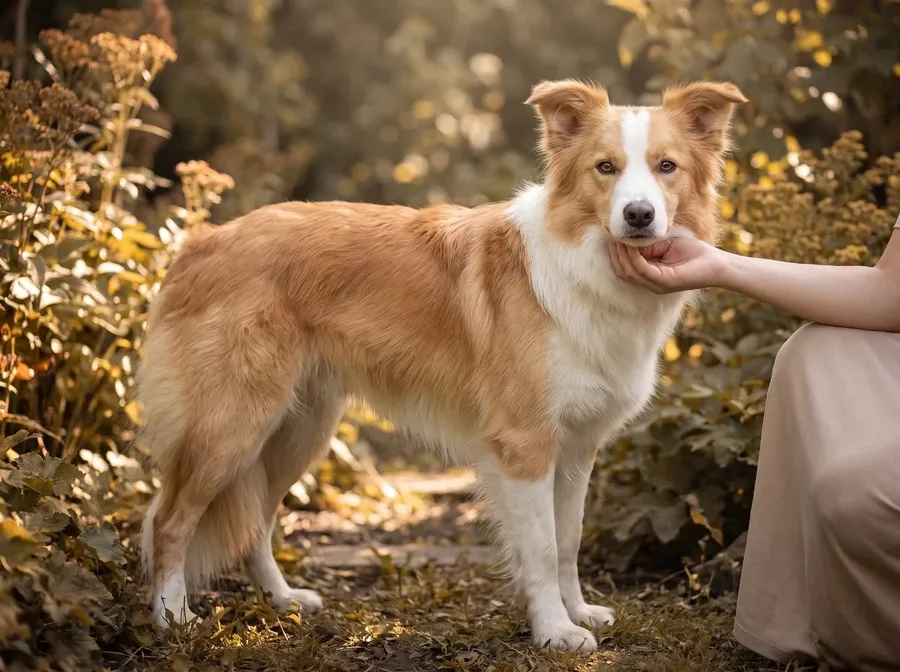
Border Collie, a sable and white adult in a shaded garden, a pet parent's hand under the chin

Before you commit

Ask about the parents' eyes

Collie Eye Anomaly (an inherited eye defect in collie breeds) is on their record from birth. If you are choosing a puppy, ask the breeder about both parents' eye results, and meet the mother if you can.

The reception of a Paws & Co clinic, with long cream benches and a stone reception desk

Before the clinics open

Join the founding families

AED 1,999 of essential care for AED 199. No payment now.

When to see a vet

When it is not behaviour.

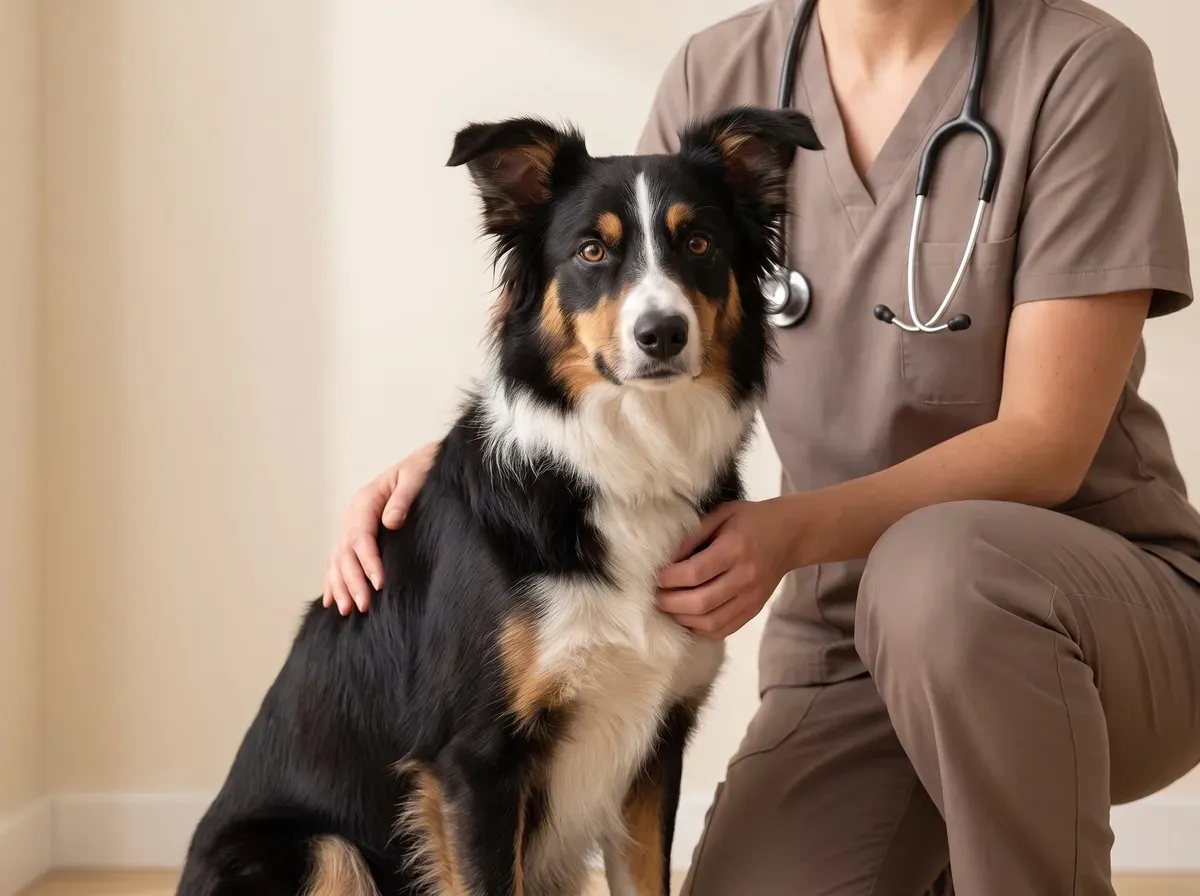
Border Collie, a calm tricolour adult sitting as a vet in taupe scrubs kneels alongside, a hand on the dog

Some of this is not a training problem, and treating it like one wastes time your dog may not have. If they are distressed when you leave, if they growl or guard their food, their toys or you, if they are frightened on the lead, or if anything about them changes suddenly at any age, contact your vet the same day. A tip from a website, ours included, is not the answer. If it cannot wait, contact your nearest emergency vet now.

With a Border Collie, watch their focus and their nerves. A collie who suddenly starts chasing shadows or lights, or who is newly frightened of noise, is a reason to contact your vet, because both can have a medical cause. So is a limp after play, a dog who stops wanting to jump into the car, or any seizure, however short. A first seizure, one that lasts more than two minutes, or more than one in a day is an emergency: contact your vet now. So is bloat (GDV, a twisted stomach): a swollen, tight belly, retching with nothing coming up, sudden restlessness or drooling. It can happen in any dog, though it is most common in large, deep-chested breeds. In an older collie, restlessness at night or forgetting a routine they knew can be the start of cognitive decline.

They'll keep watching your feet. If they stop caring about your shoes, call your vet.
Border Collie history

Before they were yours.

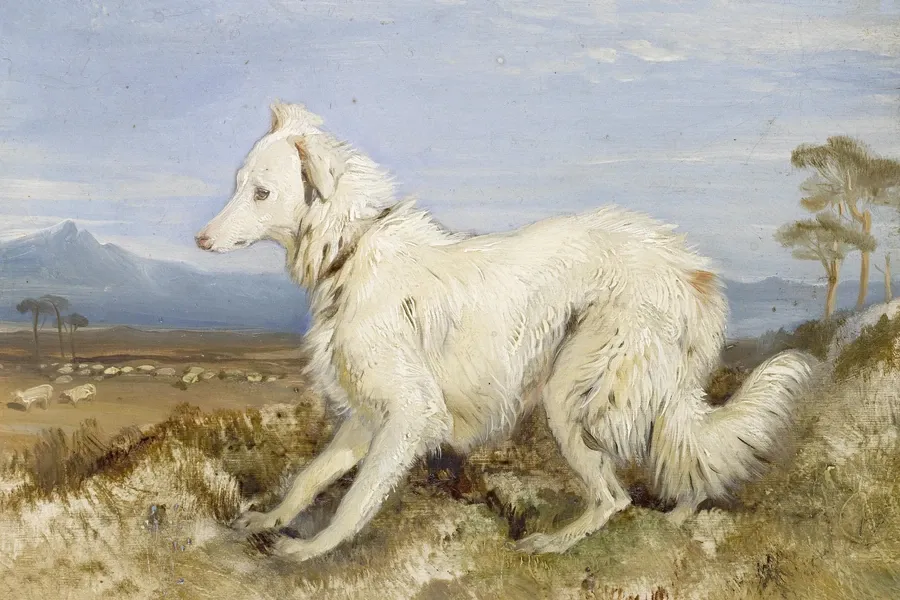
  1. Border Collie history, a painting of a white collie on a hillside, sheep grazing far below, Edwin Landseer
    White Collie in a Landscape, Edwin Landseer (1802 to 1873).

    Before the 1870s

    The border hills

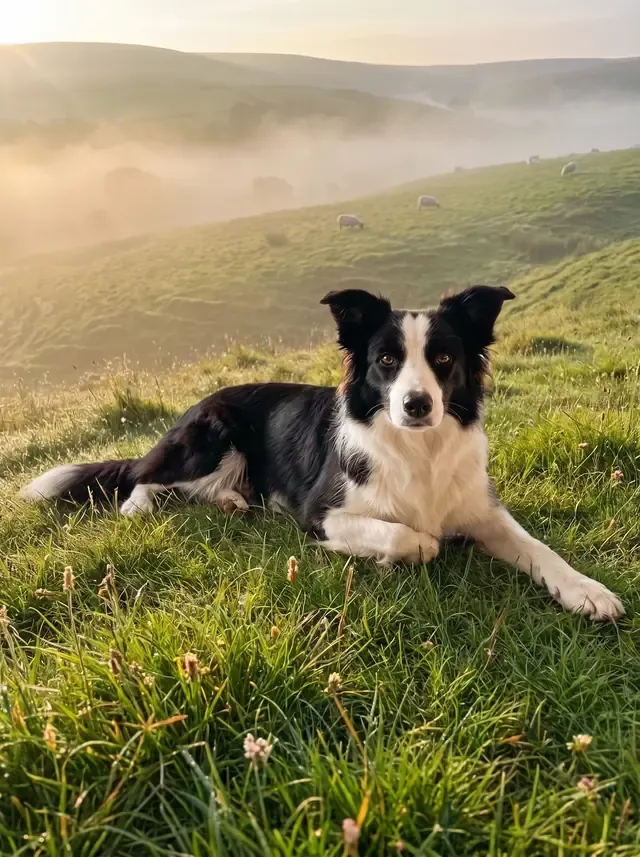
    Collies gathered sheep on the open hills between Scotland and England, often far from the shepherd, deciding for themselves what to do next.

    What they still carryStamina, and a habit of making their own decisions.

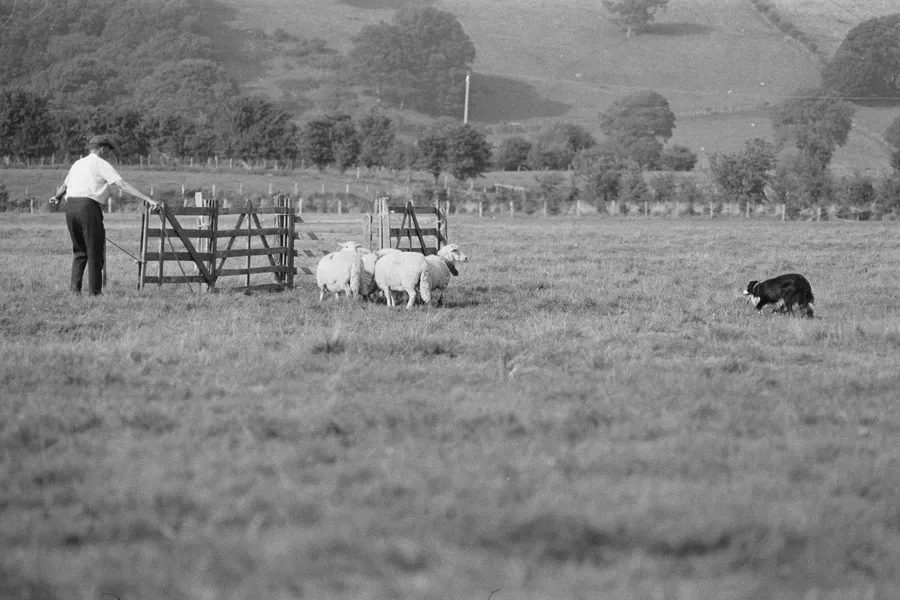
  2. Border Collie history, a handler at the pen gate as a sheepdog brings in sheep, Bala, 1973
    International Sheep Dog Trials, Bala, 1973, the centenary of the first trial. Photo: Geoff Charles, National Library of Wales, CC BY-SA 4.0, via Wikimedia Commons (cropped)

    1873

    The first trial

    The first sheepdog trial was held at Bala, in North Wales, in 1873, and farmers began breeding from the dogs that won.

    What they still carryA dog judged on what they can do.

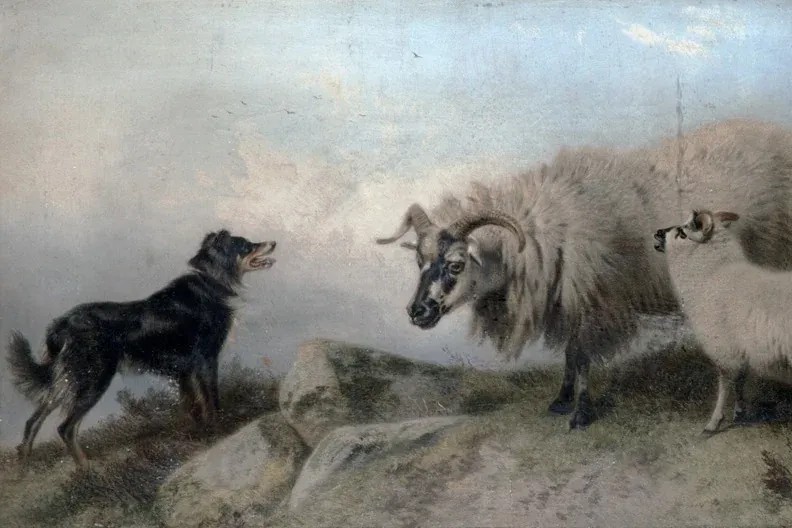
  3. Border Collie history, a painting of a black collie facing down a horned sheep on a rocky hill, 1876
    Sheep and a Collie, Richard Ansdell, 1876.

    1893

    Old Hemp

    Old Hemp, born in Northumberland in 1893, moved sheep quietly with a hard stare instead of barking. Many Border Collies today go back to him.

    What they still carryThe eye: the crouch and the stare.

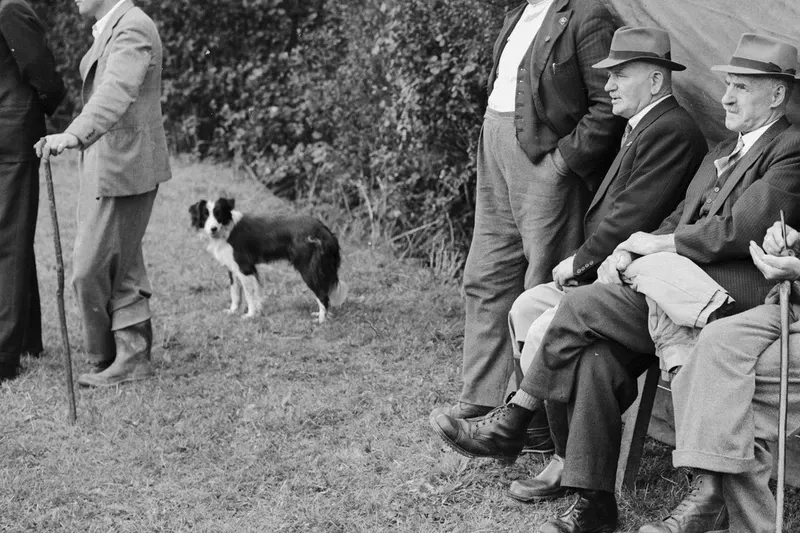
  4. Border Collie history, a sheepdog standing among farmers at a sheepdog trial, Llanwddyn, 1954
    Sheepdog trials, Llanwddyn, 1954. Photo: Geoff Charles, National Library of Wales, CC BY-SA 4.0, via Wikimedia Commons (cropped)

    1906 to 1976

    Bred for work alone

    From 1906 the International Sheep Dog Society registered dogs on working ability alone. The name Border Collie was first used in 1915, and The Kennel Club recognised the breed in 1976.

    What they still carryCoats, sizes and ears that still vary from dog to dog.

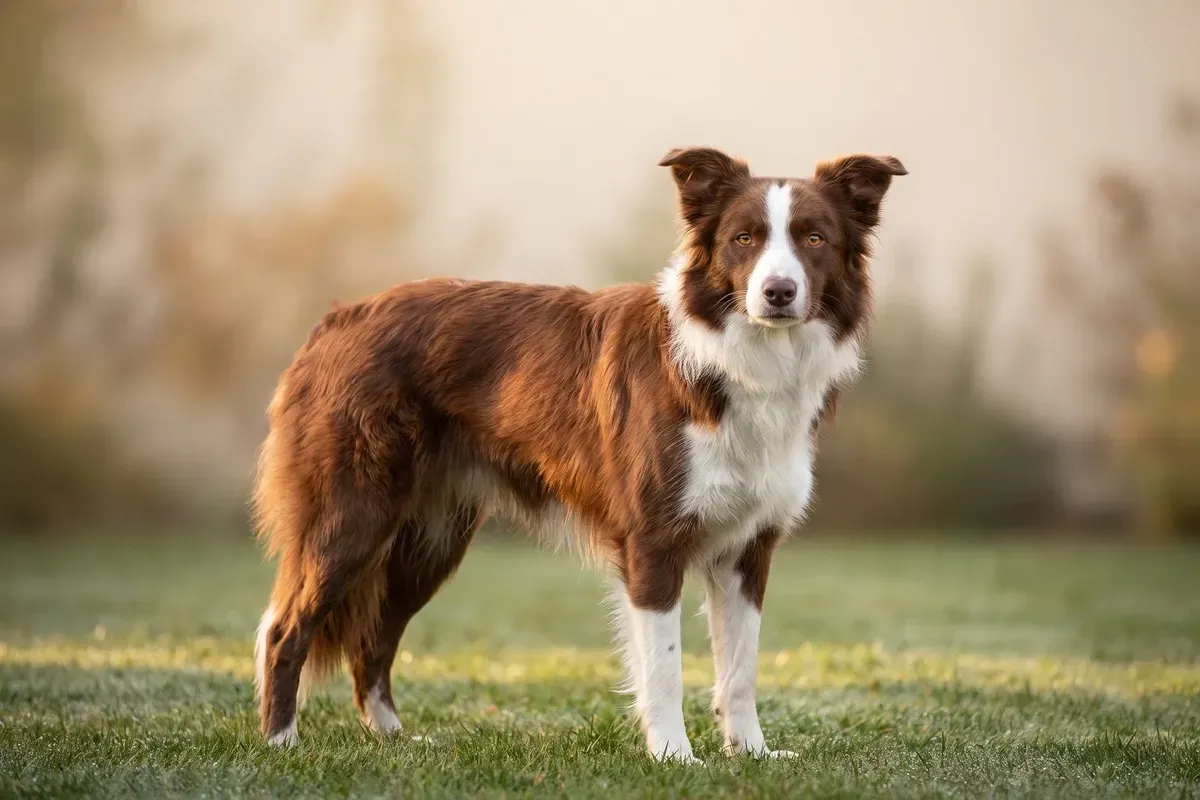
  5. Border Collie history, the breed today, a red and white adult standing on a lawn in soft morning light

    Today

    In Dubai

    In the UAE a Border Collie is a family or sport dog in a flat or a villa, with no sheep in sight.

    What they still carryA drive to work all day, even when it is 45°C outside.

Border Collie questions

The ones you type at midnight.

Most of these get asked late at night, by someone watching their dog and not sure what they are seeing.

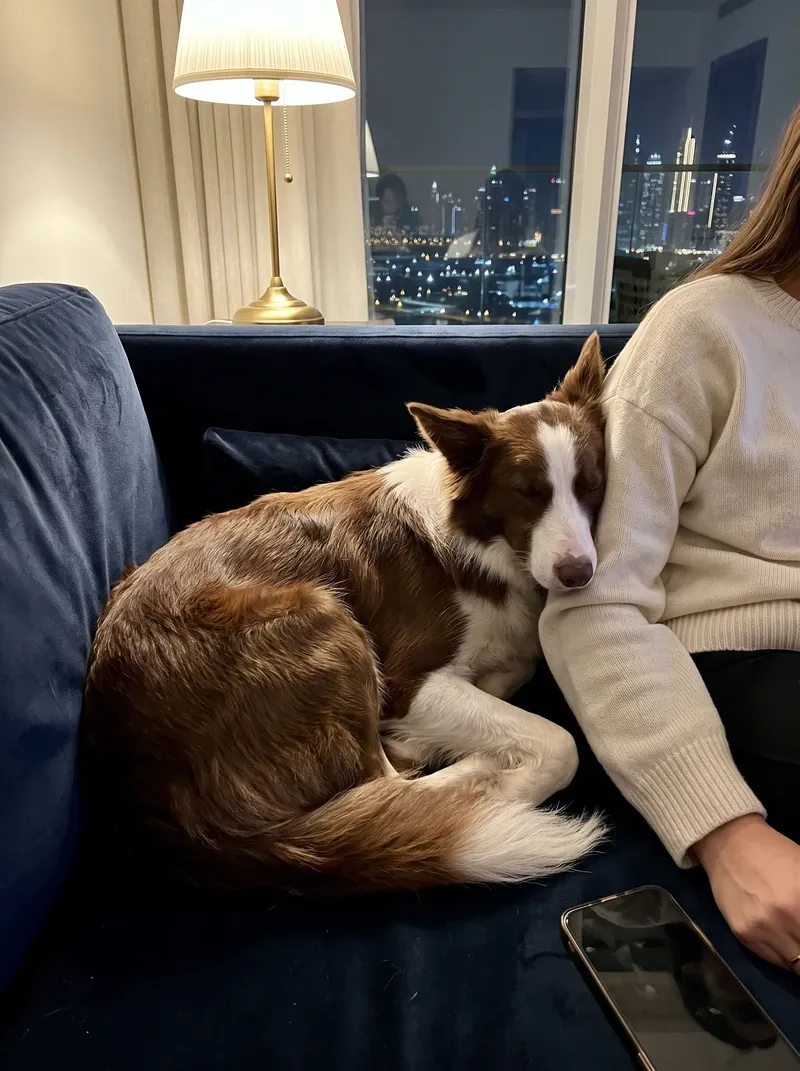
Border Collie in Dubai, a red and white adult asleep against a pet parent on the sofa at night, city lights behind
How long do Border Collies live?

Border Collies usually live 12 to 15 years. In a large UK study of nearly 13,000 Border Collies, half lived past 13.

Border Collie size: how big do they get?

An adult Border Collie usually weighs 13.5 to 25 kg: a medium-sized dog, with plenty of variation between lines.

Do Border Collies shed?

Border Collies shed moderately, with a heavier moult once or twice a year. Brush them several times a week.

What colours do Border Collies come in?

Border Collies come in many colours: black, red or brown, blue, lilac, gold and sable, and merle patterns, usually with white and sometimes with tan.

Do Border Collies still herd sheep?

Yes. Border Collies still work sheep on farms and at sheepdog trials, and pet Border Collies aim the same instinct at children, bikes and the vacuum.

Why does my Border Collie nip at ankles?

A Border Collie nipping at a running child's ankle is the old herding job aimed at the wrong animal. It still hurts, and it needs to stop: no chasing games, and a tug toy to grip instead.

What should I do if my Border Collie has a seizure?

If a Border Collie has a seizure, keep them away from stairs and water, and keep your hands away from their mouth. Time it, film it if you can, then contact your vet. A first seizure, one that lasts more than two minutes, or more than one in a day is an emergency: contact your vet now. Epilepsy in dogs can be managed with medication.

Can a Border Collie live in Dubai?

Yes, a Border Collie can live in Dubai with an active family who gives them a job. From May to September, walk before sunrise and after dark, and give them twenty minutes of brain work every day.

Worried about them? Contact your vet today.