We’re hiring people who love them like we do. Join us careers@pawsandco.comSee open roles
UAE Government Licensed MOCCAE
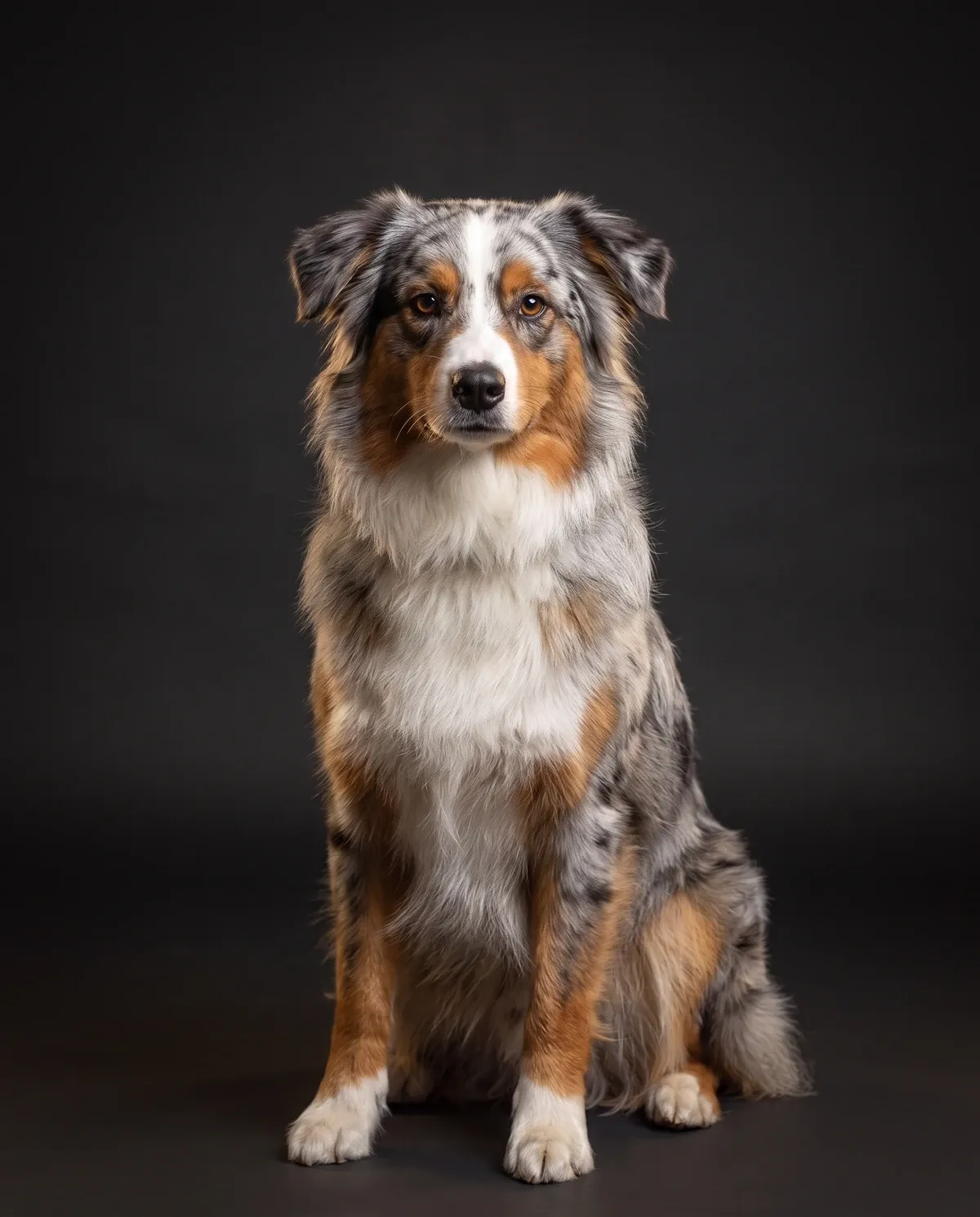
Australian Shepherd in Dubai, studio portrait of a calm blue merle tricolour adult sitting

Breed guide  ·  Dogs

Australian Shepherd

He learnt to open the bathroom cabinet in a week. I've had his MDR1 test done.

Lifespan
13 to 15 years
Size
Large
Weight
18 to 29.5 kg
Shedding
Moderate

Last updated 14 October 2026

Join the founding families. AED 1,999 of essential care for AED 199.

No payment now. We'll be in touch by email and WhatsApp as we open enrolment.

✓
Thank you.

We will be in touch soon to confirm.

Australian Shepherd traits

What they brought with them.

Tap a card to see what is going on.

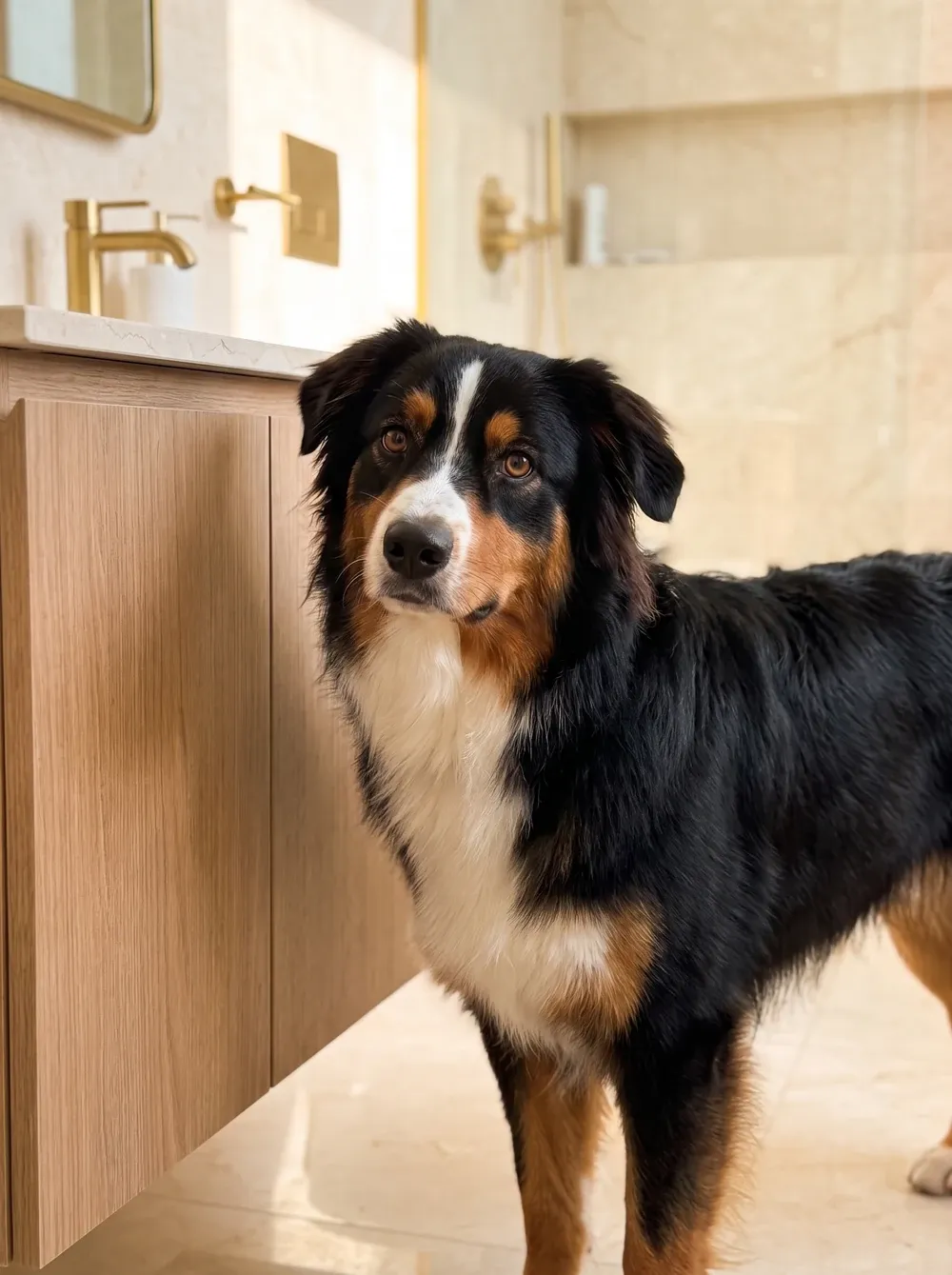
Australian Shepherd, a black tricolour adult standing by a closed timber cabinet in a bright cream bathroom

At home

Why does my Australian Shepherd need an MDR1 test?

Nosing open the bathroom cabinet, with the medicine box on the bottom shelf.

What's going onMany Aussies carry MDR1 drug sensitivity (a gene change that makes some common medicines dangerous). Their plan includes the test. Until you know the result, never give them anything from your own cupboard.

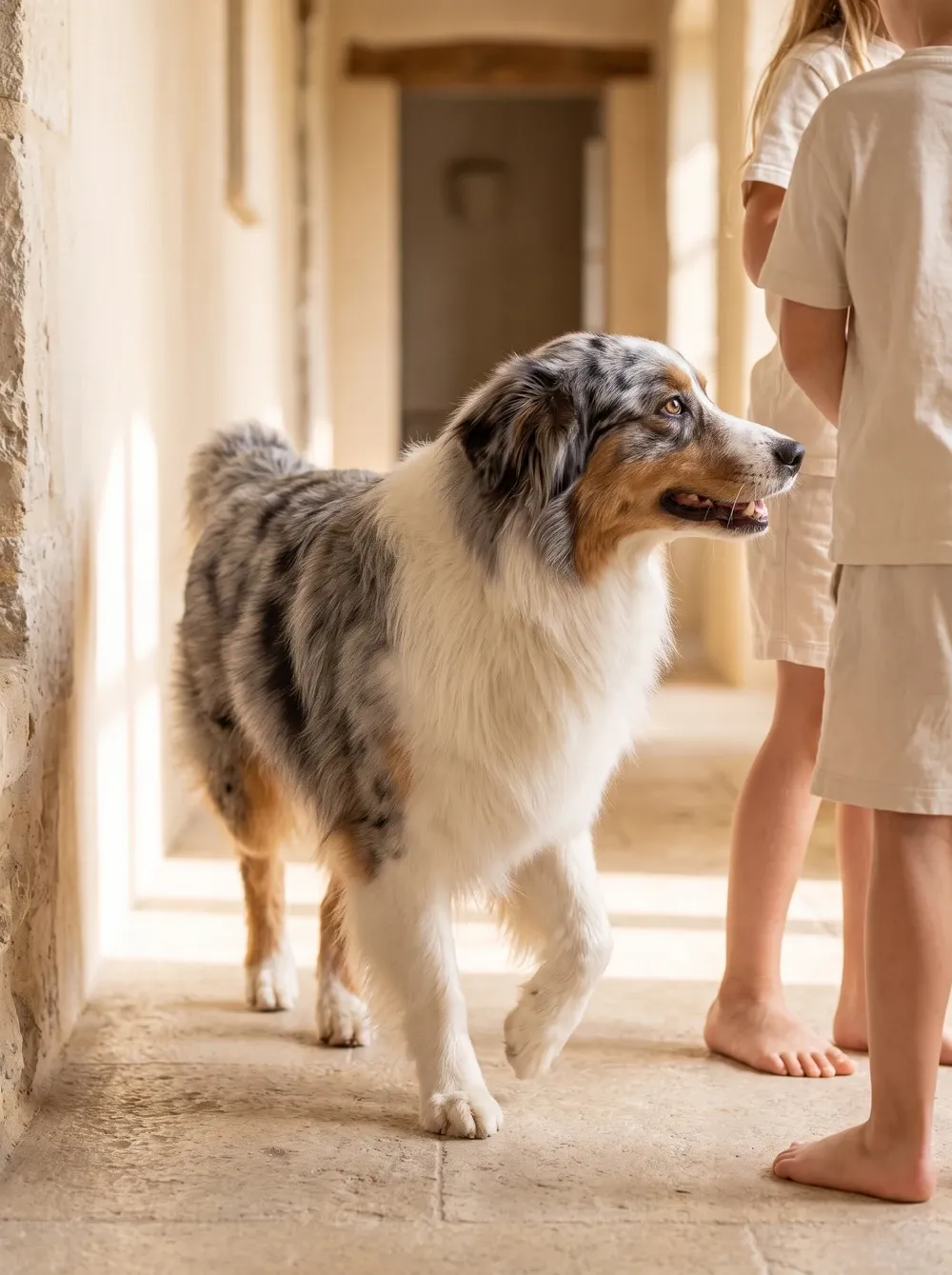
Australian Shepherd, a blue merle adult trotting beside two children down a sunlit stone hallway

At home

Why does my Australian Shepherd herd the family?

Rounding the children up to the door, the guests into the kitchen, and you towards the lead.

What's going onAussies were bred to move sheep and cattle, and in a flat the family is the flock. Give them a herding ball to push, and swap the chasing games for that.

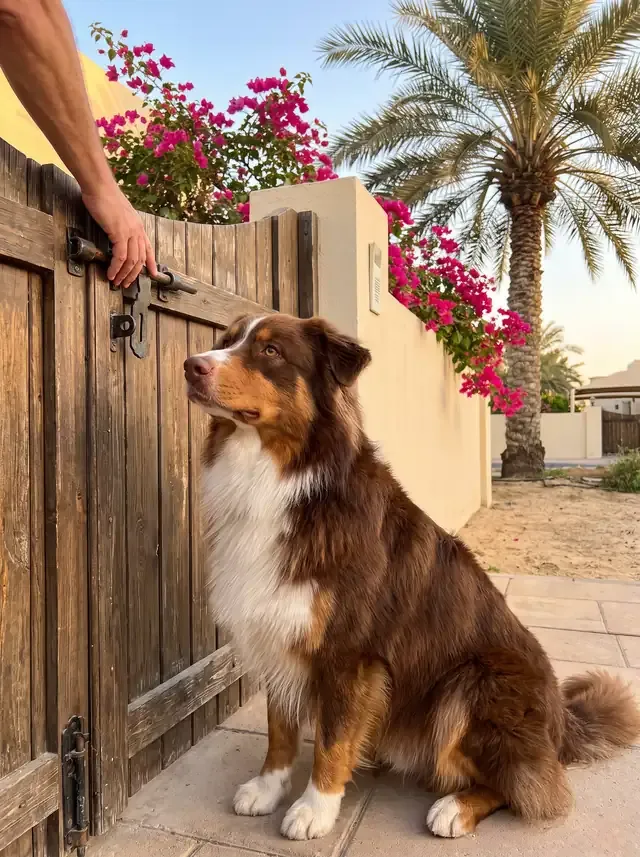
Australian Shepherd in Dubai, a red tricolour adult by a villa garden gate, watching a hand on the latch

At home

Why is my Australian Shepherd so clever?

Opening the cupboard, working the gate latch and knowing your morning routine before you do.

What's going onThey learn the things you did not mean to teach as fast as the things you did. Keep the house rules the same for everyone, or they will work out who gives in.

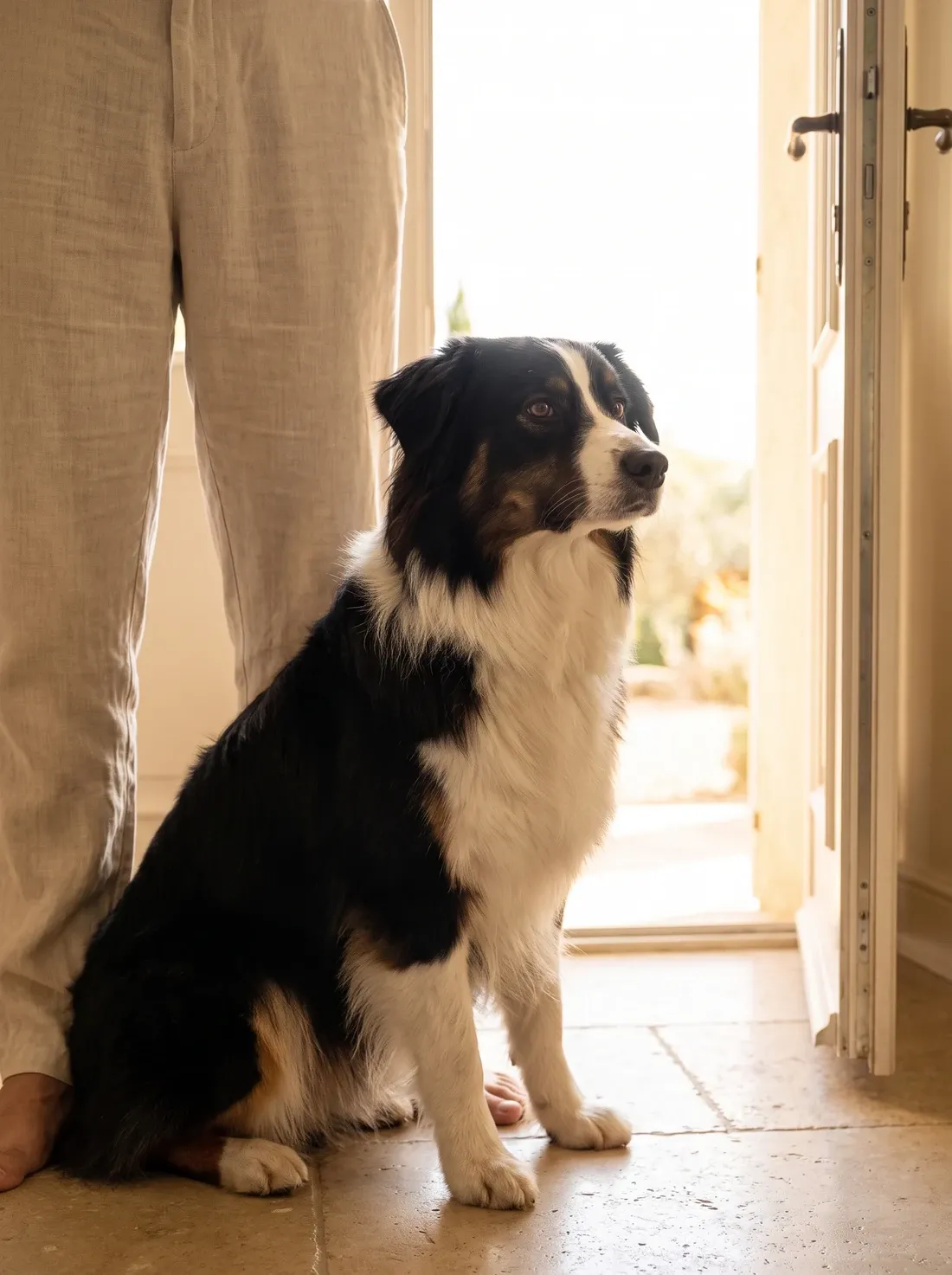
Australian Shepherd, a black and white adult sitting against a pet parent's legs, watching the open front door

At home

Why is my Australian Shepherd wary of strangers?

Glued to their own people, then hanging back and watching when a visitor walks in.

What's going onRanchers wanted a dog that also watched the house. Many Aussies love their own people and take a while with everyone else. Introduce visitors and building staff calmly from puppyhood, and let them take their time.

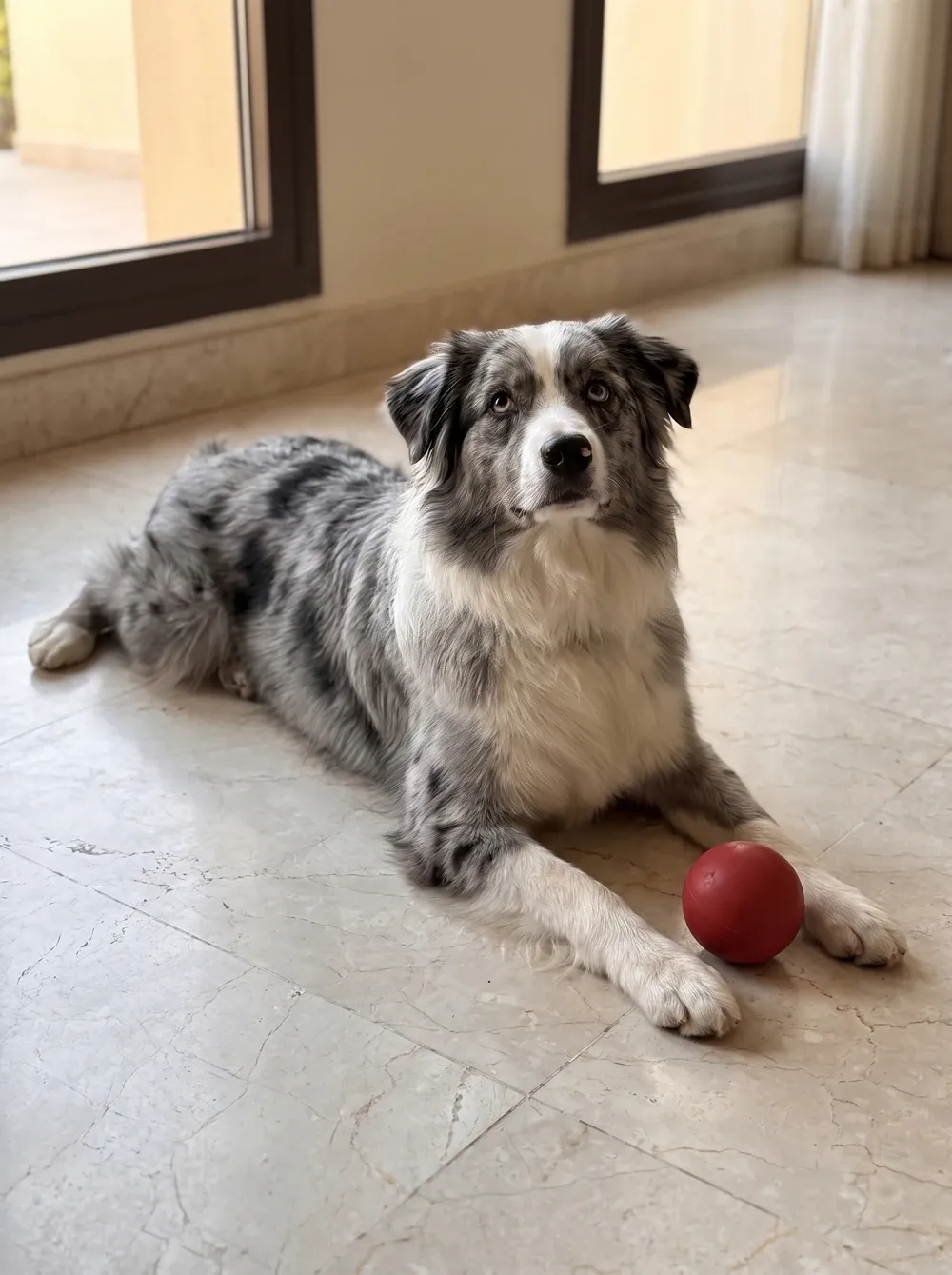
Australian Shepherd, a blue merle and white adult stretched out on cool marble beside a red ball

At home

Why won't my Australian Shepherd stop playing in the heat?

Stretched out on the coolest tiles, then up and asking for the ball again at noon.

What's going onTheir double coat was made for cold mornings on the range, and they will keep playing long after they should stop. From May to September, walk before sunrise and after dark, and end the game before they do.

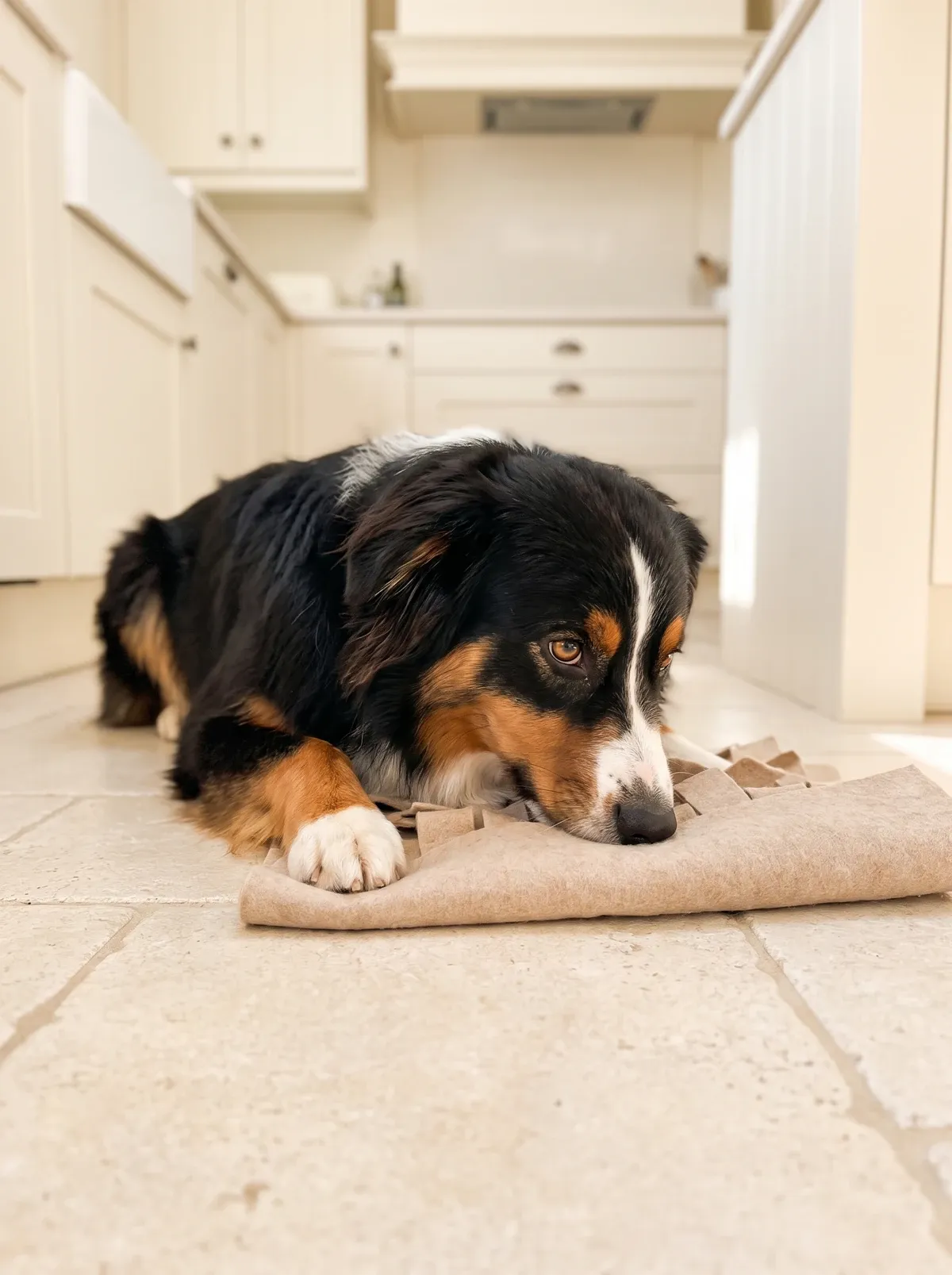
Australian Shepherd, a black tricolour adult lying nose down in a felt snuffle mat on a cream kitchen floor

At home

Why is my Australian Shepherd never tired?

Back from a long walk ready for more, then starting on the cushions.

What's going onA long walk only makes a fitter Aussie. Twenty minutes of training, or sniffing out their dinner, is what tires them. Left with nothing to do, they find their own job.

An Australian Shepherd in Dubai

The bit nobody tells you.

Their day

Built for: A day on a ranch, moving sheep and cattle.

In Dubai: Often waiting in a flat for their people.

Their work

Built for: Always something to do, beside a rancher.

In Dubai: Only the children and the vacuum to herd.

Their coat

Built for: Made for a cold morning.

In Dubai: 45°C heat, for months at a time.

The nipping, the barking at the door and the chewed cushions mostly come from that gap.

You cannot give them a ranch. You can give them a job, and the ten things below show you how.

Your plan is built around their breed: the risks on an Australian Shepherd's record at every age, and the care that goes with each one.

Join the founding families. AED 1,999 of essential care for AED 199.

Daily care for an Australian Shepherd

Ten things that make their life better.

Many of them are free, and most matter at every age.

  1. Training tires an Aussie faster than running does.

    Every age, most of all 6 months to 2 years

    Under AED 150

    Why

    Training tires an Aussie faster than running does.

    What to do

    Twenty minutes a day, in two or three sessions: a new trick, part of their dinner scattered to sniff out, a puzzle feeder. Aussies love learning, so keep adding something new.

  2. They will keep going all evening if nobody shows them how to stop.

    Every age, most of all 6 months to 2 years

    Under AED 200

    Why

    They will keep going all evening if nobody shows them how to stop.

    What to do

    Reward them for lying calmly on a mat while you eat or watch television. Build it up a minute at a time, and protect their sleep, especially in the teenage months.

  3. They will herd something either way. Better a ball than the children.

    Every age, with slower games on soft ground from 7 years

    Under AED 250

    Why

    They will herd something either way. Better a ball than the children.

    What to do

    A big herding ball to push round the park, or a flirt pole. When the vacuum comes out, put them in another room at first, then teach them to wait on their mat while it runs.

  4. Aussies can nip at children's heels, and a nip is still a bite.

    Every age, most of all in the first two years

    Free

    Why

    Aussies can nip at children's heels, and a nip is still a bite.

    What to do

    Skip chasing games with running children, and keep an adult watching whenever they play. Teach the children to stand still if the dog circles. Give the dog a tug toy to grip instead, and contact your vet if the nips get harder.

  5. Scooters and bikes move like cattle breaking away, and an Aussie will try to head them off.

    Every age, most of all 6 months to 2 years

    Under AED 150

    Why

    Scooters and bikes move like cattle breaking away, and an Aussie will try to head them off.

    What to do

    Keep them on the lead near traffic, and reward a sit as bikes go past. In the lift, keep them close and let the doors open fully before you step out.

  6. Their double coat holds heat, and they will keep working long after they should stop.

    Every age, most of all puppies and from 7 years

    Free

    Why

    Their double coat holds heat, and they will keep working long after they should stop.

    What to do

    From May to September, walk before sunrise and after dark. Put the back of your hand on the pavement for five seconds: if you cannot keep it there, they cannot walk on it. Keep play short and in the shade, and carry water. Brush the loose undercoat out several times a week, and contact your vet before anyone clips it short.

  7. Aussies are sensitive to their handler and often cautious with strangers. Harsh handling makes both worse.

    Every age

    Free

    Why

    Aussies are sensitive to their handler and often cautious with strangers. Harsh handling makes both worse.

    What to do

    Train with food and play, never shouting or jerking the lead. Introduce visitors slowly, and let the dog approach them, not the other way round. Before firework nights, set up a quiet room.

  8. Hip Dysplasia (HD, a poorly fitting hip joint) is on their record from puppy to senior, and arthritis follows.

    Every age, most of all 6 months to 2 years and from 7 years

    Free to AED 1,000 for rugsIn your plan

    Why

    Hip Dysplasia (HD, a poorly fitting hip joint) is on their record from puppy to senior, and arthritis follows.

    What to do

    Keep them lean: you should feel their ribs easily. Put rugs down where they turn on marble, no repeated jumping while they grow, and book their hip evaluation before they turn two.

  9. Collie Eye Anomaly (CEA, an inherited eye defect in collie breeds) and cataracts (a cloudy lens) are on their record.

    Every age, starting at six weeks

    FreeIn your plan

    Why

    Collie Eye Anomaly (CEA, an inherited eye defect in collie breeds) and cataracts (a cloudy lens) are on their record.

    What to do

    Book the eye evaluations their plan sets, from six weeks and every year in their prime. Tell your vet if an eye looks cloudy, or if they hesitate in dim light.

  10. With MDR1 drug sensitivity (a gene change that makes some common medicines dangerous), one ordinary dose of the wrong medicine can be fatal.

    Every age, most of all in the first two years

    FreeIn your plan

    Why

    With MDR1 drug sensitivity (a gene change that makes some common medicines dangerous), one ordinary dose of the wrong medicine can be fatal.

    What to do

    Get the MDR1 gene test their plan sets, and tell every vet, groomer and pet sitter the result. Once a week, run your hands over them and look at their skin. Brush their teeth every day, and weigh them monthly. If they ever have a seizure, time it, film it if you can, and contact your vet. A first seizure, one that lasts more than two minutes, or more than one in a day is an emergency: contact your vet now.

Three of these are in your plan. The rest you can do at home.

Join the founding families. AED 1,999 of essential care for AED 199.

Australian Shepherd health by age

Their health, at every age.

In an Australian Shepherd, the hips, the eyes, epilepsy and MDR1 drug sensitivity lead the record, and a dog who loves to work can hide a sore joint. Choose their age to see what to watch for, and the care that goes with it.

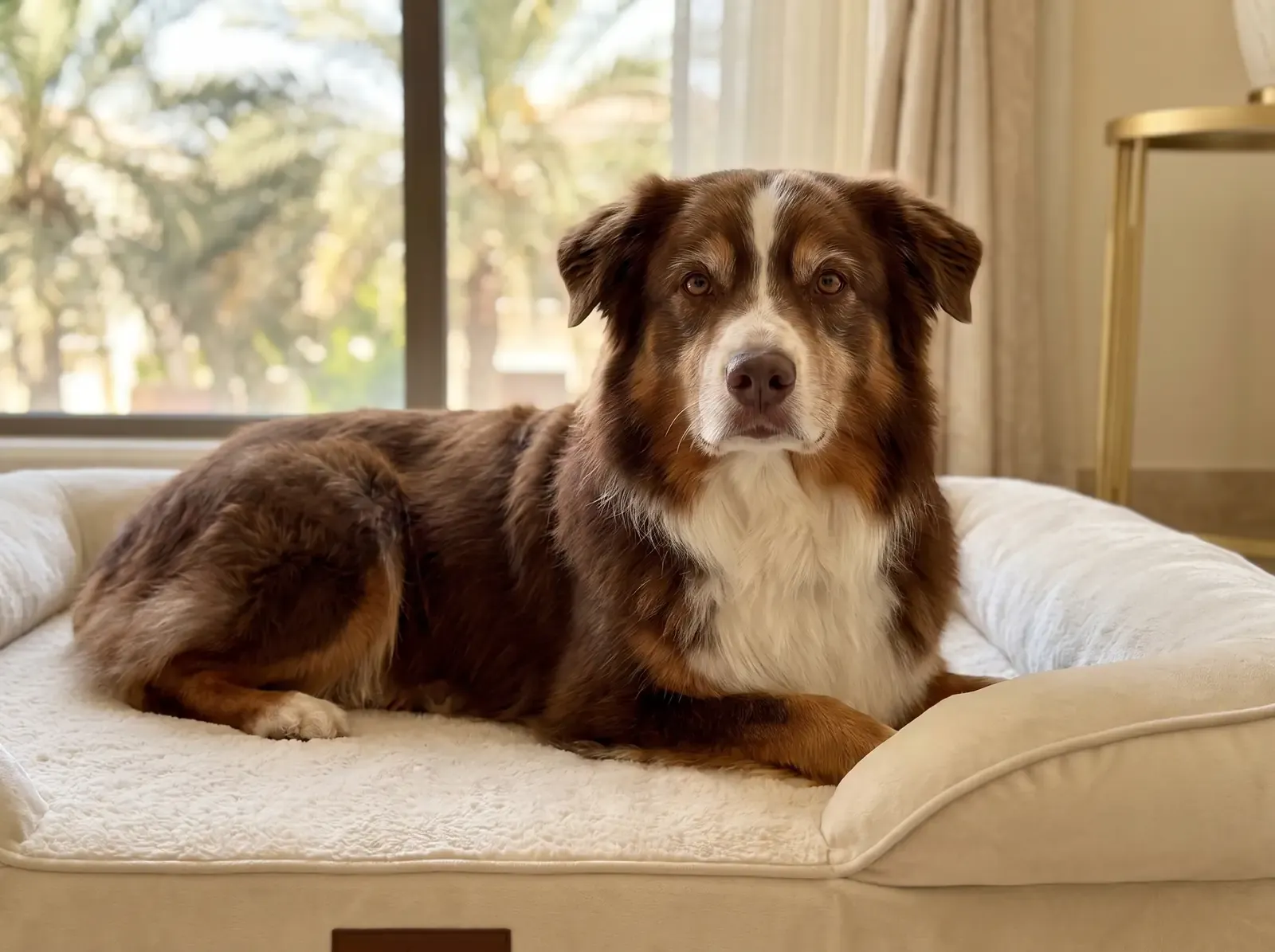
Australian Shepherd in Dubai, an older red tricolour dog with a greying muzzle on a padded bed by a window onto palms

How old are they?

Their age

Australian Shepherd Puppy health

the first six months

What to watch for

  1. Developmental or early clinical signs of Hip Dysplasia (HD, poorly fitting hip joint)
  2. Congenital or early inherited ocular disease related to Eye Conditions: Collie Eye Anomaly (CEA, an inherited eye defect in collie breeds) and Cataracts (a cloudy lens)
  3. Early neurological signs or inherited risk related to Epilepsy (Idiopathic, seizures with no other cause found)
  4. Early or congenital expression of MDR1 Gene Mutation (Drug Sensitivity, a gene change that makes some common medicines dangerous)
  5. Retained deciduous teeth (baby teeth that stay put), malocclusion (teeth that do not meet properly) or early dental crowding

The care that goes with it

  1. Core vaccinations, microchip and Dubai Municipality registration
  2. Deworming, and flea and tick prevention, with your vet told the breed can carry MDR1
  3. Body Condition Score (a check on whether they are the right weight), dental, growth and nutritional evaluation, and early socialisation
  4. Baseline screening for Hip Dysplasia (HD, a poorly fitting hip joint)
  5. Follow-up for any early sign of Collie Eye Anomaly (CEA) or cataracts
The full care detail
  • Core vaccination programme, microchipping and Dubai Municipality registration. Titre testing discussion where clinically appropriate; not a substitute for completing the core vaccine series
  • Deworming and external parasite prevention tailored to Dubai exposure
  • Body Condition Score (BCS), Muscle Condition Score (MCS), dental, growth and nutritional evaluation, and early socialisation
  • Baseline screening focused on Hip Dysplasia (HD)
  • Early diagnostic follow-up for signs suggestive of Eye Conditions (Collie Eye Anomaly (CEA), Cataracts)

Their age

Australian Shepherd Juvenile health

6 months to 2 years

What to watch for

  1. Emerging Hip Dysplasia (HD, poorly fitting hip joint) with exercise intolerance or lameness
  2. Progression or first clinical detection of Eye Conditions: Collie Eye Anomaly (CEA, an inherited eye defect in collie breeds) and Cataracts (a cloudy lens)
  3. Typical age-of-onset presentation of Epilepsy (Idiopathic, seizures with no other cause found)
  4. Young-dog presentation of MDR1 Gene Mutation (Drug Sensitivity, a gene change that makes some common medicines dangerous)
  5. Early periodontal disease (gum disease) and dental crowding

The care that goes with it

  1. Hip evaluation by age two, and a lean body to ease the strain on the hips
  2. Ophthalmic evaluation (eye exam) by a specialist eye vet, from six weeks old, for Collie Eye Anomaly
  3. Neutering or spaying, timed for a large breed
  4. An MDR1 gene test, if not done already, before any further medicine: for a dog who carries it, some common medicines can be fatal
  5. If seizure signs keep coming back, the cause is investigated, not simply put down to epilepsy again
The full care detail
  • Hip evaluation (OFA or PennHIP) by age 2; maintain lean body weight to reduce hip stress
  • Ophthalmic evaluation by a certified ophthalmologist from age 6 weeks for Collie Eye Anomaly (CEA)
  • Neuter/spay timing discussion that accounts for large-breed growth and disease risk
  • MDR1 gene test before administering any medications (ivermectin, loperamide, etc.), can be fatal if positive
  • Investigate recurrent signs rather than repeatedly treating presumed Epilepsy (Idiopathic)

Their age

Australian Shepherd Young Adult health

2 to 4 years

What to watch for

  1. Hip Dysplasia (HD, poorly fitting hip joint)
  2. Eye Conditions: Collie Eye Anomaly (CEA, an inherited eye defect in collie breeds) and Cataracts (a cloudy lens)
  3. Epilepsy (Idiopathic, seizures with no other cause found)
  4. MDR1 Gene Mutation (Drug Sensitivity, a gene change that makes some common medicines dangerous)
  5. Dental Disease

The care that goes with it

  1. Hip evaluation by age two, and a lean body to ease the strain on the hips
  2. Ophthalmic evaluation (eye exam) by a specialist eye vet for Collie Eye Anomaly
  3. An MDR1 gene test, if not done already, before any further medicine
  4. Neurological evaluation (nerve and brain exam) if seizures happen: epilepsy can be managed with medication
  5. Daily tooth brushing, and a professional dental clean every 6 to 12 months
The full care detail
  • Hip evaluation (OFA or PennHIP) by age 2; maintain lean body weight to reduce hip stress
  • Ophthalmic evaluation by a certified ophthalmologist from age 6 weeks for Collie Eye Anomaly (CEA)
  • MDR1 gene test before administering any medications (ivermectin, loperamide, etc.), can be fatal if positive
  • Neurological evaluation if seizures occur; idiopathic epilepsy is manageable with medication
  • Daily dental brushing; professional dental cleaning every 6-12 months

Their age

Australian Shepherd Prime Adult health

4 to 7 years

What to watch for

  1. Hip Dysplasia (HD, poorly fitting hip joint), Progressive
  2. Epilepsy (Ongoing Management)
  3. Allergic Skin Disease
  4. Eye Conditions (Progressive)
  5. Dental Disease (Advanced)

The care that goes with it

  1. Hip care: joint supplements, physiotherapy and weight control, and surgery if it is severe
  2. Epilepsy medicine levels measured every 6 months, and doses adjusted
  3. Allergen-specific immunotherapy (treatment that slowly teaches the body to tolerate an allergen), daily or monthly
  4. Ophthalmic evaluation (eye exam) every year, watching for cataracts
  5. Plenty of work for their brain, to keep anxiety away
The full care detail
  • Hip management: joint supplements, physiotherapy, and weight management; surgical options if severe
  • Epilepsy management: drug level monitoring every 6 months; adjust medication as needed
  • Allergy management: allergen-specific immunotherapy (daily or monthly)
  • Annual ophthalmic evaluation; monitor for progressive cataract development
  • Provide adequate mental stimulation to prevent anxiety-driven behavioural issues

Their age

Australian Shepherd Senior health

7 to 10 years

What to watch for

  1. Hip Dysplasia (HD), Severe Arthritis
  2. Cancer: Haemangiosarcoma (a cancer of the blood vessels) and Lymphoma (a cancer of the white blood cells)
  3. Kidney Disease
  4. Cognitive Dysfunction Syndrome (dementia in older pets)
  5. Heart Disease

The care that goes with it

  1. Hydrotherapy, acupuncture and pain relief for severe arthritis
  2. A full physical examination every year, with an abdominal ultrasound (a scan of the belly) to look for haemangiosarcoma (a cancer of the blood vessels)
  3. A renal panel (kidney blood tests) twice a year, and a senior diet lower in phosphorus and salt
  4. New training challenges, puzzle feeders and a steady routine for an ageing brain
  5. An echocardiogram (an ultrasound scan of the heart) every year from age 7, and heart medicine when it is needed
The full care detail
  • Advanced hip management: hydrotherapy, acupuncture, and pain medication for severe arthritis
  • Annual full physical examination with abdominal ultrasound for haemangiosarcoma screening
  • Bi-annual renal panel; transition to senior diet with controlled phosphorus and sodium
  • Cognitive enrichment: new training challenges, puzzle feeders, and consistent daily routines
  • Annual echocardiogram from age 7; cardiac medication when indicated

Their age

Australian Shepherd Geriatric health

10 years and over

What to watch for

  1. Cancer (Advanced)
  2. Severe Arthritis / Mobility Loss
  3. Chronic Kidney Disease (CKD, long-term kidney failure)
  4. Cognitive Dysfunction Syndrome (dementia in older pets), Advanced
  5. Heart Disease

The care that goes with it

  1. Orthopaedic bedding, ramps and physiotherapy for stiff joints
  2. Kidney and heart medicine, adjusted regularly
  3. Brain games and a steady daily routine to slow cognitive decline
  4. Quality-of-life assessments
  5. Palliative care (comfort care) planned around them
  6. End-of-life planning with your veterinary team
The full care detail
  • Mobility support: orthopaedic bedding, ramps, and physiotherapy for arthritic dogs
  • Renal and cardiac management with regular medication adjustments
  • Cognitive enrichment and consistent daily routine to slow cognitive dysfunction progression
  • Quality-of-life assessments
  • Tailored palliative and comfort-focused care plan
  • Compassionate end-of-life planning with your veterinary team

Breed predispositions indicate an increased risk rather than certainty of disease. What is right for them always comes from their own history and an evaluation.

Getting an Australian Shepherd puppy in Dubai

Before they come home.

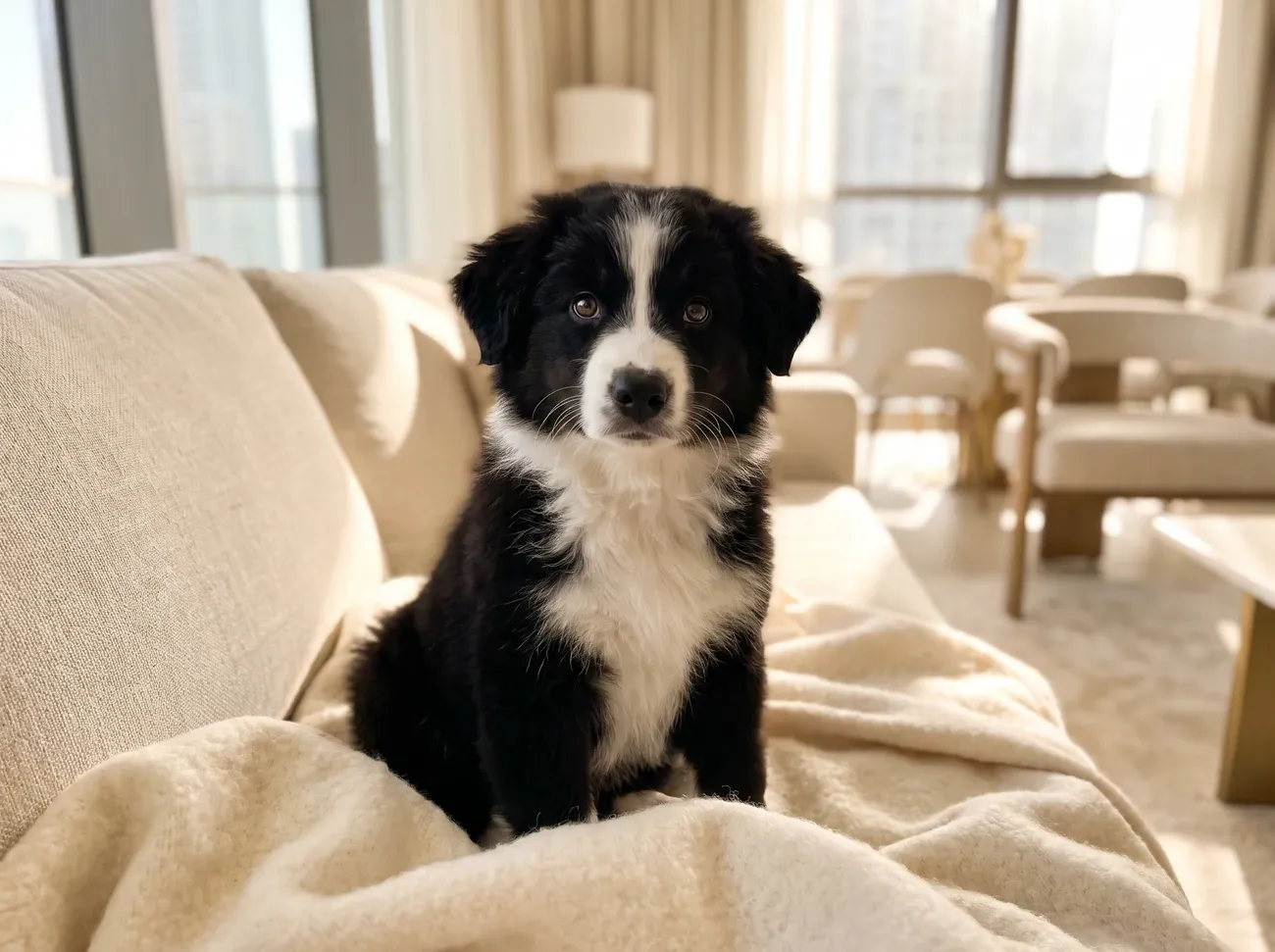
Australian Shepherd, a black and white puppy sitting on a cream blanket on a linen sofa

Show and working lines

Two kinds of Aussie, one shared need

Since the breed club started in 1957, Aussies have split into two kinds. Show lines are bred for the striking merle coat and a consistent look. Working lines are bred for herding ability on ranches and farms. Both need far more to do than many people expect.

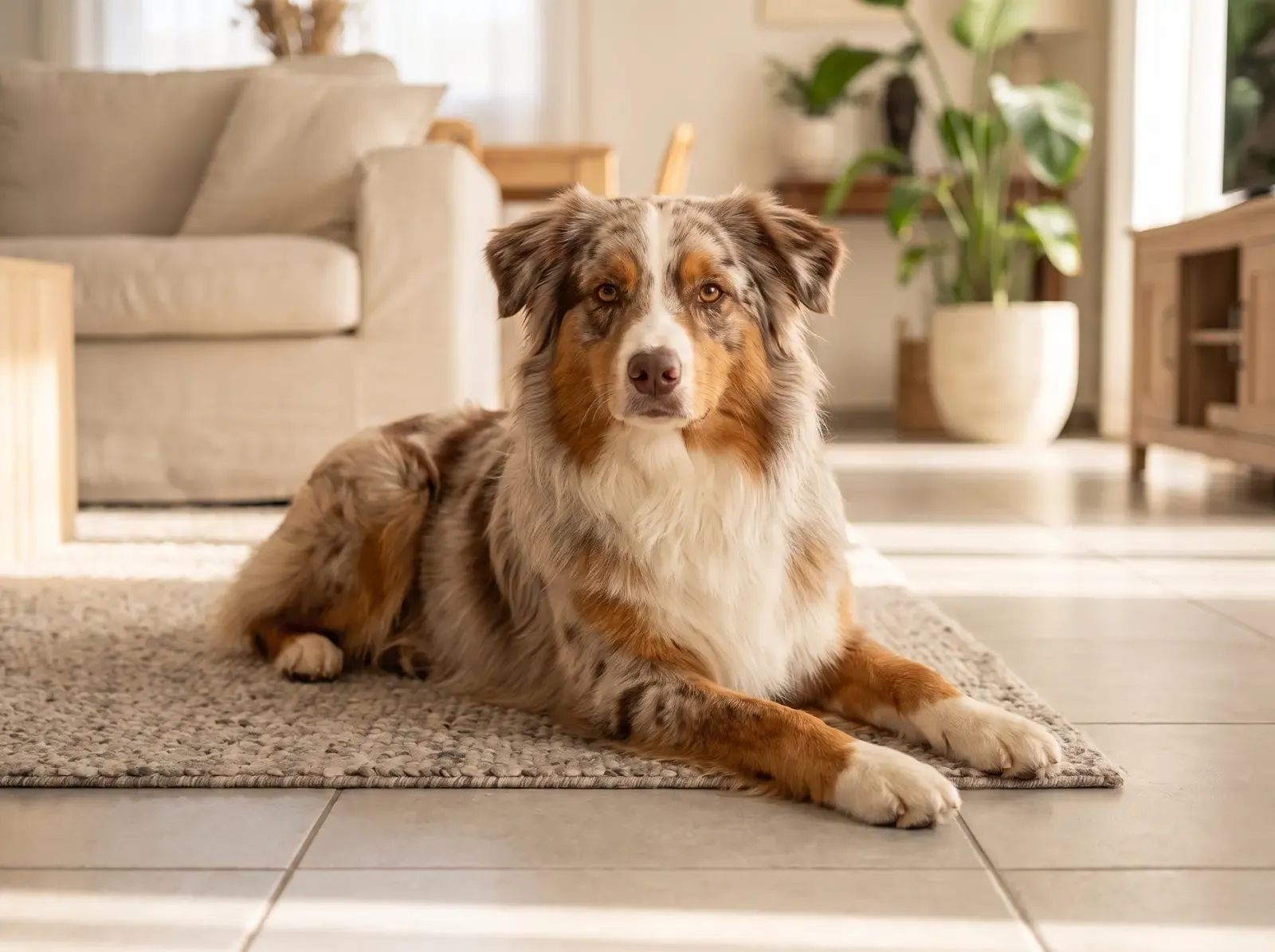
Australian Shepherd, a red merle adult lying on a stone-coloured rug on cool tiles

Colours

Blue merle, red merle, black or red

The marbled blue merle is the coat most people picture, but Aussies also come in red merle, solid black and solid red, each with or without white markings and copper points. Many have eyes of two different colours.

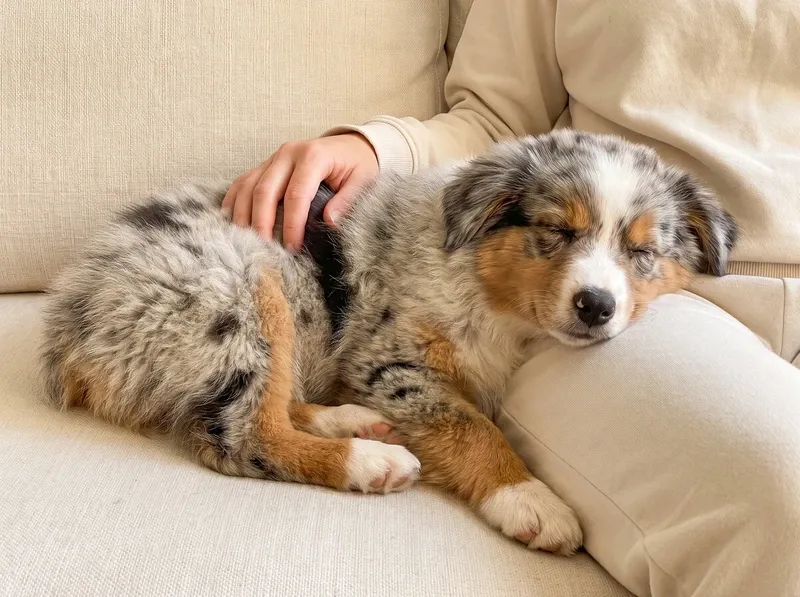
Australian Shepherd, a blue merle puppy asleep against a pet parent's lap on a cream sofa

The first six months

How to take care of an Australian Shepherd puppy

Vaccinations, microchip and Dubai Municipality registration come first. Their first ophthalmic evaluation (eye exam) can be from six weeks old. Until you have their MDR1 result, give them nothing from your own medicine cupboard. Keep training to two-minute sessions, many times a day, and move every nip on to a toy.

Puppy health, 0 to 6 months
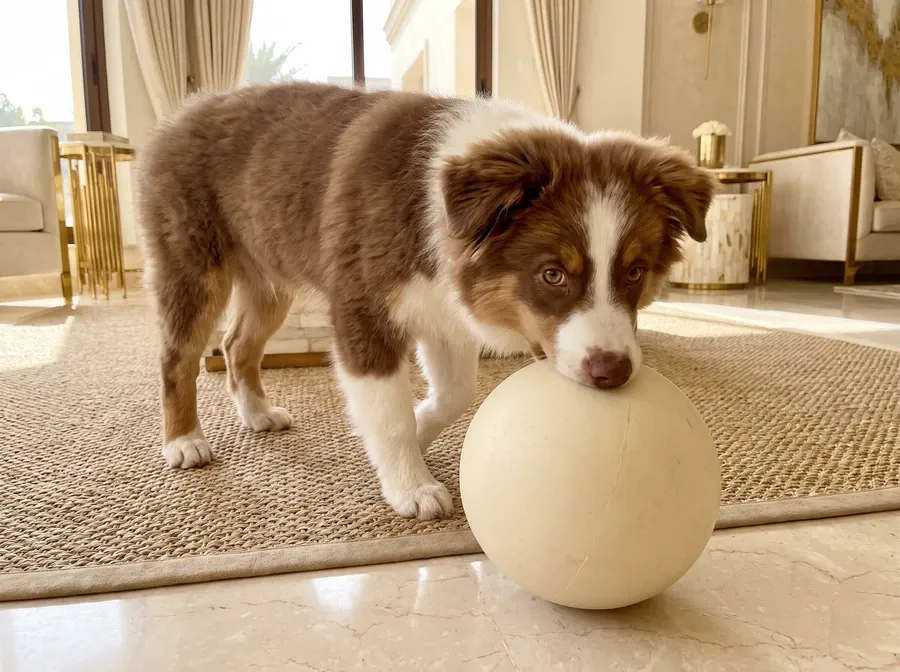
Australian Shepherd, a red and white puppy nosing a large cream herding ball across a rug on marble

Getting the home ready

A mat, a herding ball and a high shelf

A mat or bed for learning to rest, a puzzle feeder, a big herding ball, a harness and lead, and rugs where they turn on marble. Move every medicine to a high shelf or a cupboard they cannot open.

Ten things that make their life better
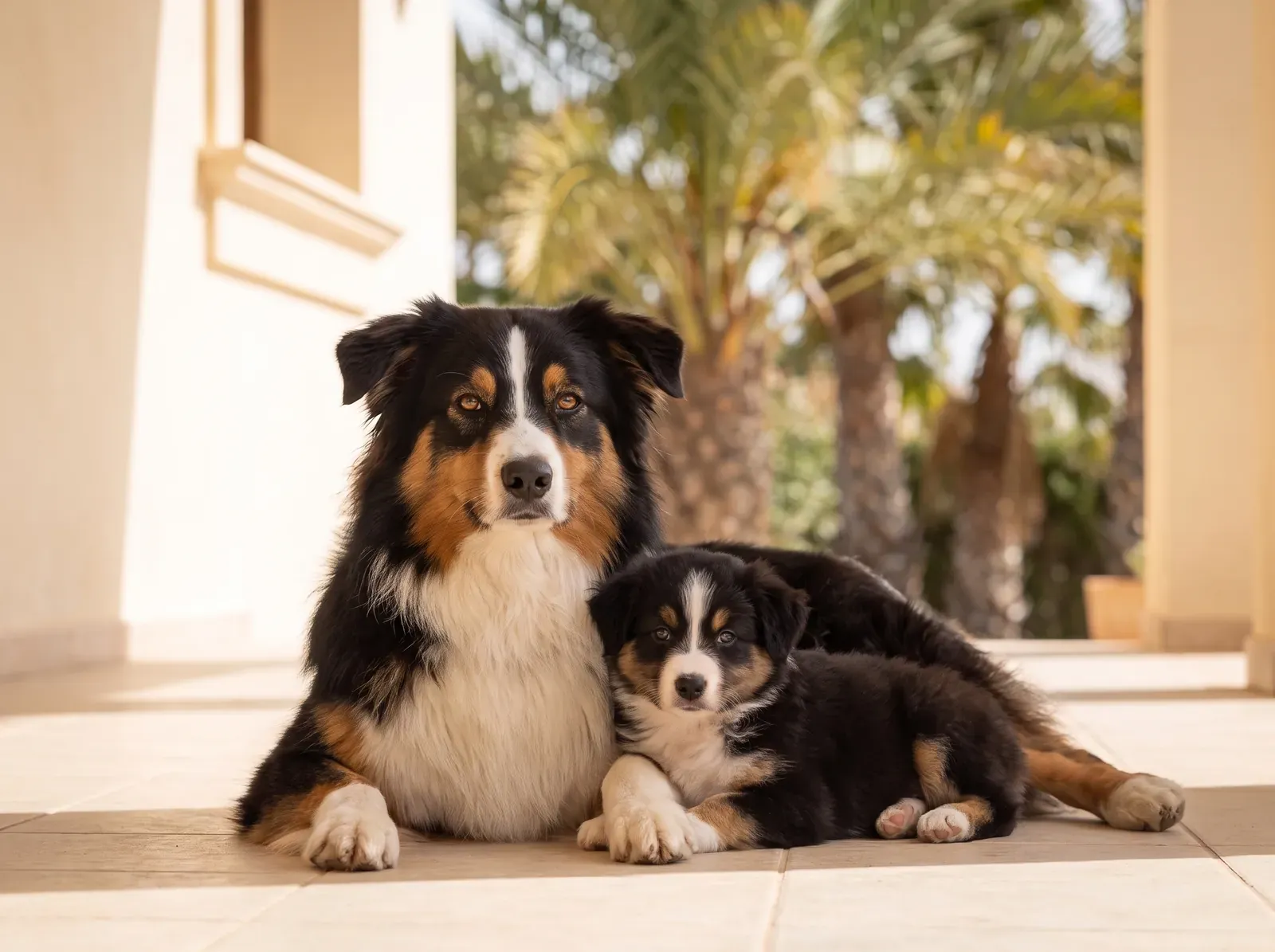
Australian Shepherd in Dubai, a black tricolour mother with one puppy on a shaded villa terrace under date palms

Before you commit

Ask about the parents' hips and eyes

Hip Dysplasia (a poorly fitting hip joint) and Collie Eye Anomaly (an inherited eye defect in collie breeds) are on their record from puppyhood. If you are choosing a puppy, ask the breeder about both parents' hip and eye results, and whether the puppy's MDR1 status is known.

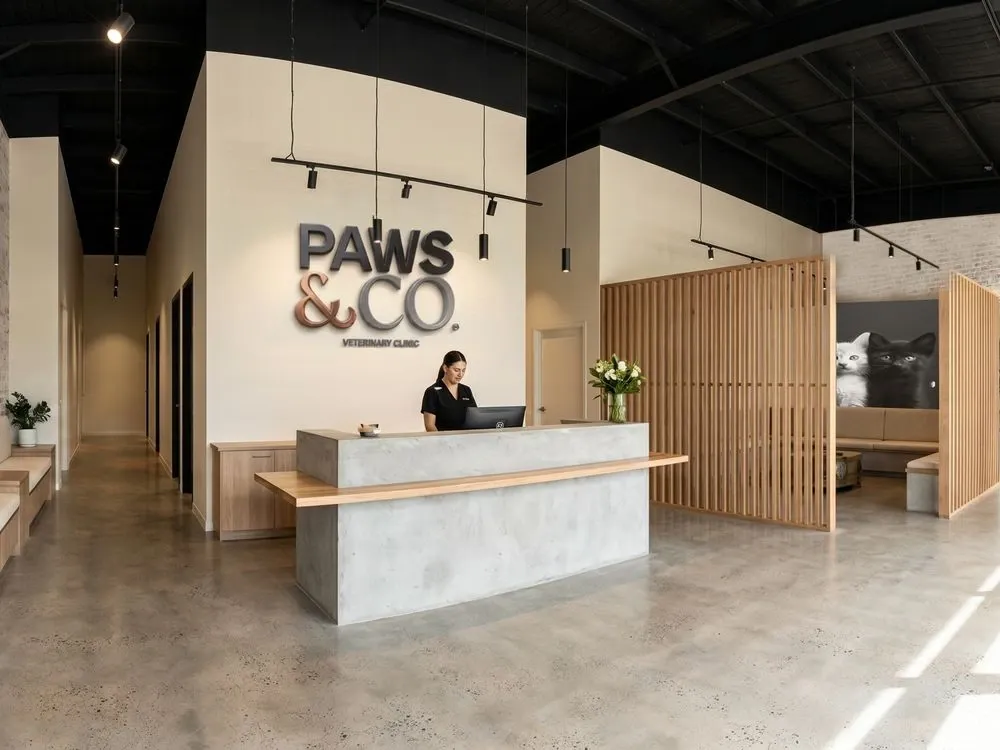
The reception of a Paws & Co clinic, with long cream benches and a stone reception desk

Before the clinics open

Join the founding families

AED 1,999 of essential care for AED 199. No payment now.

When to see a vet

When it is not behaviour.

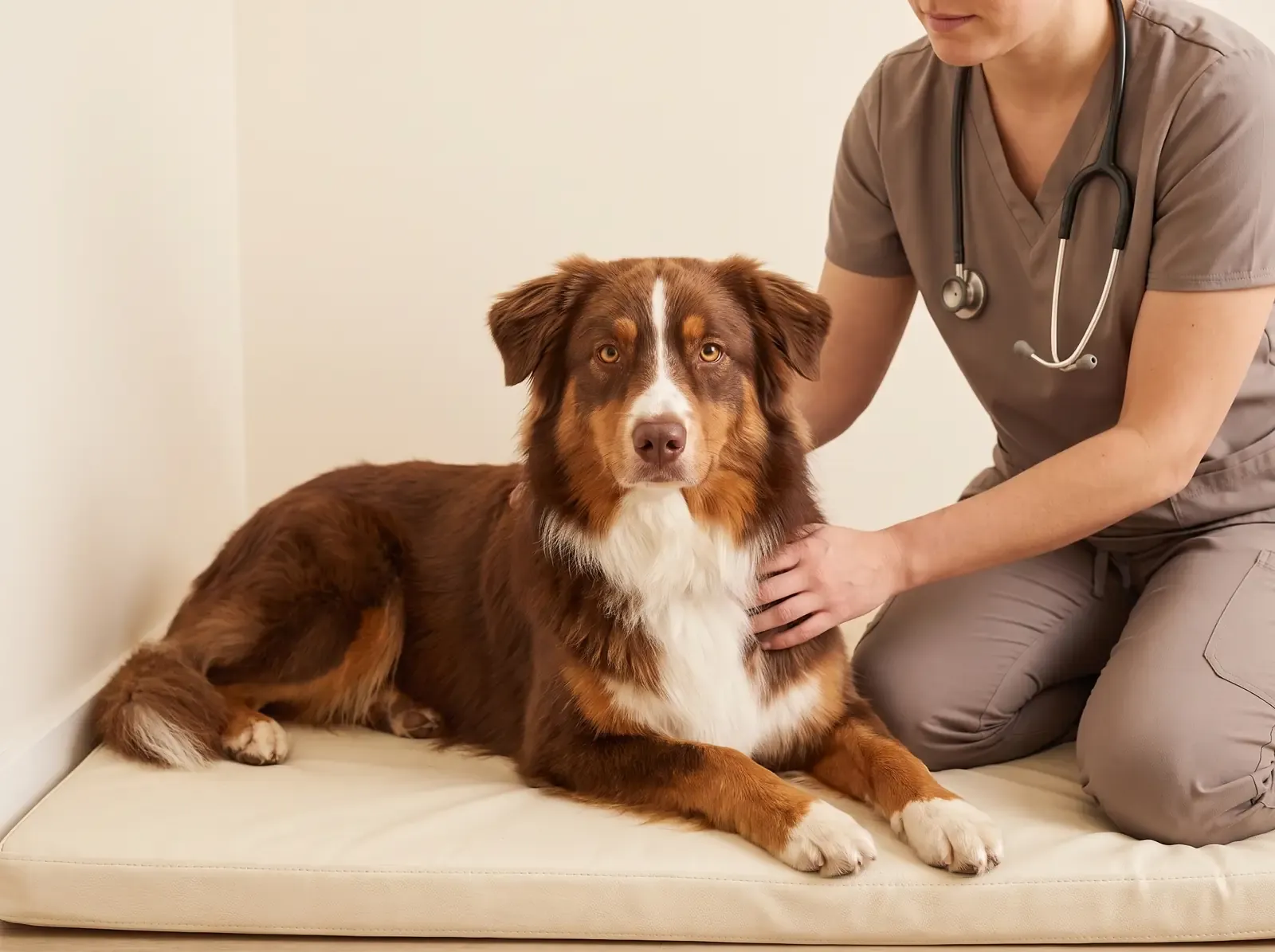
Australian Shepherd, a red tricolour adult lying on a padded mat as a vet in taupe scrubs rests a hand on their chest

Some of this is not a training problem, and treating it like one wastes time your dog may not have. If they are distressed when you leave, if they growl or guard their food, their toys or you, if they are frightened on the lead, or if anything about them changes suddenly at any age, contact your vet the same day. A tip from a website, ours included, is not the answer. If it cannot wait, contact your nearest emergency vet now.

With an Aussie, watch their nerve and the way they move. An Aussie who suddenly growls at visitors they used to tolerate, or who is newly frightened of noise, may be in pain. So may one who is slow to get up or stops jumping into the car. Any seizure, however short, is a reason to contact your vet the same day. A first seizure, one that lasts more than two minutes, or more than one in a day is an emergency: contact your vet now. So is bloat (GDV, a twisted stomach): a swollen, tight belly, retching with nothing coming up, sudden restlessness or drooling. It is most common in large, deep-chested dogs, so skip walks and hard play shortly before and after meals. And if they have been given any medicine and then wobble, drool or seem confused, treat it as an emergency: contact your vet now, and tell them they may carry MDR1.

They'll work out the next cabinet too. Keep the medicines out of reach, and if they get into them, contact your vet now.
Australian Shepherd history

Before they were yours.

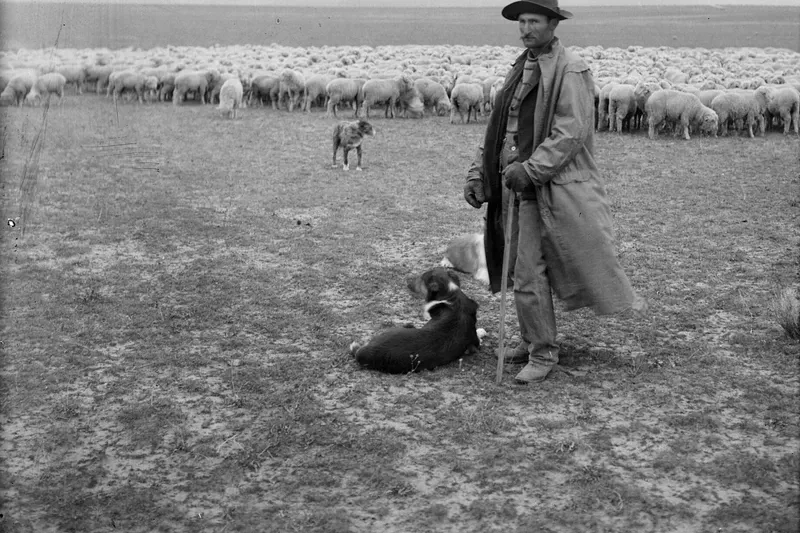
  1. Australian Shepherd history, a sheep herder with dogs and a flock on the open range, Oregon, about 1900 to 1910
    A sheep herder and his dogs with the flock on the range in eastern Oregon, photographed by Lee Moorhouse between 1900 and 1910.

    The 1800s

    Ranches in the American West

    Despite the name, the Australian Shepherd was developed in the western United States, from British herding dogs that moved sheep and cattle across huge distances and watched the ranch at night.

    What they still carryPart gatherer, part heeler, part guard.

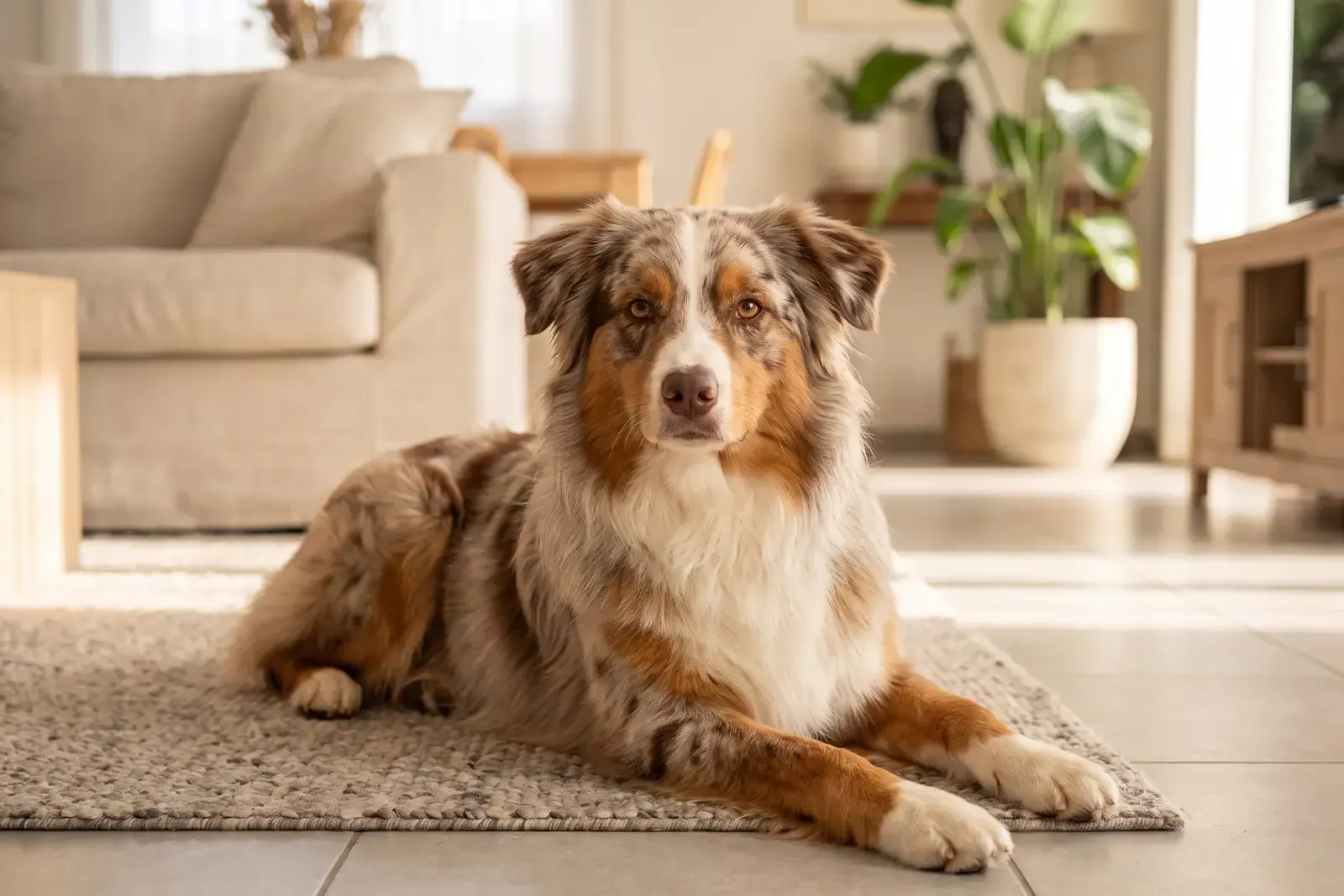
  2. Australian Shepherd history, a red merle adult lying on a stone-coloured rug on cool tiles
    An Australian Shepherd today.

    After the war

    Rodeos and the screen

    After the Second World War, Aussies became famous at rodeos, where performers showed how much they could learn. Jay Sisler's trick dogs toured the circuit, and two appeared in Disney films.

    What they still carryA dog that wants a job with you, not just near you.

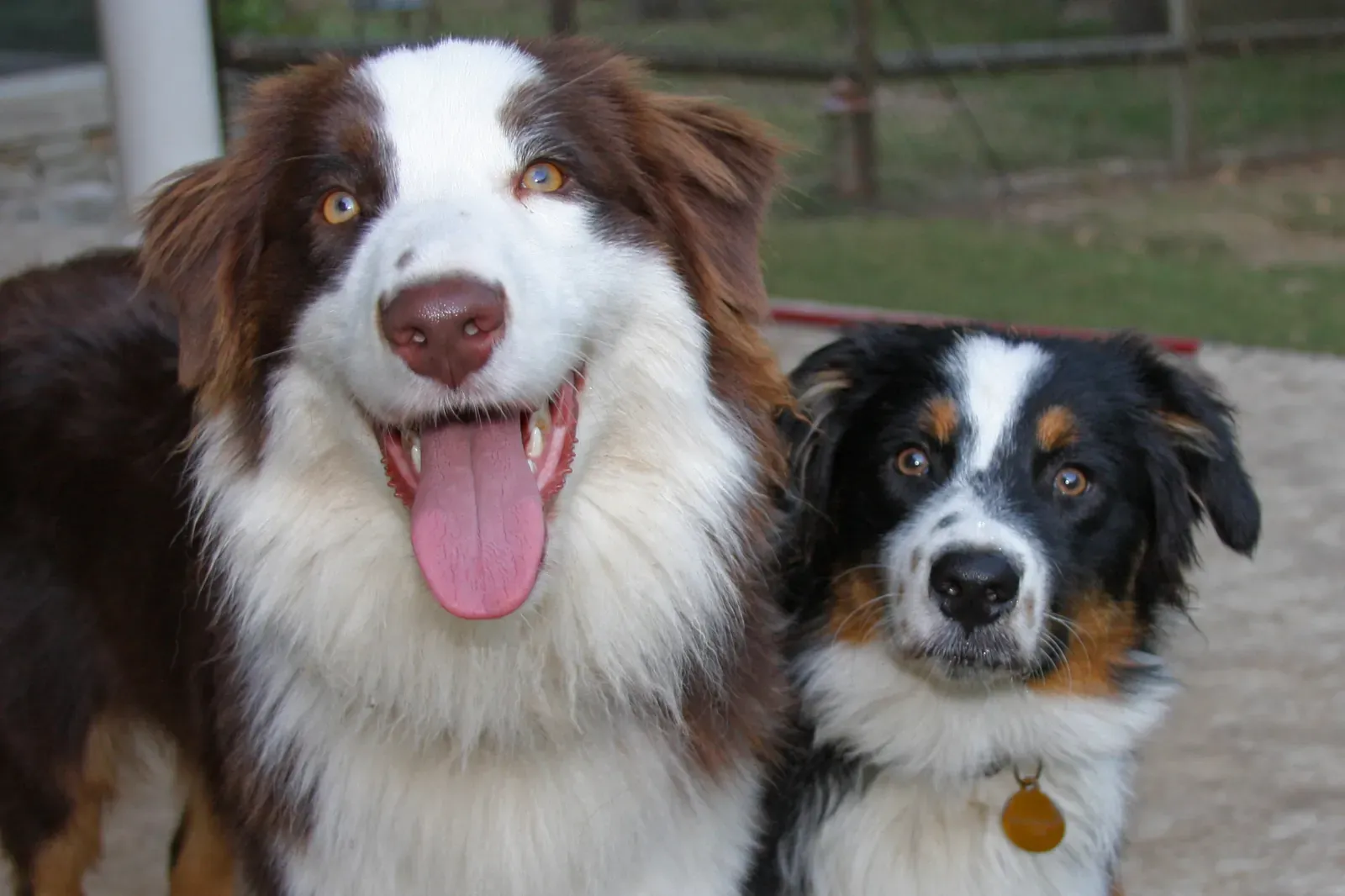
  3. Australian Shepherd history, a red and white and a black tricolour Aussie side by side, 2008
    Two Australian Shepherds, Dusty and Tucker, in 2008. Photo: dregsplod, CC BY 2.0, via Wikimedia Commons (cropped)

    1957 to 1993

    A breed club, then recognition

    The Australian Shepherd Club of America was founded in 1957 and started a stud book. The American Kennel Club recognised the breed in 1993.

    What they still carryShow lines and working lines, and both are busy.

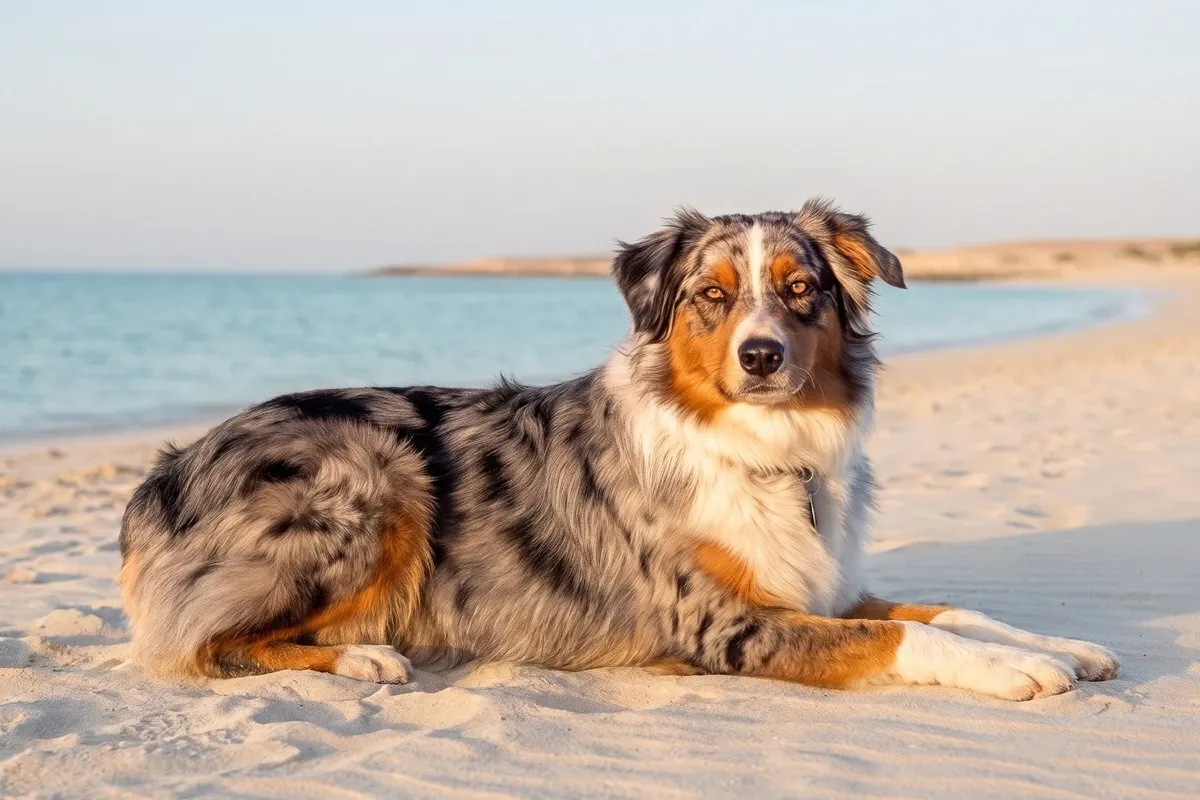
  4. Australian Shepherd history, the breed today, a blue merle tricolour adult lying on a beach, Dubai, 2026

    Today

    In Dubai

    In the UAE an Aussie is a family dog in a flat or a villa, with no cattle in sight.

    What they still carryA thick double coat, in 45°C heat.

Australian Shepherd questions

The ones you type at midnight.

Most of these get asked late at night, by someone watching their dog and not sure what they are seeing.

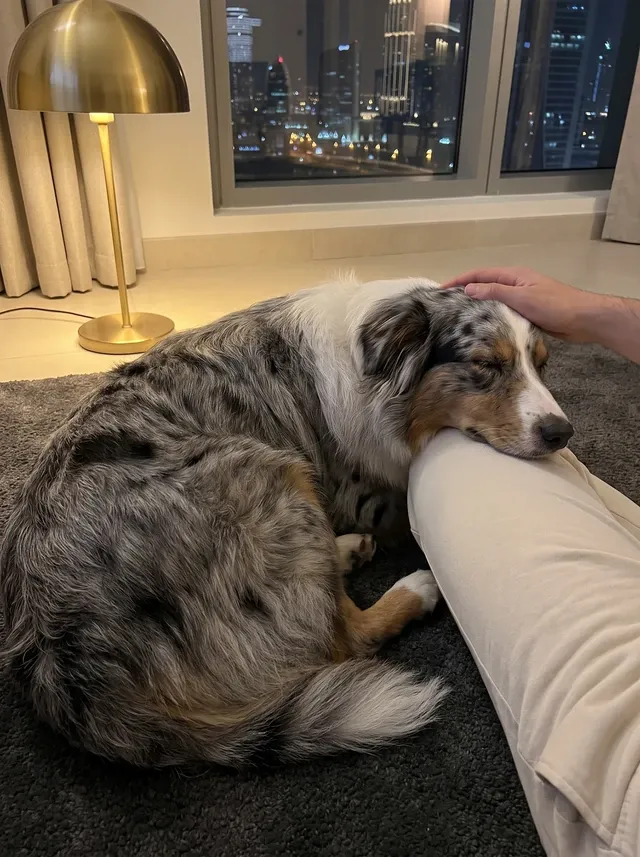
Australian Shepherd in Dubai, a blue merle adult asleep on a dark rug, chin on a person's knee, the lit skyline behind
How long do Australian Shepherds live?

Australian Shepherds usually live 13 to 15 years. In a small UK study of about 220 Australian Shepherds, half lived to nearly 14.

How big does an Australian Shepherd dog get?

An adult Australian Shepherd usually weighs 18 to 29.5 kg: males 22.5 to 29.5 kg, females 18 to 25 kg.

Do Australian Shepherds shed?

Australian Shepherds shed moderately, with a heavier moult once or twice a year. Brush them several times a week.

What colours do Australian Shepherds come in?

Australian Shepherds come in blue merle, red merle, black or red, each with or without white markings and copper points.

What is MDR1 in Australian Shepherds?

MDR1 drug sensitivity is a gene change many Australian Shepherds carry. For an affected dog, ordinary doses of some medicines, including ivermectin (a common parasite treatment) and loperamide (an anti-diarrhoea medicine), can be fatal.

Do Australian Shepherds nip children?

Some Australian Shepherds nip at children's heels: it is the herding job aimed at the wrong flock. Skip the chasing games, keep an adult watching, and give them a tug toy to grip instead.

Are Australian Shepherds actually Australian?

No. Despite the name, the Australian Shepherd was developed in the western United States as a herding dog, from British herding dogs.

Can an Australian Shepherd live in Dubai?

Yes, an Australian Shepherd can live in Dubai with an active family and access to outdoor space. From May to September, walk before sunrise and after dark, and give them twenty minutes of brain work every day.

Worried about them? Contact your vet today.