We’re hiring people who love them like we do. Join us careers@pawsandco.comSee open roles
UAE Government Licensed MOCCAE
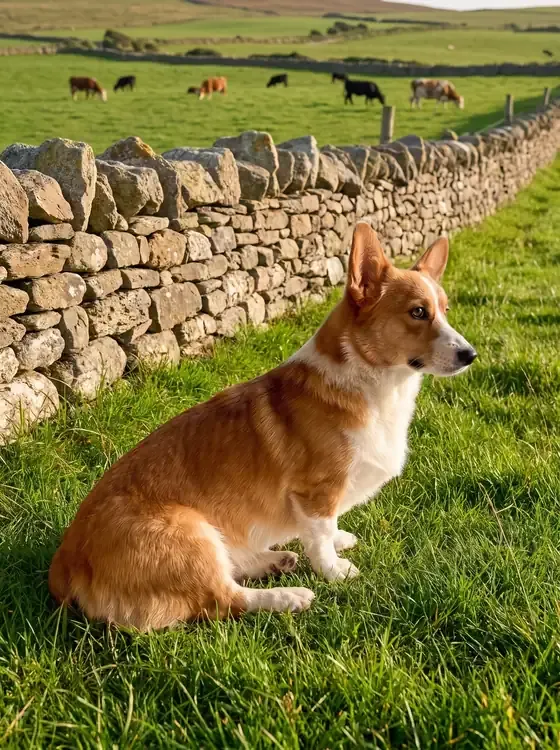
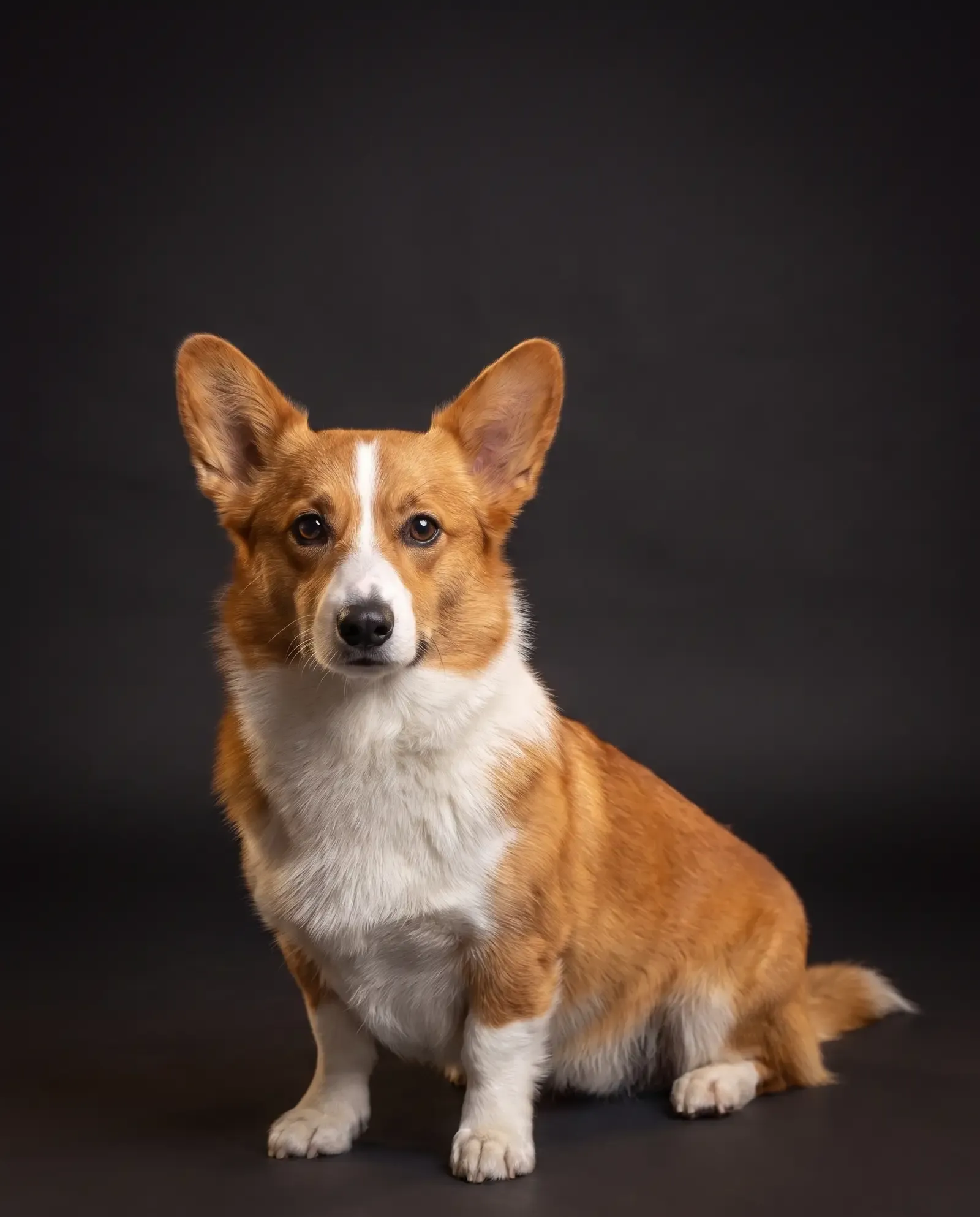
Pembroke Welsh Corgi in Dubai, studio portrait of a red and white adult sitting calmly

Breed guide  ·  Dogs

Pembroke Welsh Corgi

She thinks she's a Great Dane. I carry her down the stairs anyway.

Lifespan
12 to 15 years
Size
Medium
Weight
Up to 13.6 kg
Shedding
Heavy

Last updated 14 October 2026

Join the founding families. AED 1,999 of essential care for AED 199.

No payment now. We'll be in touch by email and WhatsApp as we open enrolment.

✓
Thank you.

We will be in touch soon to confirm.

Corgi traits

What they brought with them.

Tap a card to see what is going on.

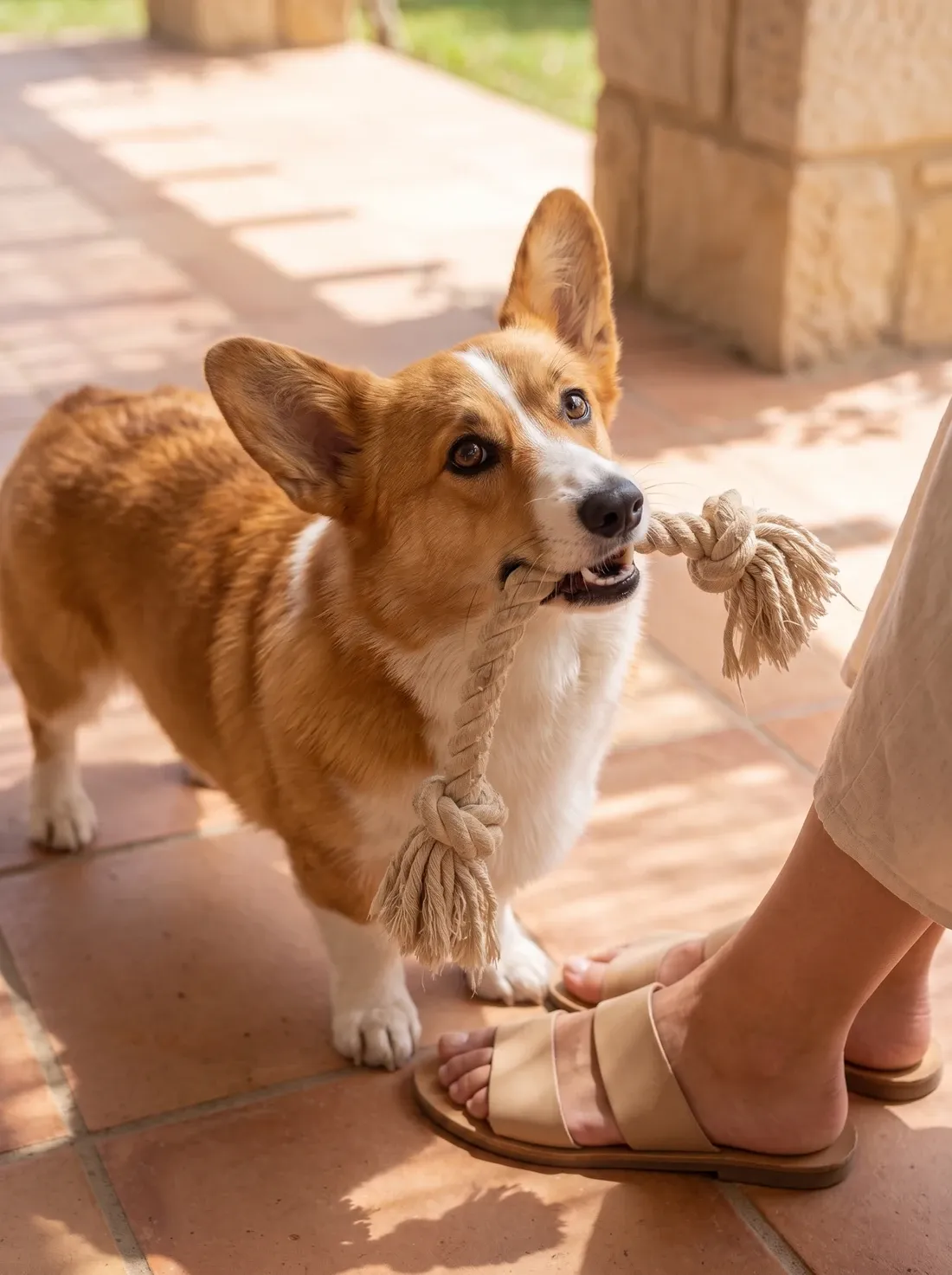
Pembroke Welsh Corgi, a red and white adult holding a rope toy beside a pet parent's sandalled feet

At home

Why does my Corgi nip my ankles?

Ankles, trouser legs, and the children whenever they run.

What's going onCorgis drove cattle by nipping their heels. At home it is your ankles and the children's, and on a child it is still a bite. Move every nip on to a toy, and stop the chasing games.

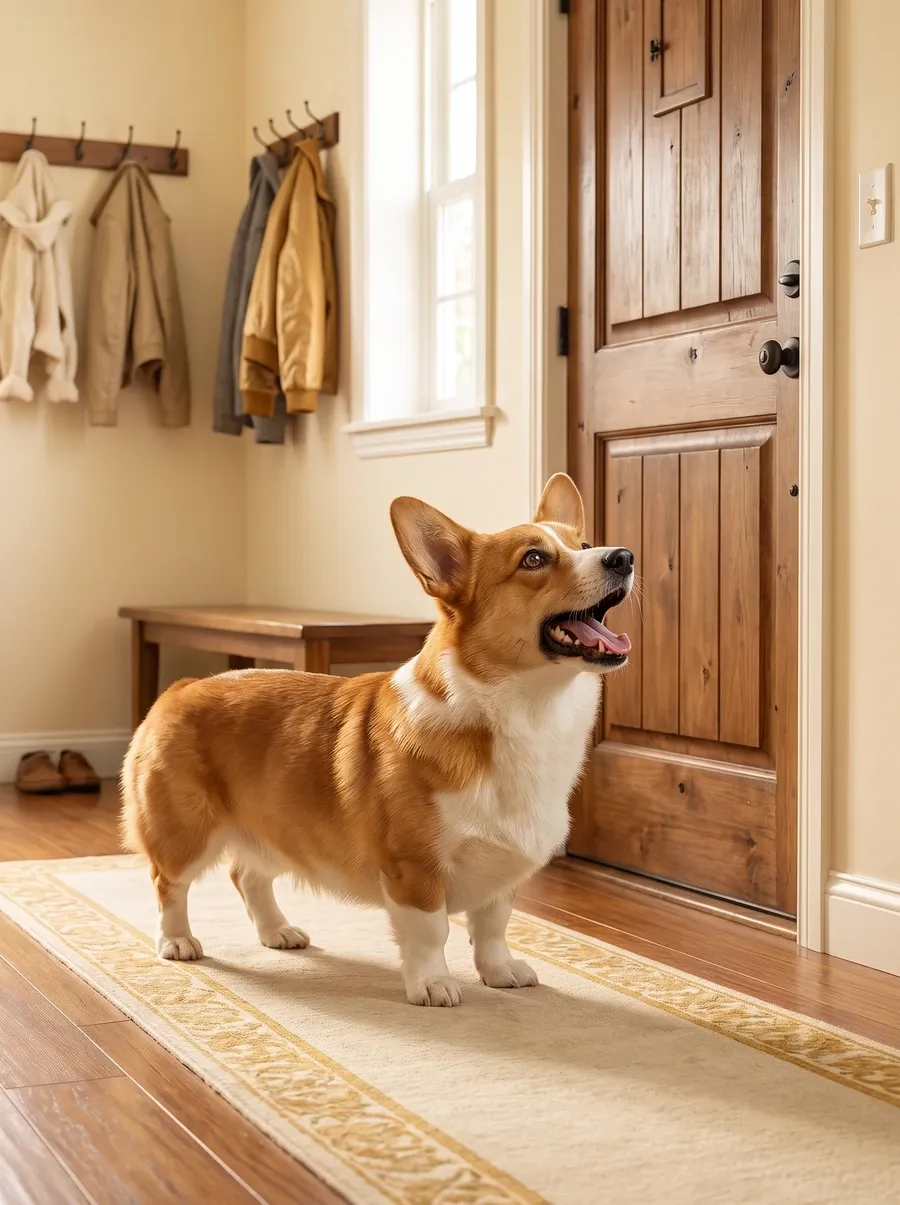
Pembroke Welsh Corgi, a red and white adult barking at the front door in a hallway

At home

Why does my Corgi bark at everything?

Visitors, the lift and the door, all announced.

What's going onThey were bred to bark cattle along and warn the farm. Teach a quiet cue early, and reward the silence the moment it comes.

Pembroke Welsh Corgi, a red and white adult at the top of a carpeted ramp beside a linen sofa

At home

Can my Corgi jump on the sofa?

Up on the sofa, down off the bed, straight off the step.

What's going onA long back on short legs puts them at risk of a slipped disc. Put ramps up to the sofa and the bed, lift them with one hand under the chest and one under the back end, and keep them lean.

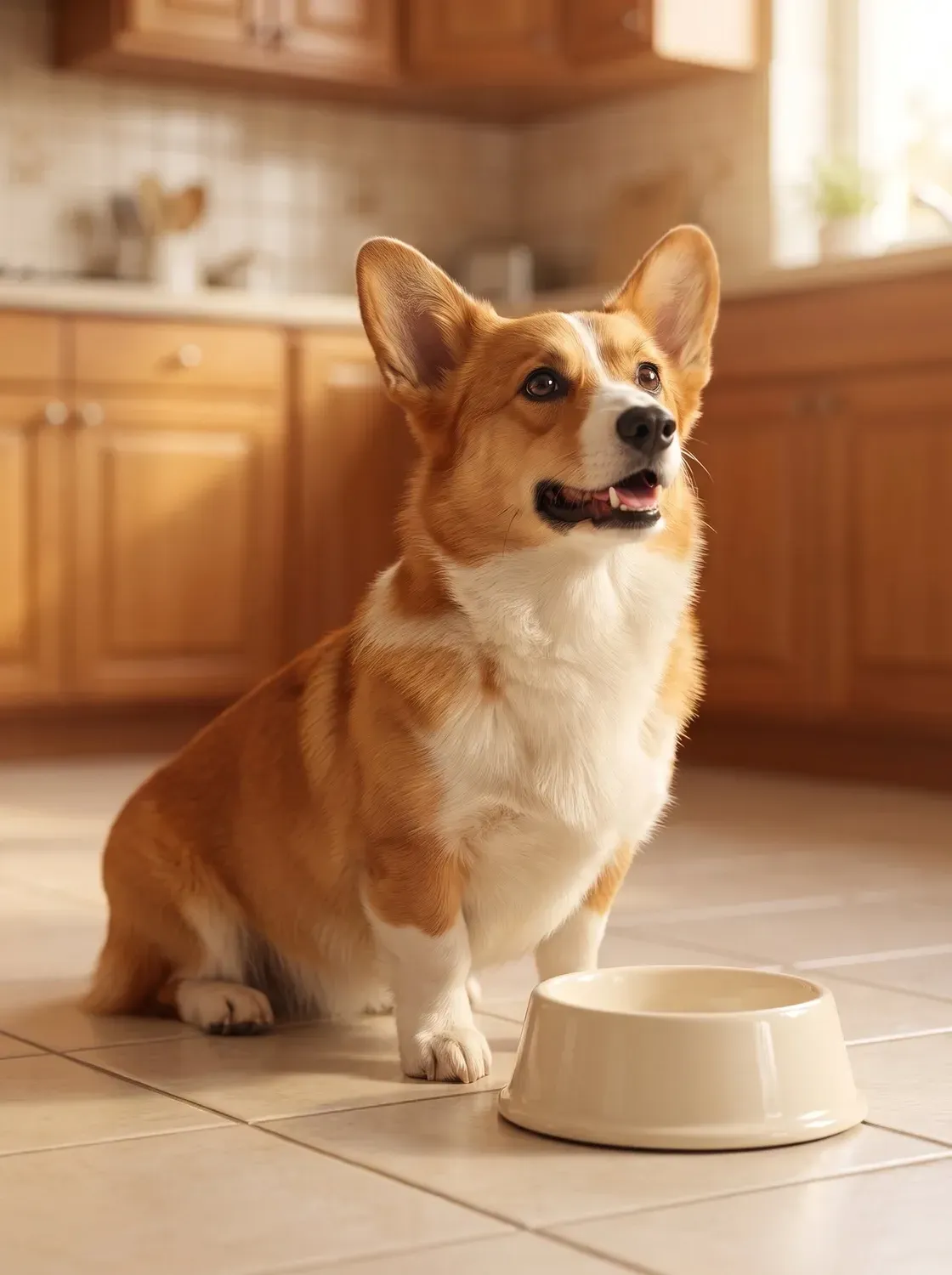
Pembroke Welsh Corgi, a red and white adult sitting by an empty food bowl on a kitchen floor, looking up

At home

Why is my Corgi always hungry?

Sitting by the bowl an hour before dinner.

What's going onCorgis are food-driven and put weight on fast, and every extra kilo loads their back. Weigh their food, count treats inside the daily amount, and weigh them every month.

Pembroke Welsh Corgi, a red and white adult nosing a large herding ball across a lawn by bougainvillea

At home

Why does my Corgi herd the vacuum?

Circling the vacuum, rushing the lift doors, rounding up the children.

What's going onFast, unpredictable movement is the trigger the whole job was built on. They are trying to control it, not hurt it. Give them movement they are allowed to control, like a herding ball.

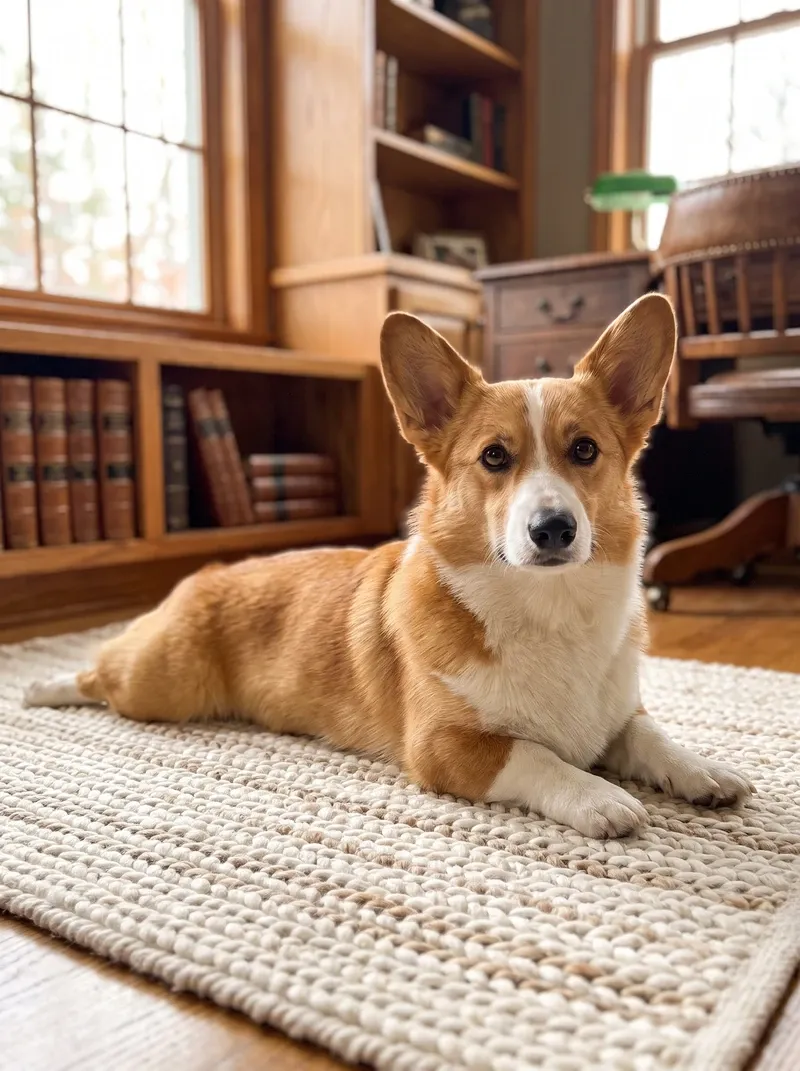
Pembroke Welsh Corgi, a red and white adult lying in a sploot on a woven mat in a quiet study

At home

Why won't my Corgi settle?

Back from the walk and ready for more.

What's going onThey were bred to work all day, and nobody bred in an off switch. Ten to twenty minutes of training or sniffing out their dinner tires them more than a run, and a mat they are rewarded for lying on teaches them to rest.

A Corgi in Dubai

The bit nobody tells you.

Their ground

Built for: Welsh fields.

In Dubai: Marble floors, with a sofa and a bed to leap off.

Their herd

Built for: Cattle, nipped at the heels.

In Dubai: A family instead of a herd.

Their dinner

Built for: After a day driving cattle.

In Dubai: Food that arrives without any work.

The nipping, the barking and the weight mostly come from that gap, and their back pays for the jumping.

You cannot give them a herd of cattle. You can give them a job, and the ten things below are how.

Your plan is built around their breed: the risks on a Corgi's record at every age, and the care that goes with each one.

Join the founding families. AED 1,999 of essential care for AED 199.

Daily care for a Corgi

Ten things that make their life better.

Many of them are free, and most matter at every age.

  1. Short legs keep them close to hot pavements, and their double coat holds the heat.

    Every age, most of all puppies and from 7 years

    Free

    Why

    Short legs keep them close to hot pavements, and their double coat holds the heat.

    What to do

    From May to September, walk before sunrise and after dark. Back of your hand on the pavement for five seconds first. Keep walks short and carry water. Brush the coat several times a week, and contact your vet before anyone clips it.

  2. They were bred to nip heels. On a child's ankle it is a bite.

    Every age, at its worst from 6 months to 2 years

    Free

    Why

    They were bred to nip heels. On a child's ankle it is a bite.

    What to do

    Swap chasing games for calm ones when children are running, with an adult always nearby. Teach children to stand still and fold their arms. Move every nip on to a toy, and contact your vet if the nips get harder.

  3. Shouting at a barking dog sounds like barking back.

    Every age, most of all 6 months to 2 years

    Free

    Why

    Shouting at a barking dog sounds like barking back.

    What to do

    Train with food and play. Reward them the moment they stop barking, and add a quiet cue. Plan a quiet room for firework nights, and contact your vet if a fear of noise is new or growing.

  4. Weight is the biggest thing you can change for their back, and weakness in the back legs can creep in later.

    Every age, most of all from 4 years

    Free

    Why

    Weight is the biggest thing you can change for their back, and weakness in the back legs can creep in later.

    What to do

    Weigh them monthly and feel for their ribs once a week. Watch how they walk: scuffed back toenails, a swaying back end or a foot that knuckles over are worth telling your vet about.

  5. Progressive Retinal Atrophy (gradual loss of sight) is on their record from puppyhood.

    From 1 year, yearly

    FreeIn your plan

    Why

    Progressive Retinal Atrophy (gradual loss of sight) is on their record from puppyhood.

    What to do

    Book the yearly eye evaluation from age one. At home, watch for hesitation on the stairs at night or bumping into furniture in dim light.

  6. A bored Corgi barks, nips and begs.

    Every age, most of all 6 months to 2 years

    Under AED 150

    Why

    A bored Corgi barks, nips and begs.

    What to do

    Ten to twenty minutes a day: short training, a puzzle feeder, part of their dinner scattered to sniff out. It turns their food drive into work.

  7. They will keep watch over the whole flat if nobody teaches them to rest.

    Every age, most of all 6 months to 2 years

    Under AED 200

    Why

    They will keep watch over the whole flat if nobody teaches them to rest.

    What to do

    Reward them for lying on a low mat or bed, on the floor, not the sofa. Build the time up slowly, and after a busy day, give them a quiet one.

  8. The drive to move things is still there in a short-legged body.

    Every age, gentler from 7 years

    Under AED 250

    Why

    The drive to move things is still there in a short-legged body.

    What to do

    A herding ball at their size, or tug with a clear start and stop. Keep play low: skip high jumps and leaping for toys. When the vacuum comes out, put them in another room while you teach them to wait.

  9. They lunge at wheels, and a collar pulls on the neck of a long-backed dog.

    Every age, most of all 6 months to 2 years

    Under AED 150

    Why

    They lunge at wheels, and a collar pulls on the neck of a long-backed dog.

    What to do

    Walk them on a harness, not a collar, and on the lead near traffic. Reward a sit as bikes pass. Carry them in and out of the lift if the gap worries them.

  10. Intervertebral Disc Disease (IVDD, a slipped disc in the back) is on their record from puppyhood, and extra weight makes it worse.

    Every age, starting the day they come home

    Ramps or steps at home: AED 200 to 600In your plan

    Why

    Intervertebral Disc Disease (IVDD, a slipped disc in the back) is on their record from puppyhood, and extra weight makes it worse.

    What to do

    Ramps or steps to the sofa and bed. Lift them with one hand under the chest and one under the back end. Keep them lean, and book their hip evaluation before they turn two.

Two of these are in your plan. The rest you can do at home.

Join the founding families. AED 1,999 of essential care for AED 199.

Corgi health by age

Their health, at every age.

In a Corgi, a yelp when lifted or a change in how they walk is often the first sign that something is wrong, and a little extra weight is the risk to watch. Choose their age to see what to watch for, and the care that goes with it.

Pembroke Welsh Corgi, an older red and white dog with a greying face resting on a padded bed

How old are they?

Their age

Corgi Puppy health

the first six months

What to watch for

  1. Early or congenital expression of Intervertebral Disc Disease (IVDD, slipped disc in the back)
  2. Developmental or early clinical signs of Hip Dysplasia (HD, poorly fitting hip joint)
  3. Excess growth rate and early adiposity (putting on weight too early)
  4. Congenital or early inherited ocular disease related to Progressive Retinal Atrophy (PRA, gradual loss of sight)
  5. Retained deciduous teeth, malocclusion (teeth that do not meet properly) or early dental crowding

The care that goes with it

  1. Core vaccinations, microchip and Dubai Municipality registration
  2. Deworming, and flea and tick prevention
  3. Dental, growth and nutritional evaluation, and early socialisation
  4. Intervertebral Disc Disease (IVDD, slipped disc in the back) screening, as a first baseline
  5. Early follow-up for any signs of Hip Dysplasia (HD, poorly fitting hip joint)
The full care detail
  • Core vaccination programme, microchipping and Dubai Municipality registration. Titre testing discussion where clinically appropriate; not a substitute for completing the core vaccine series
  • Deworming and external parasite prevention tailored to Dubai exposure
  • Body Condition Score (BCS, a check on whether they are the right weight), Muscle Condition Score (MCS, a check on their muscle), dental, growth and nutritional evaluation, and early socialisation
  • Baseline screening focused on Intervertebral Disc Disease (IVDD)
  • Early diagnostic follow-up for signs suggestive of Hip Dysplasia (HD)

Their age

Corgi Juvenile health

6 months to 2 years

What to watch for

  1. Young-dog presentation of Intervertebral Disc Disease (IVDD, slipped disc in the back)
  2. Emerging Hip Dysplasia (HD, poorly fitting hip joint) with exercise intolerance or lameness
  3. Obesity and poor body condition
  4. Progression or first clinical detection of Progressive Retinal Atrophy (PRA, gradual loss of sight)
  5. Early periodontal disease (gum disease) and dental crowding

The care that goes with it

  1. Ramps and steps instead of jumping off furniture, to protect the long spine
  2. A lean, healthy weight, the biggest thing you can change for a slipped disc
  3. Neutering or spaying, timed for a medium breed
  4. Hip evaluation (OFA or PennHIP, x-ray schemes that grade how well the hips fit) by age 2
  5. Lameness that keeps coming back, properly investigated
The full care detail
  • Prevent jumping from furniture; install ramps and steps to protect the elongated spine from Intervertebral Disc Disease (IVDD)
  • Maintain strict healthy weight, obesity is the single greatest modifiable risk factor for IVDD
  • Neuter/spay timing discussion that accounts for medium-breed growth and disease risk
  • Hip evaluation (OFA or PennHIP) by age 2; maintain lean body weight to reduce hip stress
  • Investigate recurrent signs of lameness

Their age

Corgi Young Adult health

2 to 4 years

What to watch for

  1. Intervertebral Disc Disease (IVDD, slipped disc in the back)
  2. Hip Dysplasia (HD, poorly fitting hip joint)
  3. Obesity
  4. Progressive Retinal Atrophy (PRA, gradual loss of sight)
  5. Dental Disease

The care that goes with it

  1. Ramps and steps kept in place as they reach full size
  2. Their lean weight kept steady, for the sake of their back
  3. Hip evaluation (OFA or PennHIP, x-ray schemes that grade how well the hips fit) by age 2
  4. Annual ophthalmic evaluation (eye exam) from age 1
  5. Daily tooth brushing, and a professional dental clean every 6 to 12 months
The full care detail
  • Prevent jumping from furniture; install ramps and steps to protect the elongated spine from Intervertebral Disc Disease (IVDD)
  • Maintain strict healthy weight, obesity is the single greatest modifiable risk factor for IVDD
  • Hip evaluation (OFA or PennHIP) by age 2; maintain lean body weight to reduce hip stress
  • Annual ophthalmic evaluation for Progressive Retinal Atrophy (PRA) from age 1
  • Daily dental brushing; professional dental cleaning every 6-12 months

Their age

Corgi Prime Adult health

4 to 7 years

What to watch for

  1. Intervertebral Disc Disease (IVDD, slipped disc in the back), Progressive
  2. Obesity (Progressive)
  3. Hip Dysplasia (HD, poorly fitting hip joint), Progressive
  4. Degenerative Myelopathy (DM, progressive weakness in the back legs)
  5. Dental Disease (Advanced)

The care that goes with it

  1. An MRI scan at the first sign of a slipped disc, and surgery within 24 to 48 hours if it is needed
  2. Monthly weigh-ins, and a weight-management diet if needed
  3. Degenerative Myelopathy (DM) genetic testing, and physiotherapy to keep them moving if positive
  4. Hip management: joint supplements, physiotherapy and weight control
  5. Annual dental x-rays, and damaged teeth removed early
The full care detail
  • MRI at first sign of Intervertebral Disc Disease (IVDD) symptoms; surgical decompression within 24-48 hours maximises recovery
  • Monthly weigh-ins; transition to a weight-management diet if obesity is confirmed
  • Degenerative Myelopathy (DM) genetic test (SOD1 gene); physiotherapy to maintain mobility if positive
  • Hip management: joint supplements, physiotherapy, and weight management
  • Annual dental X-rays; extract compromised teeth to prevent systemic infection

Their age

Corgi Senior health

7 to 10 years

What to watch for

  1. Degenerative Myelopathy (DM, progressive weakness in the back legs), Progressive
  2. Intervertebral Disc Disease (IVDD), Chronic
  3. Heart Disease
  4. Kidney Disease
  5. Arthritis

The care that goes with it

  1. Degenerative Myelopathy (DM) care: physiotherapy, hydrotherapy, and bladder and bowel support
  2. Spinal care for IVDD: physiotherapy and acupuncture
  3. An echocardiogram (an ultrasound scan of the heart) every year from age 7
  4. Renal panel (a kidney blood test) twice a year, and a senior diet
  5. Joint supplements and gentle, low-impact exercise that spares the spine
The full care detail
  • Degenerative Myelopathy (DM) management: physiotherapy, hydrotherapy, and bladder/bowel support
  • Ongoing spinal management: physiotherapy, acupuncture for Intervertebral Disc Disease (IVDD) maintenance
  • Annual echocardiogram from age 7; cardiac medication when indicated
  • Bi-annual renal panel; transition to senior diet with controlled phosphorus and sodium
  • Joint supplements and gentle, low-impact exercise to manage arthritis without spinal stress

Their age

Corgi Geriatric health

10 years and over

What to watch for

  1. Degenerative Myelopathy (DM), Severe
  2. Congestive Heart Failure
  3. Chronic Kidney Disease (CKD, long-term kidney failure)
  4. Severe Arthritis
  5. Cancer

The care that goes with it

  1. Mobility support: a wheelchair cart, slings and physiotherapy for weak back legs
  2. Bladder and bowel support
  3. Orthopaedic bedding, ramps and non-slip floors
  4. Quality-of-life assessment
  5. Palliative care (comfort care)
  6. End-of-life planning with your veterinary team
The full care detail
  • Mobility support: wheelchair cart, slings, and physiotherapy for dogs with hind limb weakness
  • Bladder and bowel management support for dogs with neurological incontinence
  • Orthopaedic bedding, ramps, and non-slip surfaces to support mobility safely
  • Quality-of-life assessments
  • Tailored palliative and comfort-focused care plan
  • Compassionate end-of-life planning with your veterinary team

Breed predispositions indicate an increased risk rather than certainty of disease. What is right for them always comes from their own history and an evaluation.

Getting a Corgi puppy in Dubai

Before they come home.

Pembroke Welsh Corgi in Dubai, a red and white adult standing on a park lawn with date palms behind

Corgi types: Pembroke or Cardigan

Two Welsh Corgis, two breeds

The Pembroke and the Cardigan were shown together until 1934, when the Kennel Club made them separate breeds. This guide is about the Pembroke, the shorter-bodied of the two.

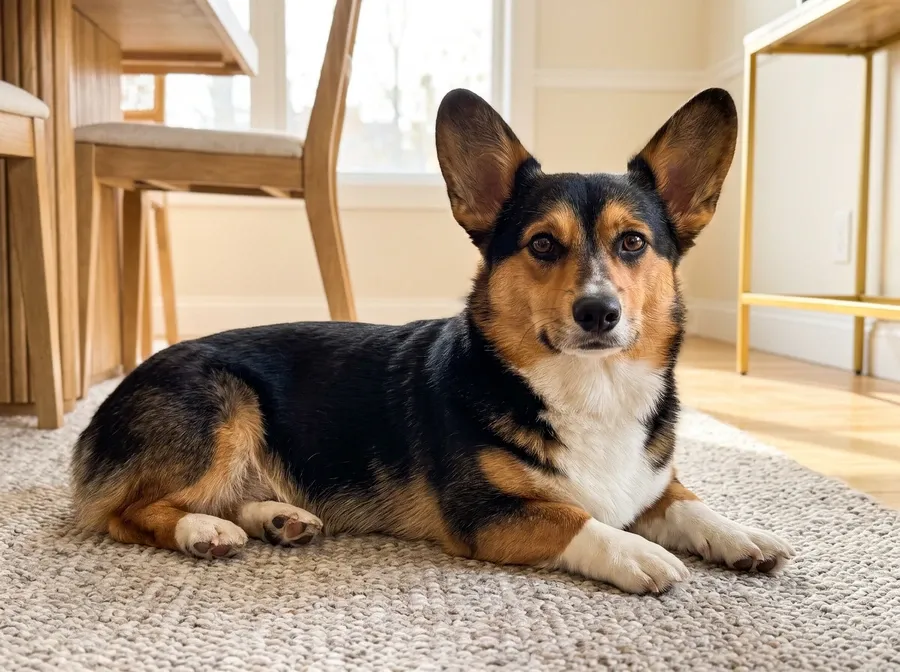
Pembroke Welsh Corgi, a black and tan adult lying on a woven rug in a dining room

Colours

Red, sable, fawn, or black and tan

Pembrokes come in warm shades of red, sable and fawn, or black and tan, with or without white markings.

Pembroke Welsh Corgi, a red and white puppy asleep in a pet parent's lap on a daybed by a window

The first six months

Corgi puppy care, month by month

Their full vaccination course, microchip and Dubai Municipality registration come first. Set up ramps before they learn to jump, weigh their food from the first day, and keep summer time outside short.

Puppy health, 0 to 6 months
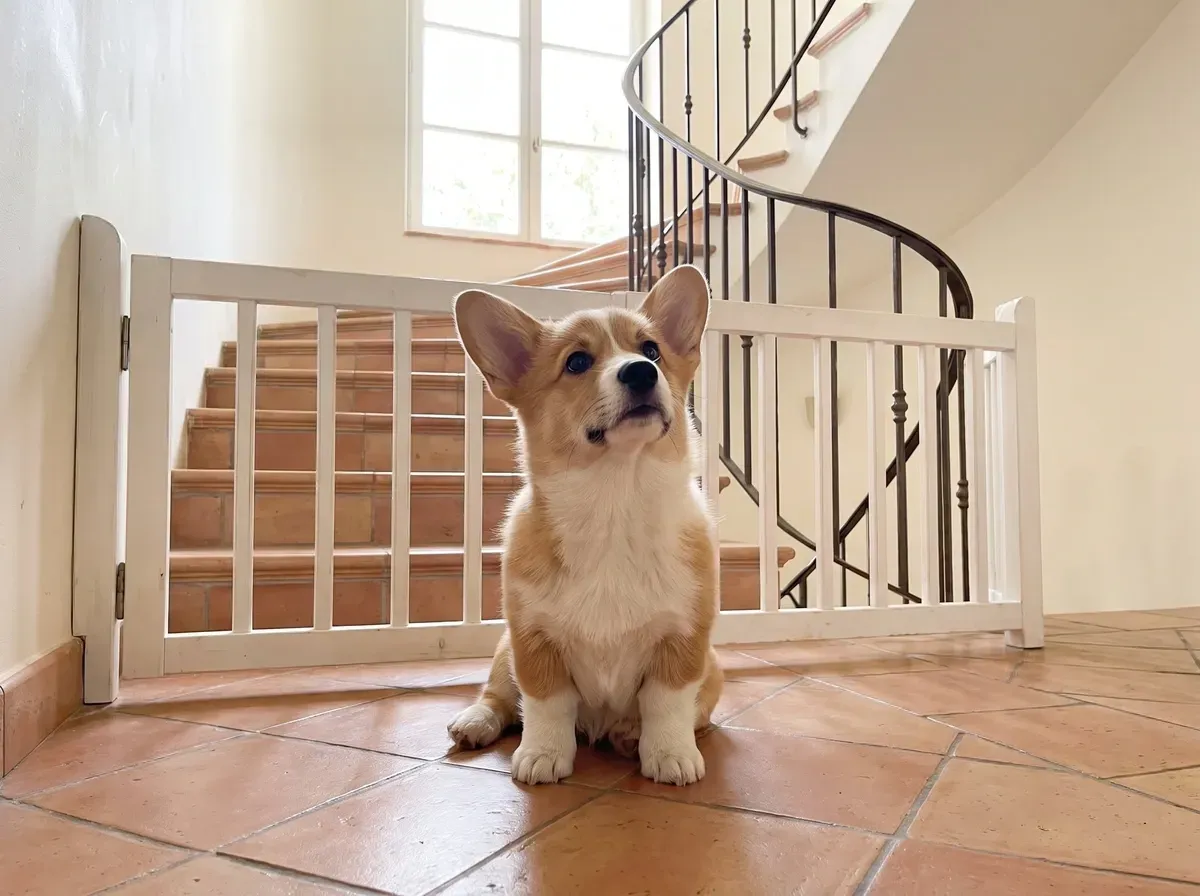
Pembroke Welsh Corgi, a puppy sitting on terracotta tiles by a gated staircase

Getting the home ready

Ramps before habits

Put steps or a ramp up to the sofa and the bed, rugs down on marble, and a baby gate at the stairs, so a young back never learns to leap.

Ten things that make their life better
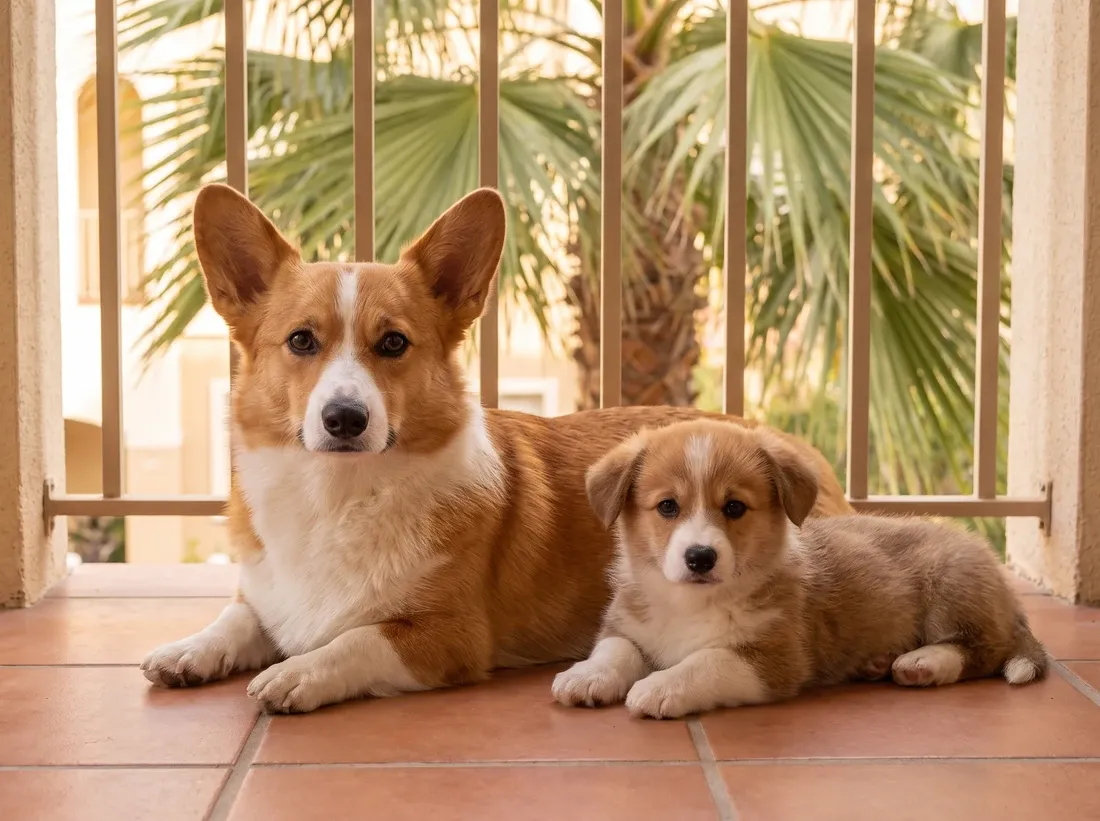
Pembroke Welsh Corgi in Dubai, a mother lying with a puppy on a shaded balcony, palms beyond the railing

Before you commit

Ask about backs, hips and eyes

Ask the breeder about back problems in the family, whether both parents have had their hips scored and their eyes evaluated, and whether they have had the Degenerative Myelopathy genetic test.

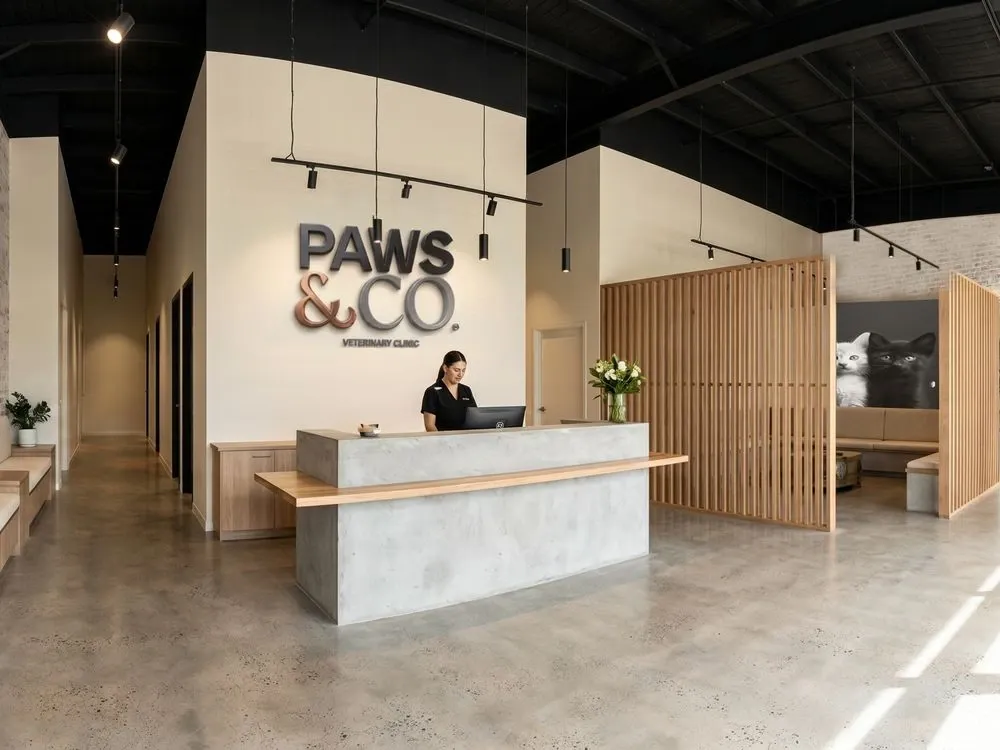
The reception of a Paws & Co clinic, with long cream benches and a stone reception desk

Before the clinics open

Join the founding families

AED 1,999 of essential care for AED 199. No payment now.

When to see a vet

When it is not behaviour.

Pembroke Welsh Corgi, a red and white adult on a timber table, a vet in taupe scrubs with a hand on the chest

Some of this is not a training problem, and treating it like one wastes time your dog may not have. If they are distressed when you leave, if they growl or guard their food, their toys or you, if they are frightened on the lead, or if anything about them changes suddenly at any age, contact your vet the same day. A tip from a website, ours included, is not the answer. If it cannot wait, contact your nearest emergency vet now.

With a Corgi, watch their back and their back legs. If a Corgi yelps when picked up, will not jump or climb, hunches, or suddenly goes wobbly or weak behind, contact your vet now, because with a slipped disc speed matters. Grumpiness about being touched can be back pain too. In an older Corgi, scuffing the back feet or a swaying walk is not just age. Contact your vet the same day. Bloat (GDV, a twisted stomach) can happen in any dog, though it is most common in large, deep-chested breeds. A swollen, tight belly, retching with nothing coming up, sudden restlessness or drooling is an emergency: contact your vet now.

They'll keep thinking they're a Great Dane. If they yelp when you lift them, call your vet.
Corgi history

Before they were yours.

  1. Pembroke Welsh Corgi history, an engraving of a man and dog driving cattle, Cowbridge, Wales, about 1830
    A man and his dog with cattle near Cowbridge, Wales. Engraving, about 1830. National Library of Wales.

    The beginning

    Driving cattle in Pembrokeshire

    The Pembroke Welsh Corgi was a farm dog in Wales, driving cattle by nipping their heels. They were so low to the ground that the kick went over their head.

    What they still carryThe nip, the bark and a big dog's confidence on short legs.

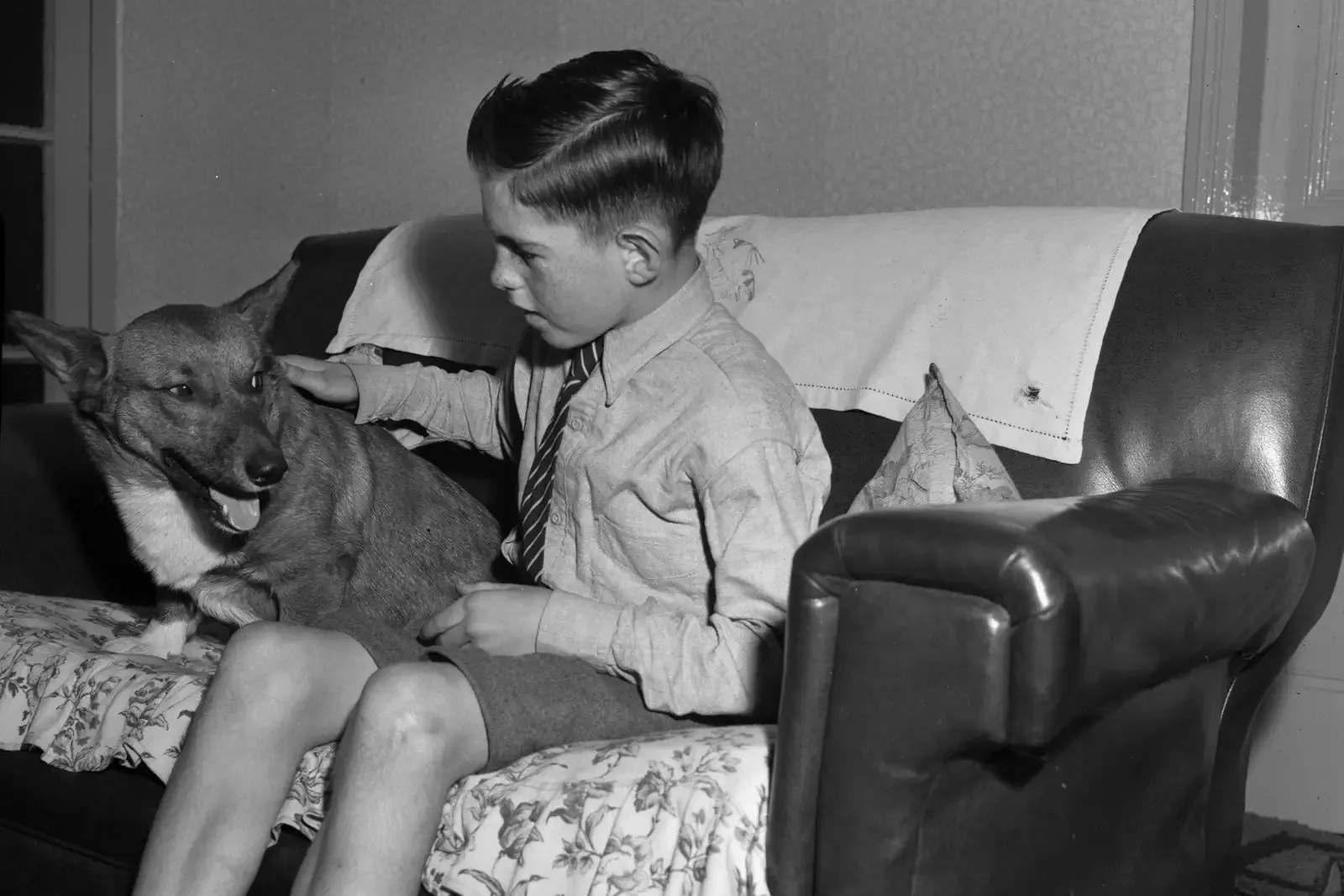
  2. Pembroke Welsh Corgi history, a young breeder on a sofa with one of the dogs, St Martin's, Wales, 1956
    A young Corgi breeder with one of his dogs, St Martin's, Wales, 1956. Photo: Geoff Charles, National Library of Wales. Photo: Geoff Charles, National Library of Wales, CC BY-SA 4.0, via Wikimedia Commons (cropped)

    1928 to 1934

    A breed of their own

    The Kennel Club awarded Corgis Challenge Certificates from 1928, and made the Pembroke a separate breed from the Cardigan in 1934. The American Kennel Club registered its first Pembrokes the same year.

    What they still carryTheir own breed at last, with the cattle instinct still in them.

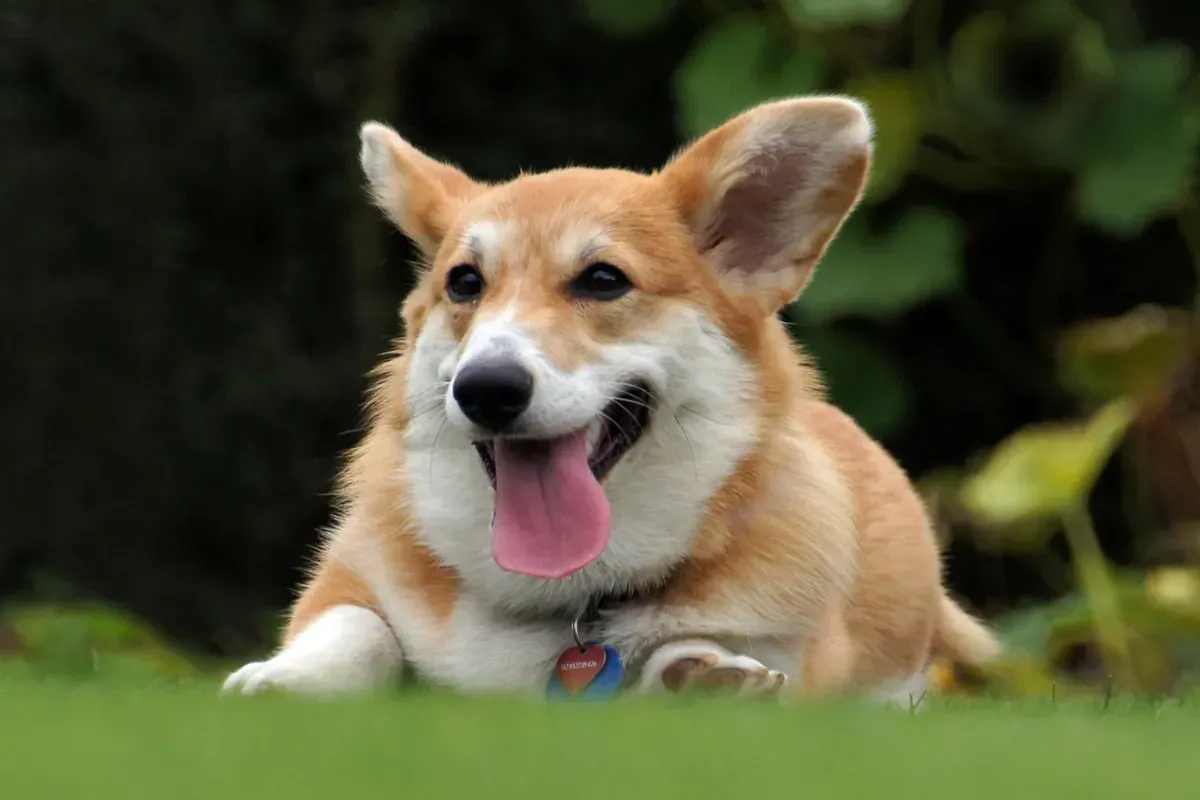
  3. Pembroke Welsh Corgi history, a red and white adult lying on a lawn with mouth open, 2013
    A Pembroke Welsh Corgi, 2013. Photo: Bernard Spragg.

    1933 onwards

    The royal Corgis

    In 1933 King George VI gave his daughter, the future Queen Elizabeth II, a Pembroke called Dookie, and the breed became famous as the royal family's dog.

    What they still carryA family dog, with a droving dog's instincts underneath.

  4. Pembroke Welsh Corgi history, the breed today, a red and white adult lying on a sandy Dubai villa path

    Today

    In Dubai

    Here Corgis live in flats and villas, on marble floors and close to the air conditioning.

    What they still carryA cattle dog with a long back and short legs, with a sofa to jump off.

Corgi questions

The ones you type at midnight.

Most of these get asked late at night, by someone watching their dog and not sure what they are seeing.

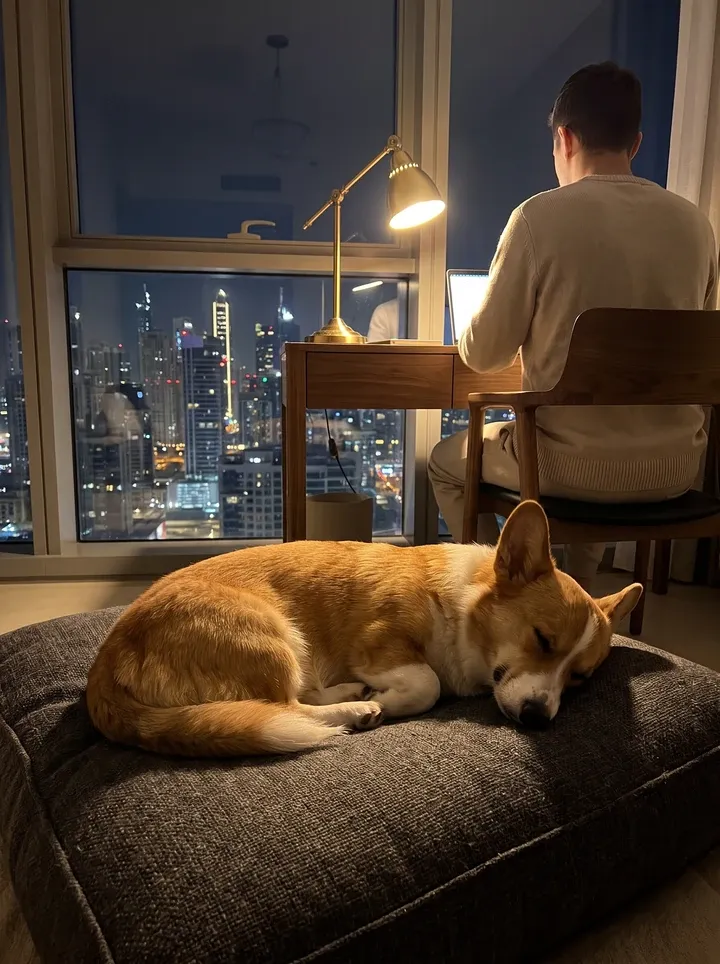
Pembroke Welsh Corgi in Dubai, asleep on a floor cushion as a pet parent works at a desk at night, towers beyond
What is the Corgi lifespan?

Corgis usually live 12 to 15 years. In a UK study of more than 600 Pembroke Corgis, half lived past 13.

How big is a Pembroke Welsh Corgi?

A Pembroke Welsh Corgi weighs up to 13.6 kg for males and 12.7 kg for females. Long in the back and short in the leg, every extra kilo loads their spine.

Do Corgis shed a lot?

Yes. Corgis shed heavily all year round from a thick double coat. Brush them several times a week to keep on top of it.

Is a Corgi dog hypoallergenic?

No. A Corgi dog sheds heavily all year, and the American Kennel Club says no dog is 100% hypoallergenic.

How do I keep a Corgi in Dubai cool?

Keep a Corgi in Dubai cool with walks before sunrise and after dark from May to September. Short legs keep them close to hot pavements. Brush the double coat often, and contact your vet before anyone clips it.

What is the difference between a Pembroke and a Cardigan Welsh Corgi?

The Pembroke and the Cardigan Welsh Corgi are two separate breeds, split by the Kennel Club in 1934. The Pembroke is the shorter-bodied of the two.

Why does my Corgi nip?

Corgis nip because they were bred to drive cattle by nipping their heels. On a child's ankle it is still a bite, so stop chasing games and move every nip on to a toy.

What are the signs of a slipped disc in a Corgi?

If a Corgi yelps when picked up, will not move, hunches, or goes wobbly or weak behind, contact your vet now. With a slipped disc, speed matters.

Worried about them? Contact your vet today.