We’re hiring people who love them like we do. Join us careers@pawsandco.comSee open roles
UAE Government Licensed MOCCAE
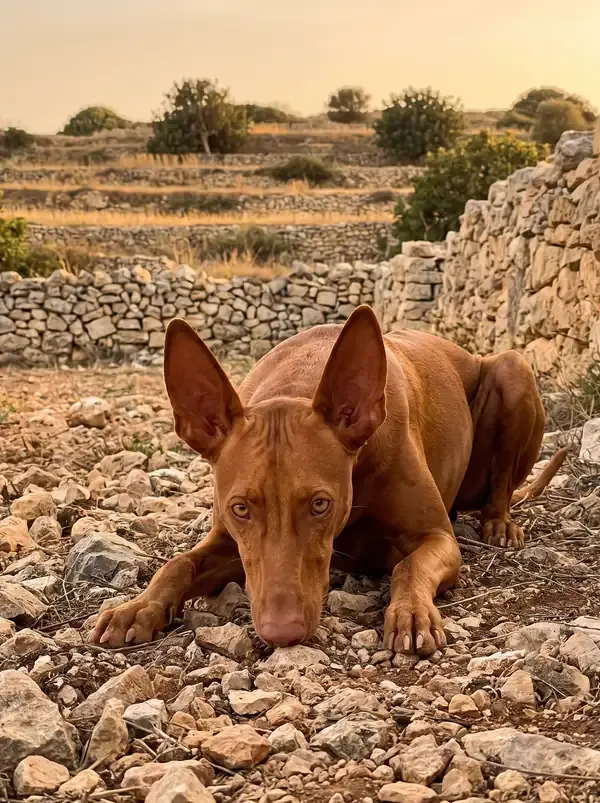
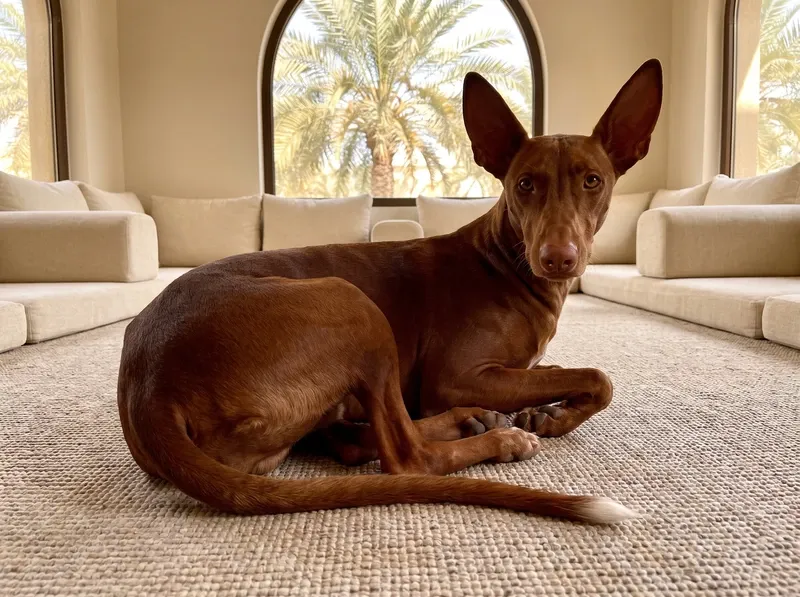
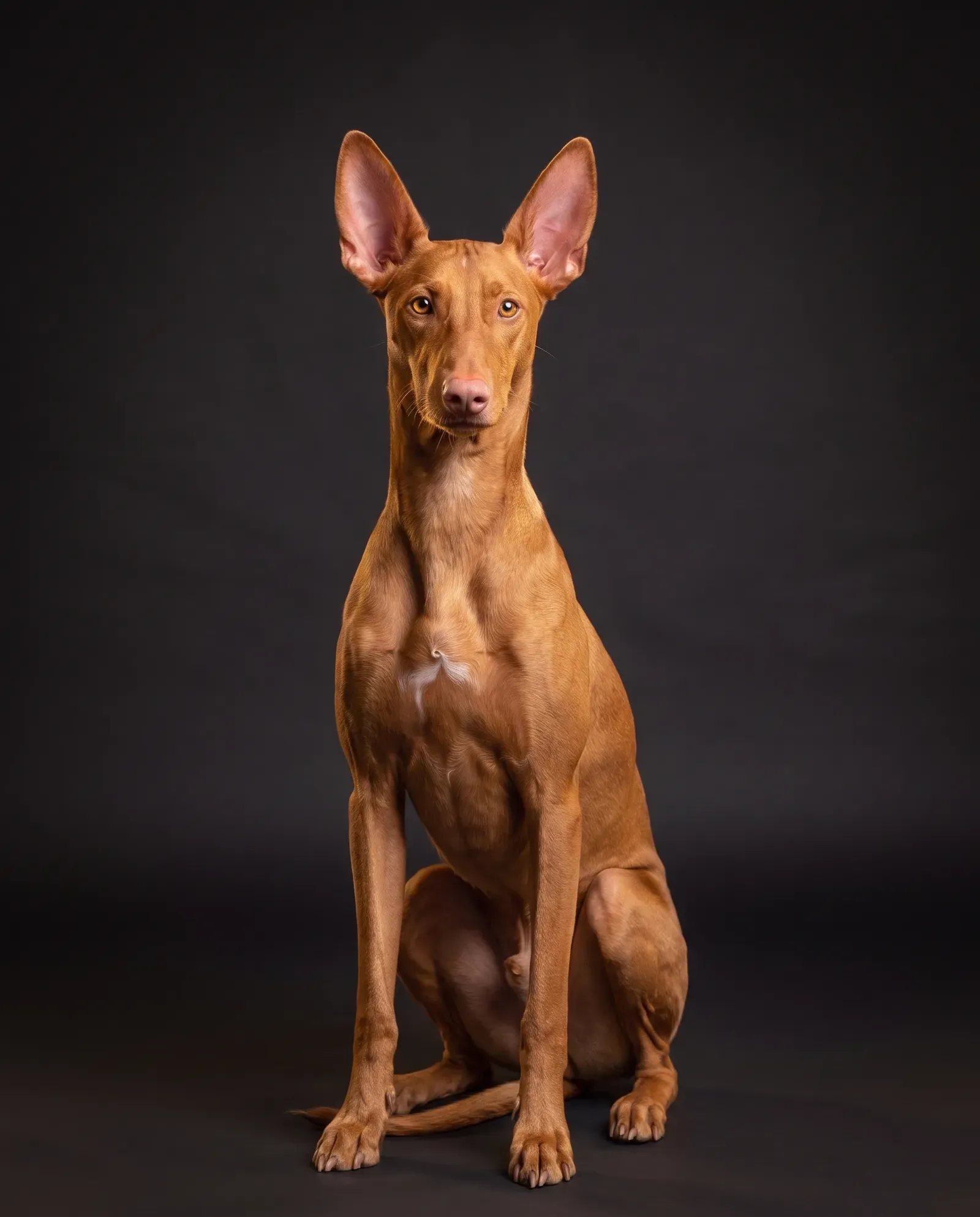
Pharaoh Hound in Dubai, studio portrait of an alert red-tan adult sitting, ears up

Breed guide  ·  Dogs

Pharaoh Hound

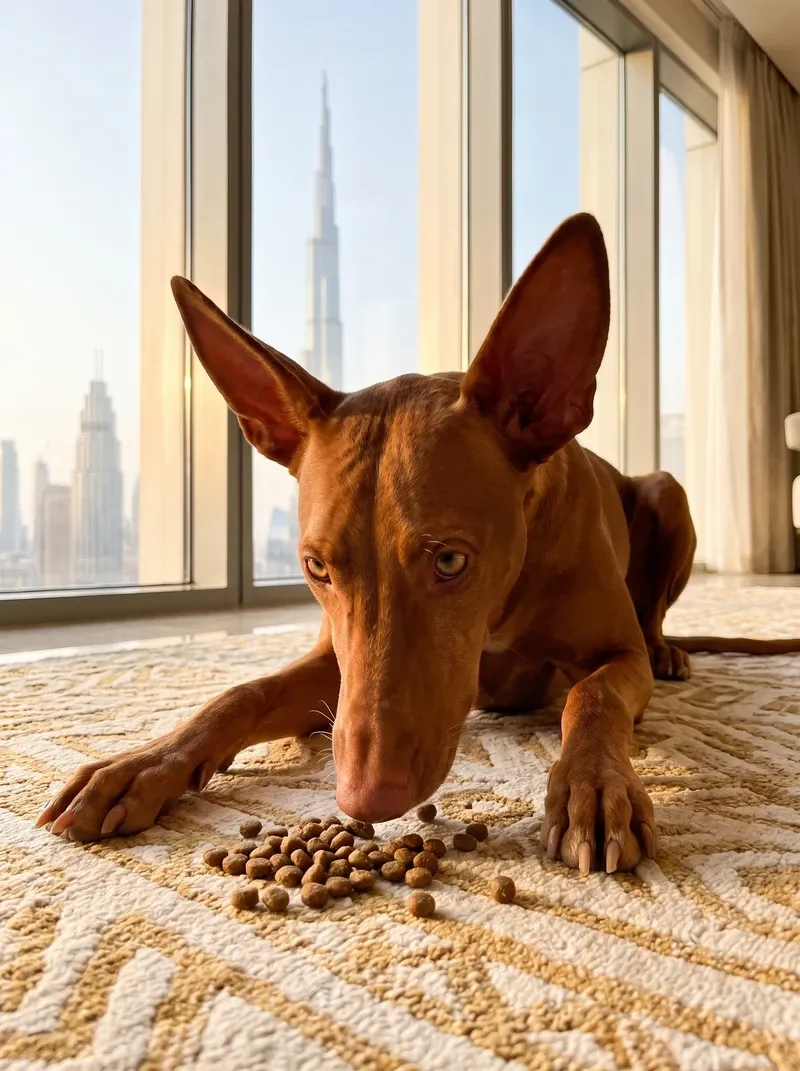
She hunts the flat for crumbs, nose first. I hide her dinner around the living room.

Lifespan
12 to 14 years
Size
Large
Weight
20 to 25 kg
Shedding
Moderate

Last updated 14 October 2026

Join the founding families. AED 1,999 of essential care for AED 199.

No payment now. We'll be in touch by email and WhatsApp as we open enrolment.

✓
Thank you.

We will be in touch soon to confirm.

Pharaoh Hound traits

What they brought with them.

Tap a card to see what is going on.

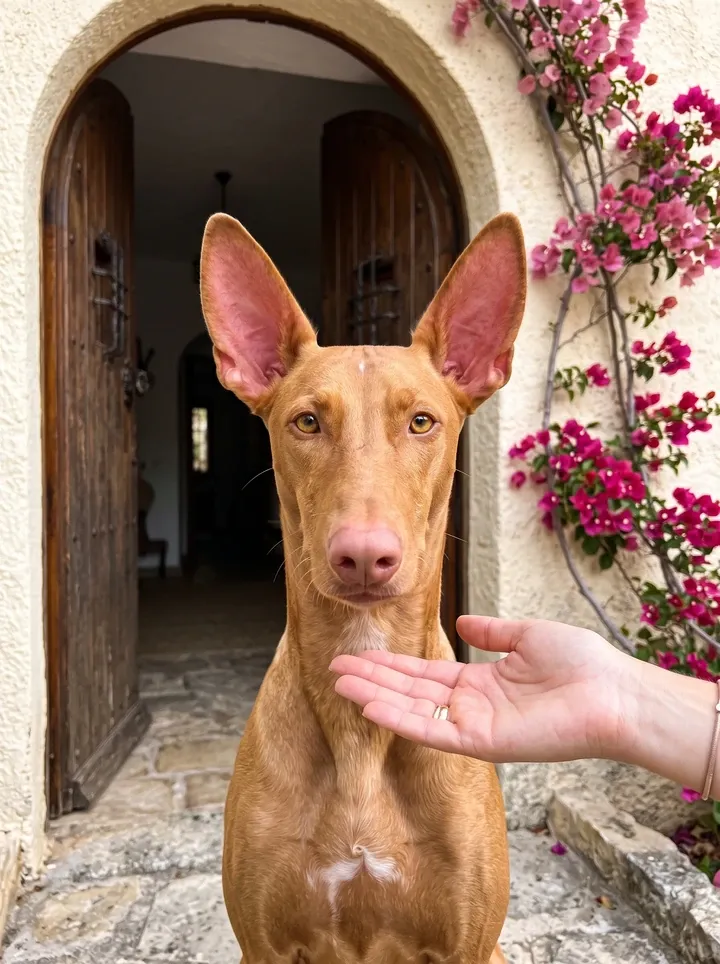
Pharaoh Hound, ears flushed pink, greeting a hand at an arched villa door hung with bougainvillea

At home

Why does my Pharaoh Hound blush?

Their ears and nose turn rose-pink the moment you walk in.

What's going onWhen they are happy or excited, their ears and nose flush a deeper pink. It is perfectly normal. Those thin, pink ears and that nose can also burn, so keep them in the shade in the middle of the day, and use a dog-safe sunscreen your vet recommends.
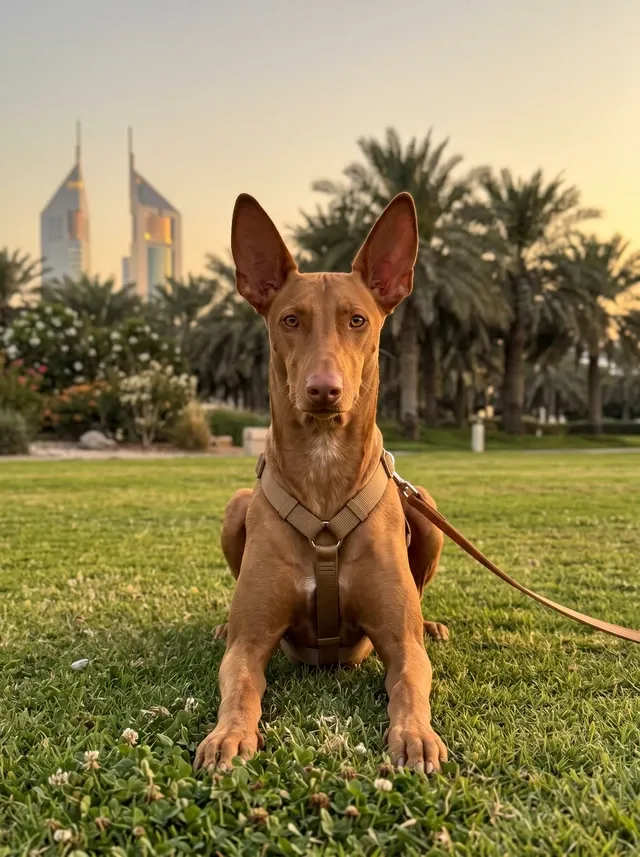
Pharaoh Hound in Dubai, a tan adult in a harness on a long line, lying on a park lawn under date palms at dusk

At home

Nose down, then gone

Head down in the grass, then off after a smell you never noticed.

What's going onMost sighthounds chase what they see. Pharaoh Hounds were also bred to find rabbits in the dark, so a smell can take them off just as fast as a cat can. Lead or long line, unless it is fully fenced.

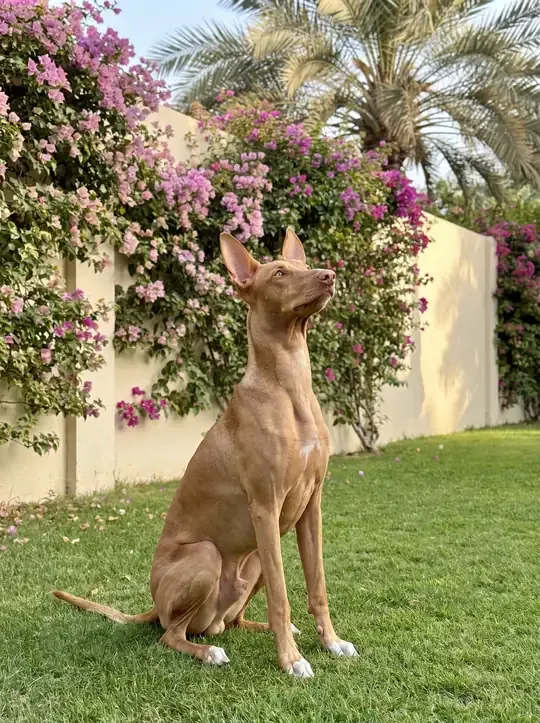
Pharaoh Hound in Dubai, a tan adult sitting on a villa lawn, looking up at a garden wall of bougainvillea

At home

The garden wall is a suggestion

A wall that holds every other dog on the street barely slows them down.

What's going onThey were bred to work over stone walls, and some Pharaoh Hounds clear a villa wall that would hold another dog. Stay out in the garden with them: even a dog who has never tried the wall can clear it.

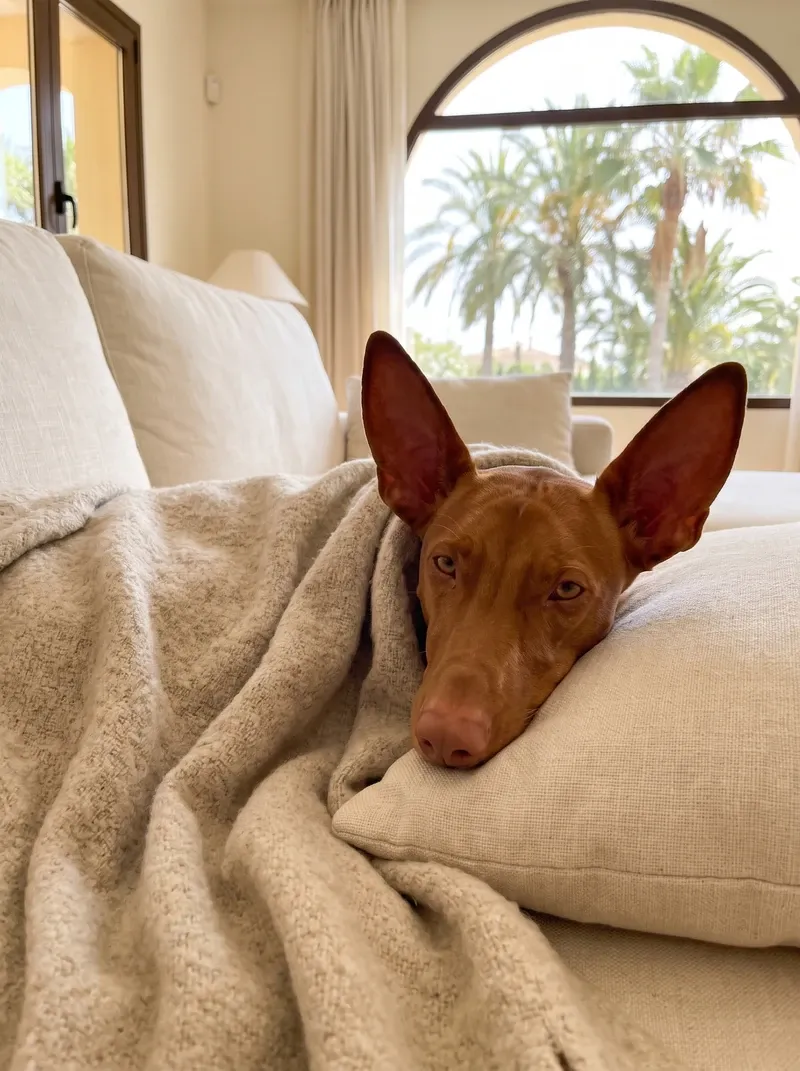
Pharaoh Hound in Dubai, a chestnut adult tucked under a blanket on a sofa by an arched window onto palms

At home

Made for a warm island

First onto the cool tiles, and first under the blanket when the air conditioning comes on.

What's going onThey were bred on a hot, dry island. They still need shade, water and walks in the cool hours, and a blanket under the air conditioning.

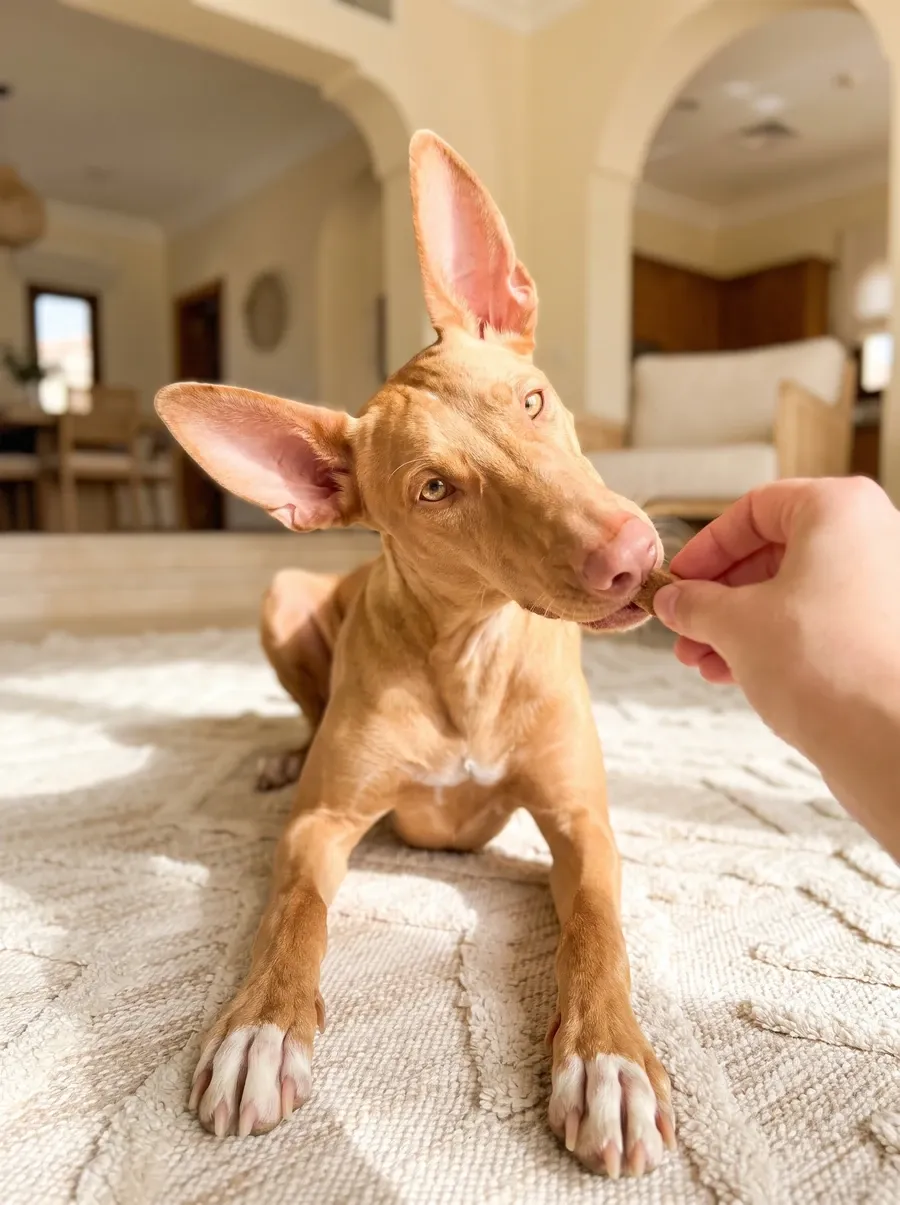
Pharaoh Hound, a young tan dog lying on a cream rug, head tilted, taking a treat from a hand

At home

Playful, and their own boss

Two perfect sits, then a polite wander off on the third.

What's going onPharaoh Hounds are clever and funny, and they get bored of repetition fast. Short, varied sessions with good rewards work. Drilling the same thing does not.

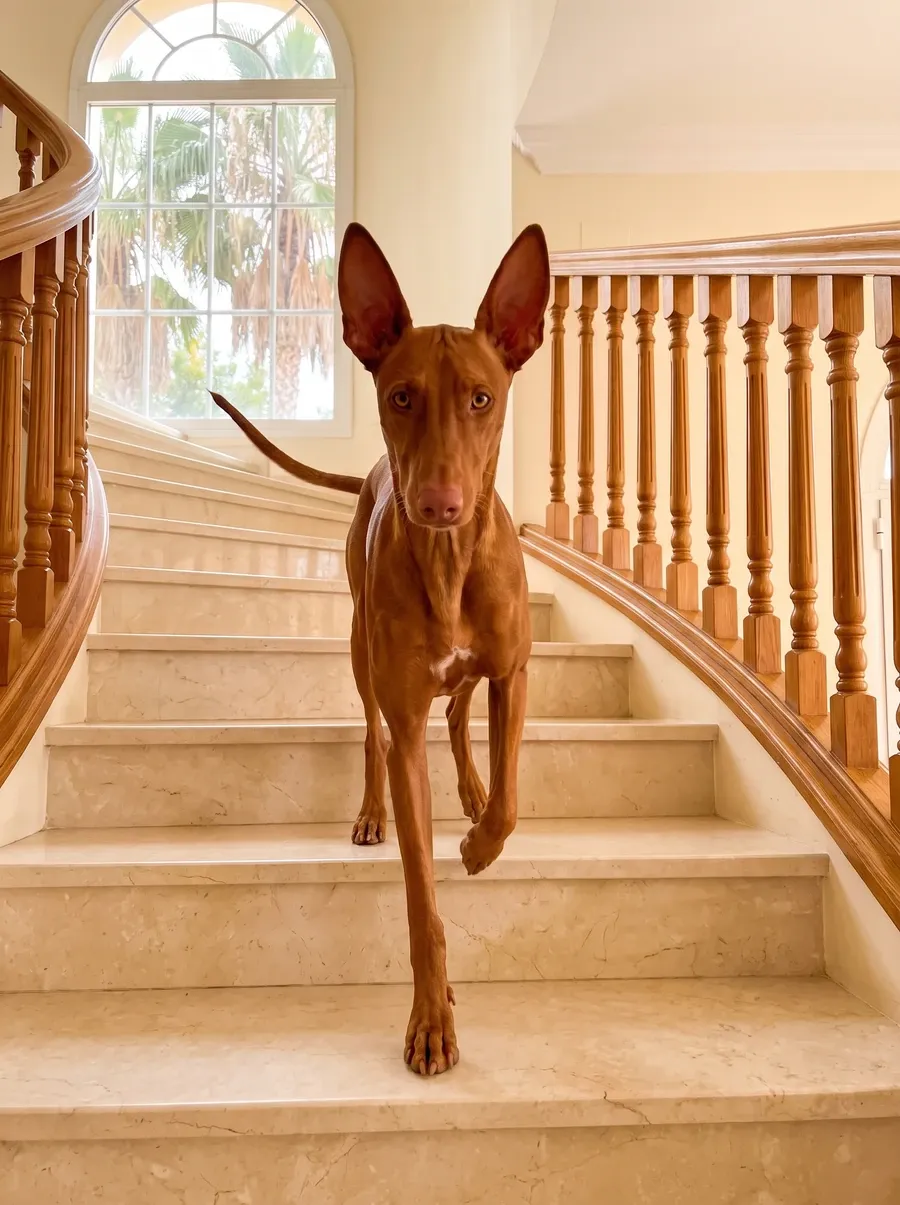
Pharaoh Hound in Dubai, a red chestnut adult stepping down a marble villa staircase, palms through the window

At home

Watch how they move

Up the stairs four at a time, and a hard landing at the bottom.

What's going onHip and kneecap problems can show from puppyhood in the breed. A skip in their step, or a hop in their back legs, is worth showing your vet.

A Pharaoh Hound in Dubai

The bit nobody tells you.

Their work

Built for: Hunting at night over walls and rock.

In Dubai: Life on a lead.

Their ground

Built for: Rocky, stone-walled Maltese fields.

In Dubai: A city with almost no open ground.

Their nose

Built for: Finding rabbits in the dark.

In Dubai: Very little to find.

Their nose has as little to do as their legs.

You cannot give them a Maltese hillside. You can give their nose and their chase real work, and the ten things below are how.

Your plan is built around their breed: the health risks for a Pharaoh Hound at every age, and the care that goes with each one.

Join the founding families. AED 1,999 of essential care for AED 199.

Daily care for a Pharaoh Hound

Ten things that make their life better.

Many of them are free, and most matter at every age.

  1. A scent or a moving cat can take them off in a second.

    Every age, from the first walk

    Under AED 100

    Why

    A scent or a moving cat can take them off in a second.

    What to do

    Use a martingale collar, which tightens just enough that they cannot back out, or a fitted harness, with a lead or a 10 to 15 metre line wherever it is not fully fenced. Keep training the recall, and never rely on it near a road.

  2. They were bred for a hot island, and their thin, pink ears and nose can still burn.

    Every age

    Free

    Why

    They were bred for a hot island, and their thin, pink ears and nose can still burn.

    What to do

    From May to September, walk before sunrise and after dark. Put the back of your hand on the pavement for five seconds. If you cannot keep it there, they cannot walk on it. Keep them in the shade in the middle of the day, and use a dog-safe sunscreen your vet recommends on their ears and nose. Give them a blanket under the air conditioning.

  3. Each chase makes the next one faster, and there are street cats on many walks here.

    Every age, easiest to start as a puppy

    Free to AED 200

    Why

    Each chase makes the next one faster, and there are street cats on many walks here.

    What to do

    Introduce cats and small dogs slowly, over weeks, on a lead. Do not give them the chance to chase anything alive. Teach a muzzle early, calmly and with treats, so it is never a shock if a vet visit or a busy walk needs one.

  4. They are bright, sensitive and bored by repetition, and pressure makes them switch off.

    Every age, most of all puppies and teenagers

    Free

    Why

    They are bright, sensitive and bored by repetition, and pressure makes them switch off.

    What to do

    Five-minute sessions, varied, with good rewards. Stop while they are still keen. No shouting, and nothing that hurts or frightens them.

  5. Hip and kneecap problems can show from puppyhood in the breed.

    Every age, most of all up to 4 years

    FreeIn your plan

    Why

    Hip and kneecap problems can show from puppyhood in the breed.

    What to do

    Once a week, watch them walk and trot away from you. Look for a skip, a hop or a stiff first few steps, and run your hands over their hips, knees and back. Film anything odd on your phone. While you are at it, give their coat a brush. Their teeth need one every day.

  6. They use their nose far more than a Greyhound does, and sniffing tires them.

    Every age

    Free

    Why

    They use their nose far more than a Greyhound does, and sniffing tires them.

    What to do

    Let half of every walk go at their pace, nose down, with them choosing the route. Twenty minutes like that beats an hour at your side.

  7. They like a good lounge after a run, and they can clear walls other dogs cannot.

    Every age

    AED 200 to 900

    Why

    They like a good lounge after a run, and they can clear walls other dogs cannot.

    What to do

    Put a padded bed where the family sits. In a villa, stay out in the garden with them. A wall that looks high enough often is not.

  8. A chase needs an ending, or they are left wound up rather than tired.

    Every age, gentler while growing and from 7 years

    Under AED 100, once

    Why

    A chase needs an ending, or they are left wound up rather than tired.

    What to do

    Use a flirt pole on grass or sand, three to five minutes, twice a week. Let them catch it at least twice, and stop while they still want more. Keep it low and slow while they are growing.

  9. They hunted by scent and sight, so scent games give them real work.

    Every age

    Free

    Why

    They hunted by scent and sight, so scent games give them real work.

    What to do

    Scatter part of their dinner on a rug or on grass, or hide treats around a room for them to find. Give them a window to watch from too.

  10. A busy flat keeps them from the long rest a sprinter needs.

    Every age

    Free

    Why

    A busy flat keeps them from the long rest a sprinter needs.

    What to do

    Give them a quiet spot they can take themselves off to, and naps nobody interrupts. If they are restless at night, look at their day first.

One of these is in your plan. The rest you can do at home.

Join the founding families. AED 1,999 of essential care for AED 199.

Pharaoh Hound health by age

Their health, at every age.

In a Pharaoh Hound, a skip in their step or a pause in dim light is often the first sign that something is wrong. Choose their age to see what to watch for, and the care that goes with it.

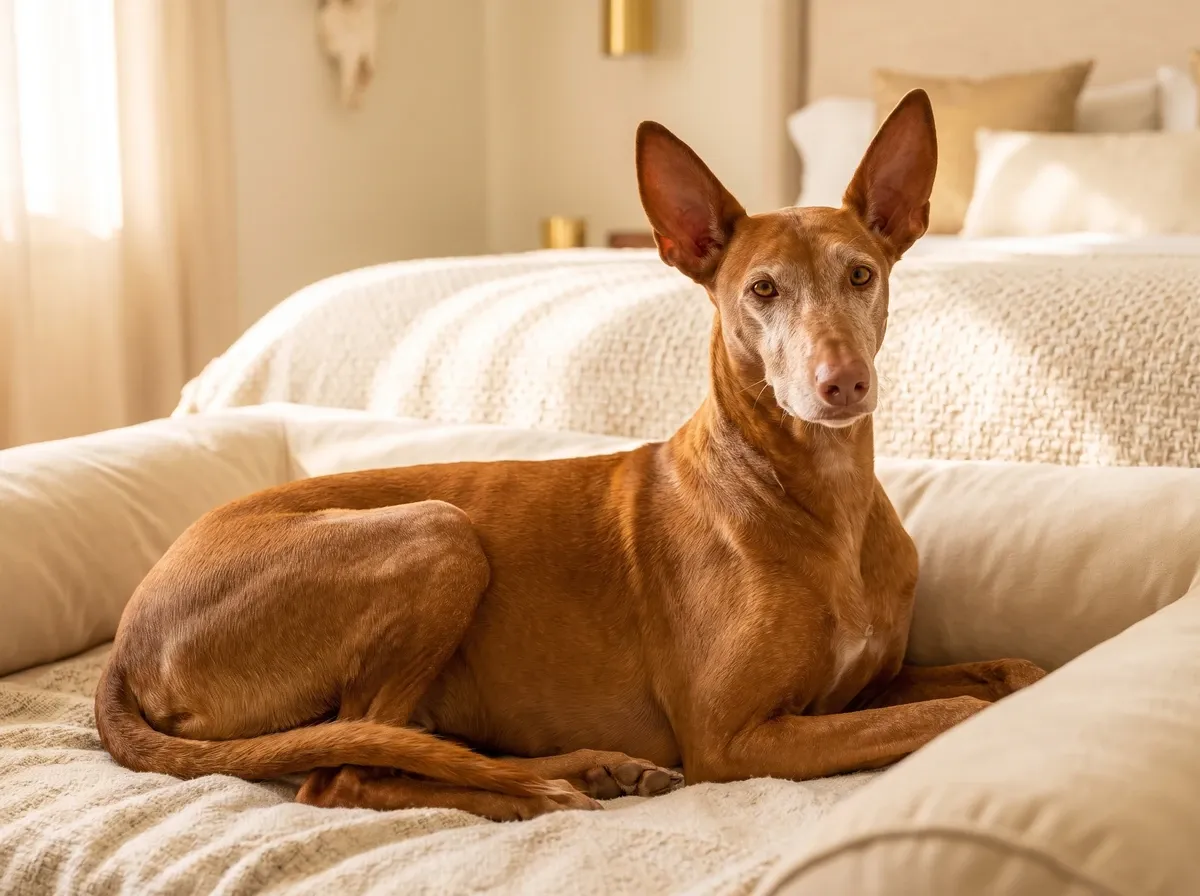
Pharaoh Hound, an older red-tan dog with a greying muzzle resting on a cushioned cream bed

How old are they?

Their age

Pharaoh Hound Puppy health

the first six months

What to watch for

  1. Developmental or early clinical signs of Hip Dysplasia (HD, a poorly fitting hip joint)
  2. Developmental or early clinical signs of Patellar Luxation (PL, a slipping kneecap)
  3. Genetic predisposition to Hypothyroidism (an underactive thyroid), no clinical disease expected at this stage
  4. Congenital or early inherited ocular disease related to Progressive Retinal Atrophy (PRA, gradual loss of sight)
  5. Juvenile onset of allergies

The care that goes with it

  1. Core vaccinations, microchip and Dubai Municipality registration
  2. Deworming, and flea and tick prevention
  3. Body Condition Score (a check on whether they are the right weight), dental, growth and nutritional evaluation, and early socialisation
  4. Hip Dysplasia (HD, a poorly fitting hip joint) screening
  5. Early follow-up for any signs of Patellar Luxation (PL, a slipping kneecap)
The full care detail
  • Core vaccination programme, microchipping and Dubai Municipality registration. Titre testing discussion where clinically appropriate; not a substitute for completing the core vaccine series
  • Deworming and external parasite prevention tailored to Dubai exposure
  • Body Condition Score (BCS), Muscle Condition Score (MCS), dental, growth and nutritional evaluation, and early socialisation
  • Baseline screening focused on Hip Dysplasia (HD)
  • Early diagnostic follow-up for signs suggestive of Patellar Luxation (PL)

Their age

Pharaoh Hound Juvenile health

6 months to 2 years

What to watch for

  1. Emerging Hip Dysplasia (HD) with exercise intolerance or lameness
  2. Emerging Patellar Luxation (PL) with exercise intolerance or lameness
  3. Genetic predisposition to Hypothyroidism, monitoring only
  4. Progression or first clinical detection of Progressive Retinal Atrophy (PRA)
  5. Recurrent or persistent allergies

The care that goes with it

  1. Hip Dysplasia (HD) screening
  2. Orthopaedic evaluation (joint and bone exam)
  3. Neutering or spaying, timed for a large breed
  4. Thyroid screening, with treatment only if hypothyroidism is confirmed
  5. Finding the real cause of signs that keep coming back, before blaming the thyroid
The full care detail
  • Hip screening
  • Orthopaedic evaluation
  • Neuter/spay timing discussion that accounts for large-breed growth and disease risk
  • Thyroid screening for breed predisposition; treat only if clinical signs are confirmed
  • Investigate recurrent signs rather than repeatedly treating presumed Hypothyroidism

Their age

Pharaoh Hound Young Adult health

2 to 4 years

What to watch for

  1. Hip Dysplasia (HD)
  2. Patellar Luxation (PL)
  3. Genetic predisposition to Hypothyroidism
  4. Progressive Retinal Atrophy (PRA)
  5. Allergies

The care that goes with it

  1. Hip Dysplasia (HD) screening
  2. Orthopaedic evaluation (joint and bone exam)
  3. Thyroid screening, with treatment only if hypothyroidism is confirmed
  4. Ophthalmic evaluation (eye exam)
  5. Allergy management
The full care detail
  • Hip screening
  • Orthopaedic evaluation
  • Thyroid screening for breed predisposition; treat only if clinical signs are confirmed
  • Ophthalmic evaluation
  • Allergy management

Their age

Pharaoh Hound Prime Adult health

4 to 7 years

What to watch for

  1. Hip Dysplasia (HD)
  2. Arthritis
  3. Hypothyroidism (an underactive thyroid)
  4. Progressive Retinal Atrophy (PRA)
  5. Dental Disease

The care that goes with it

  1. Joint therapy
  2. Thyroid medication if hypothyroidism (an underactive thyroid) is confirmed
  3. Dental cleaning
  4. Eye monitoring
  5. Pain relief
The full care detail
  • Joint therapy
  • Thyroid medication
  • Dental cleaning
  • Eye monitoring
  • Pain management

Their age

Pharaoh Hound Senior health

7 to 10 years

What to watch for

  1. Arthritis
  2. Cataracts (a clouding of the lens)
  3. Hypothyroidism
  4. Dental Disease
  5. Kidney Disease

The care that goes with it

  1. Arthritis management
  2. Eye surgery for cataracts, when it is needed
  3. Thyroid support, if hypothyroidism is confirmed
  4. Dental care
  5. Kidney monitoring
The full care detail
  • Arthritis management
  • Eye surgery
  • Thyroid support
  • Dental care
  • Kidney monitoring

Their age

Pharaoh Hound Geriatric health

10 years and over

What to watch for

  1. Kidney Disease
  2. Cataracts
  3. Heart Disease
  4. Arthritis
  5. Dental Disease

The care that goes with it

  1. Pain relief
  2. Cognitive support
  3. Cardiac monitoring
  4. Kidney function tests
  5. Quality-of-life assessments
  6. Palliative care (comfort care)
  7. End-of-life planning with your vet team
The full care detail
  • Pain relief
  • Cognitive support
  • Cardiac monitoring
  • Kidney function tests
  • Quality-of-life assessments
  • Tailored palliative and comfort-focused care plan
  • Compassionate end-of-life planning with your veterinary team

Breed predispositions indicate an increased risk rather than certainty of disease. What is right for them always comes from their own history and an evaluation.

Getting a Pharaoh Hound puppy in Dubai

Before they come home.

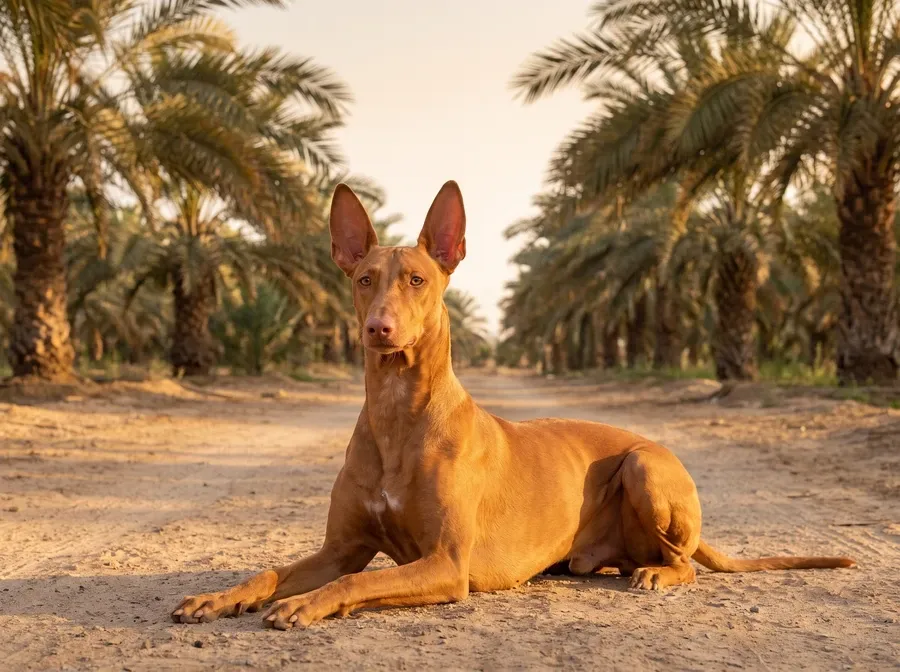
Pharaoh Hound in Dubai, a golden tan adult lying with head up on a sandy path between date palms at dawn

Maltese or show-bred

Two kinds of Pharaoh Hound

In Malta they still hunt rabbits as the Kelb tal-Fenek, the rabbit dog. Elsewhere most come from show lines, bred for the ring and for life at home.

Pharaoh Hound in Dubai, a deep chestnut adult with a white tail tip on a rug in a majlis, palms outside

Colours

Tan to rich chestnut

Pharaoh Hounds come in warm shades from tan to a rich chestnut. A white tip on the tail is much loved, and some have a touch of white on the chest or toes.

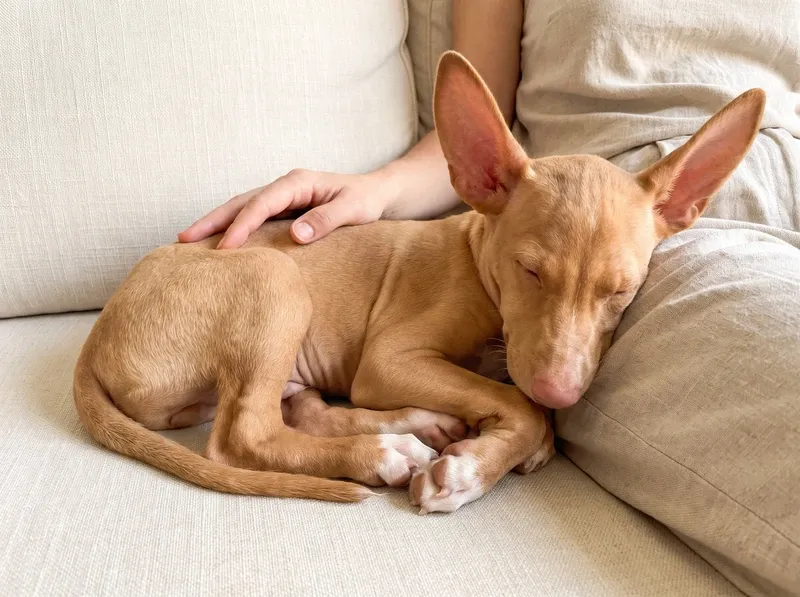
Pharaoh Hound, a tan puppy asleep on a linen sofa against a pet parent, a hand on their back

The first six months

Caring for a Pharaoh Hound puppy

Their full vaccination course, microchip and Dubai Municipality registration come first. Start lead and muzzle training early, with treats, while they are small, and keep games of chase low and slow while their joints grow.

Puppy health, 0 to 6 months
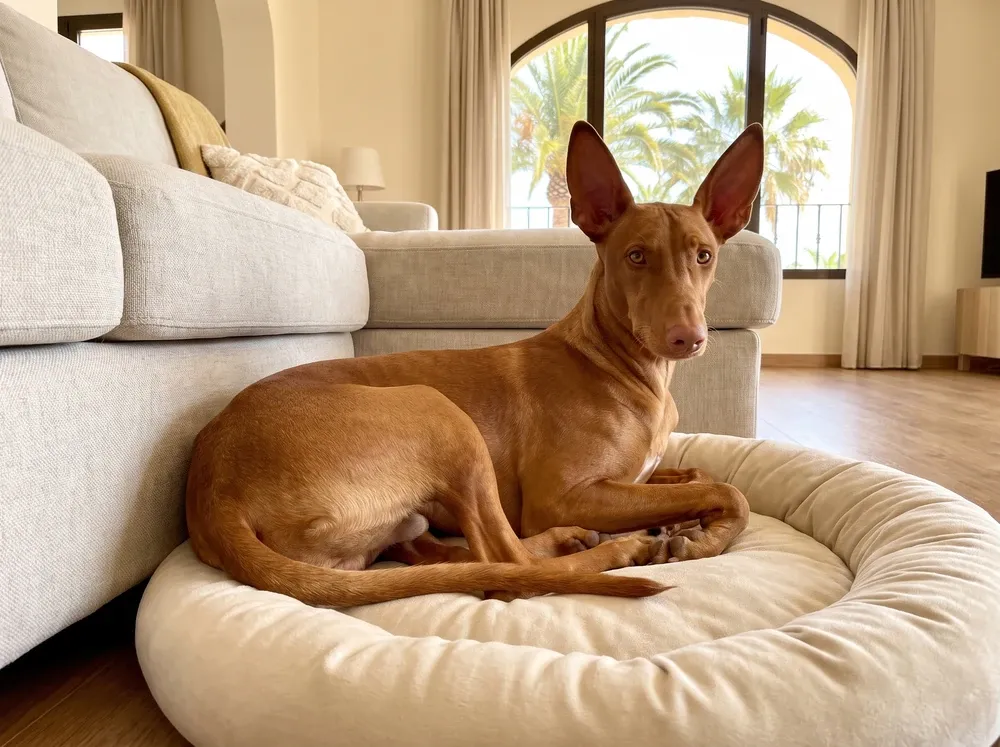
Pharaoh Hound in Dubai, a young red-tan dog on a round bed beside a sofa, palms through an arched window

Getting the home ready

A soft bed, and company in the garden

Put a padded bed where the family sits, somewhere quiet enough for a long nap. In a villa, never leave them alone in the garden: even a dog who has never tried the wall can clear it.

Ten things that make their life better
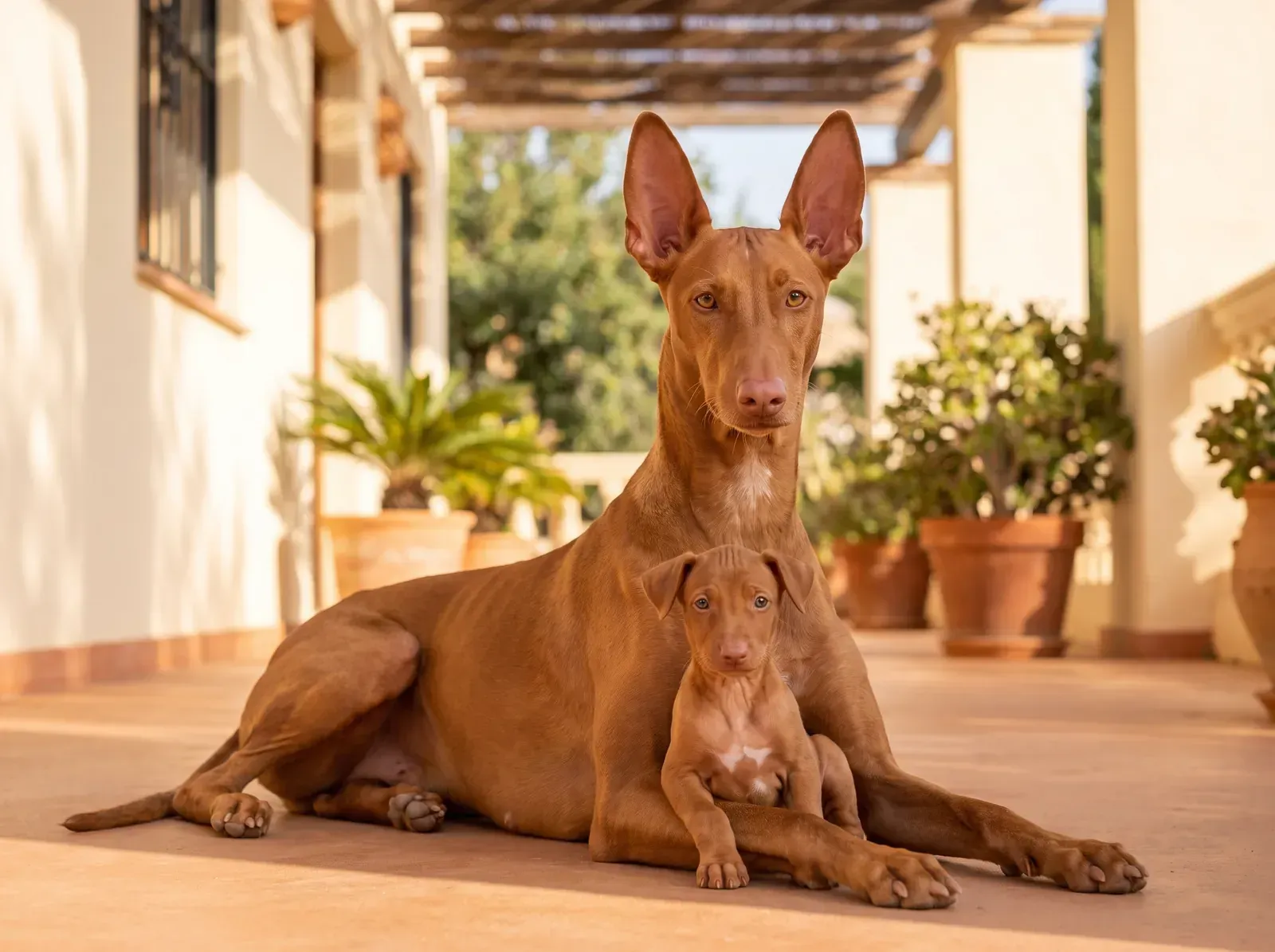
Pharaoh Hound, a red chestnut mother lying on a shaded villa terrace, one puppy between the front paws

Before you commit

Ask about the parents' hips, knees and eyes

Ask the breeder about both parents' hips, kneecaps and eyes. Hip and kneecap problems and Progressive Retinal Atrophy (gradual loss of sight) can show from puppyhood in Pharaoh Hounds.

The reception of a Paws & Co clinic, with long cream benches and a stone reception desk

Before the clinics open

Join the founding families

AED 1,999 of essential care for AED 199. No payment now.

When to see a vet

When it is not behaviour.

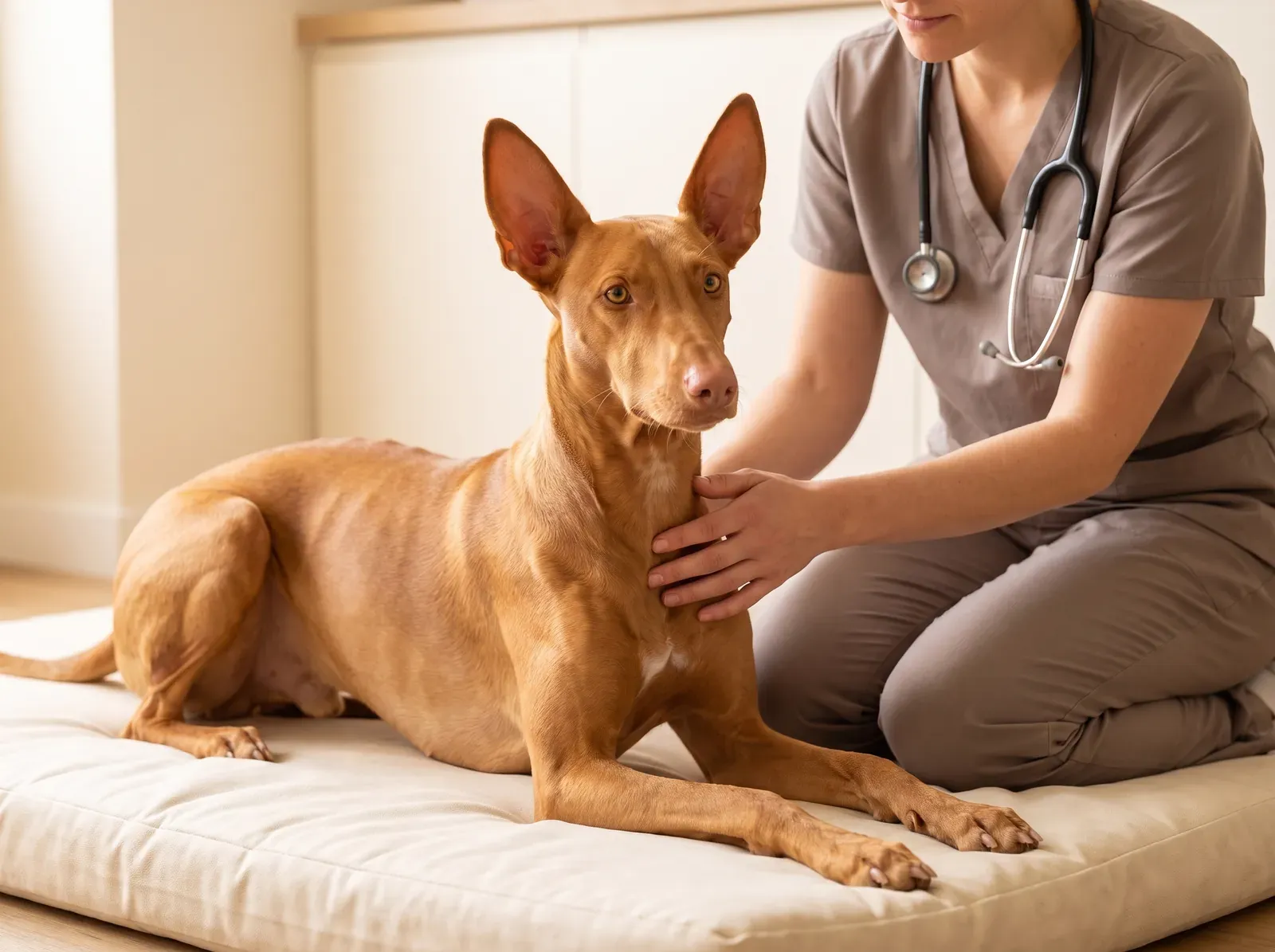
Pharaoh Hound, a golden tan adult lying on a padded mat as a vet in taupe scrubs rests a hand on their chest

Some of this is not a training problem, and treating it like one wastes time your dog may not have. If they are distressed when you leave, if they growl or guard their food, their toys or you, if they are frightened on the lead, or if anything about them changes suddenly at any age, contact your vet the same day. A tip from a website, ours included, is not the answer. If it cannot wait, contact your nearest emergency vet now.

With a Pharaoh Hound, watch the way they move and the way they see. A skip in their step or trouble getting up can be their hips or their kneecaps. Bumping into things at dusk can be Progressive Retinal Atrophy (PRA, gradual loss of sight), and cloudy eyes in an older dog can be cataracts (a clouding of the lens). A dog who is low on energy and putting on weight may have an underactive thyroid (hypothyroidism). Bloat (GDV, a twisted stomach) is most common in large, deep-chested dogs, so skip walks and hard play shortly before and after meals. A swollen, tight belly, retching with nothing coming up, sudden restlessness or drooling is an emergency: contact your vet now. Each of these is a known risk in the breed.

They'll keep hunting for their dinner. If they stop bothering to look for it, tell your vet.

Pharaoh Hound history

Before they were yours.

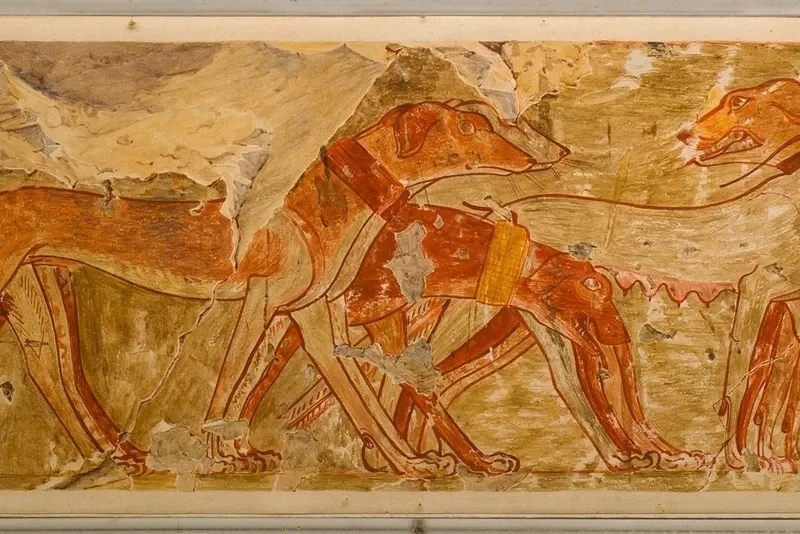
  1. Pharaoh Hound history, long-legged hounds with upright ears painted in the tomb of Rekhmire, Thebes, Egypt, about 1450 BC
    Hounds painted in the tomb of Rekhmire at Thebes, Egypt, about 1479 to 1425 BC: the kind of picture the breed's name comes from. Facsimile by Nina de Garis Davies, The Met.

    The story

    The name from Egypt

    The name was chosen for a likeness to the hounds painted in Egyptian tombs. It is a lovely story, and genetic studies do not support a direct line.

    What they still carryA name, and a story people love.

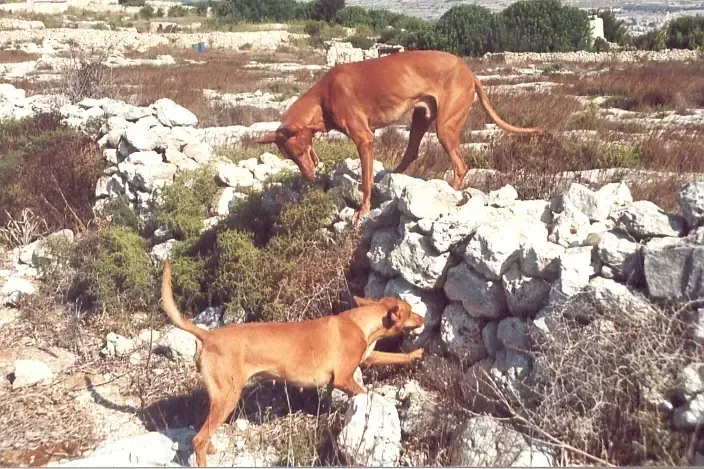
  2. Pharaoh Hound history, two hounds hunting rabbits along a rubble stone wall, a photograph, Malta, 2000
    Two Kelb tal-Fenek, the Pharaoh Hound's Maltese name, hunting rabbits along a rubble stone wall in Malta, August 2000. Photo: Jan Eduard, CC BY-SA 3.0, via Wikimedia Commons.

    Malta

    The rabbit dog

    In Malta they are the Kelb tal-Fenek. Hunters took them out at night, often with a ferret, across rocky, stone-walled fields, and some still do.

    What they still carryA nose as keen as their eyes, and legs that clear a wall.

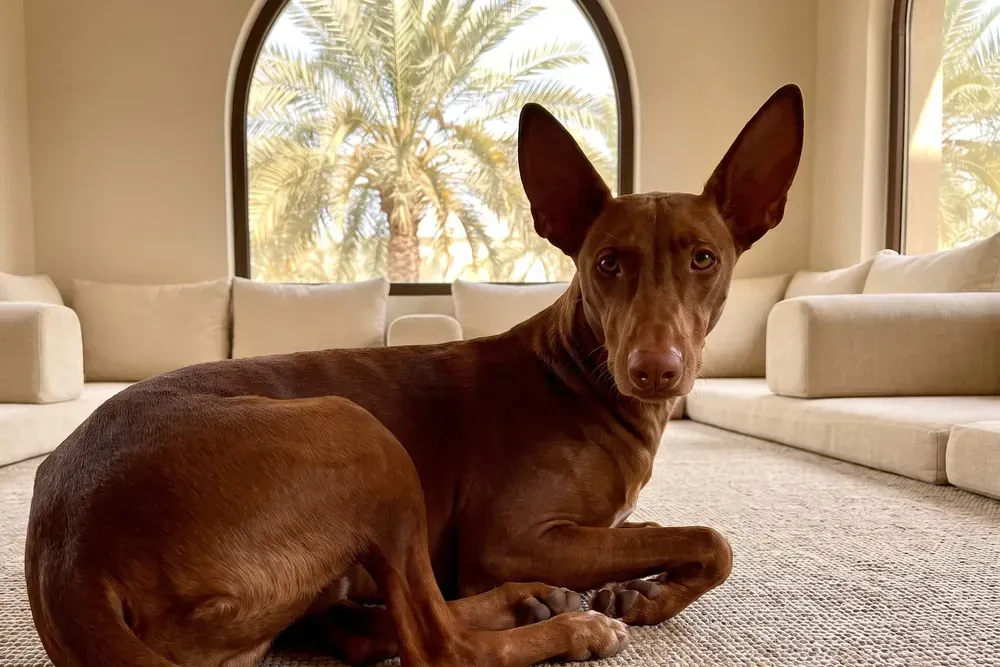
  3. Pharaoh Hound history, a deep chestnut adult lying on a rug in a majlis, palms through the window
    A Pharaoh Hound today.

    The 1960s and 1970s

    A new name in Britain

    Dogs brought from Malta to Britain were registered as Pharaoh Hounds, and The Kennel Club approved a breed standard in 1974. Malta made them its national dog in the same period.

    What they still carryA Maltese working dog with an Egyptian name.

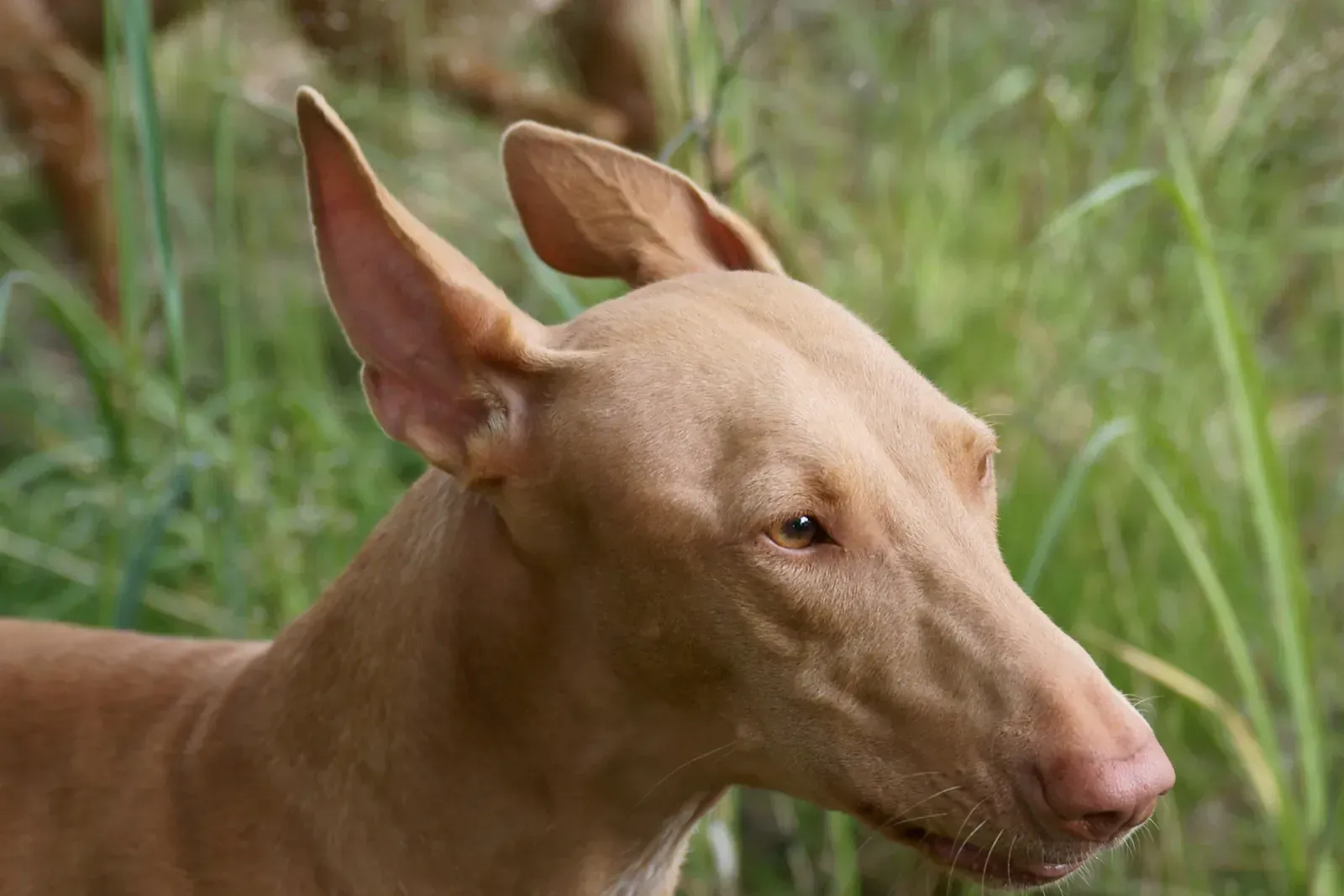
  4. Pharaoh Hound history, the head of a tan hound with tall upright ears among long grass, Finland, 2009
    A Pharaoh Hound in Finland, 2009. Photo: Kallerna, CC BY-SA 3.0, via Wikimedia Commons (cropped)

    1983

    Recognised in America

    The American Kennel Club recognised the breed in 1983.

    What they still carryShow lines abroad, working dogs in Malta.

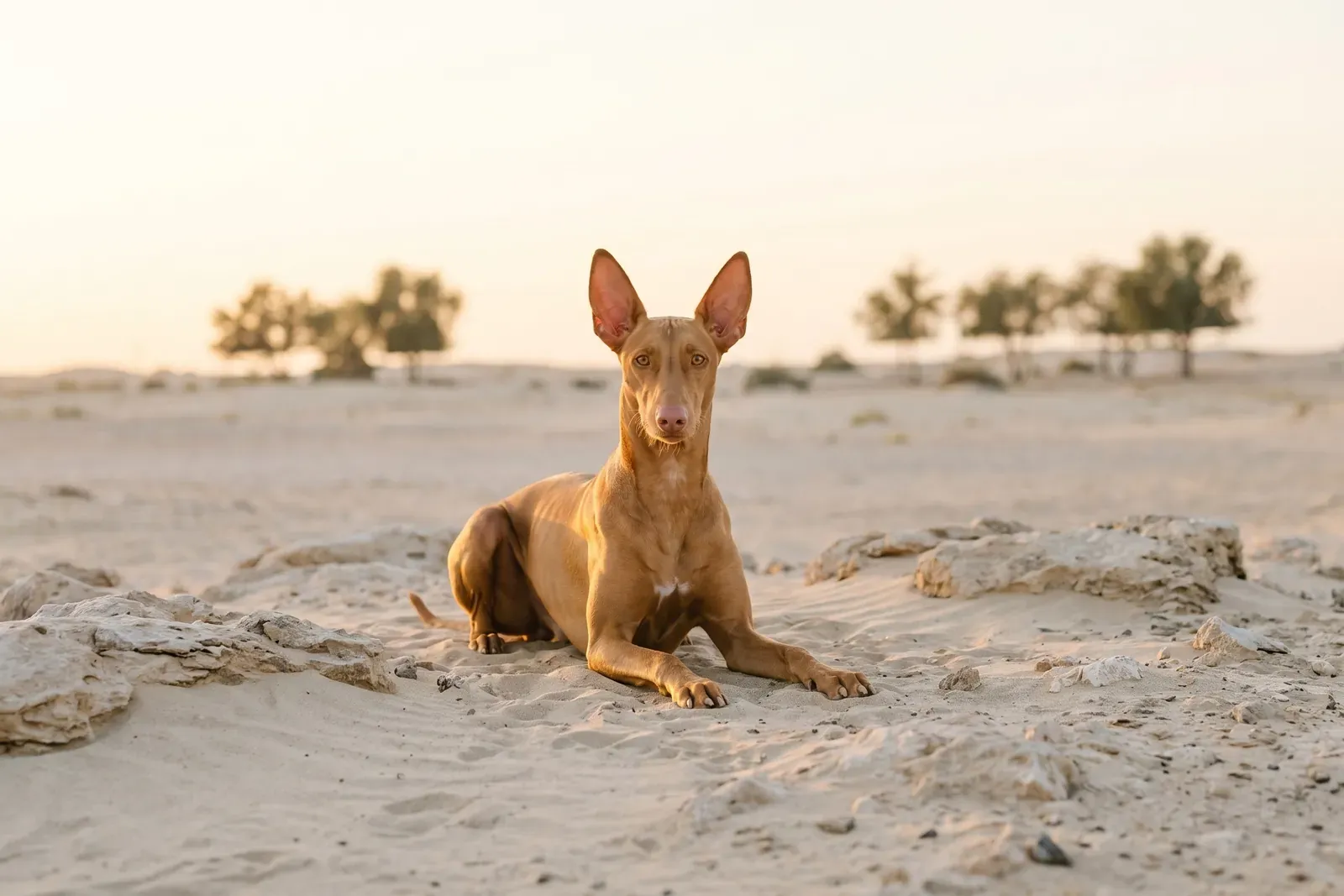
  5. Pharaoh Hound history, the breed today, a pale tan adult lying on desert sand among low rocks, Dubai, 2026

    Today

    In Dubai

    In the UAE they are a very rare dog, living in a flat or a villa.

    What they still carryA warm-climate hound, with a nose and a chase that need a job.

Pharaoh Hound questions

The ones you type at midnight.

Most of these get asked late at night, by someone watching their dog and not sure what they are seeing.

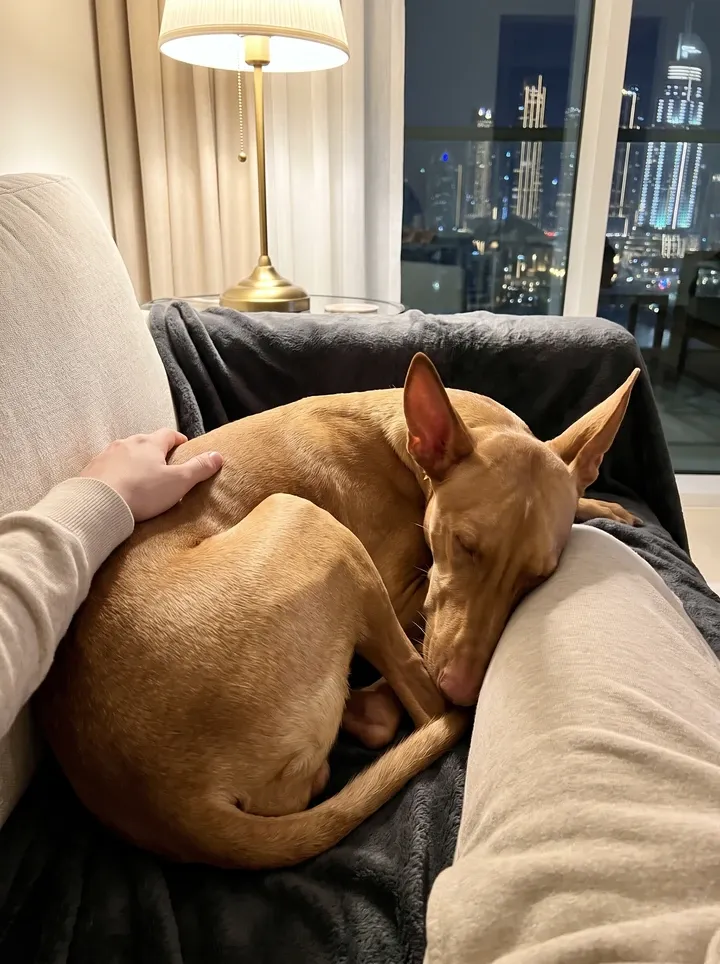
Pharaoh Hound in Dubai, a pale tan adult asleep against a pet parent's knee at night, the skyline behind
How long do Pharaoh Hounds live?

Pharaoh Hounds usually live 12 to 14 years. Keep up their hip, knee and eye checks as they grow.

Why do Pharaoh Hounds blush?

Pharaoh Hounds blush when they are happy or excited: their ears and nose flush a deeper pink. It is normal, and one of the loveliest things about the breed.

Is the Pharaoh Hound from Egypt?

Not quite. The Pharaoh Hound's name comes from Egypt, but the dogs come from Malta, where they are the Kelb tal-Fenek, the rabbit dog. The Egyptian link is a lovely old story, and genetic studies do not support it.

Do Pharaoh Hounds shed?

Moderately, with more coming out once or twice a year. A weekly brush keeps a Pharaoh Hound's short coat in order.

How big do Pharaoh Hounds get?

Adult Pharaoh Hounds usually weigh 20 to 25 kg. They are a large, lean and athletic hound.

What colours do Pharaoh Hounds come in?

Pharaoh Hounds come in warm shades from tan to a rich chestnut. A white tip on the tail is much loved, and some have a touch of white on the chest or toes.

Can a Pharaoh Hound live in Dubai?

Yes. A Pharaoh Hound's short coat suits the warm climate, though they still need shade in real heat. Walk before sunrise and after dark from May to September.

Can Pharaoh Hounds be off the lead?

Only where it is fully fenced. A Pharaoh Hound can be taken off by a smell or a moving cat in a second, so use a lead or a long line everywhere else.

Worried about them? Contact your vet today.