We’re hiring people who love them like we do. Join us careers@pawsandco.comSee open roles
UAE Government Licensed MOCCAE
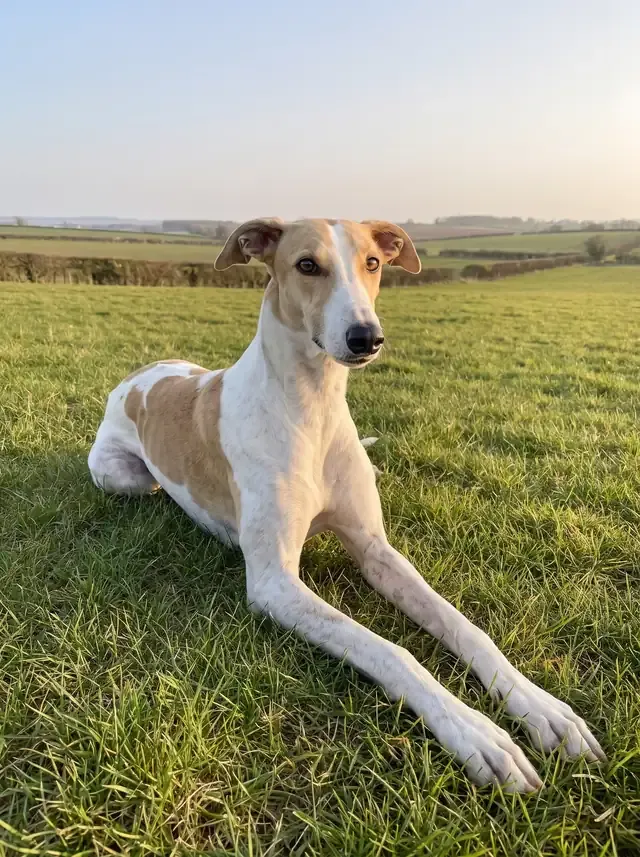
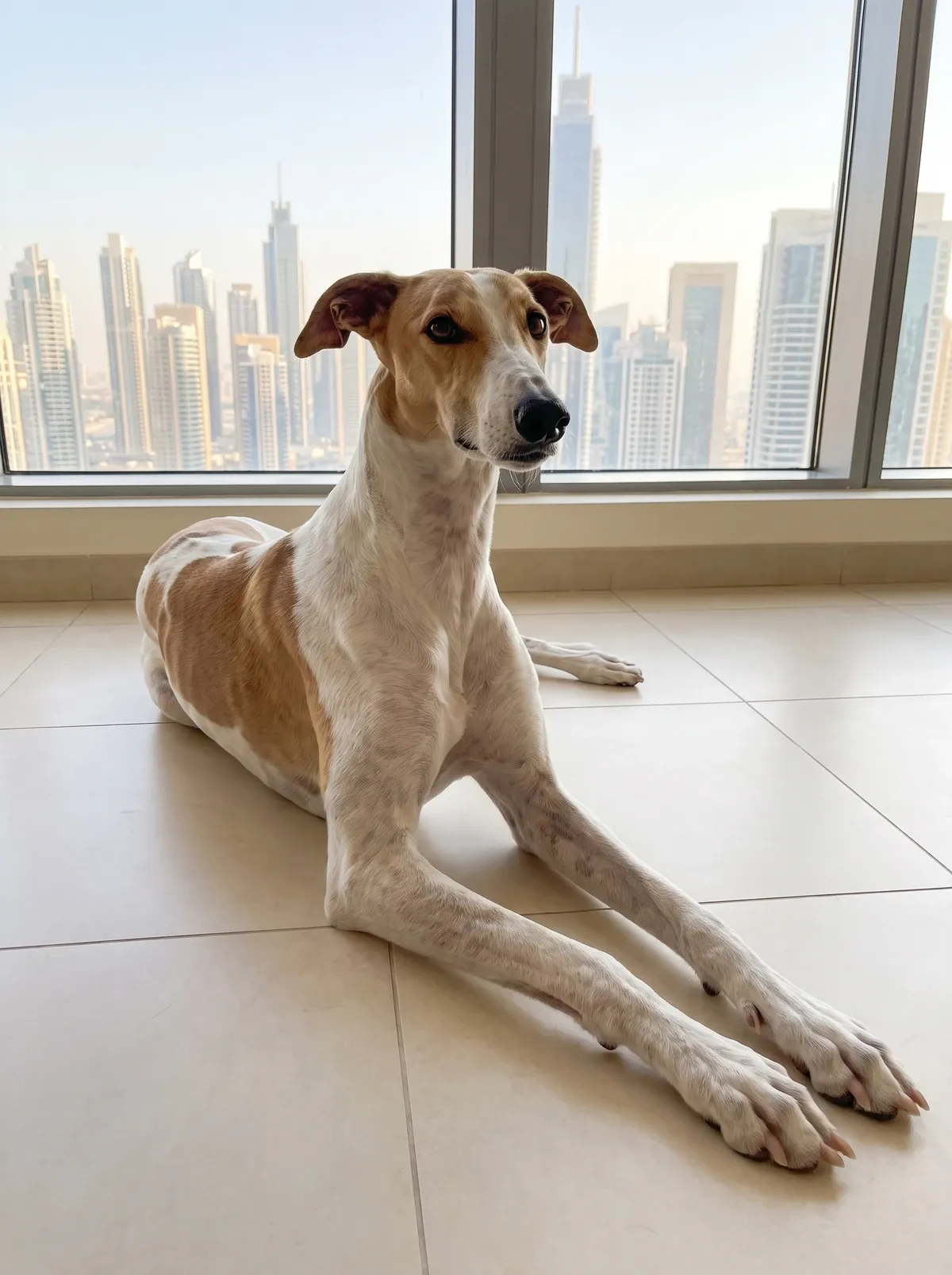
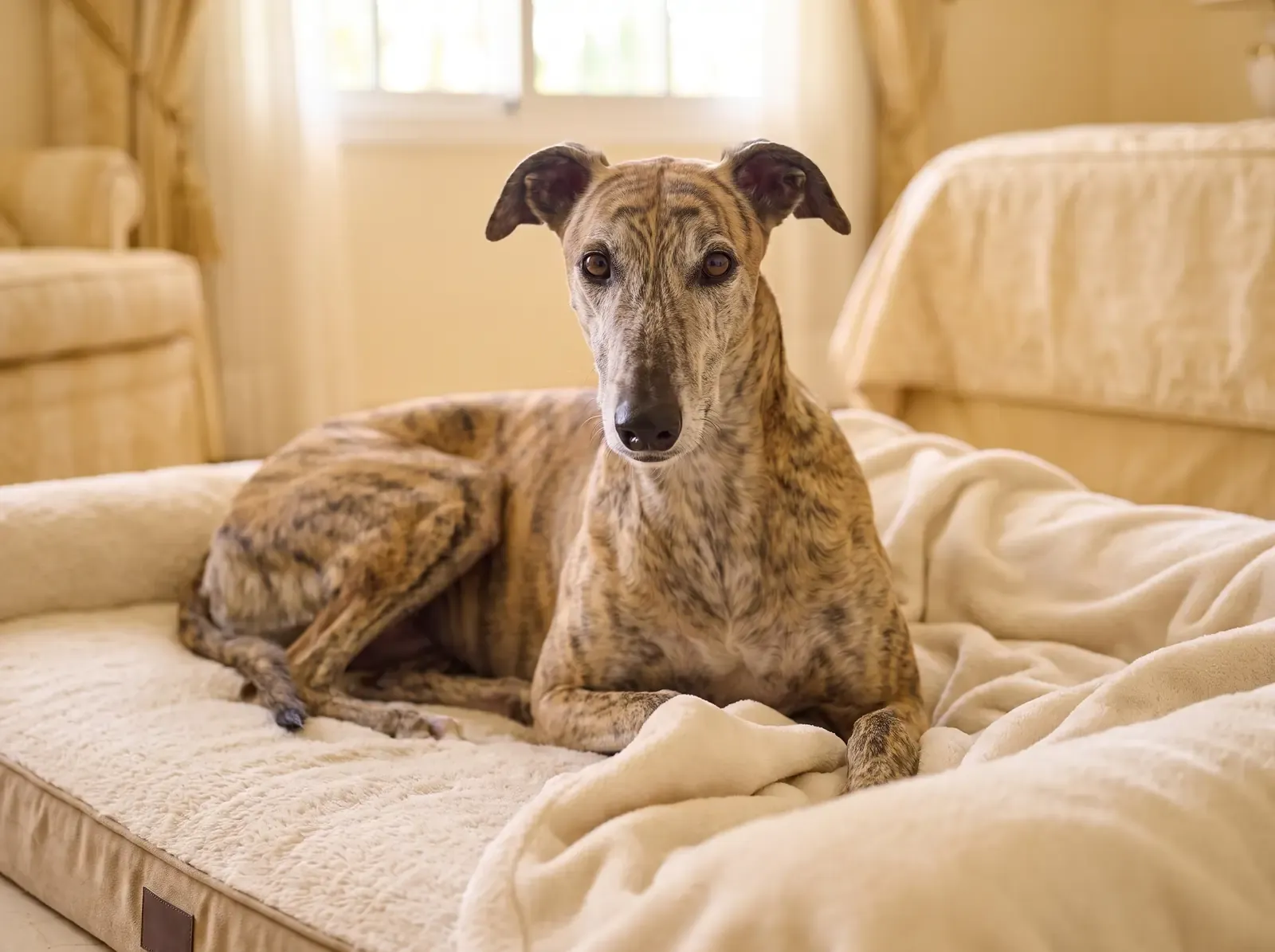
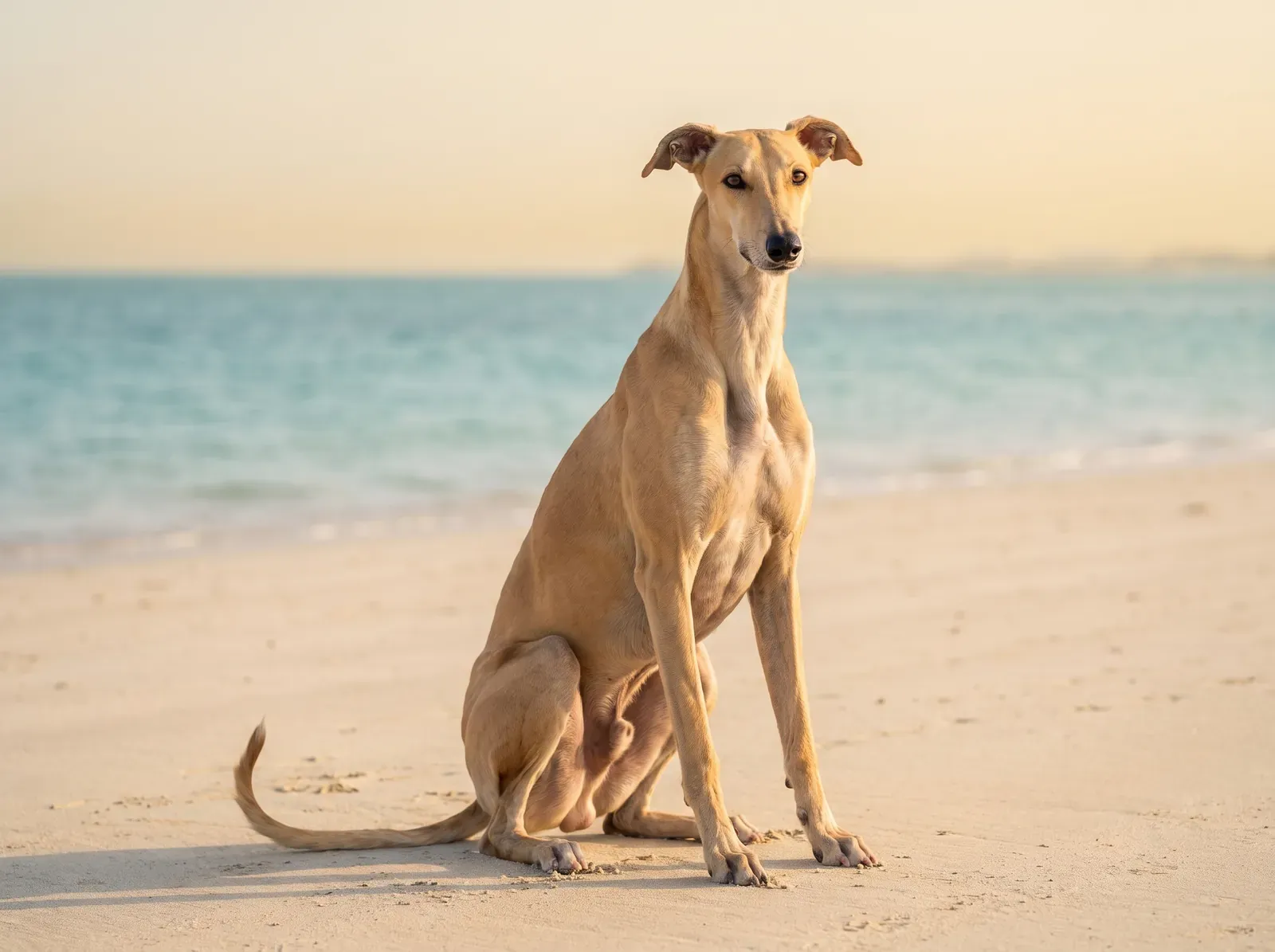
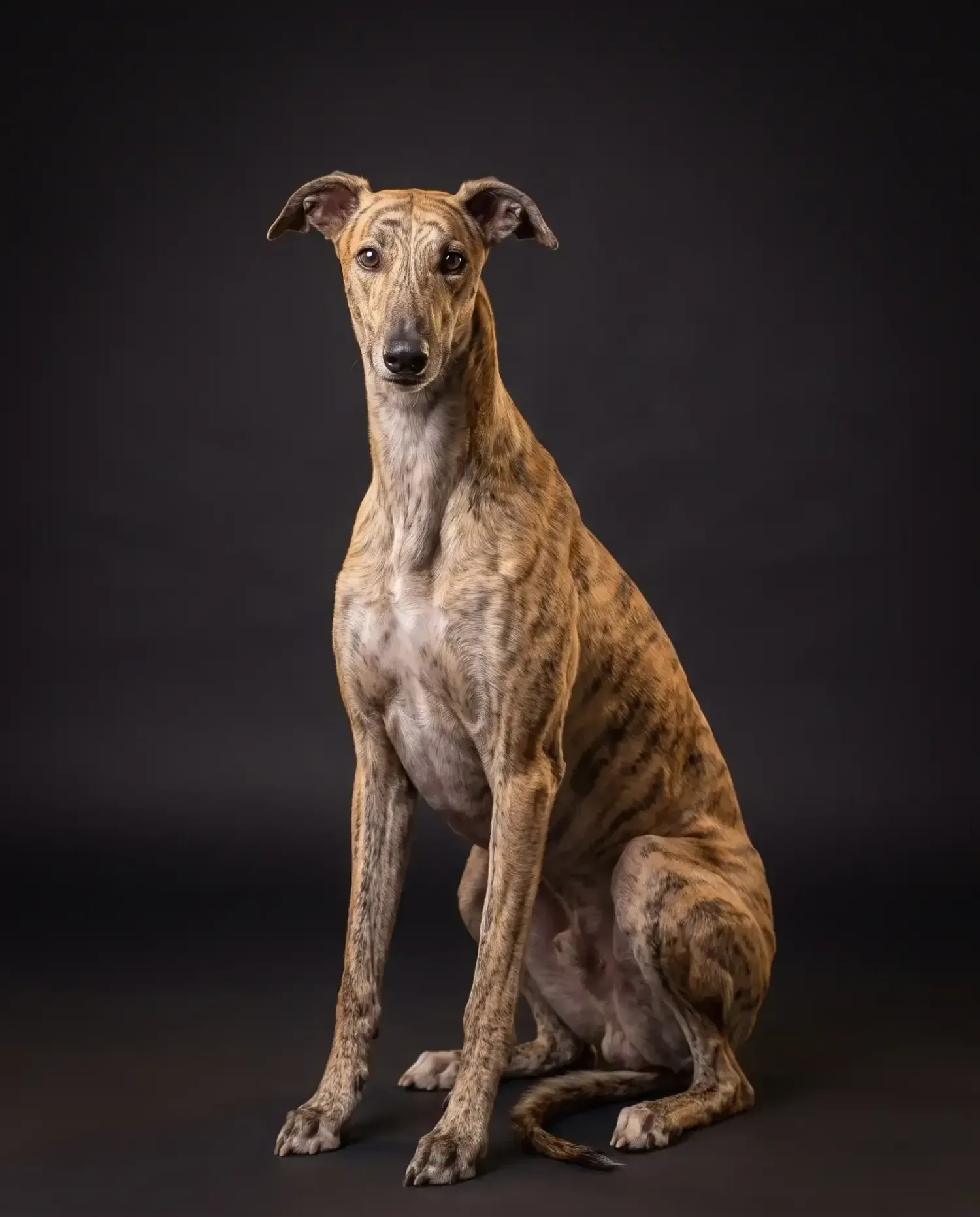
Greyhound in Dubai, studio portrait of a calm brindle adult sitting

Breed guide  ·  Dogs

Greyhound

She had never seen a staircase. I walked down every step beside her.

Lifespan
10 to 14 years
Size
Large
Weight
27 to 32 kg
Shedding
Light to moderate

Last updated 12 October 2026

Join the founding families. AED 1,999 of essential care for AED 199.

No payment now. We'll be in touch by email and WhatsApp as we open enrolment.

✓
Thank you.

We will be in touch soon to confirm.

Greyhound traits

What they brought with them.

Tap a card to see what is going on.

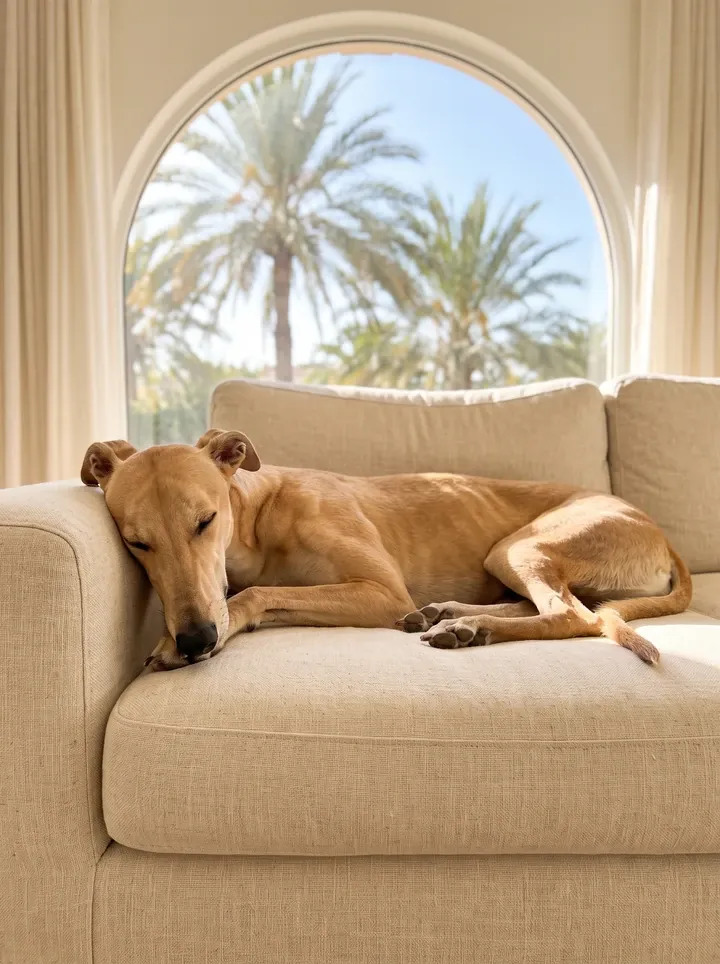
Greyhound in Dubai, a fawn adult asleep on a cream sofa below an arched window onto date palms

At home

Why does my Greyhound sleep all day?

Two minutes flat out, then the sofa for the rest of the day.

What's going onGreyhounds are sprinters, built for a short burst at full speed and a long rest either side of it. Sleeping 16 to 20 hours a day is normal. Two slow walks a day and a short chase on a flirt pole twice a week suit them far better than a long jog.
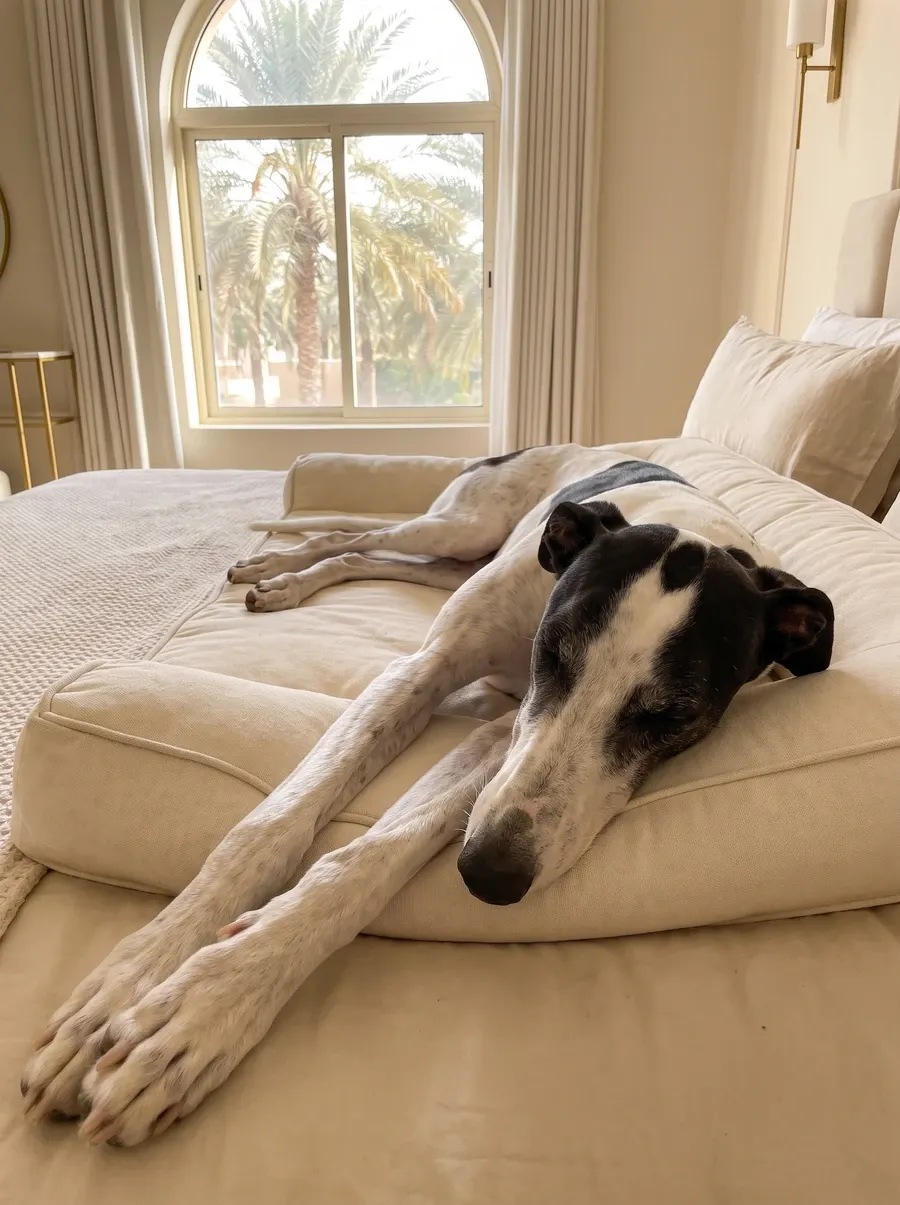
Greyhound in Dubai, a white and black adult asleep on a padded bed, long legs stretched out, palms through the window

At home

Why does my Greyhound sleep stretched out?

Out cold on their side, those long legs stretched right out.

What's going onThat long, bony frame carries very little padding. Lying flat out on something soft takes the pressure off their bones, which is why they sprawl like this.

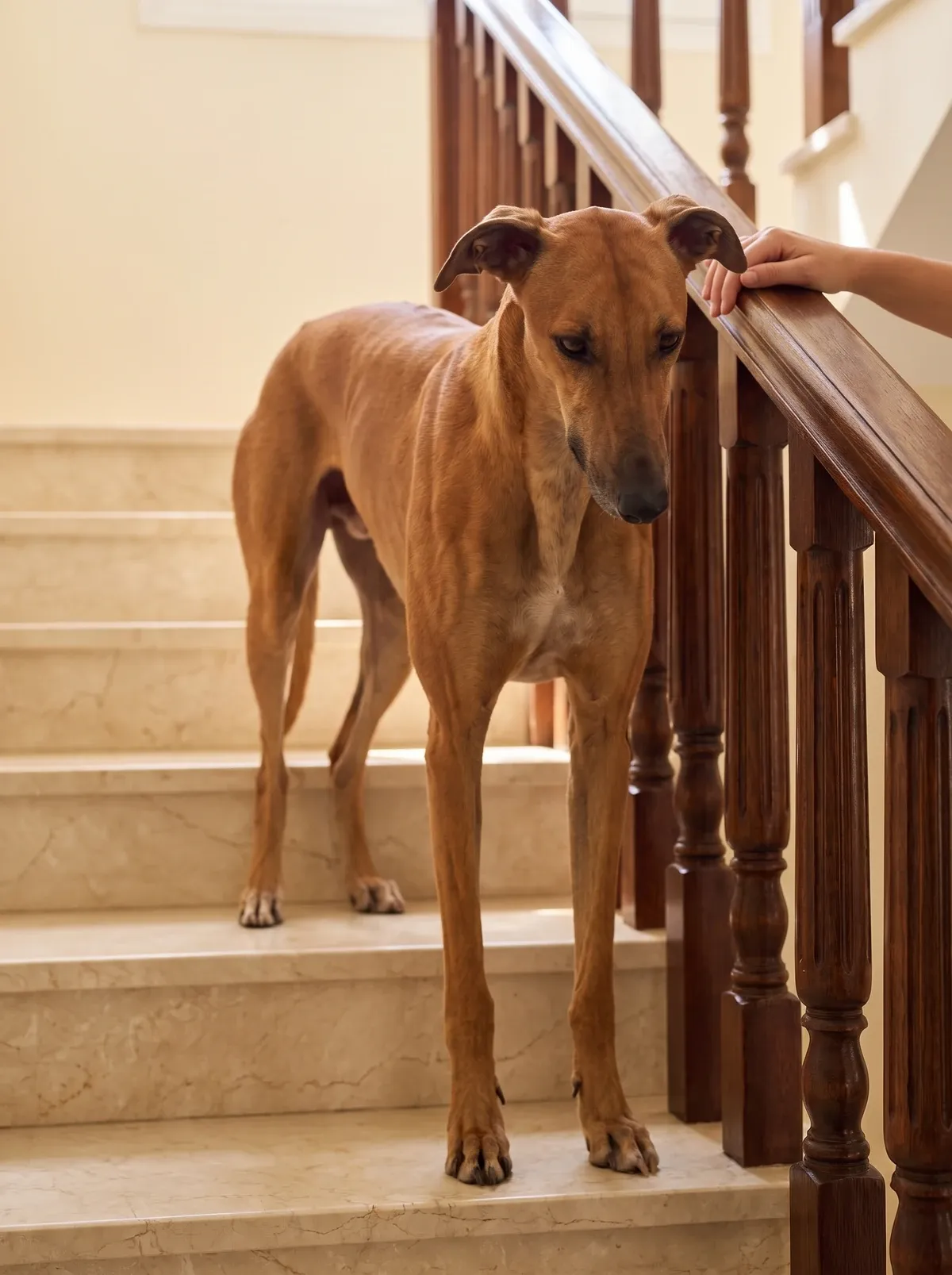
Greyhound, a red adult pausing on marble villa stairs as their person's hand rests on the banister

At home

Why is my Greyhound scared of the stairs?

Frozen at the top step, or stopped in front of a glass door.

What's going onA retired racer has usually lived in a kennel, so stairs, glass doors and a room of their own may all be firsts. Give them a few quiet weeks, and teach the stairs one step at a time, with you beside them.

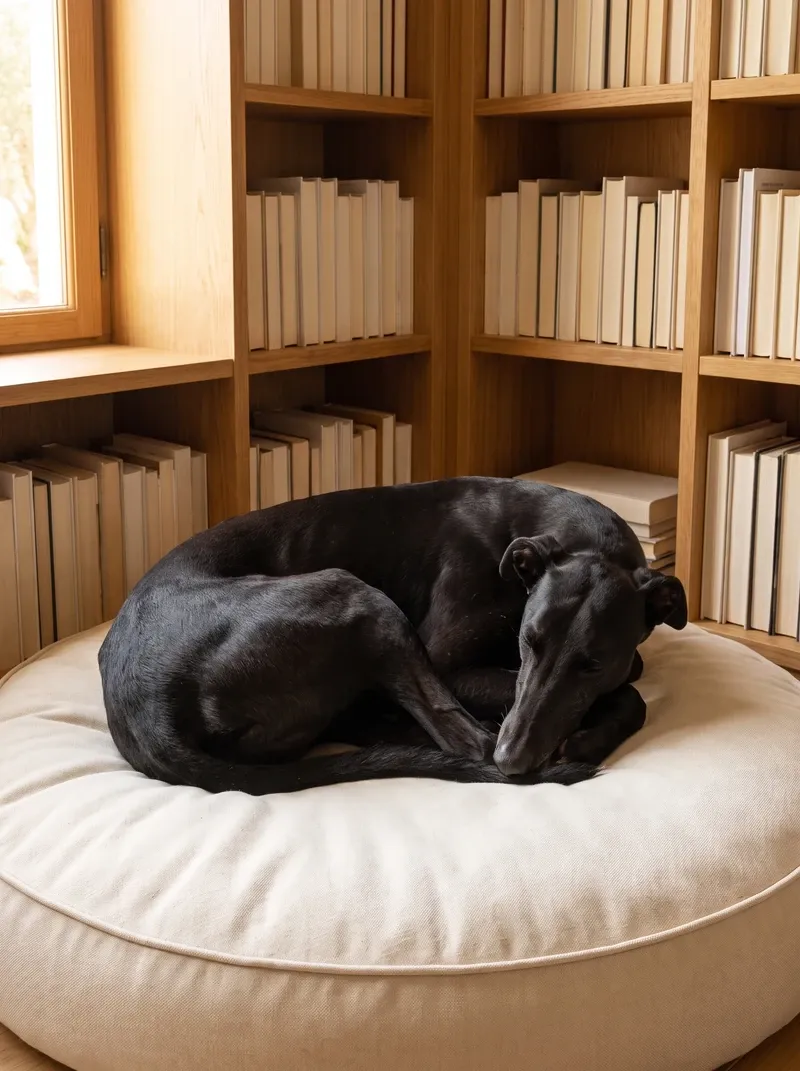
Greyhound, a black adult curled up asleep on a round cream bed beside timber bookshelves

At home

Why does my Greyhound growl when woken?

A jump, a growl, sometimes a snap, when touched in deep sleep.

What's going onSome Greyhounds startle when they are woken, and react before they are properly awake. It is not a bad temper. Say their name before you touch them, keep their bed out of the walkway, and teach children to let them sleep.

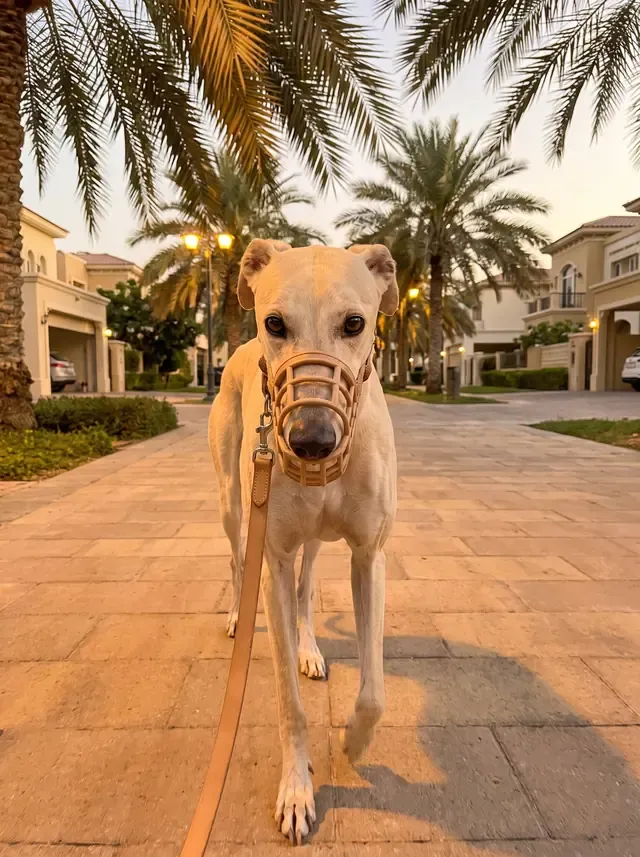
Greyhound in Dubai, a fallow adult in a soft basket muzzle walking on a lead down a palm-lined villa street

At home

Why do Greyhounds wear muzzles?

Calm in a muzzle, as if they have always worn one.

What's going onRacing Greyhounds wear muzzles on the track, so many are used to them. On walks near street cats and small dogs, a muzzle keeps everyone safe.

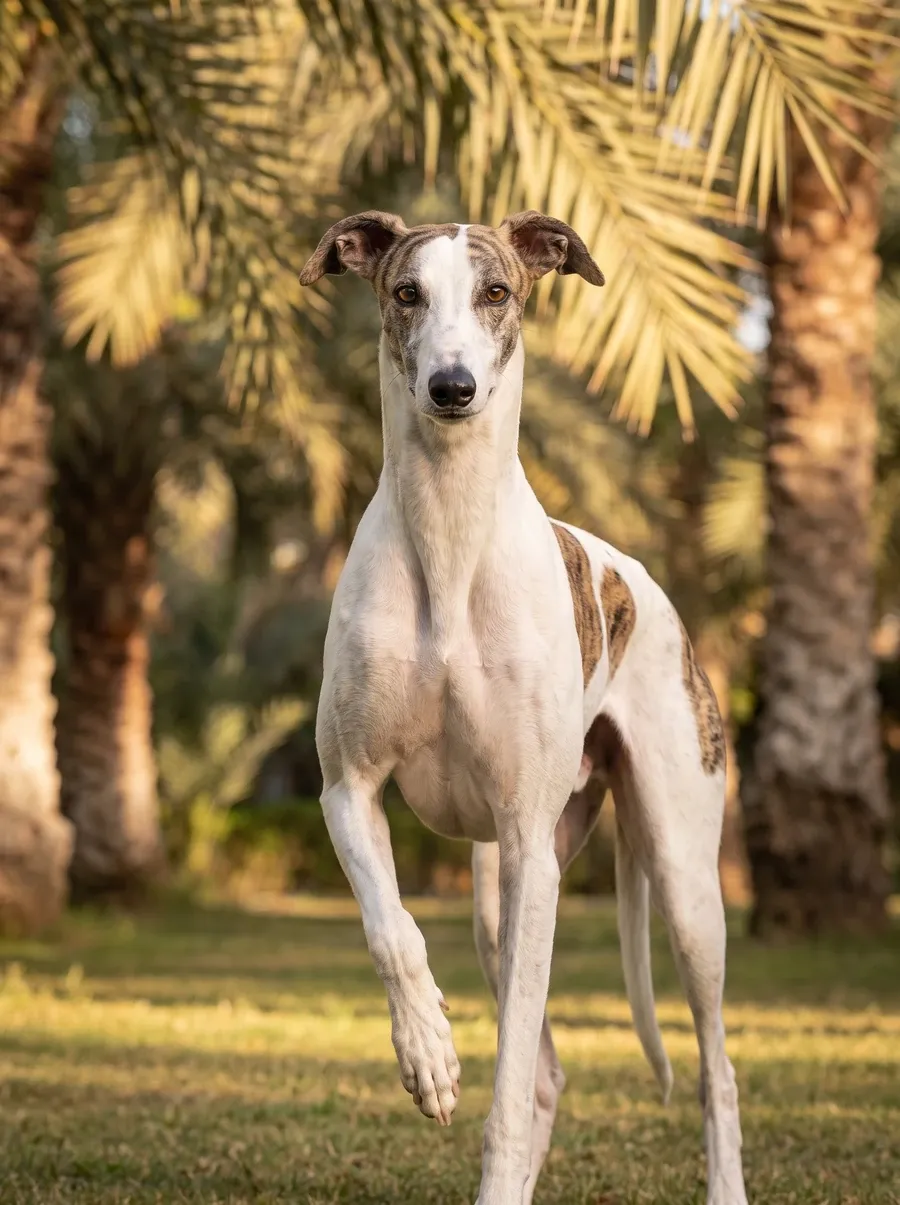
Greyhound in Dubai, a white and brindle adult on a shaded lawn under date palms, one front paw lifted

At home

Why is my Greyhound limping?

A limp after a run that has not cleared up a few days later.

What's going onMost limps are knocks and strains from sprinting. But Osteosarcoma (bone cancer) is a risk for Greyhounds from a young age, so if a limp does not clear up, keeps coming back, or comes with a swelling, contact your vet rather than resting them longer.

A Greyhound in Dubai

The bit nobody tells you.

Their run

Built for: A flat-out sprint, bred into them over generations.

In Dubai: Very few places they can run off the lead safely.

Their ground

Built for: Open fields, after a hare.

In Dubai: Ground too hot to try for five months of the year.

Their home

Built for: If they raced, a kennel and a fixed routine.

In Dubai: A home they have to learn from scratch.

Most of what is hard about their first months comes from that gap.

You cannot give them the track back, and they do not need it. You can give them a safe sprint, a soft bed and a quiet house, and the ten things below are how.

Your plan is built around their breed: the bones, stomach, thyroid and teeth a Greyhound is prone to, at every age.

Join the founding families. AED 1,999 of essential care for AED 199.

Daily care for a Greyhound

Ten things that make their life better.

Many of them are free, and most matter at every age.

  1. At full speed they can be out of sight before you reach the gate, and a narrow head slips an ordinary collar.

    Every age, for life

    Under AED 100

    Why

    At full speed they can be out of sight before you reach the gate, and a narrow head slips an ordinary collar.

    What to do

    Use a martingale collar, which tightens just enough that they cannot back out of it, or a fitted harness. Keep them on a lead or a 10 to 15 metre line unless the space is fully fenced. Keep training the recall every day, and never rely on it near a road.

  2. They were bred to sprint, not to trot for miles beside you.

    Every age, shorter and more often from 7 years

    Free

    Why

    They were bred to sprint, not to trot for miles beside you.

    What to do

    Two walks of twenty to thirty minutes, with time to sniff and stand and look, suit them better than one long march. Let them choose the pace for half of each walk. For a puppy, five minutes per month of age is plenty.

  3. They hunt by watching, and watching tires them out.

    Every age, most of all from 7 years

    Free

    Why

    They hunt by watching, and watching tires them out.

    What to do

    A spot by a window at their height where they can see the street. On walks, let them stand and stare into the distance for a minute without hurrying them on.

  4. They are sensitive dogs. Pressure makes them shut down, and it takes them a long time to come back.

    Every age, and gentler still as sight and hearing fade

    Free

    Why

    They are sensitive dogs. Pressure makes them shut down, and it takes them a long time to come back.

    What to do

    Reward the thing you liked, straight away. Say a cue once. Keep sessions short. Leave out the shouting and the lead jerks. A Greyhound learns far faster from a quiet voice.

  5. Bloat (Gastric Dilatation-Volvulus, GDV, a twisted stomach) is a risk from their teenage months, most of all in deep-chested dogs like them.

    From 6 months, for life

    FreeIn your plan

    Why

    Bloat (Gastric Dilatation-Volvulus, GDV, a twisted stomach) is a risk from their teenage months, most of all in deep-chested dogs like them.

    What to do

    Split their food into two meals. Keep them calm before and after each one: no sprinting, no rough play. A swollen belly, retching with nothing coming up, or pacing after a meal is an emergency: contact your vet now.

  6. They are quiet about pain, and dental disease and bone cancer are risks from a young age.

    Every age

    Free

    Why

    They are quiet about pain, and dental disease and bone cancer are risks from a young age.

    What to do

    Once a week, run your hands down each leg, feeling for heat, swelling or a spot they pull away from. Brush their short coat once a week and their teeth every day. If they limp, note the day it started.

  7. If they raced, the lure never let them win. At home it can, and a chase that ends in a catch leaves them tired instead of wound up.

    Every age, gentler for puppies and from 7 years

    Under AED 100, once

    Why

    If they raced, the lure never let them win. At home it can, and a chase that ends in a catch leaves them tired instead of wound up.

    What to do

    Use a flirt pole: a lure on a line on a pole. Three to five minutes, twice a week, on grass or sand, never on tiles. Let them catch it at least twice each time, and stop while they still want more. Puppies get 60 seconds, low and slow.

  8. They have very little body padding and a thin coat, so the pavement burns them and the air conditioning chills them.

    Every age, most of all puppies and from 7 years

    Under AED 150 a year

    Why

    They have very little body padding and a thin coat, so the pavement burns them and the air conditioning chills them.

    What to do

    From May to September, walk before sunrise and after dark. Put the back of your hand on the pavement for five seconds. If you cannot keep it there, they cannot walk on it. Put dog-safe sunscreen on their nose, ear tips and belly. Indoors, give them a blanket or a light coat if they shiver.

  9. Some Greyhounds live happily with cats and small dogs, and some never can. A racer spent their working life chasing a lure that looked like prey.

    Every age, most of all the first months home

    Free to AED 200

    Why

    Some Greyhounds live happily with cats and small dogs, and some never can. A racer spent their working life chasing a lure that looked like prey.

    What to do

    Introduce cats and small dogs over weeks, on a lead and muzzled, and never let a chase happen. If they stare hard and go very still, calmly move them away. Teach the muzzle early, with treats, and keep it on for walks where street cats gather.

  10. A bony dog with thin skin gets sore joints and pressure sores on a hard floor.

    Every age, orthopaedic from 7 years

    AED 200 to 900 for a thick, padded bedIn your plan

    Why

    A bony dog with thin skin gets sore joints and pressure sores on a hard floor.

    What to do

    A thick, padded bed, long enough for them to lie flat out, in the room where you sit. If they have claimed the sofa, put a blanket down and make it theirs. From 7 years, choose one that is low to step onto. An orthopaedic evaluation (a joint and bone exam) is in your plan from age two to seven.

Two of these are in your plan. The rest you can do at home.

Join the founding families. AED 1,999 of essential care for AED 199.

Greyhound health by age

Their health, at every age.

Greyhounds are quiet about pain, so a limp, a swollen belly or a slower day is often the first sign that something is wrong. Choose their age to see what to watch for, and the care that goes with it.

Greyhound, an older brindle dog with a greying muzzle resting on a padded bed under a cream blanket

How old are they?

Their age

Greyhound Puppy health

the first six months

What to watch for

  1. Gastrointestinal upset and conformation-related feeding intolerance
  2. Early or congenital expression of Osteosarcoma (bone cancer)
  3. Genetic predisposition to Hypothyroidism (an underactive thyroid), no clinical disease expected at this stage
  4. Retained deciduous teeth (baby teeth that do not fall out), malocclusion (teeth that do not meet properly) or early dental crowding
  5. Juvenile onset of skin allergies

The care that goes with it

  1. Core vaccinations, microchip and Dubai Municipality registration
  2. Deworming, and flea and tick prevention
  3. Weight, muscle, dental, growth and nutritional evaluation, and early socialisation
  4. Bloat (Gastric Dilatation-Volvulus, GDV, a twisted stomach) screening, as a first baseline
  5. Early follow-up for any signs of Osteosarcoma (bone cancer)
The full care detail
  • Core vaccination programme, microchipping and Dubai Municipality registration. Titre testing discussion where clinically appropriate; not a substitute for completing the core vaccine series
  • Deworming and external parasite prevention tailored to Dubai exposure
  • Body Condition Score (BCS, a check on whether they are the right weight), Muscle Condition Score (MCS, a check on their muscle), dental, growth and nutritional evaluation, and early socialisation
  • Baseline screening focused on Bloat (Gastric Dilatation-Volvulus (GDV))
  • Early diagnostic follow-up for signs suggestive of Osteosarcoma

Their age

Greyhound Juvenile health

6 months to 2 years

What to watch for

  1. Developing risk of Bloat (Gastric Dilatation-Volvulus (GDV), a twisted stomach)
  2. Young-dog presentation of Osteosarcoma (bone cancer)
  3. Genetic predisposition to Hypothyroidism (an underactive thyroid), monitoring only
  4. Early periodontal disease (gum disease) and dental crowding
  5. Recurrent or persistent skin allergies

The care that goes with it

  1. Preventive gastropexy (an operation that tacks the stomach in place), at the same time as neutering or spaying
  2. Dental cleaning
  3. Neutering or spaying, timed for a large breed
  4. Thyroid screening, with treatment only if signs are confirmed
  5. Signs that keep coming back, looked into fully rather than put down to the thyroid each time
The full care detail
  • Preventive gastropexy (during neutering)
  • Dental cleaning
  • Neuter/spay timing discussion that accounts for large-breed growth and disease risk
  • Thyroid screening for breed predisposition; treat only if clinical signs are confirmed
  • Investigate recurrent signs rather than repeatedly treating presumed Hypothyroidism

Their age

Greyhound Young Adult health

2 to 4 years

What to watch for

  1. Bloat (Gastric Dilatation-Volvulus (GDV), a twisted stomach)
  2. Osteosarcoma (bone cancer)
  3. Genetic predisposition to Hypothyroidism (an underactive thyroid)
  4. Dental Disease
  5. Skin Allergies

The care that goes with it

  1. Preventive gastropexy (an operation that tacks the stomach in place), if not done already
  2. Dental cleaning
  3. Thyroid screening, with treatment only if signs are confirmed
  4. Skin care
  5. Orthopaedic evaluation (joint and bone exam)
The full care detail
  • Preventive gastropexy
  • Dental cleaning
  • Thyroid screening for breed predisposition; treat only if clinical signs are confirmed
  • Skin care
  • Orthopaedic evaluation

Their age

Greyhound Prime Adult health

4 to 7 years

What to watch for

  1. Osteosarcoma (bone cancer)
  2. Hypothyroidism (an underactive thyroid)
  3. Bloat (a twisted stomach)
  4. Arthritis (sore, stiff joints)
  5. Heart Disease

The care that goes with it

  1. Orthopaedic evaluation (joint and bone exam)
  2. Thyroid monitoring (thyroid levels measured over time)
  3. Weight management
  4. Cardiac evaluation (heart check)
  5. Pain management
The full care detail
  • Orthopaedic evaluation
  • Thyroid monitoring
  • Weight management
  • Cardiac screening
  • Pain management

Their age

Greyhound Senior health

7 to 10 years

What to watch for

  1. Arthritis (sore, stiff joints)
  2. Heart Disease
  3. Dental Disease
  4. Hypothyroidism (an underactive thyroid)
  5. Cancer

The care that goes with it

  1. Pain relief
  2. Dental care
  3. Cardiac evaluation (a heart exam)
  4. Cancer screening
  5. Dietary management
The full care detail
  • Pain relief
  • Dental care
  • Cardiac evaluation
  • Cancer screening
  • Dietary management

Their age

Greyhound Geriatric health

10 years and over

What to watch for

  1. Cancer
  2. Heart Disease
  3. Kidney Disease
  4. Cognitive Dysfunction (dementia in older pets)
  5. Arthritis (sore, stiff joints)

The care that goes with it

  1. Oncology care (cancer care)
  2. Supportive therapy
  3. Cognitive support (for dementia in older pets)
  4. Pain management
  5. Regular physical examination
  6. Quality-of-life assessment
  7. Palliative care (comfort care)
  8. End-of-life planning with your veterinary team
The full care detail
  • Oncology care
  • Supportive therapy
  • Cognitive support
  • Pain management
  • Regular physical examination
  • Quality-of-life assessments
  • Tailored palliative and comfort-focused care plan
  • Compassionate end-of-life planning with your veterinary team

Breed predispositions indicate an increased risk rather than certainty of disease. What is right for them always comes from their own history and an evaluation.

Getting a Greyhound puppy in Dubai

Before they come home.

Greyhound, a fawn adult sitting on pale sand by a calm sea in soft morning light

Show or racing

Two kinds of Greyhound

Greyhounds come from two lines that rarely mix. Show Greyhounds are bred for the show ring, and are larger and heavier. Racing Greyhounds are bred for speed on the track, and many come to a home only when they retire. In the UAE you may meet either.

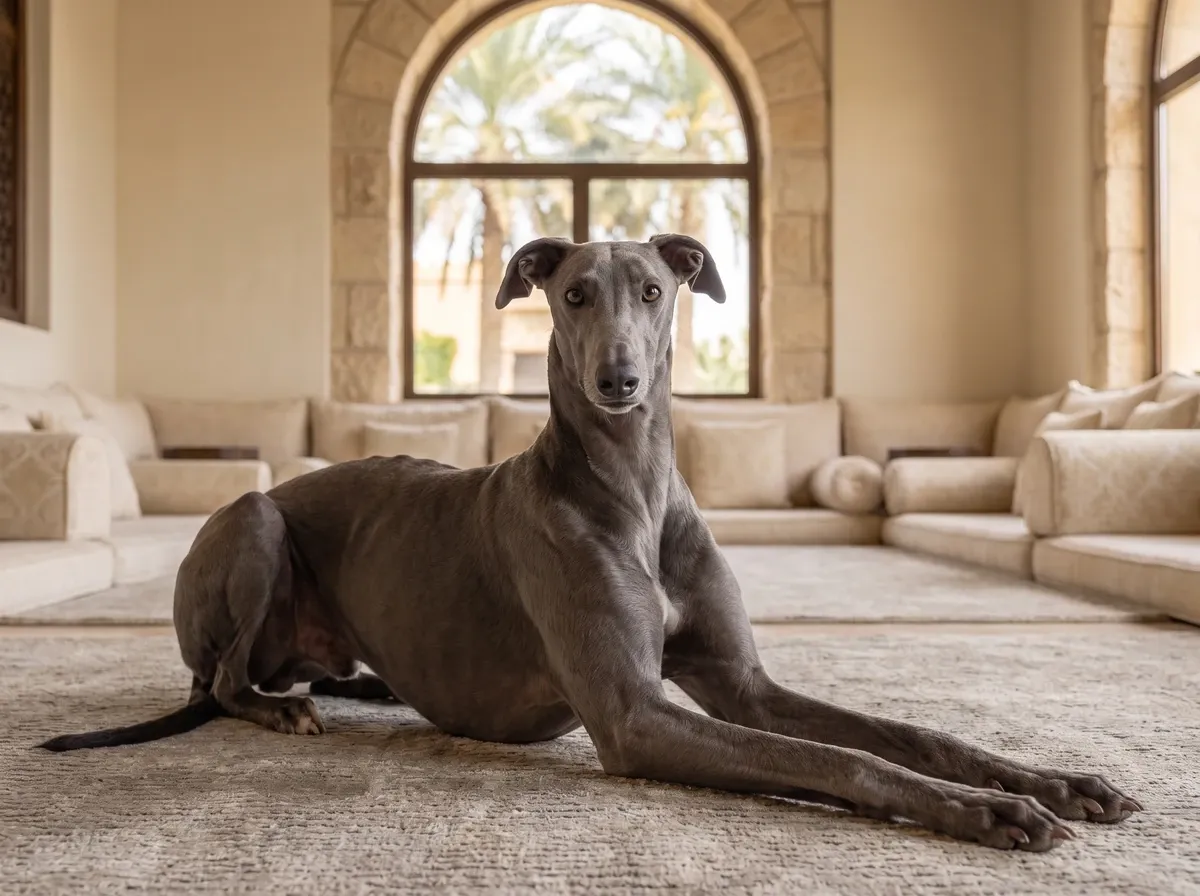
Greyhound in Dubai, a blue adult lying on a stone rug in a majlis below an arched window onto palms

Greyhound colours

Any colour at all

Black, blue, fawn, red, white and every shade of brindle, on their own or broken up with white, and no colour is better than another.

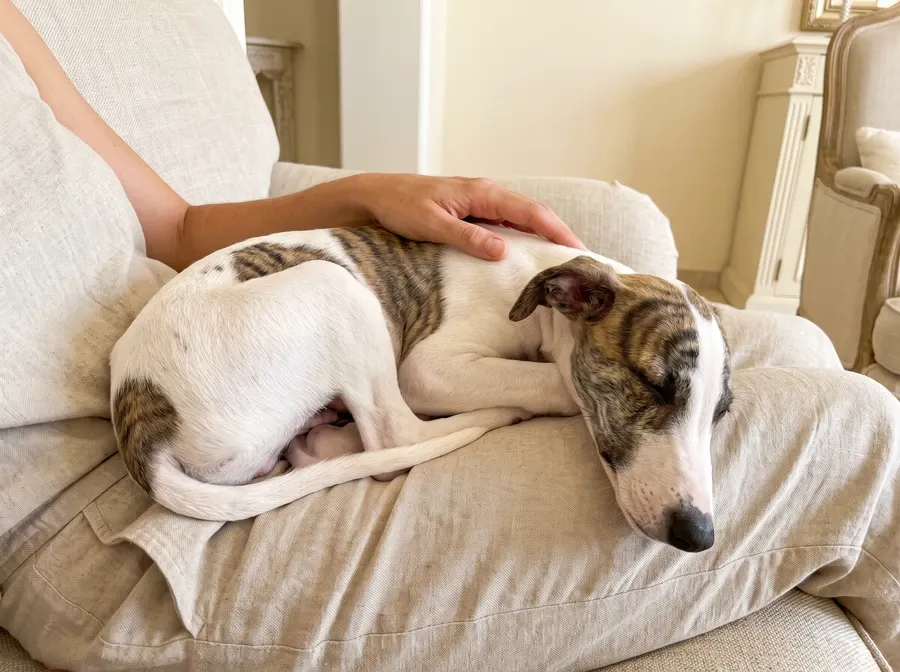
Greyhound, a white and brindle puppy asleep in a pet parent's lap on a linen armchair

The first six months

Caring for a Greyhound puppy

Their full vaccination course, microchip and Dubai Municipality registration come first. Puppies need 18 to 20 hours of sleep and only short, low runs while their bones grow, and it is the easiest time to teach the muzzle.

Puppy health, 0 to 6 months
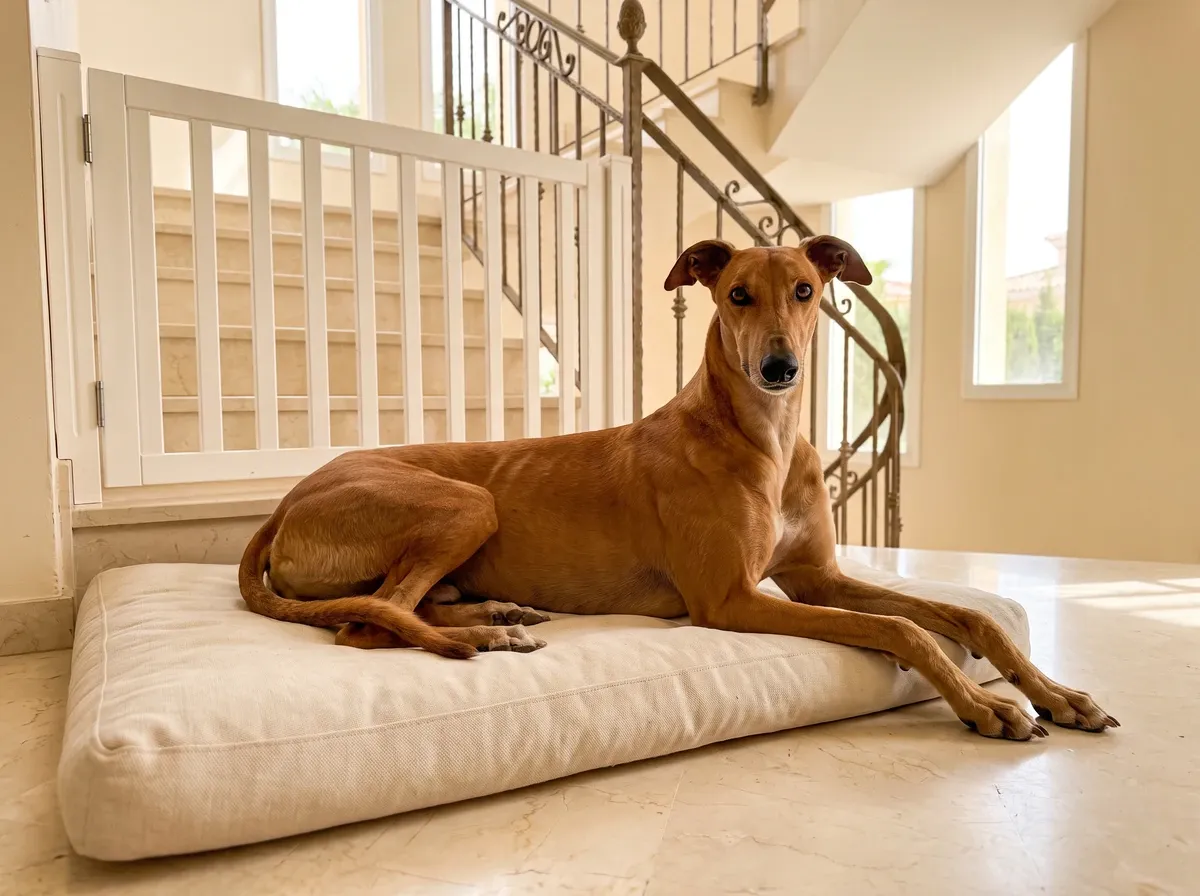
Greyhound, a red adult on a long padded bed beside a baby gate at the foot of a villa staircase

Getting the home ready

A long bed, and a gate on the stairs

Give them a thick bed long enough to stretch out on, in the room where you sit, and check every gate and door. If they have come from a track, gate the stairs for now and walk down them together.

Ten things that make their life better
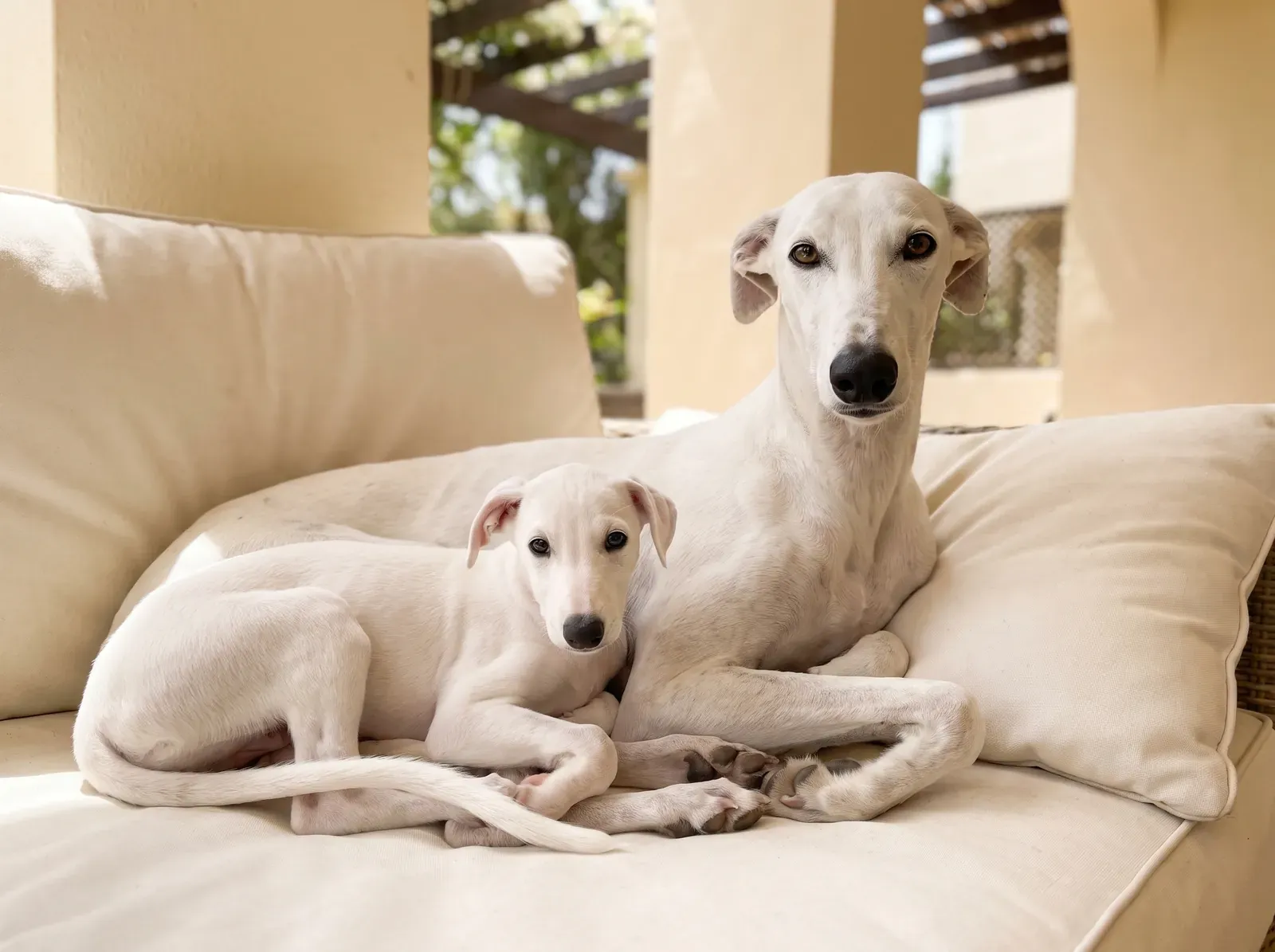
Greyhound, a white mother lying with one white puppy on a cream cushion on a shaded terrace

Before you commit

Ask about their health and their history

Ask the breeder, or the group rehoming them, about the parents' health and the dog's own history: injuries, teeth, and whether they have lived with cats. Bloat, bone cancer and dental disease are the first risks for a young Greyhound.

The reception of a Paws & Co clinic, with long cream benches and a stone reception desk

Before the clinics open

Join the founding families

AED 1,999 of essential care for AED 199. No payment now.

When to see a vet

When it is not behaviour.

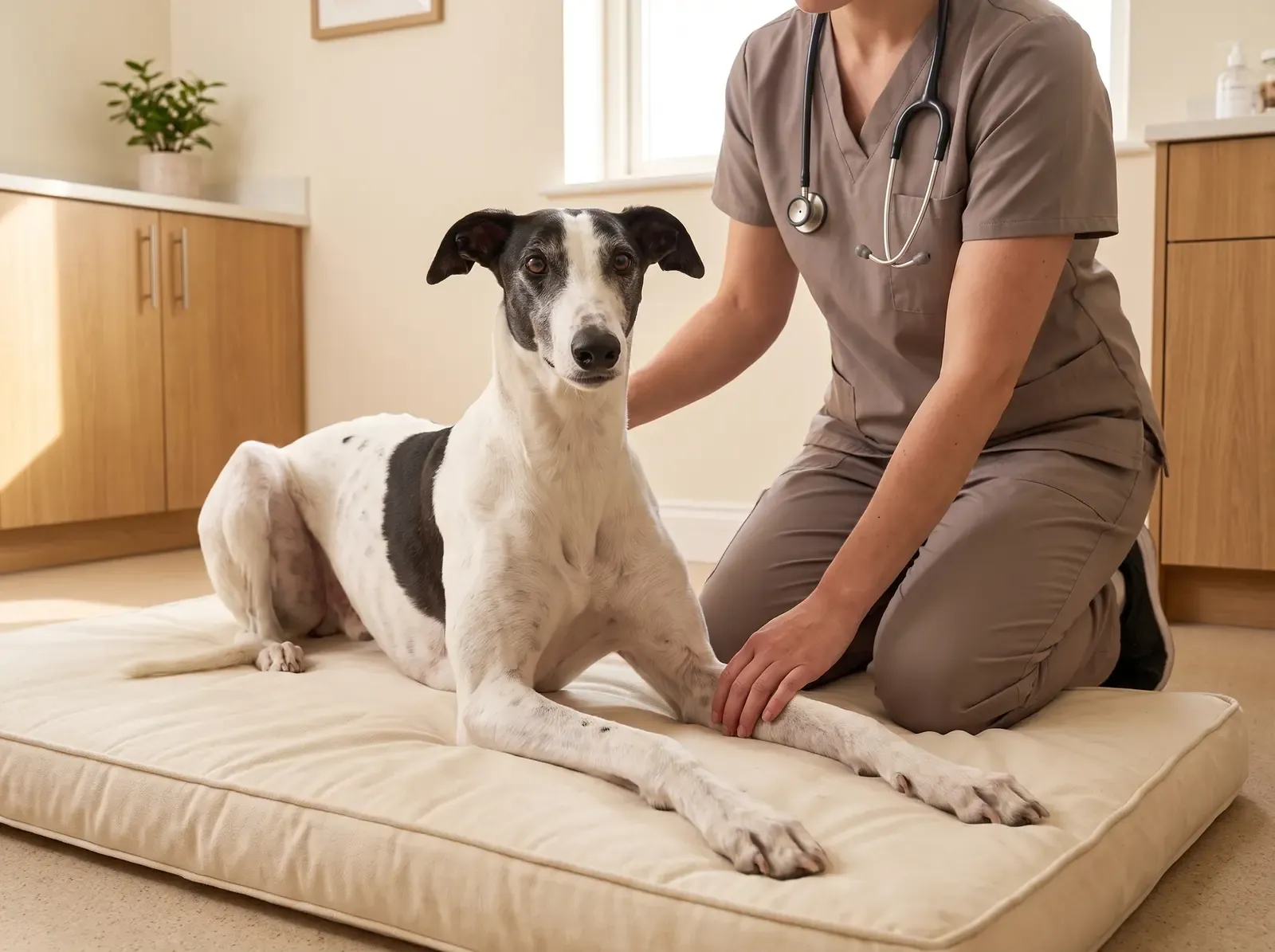
Greyhound, a white and black adult lying on a padded mat as a vet in taupe scrubs rests a hand on their foreleg

Some of this is not a training problem, and treating it like one wastes time your dog may not have. If they are distressed when you leave, if they growl or guard their food, their toys or you, if they are frightened on the lead, or if anything about them changes suddenly at any age, contact your vet the same day. A tip from a website, ours included, is not the answer. If it cannot wait, contact your nearest emergency vet now.

With a Greyhound, watch their legs and their belly. If a limp keeps coming back, or you find a swelling on a leg, contact your vet, because Osteosarcoma (bone cancer) is a risk for the breed. A swollen, tight belly, retching with nothing coming up, pacing or drooling after a meal is an emergency: contact your vet now. Later on, a Greyhound who is slower, heavier and flatter than usual may have an underactive thyroid (hypothyroidism), not just age.

They'll get braver on the stairs. If they start to struggle on them again, tell your vet.

Greyhound history

Before they were yours.

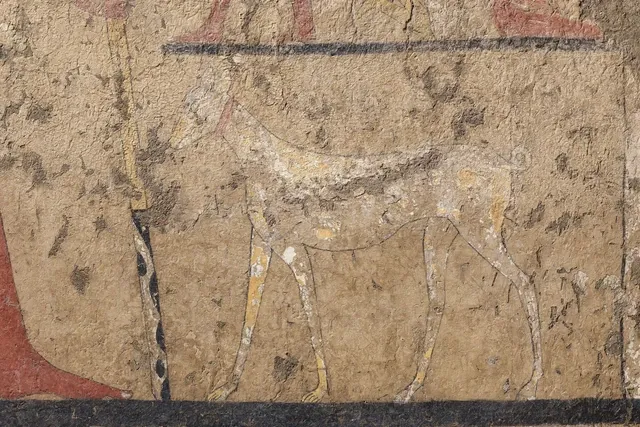
  1. Greyhound history, a pale long-legged hound painted beside a man in the tomb of Iti, Gebelein, Egypt, about 2000 BC
    A long-legged hound of Greyhound type, from a wall painting in the tomb of Iti at Gebelein, Egypt, about 2118 to 1980 BC. Museo Egizio, Turin.

    The ancient world

    Hounds on tomb walls

    Long-legged hounds of Greyhound type were painted on the walls of ancient Egyptian tombs. They show a type of dog, not a family tree.

    What they still carryThe long legs, the deep chest and a chase that starts with the eyes.

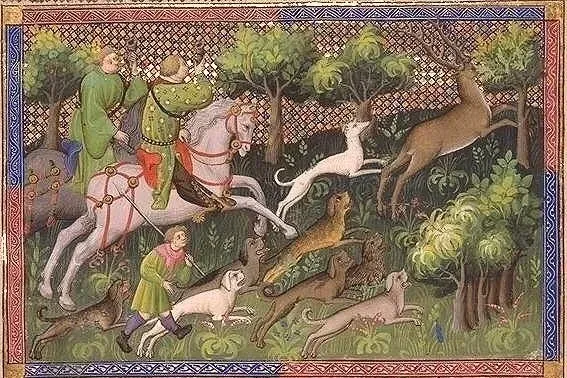
  2. Greyhound history, a white hound leaping beside a mounted hunter after a stag, hunting manuscript, Europe, about 1450
    A white Greyhound after a stag, from a 15th-century hunting manuscript. Reproduced in The Master of Game, 1909.

    The Middle Ages

    A hound for nobles

    In medieval Britain, a law said only royalty and nobility could hunt with Greyhounds.

    What they still carryA gentle manner, from hounds that were valued and handled kindly.

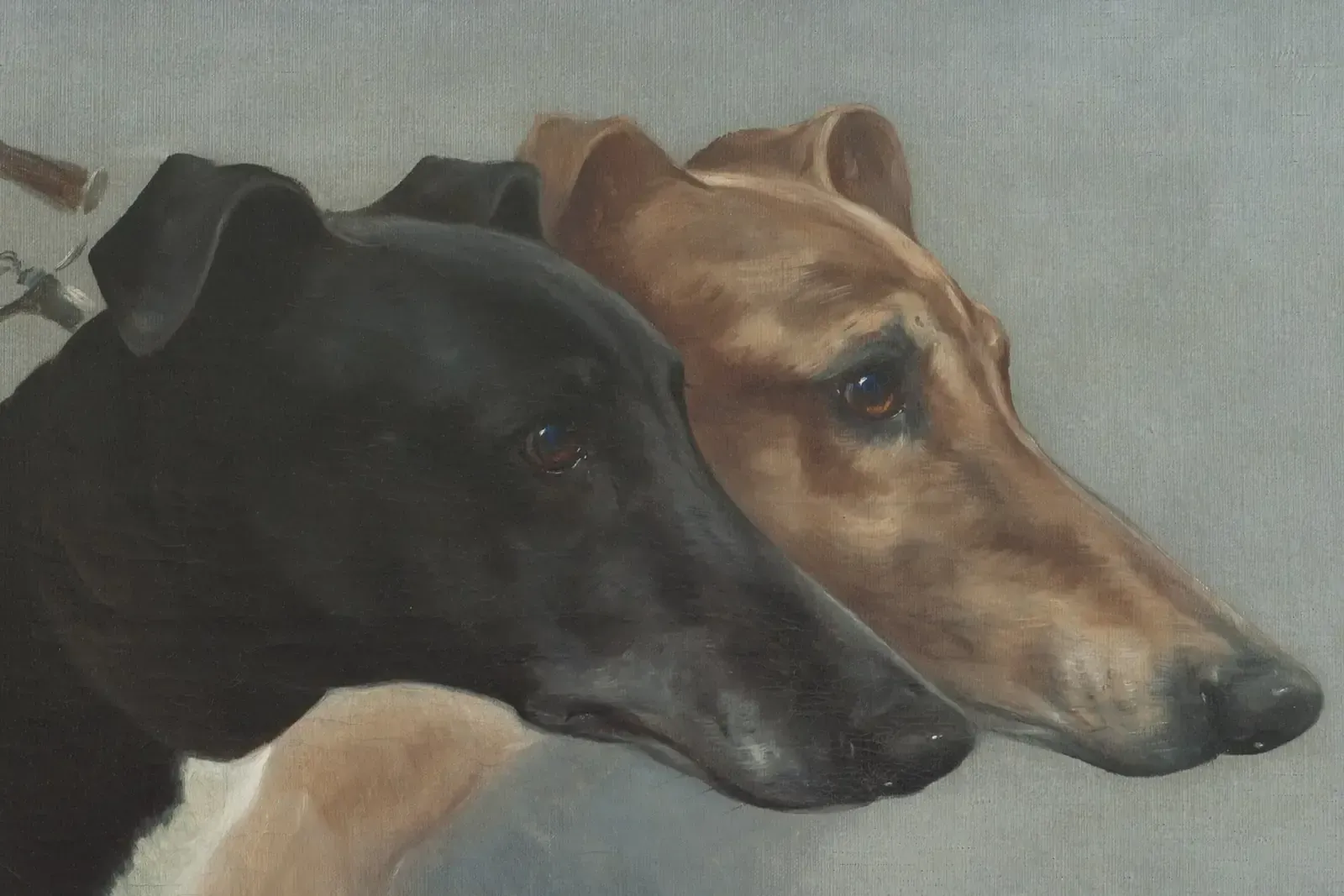
  3. Greyhound history, a black and a fawn hound held in the slips, painted by Lilian Cheviot, Britain, 1914
    In the slips for the Waterloo Cup, painted by Lilian Cheviot in 1914.

    1836

    Coursing in Britain

    Two dogs were slipped together after a hare and judged on how they ran it. The Waterloo Cup began near Liverpool in 1836.

    What they still carryThe sprint, and the way they lock onto anything small that runs.

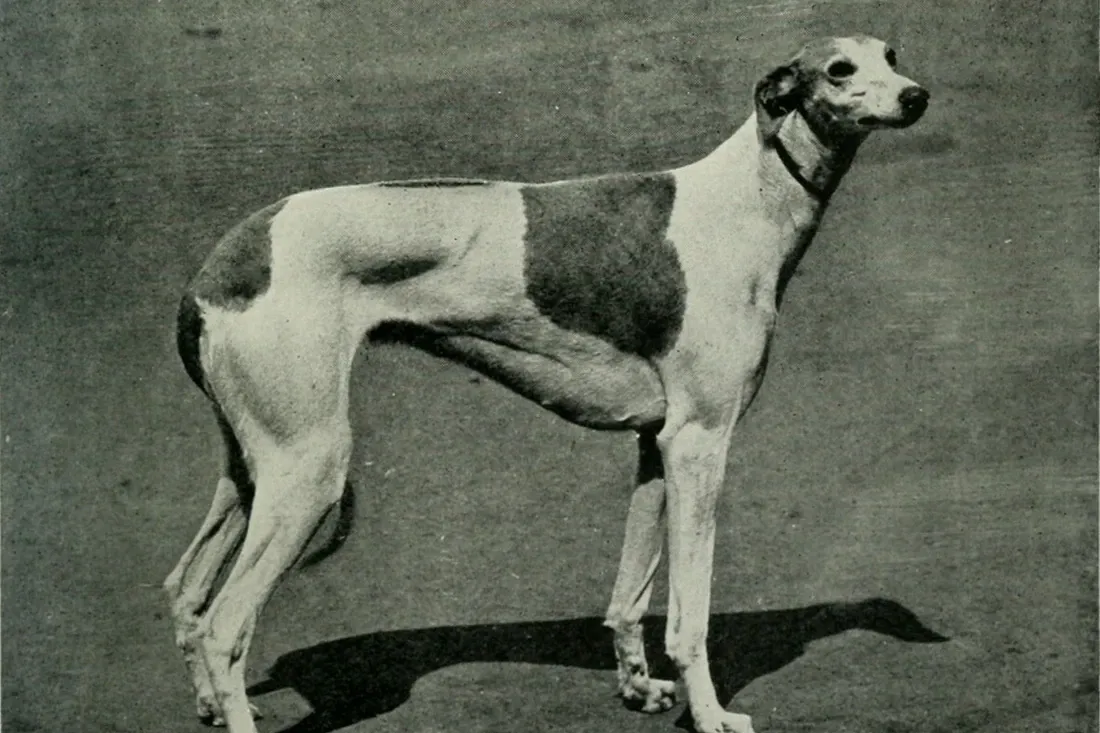
  4. Greyhound history, a white dog with a dark patch standing in a show pose, Britain, 1922
    A show Greyhound, photographed for The Complete Book of the Dog, 1922.

    1873 to 1885

    Recognised

    The Greyhound was among the first breeds registered by The Kennel Club in 1873. The American Kennel Club followed in 1885.

    What they still carryShow lines, bred for the ring alongside the runners.

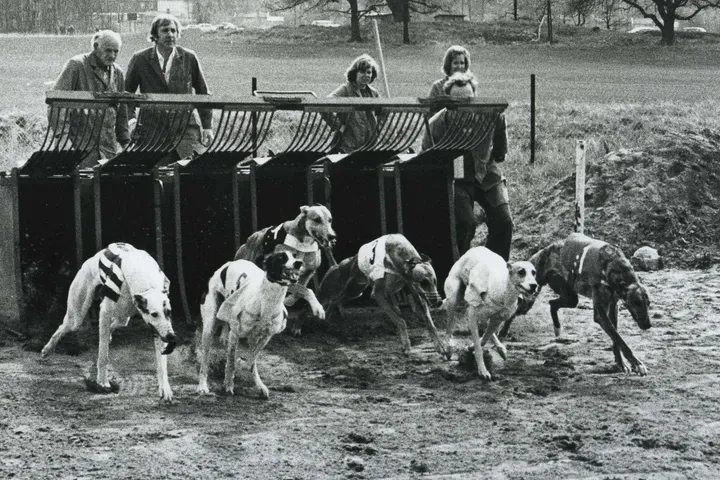
  5. Greyhound history, six dogs leaving the traps at a race, Skarpnäck, Stockholm, 1960
    Greyhounds leaving the traps at Skarpnäck, Stockholm, in 1960.

    1919 to 1926

    The oval track

    Greyhound racing behind a mechanical lure began in the United States around 1919 and reached Britain in 1926, at Belle Vue in Manchester.

    What they still carryIf they raced, a muzzle they may know, and a house that is new to them.

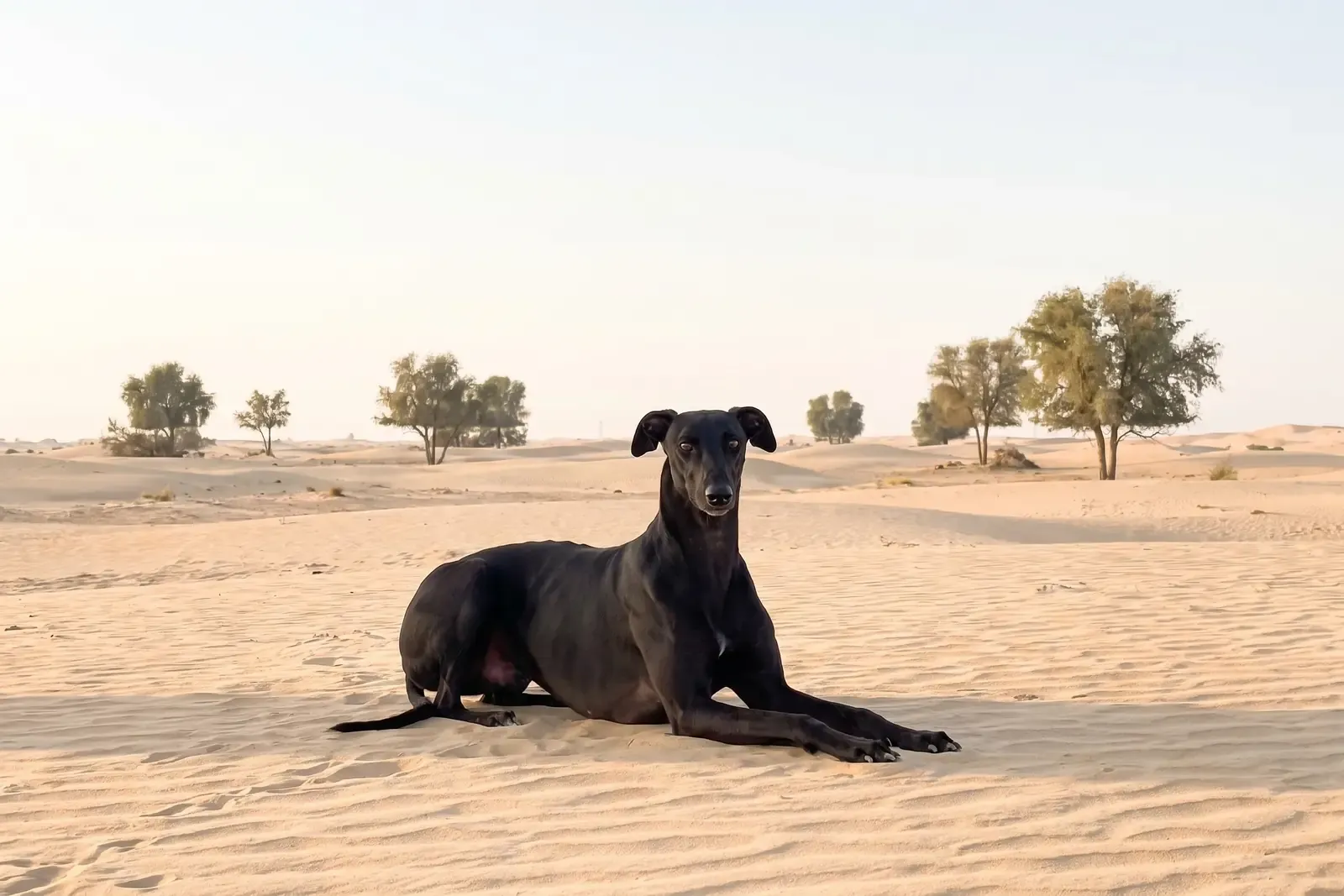
  6. Greyhound history, the breed today, a black adult lying on desert sand among ghaf trees, Dubai, 2026

    Today

    In Dubai

    Here Greyhounds are family dogs. Some are retired racers rehomed from abroad, some come from breeders.

    What they still carryA sprinter's body and thin skin, in a 45-degree summer, usually on the sofa.

Greyhound questions

The ones you type at midnight.

Most of these get asked late at night, by someone watching their dog and not sure what they are seeing.

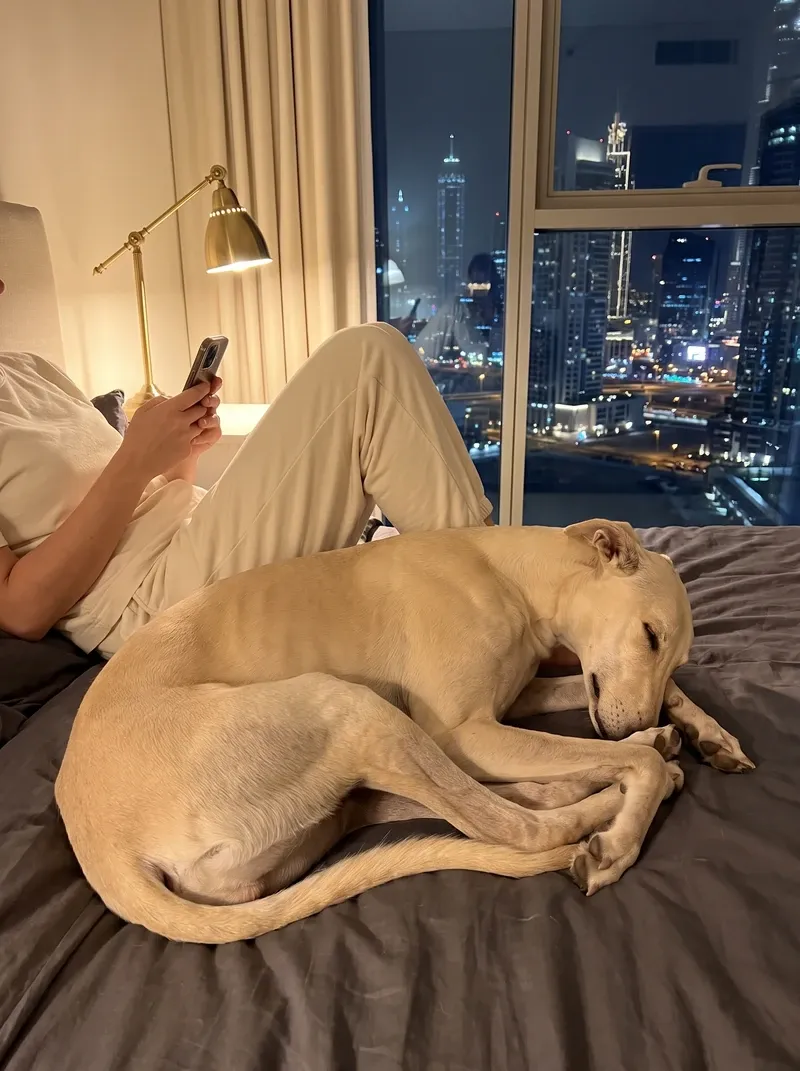
Greyhound in Dubai, a fallow adult asleep across a pet parent's feet in bed at night, the skyline behind
How long do Greyhounds live?

Greyhounds usually live 10 to 14 years. In a UK study of Greyhounds seen by vets, the median lifespan was 11.4 years.

How fast can a Greyhound run?

A Greyhound can reach about 45 miles an hour, around 72 km/h. Then they sleep for most of the day.

How big is a full grown Greyhound?

Male Greyhounds usually weigh 29.5 to 32 kg and females 27 to 29.5 kg. Show Greyhounds are usually larger and heavier than racing Greyhounds.

Do Greyhounds shed?

Greyhounds shed lightly to moderately. Their short, fine coat needs only a weekly brush.

Can a Greyhound dog live in Dubai's heat?

Yes, a Greyhound can live in Dubai, but they feel extreme heat and need shade and water. From May to September, walk before sunrise and after dark, and give them a blanket when the air conditioning is on.

Do Greyhounds need a lot of exercise?

Less than most people expect. A Greyhound needs two slow walks a day and a short chase on a flirt pole twice a week, and sleeps most of the rest.

Are Greyhounds good with cats?

Some Greyhounds live happily with cats, and some never can. Introduce them slowly over weeks, on a lead and muzzled, and never let a chase happen.

What is greyhound racing?

Greyhound racing is dogs chasing a mechanical lure around an oval track. It began in the United States around 1919 and reached Britain in 1926. Racing Greyhounds retire young, and then they need homes.

Is the English Greyhound the same as the Greyhound?

Yes. The English Greyhound is the Greyhound on this page, a breed from the UK, shaped there by coursing and later by racing.

Worried about them? Contact your vet today.