We’re hiring people who love them like we do. Join us careers@pawsandco.comSee open roles
UAE Government Licensed MOCCAE
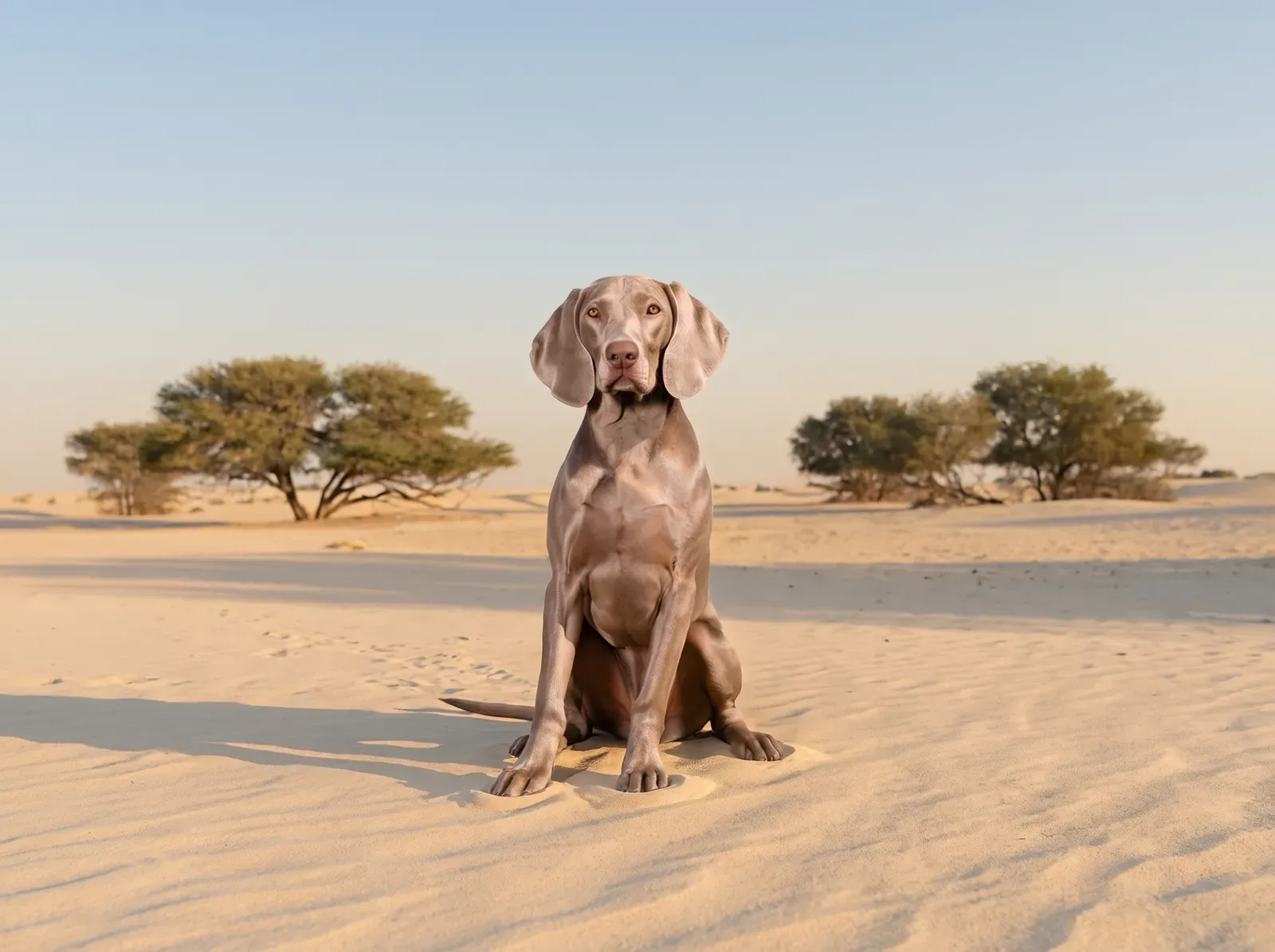
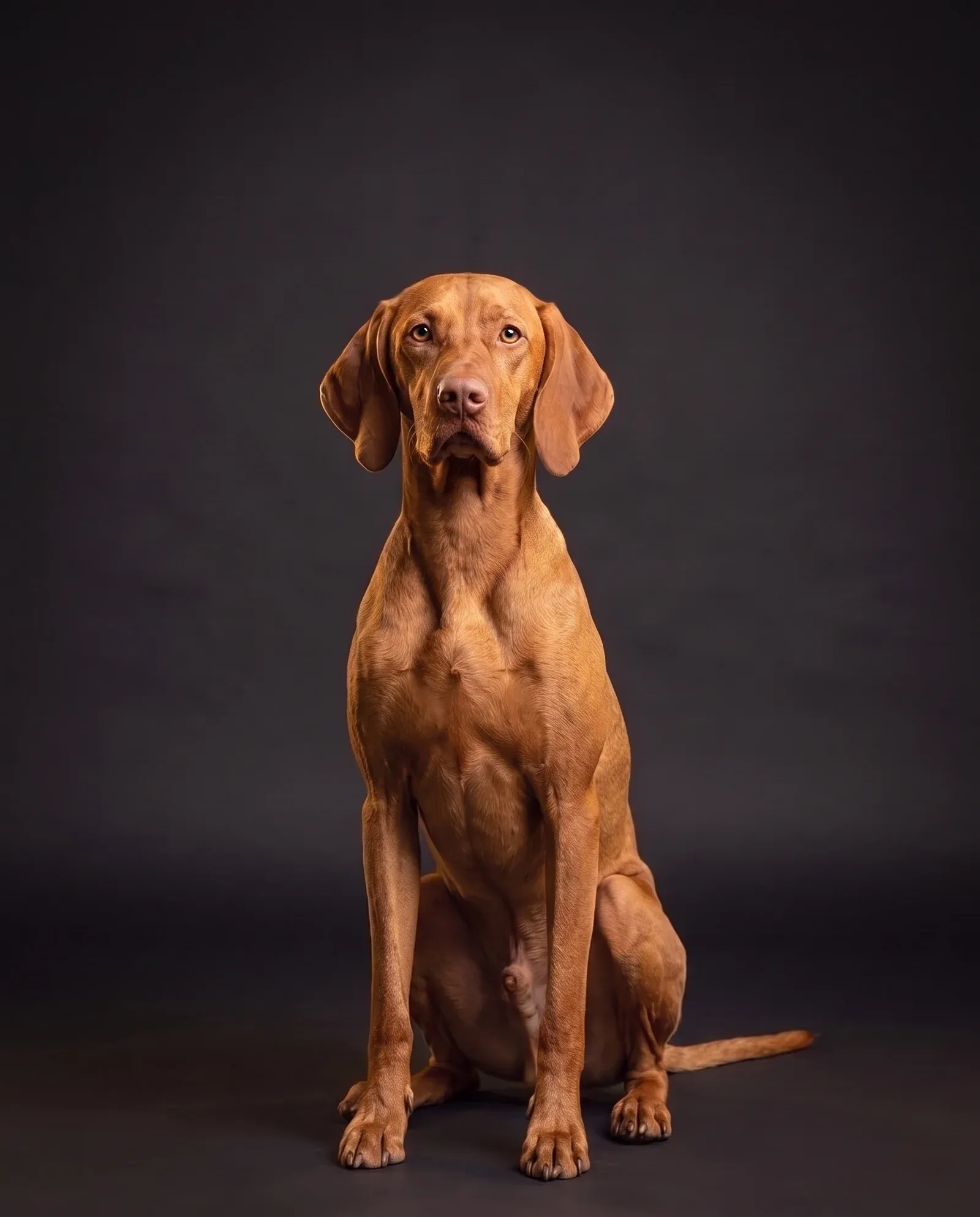
Vizsla in Dubai, studio portrait of a calm golden rust adult sitting

Breed guide  ·  Dogs

Vizsla

He leans his whole weight on my legs while I cook. I stir with one hand now.

Lifespan
12 to 15 years
Size
Large
Weight
20 to 27 kg
Shedding
Moderate

Last updated 12 October 2026

Join the founding families. AED 1,999 of essential care for AED 199.

No payment now. We'll be in touch by email and WhatsApp as we open enrolment.

✓
Thank you.

We will be in touch soon to confirm.

Vizsla traits

What they brought with them.

Tap a card to see what is going on.

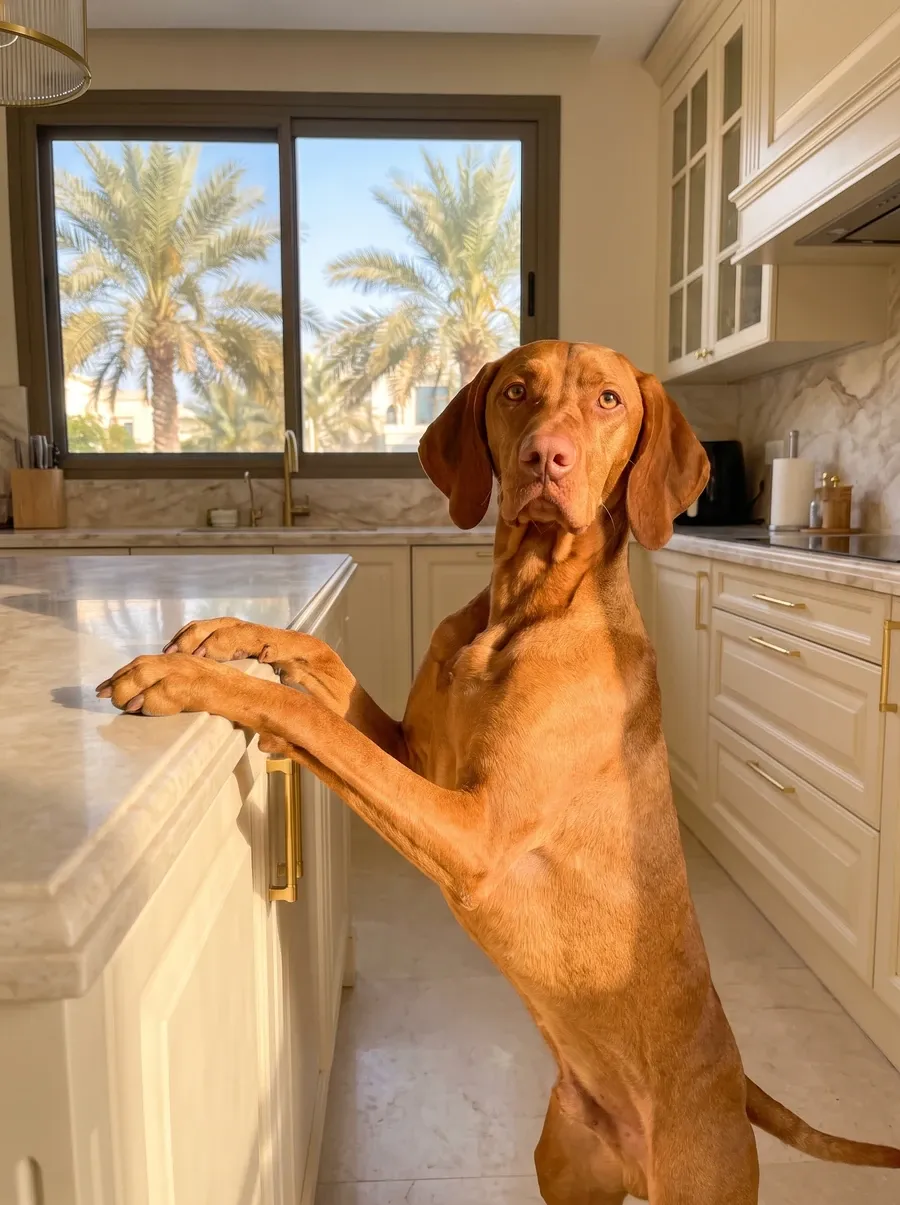
Vizsla in Dubai, a golden rust adult with front paws up on a stone kitchen island, palms through the window

At home

Why does my Vizsla lean on me?

Leaning on your legs while you cook, sleeping against your back, following you to the bathroom.

What's going onThe Vizsla was bred to live and work beside one person, and they take it literally. It is why they are called the velcro dog.

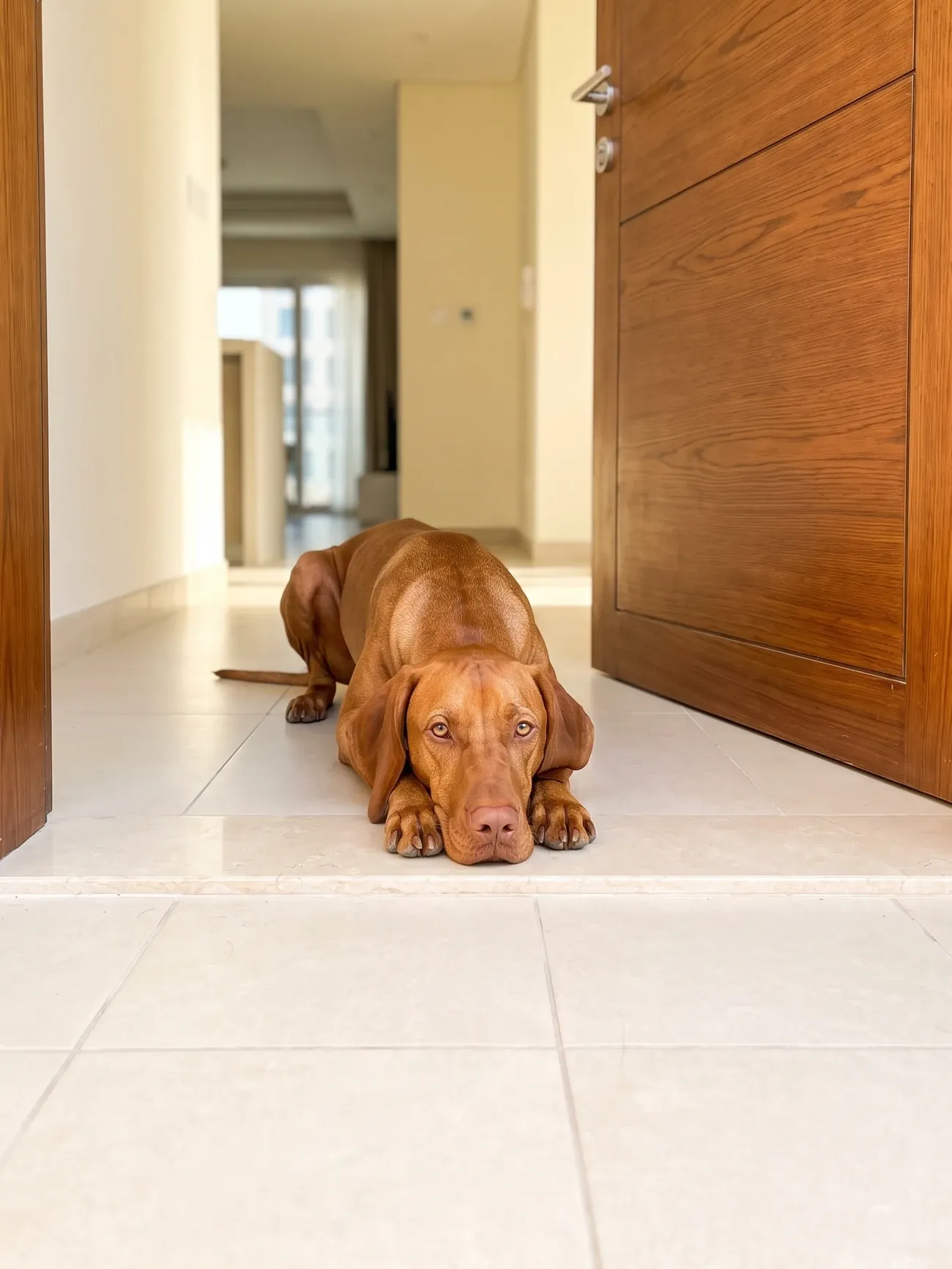
Vizsla, a golden rust adult lying by the open front door of a flat, chin on paws

At home

Why does my Vizsla panic when I leave?

Howling, scratching at the door, or not eating until you are home.

What's going onThat is separation distress, not bad manners. Contact your vet before you try a fix you have read about, because the wrong fix makes it worse.

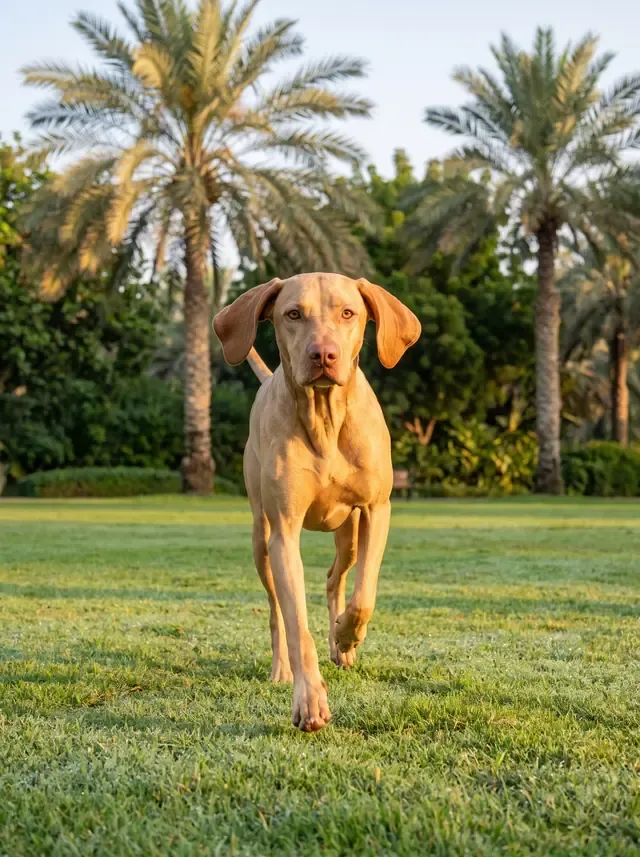
Vizsla in Dubai, a light golden adult trotting across a park lawn under date palms

At home

Why is my Vizsla never tired?

An hour's walk, and they still want more.

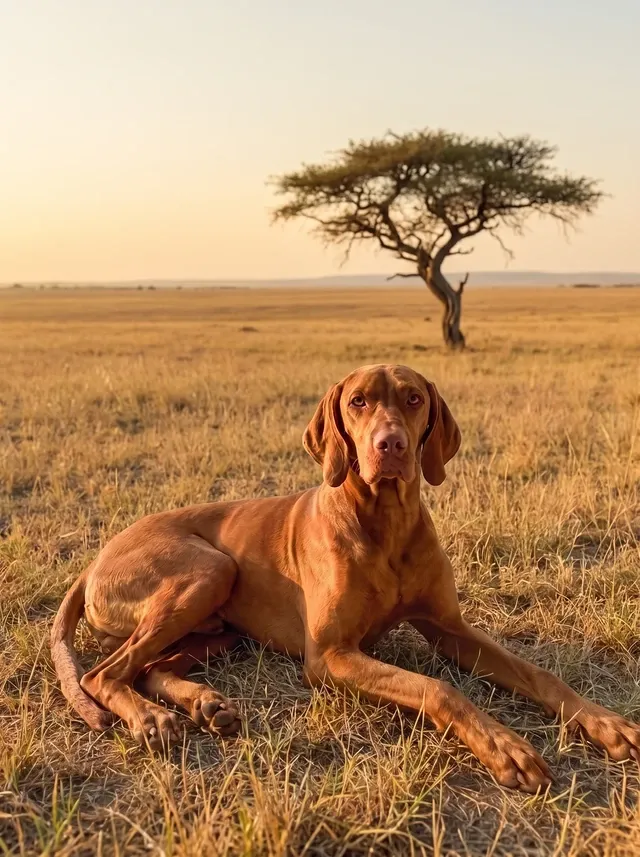
What's going onThey were bred to run open plains for hours, and here the pavement is too hot for half the year. Early mornings, late nights and a job for their nose keep them settled between runs.

Vizsla in Dubai, a golden rust adult under a cream blanket on a sofa, palms through an arched window

At home

Why does my Vizsla burrow under blankets?

Give them a blanket and they will burrow right into it, nose just showing.

What's going onTheir short coat has no undercoat. They heat up fast outside and feel the air conditioning inside, so a bed with a blanket, away from the vent, suits them.

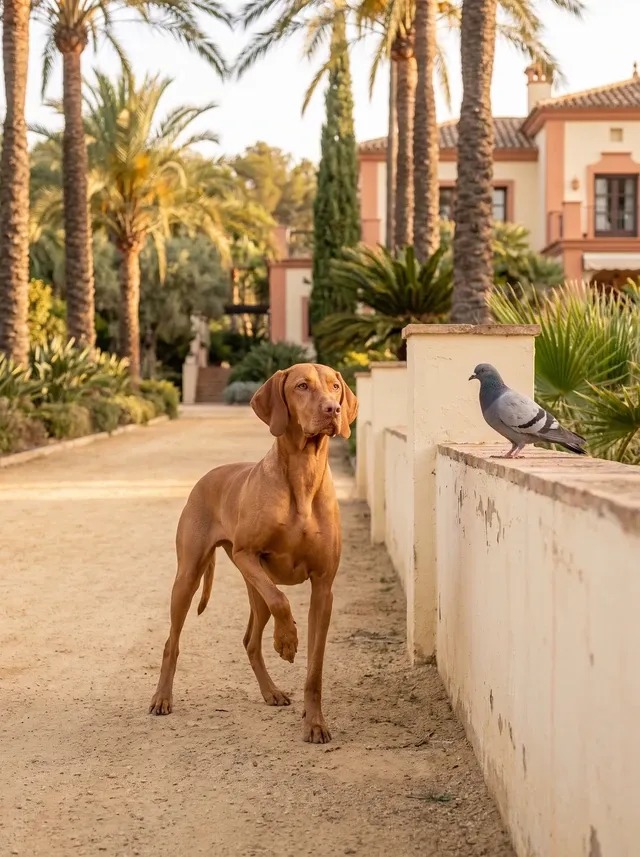
Vizsla in Dubai, a golden rust adult standing still, one paw lifted, watching a pigeon on a villa wall

At home

Why does my Vizsla freeze when they see a bird?

Locked on to a pigeon, perfectly still, sometimes with a front paw lifted.

What's going onThey find birds by scent and hold still to show you where. Then the bird moves, and the chase is on. Teach a stop whistle before you need it.

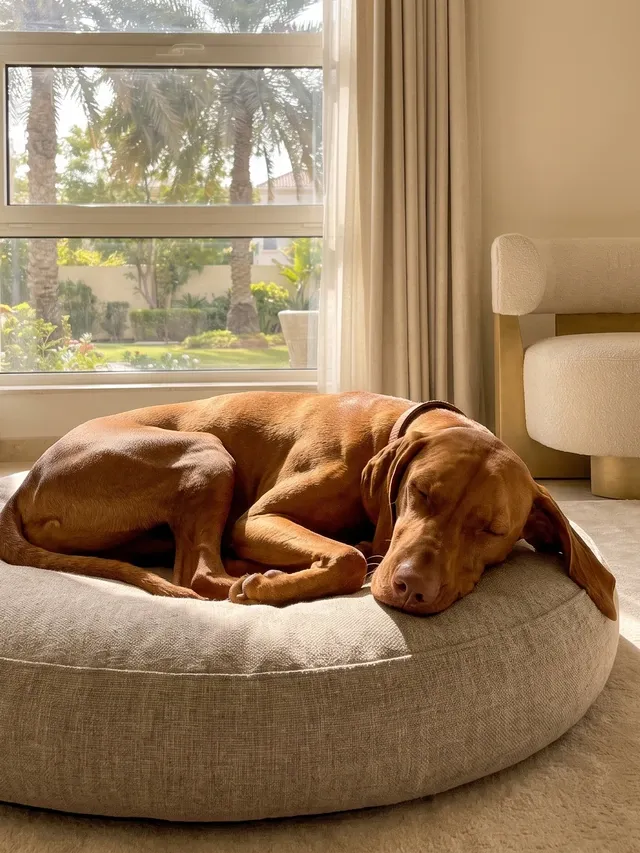
Vizsla in Dubai, a golden rust adult asleep on a round dog bed, palms through the window

At home

Why has my Vizsla suddenly calmed down?

Sleeping more, a little heavier, a duller coat. It looks as if they have finally settled.

What's going onAn underactive thyroid is common in Vizslas, and it can look exactly like that. If you notice the change, tell your vet.

A Vizsla in Dubai

The bit nobody tells you.

Their running

Built for: Open country, for hours.

In Dubai: Limited by heat for half the year.

Their person

Built for: Beside one person all day.

In Dubai: Their person goes out to work.

Their job

Built for: Find birds, point them and bring them back.

In Dubai: Pigeons and cats on most streets, often next to traffic.

The restlessness, the chewed door frame and the howling when you leave mostly come from that gap.

You cannot give them the Hungarian plains, and you cannot stay home all day. You can plan their days around the hours you are out, and the ten things below are how.

Your plan is built around their breed: the risks Vizslas are known for at every age, and the care that goes with each one.

Join the founding families. AED 1,999 of essential care for AED 199.

Daily care for a Vizsla

Ten things that make their life better.

Many of them are free, and most matter at every age.

  1. Searching tires them out in a way that a run on a hot day cannot.

    Every age, with easy searches at floor level from 7 years

    Free, or under AED 100 for a snuffle mat

    Why

    Searching tires them out in a way that a run on a hot day cannot.

    What to do

    Scatter part of their breakfast on the grass or on a towel indoors. Hide a toy and send them to find it. On the hottest days, do ten minutes of search games instead of a run.

  2. They were bred to cover ground in front of their person and check back.

    Every age, short sessions for puppies

    Under AED 150

    Why

    They were bred to cover ground in front of their person and check back.

    What to do

    A harness, a five-to-ten-metre line and a quiet, open space before sunrise. Let them work, call them in every few minutes and reward them when they come. Keep puppy sessions short and on soft ground while the joints are forming.

  3. They are fast. By the time you have called their name twice, they are a long way off.

    Every age, starting at mealtimes as a puppy

    Under AED 50

    Why

    They are fast. By the time you have called their name twice, they are a long way off.

    What to do

    One sound for "come back", one for "stop". Start at home at mealtimes, pay them every time, and only use it outside once it works indoors. Add a hand signal as well if their hearing fades with age.

  4. The point is bred in. Staying put when the bird flies has to be taught.

    Every age, hardest from 6 months to 2 years

    Free

    Why

    The point is bred in. Staying put when the bird flies has to be taught.

    What to do

    When they lock on to a pigeon or a cat, stand still with them, ask for a stop and reward them before the bird goes. Over the weeks, practise a little closer to the birds each time. Keep the lead on near roads.

  5. Vizslas retrieve on land and water, and they will carry something whether you choose it or not.

    Every age, most of all 6 months to 2 years

    Under AED 100

    Why

    Vizslas retrieve on land and water, and they will carry something whether you choose it or not.

    What to do

    A soft toy that is theirs. Five to ten throws along the ground, then stop. Swap anything they take for a treat, and do not chase them for it.

  6. Their teeth need the attention: retained puppy teeth early on, then gum disease from adolescence.

    Every age, most of all as a puppy and through adolescence

    Under AED 60 for a brush and dog toothpasteIn your plan

    Why

    Their teeth need the attention: retained puppy teeth early on, then gum disease from adolescence.

    What to do

    Once a week, lift their ears and look inside so they are used to being handled. Then lift their lip. As a puppy, look for baby teeth still sitting beside the new ones. From then on, brush their teeth daily if they will let you. A dental evaluation (teeth and gum check) is in your plan at their puppy visits, and a professional dental clean every 6 to 12 months from age two.

  7. A lean dog with no undercoat, bred to run for hours, heats up fast and will not stop by themselves.

    Every age, most of all puppies and from 7 years

    Free

    Why

    A lean dog with no undercoat, bred to run for hours, heats up fast and will not stop by themselves.

    What to do

    From May to September, run and walk before sunrise and after dark. Put the back of your hand on the pavement for five seconds: if you cannot keep it there, they cannot run on it. Carry water and keep hard running short.

  8. They were bred to be with one person all day, and many Vizslas find being alone hard.

    Every age, hardest from 6 months to 2 years and again from 7 years

    Free, or the cost of a walker

    Why

    They were bred to be with one person all day, and many Vizslas find being alone hard.

    What to do

    If you are out more than a few hours, arrange a midday walk, a visit or daycare, and leave a stuffed chew. If they howl, scratch at the door or will not eat until you are back, contact your vet. That needs expert help, not a home fix.

  9. Allergies are common in the breed from puppyhood into prime adulthood, and on a thin coat they show early.

    Every age, most of all 6 months to 4 years

    Under AED 50 for a mittIn your plan

    Why

    Allergies are common in the breed from puppyhood into prime adulthood, and on a thin coat they show early.

    What to do

    A rubber mitt once a week. Look for red patches, bumps or hair loss, and notice if they keep licking their paws. If their skin keeps flaring, their plan looks for the cause rather than treating it again and again.

  10. Hip problems and an underactive thyroid both run in the breed, and they hide discomfort well.

    Every age, hips and thyroid from 2 years

    FreeIn your plan

    Why

    Hip problems and an underactive thyroid both run in the breed, and they hide discomfort well.

    What to do

    Feel their ribs, spine and hips once a week. Notice if they are slow to get up, sleeping more or gaining weight. Weigh them once a month and keep a note of it. Their hip evaluation is due by age two, with a yearly thyroid blood test from then on.

Three of these are in your plan. The rest you can do at home.

Join the founding families. AED 1,999 of essential care for AED 199.

Vizsla health by age

Their health, at every age.

In a Vizsla, a dog who suddenly seems calmer, or a minute of staring into space, can be the first sign of a thyroid problem or a seizure. Choose their age to see what to watch for, and the care that goes with it.

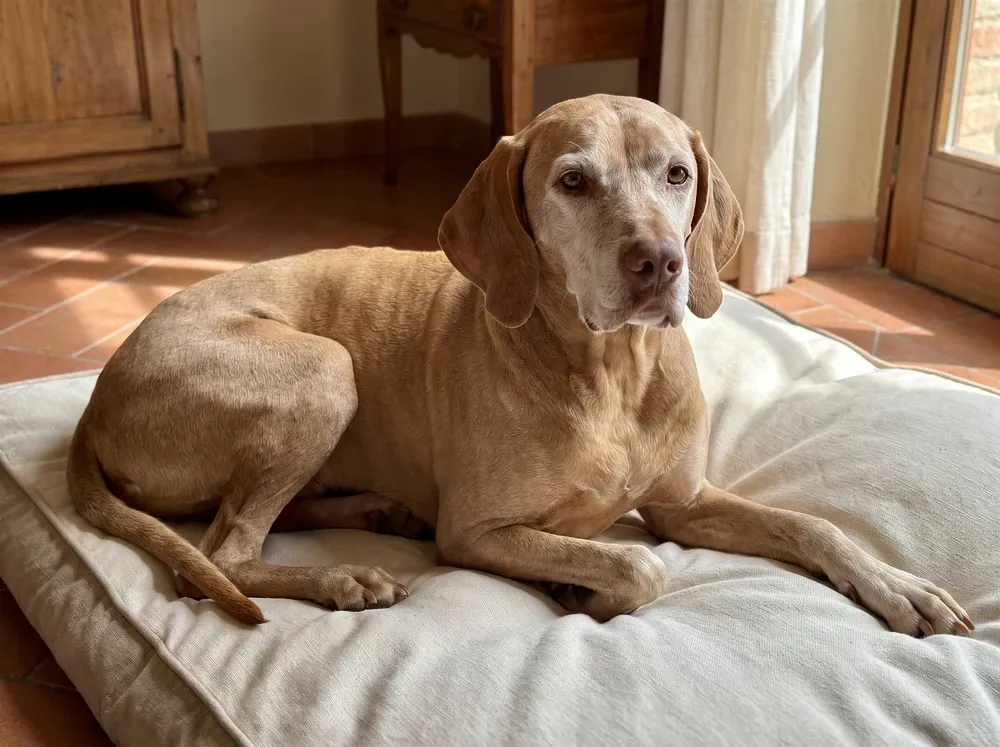
Vizsla, an older light golden dog with a white-frosted muzzle resting on a cushioned bed, eyes bright

How old are they?

Their age

Vizsla Puppy health

the first six months

What to watch for

  1. Developmental or early clinical signs of Hip Dysplasia (HD, a poorly fitting hip joint)
  2. Early neurological signs or inherited risk related to Epilepsy (Idiopathic, seizures with no known cause)
  3. Juvenile onset of allergies / atopic dermatitis (itchy allergic skin)
  4. Genetic predisposition to Hypothyroidism (an underactive thyroid), no clinical disease expected at this stage
  5. Retained deciduous teeth (baby teeth that stay in), malocclusion (teeth that do not meet properly) or early dental crowding

The care that goes with it

  1. Core vaccinations, microchip and Dubai Municipality registration
  2. Deworming, and flea and tick prevention
  3. Growth, dental and nutritional evaluation, and early socialisation
  4. Hip Dysplasia (HD, a poorly fitting hip joint) screening
  5. Early follow-up for any signs of Epilepsy (seizures)
The full care detail
  • Core vaccination programme, microchipping and Dubai Municipality registration. Titre testing discussion where clinically appropriate; not a substitute for completing the core vaccine series
  • Deworming and external parasite prevention tailored to Dubai exposure
  • Body Condition Score (BCS), Muscle Condition Score (MCS), dental, growth and nutritional evaluation, and early socialisation
  • Baseline screening focused on Hip Dysplasia (HD)
  • Early diagnostic follow-up for signs suggestive of Epilepsy (Idiopathic)

Their age

Vizsla Juvenile health

6 months to 2 years

What to watch for

  1. Emerging Hip Dysplasia (HD, a poorly fitting hip joint) with exercise intolerance or lameness
  2. Typical age-of-onset presentation of Epilepsy (Idiopathic, seizures with no known cause)
  3. Recurrent or persistent allergies / atopic dermatitis (itchy allergic skin)
  4. Genetic predisposition to Hypothyroidism (an underactive thyroid), monitoring only
  5. Early periodontal disease (gum disease) and dental crowding

The care that goes with it

  1. Hip evaluation (X-rays that grade how well the hips fit) by age 2, and keeping them lean
  2. Neurological evaluation (nerve and brain exam) if seizures occur
  3. Neutering or spaying, timed for a large breed
  4. A food elimination trial (a diet test for allergies) if their skin keeps flaring
  5. Skin that keeps flaring investigated for the cause, rather than treated again as an allergy
The full care detail
  • Hip evaluation (OFA or PennHIP) by age 2; maintain lean body weight to reduce hip stress
  • Neurological evaluation if seizures occur; idiopathic epilepsy is manageable with medication
  • Neuter/spay timing discussion that accounts for large-breed growth and disease risk
  • Identify allergens early; conduct food elimination trial if recurrent skin issues are present
  • Investigate recurrent signs rather than repeatedly treating presumed Allergies / Atopic Dermatitis

Their age

Vizsla Young Adult health

2 to 4 years

What to watch for

  1. Hip Dysplasia (HD, a poorly fitting hip joint)
  2. Epilepsy (Idiopathic, seizures with no known cause)
  3. Allergies / Atopic Dermatitis (itchy allergic skin)
  4. Genetic predisposition to Hypothyroidism (an underactive thyroid)
  5. Dental Disease

The care that goes with it

  1. Hip evaluation if not done by age 2, and keeping them lean
  2. Neurological evaluation (nerve and brain exam) if seizures occur
  3. A food elimination trial (a diet test for allergies) if their skin keeps flaring
  4. Thyroid panel (the thyroid blood test) every year from age 2, with medication if needed
  5. Daily tooth brushing, and a professional dental clean every 6 to 12 months
The full care detail
  • Hip evaluation (OFA or PennHIP) by age 2; maintain lean body weight to reduce hip stress
  • Neurological evaluation if seizures occur; idiopathic epilepsy is manageable with medication
  • Identify allergens early; conduct food elimination trial if recurrent skin issues are present
  • Annual thyroid panel (T4) from age 2; levothyroxine if hypothyroidism is confirmed
  • Daily dental brushing; professional dental cleaning every 6-12 months

Their age

Vizsla Prime Adult health

4 to 7 years

What to watch for

  1. Hip Dysplasia (HD, a poorly fitting hip joint), Progressive
  2. Epilepsy (Ongoing Management)
  3. Allergic Skin Disease
  4. Hypothyroidism (an underactive thyroid)
  5. Dental Disease (Advanced)

The care that goes with it

  1. Hip management: supplements, physiotherapy and weight control, with surgery if severe
  2. Epilepsy medication levels tested every 6 months, and adjusted as needed
  3. Allergy management: allergen-specific immunotherapy (to build tolerance), daily or monthly
  4. Yearly thyroid panel (the thyroid blood test), with the dose adjusted as needed
  5. Dental X-rays every year, and any damaged teeth removed
The full care detail
  • Hip management: joint supplements, physiotherapy, and weight management; surgical options if severe
  • Epilepsy management: drug level monitoring every 6 months; adjust medication as needed
  • Allergy management: allergen-specific immunotherapy (daily or monthly)
  • Ongoing thyroid management: annual T4 monitoring; adjust levothyroxine dose as needed
  • Annual dental X-rays; extract compromised teeth to prevent systemic infection

Their age

Vizsla Senior health

7 to 10 years

What to watch for

  1. Hip Dysplasia (HD), Severe Arthritis
  2. Cancer (Mast Cell Tumour, Lymphoma)
  3. Kidney Disease
  4. Heart Disease
  5. Cognitive Dysfunction Syndrome (dementia in older pets)

The care that goes with it

  1. Advanced hip management: hydrotherapy, acupuncture, pain relief and joint supplements
  2. Annual physical examination, with skin mass evaluation (a check for lumps)
  3. Renal panel (kidney blood tests) twice a year, and a senior diet
  4. Echocardiogram (an ultrasound scan of the heart) every year from age 7
  5. Cognitive enrichment (games that keep their mind busy) and a steady daily routine
The full care detail
  • Advanced hip management: hydrotherapy, acupuncture, NSAIDs, and joint supplements
  • Annual full physical examination with lymph node palpation and skin mass evaluation for cancer
  • Bi-annual renal panel; transition to senior diet with controlled phosphorus and sodium
  • Annual echocardiogram from age 7; cardiac medication when indicated
  • Cognitive enrichment and consistent daily routine to slow cognitive dysfunction progression

Their age

Vizsla Geriatric health

10 years and over

What to watch for

  1. Cancer (Advanced)
  2. Severe Arthritis / Mobility Loss
  3. Chronic Kidney Disease (CKD, long-term kidney failure)
  4. Cognitive Dysfunction Syndrome (Advanced)
  5. Heart Disease

The care that goes with it

  1. Mobility support: orthopaedic bedding, ramps and physiotherapy
  2. Renal and cardiac management (kidneys and heart), with medication adjusted often
  3. Cognitive enrichment (games that keep their mind busy) and a steady daily routine
  4. Quality-of-life assessment
  5. Palliative care (comfort care)
  6. End-of-life planning with your veterinary team
The full care detail
  • Mobility support: orthopaedic bedding, ramps, and physiotherapy for arthritic dogs
  • Renal and cardiac management with regular medication adjustments
  • Cognitive enrichment and consistent daily routine to slow cognitive dysfunction progression
  • Quality-of-life assessments
  • Tailored palliative and comfort-focused care plan
  • Compassionate end-of-life planning with your veterinary team

Breed predispositions indicate an increased risk rather than certainty of disease. What is right for them always comes from their own history and an evaluation.

Getting a Vizsla puppy in Dubai

Before they come home.

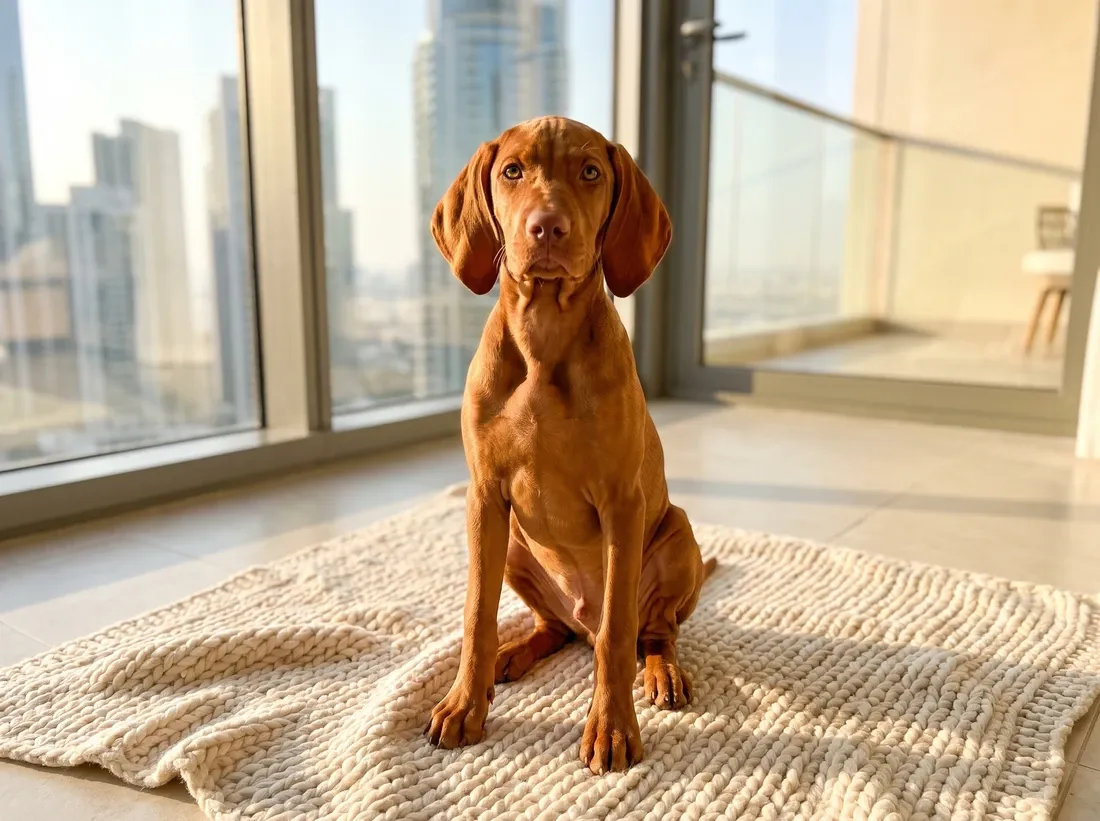
Vizsla in Dubai, a golden rust puppy sitting on a cream knitted rug, the skyline through the window

One breed, several names

The smooth-coated Hungarian pointer

The Royal Kennel Club calls them the Hungarian Vizsla, and the FCI the Hungarian Short-haired Pointer. The Wirehaired Vizsla, with a dense, wiry coat, is a close cousin and a separate breed. This guide is about the smooth one.

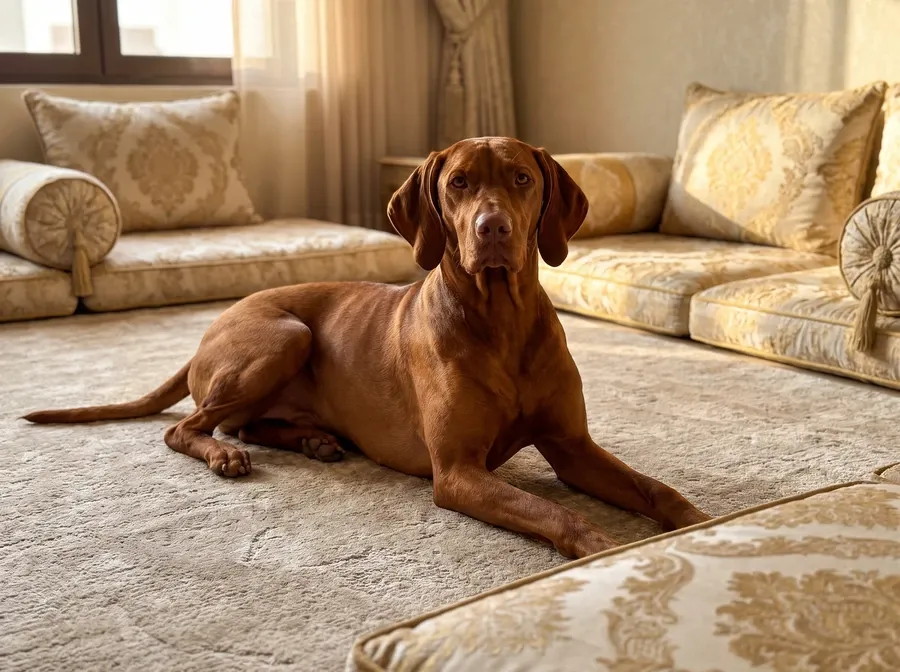
Vizsla in Dubai, a deep russet adult lying on a rug in a majlis with low floor cushions

Colours

Golden rust, in every shade

Every Vizsla is golden rust, from a lighter gold to a deeper russet, and some have a little white on the chest or toes. Whatever their shade, a short coat like theirs shows every scratch and skin change early.

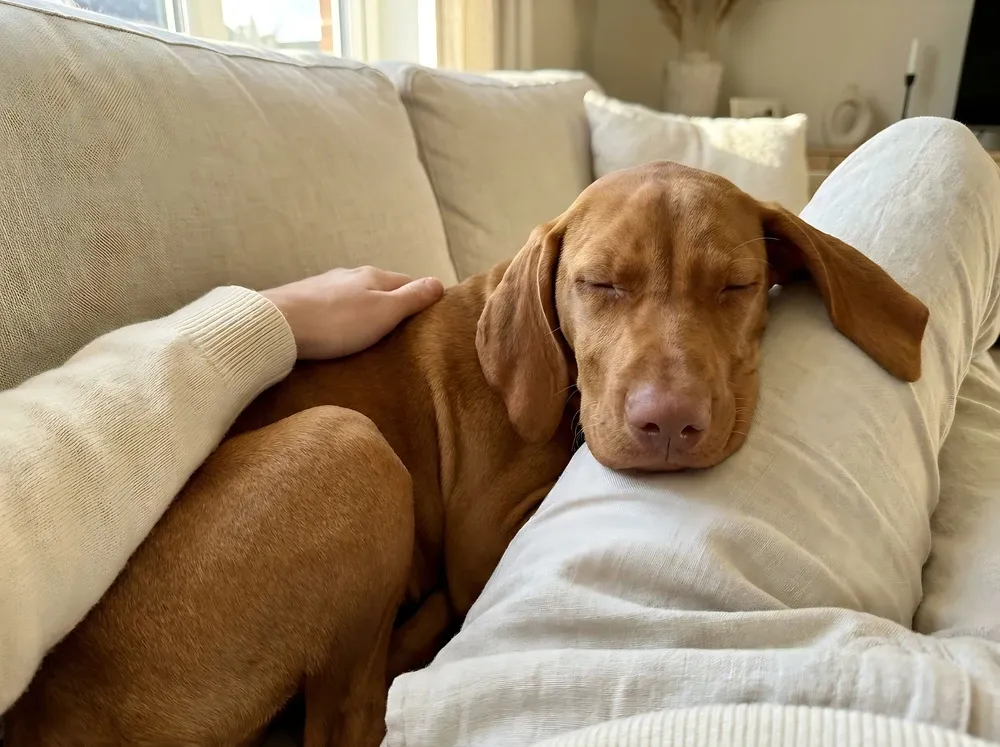
Vizsla, a golden rust puppy asleep against a pet parent's leg on a linen sofa

The first six months

Caring for a Vizsla puppy

Vaccinations, microchip and Dubai Municipality registration come first, with a baseline hip screening. Start short absences from the first weeks and build them up slowly, and keep walks short and on soft ground while their joints are forming.

Puppy health, 0 to 6 months
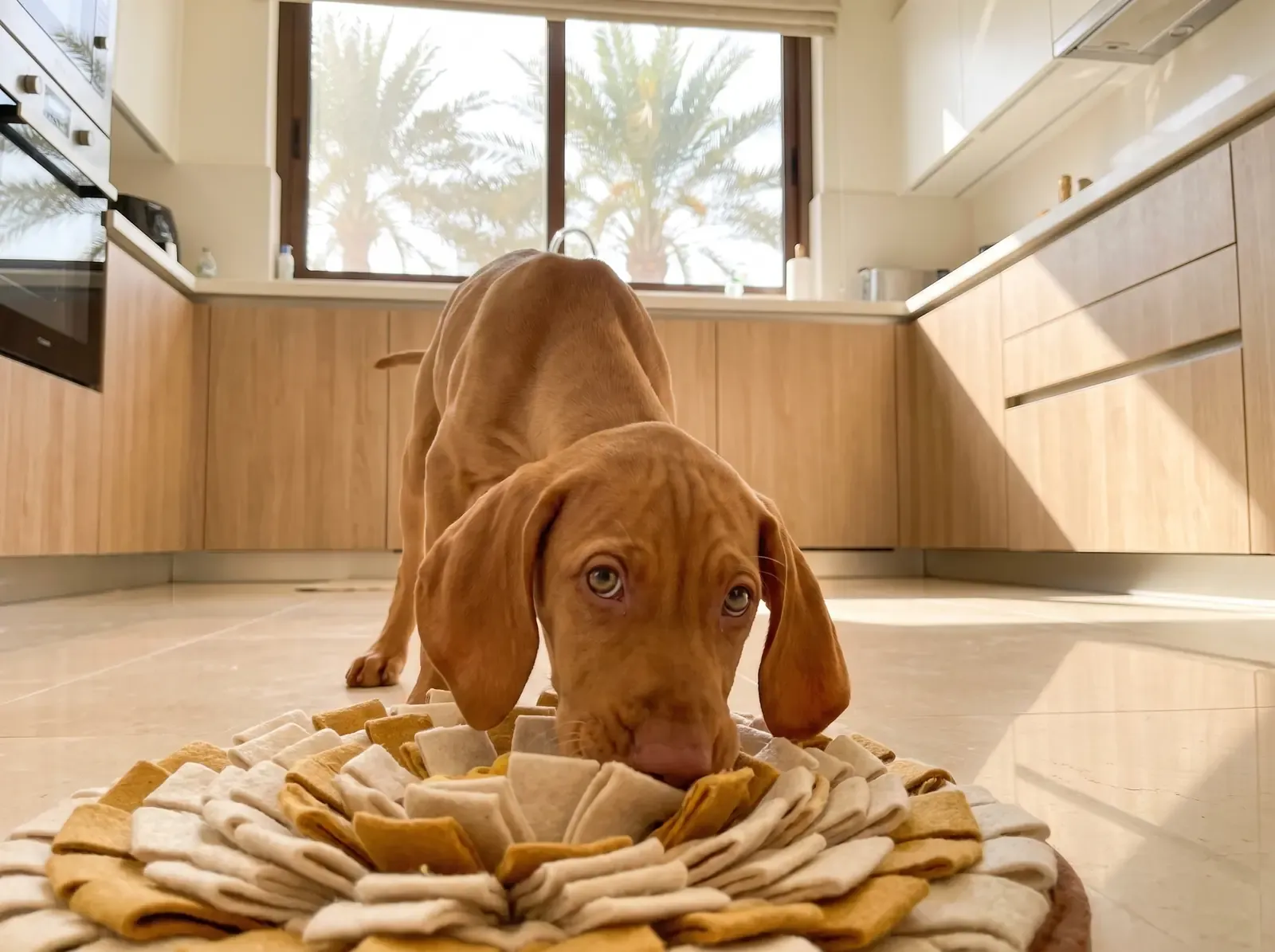
Vizsla in Dubai, a light golden puppy nosing through a snuffle mat in a villa kitchen, palms outside

Getting the home ready

A blanket, a long line and a whistle

Put their bed somewhere warm, with a blanket and away from the air-conditioning vent. Then find a harness, a five-to-ten-metre line and a gundog whistle. A snuffle mat earns its place on the hottest days.

Ten things that make their life better
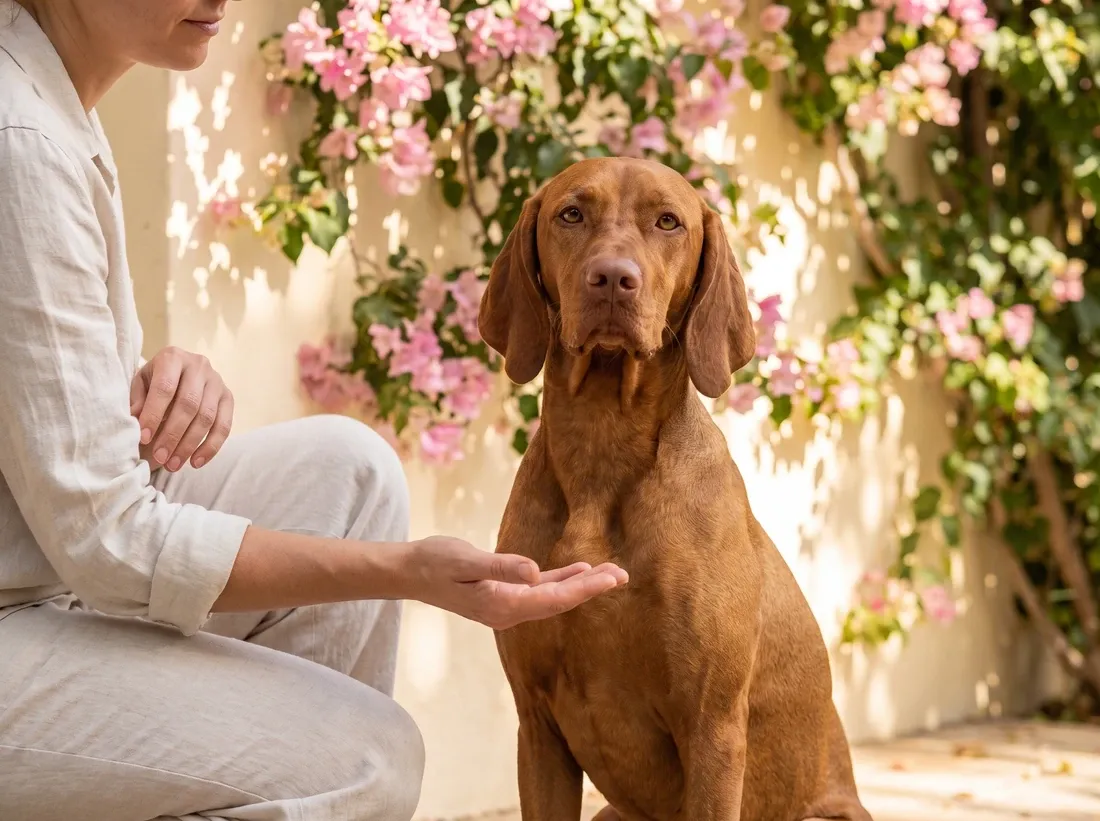
Vizsla, a calm golden rust adult sitting by a pet parent's open hand in a garden with bougainvillea

Before you commit

Ask about the parents' hips and seizures

Hip Dysplasia and Epilepsy can both show in Vizslas from puppyhood. Ask the breeder what is known about both parents' hips and any seizures in the family, and meet the mother if you can.

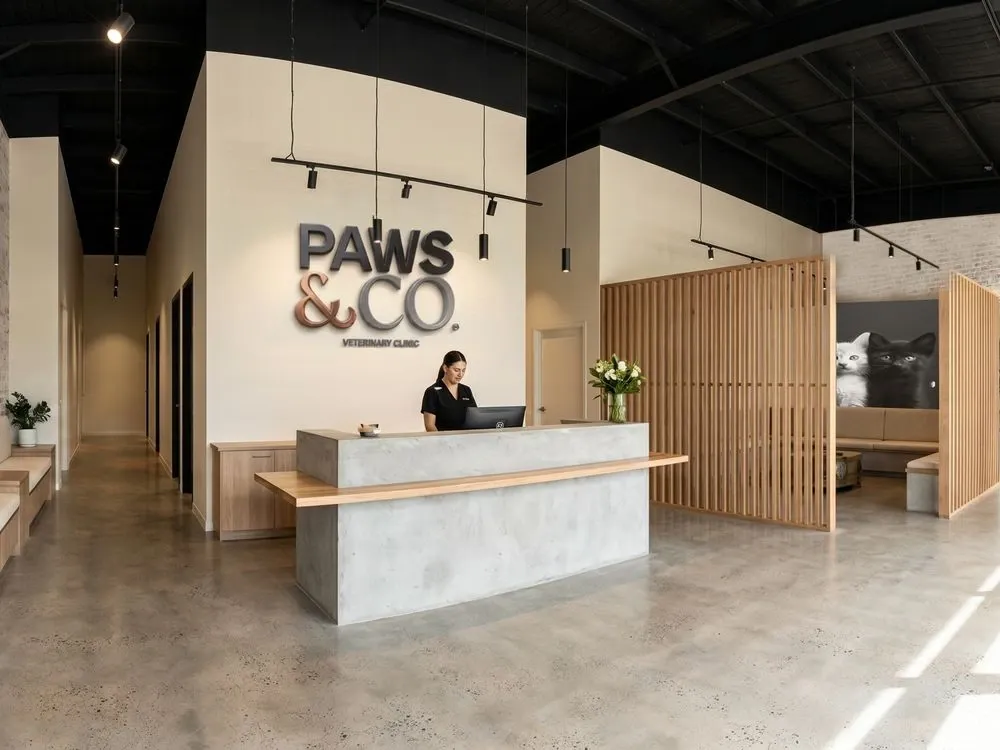
The reception of a Paws & Co clinic, with long cream benches and a stone reception desk

Before the clinics open

Join the founding families

AED 1,999 of essential care for AED 199. No payment now.

When to see a vet

When it is not behaviour.

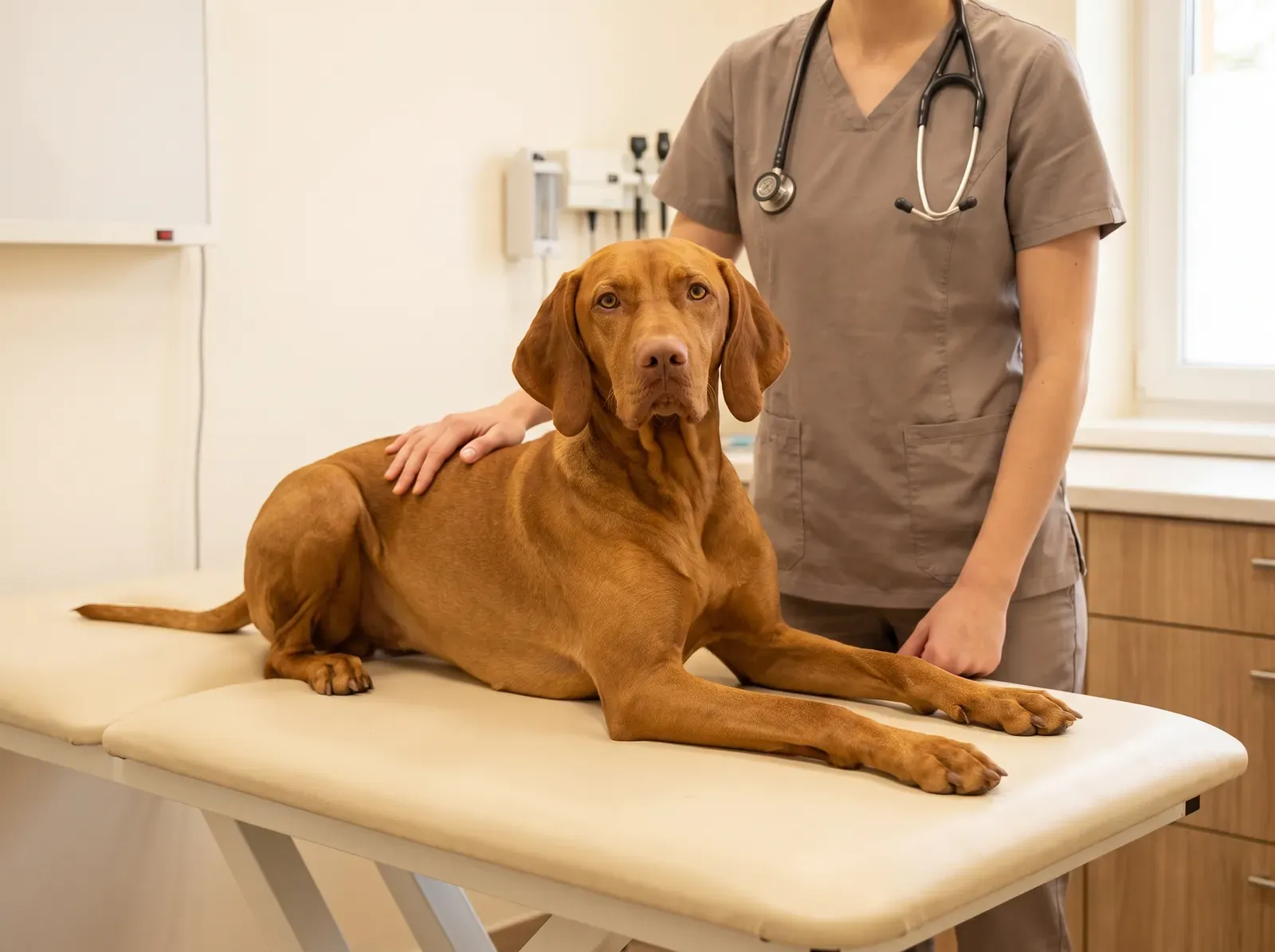
Vizsla, a golden rust adult lying on a padded table, a vet in taupe scrubs resting a hand on their back

Some of this is not a training problem, and treating it like one wastes time your dog may not have. If they are distressed when you leave, if they growl or guard their food, their toys or you, if they are frightened on the lead, or if anything about them changes suddenly at any age, contact your vet the same day. A tip from a website, ours included, is not the answer. If it cannot wait, contact your nearest emergency vet now.

With a Vizsla, two things are not training problems. The first is panic when you leave: howling, scratching at the door, not eating until you are home. That is separation distress: contact your vet. The second is a moment that does not look like them, staring, snapping at the air or seeming lost, which can be a seizure. Film it if you can. A first seizure, one that lasts more than two minutes, or more than one in a day is an emergency: contact your vet now. So is bloat (GDV, a twisted stomach): a swollen, tight belly, retching with nothing coming up, sudden restlessness or drooling. It is most common in large, deep-chested dogs, so skip walks and hard play shortly before and after meals.

He'll keep leaning on you at the hob. If he can't cope when you close the front door, contact your vet.
Vizsla history

Before they were yours.

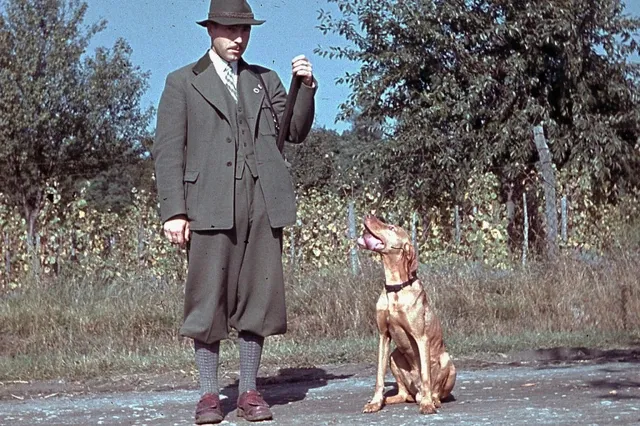
  1. Vizsla history, a dog sitting beside a hunter by a fence, Ócsa, Hungary, 1940
    A Vizsla with a hunter at Ócsa, Hungary, 1940. Photo: Fortepan / Ember Károly dr., CC BY-SA 3.0 (cropped).

    The 1500s to the 1800s

    The golden pointer of the Hungarian estates

    Landowners in Hungary kept a fast, golden-rust dog that found birds and hares on the open plains, pointed them, brought them back, and then lived in the house with the family.

    What they still carryThe golden coat, the point and the closeness to their people.

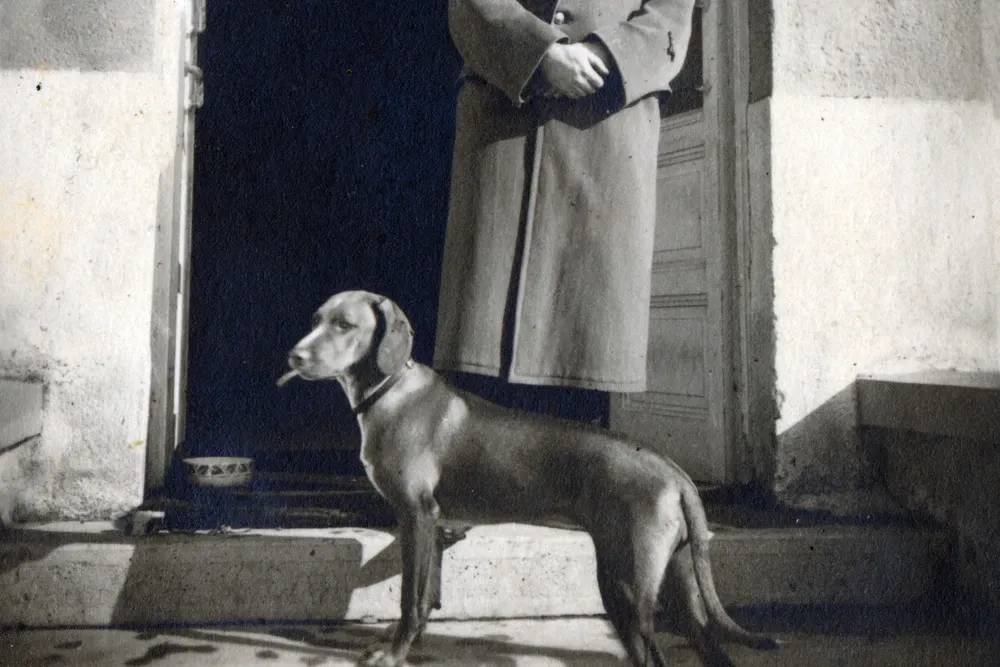
  2. Vizsla history, a dog standing on a doorstep beside a man in a long uniform coat, 1937
    A Vizsla on a doorstep, 1937. Photo: Fortepan / Papp Éva, CC BY-SA 3.0 (cropped).

    1848 to 1849

    A first decline

    The breed had come through the Ottoman occupation, but numbers fell badly after the Hungarian war of 1848 to 1849.

    What they still carryA breed that has come close to being lost.

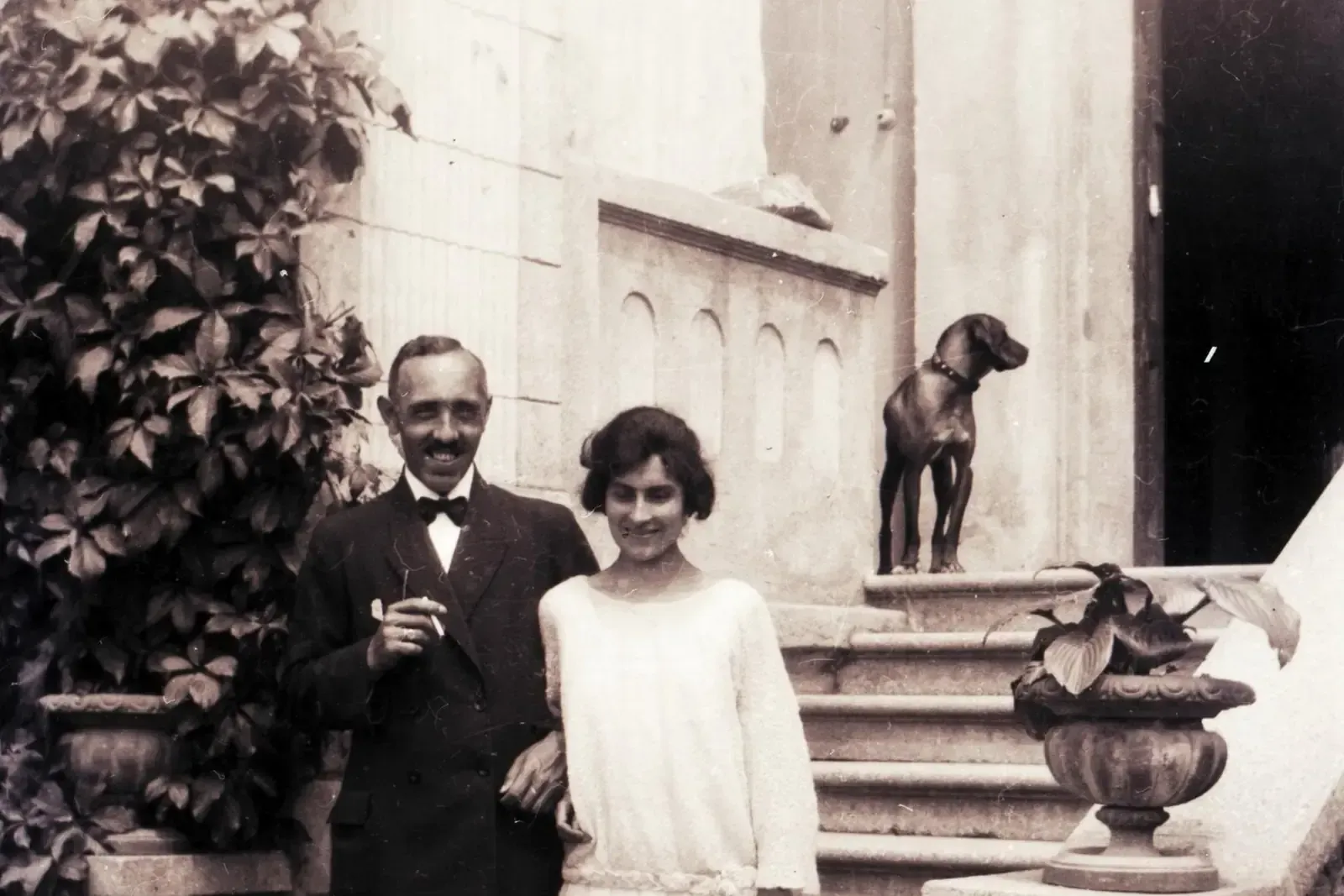
  3. Vizsla history, a dog standing on the steps of a house above a couple, 1923
    A Vizsla on the front steps of a house, 1923. Photo: Fortepan / Antal Dániel, CC BY-SA 3.0 (cropped).

    The 1920s

    Rebuilding the breed

    After numbers fell sharply around the First World War, Hungarian breeders formed a Vizsla club, chose a small number of dogs of the right type and drew up a standard.

    What they still carryA breed rebuilt from few dogs.

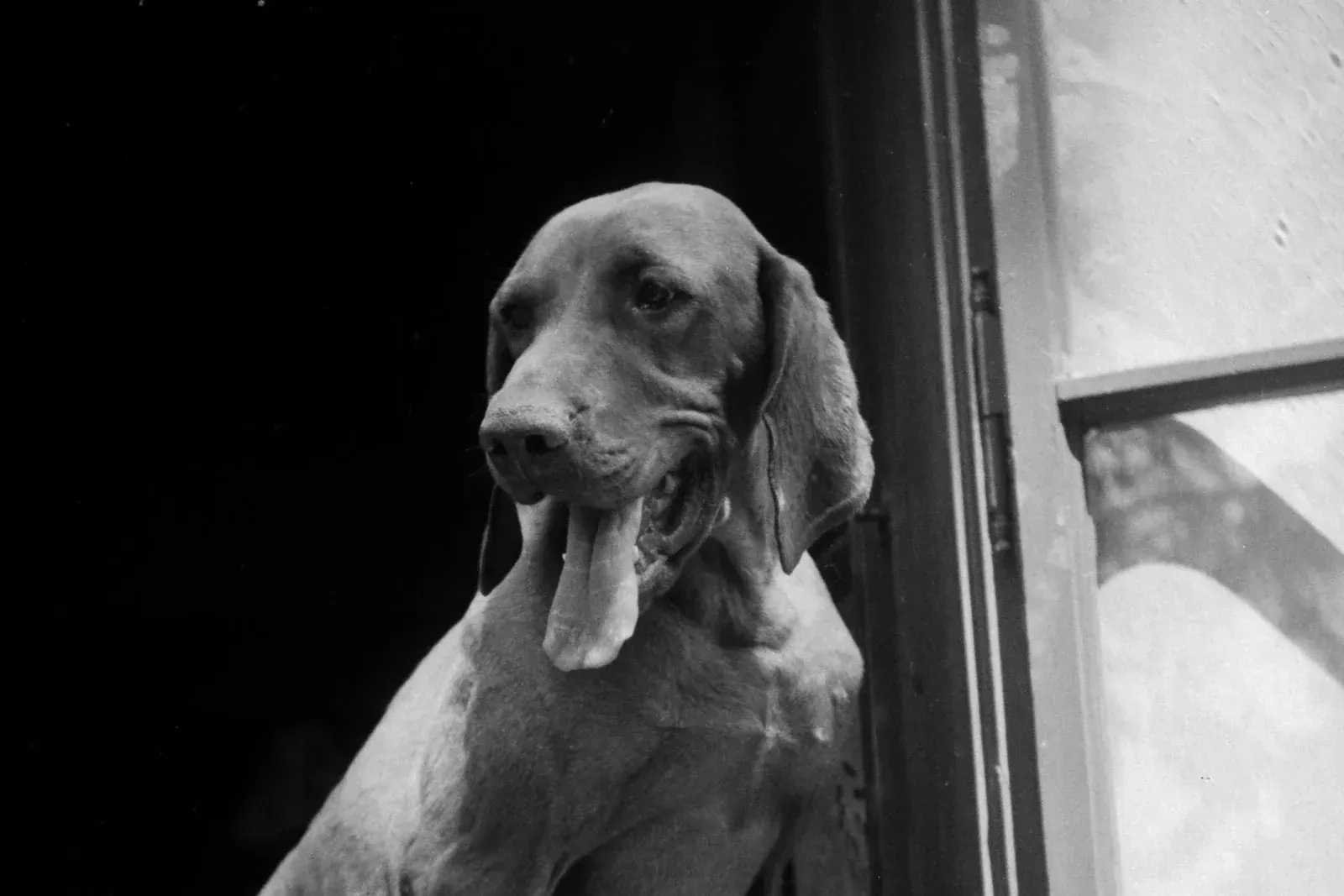
  4. Vizsla history, a dog sitting in an open window at the state forestry kennels, Gödöllő, Hungary, 1949
    A Vizsla at the Hungarian state forestry kennels in Gödöllő, 1949. Photo: Fortepan / Kovács Márton Ernő, CC BY-SA 3.0 (cropped).

    1945 to 1960

    Saved, then recognised

    The breed came close to disappearing again after the Second World War. Owners took dogs out of Hungary, the first reached America around 1950, and the American Kennel Club recognised the Vizsla in 1960.

    What they still carryEvery Vizsla today goes back to the few dogs their owners refused to lose.

  5. Vizsla history, the breed today, a golden rust adult lying on a sandy path between date palms, Dubai, 2026

    Today

    In Dubai

    In Dubai a Vizsla lives with you in a villa or a flat, and still wants to be touching you, whatever room you are in.

    What they still carryA short-coated athlete built to run open plains beside one person, now in a city where the pavement is too hot for half the year and their person goes to work.

Vizsla questions

The ones you type at midnight.

Most of these get asked late at night, by someone watching their dog and not sure what they are seeing.

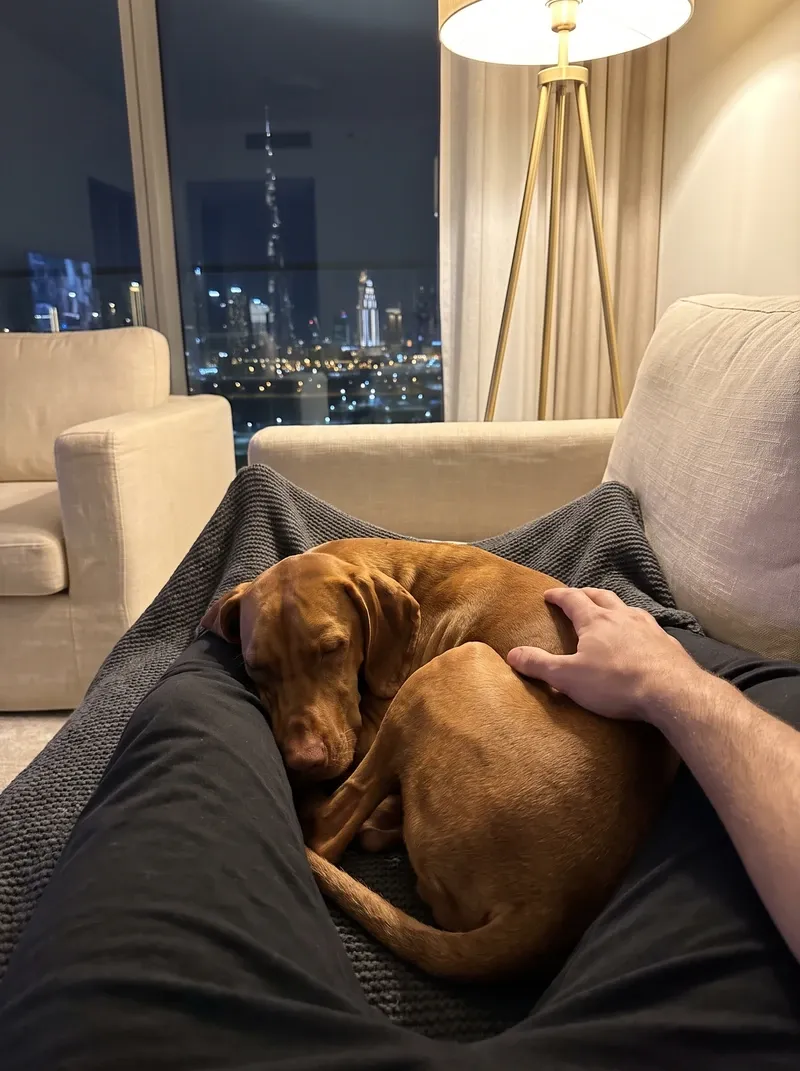
Vizsla in Dubai, a golden rust adult asleep on a pet parent's lap at night, a hand on their back, skyline behind
How long do Vizslas live?

Vizslas usually live 12 to 15 years. In a UK study of nearly 3,000 Vizslas, half lived past 13 and a half.

How big does a Vizsla get?

Male Vizslas usually weigh 25 to 27 kg and females 20 to 25 kg. They are lean and athletic, built to run for hours.

Do Vizslas shed?

Vizslas shed moderately, with a heavier moult once or twice a year. A rubber mitt once a week is enough to keep on top of it.

How much exercise does a Vizsla dog need?

A Vizsla needs one to two hours of exercise a day. In the UAE summer, that means before sunrise and after dark.

Why is my Vizsla so clingy?

Vizslas were bred to live and work beside one person, which is why they are called the velcro dog. Leaning, following and sleeping against you are normal. Panic when you leave is not, and is a reason to contact your vet.

Is a Magyar Vizsla the same as a Hungarian Vizsla?

Yes. Magyar Vizsla, Hungarian Vizsla and Hungarian Short-haired Pointer are all names for the Vizsla, since magyar is the Hungarian word for Hungarian. The Wirehaired Vizsla is a separate breed.

What colour is a Vizsla?

Every Vizsla is golden rust, in lighter or deeper shades. Some have a little white on the chest or toes.

Can a Vizsla live in Dubai?

A Vizsla can live happily in Dubai, with exercise before sunrise and after dark from May to September. Their short coat has no undercoat, so they heat up fast and feel strong air conditioning.

Worried about them? Contact your vet today.