We’re hiring people who love them like we do. Join us careers@pawsandco.comSee open roles
UAE Government Licensed MOCCAE
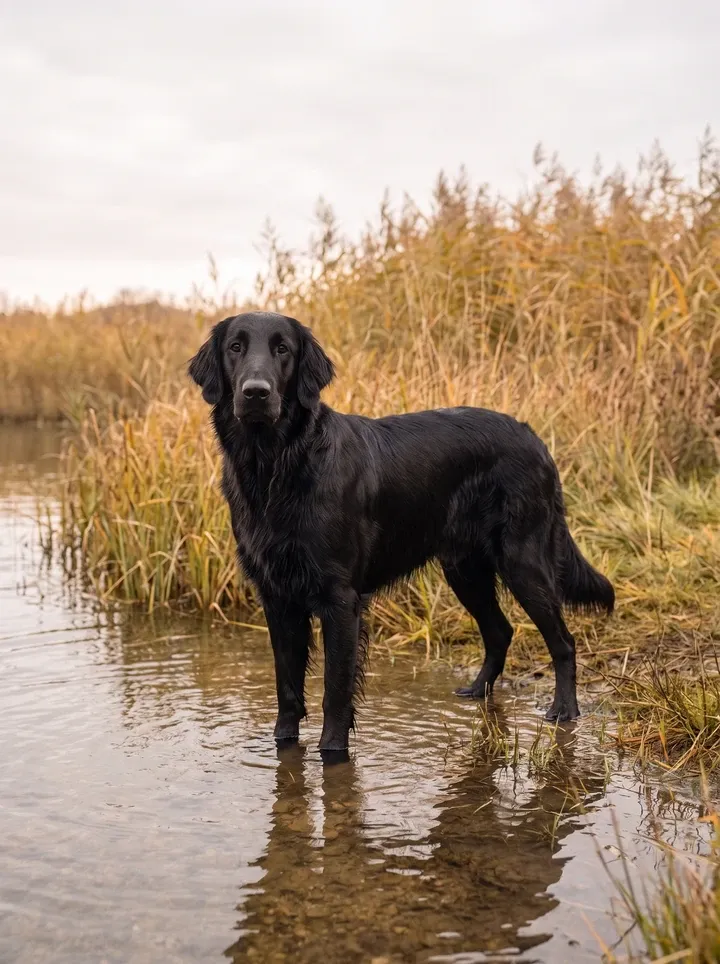
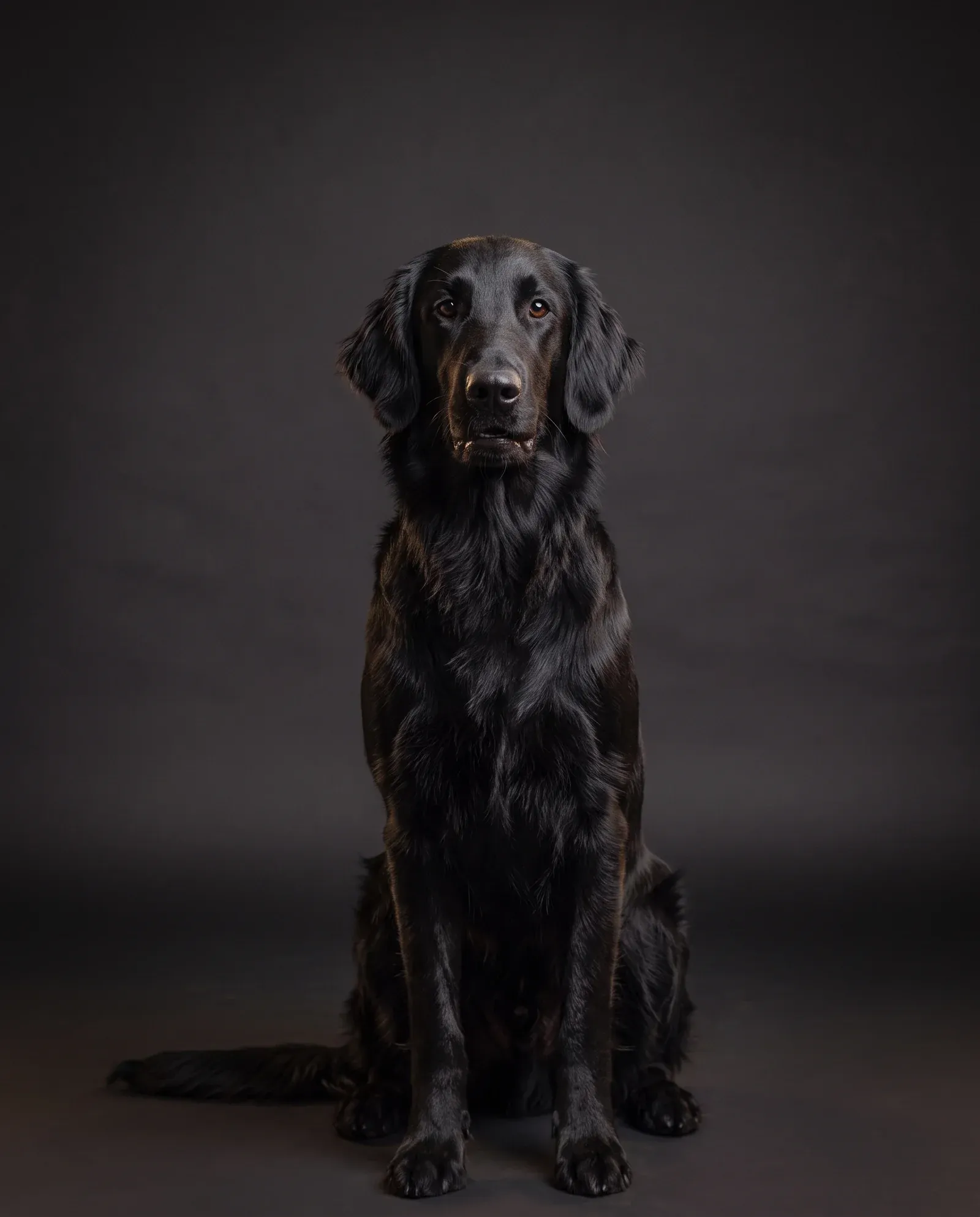
Flat-Coated Retriever in Dubai, studio portrait of a calm black adult sitting

Breed guide  ·  Dogs

Flat-Coated Retriever

She swallowed a sock whole. The laundry basket has a lid now.

Lifespan
8 to 10 years
Size
Large
Weight
27 to 32 kg
Shedding
Moderate

Last updated 14 October 2026

Join the founding families. AED 1,999 of essential care for AED 199.

No payment now. We'll be in touch by email and WhatsApp as we open enrolment.

✓
Thank you.

We will be in touch soon to confirm.

Flat-Coated Retriever traits

What they brought with them.

Tap a card to see what is going on.

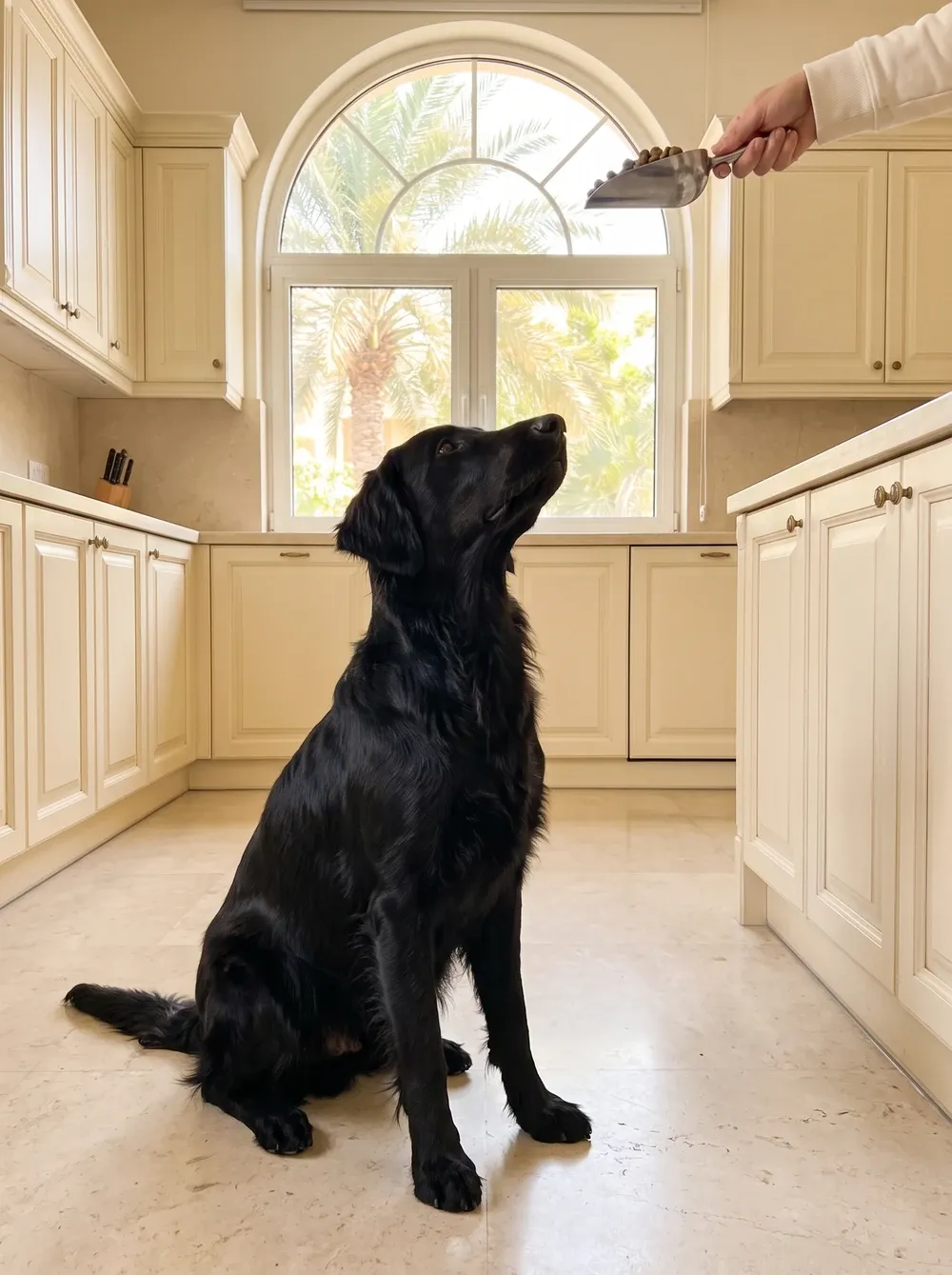
Flat-Coated Retriever in Dubai, a black adult sitting on a kitchen floor looking up at a food scoop, palms outside

At home

They really are that hungry

One rustle of a packet and they are at your feet, sure that dinner never happened.

What's going onAbout two in three Flat-Coats carry a gene change that makes them hungrier between meals and burn fewer calories at rest. The begging is real. The answer is kitchen scales, and treats that come out of the daily amount.
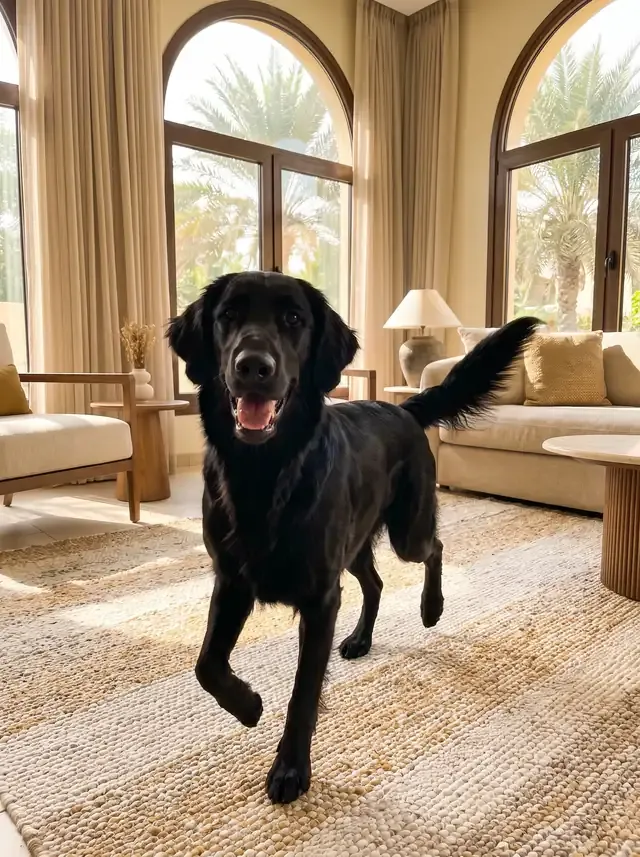
Flat-Coated Retriever in Dubai, a black adult bounding across a woven rug, palms through the arched windows

At home

The puppy who stays a puppy

Years past their first birthday and still bouncing off the sofa like it is day one.

What's going onFlat-Coats are known for staying puppyish for years. It is a lot of the joy of them. It also means the stealing and bouncing last longer, so keep training short, daily and fun.

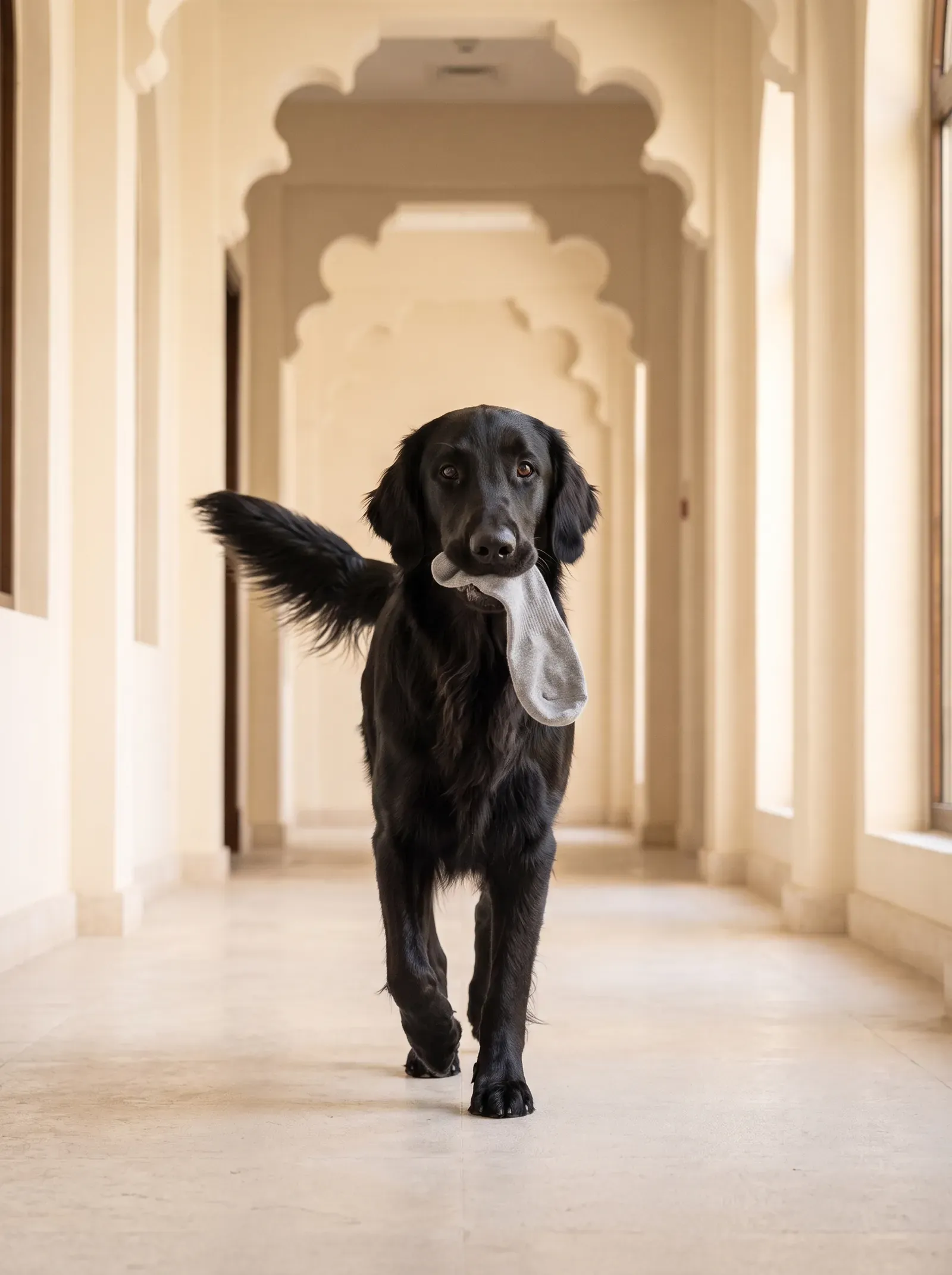
Flat-Coated Retriever, a black adult trotting down an arched hallway with a grey sock in their mouth

At home

Why does my Flat-Coat steal socks?

Socks, hair ties, a stone from the park: everything ends up in their mouth.

What's going onThey were bred to pick things up and carry them. Swallowing things like socks and stones is on their health record as a puppy. Keep the floor clear and teach them to swap.

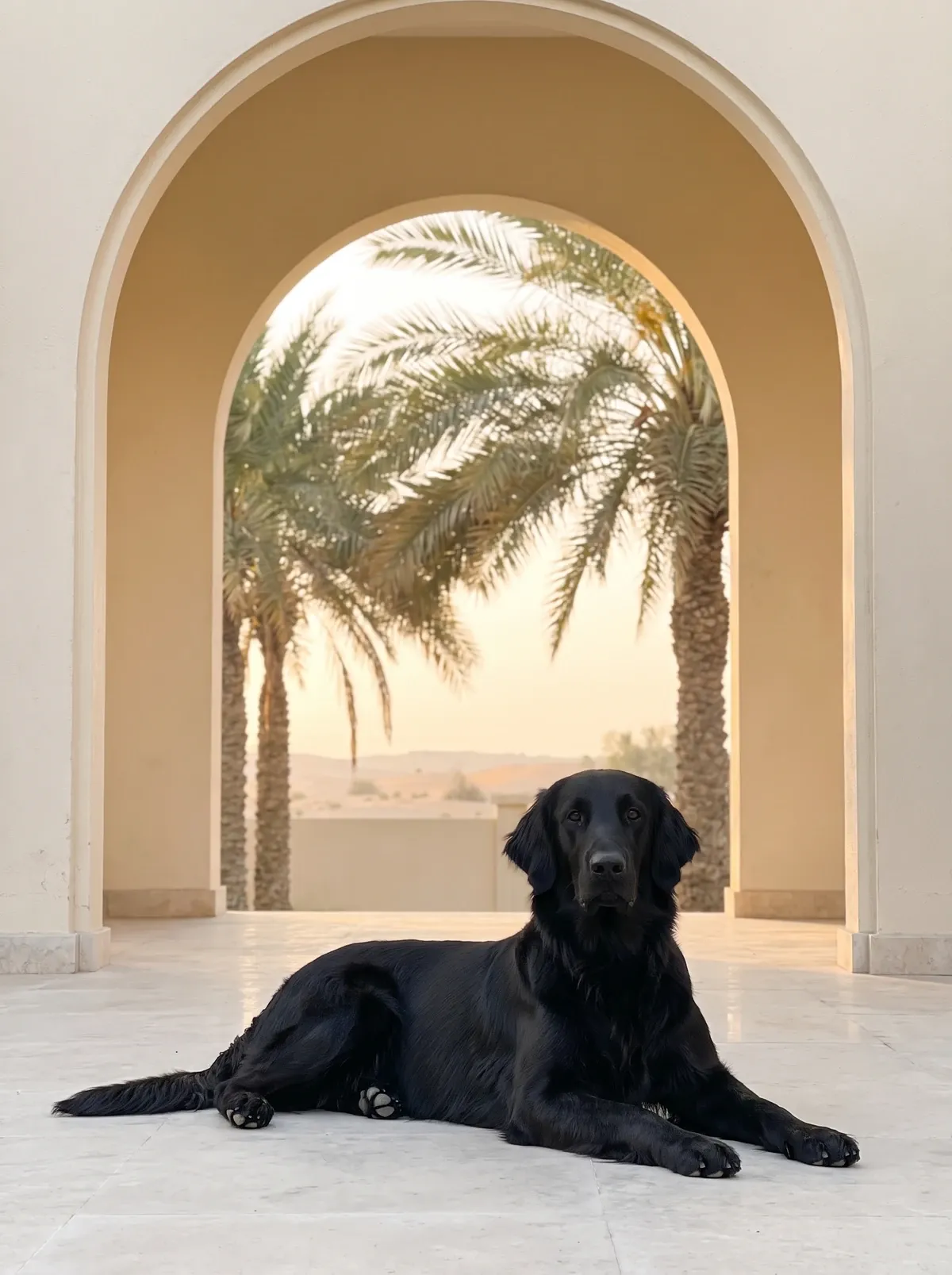
Flat-Coated Retriever in Dubai, a black adult lying in the shade of a terrace arch, date palms and dunes beyond

At home

A dark coat in the sun

Their glossy coat is hot to the touch after a short walk in the sun.

What's going onThat coat was made for cold English marshes, and a dark coat soaks up the sun. In summer, walk them before sunrise and after dark, and end the game before they want to.

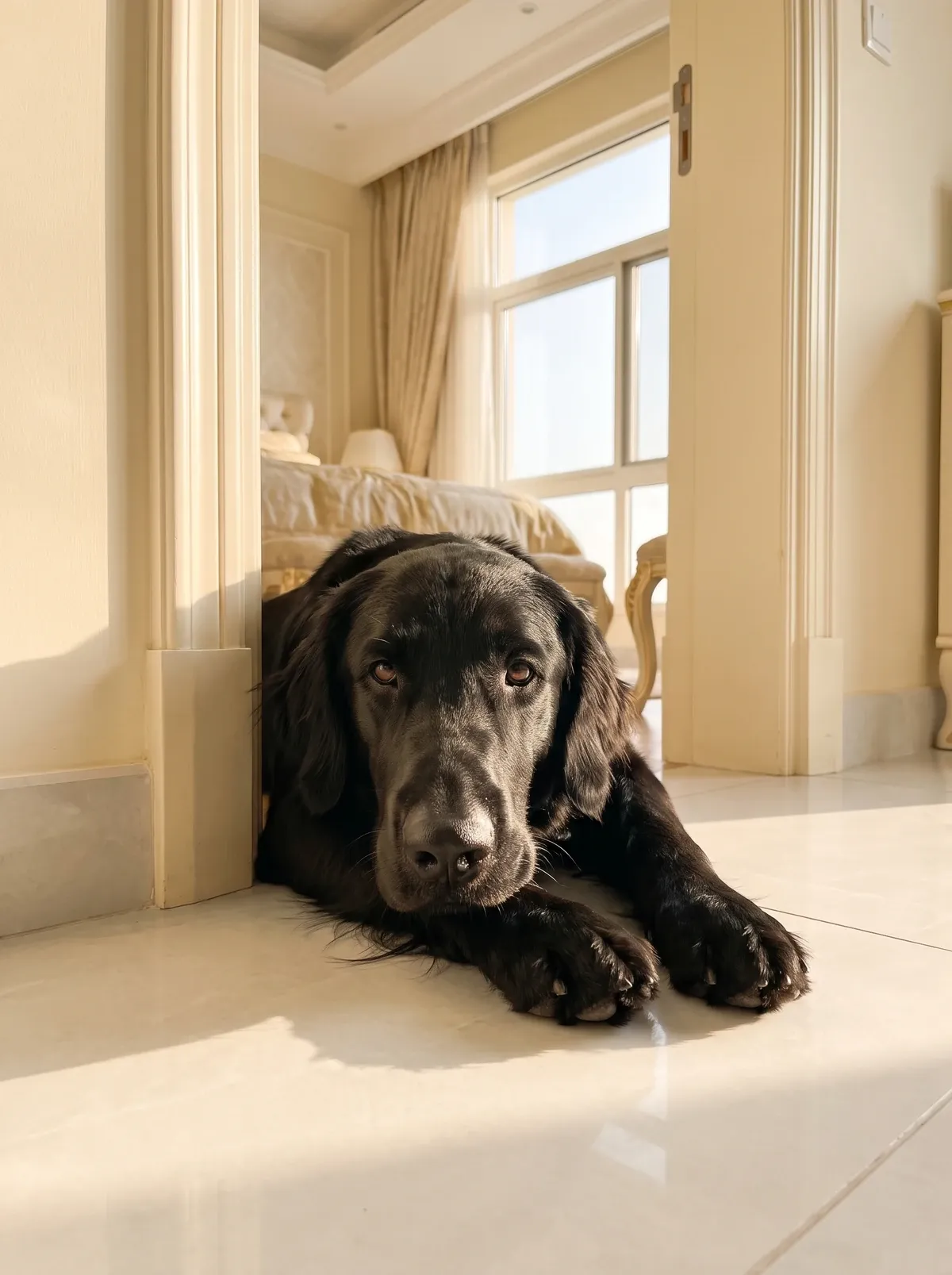
Flat-Coated Retriever, a black adult lying across a bedroom doorway on cool tiles, chin on their paws

At home

They follow you everywhere

Up when you get up, down when you sit, and across the bathroom doorway in between.

What's going onA Flat-Coat was bred to work next to one person all day. A long day alone in a flat is hard on them. A midday walk or a visit breaks it up.

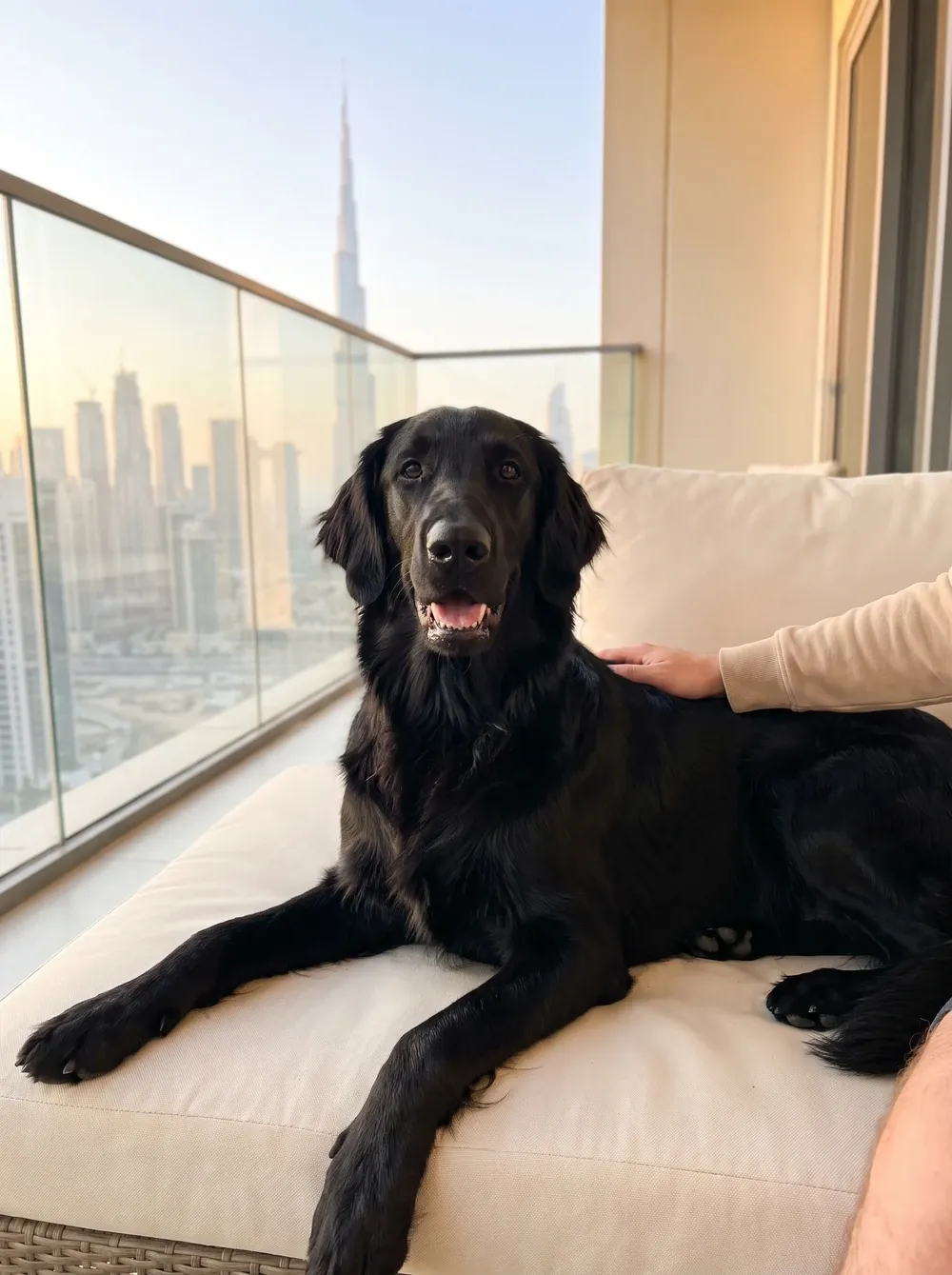
Flat-Coated Retriever in Dubai, a black adult on a balcony cushion with a hand on their back, the skyline behind

At home

Happy, even on an off day

Tail going all day, even on a day they are not quite right.

What's going onCancer is their first health risk from two years old. Run your hands over them every week. A lump that stays should be tested, not watched.

A Flat-Coated Retriever in Dubai

The bit nobody tells you.

Their day

Built for: The day in fields and cold water beside a keeper.

In Dubai: Often the day in a flat.

Their coat

Built for: A dark coat made for English winters.

In Dubai: The same dark coat, in 45°C heat.

Their work

Built for: Carrying birds home in their mouth.

In Dubai: Food arriving without any work attached.

The stealing and the swallowed socks mostly come from that gap.

You cannot give them an English marsh. You can give them a job, and the ten things below are how.

Your plan is built around their breed: the health risks for a Flat-Coated Retriever at every age, and the care that goes with each one.

Join the founding families. AED 1,999 of essential care for AED 199.

Daily care for a Flat-Coated Retriever

Ten things that make their life better.

Many of them are free, and most matter at every age.

  1. Swallowing things they should not, like socks and stones, is on their health record as a puppy.

    Every age, most of all puppies

    Free

    Why

    Swallowing things they should not, like socks and stones, is on their health record as a puppy.

    What to do

    Practise "leave it" and the swap every day. Keep socks, hair ties and children's toys off the floor. If someone else walks them, give the walker the rules: no picking things up, and no extra treats.

  2. Their dark coat was made for English winters, and they will not stop by themselves.

    Every age, most of all puppies and from 7 years

    Free

    Why

    Their dark coat was made for English winters, and they will not stop by themselves.

    What to do

    From May to September, walk before sunrise and after dark. Put the back of your hand on the pavement for five seconds. If you cannot keep it there, they cannot walk on it. Keep games in the heat short, and take water.

  3. They were bred to work beside a person all day, and they stay young in their head for a long time.

    Every age, hardest from 6 months to 2 years

    Free, or the cost of a walker

    Why

    They were bred to work beside a person all day, and they stay young in their head for a long time.

    What to do

    If you are out for more than a few hours, arrange a midday walk, a visit or daycare. Leave a stuffed chew when you go. If they are distressed when you leave, contact your vet rather than trying to fix it at home.

  4. Flat-Coats stay puppyish for years, so the teenage habits stick around.

    From 6 months, often well past 2 years

    Free

    Why

    Flat-Coats stay puppyish for years, so the teenage habits stick around.

    What to do

    Expect pulling, jumping up and selective hearing well past two. Reward four feet on the floor every time someone says hello. Two short training sessions a day, paid with part of their dinner.

  5. Cancer is their first health risk from two, and a lump found early can be tested early.

    Every age, most of all from 2 years

    FreeIn your plan

    Why

    Cancer is their first health risk from two, and a lump found early can be tested early.

    What to do

    Once a week, run your hands over their whole body, legs and tail included, and note any new lump, however small. While you are there, look at their eyes in good light. Brush their coat several times a week, their teeth every day, and weigh them once a month.

  6. They were bred to carry things, and they will pick their own if you do not.

    Every age, most of all 6 months to 2 years

    Under AED 100

    Why

    They were bred to carry things, and they will pick their own if you do not.

    What to do

    Keep a soft toy or a canvas dummy that is theirs, and hand it over when guests arrive or you come home. If they take something, swap it for a treat. Do not chase them, because that makes it a game they win.

  7. They will keep retrieving long after they should stop, on hips and knees that are a risk in their breed.

    Every age, gentler from 7 years

    Under AED 100

    Why

    They will keep retrieving long after they should stop, on hips and knees that are a risk in their breed.

    What to do

    Five to ten throws, then stop. Ask for a sit and wait before you send them, and throw along the ground or into water. Skip the ball launcher, and go gently while they are still growing.

  8. About two in three Flat-Coats carry a gene change that makes them hungrier, and bloat is on their record from six months.

    Every age, most of all while growing

    Under AED 150, once, for kitchen scales and a slow feederIn your plan

    Why

    About two in three Flat-Coats carry a gene change that makes them hungrier, and bloat is on their record from six months.

    What to do

    Weigh their daily food on kitchen scales and take treats out of that amount. Feed part of each meal from a slow feeder, so eating takes them more than a minute. A Body Condition Score (a check on whether they are the right weight) is in your plan at their puppy visits, and bloat-prevention advice from six months.

  9. Swimming is easy on their joints, and skin and ear trouble are on their record as a juvenile.

    Every age

    FreeIn your plan

    Why

    Swimming is easy on their joints, and skin and ear trouble are on their record as a juvenile.

    What to do

    Use any water they are allowed into. Show them the steps out of the pool every time, and never leave them near one alone. After a swim, rinse and dry their coat and dry inside their ear flaps.

  10. Hip Dysplasia (a poorly fitting hip joint) and Patellar Luxation (PL, a slipping kneecap) are on their record from puppyhood.

    Every age, most of all while growing

    Free to AED 1,000 for rugs and a rampIn your plan

    Why

    Hip Dysplasia (a poorly fitting hip joint) and Patellar Luxation (PL, a slipping kneecap) are on their record from puppyhood.

    What to do

    Put rugs or runners where they turn and run on marble. Lift them in and out of the car, or use a ramp. Keep them lean, and keep exercise moderate while they are growing. A hip, kneecap and gait evaluation (a check of how they walk) is in your plan at their puppy visits.

Four of these are in your plan. The rest you can do at home.

Join the founding families. AED 1,999 of essential care for AED 199.

Flat-Coated Retriever health by age

Their health, at every age.

In a Flat-Coated Retriever, a lump that stays or a dog who stops bouncing is often the first sign that something is wrong. Choose their age to see what to watch for, and the care that goes with it.

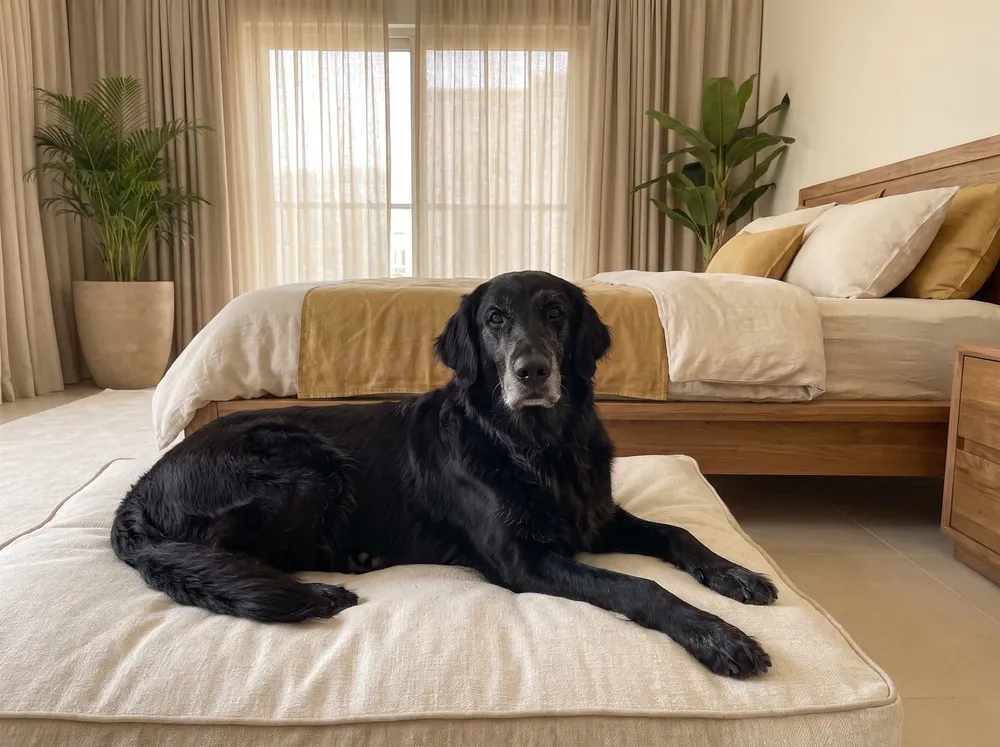
Flat-Coated Retriever, an older black dog with a greying muzzle lying on a cushioned bed in a cool bedroom

How old are they?

Their age

Flat-Coated Retriever Puppy health

the first six months

What to watch for

  1. Hip Dysplasia (HD, a poorly fitting hip joint) and developmental joint disease
  2. Patellar Luxation (PL, a slipping kneecap)
  3. Congenital ocular disease
  4. Rapid-growth nutrition and obesity
  5. Foreign-body ingestion (swallowing things like socks and stones)

The care that goes with it

  1. Core vaccinations, microchip and Dubai Municipality registration
  2. Deworming, and flea and tick prevention
  3. Body Condition Score (a check on whether they are the right weight), dental, growth and nutritional evaluation, and early socialisation
  4. A large-breed growth diet and a lean body
  5. Hip, patellar and gait evaluation at puppy visits
  6. Baseline ophthalmic evaluation (eye exam)
  7. Moderate exercise while the bones are still growing
The full care detail
  • Core vaccination programme, microchipping and Dubai Municipality registration. Titre testing discussion where clinically appropriate; not a substitute for completing the core vaccine series
  • Deworming and external parasite prevention tailored to Dubai exposure
  • Body Condition Score (BCS), Muscle Condition Score (MCS), dental, growth and nutritional evaluation, and early socialisation
  • Large-breed growth diet and lean body condition
  • Hip, patellar and gait evaluation during puppy visits
  • Baseline ophthalmic evaluation in breeder-sourced dogs
  • Exercise moderation during skeletal growth

Their age

Flat-Coated Retriever Juvenile health

6 months to 2 years

What to watch for

  1. Hip Dysplasia (HD) and Patellar Luxation (PL)
  2. Osteochondrosis or sports injury
  3. Atopic skin and ear disease
  4. Gastric Dilatation-Volvulus (GDV, bloat, a twisted stomach) risk
  5. Early soft-tissue masses requiring investigation

The care that goes with it

  1. Hip and kneecap x-rays if they show signs or you plan to breed
  2. Low-impact exercise, and weight control
  3. Cytology (looking at a sample under the microscope) for skin or ear trouble that keeps coming back
  4. Bloat-prevention counselling, and a talk about gastropexy (an operation that tacks the stomach in place)
  5. Any lump that stays, sampled with a fine needle (a quick test that looks at the cells), not watched
  6. Neutering or spaying, timed for a large breed
The full care detail
  • Hip and patellar imaging when signs or breeding plans justify it
  • Conditioned, low-impact exercise and weight control
  • Prompt cytology-led management of recurrent skin or ear disease
  • Gastric Dilatation-Volvulus (GDV)-prevention counselling and consider prophylactic gastropexy
  • Aspirate and assess persistent masses rather than observing indefinitely
  • Neuter/spay timing discussion that accounts for large-breed growth and disease risk

Their age

Flat-Coated Retriever Young Adult health

2 to 4 years

What to watch for

  1. Histiocytic sarcoma (an aggressive cancer of immune cells) and other malignant neoplasia
  2. Hip Dysplasia (HD) and osteoarthritis
  3. Patellar Luxation (PL)
  4. Gastric Dilatation-Volvulus (GDV)
  5. Ocular disease

The care that goes with it

  1. Frequent full-body mass evaluation (feeling for every lump), with early cytology or biopsy
  2. Joint surveillance, with rehabilitation when it is needed
  3. Patellar management (care for a slipping kneecap)
  4. Bloat-prevention counselling, and a talk about gastropexy (an operation that tacks the stomach in place)
  5. Regular ophthalmic evaluation (eye exam)
The full care detail
  • Frequent full-body mass evaluation and early cytology/biopsy
  • Joint surveillance and rehabilitation
  • Patellar management
  • Gastric Dilatation-Volvulus (GDV) education and gastropexy discussion
  • Regular ophthalmic evaluation

Their age

Flat-Coated Retriever Prime Adult health

4 to 7 years

What to watch for

  1. Histiocytic sarcoma (an aggressive cancer of immune cells) and other malignant neoplasia
  2. Hip Dysplasia (HD) and osteoarthritis
  3. Patellar Luxation (PL)
  4. Gastric Dilatation-Volvulus (GDV)
  5. Ocular disease

The care that goes with it

  1. Frequent full-body mass evaluation (feeling for every lump), with early cytology or biopsy
  2. Joint surveillance, with physiotherapy and a lean body
  3. Patellar management (care for a slipping kneecap)
  4. Bloat-prevention counselling, and a talk about gastropexy (an operation that tacks the stomach in place)
  5. Regular ophthalmic evaluation (eye exam)
The full care detail
  • Frequent full-body mass evaluation and early cytology/biopsy
  • Joint surveillance and rehabilitation
  • Patellar management
  • Gastric Dilatation-Volvulus (GDV) education and gastropexy discussion
  • Regular ophthalmic evaluation

Their age

Flat-Coated Retriever Senior health

7 to 10 years

What to watch for

  1. Hip Dysplasia (HD) and osteoarthritis
  2. Osteoarthritis and mobility decline
  3. Ocular disease
  4. Chronic Kidney Disease (CKD, long-term kidney failure)
  5. Neoplasia

The care that goes with it

  1. Joint surveillance and rehabilitation
  2. Senior physical examination twice a year, with blood tests, urinalysis (a urine test) and blood pressure
  3. Regular ophthalmic evaluation (eye exam)
  4. Pain relief and mobility support
  5. Nutrition, and a quality-of-life assessment
The full care detail
  • Joint surveillance and rehabilitation
  • Biannual senior physical examination with CBC, chemistry, urinalysis and blood pressure
  • Regular ophthalmic evaluation
  • Pain and mobility management
  • Nutrition and quality-of-life assessment

Their age

Flat-Coated Retriever Geriatric health

10 years and over

What to watch for

  1. Multimorbidity and frailty
  2. Advanced Hip Dysplasia (HD) and osteoarthritis
  3. Cancer
  4. Cardiac or renal failure
  5. Cognitive and sensory decline

The care that goes with it

  1. Pain and mobility support, using more than one approach
  2. Kidney, heart and hormone monitoring
  3. Nutrition, help for an ageing mind, and support with their care at home
  4. Quality-of-life assessments
  5. Palliative care (comfort care)
  6. End-of-life planning with your vet team
The full care detail
  • Multimodal pain and mobility support
  • Renal, cardiac and endocrine monitoring
  • Nutrition, cognition and home-care support
  • Quality-of-life assessments
  • Tailored palliative and comfort-focused care plan
  • Compassionate end-of-life planning with your veterinary team

Breed predispositions indicate an increased risk rather than certainty of disease. What is right for them always comes from their own history and an evaluation.

Getting a Flat-Coated Retriever puppy in Dubai

Before they come home.

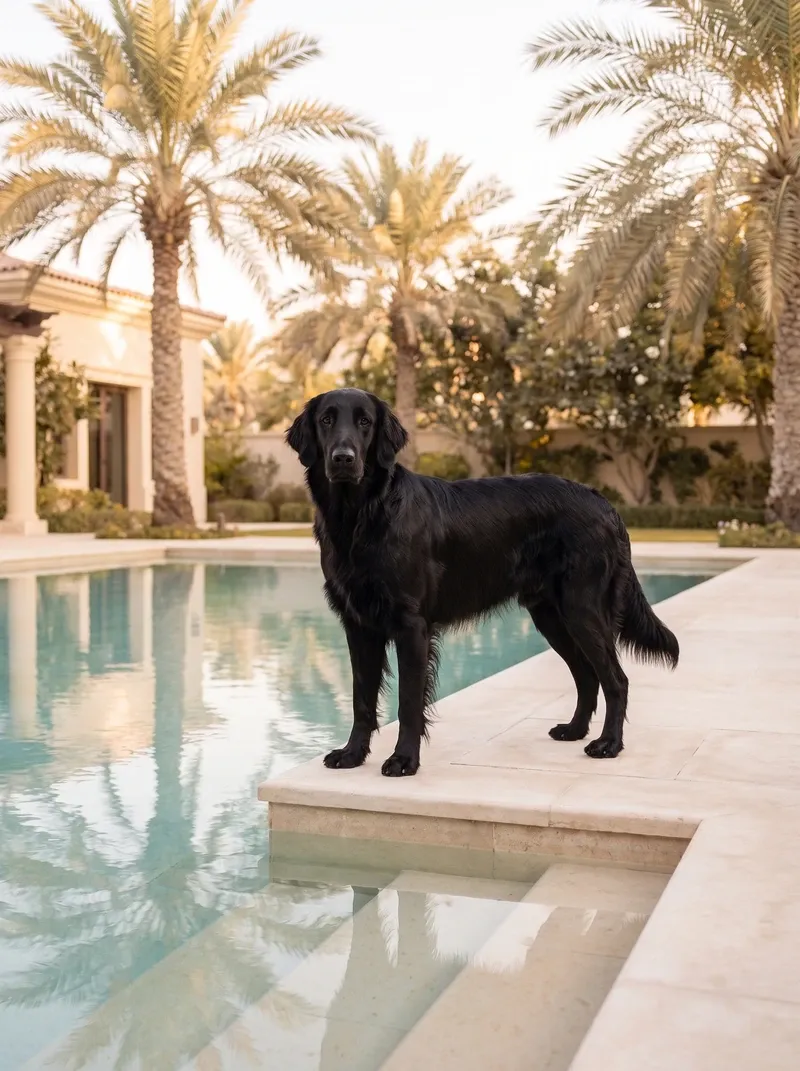
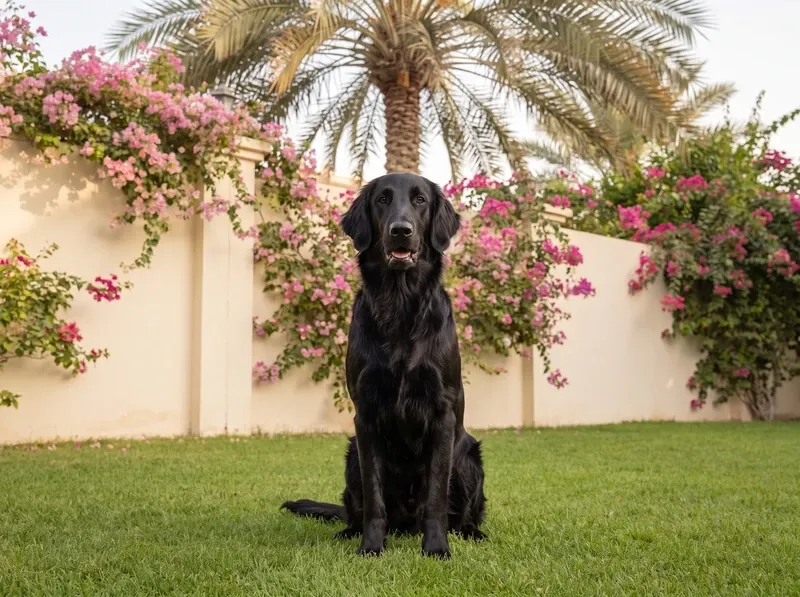
Flat-Coated Retriever in Dubai, a black adult sitting on a villa lawn, bougainvillea and a date palm behind

A gundog, and a rare one

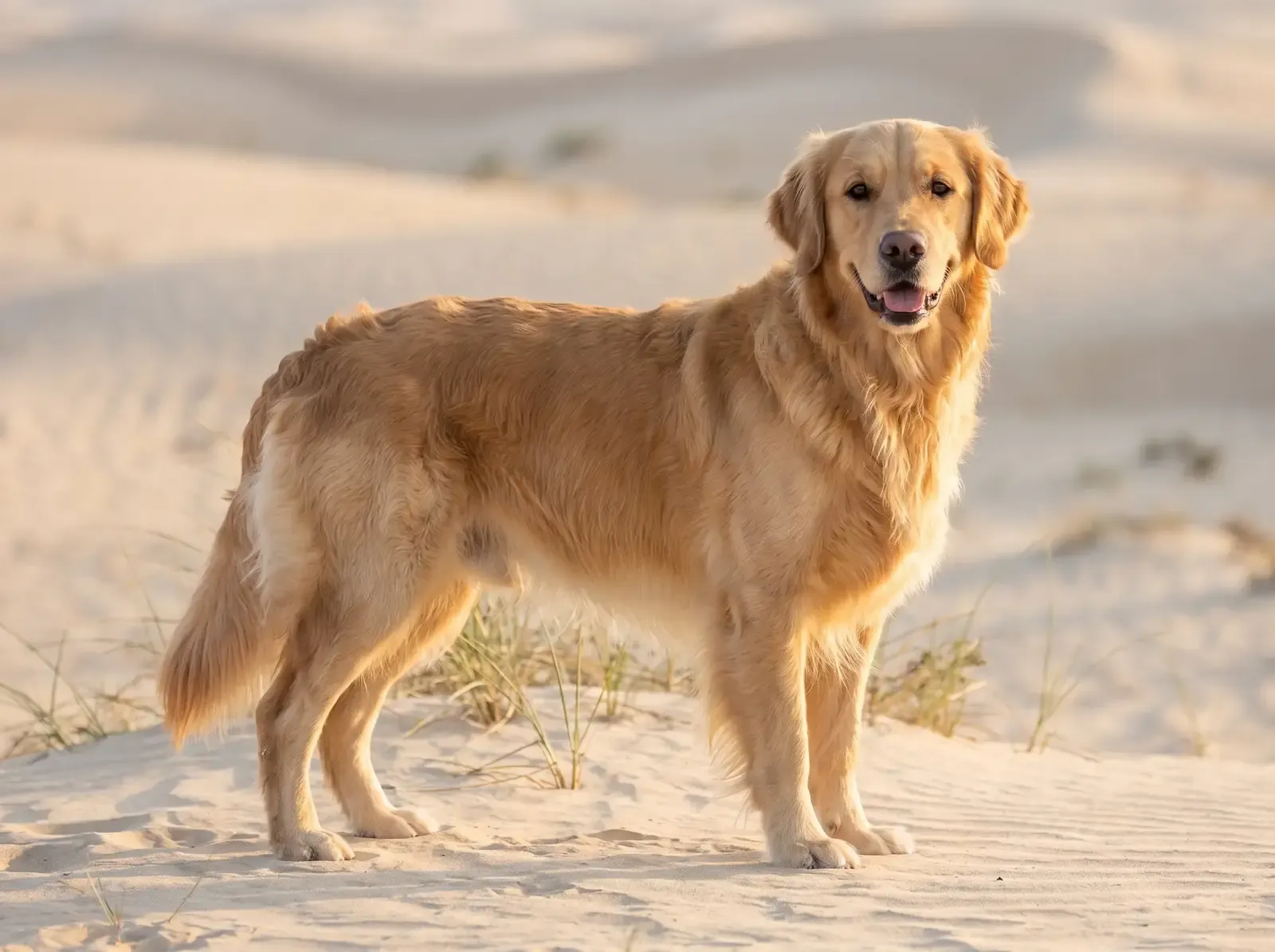
In the Golden's retriever group

The Flat-Coat is a gundog from the same retriever group as the Golden, bred to fetch from land and water. It nearly disappeared after the First World War, and it is still a rare dog in the UAE.

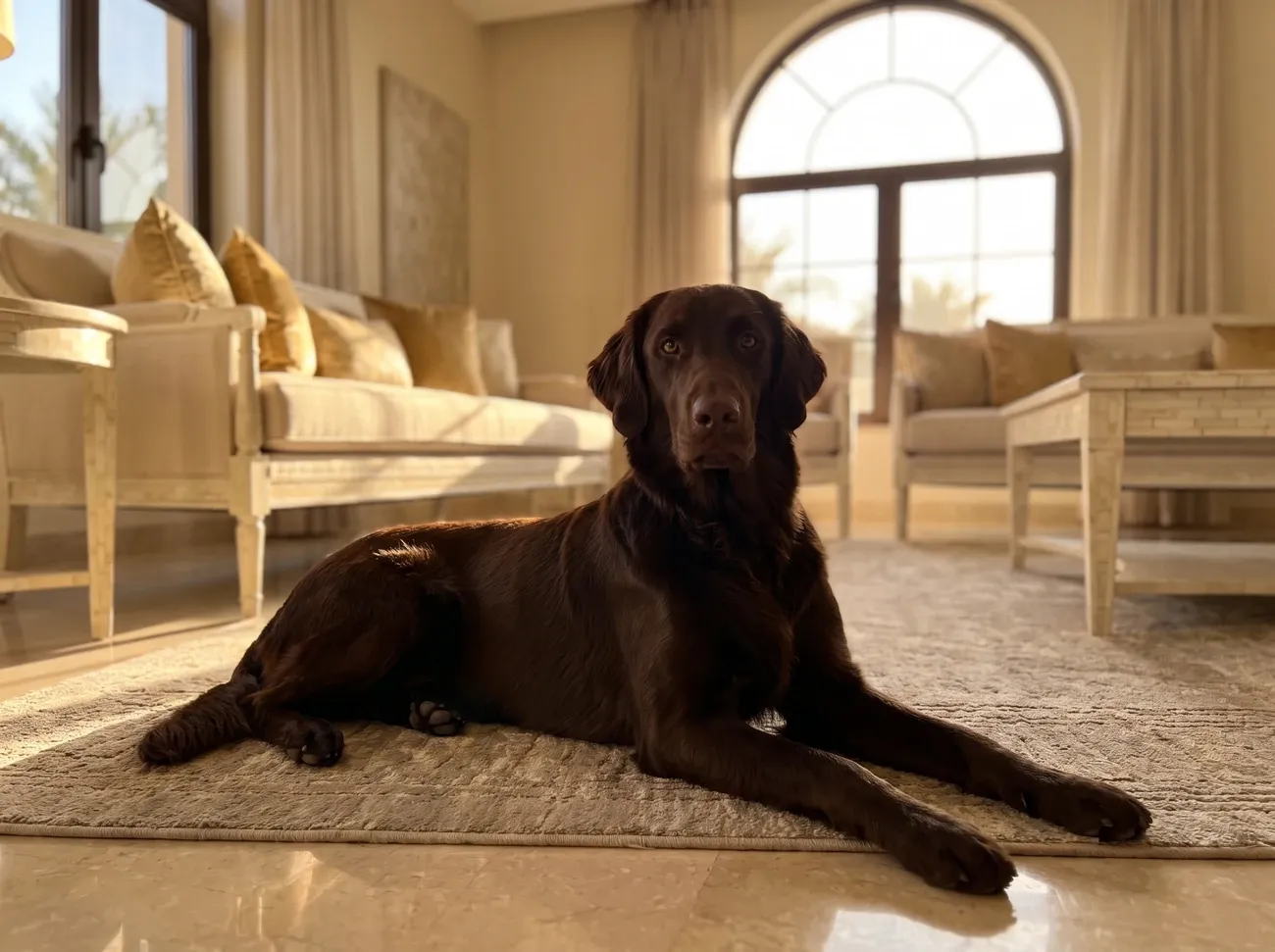
Flat-Coated Retriever, a liver adult lying on a stone-coloured rug in warm evening light

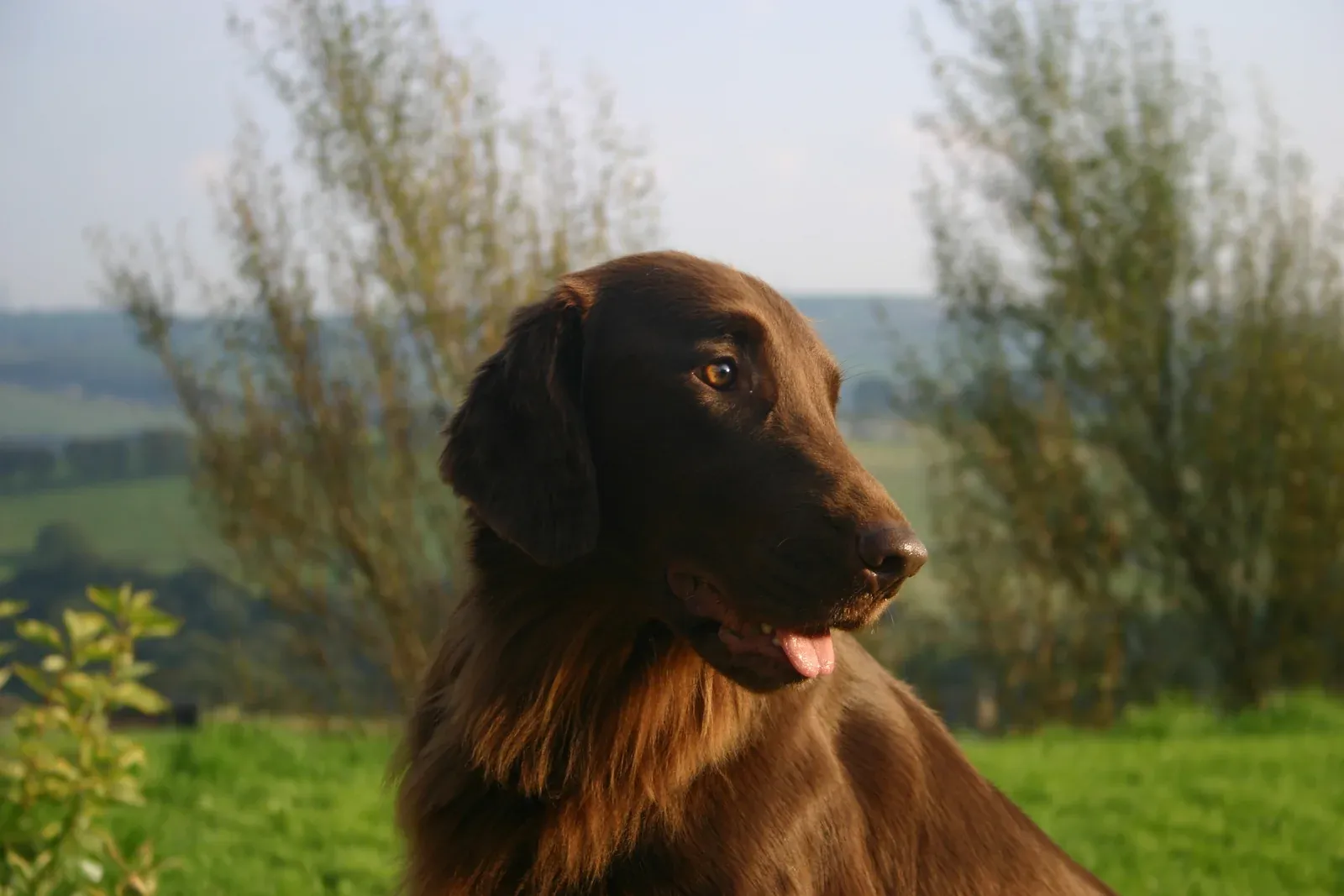
Colours

Glossy black or deep liver

Flat-Coats come in glossy black, or liver, a deep chocolate brown that turns warm in the evening light.

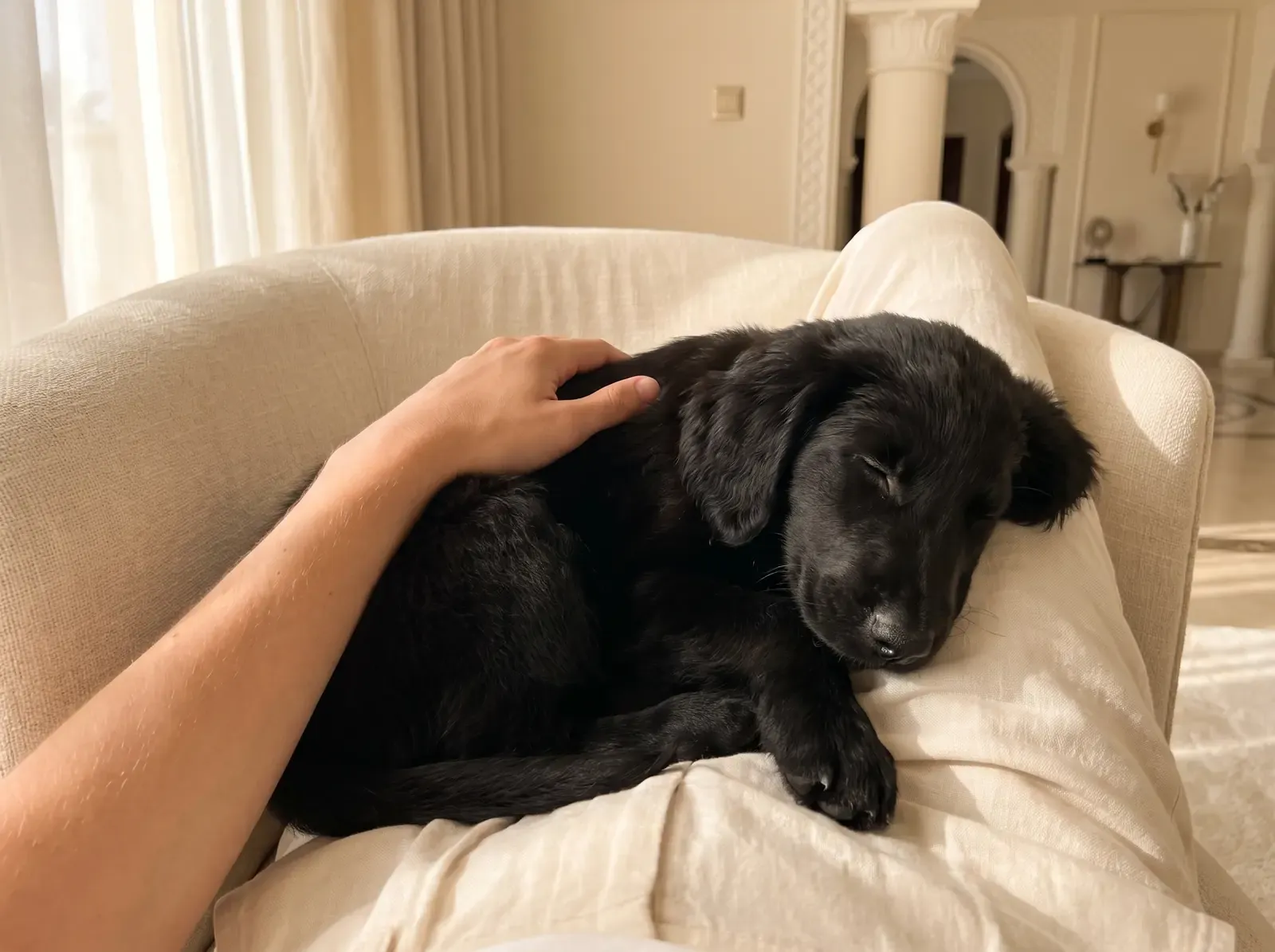
Flat-Coated Retriever, a black puppy asleep in a pet parent's lap in a linen armchair

The first six months

Caring for a Flat-Coated Retriever puppy

Their full vaccination course, microchip and Dubai Municipality registration come first. Grow them slowly and lean, and sweep the floor before you go out: socks, stones and hair ties are what puppies like them swallow.

Puppy health, 0 to 6 months
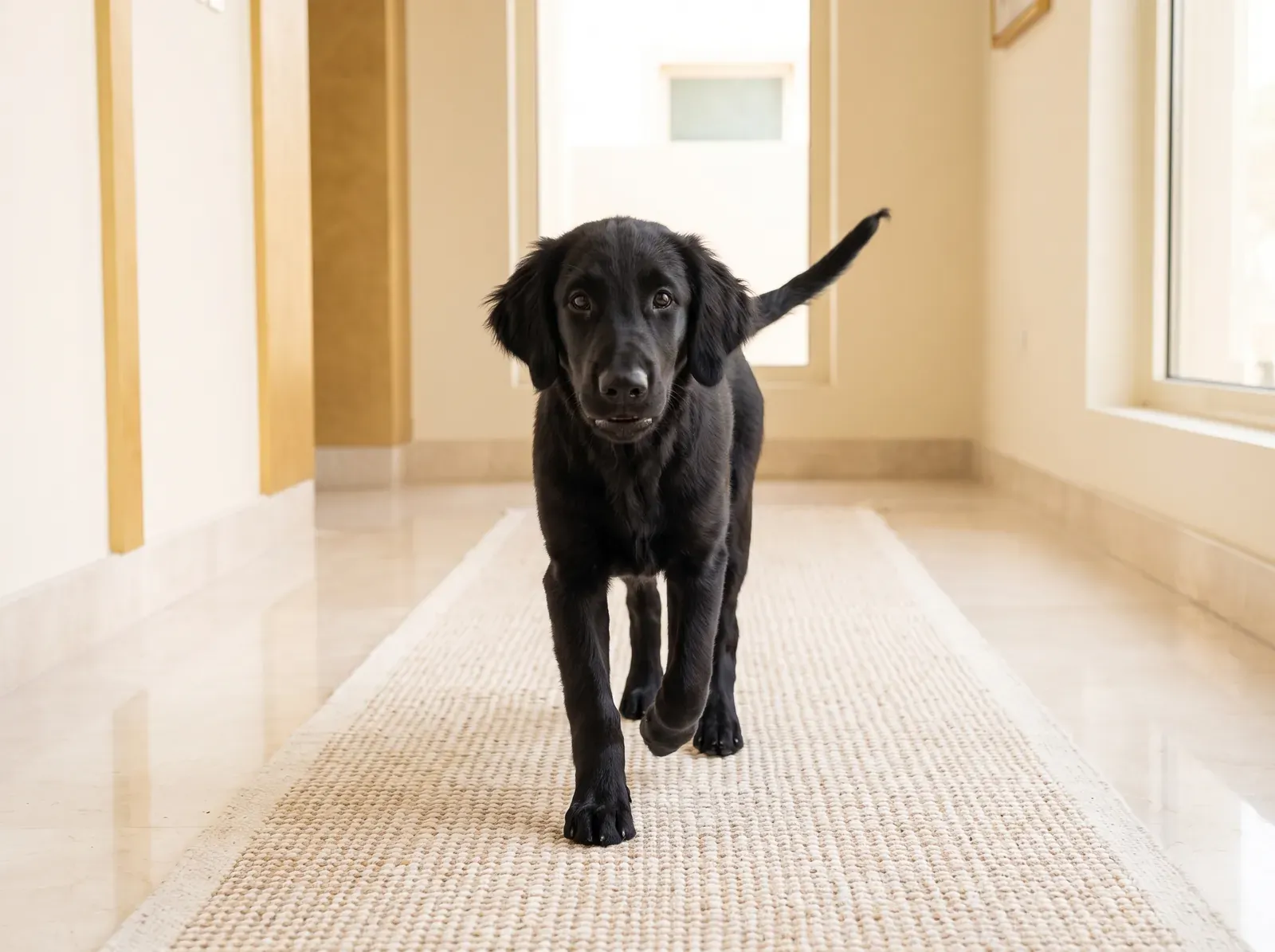
Flat-Coated Retriever, a black puppy trotting along a woven runner over a pale marble floor

Getting the flat ready

Soft landings, and a clear floor

Put rugs or runners where they turn and run, and lift them in and out of the car, or use a ramp. Marble floors are hard on young hips and knees, and anything left on the floor is fair game.

Ten things that make their life better
Flat-Coated Retriever, a black mother lying beside a puppy in a cream courtyard by a potted olive tree

Before you commit

Ask about the parents' hips and eyes

Ask the breeder about both parents' hip x-ray results and eye evaluations. Hip and kneecap problems and eye disease are on a Flat-Coat's health record from puppyhood.

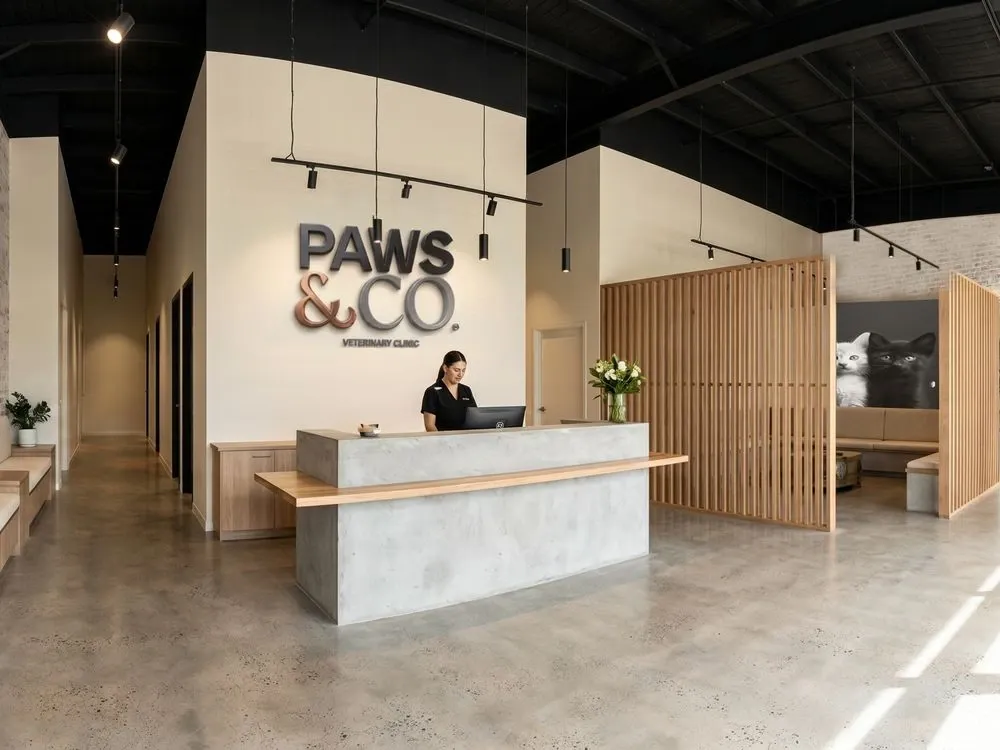
The reception of a Paws & Co clinic, with long cream benches and a stone reception desk

Before the clinics open

Join the founding families

AED 1,999 of essential care for AED 199. No payment now.

When to see a vet

When it is not behaviour.

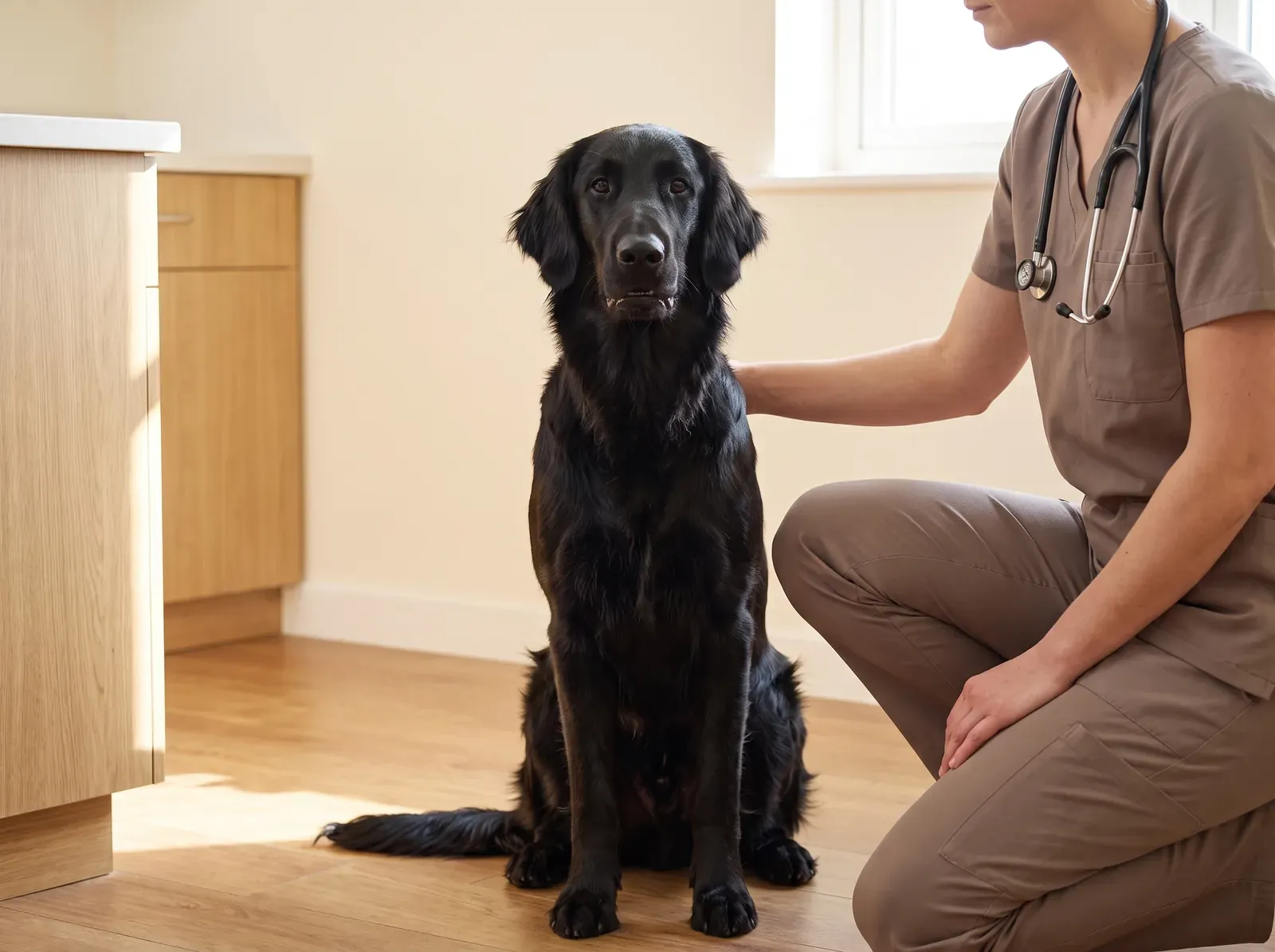
Flat-Coated Retriever, a black adult sitting calmly as a vet in taupe scrubs rests a hand on their shoulder

Some of this is not a training problem, and treating it like one wastes time your dog may not have. If they are distressed when you leave, if they growl or guard their food, their toys or you, if they are frightened on the lead, or if anything about them changes suddenly at any age, contact your vet the same day. A tip from a website, ours included, is not the answer. If it cannot wait, contact your nearest emergency vet now.

With a Flat-Coated Retriever, watch their bounce and their body. A Flat-Coat who stops bouncing is telling you something. So is a new lump that stays, a skip in a back leg or a change in their eyes. Bloat (GDV, a twisted stomach) is on their health record, so skip walks and hard play shortly before and after meals. A swollen, tight belly, retching with nothing coming up, restlessness or drooling is an emergency: contact your vet now. Because they stay young in their head, it is easy to miss them getting older in their body.

They'll keep trying the laundry basket. If they're sick or go off their food after a raid, contact your vet now.

Flat-Coated Retriever history

Before they were yours.

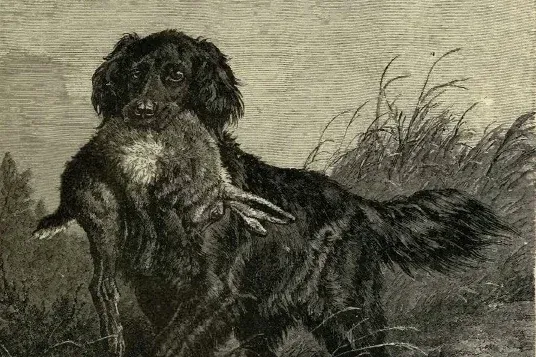
  1. Flat-Coated Retriever history, a black retriever carrying a hare through long grass, an engraving, Britain, 1881
    A Flat-Coated Retriever carrying a hare. Engraving from Vero Shaw, The Illustrated Book of the Dog, 1881.

    The mid 1800s

    The wavy-coated retriever

    The first Flat-Coats were English gamekeepers' dogs, called wavy-coated retrievers. They fetched shot birds from fields, marshes and cold water.

    What they still carryThe water, the carrying, and a wish to be busy with their person.

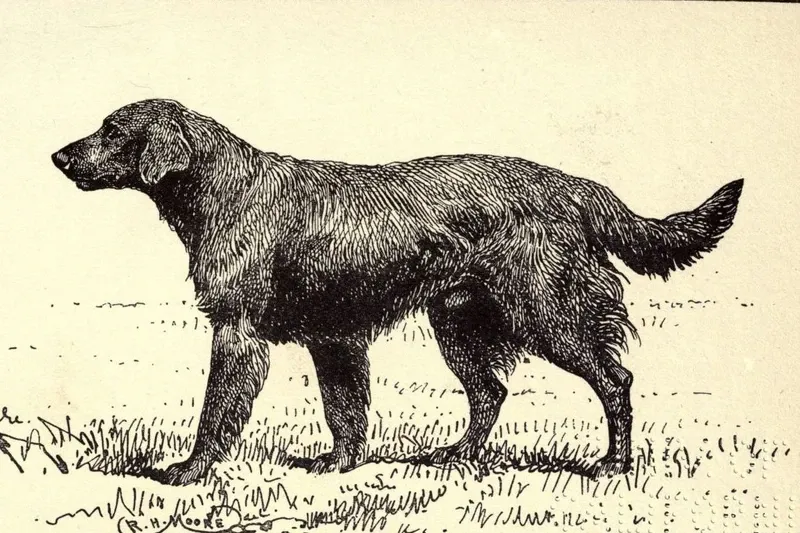
  2. Flat-Coated Retriever history, Ch. Right Away, owned by S. E. Shirley, standing on open ground, a drawing, Britain, 1900
    Ch. Right Away, owned by S. E. Shirley, drawn by R. H. Moore for Charles Henry Lane, All About Dogs, 1900.

    1873 to 1914

    The gamekeeper's favourite

    Sewallis Shirley, who founded The Kennel Club in 1873, shaped the breed. Until the First World War it was the retriever of choice on shooting estates across Britain.

    What they still carryThe glossy black look, and a very sociable working dog.

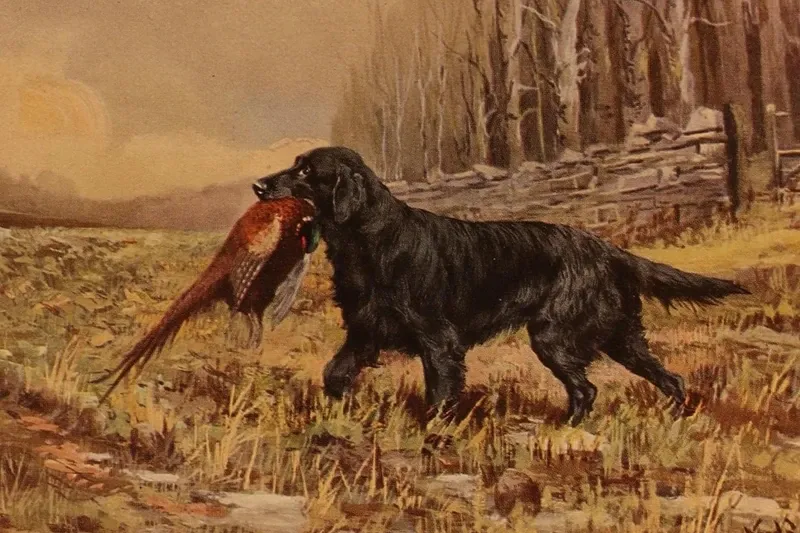
  3. Flat-Coated Retriever history, a black Flat-Coat carrying a pheasant across a winter field, a painting, Britain, 1931
    A Flat-Coated Retriever with a pheasant. Painting by R. Ward Binks for Patrick Chalmers, Gun-Dogs, 1931.

    1918 to the 1960s

    Nearly lost

    After the war other retrievers took over, and numbers fell to a handful of kennels. A small group of breeders brought the Flat-Coat back.

    What they still carryA breed rebuilt from few dogs, and still a rare one.

  4. Flat-Coated Retriever history, the head of a liver Flat-Coat against green fields in evening light, a photograph, 2008
    A liver Flat-Coated Retriever, 2008. Photo: Caroline Hewison, public domain, via Wikimedia Commons.

    2016 onwards

    The appetite gene

    Researchers found a change in an appetite gene, first seen in another retriever, in about two in three Flat-Coats.

    What they still carryA dog hungrier than they look, whose lumps matter from two years old.

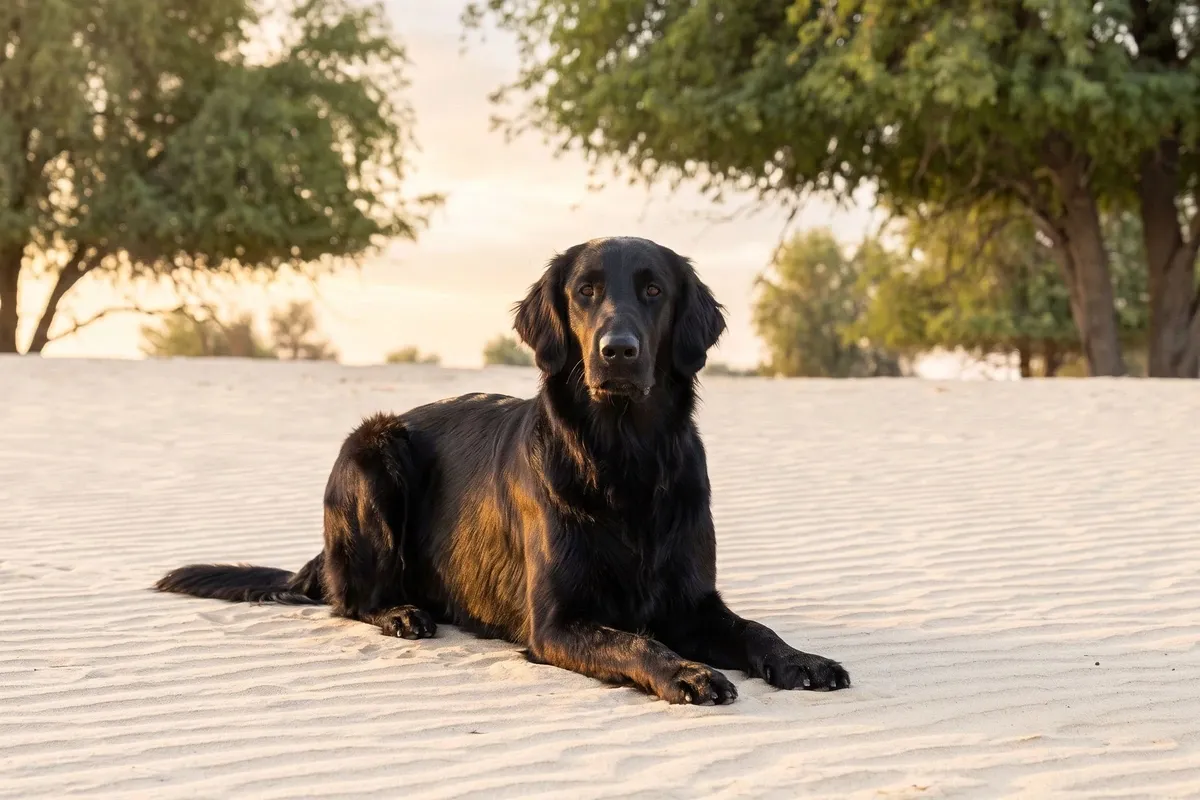
  5. Flat-Coated Retriever history, the breed today, a black adult lying on desert sand under ghaf trees, Dubai, 2026

    Today

    In Dubai

    In the UAE a Flat-Coat is a rare dog, living in a flat or a villa with no birds to fetch.

    What they still carryA cold-water gundog in a dark coat, in 45°C heat, with very little water they are allowed into.

Flat-Coated Retriever questions

The ones you type at midnight.

Most of these get asked late at night, by someone watching their dog and not sure what they are seeing.

Flat-Coated Retriever in Dubai, a black adult asleep on a cream sofa at night, a hand under their chin, the skyline behind
How long do Flat-Coated Retrievers live?

Flat-Coated Retrievers usually live 8 to 10 years, often shorter than other retrievers. Cancer is the main reason, so know their body and act early on any lump.

Are Flat-Coated Retrievers good family dogs?

Yes. Flat-Coated Retrievers are affectionate, people-loving and brilliant with families. They stay puppyish for years, so teach four feet on the floor early, because a bouncing adult can knock someone over.

How big do Flat-Coated Retrievers get?

Adult Flat-Coated Retrievers usually weigh 27 to 32 kg. They are a large, active gundog.

Do Flat-Coated Retrievers shed?

Yes, moderately and all year round. Brushing a Flat-Coated Retriever several times a week keeps most of it off the sofa.

What colours do Flat-Coated Retrievers come in?

Flat-Coated Retrievers come in two colours: glossy black, or liver, a deep chocolate brown.

Why is my Flat-Coated Retriever always hungry?

Partly genes. About two in three Flat-Coated Retrievers carry a change in an appetite gene that leaves them hungrier between meals and burning fewer calories at rest. Weigh their food and count treats inside it.

Is bloat a risk in Flat-Coated Retrievers?

Yes. Bloat is on the Flat-Coated Retriever's health record from six months, and it is an emergency. If you see a swollen belly, or retching with nothing coming up, contact your vet now.

Can a Flat-Coated Retriever live in Dubai?

Yes, with care in the heat. A Flat-Coated Retriever's dark coat was made for English winters, so walk before sunrise and after dark from May to September, and let them swim where they are allowed.

Worried about them? Contact your vet today.