We’re hiring people who love them like we do. Join us careers@pawsandco.comSee open roles
UAE Government Licensed MOCCAE
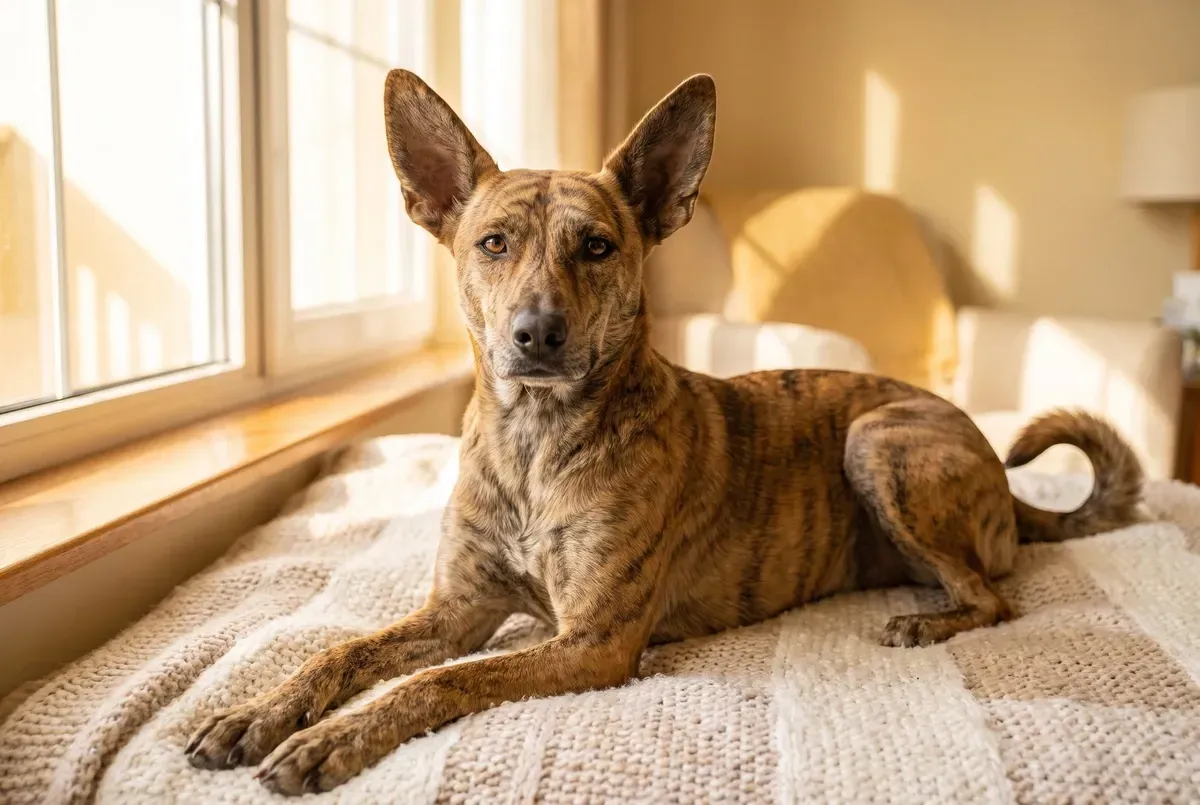
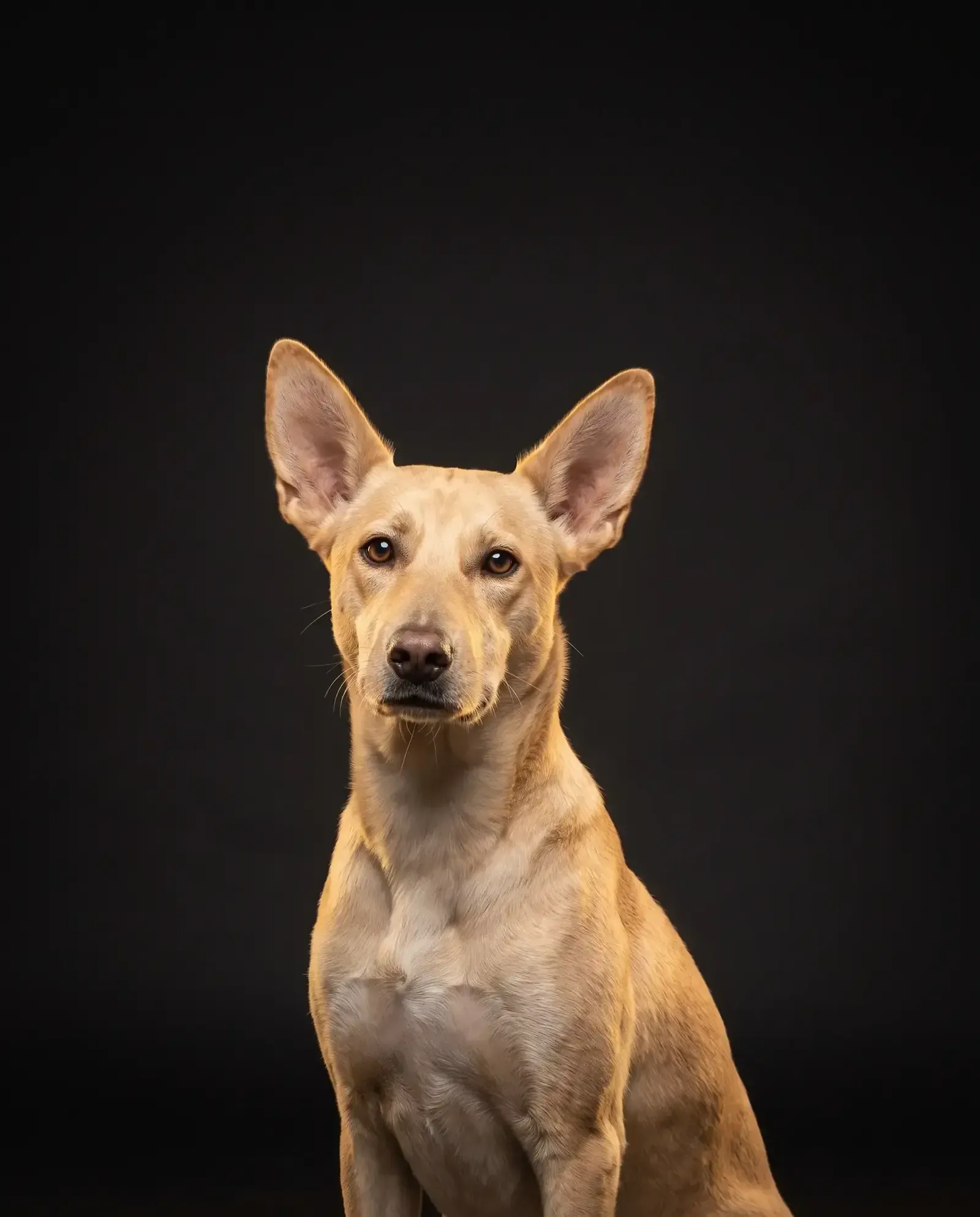
Desert dog in Dubai, studio portrait of a sandy fawn adult with big pricked ears, sitting

Breed guide  ·  Dogs

Desert and mixed-breed dogs

She knows it's walk time before I do. I'm out before sunrise to beat the heat.

Size
Usually medium
Coat
Usually short

Last updated 14 October 2026

Join the founding families. AED 1,999 of essential care for AED 199.

No payment now. We'll be in touch by email and WhatsApp as we open enrolment.

✓
Thank you.

We will be in touch soon to confirm.

Desert and mixed-breed dogs traits

What they brought with them.

Tap a card to see what is going on.

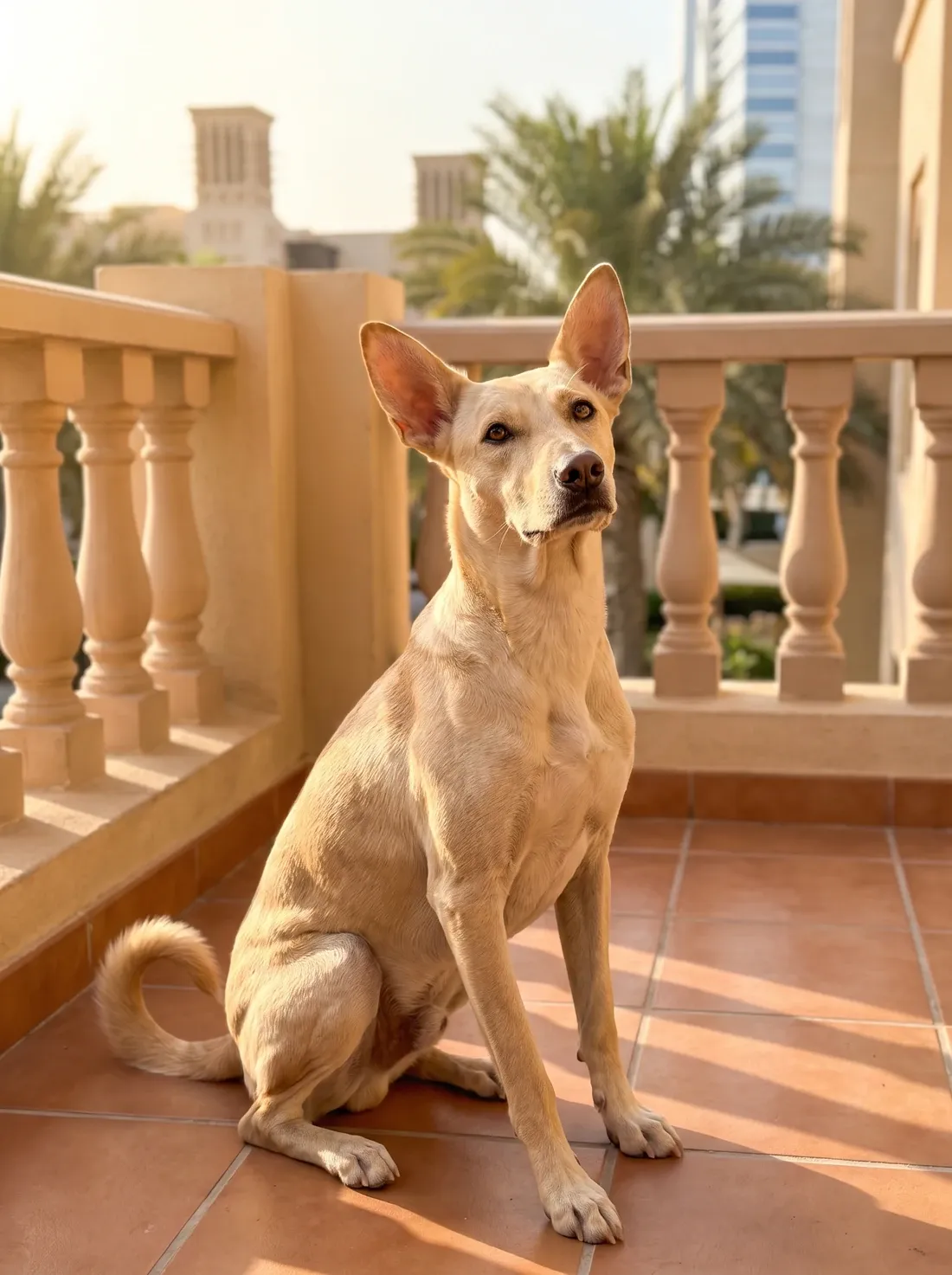
Desert dog in Dubai, a cream adult sitting on a sunny balcony, a wind tower and palms behind

At home

They're weighing it up

You ask, they look at you, and they decide whether it is worth it.

What's going onDogs like them lived for a long time without anyone feeding or protecting them, so they work things out for themselves. Make the right choice the one that pays, and they learn quickly. No two desert dogs are the same mix, so the scores on their card are a best guess. Yours will soon show you the rest.

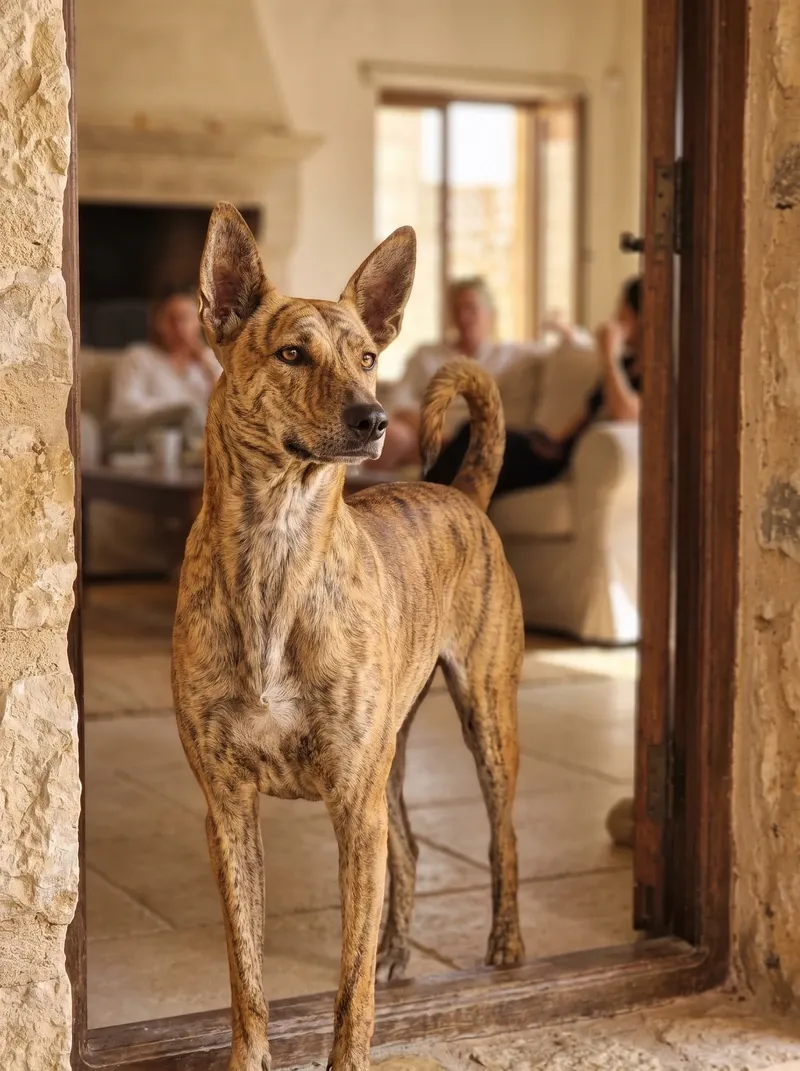
Desert dog in Dubai, a brindle adult standing in a doorway, calmly watching guests on a sofa behind

At home

Visitors will have to wait

They may back away from guests, or quietly leave the room.

What's going onWariness of strangers kept dogs like them safe. Ask visitors to ignore them and drop a treat on the floor, and let them decide when to say hello.

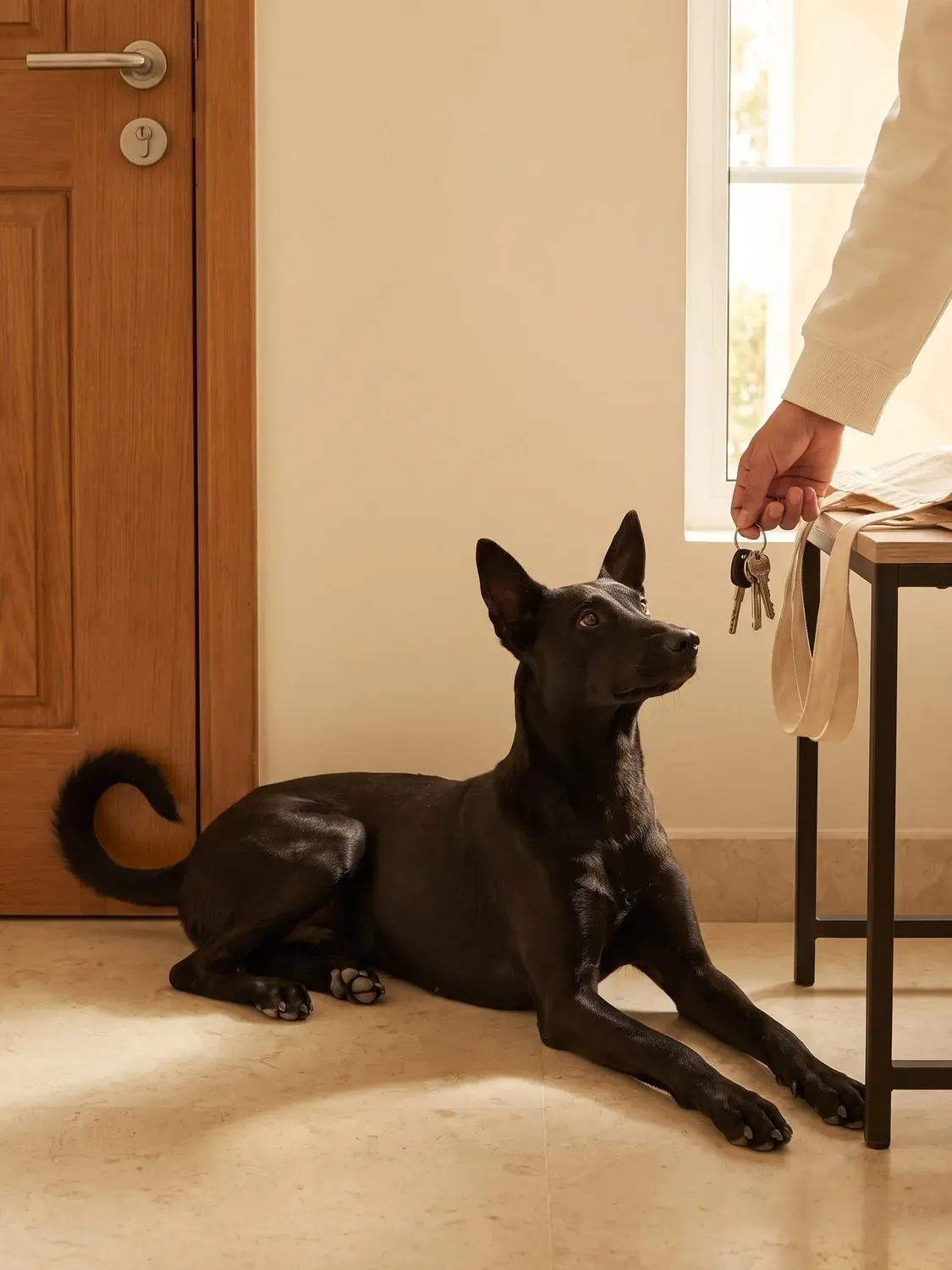
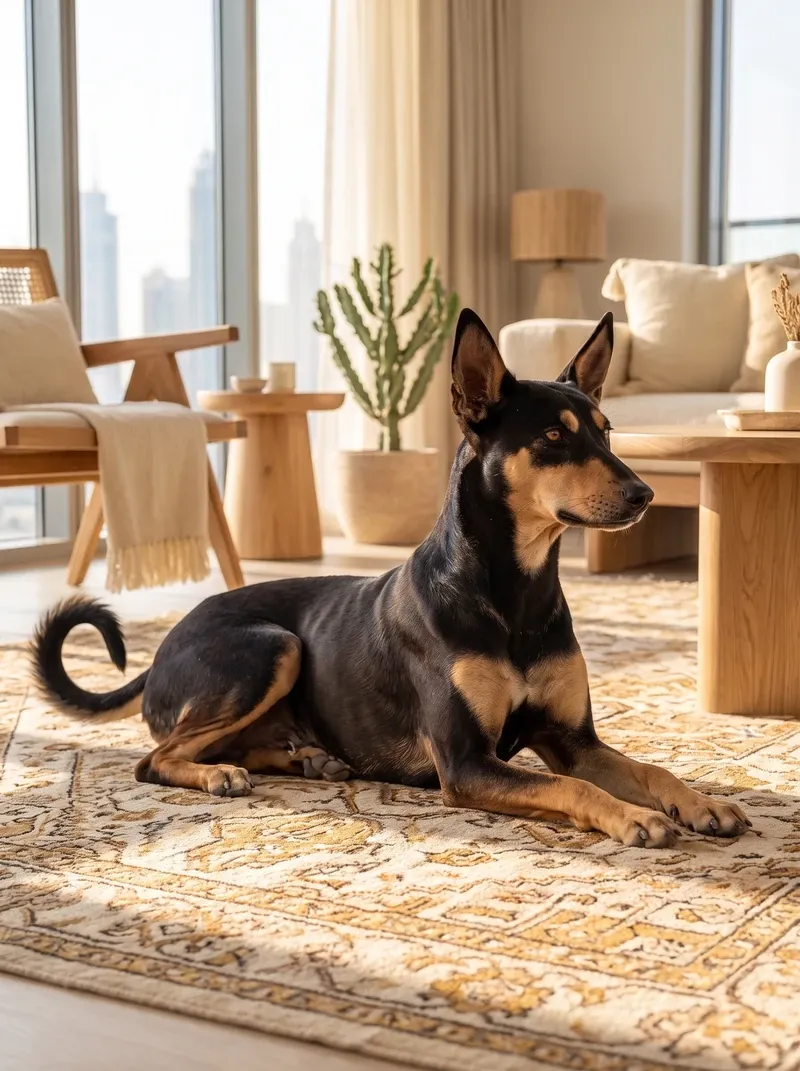
Desert dog in Dubai, a black adult lying by the front door, watching a hand pick up the keys

At home

They read you all day

They know you are going out before you find your keys, and they follow your eyes to the treat jar.

What's going onStreet dogs that read people well ate better and got hurt less. It makes them easier to train than people expect, and it means they notice when the house is tense.

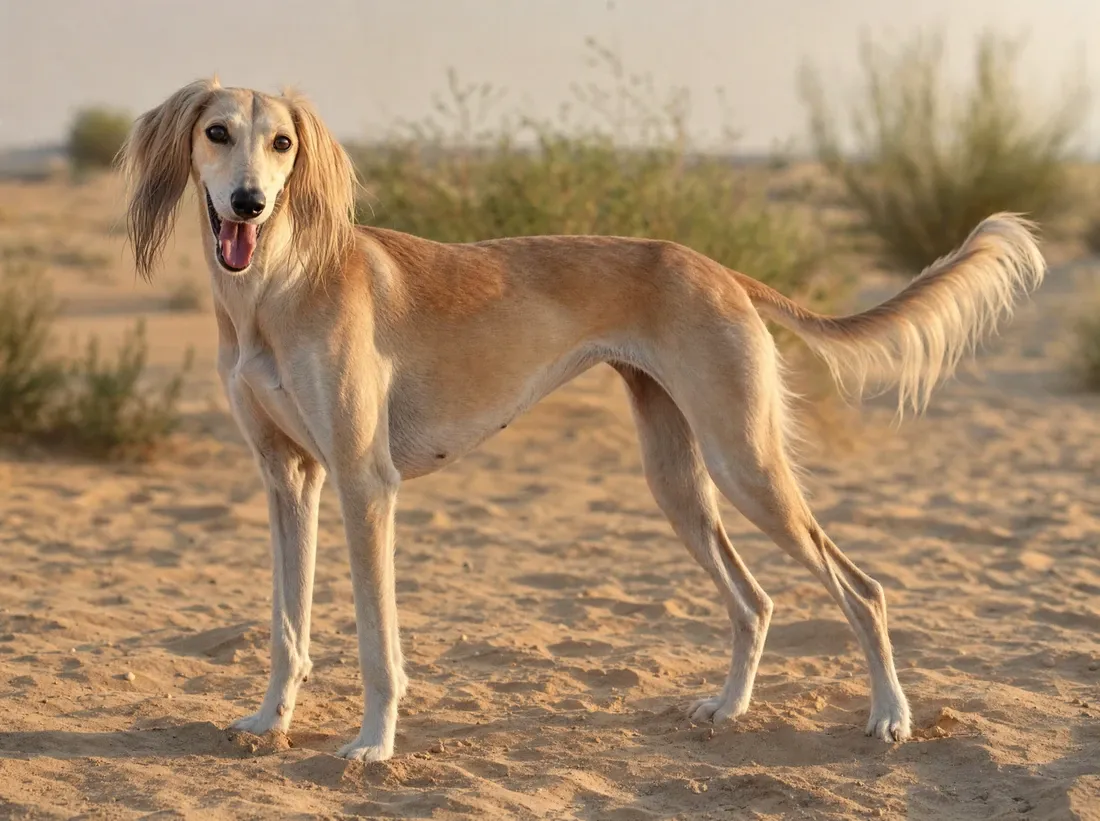
Desert dog in Dubai, a Saluki type adult on a lead, nose to a street bin on a pavement at dusk

At home

Every bin is a possibility

Every bin on the walk gets a look, and the kitchen counter is never quite safe.

What's going onFor dogs like them, passing up food was the mistake. Keep them on a lead past the bins, and swap anything they pick up for something better rather than pulling it out of their mouth.

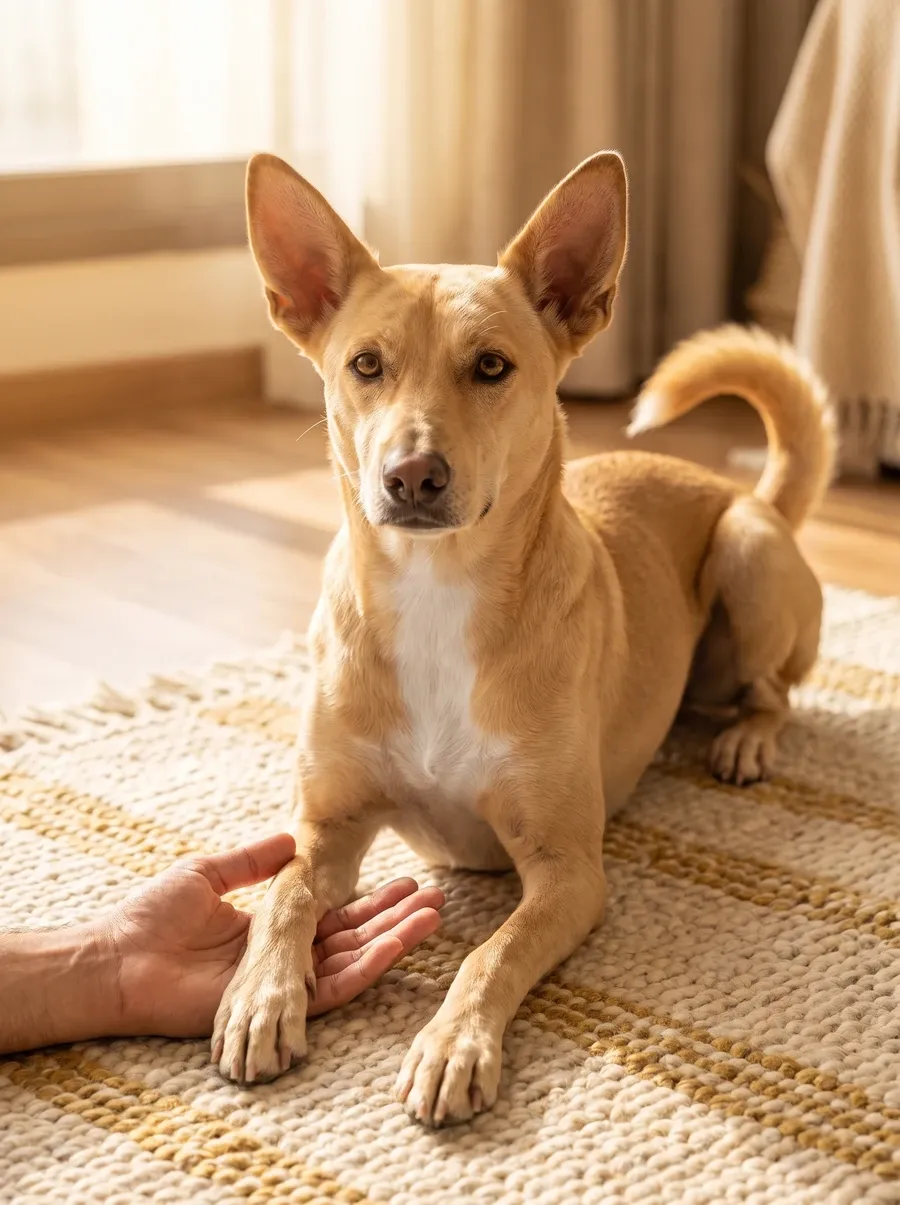
Desert dog in Dubai, a tan adult with a white chest lying on a rug, a pet parent's open hand beside one paw

At home

They duck when you reach for them

A hand over their head or an arm around their body can frighten them, even if they have never been hurt.

What's going onFor a dog living free, being grabbed or cornered meant danger. Touch a paw for a second, then give a treat, and build up from there. It makes every vet visit easier.

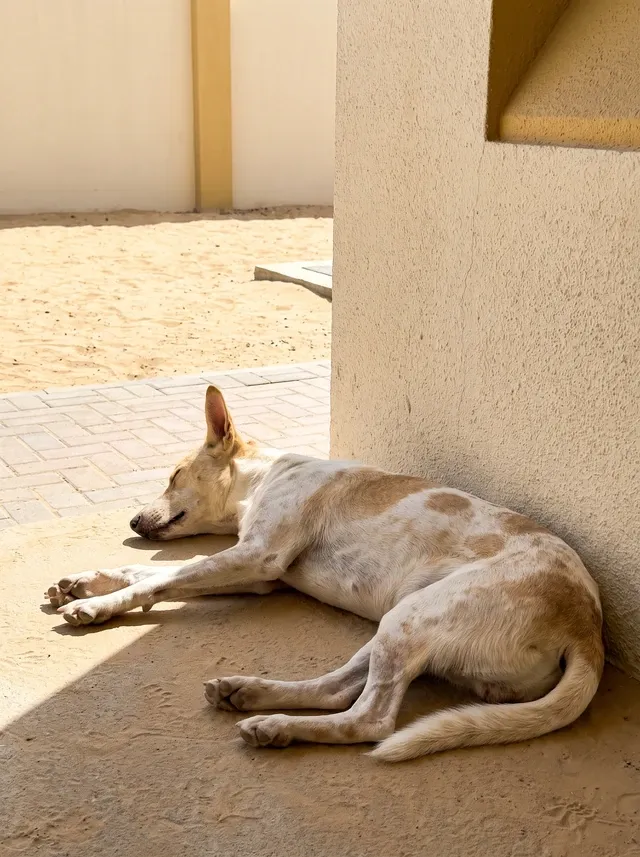
Desert dog in Dubai, a white and sandy adult asleep in the shade of a courtyard wall

At home

Asleep at noon, ready at first light

Flat out in the shade at noon, wide awake at first light and again after sunset.

What's going onThey cope with heat by getting out of it, which suits a Dubai summer. On a lead they cannot choose the shade, so walk them when it is cool.

A Desert and mixed-breed dogs in Dubai

The bit nobody tells you.

Their food

Built for: Finding their own food.

In Dubai: Dinner that arrives every day, from you.

Their people

Built for: Choosing who to go near.

In Dubai: A flat, where you decide who comes in.

Their trust

Built for: Keeping clear of a reaching hand.

In Dubai: Learning that the hand reaching for them is safe.

Some desert dogs close that gap in weeks. Some take months.

You cannot rush it. You can make it easier for them, and the ten things below are how.

Your plan is built around their own record: what their body and history show at every age, and the care that goes with each one.

Join the founding families. AED 1,999 of essential care for AED 199.

Daily care for a Desert and mixed-breed dogs

Ten things that make their life better.

Many of them are free, and most matter at every age.

  1. Most desert dogs arrive with gaps in their history, and parasites and infections are the first risks on their health record. Some of what looks like behaviour in the first weeks is an upset gut or pain.

    Every age, in their first two weeks home

    The cost of a vet visit

    Why

    Most desert dogs arrive with gaps in their history, and parasites and infections are the first risks on their health record. Some of what looks like behaviour in the first weeks is an upset gut or pain.

    What to do

    Book within two weeks of bringing them home. Bring every piece of paper the rescue gave you: vaccine card, microchip number, tests, treatment. Tell the vet everything the rescue told you, even the guesses.

  2. Every greeting they are pushed into teaches them that people come closer when they do not want them to.

    Every age, most of all when they arrive as an adult

    Free

    Why

    Every greeting they are pushed into teaches them that people come closer when they do not want them to.

    What to do

    Give them a corner or a covered crate that is theirs, and never pull them out of it. Ask visitors to ignore them and drop a treat on the floor. If they come over, good. If they do not, that is fine too.

  3. They will need nail trims, tick checks and vet visits all their life, and being held still can frighten them.

    Every age, easiest in puppies

    Free

    Why

    They will need nail trims, tick checks and vet visits all their life, and being held still can frighten them.

    What to do

    Touch a paw, an ear or their collar for one second, then give a treat. Build up over weeks. If they move away, go back a step. If they arrived as an adult, start with the places they already let you touch.

  4. Swallowed bones, packaging and socks are one of the commonest reasons young dogs end up in surgery.

    Every age, most of all up to 2 years

    Free

    Why

    Swallowed bones, packaging and socks are one of the commonest reasons young dogs end up in surgery.

    What to do

    Keep them on a lead near bins and picnic spots. Teach "drop" by swapping what they have for something better. Pulling it out of their mouth teaches them to swallow faster. At home, lid the bin and clear the counter.

  5. They are built to search for food, and searching for dinner tires them more than a longer walk.

    Every age, simpler puzzles from 7 years

    Under AED 150, once

    Why

    They are built to search for food, and searching for dinner tires them more than a longer walk.

    What to do

    Feed at least one meal a day from a puzzle feeder or a snuffle mat, or scatter it on the grass. Use part of their daily food as training treats, so the treats do not add weight.

  6. They cope with heat by finding shade. On a lead they cannot choose it, and hot pavement burns their paws like any dog's.

    Every age, most of all puppies and from 7 years

    Free

    Why

    They cope with heat by finding shade. On a lead they cannot choose it, and hot pavement burns their paws like any dog's.

    What to do

    From May to September, walk before sunrise and after sunset, which is when they want to go anyway. Put the back of your hand on the pavement for five seconds. If you cannot keep it there, they cannot walk on it. Take water.

  7. Until they have decided this is home, a frightened desert dog will run, and they may be very good at not being caught.

    Their first three months home, at any age

    Free

    Why

    Until they have decided this is home, a frightened desert dog will run, and they may be very good at not being caught.

    What to do

    Lead on or inner door closed every time the front door opens. Make sure their microchip is registered to you, with your current number, before they go outside for the first time.

  8. They will usually tell you quietly before they tell you loudly. If the quiet warning gets them told off, they learn to skip it.

    Every age

    Free

    Why

    They will usually tell you quietly before they tell you loudly. If the quiet warning gets them told off, they learn to skip it.

    What to do

    Watch for lip licking, yawning when they are not tired, turning their head away, the whites of their eyes and going still. When you see them, give them more room. Never punish a growl.

  9. Parasites and tick-borne disease are on their health record at every age, and a dog from the street may already have met both.

    Every age, and before any travel

    The cost of prevention

    Why

    Parasites and tick-borne disease are on their health record at every age, and a dog from the street may already have met both.

    What to do

    Give prevention on the schedule your vet sets, every month of the year. After walks on grass or sand, check their ears, between their toes and under their collar.

  10. Nobody can tell you about their parents' health, so their own record has to do that job.

    Every age, most of all from 7 years

    Free

    Why

    Nobody can tell you about their parents' health, so their own record has to do that job.

    What to do

    Once a week, run your hands over their ribs, spine, hips, belly and feet. Once a month, weigh them and write it down. You should feel their ribs easily without seeing them. If they are still learning to be touched, start with the places they already allow. Tell your vet about any new lump or stiffness.

All of these you can do at home.

Join the founding families. AED 1,999 of essential care for AED 199.

Desert and mixed-breed dogs health by age

Their health, at every age.

A desert dog's health follows their own size, history and build, not a breed label. Choose their age to see what to watch for, and the care that goes with it.

Desert dog in Dubai, an older red ginger adult with a greying face resting on a cushioned bed

How old are they?

Their age

Desert and mixed-breed dogs Puppy health

the first six months

What to watch for

  1. Parasitism, giardiasis (a gut parasite infection) and nutritional deficiency in rescue-origin puppies
  2. Parvoviral (parvo) or respiratory infectious disease
  3. Congenital defects that were not identified before adoption
  4. Early orthopaedic abnormality depending on expected adult size
  5. Fear, undersocialisation and stress-related gastrointestinal signs

The care that goes with it

  1. Core vaccinations, microchip and Dubai Municipality registration
  2. Deworming, and flea and tick prevention
  3. Faecal testing and infectious-disease testing, matched to their rescue history
  4. Body Condition Score (BCS, a check on whether they are the right weight), dental, growth and nutritional evaluation
  5. Growth food matched to their likely adult size
  6. Congenital, orthopaedic and cardiac evaluation (a full look at their heart, joints and bones)
  7. Fear-free socialisation and behaviour support
The full care detail
  • Core vaccination programme, microchipping and Dubai Municipality registration. Titre testing discussion where clinically appropriate; not a substitute for completing the core vaccine series
  • Deworming and external parasite prevention tailored to Dubai exposure
  • Body Condition Score (BCS, a check on whether they are the right weight), Muscle Condition Score (MCS, a check on their muscle), dental, growth and nutritional evaluation, and early socialisation
  • Faecal testing, deworming and infectious-disease evaluation based on rescue history
  • Complete vaccination and microchip/registration plan
  • Balanced growth nutrition matched to predicted adult size
  • Full congenital, orthopaedic and cardiac evaluation
  • Fear-free socialisation and behaviour support

Their age

Desert and mixed-breed dogs Juvenile health

6 months to 2 years

What to watch for

  1. Trauma and foreign-body ingestion (swallowing things that are not food)
  2. Allergic skin or ear disease
  3. Hip Dysplasia (HD, a poorly fitting hip joint) or patellar disease according to conformation
  4. Tick-borne or travel-related infectious disease
  5. Anxiety, guarding or adjustment-related behaviour

The care that goes with it

  1. Orthopaedic evaluation (joint and bone exam) based on their own build
  2. Tick prevention, and infectious-disease testing if they may have been exposed
  3. Early dermatological evaluation (skin exam) if skin problems keep coming back
  4. Behavioural evaluation and structured training support
  5. Neutering or spaying, timed for their likely adult size
The full care detail
  • Phenotype-led orthopaedic evaluation rather than breed assumptions
  • Tick prevention and infectious-disease testing when exposure suggests risk
  • Early dermatology work-up for recurrent skin disease
  • Behavioural evaluation and structured training support
  • Neuter/spay timing discussion that accounts for medium-breed growth and disease risk

Their age

Desert and mixed-breed dogs Young Adult health

2 to 4 years

What to watch for

  1. Dental disease
  2. Obesity and osteoarthritis (arthritis)
  3. Allergic skin and ear disease
  4. Vector-borne (spread by ticks, fleas or mosquitoes) or travel-related disease
  5. Age-related cardiac, renal or neoplastic disease (heart, kidney or cancer)

The care that goes with it

  1. Annual screening matched to their own size and build
  2. Dental prevention and professional cleaning
  3. A lean body condition and a mobility plan
  4. Parasite prevention all year, and before any travel
  5. Bloodwork, urinalysis (a urine test), blood pressure and imaging when needed
The full care detail
  • Individualised annual screening based on size and phenotype
  • Dental prevention and professional cleaning
  • Lean body condition and mobility plan
  • Continuous parasite and travel-risk prevention
  • Senior bloodwork, urinalysis, blood pressure and imaging as indicated

Their age

Desert and mixed-breed dogs Prime Adult health

4 to 7 years

What to watch for

  1. Dental disease
  2. Obesity and osteoarthritis (arthritis)
  3. Allergic skin and ear disease
  4. Vector-borne (spread by ticks, fleas or mosquitoes) or travel-related disease
  5. Age-related cardiac, renal or neoplastic disease (heart, kidney or cancer)

The care that goes with it

  1. Annual screening matched to their own size and build
  2. Dental prevention and professional cleaning
  3. A lean body condition and a mobility plan
  4. Parasite prevention all year, and before any travel
  5. Bloodwork, urinalysis (a urine test), blood pressure and imaging when needed
The full care detail
  • Individualised annual screening based on size and phenotype
  • Dental prevention and professional cleaning
  • Lean body condition and mobility plan
  • Continuous parasite and travel-risk prevention
  • Senior bloodwork, urinalysis, blood pressure and imaging as indicated

Their age

Desert and mixed-breed dogs Senior health

7 to 10 years

What to watch for

  1. Obesity and osteoarthritis (arthritis)
  2. Osteoarthritis and mobility decline
  3. Age-related cardiac, renal or neoplastic disease (heart, kidney or cancer)
  4. Chronic Kidney Disease (CKD, long-term kidney failure)
  5. Neoplasia (cancer and tumours)

The care that goes with it

  1. Dental prevention and professional cleaning
  2. A physical examination twice a year, with blood tests, urinalysis (a urine test) and blood pressure
  3. Imaging when needed
  4. Pain and mobility management
  5. Nutrition support, and a quality-of-life assessment
The full care detail
  • Dental prevention and professional cleaning
  • Biannual (twice a year) senior physical examination with CBC, chemistry, urinalysis and blood pressure
  • Senior bloodwork, urinalysis, blood pressure and imaging as indicated
  • Pain and mobility management
  • Nutrition and quality-of-life assessment

Their age

Desert and mixed-breed dogs Geriatric health

10 years and over

What to watch for

  1. Multimorbidity (several conditions at once) and frailty
  2. Advanced obesity and osteoarthritis
  3. Cancer
  4. Cardiac or renal failure (heart or kidney failure)
  5. Cognitive and sensory decline

The care that goes with it

  1. Pain relief and mobility support, combined
  2. Renal, cardiac and endocrine monitoring (kidneys, heart and hormones)
  3. Nutrition, cognition and home-care support
  4. Quality-of-life assessment
  5. Palliative care (comfort care)
  6. End-of-life planning with your veterinary team
The full care detail
  • Multimodal pain and mobility support
  • Renal, cardiac and endocrine monitoring
  • Nutrition, cognition and home-care support
  • Quality-of-life assessments
  • Tailored palliative and comfort-focused care plan
  • Compassionate end-of-life planning with your veterinary team

Breed predispositions indicate an increased risk rather than certainty of disease. What is right for them always comes from their own history and an evaluation.

Getting a Desert and mixed-breed dogs puppy in Dubai

Before they come home.

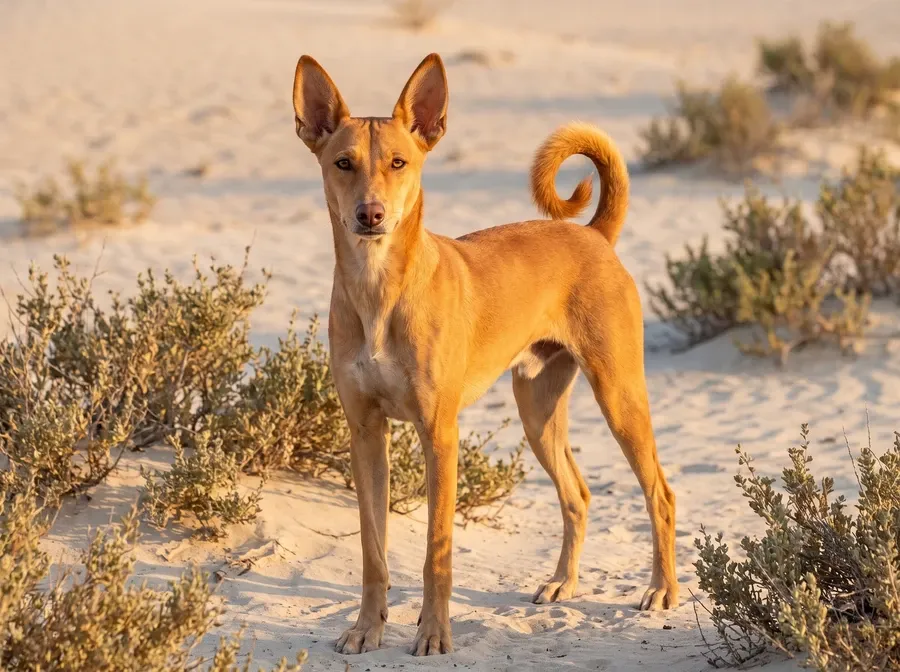
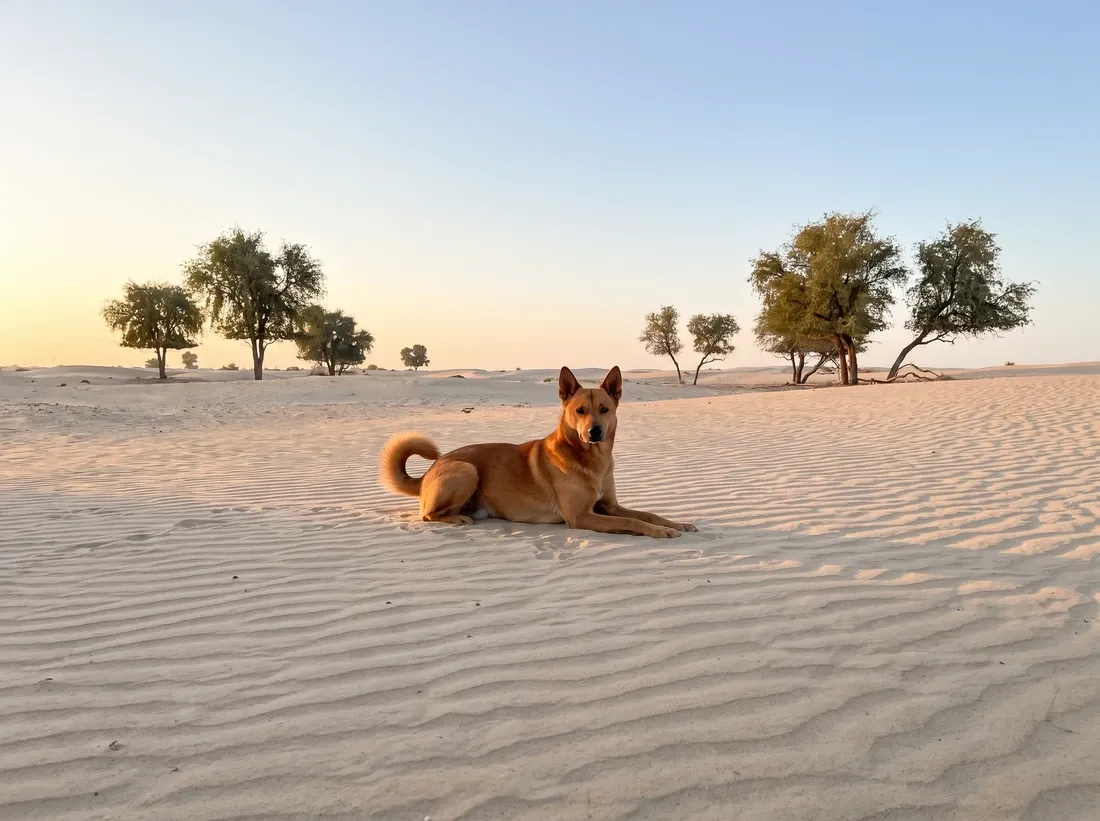
Desert dog in Dubai, a red ginger adult standing on pale sand among low shrubs at sunrise

The type

Local type, Saluki or shepherd

Most carry the local type: medium, lean, with pricked ears and a curled tail. Long legs, a deep chest and eyes on anything that moves suggest some Saluki. A dog who guards the door may have shepherd in them. Their shape and habits are the best clues you will get.

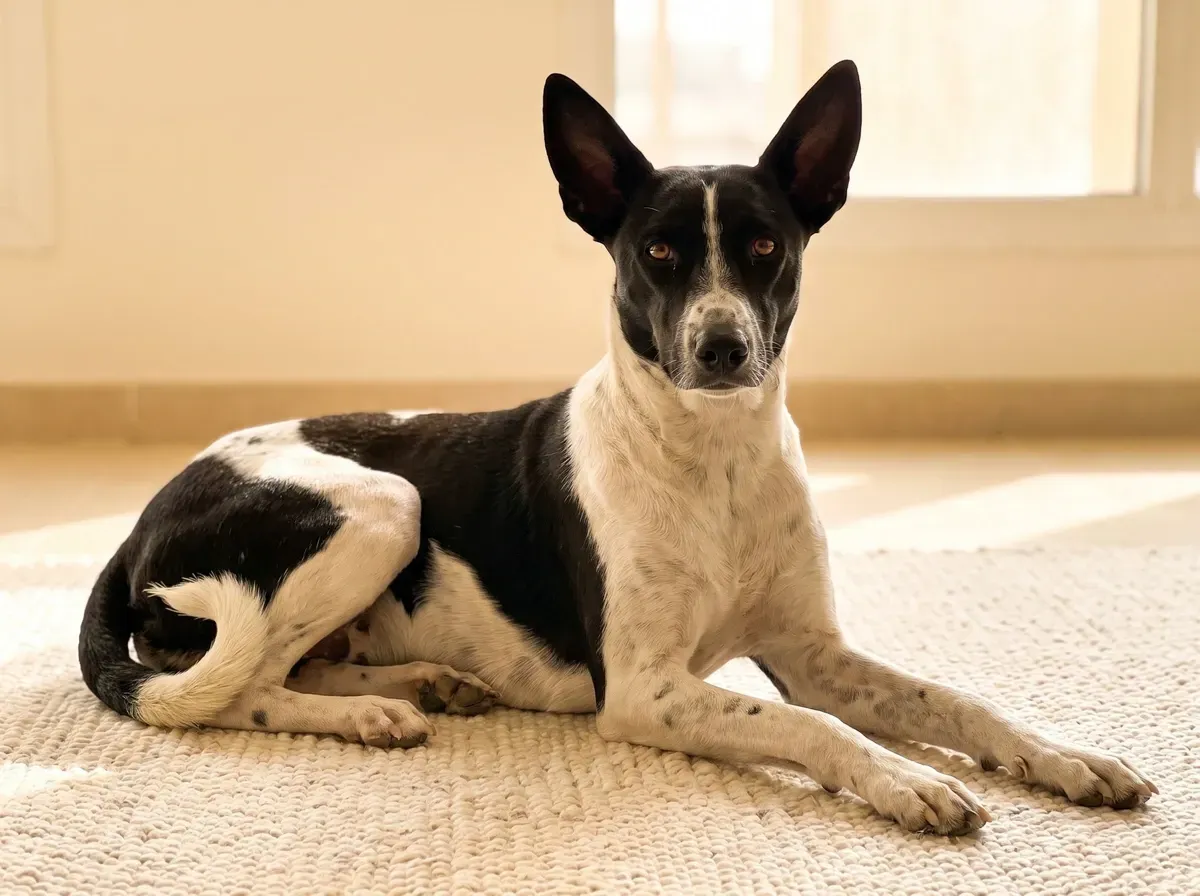
Desert dog in Dubai, a black and white patched adult lying on a cream rug in a bright room

Colours

Every one is different

Nobody bred them to a pattern, so their colour, size and quirks are entirely their own. Choose the dog in front of you, not the coat.

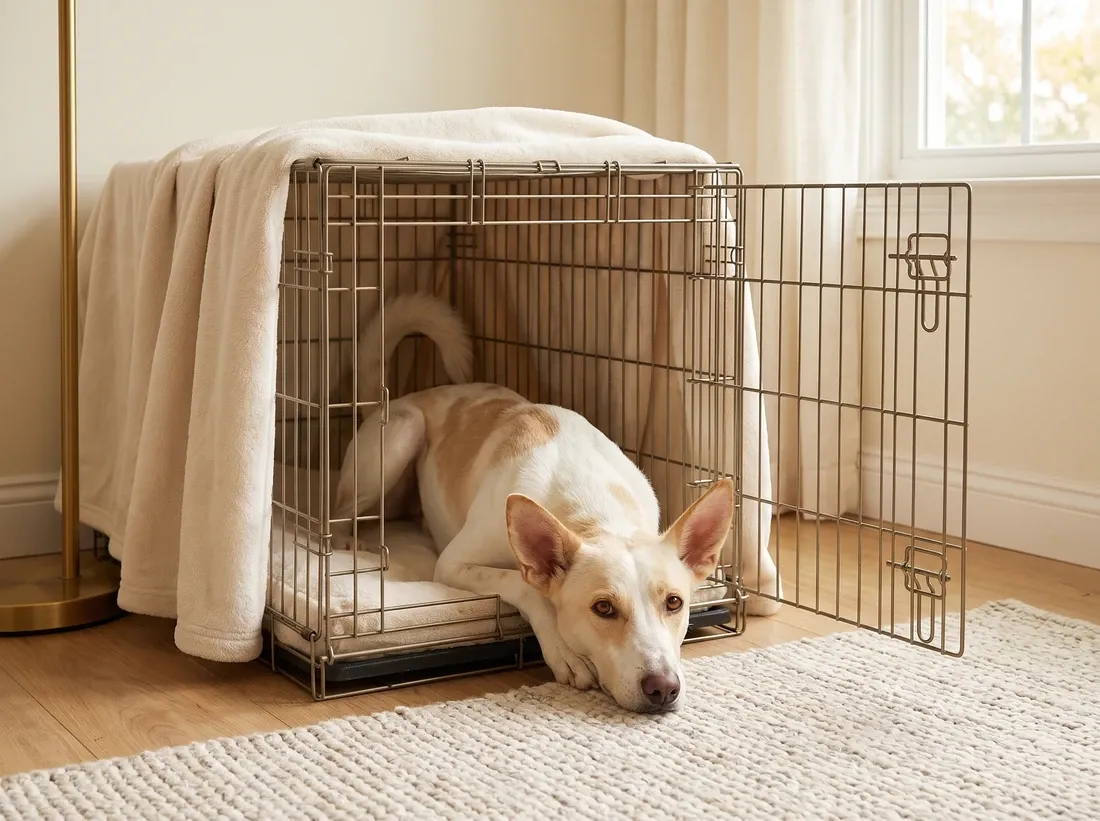
Desert dog in Dubai, a young white and sandy dog resting at the open door of a covered crate

The first months

Week one is not the dog you will know

Fear, hiding, not eating, guarding and toileting accidents in the first weeks are common, and many fade as they settle. Anything involving teeth, or anything that gets worse rather than better, means contacting your vet.

Just adopted: the first vet visit
Desert dog in Dubai, a tan adult curled on a round bed in the corner of a kitchen

Getting the flat ready

A corner that is theirs

Give them a quiet corner or a covered crate, and never pull them out of it. Lid the bin, clear the counter, and keep the lead by the front door for the first three months.

Ten things that make their life better
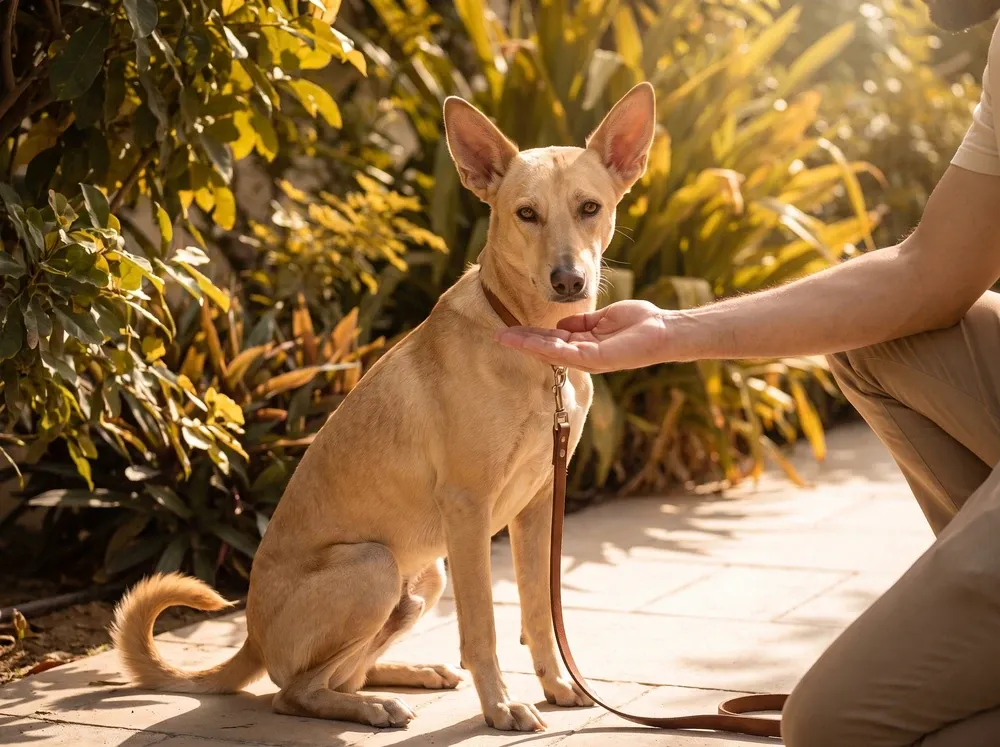
Desert dog in Dubai, a fawn adult sitting calmly on a lead in a shaded garden, a kneeling pet parent's hand held low

Before you commit

Ask the rescue what they know

Ask for every piece of paper: vaccine card, microchip number, any tests or treatment. Most desert dogs come with little paperwork, so whatever the rescue knows becomes the start of their record.

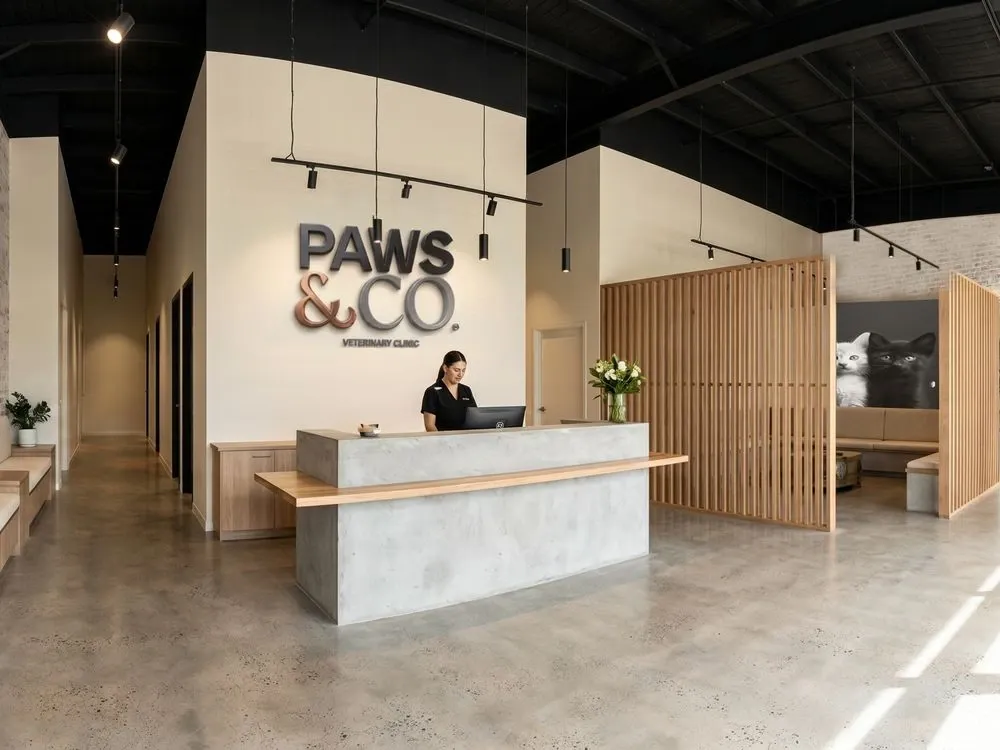
The reception of a Paws & Co clinic, with long cream benches and a stone reception desk

Before the clinics open

Join the founding families

AED 1,999 of essential care for AED 199. No payment now.

When to see a vet

When it is not behaviour.

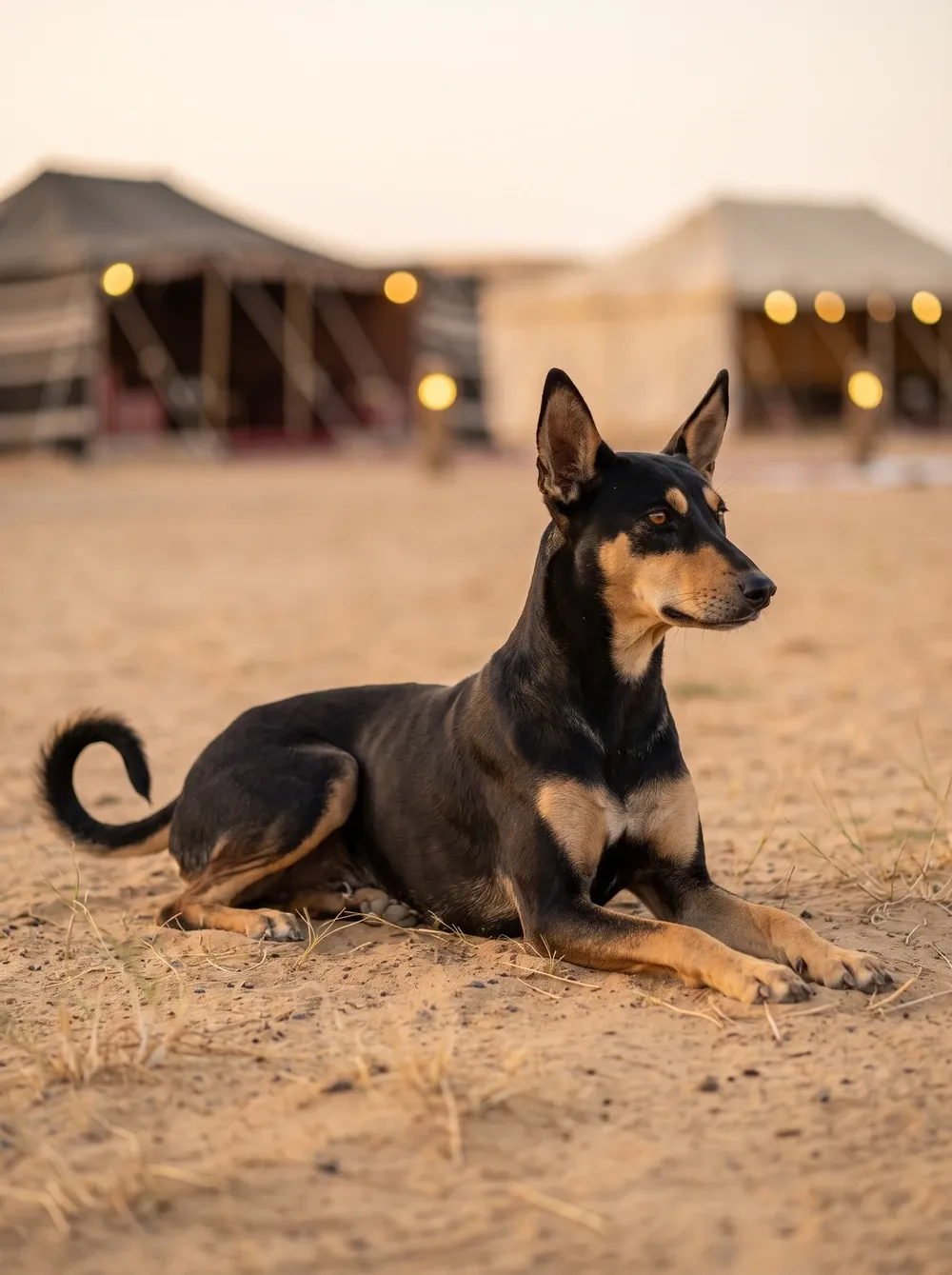
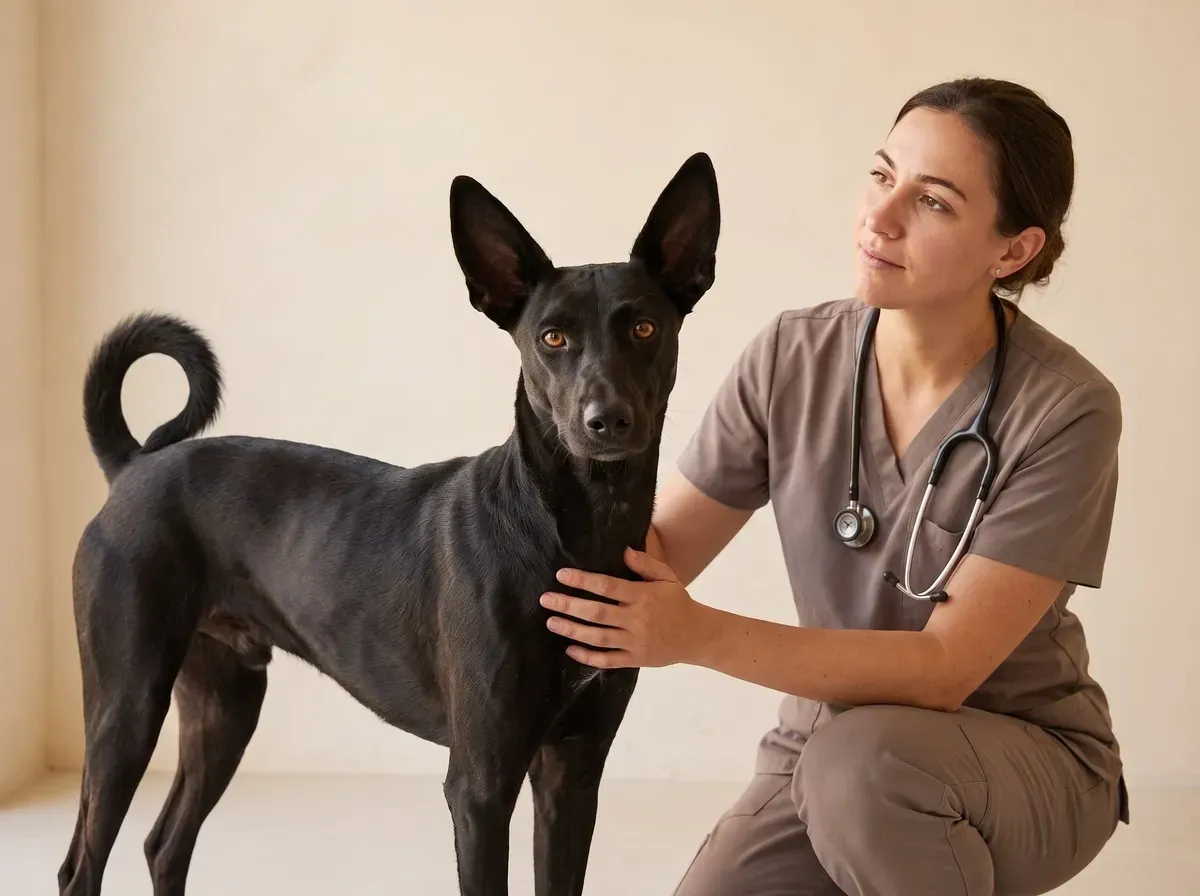
Desert dog in Dubai, a black adult standing as a vet in taupe scrubs kneels alongside, a hand on the dog's chest

Some of this is not a training problem, and treating it like one wastes time your dog may not have. If they are distressed when you leave, if they growl or guard their food, their toys or you, if they are frightened on the lead, or if anything about them changes suddenly at any age, contact your vet the same day. A tip from a website, ours included, is not the answer. If it cannot wait, contact your nearest emergency vet now.

With a newly adopted desert dog, fear and food guarding in the first weeks are common. If anyone has been snapped at, or if either is getting worse, contact your vet. Once they have settled, watch for change. Going quiet, stiffness, snapping when touched in one place or losing interest in their walk can be the first sign of something physical. Bloat (GDV, a twisted stomach) can happen in any dog, though it is most common in large, deep-chested breeds. A swollen, tight belly, retching with nothing coming up, sudden restlessness or drooling is an emergency: contact your vet now.

They'll always know walk time before you do. If they stop asking for it, tell your vet.
Desert and mixed-breed dogs history

Before they were yours.

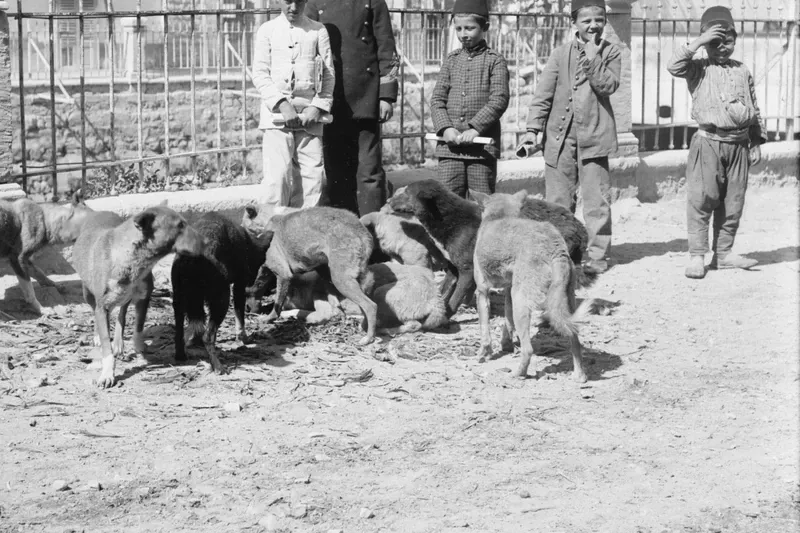
  1. Desert dog history, free-living town dogs in a dusty street, boys standing behind, the Levant, 1898 to 1946
    Free-living town dogs in the Levant, between 1898 and 1946. Matson Collection, Library of Congress.

    Long before breeds

    Dogs that belonged to nobody

    For a very long time, dogs like them lived around the towns and camps of this region, mostly belonging to no one. The ones that did well found their own food and learned quickly which people to keep clear of.

    What they still carrySelf-reliance, caution with strangers, and a habit of eating whatever turns up.

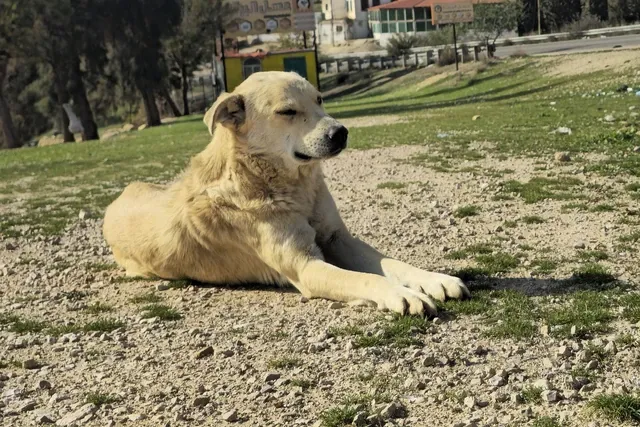
  2. Desert dog history, a cream Canaan Dog lying on open ground, near Zarqa, Jordan
    A Canaan Dog in open country near Zarqa, Jordan. Photo: Mohammad hajeer, CC BY-SA 4.0, via Wikimedia Commons (cropped).

    The 20th century

    A cousin gets a name

    A dog trainer in the Levant found that the local semi-wild dogs, living on the edge of settlements and with Bedouin families, coped with the desert better than imported guarding breeds. They became the Canaan Dog.

    What they still carryA recorded breed that behaves like the dogs still living here: a guide to them, not their family tree.

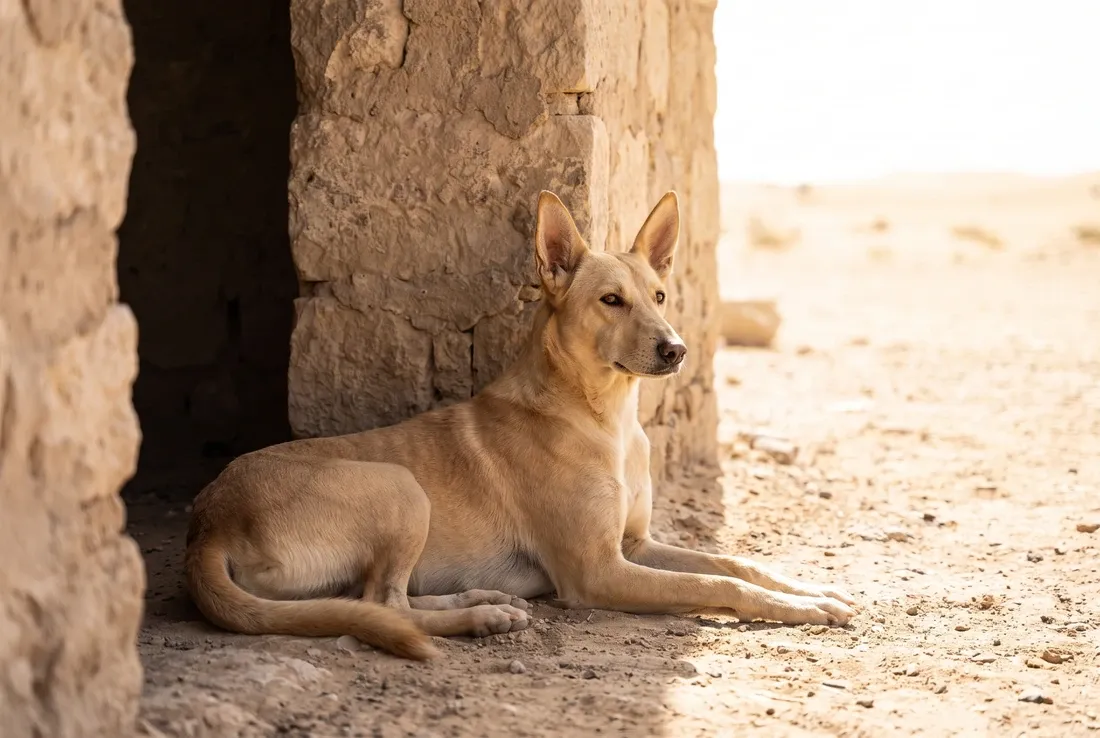
  3. Desert dog history, a fawn village dog resting alert in the shade of an old stone wall

    What genetics says

    Old roots, recent mixing

    Studies of village dogs, Middle Eastern dogs among them, find long-standing local lines. In many places those local dogs have also mixed with imported breeds.

    What they still carryA desert dog may be mostly local type, part Saluki, part shepherd, part anything.

  4. Desert dog history, a brindle adult resting on a blanket by a sunny window in a family home

    Their life before you

    Street, shelter, foster

    Many desert dogs in the UAE were born outside or abandoned, then found, and spent time in a shelter or a foster home before adoption. Many arrive as adults, and nobody knows their first years.

    What they still carryHabits from their old life that can fade in a settled home, and a health history with gaps.

  5. Desert dog history, the breed today, a red fawn adult asleep on a cream sofa, the Dubai skyline behind

    Today

    In Dubai

    For many of them, this is the first time they have belonged to someone.

    What they still carryA dog shaped to look after themselves, now in a flat where someone else decides the food, the doors, the walks and the visitors.

Desert and mixed-breed dogs questions

The ones you type at midnight.

Most of these get asked late at night, by someone watching their dog and not sure what they are seeing.

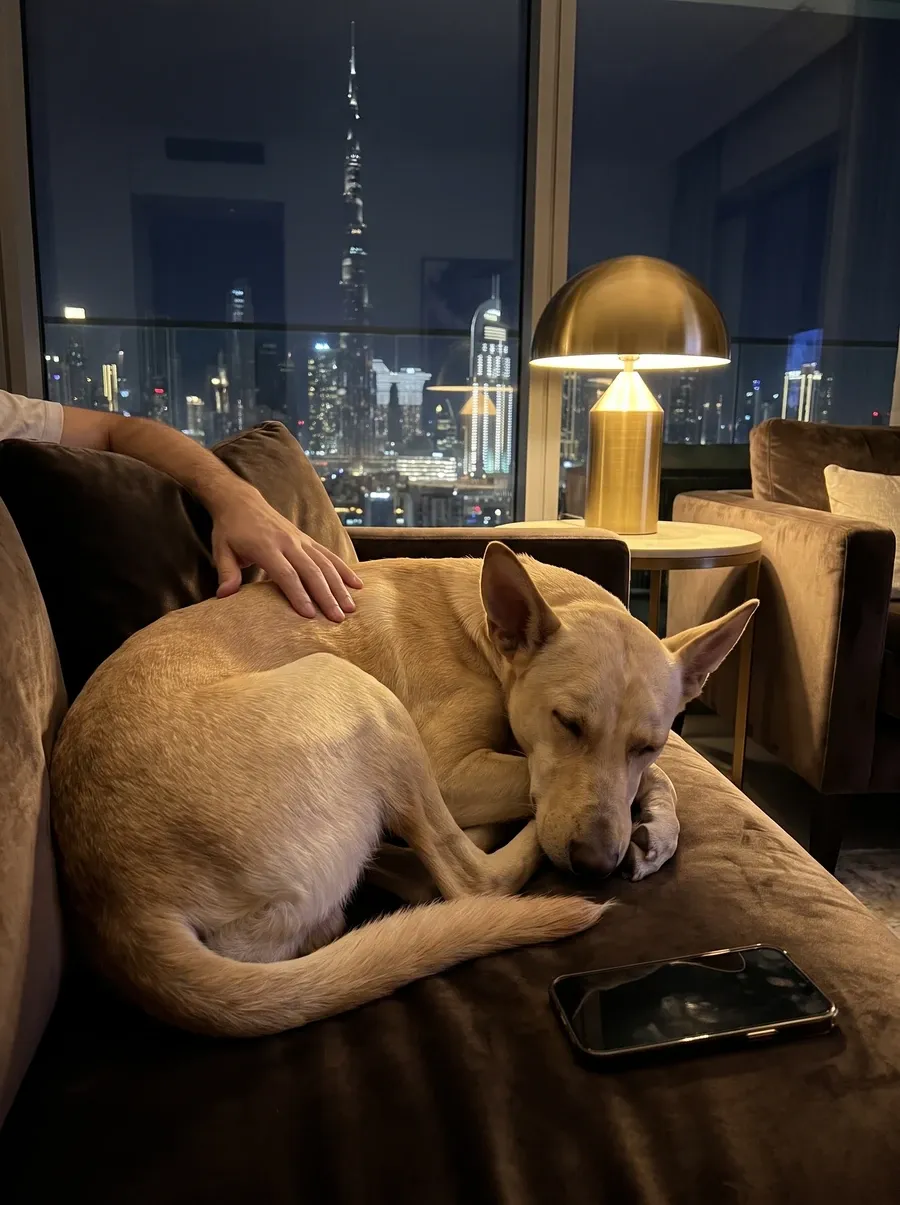
Desert dog in Dubai, a cream adult asleep on a sofa at night beside a pet parent, the skyline outside
What is a desert dog?

A desert dog is a local UAE mix, not a breed. Most carry the local type, often with some Saluki, shepherd or another breed you will never pin down.

Is a desert dog a Saluki?

Some desert dogs carry Saluki, but most are a mix. Long legs, a deep chest and eyes locked on anything that moves are the clues. If yours has them, keep them on a lead in open spaces, because a dog that sees something running may not come back when called.

Can desert dogs cope with the heat in Dubai?

Desert dogs are heat-hardy, not heat-proof: they cope by getting out of the heat. Walk them before sunrise and after dark from May to September, and test the pavement with the back of your hand.

Where can I adopt a dog in Dubai?

Most desert dogs in Dubai are adopted through rescue groups, shelters and foster homes. Some rescue groups here specialise in Salukis and Saluki mixes. Ask each one what they know about the dog's history.

What should I do after adopting a rescue dog?

Book a full check-up with a vet within two weeks of bringing your desert dog home. Bring every piece of paper the rescue gave you, and pass on everything they told you, even the guesses.

Why is my rescue dog scared of people?

Wariness of strangers is normal in a desert dog, and often it is simply the type rather than a bad history. Let them come to people in their own time, and never push them into a greeting.

Why does my desert dog eat everything?

For most of a desert dog's history, passing up food was the mistake. Walk them on a lead past bins, and if they swallow something they should not and start vomiting or stop eating, call the vet the same day.

What health problems do desert dogs have?

A desert dog's health depends on their size, early nutrition, rescue history and exposure to infections, not a breed list. Parasites and infections come first; teeth, weight, joints and skin follow.

How big do desert dogs get?

Most desert dogs are medium-sized and lean, but there is no set size because every one is a different mix. Their build tells you more than any label.

Worried about them? Contact your vet today.