We’re hiring people who love them like we do. Join us careers@pawsandco.comSee open roles
UAE Government Licensed MOCCAE
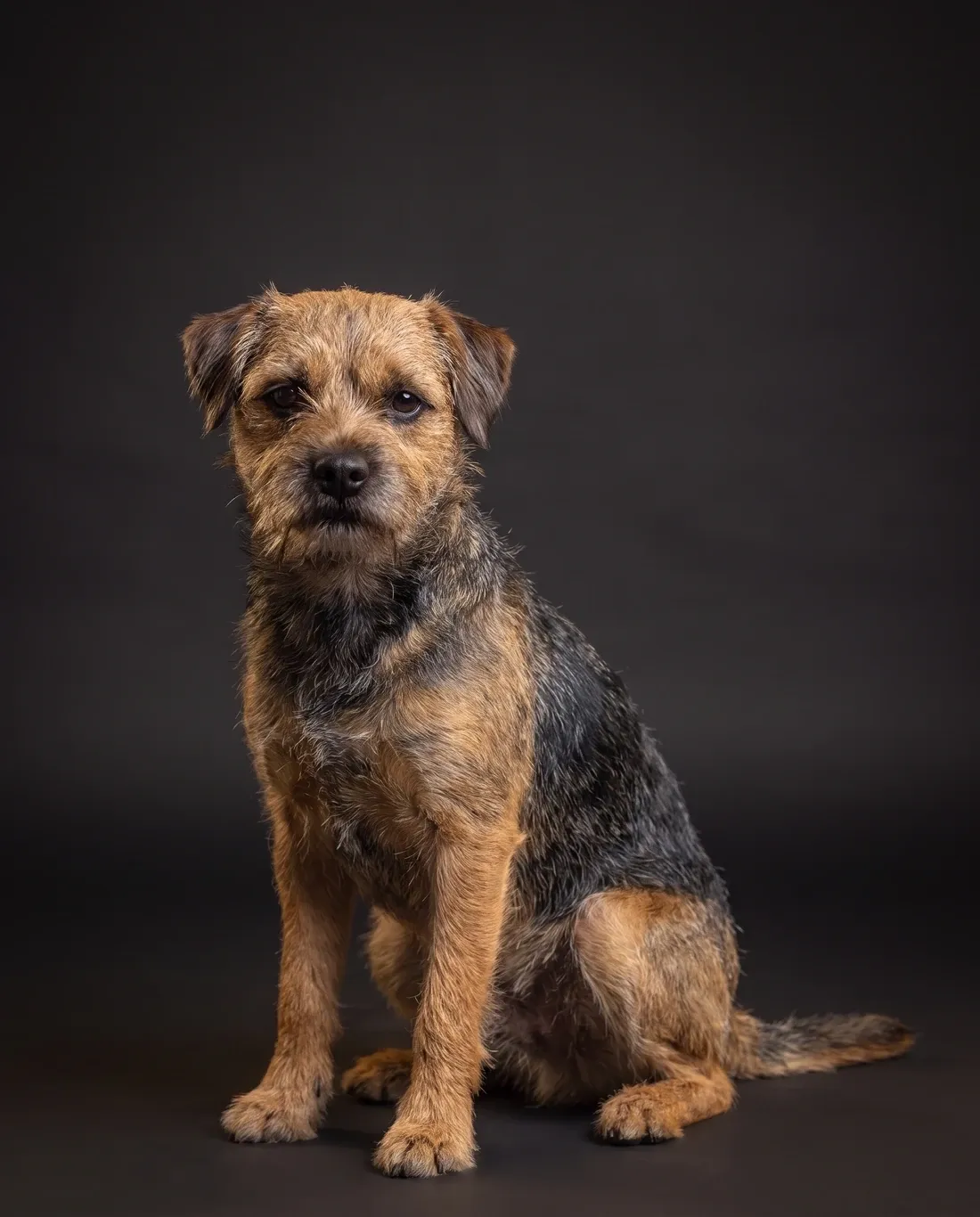
Border Terrier in Dubai, studio portrait of a calm grizzle and tan adult sitting

Breed guide  ·  Dogs

Border Terrier

She'd walk all day if I let her. I set my alarm for the cool hours.

Lifespan
12 to 15 years
Size
Small
Weight
5 to 7 kg
Shedding
Light to moderate

Last updated 14 October 2026

Join the founding families. AED 1,999 of essential care for AED 199.

No payment now. We'll be in touch by email and WhatsApp as we open enrolment.

✓
Thank you.

We will be in touch soon to confirm.

Border Terrier traits

What they brought with them.

Tap a card to see what is going on.

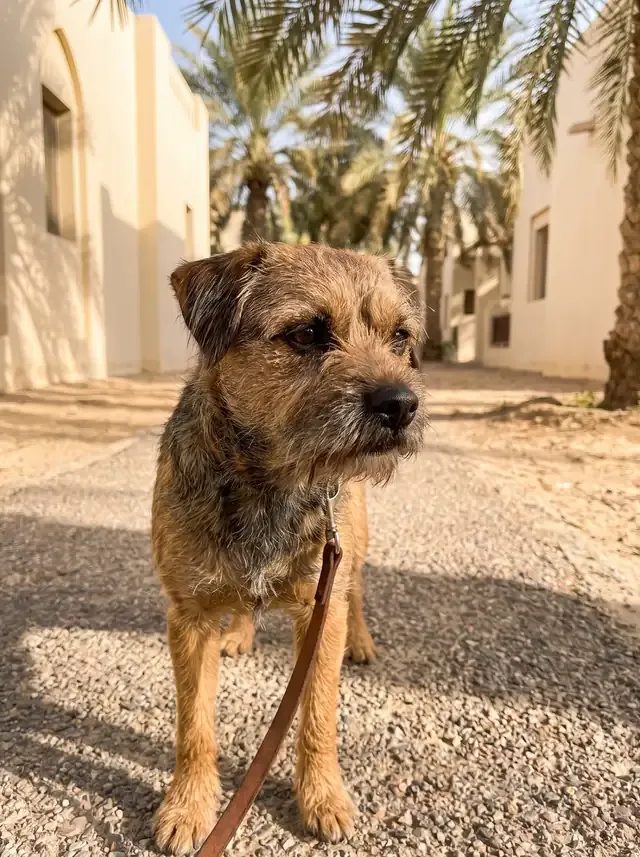
Border Terrier in Dubai, a red grizzle adult on a lead on a shaded compound path between villas and date palms

At home

Why does my Border Terrier chase cats?

Sweet with the children and fine with the dog next door, then gone the moment a cat moves.

What's going onThey were bred to find foxes on open hills, working beside hounds. Many Border Terriers are easy with other dogs and still go straight for anything small that runs. Keep them on a lead where there are cats.
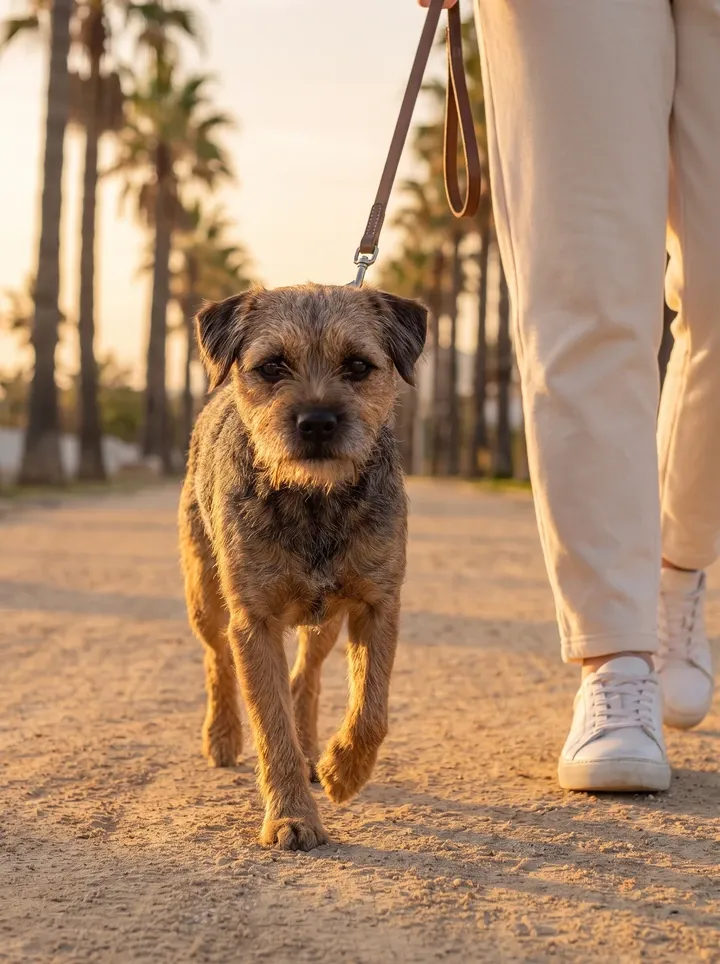
Border Terrier in Dubai, a grizzle and tan adult trotting beside a pet parent on a palm-lined path at sunrise

At home

How much exercise does a Border Terrier need?

Back from a walk round the block and still bouncing at the door.

What's going onTheir ancestors ran behind horses all day. A short walk barely starts them. Give them a long walk in the cool hours, and something to sniff out at home.

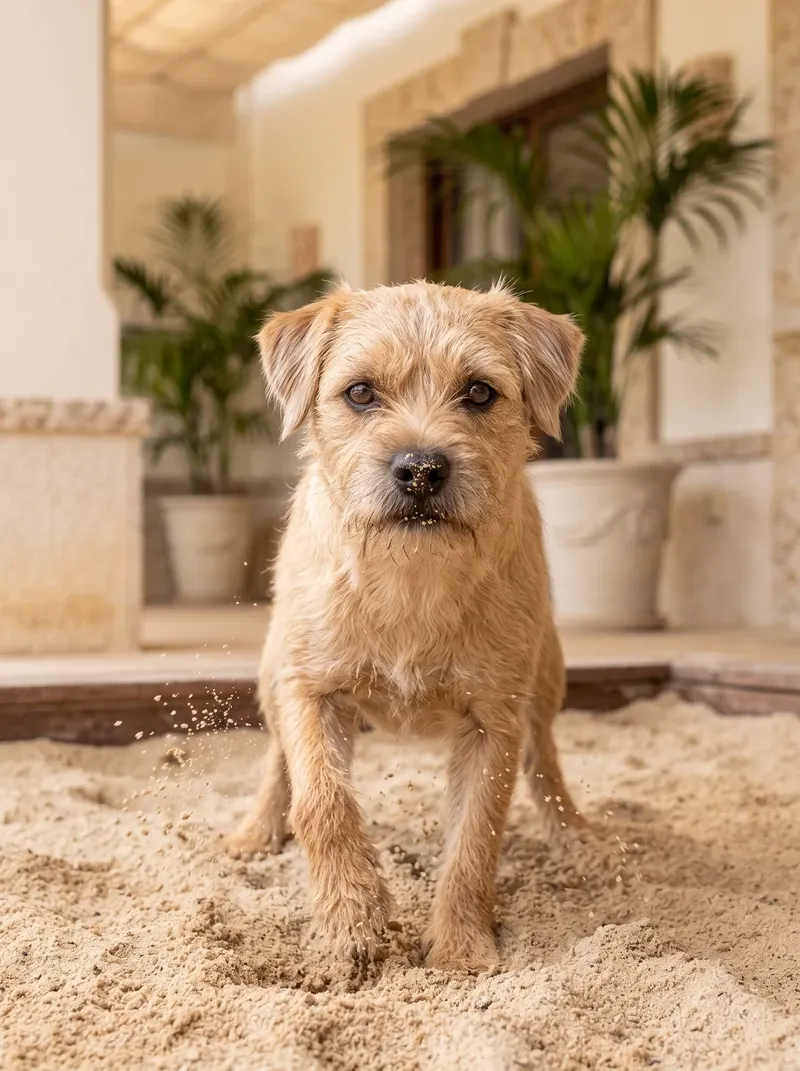
Border Terrier, a wheaten adult standing in a sandpit on a shaded villa terrace, sand on their nose

At home

Why does my Border Terrier dig?

Holes in the garden, sand flying at the beach, and a bed dug into shape before they lie down.

What's going onDigging was half the job. Give them one place where they are allowed to dig, and bury something there for them to find. It works better than telling them off everywhere.

Border Terrier, a red adult lying on a cream rug beside a pet parent holding a phone

At home

Why does my Border Terrier have funny turns?

A few minutes of stiff legs, trembling or wobbly walking, while wide awake.

What's going onSome Border Terriers have episodes of cramping and unsteady walking while fully aware. It is easy to put down to the cold, a sore back or a quirk. Film it on your phone and show your vet.

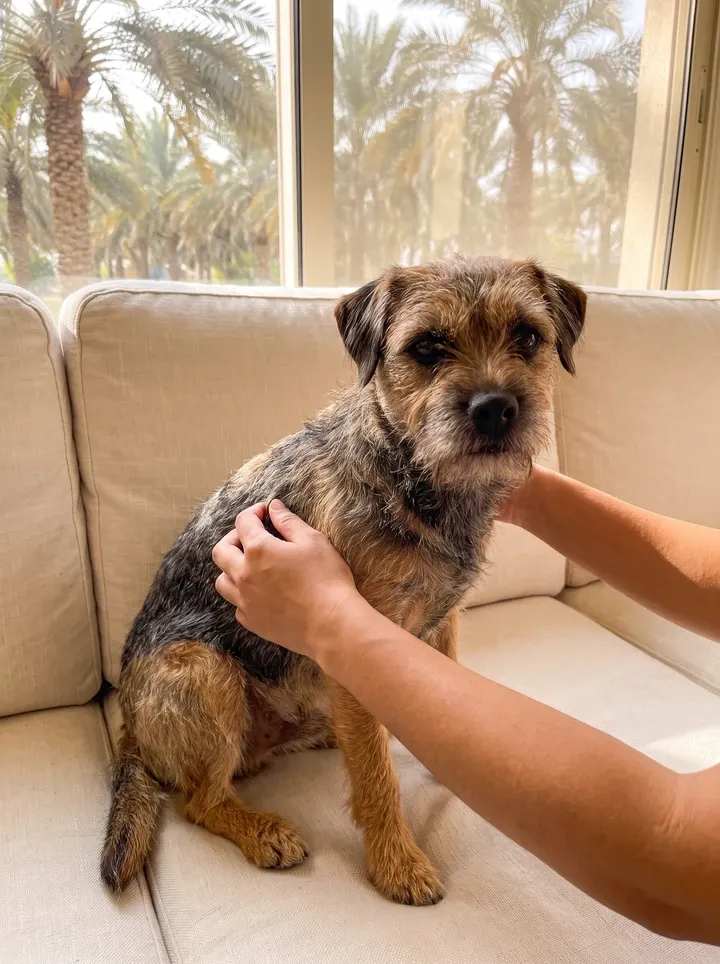
Border Terrier in Dubai, a grizzle and tan adult on a sofa as a pet parent parts their coat, date palms outside

At home

Why does my Border Terrier lick their paws?

Licking paws, scratching ears, shaking the head and rubbing the face on the rug.

What's going onTheir wiry coat was made for rain on a hillside, and it hides the skin. Itchy skin is on their record at every age, so part the coat once a week and look.

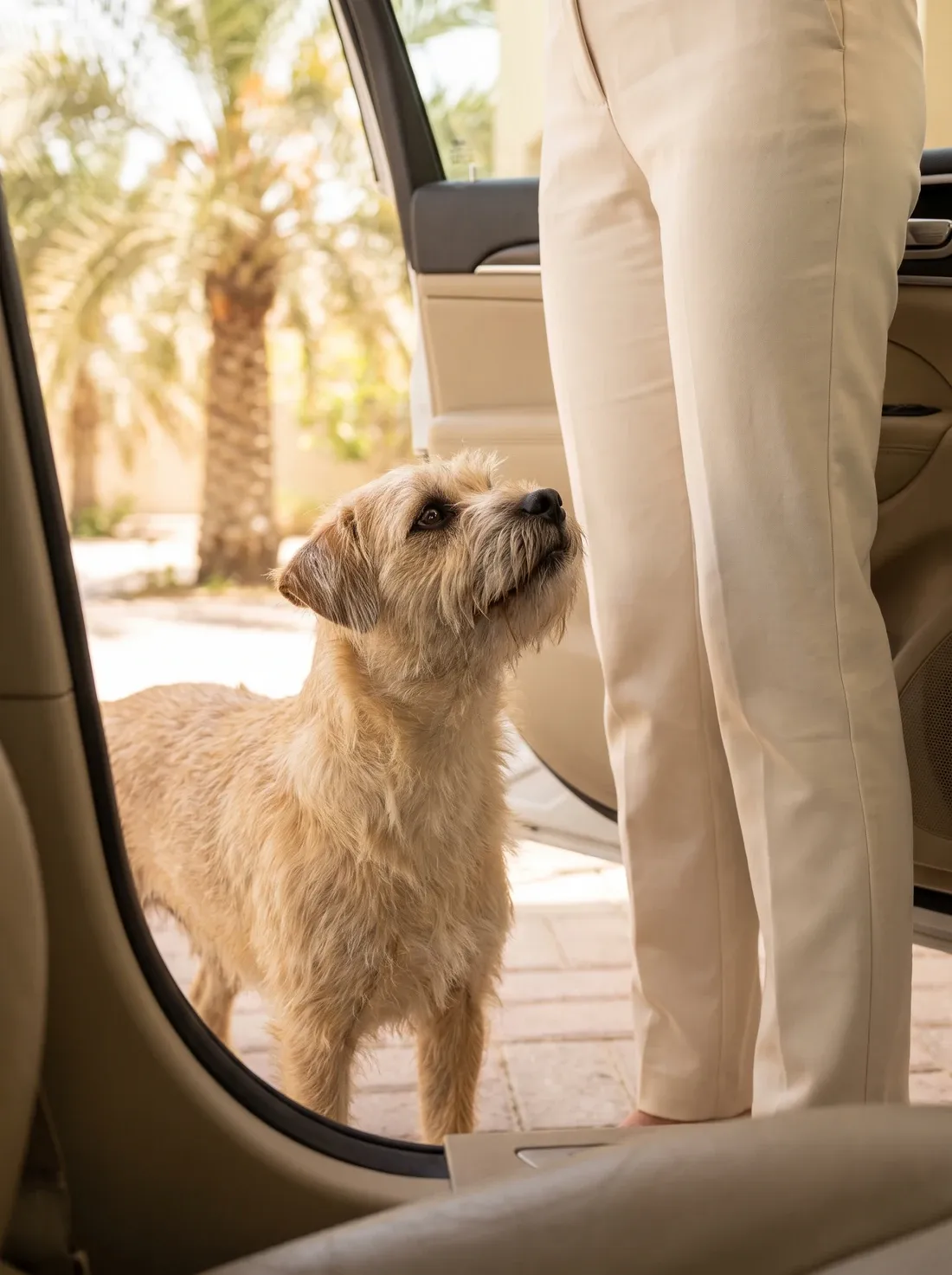
Border Terrier in Dubai, a wheaten adult looking up at a pet parent by an open car door, date palms behind

At home

Why won't my Border Terrier show pain?

A skip on a back leg for a step or two, then carrying on as if nothing happened.

What's going onThey were bred to keep going over rough ground all day. A skip, a reluctance to jump into the car or a shorter walk than usual may be the only sign that something hurts.

A Border Terrier in Dubai

The bit nobody tells you.

Their day

Built for: Following a hunt across wet hills, all day.

In Dubai: Often a day indoors.

Their ground

Built for: Wet hills, and underground after a fox.

In Dubai: Ground too hot to walk on for half the year.

What they chase

Built for: A fox, when the hunt asked.

In Dubai: Compound cats, to watch and leave alone.

The digging, the gate-watching and the sudden bolts after cats mostly come from that gap.

You cannot give them a hillside. You can give them a job, and the ten things below show you how.

Your plan is built around their breed: the risks on a Border Terrier's record at every age, and the care that goes with each one.

Join the founding families. AED 1,999 of essential care for AED 199.

Daily care for a Border Terrier

Ten things that make their life better.

Many of them are free, and most matter at every age.

  1. They will dig either way. One allowed place saves the rest.

    Every age, most of all 6 months to 2 years

    Under AED 150

    Why

    They will dig either way. One allowed place saves the rest.

    What to do

    A sandpit, a tub of play sand on the balcony, or a corner of the garden. Bury a toy or part of their food while they watch, and let them dig it out.

  2. One cat runs, and they stop listening. A lead keeps them out of harm.

    Every age, most of all 6 months to 2 years

    Under AED 100

    Why

    One cat runs, and they stop listening. A lead keeps them out of harm.

    What to do

    Keep them on a lead wherever cats and birds are. Practise recall on a long line in a quiet, fenced place. They may be perfect for months, then gone after one cat.

  3. They need to chase something every day, and young ones can swallow pieces of toys.

    Every age, with slower, lower games from 7 years

    Under AED 100

    Why

    They need to chase something every day, and young ones can swallow pieces of toys.

    What to do

    Play with a flirt pole or a tug toy every day, and let them win sometimes. Use toys too big to swallow, and put them away after the game. Teach "drop" with a treat swap.

  4. Terriers were kept for their voice.

    Every age, most of all 6 months to 2 years

    Free

    Why

    Terriers were kept for their voice.

    What to do

    Let them bark twice at the door, say "thank you" in a calm voice, call them to you and reward them. Shouting back only sounds like joining in.

  5. Many Border Terriers are easy with other dogs, and a bad meeting can change that.

    Every age, most of all in the first two years

    Free

    Why

    Many Border Terriers are easy with other dogs, and a bad meeting can change that.

    What to do

    Plenty of calm, friendly dogs before sixteen weeks. After that, short greetings with dogs they do not know, then walk on, and the same calm friends often. If they start falling out with another dog, contact your vet.

  6. They were bred to decide for themselves underground.

    Every age

    Free

    Why

    They were bred to decide for themselves underground.

    What to do

    Three to five minutes, two or three times a day, paid from their daily food. Stop while they are still keen.

  7. They were bred for long days on cold hills, and their coat holds heat.

    Every age, most of all puppies and from 7 years

    Free

    Why

    They were bred for long days on cold hills, and their coat holds heat.

    What to do

    From May to September, walk before sunrise and after dark, and do the long walk then. Put the back of your hand on the pavement for five seconds: if you cannot keep it there, they cannot walk on it. Have a groomer hand-strip or trim their coat, and keep it free of mats.

  8. Dental disease is common in the breed from 6 months to 7 years.

    Every age, most of all 6 months to 7 years

    Under AED 60 for a brush and toothpasteIn your plan

    Why

    Dental disease is common in the breed from 6 months to 7 years.

    What to do

    Brush once a day with a small, soft brush and dog toothpaste. Look at their gums once a week. A dental evaluation (teeth and gum check) is in your plan at each puppy visit, and regular dental treatment from age two.

  9. A slipping kneecap, hip problems and episodes of cramping are all on their record.

    Every age, most of all 6 months to 7 years

    Free to AED 500 for rugsIn your plan

    Why

    A slipping kneecap, hip problems and episodes of cramping are all on their record.

    What to do

    Put rugs where they run on marble, keep them lean and weigh them once a month. A skip or a limp goes to your vet. If they stiffen, tremble or walk oddly for a few minutes, film it and show your vet. Orthopaedic imaging (x-rays or scans of the joints) is in your plan if a limp lasts.

  10. Itchy skin and sore ears turn up at every age, and the coat hides them.

    Every age, most of all from 7 years

    Free

    Why

    Itchy skin and sore ears turn up at every age, and the coat hides them.

    What to do

    Brush them more than once a week, and part the coat to look at the skin while you are there. Look between the toes, smell the ears, and note any new lump.

Two of these are in your plan. The rest you can do at home.

Join the founding families. AED 1,999 of essential care for AED 199.

Border Terrier health by age

Their health, at every age.

In a Border Terrier, cramping episodes, the joints, the skin and the teeth lead the record, and a tough little dog will hide a sore leg. Choose their age to see what to watch for, and the care that goes with it.

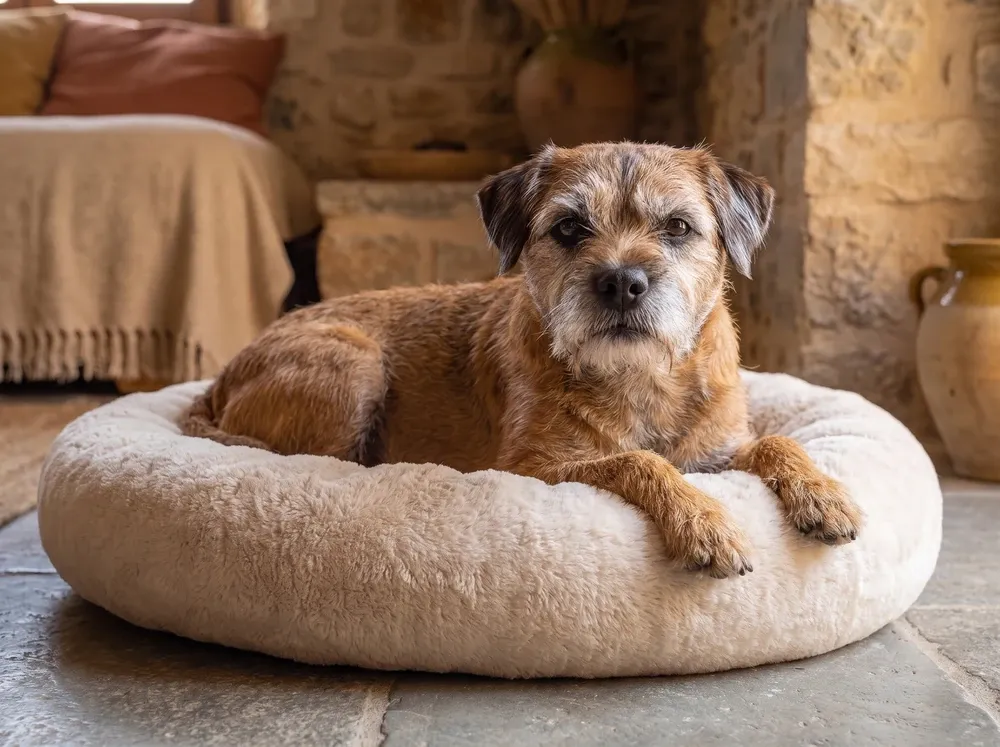
Border Terrier, an older red dog with a greying muzzle resting on a round cream bed

How old are they?

Their age

Border Terrier Puppy health

the first six months

What to watch for

  1. Cryptorchidism (a testicle that has not dropped) and retained deciduous teeth (baby teeth that stay put)
  2. Patellar Luxation (PL, slipping kneecap) or early hip discomfort
  3. Juvenile gastrointestinal sensitivity (a sensitive stomach)
  4. Atopic skin disease (itchy allergic skin) beginning with paw or ear signs
  5. Trauma related to high prey drive

The care that goes with it

  1. Core vaccinations, microchip and Dubai Municipality registration
  2. Deworming, and flea and tick prevention
  3. Body Condition Score (a check on whether they are the right weight), dental, growth and nutritional evaluation, and early socialisation
  4. Reproductive and dental development evaluation at every visit
  5. Patellar and hip evaluation (kneecap and hip exam) if their walk looks wrong
  6. A diet trial, only if stomach upsets keep coming back
  7. Dermatological evaluation (skin exam) early, if the itching keeps coming back
The full care detail
  • Core vaccination programme, microchipping and Dubai Municipality registration. Titre testing discussion where clinically appropriate; not a substitute for completing the core vaccine series
  • Deworming and external parasite prevention tailored to Dubai exposure
  • Body Condition Score (BCS), Muscle Condition Score (MCS), dental, growth and nutritional evaluation, and early socialisation
  • Reproductive and dental development evaluation at each visit
  • Patellar and hip evaluation if gait is abnormal
  • Diet trial only when persistent gastrointestinal signs justify it
  • Early dermatology evaluation for recurrent pruritus

Their age

Border Terrier Juvenile health

6 months to 2 years

What to watch for

  1. Canine epileptoid cramping syndrome (episodes of cramping, trembling and unsteady walking while they stay awake and aware) or episodic dyskinesia
  2. Patellar Luxation (PL, slipping kneecap) and Hip Dysplasia (HD, poorly fitting hip joint)
  3. Allergic dermatitis and otitis (ear inflammation)
  4. Dental disease
  5. Foreign-body ingestion (swallowed objects) or hunting-related trauma

The care that goes with it

  1. Video and neurological evaluation (nerve and brain exam) of any cramping episodes
  2. Orthopaedic imaging (x-rays or scans of the joints) if a limp lasts
  3. Skin and ear treatment guided by cytology (cells looked at under a microscope)
  4. A professional dental clean, and brushing at home
  5. Safer exercise and a safer home: a lead near cats, and toys too big to swallow
  6. Neutering or spaying, timed for a small breed
The full care detail
  • Video and neurological evaluation of episodic cramping events
  • Orthopaedic imaging for persistent lameness
  • Cytology-led skin and ear management
  • Dental prophylaxis and home care
  • Exercise and environmental risk management
  • Neuter/spay timing discussion that accounts for small-breed growth and disease risk

Their age

Border Terrier Young Adult health

2 to 4 years

What to watch for

  1. Canine epileptoid cramping syndrome
  2. Allergic skin and ear disease
  3. Patellar Luxation (PL, slipping kneecap) or Hip Dysplasia (HD, poorly fitting hip joint)
  4. Dental disease
  5. Mitral Valve Disease (MVD, leaky heart valve) or Chronic Kidney Disease (CKD, long-term kidney failure) in later life

The care that goes with it

  1. Neurological evaluation (nerve and brain exam), and a diet trial where it helps
  2. Long-term allergy control
  3. Weight management and joint support
  4. Regular dental treatment
  5. Heart, kidney and blood pressure screening
The full care detail
  • Neurology evaluation and dietary trial where clinically appropriate
  • Long-term allergy control
  • Weight management and joint support
  • Regular dental treatment
  • Cardiac, renal and blood-pressure screening

Their age

Border Terrier Prime Adult health

4 to 7 years

What to watch for

  1. Canine epileptoid cramping syndrome
  2. Allergic skin and ear disease
  3. Patellar Luxation (PL, slipping kneecap) or Hip Dysplasia (HD, poorly fitting hip joint)
  4. Dental disease
  5. Mitral Valve Disease (MVD, leaky heart valve) or Chronic Kidney Disease (CKD, long-term kidney failure) in later life

The care that goes with it

  1. Neurological evaluation (nerve and brain exam), and a diet trial where it helps
  2. Long-term allergy control
  3. Weight management and joint support
  4. Regular dental treatment
  5. Heart, kidney and blood pressure screening
The full care detail
  • Neurology evaluation and dietary trial where clinically appropriate
  • Long-term allergy control
  • Weight management and joint support
  • Regular dental treatment
  • Cardiac, renal and blood-pressure screening

Their age

Border Terrier Senior health

7 to 10 years

What to watch for

  1. Allergic skin and ear disease
  2. Osteoarthritis and mobility decline
  3. Mitral Valve Disease (MVD, leaky heart valve) or Chronic Kidney Disease (CKD, long-term kidney failure) in later life
  4. Chronic kidney disease
  5. Neoplasia (tumours)

The care that goes with it

  1. Long-term allergy control
  2. A physical examination twice a year, with blood tests, a urinalysis (a urine test) and a blood pressure reading
  3. Heart and kidney screening for an older dog
  4. Pain relief and mobility support
  5. Good nutrition, and a quality-of-life assessment
The full care detail
  • Long-term allergy control
  • Biannual senior physical examination with CBC, chemistry, urinalysis and blood pressure
  • Senior cardiac, renal and blood-pressure screening
  • Pain and mobility management
  • Nutrition and quality-of-life assessment

Their age

Border Terrier Geriatric health

10 years and over

What to watch for

  1. Multimorbidity (several conditions at once) and frailty
  2. Advanced allergic skin and ear disease
  3. Cancer
  4. Cardiac or renal failure (heart or kidney failure)
  5. Cognitive and sensory decline

The care that goes with it

  1. Pain relief and mobility support, together
  2. Kidney, heart and hormone monitoring
  3. Support for their diet, their mind and their care at home
  4. Quality-of-life assessments
  5. Palliative care (comfort care) planned around them
  6. End-of-life planning with your veterinary team
The full care detail
  • Multimodal pain and mobility support
  • Renal, cardiac and endocrine monitoring
  • Nutrition, cognition and home-care support
  • Quality-of-life assessments
  • Tailored palliative and comfort-focused care plan
  • Compassionate end-of-life planning with your veterinary team

Breed predispositions indicate an increased risk rather than certainty of disease. What is right for them always comes from their own history and an evaluation.

Getting a Border Terrier puppy in Dubai

Before they come home.

Border Terrier in Dubai, a red puppy sitting on a cream blanket by a window onto date palms

Working dog or show dog

Still built like a working terrier

There is one Border Terrier, in one rough, wiry coat. The people who bred them for farm and hunt work wrote the first standard, so even a show dog today looks and moves much like the terriers of the Cheviot Hills. Whoever bred your puppy, expect a working terrier's energy.

Border Terrier in Dubai, a blue and tan adult lying on a stone rug in a majlis below an arched window onto palms

Colours

From wheaten to grizzle and tan

Border Terriers come in warm, earthy shades: red, wheaten, grizzle and tan, or blue and tan, often with a darker muzzle. Whatever the shade, the scruffy look is the point.

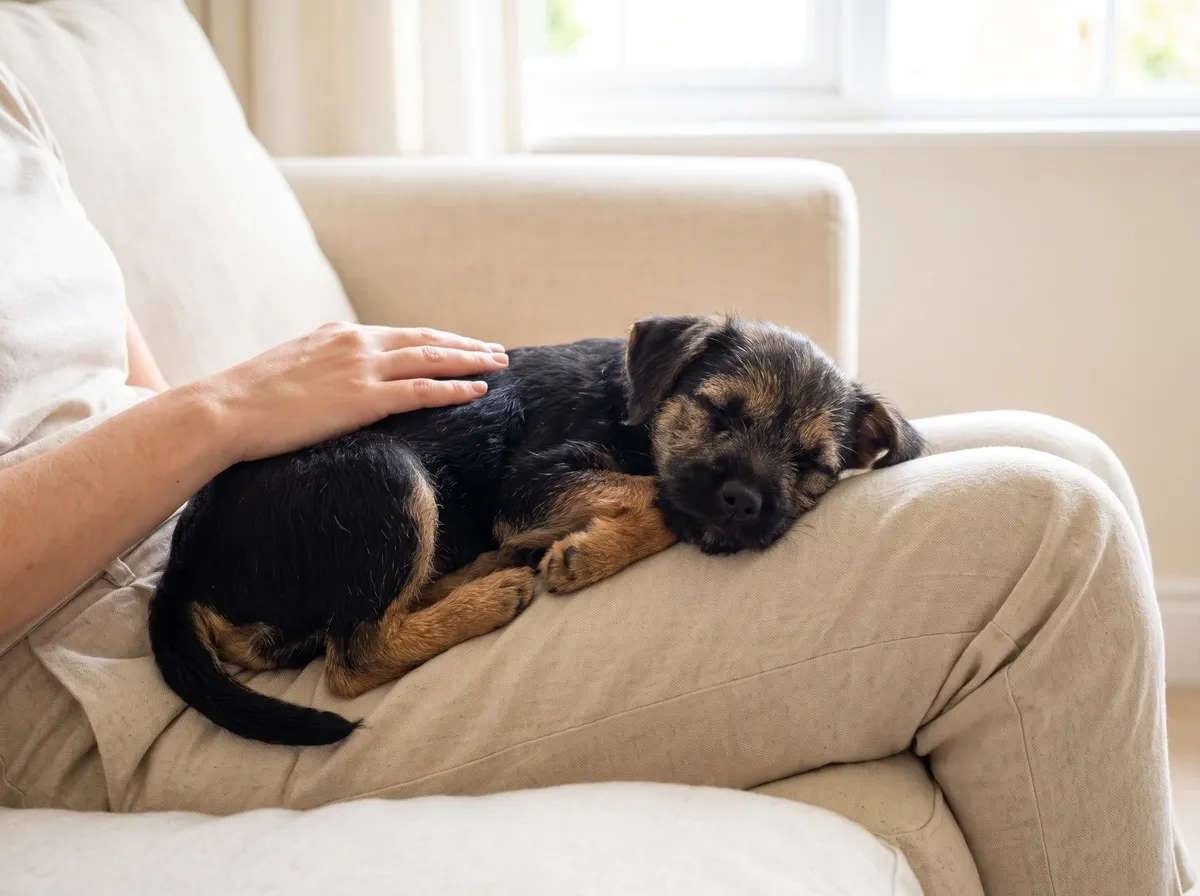
Border Terrier, a black and tan puppy asleep in a pet parent's lap on a linen sofa

The first six months

Border Terrier puppy care tips

Vaccinations, microchip and Dubai Municipality registration come first. Get them used to having their mouth handled, because baby teeth that stay put are on their puppy record. Meet cats calmly, at a distance, on a lead, and plenty of calm, friendly dogs before sixteen weeks.

Puppy health, 0 to 6 months
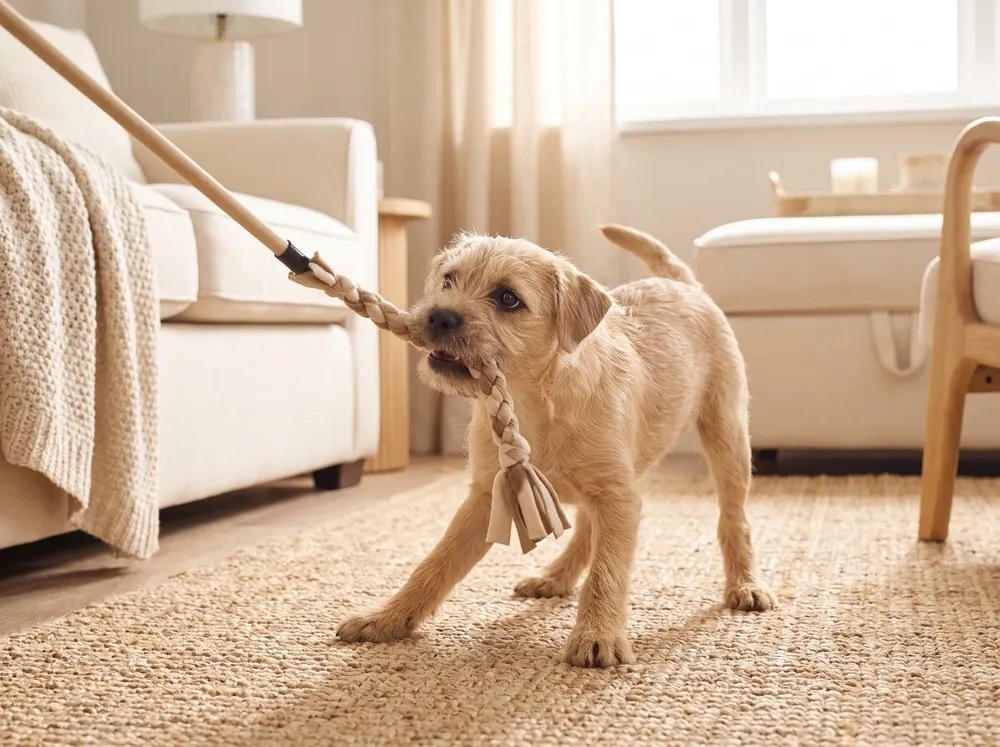
Border Terrier, a wheaten puppy tugging a rope toy on a flirt pole on a jute rug

Getting the home ready

A digging spot, a flirt pole and a long line

A sandpit or a tub of play sand, a flirt pole and sturdy tug toys too big to swallow, a harness and a long line for recall practice, a small, soft toothbrush, and rugs where they run on marble.

Ten things that make their life better
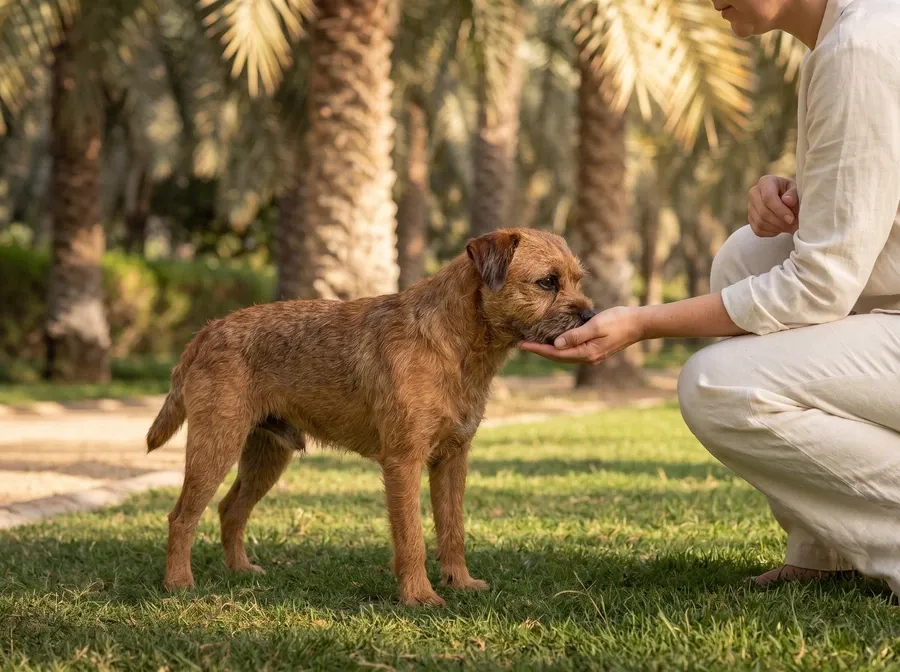
Border Terrier in Dubai, a red adult sniffing a kneeling pet parent's hand on a park lawn under date palms

Before you commit

Ask about funny turns in the family

Canine epileptoid cramping syndrome (episodes of cramping and wobbly walking while they stay awake) is on their record from 6 months old. If you are choosing a puppy, ask the breeder whether either parent has had episodes, and meet the mother if you can.

The reception of a Paws & Co clinic, with long cream benches and a stone reception desk

Before the clinics open

Join the founding families

AED 1,999 of essential care for AED 199. No payment now.

When to see a vet

When it is not behaviour.

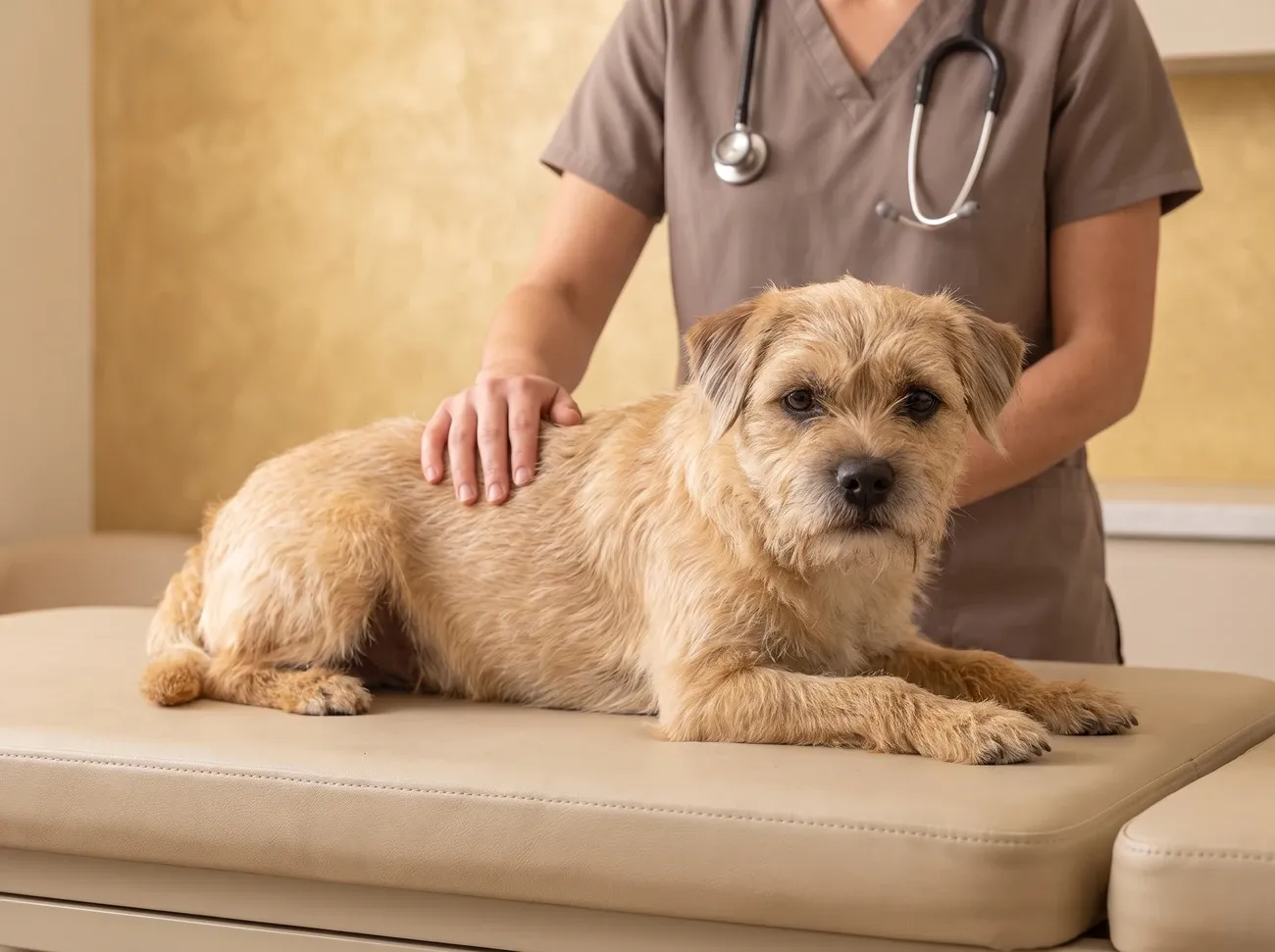
Border Terrier, a wheaten adult lying on a padded table as a vet in taupe scrubs rests a hand on their back

Some of this is not a training problem, and treating it like one wastes time your dog may not have. If they are distressed when you leave, if they growl or guard their food, their toys or you, if they are frightened on the lead, or if anything about them changes suddenly at any age, contact your vet the same day. A tip from a website, ours included, is not the answer. If it cannot wait, contact your nearest emergency vet now.

With a Border Terrier, watch for episodes and for itching. A few minutes of cramping, trembling or odd walking while they are awake is not tiredness or a quirk: film it and show your vet. Constant paw licking, head shaking or scratching at the ears is often itchy skin. In an older Border Terrier, a quieter dog who sleeps more and walks less may be in pain rather than just getting old. Bloat (GDV, a twisted stomach) can happen in any dog, though it is most common in large, deep-chested breeds. A swollen, tight belly, retching with nothing coming up, sudden restlessness or drooling is an emergency: contact your vet now.

They'll still want to walk all day. If they start turning for home early, call your vet.

Border Terrier history

Before they were yours.

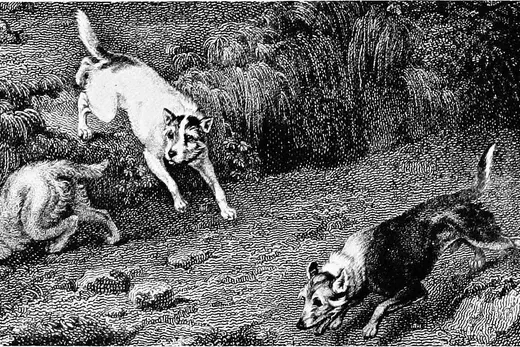
  1. Border Terrier history, old English working terriers in rough undergrowth, painted by Philip Reinagle, 1803
    Old English working terriers, painted by Philip Reinagle for The Sportsman's Cabinet, 1803.

    1700s and 1800s

    The Cheviot Hills

    On the hill farms between England and Scotland, farmers kept small, tough terriers to deal with the foxes that took their lambs.

    What they still carryStamina, and a weatherproof, wiry coat.

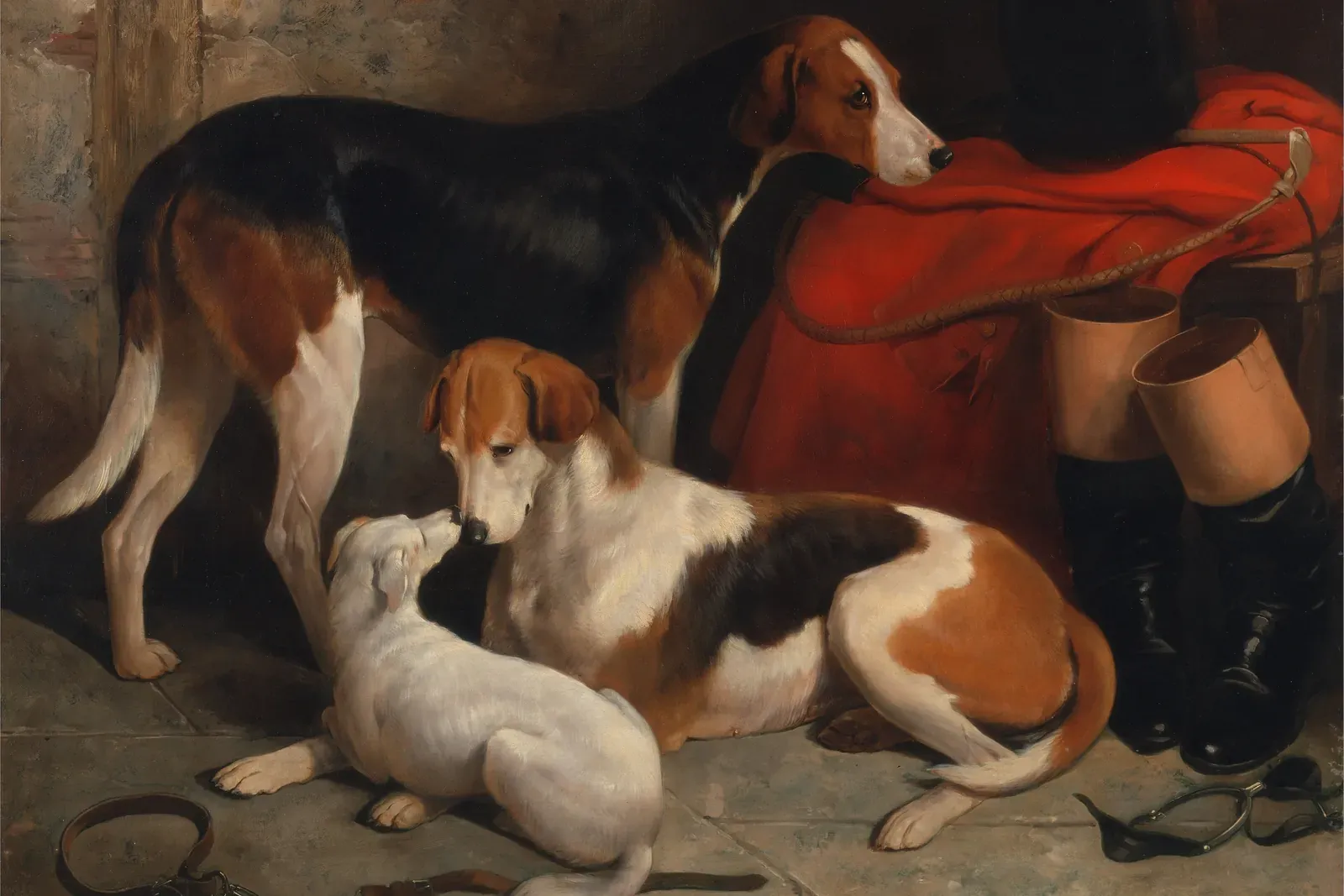
  2. Border Terrier history, two foxhounds with a white terrier beside a hunting coat and boots, by William Barraud, about 1845
    A couple of foxhounds with a terrier, painted by William Barraud, about 1845.

    Around 1880

    The Border Hunt

    The Border Foxhounds' terriers had to run behind the horses all day and work beside hounds without fighting. By around 1880 they were called Border Terriers.

    What they still carryAn easier temper with other dogs than many terriers.

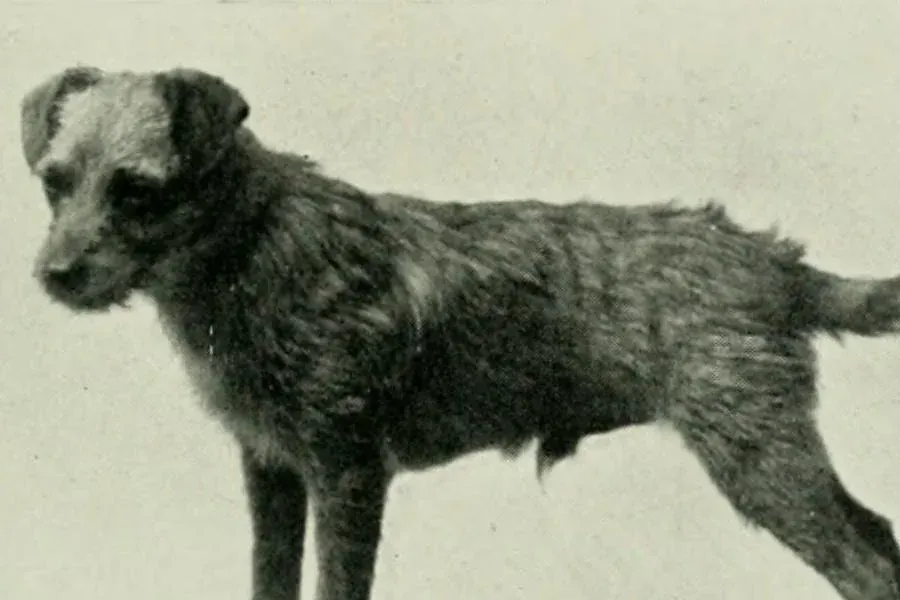
  3. Border Terrier history, Miss Bell Irving's working terrier Tinker standing side-on, 1922
    Miss Bell Irving's hard-working Border Terrier Tinker, from The Complete Book of the Dog, 1922.

    1920 and 1930

    Recognised

    The Kennel Club recognised the breed in 1920, and the American Kennel Club in 1930. The first standard was written by the people who bred them for work.

    What they still carryA show dog that still moves like a working one.

  4. Border Terrier history, the breed today, a red adult on a villa lawn with bougainvillea, Dubai, 2026

    Today

    In Dubai

    In the UAE a Border Terrier is a rare dog, living in a flat or a villa, with the compound cats to watch instead of foxes.

    What they still carryA hunter's eye for anything small and fast.

Border Terrier questions

The ones you type at midnight.

Most of these get asked late at night, by someone watching their dog and not sure what they are seeing.

Border Terrier, a wheaten adult asleep with their chin on a knee on a velvet sofa, a brass lamp behind
How long do Border Terriers live?

Border Terriers usually live 12 to 15 years. In a study of Border Terriers seen by vets in England, half lived past 12.7 years.

How big does a Border Terrier get?

An adult Border Terrier usually weighs 5 to 7 kg: males 6 to 7 kg and females 5 to 6.5 kg.

Do Border Terriers shed?

Border Terriers shed lightly to moderately. Their wiry coat needs brushing more than once a week.

What colours do Border Terriers come in?

Border Terriers come in red, wheaten, grizzle and tan, or blue and tan, often with a darker muzzle.

Are Border Terriers good with other dogs?

Many Border Terriers are easier with other dogs than other terriers are, because they were bred to work beside hounds. Small animals are another matter, so keep them on a lead near cats.

What is canine epileptoid cramping syndrome?

Canine epileptoid cramping syndrome causes episodes of cramping, trembling and unsteady walking in Border Terriers, while they stay awake and aware. Film any episode and show your vet: a diet trial may help.

Why does my Border Terrier dig?

A Border Terrier digs because digging was half of the job they were bred for. Give them one place where digging is allowed, and bury something there to find.

Can a Border Terrier live in Dubai?

Yes, a Border Terrier can live in Dubai with long walks in the cool hours. From May to September, walk before sunrise and after dark, and keep the coat free of mats.

Worried about them? Contact your vet today.