We’re hiring people who love them like we do. Join us careers@pawsandco.comSee open roles
UAE Government Licensed MOCCAE
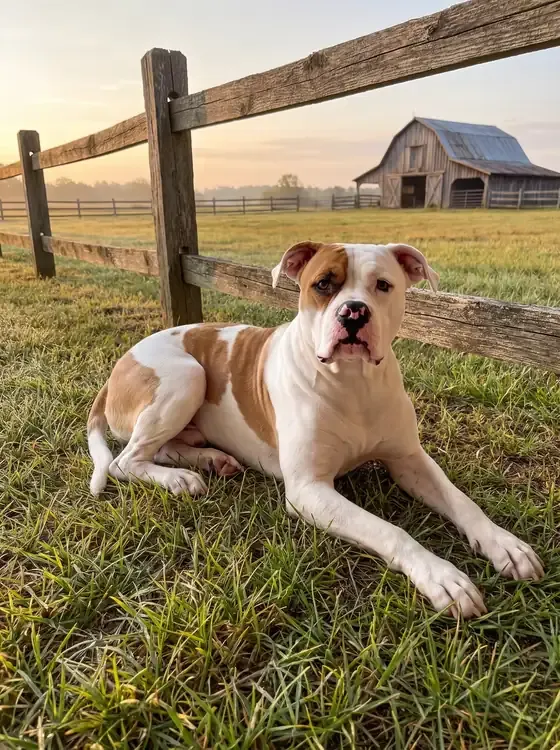
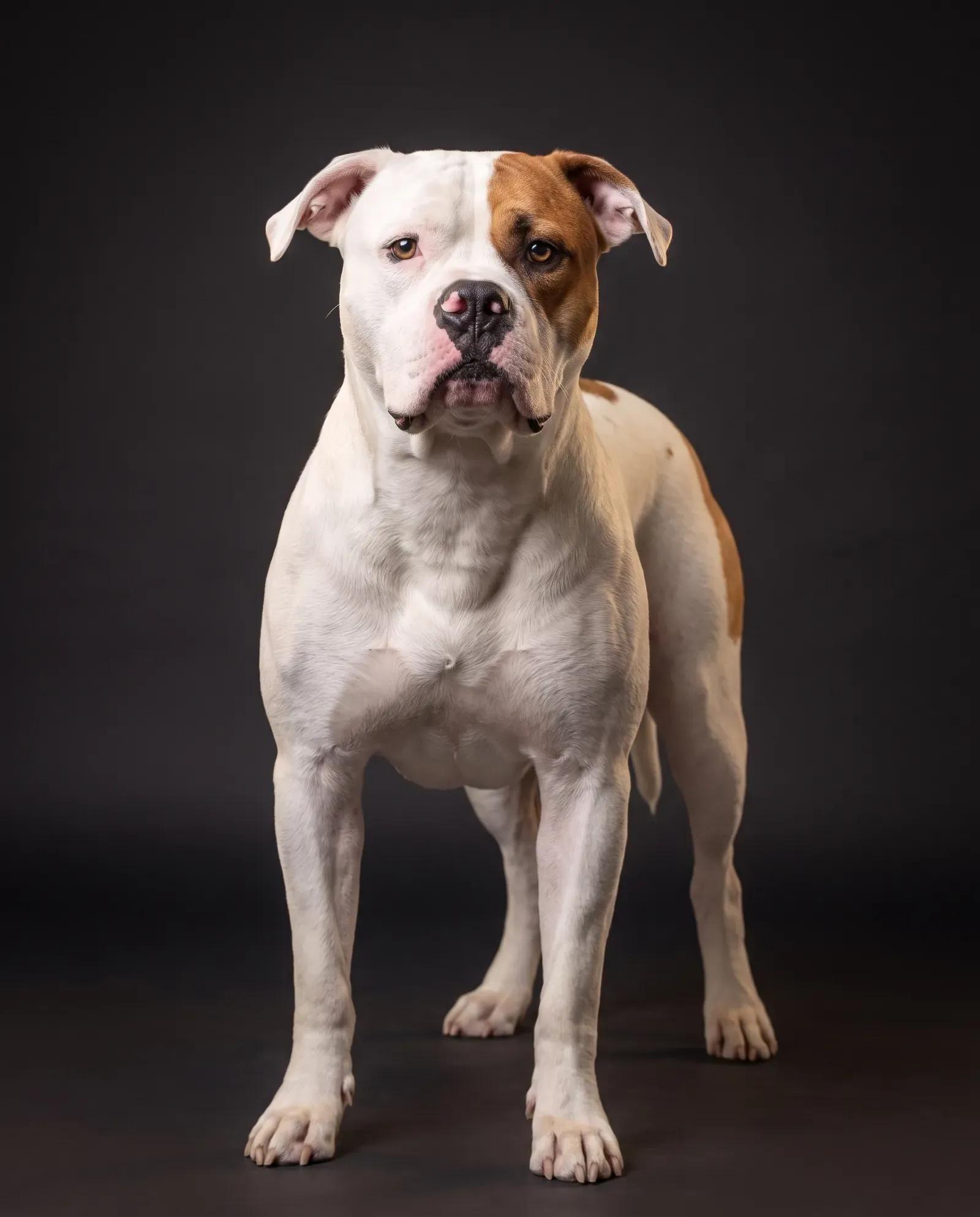
American Bulldog in Dubai, studio portrait of a calm white adult with a red fawn eye patch, standing

Breed guide  ·  Dogs

American Bulldog

She drools on my work trousers. I keep a towel by the door.

Lifespan
10 to 12 years
Size
Large
Coat
Short

Last updated 14 October 2026

Join the founding families. AED 1,999 of essential care for AED 199.

No payment now. We'll be in touch by email and WhatsApp as we open enrolment.

✓
Thank you.

We will be in touch soon to confirm.

American Bulldog traits

What they brought with them.

Tap a card to see what is going on.

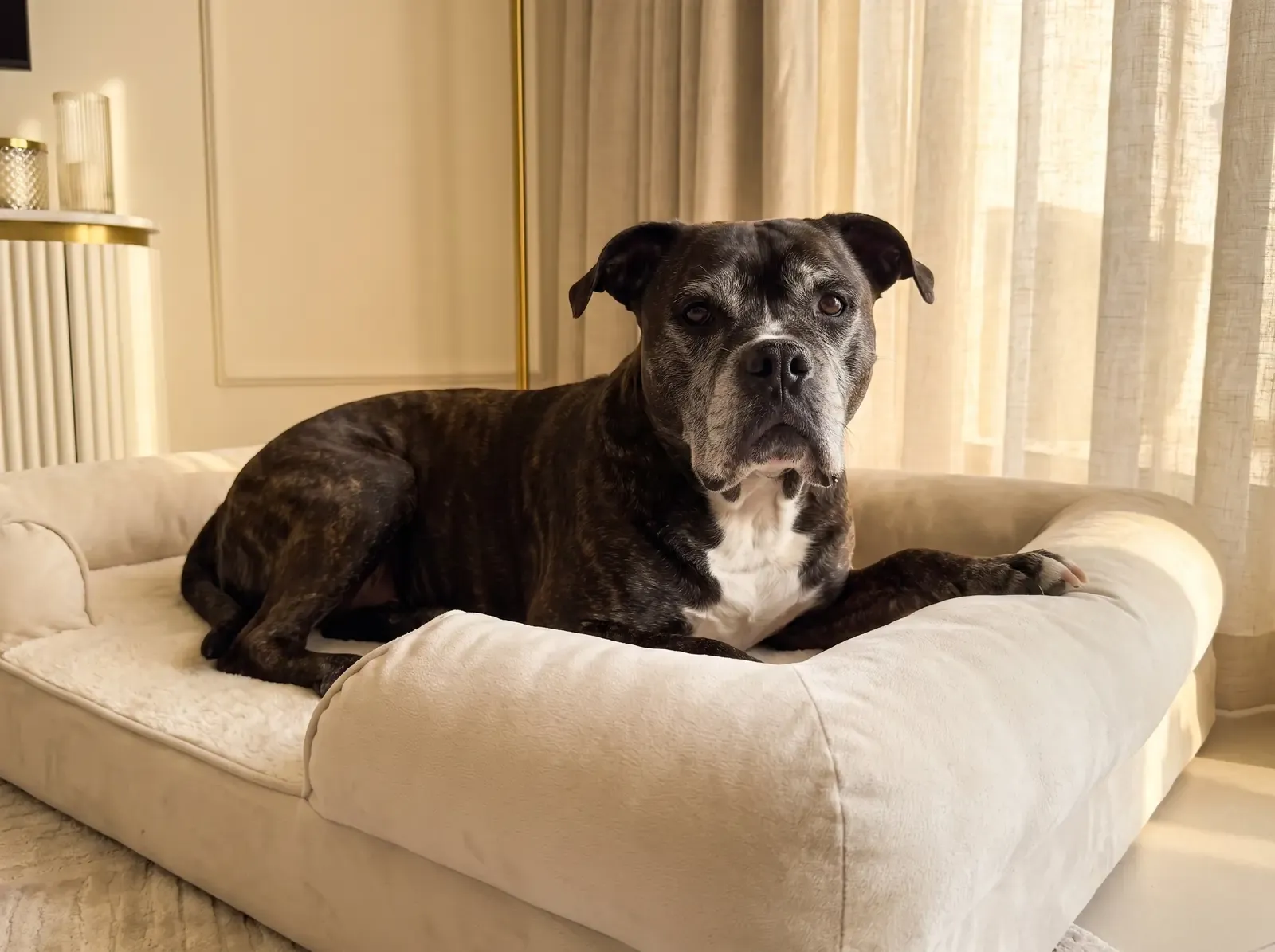
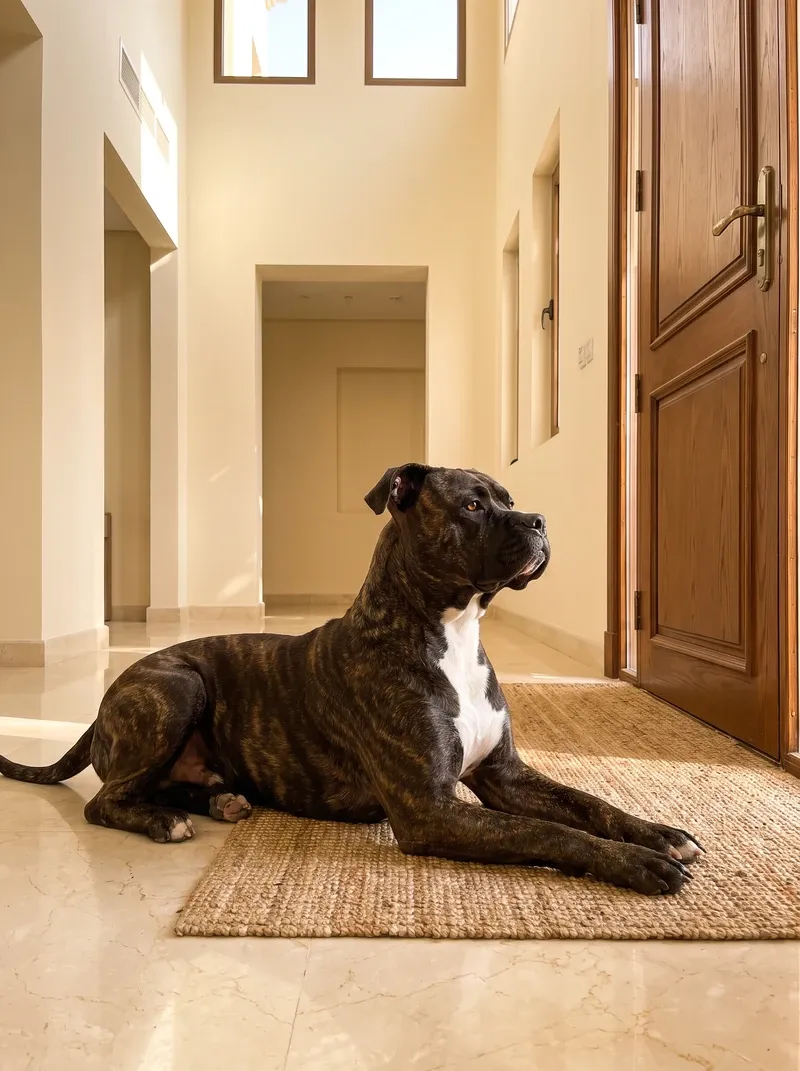
American Bulldog, a dark brindle adult lying on a jute mat in a marble hallway, watching the front door

At home

Why does my American Bulldog guard the door?

Soft with the family, and watchful the moment someone new arrives.

What's going onA farm guard had to be both. A mat a few metres from the door, with a treat there every time the bell goes, gives them a job they can get right.

American Bulldog in Dubai, a white adult with a black eye patch bounding across a park lawn under date palms

At home

Why does my American Bulldog jump so much?

Straight up to your face, from a standing start.

What's going onThose landings load the knees and hips. Reward four paws on the floor, and keep sprints on marble to a minimum.

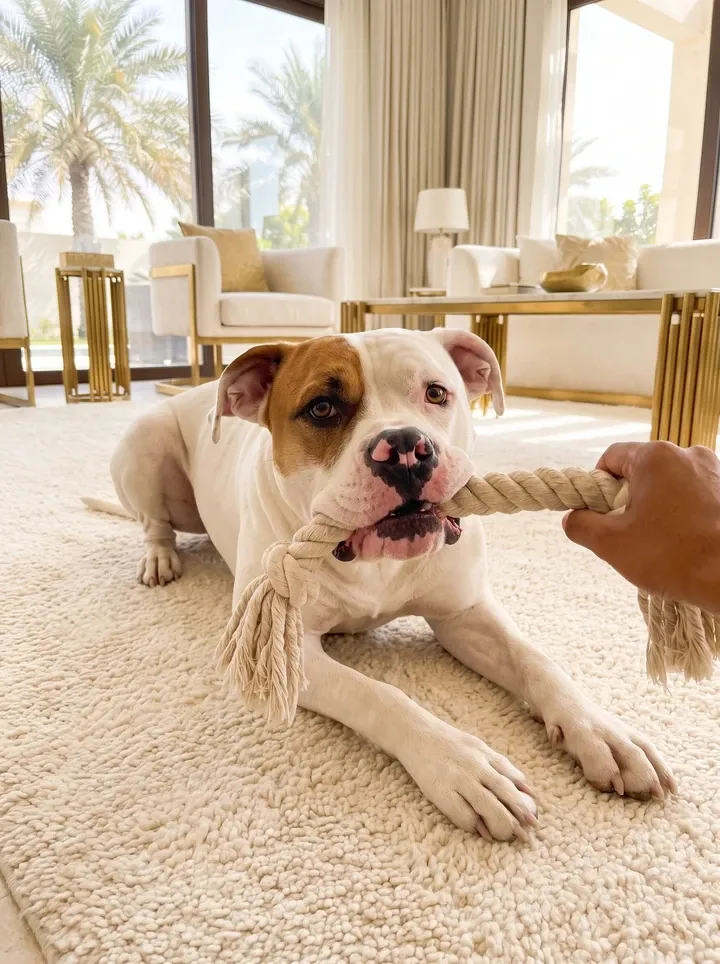
American Bulldog in Dubai, a white and red fawn adult tugging a rope toy on a rug, palms through the window

At home

A strong mouth that loves a game

Your sleeve, the lead, the towel: anything that can be gripped and pulled.

What's going onCatch dogs were bred to grip. A tug toy with clear rules, start and stop on your word, keeps that mouth on the toy and off your sleeve.

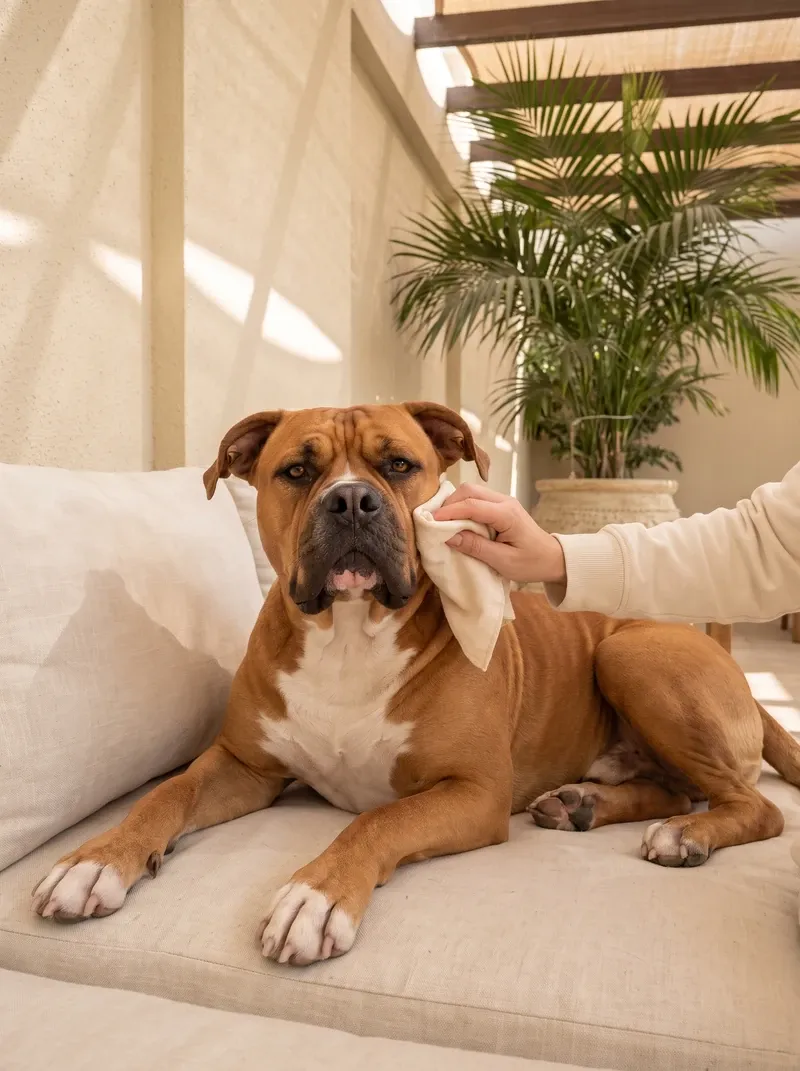
American Bulldog, a red fawn adult lying on a cushion as a hand gently wipes their cheek with a soft cloth

At home

Why does my American Bulldog lick their paws?

Licking paws, rubbing their face on the carpet, shaking their head.

What's going onFace folds hold heat and damp, and itchy skin and sore ears are on their record from six months. A daily wipe of the folds and a look inside the ears takes a minute.

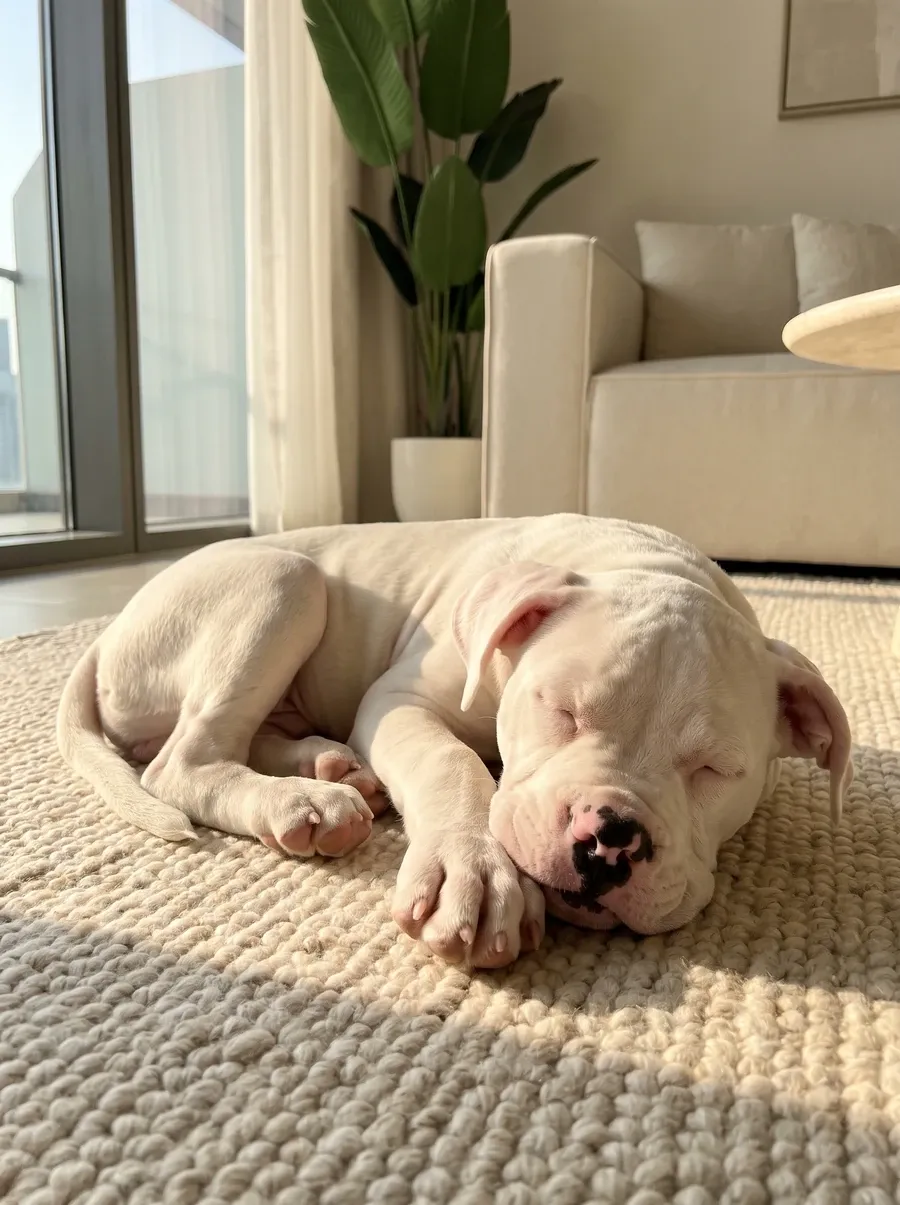
American Bulldog, a white puppy asleep on an oatmeal wool rug in the afternoon sun

At home

Is my American Bulldog deaf?

A puppy who sleeps through the doorbell, or never turns to their name.

What's going onDeafness in mostly white puppies is on their record. Ask about a BAER hearing test (a painless test of how the brain responds to sound) before you decide they are ignoring you.

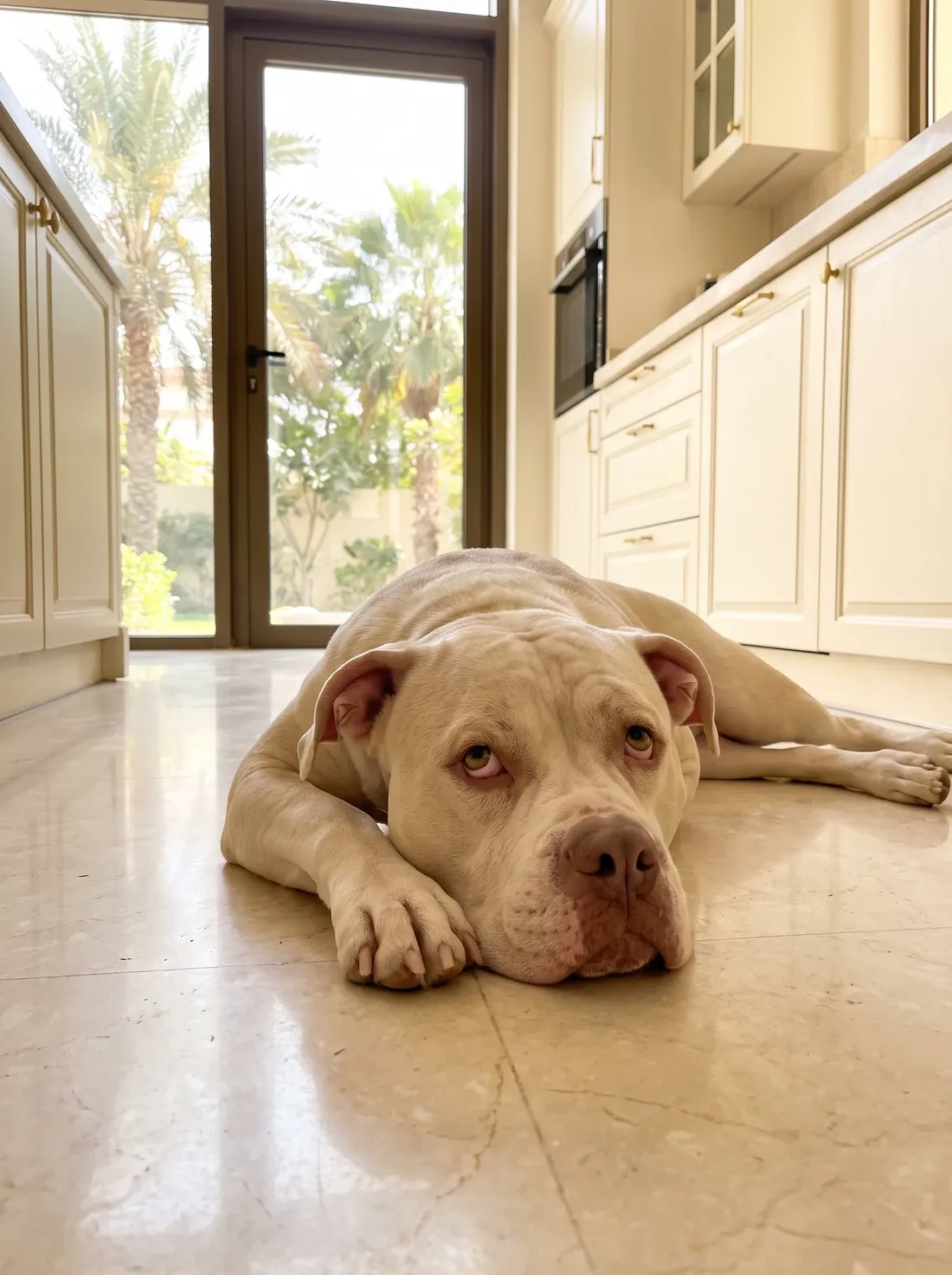
American Bulldog in Dubai, a pale fawn adult lying on cool kitchen marble, one back leg stretched out, palms beyond

At home

Why is my American Bulldog limping on a back leg?

A back leg held up after play, or sitting with one leg stuck out to the side.

What's going onA torn ligament in the knee is on their record from the teenage months. A back-leg limp that has not cleared in a day or two is a reason to contact your vet the same day.

An American Bulldog in Dubai

The bit nobody tells you.

Their day

Built for: Outdoors on a farm, from dawn to dusk.

In Dubai: Often a flat, all day.

Their job

Built for: Running down cattle and keeping watch over the house.

In Dubai: Keeping watch over a corridor.

Their summer

Built for: A body made for running.

In Dubai: A summer outside too hot for it.

The jumping, the chewing and the barking at the corridor mostly come from that gap.

You cannot give them a farm. You can give them cool hours and a job for their mouth, and the ten things below are how.

Your plan is built around their breed: the risks on an American Bulldog's record at every age, and the care that goes with each one.

Join the founding families. AED 1,999 of essential care for AED 199.

Daily care for an American Bulldog

Ten things that make their life better.

Many of them are free, and most matter at every age.

  1. They will tell you someone is there either way. A rule keeps them out of the doorway.

    Every age, most of all from 6 months to 2 years

    AED 100 to 400 for a mat

    Why

    They will tell you someone is there either way. A rule keeps them out of the doorway.

    What to do

    Long before any visitor, teach them that a mat a few metres from the door pays. When the bell goes, thank them once and send them there. While they learn, have deliveries left outside. If they have lunged or snapped at anyone, contact your vet instead.

  2. They judge strangers by the people they have already met.

    Every age, most of all the first two years

    FreeIn your plan

    Why

    They judge strangers by the people they have already met.

    What to do

    In their first months, let them watch all kinds of people from a distance they are happy at, with a treat for each. Keep going through the teenage months, as they grow more watchful.

  3. The lift is a small box where strangers walk straight at them.

    Every age, most carefully from 6 months to 2 years

    Free

    Why

    The lift is a small box where strangers walk straight at them.

    What to do

    Wait for an empty lift, or stand them in the back corner with you in front. Step aside in corridors, keep the lead short and loose near entrances, and ask building staff not to reach for them.

  4. They were bred to work all day, and a bored American Bulldog finds their own work.

    Every age, most of all from 6 months to 2 years

    Under AED 150

    Why

    They were bred to work all day, and a bored American Bulldog finds their own work.

    What to do

    Short training sessions, part of their dinner in a puzzle feeder, and a tug game with a clear start and a clear "drop". If their grip turns hard or their body goes stiff, end the game.

  5. Heat-related illness is on their record from the teenage months, and shorter-muzzled dogs feel it sooner.

    Every age, most of all from 6 months

    FreeIn your plan

    Why

    Heat-related illness is on their record from the teenage months, and shorter-muzzled dogs feel it sooner.

    What to do

    From May to September, walk before sunrise and after dark. Put the back of your hand on the pavement for five seconds first, and carry water. Loud, fast panting that will not settle in the shade means stop, cool them and contact your vet now.

  6. A basket muzzle they are used to keeps a stressful moment calm.

    Every age, easiest before 2 years

    Under AED 200

    Why

    A basket muzzle they are used to keeps a stressful moment calm.

    What to do

    Teach it young and slowly: show it, treat, nose in, treat, a second longer each day. Choose a basket roomy enough to pant in. Never put it on for the first time in a hurry.

  7. Their ears, eyes and skin folds will be looked at often. Make it easy for them.

    Every age

    Free

    Why

    Their ears, eyes and skin folds will be looked at often. Make it easy for them.

    What to do

    A few minutes, a few times a week: lift an ear, look at their eyes, wipe a fold, run a hand down each leg, and reward each one. Stop before they get uneasy.

  8. New guarding often shows between one and three years, and they are very strong by then.

    Most of all from 6 months to 3 years

    Free

    Why

    New guarding often shows between one and three years, and they are very strong by then.

    What to do

    Reward calm, every time. Teach a loose lead while they are small. Use a flat collar or a harness, never tools that hurt or frighten, and never punish a growl. If new guarding appears, contact your vet early.

  9. Hip Dysplasia (a poorly fitting hip joint), Elbow Dysplasia (a poorly fitting elbow joint) and cranial cruciate ligament disease (a torn ligament in the knee) are all on their record.

    Every age, most of all while they grow

    Free to AED 1,000 for rugs and a rampIn your plan

    Why

    Hip Dysplasia (a poorly fitting hip joint), Elbow Dysplasia (a poorly fitting elbow joint) and cranial cruciate ligament disease (a torn ligament in the knee) are all on their record.

    What to do

    Rugs where they turn on marble, a ramp for the car, no repeated jumping while they grow, and a lean, muscular body. If a back-leg limp has not cleared in a day or two, contact your vet. Ask your vet for an orthopaedic evaluation (joint and bone exam) at each puppy vaccine visit, and hip and elbow X-rays if signs appear.

  10. You see them every day, so you are the first to notice a change. Dilated Cardiomyopathy (DCM, an enlarged, weakened heart) is on their record from two years.

    Every age, and weekly from 7 years

    FreeIn your plan

    Why

    You see them every day, so you are the first to notice a change. Dilated Cardiomyopathy (DCM, an enlarged, weakened heart) is on their record from two years.

    What to do

    Once a week, run your hands over their ribs, spine, legs and folds, and look in their ears and eyes. Weigh them monthly.

Four of these are in your plan. The rest you can do at home.

Join the founding families. AED 1,999 of essential care for AED 199.

American Bulldog health by age

Their health, at every age.

In an American Bulldog, a back-leg limp, endless paw licking or tiring early on a walk is often the first sign that something is wrong. Choose their age to see what to watch for, and the care that goes with it.

American Bulldog, an older dark brindle dog with a greying muzzle resting on an orthopaedic bed

How old are they?

Their age

American Bulldog Puppy health

the first six months

What to watch for

  1. Hip and elbow laxity or developmental orthopaedic disease
  2. Congenital deafness in predominantly white lines
  3. Skin-fold dermatitis (infection in the skin folds) and juvenile pyoderma (a skin infection in puppies)
  4. Parasitic or dietary gastrointestinal disease
  5. Rapid-growth nutrition and obesity risk

The care that goes with it

  1. Core vaccinations, microchip and Dubai Municipality registration
  2. Deworming, and flea and tick prevention
  3. Growth and nutritional evaluation, and early socialisation
  4. A controlled large-breed growth diet, with a body condition evaluation every month
  5. Orthopaedic evaluation (joint and bone exam) at each vaccine visit
  6. BAER hearing test (a painless test of how the brain responds to sound) where coat colour or the breeder's history raises concern
  7. Skin-fold hygiene, and early treatment of pyoderma (skin infection)
The full care detail
  • Core vaccination programme, microchipping and Dubai Municipality registration. Titre testing discussion where clinically appropriate; not a substitute for completing the core vaccine series
  • Deworming and external parasite prevention tailored to Dubai exposure
  • Body Condition Score (BCS), Muscle Condition Score (MCS), dental, growth and nutritional evaluation, and early socialisation
  • Controlled large-breed growth diet and monthly body-condition evaluation
  • Orthopaedic evaluation at each vaccine visit; investigate persistent lameness promptly
  • BAER hearing test where coat colour or breeder history raises concern
  • Skin-fold hygiene and early treatment of pyoderma

Their age

American Bulldog Juvenile health

6 months to 2 years

What to watch for

  1. Hip Dysplasia (HD, poorly fitting hip joint) and cranial cruciate ligament vulnerability (a knee ligament that can tear)
  2. Elbow Dysplasia (ED, poorly fitting elbow joint) or osteochondrosis
  3. Atopic dermatitis (itchy allergic skin) and recurrent otitis (ear inflammation)
  4. Brachycephalic airway limitation (flat-faced breathing difficulty) in shorter-muzzled individuals
  5. Trauma and heat-related illness

The care that goes with it

  1. Hip and elbow imaging (X-rays), when signs or breeding plans call for it
  2. A lean body, and no repeated high-impact exercise
  3. Finding the cause of itchy skin and sore ears, rather than repeated quick fixes
  4. Airway and exercise-tolerance evaluation (how well they breathe when working), for shorter-muzzled dogs
  5. A plan for heat safety, training and avoiding injury
  6. Neutering or spaying, timed for a large breed
The full care detail
  • Hip and elbow imaging when clinical signs or breeding plans justify it
  • Maintain lean body condition and avoid repetitive high-impact exercise
  • Allergy and ear work-up rather than repeated empirical treatment
  • Airway and exercise-tolerance evaluation in brachycephalic individuals
  • Heat-safety, training and injury-prevention plan
  • Neuter/spay timing discussion that accounts for large-breed growth and disease risk

Their age

American Bulldog Young Adult health

2 to 4 years

What to watch for

  1. Hip Dysplasia (HD) and osteoarthritis (wear in the joints)
  2. Cranial cruciate ligament disease (a torn ligament in the knee)
  3. Atopic dermatitis (itchy allergic skin) and otitis (ear inflammation)
  4. Entropion (an eyelid that rolls inwards) or cherry eye (a gland that pops out in the corner of the eye)
  5. Dilated Cardiomyopathy (DCM, enlarged, weakened heart) or congenital cardiac disease (a heart problem present from birth)

The care that goes with it

  1. Weight control, joint support and physiotherapy
  2. Early investigation of a back-leg limp or an unstable knee
  3. Planned, ongoing care for skin and ears
  4. Ophthalmic evaluation (eye exam) for eyelid problems
  5. Auscultation (listening to the chest), with an echocardiogram (an ultrasound scan of the heart) when needed
The full care detail
  • Weight control, joint support and physiotherapy
  • Early investigation of hindlimb lameness and cruciate instability
  • Structured dermatology and otitis management
  • Ophthalmic evaluation for eyelid disease
  • Cardiac auscultation with echocardiography when indicated

Their age

American Bulldog Prime Adult health

4 to 7 years

What to watch for

  1. Hip Dysplasia (HD) and osteoarthritis (wear in the joints)
  2. Cranial cruciate ligament disease (a torn ligament in the knee)
  3. Atopic dermatitis (itchy allergic skin) and otitis (ear inflammation)
  4. Entropion (an eyelid that rolls inwards) or cherry eye (a gland that pops out in the corner of the eye)
  5. Dilated Cardiomyopathy (DCM, enlarged, weakened heart) or congenital cardiac disease (a heart problem present from birth)

The care that goes with it

  1. Weight control, joint support and physiotherapy
  2. Early investigation of a back-leg limp or an unstable knee
  3. Planned, ongoing care for skin and ears
  4. Ophthalmic evaluation (eye exam) for eyelid problems
  5. Auscultation (listening to the chest), with an echocardiogram (an ultrasound scan of the heart) when needed
The full care detail
  • Weight control, joint support and physiotherapy
  • Early investigation of hindlimb lameness and cruciate instability
  • Structured dermatology and otitis management
  • Ophthalmic evaluation for eyelid disease
  • Cardiac auscultation with echocardiography when indicated

Their age

American Bulldog Senior health

7 to 10 years

What to watch for

  1. Cranial cruciate ligament disease (a torn ligament in the knee)
  2. Osteoarthritis (wear in the joints) and mobility decline
  3. Dilated Cardiomyopathy (DCM) or congenital cardiac disease
  4. Chronic Kidney Disease (CKD, long-term kidney failure)
  5. Neoplasia (tumours)

The care that goes with it

  1. Early investigation of a back-leg limp or an unstable knee
  2. A senior physical examination twice a year, with blood tests, a urine test and blood pressure
  3. Auscultation (listening to the chest), with an echocardiogram when needed
  4. Pain relief and mobility care
  5. Nutrition, and a quality-of-life assessment
The full care detail
  • Early investigation of hindlimb lameness and cruciate instability
  • Biannual senior physical examination with CBC, chemistry, urinalysis and blood pressure
  • Cardiac auscultation with echocardiography when indicated
  • Pain and mobility management
  • Nutrition and quality-of-life assessment

Their age

American Bulldog Geriatric health

10 years and over

What to watch for

  1. Multimorbidity (several conditions at once) and frailty
  2. Advanced cranial cruciate ligament disease
  3. Cancer
  4. Cardiac or renal failure (heart or kidney failure)
  5. Cognitive and sensory decline (changes in thinking, sight and hearing)

The care that goes with it

  1. Pain relief and mobility support
  2. Kidney, heart and hormone monitoring
  3. Nutrition, memory and home-care support
  4. Quality-of-life assessment
  5. Palliative care (comfort care)
  6. End-of-life planning with your veterinary team
The full care detail
  • Multimodal pain and mobility support
  • Renal, cardiac and endocrine monitoring
  • Nutrition, cognition and home-care support
  • Quality-of-life assessments
  • Tailored palliative and comfort-focused care plan
  • Compassionate end-of-life planning with your veterinary team

Breed predispositions indicate an increased risk rather than certainty of disease. What is right for them always comes from their own history and an evaluation.

Getting an American Bulldog puppy in Dubai

Before they come home.

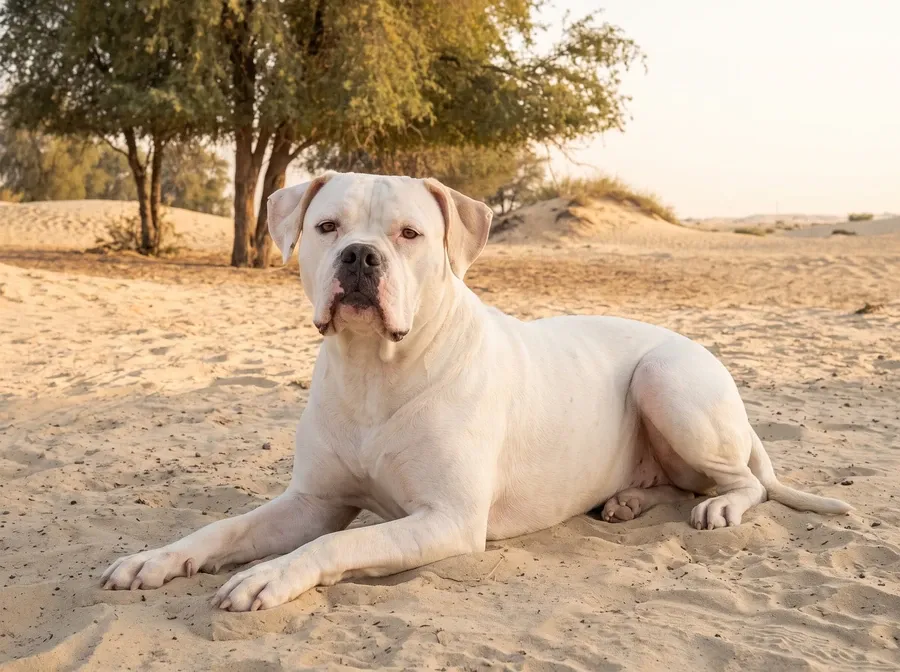
American Bulldog in Dubai, a white standard type adult lying on pale desert sand under ghaf trees

Bully or standard American Bulldog

Two kinds of American Bulldog

After the Second World War, two breeders rebuilt the breed in different directions. The bully type is heavier, with a shorter muzzle, and feels the heat sooner. The standard type is lighter, with a longer muzzle, and usually needs more running and more to do. Ask the breeder which you are looking at.

American Bulldog in Dubai, a red brindle and white puppy sitting on a rug in a majlis, palms beyond

Colours

Solid, patched or brindle

An American Bulldog can wear one solid colour, white with patches of colour, or a brindle coat of dark stripes. A mostly white puppy is worth a hearing test, because deafness in mostly white dogs is on their record.

American Bulldog in Dubai, a pale fawn puppy asleep in a lap on a sofa, the skyline behind

The first six months

Caring for an American Bulldog puppy

Their full vaccination course, microchip and Dubai Municipality registration come first, with a joint evaluation at each vaccine visit. Feed a large-breed growth diet, and keep them lean while they grow.

Puppy health, 0 to 6 months
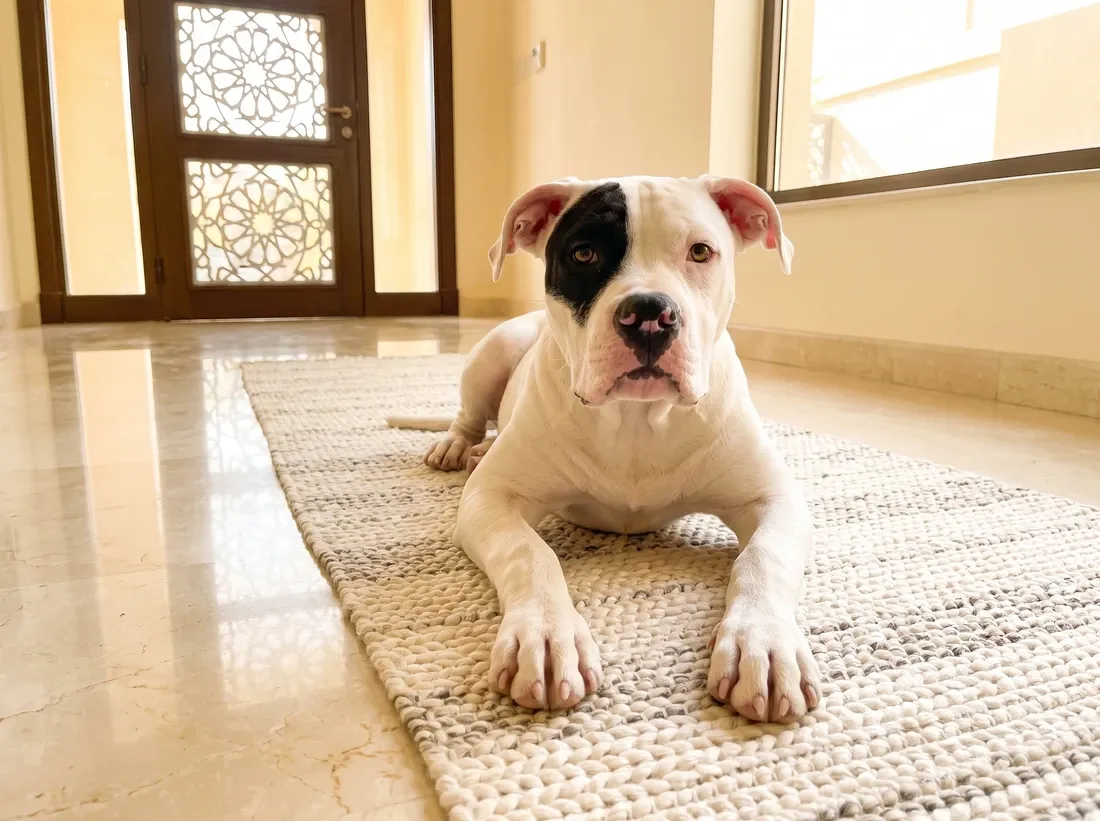
American Bulldog, a white puppy with a black eye patch lying on a runner in a marble hallway

Getting the home ready

Rugs, a ramp and a mat by the door

Put rugs down where they turn on marble, and a ramp or step for the car. Choose a mat a few metres from the front door for the doorbell rule, and leave them a cool spot out of the sun.

Ten things that make their life better
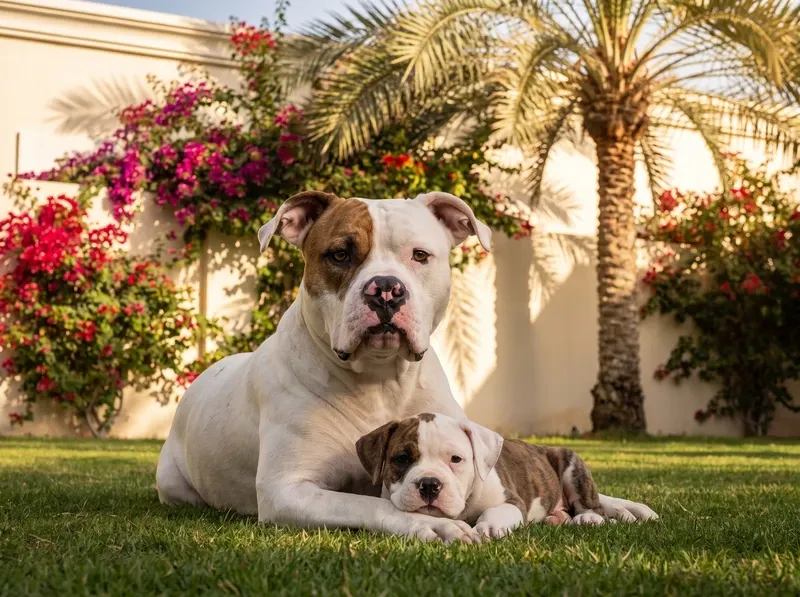
American Bulldog in Dubai, a mother lying with one puppy on a villa lawn with bougainvillea and a palm

Before you commit

Ask about hips, elbows and hearing

Ask the breeder for both parents' hip and elbow results, and for a hearing test on a mostly white puppy. Their joints and their hearing are where their health record starts.

The reception of a Paws & Co clinic, with long cream benches and a stone reception desk

Before the clinics open

Join the founding families

AED 1,999 of essential care for AED 199. No payment now.

When to see a vet

When it is not behaviour.

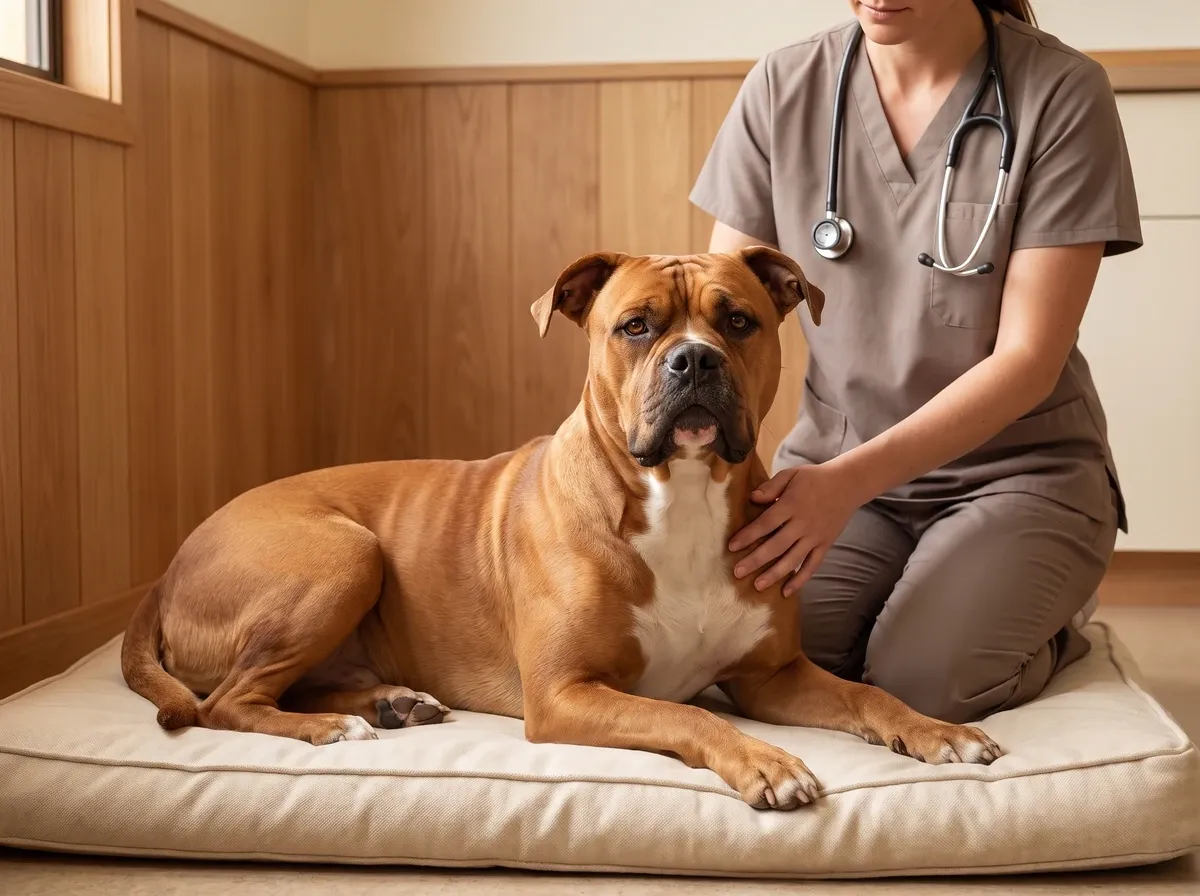
American Bulldog, a red fawn adult lying on a padded mat as a vet in taupe scrubs rests a hand on their chest

Some of this is not a training problem, and treating it like one wastes time your dog may not have. If they are distressed when you leave, if they growl or guard their food, their toys or you, if they are frightened on the lead, or if anything about them changes suddenly at any age, contact your vet the same day. A tip from a website, ours included, is not the answer. If it cannot wait, contact your nearest emergency vet now.

With an American Bulldog, watch their back legs, their skin and their hearing. A back-leg limp, or sitting with one leg stuck out, can be the knee. Endless licking and head shaking are often skin and ears. A puppy who seems to ignore you may not hear you. An American Bulldog who suddenly snaps when touched may be in pain. Bloat (GDV, a twisted stomach) is most common in large, deep-chested dogs, so skip walks and hard play shortly before and after meals. A swollen, tight belly, retching with nothing coming up, sudden restlessness or drooling is an emergency: contact your vet now. It is easy to put the rest down to stubbornness, and that can cost months.

She'll keep drooling on your trousers. If her knees stop letting her jump up to do it, call your vet.

American Bulldog history

Before they were yours.

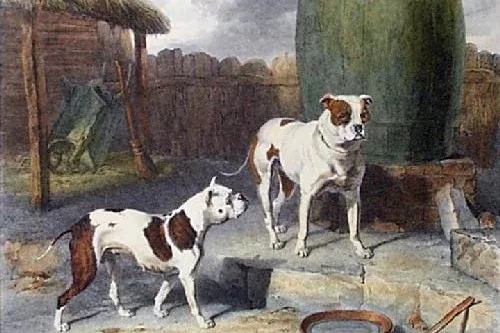
  1. American Bulldog history, Crib and Rosa, two patched white bulldogs of the old type in a yard, painting, about 1817
    Crib and Rosa, two bulldogs of the old type, painted about 1817.

    On the farms

    The settlers' bulldogs

    Working bulldogs came to the American South with settlers from Britain. They were farm dogs, not show dogs, and nobody kept a pedigree.

    What they still carryA broad body, a strong mouth and a working dog's mind.

  2. American Bulldog history, a white bulldog asleep in stable straw, painting by Horatio Henry Couldery, before 1893
    An Old Bulldog, painted by Horatio Henry Couldery before 1893. CC BY-SA 3.0, via Wikimedia Commons (cropped).

    Catch dog and guard

    Cattle, hogs and the homestead

    They caught loose cattle and half-wild hogs, kept predators away from the animals and guarded the family's house.

    What they still carryThe spring in their legs, the guarding, and a love of a tug game.

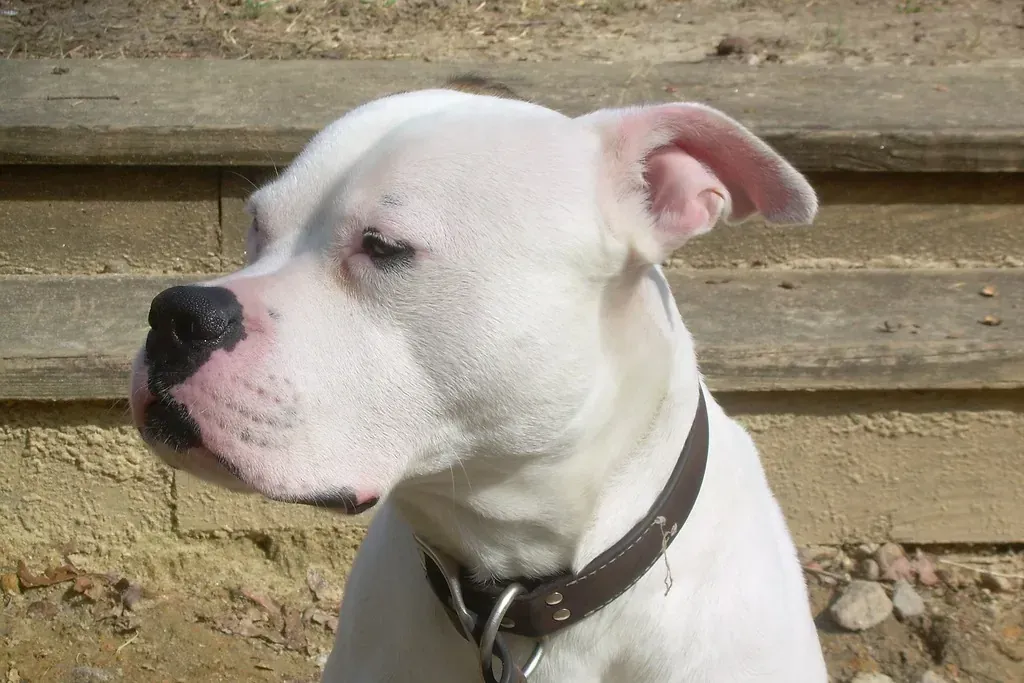
  3. American Bulldog history, head of a white Scott type dog in a leather collar, photograph, 2012
    A Scott type American Bulldog, 2012. Photo: Kroon78, CC BY-SA 3.0, via Wikimedia Commons (cropped).

    After the war

    Two breeders, two types

    After the Second World War the type nearly died out, until John D. Johnson and Alan Scott went looking for the dogs still working on Southern farms.

    What they still carryTwo types today: the heavier bully and the lighter standard.

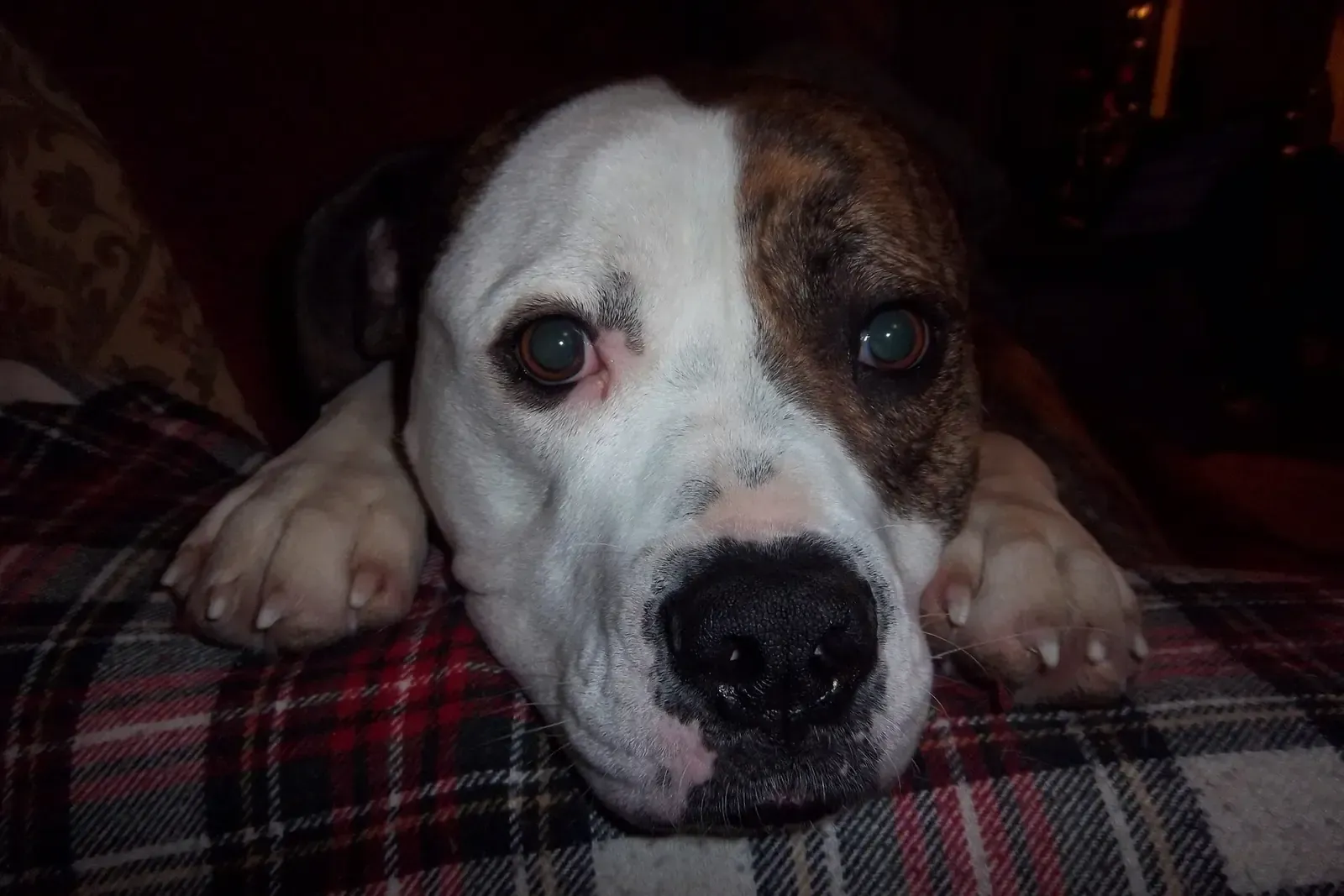
  4. American Bulldog history, a white and brindle dog resting on a tartan blanket, photograph, 2011
    A white and brindle American Bulldog, 2011. Photo: Cheater tree, CC BY 3.0, via Wikimedia Commons (cropped).

    1999

    Recognised

    The United Kennel Club recognised the breed on 1 January 1999.

    What they still carryA young breed on paper, with a lot of variation between dogs.

  5. American Bulldog history, the breed today, a white and brindle adult sitting on a park lawn, Dubai, 2026

    Today

    In Dubai

    Today they have no cattle to catch. They have a family to watch over and a sofa they think is theirs.

    What they still carryA farm athlete, living through 45°C summers.

American Bulldog questions

The ones you type at midnight.

Most of these get asked late at night, by someone watching their dog and not sure what they are seeing.

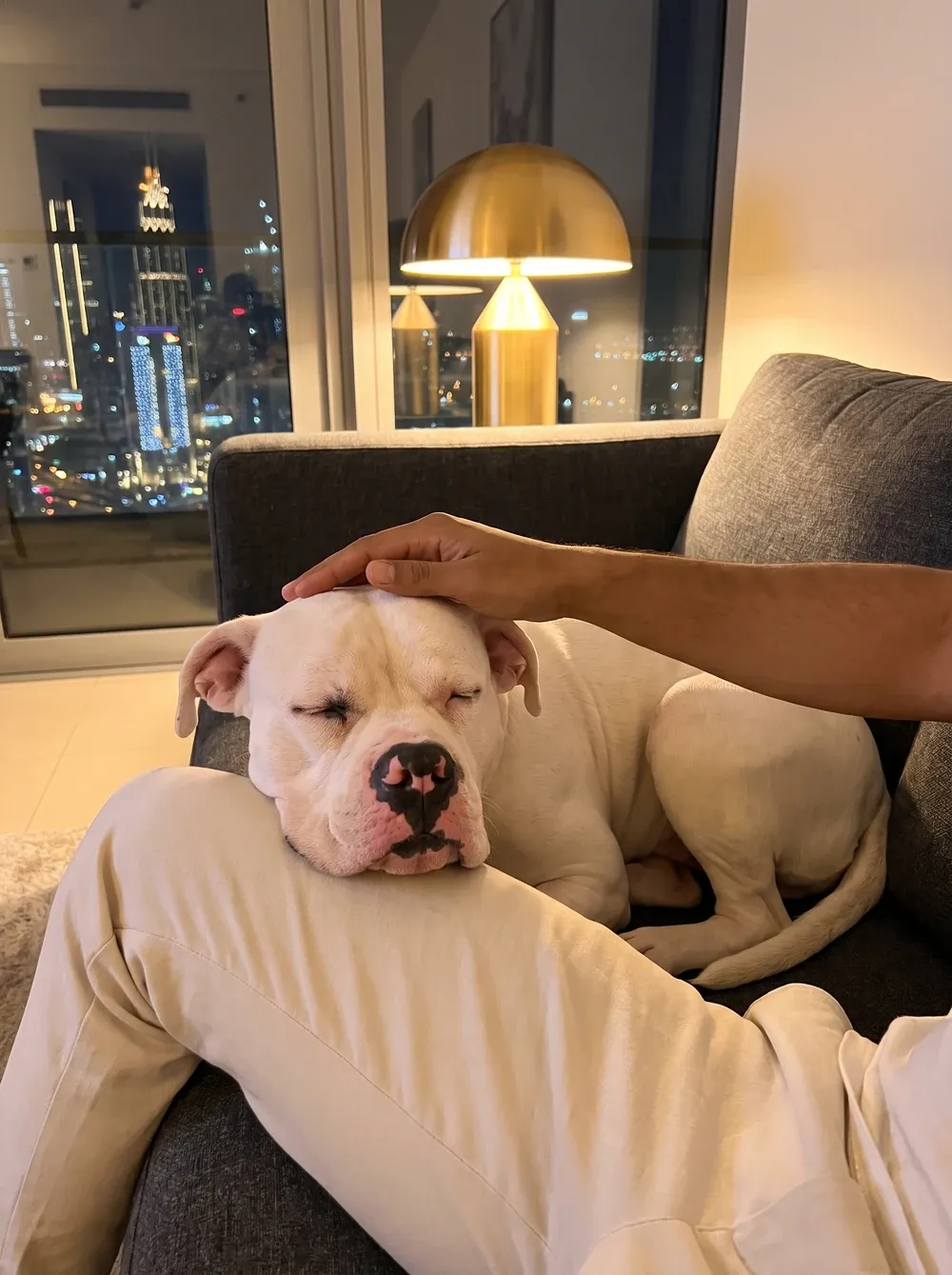
American Bulldog in Dubai, a white adult asleep with their head on a knee, the lit skyline behind
How big does an American Bulldog get?

An American Bulldog is a large, muscular dog, and the bully type is usually heavier than the standard type. The United Kennel Club sets no weight for the breed, so a healthy weight is the one that suits their frame.

How long do American Bulldogs live?

An American Bulldog usually lives about 10 to 12 years.

Are American Bulldogs good family dogs?

American Bulldogs are usually gentle and affectionate at home, especially with the people they grew up with, and watchful with strangers. They need real exercise and early, consistent training to channel all that strength.

Can an American Bulldog live in the Dubai heat?

An American Bulldog can, with care: from May to September, walk only before sunrise and after dark, and carry water. Bully types, with shorter muzzles, feel the heat sooner.

What health problems do American Bulldogs have?

American Bulldogs most often need care for their hips, elbows and knees, their skin and ears, and later their eyes and heart. A torn knee ligament is on their record from the teenage months into old age.

What is the difference between a bully and a standard American Bulldog?

A bully American Bulldog is heavier, with a shorter muzzle, and was bred more as a guardian. The standard type is lighter, with a longer muzzle, and was bred for catching cattle and hogs.

Are white American Bulldogs deaf?

Not all of them, but deafness from birth in mostly white American Bulldogs is on their health record. A BAER hearing test (a painless test of how the brain responds to sound) gives you the answer.

Is the American Bulldog a recognised breed?

Yes. The United Kennel Club recognised the American Bulldog in 1999, and the American Kennel Club began keeping its records in 2019.

Worried about them? Contact your vet today.