We’re hiring people who love them like we do. Join us careers@pawsandco.comSee open roles
UAE Government Licensed MOCCAE
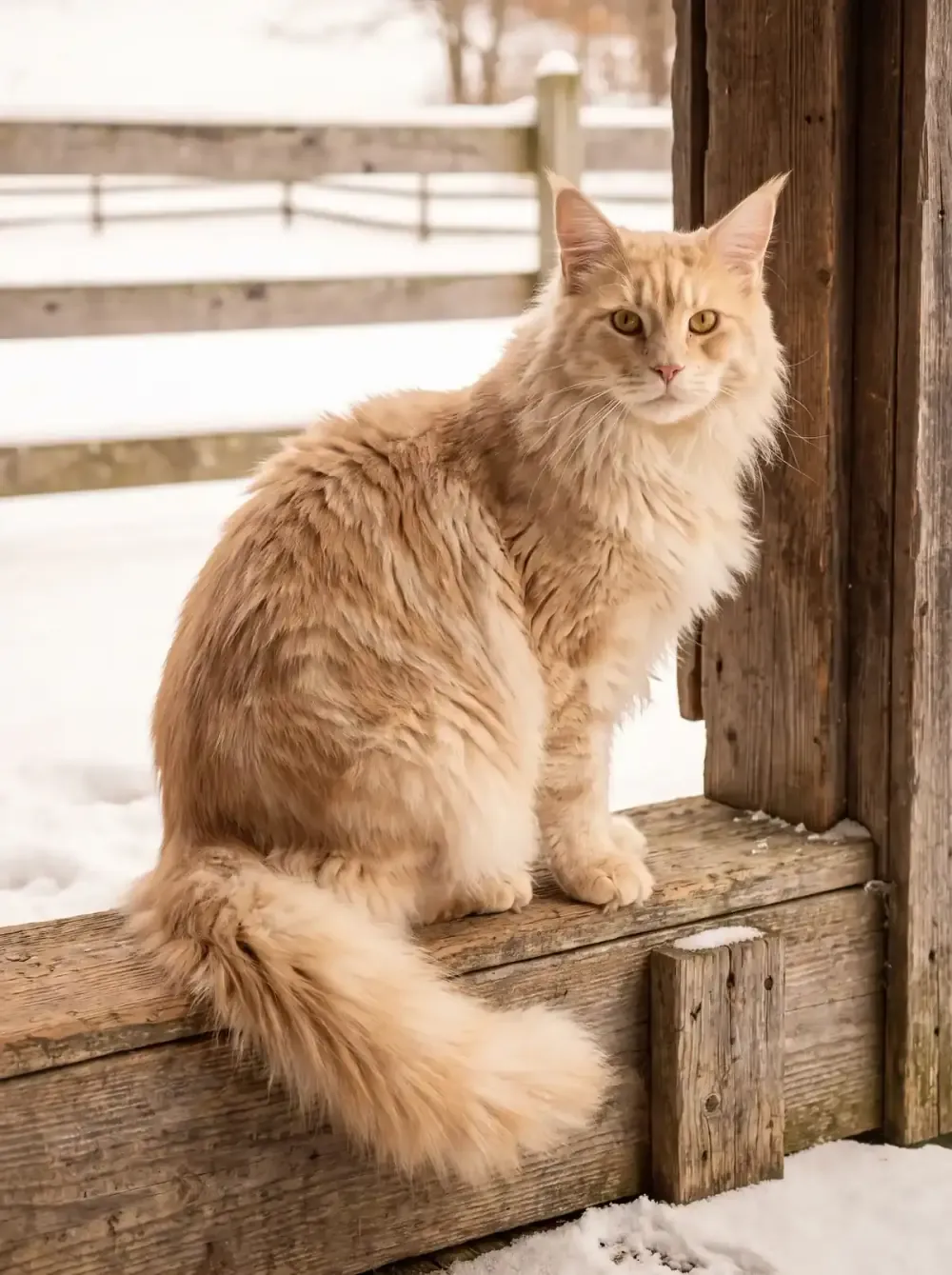
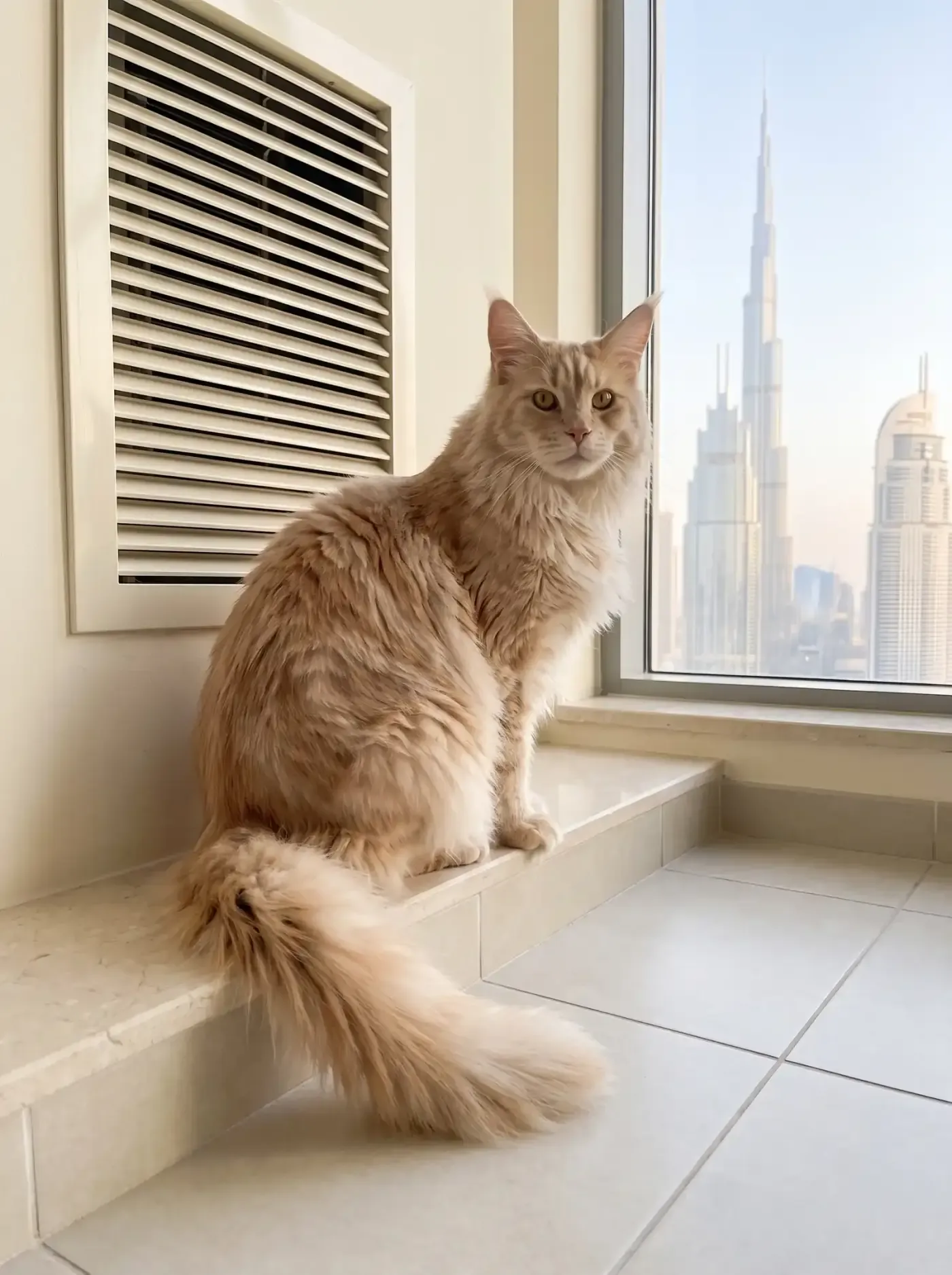
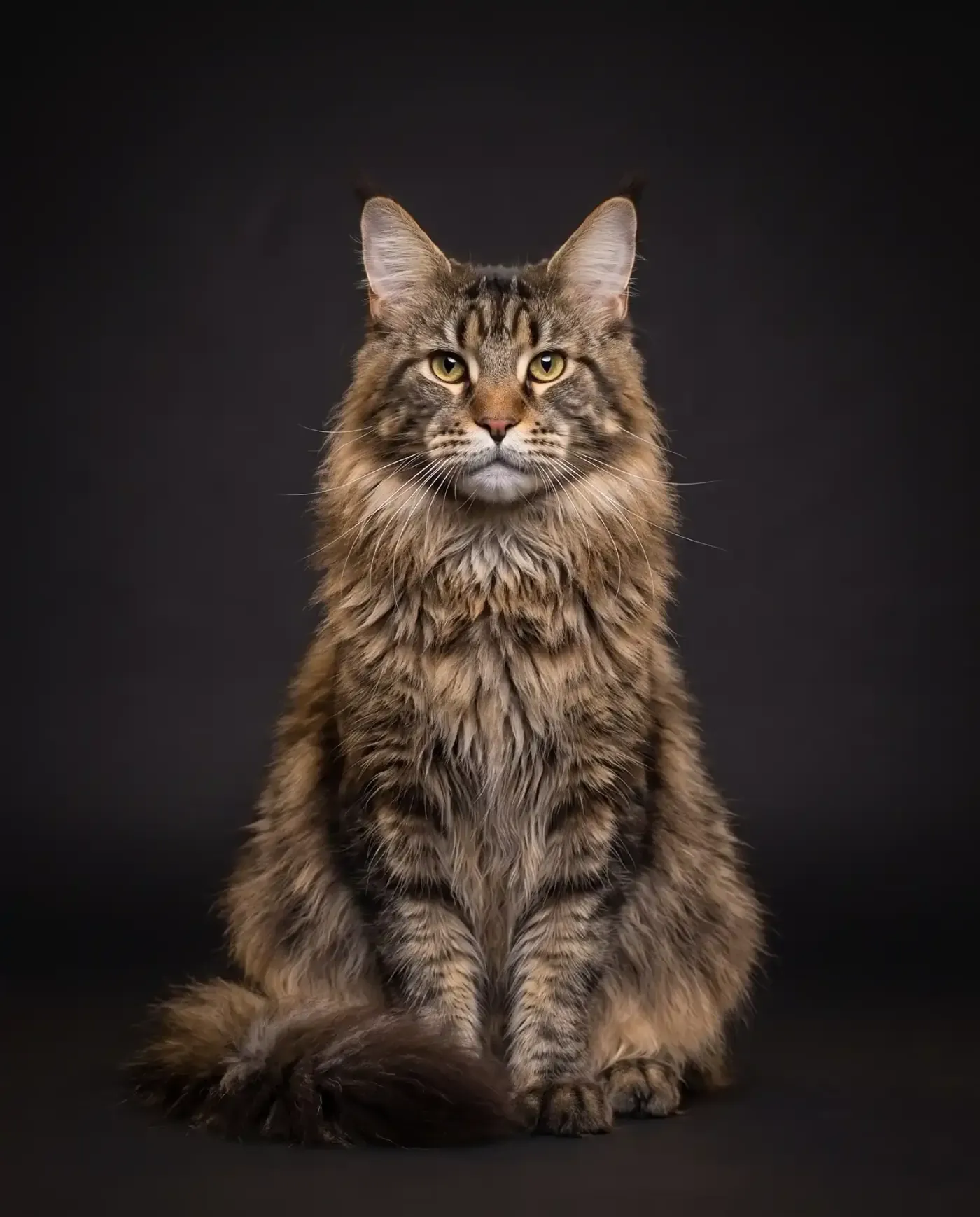
Maine Coon in Dubai, studio portrait of a large brown tabby adult with tufted ears, sitting

Breed guide · Cats

Maine Coon

He was built for Maine winters. I leave the air conditioning on for him all summer.

Lifespan
12 to 15 years
Size
Very large
Weight
4.5 to 9 kg
Grooming
At least twice a week

Last updated 13 October 2026

Join the founding families. AED 1,999 of essential care for AED 199.

No payment now. We'll be in touch by email and WhatsApp as we open enrolment.

✓
Thank you.

We will be in touch soon to confirm.

Maine Coon traits

What they brought with them.

Tap a card to see what is going on.

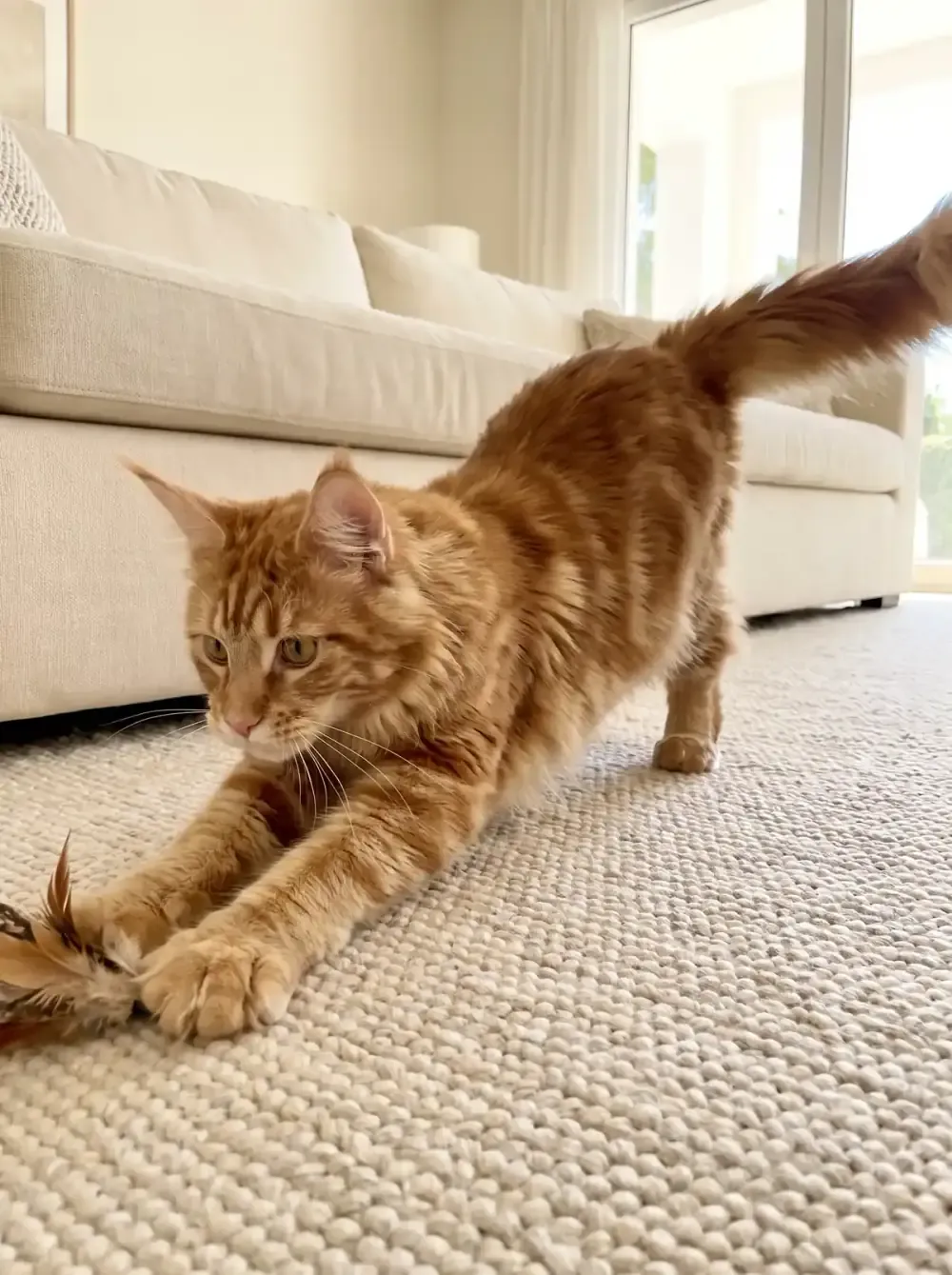
Maine Coon, a young red tabby pouncing on a feather toy on a wool rug in front of a cream sofa

At home

Maine Coon size: still growing at two

A two-year-old who is still gangly, with a kitten's energy in a big cat's body.

What's going onA Maine Coon can take three to four years to reach full size. Feed them for the adult they will be, and judge their weight with your hands, not your eyes.
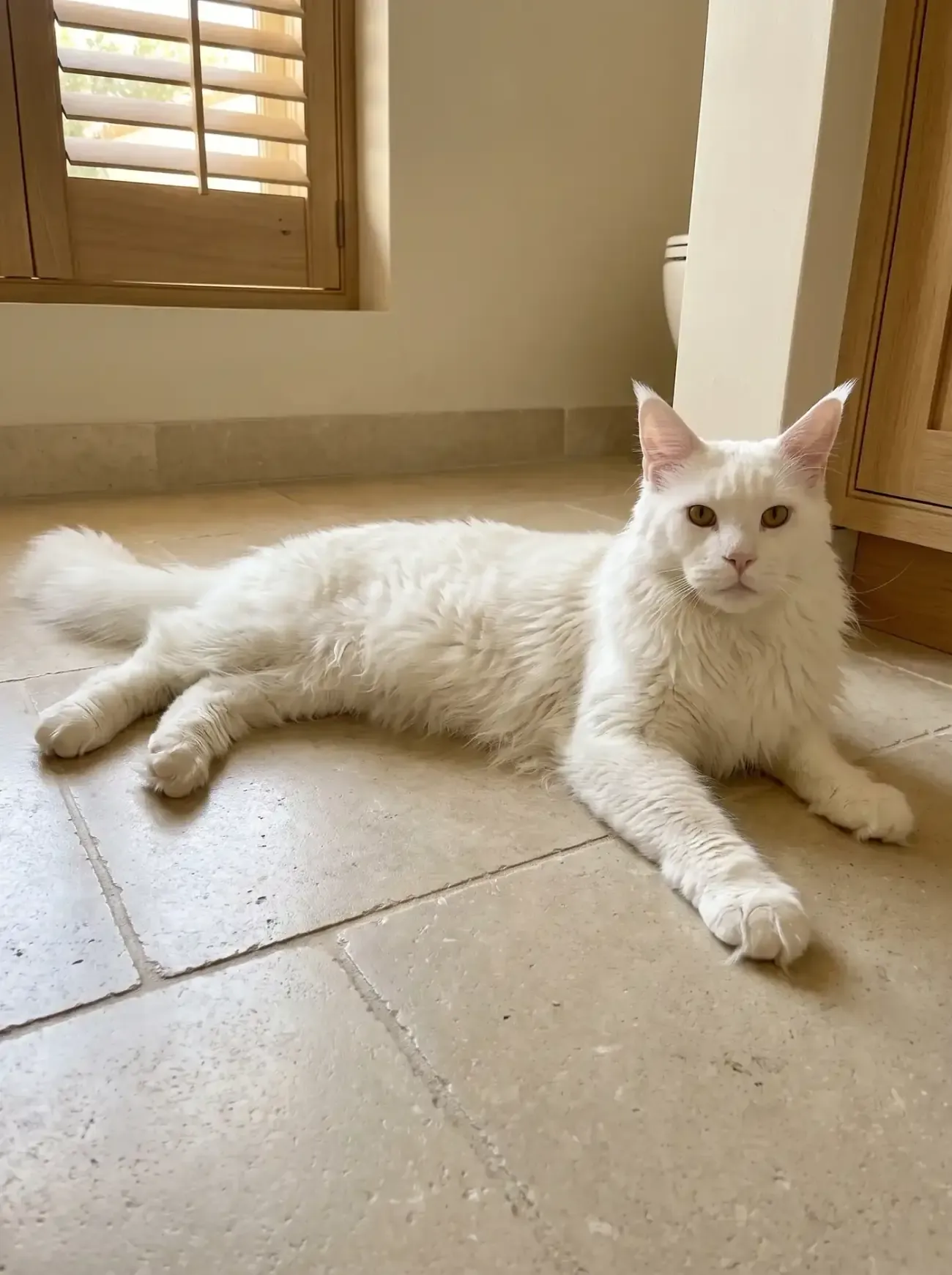
Maine Coon, a white adult stretched out on cool stone bathroom tiles, a timber shutter behind

At home

Why does my Maine Coon sleep on the tiles?

Stretched full length across the bathroom tiles, or asleep under the air conditioning vent.

What's going onTheir size and their coat were built to keep heat in, so a cool floor is a sensible choice. Leave the air conditioning on for them when you go out in summer, and keep them off the balcony.

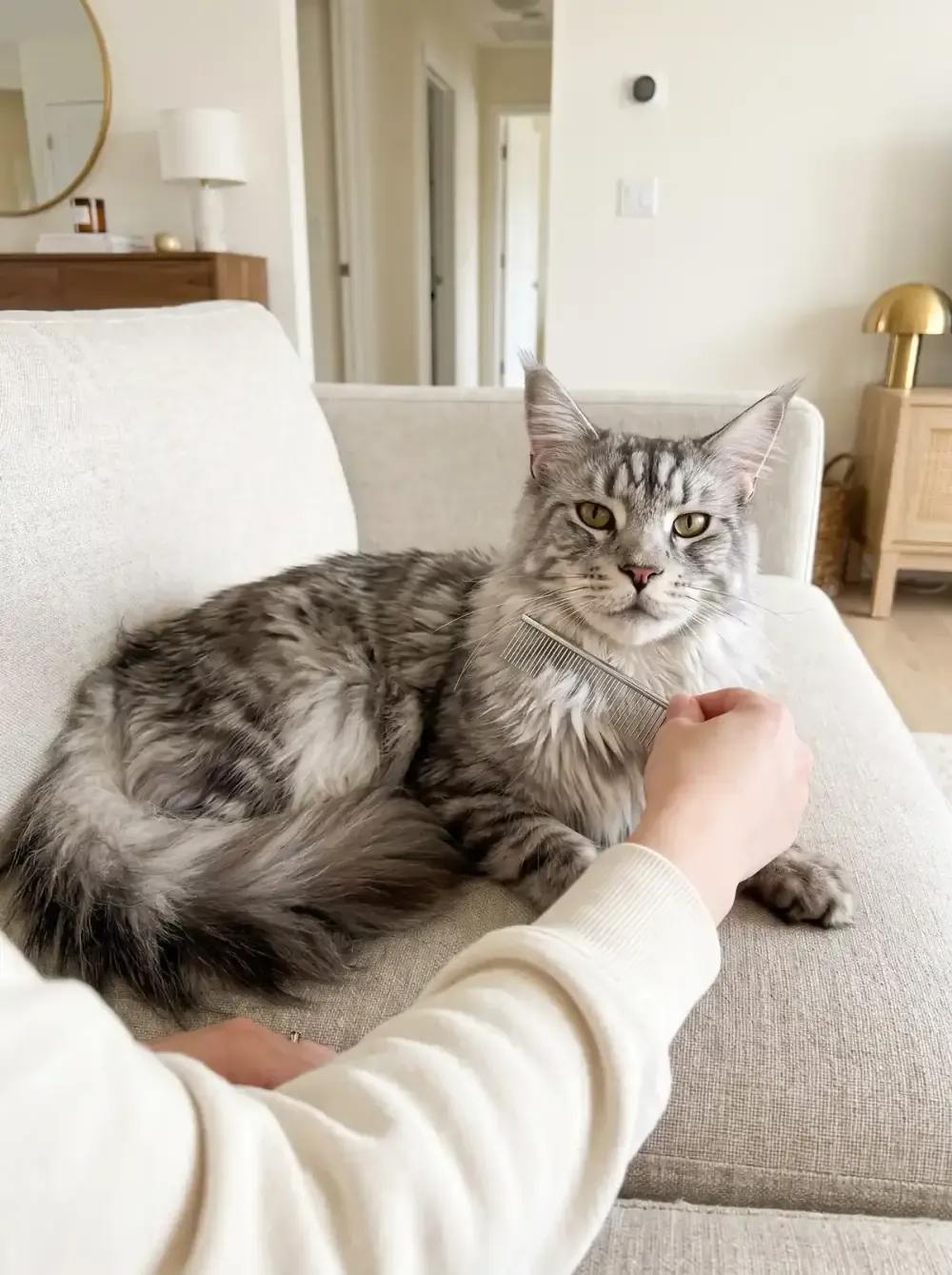
Maine Coon, a silver tabby adult on a sofa while a hand combs the thick ruff under the chin

At home

Why does my Maine Coon get knots?

Knots behind the ears, under the front legs and on the belly, where you rarely look.

What's going onA coat this thick is more than they can keep clear on their own. Comb a few minutes at a time, at least twice a week, with a treat as you go. Mats hurt, and a matted cat stops wanting to be touched.

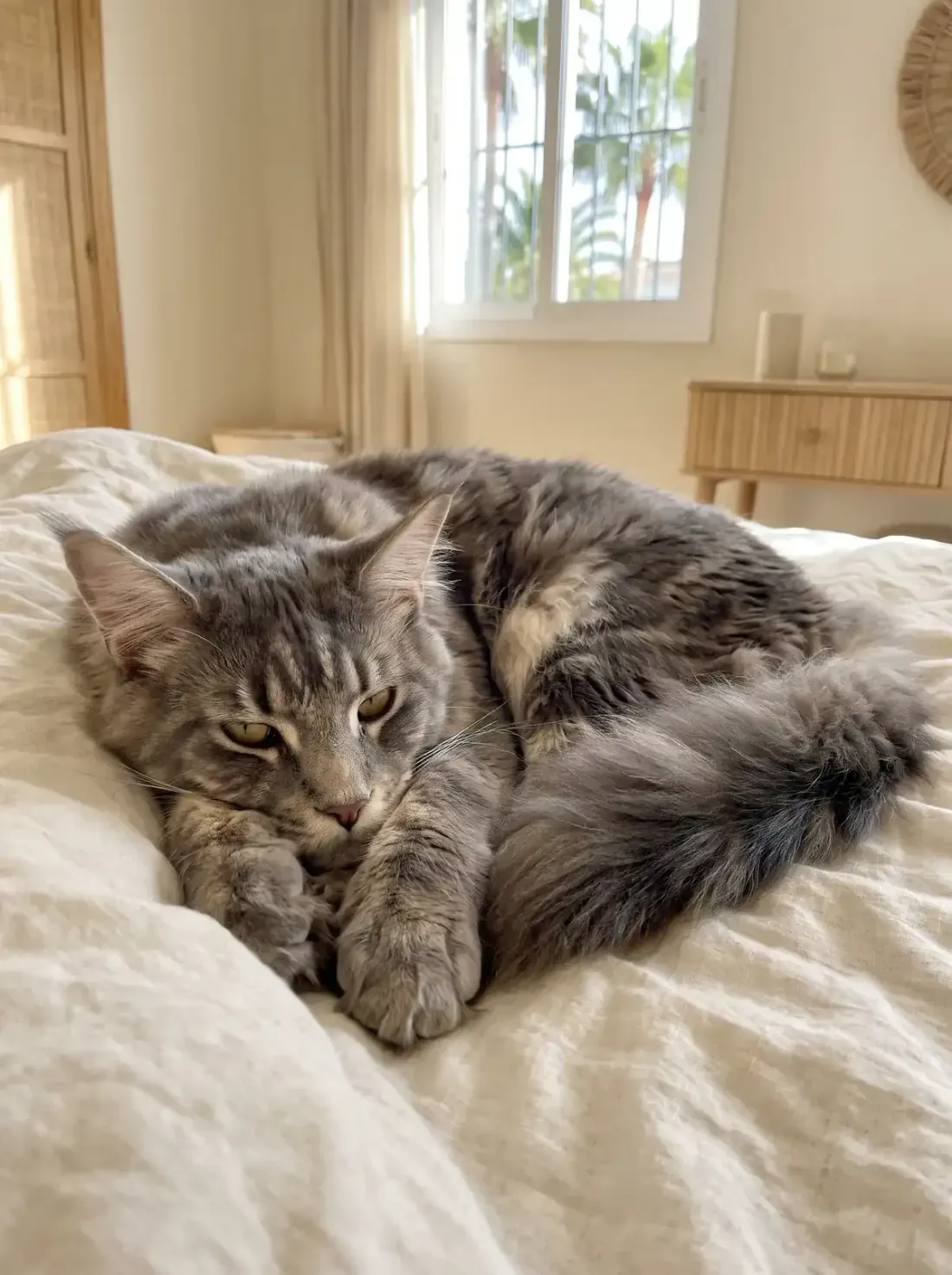
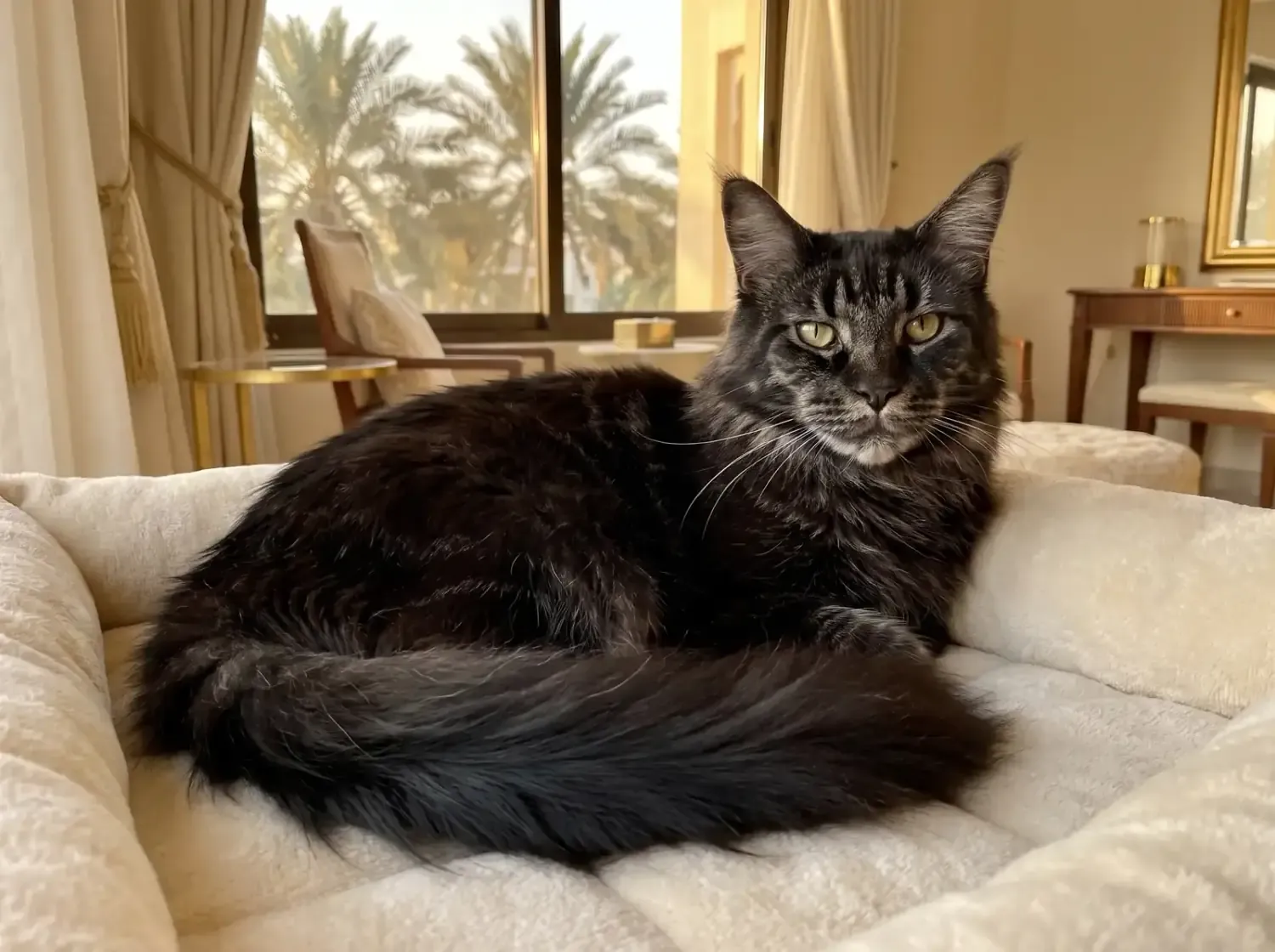
Maine Coon in Dubai, a blue tabby adult resting drowsy on a linen bed, palms through the window

At home

A heart problem that stays quiet

A calm, easy cat who sleeps a great deal and rarely makes a fuss.

What's going onHypertrophic Cardiomyopathy (HCM, a thickened heart muscle) is on their health record at every age, and it can give no signs for years. Fast or shallow breathing while resting should be discussed with your vet immediately, within the same day.

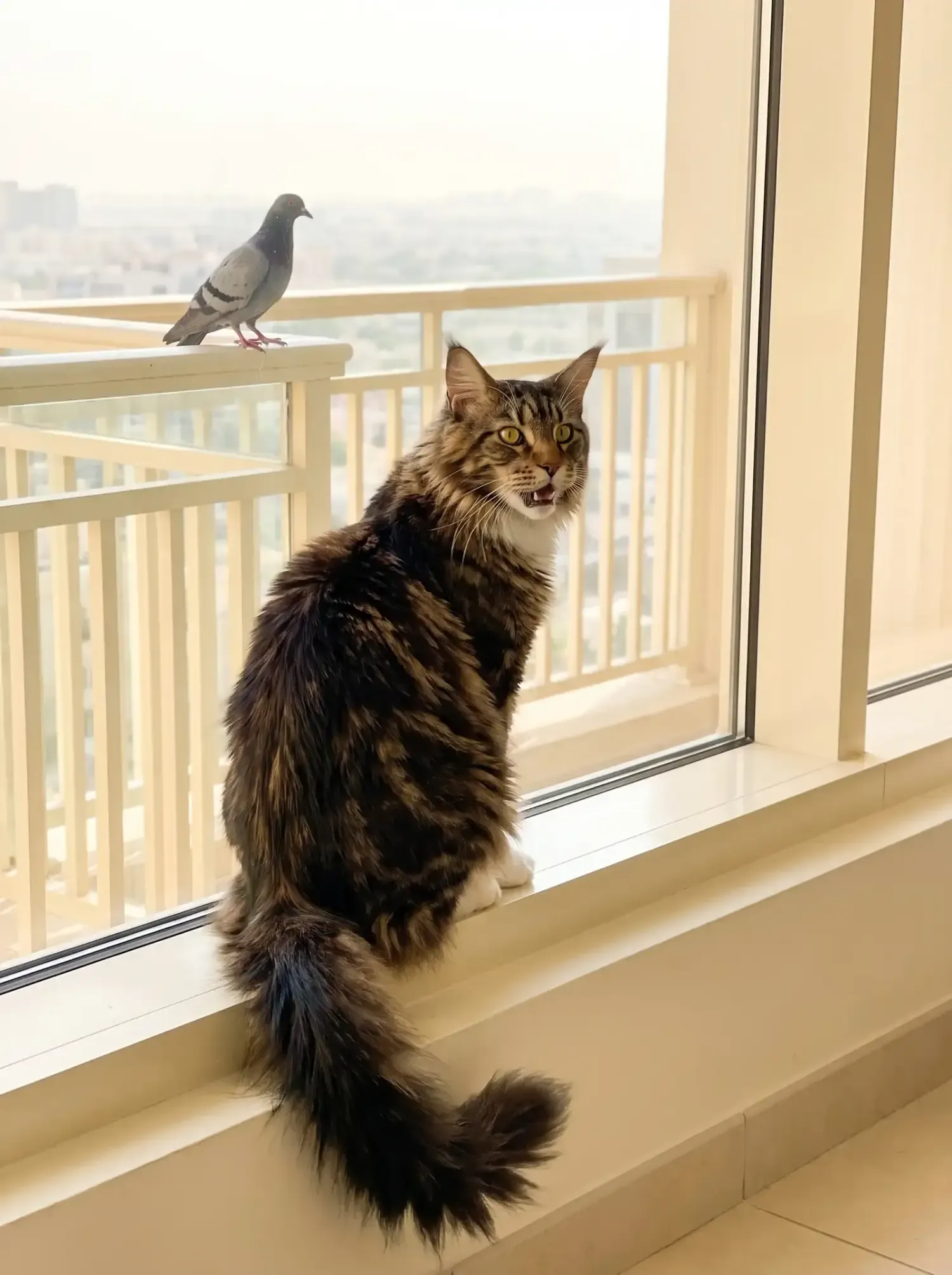
Maine Coon in Dubai, a brown tabby and white adult on a balcony window sill, a pigeon on the rail

At home

Why does my Maine Coon chirp?

Chirps and trills at every pigeon on the balcony rail, and at you.

What's going onMany Maine Coons trill and chirp instead of miaowing. Watching is half of their hunt. A wand toy along the floor, with a catch and a meal at the end, gives them the rest.

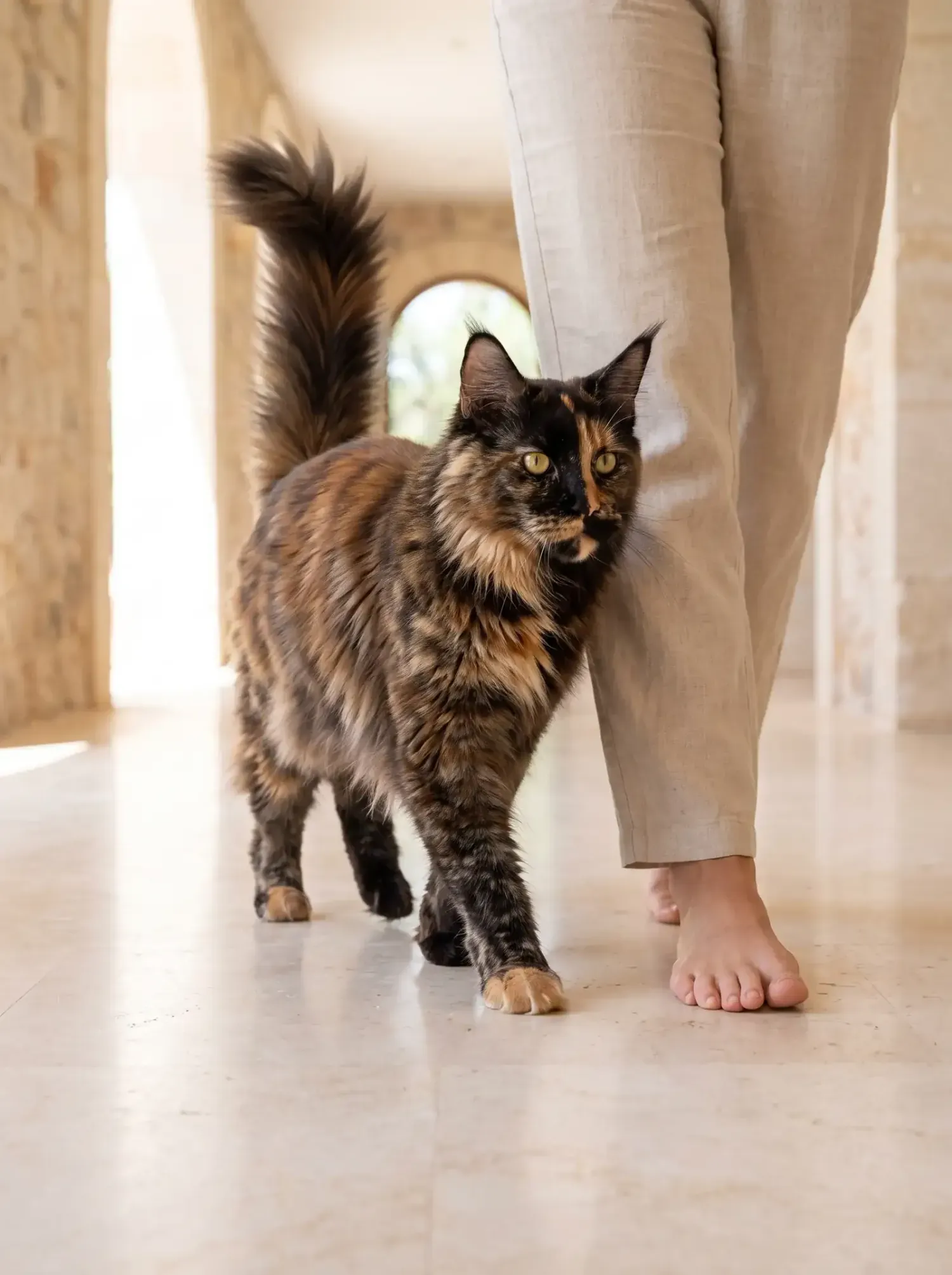
Maine Coon, a tortoiseshell adult walking beside a person down a marble villa hallway

At home

Why does my Maine Coon follow me everywhere?

From room to room all day, sometimes with a toy for you to throw.

What's going onFollowing you is how they show they are attached. When you lift them, use two hands, one under the chest and one under the back end. They are heavy, and they relax when they feel held.

A Maine Coon in Dubai

The bit nobody tells you.

Their weather

Built for: Winters on farms in north-eastern America.

In Dubai: Air conditioning through a Gulf summer.

Their coat

Built for: Heavy, and made for snow.

In Dubai: A coat they cannot keep clear on their own.

Their size

Built for: Big and slow-growing, to hold heat in.

In Dubai: A weight their fur hides.

The afternoons on the bathroom tiles, the knots and the weight nobody notices mostly come from that gap.

You do not need to give them a barn. Keep them cool and lean, keep their coat clear, and watch their heart and their hips. The ten things below are how.

Your plan is built around what a Maine Coon is prone to at every age, and the care that goes with each one.

Join the founding families. AED 1,999 of essential care for AED 199.

Daily care for a Maine Coon

Ten things that make their life better.

Many of them are free, and most matter at every age.

  1. Their coat was built for Maine winters, and they cannot keep it clear on their own. Mats pull on the skin and hurt.

    Every age, start with a soft brush as a kitten, and help more from 11 years, when they groom themselves less

    Under AED 30

    Why

    Their coat was built for Maine winters, and they cannot keep it clear on their own. Mats pull on the skin and hurt.

    What to do

    A few minutes, at least twice a week, with a wide-toothed metal comb. Work behind the ears, under the front legs, the belly and the back of the back legs. Treat as you go. Never cut a mat out with scissors: the skin sits right under it.

  2. Their size and their coat hold heat, and cats sweat only through their paw pads. A cat who pants is overheating: cool them down and call your vet now.

    Every age, most of all kittens and from 11 years

    Free

    Why

    Their size and their coat hold heat, and cats sweat only through their paw pads. A cat who pants is overheating: cool them down and call your vet now.

    What to do

    Leave the air conditioning on for them in the hot months. Give them a tiled floor to stretch out on. Keep them off the balcony in summer, and never leave them in a parked car. If the power fails while you are away, get someone in to check on them.

  3. Obesity is on their health record from their junior years, and their coat hides it. Extra weight is also extra load on their hips.

    Every age, most of all 7 months to 2 years

    Free

    Why

    Obesity is on their health record from their junior years, and their coat hides it. Extra weight is also extra load on their hips.

    What to do

    Weigh their daily food. Weigh them monthly: stand on the scales holding them, then without them. Once a week, feel for their ribs under the coat. You should find them without pressing. Ask your vet to reset their portion after neutering.

  4. Watching the pigeons is half of their hunt. They still need the catch, and a big cat who does not play puts on weight.

    Every age, most of all 7 months to 2 years

    Under AED 30

    Why

    Watching the pigeons is half of their hunt. They still need the catch, and a big cat who does not play puts on weight.

    What to do

    Move a wand toy along the floor and round corners, the way a mouse would go. Let them stalk. End with a catch, then a small meal. Many Maine Coons fetch, so try throwing a small toy.

  5. A tray they have to crouch in, or a cat tree that rocks under them, is one they stop using.

    Before they come home, and again from 7 years

    From about AED 35 a tray, Up to about AED 500 for a cat tree

    Why

    A tray they have to crouch in, or a cat tree that rocks under them, is one they stop using.

    What to do

    A long litter tray with a low entry. A cat tree with a broad, heavy base, and a scratching post tall enough for a full stretch. One tray per cat, plus one, in different rooms. From about seven, add steps to the tree.

  6. Hypertrophic Cardiomyopathy (HCM, a thickened heart muscle) is on their health record at every age, and it can be silent for years.

    Every age, most of all from 7 years

    Free

    Why

    Hypertrophic Cardiomyopathy (HCM, a thickened heart muscle) is on their health record at every age, and it can be silent for years.

    What to do

    Fast or shallow breathing while resting should be discussed with your vet immediately, within the same day. If they breathe with their mouth open, or suddenly cannot use their back legs, contact your vet now.

  7. Cats have a weak urge to drink. Polycystic Kidney Disease (PKD, cysts in the kidneys) is on their record from 7 years, and Chronic Kidney Disease (CKD, long-term kidney failure) later.

    Every age, most of all from 7 years

    Under AED 250 for a fountainIn your plan

    Why

    Cats have a weak urge to drink. Polycystic Kidney Disease (PKD, cysts in the kidneys) is on their record from 7 years, and Chronic Kidney Disease (CKD, long-term kidney failure) later.

    What to do

    Some wet food every day. Two or three wide, shallow bowls away from their food and tray. Many Maine Coons love running water, so a fountain may win them over. Scoop the tray daily, and call your vet if they start drinking a lot more. A baseline urinalysis (a urine test) is in your plan in their junior years, and a renal ultrasound (a kidney scan) in their mature years.

  8. They are heavy, and a big cat lifted by the front legs fights it. That fight starts every vet visit badly.

    Every age, start as a kitten

    Free

    Why

    They are heavy, and a big cat lifted by the front legs fights it. That fight starts every vet visit badly.

    What to do

    One hand under the chest, one under the back end, held close. Choose a large carrier, top-opening if you can, and leave it out as a bed. Once a week, touch their paws, ears and mouth, then give them a treat.

  9. Dental disease is on their health record from their junior years, and cats keep eating with sore teeth.

    Every age, start as a kitten

    Under AED 30 for a toothbrush and pasteIn your plan

    Why

    Dental disease is on their health record from their junior years, and cats keep eating with sore teeth.

    What to do

    Lift their lip and look at their teeth and gums. Start brushing as a kitten, a few seconds at a time, with cat toothpaste. Notice if they drop food or chew on one side, and tell your vet. An annual dental evaluation (teeth and gum check) is in your plan from their junior years.

  10. Hip Dysplasia (HD, a poorly fitting hip joint) is on their health record from kittenhood, and osteoarthritis (worn, painful joints) joins it from 7 years.

    Every age, most of all 7 months to 6 years

    Free to about AED 500 for stepsIn your plan

    Why

    Hip Dysplasia (HD, a poorly fitting hip joint) is on their health record from kittenhood, and osteoarthritis (worn, painful joints) joins it from 7 years.

    What to do

    Notice whether they still jump straight onto the bed or go up in stages, and watch their back legs as they land. Keep them lean. Put steps by their favourite high places before they need them. A hip and mobility evaluation is in your plan as a kitten, with hip radiographs (X-rays) in their junior and prime adult years.

Three of these are in your plan. The rest you can do at home.

Join the founding families. AED 1,999 of essential care for AED 199.

Maine Coon health by age

Their health, at every age.

In a Maine Coon, faster breathing while they sleep, or a jump they no longer make, is often the first sign that something is wrong. Choose their age to see what to watch for, and the care that goes with it.

Maine Coon in Dubai, an older black cat with a greying face resting on a cream bed, palms outside

How old are they?

Their age

Maine Coon Kitten health

the first six months

What to watch for

  1. Hypertrophic Cardiomyopathy (HCM, a thickened heart muscle)
  2. Hip Dysplasia (HD, a poorly fitting hip joint)
  3. Spinal muscular atrophy (a gene fault that weakens the back legs)
  4. Gastrointestinal and external parasites
  5. Gastrointestinal and upper respiratory infectious disease

The care that goes with it

  1. Core vaccinations, microchip and Dubai Municipality registration
  2. Deworming, and flea and tick prevention
  3. Growth and nutritional evaluation, and early socialisation
  4. Cardiac auscultation (listening to the heart), and a first talk about echocardiography
  5. Hip and mobility evaluation
The full care detail
  • Core vaccination programme, microchipping and Dubai Municipality registration. Titre testing discussion where clinically appropriate; not a substitute for completing the core vaccine series
  • Deworming and external parasite prevention tailored to Dubai exposure
  • Body Condition Score (BCS, a check on whether they are the right weight), Muscle Condition Score (MCS, a check on their muscle), dental, growth and nutritional evaluation, and early socialisation
  • Cardiac auscultation and early echocardiography discussion (heart-disease-predisposed breed)
  • Hip and mobility evaluation

Their age

Maine Coon Junior health

7 months to 2 years

What to watch for

  1. Hypertrophic Cardiomyopathy (HCM, a thickened heart muscle)
  2. Hip Dysplasia (HD, a poorly fitting hip joint)
  3. Early presentation of Dental disease
  4. Early presentation of Obesity
  5. Early presentation of Spinal muscular atrophy (a gene fault that weakens the back legs)

The care that goes with it

  1. Neutering or spaying, with weight-management counselling
  2. Core vaccinations completed, and parasite control all year
  3. Annual dental evaluation, and brushing at home
  4. Baseline weight and urinalysis (a urine test)
  5. Baseline bloods, and FeLV and FIV status testing (two viruses cats pass to each other)
  6. Baseline echocardiography (an ultrasound scan of the heart)
  7. Hip radiographs (X-rays) and mobility evaluation
The full care detail
  • Neutering or spaying, with weight-management counselling from the day of surgery
  • Completion of the core vaccination programme and year-round parasite control
  • Annual dental evaluation and a home dental-care routine started young
  • Baseline weight, Body Condition Score (BCS, a check on whether they are the right weight) and urinalysis to set the adult reference point
  • Baseline blood work, and Feline Leukaemia Virus (FeLV, the feline leukaemia virus) and Feline Immunodeficiency Virus (FIV, the feline virus equivalent to HIV) status testing
  • Continued monitoring of Hip Dysplasia (HD, a poorly fitting hip joint)
  • Baseline echocardiographic screening
  • Hip radiographs and mobility evaluation

Their age

Maine Coon Prime Adult health

2 to 6 years

What to watch for

  1. Hypertrophic Cardiomyopathy (HCM, a thickened heart muscle)
  2. Hip Dysplasia (HD, a poorly fitting hip joint)
  3. Dental disease
  4. Spinal muscular atrophy (a gene fault that weakens the back legs)
  5. Obesity

The care that goes with it

  1. Annual dental evaluation, and brushing at home
  2. Neutering or spaying, if not done yet
  3. Core vaccinations and parasite control
  4. Diet and body condition scoring (a check on whether they are the right weight)
  5. Baseline weight and urinalysis (a urine test)
  6. FeLV and FIV status testing (two viruses cats pass to each other)
  7. Cardiac auscultation (listening to the heart) and baseline echocardiography
  8. Hip radiographs (X-rays) and mobility evaluation
The full care detail
  • Annual dental evaluation and home dental care
  • Neutering or spaying, with weight-management counselling from the day of surgery, where it was not done at the Junior stage
  • Core vaccination and parasite control
  • Diet and body condition scoring
  • Baseline weight and urinalysis
  • Feline Leukaemia Virus (FeLV, the feline leukaemia virus) and Feline Immunodeficiency Virus (FIV, the feline virus equivalent to HIV) status testing
  • Cardiac auscultation and baseline echocardiography
  • Hip radiographs and mobility evaluation

Their age

Maine Coon Mature Adult health

7 to 10 years

What to watch for

  1. Hypertrophic Cardiomyopathy (HCM, a thickened heart muscle)
  2. Hip Dysplasia (HD, a poorly fitting hip joint) and osteoarthritis (worn, painful joints)
  3. Dental disease
  4. Polycystic Kidney Disease (PKD, cysts in the kidneys)
  5. Obesity

The care that goes with it

  1. Cardiac auscultation (listening to the heart) and echocardiography, at regular intervals
  2. Bloods and urinalysis (a urine test)
  3. Blood pressure measurement
  4. Hip and orthopaedic evaluation (joint and bone exam)
  5. Renal ultrasound (a kidney scan) for PKD
  6. Dental scaling (a clean) and dental X-rays
The full care detail
  • Periodic cardiac auscultation and echocardiography
  • Bloods and urinalysis
  • Blood pressure measurement
  • Hip and orthopaedic evaluation
  • Renal ultrasound for Polycystic Kidney Disease (PKD, cysts in the kidneys)
  • Dental scaling and radiographs

Their age

Maine Coon Senior health

11 to 14 years

What to watch for

  1. Hypertrophic Cardiomyopathy (HCM, a thickened heart muscle)
  2. Chronic Kidney Disease (CKD, long-term kidney failure)
  3. Osteoarthritis (worn, painful joints)
  4. Hyperthyroidism
  5. Dental disease

The care that goes with it

  1. Bloods, renal panel (a kidney check) and urinalysis, twice a year
  2. Thyroid hormone screening
  3. Blood pressure measurement
  4. Echocardiography (a heart scan) and cardiac monitoring
  5. Joint and mobility evaluation (joint and movement exam)
  6. Dental evaluation under anaesthesia
  7. Pain relief and joint support for arthritis
The full care detail
  • Twice-yearly bloods, renal panel and urinalysis
  • Thyroid hormone screening
  • Blood pressure measurements
  • Echocardiography and cardiac monitoring
  • Joint and mobility evaluation
  • Dental evaluation under anaesthesia
  • Analgesia and joint support for arthritis

Their age

Maine Coon Geriatric health

15 years and over

What to watch for

  1. Chronic Kidney Disease (CKD, long-term kidney failure)
  2. Hypertrophic Cardiomyopathy (HCM, a thickened heart muscle)
  3. Neoplasia (cancer and tumours)
  4. Osteoarthritis (worn, painful joints)
  5. Hyperthyroidism

The care that goes with it

  1. Physical examination twice a year, with weight, muscle, teeth and mobility
  2. Bloods, urinalysis (a urine test) and thyroid hormone screening
  3. Neoplasia screening (for cancer), and any weight loss or lumps looked into
  4. Nutrition, hydration and grooming support
  5. Quality-of-life assessment, comfort care and end-of-life planning
  6. Echocardiography and blood pressure monitoring
The full care detail
  • Biannual physical examination including weight trend, Body Condition Score (BCS, a check on whether they are the right weight) and Muscle Condition Score (MCS, a check on their muscle), and dental and mobility evaluation
  • Complete Blood Count (CBC), biochemistry including renal parameters where appropriate, urinalysis including Urine Specific Gravity (USG), and total T4 according to age and risk
  • Neoplasia evaluation including lymph nodes, oral cavity, skin and subcutaneous tissues, and abdominal palpation. Investigate unexplained weight loss, appetite change, masses or lymphadenopathy
  • Nutrition, hydration and grooming support
  • Quality-of-life assessments, a tailored palliative and comfort-focused care plan, and compassionate end-of-life planning with your veterinary team, available earlier should it become clinically evident
  • Ongoing echocardiographic surveillance and blood pressure monitoring

Breed predispositions indicate an increased risk rather than certainty of disease. What is right for them always comes from their own history and an evaluation.

Getting a Maine Coon in Dubai

Before they come home.

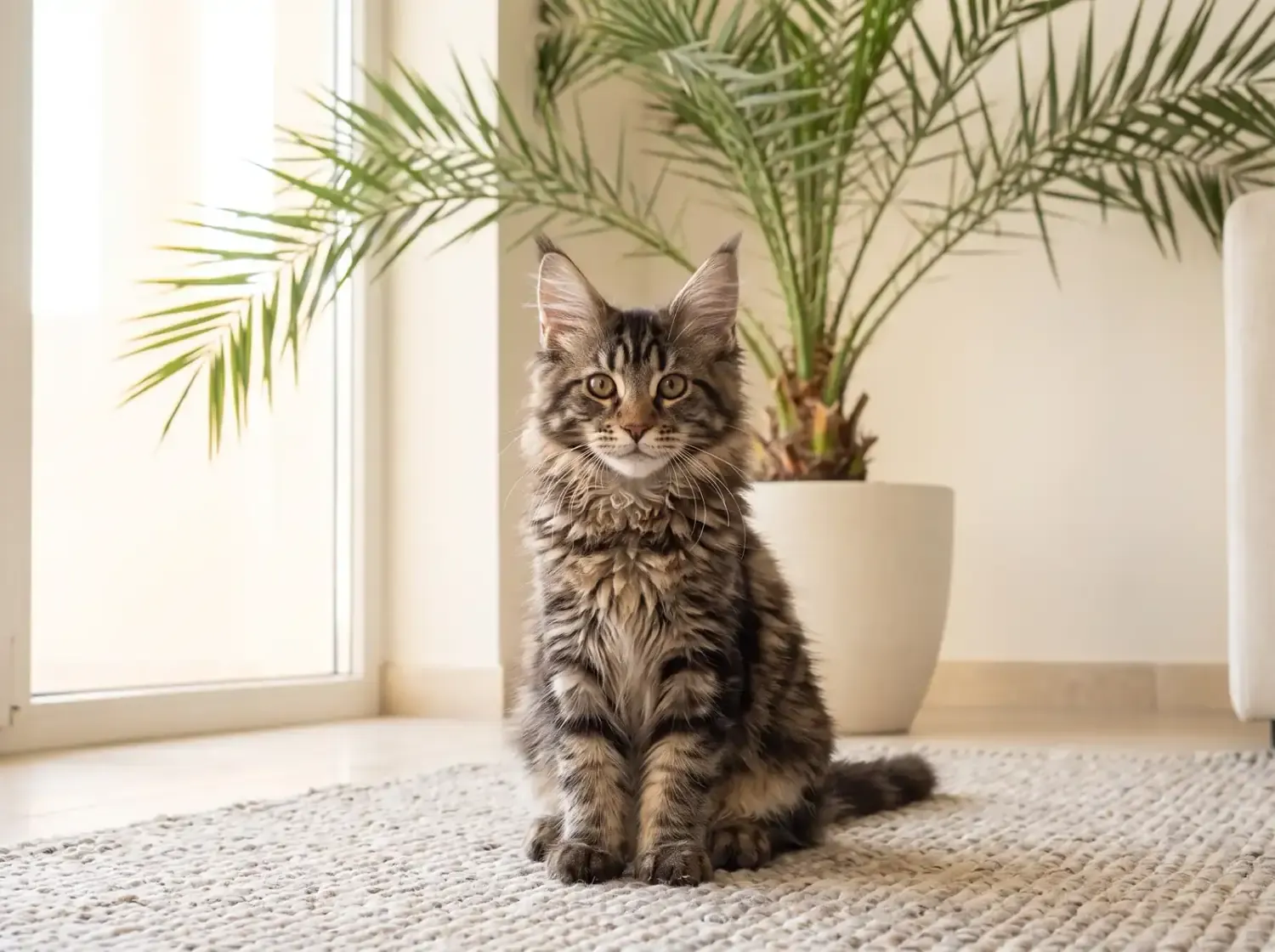
Maine Coon in Dubai, a brown tabby kitten sitting on a wool rug beside a potted date palm

Types of Maine Coon

One breed, many looks

There is one Maine Coon breed. What people call types are really colour, coat pattern and size, and males grow bigger than females. A pedigree kitten comes with registration papers naming both parents, which is where your questions about their health start.

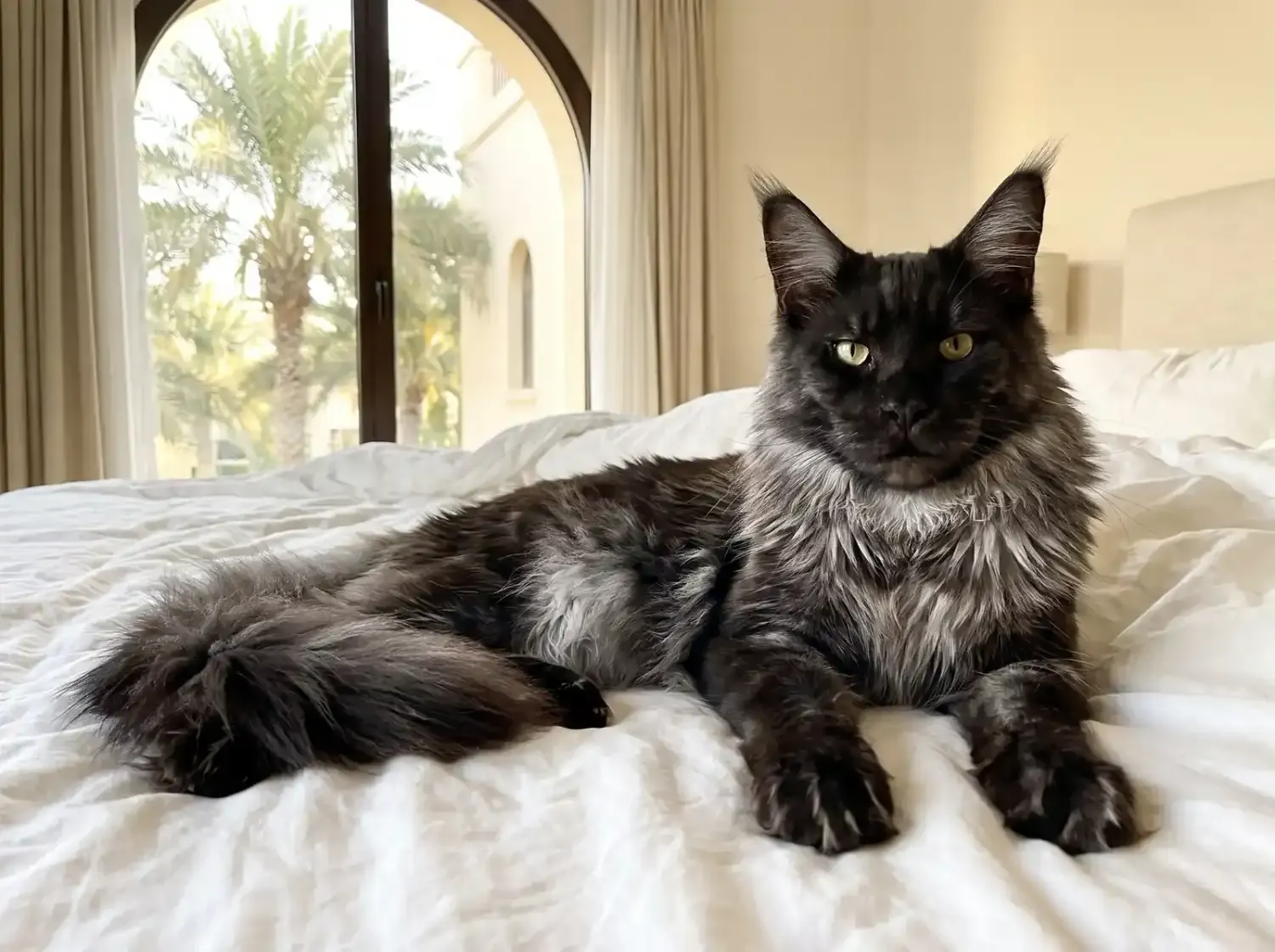
Maine Coon in Dubai, a black smoke adult lying on white linen bedding, palms through an arched window

Colours

From brown tabby to black smoke

Maine Coons come in most colours and patterns, from the brown tabby of the old farm cats to silver, black smoke and white. Whatever the colour, the ruff, the tufted ears and the long tail come with it.

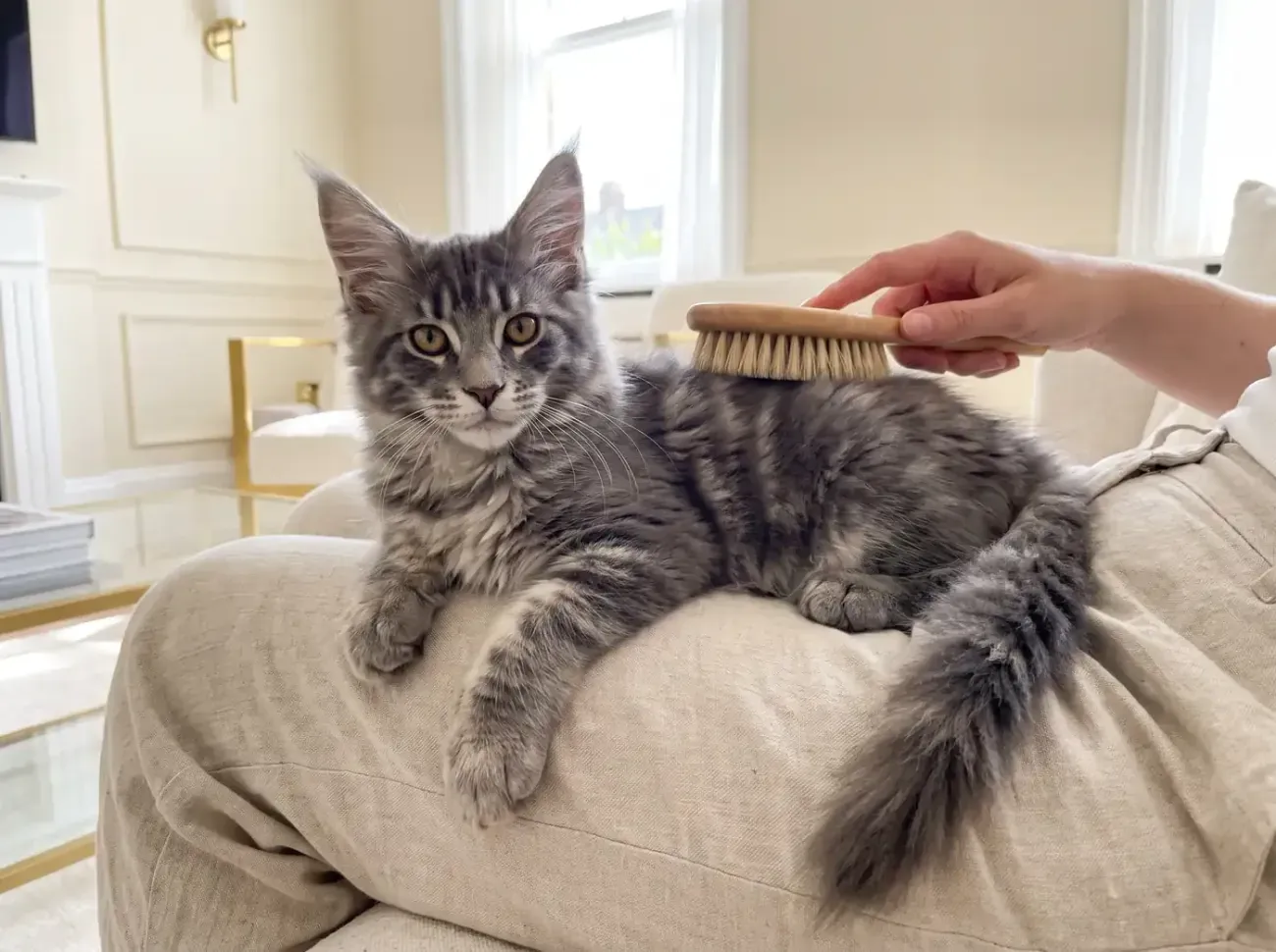
Maine Coon, a blue tabby kitten lying on a lap while a hand brushes its back

The first six months

Caring for a Maine Coon kitten

Their full vaccination course, microchip and Dubai Municipality registration come first, and their vet listens to their heart from the first visit. Start a minute of brushing a day and some wet food now, while they will take to anything.

Kitten health, 0 to 6 months
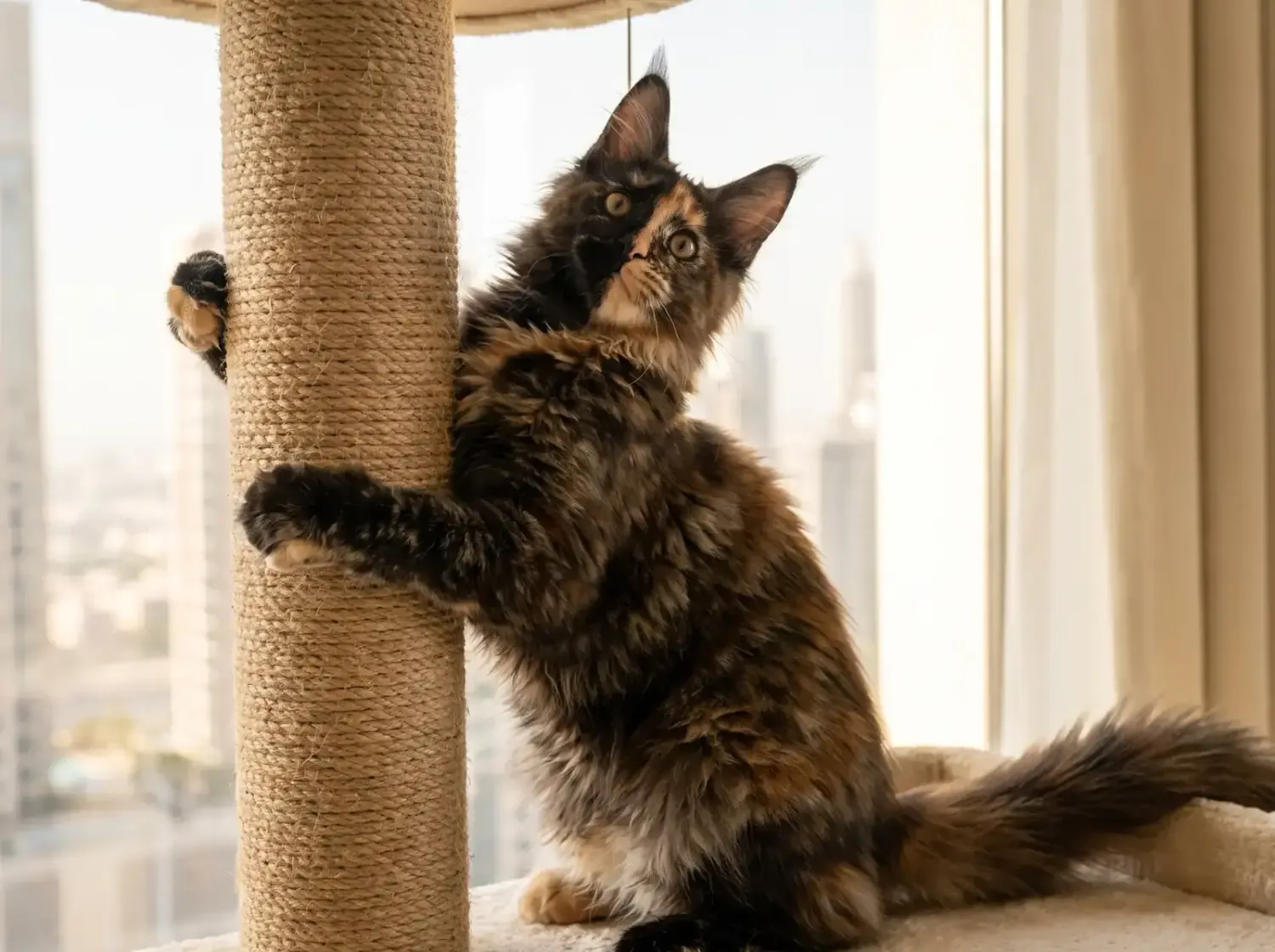
Maine Coon in Dubai, a tortoiseshell kitten climbing a sisal cat tree post, the city through the window

Getting the home ready

A big tray and a heavy cat tree

Buy for the cat they will be at four: a long litter tray with a low entry, a cat tree with a broad base that does not rock, and a cool tiled floor to stretch out on. A kitten grows into all of it.

Ten things that make their life better
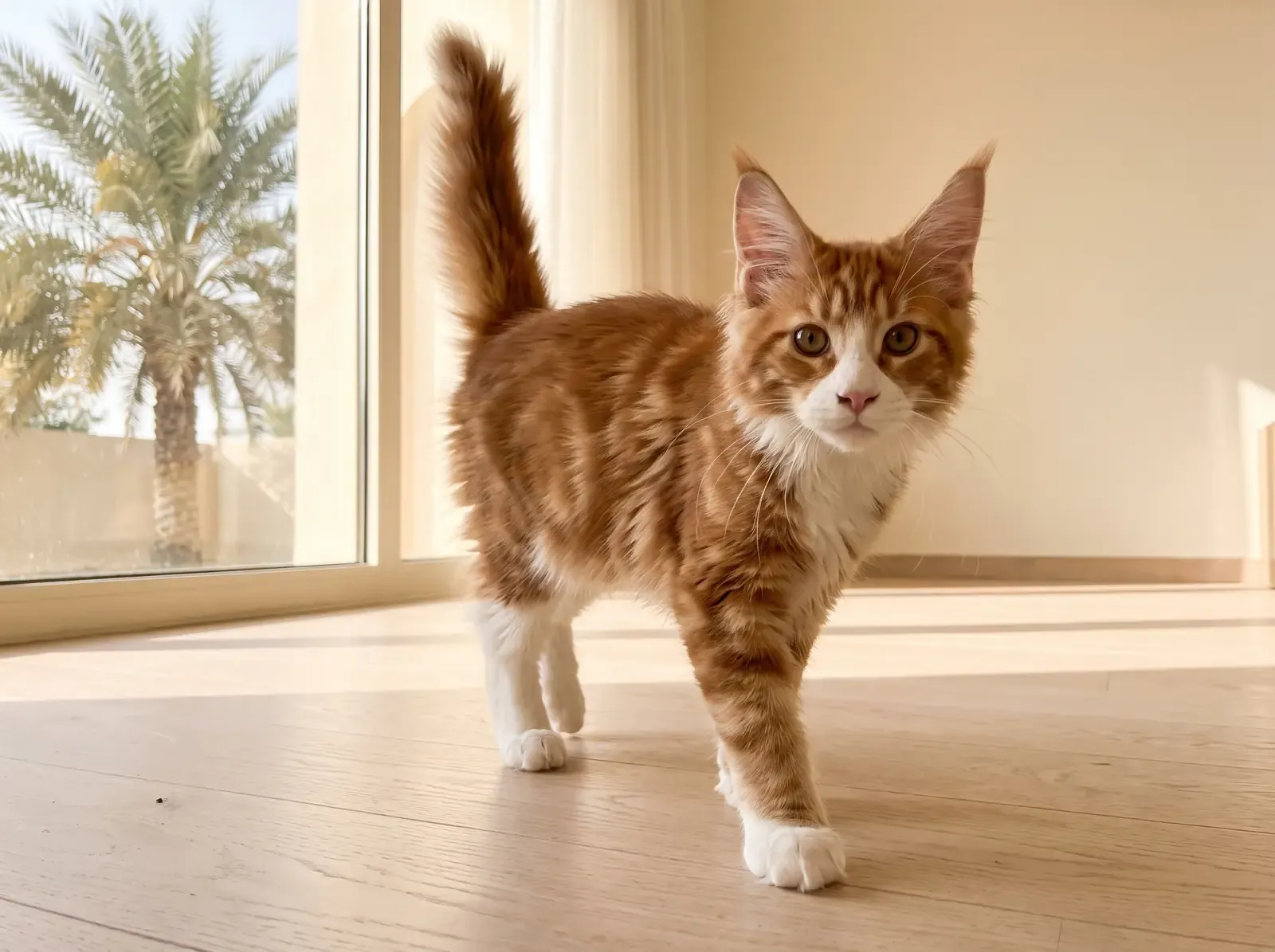
Maine Coon in Dubai, a red tabby and white kitten walking across a sunlit timber floor, a palm outside

Before you commit

Ask about the parents' hearts and hips

Heart disease, hip problems and Spinal Muscular Atrophy (a gene fault that weakens the back legs) can all run in Maine Coon families. Ask the breeder about both parents' health, and watch the kitten walk: a wobble in the back legs is not clumsiness.

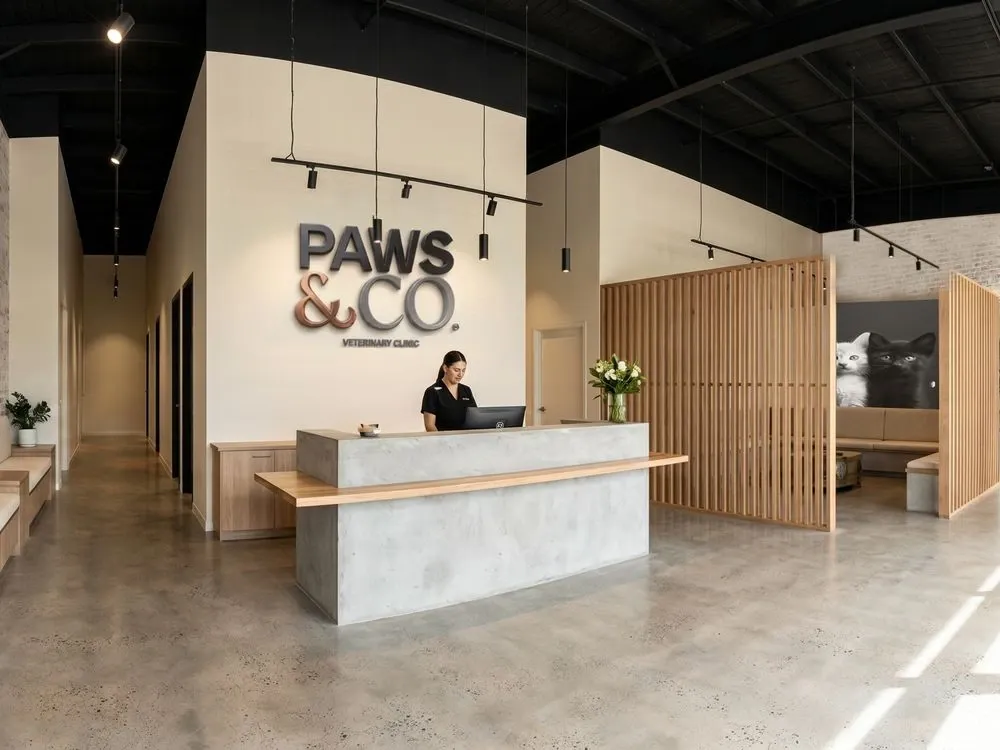
The reception of a Paws & Co clinic, with long cream benches and a stone reception desk

Before the clinics open

Join the founding families

AED 1,999 of essential care for AED 199. No payment now.

When to see a vet

When it is not behaviour.

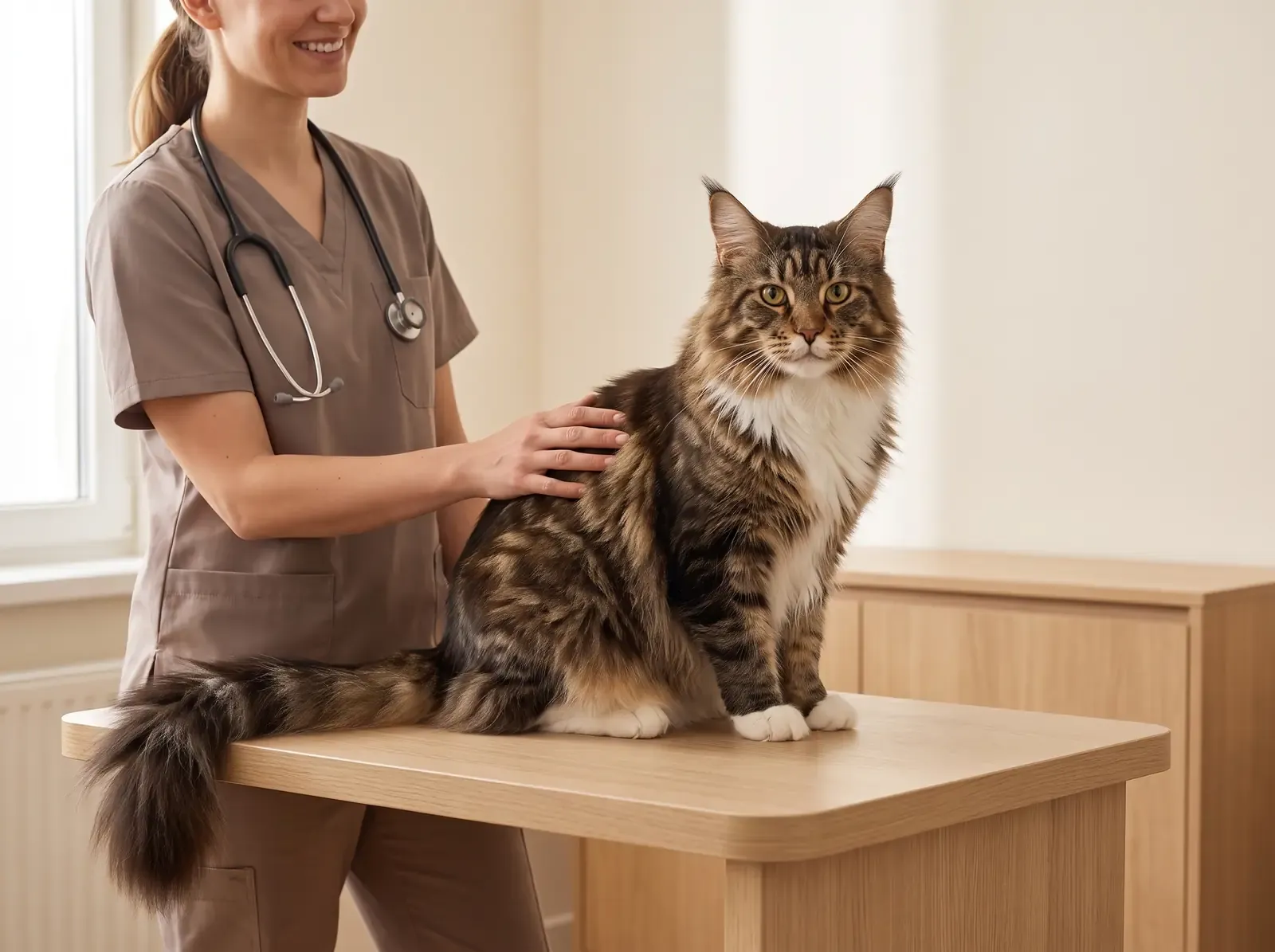
Maine Coon, a large brown tabby and white cat on a consultation table, a smiling vet in taupe scrubs beside it

Some of this is not a behaviour problem, and treating it like one wastes time your cat may not have. If they cry or soil the house when you are away, if they hiss, swat or bite when handled, if they are terrified of visitors or the carrier to the point of panic, or if anything about them changes suddenly at any age, contact your vet the same day. A tip from a website, ours included, is not the answer. If it cannot wait, contact your nearest emergency vet now.

With a Maine Coon, watch their breathing and their back legs. Their heart can show in their breathing. Fast or shallow breathing while resting should be discussed with your vet immediately, within the same day. If they breathe with their mouth open or suddenly drag their back legs, contact your vet now. A young kitten who wobbles on their back legs may have Spinal Muscular Atrophy (a gene fault that weakens the back legs), and it is not clumsiness. An adult who stops jumping may be sore in the hips.

He'll still want the air conditioning more than you do. If his breathing speeds up while he sleeps, call your vet.

Maine Coon history

Before they were yours.

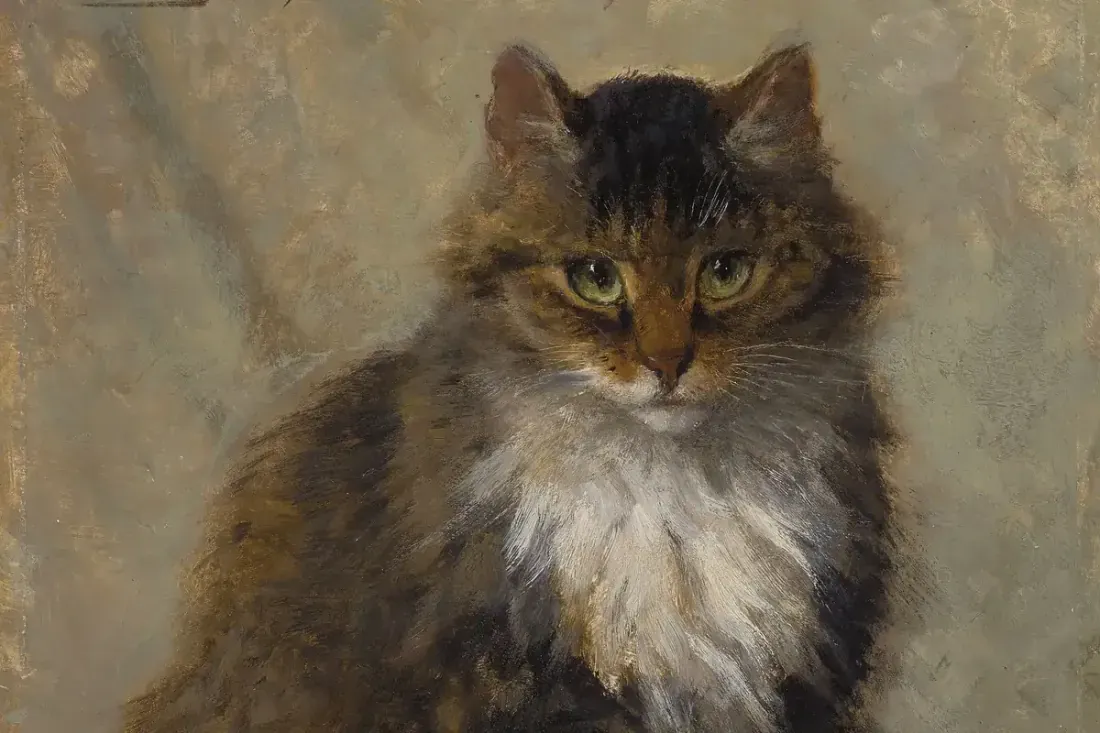
  1. Maine Coon history, a painting of a shaggy brown tabby with a white ruff and green eyes, 1894
    A long-haired brown tabby, painted by Henriëtte Ronner-Knip in 1894 and catalogued as a Maine Coon.

    1700s and 1800s

    New England farms and ports

    Nobody knows exactly how long-haired cats reached Maine. The likeliest story is that they came ashore from ships and bred with local cats. The raccoon story is folklore: the two cannot interbreed.

    What they still carrySize, a heavy coat that sheds water, tufted paws and a long tail, all shaped by Maine winters.

  2. Maine Coon history, Cosey, a brown tabby wearing a prize rosette, New York, 1895
    Cosey, the brown tabby Maine Coon who won the Madison Square Garden show in New York, May 1895.

    May 1895

    Cosey wins in New York

    Farmers showed their best cats at local fairs. In May 1895 a brown tabby Maine Coon called Cosey won the first major American cat show, at Madison Square Garden.

    What they still carryThe look was fixed here. The working cat underneath was not changed.

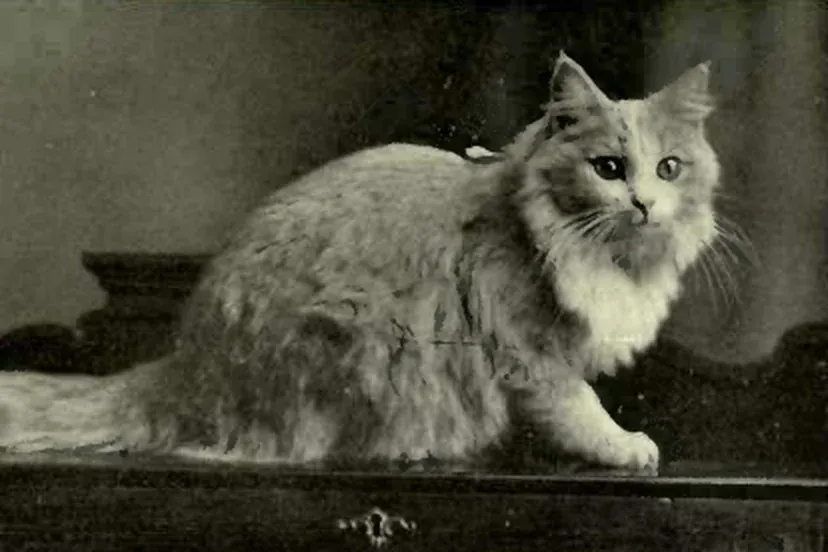
  3. Maine Coon history, Tobey, a long-haired Maine cat with a plumed tail lying on a cabinet, 1903
    Tobey, a Maine cat, from The Book of the Cat, 1903.

    1900s to 1950s

    Out of fashion

    Persians and other imported long-hairs pushed the Maine Coon out of the show ring. Breed clubs, including the Central Maine Cat Club in 1953, kept it going.

    What they still carryA breed that survived as working cats, not show cats.

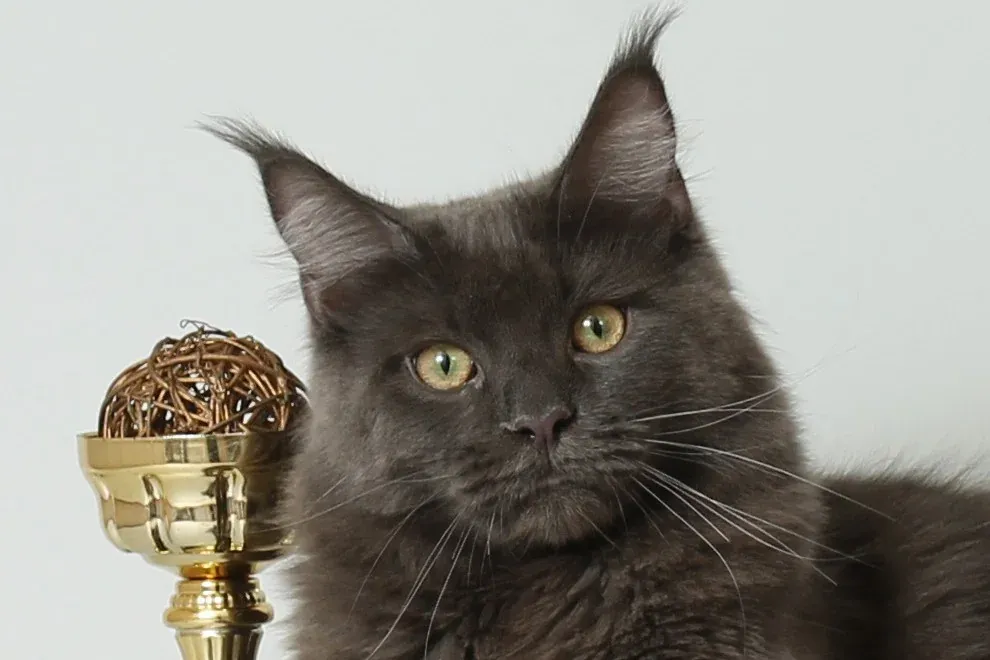
  4. Maine Coon history, a blue Maine Coon with tufted ears lying beside a gold show trophy, 2013
    A blue Maine Coon with a show trophy, 2013. Photo: Kun-cats, CC BY-SA 4.0, via Wikimedia Commons (cropped).

    1976 and 1985

    Recognised

    The Cat Fanciers' Association accepted the Maine Coon for championship in 1976, and in 1985 Maine made it the official state cat.

    What they still carryA closed pedigree, and with it the heart, hip and spinal conditions on their health record.

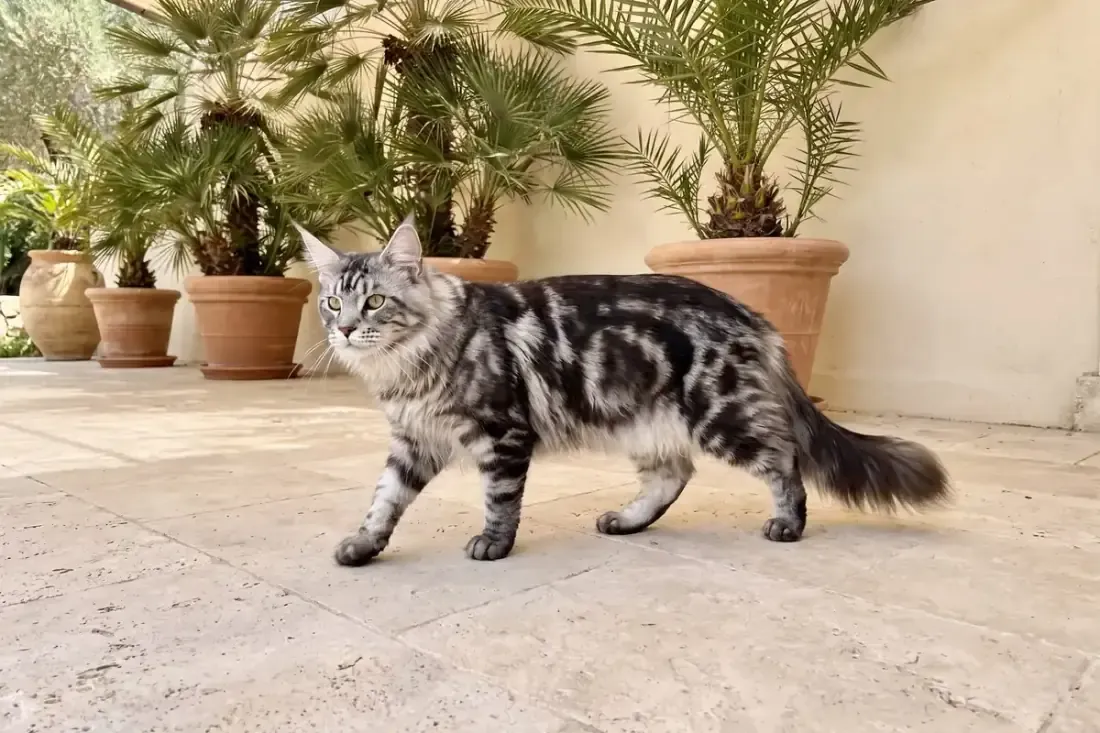
  5. Maine Coon history, the breed today, a silver tabby adult on a shaded villa terrace, Dubai, 2026
    A Maine Coon today.

    Today

    Indoors in the UAE

    A popular pedigree here, kept indoors, in air conditioning.

    What they still carryA barn cat built for snow, with a coat they cannot keep clear alone and a weight their fur hides.

Maine Coon questions

The ones you type at midnight.

Most of these get asked late at night, by someone watching their cat and not sure what they are seeing.

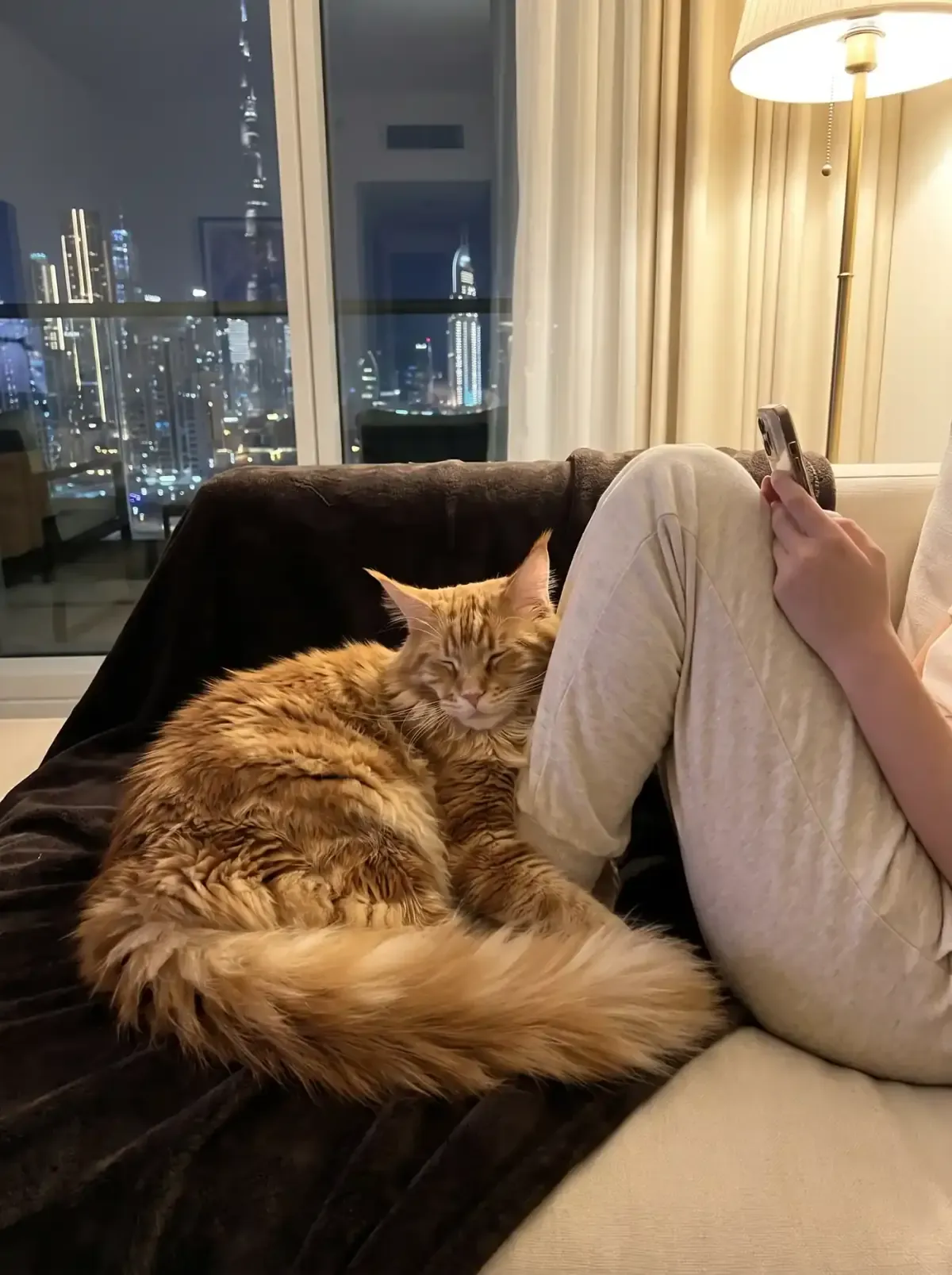
Maine Coon in Dubai, a ginger cat asleep against a knee on a dark throw at night, the skyline lit up behind
How big do Maine Coon cats get?

Maine Coons usually weigh 4.5 to 9 kg, and males are the bigger ones. They mature slowly, over three to four years, so a two-year-old may still be filling out.

How long do Maine Coon cats live?

A Maine Coon typically lives 12 to 15 years. Their heart, hips and kidneys are the ones to watch along the way.

Are Maine Coon cats friendly?

Yes. Maine Coons are famously sociable: many follow you from room to room, come when called, play fetch, and chirp or trill instead of miaowing.

Do Maine Coons shed a lot?

Maine Coons shed heavily, especially in spring. Comb them at least twice a week to keep knots away, working behind the ears, under the front legs and on the belly.

Can a Maine Coon cope with the heat in Dubai?

A Maine Coon lives well in Dubai, indoors. Their coat was made for snow, so keep them in air conditioning, even when you go out, and give them a cool floor and plenty of fresh water.

What health problems do Maine Coons have?

Maine Coons are most prone to Hypertrophic Cardiomyopathy (HCM, a thickened heart muscle) and Hip Dysplasia (a poorly fitting hip joint), from kittenhood. Later, their kidneys, joints and thyroid join the list.

Where do Maine Coon cats come from?

Maine Coons come from the farms and ports of north-eastern America, where they were kept for the rats. The story that they are part raccoon is folklore: cats and raccoons cannot breed.

How do I care for a Maine Coon kitten?

Start a Maine Coon kitten on a minute of brushing a day, some wet food and a carrier left out as a bed. Buy the adult-size tray now, and expect their vet to listen to their heart from the first visit.

Worried about them? Contact your vet today.