We’re hiring people who love them like we do. Join us careers@pawsandco.comSee open roles
UAE Government Licensed MOCCAE
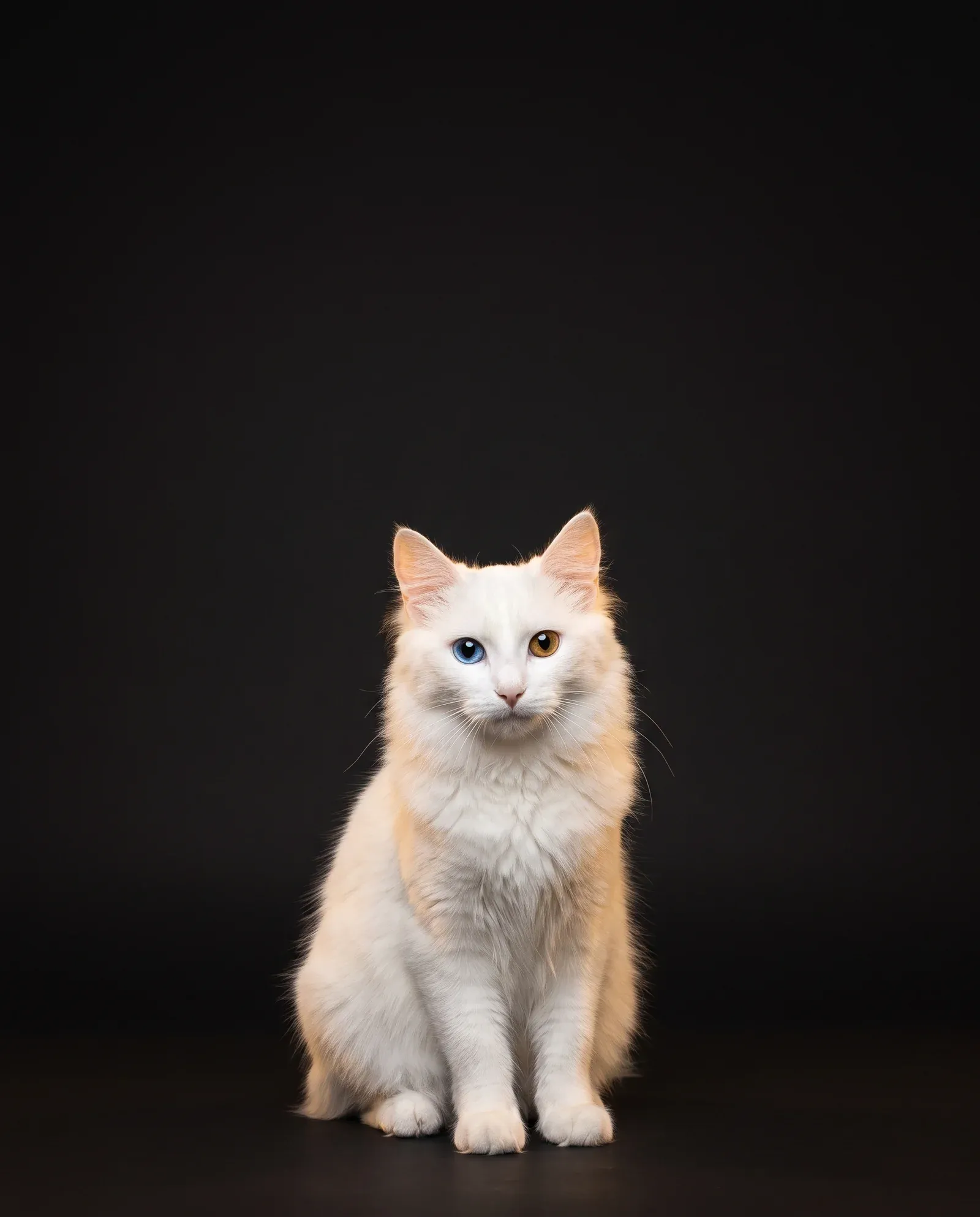
Turkish Angora in Dubai, studio portrait of a calm white adult with odd eyes, sitting

Breed guide · Cats

Turkish Angora

She reads every email I write, from the keyboard. I type round her tail.

Lifespan
12 to 18 years
Size
Medium
Grooming
A weekly brush

Last updated 14 October 2026

Join the founding families. AED 1,999 of essential care for AED 199.

No payment now. We'll be in touch by email and WhatsApp as we open enrolment.

✓
Thank you.

We will be in touch soon to confirm.

Turkish Angora traits

What they brought with them.

Tap a card to see what is going on.

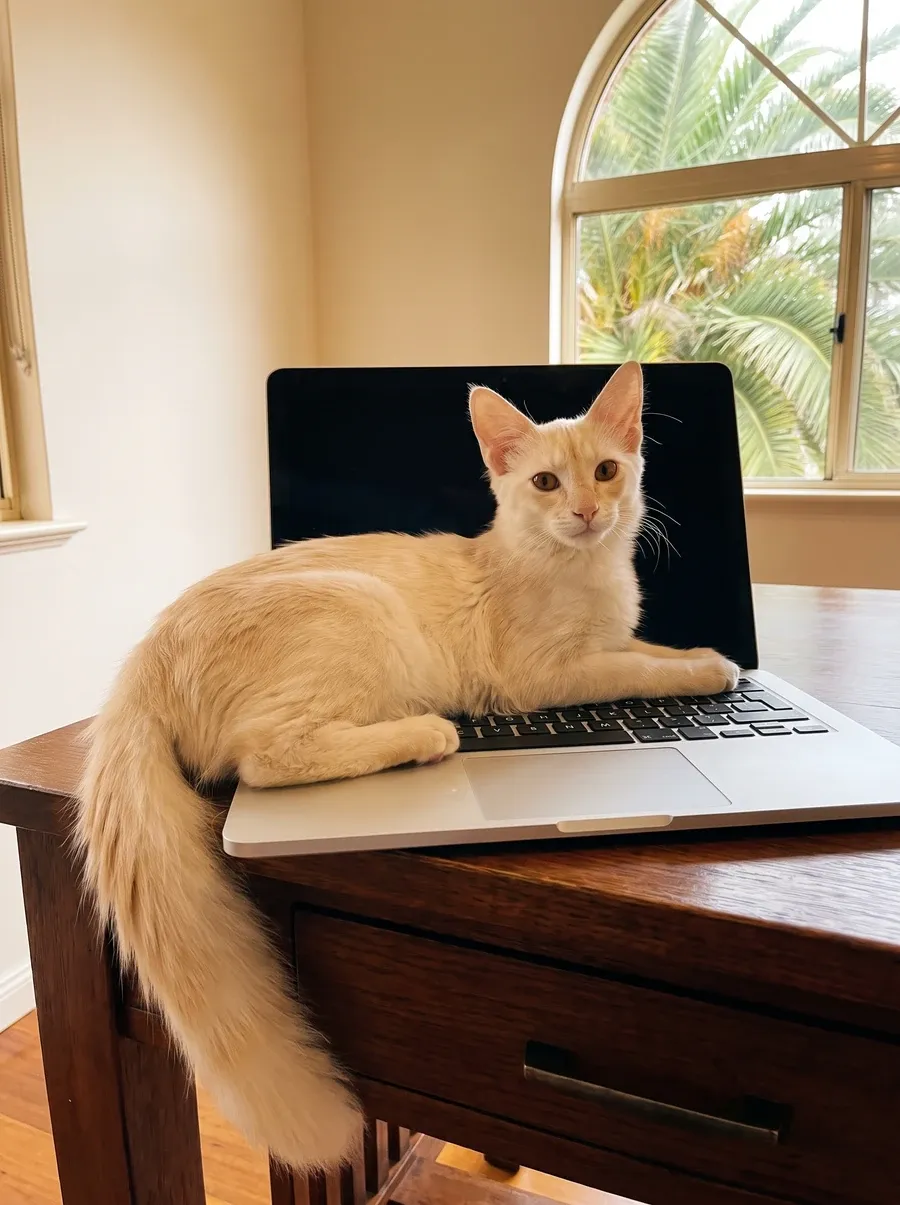
Turkish Angora in Dubai, a cream cat lying across a laptop keyboard, palms through an arched window

At home

On the keyboard, again

Across the laptop mid-email, tail over the screen.

What's going onTurkish Angoras want to be part of whatever you are doing, and at a desk that means the keyboard. A perch beside it gives them a seat that isn't your laptop.
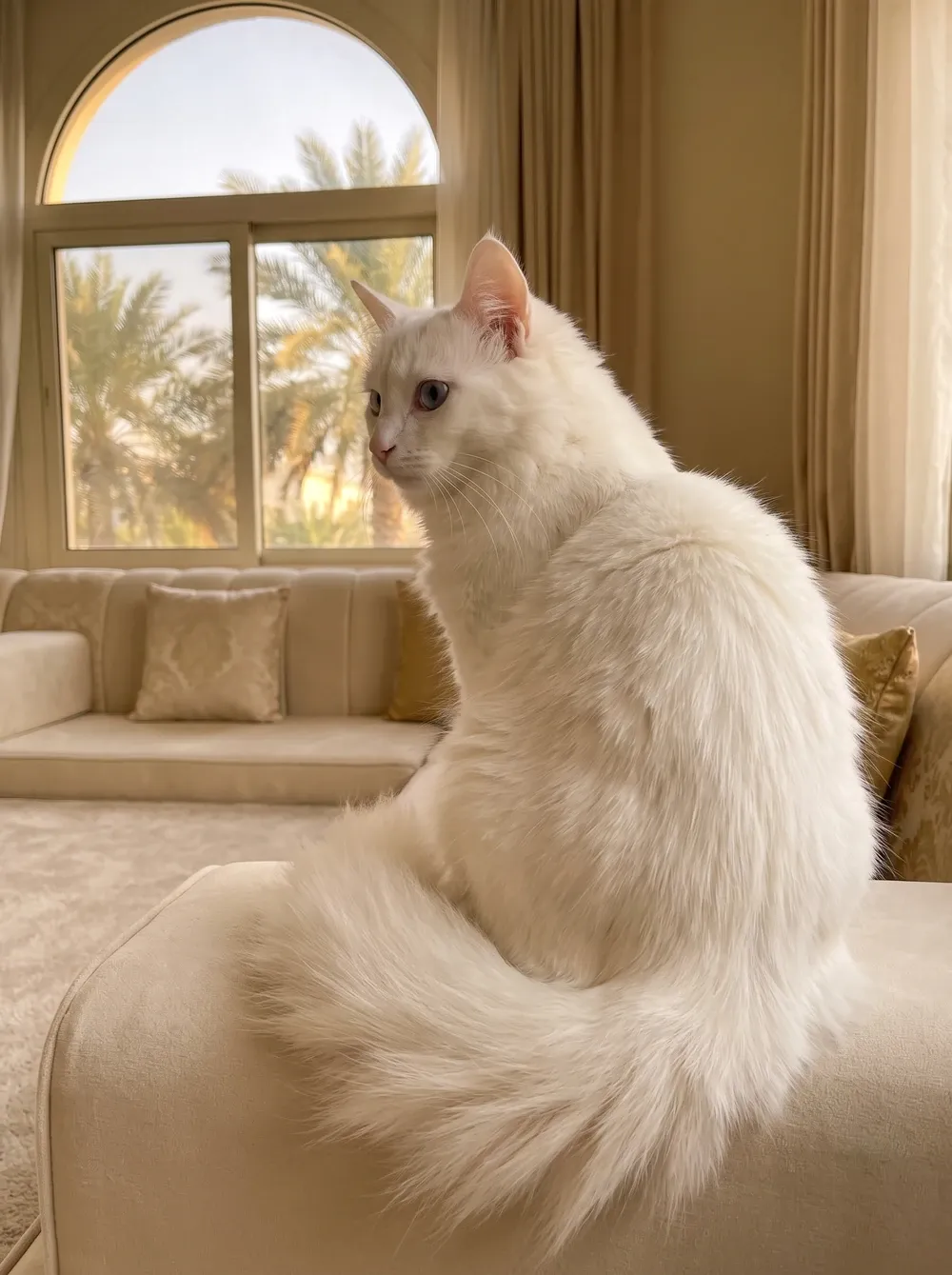
Turkish Angora in Dubai, a white cat with blue eyes on a majlis sofa, looking out at the palms

At home

They don't turn when you call

No answer to their name, then a jump when you touch them from behind.

What's going onThey may not be ignoring you. White cats with blue eyes can be born deaf, and a BAER hearing test (a painless test of whether each ear hears) as a kitten tells you for sure.

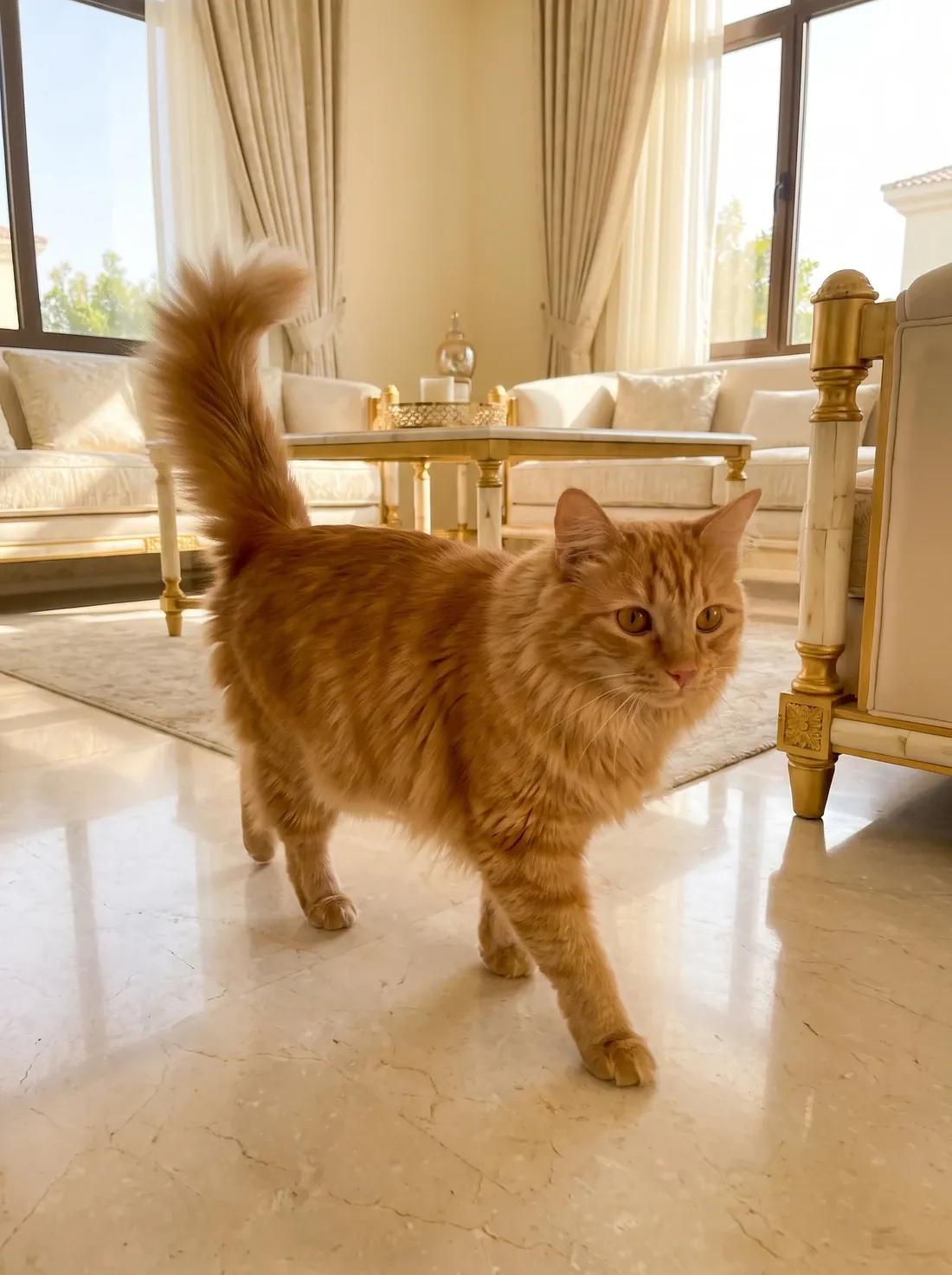
Turkish Angora, a red cat trotting across a marble living room floor, tail held high

At home

The skip in their step

A hop on a back leg for a stride or two, then walking normally again.

What's going onPatellar Luxation (PL, a slipping kneecap) can show up from kittenhood. If they skip a step or hold up a back leg for a moment, tell your vet.

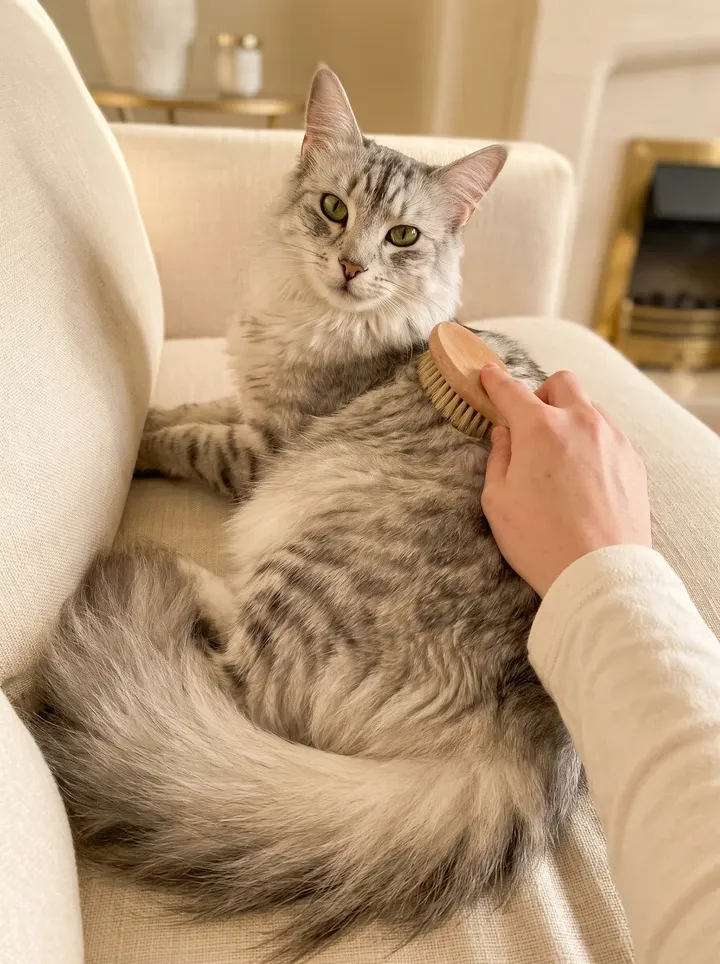
Turkish Angora, a silver tabby lying on a linen sofa while a hand brushes their back

At home

Easier coat than it looks

Long and silky, and somehow not a tangle in sight.

What's going onTheir silky coat has no heavy undercoat, so it mats less than many long coats. A weekly brush is enough.

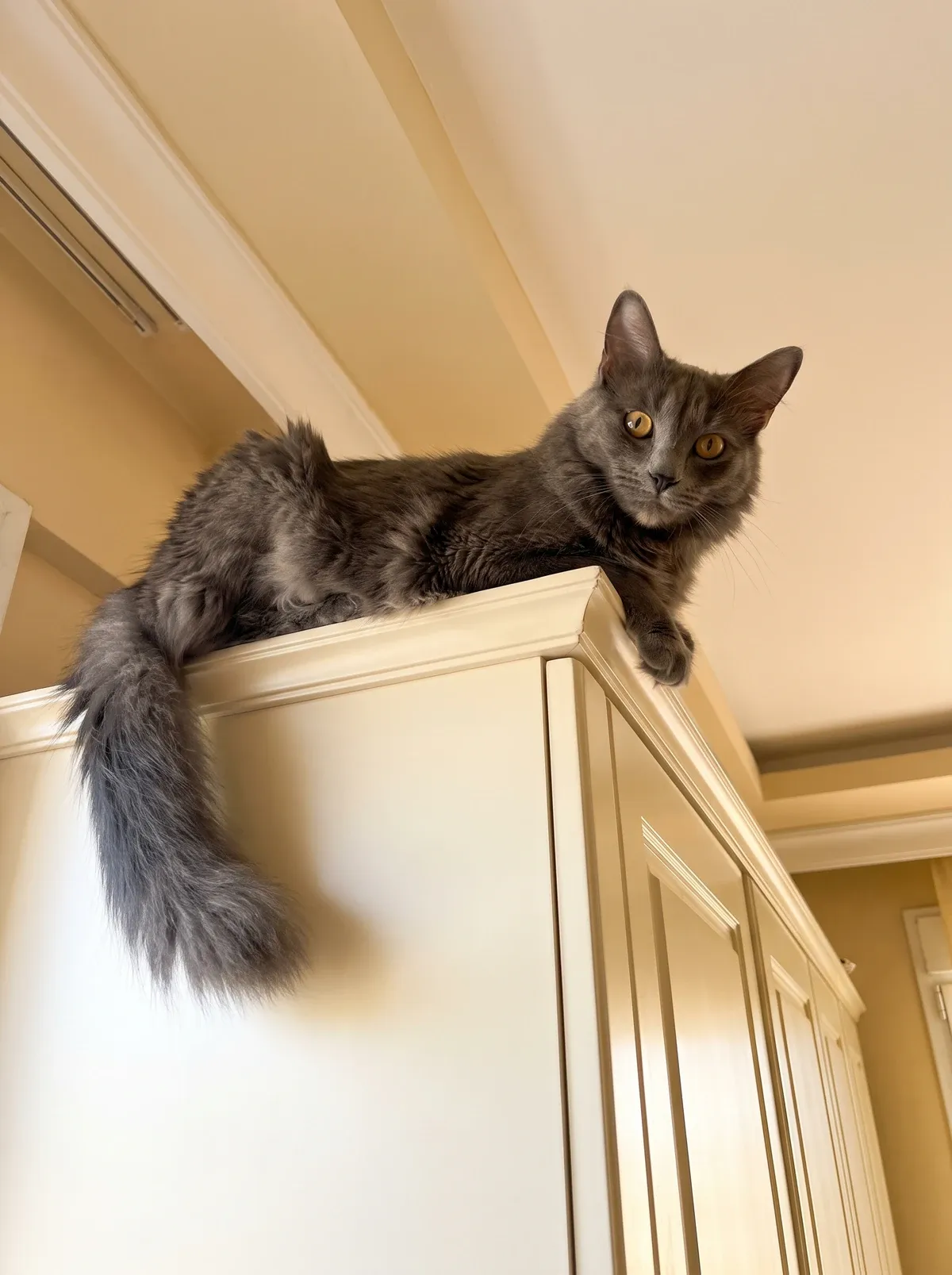
Turkish Angora, a blue cat lying on top of a tall wardrobe, looking down

At home

Top of the wardrobe by breakfast

On the fridge, the bookshelf and the curtain rail before the coffee is made.

What's going onThey are slim, athletic and always climbing. Give them height, and steps down from it, to spare their knees.

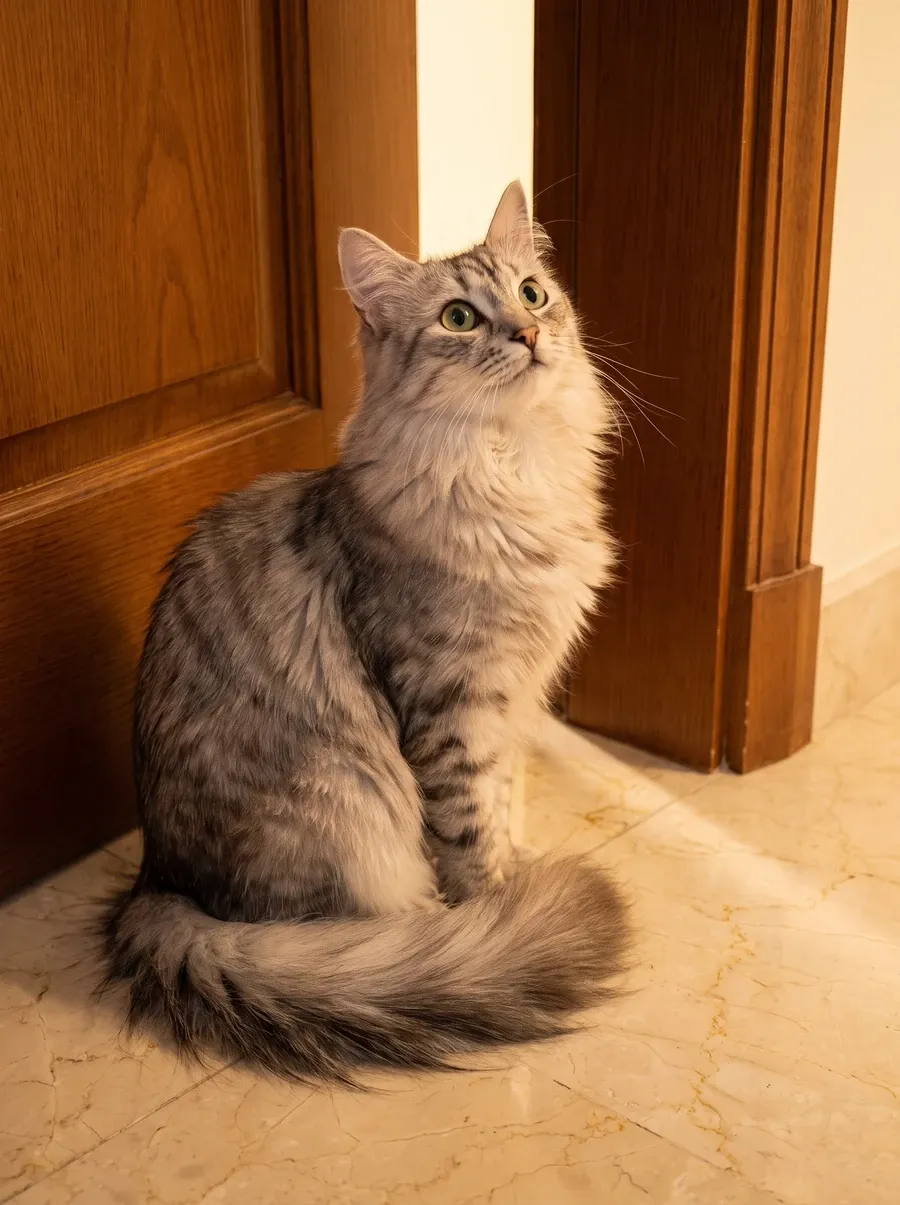
Turkish Angora, a silver tabby sitting by the front door in the evening, looking up

At home

Waiting at the door when you get home

At the door the moment you walk in, then following you from room to room.

What's going onTurkish Angoras are independent enough to spend a working day on their own. When you are home, they want to tell you all about theirs, so some play and company each evening keeps them content. Based on owners' experience: most Turkish Angoras have plenty to say.

A Turkish Angora in Dubai

The bit nobody tells you.

Their looks

Built for: Prized for a silky, often white coat.

In Dubai: A cat who looks like an ornament and behaves like a project manager.

Their day

Built for: Involved in everything.

In Dubai: Fine on their own through a working day, then wants the full story at the door.

Their climbing

Built for: Slim, athletic and always up high.

In Dubai: Knees that need a safe way down.

They want a part in everything.

Give them play and company when you are home, height to climb with a safe way down, and a hearing test if they are white with blue eyes. The ten things below are how.

Your plan is built around what a Turkish Angora is prone to at every age, from their hearing and kneecaps to their heart, and the care that goes with each one.

Join the founding families. AED 1,999 of essential care for AED 199.

Daily care for a Turkish Angora

Ten things that make their life better.

Many of them are free, and most matter at every age.

  1. They are a clever, active cat, and a laser dot never lets them catch anything.

    Every age, most of all 7 months to 2 years

    Under AED 30

    Why

    They are a clever, active cat, and a laser dot never lets them catch anything.

    What to do

    Use a wand toy and move it like prey, away from them and into cover. Five to ten minutes, two or three times a day, and one session before you leave for work. Let them catch it, then feed them.

  2. A cat this clever gets bored with a bowl, and weight becomes a risk from their mature years.

    Every age, most of all from 7 years

    Free to under AED 100

    Why

    A cat this clever gets bored with a bowl, and weight becomes a risk from their mature years.

    What to do

    Split their daily food into small meals, some in a puzzle feeder or hidden around the flat for the hours you are out. Weigh the day's food, and weigh them once a month.

  3. A curious climber goes wherever you have been, and a deaf cat cannot hear a warning.

    Every age, most of all kittens and juniors

    About AED 300 to 1,500, fitted

    Why

    A curious climber goes wherever you have been, and a deaf cat cannot hear a warning.

    What to do

    Keep them off the balcony unless it is fully enclosed with cat netting, checked for gaps. Fit restrictors or screens on every window that opens, and never leave them out there alone.

  4. Their ancestor never shared a meal or a den, however sociable they are with you.

    Every age, low-sided trays from 11 years

    From about AED 35 a tray

    Why

    Their ancestor never shared a meal or a den, however sociable they are with you.

    What to do

    For each cat, a litter tray, a water bowl, a food bowl and a scratching post, plus one spare, in different rooms. Keep trays somewhere quiet, away from food and water.

  5. They climb everything, and Patellar Luxation (PL, a slipping kneecap) can show up from kittenhood.

    Every age, most of all up to 6 years

    Free to about AED 500 for a cat treeIn your plan

    Why

    They climb everything, and Patellar Luxation (PL, a slipping kneecap) can show up from kittenhood.

    What to do

    A cat tree or wall shelves with steps between levels, so they can climb down rather than jump. A window perch, and a box or covered bed to hide in. A patellar and orthopaedic evaluation (kneecaps, joints and bones) is in your plan as a kitten, with kneecap monitoring in their junior years.

  6. A white coat needs shade from strong sun, most of all from their junior years.

    Every age, most of all 7 months to 6 years

    FreeIn your plan

    Why

    A white coat needs shade from strong sun, most of all from their junior years.

    What to do

    Keep their favourite perch out of direct afternoon sun, or fit a blind. Keep them off the balcony in the heat of the day, and give them a cool, shaded spot in every room they use. Sun protection advice is in your plan from their junior years.

  7. Cats have a weak urge to drink, and on dry food in air conditioning they get too little. Kidney disease becomes a risk from their senior years.

    Every age, most of all from 11 years

    Under AED 250 for a fountain

    Why

    Cats have a weak urge to drink, and on dry food in air conditioning they get too little. Kidney disease becomes a risk from their senior years.

    What to do

    Some wet food every day. Two or three wide, shallow water bowls away from their food and their tray, washed daily. If they like the tap, try a fountain.

  8. Cats hide illness, and the tray shows it first.

    Every age

    FreeIn your plan

    Why

    Cats hide illness, and the tray shows it first.

    What to do

    Scoop daily and notice the number and size of the clumps. Call your vet if they go more often than usual or pass blood. A male cat straining, crying or going in and out of the tray with little or nothing coming out may have a blocked bladder. That is an emergency: contact your vet now. If a female cat is straining, contact your vet the same day. A urinalysis (a urine test) is in your plan from their junior years.

  9. Deafness in white, blue-eyed cats is there from birth, so it can be tested for in kittenhood.

    Every age, test as a kitten

    FreeIn your plan

    Why

    Deafness in white, blue-eyed cats is there from birth, so it can be tested for in kittenhood.

    What to do

    If they are white with blue or odd eyes, a BAER hearing test (a painless test of whether each ear hears) is in your plan as a kitten. If they are deaf, approach where they can see you, tap the floor before you touch them, and keep them indoors for life. Leave the carrier out as furniture either way, so vet trips start calmly.

  10. Dental disease is a risk from their junior years, and cats keep eating with sore teeth.

    Every age, start as a kitten

    Under AED 30 for a finger brush and toothpasteIn your plan

    Why

    Dental disease is a risk from their junior years, and cats keep eating with sore teeth.

    What to do

    Lift their lip and look at their teeth and gums. Brush a few seconds at a time with cat toothpaste. Tell your vet if they drop food or chew on one side. An annual dental evaluation (teeth and gum check) is in your plan from their junior years.

Five of these are in your plan. The rest you can do at home.

Join the founding families. AED 1,999 of essential care for AED 199.

Turkish Angora health by age

Their health, at every age.

In a cat, a change in behaviour is often the first sign that something is wrong. Choose their age to see what to watch for, and the care that goes with it.

Turkish Angora, an older cream cat resting on a linen armchair, eyes bright

How old are they?

Their age

Turkish Angora Kitten health

the first six months

What to watch for

  1. Congenital deafness in white blue-eyed cats
  2. Patellar Luxation (PL, a slipping kneecap)
  3. Congenital defect screening (heart murmur, cleft palate, umbilical hernia)
  4. Gastrointestinal and external parasites
  5. Gastrointestinal and upper respiratory infectious disease

The care that goes with it

  1. Core vaccinations, microchip and Dubai Municipality registration
  2. Deworming, and flea and tick prevention
  3. Growth and nutritional evaluation, and early socialisation
  4. BAER hearing test (a painless test of whether each ear hears) for white, blue-eyed cats
  5. Patellar and orthopaedic evaluation (kneecaps, joints and bones)
The full care detail
  • Core vaccination programme, microchipping and Dubai Municipality registration. Titre testing discussion where clinically appropriate; not a substitute for completing the core vaccine series
  • Deworming and external parasite prevention tailored to Dubai exposure
  • Body Condition Score (BCS, a check on whether they are the right weight), Muscle Condition Score (MCS, a check on their muscle), dental, growth and nutritional evaluation, and early socialisation
  • BAER hearing assessment (white, blue-eyed cats)
  • Patellar and orthopaedic evaluation

Their age

Turkish Angora Junior health

7 months to 2 years

What to watch for

  1. Patellar Luxation (PL, a slipping kneecap)
  2. Early presentation of Dental disease
  3. Early presentation of Congenital deafness in white blue-eyed cats
  4. Early presentation of Gastrointestinal upset
  5. Early presentation of Upper respiratory infection (cat flu)

The care that goes with it

  1. Neutering or spaying, with weight-management counselling
  2. Core vaccinations completed, and parasite control all year
  3. Annual dental evaluation, and brushing at home
  4. Baseline weight, body condition, bloods and urinalysis (a urine test)
  5. FeLV and FIV status testing (two viruses cats pass to each other)
  6. Kneecap monitoring, a hearing test for white, blue-eyed cats, and shade from strong sun
The full care detail
  • Neutering or spaying, with weight-management counselling from the day of surgery
  • Completion of the core vaccination programme and year-round parasite control
  • Annual dental evaluation and a home dental-care routine started young
  • Baseline weight, Body Condition Score (BCS, a check on whether they are the right weight) and urinalysis to set the adult reference point
  • Baseline blood work, and Feline Leukaemia Virus (FeLV, the feline leukaemia virus) and Feline Immunodeficiency Virus (FIV, the feline virus equivalent to HIV) status testing
  • Continued monitoring of Patellar Luxation (PL, a slipping kneecap)
  • BAER hearing test for white blue-eyed cats
  • Provide shaded cool resting areas
  • Limit sun exposure for white coats

Their age

Turkish Angora Prime Adult health

2 to 6 years

What to watch for

  1. Congenital deafness in white blue-eyed cats
  2. Dental disease
  3. Gastrointestinal upset
  4. Upper respiratory infection (cat flu)
  5. Patellar Luxation (PL, a slipping kneecap)

The care that goes with it

  1. Annual dental evaluation, and brushing at home
  2. Neutering or spaying, if not done yet
  3. Core vaccinations, parasite control, and diet and body condition scoring
  4. Baseline weight and urinalysis (a urine test)
  5. A hearing test for white, blue-eyed cats, and shade from strong sun
  6. Cardiac auscultation (listening to the heart) and baseline echocardiography (an ultrasound scan of the heart)
The full care detail
  • Annual dental evaluation and home dental care
  • Neutering or spaying, with weight-management counselling from the day of surgery, where it was not done at the Junior stage
  • Core vaccination and parasite control
  • Diet and body condition scoring
  • Baseline weight and urinalysis
  • Feline Leukaemia Virus (FeLV, the feline leukaemia virus) and Feline Immunodeficiency Virus (FIV, the feline virus equivalent to HIV) status testing
  • BAER hearing test for white blue-eyed cats
  • Provide shaded cool resting areas
  • Limit sun exposure for white coats
  • Cardiac auscultation and baseline echocardiography

Their age

Turkish Angora Mature Adult health

7 to 10 years

What to watch for

  1. Hypertrophic Cardiomyopathy (HCM, a thickened heart muscle)
  2. Dental and periodontal disease (gum disease)
  3. Congenital deafness (ongoing management)
  4. Obesity
  5. Skin conditions

The care that goes with it

  1. Periodic cardiac auscultation (listening to the heart) and echocardiography
  2. Professional dental care
  3. Weight and body condition monitoring
  4. Skin and coat evaluation
  5. Annual blood and urine screening
  6. Blood pressure measurement
The full care detail
  • Periodic cardiac auscultation and echocardiography
  • Professional dental care
  • Weight and body condition monitoring
  • Skin and coat evaluation
  • Annual blood and urine screening
  • Blood pressure measurement

Their age

Turkish Angora Senior health

11 to 14 years

What to watch for

  1. Hypertrophic Cardiomyopathy (HCM, a thickened heart muscle)
  2. Chronic Kidney Disease (CKD, long-term kidney failure)
  3. Hyperthyroidism (an overactive thyroid)
  4. Dental disease
  5. Degenerative joint disease (worn, painful joints)

The care that goes with it

  1. Bloods, renal panel (kidney blood tests) and urinalysis, twice a year
  2. Thyroid hormone screening
  3. Blood pressure measurement
  4. Echocardiography (an ultrasound scan of the heart) and cardiac monitoring
  5. Joint and mobility evaluation (joint and movement exam)
  6. Dental evaluation under anaesthesia
The full care detail
  • Twice-yearly bloods, renal panel and urinalysis
  • Thyroid hormone screening
  • Blood pressure measurements
  • Echocardiography and cardiac monitoring
  • Joint and mobility evaluation
  • Dental evaluation under anaesthesia

Their age

Turkish Angora Geriatric health

15 years and over

What to watch for

  1. Chronic Kidney Disease (CKD, long-term kidney failure)
  2. Hyperthyroidism (an overactive thyroid)
  3. Hypertrophic Cardiomyopathy (HCM, a thickened heart muscle)
  4. Osteoarthritis (worn, painful joints)
  5. Neoplasia (cancer and tumours)

The care that goes with it

  1. Physical examination twice a year, with weight, muscle, teeth and mobility
  2. Bloods, urinalysis (a urine test) and thyroid testing
  3. Neoplasia screening (for cancer), and any weight loss or lumps looked into
  4. Nutrition, hydration and grooming support
  5. Quality-of-life assessment, comfort care and end-of-life planning
  6. Echocardiography and blood pressure monitoring
The full care detail
  • Biannual physical examination including weight trend, Body Condition Score (BCS, a check on whether they are the right weight) and Muscle Condition Score (MCS, a check on their muscle), and dental and mobility evaluation
  • Complete Blood Count (CBC), biochemistry including renal parameters where appropriate, urinalysis including Urine Specific Gravity (USG), and total T4 according to age and risk
  • Neoplasia evaluation including lymph nodes, oral cavity, skin and subcutaneous tissues, and abdominal palpation. Investigate unexplained weight loss, appetite change, masses or lymphadenopathy
  • Nutrition, hydration and grooming support
  • Quality-of-life assessments, a tailored palliative and comfort-focused care plan, and compassionate end-of-life planning with your veterinary team, available earlier should it become clinically evident
  • Ongoing echocardiographic surveillance and blood pressure monitoring

Breed predispositions indicate an increased risk rather than certainty of disease. What is right for them always comes from their own history and an evaluation.

Getting a Turkish Angora in Dubai

Before they come home.

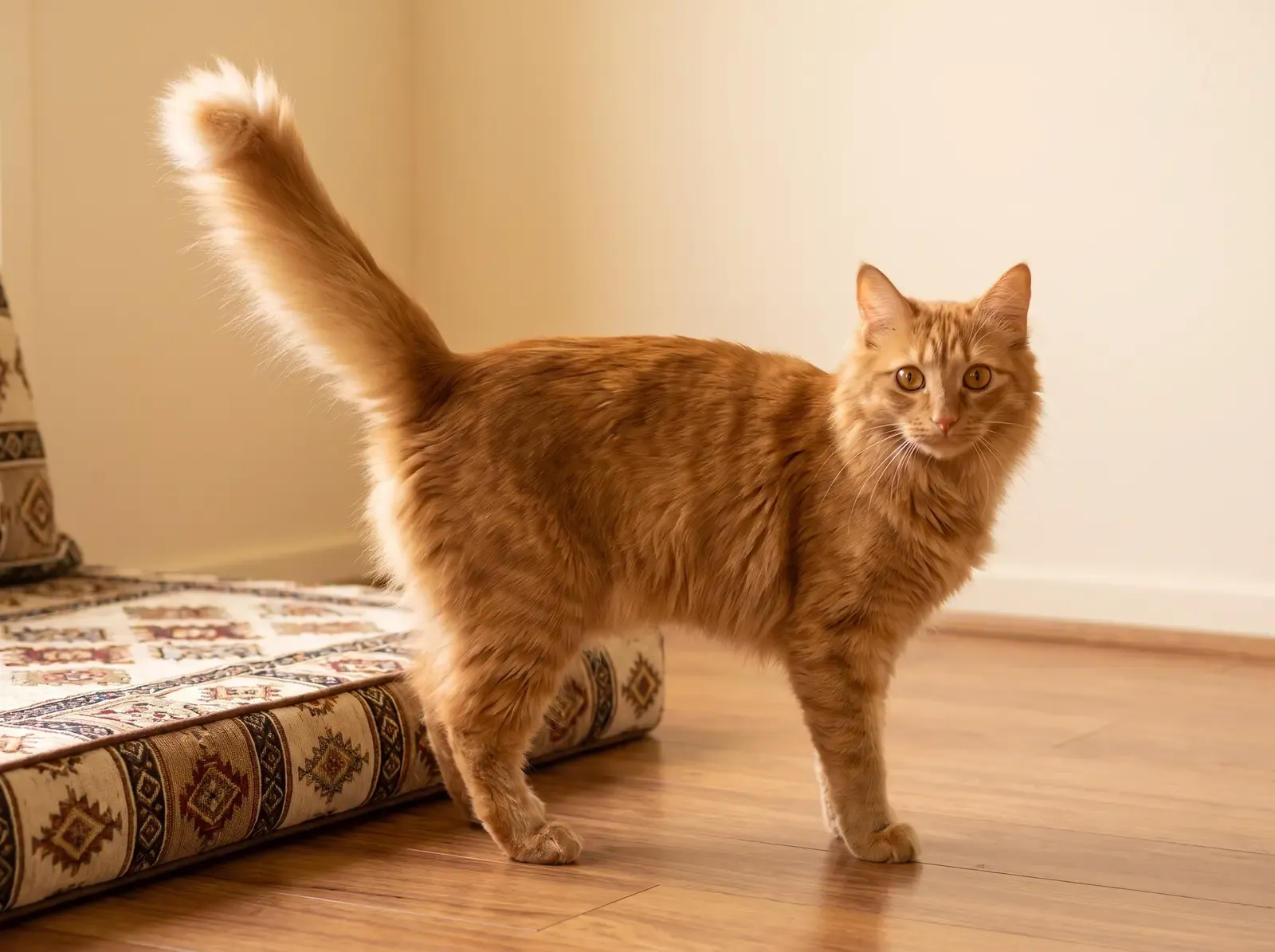
Turkish Angora, a slim red cat standing on a timber floor by a floor cushion, tail raised

Angora or Persian

Slim and silky, not round and dense

In Europe, Angoras were once crossed into Persians until the two were treated as one. The Turkish Angora you meet today was rebuilt from cats kept in Turkey: slim, fine-boned and silky, with a single coat and a plumed tail.

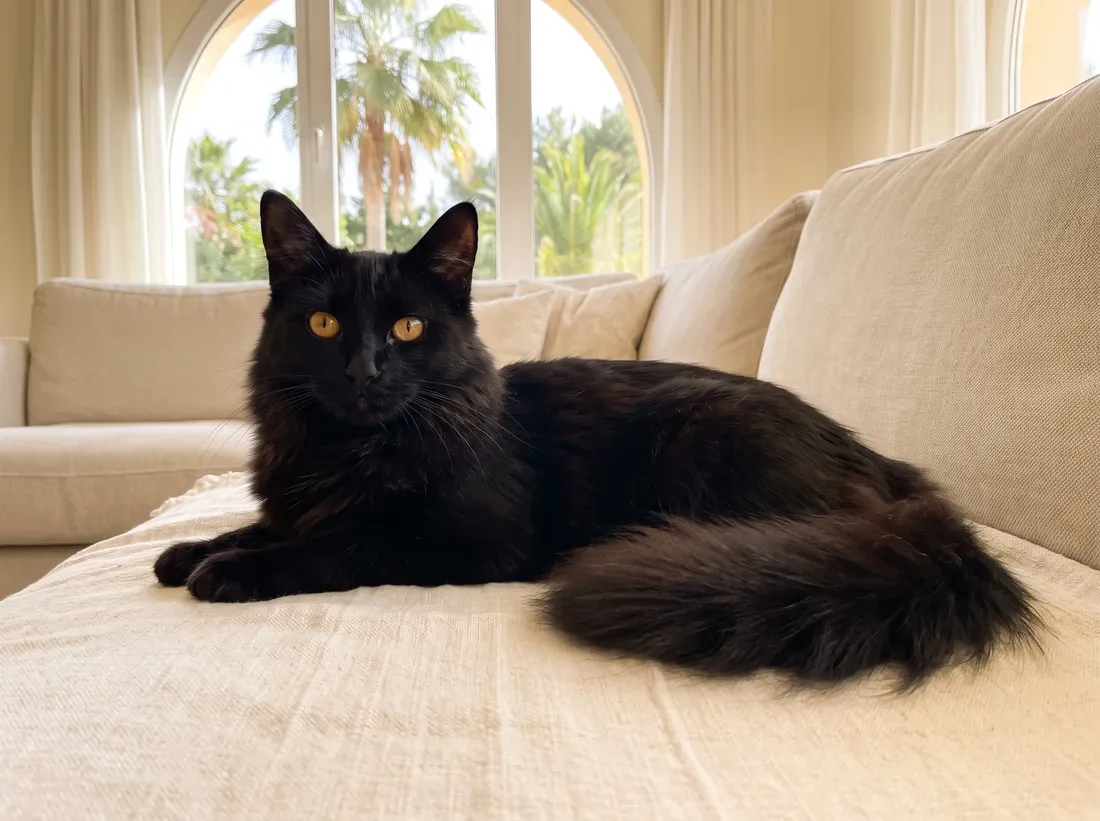
Turkish Angora in Dubai, a black cat lying on a linen throw, palms through an arched window

Colours

Best known in white

Snow white is the colour most people picture, and the one the breed was saved in. Today they come in almost every colour and pattern, from black and blue to red (ginger), cream and tabby.

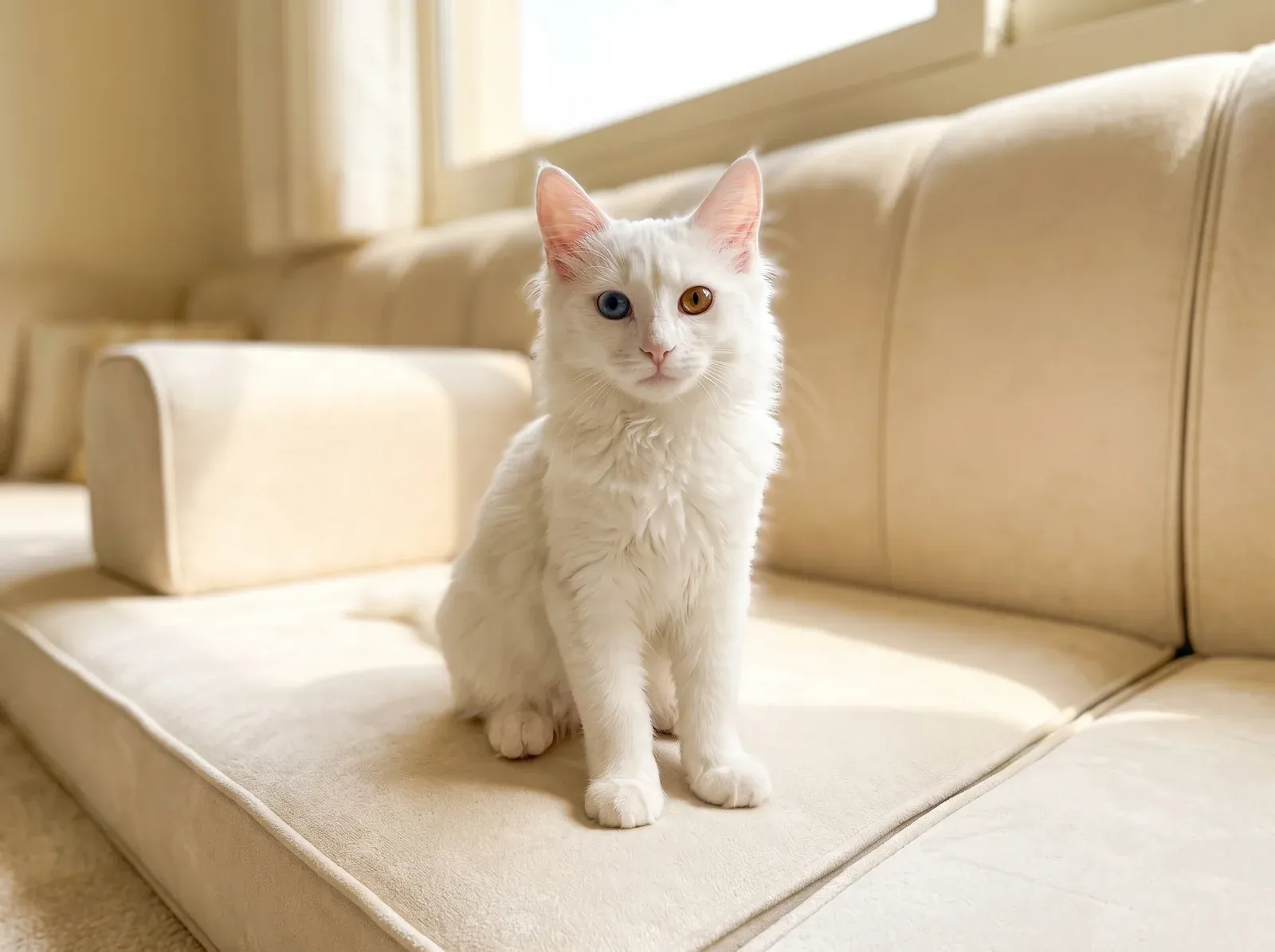
Turkish Angora, a white kitten with one blue eye and one amber eye sitting on a cream sofa

The first months

Test their hearing early

If your kitten is white with blue or odd eyes, ask about a BAER hearing test (a painless test of whether each ear hears). Deaf cats manage beautifully with a few changes at home, and it helps to know from the start.

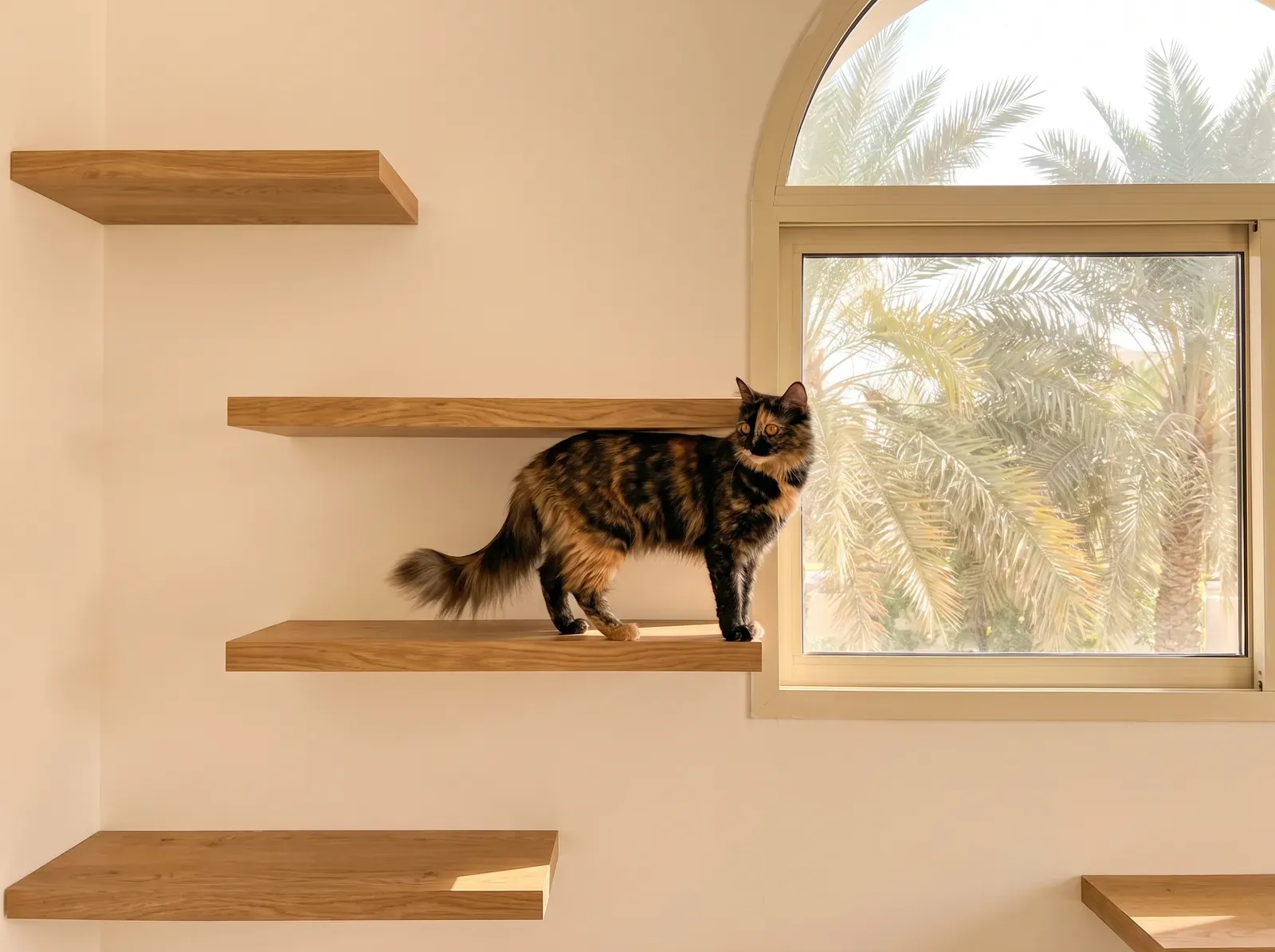
Turkish Angora in Dubai, a tortoiseshell cat on stepped wall shelves beside a window with palms

Getting the home ready

Height, with steps down

Wall shelves or a tall cat tree with steps between levels, a window perch out of the afternoon sun, and the balcony netted or kept shut. Then a puzzle feeder for the hours you are out.

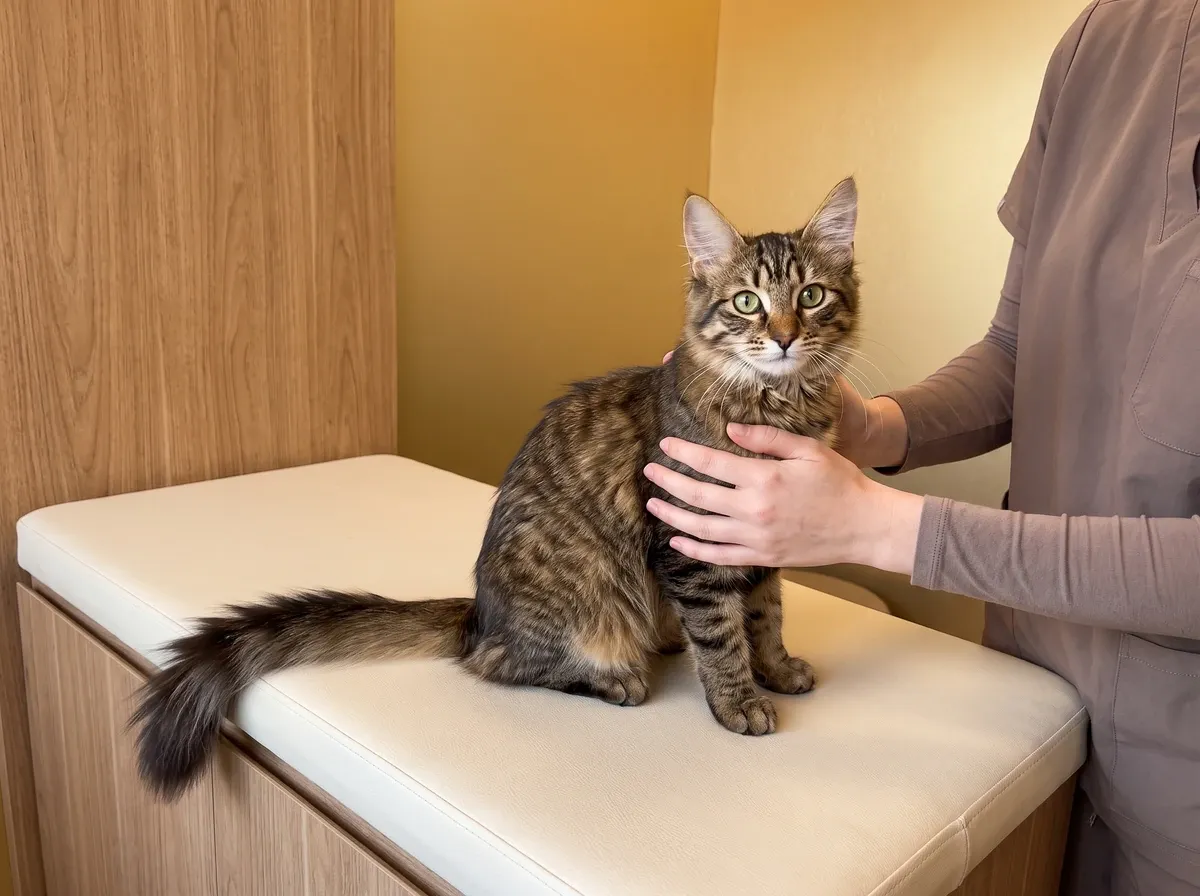
Turkish Angora, a brown tabby kitten on a consultation table, steadied by a vet's hands

Before you commit

Ask about their hearing and knees

Ask the breeder whether a white kitten has had a hearing test, and plan a knee and joint evaluation in their first months. Patellar Luxation (PL, a slipping kneecap) can show up from kittenhood.

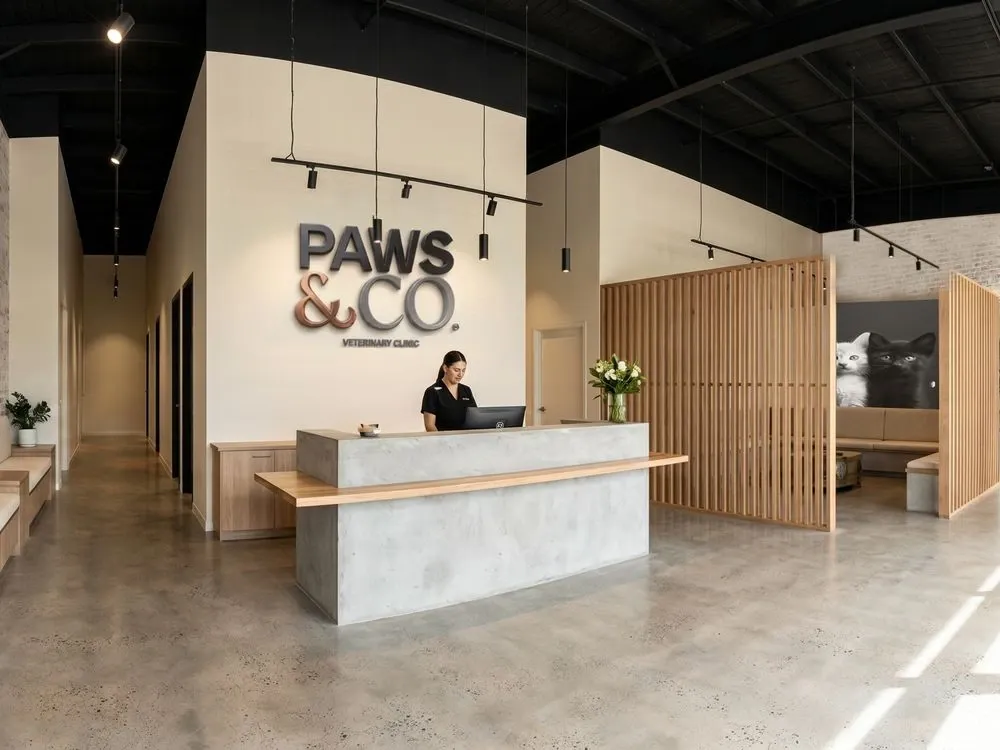
The reception of a Paws & Co clinic, with long cream benches and a stone reception desk

Before the clinics open

Join the founding families

AED 1,999 of essential care for AED 199. No payment now.

When to see a vet

When it is not behaviour.

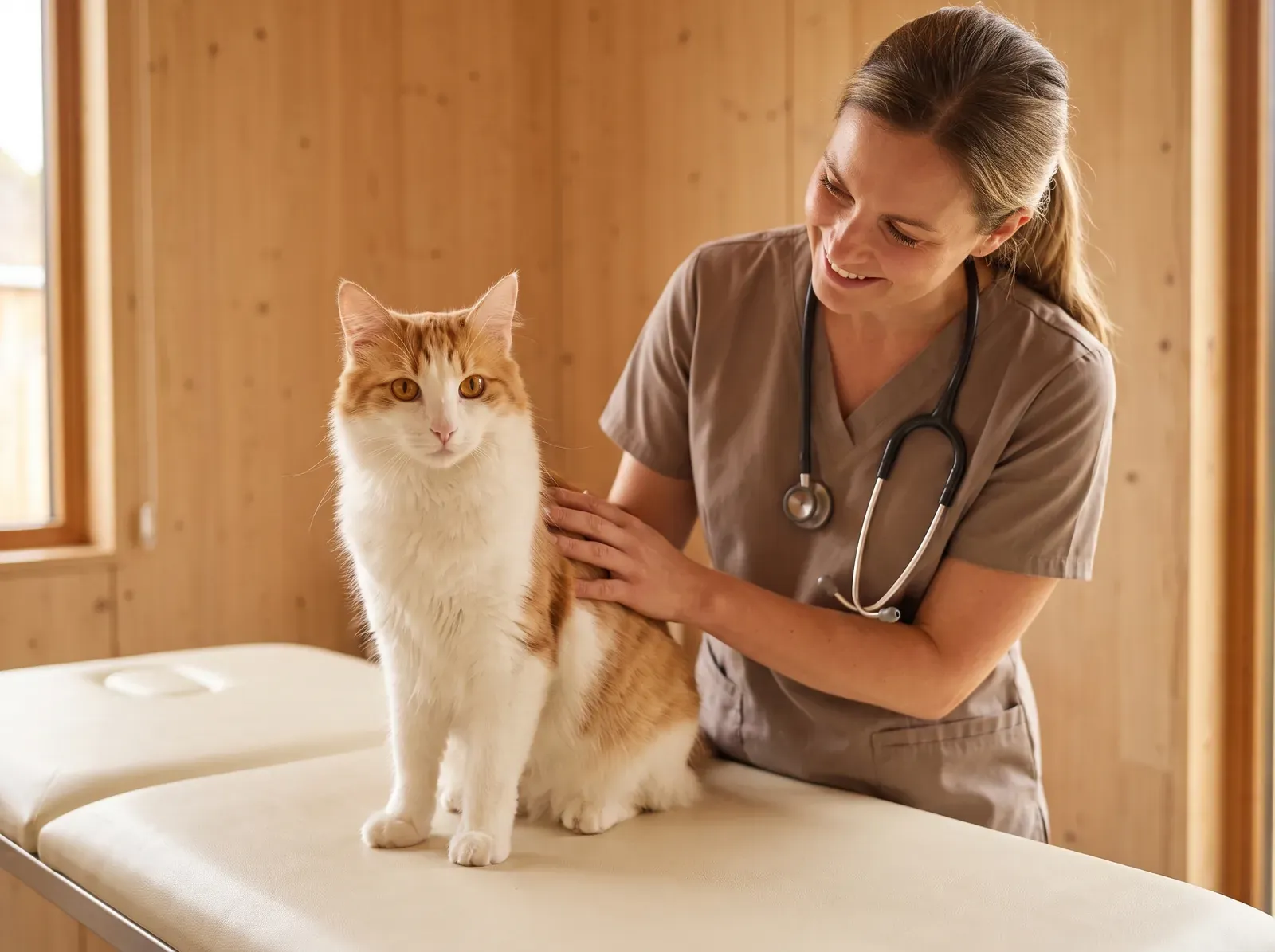
Turkish Angora, a red and white cat on a padded table, a vet in taupe scrubs resting a hand on their back

Some of this is not a behaviour problem, and treating it like one wastes time your cat may not have. If they cry or soil the house when you are away, if they hiss, swat or bite when handled, if they are terrified of visitors or the carrier to the point of panic, or if anything about them changes suddenly at any age, contact your vet the same day. A tip from a website, ours included, is not the answer. If it cannot wait, contact your nearest emergency vet now.

With an Angora, a cat who ignores you or panics when touched may simply not hear you. A cat who stops climbing or skips on a back leg may have a slipping kneecap, not a lazy streak. And an Angora who stops wanting to be involved has changed, which is a reason to contact your vet the same day. From middle age, their heart needs watching too. Fast or shallow breathing while resting should be discussed with your vet immediately, within the same day.

She'll still read your emails. If she stops coming to the desk, call your vet.

Turkish Angora history

Before they were yours.

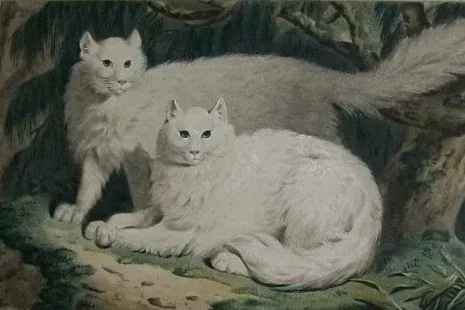
  1. Turkish Angora history, two white long-haired cats in an aquatint by Charles Catton, London, 1788
    The Angora cat, an aquatint by Charles Catton the younger, London, 1788. Public domain (cropped).

    The 1600s onwards

    Ankara and Europe

    Long-haired cats from the region around Ankara, in central Turkey, were prized by European travellers and taken home as pets.

    What they still carryA fine-boned, silky-coated, very active cat.

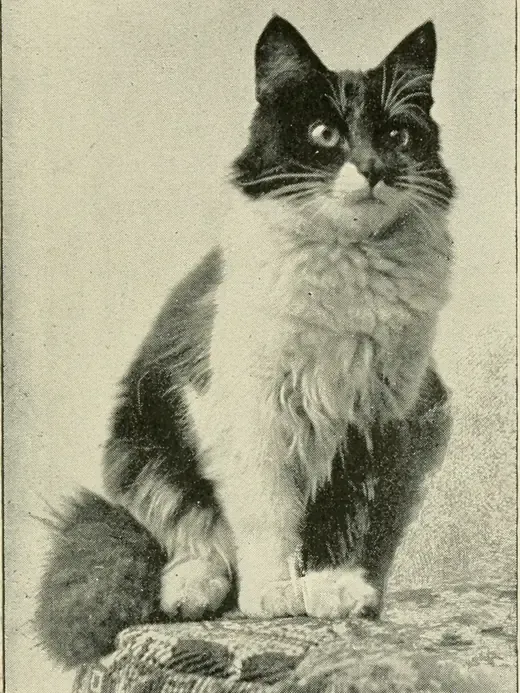
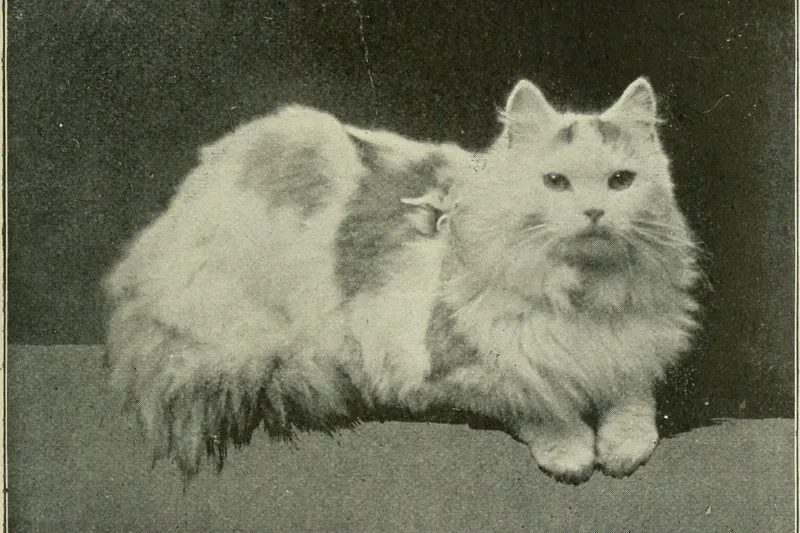
  2. Turkish Angora history, a long-haired cat lying on a bench, from a cat book, Boston, 1898
    A long-haired Angora from The Angora Cat, edited by Robert Kent James, Boston, 1898. Public domain (cropped).

    Late 1800s to 1903

    Lost in the West

    In Europe, Angoras were crossed into Persians until the two were treated as one. By 1903, a British writer on cats noted that the Angora seemed to have disappeared.

    What they still carryA breed that survived in Turkey, not in the West.

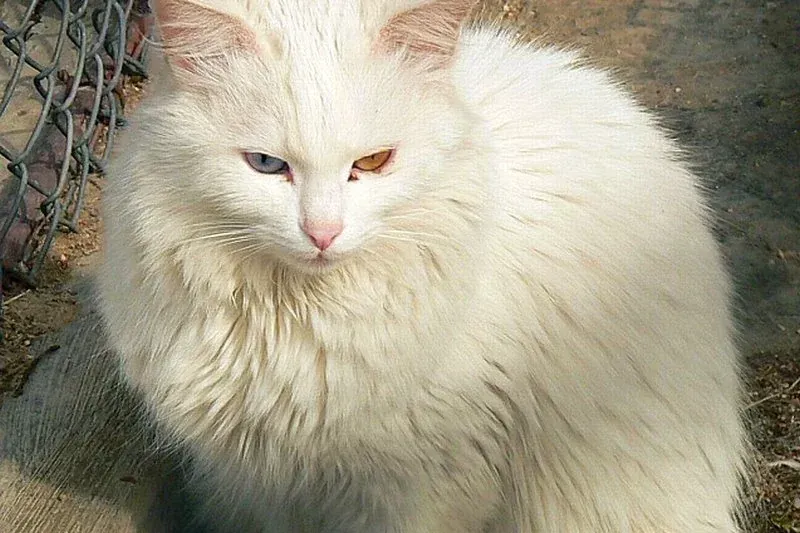
  3. Turkish Angora history, a white cat with one blue eye and one amber eye at Ankara Zoo, Turkey, 2012
    A white Angora with odd eyes at Ankara Zoo, Turkey, 2012. Photo: Ankarakediler, CC BY-SA 3.0 (cropped).

    The 20th century

    The Ankara Zoo

    The zoo at Ankara ran a breeding programme to keep the white Angora, including blue-eyed and odd-eyed cats.

    What they still carryA white, often blue-eyed cat, with a risk of deafness to match.

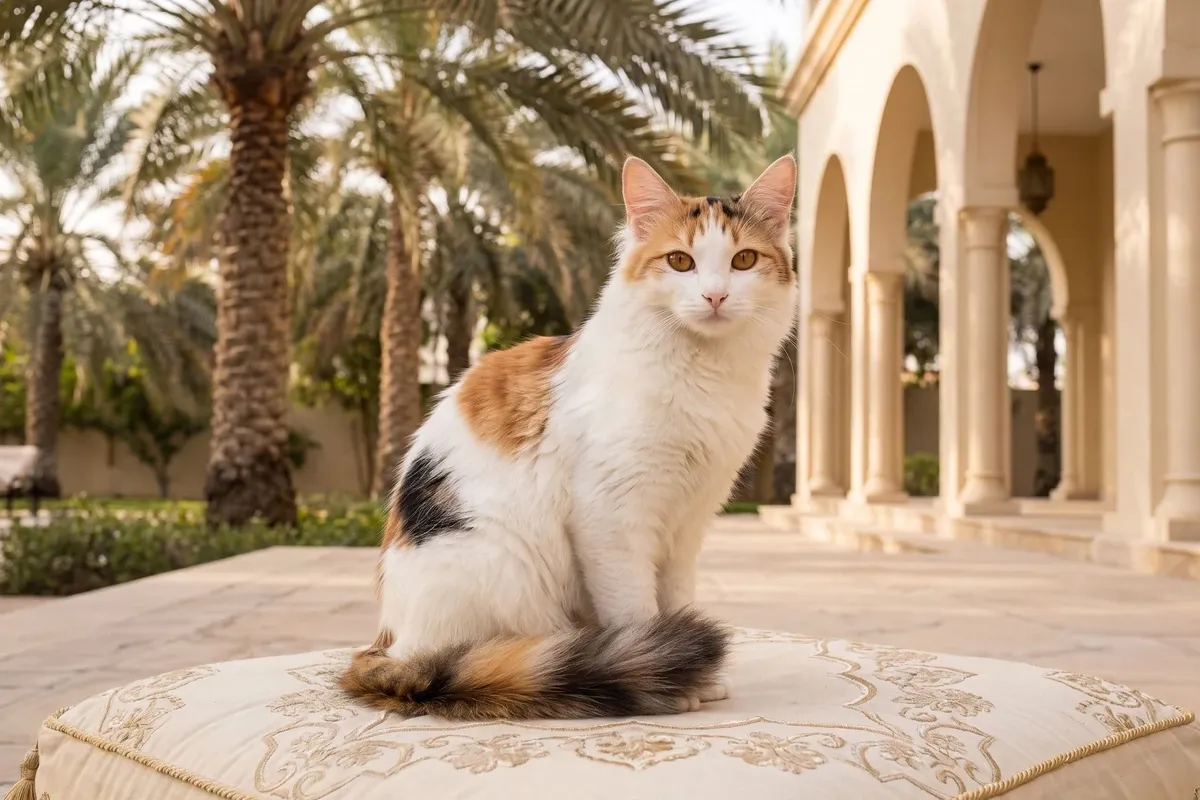
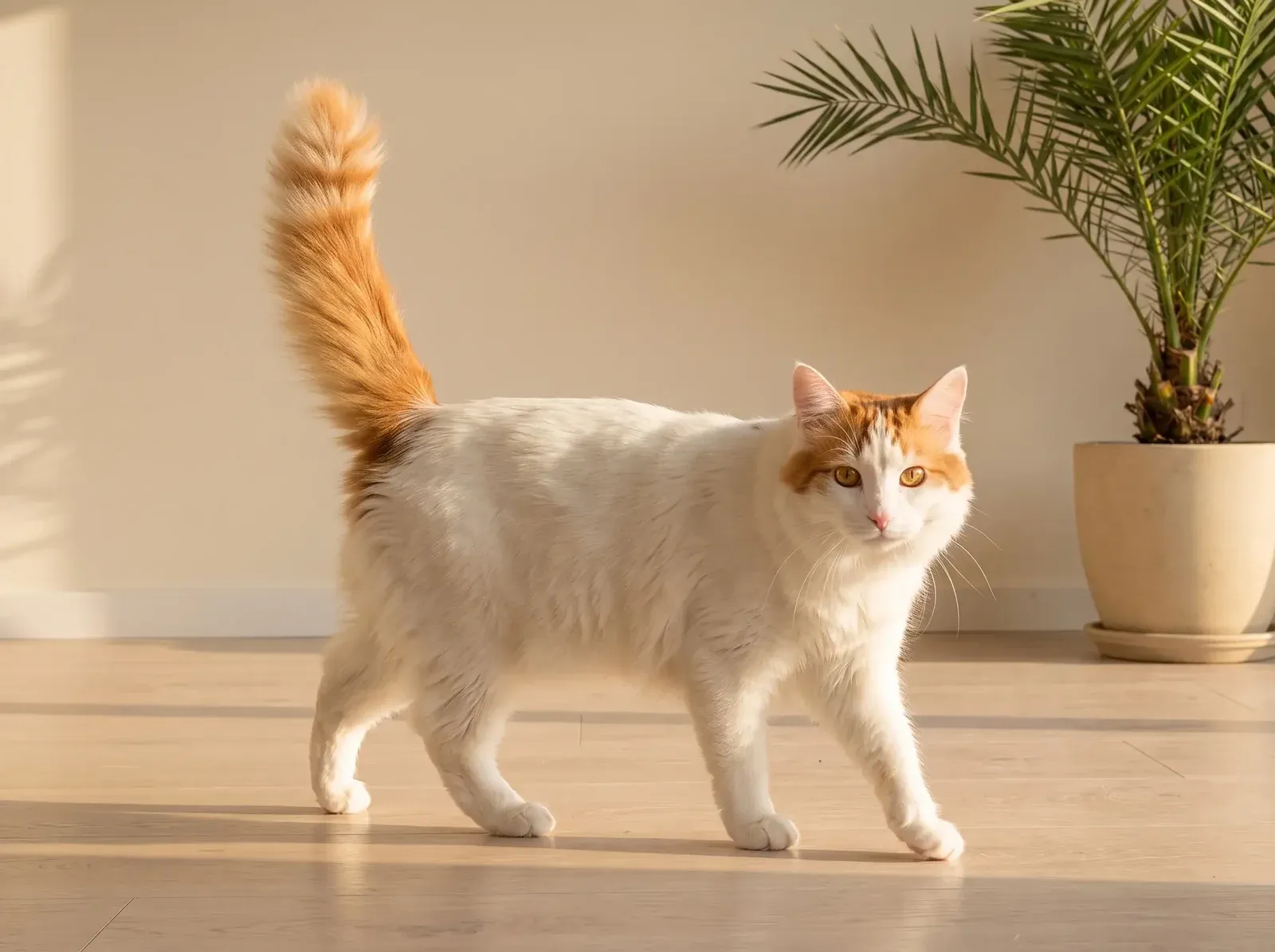
  4. Turkish Angora history, the breed today, a calico cat on a majlis cushion on a shaded terrace, Dubai, 2026
    A Turkish Angora today.

    1968 to 1978

    Back to the West

    Cats from Ankara went to the United States, where the breed was accepted for registration in 1968. Only white cats were accepted until 1978.

    What they still carryA pedigree with a long paper trail, now in many colours.

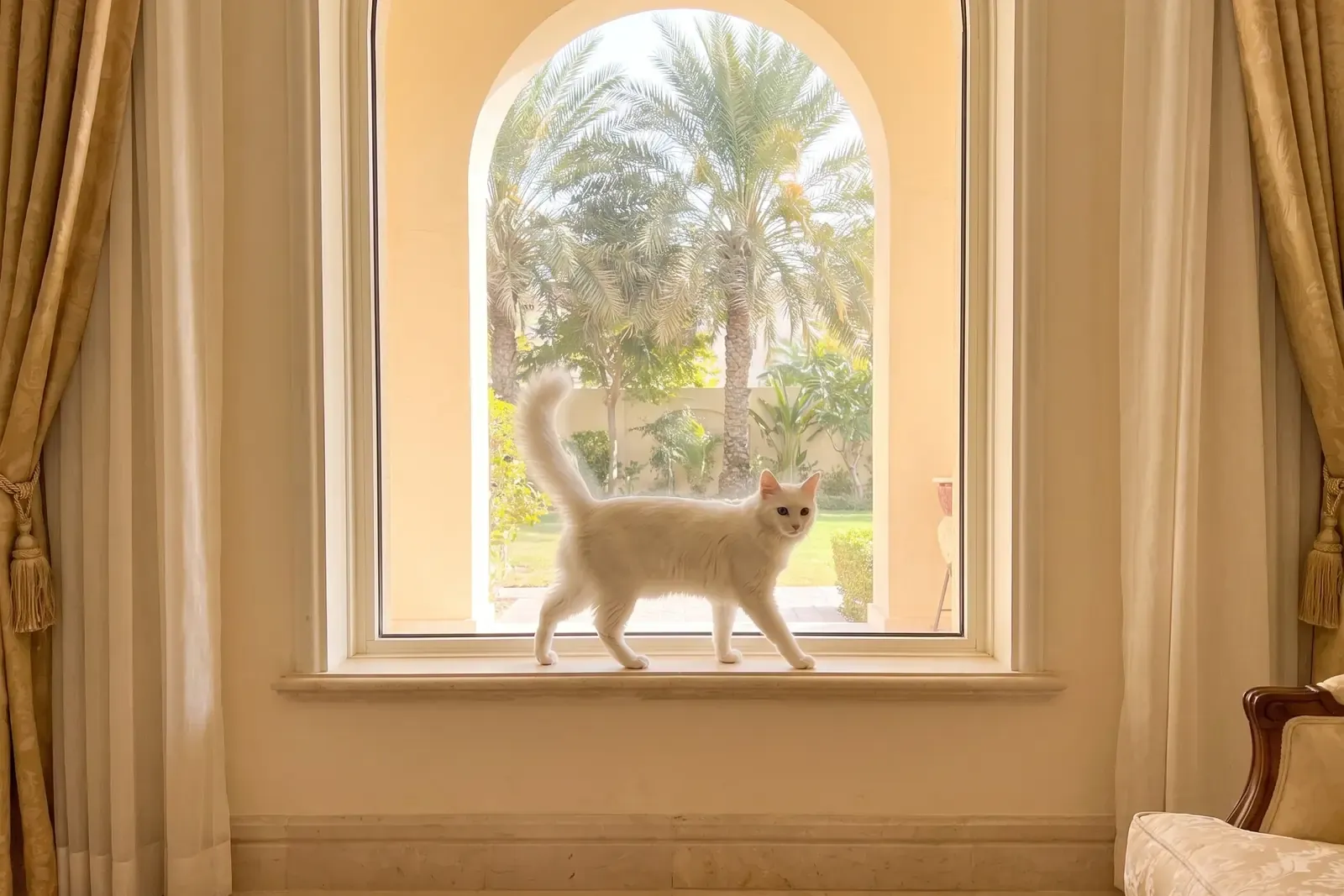
  5. Turkish Angora history, the breed today, a white cat on a window ledge with palms outside, Dubai, 2026
    A Turkish Angora today, in Dubai.

    Today

    A pedigree in the UAE

    An established pedigree breed in the UAE, living indoors with plenty to do.

    What they still carryAn intelligent, busy cat who wants a part in everything.

Turkish Angora questions

The ones you type at midnight.

Most of these get asked late at night, by someone watching their cat and not sure what they are seeing.

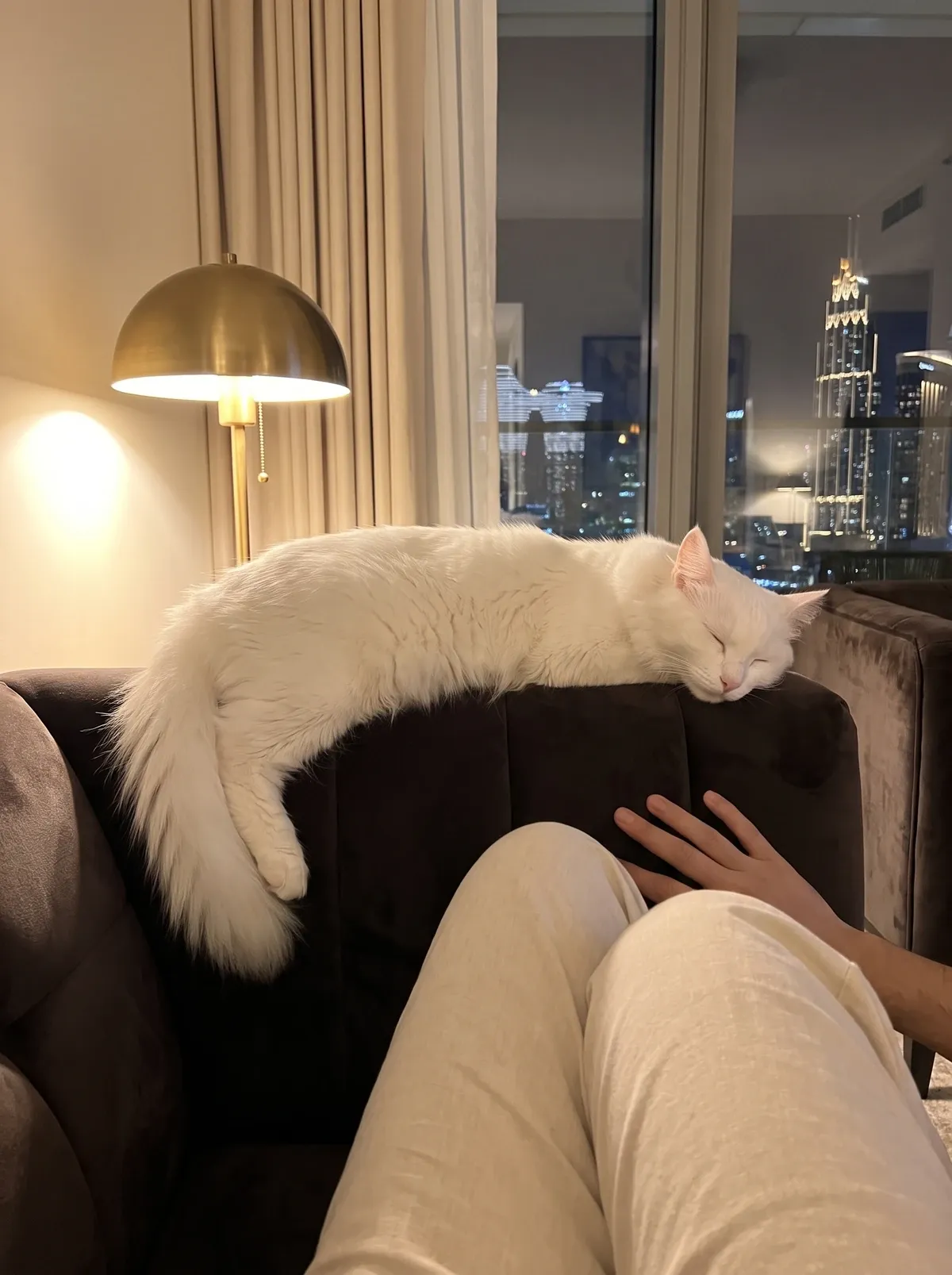
Turkish Angora in Dubai, a white cat asleep along a dark sofa at night, the lit skyline behind
How long do Turkish Angora cats live?

Turkish Angora cats usually live 12 to 18 years. Their kneecaps are worth watching while they are young, and their heart from middle age.

Are white Turkish Angoras deaf?

Some white Turkish Angoras are born deaf, especially those with blue eyes. A BAER hearing test (a painless test of whether each ear hears) as a kitten tells you for sure.

What is the Turkish Angora personality like?

Turkish Angoras are intelligent and active, they love to join in, and they often bond closely with their household. Expect them to want a part in everything you do.

Do Turkish Angoras shed a lot?

Turkish Angoras shed lightly to moderately. Their single, silky coat has no heavy undercoat, so a weekly brush is usually enough.

What colours do Turkish Angoras come in?

Turkish Angoras are best known in white, and they come in almost every colour and pattern, from black and blue to red and tabby.

Can Turkish Angoras be left alone while you are at work?

Yes, Turkish Angoras are independent enough to stay home alone while you are at work. Expect them to want play and company once you are back.

Is a Turkish Angora the same as a Persian?

No. A Turkish Angora is slim and fine-boned with a silky single coat, while a Persian is stocky, with a dense coat and a flat face. In Europe the two were once crossed until the Angora almost disappeared.

How big do Turkish Angoras get?

Turkish Angoras are medium-sized, elegant and finely boned, with long bodies and legs to match. There is no set weight for the breed, so feel their ribs rather than chase a number.

Can a Turkish Angora live in Dubai?

Yes, a Turkish Angora adapts well to indoor life in the UAE. Give them plenty to do and cool, shaded places to rest, and keep a white cat out of strong sun.

Worried about them? Contact your vet today.