We’re hiring people who love them like we do. Join us careers@pawsandco.comSee open roles
UAE Government Licensed MOCCAE
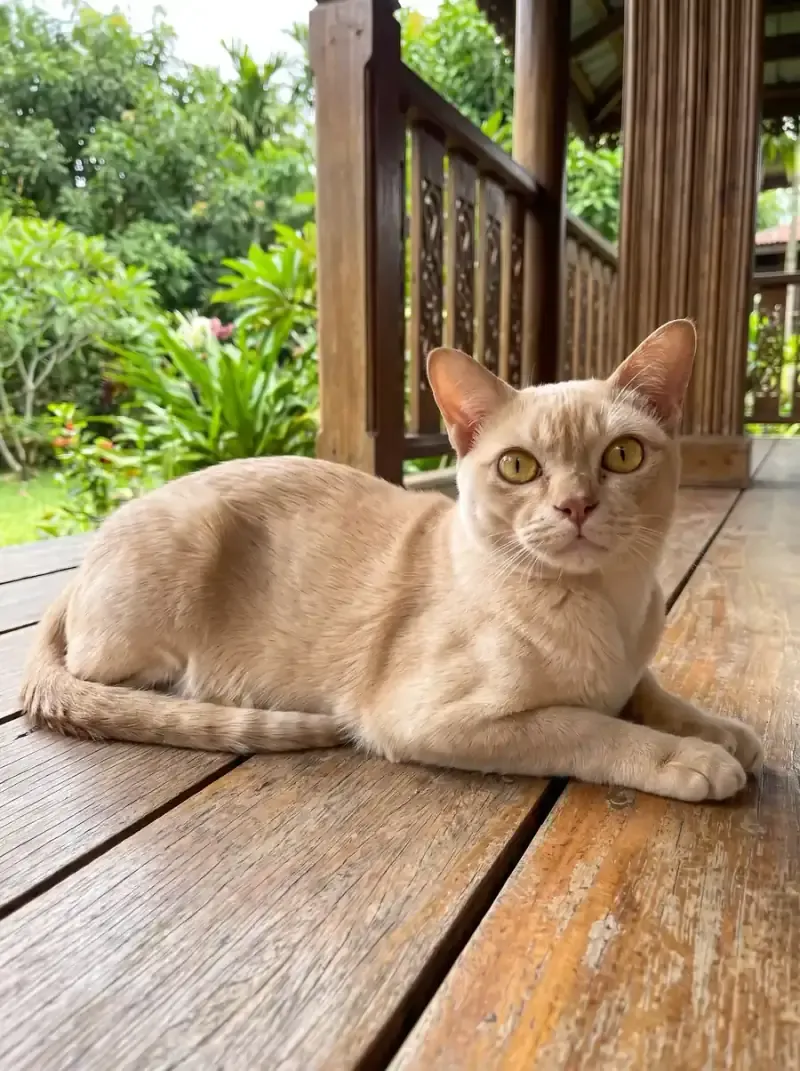
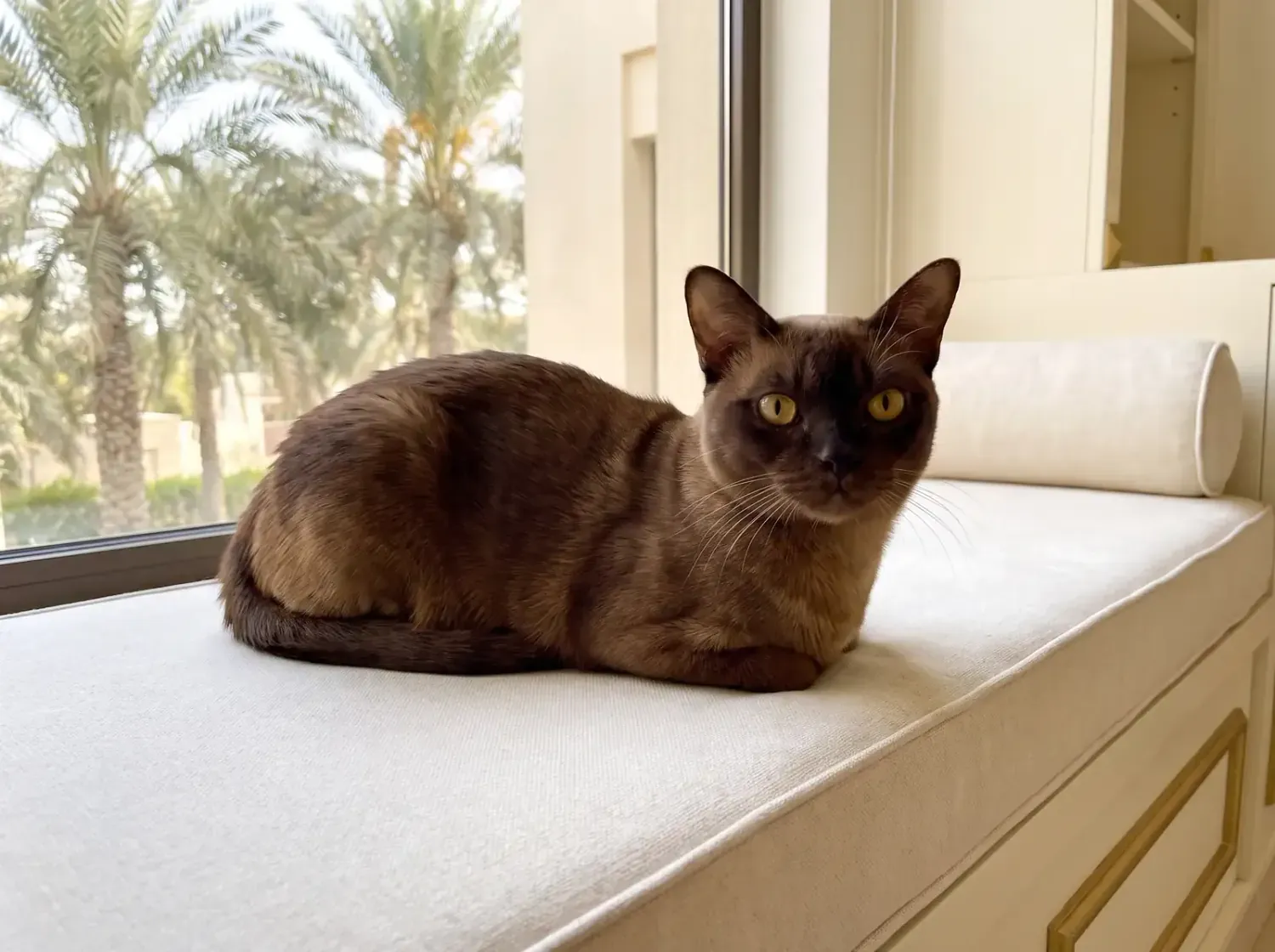
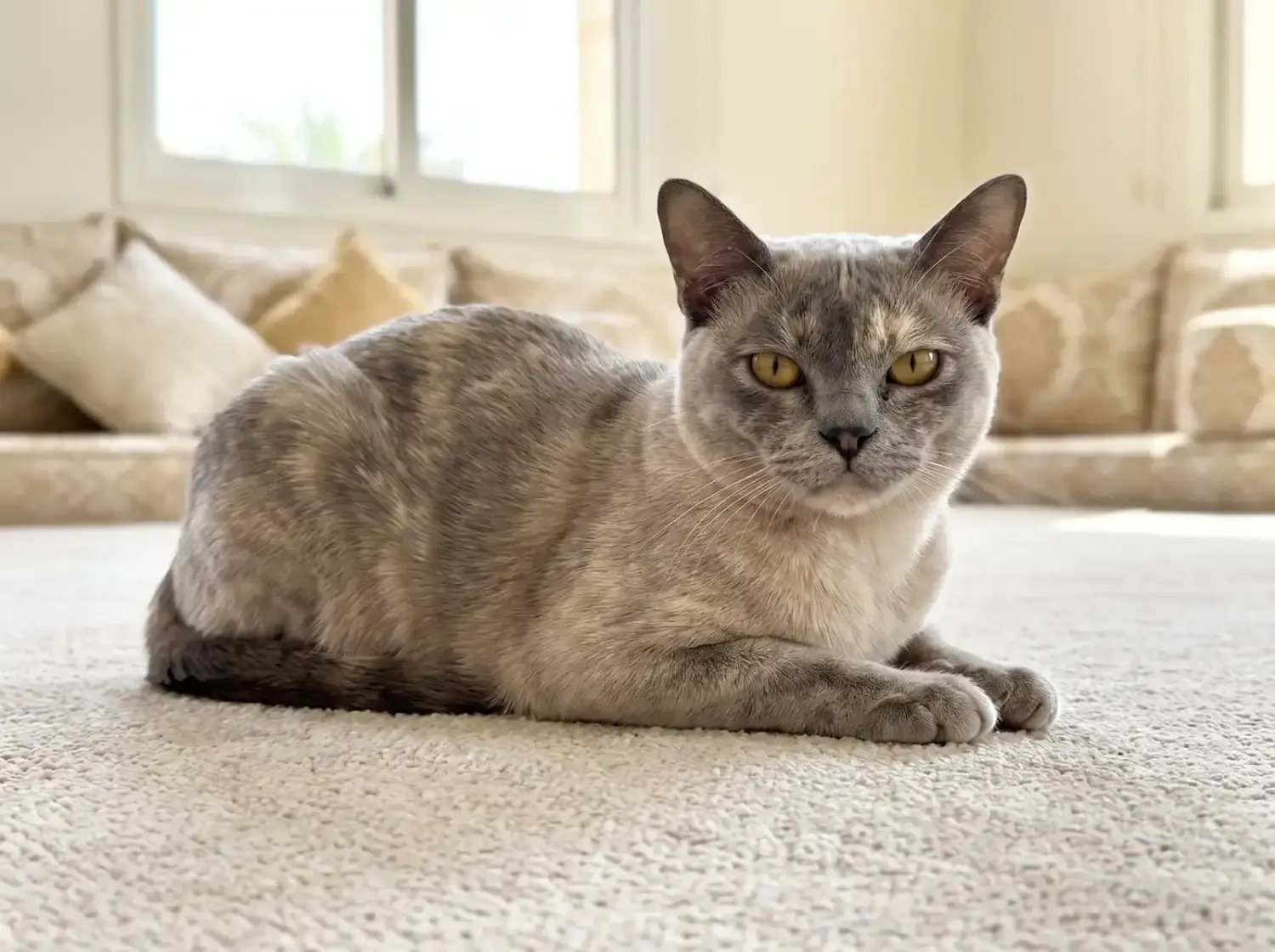
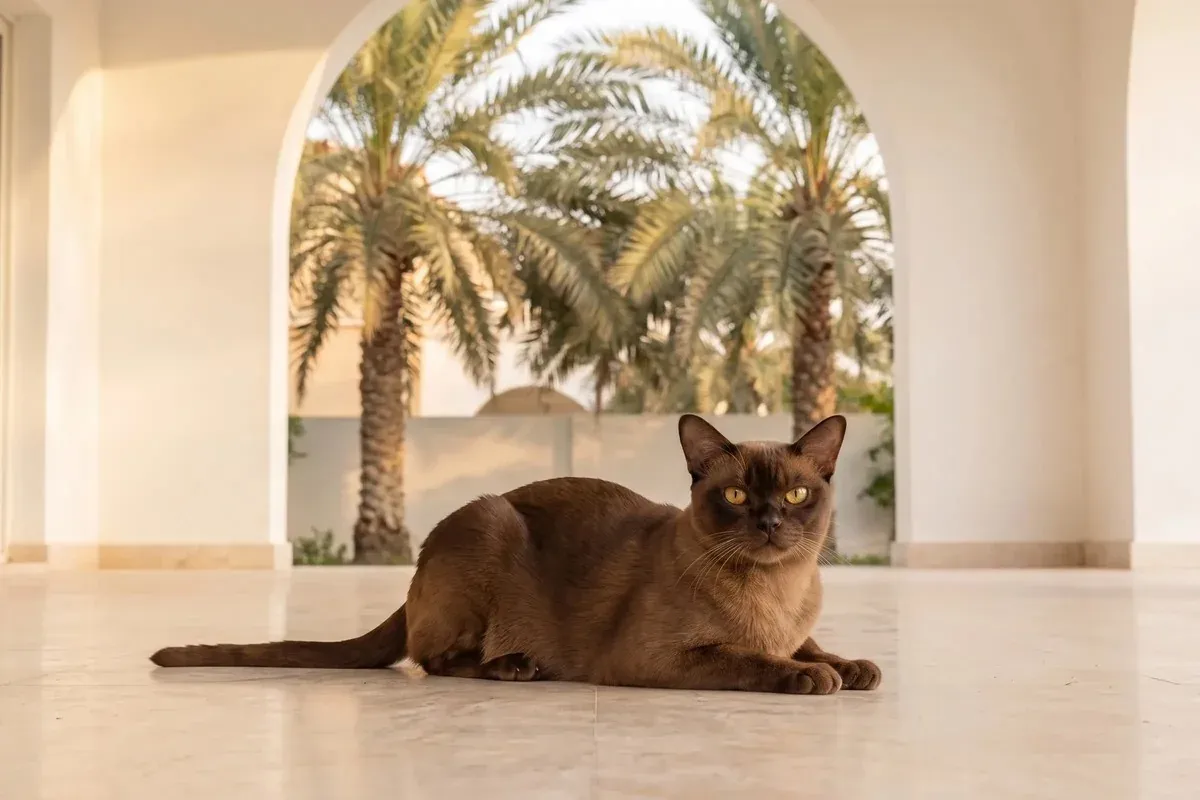
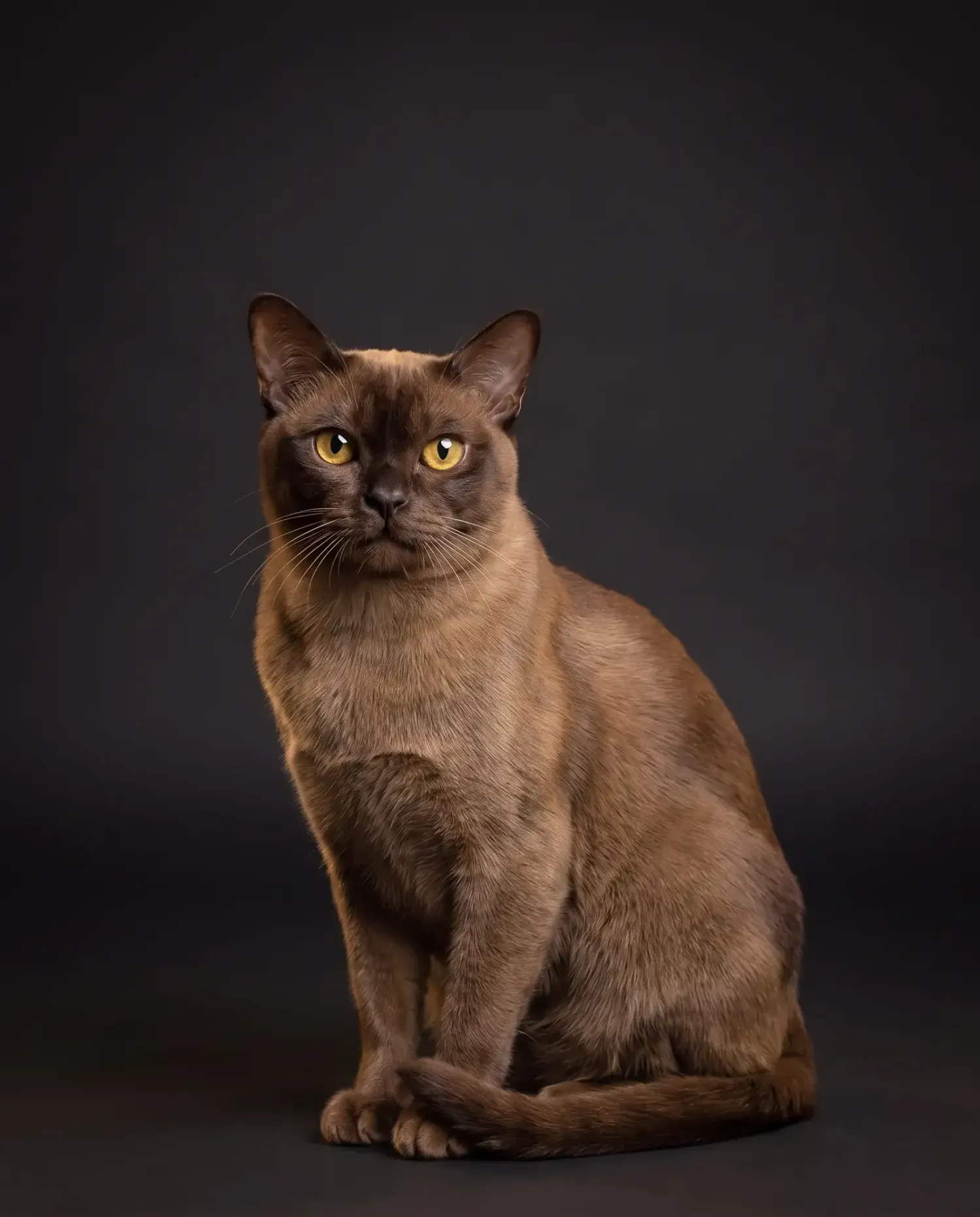
Burmese in Dubai, studio portrait of a calm sable adult with golden eyes, sitting

Breed guide · Cats

Burmese

She rides on my shoulder while I cook. I've learnt to stir one-handed.

Lifespan
16 to 18 years
Size
Medium
Weight
2.7 to 6.4 kg
Grooming
Minimal, a weekly brush

Last updated 13 October 2026

Join the founding families. AED 1,999 of essential care for AED 199.

No payment now. We'll be in touch by email and WhatsApp as we open enrolment.

✓
Thank you.

We will be in touch soon to confirm.

Burmese traits

What they brought with them.

Tap a card to see what is going on.

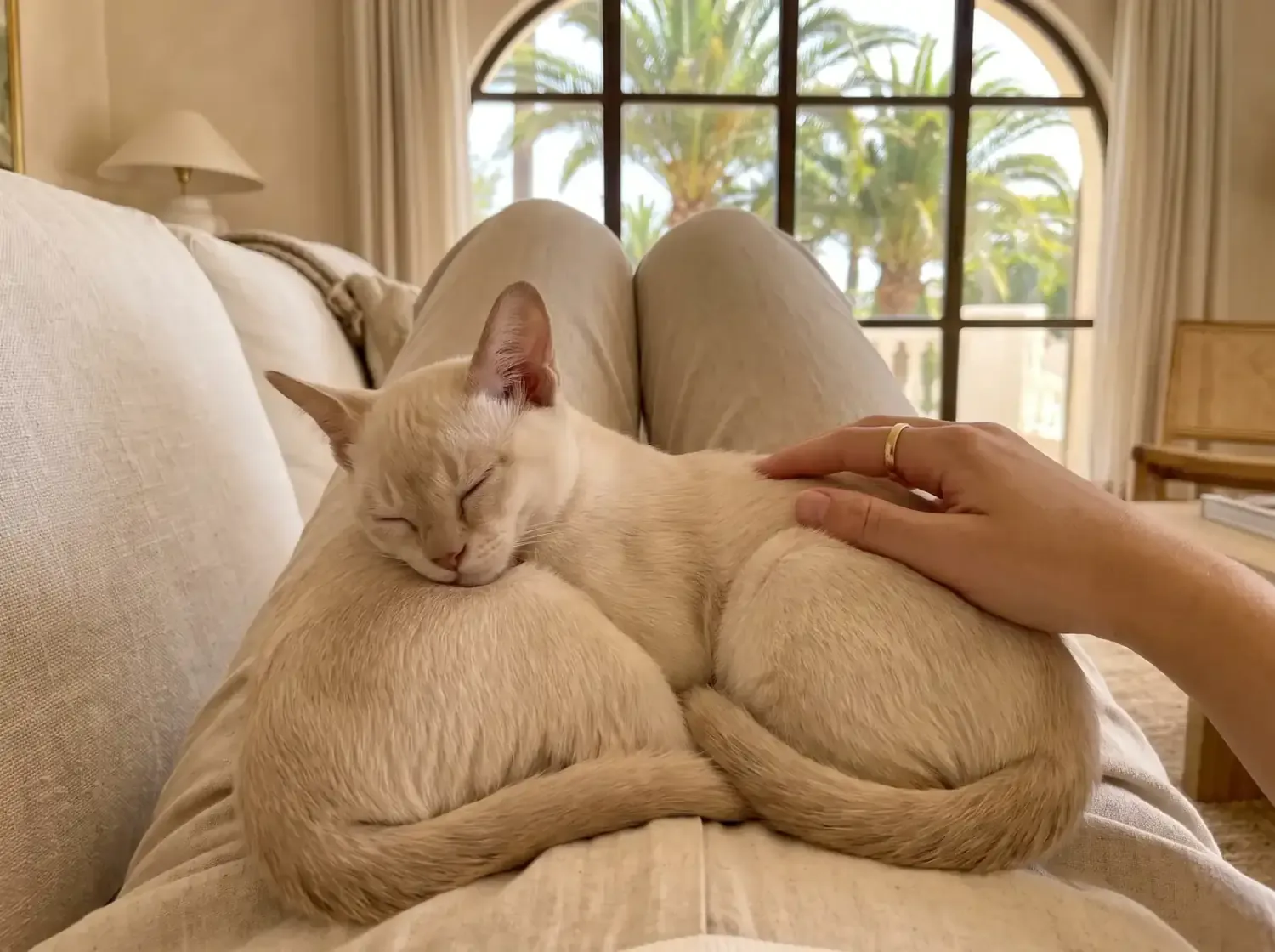
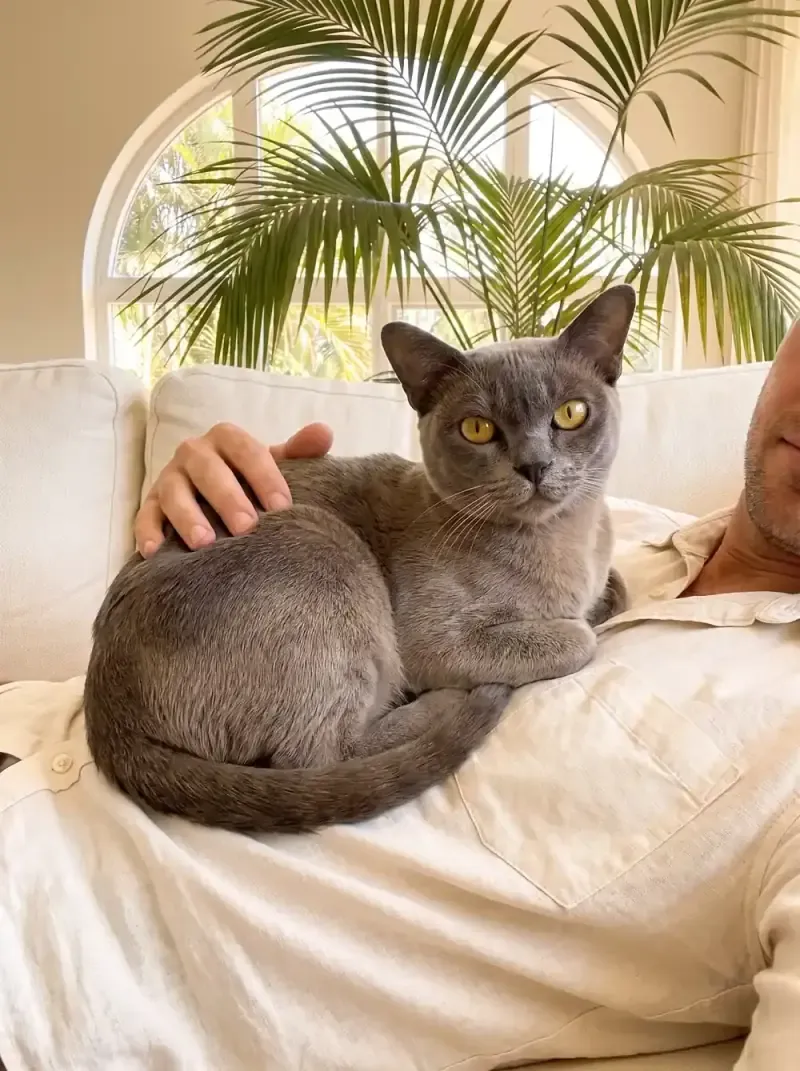
Burmese in Dubai, a blue adult curled on a pet parent's chest on a cream sofa, palms outside

At home

Why is my Burmese always on me?

Your lap, your shoulder, your chest, the pillow next to yours. Wherever you sit, they arrive.

What's going onThe Burmese was bred from the Siamese and kept its need for people. Their voice is softer, so they tell you with their whole body instead. A quieter cat is not a more independent one.
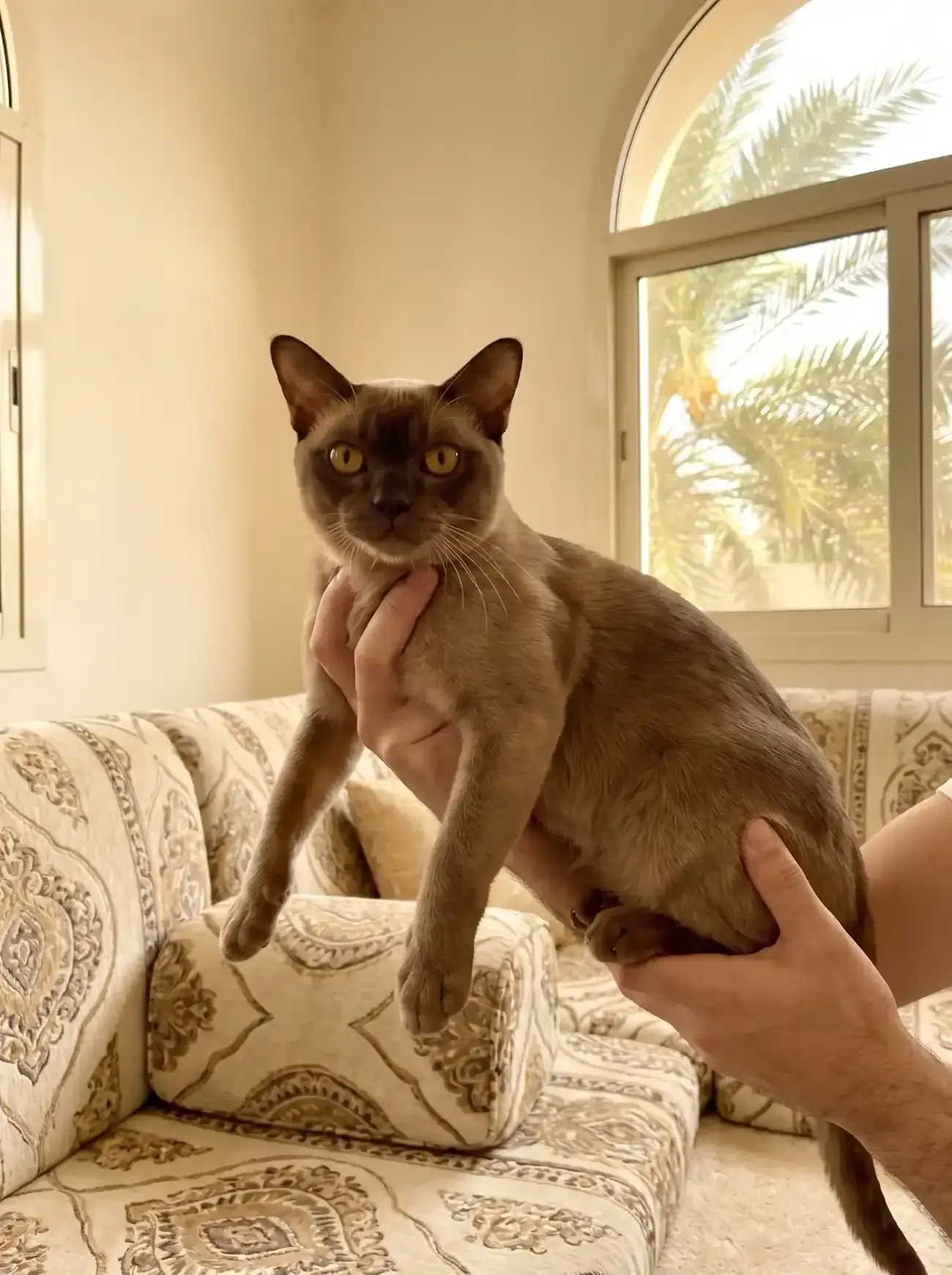
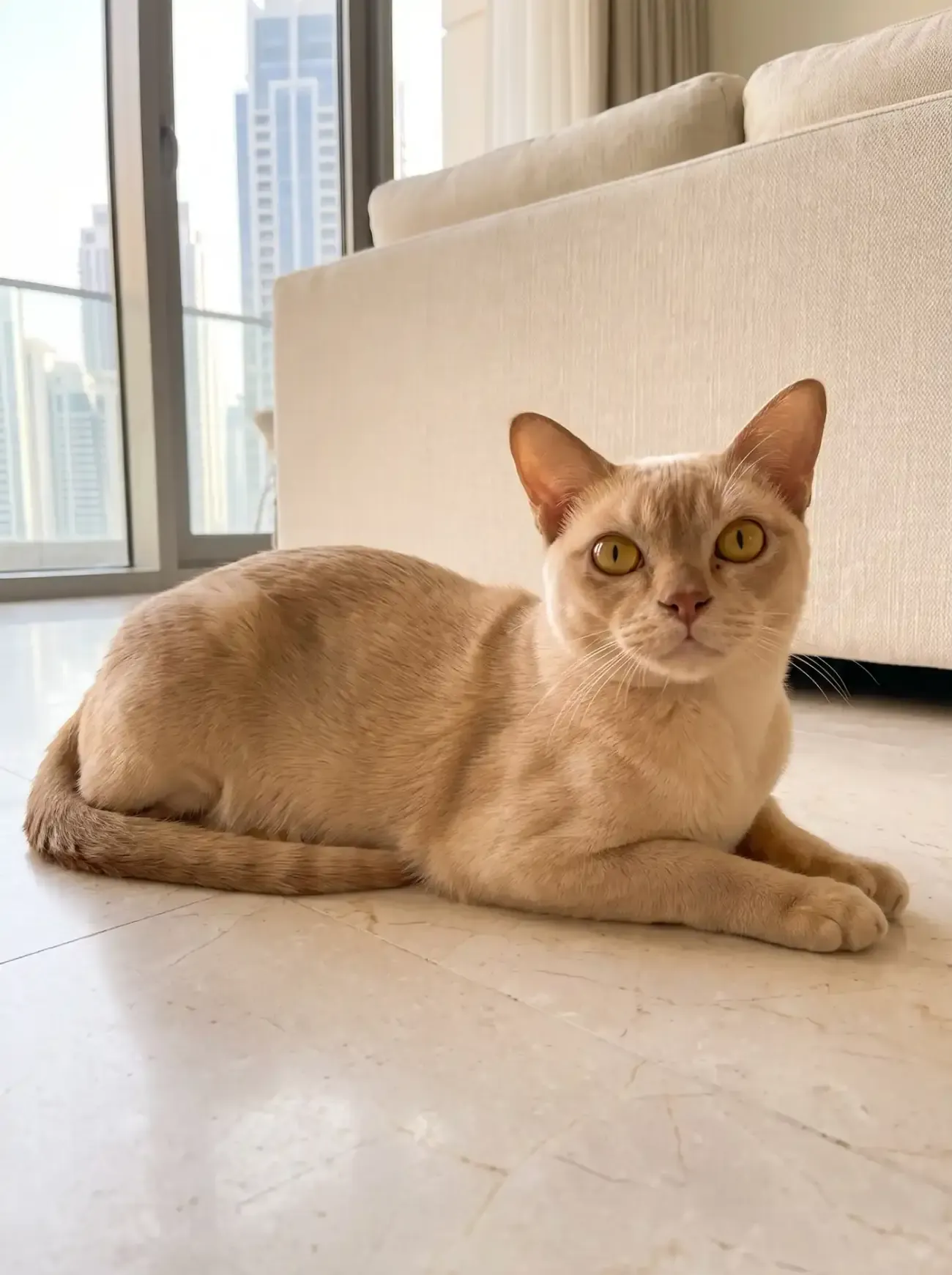
Burmese in Dubai, a champagne adult lifted off a patterned majlis sofa with both hands, palms outside

At home

Why is my Burmese cat so heavy?

You pick them up expecting a small cat and get something much more solid.

What's going onThey are compact and muscular, and they put on weight easily. Diabetes is a risk for the breed from the junior years, so weigh their food and take the treats out of the day's amount.

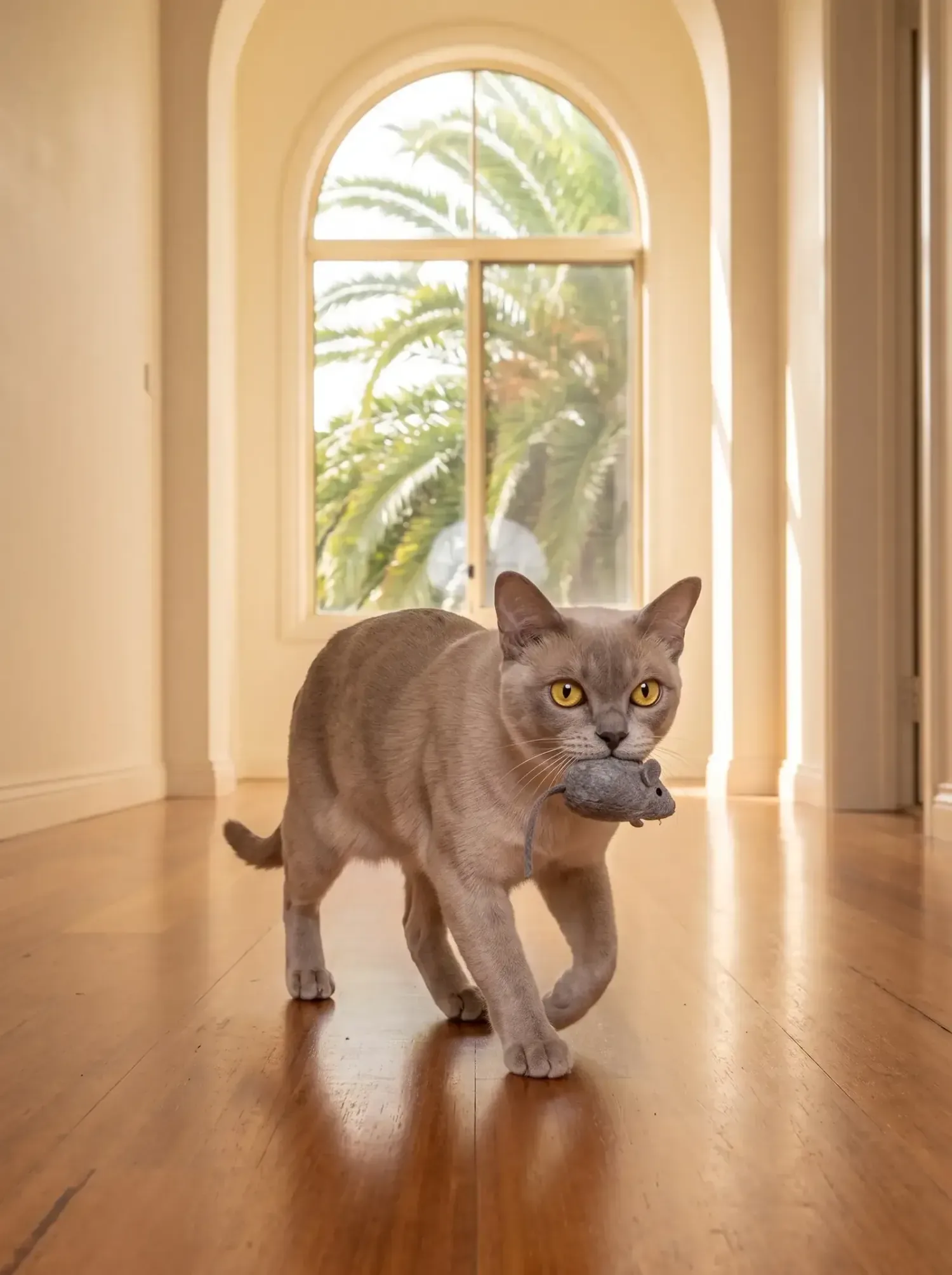
Burmese in Dubai, a platinum adult carrying a toy mouse along a villa hallway, palms through an arched window

At home

Why does my Burmese act like a kitten?

Still racing the hallway at six, and dropping a toy at your feet to be thrown again.

What's going onBurmese stay playful for years, and many will fetch. A wand toy, then a meal straight after, burns energy and uses up food they would otherwise beg for.

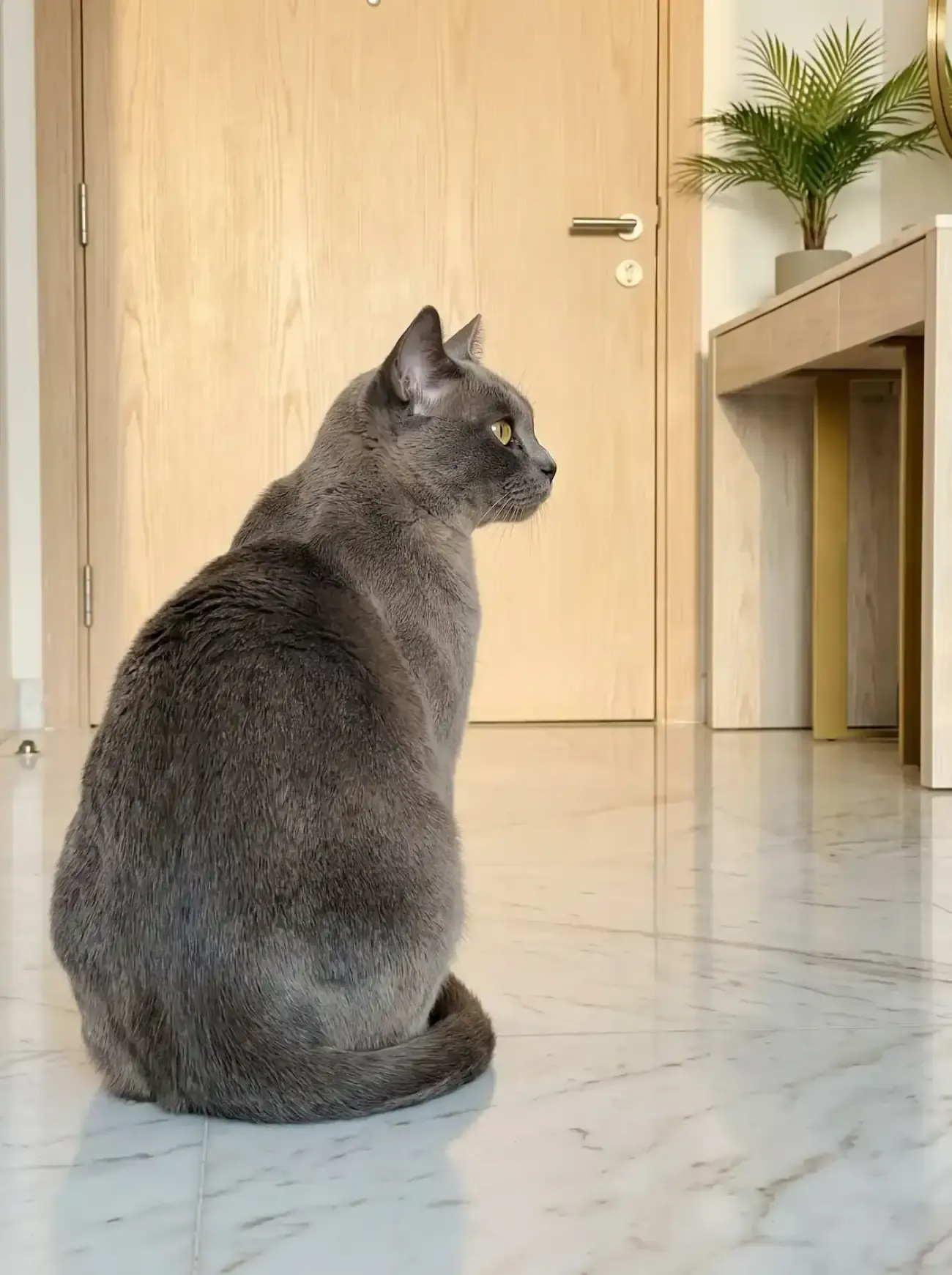
Burmese, a blue adult sitting on a marble floor, watching the front door of a flat

At home

Why does my Burmese cry when I leave?

Crying at the door as you go, or a wet patch on your bed when you get home.

What's going onThat is distress, not spite, and it is treatable. It needs your vet's help, not a home fix. Film them for the first half hour after you leave, never punish what you find, and show the film to your vet.

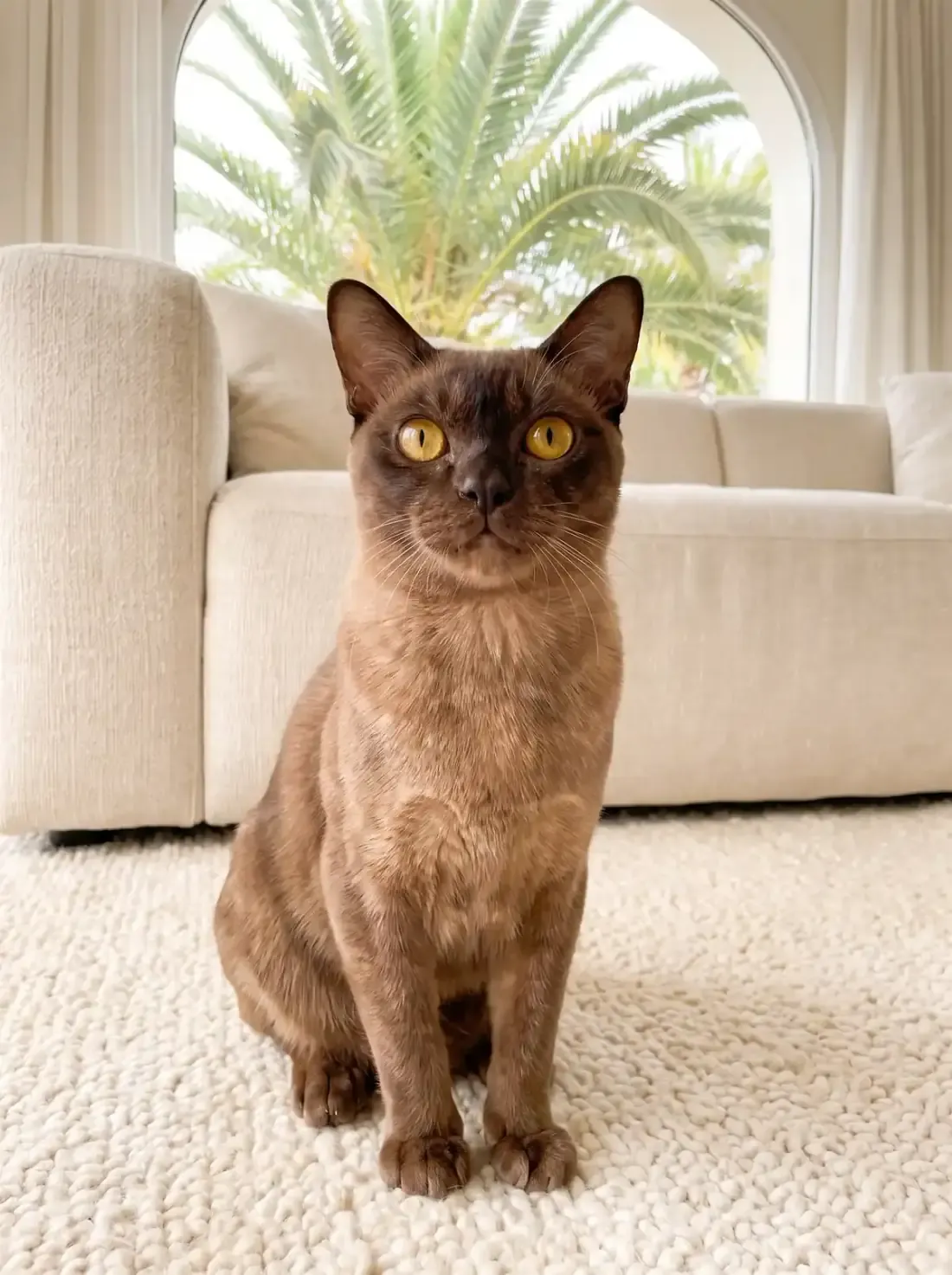
Burmese in Dubai, a chocolate adult sitting on a rug at the foot of a sofa, palms through an arched window

At home

When they won't jump up

The sofa they always leap onto, and today they stand at the bottom and look up.

What's going onIt looks like sulking, or a sleepy day. In a Burmese it can be Hypokalaemic Polymyopathy (muscle weakness caused by low potassium), a risk for the breed. A stiff walk or a low head counts too. Call your vet that week.

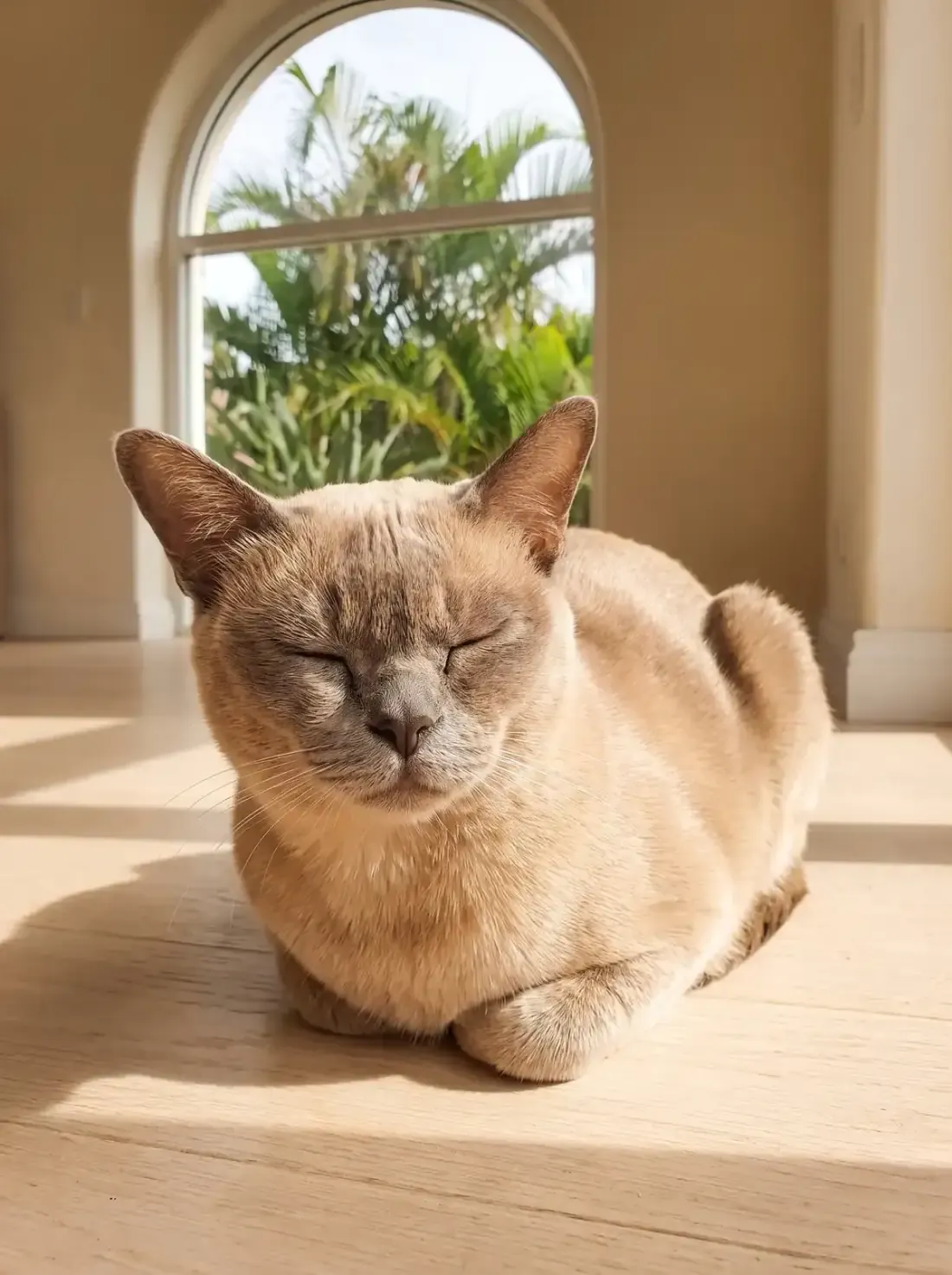
Burmese in Dubai, an older champagne cat dozing in a patch of sun, palms through an arched window

At home

They could be with you for 18 years

A cat who still wants your shoulder well into their teens.

What's going onBurmese often reach their late teens. The habits you start now, weighing them and looking in their mouth, are the ones that pay off later.

A Burmese in Dubai

The bit nobody tells you.

Their people

Built for: Bred to be with people.

In Dubai: Still wants to be on you most of the day.

Their food

Built for: A hunter at heart.

In Dubai: Food arrives in a bowl, and they beg well for more.

Their years

Built for: One of the longest-lived pedigree cats.

In Dubai: A long life together, which is why catching diabetes early matters so much.

That is why weight is the thing to watch.

Diabetes is a risk for the breed from the junior years. The ten things below are how you keep them close, busy and lean. If they panic when you go, contact your vet: your vet can help with that.

Your plan is built around what a Burmese is prone to at every age, from their weight and blood sugar to their muscles, and the care that goes with each one.

Join the founding families. AED 1,999 of essential care for AED 199.

Daily care for a Burmese

Ten things that make their life better.

Many of them are free, and most matter at every age.

  1. A predictable day lowers the begging, and they learn that food does not come from asking.

    Every age, most of all from 7 months to 2 years

    Free, or the cost of a feeder

    Why

    A predictable day lowers the begging, and they learn that food does not come from asking.

    What to do

    Talk back when they talk to you. Keep the same times each day for play, food and lap time. If they ask for food at 5am, let an automatic feeder serve breakfast rather than giving in.

  2. They stay playful for years, and a finished game burns energy they would otherwise spend begging.

    Every age, slower games from 11 years

    Under AED 30

    Why

    They stay playful for years, and a finished game burns energy they would otherwise spend begging.

    What to do

    Move a wand toy like prey, away from them and behind the furniture, for five to ten minutes, two or three times a day. Let them catch it, then give a small meal from their daily amount. If they bring a toy back, throw it.

  3. Diabetes and weight gain are both risks for the breed. Food that takes effort, from a weighed daily amount, helps with both.

    Every age, most of all from 7 months

    Free to under AED 100 for a puzzle feederIn your plan

    Why

    Diabetes and weight gain are both risks for the breed. Food that takes effort, from a weighed daily amount, helps with both.

    What to do

    Weigh their daily food. Put some of it in a puzzle feeder, or hide small portions round the home. Treats for training come out of that amount, never on top of it. Weight-management counselling (help to get their portions right) is in your plan from the day they are neutered.

  4. They were bred for company, and long days alone are hard on them.

    Every age, plan holidays early from 11 years

    Free, or the cost of a sitter

    Why

    They were bred for company, and long days alone are hard on them.

    What to do

    Before they come home, work out who will be with them on long days and when you travel. A friend or a cat sitter who visits, plays and talks to them counts. Never leave them for days with only a feeder. Talk to your vet before getting a second cat.

  5. Many cats like them find time alone hard. It is treatable, and a home fix can make it worse.

    Every age

    Free

    Why

    Many cats like them find time alone hard. It is treatable, and a home fix can make it worse.

    What to do

    Film them for the first half hour after you leave. Look for crying, pacing, scratching at the door or peeing on your things. Do not punish anything you find. Show the film to your vet.

  6. Cats fall from balconies and windows far more often than people expect, usually chasing a bird or an insect.

    Every age, most of all in the first two years

    About AED 300 to 1,500, fitted

    Why

    Cats fall from balconies and windows far more often than people expect, usually chasing a bird or an insect.

    What to do

    Keep them off any balcony that is not fully enclosed with cat netting, and check the netting for gaps. Fit restrictors or screens on every window that opens. Never leave them alone on a balcony.

  7. Their short, satin coat has little undercoat, and they will find warmth somewhere, usually on you.

    Every age, most of all kittens and older cats

    Free

    Why

    Their short, satin coat has little undercoat, and they will find warmth somewhere, usually on you.

    What to do

    A bed with a blanket out of the flow of the vents, ideally somewhere high where they can see you. Keep the home no colder than you need it. Kittens lose heat fastest, and older cats with sore joints need an easy way up to the warm spot.

  8. Drinking more, peeing more or bigger clumps in the tray can be the first sign of diabetes. Thin or bald patches can be over-grooming from stress, or a skin problem.

    Every age, most of all from 7 months

    FreeIn your plan

    Why

    Drinking more, peeing more or bigger clumps in the tray can be the first sign of diabetes. Thin or bald patches can be over-grooming from stress, or a skin problem.

    What to do

    Scoop daily and notice the number and size of the clumps. Once a week, look at their belly and inner legs for thin or bald patches. Tell your vet if the clumps grow. A male cat straining, crying or going in and out of the tray with little or nothing coming out may have a blocked bladder. That is an emergency: contact your vet now. If a female cat is straining, contact your vet the same day. A baseline urinalysis (a urine test) and fasting glucose screening (a blood sugar test) are in your plan from their junior years.

  9. Dental disease is a risk from their junior years, and they may live into their late teens.

    Every age, start as a kitten

    Under AED 30 for a toothbrush and pasteIn your plan

    Why

    Dental disease is a risk from their junior years, and they may live into their late teens.

    What to do

    Lift their lip and look at their teeth and gums. Start brushing as a kitten with cat toothpaste, a few seconds at a time. Tell your vet if they drop food, chew on one side or go off their dry food. A dental evaluation (teeth and gum check) is in your plan every year from their junior years.

  10. Weight gain, sudden weakness and a cat who stops jumping are the signals to know in a Burmese.

    Every age

    FreeIn your plan

    Why

    Weight gain, sudden weakness and a cat who stops jumping are the signals to know in a Burmese.

    What to do

    Weigh them once a month: step on the scales holding them, then without them, and note the difference. Notice if they stop jumping up, walk stiffly or hold their head low. Call your vet that week. A potassium and muscle-strength evaluation (a blood test and a check of their muscles) is in your plan from their junior years.

Four of these are in your plan. The rest you can do at home.

Join the founding families. AED 1,999 of essential care for AED 199.

Burmese health by age

Their health, at every age.

A Burmese can be with you for 16 years or more, and what to watch changes as they age. Choose their age to see what to watch for, and the care that goes with it.

Burmese in Dubai, an older sable cat resting on a cushioned window seat, eyes open, palms outside

How old are they?

Their age

Burmese Kitten health

the first six months

What to watch for

  1. Hypokalaemic Polymyopathy (muscle weakness caused by low potassium)
  2. Flat-Chested Kitten Syndrome (a kitten's chest that grows flattened)
  3. Craniofacial Defect (Burmese Head Defect, a serious skull malformation in some lines)
  4. Gastrointestinal and external parasites
  5. Gastrointestinal and upper respiratory infectious disease

The care that goes with it

  1. Core vaccinations, microchip and Dubai Municipality registration
  2. Deworming, and flea and tick prevention
  3. Growth and nutritional evaluation, and early socialisation
  4. Cardiac auscultation (listening to the heart), and a talk about early echocardiography (an ultrasound scan of the heart)
  5. Neuromuscular and skeletal evaluation (a check of their muscles, nerves and bones)
The full care detail
  • Core vaccination programme, microchipping and Dubai Municipality registration. Titre testing discussion where clinically appropriate; not a substitute for completing the core vaccine series
  • Deworming and external parasite prevention tailored to Dubai exposure
  • Body Condition Score (BCS, a check on whether they are the right weight), Muscle Condition Score (MCS, a check on their muscle), dental, growth and nutritional evaluation, and early socialisation
  • Cardiac auscultation and early echocardiography discussion (heart-disease-predisposed breed)
  • Neuromuscular and skeletal assessment

Their age

Burmese Junior health

7 months to 2 years

What to watch for

  1. Hypokalaemic Polymyopathy (muscle weakness caused by low potassium)
  2. Early presentation of Dental Disease
  3. Early presentation of Diabetes Mellitus (when the body cannot control blood sugar)
  4. Early presentation of Flat-Chested Kitten Syndrome (a kitten's chest that grows flattened)
  5. Early presentation of Craniofacial Defect (Burmese Head Defect, a serious skull malformation in some lines)

The care that goes with it

  1. Neutering or spaying, with weight-management counselling
  2. Core vaccinations completed, and parasite control all year
  3. Annual dental evaluation, and brushing at home
  4. Baseline weight and urinalysis (a urine test)
  5. Baseline bloods, and FeLV and FIV status testing (two viruses cats pass to each other)
  6. Fasting glucose and fructosamine screening (blood sugar tests)
  7. Potassium and muscle-strength evaluation (a blood test and a check of how strong their muscles are)
  8. Diet counselling (advice on what and how much they eat)
The full care detail
  • Neutering or spaying, with weight-management counselling from the day of surgery
  • Completion of the core vaccination programme and year-round parasite control
  • Annual dental evaluation and a home dental-care routine started young
  • Baseline weight, Body Condition Score (BCS, a check on whether they are the right weight) and urinalysis to set the adult reference point
  • Baseline blood work, and Feline Leukaemia Virus (FeLV, the feline leukaemia virus) and Feline Immunodeficiency Virus (FIV, the feline virus equivalent to HIV) status testing
  • Continued monitoring of Hypokalaemic Polymyopathy
  • Fasting glucose and fructosamine screening
  • Potassium and muscle-strength assessment
  • Diet counselling to prevent obesity

Their age

Burmese Prime Adult health

2 to 6 years

What to watch for

  1. Diabetes Mellitus (when the body cannot control blood sugar)
  2. Hypokalaemic Polymyopathy (muscle weakness caused by low potassium)
  3. Flat-Chested Kitten Syndrome (a kitten's chest that grows flattened)
  4. Dental Disease
  5. Craniofacial Defect (Burmese Head Defect, a serious skull malformation in some lines)

The care that goes with it

  1. Annual dental evaluation, and brushing at home
  2. Neutering or spaying, if not done yet
  3. Core vaccinations and parasite control
  4. Diet and body condition scoring (a check on whether they are the right weight), with diet counselling
  5. Weight and urinalysis (a urine test), and FeLV and FIV status testing
  6. Fasting glucose and fructosamine screening (blood sugar tests)
  7. Potassium and muscle-strength evaluation
  8. Cardiac auscultation and a first echocardiography (an ultrasound scan of the heart)
The full care detail
  • Annual dental evaluation and home dental care
  • Neutering or spaying, with weight-management counselling from the day of surgery, where it was not done at the Junior stage
  • Core vaccination and parasite control
  • Diet and body condition scoring
  • Baseline weight and urinalysis
  • Feline Leukaemia Virus (FeLV, the feline leukaemia virus) and Feline Immunodeficiency Virus (FIV, the feline virus equivalent to HIV) status testing
  • Fasting glucose and fructosamine screening
  • Potassium and muscle-strength assessment
  • Diet counselling to prevent obesity
  • Cardiac auscultation and baseline echocardiography

Their age

Burmese Mature Adult health

7 to 10 years

What to watch for

  1. Diabetes Mellitus (when the body cannot control blood sugar)
  2. Dental Disease
  3. Hypertrophic Cardiomyopathy (HCM, a thickened heart muscle)
  4. Obesity
  5. Hypokalaemia (low potassium)

The care that goes with it

  1. Diabetes screening every year (blood sugar tests)
  2. Weight management, and a fresh look at their diet
  3. Dental scaling (a clean), as needed
  4. Cardiac auscultation and echocardiography (an ultrasound scan of the heart), repeated
  5. Kidney and electrolyte bloods (including potassium)
  6. Blood pressure measurement
The full care detail
  • Annual diabetes screening (glucose, fructosamine)
  • Weight management and dietary review
  • Dental scaling as indicated
  • Periodic cardiac auscultation and echocardiography
  • Baseline renal and electrolyte bloods
  • Blood pressure measurement

Their age

Burmese Senior health

11 to 14 years

What to watch for

  1. Diabetes Mellitus (when the body cannot control blood sugar)
  2. Chronic Kidney Disease (CKD, long-term kidney failure)
  3. Dental Disease
  4. Hyperthyroidism (an overactive thyroid)
  5. Hypertrophic Cardiomyopathy (HCM, a thickened heart muscle)

The care that goes with it

  1. Bloods, renal panel (kidney blood tests) and urinalysis, twice a year
  2. Thyroid hormone screening
  3. Blood pressure measurement
  4. Echocardiography (an ultrasound scan of the heart) and cardiac monitoring
  5. Joint and mobility evaluation (joint and movement exam)
  6. Dental evaluation under anaesthesia
  7. Diabetes and kidney bloods, with urinalysis
The full care detail
  • Twice-yearly bloods, renal panel and urinalysis
  • Thyroid hormone screening
  • Blood pressure measurements
  • Echocardiography and cardiac monitoring
  • Joint and mobility evaluation
  • Dental evaluation under anaesthesia
  • Diabetes and renal bloods with urinalysis

Their age

Burmese Geriatric health

15 years and over

What to watch for

  1. Chronic Kidney Disease (CKD, long-term kidney failure)
  2. Diabetes Mellitus (when the body cannot control blood sugar)
  3. Hyperthyroidism (an overactive thyroid)
  4. Neoplasia (cancer and tumours)
  5. Osteoarthritis (worn, painful joints)

The care that goes with it

  1. Physical examination twice a year, with weight, muscle, teeth and mobility
  2. Bloods, urinalysis (a urine test) and thyroid testing
  3. Neoplasia screening (for cancer), and any weight loss or lumps looked into
  4. Nutrition, hydration and grooming support
  5. Quality-of-life assessment, comfort care and end-of-life planning
  6. Echocardiography and blood pressure monitoring
The full care detail
  • Biannual physical examination including weight trend, Body Condition Score (BCS, a check on whether they are the right weight) and Muscle Condition Score (MCS, a check on their muscle), and dental and mobility evaluation
  • Complete Blood Count (CBC), biochemistry including renal parameters where appropriate, urinalysis including Urine Specific Gravity (USG), and total T4 according to age and risk
  • Neoplasia evaluation including lymph nodes, oral cavity, skin and subcutaneous tissues, and abdominal palpation. Investigate unexplained weight loss, appetite change, masses or lymphadenopathy
  • Nutrition, hydration and grooming support
  • Quality-of-life assessments, a tailored palliative and comfort-focused care plan, and compassionate end-of-life planning with your veterinary team, available earlier should it become clinically evident
  • Ongoing echocardiographic surveillance and blood pressure monitoring

Breed predispositions indicate an increased risk rather than certainty of disease. What is right for them always comes from their own history and an evaluation.

Getting a Burmese in Dubai

Before they come home.

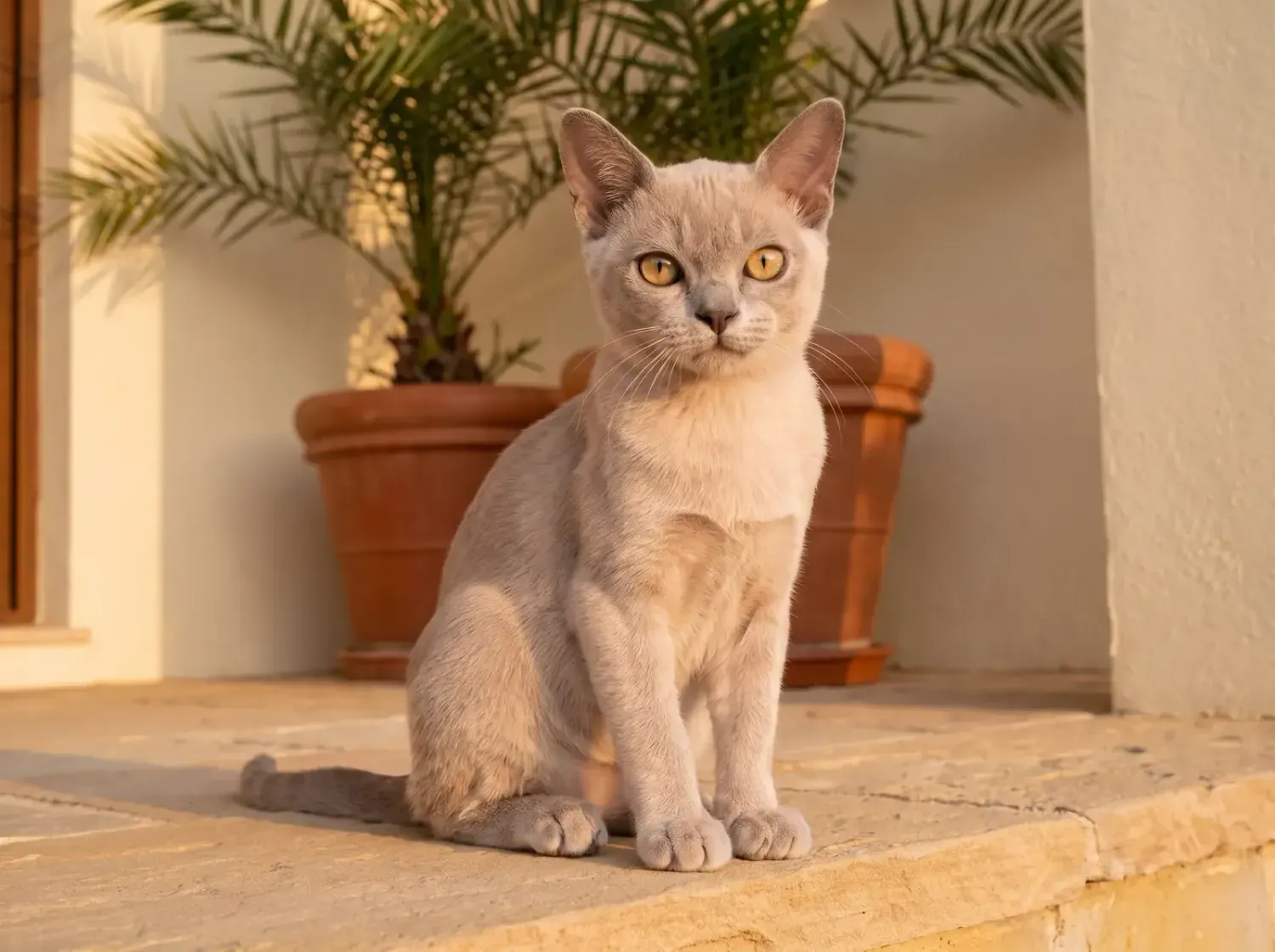
Burmese in Dubai, a platinum kitten sitting on a sandstone terrace beside potted date palms

Types of Burmese cats

British or American lines

There are two lines of Burmese, British and American, and the difference is in the shape of the head. Whichever line, they have the same golden eyes, the same heavy, muscular body and the same need for you.

Burmese in Dubai, a blue tortie adult lying on a stone-coloured rug in front of majlis cushions

Burmese cat colours

From sable brown to soft lilac

The classic Burmese is a deep sable brown, with a coat like satin. They also come in softer blue, chocolate and lilac, in warm red and cream, and in tortie mixes of brown, blue, chocolate and lilac.

Burmese in Dubai, a cream kitten asleep in a pet parent's lap on the sofa, palms outside

The first six months

Caring for a Burmese kitten

Their vaccinations, microchip and Dubai Municipality registration come first. Their kitten visits include a vet listening to their heart, and an evaluation of their muscles, nerves and bones. Start the routine, the carrier and the toothbrush now, while it is all new.

Kitten health, 0 to 6 months
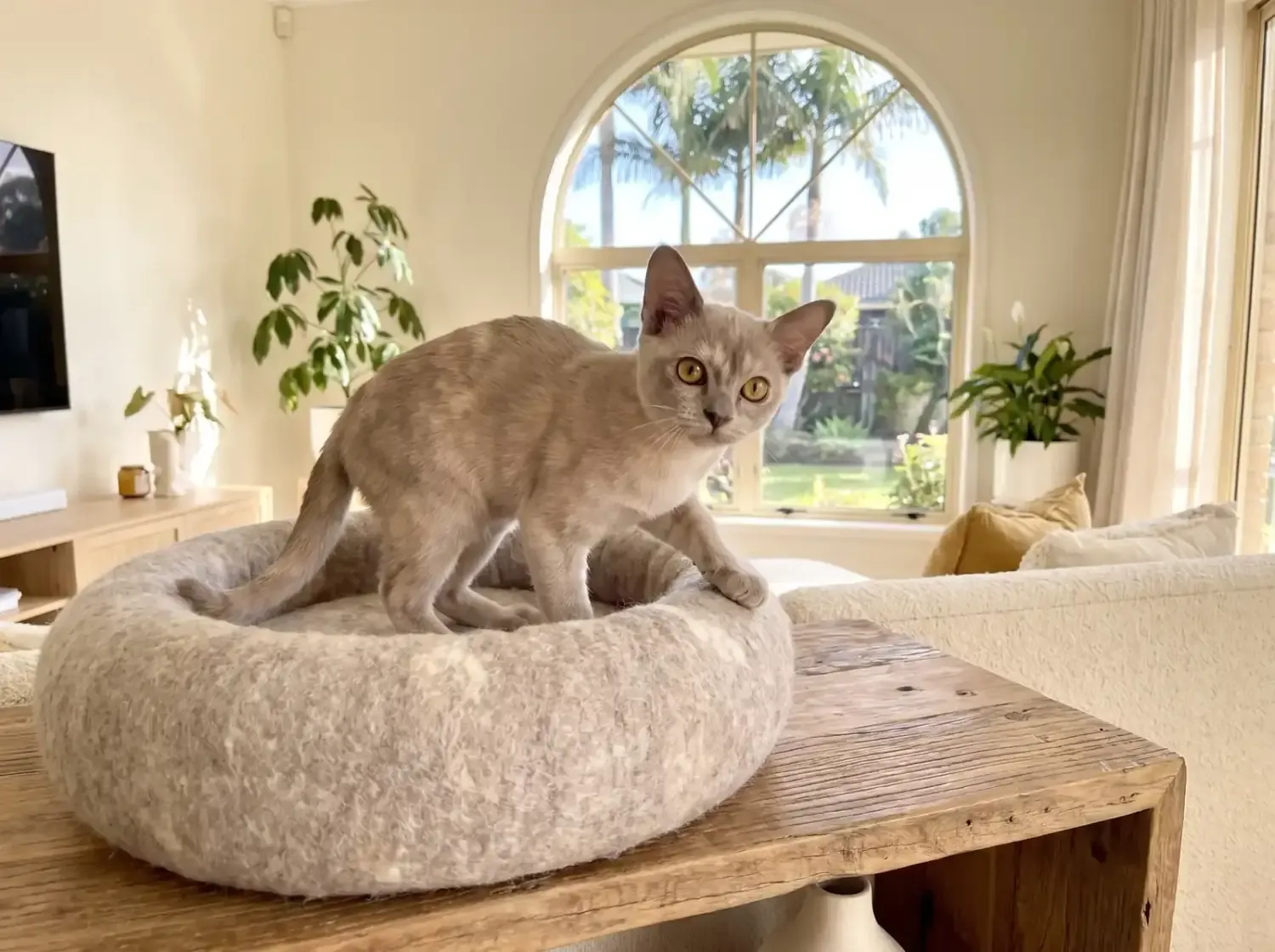
Burmese in Dubai, a lilac kitten stepping into a felt bed on a low shelf, palms through an arched window

Getting the home ready

A warm bed and a closed balcony

A warm bed out of the air conditioning, somewhere high where they can see you. Netting on the balcony and restrictors on the windows before they find them. And a plan for who keeps them company on your long days.

Ten things that make their life better
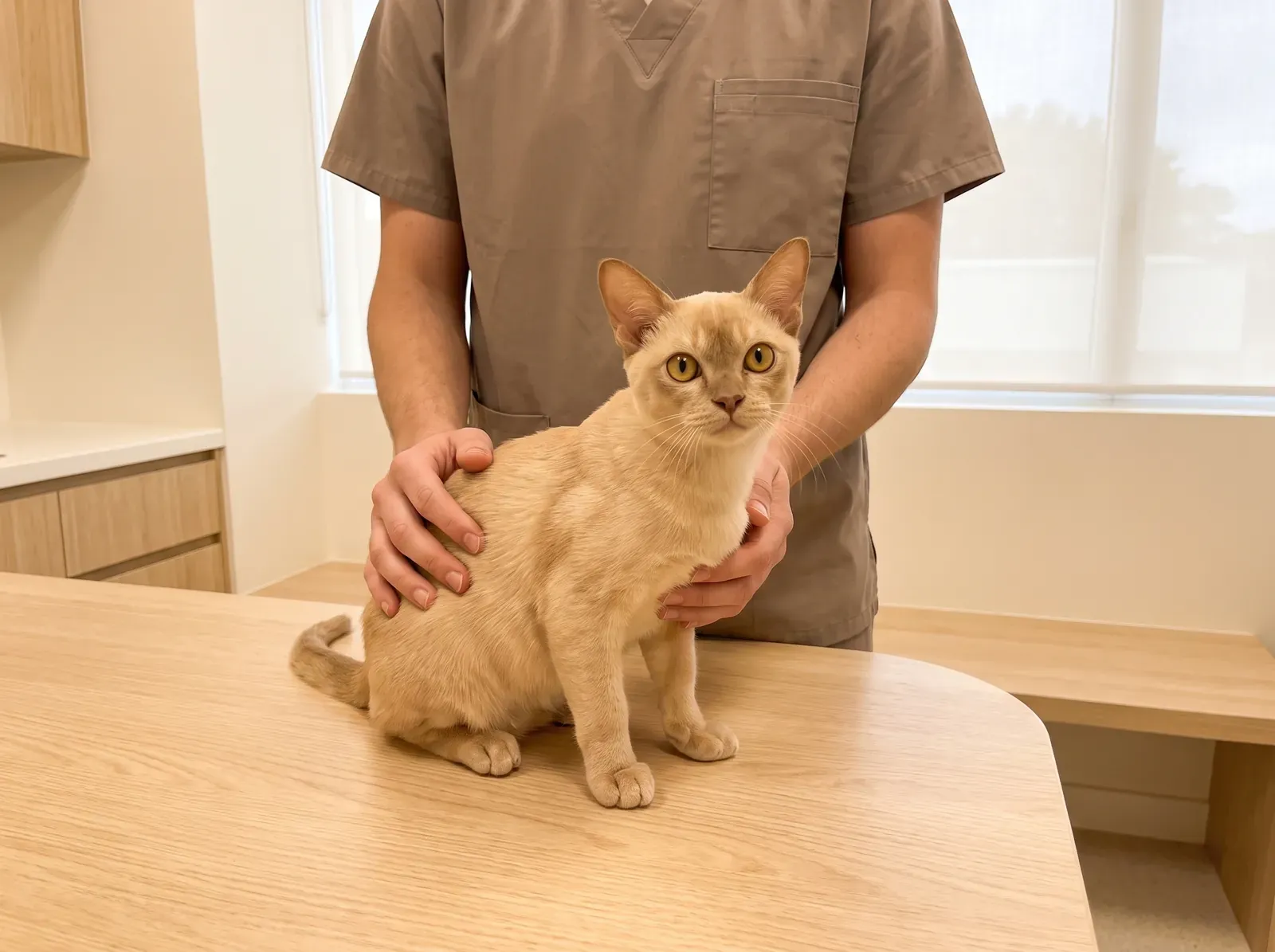
Burmese, a red kitten sitting calmly on a consultation table, steadied by hands in taupe scrubs

Before you commit

Ask about their kittenhood

Some Burmese lines carry problems that show from kittenhood, such as Flat-Chested Kitten Syndrome (a kitten's chest that grows flattened). Ask the breeder which lines the parents come from, and bring what you learn to the first vet visit.

The reception of a Paws & Co clinic, with long cream benches and a stone reception desk

Before the clinics open

Join the founding families

AED 1,999 of essential care for AED 199. No payment now.

When to see a vet

When it is not behaviour.

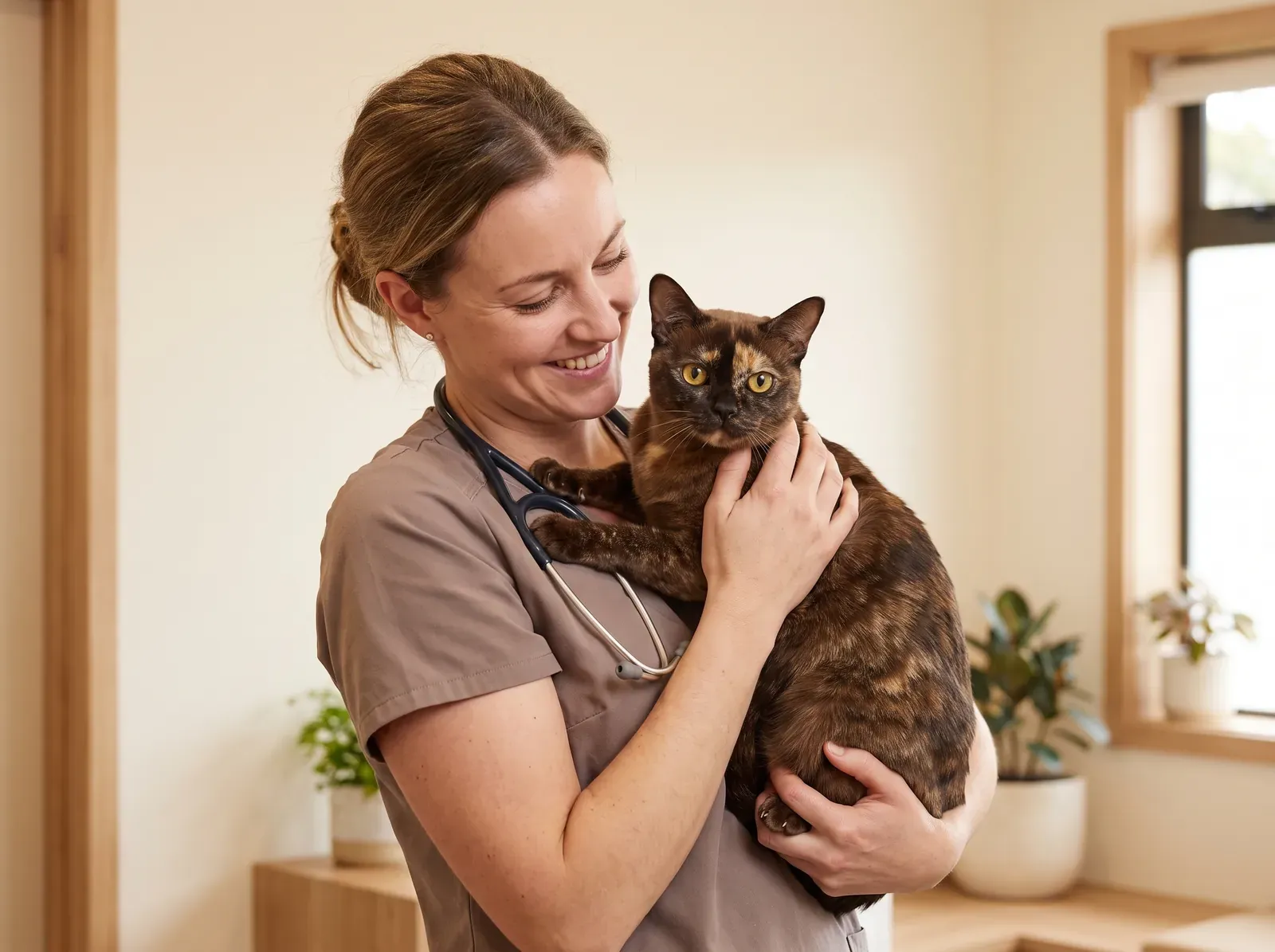
Burmese, a brown tortie cat held against the shoulder of a smiling vet in taupe scrubs

Some of this is not a behaviour problem, and treating it like one wastes time your cat may not have. If they cry or soil the house when you are away, if they hiss, swat or bite when handled, if they are terrified of visitors or the carrier to the point of panic, or if anything about them changes suddenly at any age, contact your vet the same day. A tip from a website, ours included, is not the answer. If it cannot wait, contact your nearest emergency vet now.

With a Burmese, watch their weight, their thirst and their strength. Drinking and peeing more can be diabetes. A cat who suddenly will not jump, walks stiffly or holds their head low can have low potassium. Neither is laziness. As they age, their kidneys, their thyroid and their heart need watching too.

She'll still ride on your shoulder. If she stops asking to come up, call your vet.

Burmese history

Before they were yours.

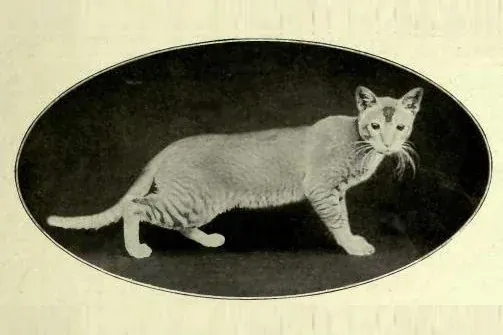
  1. Burmese history, an early photograph of a short-haired cat from Burma, England, 1903
    A "Burmese cat", meaning a cat from Burma, in The Book of the Cat, 1903. Photo: E. Landor, public domain, via Wikimedia Commons.

    1930

    Wong Mau, from Burma

    A doctor in San Francisco, Joseph Thompson, brought a small brown cat named Wong Mau from Burma. Wong Mau was mated with Siamese cats, and the brown kittens became the Burmese.

    What they still carryA Siamese love of people, in a compact, muscular body.

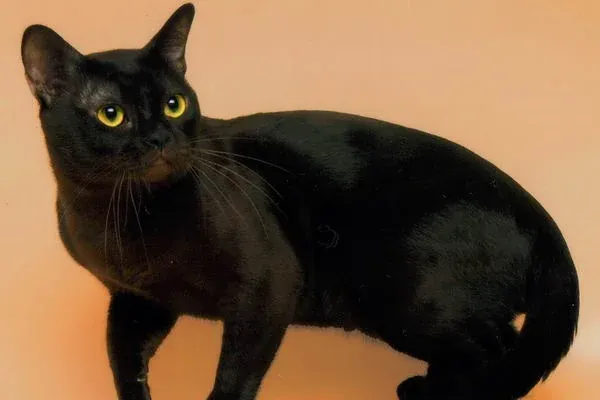
  2. Burmese history, a sable Burmese photographed at a cat show, 2007
    A sable Burmese at a cat show, 2007. Photo: Valery Sinitsyn, CC BY-SA 3.0, via Wikimedia Commons.

    1936

    A breed of their own

    The Cat Fanciers' Association recognised the Burmese in 1936. Breeders kept them rounder and heavier than the Siamese, with a softer voice.

    What they still carryThat surprising weight when you pick them up.

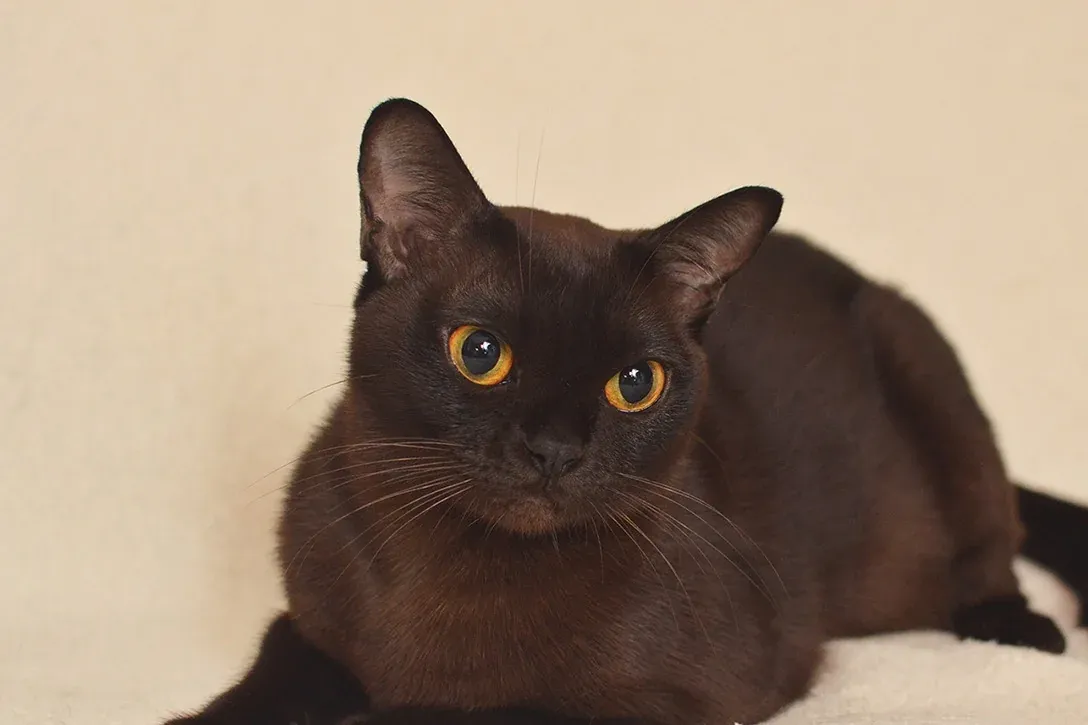
  3. Burmese history, an American-type Burmese sitting, 2023
    An American-type Burmese, 2023. Photo: Ilya Burm, CC BY-SA 4.0, via Wikimedia Commons.

    Over the years

    British and American

    As the breed spread, the British and American lines drifted apart in the shape of the head.

    What they still carryThe same golden eyes and the same need for company, on either side of the Atlantic.

  4. Burmese history, the breed today, a sable adult on a shaded villa terrace, Dubai, today
    A Burmese today.

    Today

    In the UAE

    Well established in the UAE, and happy indoors in a Dubai home, as long as they have company and a warm spot away from the vents.

    What they still carryA people-focused cat who eats well, in a home with nothing to hunt.

Burmese questions

The ones you type at midnight.

Most of these get asked late at night, by someone watching their cat and not sure what they are seeing.

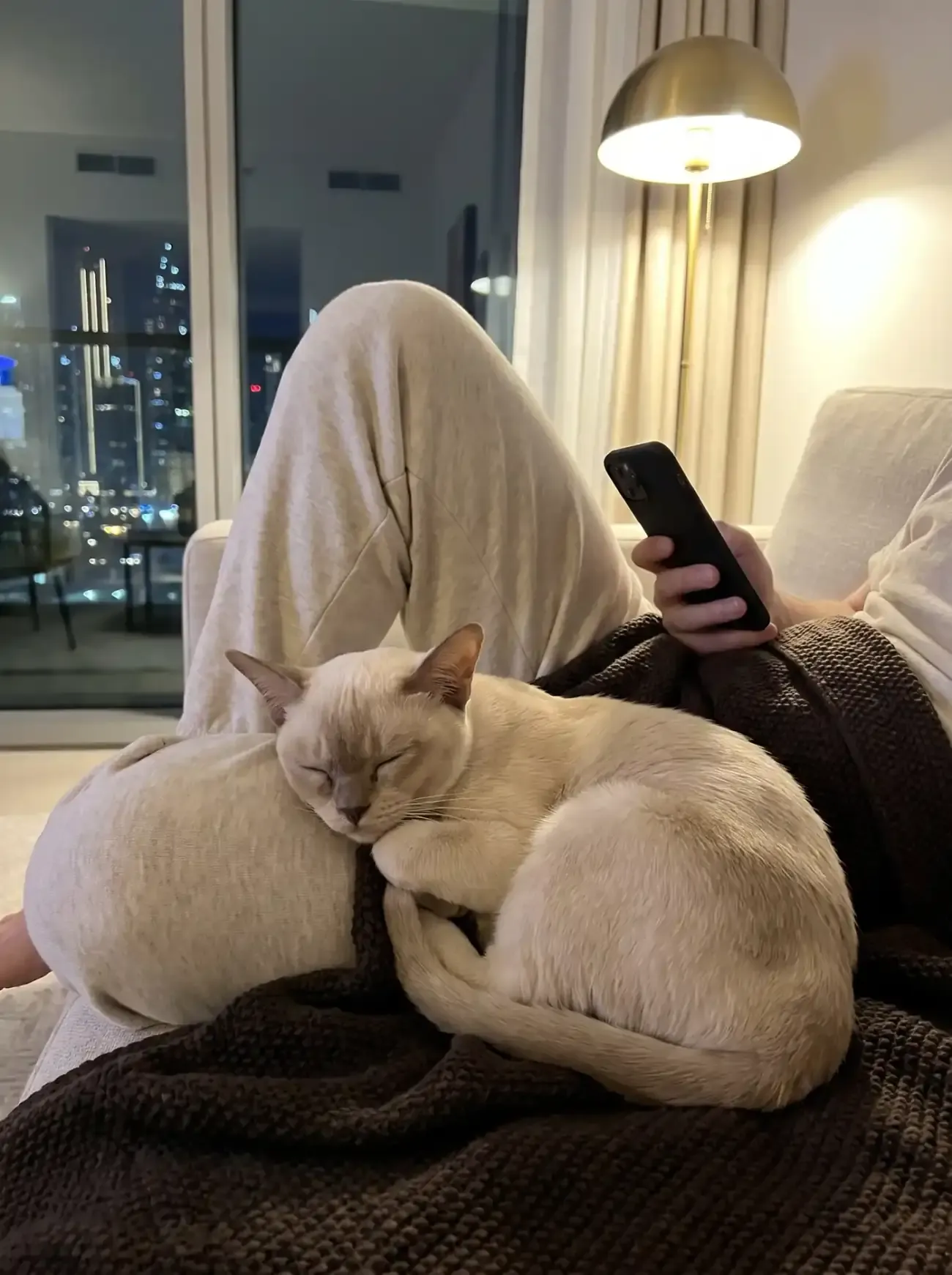
Burmese in Dubai, a cream cat asleep against a knee on a dark throw at night, the skyline behind
What is a Burmese cat like?

A Burmese is affectionate, playful and chatty, and wants to be with their people all day. They stay kittenish for years, and long hours alone are hard on them.

How long do Burmese cats live?

A Burmese cat usually lives 16 to 18 years, among the longest of any pedigree cat. Their weight, teeth and, later, kidneys and thyroid are the things to watch along the way.

How big do Burmese cats get?

Burmese cats are medium-sized but heavy for their size. Males usually weigh 5 to 6.4 kg and females 2.7 to 4 kg.

Do Burmese cats shed?

Burmese cats shed very little. Their short, glossy coat needs only a weekly brush with a rubber brush to lift loose hairs and keep it shining.

What colours do Burmese cats come in?

The classic Burmese cat is a deep sable brown. They also come in blue, chocolate, lilac, red and cream, and in tortie mixes of brown, blue, chocolate and lilac.

What are the types of Burmese cats?

There are two types of Burmese cat, the British and the American, and the difference is in the shape of the head. Both share the same golden eyes, muscular body and love of people.

Can a Burmese cat be left alone?

A Burmese cat copes with short absences, but long days alone are hard on them. Plan who will visit on long days, and talk to your vet if they cry or soil the house while you are out.

Why is my Burmese cat so heavy?

A Burmese cat is compact and muscular, so they weigh more than they look. They also gain weight easily, so feel for their ribs and weigh their food.

What health problems do Burmese cats have?

Diabetes Mellitus (when the body cannot control blood sugar) is the best-known risk for Burmese cats, from their junior years. After that come low potassium, which causes muscle weakness, and dental disease, and later in life kidney disease, an overactive thyroid and heart disease.

Worried about them? Contact your vet today.