We’re hiring people who love them like we do. Join us careers@pawsandco.comSee open roles
UAE Government Licensed MOCCAE
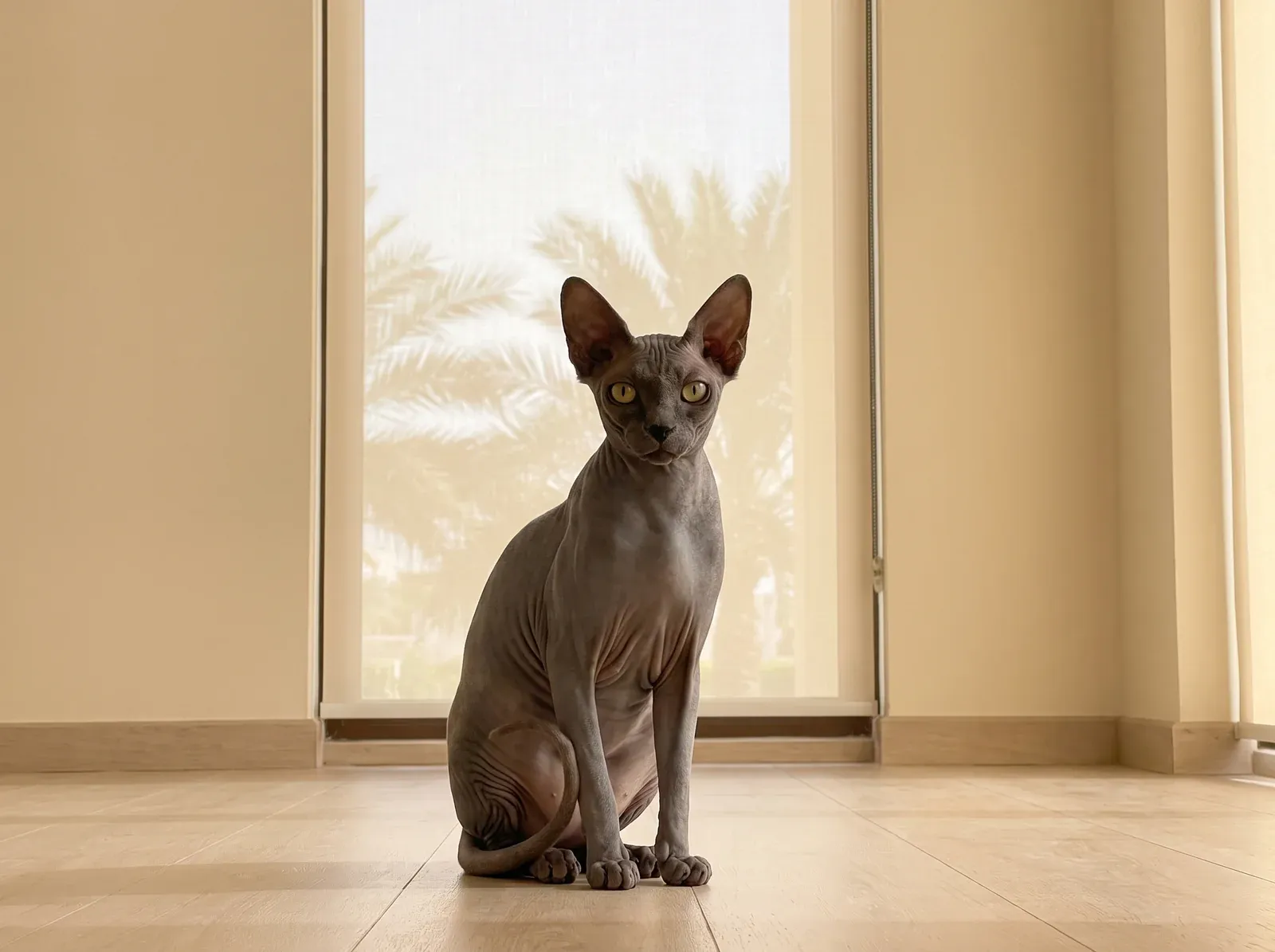
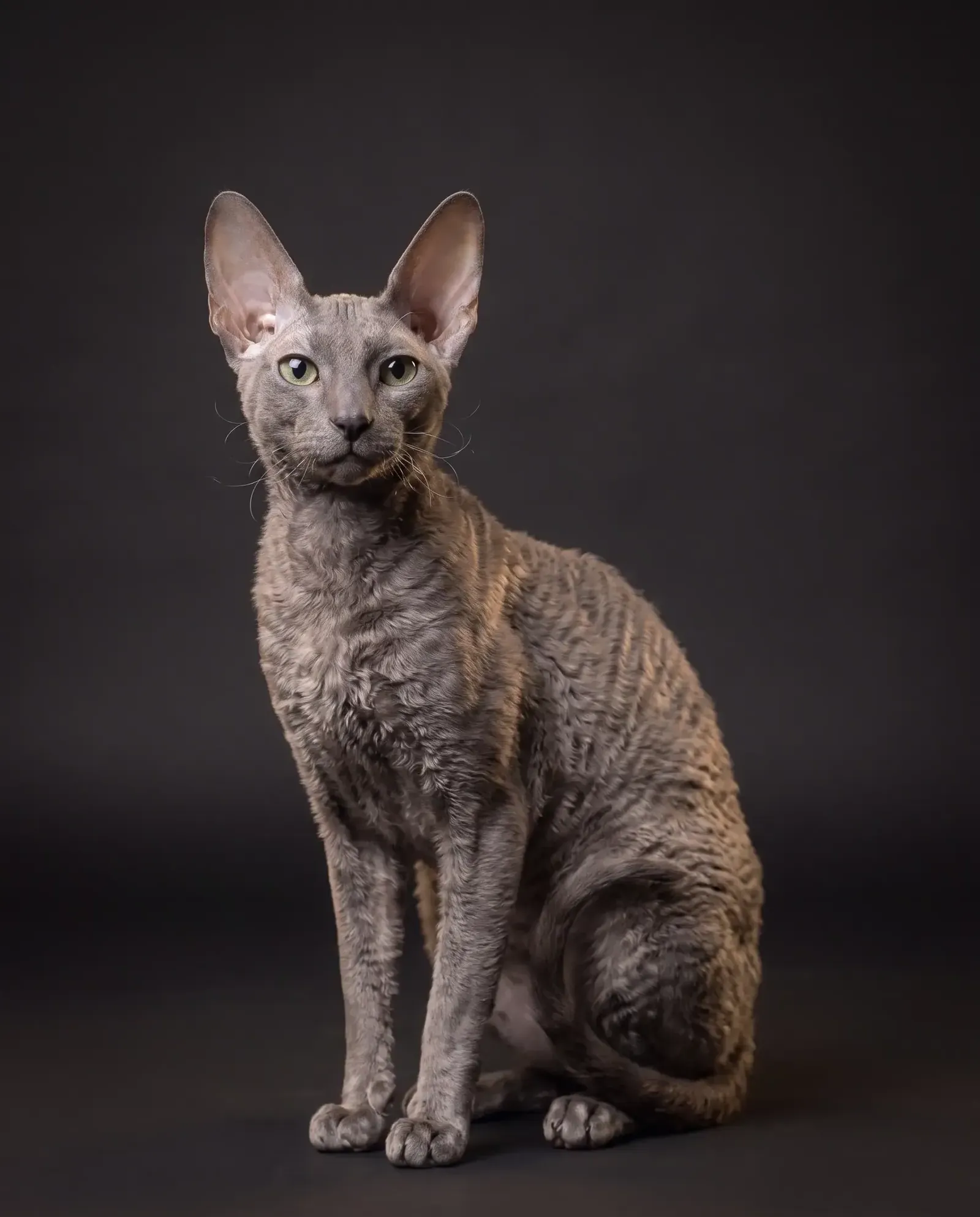
Cornish Rex in Dubai, studio portrait of a calm blue-grey adult with a wavy coat, sitting

Breed guide · Cats

Cornish Rex

He sprints the hallway end to end all evening. I keep a warm bed at the far end.

Lifespan
12 to 16 years
Size
Small to medium
Weight
2.3 to 4.5 kg
Grooming
Easy, and the odd ear clean

Last updated 12 October 2026

Join the founding families. AED 1,999 of essential care for AED 199.

No payment now. We'll be in touch by email and WhatsApp as we open enrolment.

✓
Thank you.

We will be in touch soon to confirm.

Cornish Rex traits

What they brought with them.

Tap a card to see what is going on.

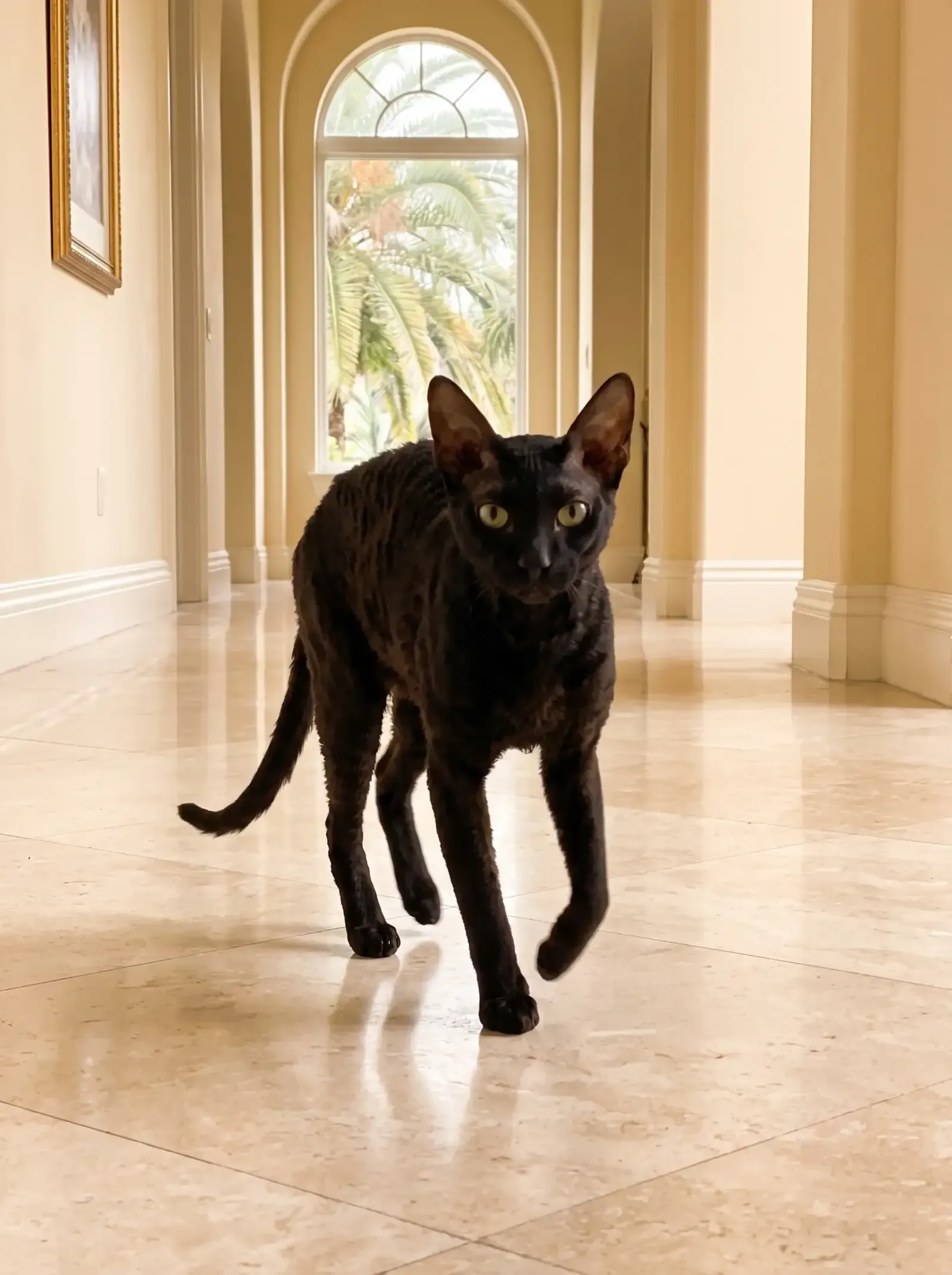
Cornish Rex in Dubai, a black cat trotting down a marble villa hallway, palms through an arched window

At home

Why does my Cornish Rex run laps of the flat?

End to end down the hallway, round the sofa and back, every evening.

What's going onCornish Rex cats keep their kitten energy for years. They need a hunt to finish several times a day: a wand toy moved like prey, a catch, then a meal.
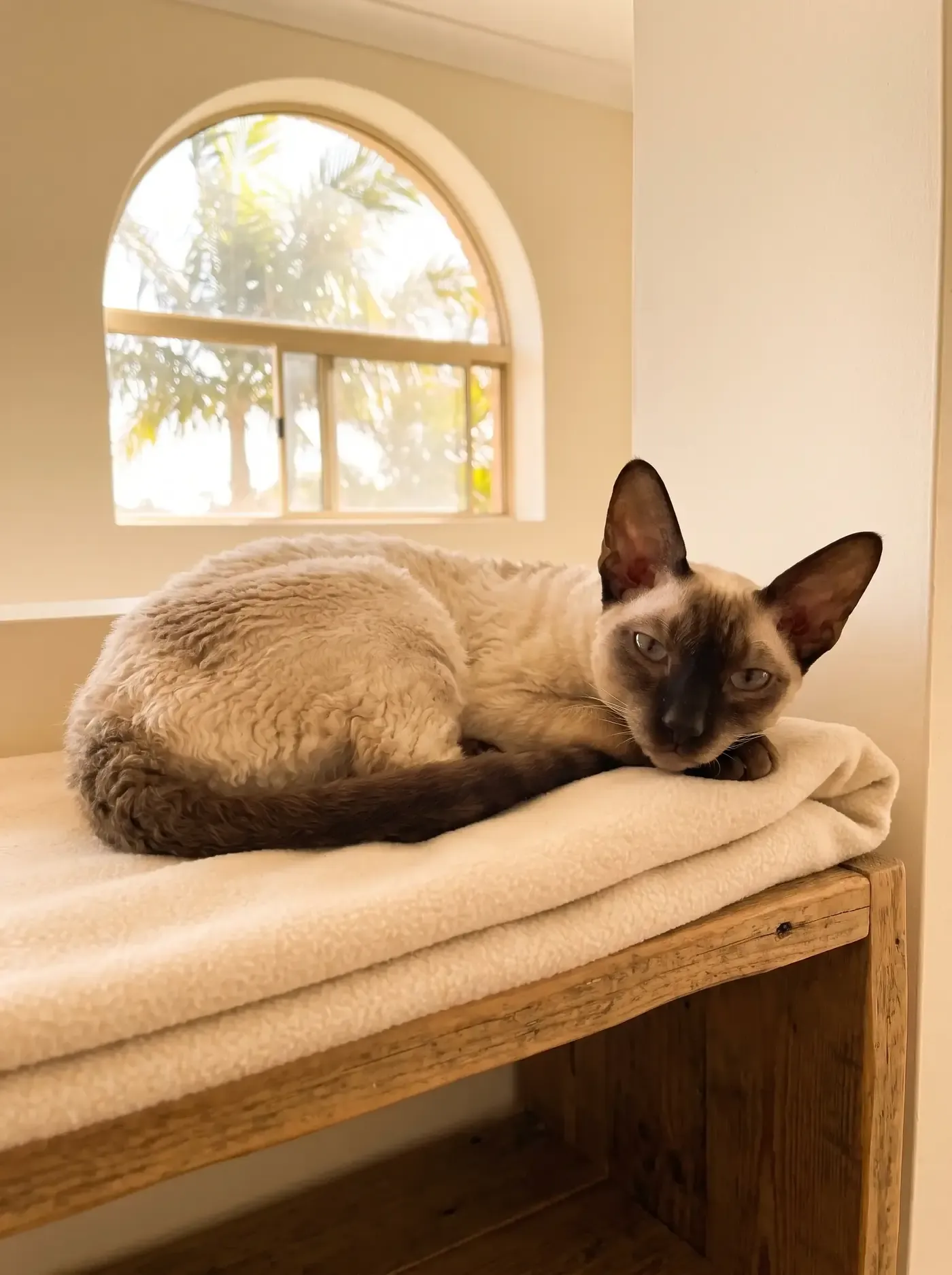
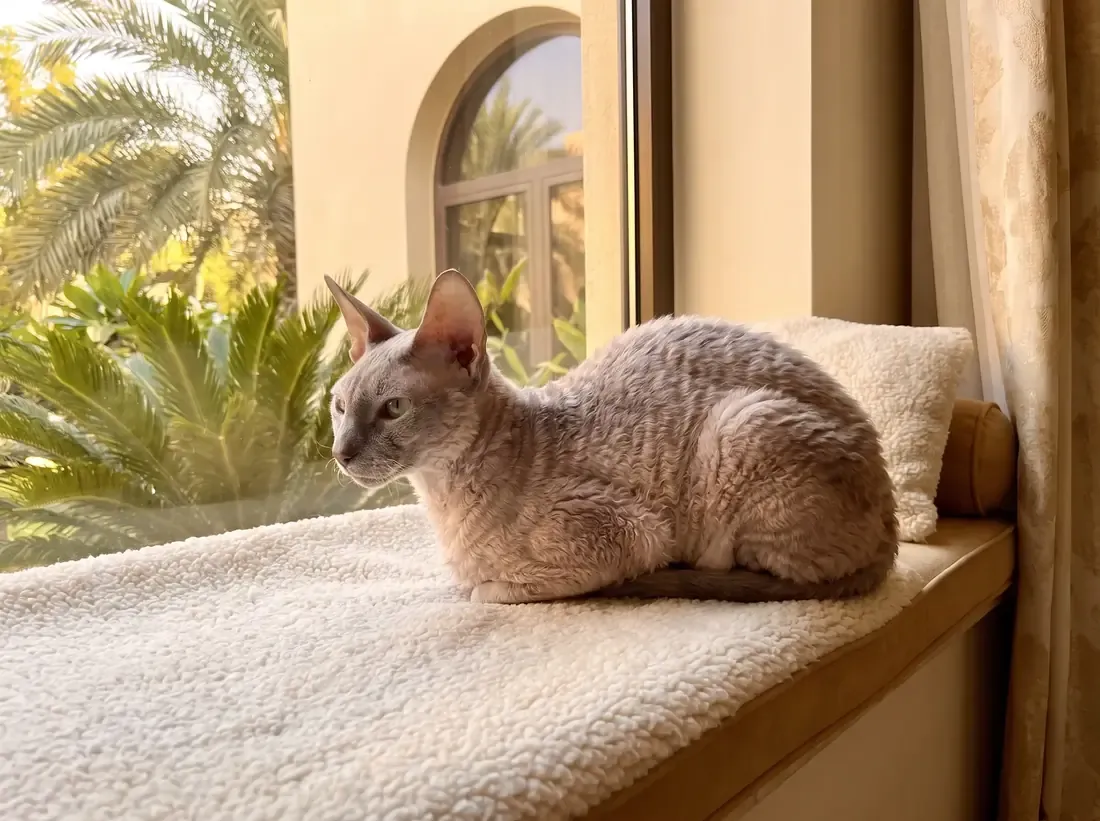
Cornish Rex in Dubai, a seal colourpoint curled on a fleece on a timber shelf, palms through an arched window

At home

Why is my Cornish Rex always on the warm spot?

On the laptop, in your lap, on top of the fridge where the warm air comes out.

What's going onTheir coat is undercoat only, so they feel the cold. They go where the heat is. A warm bed away from the air conditioning vents gives them a better option.

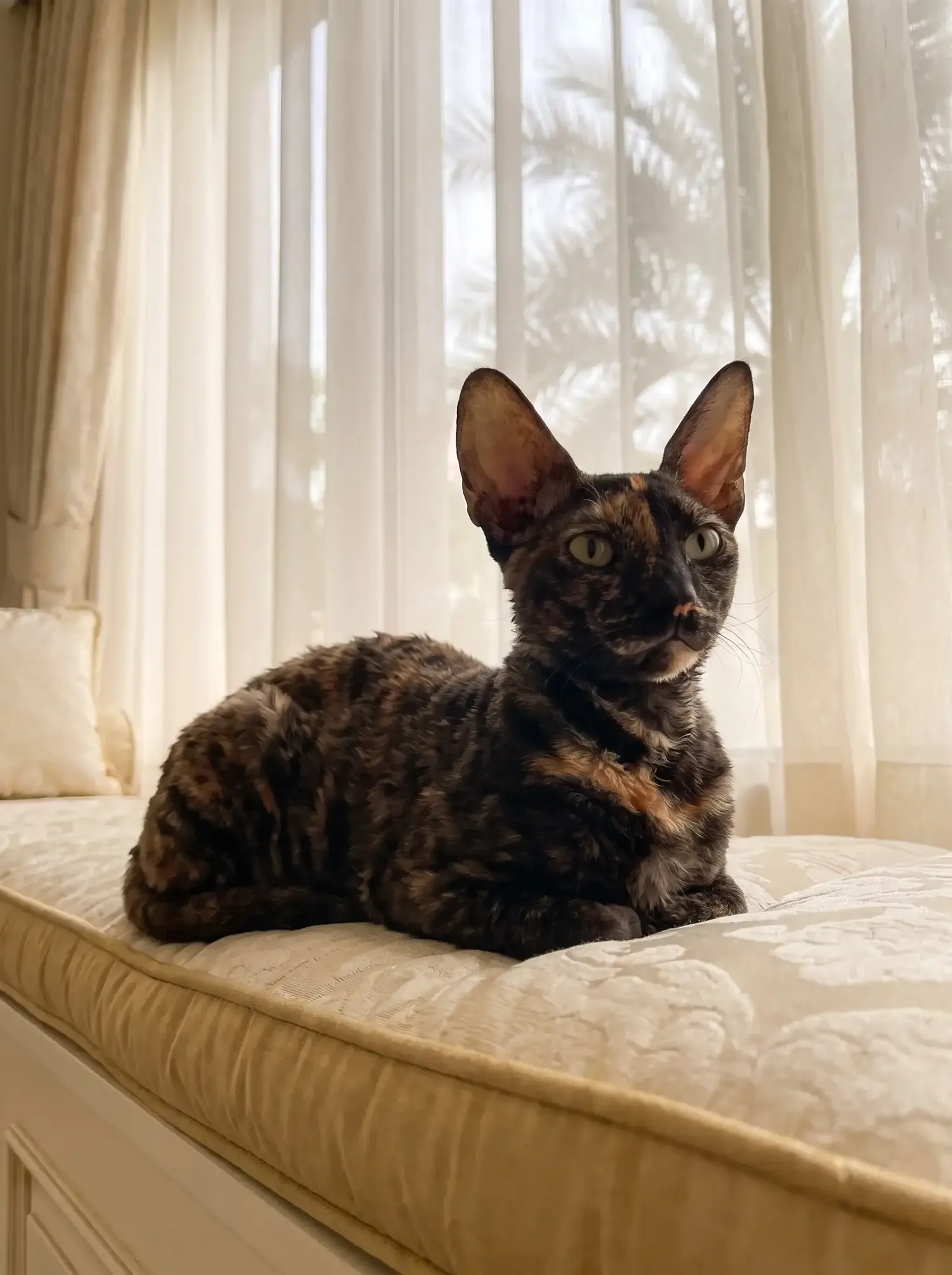
Cornish Rex in Dubai, a tortoiseshell resting on a window seat behind sheer curtains, palms outside

At home

Can my Cornish Rex sit in the sun?

Stretched out in the brightest patch by the window, all afternoon.

What's going onA thin coat means thin protection. Shade their favourite window and keep them off the balcony. Never put human sun cream on them; ask your vet what is safe.

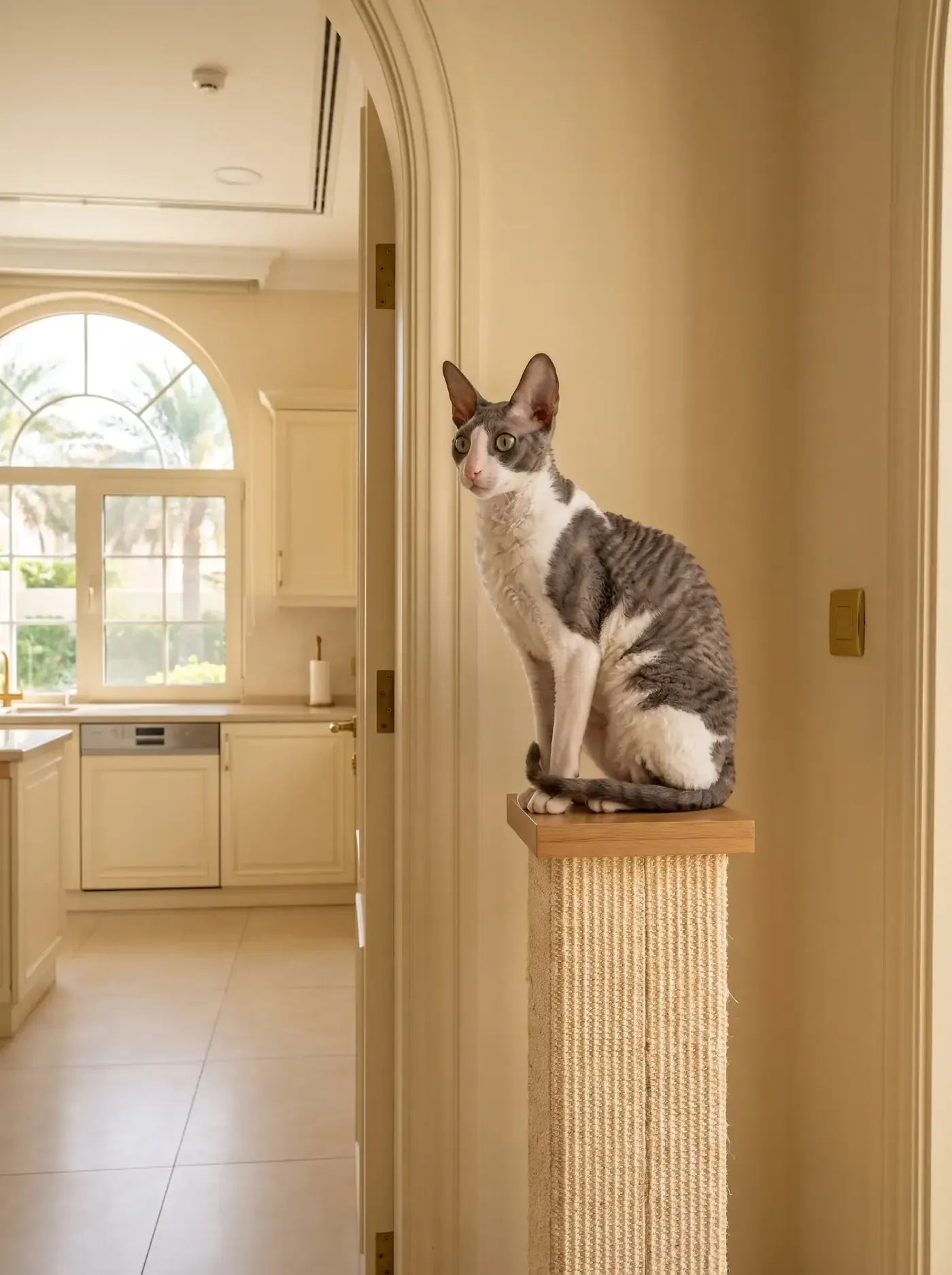
Cornish Rex in Dubai, a blue and white cat on a cat post by a villa kitchen, palms through the window

At home

Why is my Cornish Rex on the kitchen counter?

Every time you turn round, there they are, up high and into everything.

What's going onA bored Cornish Rex finds their own hunting, and it is usually up high. More play, and a cat tree near the kitchen, give them somewhere better to be.

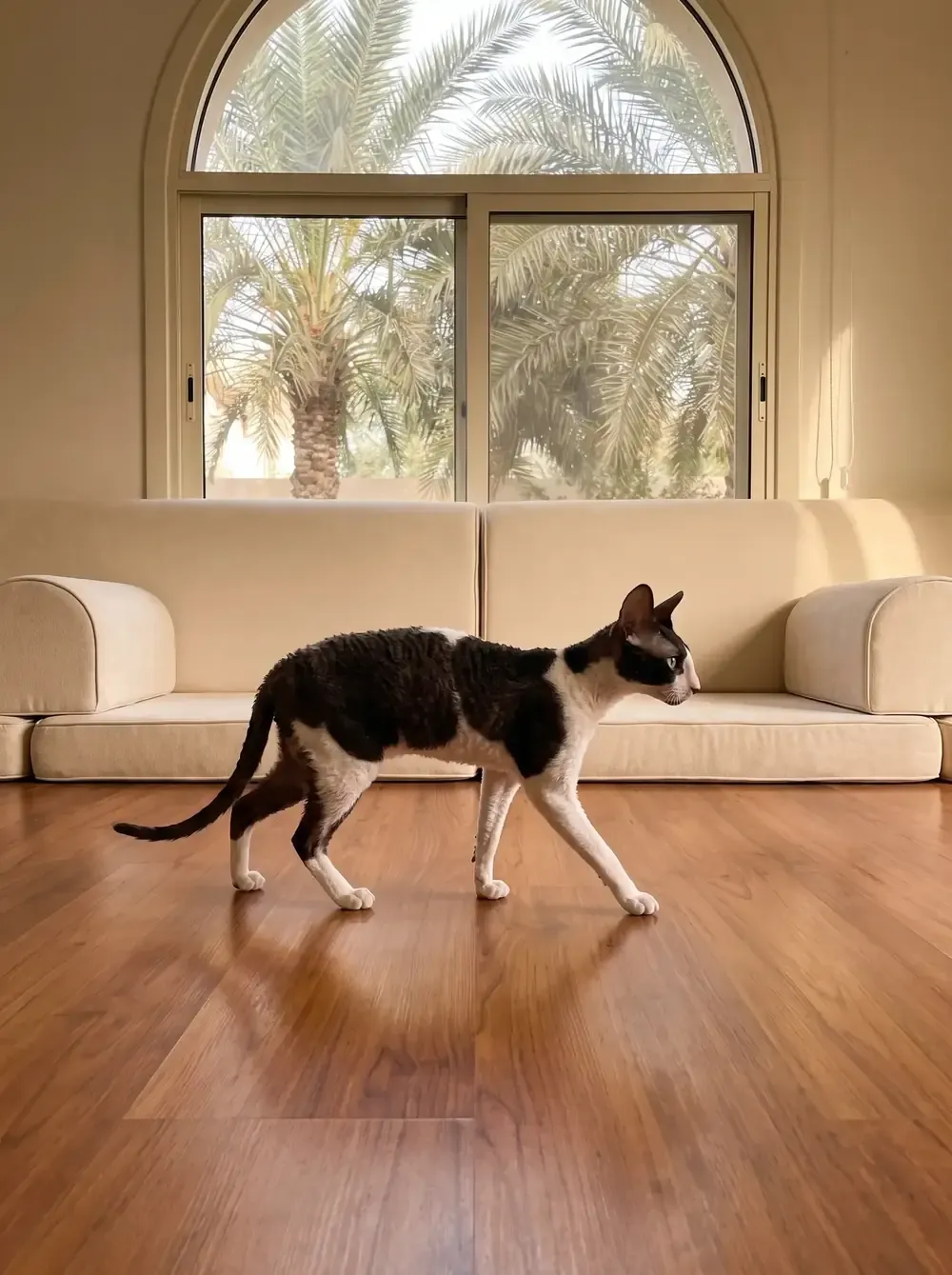
Cornish Rex in Dubai, a black and white cat walking past a low majlis sofa, palms through an arched window

At home

A skip in their step

A back leg held up for a few strides, then back to normal as if nothing happened.

What's going onPatellar Luxation (PL, a slipping kneecap) is a risk for the breed from kittenhood, and that skip is the usual sign. Film it, and show your vet.

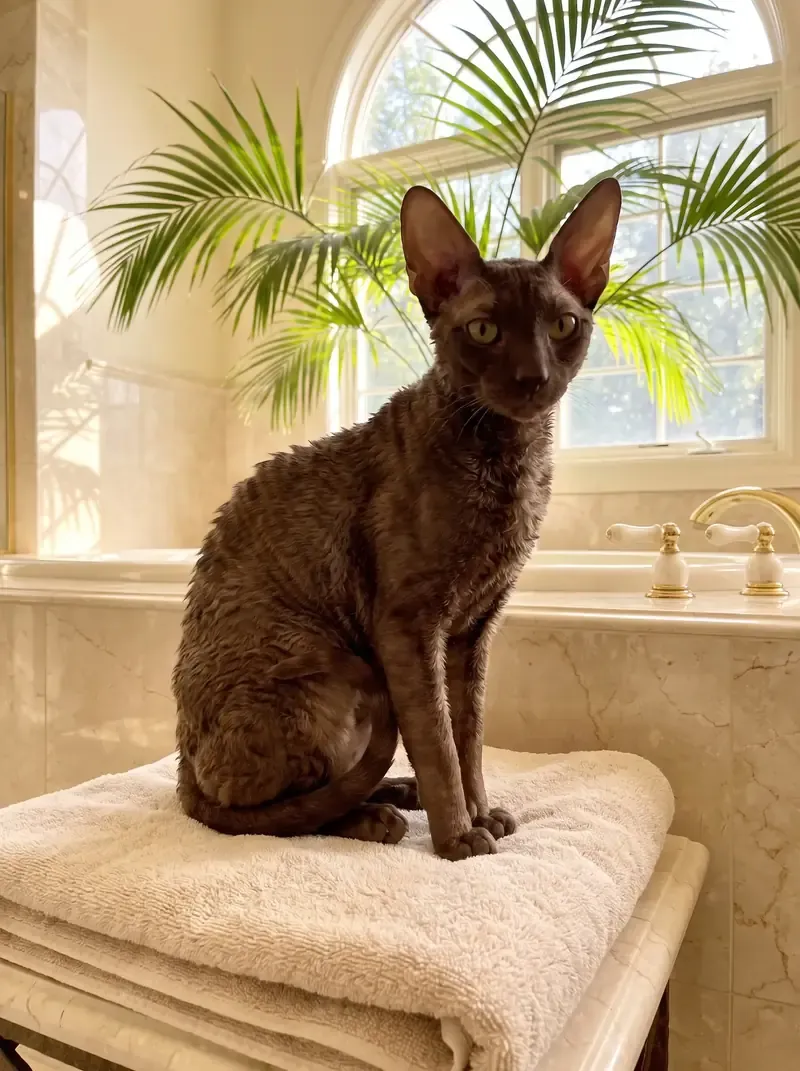
Cornish Rex in Dubai, a chocolate cat sitting on a towel after a bath, palm fronds at the window

At home

Their ears and skin need a little help

A little brown wax in the ears, and a faint mark on the sofa where they sleep.

What's going onWith so little coat to soak it up, oil and ear wax build up. A gentle clean of the part of the ear you can see, and an occasional bath as their vet advises, keep them comfortable.

A Cornish Rex in Dubai

The bit nobody tells you.

Their day

Built for: Built like a sprinter.

In Dubai: Half the day running, half looking for somewhere warm.

The cold

Built for: A coat with no outer guard hairs.

In Dubai: Cold air from the vents, all summer long.

The sun

Built for: Little coat to keep the sun off.

In Dubai: Strong sun through the window.

A thin coat gives them little help with either.

They need a hunt to finish every day, warm beds away from the vents, shade at the window, and their knees and heart looked at when their plan says it's time. The ten things below show you how.

Your plan is built around what a Cornish Rex is prone to at every age, from their skin and knees to their heart, and the care that goes with each one.

Join the founding families. AED 1,999 of essential care for AED 199.

Daily care for a Cornish Rex

Ten things that make their life better.

Many of them are free, and most matter at every age.

  1. They keep their kitten energy for years, and a hunt that ends in a catch settles them.

    Every age, most of all 7 months to 2 years

    Under AED 30

    Why

    They keep their kitten energy for years, and a hunt that ends in a catch settles them.

    What to do

    A wand toy moved like prey, five to ten minutes, up to three times a day if they want it. Let them catch it, then feed them. Teach a kitten early that hands are not toys. Slower games along the floor as they age.

  2. They love height, and a perch near a vent puts cold air on a coat with no guard hairs.

    Every age

    Free to about AED 500

    Why

    They love height, and a perch near a vent puts cold air on a coat with no guard hairs.

    What to do

    High places away from the air conditioning, with a fleece on top. A cat tree near the kitchen gives them a better perch than the counter. Add steps as they get older.

  3. Patellar Luxation (PL, a slipping kneecap) is a risk for the breed from kittenhood.

    Every age, start as a kitten

    FreeIn your plan

    Why

    Patellar Luxation (PL, a slipping kneecap) is a risk for the breed from kittenhood.

    What to do

    Once a month, film them running and jumping down. Watch for a back leg held up for a few strides. Show your vet the film at their next visit. A patellar and orthopaedic evaluation (knee, joint and bone exam) is in your plan from their kitten months.

  4. Their coat is undercoat only, so cold air and direct sun both reach their skin.

    Every age, most of all kittens and older cats

    Free, or the cost of a covered bed

    Why

    Their coat is undercoat only, so cold air and direct sun both reach their skin.

    What to do

    Warm, covered beds away from the vents. Shade their favourite window, and keep them off the balcony. Never use human sun cream on them. A kitten chills fastest, and older cats feel the cold more, so add a second warm bed.

  5. Skin and coat sensitivity is a risk from kittenhood, and ear wax builds up.

    Every age, start as a kitten

    The cost of a cat-safe washIn your plan

    Why

    Skin and coat sensitivity is a risk from kittenhood, and ear wax builds up.

    What to do

    An occasional bath as their vet advises, in a warm room, with a cat-safe wash, then dry them fully. Look inside their ears once a week and clean only the part you can see. Start a kitten with a warm, damp cloth. A skin and coat evaluation is in your plan as a kitten, and routine ear evaluations (a look inside the ears) from their junior years.

  6. Obesity becomes a risk in their mature years, and extra weight loads their knees.

    Every age, most of all from 7 years

    Free to under AED 100 for a puzzle feederIn your plan

    Why

    Obesity becomes a risk in their mature years, and extra weight loads their knees.

    What to do

    Weigh their daily food and put part of it in a puzzle feeder. Weight-management counselling (help to get their portions right) is in your plan from the day they are neutered.

  7. Hypertrophic Cardiomyopathy (HCM, a thickened heart muscle) is a risk from their mature years, and cats hide heart disease well.

    Every age, most of all from 7 years

    In your plan

    Why

    Hypertrophic Cardiomyopathy (HCM, a thickened heart muscle) is a risk from their mature years, and cats hide heart disease well.

    What to do

    Cardiac auscultation (listening to the heart) and baseline echocardiography (an ultrasound scan of the heart) are in your plan from their junior years, so any later change shows up. Repeat scans follow from their mature years. Fast or shallow breathing while resting should be discussed with your vet immediately, within the same day. Breathing with their mouth open, or struggling for breath, is an emergency: contact your vet now.

  8. A cat this quick is hard to catch on the day.

    Every age, start as a kitten

    Free

    Why

    A cat this quick is hard to catch on the day.

    What to do

    Leave the carrier out, door open, with a warm blanket and the odd treat inside, so they walk in by choice. Once a week, touch their paws, ears and mouth for a second, then give a treat. On the day, cover it with a towel and carry it level.

  9. Dental disease is a risk from their junior years, and cats keep eating with sore teeth.

    Every age, start as a kitten

    Under AED 30 for a toothbrush and pasteIn your plan

    Why

    Dental disease is a risk from their junior years, and cats keep eating with sore teeth.

    What to do

    Lift their lip and look at their teeth and gums. Start brushing as a kitten, a few seconds at a time, with cat toothpaste. Tell your vet if they drop food or chew on one side. A dental evaluation (teeth and gum check) is in your plan every year from their junior years.

  10. They are lean, so a small change in weight means more.

    Every age

    Free

    Why

    They are lean, so a small change in weight means more.

    What to do

    Step on the scales holding them, then without them, and write down the difference. Notice whether they still run, climb and jump. Call your vet about any steady loss or gain.

Five of these are in your plan. The rest you can do at home.

Join the founding families. AED 1,999 of essential care for AED 199.

Cornish Rex health by age

Their health, at every age.

A Cornish Rex who slows down is telling you something. Choose their age to see what to watch for, and the care that goes with it.

Cornish Rex in Dubai, an older lilac cat resting on a cushioned window seat, eyes open, palms outside

How old are they?

Their age

Cornish Rex Kitten health

the first six months

What to watch for

  1. Skin and coat sensitivity
  2. Patellar Luxation (PL, a slipping kneecap)
  3. Congenital defect screening (heart murmur, cleft palate, umbilical hernia)
  4. Gastrointestinal and external parasites
  5. Gastrointestinal and upper respiratory infectious disease

The care that goes with it

  1. Core vaccinations, microchip and Dubai Municipality registration
  2. Deworming, and flea and tick prevention
  3. Growth and nutritional evaluation, and early socialisation
  4. Skin and coat care evaluation
  5. Patellar and orthopaedic evaluation (knee, joint and bone exam)
The full care detail
  • Core vaccination programme, microchipping and Dubai Municipality registration. Titre testing discussion where clinically appropriate; not a substitute for completing the core vaccine series
  • Deworming and external parasite prevention tailored to Dubai exposure
  • Body Condition Score (BCS, a check on whether they are the right weight), Muscle Condition Score (MCS, a check on their muscle), dental, growth and nutritional evaluation, and early socialisation
  • Skin and coat care assessment
  • Patellar and orthopaedic evaluation

Their age

Cornish Rex Junior health

7 months to 2 years

What to watch for

  1. Patellar Luxation (PL, a slipping kneecap)
  2. Early presentation of Skin and coat sensitivity
  3. Early presentation of Dental disease
  4. Early presentation of Ear wax accumulation
  5. Early presentation of Gastrointestinal upset

The care that goes with it

  1. Neutering or spaying, with weight-management counselling
  2. Core vaccinations completed, and parasite control all year
  3. Annual dental evaluation, and brushing at home
  4. Baseline weight and urinalysis (a urine test)
  5. Baseline bloods, and FeLV and FIV status testing (two viruses cats pass to each other)
  6. Patellar Luxation monitoring (for a slipping kneecap)
  7. Cardiac auscultation (listening to the heart) and a baseline heart scan
  8. Warm resting places, and advice on avoiding heat stress
  9. Ear evaluation and gentle cleaning
The full care detail
  • Neutering or spaying, with weight-management counselling from the day of surgery
  • Completion of the core vaccination programme and year-round parasite control
  • Annual dental evaluation and a home dental-care routine started young
  • Baseline weight, Body Condition Score (BCS, a check on whether they are the right weight) and urinalysis to set the adult reference point
  • Baseline blood work, and Feline Leukaemia Virus (FeLV, the feline leukaemia virus) and Feline Immunodeficiency Virus (FIV, the feline virus equivalent to HIV) status testing
  • Continued monitoring of Patellar Luxation (PL)
  • Baseline cardiac auscultation and echocardiography screening
  • Provide warm resting areas and avoid heat stress
  • Routine ear evaluation and gentle cleaning

Their age

Cornish Rex Prime Adult health

2 to 6 years

What to watch for

  1. Skin and coat sensitivity
  2. Patellar Luxation (PL, a slipping kneecap)
  3. Dental disease
  4. Ear wax accumulation
  5. Gastrointestinal upset

The care that goes with it

  1. Annual dental evaluation, and brushing at home
  2. Neutering or spaying, if not done yet
  3. Core vaccinations and parasite control
  4. Diet and body condition scoring (a check on whether they are the right weight)
  5. Weight and urinalysis (a urine test), and FeLV and FIV status testing
  6. Cardiac auscultation and echocardiography (an ultrasound scan of the heart)
  7. Warm resting places, and advice on avoiding heat stress
  8. Ear evaluation and gentle cleaning
The full care detail
  • Annual dental evaluation and home dental care
  • Neutering or spaying, with weight-management counselling from the day of surgery, where it was not done at the Junior stage
  • Core vaccination and parasite control
  • Diet and body condition scoring
  • Baseline weight and urinalysis
  • Feline Leukaemia Virus (FeLV, the feline leukaemia virus) and Feline Immunodeficiency Virus (FIV, the feline virus equivalent to HIV) status testing
  • Cardiac auscultation and baseline echocardiography
  • Provide warm resting areas and avoid heat stress
  • Routine ear evaluation and gentle cleaning

Their age

Cornish Rex Mature Adult health

7 to 10 years

What to watch for

  1. Hypertrophic Cardiomyopathy (HCM, a thickened heart muscle)
  2. Dental and periodontal disease (gum disease)
  3. Patellar Luxation (PL, a slipping kneecap)
  4. Skin and coat conditions
  5. Obesity

The care that goes with it

  1. Cardiac auscultation (listening to the heart) and echocardiography, repeated
  2. Dental scaling (a clean), as needed
  3. Weight and body condition monitoring
  4. Skin and coat evaluation
  5. Annual bloods and urinalysis (a urine test)
  6. Blood pressure measurement
The full care detail
  • Periodic cardiac auscultation and echocardiography
  • Professional dental scaling as indicated
  • Weight and body condition monitoring
  • Skin and coat evaluation
  • Annual blood and urine screening
  • Blood pressure measurement

Their age

Cornish Rex Senior health

11 to 14 years

What to watch for

  1. Hypertrophic Cardiomyopathy (HCM, a thickened heart muscle)
  2. Chronic Kidney Disease (CKD, long-term kidney failure)
  3. Dental disease
  4. Hyperthyroidism (an overactive thyroid)
  5. Degenerative joint disease (joints wearing down with age)

The care that goes with it

  1. Bloods, renal panel (kidney blood tests) and urinalysis, twice a year
  2. Thyroid hormone screening
  3. Blood pressure measurement
  4. Echocardiography (an ultrasound scan of the heart) and cardiac monitoring
  5. Joint and mobility evaluation (joint and movement exam)
  6. Dental evaluation under anaesthesia, and a pain evaluation
The full care detail
  • Twice-yearly bloods, renal panel and urinalysis
  • Thyroid hormone screening
  • Blood pressure measurements
  • Echocardiography and cardiac monitoring
  • Joint and mobility evaluation
  • Dental evaluation under anaesthesia
  • Dental and pain evaluation

Their age

Cornish Rex Geriatric health

15 years and over

What to watch for

  1. Chronic Kidney Disease (CKD, long-term kidney failure)
  2. Hypertrophic Cardiomyopathy (HCM, a thickened heart muscle)
  3. Hyperthyroidism (an overactive thyroid)
  4. Osteoarthritis (worn, painful joints)
  5. Neoplasia (cancer and tumours)

The care that goes with it

  1. Physical examination twice a year, with weight, muscle, teeth and mobility
  2. Bloods, urinalysis (a urine test) and thyroid testing
  3. Neoplasia screening (for cancer), and any weight loss or lumps looked into
  4. Nutrition, hydration and grooming support
  5. Quality-of-life assessment, comfort care and end-of-life planning
  6. Echocardiography and blood pressure monitoring
The full care detail
  • Biannual physical examination including weight trend, Body Condition Score (BCS, a check on whether they are the right weight) and Muscle Condition Score (MCS, a check on their muscle), and dental and mobility evaluation
  • Complete Blood Count (CBC), biochemistry including renal parameters where appropriate, urinalysis including Urine Specific Gravity (USG), and total T4 according to age and risk
  • Neoplasia evaluation including lymph nodes, oral cavity, skin and subcutaneous tissues, and abdominal palpation. Investigate unexplained weight loss, appetite change, masses or lymphadenopathy
  • Nutrition, hydration and grooming support
  • Quality-of-life assessments, a tailored palliative and comfort-focused care plan, and compassionate end-of-life planning with your veterinary team, available earlier should it become clinically evident
  • Ongoing echocardiographic surveillance and blood pressure monitoring

Breed predispositions indicate an increased risk rather than certainty of disease. What is right for them always comes from their own history and an evaluation.

Getting a Cornish Rex in Dubai

Before they come home.

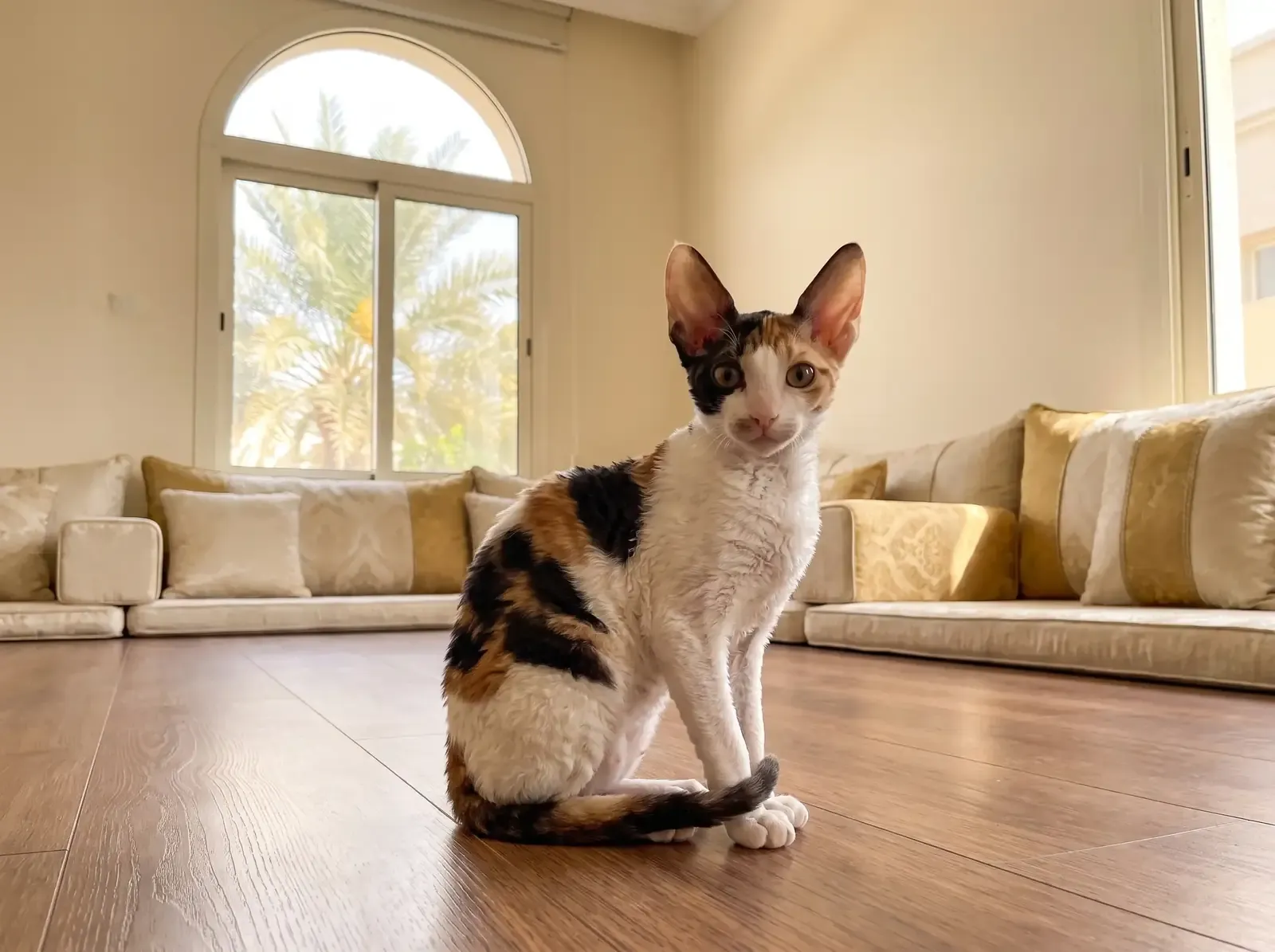
Cornish Rex in Dubai, a calico kitten sitting on a timber floor, majlis seating and palms behind

Cornish Rex or Devon Rex?

Two curly breeds, two different genes

They look alike, but the Cornish has no outer guard hairs at all, only a soft undercoat in neat waves, on a long, arched, greyhound-like body. The Devon is more pixie-faced, with big, low-set ears.

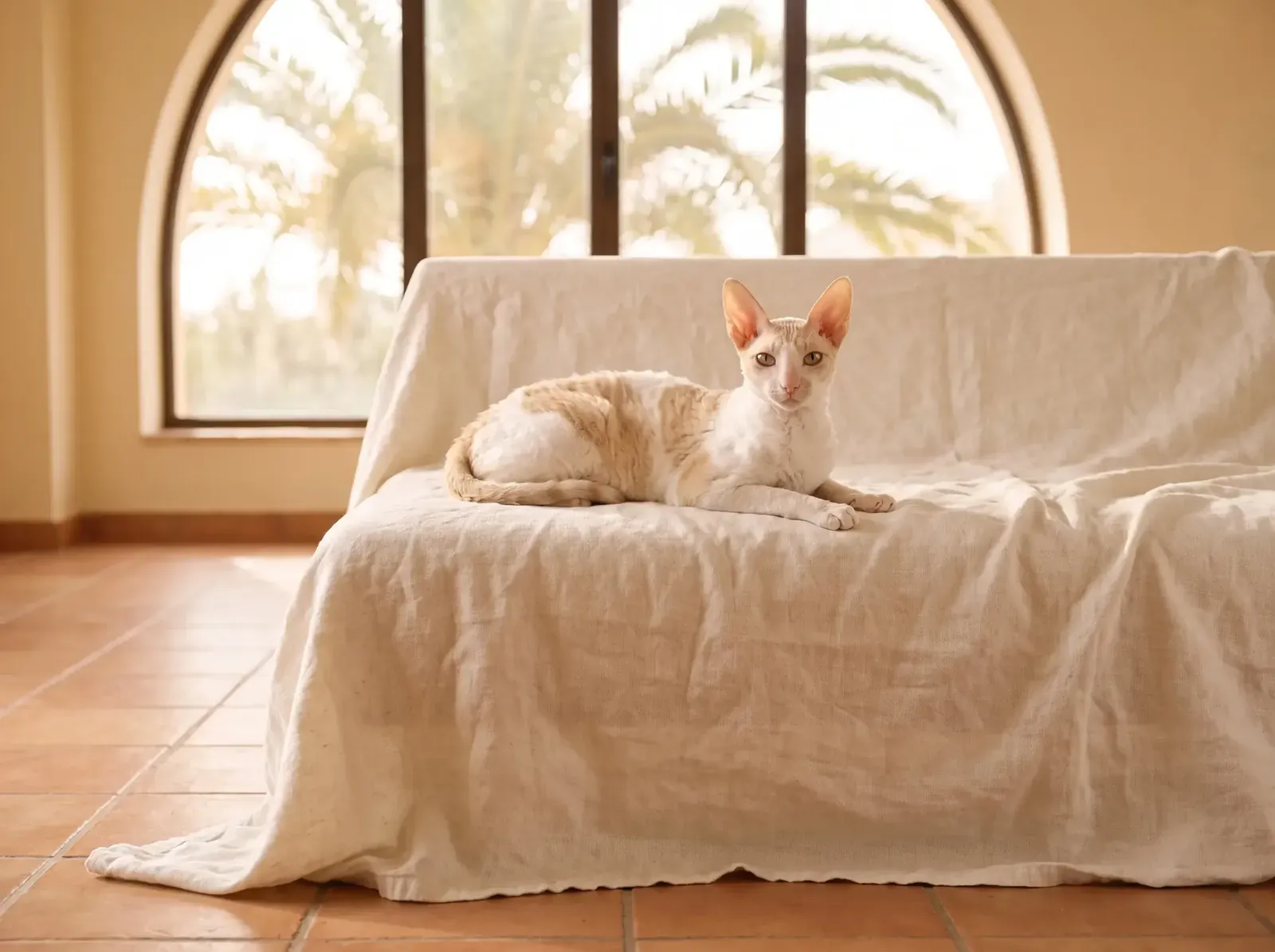
Cornish Rex in Dubai, a cream and white cat lying on a linen throw, palms through an arched window

Colours

Every colour and pattern

From solid shades to tortoiseshell, smoke and pointed, and tabby with or without white. Whatever the colour, that wavy coat feels the same under your hand.

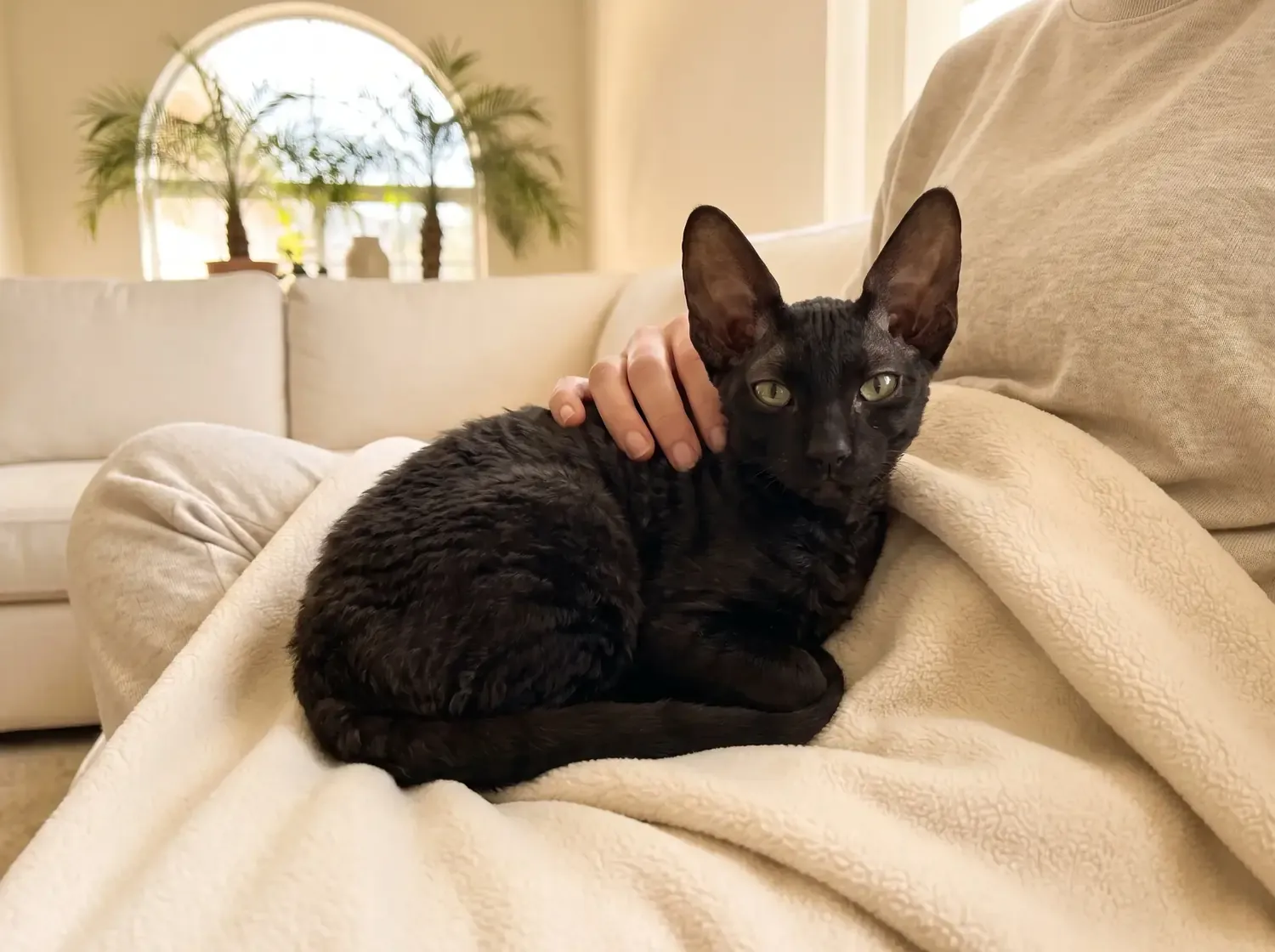
Cornish Rex, a black kitten curled in a cream fleece on a pet parent's lap

The first six months

Caring for a Cornish Rex kitten

Their vaccinations, microchip and Dubai Municipality registration come first, with an evaluation of their skin and coat, and of their knees and joints. Keep their room warm, and spend a few seconds a day with a warm, damp cloth now, so handling feels normal.

Kitten health, 0 to 6 months
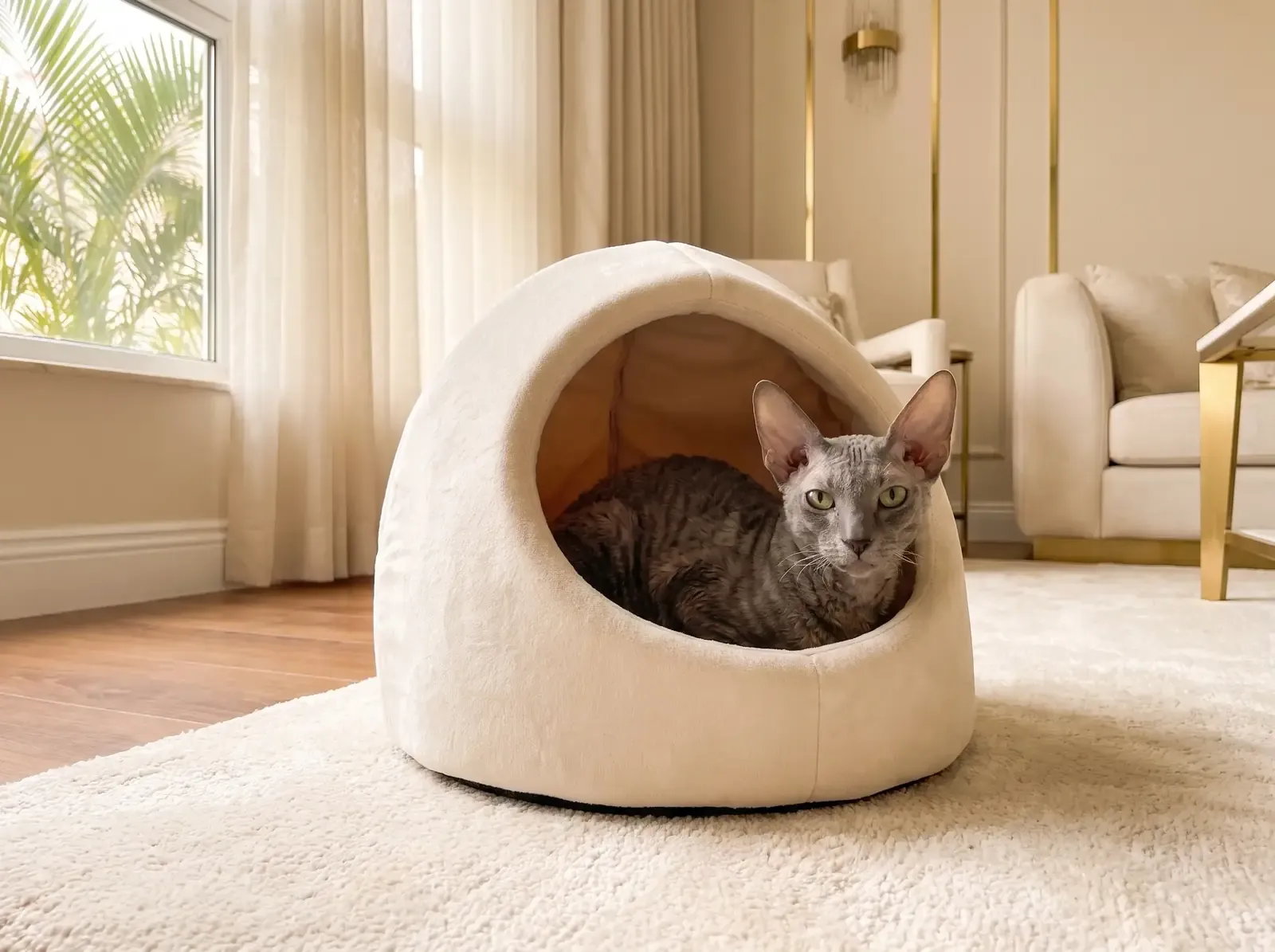
Cornish Rex in Dubai, a silver tabby resting in a covered cat bed by a shaded window, palms outside

Getting the home ready

Warm beds, and shade at the window

A covered bed or a fleece away from the air conditioning vents, in more than one room, and shade on the sunniest window. A cat tree near the kitchen and a wand toy give all that energy somewhere to go.

Ten things that make their life better
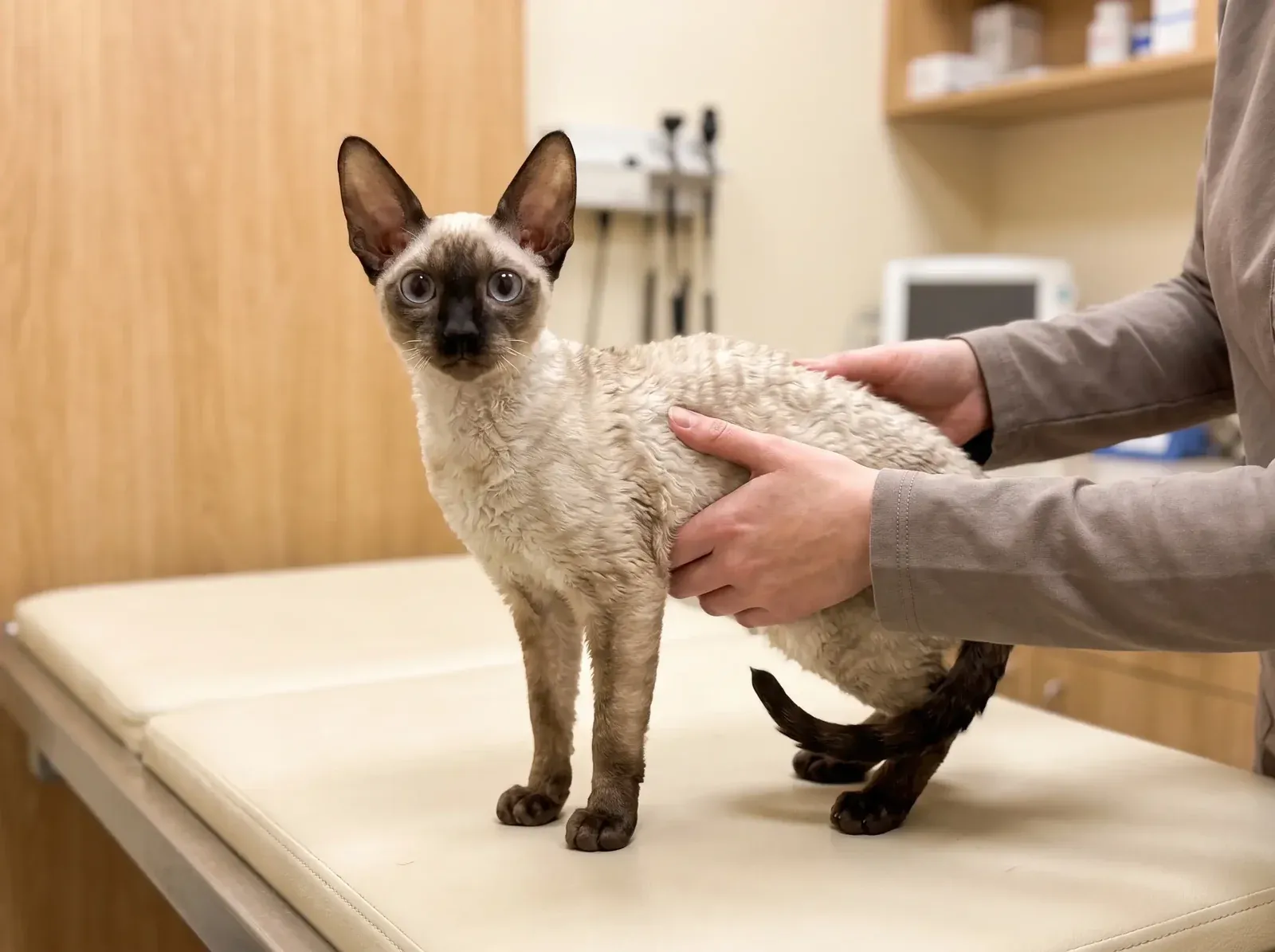
Cornish Rex, a seal colourpoint kitten standing on a consultation table, steadied by gentle hands

Before you commit

Their knees first, their heart later

Patellar Luxation (PL, a slipping kneecap) is a risk from kittenhood, so their kitten evaluation includes their knees. A baseline heart scan in their junior years gives you their normal before Hypertrophic Cardiomyopathy (HCM, a thickened heart muscle) becomes a risk.

The reception of a Paws & Co clinic, with long cream benches and a stone reception desk

Before the clinics open

Join the founding families

AED 1,999 of essential care for AED 199. No payment now.

When to see a vet

When it is not behaviour.

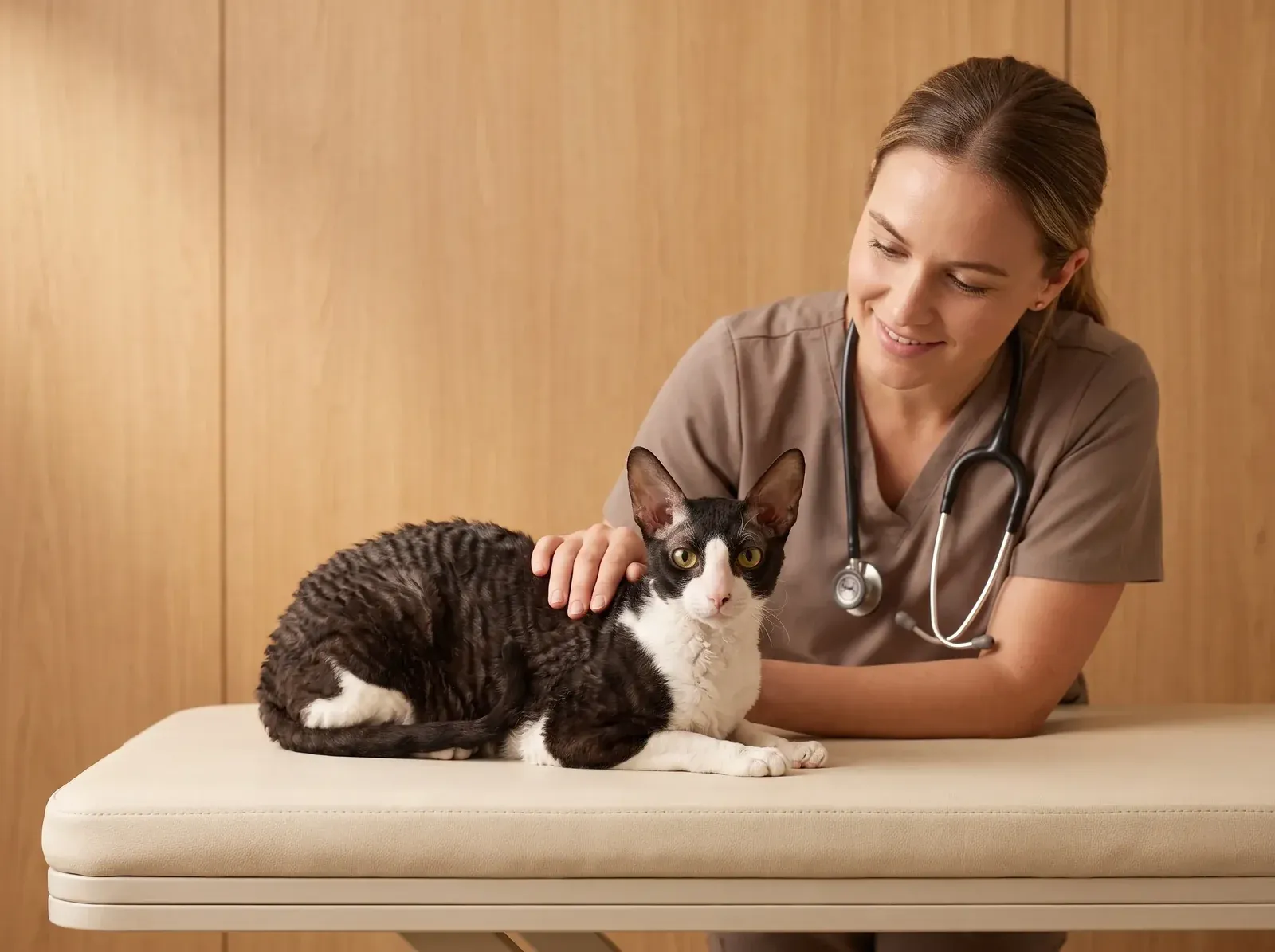
Cornish Rex, a black and white cat lying on a padded table, a vet in taupe scrubs with a hand on their back

Some of this is not a behaviour problem, and treating it like one wastes time your cat may not have. If they cry or soil the house when you are away, if they hiss, swat or bite when handled, if they are terrified of visitors or the carrier to the point of panic, or if anything about them changes suddenly at any age, contact your vet the same day. A tip from a website, ours included, is not the answer. If it cannot wait, contact your nearest emergency vet now.

With a Cornish Rex, the change to watch for is a cat who slows down. They are built to stay busy, so less running, less jumping or a back leg held up is worth a vet's eye before anyone calls it old age. From their mature years, their heart needs watching too. Fast or shallow breathing while resting should be discussed with your vet immediately, within the same day.

He'll still sprint the hallway every evening. If he stops, call your vet.

Cornish Rex history

Before they were yours.

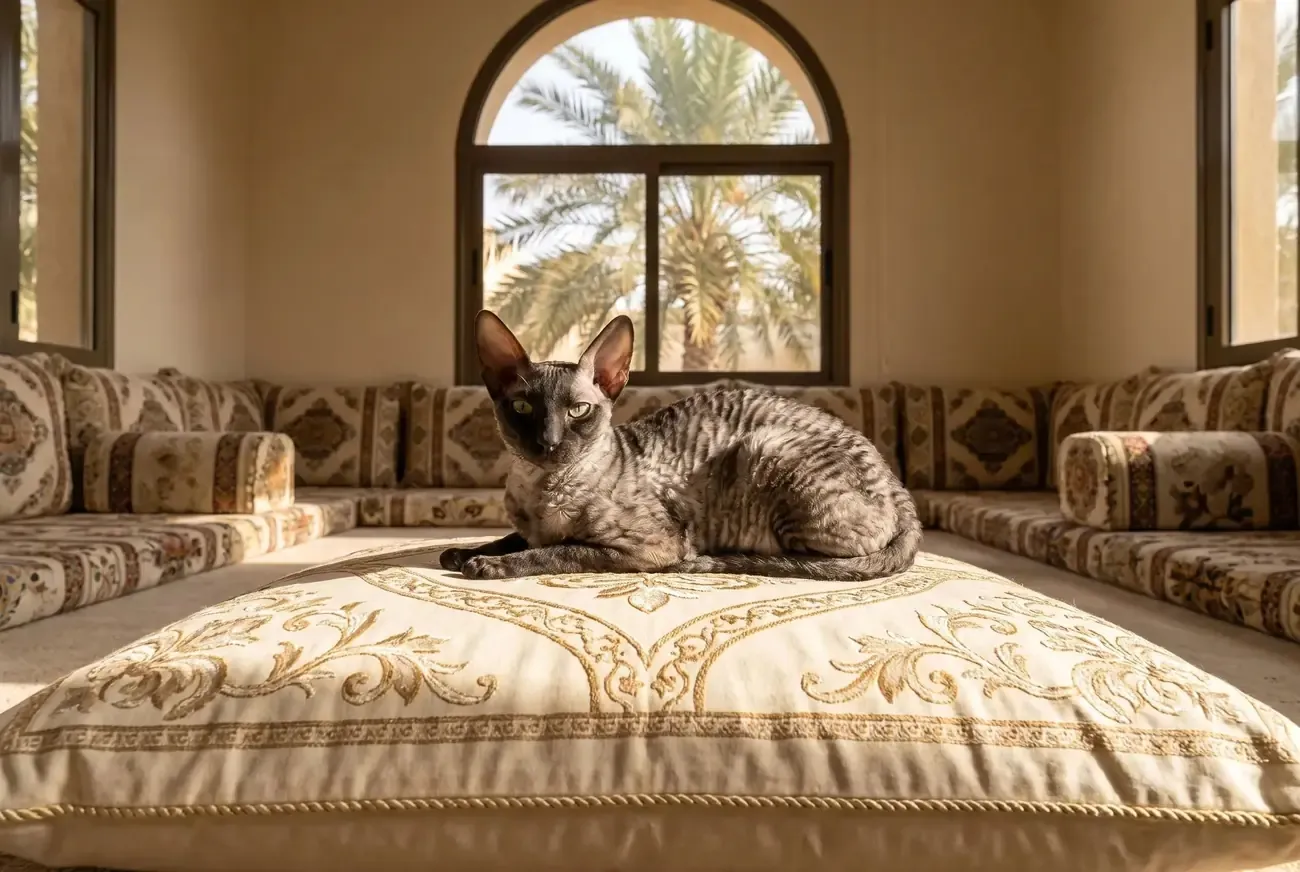
  1. Cornish Rex in Dubai, a black smoke cat lying on a majlis cushion, date palms through an arched window
    A Cornish Rex today, at home on a majlis cushion.

    1950

    A curly kitten on Bodmin Moor

    On a farm on Bodmin Moor in Cornwall, a litter of farm cats included one cream kitten with a curly coat, called Kallibunker. Every Cornish Rex comes from that kitten.

    What they still carryA coat with no outer guard hairs, only the soft undercoat.

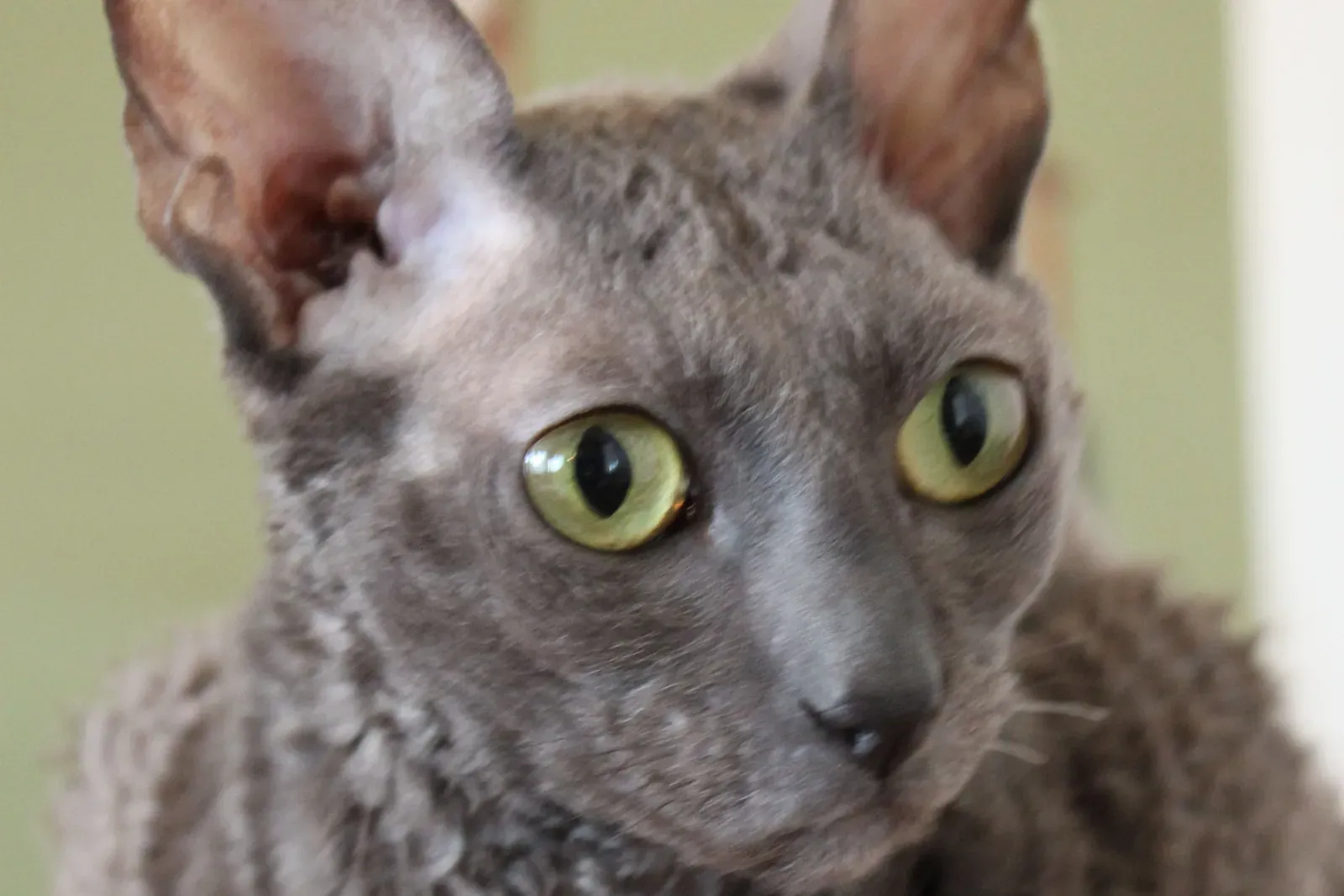
  2. Cornish Rex history, close view of a blue Cornish Rex with large ears and green eyes, 2010
    A blue Cornish Rex, 2010. Photo: Stefanieoliviabeck, public domain (cropped).

    1964

    Recognised in America

    Breeders loved the feel of the coat and the long, arched body. Cornish Rex cats went to the United States, where the breed was soon recognised.

    What they still carryA lean, athletic build, bred from a small start.

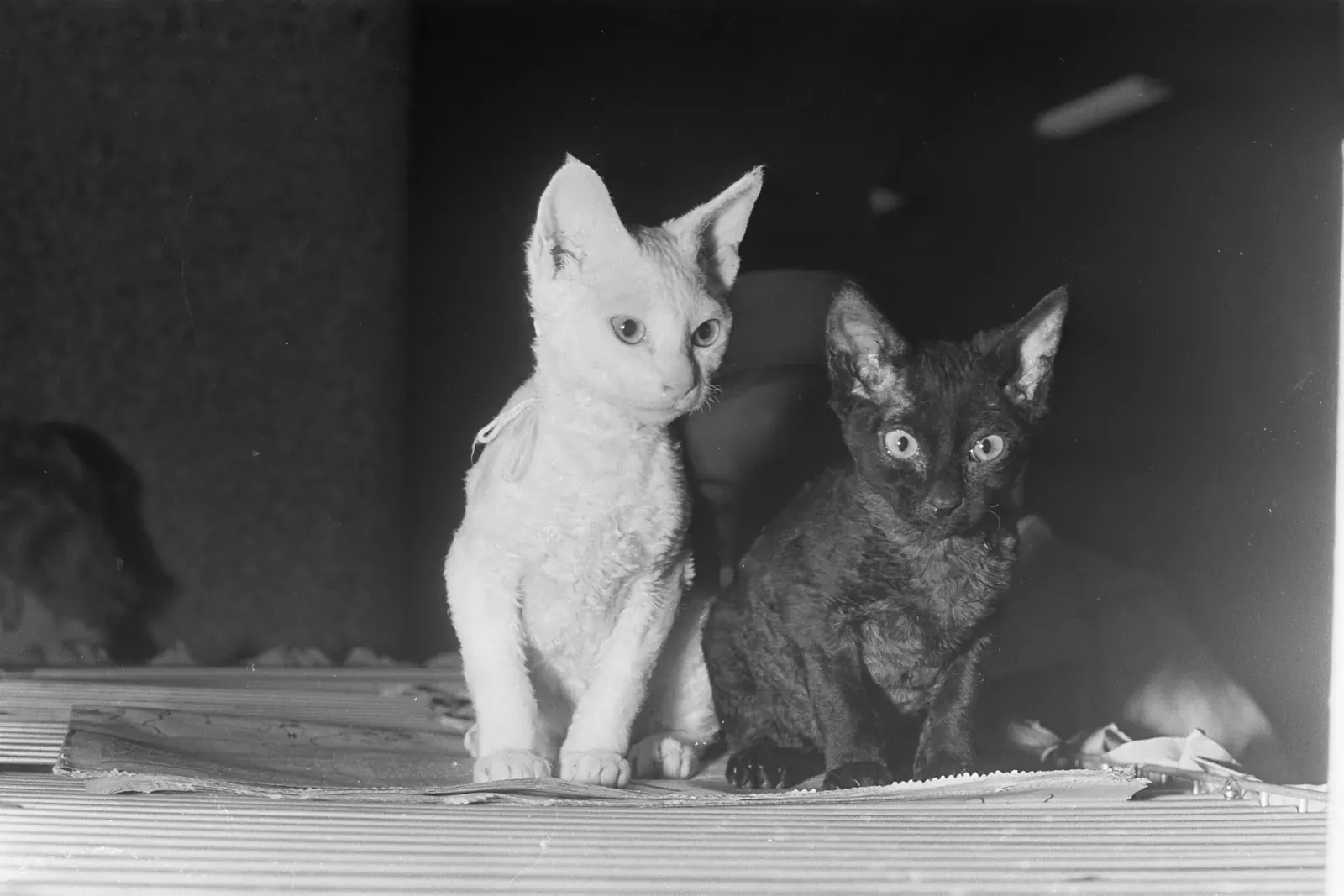
  3. Cornish Rex history, two Rex kittens from Denmark at a cat show, Koopmansbeurs, Amsterdam, 1967
    Two Rex kittens from Denmark at a cat show in the Koopmansbeurs, Amsterdam, 1967. Photo: Pieter Jongerhuis / Anefo, CC0.

    1967

    Two Rex breeds, not one

    In Britain, the Cornish Rex and the Devon Rex were recognised as separate breeds, each with its own curl.

    What they still carryA coat made only of undercoat, that feels like suede.

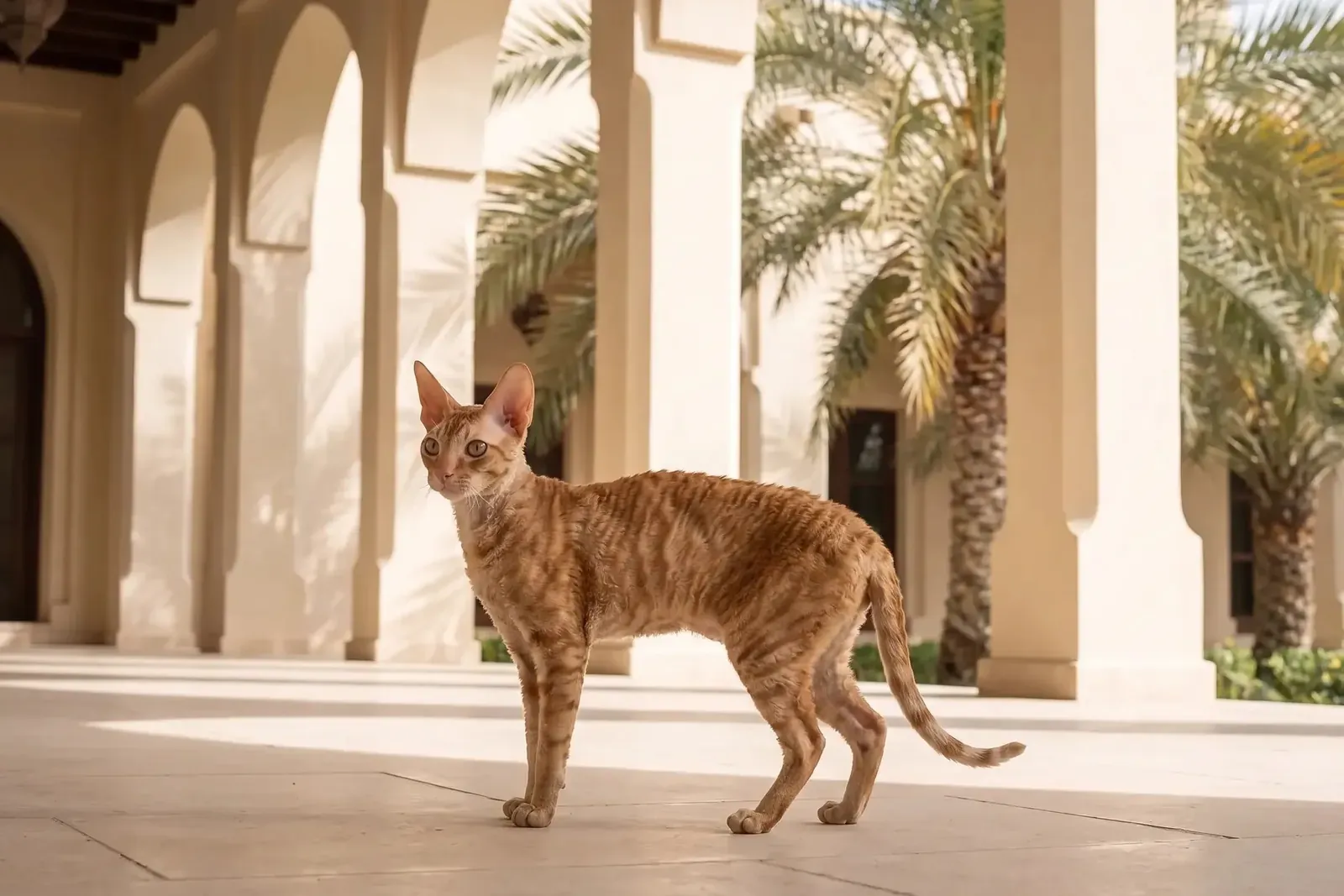
  4. Cornish Rex history, the breed today, a red tabby on a villa terrace, Dubai, 2026
    A Cornish Rex today.

    Today

    In the UAE

    An uncommon pedigree here, found through registered catteries, and happiest indoors.

    What they still carryA fast, playful cat in a thin coat: happy in air conditioning with a warm spot, and best kept out of strong sun.

Cornish Rex questions

The ones you type at midnight.

Most of these get asked late at night, by someone watching their cat and not sure what they are seeing.

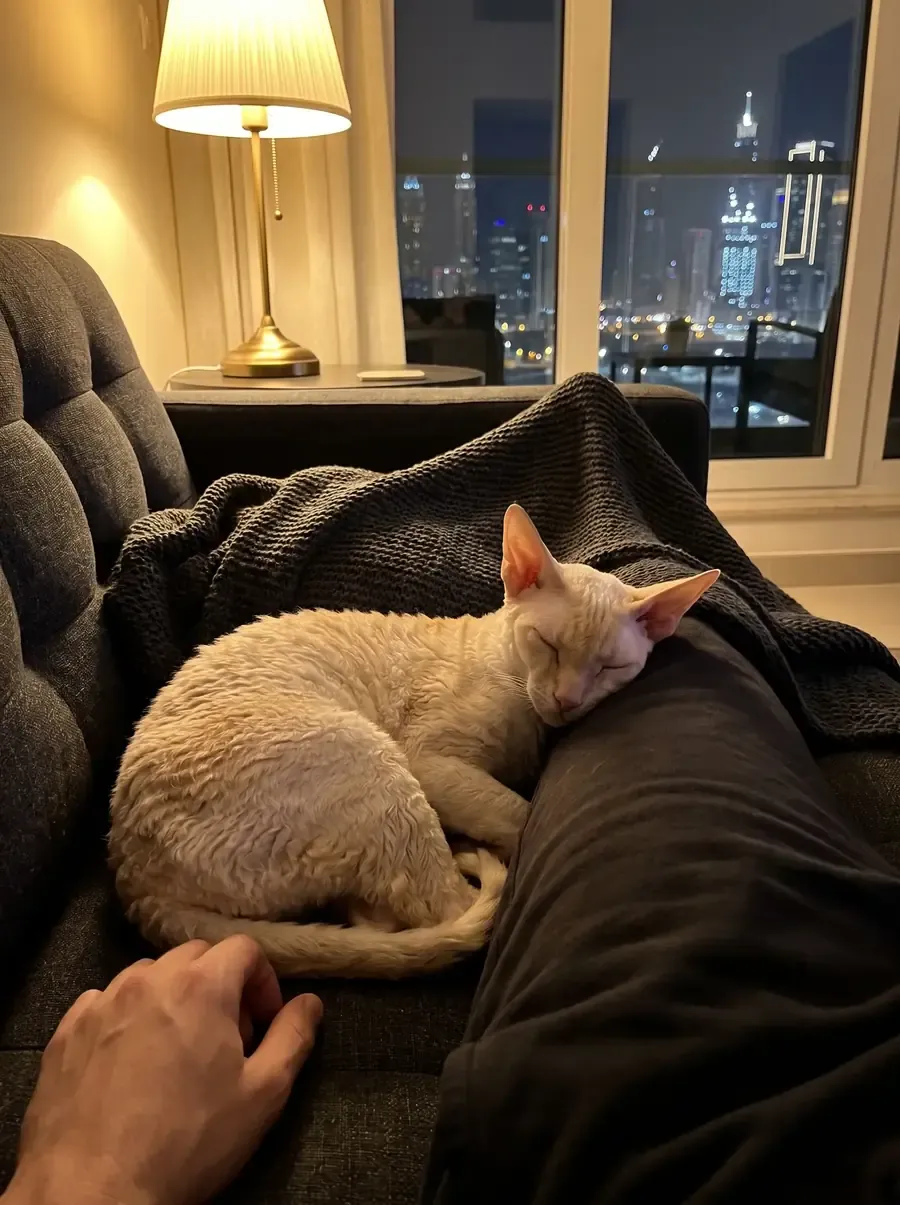
Cornish Rex in Dubai, a cream cat asleep against a pet parent's knee at night, the skyline behind
What is a Cornish Rex cat?

A Cornish Rex is a slender, fine-boned cat with long legs, big ears and a soft, wavy coat made only of undercoat. They are athletic, playful and affectionate, and keep their kitten energy into adulthood.

How big do Cornish Rex cats get?

Cornish Rex cats are small to medium and fine-boned. Males usually weigh 3.6 to 4.5 kg and females 2.3 to 3.2 kg.

How long do Cornish Rex cats live?

A Cornish Rex usually lives 12 to 16 years. Their knees and skin come first, and from their mature years their heart.

Do Cornish Rex cats shed?

Cornish Rex cats shed lightly. Some moult all at once, others so gradually you hardly notice. A stroke with your hand, and the odd bath as your vet advises, is all the grooming the coat needs.

Do Cornish Rex cats get cold?

Yes, a Cornish Rex feels the cold easily, because their coat has no outer guard hairs. Give them warm, covered beds away from the air conditioning vents.

Can a Cornish Rex live in Dubai?

Yes, a Cornish Rex does well indoors in Dubai, with warm spots away from the vents and shade from direct sun. Their thin coat gives little protection from either.

What is the difference between a Cornish Rex and a Devon Rex?

The Cornish Rex and Devon Rex curls come from different genes. The Cornish is longer and arched, like a greyhound, with no guard hairs at all; the Devon is more pixie-faced, with big, low-set ears.

What health problems do Cornish Rex cats have?

Patellar Luxation (PL, a slipping kneecap) and skin and coat sensitivity are risks for Cornish Rex cats from kittenhood. Hypertrophic Cardiomyopathy (HCM, a thickened heart muscle) joins them from the mature years.

Worried about them? Contact your vet today.