We’re hiring people who love them like we do. Join us careers@pawsandco.comSee open roles
UAE Government Licensed MOCCAE
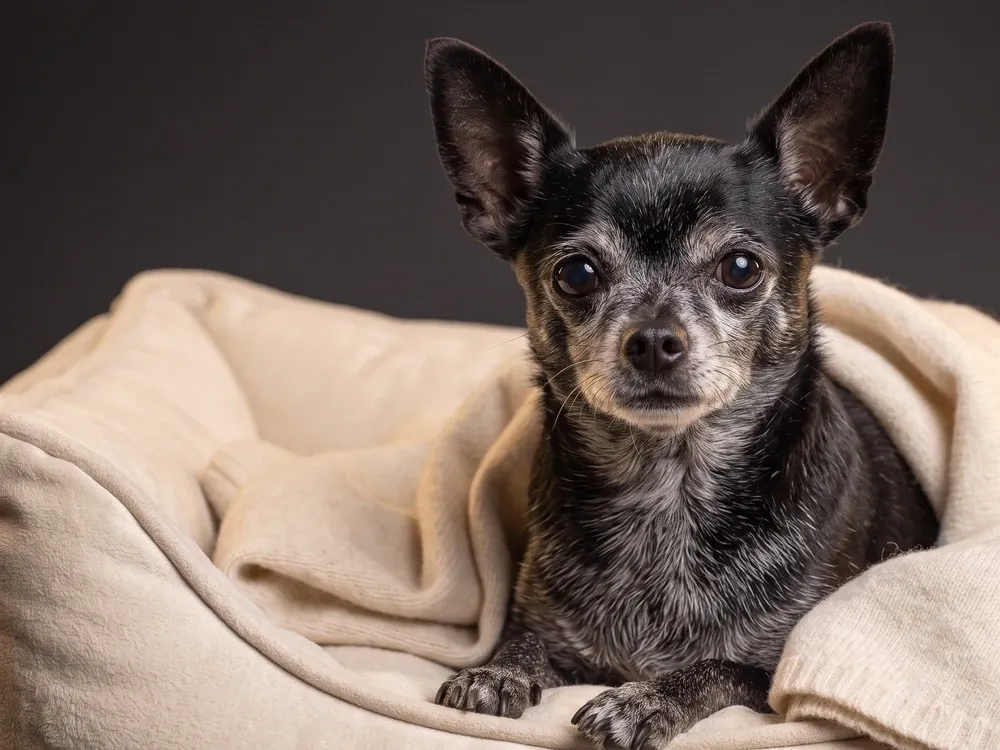
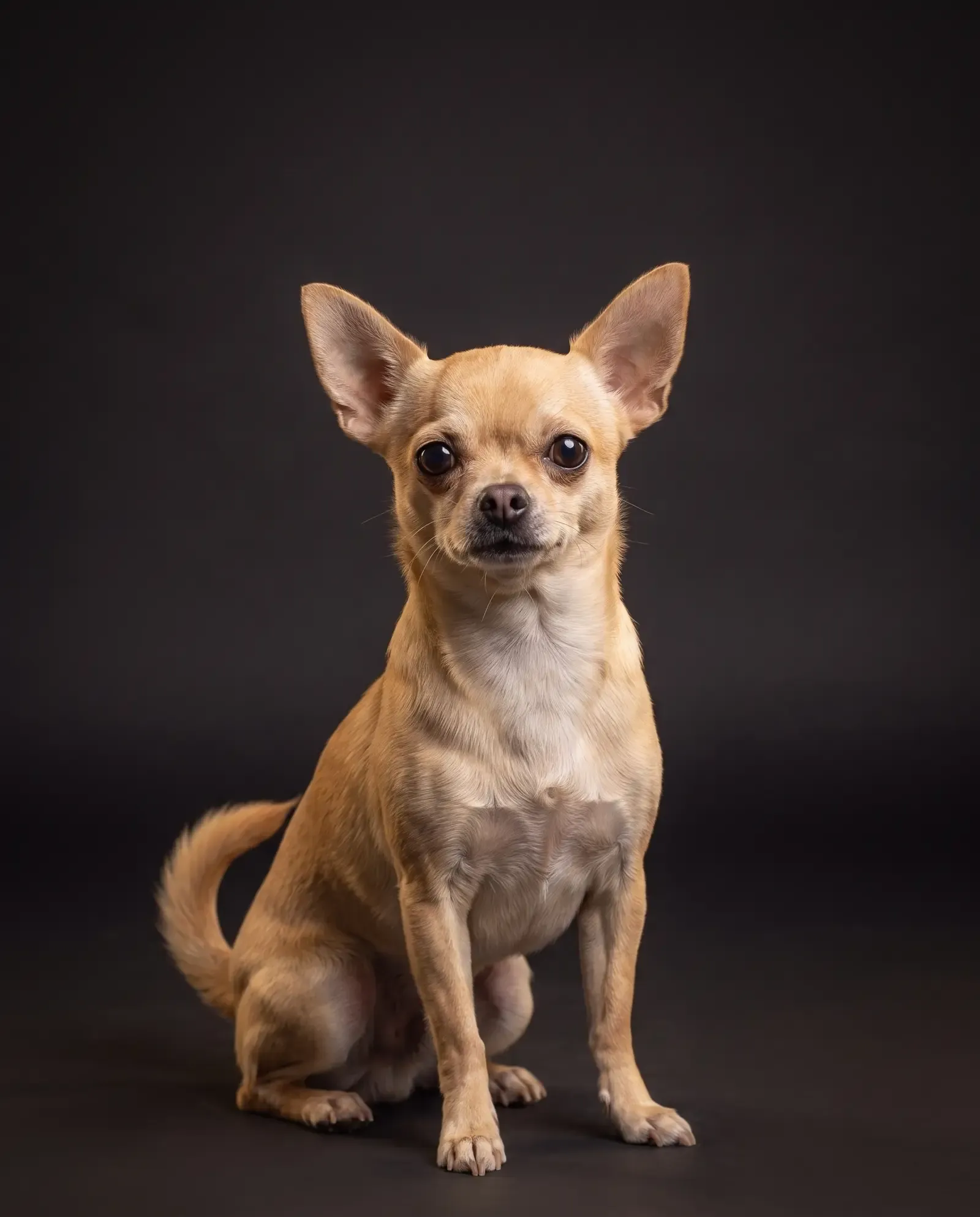
Chihuahua in Dubai, studio portrait of a fawn adult with large upright ears sitting against a dark background

Breed guide  ·  Dogs

Chihuahua

His ancestors were chosen for being tiny. I walk him on his own four feet.

Lifespan
12 to 18 years
Size
Small
Weight
Up to 2.7 kg
Shedding
Light to moderate

Last updated 12 October 2026

Join the founding families. AED 1,999 of essential care for AED 199.

No payment now. We'll be in touch by email and WhatsApp as we open enrolment.

✓
Thank you.

We will be in touch soon to confirm.

Chihuahua traits

What they brought with them.

Tap a card to see what is going on.

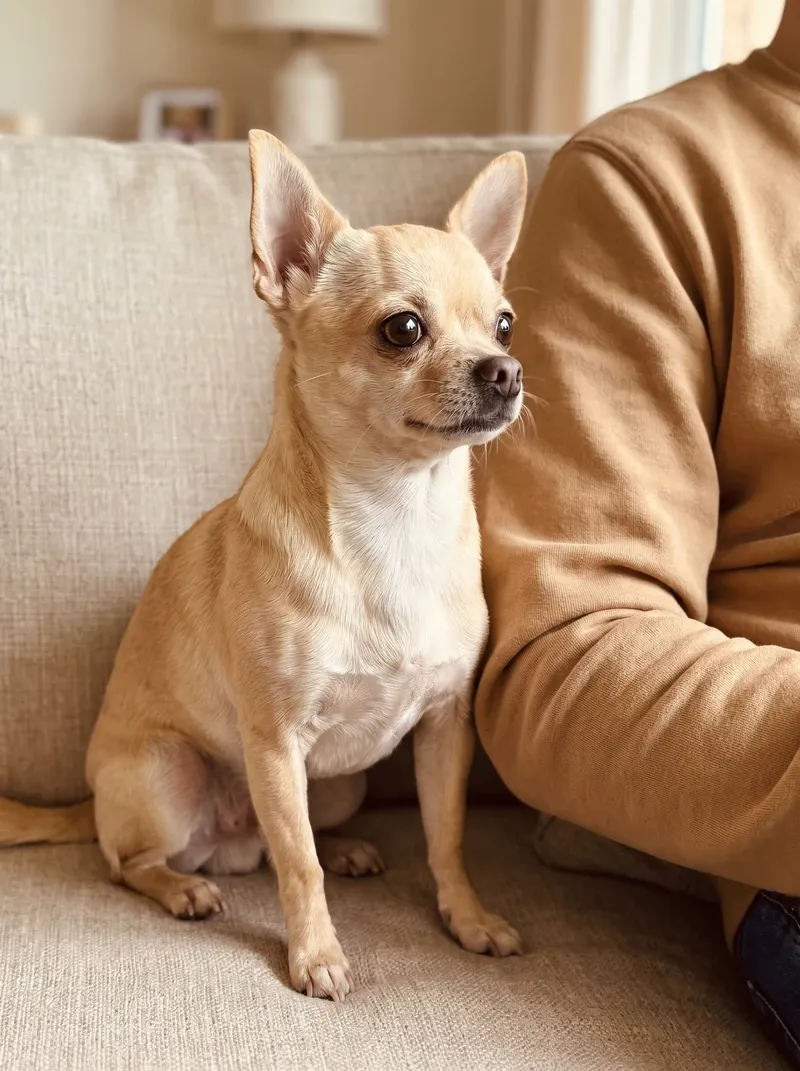
Chihuahua, a cream adult sitting close beside a pet parent on a linen sofa

At home

Why is my Chihuahua so attached to me?

Your shadow from room to room, and wary of everyone else who comes through the door.

What's going onChihuahuas bond hard with one or two people and are wary of strangers. Let them meet new people calmly, on their own feet and in their own time. If they snap when someone reaches for you, contact your vet.

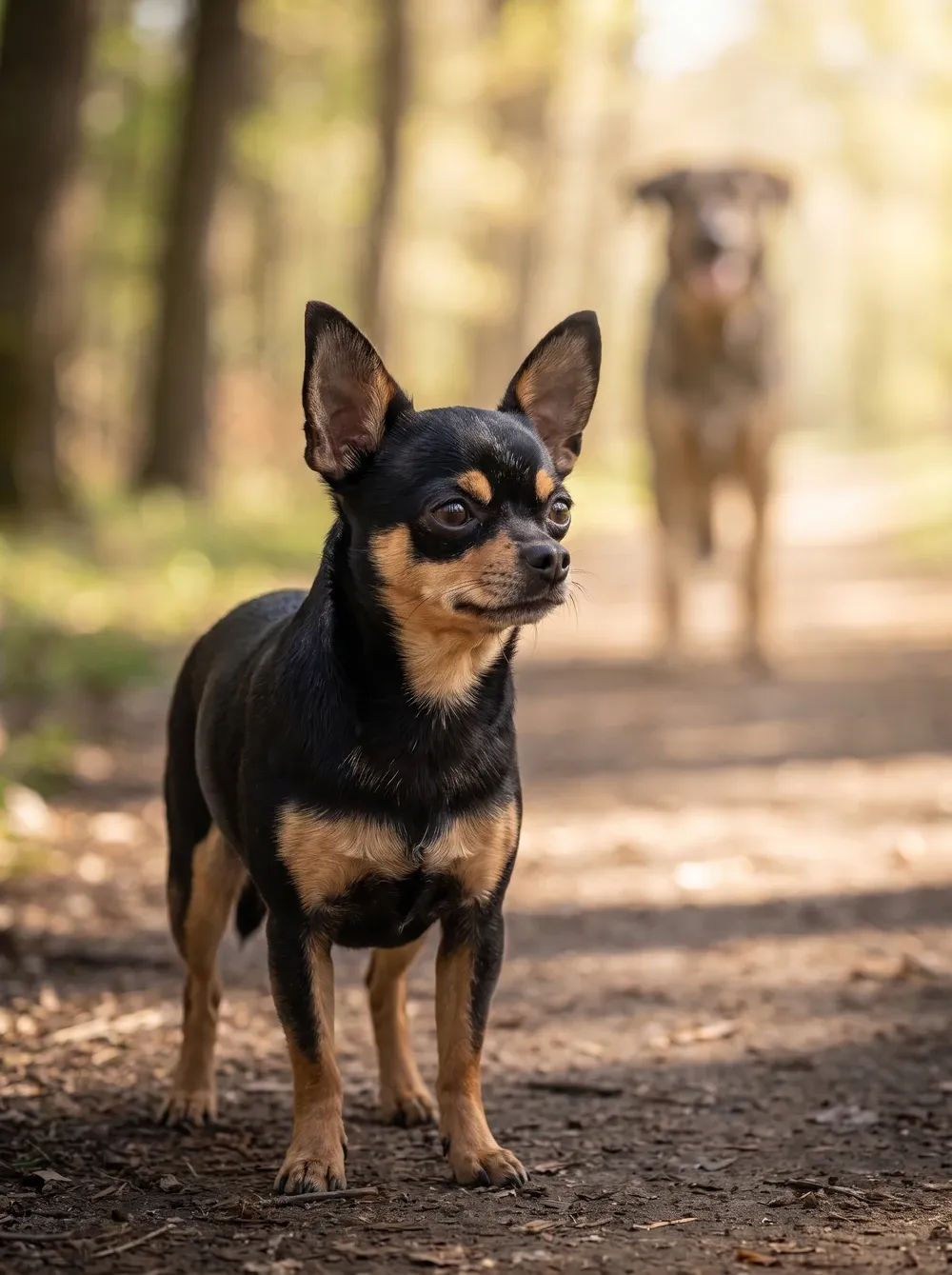
Chihuahua, a black and tan adult on a shaded park path, ears up, a larger dog far behind

At home

Why is my Chihuahua so angry?

Barks at every dog in the lift, and growls when moved off the sofa.

What's going onThey take on dogs ten times their size because they are not yet sure they are safe. Walking past things, rather than being carried, is how they learn. Walk them, reward them for staying calm, and if they growl or snap, contact your vet.

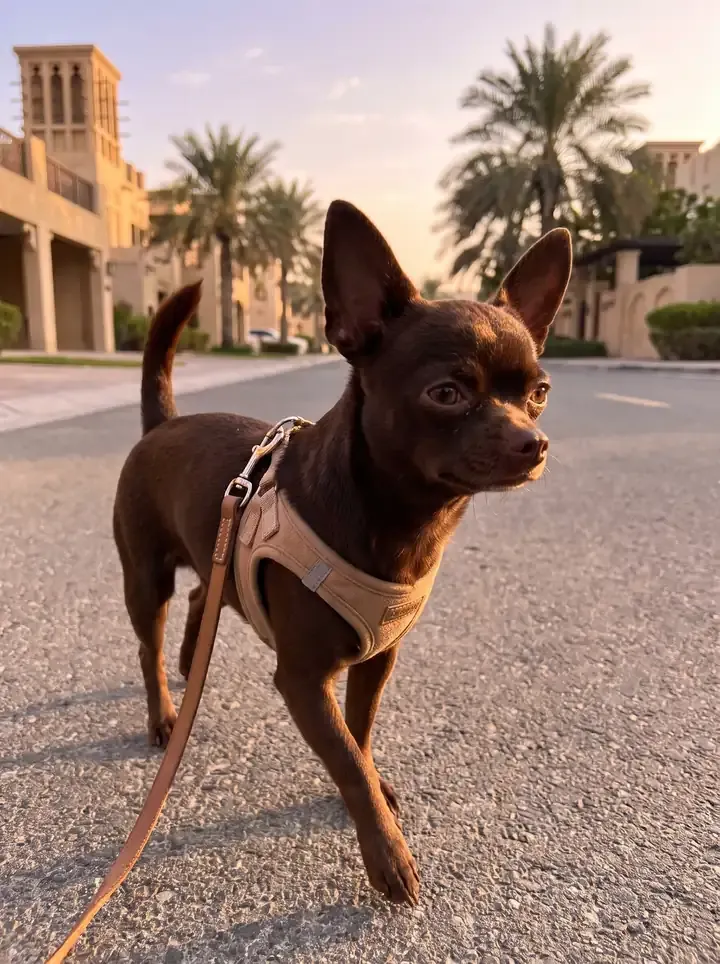
Chihuahua in Dubai, a chocolate adult in a tan harness on a lead, on a quiet street lined with palms at dawn

At home

Why does my Chihuahua honk?

A honking cough when they pull on the lead, get excited or have a drink.

What's going onTracheal Collapse (a weak windpipe) is on their health record from puppyhood. A collar presses on it every time they pull, so walk them on a harness and tell your vet about the honk.

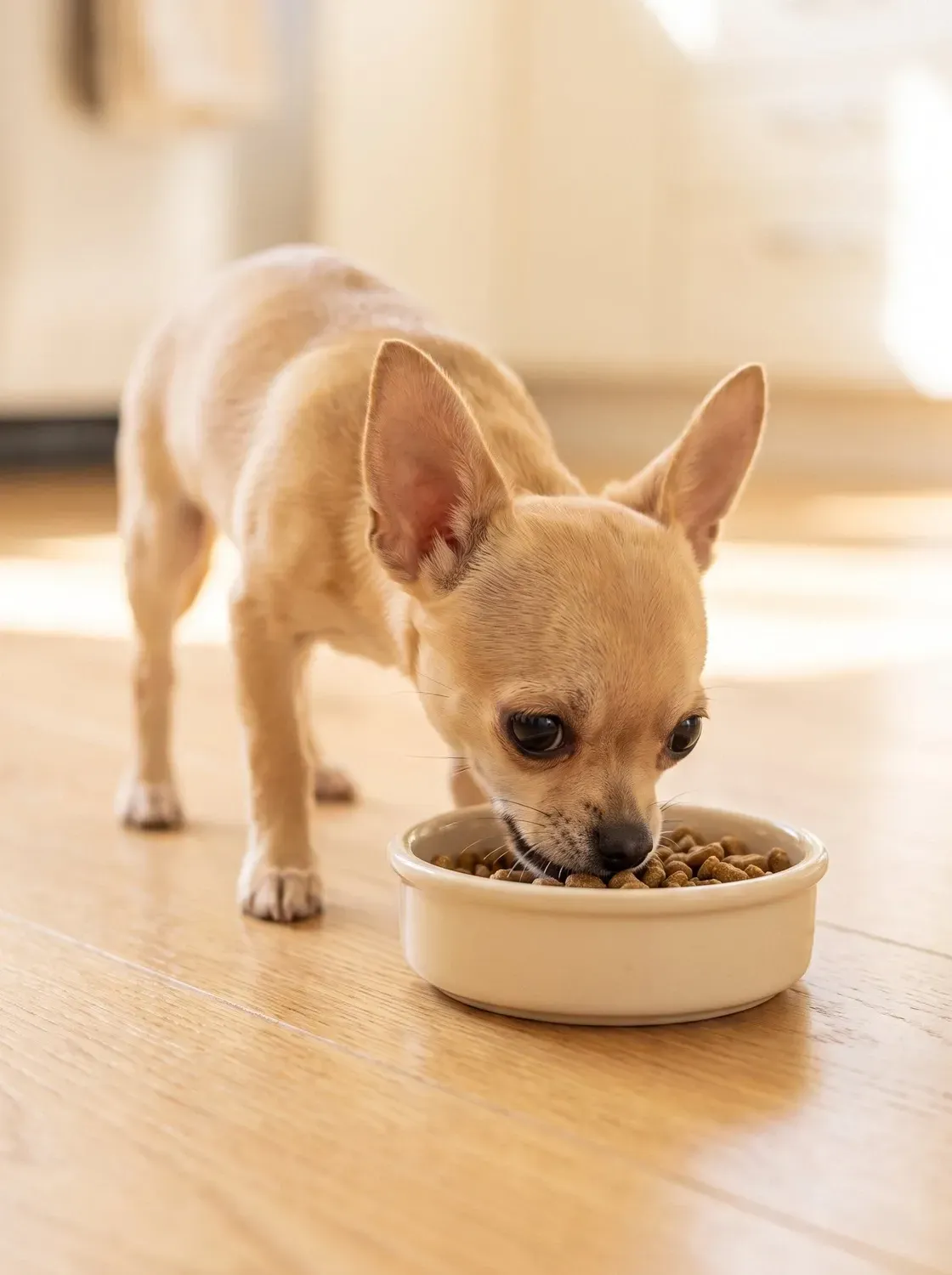
Chihuahua, a fawn puppy eating from a small cream bowl on a kitchen floor

At home

Little and often

A puppy who skips breakfast, then goes quiet and wobbly an hour later.

What's going onYoung Chihuahuas can run low on blood sugar. Three or four small meals a day keep their blood sugar steady. If they go wobbly, weak or very sleepy, contact your vet now.

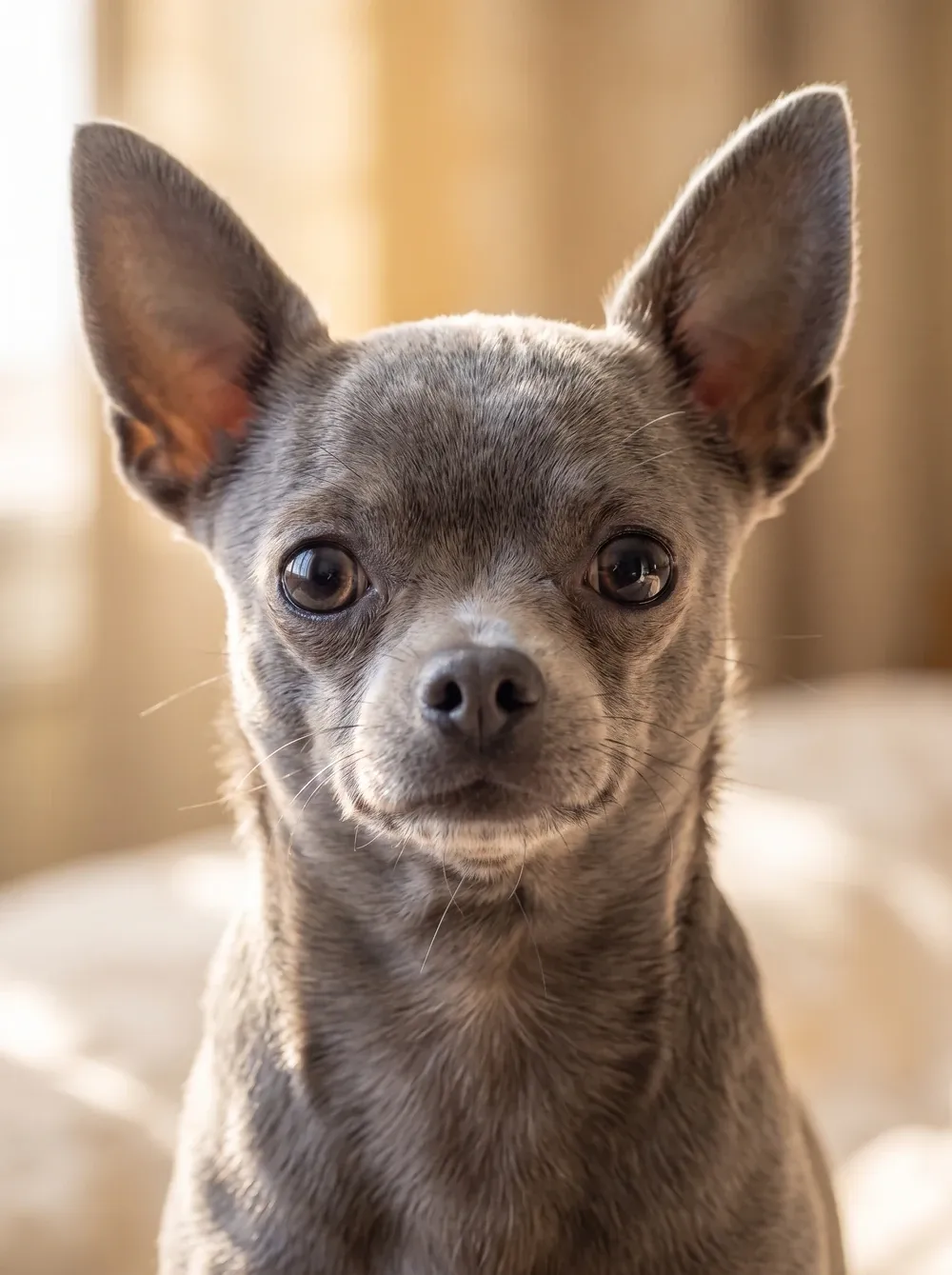
Chihuahua, a close portrait of a blue adult with large round dark eyes

At home

Those big, round eyes

Large, bright eyes that sit forward on a small, rounded head.

What's going onBecause their eyes are large and sit forward, they scratch easily. For squinting or a watering eye, contact your vet the same day.

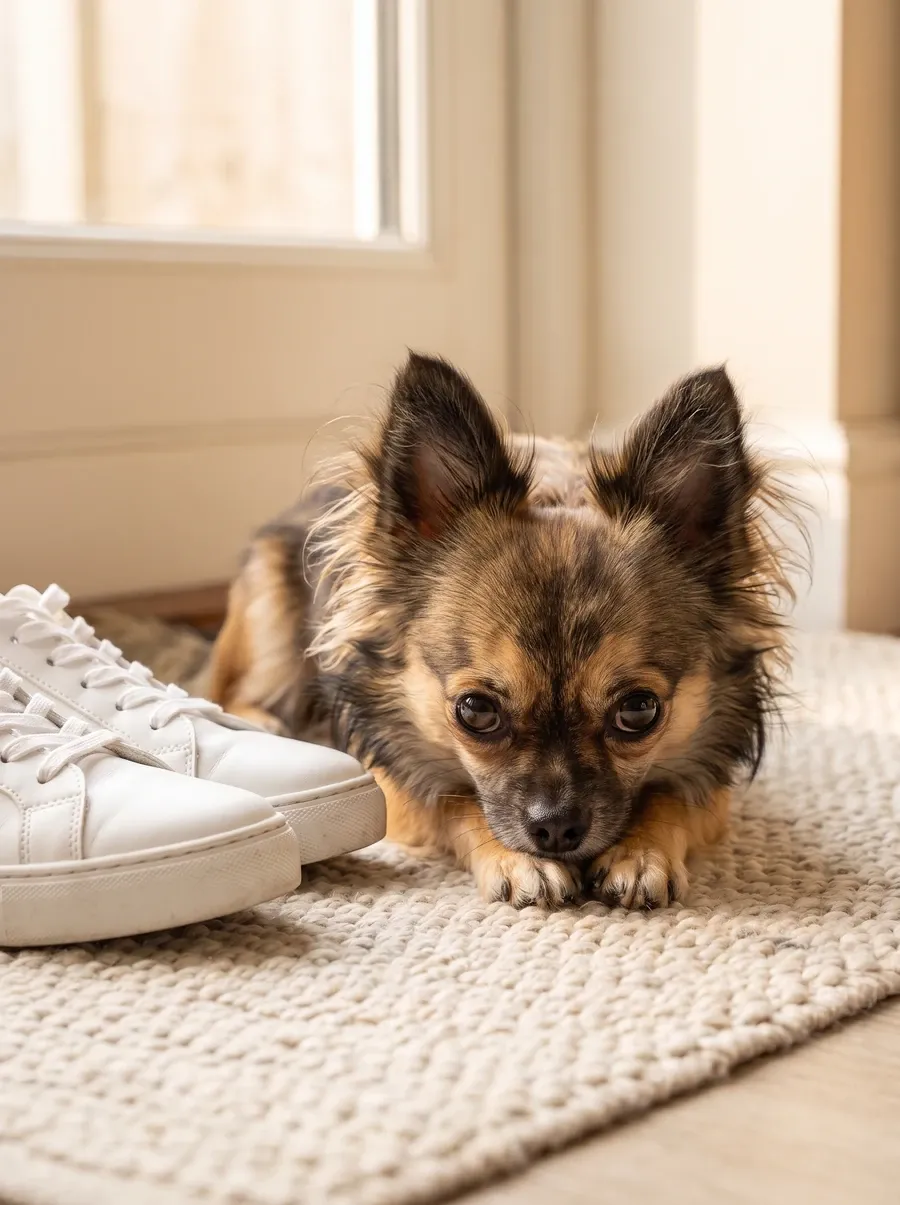
Chihuahua, a long-coated sable adult lying on a rug by the front door beside white trainers

At home

Why does my Chihuahua cry when I leave?

Waits outside the bathroom door, and watches your keys and shoes.

What's going onThey have picked their person, and it is you. Teach short spells alone while they are a puppy, and if they are distressed when you go, contact your vet rather than trying to fix it at home.

A Chihuahua in Dubai

The bit nobody tells you.

Their size

Built for: Chosen for being small.

In Dubai: Often carried rather than walked.

Their days

Built for: Staying close to their person.

In Dubai: The working day alone.

Their world

Built for: Life close to people.

In Dubai: Meeting the world from a handbag.

The barking and the snapping mostly come from that gap.

You cannot make them bigger. You can let them meet the world on their own feet and keep that small body safe, and the ten things below are how.

Your plan is built around their breed: the risks on a Chihuahua's record at every age, and the care that goes with each one.

Join the founding families. AED 1,999 of essential care for AED 199.

Daily care for a Chihuahua

Ten things that make their life better.

Many of them are free, and most matter at every age.

  1. They stick close to their person, and time alone is easiest to learn as a puppy.

    Every age, most of all puppies

    Free

    Why

    They stick close to their person, and time alone is easiest to learn as a puppy.

    What to do

    From their first week, leave them in a safe room with a chew for a few minutes while you are home, then a little longer. Come and go without a fuss, and go back a step if they cry.

  2. Separation distress is treatable, and home fixes can make it worse.

    Every age: a move, a new job or a new baby can set it off

    Free

    Why

    Separation distress is treatable, and home fixes can make it worse.

    What to do

    Film them for twenty minutes after you leave. If you see howling, pacing, scratching at the door or accidents, do not punish it, and skip anti-bark collars: both can make it worse. Show the film to a vet.

  3. Young Chihuahuas can run low on blood sugar, and extra weight strains their knees and heart.

    Every age, most of all under 4 years

    Under AED 100, once, for kitchen scalesIn your plan

    Why

    Young Chihuahuas can run low on blood sugar, and extra weight strains their knees and heart.

    What to do

    Feed three or four small meals a day while they are young, weighed on kitchen scales. Take treats out of that amount, and show affection with a game or a brush instead of scraps. A Body Condition Score (a check on whether they are the right weight) is in your plan from their puppy visits.

  4. Patellar Luxation (a slipping kneecap) is on their health record from puppyhood, and it can get worse.

    Every age, more so from 7 years

    Free to AED 500 for rugs and dog stepsIn your plan

    Why

    Patellar Luxation (a slipping kneecap) is on their health record from puppyhood, and it can get worse.

    What to do

    Give them steps up to the sofa and bed, and put rugs down on marble. Lift them with one hand under the chest and one under the back end, never by the front legs. An orthopaedic evaluation (a joint and bone exam) is in your plan every 18 months from age four.

  5. A collar presses on their windpipe every time they pull.

    Every age

    Under AED 150

    Why

    A collar presses on their windpipe every time they pull.

    What to do

    Clip the lead to a well-fitted harness every time. Keep the collar for their ID tag, or put the tag on the harness. Refit it as they grow, and again if their weight changes.

  6. Dental crowding and gum disease are the first risk on their health record, from puppyhood.

    Every age

    Under AED 100 for a brush and dog toothpasteIn your plan

    Why

    Dental crowding and gum disease are the first risk on their health record, from puppyhood.

    What to do

    Brush daily with a dog toothpaste and a small brush or finger brush. Start with a few seconds and a reward. Watch for baby teeth that do not fall out, and tell your vet if an older dog starts chewing on one side. A professional dental clean twice a year is in your plan from six months old.

  7. Their eyes scratch easily, so their face and head need a gentle hand.

    Every age, most of all from 4 years

    FreeIn your plan

    Why

    Their eyes scratch easily, so their face and head need a gentle hand.

    What to do

    Every day, touch their paws, lift their lip and look at their eyes, with a reward. Be gentle with their head, never tapping or knocking it, even in play, and teach children to hold them sitting on the floor.

  8. A Chihuahua carried past everything learns to be frightened of it.

    Every age, most of all under 2 years

    Free

    Why

    A Chihuahua carried past everything learns to be frightened of it.

    What to do

    Walk them on their own feet. Let them meet calm dogs and people at their own pace, and give them space rather than scooping them up. Start as soon as your vet says their vaccinations allow.

  9. Heat and excitement make their windpipe work harder, and they walk close to the hot ground.

    Every age, most of all puppies and from 7 years

    Free

    Why

    Heat and excitement make their windpipe work harder, and they walk close to the hot ground.

    What to do

    From May to September, walk before sunrise and after dark. Put the back of your hand on the pavement for five seconds: if you cannot keep it there, they cannot walk on it. Keep summer walks short and carry water.

  10. You see them every day, so you are the first to notice a change. Mitral Valve Disease (MVD, a leaky heart valve) is on their health record from 4 years.

    Every age, weekly

    FreeIn your plan

    Why

    You see them every day, so you are the first to notice a change. Mitral Valve Disease (MVD, a leaky heart valve) is on their health record from 4 years.

    What to do

    Once a week, run your hands over them and look at their eyes and teeth.

Five of these are in your plan. The rest you can do at home.

Join the founding families. AED 1,999 of essential care for AED 199.

Chihuahua health by age

Their health, at every age.

In a Chihuahua, a honk, a skipped meal or a squint is often the first sign that something is wrong. Choose their age to see what to watch for, and the care that goes with it.

Chihuahua, an older black dog with a greying muzzle tucked into a cream bed

How old are they?

Their age

Chihuahua Puppy health

the first six months

What to watch for

  1. Retained deciduous teeth, malocclusion (teeth that do not meet properly) or early dental crowding
  2. Developmental or early clinical signs of Patellar Luxation (PL), slipping kneecap
  3. Early or congenital expression of Tracheal Collapse (TC, weak windpipe)
  4. Early or congenital expression of Hypoglycaemia (Low Blood Sugar)
  5. Early or congenital expression of Hydrocephalus (fluid on the brain)

The care that goes with it

  1. Core vaccinations, microchip and Dubai Municipality registration
  2. Deworming, and flea and tick prevention
  3. Growth and nutritional evaluation, and early socialisation
  4. Dental and periodontal disease (gum disease) screening, as a first baseline
  5. Early follow-up for any signs of Patellar Luxation (PL, slipping kneecap)
The full care detail
  • Core vaccination programme, microchipping and Dubai Municipality registration. Titre testing discussion where clinically appropriate; not a substitute for completing the core vaccine series
  • Deworming and external parasite prevention tailored to Dubai exposure
  • Body Condition Score (BCS, a check on whether they are the right weight), Muscle Condition Score (MCS, a check on their muscle), dental, growth and nutritional evaluation, and early socialisation
  • Baseline screening focused on Dental Disease / Periodontal Disease
  • Early diagnostic follow-up for signs suggestive of Patellar Luxation (PL), Slipping Kneecap

Their age

Chihuahua Juvenile health

6 months to 2 years

What to watch for

  1. Early periodontal disease (gum disease) and dental crowding
  2. Emerging Patellar Luxation (PL), slipping kneecap with exercise intolerance or lameness
  3. Young-dog presentation of Tracheal Collapse (TC, weak windpipe)
  4. Young-dog presentation of Hypoglycaemia (Low Blood Sugar)
  5. Young-dog presentation of Hydrocephalus (fluid on the brain)

The care that goes with it

  1. Daily tooth brushing, and a professional dental clean twice a year
  2. A lean, healthy weight, to protect the knees
  3. Neutering or spaying, timed for a small breed
  4. A harness, never a neck collar, to protect the windpipe
  5. A cough that keeps coming back fully investigated, rather than assumed to be Tracheal Collapse (TC, weak windpipe)
The full care detail
  • Begin daily dental brushing and schedule bi-annual professional dental cleanings to prevent early periodontal disease
  • Maintain a healthy lean body weight to reduce stress on knee joints and minimise Patellar Luxation (PL) risk
  • Neuter/spay timing discussion that accounts for small-breed growth and disease risk
  • Avoid neck collars; use a harness to protect the trachea from collapse pressure
  • Investigate recurrent signs rather than repeatedly treating presumed Tracheal Collapse (TC)

Their age

Chihuahua Young Adult health

2 to 4 years

What to watch for

  1. Dental Disease / Periodontal Disease (gum disease)
  2. Patellar Luxation (PL), Slipping Kneecap
  3. Tracheal Collapse (TC, weak windpipe)
  4. Hypoglycaemia (Low Blood Sugar)
  5. Hydrocephalus (fluid on the brain)

The care that goes with it

  1. Daily tooth brushing, and a professional dental clean twice a year
  2. A lean, healthy weight, to protect the knees
  3. A harness, never a neck collar, to protect the windpipe
  4. Three or four small meals a day, to keep blood sugar steady
  5. Annual neurological evaluation (nerve and brain exam), for early signs of hydrocephalus
The full care detail
  • Begin daily dental brushing and schedule bi-annual professional dental cleanings to prevent early periodontal disease
  • Maintain a healthy lean body weight to reduce stress on knee joints and minimise Patellar Luxation (PL) risk
  • Avoid neck collars; use a harness to protect the trachea from collapse pressure
  • Feed small, frequent meals (3-4x daily) to prevent hypoglycaemic episodes in young dogs
  • Schedule annual neurological evaluation-ups to monitor for early signs of hydrocephalus

Their age

Chihuahua Prime Adult health

4 to 7 years

What to watch for

  1. Dental Disease (Advanced)
  2. Patellar Luxation (PL, slipping kneecap), Progressive
  3. Mitral Valve Disease (MVD, leaky heart valve)
  4. Tracheal Collapse (TC, weak windpipe), Worsening
  5. Eye Conditions (Corneal Ulcers: a scratch or sore on the surface of the eye)

The care that goes with it

  1. Annual cardiac auscultation (listening to the chest), to hear an early heart murmur before there are symptoms
  2. Tooth brushing kept up, with enzymatic dental chews as an extra
  3. Orthopaedic evaluation (joint and bone exam) every 18 months, to catch a slipping kneecap getting worse before it needs surgery
  4. A lean, healthy weight (a Body Condition Score of 4 to 5 out of 9), to protect the joints and heart
  5. Annual ophthalmic evaluation (eye exam), to find corneal ulcers early
The full care detail
  • Annual cardiac auscultation by a vet to detect early mitral valve murmurs before symptoms appear
  • Continue rigorous dental hygiene; consider enzymatic dental chews as a supplement to brushing
  • Orthopaedic evaluation every 18 months to track Patellar Luxation (PL) grade and intervene before surgery is required
  • Avoid obesity; maintain ideal body condition score (BCS 4-5/9) to protect joints and heart
  • Annual ophthalmic evaluation to detect corneal ulcers early, especially given the breed's large, prominent eyes

Their age

Chihuahua Senior health

7 to 10 years

What to watch for

  1. Heart Disease (Congestive Heart Failure)
  2. Dental Disease (Tooth Loss)
  3. Kidney Disease (Chronic Renal Failure)
  4. Arthritis / Osteoarthritis
  5. Cognitive Dysfunction Syndrome (dementia in older pets)

The care that goes with it

  1. An echocardiogram (an ultrasound scan of the heart) twice a year, to catch heart changes early and adjust any medication
  2. A senior, kidney-friendly diet with controlled phosphorus and sodium
  3. Joint supplements, such as glucosamine and omega-3, to slow arthritis
  4. Puzzle toys and a steady daily routine, to slow cognitive decline
  5. Blood and urine panels twice a year, to find kidney disease at its most treatable
The full care detail
  • Bi-annual cardiac ultrasound (echocardiogram) to monitor heart function and adjust medication proactively
  • Transition to a senior/renal-supportive diet with controlled phosphorus and sodium levels
  • Introduce joint supplements (glucosamine, omega-3 fatty acids) to slow arthritic progression
  • Provide cognitive enrichment toys and maintain consistent daily routines to slow cognitive decline
  • Bi-annual blood and urine panels to catch kidney disease in its earliest, most treatable stage

Their age

Chihuahua Geriatric health

10 years and over

What to watch for

  1. Congestive Heart Failure (Advanced)
  2. Chronic Kidney Disease (CKD, long-term kidney failure), Advanced
  3. Severe Arthritis / Mobility Loss
  4. Cognitive Dysfunction Syndrome (Advanced)
  5. Cancer (Various)

The care that goes with it

  1. Orthopaedic bedding, ramps and non-slip floors, to prevent falls
  2. Water intake watched closely, and fluids under the skin if kidney disease is advanced
  3. A monthly wellness evaluation, to adjust medicines as things change
  4. Quality-of-life assessments
  5. Palliative care (comfort care), and end-of-life planning with your veterinary team
The full care detail
  • Provide orthopaedic bedding, ramps, and non-slip surfaces to support mobility and prevent falls
  • Regular hydration monitoring; consider subcutaneous fluid therapy if kidney disease is advanced
  • Monthly veterinary wellness evaluation to adjust medications and manage multi-system conditions
  • Quality-of-life assessments
  • Tailored palliative and comfort-focused care plan
  • Compassionate end-of-life planning with your veterinary team

Breed predispositions indicate an increased risk rather than certainty of disease. What is right for them always comes from their own history and an evaluation.

Getting a Chihuahua puppy in Dubai

Before they come home.

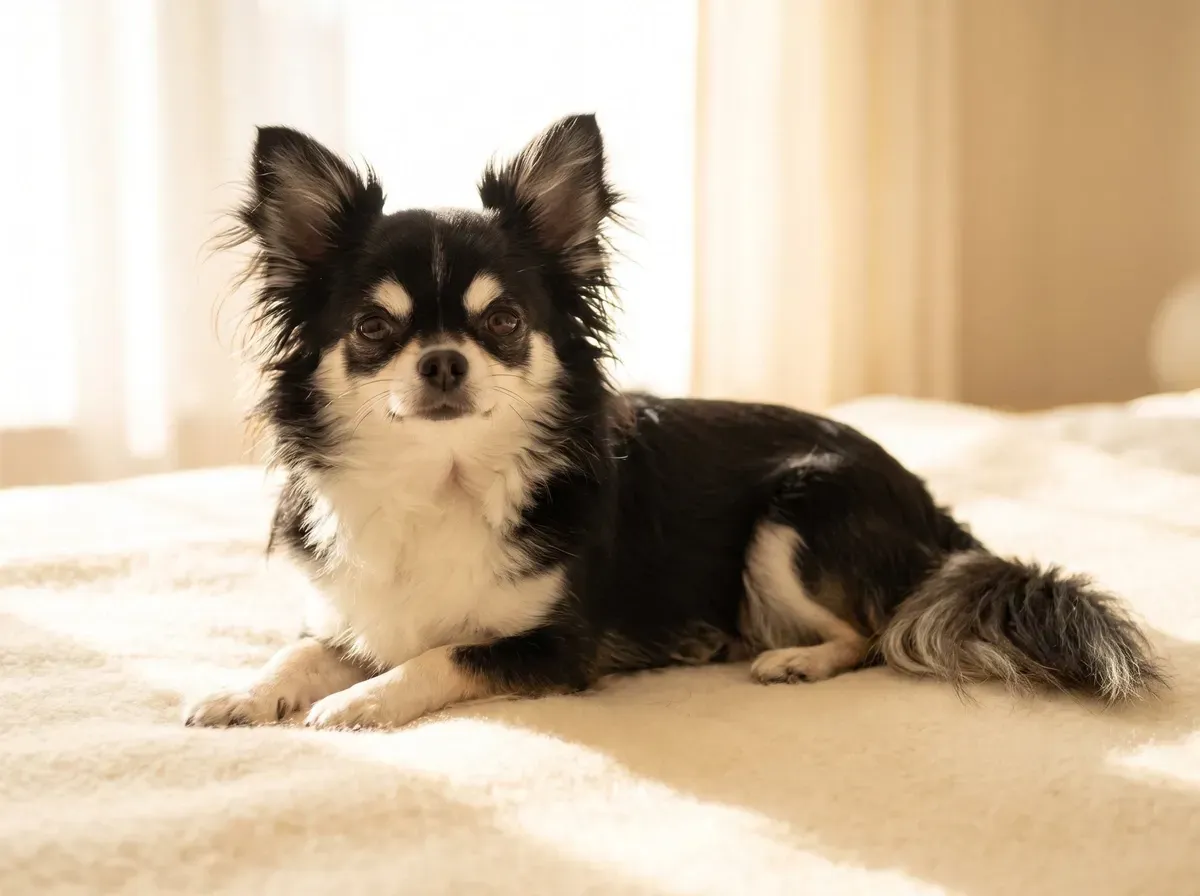
Chihuahua, a long-coated black and white adult lying on a cream blanket in soft light

Long-haired or smooth

One breed, two coats

Chihuahuas come in two coats, smooth and short or long and soft, and most have the rounded, apple-shaped head the breed is known for. Under either coat it is the same small, bold dog. Mini and toy Chihuahua are words for that same breed, not separate types: adults weigh up to 2.7 kg.

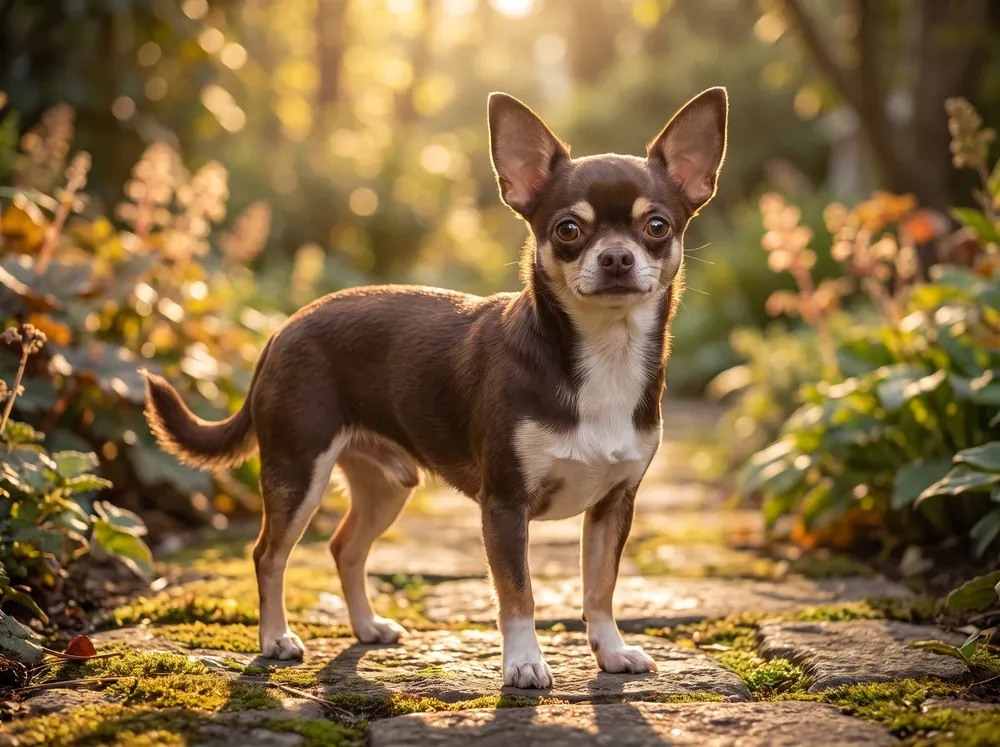
Chihuahua, a chocolate and white adult standing on a mossy stone garden path in early light

Colours

Any colour at all

Chihuahuas come in almost any colour, solid, marked or splashed, from white and cream to brown and black. Whatever the colour, the care is the same.

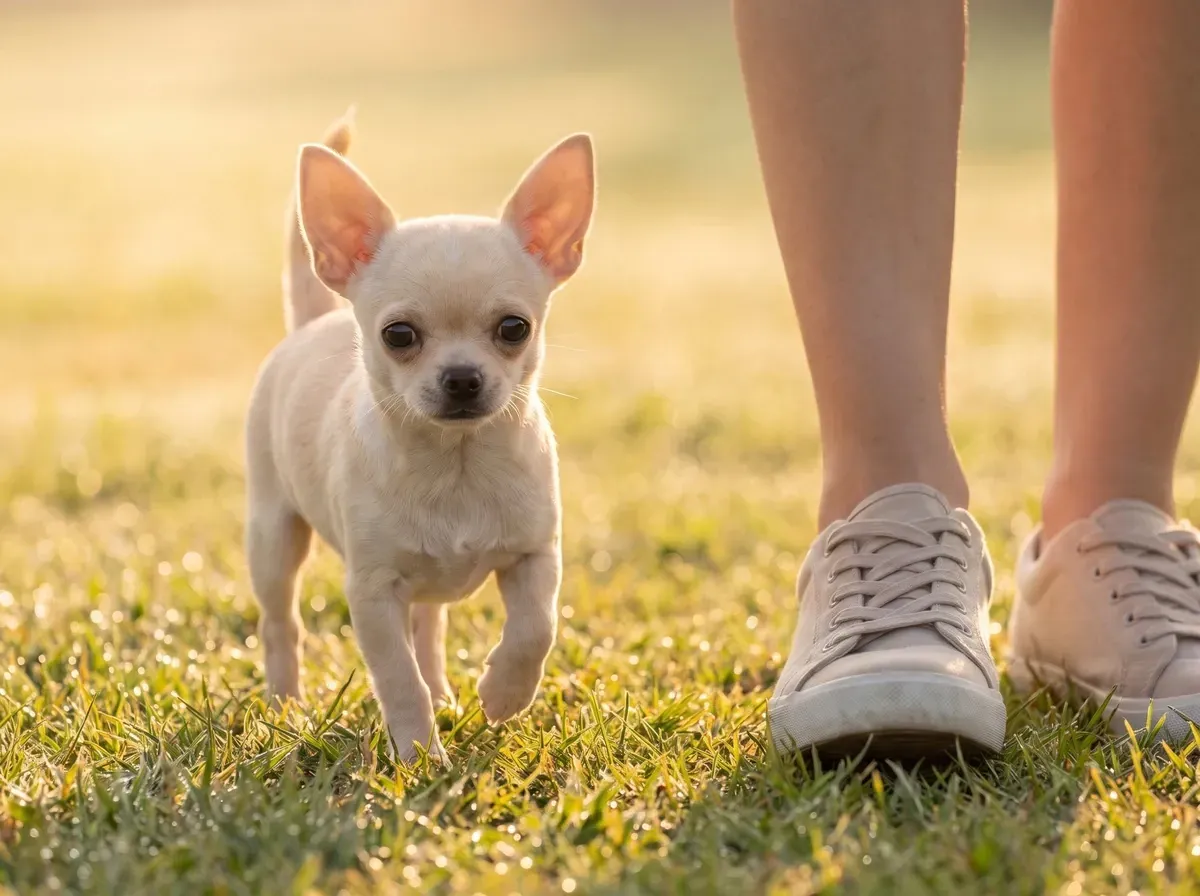
Chihuahua, a cream puppy walking on grass beside a pet parent's trainers

The first six months

Caring for Chihuahua puppies

Vaccinations, microchip and Dubai Municipality registration come first. Feed three or four small meals a day, because young Chihuahuas can run low on blood sugar, and let them meet the world on their own feet once your vet says their vaccinations allow.

Puppy health, 0 to 6 months
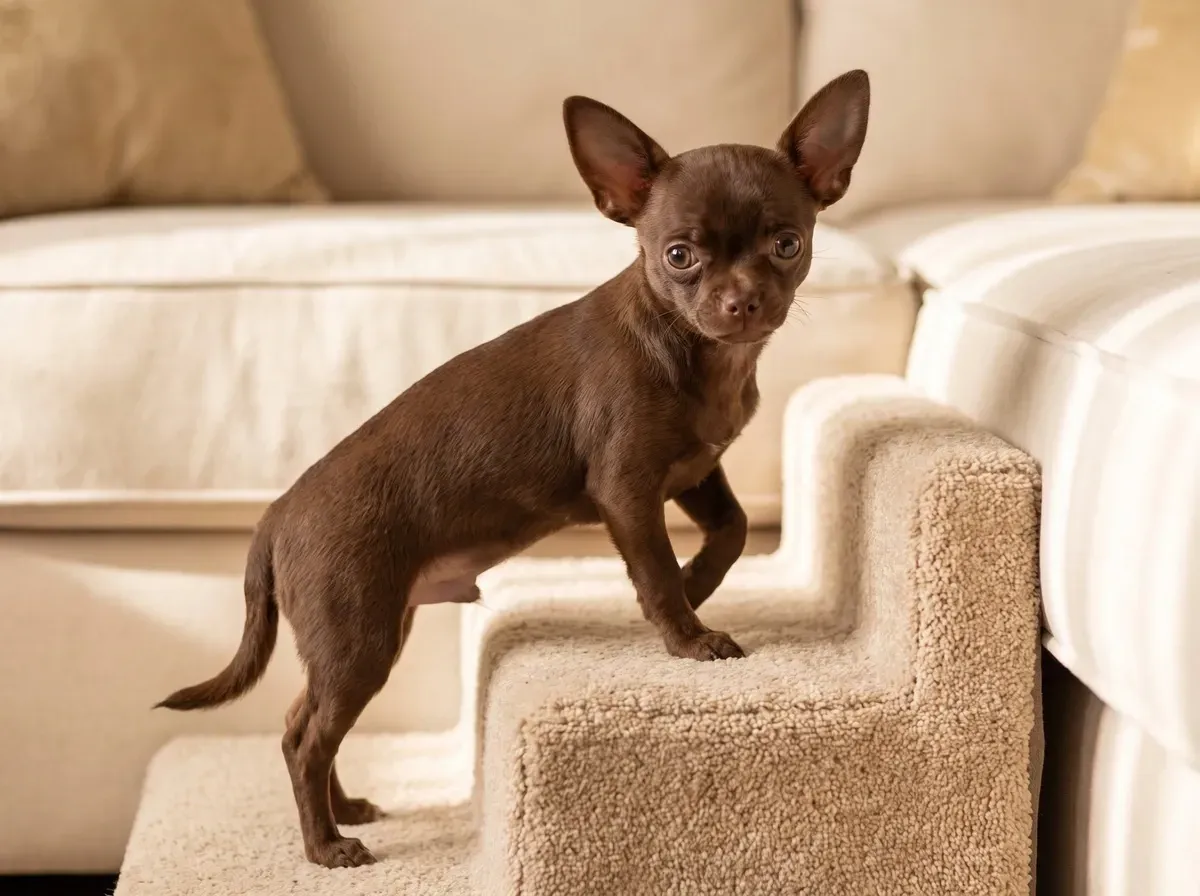
Chihuahua, a chocolate puppy climbing carpeted dog steps beside a cream sofa

Getting the flat ready

Steps, rugs and a harness

Put dog steps up to the sofa and bed, rugs where they will run on marble, and buy a harness first: a collar is only ever for their ID tag. A safe room or pen with something to chew helps them learn time alone.

Ten things that make their life better
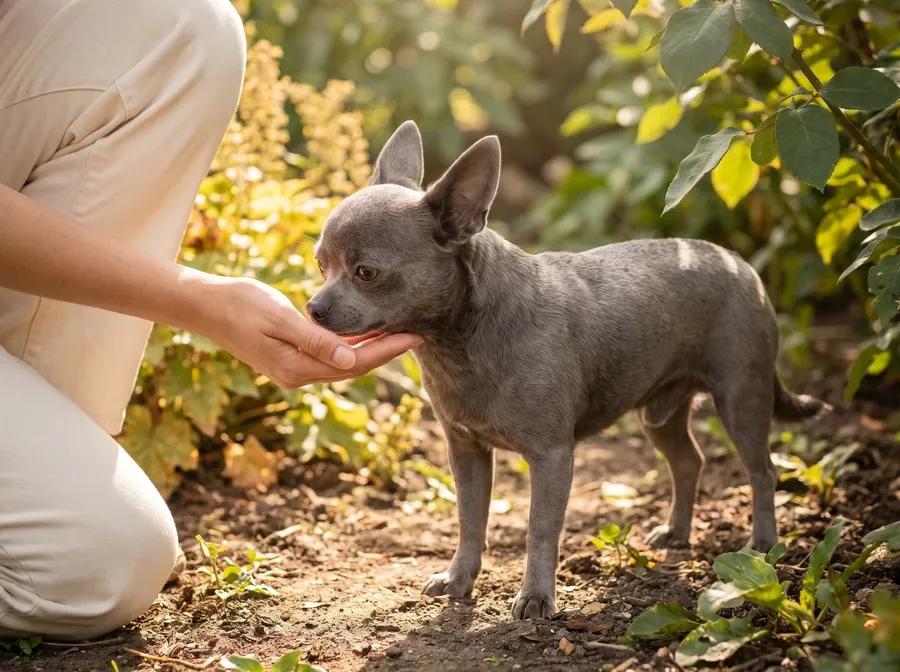
Chihuahua, a blue adult in a garden sniffing a kneeling pet parent's open hand

Before you commit

Smaller is not better

In the smallest lines, size has sometimes been chosen ahead of health. Teeth, knees and the windpipe are the big three on a Chihuahua's health record, so ask the breeder what their vet has found in the puppy and both parents.

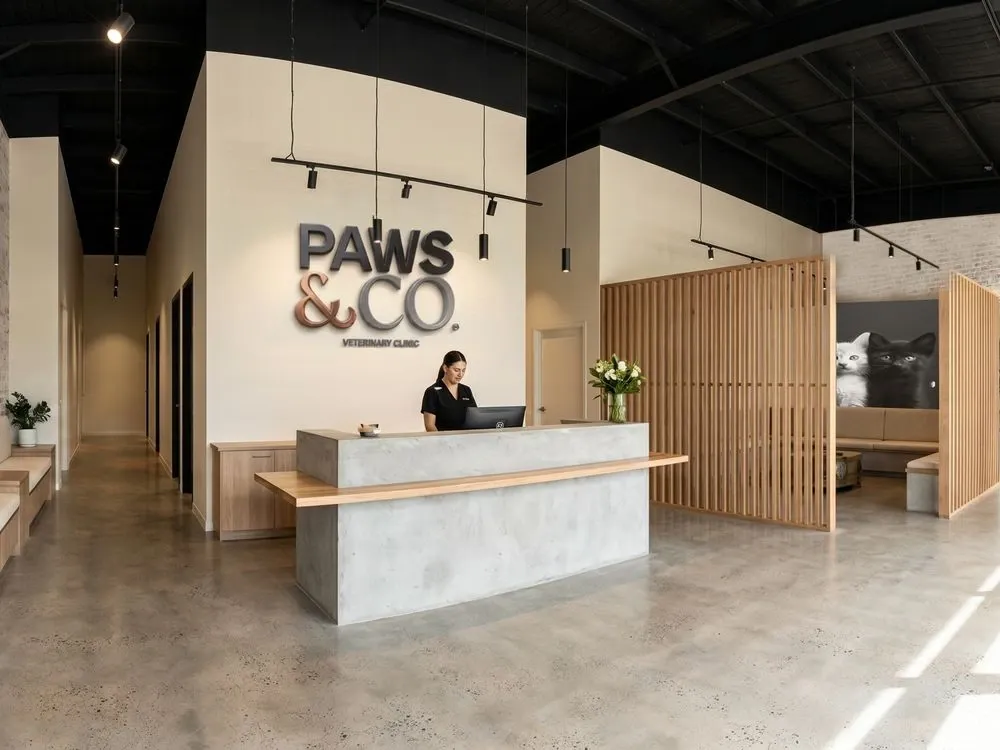
The reception of a Paws & Co clinic, with long cream benches and a stone reception desk

Before the clinics open

Join the founding families

AED 1,999 of essential care for AED 199. No payment now.

When to see a vet

When it is not behaviour.

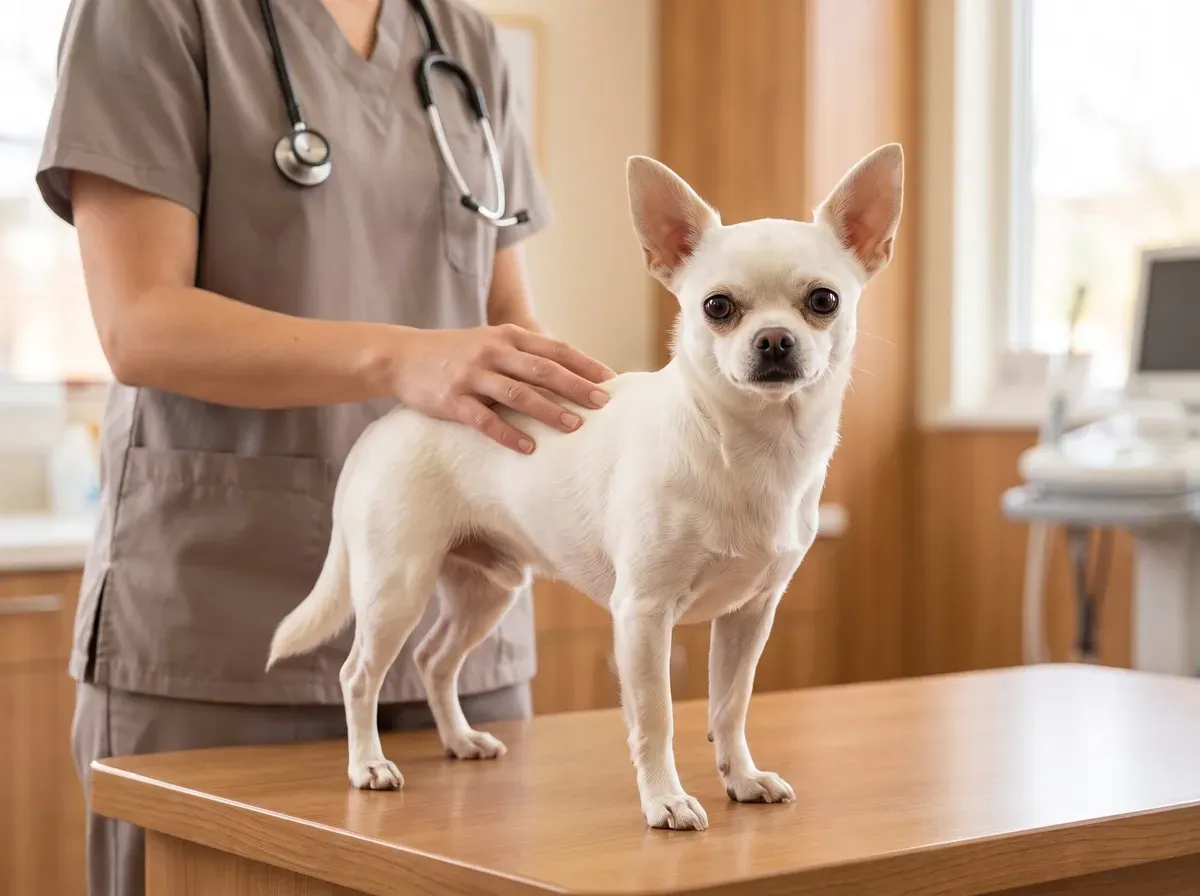
Chihuahua, a white adult standing on a clinic table as a vet in taupe scrubs rests a hand on the dog's back

Some of this is not a training problem, and treating it like one wastes time your dog may not have. If they are distressed when you leave, if they growl or guard their food, their toys or you, if they are frightened on the lead, or if anything about them changes suddenly at any age, contact your vet the same day. A tip from a website, ours included, is not the answer. If it cannot wait, contact your nearest emergency vet now.

With a Chihuahua, watch their breathing, their energy and their eyes. A honking cough can be their windpipe. A young dog who goes weak, wobbly or very sleepy may have low blood sugar: contact your vet now. Bloat (GDV, a twisted stomach) needs the same speed: a swollen, tight belly, retching with nothing coming up, sudden restlessness or drooling. It can happen in any dog, though it is most common in large, deep-chested breeds. Squinting or a watering eye needs looking at the same day. Circling or pressing their head against a wall is never a quirk. In an older Chihuahua, pacing at night can be the start of Cognitive Dysfunction Syndrome (dementia in older pets).

They'll keep walking on their own four feet. If they start honking like a goose, tell your vet.
Chihuahua history

Before they were yours.

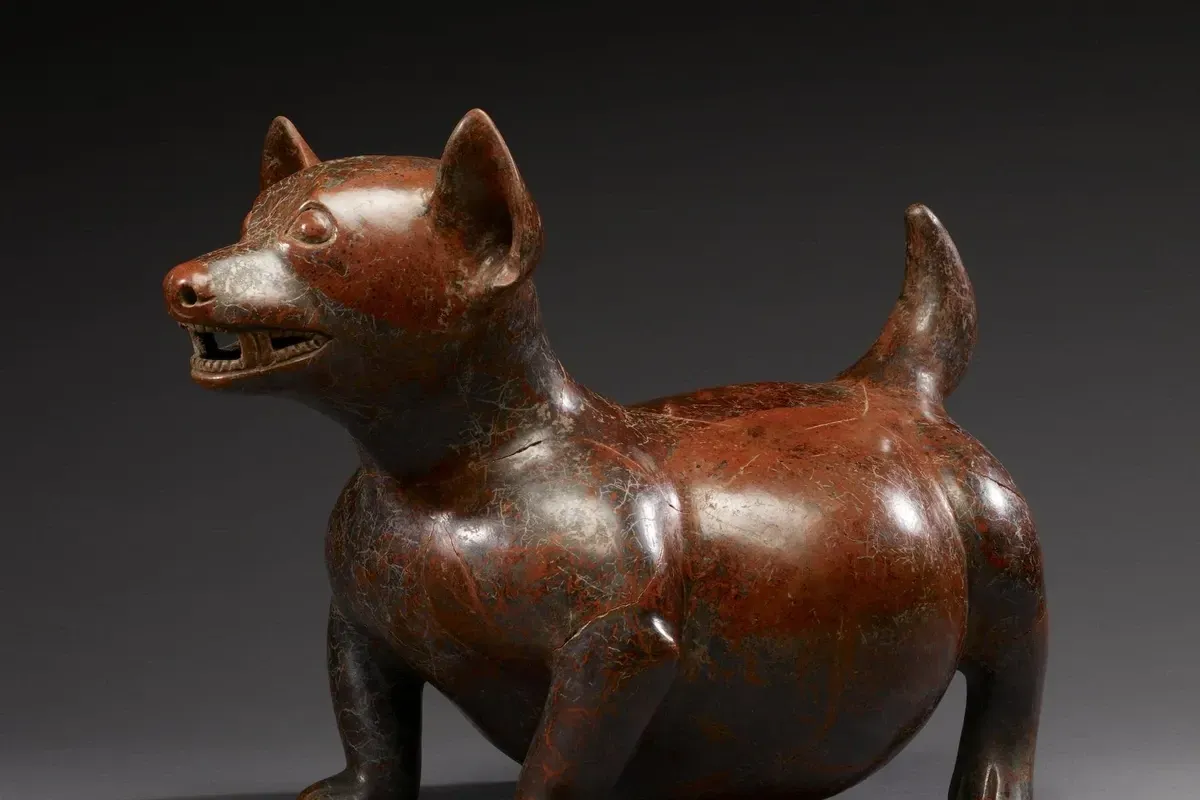
  1. Chihuahua history, a Colima clay figure of a small round dog with pricked ears, West Mexico, 100 BC to AD 300
    A dog figure from the Colima culture of West Mexico, 100 BC to AD 300. Walters Art Museum.

    Before Europeans arrived

    Ancient Mexico

    Small dogs were kept in Mexico long before Europeans arrived, and DNA studies link today's Chihuahua to them.

    What they still carryA very old bond with people, in a very small body.

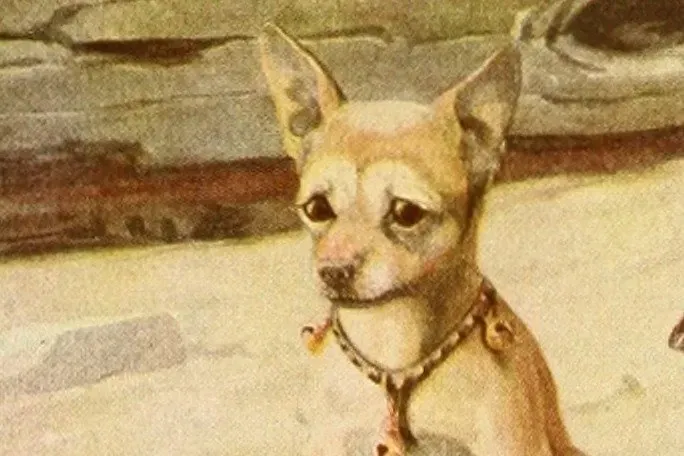
  2. Chihuahua history, a painting of a fawn dog with large upright ears and a beaded collar, 1919
    A Chihuahua painted by Louis Agassiz Fuertes for The Book of Dogs, National Geographic, 1919.

    The 1800s

    The state of Chihuahua

    Visitors from the United States bought tiny dogs in the Mexican state of Chihuahua, and the breed took the state's name.

    What they still carryA dog chosen, from the start, for being small.

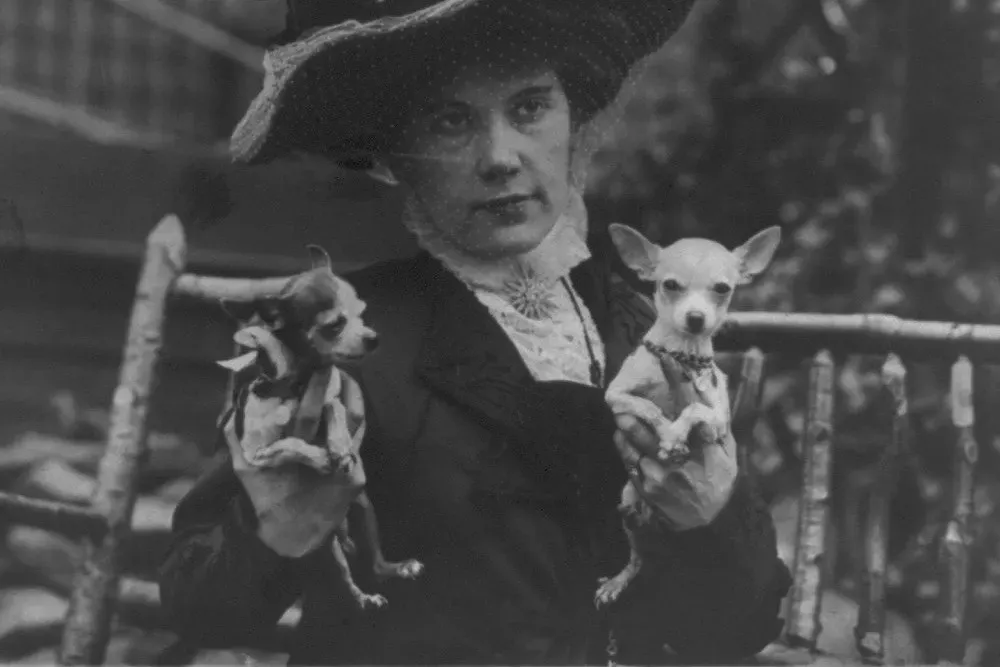
  3. Chihuahua history, Mrs C. D. Atwood in a large hat holding two small dogs, early 1900s
    Mrs. C. D. Atwood with two Chihuahuas, early 1900s. Bain News Service, Library of Congress.

    1904

    Midget

    The American Kennel Club registered its first Chihuahua, a dog called Midget, in 1904. The rules capped their weight but set no lower limit.

    What they still carryA breed that rewards small, which is why some lines keep getting smaller.

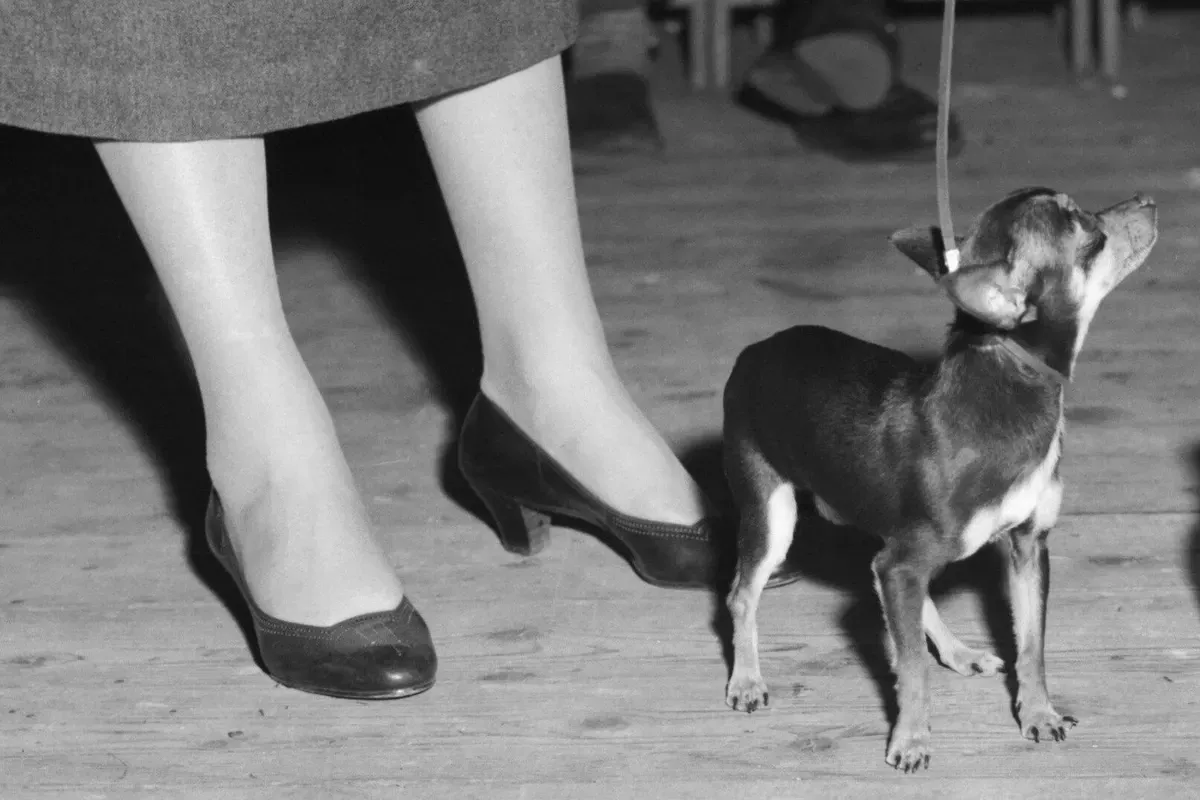
  4. Chihuahua history, a small dog on a lead at a dog show beside a pair of legs, Amsterdam, 1958
    A Chihuahua at the international dog show in Amsterdam, 1958. Photo: Herbert Behrens, Anefo, Nationaal Archief.

    The 20th century

    The dog that goes everywhere

    The Chihuahua became one of the best-known small dogs in the world, often carried in a bag.

    What they still carryA bold dog devoted to one or two people, and often carried rather than walked.

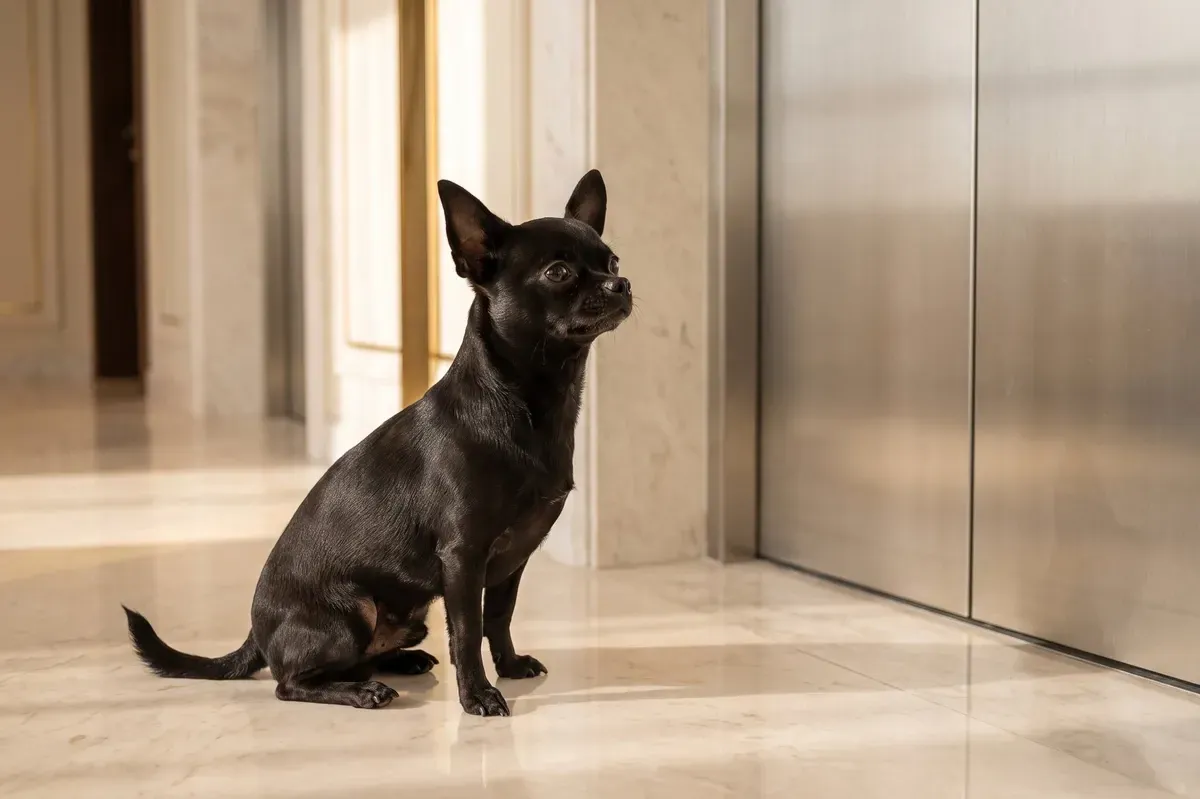
  5. Chihuahua history, the breed today, a black adult sitting on a marble floor by the lift doors of a flat

    Today

    In Dubai

    In the UAE a Chihuahua lives in a building full of lifts, neighbours and other dogs, and enjoys the warmth.

    What they still carryA tiny dog with a big voice.

Chihuahua questions

The ones you type at midnight.

Most of these get asked late at night, by someone watching their dog and not sure what they are seeing.

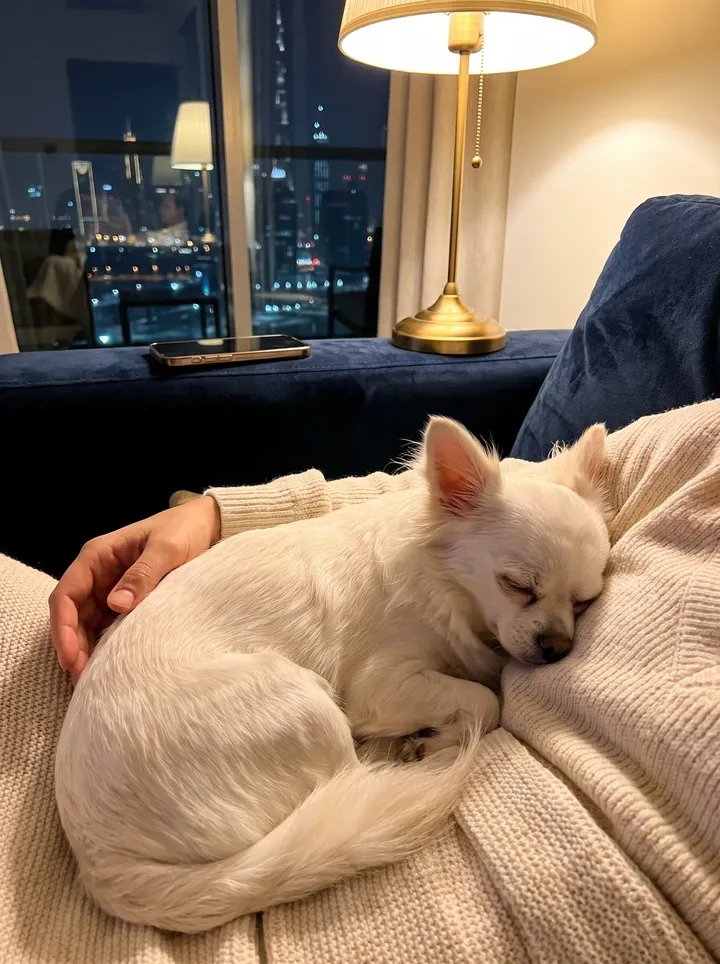
Chihuahua in Dubai, a long-coated white adult asleep on a pet parent's lap at night, city lights behind
How long do Chihuahuas live?

Chihuahuas usually live 12 to 18 years. Keeping their teeth clean and their weight lean matters for all of those years.

How big is a full grown Chihuahua?

A full grown Chihuahua usually weighs up to 2.7 kg. They are the world's smallest recognised dog breed, and at that size, 100 grams makes a difference.

What is the Chihuahua temperament like?

Chihuahuas are bold, bright and loyal, and bond deeply with one or two people. They can be wary of strangers, so calm, steady socialisation keeps that big attitude charming.

What types of Chihuahua are there?

There is one Chihuahua breed, in two coats: smooth and long-haired. Most have the rounded, apple-shaped head the breed is known for.

Do Chihuahuas shed?

Chihuahuas shed lightly to moderately, whether their coat is smooth or long. A weekly brush is plenty.

Why is my Chihuahua so angry?

A Chihuahua who growls, barks or snaps is usually frightened or guarding, not angry. Let them meet the world on their own feet, and contact your vet, because fear and guarding need a proper plan.

Why does my Chihuahua cough like a goose?

A Chihuahua who honks like a goose when they pull or get excited may have a weak windpipe. It is on their health record from puppyhood, so walk them on a harness and tell your vet.
How do I look after my Chihuahua's teeth?

Brush a Chihuahua's teeth every day with a dog toothpaste, because dental disease is the first risk on their health record. From 6 months, they also need a professional dental clean twice a year.

Can a Chihuahua live in Dubai?

Yes, Chihuahuas like the warmth and suit flat life in Dubai. They walk close to the hot pavement, though, so from May to September walk before sunrise and after dark.

Worried about them? Contact your vet today.