We’re hiring people who love them like we do. Join us careers@pawsandco.comSee open roles
UAE Government Licensed MOCCAE
Westiepoo in Dubai, studio portrait of a calm white adult with a soft wavy coat sitting

Breed guide  ·  Dogs

Westiepoo

She worked out the treat cupboard in a week. I've taught her to sit and ask instead.

Size
Small
Weight
Usually 1.8 to 9 kg
Shedding
Low

Last updated 14 October 2026

Join the founding families. AED 1,999 of essential care for AED 199.

No payment now. We'll be in touch by email and WhatsApp as we open enrolment.

✓
Thank you.

We will be in touch soon to confirm.

Westiepoo traits

What they brought with them.

Tap a card to see what is going on.

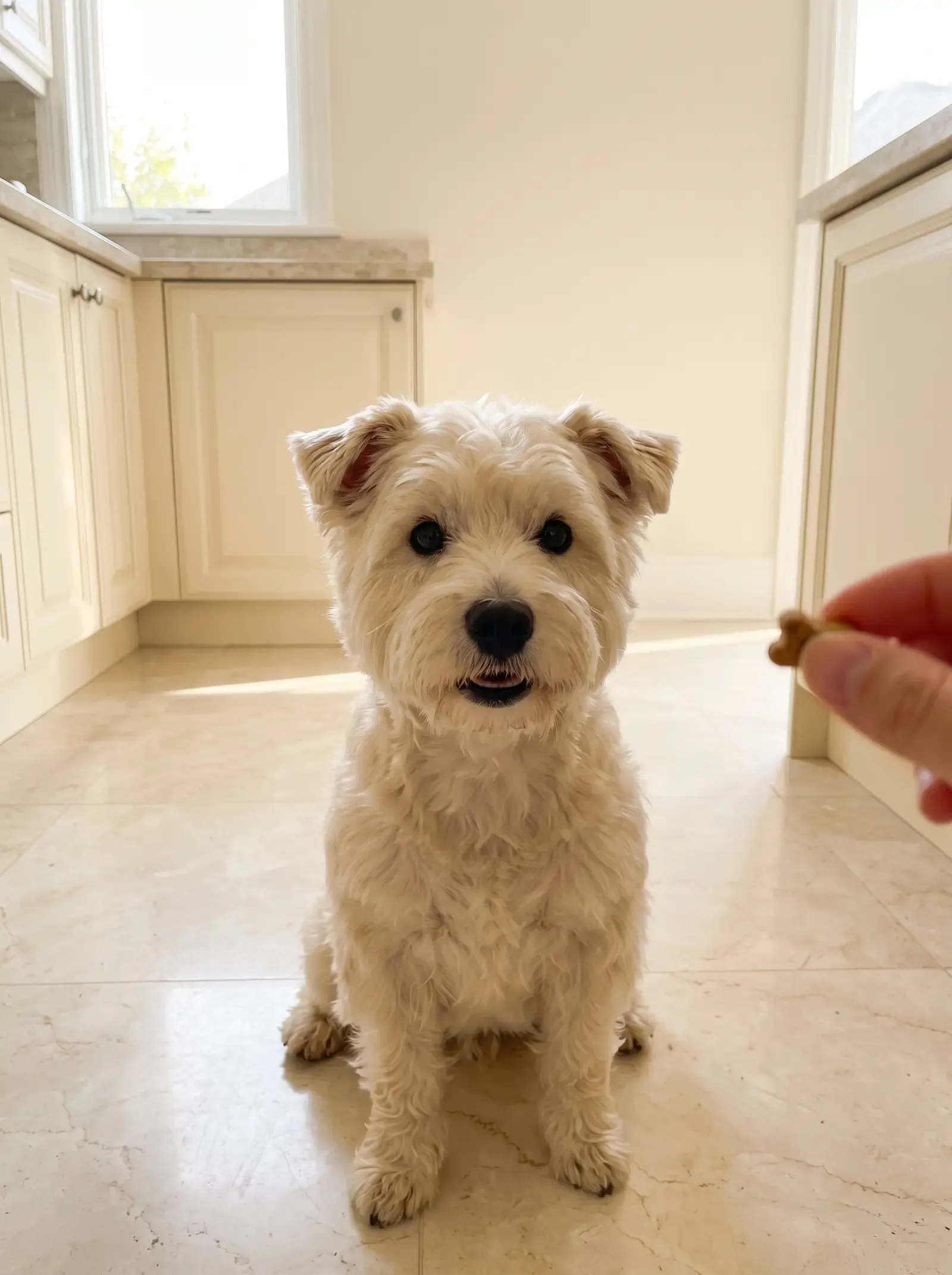
Westiepoo, a cream adult sitting neatly on a marble kitchen floor, waiting for a treat

At home

A terrier and a Poodle

Digging and barking one minute, a new trick in ten the next.

What's going onThe Westie side made its own decisions underground. The Poodle waited for instructions. When they dig and bark, that is the terrier. When they learn a trick in ten minutes, that is the Poodle.

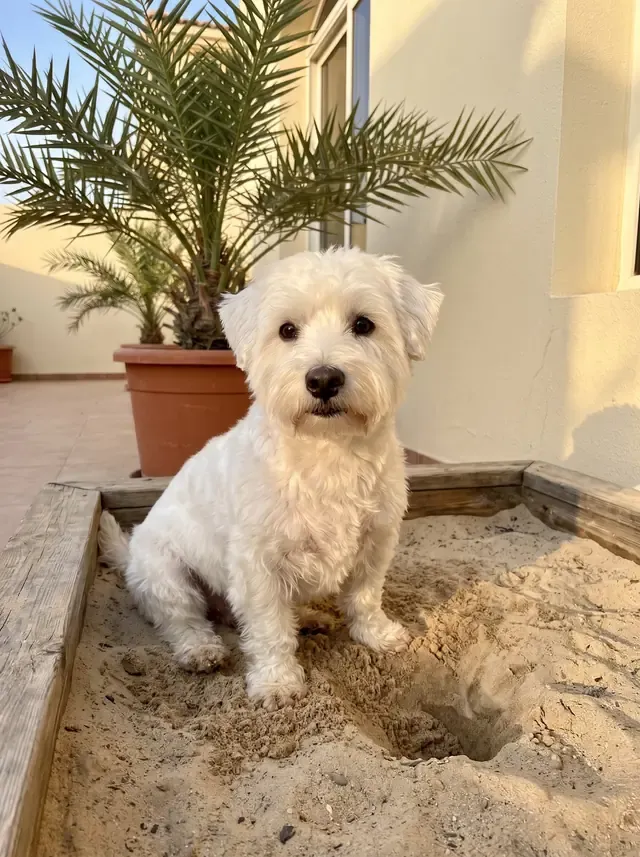
Westiepoo in Dubai, a white adult sitting in a terrace sandpit beside a fresh hole, a date palm behind

At home

Why does my Westiepoo dig?

Sofa cushions, their bed, the sand at the beach.

What's going onTheir Westie ancestors dug for a living. Give them a blanket or a sandpit that is theirs to dig, and praise them when they use it.

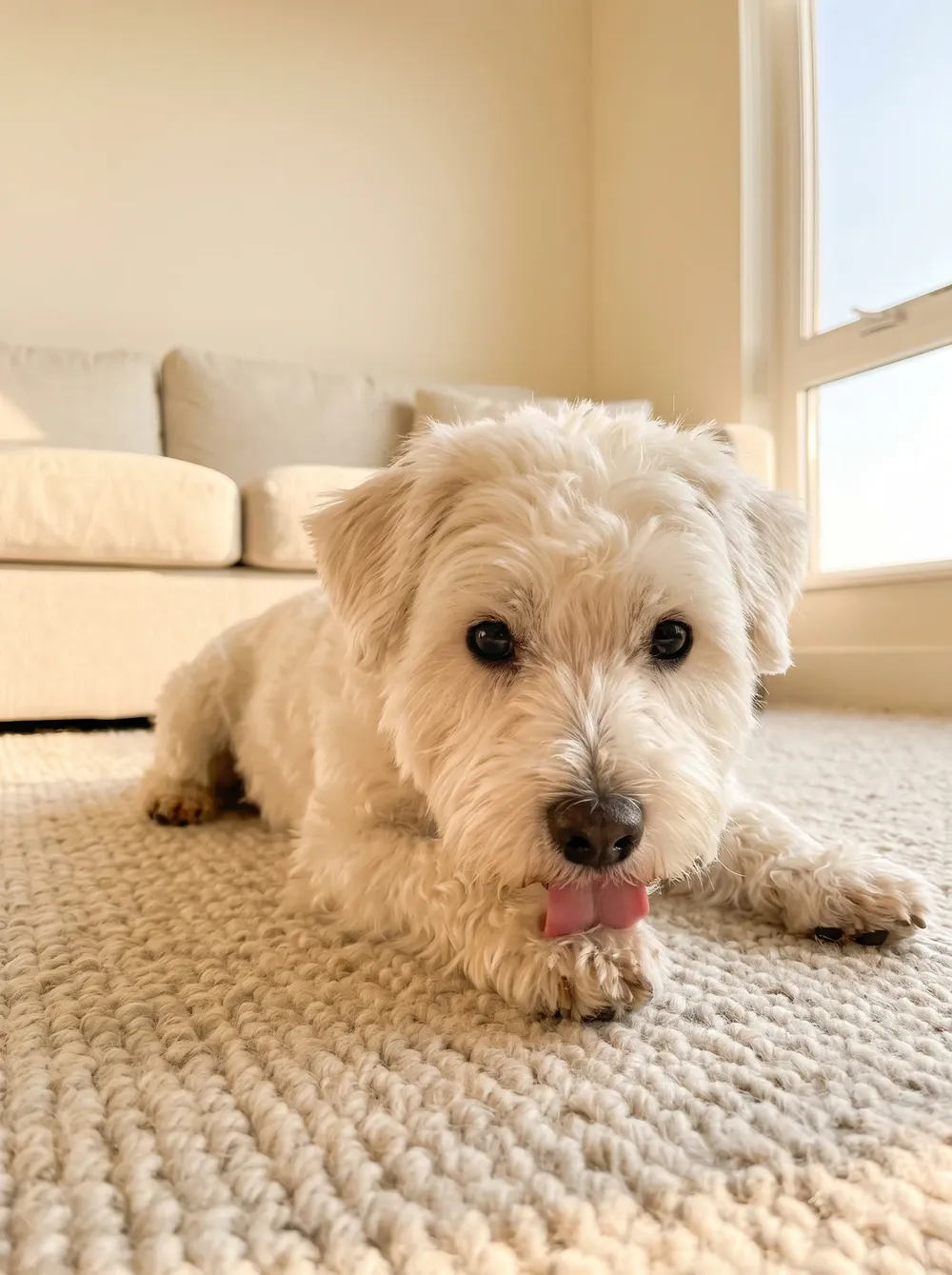
Westiepoo, a cream adult lying on an oatmeal rug, licking a front paw

At home

Why does my Westiepoo lick their paws?

Paw licking, face rubbing and scratching at night.

What's going onAllergic skin disease tops their health record from puppy to prime adult. On a light coat, licked fur turns a reddish brown. It is their skin talking, not a habit, so note when it flares and contact your vet the same day.

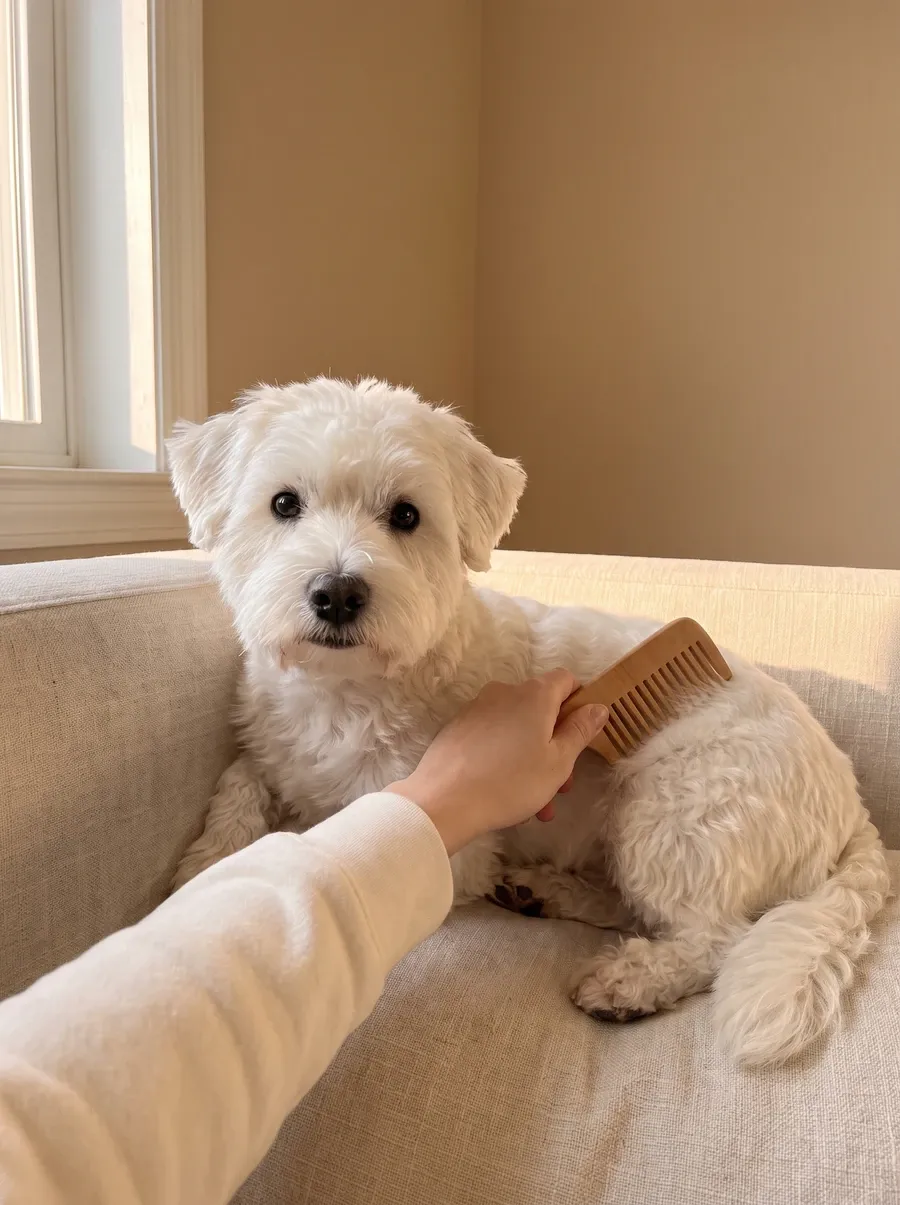
Westiepoo, a white adult lying on a linen sofa while a pet parent combs their coat

At home

Low shedding, not allergy-free

Little hair on the sofa, and mats in the armpits within weeks.

What's going onThe coat sheds less because the loose hair stays in it until you brush it out. No dog is guaranteed to be allergy-free: a 2012 study found no less dog allergen in homes with Poodles and Labradoodles than in homes with other dogs.

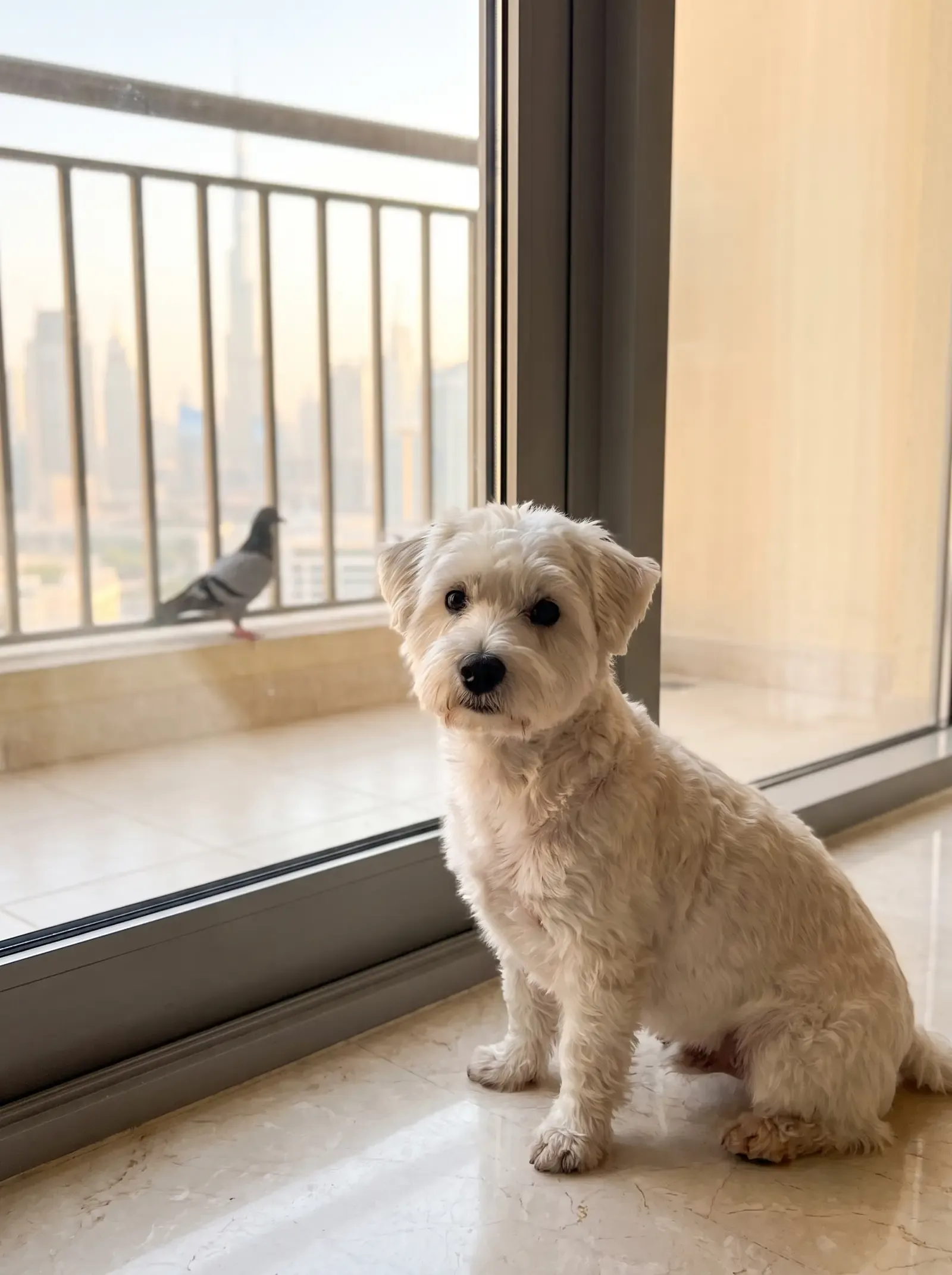
Westiepoo in Dubai, a cream adult by a balcony door, a pigeon on the railing and the skyline behind

At home

Why does my Westiepoo bark so much?

The lift, the door, and the pigeon on the railing.

What's going onWesties were bred to bark so a person above ground could find them. Reward the quiet moments, and give them a job before they pick one.

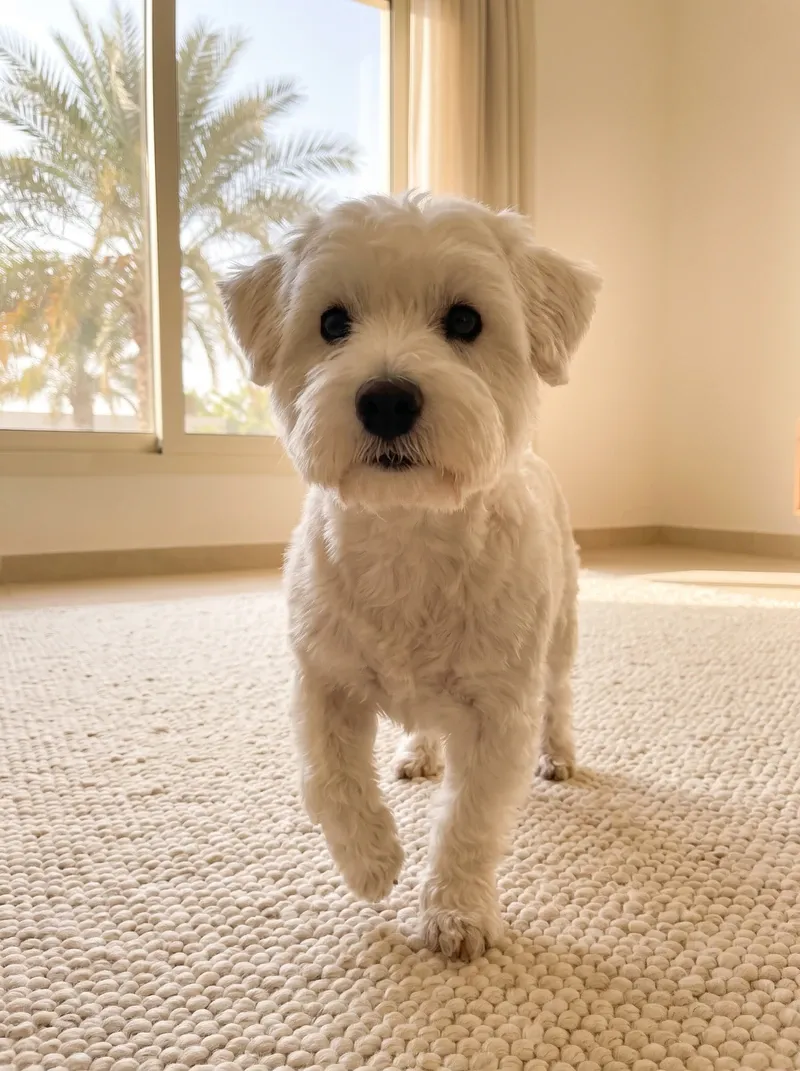
Westiepoo in Dubai, a white adult walking across a cream rug, date palms through the window

At home

They won't tell you it hurts

A skip on a back leg for a step, then on as if nothing happened.

What's going onA slipping kneecap is on their record from puppyhood, and terriers were bred to keep going through pain. That skip is the whole message, so mention it to your vet.

A Westiepoo in Dubai

The bit nobody tells you.

Their parents

Built for: One bred to dig after a fox and bark until someone came, one to swim for ducks and watch a hunter.

In Dubai: A day in a flat, on marble.

Their work

Built for: A fox's den, or a hunter's next instruction.

In Dubai: No dens to dig and no ducks to fetch.

Their skin

Built for: A white terrier's sensitive skin.

In Dubai: A coat that mats, and skin that itches.

The digging at cushions, the barking at the balcony and the paw licking mostly come from that.

You cannot give them a fox's den. You can give them somewhere to dig and a close eye on their skin, and the ten things below are how.

Your plan is built around their breed: the risks on a Westiepoo's record at every age, and the care that goes with each one.

Join the founding families. AED 1,999 of essential care for AED 199.

Daily care for a Westiepoo

Ten things that make their life better.

Many of them are free, and most matter at every age.

  1. A Westiepoo can lean terrier or lean Poodle, and the two need different days.

    Before they come home, and again as the adult coat and energy arrive

    Free

    Why

    A Westiepoo can lean terrier or lean Poodle, and the two need different days.

    What to do

    Ask the breeder which size of Poodle was used, and what health tests both parents had, including the Westie's skin and eyes. Then watch them: a digger and a barker needs more outlet than a dog who follows you round the flat.

  2. A matted coat hides the itchy, red skin you need to see.

    Every age, hardest from 6 months to 2 years

    Under AED 150, once, for a brush and comb

    Why

    A matted coat hides the itchy, red skin you need to see.

    What to do

    Every day or two, slicker brush first, then a metal comb to the skin. Behind the ears, the armpits and under the harness mat first. Look at the skin as you go, and book the groomer on a regular schedule.

  3. Recurrent ear trouble is on their record from puppyhood, alongside their skin allergies.

    Every age

    Under AED 150 a year for ear cleanerIn your plan

    Why

    Recurrent ear trouble is on their record from puppyhood, alongside their skin allergies.

    What to do

    Once a week, lift each ear, look and smell. Clean with the ear cleaner your vet gives you. Do not pull hair out of their ears at home. If your vet recommends removing it, a professional groomer or our nurses can do it. For head shaking or a smell, contact your vet rather than reaching for another bottle of drops. Ear cytology (a swab from the ear, looked at under a microscope) is in your plan while they are a puppy.

  4. Baby teeth that stay put can show up in puppyhood, and dental disease tops their record from seven years.

    Every age, most of all as a puppy and from 7 years

    Under AED 100 for a brush and toothpasteIn your plan

    Why

    Baby teeth that stay put can show up in puppyhood, and dental disease tops their record from seven years.

    What to do

    Brush every day with dog toothpaste. At five or six months, look for a baby tooth still sitting beside an adult one. A dental eruption evaluation (whether the adult teeth are coming through properly) is in your plan while they are a puppy, with regular dentistry from two years.

  5. One half of them was bred to dig, the other half to learn.

    Every age, most of all from 6 months to 2 years

    Free to under AED 100 for a digging blanket

    Why

    One half of them was bred to dig, the other half to learn.

    What to do

    A digging blanket, a sandpit on the terrace, or food hidden in a box of scrunched paper. Add one new trick a week, paid from their daily food.

  6. The Poodle side was bred to work beside a person, and they want to be where you are.

    Every age, most of all from 6 months to 2 years

    Free, or the cost of a walker

    Why

    The Poodle side was bred to work beside a person, and they want to be where you are.

    What to do

    If you are out more than a few hours, arrange a walk, a visit or daycare. Leave them a stuffed chew. If they are distressed when you leave, contact your vet rather than fixing it at home.

  7. Terriers were bred to grab and shake, and the Poodle likes something in their mouth.

    Every age

    Under AED 100 for a tough toy

    Why

    Terriers were bred to grab and shake, and the Poodle likes something in their mouth.

    What to do

    Keep a tough toy they are allowed to shake and carry. Swap it for anything they should not have, and do not chase them.

  8. A dense coat in 45°C heat, and a terrier who will chase a cat under a car.

    Every age, most of all puppies and from 7 years

    Free

    Why

    A dense coat in 45°C heat, and a terrier who will chase a cat under a car.

    What to do

    From May to September, walk before sunrise and after dark. Put the back of your hand on the pavement for five seconds first. Keep them on the lead near roads and car parks.

  9. Patellar Luxation (a slipping kneecap) is on their record from puppy to prime adult.

    Every age, most of all up to 7 years

    Free to AED 1,000 for rugs and a rampIn your plan

    Why

    Patellar Luxation (a slipping kneecap) is on their record from puppy to prime adult.

    What to do

    Rugs where they turn on marble, a ramp to the sofa, and lift them down rather than letting them jump. Keep them lean. A patellar and gait evaluation (how the kneecaps sit and how they walk) is in your plan while they are a puppy.

  10. Their coat hides the red skin, the sore paws and the weight their record warns about.

    Every age

    FreeIn your plan

    Why

    Their coat hides the red skin, the sore paws and the weight their record warns about.

    What to do

    Part the coat and look at the skin on the belly, the armpits and between the toes. Feel their ribs, and weigh them once a month. Dry, sore or cloudy eyes are worth a visit. Tear testing (measuring how many tears they make) and an ophthalmic evaluation (eye exam) are in your plan from six months to two years, if their eyes show signs.

Four of these are in your plan. The rest you can do at home.

Join the founding families. AED 1,999 of essential care for AED 199.

Westiepoo health by age

Their health, at every age.

In a Westiepoo, paw licking, head shaking or a skip on a back leg is often the first sign that something is wrong. Choose their age to see what to watch for, and the care that goes with it.

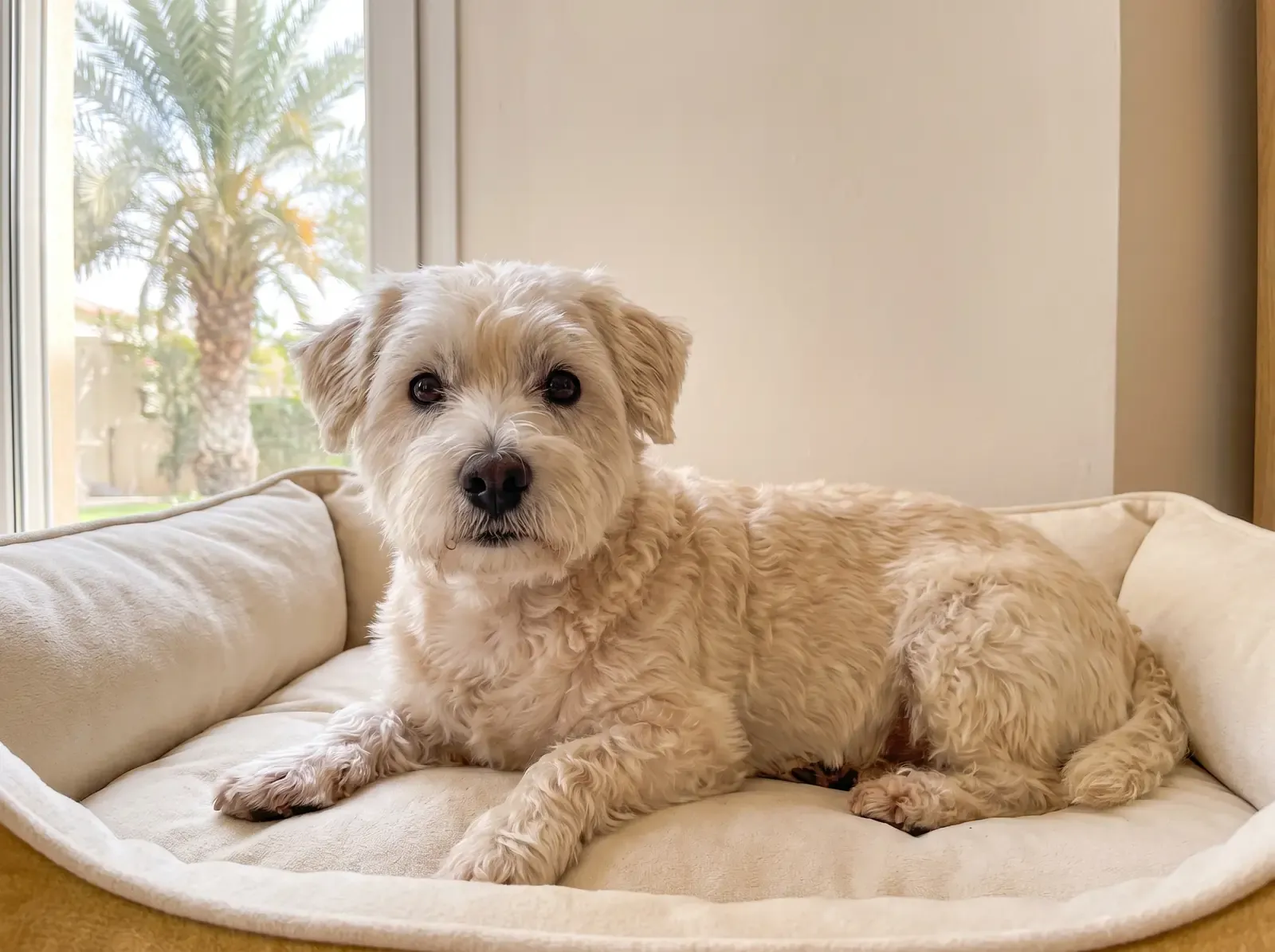
Westiepoo in Dubai, an older cream adult with a whitening muzzle on a cushioned bed, a date palm outside

How old are they?

Their age

Westiepoo Puppy health

the first six months

What to watch for

  1. Early allergic dermatitis affecting paws, face or ears
  2. Patellar Luxation (PL, slipping kneecap)
  3. Retained deciduous teeth (baby teeth that do not fall out)
  4. Recurrent otitis (ear inflammation)
  5. Congenital ocular disease (eye problems present from birth)
  6. Can inherit from the Westie side: Early or congenital expression of Legg-Calvé-Perthes Disease (loss of blood supply to the top of the thigh bone)
  7. Can inherit from the Westie side: Early or congenital expression of Craniomandibular Osteopathy (a painful overgrowth of bone in a young puppy's jaw)

The care that goes with it

  1. Core vaccinations, microchip and Dubai Municipality registration
  2. Deworming, and flea and tick prevention
  3. Growth and nutritional evaluation, and early socialisation
  4. Dermatological evaluation (skin exam) for a puppy who keeps itching
  5. Patellar and gait evaluation (how the kneecaps sit and how they walk)
  6. Dental eruption evaluation (whether the adult teeth are coming through properly)
  7. Ear cytology (a swab from the ear, looked at under a microscope), rather than bottle after bottle of drops
  8. Ophthalmic evaluation (eye exam) where the parents' tests are incomplete
The full care detail
  • Core vaccination programme, microchipping and Dubai Municipality registration. Titre testing discussion where clinically appropriate; not a substitute for completing the core vaccine series
  • Deworming and external parasite prevention tailored to Dubai exposure
  • Body Condition Score (BCS), Muscle Condition Score (MCS), dental, growth and nutritional evaluation, and early socialisation
  • Dermatology evaluation for persistent puppy pruritus
  • Patellar and gait evaluation
  • Dental eruption evaluation
  • Ear cytology rather than repeated empirical drops
  • Baseline ophthalmic evaluation where parent testing is incomplete

Their age

Westiepoo Juvenile health

6 months to 2 years

What to watch for

  1. Atopic dermatitis (itchy allergic skin) and recurrent otitis
  2. Patellar Luxation (PL)
  3. Dental crowding and periodontal disease (gum disease)
  4. Keratoconjunctivitis sicca (dry eye) or cataract (clouding of the lens)
  5. Obesity
  6. Can inherit from the Westie side: Young-dog presentation of Legg-Calvé-Perthes Disease (loss of blood supply to the top of the thigh bone)
  7. Can inherit from the Westie side: Young-dog presentation of Craniomandibular Osteopathy (a painful overgrowth of bone in a young puppy's jaw)

The care that goes with it

  1. A structured allergy diagnosis and maintenance plan
  2. Orthopaedic referral (to a joint specialist) where Patellar Luxation is significant
  3. Daily dental care, and professional cleaning as needed
  4. Tear testing (measuring how many tears they make) and ophthalmic evaluation (eye exam) for eye signs
  5. A weight and exercise plan
  6. Neutering or spaying, timed for a small breed
The full care detail
  • Structured allergy diagnosis and maintenance plan
  • Orthopaedic referral for clinically significant Patellar Luxation (PL)
  • Daily dental care and professional cleaning as needed
  • Tear testing and ophthalmic evaluation for ocular signs
  • Weight and exercise plan
  • Neuter/spay timing discussion that accounts for small-breed growth and disease risk

Their age

Westiepoo Young Adult health

2 to 4 years

What to watch for

  1. Atopic dermatitis and chronic otitis (long-term ear inflammation)
  2. Dental disease
  3. Patellar Luxation (PL) and osteoarthritis (wear and tear in the joints)
  4. Dry eye or cataract
  5. Chronic bronchitis (long-term inflammation of the airways)/pulmonary fibrosis (scarring of the lungs) or hepatobiliary disease (liver and gallbladder disease) in susceptible lines
  6. Can inherit from the Westie side: Legg-Calvé-Perthes Disease (loss of blood supply to the top of the thigh bone)
  7. Can inherit from the Westie side: Craniomandibular Osteopathy (a painful overgrowth of bone in a young puppy's jaw)

The care that goes with it

  1. Long-term allergy control, using more than one approach
  2. Regular dentistry
  3. Joint and weight management
  4. Ophthalmic surveillance (regular eye monitoring)
  5. Thoracic imaging (chest X-rays or scans) or liver and gallbladder investigation, when signs appear
The full care detail
  • Long-term multimodal allergy control
  • Regular dentistry
  • Joint and weight management
  • Ophthalmic surveillance
  • Thoracic imaging or liver/gallbladder investigation when clinical signs arise

Their age

Westiepoo Prime Adult health

4 to 7 years

What to watch for

  1. Atopic dermatitis and chronic otitis (long-term ear inflammation)
  2. Dental disease
  3. Patellar Luxation (PL) and osteoarthritis (wear and tear in the joints)
  4. Dry eye or cataract
  5. Chronic bronchitis (long-term inflammation of the airways)/pulmonary fibrosis (scarring of the lungs) or hepatobiliary disease (liver and gallbladder disease) in susceptible lines
  6. Can inherit from the Westie side: Legg-Calvé-Perthes Disease (loss of blood supply to the top of the thigh bone)

The care that goes with it

  1. Long-term allergy control, using more than one approach
  2. Regular dentistry
  3. Joint and weight management
  4. Ophthalmic surveillance (regular eye monitoring)
  5. Thoracic imaging (chest X-rays or scans) or liver and gallbladder investigation, when signs appear
The full care detail
  • Long-term multimodal allergy control
  • Regular dentistry
  • Joint and weight management
  • Ophthalmic surveillance
  • Thoracic imaging or liver/gallbladder investigation when clinical signs arise

Their age

Westiepoo Senior health

7 to 10 years

What to watch for

  1. Dental disease
  2. Osteoarthritis and mobility decline
  3. Chronic bronchitis/pulmonary fibrosis or hepatobiliary disease in susceptible lines
  4. Chronic Kidney Disease (CKD, long-term kidney failure)
  5. Neoplasia (tumours)

The care that goes with it

  1. Regular dentistry
  2. A senior physical examination twice a year, with blood tests, a urine test and blood pressure
  3. Thoracic imaging (chest X-rays or scans) or liver and gallbladder investigation, when signs appear
  4. Pain relief and mobility care
  5. Nutrition, and a quality-of-life assessment
The full care detail
  • Regular dentistry
  • Biannual senior physical examination with CBC, chemistry, urinalysis and blood pressure
  • Thoracic imaging or liver/gallbladder investigation when clinical signs arise
  • Pain and mobility management
  • Nutrition and quality-of-life assessment

Their age

Westiepoo Geriatric health

10 years and over

What to watch for

  1. Multimorbidity (several conditions at once) and frailty
  2. Advanced dental disease
  3. Cancer
  4. Cardiac or renal failure (heart or kidney failure)
  5. Cognitive and sensory decline (changes in thinking, sight and hearing)

The care that goes with it

  1. Pain relief and mobility support
  2. Kidney, heart and hormone monitoring
  3. Nutrition, memory and home-care support
  4. Quality-of-life assessment
  5. Palliative care (comfort care)
  6. End-of-life planning with your veterinary team
The full care detail
  • Multimodal pain and mobility support
  • Renal, cardiac and endocrine monitoring
  • Nutrition, cognition and home-care support
  • Quality-of-life assessments
  • Tailored palliative and comfort-focused care plan
  • Compassionate end-of-life planning with your veterinary team

Breed predispositions indicate an increased risk rather than certainty of disease. What is right for them always comes from their own history and an evaluation.

Getting a Westiepoo puppy in Dubai

Before they come home.

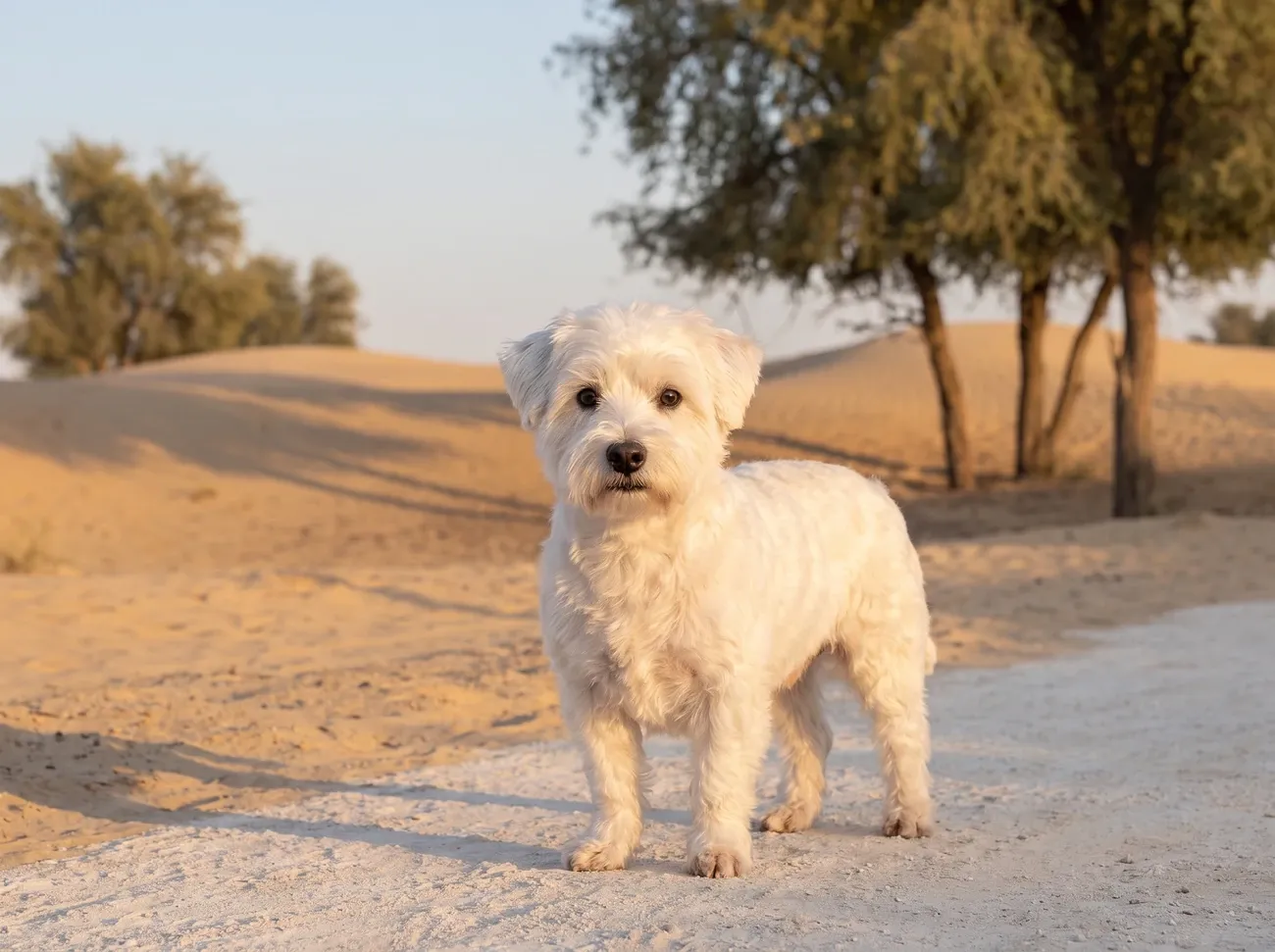
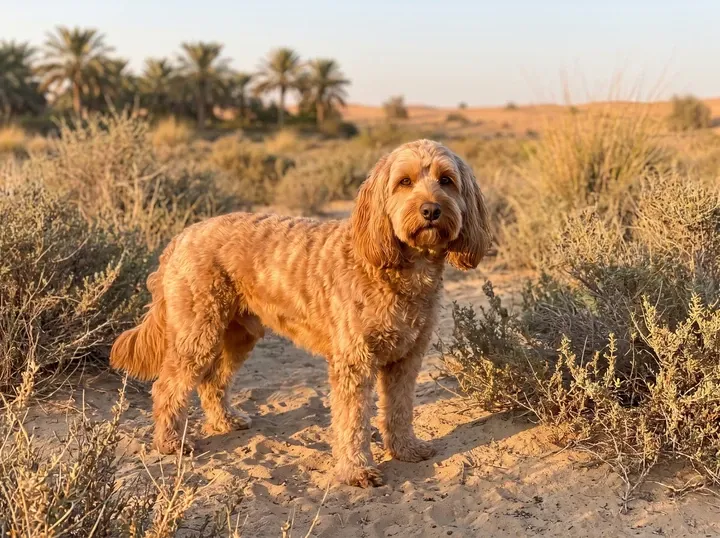
Westiepoo in Dubai, a white adult standing on a sandy path at the desert edge at golden hour

Toy or mini Westiepoo

Which Poodle, and which side

A Westiepoo has a West Highland White Terrier parent and a Miniature or Toy Poodle, and the Poodle's size sets theirs. A puppy can lean terrier, digging and barking, or lean Poodle, learning fast and following you round. Ask the breeder which Poodle was used, and whether the puppy is a first cross or bred back to a Poodle.

Westiepoo, an apricot young dog lying on a stone-coloured rug

Colours

White, or a Poodle shade

A Westiepoo can be white like the Westie parent, or take one of the Poodle's solid shades, from cream and apricot to black.

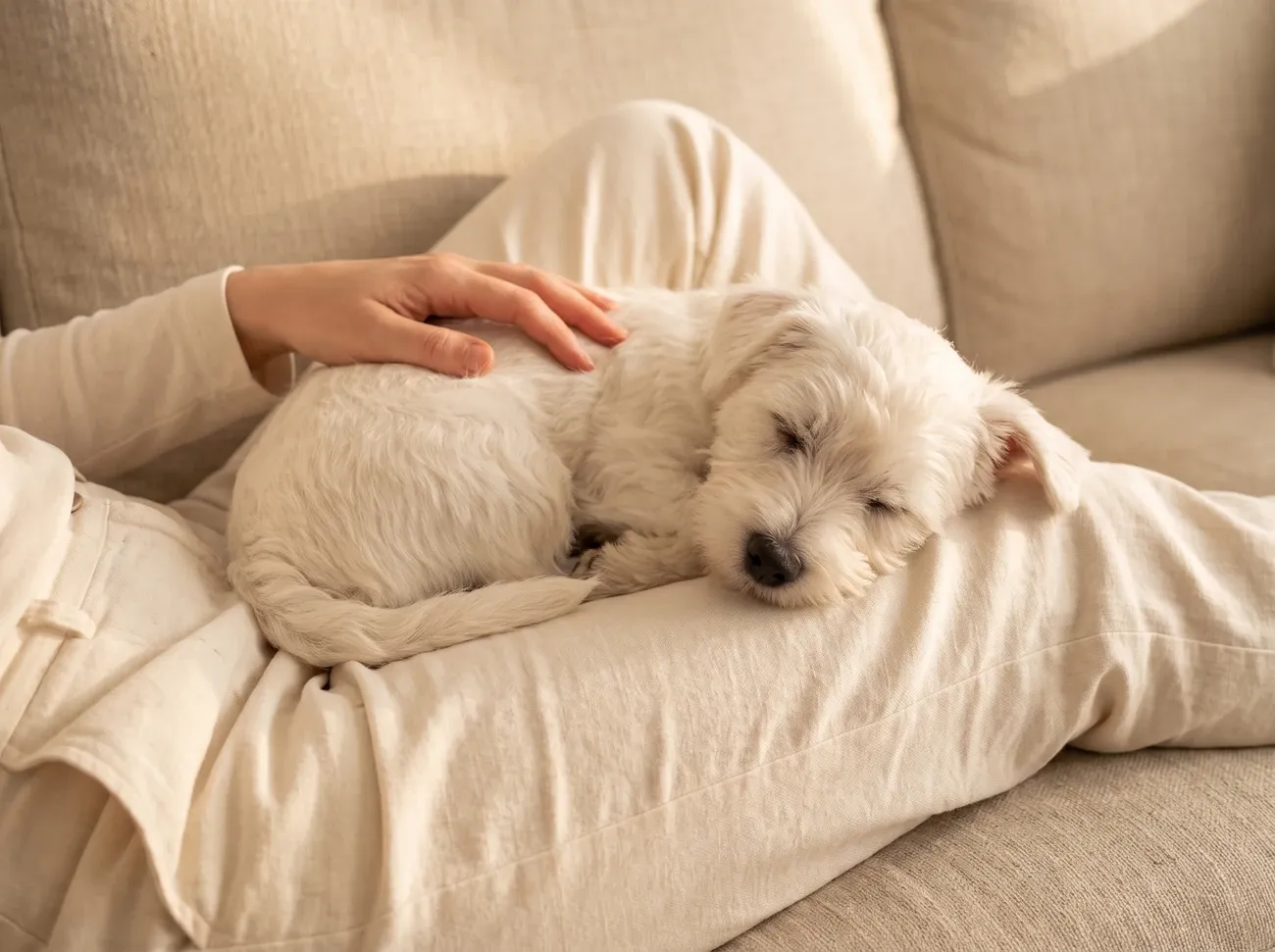
Westiepoo, a white puppy asleep in a pet parent's lap on a linen sofa

The first six months

Caring for a Westiepoo puppy

Their full vaccination course, microchip and Dubai Municipality registration come first, with a skin evaluation if they keep itching and a look at how their knees move. Handle their paws and ears for a minute a day now: you will be looking at both for the rest of their life.

Puppy health, 0 to 6 months
Westiepoo in Dubai, a cream puppy in a bunched-up blanket on a marble floor, towers through the window

Getting the home ready

A dig spot and rugs on marble

Give them a blanket or a sandpit that is theirs to dig, rugs where they turn on marble, and a ramp up to the sofa. Keep the balcony door closed when the pigeons are about, or expect commentary.

Ten things that make their life better
Westiepoo in Dubai, a white adult sitting on a villa lawn, bougainvillea and a date palm behind

Before you commit

Ask about skin, knees and eyes

Ask the breeder about both parents' skin, and for their knee and eye results. Itchy skin, sore ears and a slipping kneecap are where a Westiepoo's health record starts.

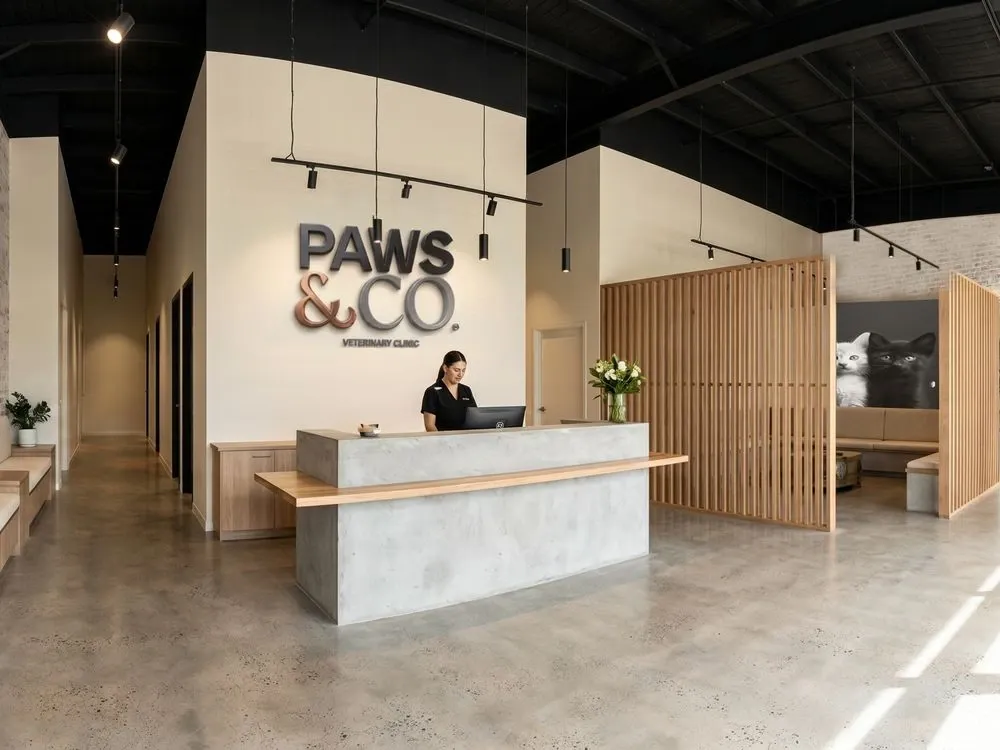
The reception of a Paws & Co clinic, with long cream benches and a stone reception desk

Before the clinics open

Join the founding families

AED 1,999 of essential care for AED 199. No payment now.

When to see a vet

When it is not behaviour.

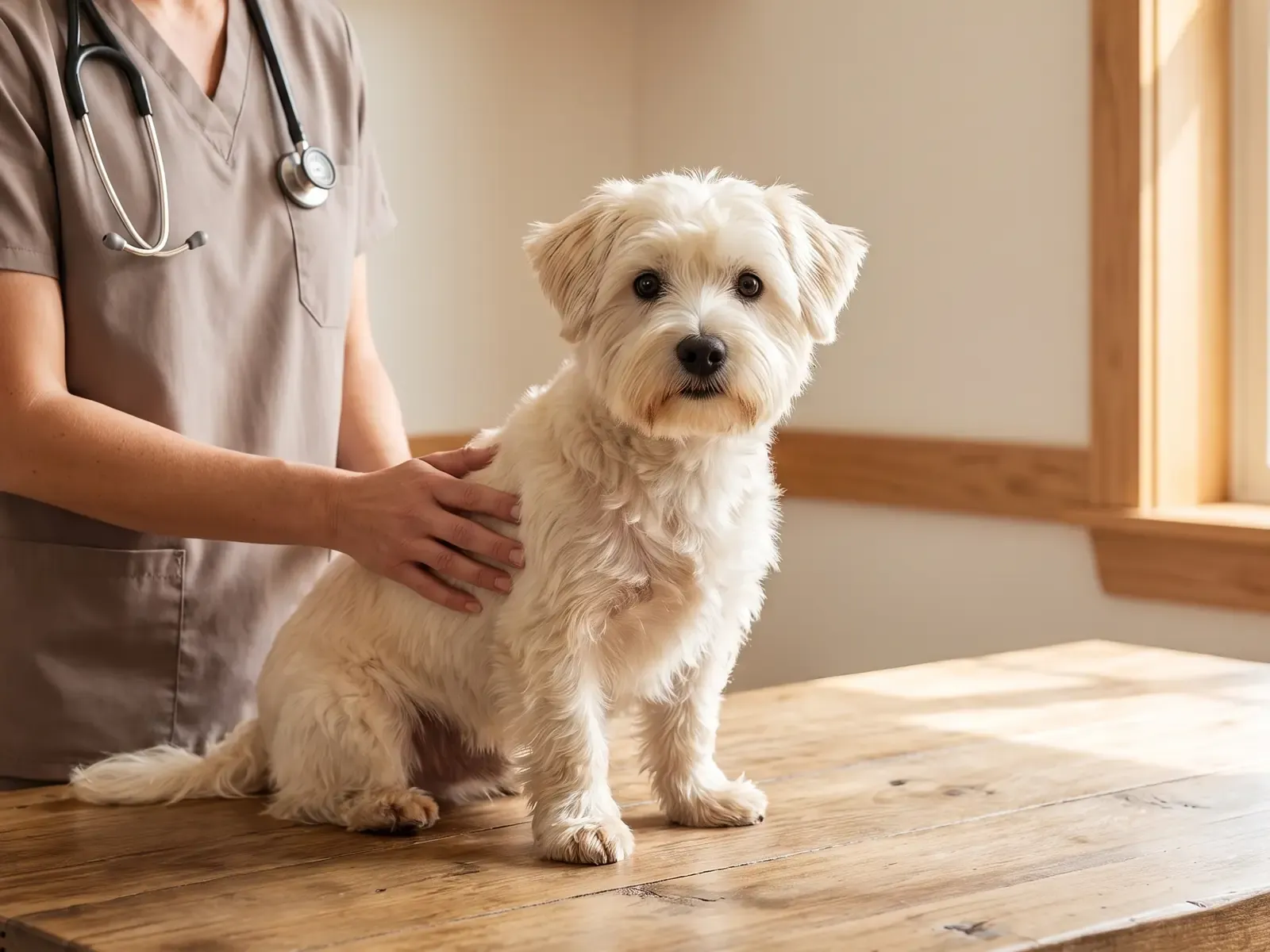
Westiepoo, a vet in taupe scrubs with a hand on a calm cream adult sitting on a timber table

Some of this is not a training problem, and treating it like one wastes time your dog may not have. If they are distressed when you leave, if they growl or guard their food, their toys or you, if they are frightened on the lead, or if anything about them changes suddenly at any age, contact your vet the same day. A tip from a website, ours included, is not the answer. If it cannot wait, contact your nearest emergency vet now.

With a Westiepoo, watch their skin, their breathing and the way they move. A Westiepoo who licks their paws for hours, rubs their face on the floor or shakes their head is often itchy, not restless. For a dry cough that keeps coming back, breathing harder at rest or tiring early on a walk, contact your vet. Do the same for a skip on a back leg, even if they carry on. Terriers hide pain well, and it is easy to put any of it down to mood, so mention it early. A first seizure, one that lasts more than two minutes, or more than one in a day is an emergency: contact your vet now. So is bloat (GDV, a twisted stomach): a swollen, tight belly, retching with nothing coming up, sudden restlessness or drooling. It can happen in any dog, though it is most common in large, deep-chested breeds.

She'll keep asking nicely. If she starts scratching instead, call your vet.

Westiepoo history

Before they were yours.

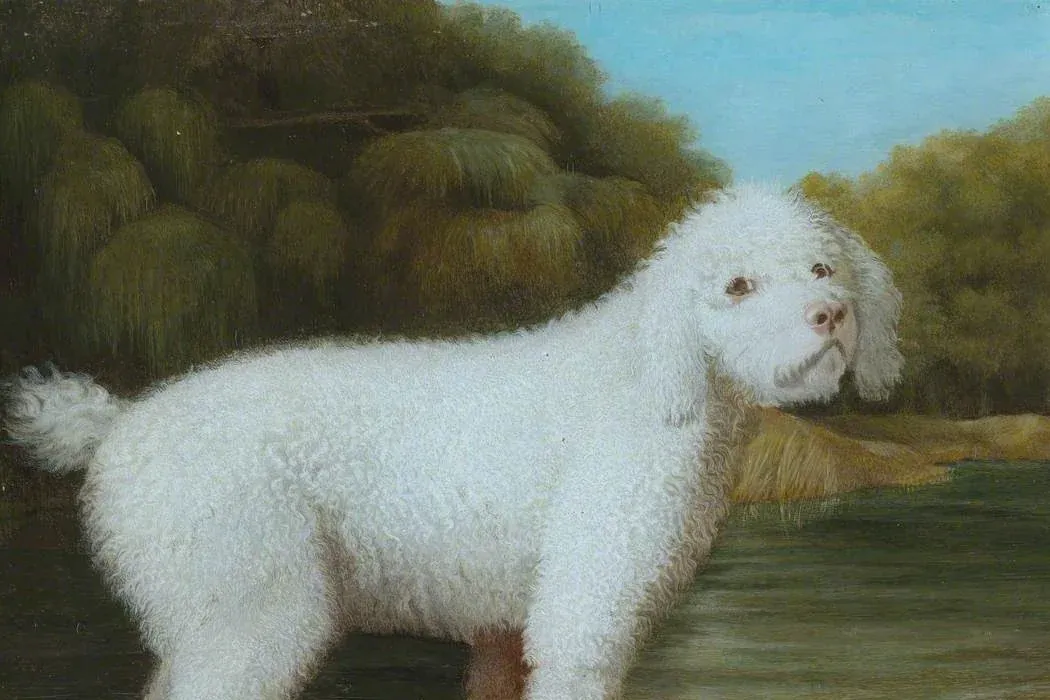
  1. Westiepoo history, a white Poodle standing in a punt on a river, a painting from the 18th century
    A white Poodle in a punt on a river, in the manner of George Stubbs, 18th century.

    Before 1900

    The Poodle, a water retriever

    The Poodle fetched ducks from the water for hunters, and took its name from the German "pudeln", to splash in water.

    What they still carryA quick mind, the urge to carry, and a coat that keeps growing.

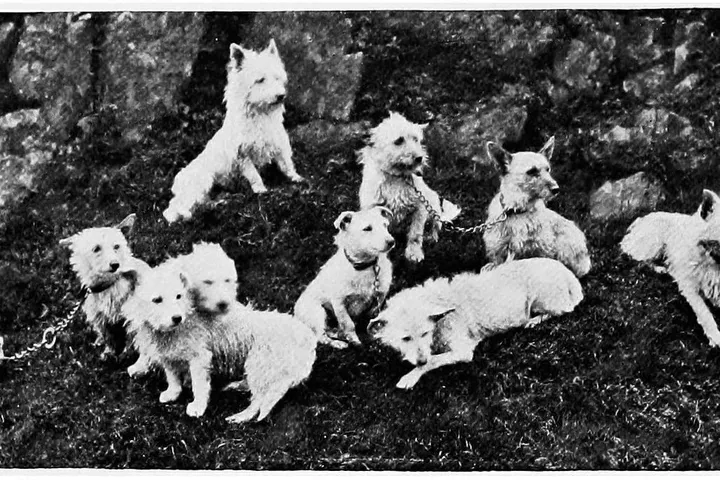
  2. Westiepoo history, white terriers bred at Poltalloch resting among rocks, Scotland, 1907
    White terriers bred by Colonel Malcolm of Poltalloch, Scotland. Photo: C. Reid, Wishaw, from The New Book of the Dog, 1907.

    In the Highlands

    The terriers of Argyll

    In the West Highlands of Scotland, small terriers went into rock dens after foxes and badgers, alone and out of reach of the person who sent them.

    What they still carryThe digging, the chasing, the barking and the independence.

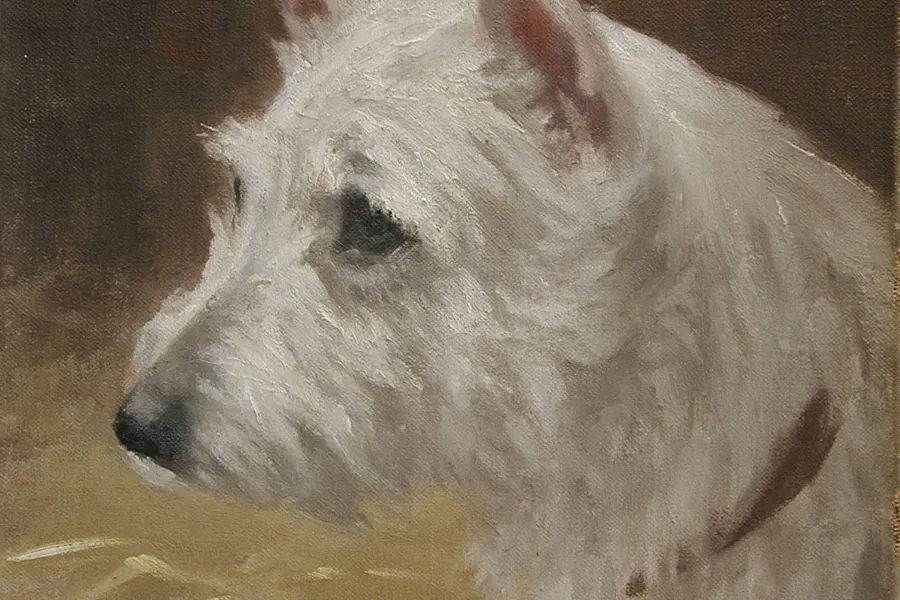
  3. Westiepoo history, an oil painting of a West Highland White Terrier's head by Frances C. Fairman, 1907
    A West Highland Terrier, painted by Frances C. Fairman, 1907.

    1907

    The Westie is named

    The West Highland White Terrier was shown at Crufts under its own name in 1907.

    What they still carryA white terrier with sensitive skin.

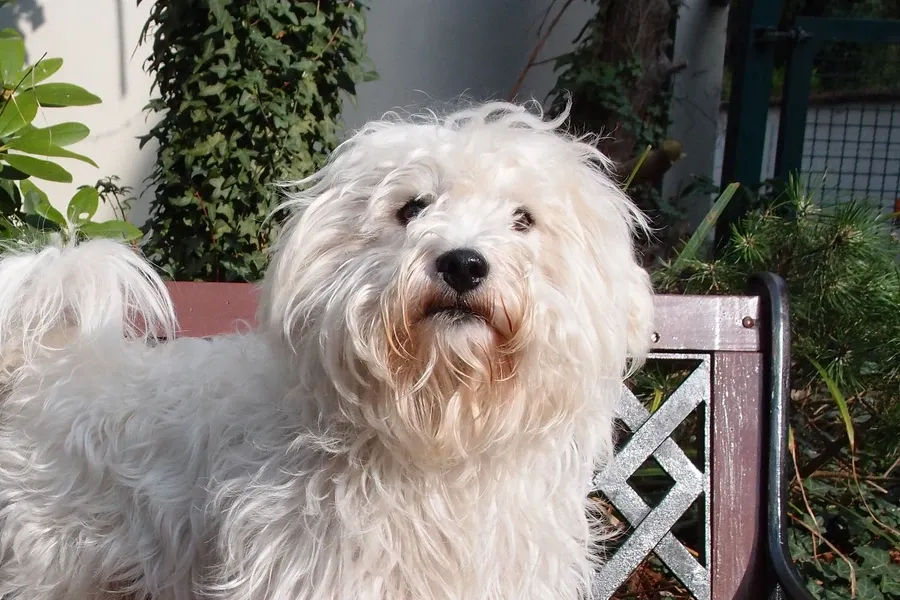
  4. Westiepoo history, a shaggy white adult standing on a garden bench, 2014
    A Westiepoo on a garden bench, 2014. Photo: M. Pfeiffer (Gordito1869), CC BY 3.0, via Wikimedia Commons.

    The cross begins

    The first Westiepoos

    Westies were crossed with Miniature and Toy Poodles for a small family dog with a coat that sheds less.

    What they still carryA terrier and a quick learner in one small dog.

  5. Westiepoo history, the cross today, a white adult lying on a park lawn, Dubai, 2026

    Today

    In Dubai

    In the UAE a Westiepoo lives in a flat or a villa, with no dens to dig and no ducks to fetch. The dig, the bark and the quick mind came anyway.

    What they still carryA digger, living on marble, through 45°C summers.

Westiepoo questions

The ones you type at midnight.

Most of these get asked late at night, by someone watching their dog and not sure what they are seeing.

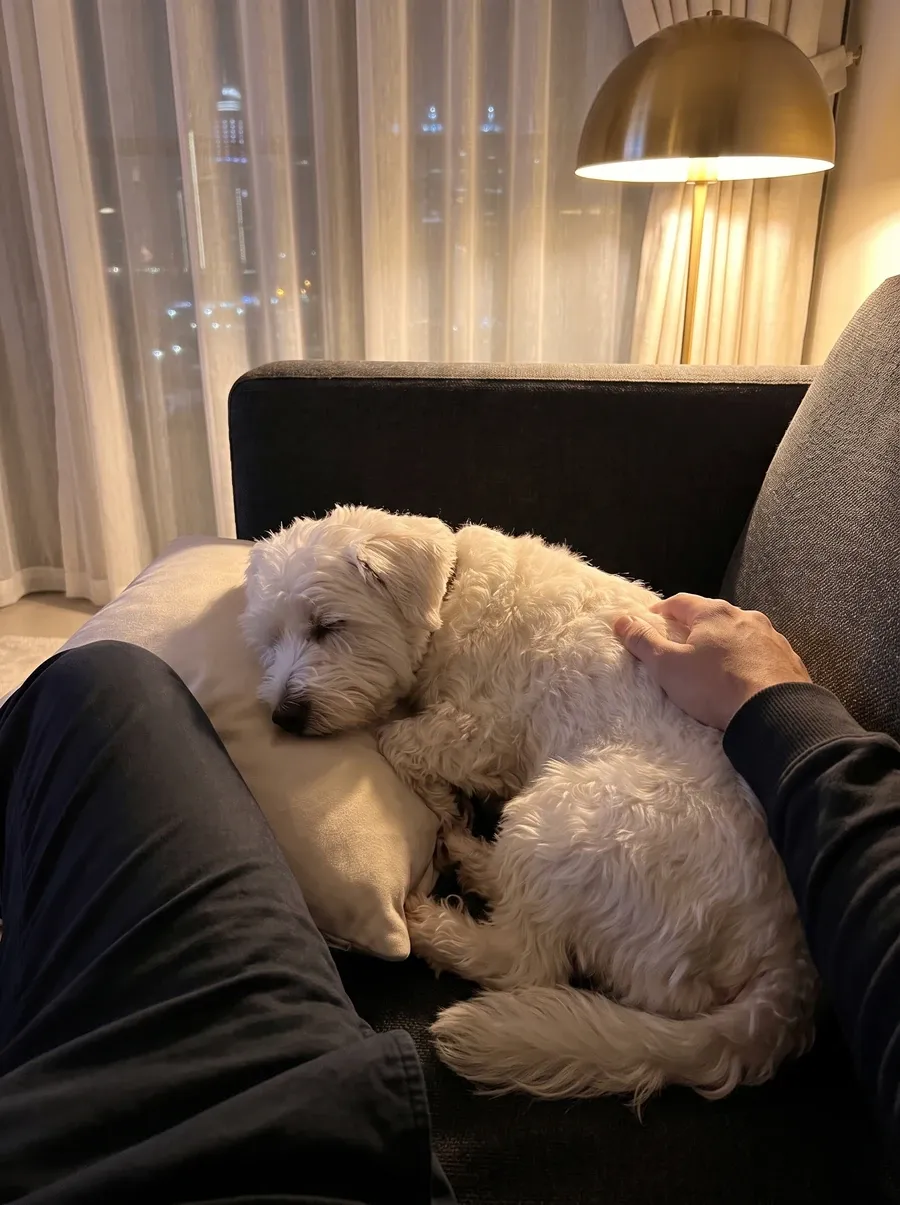
Westiepoo in Dubai, a white adult asleep on a cushion beside a pet parent's knee at night, the skyline through curtains
What is a Westiepoo?

A Westiepoo is a cross between a West Highland White Terrier and a Poodle, usually a small companion dog: bright, affectionate and a little cheeky.

How big does a Westiepoo get?

A Westiepoo is a small dog, usually 1.8 to 9 kg, depending on which parent they take after and the size of the Poodle. Westies weigh 7 to 9 kg, Toy Poodles 1.8 to 2.7 kg and Miniature Poodles 4.5 to 7 kg.

Do Westiepoos shed?

Westiepoos tend to be low-shedding, but the coat keeps its loose hair until you brush it out, which is why it mats. Brush and comb to the skin every day or two.

Is a Westiepoo hypoallergenic?

No dog is allergy-free, and that includes the Westiepoo. A 2012 study found no less dog allergen in homes with Poodles and Labradoodles than in homes with other dogs.

Why does my Westiepoo lick their paws?

Paw licking in a Westiepoo is often itchy skin: allergic skin disease is the first risk on their record from puppy to prime adult. Note when it flares, and contact your vet the same day.

What health problems can a Westiepoo inherit?

Westiepoos most often need care for their skin, ears, knees and teeth. From the Westie side they can inherit Legg-Calvé-Perthes Disease (loss of blood supply to the top of the thigh bone) and Craniomandibular Osteopathy (a painful overgrowth of bone in a young puppy's jaw), and some lines lung or liver disease later in life. From the Poodle side: Progressive Retinal Atrophy (PRA, gradual loss of sight) and Epilepsy (seizures).

Do Westiepoos bark a lot?

Many Westiepoos do when the terrier side leads, because Westies were bred to bark so a person above ground could find them. Reward the quiet moments, and give them a job.

Is a Westiepoo easy to train?

A Westiepoo learns quickly, thanks to the Poodle side, but the terrier side likes to make their own decisions. Short sessions and a new trick a week suit both.

Worried about them? Contact your vet today.