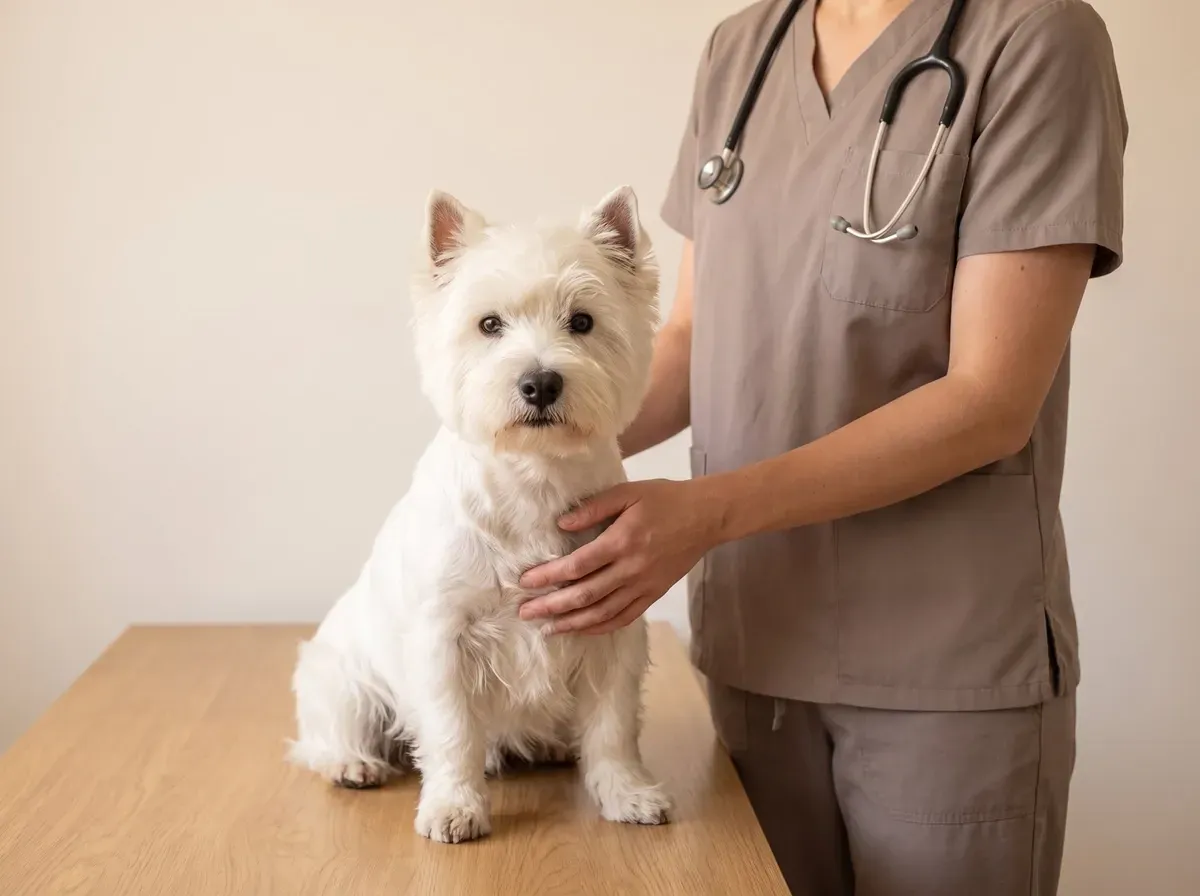
Some of this is not a training problem, and treating it like one wastes time your dog may not have. If they are distressed when you leave, if they growl or guard their food, their toys or you, if they are frightened on the lead, or if anything about them changes suddenly at any age, contact your vet the same day. A tip from a website, ours included, is not the answer. If it cannot wait, contact your nearest emergency vet now.
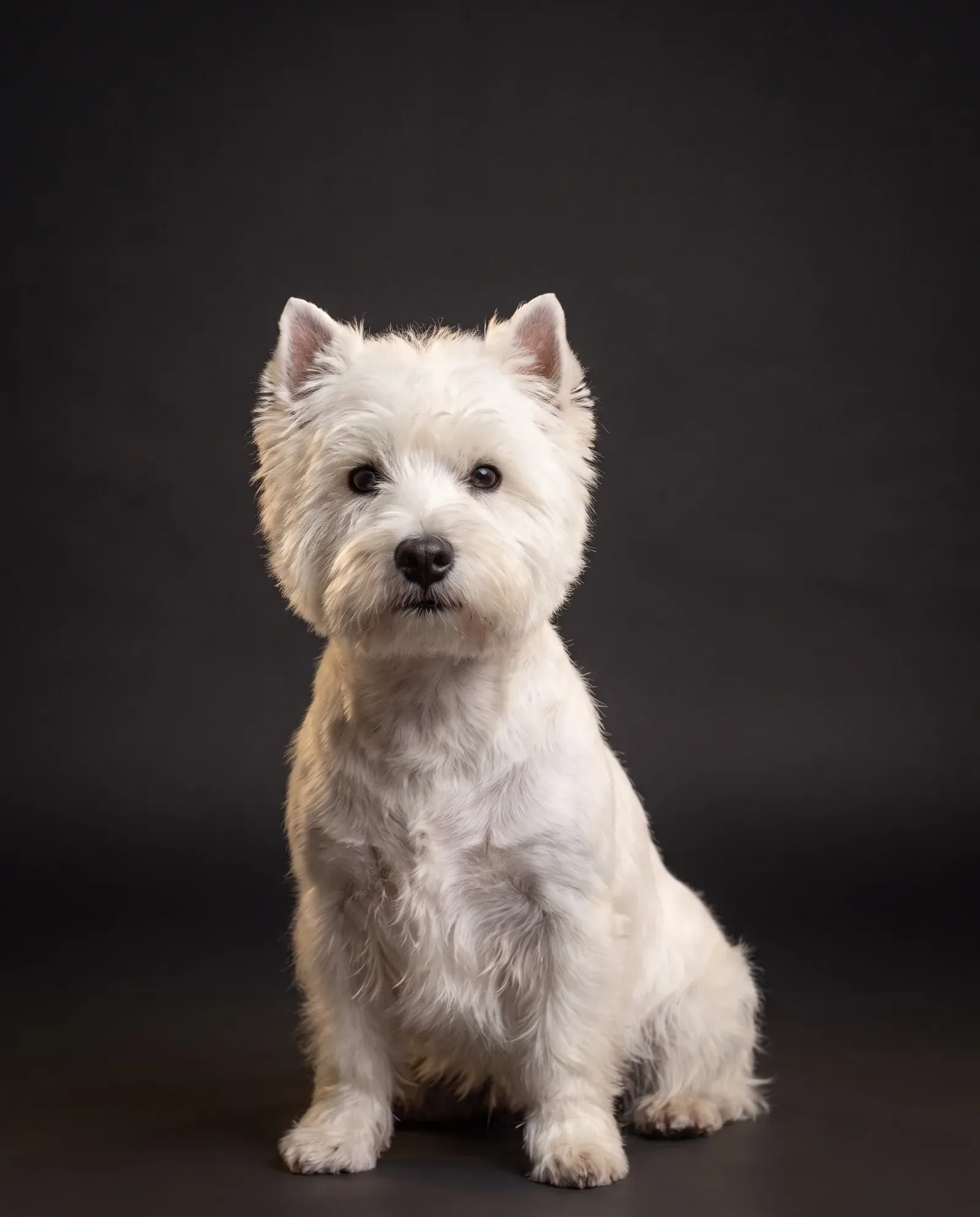
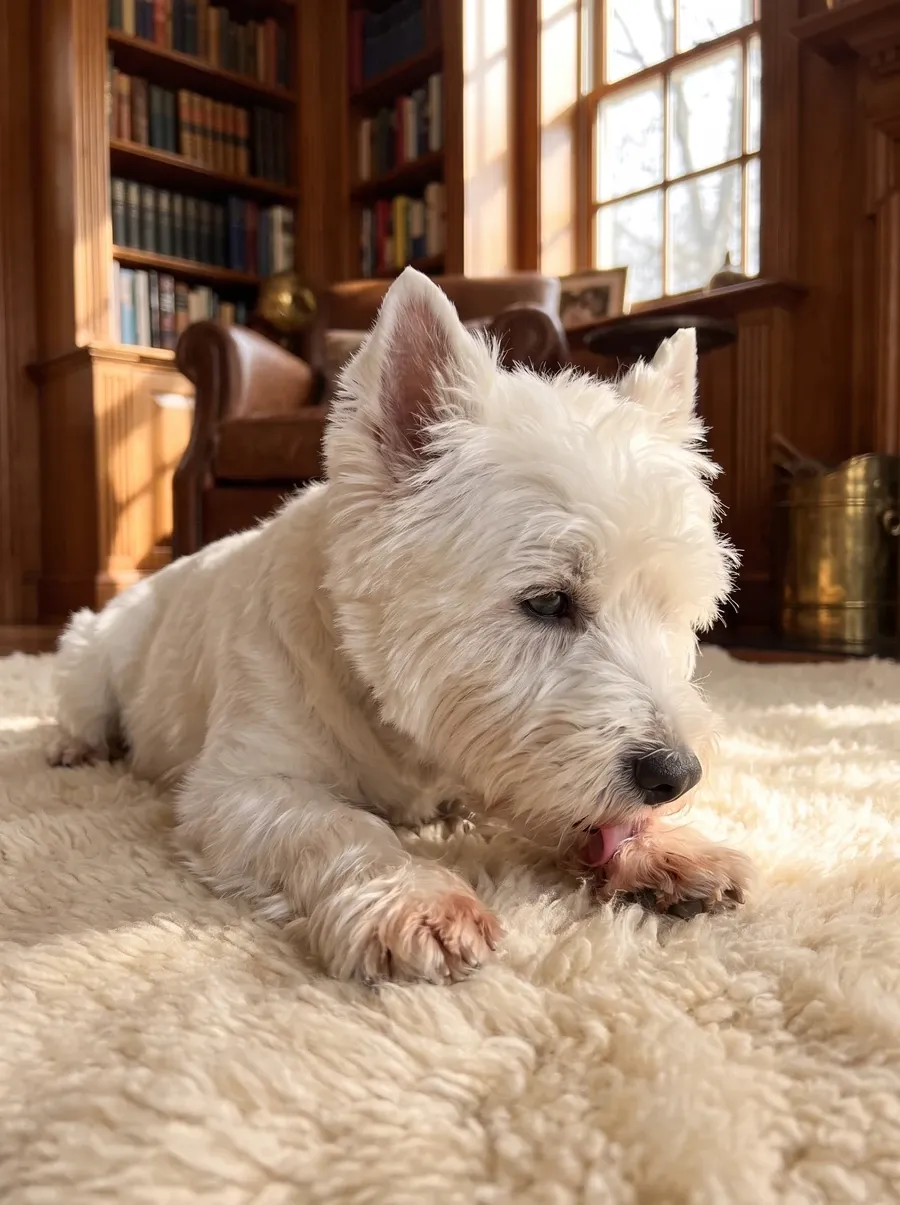
With a Westie, watch their skin and, in a puppy, their mouth. Paw licking, face rubbing, scratching at night and reddish staining on white fur are their skin asking for help, not a habit. A young puppy who cries when they yawn or stops chewing may have a painful jaw. A limp that does not settle in a young Westie needs a proper look. In an older Westie, a slower, heavier dog may have an underactive thyroid. Bloat (GDV, a twisted stomach) can happen in any dog, though it is most common in large, deep-chested breeds. A swollen, tight belly, retching with nothing coming up, sudden restlessness or drooling is an emergency: contact your vet now.
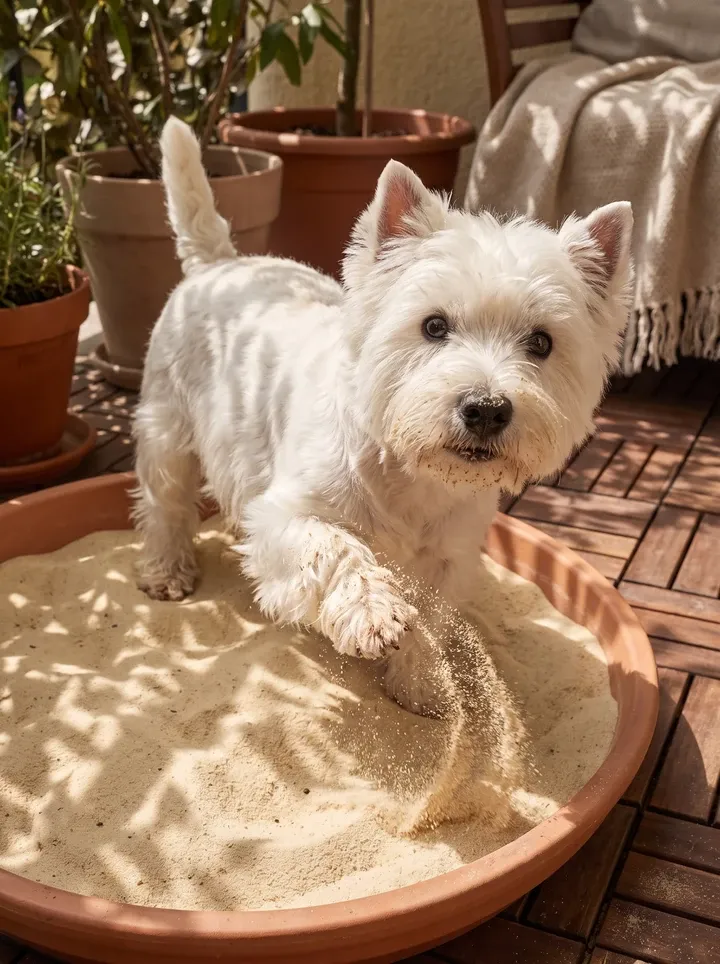
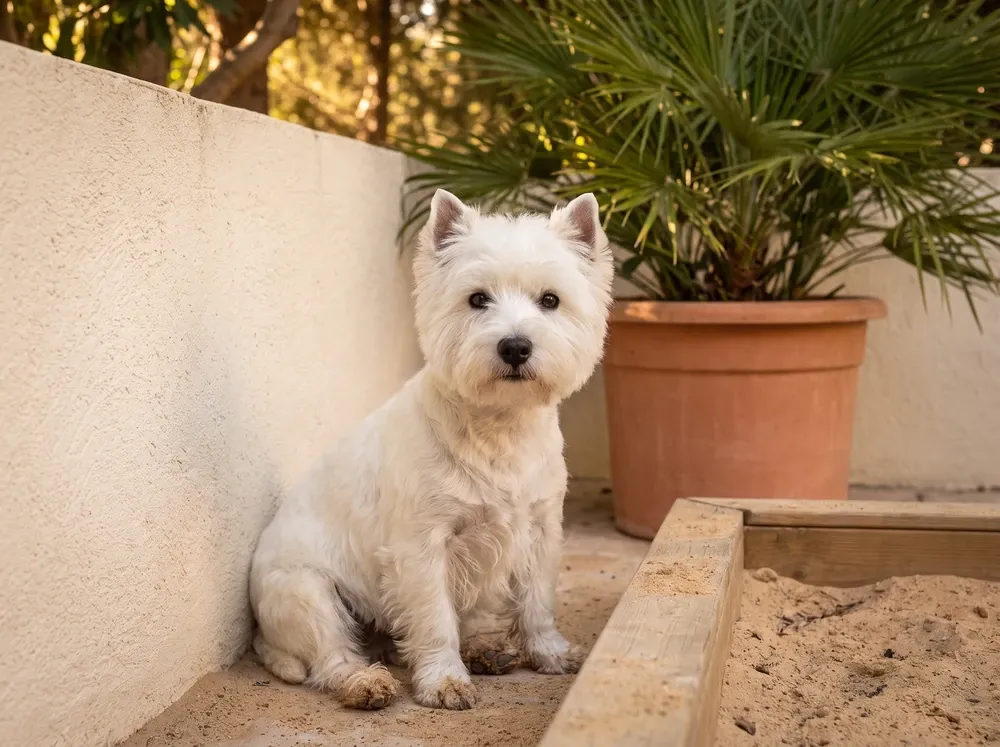
They'll keep digging in their own pot. If they start chewing their paws instead, call your vet.