We’re hiring people who love them like we do. Join us careers@pawsandco.comSee open roles
UAE Government Licensed MOCCAE
Brittany Spaniel in Dubai, studio portrait of a calm orange and white adult sitting

Breed guide  ·  Dogs

Brittany Spaniel

She sulks for an hour if I raise my voice. I've learned to say "no" very nicely.

Lifespan
12 to 14 years
Size
Medium
Weight
13.5 to 18 kg
Shedding
Moderate

Last updated 14 October 2026

Join the founding families. AED 1,999 of essential care for AED 199.

No payment now. We'll be in touch by email and WhatsApp as we open enrolment.

✓
Thank you.

We will be in touch soon to confirm.

Brittany traits

What they brought with them.

Tap a card to see what is going on.

Brittany Spaniel in Dubai, a white and orange adult on a palm-lined path, one paw lifted, watching a pigeon

At home

Why does my Brittany freeze with a paw up?

Head up, body still, one front paw in the air, locked on a pigeon or the cat by the bins.

What's going onThat is a point, and it is what Brittanys were bred for: they are showing you where the bird is. The trouble starts when it flies, so keep the lead on near roads.

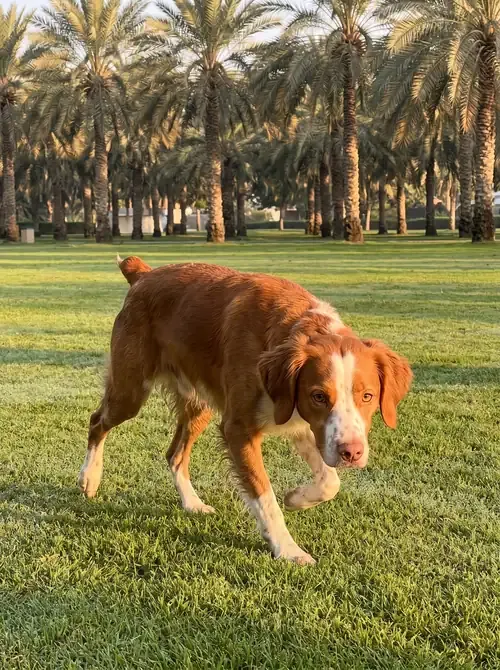
Brittany Spaniel in Dubai, a deep orange and white adult trotting nose low across a park lawn under date palms

At home

Is a Brittany a spaniel or a pointer?

Called a spaniel, but they never push a bird into the air the way a Springer or a Cocker does.

What's going onA Brittany finds the bird and holds still until the hunter walks in. That is why the American Kennel Club took "Spaniel" out of the breed's name in 1982.

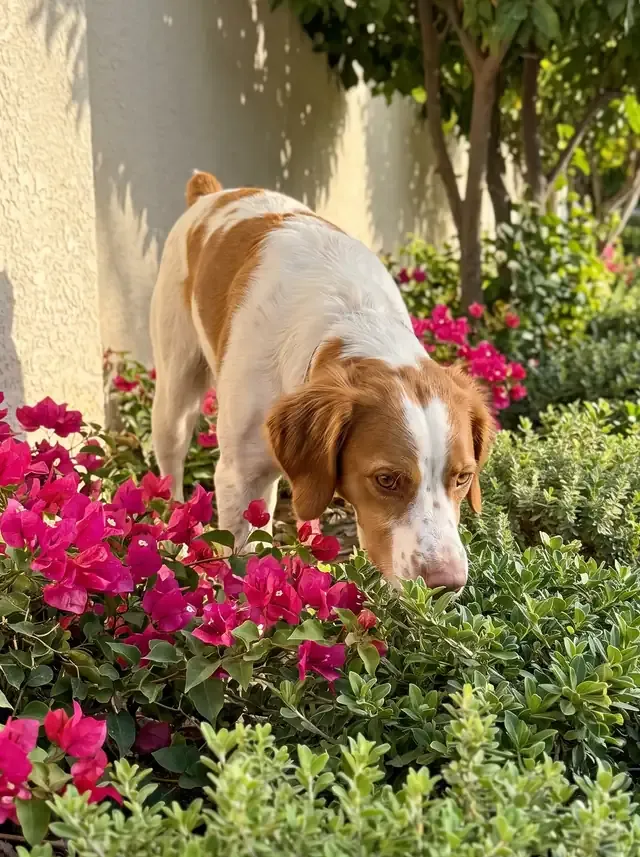
Brittany Spaniel, an orange and white adult nose down among bougainvillea in a villa garden border

At home

Why does my Brittany sniff everything?

Nose down from the moment the door opens, zigzagging across the pavement and deaf to their name.

What's going onThey were bred to cover field after field by scent, and a pavement walk barely touches that. Ten minutes of finding their breakfast does more for them than another lap of the compound.

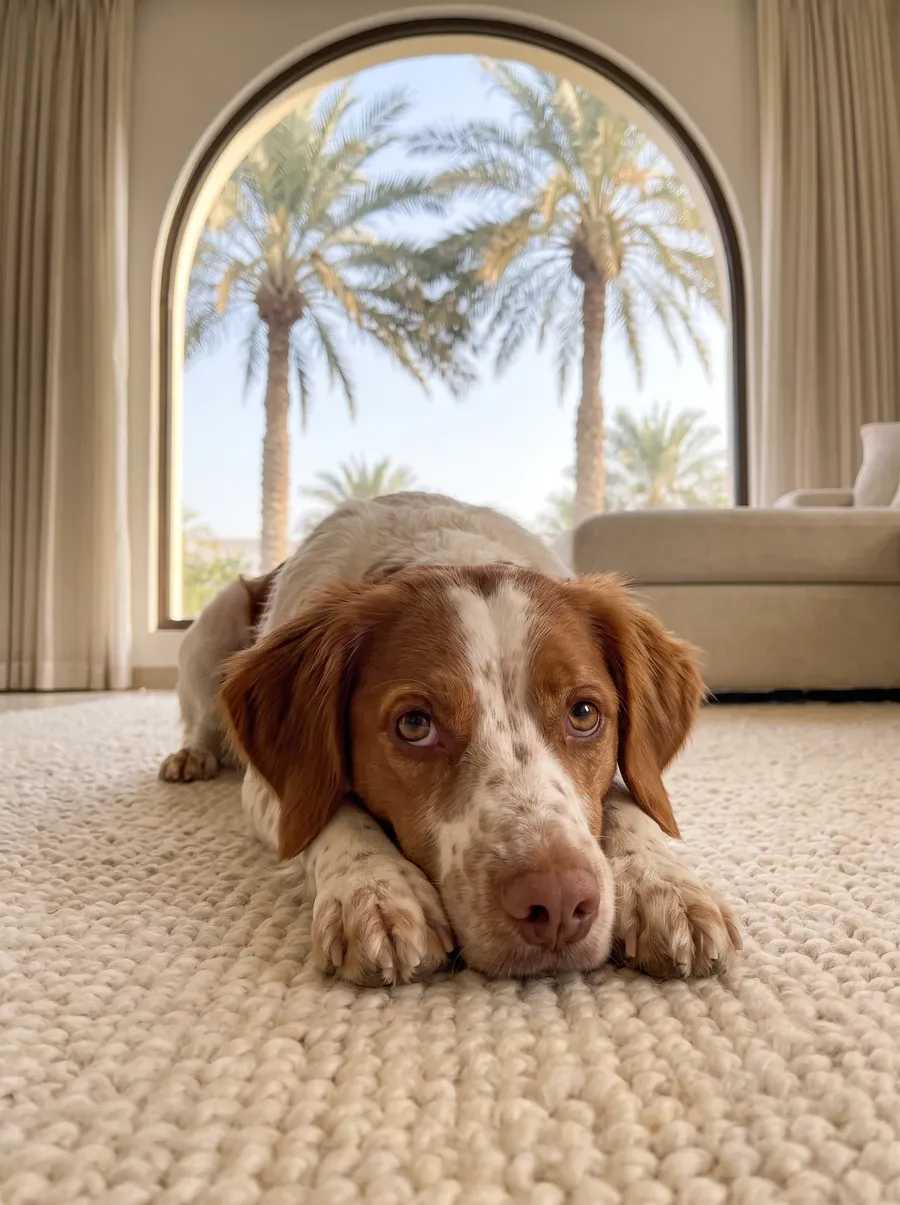
Brittany Spaniel in Dubai, an orange roan adult lying chin on paws on a cream rug, date palms through an arched window

At home

Why does my Brittany sulk?

Goes flat, hides or stops listening after a raised voice, sometimes for an hour.

What's going onA Brittany takes a cross word to heart. They are sensitive, not guilty, and a telling-off makes them shut down. Reward what you want, calmly, and they will give you far more.

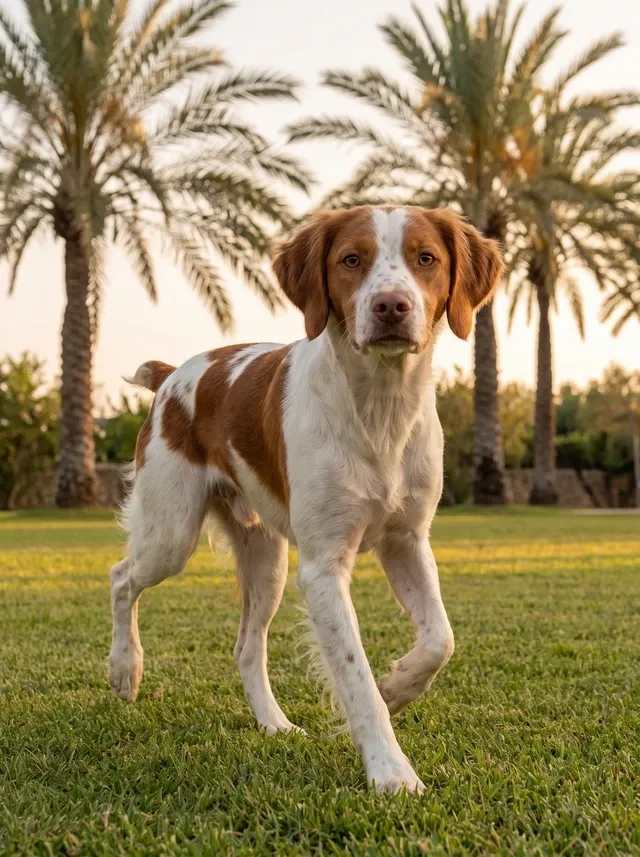
Brittany Spaniel in Dubai, an orange and white adult trotting across a villa lawn under date palms in the evening

At home

Watch their back legs

Slow to get up, sitting with a back leg out to the side, or a limp after a game of fetch.

What's going onHip Dysplasia (a poorly fitting hip joint) and a damaged knee ligament are both on their record while they are young. Short puppy walks on soft ground, a lean body and rugs on the marble all help.

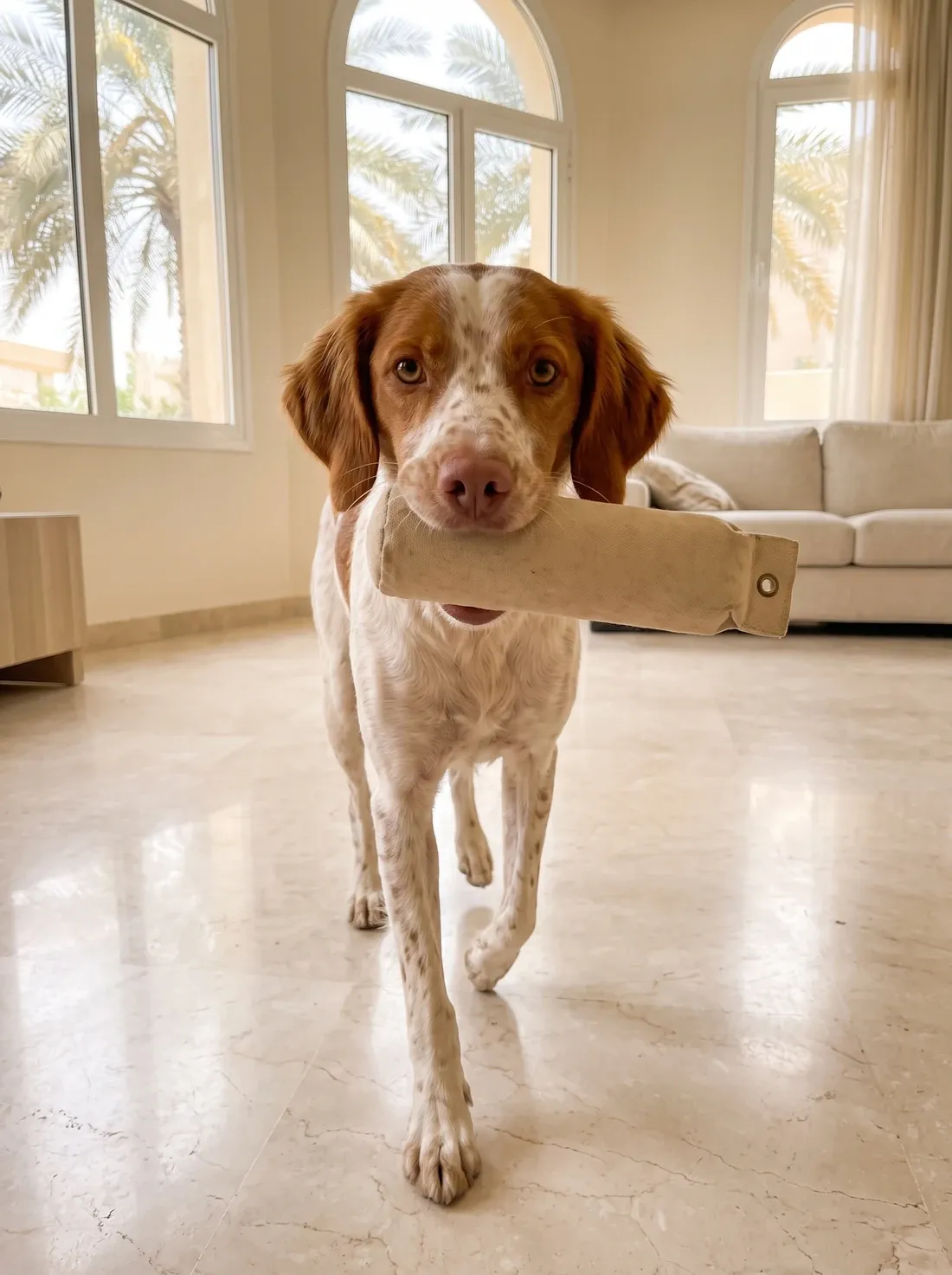
Brittany Spaniel in Dubai, an orange roan adult carrying a canvas dummy across a marble floor, palms through the windows

At home

Why won't my Brittany settle?

Still wants more after an hour's walk, and invents jobs in the evening, like digging up the sofa cushions.

What's going onMore running builds a fitter dog who needs even more running. What settles a Brittany is work for their head: searching, carrying and short training sessions. In the heat, you decide when they stop.

A Brittany in Dubai

The bit nobody tells you.

Their day

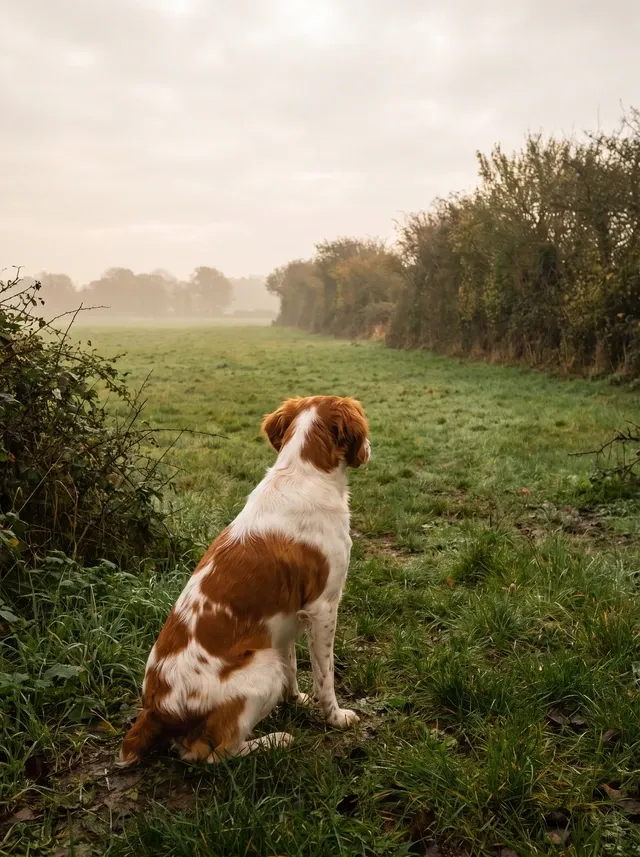
Built for: Cool, hedged fields, nose working all day.

In Dubai: Often indoors, with nothing to find.

Their weather

Built for: A damp French autumn.

In Dubai: Hot pavement for half the year.

Their job

Built for: Finding birds and freezing to show one person where they were.

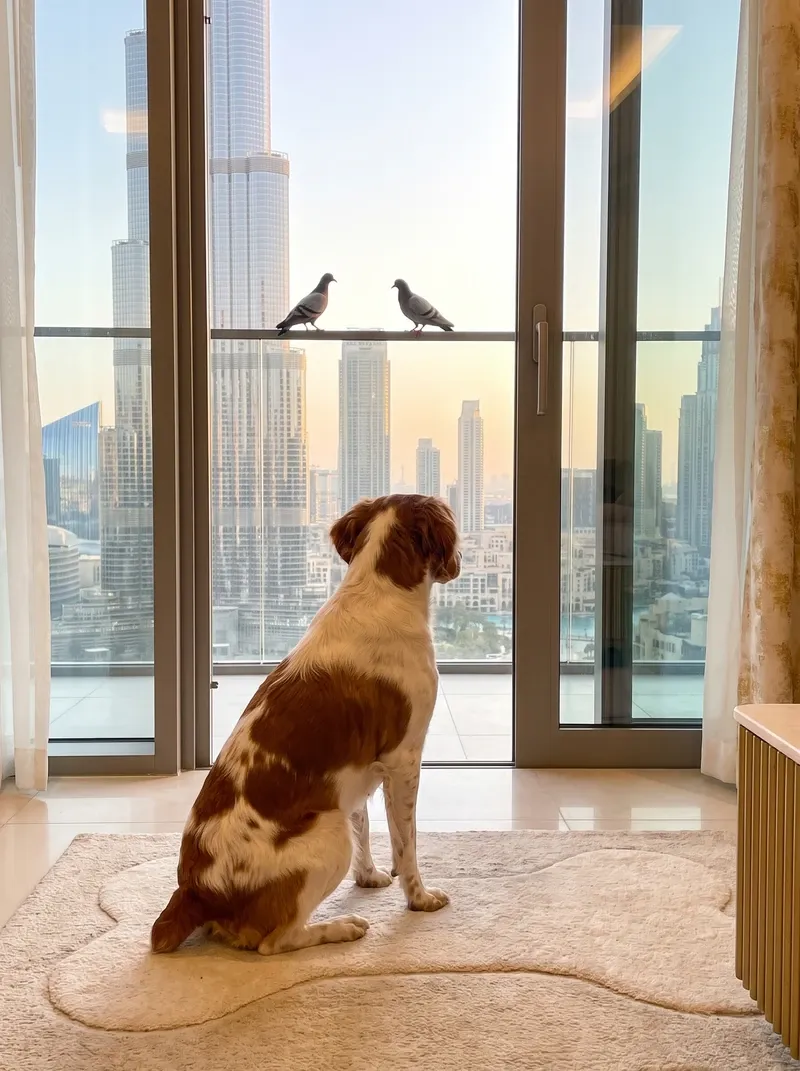
In Dubai: Pointing at the pigeons on the balcony.

The nose-down zigzagging and the evenings they cannot settle mostly come from that gap.

You cannot give them a French field. You can give their nose a job and their stillness a use, and the ten things below are how.

Your plan is built around their breed: the risks on a Brittany Spaniel's record at every age, and the care that goes with each one.

Join the founding families. AED 1,999 of essential care for AED 199.

Daily care for a Brittany

Ten things that make their life better.

Many of them are free, and most matter at every age.

  1. They were bred to search field after field by scent, and searching tires them more than walking.

    Every age, with easy searches at floor level from 7 years

    Free, or under AED 100 for a snuffle mat

    Why

    They were bred to search field after field by scent, and searching tires them more than walking.

    What to do

    Scatter part of their breakfast on the grass or on a towel indoors. Hide a toy and send them to find it. On the hottest days, do ten minutes of search games instead of a walk.

  2. They work best a short way in front of you, crossing the ground from side to side.

    Every age, in short sessions on soft ground for puppies

    Under AED 150

    Why

    They work best a short way in front of you, crossing the ground from side to side.

    What to do

    A harness, a five to ten metre line and a quiet, open space early in the day. Let them work the ground, call them in every few minutes and reward them when they come.

  3. Once their nose has found something, their name stops reaching them. A whistle does.

    Every age, starting at mealtimes in puppyhood

    Under AED 50

    Why

    Once their nose has found something, their name stops reaching them. A whistle does.

    What to do

    One sound for "come back", one for "stop". Start at mealtimes indoors, pay them every time, and only use it outside once it works at home. Add a hand signal as they get older, in case their hearing fades.

  4. The freeze is bred in. Staying put when the bird flies has to be taught.

    Every age, most of all 6 months to 2 years, when chasing peaks

    Free

    Why

    The freeze is bred in. Staying put when the bird flies has to be taught.

    What to do

    When they lock on to a pigeon, stand still with them, then ask for a stop and reward them before the bird goes. Walk on together. Keep the lead on near roads and bins.

  5. Brittanys were expected to bring the bird back too, and they still like something in their mouth.

    Every age, most of all 6 months to 2 years

    Under AED 100

    Why

    Brittanys were expected to bring the bird back too, and they still like something in their mouth.

    What to do

    Keep a soft toy or a small canvas dummy that is theirs. Five to ten throws along the ground, then stop. Swap anything they steal for a treat, and never chase them for it.

  6. Cataracts (cloudy lenses) and gradual loss of sight are on their record from puppyhood. Their ears are rarely a worry, but a weekly look keeps them used to being handled.

    Every age, most of all up to 4 years

    FreeIn your plan

    Why

    Cataracts (cloudy lenses) and gradual loss of sight are on their record from puppyhood. Their ears are rarely a worry, but a weekly look keeps them used to being handled.

    What to do

    Once a week, lift their ears and look inside so they are used to it. Then look at their eyes in good light. If you see cloudiness, or they bump into things in the dark, tell your vet that week.

  7. With their nose working, they will not notice they are overheating.

    Every age, most of all puppies and from 7 years

    Free

    Why

    With their nose working, they will not notice they are overheating.

    What to do

    From May to September, walk before sunrise and after dark. Put the back of your hand on the pavement for five seconds: if you cannot keep it there, they cannot walk on it. Carry water and keep hard play short.

  8. They were bred to work close to one person, and a long, empty day is hard on them.

    Every age, most of all 6 months to 2 years

    Free, or the cost of a walker

    Why

    They were bred to work close to one person, and a long, empty day is hard on them.

    What to do

    If you are out for more than a few hours, arrange a midday walk, a visit or daycare. Hide part of their lunch before you go. If they are distressed when you leave, contact your vet.

  9. Atopic dermatitis (itchy allergic skin) is on their record from puppyhood into prime adulthood.

    Every age, most of all up to 7 years

    Under AED 150 for brushesIn your plan

    Why

    Atopic dermatitis (itchy allergic skin) is on their record from puppyhood into prime adulthood.

    What to do

    Brush them twice a week and work out any knots in the feathering on their legs and belly. Part the coat as you go and look for red skin, and notice if they keep licking their paws. An allergy work-up (tests to find what they react to) is in your plan from six months, and allergy management from age two.

  10. Hip problems and a damaged knee ligament are both on their record while they are young.

    Every age, most of all up to 2 years

    FreeIn your plan

    Why

    Hip problems and a damaged knee ligament are both on their record while they are young.

    What to do

    Feel their ribs, spine and hips once a week: you should feel their ribs easily. Notice if they are slow to get up, sit with a back leg out to the side, or limp after play. Weigh them once a month. And brush their teeth every day, because dental disease is on their record from prime adulthood.

Three of these are in your plan. The rest you can do at home.

Join the founding families. AED 1,999 of essential care for AED 199.

Brittany health by age

Their health, at every age.

In a Brittany, a limp after play or a minute of staring into space can be the first sign of something. Choose their age to see what to watch for, and the care that goes with it.

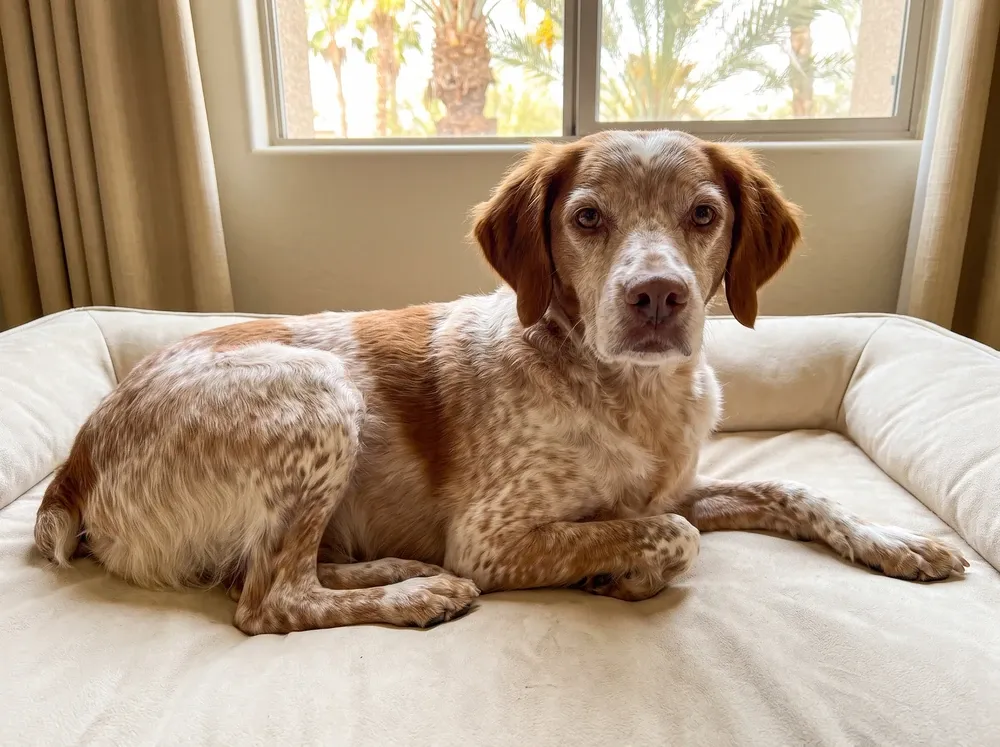
Brittany Spaniel in Dubai, an older orange roan dog with a greying muzzle on a cream bed, palms through the window

How old are they?

Their age

Brittany Puppy health

the first six months

What to watch for

  1. Hip Dysplasia (HD, a poorly fitting hip joint)
  2. Epilepsy (seizures)
  3. Cranial Cruciate Ligament Disease (a damaged knee ligament)
  4. Allergic Skin Disease (Atopy, itchy allergic skin)
  5. Cataracts (cloudy lenses) and Progressive Retinal Atrophy (PRA, gradual loss of sight)

The care that goes with it

  1. Core vaccinations, microchip and Dubai Municipality registration
  2. Deworming, and flea and tick prevention
  3. Body Condition Score (BCS, a check on whether they are the right weight), and dental, growth and nutritional evaluation
  4. Baseline hip evaluation
  5. Ophthalmic evaluation (eye exam) where your vet sees a need
The full care detail
  • Core vaccination programme, microchipping and Dubai Municipality registration. Titre testing discussion where clinically appropriate; not a substitute for completing the core vaccine series
  • Deworming and external parasite prevention tailored to Dubai exposure
  • Body Condition Score (BCS, a check on whether they are the right weight), Muscle Condition Score (MCS, a check on their muscle), dental, growth and nutritional evaluation, and early socialisation
  • Baseline hip evaluation
  • Ophthalmic evaluation where indicated

Their age

Brittany Juvenile health

6 months to 2 years

What to watch for

  1. Emerging Hip Dysplasia (HD, a poorly fitting hip joint)
  2. Cranial cruciate ligament injury (a damaged knee ligament)
  3. Atopic dermatitis (itchy allergic skin)
  4. Epilepsy (seizures)
  5. Progressive ocular disease (eye disease that slowly gets worse)

The care that goes with it

  1. Orthopaedic evaluation (joint and bone exam)
  2. Neutering or spaying, timed for a medium-sized breed
  3. An allergy work-up for skin that keeps itching
  4. Ophthalmic evaluation (eye exam)
  5. Anything that looks like a seizure, looked into properly
The full care detail
  • Orthopaedic evaluation
  • Neuter/spay timing discussion that accounts for growth and disease risk in a medium-sized breed
  • Allergy work-up
  • Ophthalmic evaluation
  • Investigate recurrent neurological episodes

Their age

Brittany Young Adult health

2 to 4 years

What to watch for

  1. Hip Dysplasia (HD, a poorly fitting hip joint)
  2. Cranial Cruciate Ligament Disease (a damaged knee ligament)
  3. Atopic Dermatitis (itchy allergic skin)
  4. Epilepsy (seizures)
  5. Cataracts (cloudy lenses) and Progressive Retinal Atrophy (PRA, gradual loss of sight)

The care that goes with it

  1. Joint care
  2. Allergy management
  3. Neurological monitoring (keeping track of any seizures)
  4. Ophthalmic evaluation (eye exam)
  5. Weight management
The full care detail
  • Joint management
  • Allergy management
  • Neurological monitoring
  • Ophthalmic evaluation
  • Weight management

Their age

Brittany Prime Adult health

4 to 7 years

What to watch for

  1. Arthritis
  2. Chronic Atopic Dermatitis (long-term itchy allergic skin)
  3. Dental Disease
  4. Cataracts (cloudy lenses)
  5. Hypothyroidism (an underactive thyroid)

The care that goes with it

  1. Joint therapy
  2. Ongoing care for allergic skin
  3. Dental cleaning
  4. Thyroid testing (a blood test)
  5. Eye monitoring
The full care detail
  • Joint therapy
  • Dermatology management
  • Dental cleaning
  • Thyroid testing
  • Eye monitoring

Their age

Brittany Senior health

7 to 10 years

What to watch for

  1. Arthritis
  2. Dental Disease
  3. Cognitive decline (dementia in older pets)
  4. Kidney Disease
  5. Cataracts (cloudy lenses)

The care that goes with it

  1. Pain relief
  2. Dental care
  3. Kidney monitoring
  4. Senior screening
  5. Help for failing sight
The full care detail
  • Pain management
  • Dental care
  • Kidney monitoring
  • Senior screening
  • Vision support

Their age

Brittany Geriatric health

10 years and over

What to watch for

  1. Arthritis
  2. Cognitive Dysfunction (dementia in older pets)
  3. Heart Disease
  4. Kidney Disease
  5. Cancer

The care that goes with it

  1. Pain relief
  2. Support for a confused or forgetful mind
  3. Cardiac monitoring (keeping watch on the heart)
  4. Kidney function tests
  5. Quality-of-life assessments
  6. Palliative care (comfort care), and end-of-life planning with your veterinary team
The full care detail
  • Pain relief
  • Cognitive support
  • Cardiac monitoring
  • Kidney function tests
  • Quality-of-life assessments
  • Tailored palliative and comfort-focused care plan
  • Compassionate end-of-life planning with your veterinary team

Breed predispositions indicate an increased risk rather than certainty of disease. What is right for them always comes from their own history and an evaluation.

Getting a Brittany puppy in Dubai

Before they come home.

Brittany Spaniel, a white and orange adult sitting alert on a shaded terrace among potted palms

One breed, three names

A pointer at heart

In France the breed is the Epagneul Breton, in America simply the Brittany, and in the UAE most people say Brittany Spaniel. Whatever the name, this is a pointing gundog, and a family Brittany keeps the nose and the freeze.

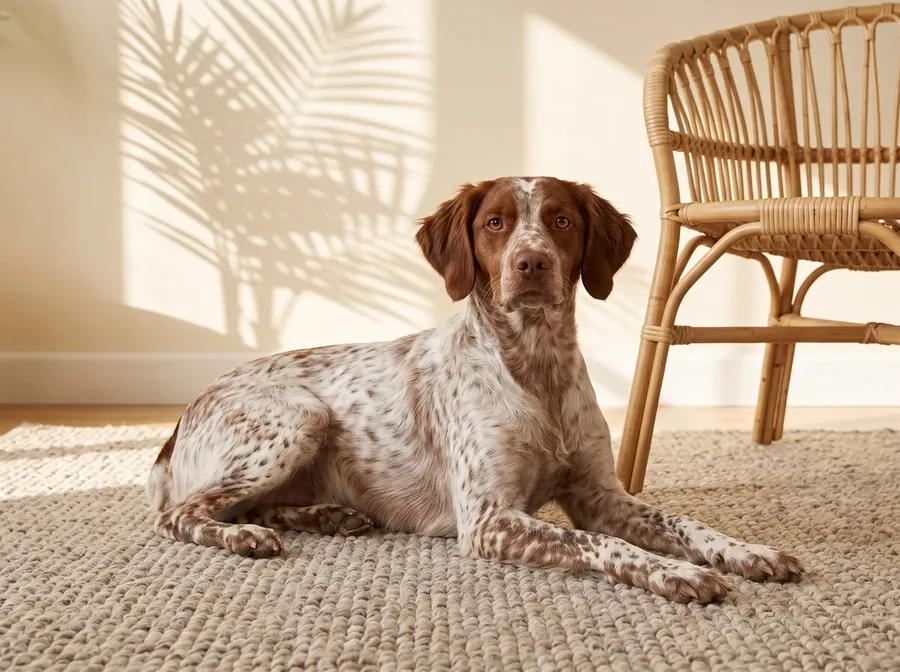
Brittany Spaniel, a liver and white roan adult lying on a stone rug beside a rattan chair

Colours

Orange or liver, always with white

Brittanys come in orange and white or liver and white, in clear patches or flecked all over (roan), and now and then in three colours. Whatever their colour, the feathering on their legs and belly needs the same brush.

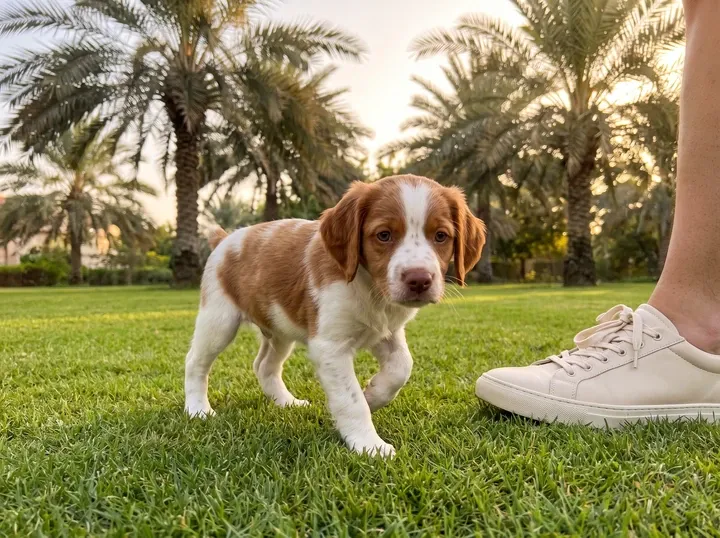
Brittany Spaniel in Dubai, an orange and white puppy walking on a lawn beside a pet parent's feet, date palms behind

The first six months

Caring for a Brittany puppy

Vaccinations, microchip and Dubai Municipality registration come first, with a baseline hip evaluation. Keep walks short and on soft ground while their joints are forming, and start the whistle at mealtimes.

Puppy health, 0 to 6 months
Brittany Spaniel in Dubai, a young orange and white dog nose down on a snuffle mat, palms through the kitchen door

Getting the home ready

Rugs, a long line and a whistle

Put rugs down where they will run on marble, and find a harness, a five to ten metre line and a gundog whistle. A snuffle mat earns its place on the hottest days.

Ten things that make their life better
Brittany Spaniel in Dubai, a white and orange mother lying with one puppy on a terrace, date palms behind

Before you commit

Ask about the parents' hips and eyes

Hip Dysplasia and eye disease are on their record from puppyhood. Ask the breeder what is known about both parents' hips and eyes, and meet the mother if you can.

The reception of a Paws & Co clinic, with long cream benches and a stone reception desk

Before the clinics open

Join the founding families

AED 1,999 of essential care for AED 199. No payment now.

When to see a vet

When it is not behaviour.

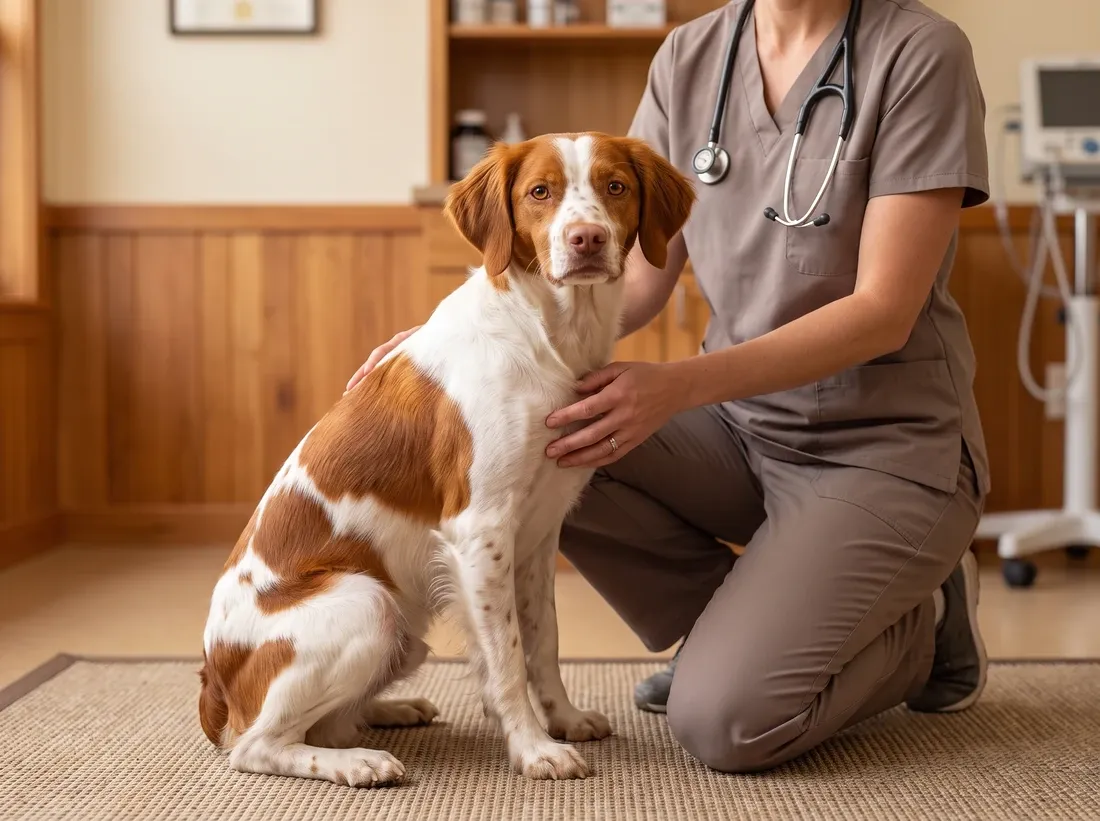
Brittany Spaniel, an orange and white adult sitting on a mat as a vet in taupe scrubs kneels with a hand on their back

Some of this is not a training problem, and treating it like one wastes time your dog may not have. If they are distressed when you leave, if they growl or guard their food, their toys or you, if they are frightened on the lead, or if anything about them changes suddenly at any age, contact your vet the same day. A tip from a website, ours included, is not the answer. If it cannot wait, contact your nearest emergency vet now.

With a Brittany, watch for moments that do not look like them. A minute of staring, twitching or seeming lost can be a seizure, and Epilepsy (seizures) is on their record while they are young. Film it if you can. A first seizure, one that lasts more than two minutes, or more than one in a day is an emergency: contact your vet now. So is bloat (GDV, a twisted stomach): a swollen, tight belly, retching with nothing coming up, sudden restlessness or drooling. It can happen in any dog, though it is most common in large, deep-chested breeds. A Brittany who stops wanting to run, puts on weight or feels the cold may have an underactive thyroid, which is on their record from prime adulthood.

They'll keep taking your tone personally. If they stop caring what you say, tell your vet.

Brittany history

Before they were yours.

  1. Brittany Spaniel history, a white and liver French spaniel on point before two partridges, painting, France, 1768
    A French spaniel on point before two grey partridges, painted by Jacques-Charles Oudry in 1768.

    Before 1900

    The farm dog of Brittany

    Farmers and hunters in north-west France kept a quick, light-footed dog to find woodcock and partridge in hedged fields, and to freeze and show the hunter where they were.

    What they still carryThe nose, the point and the wish to be near their people.

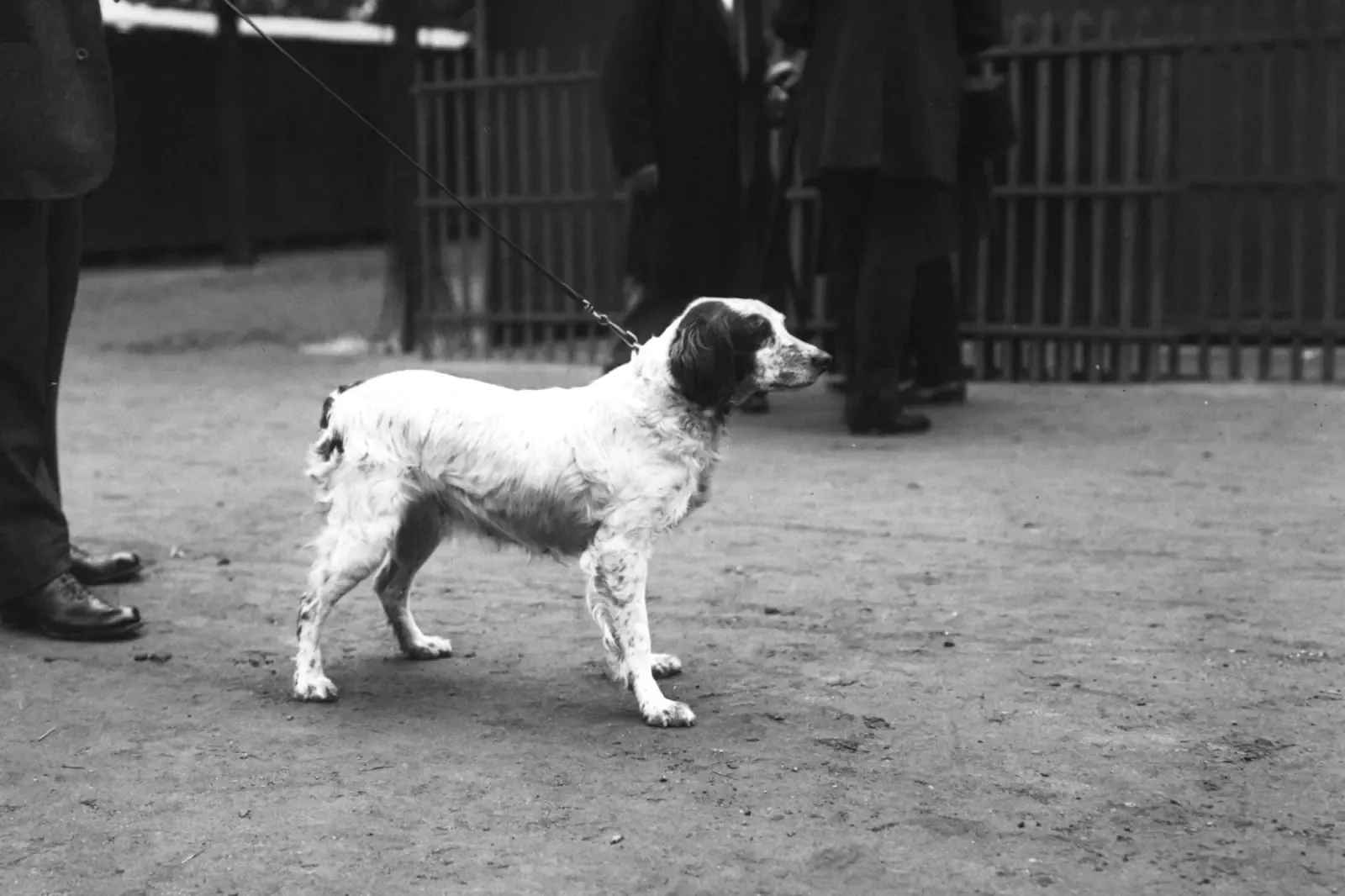
  2. Brittany Spaniel history, a prize-winning Epagneul Breton on a lead at a dog show, Paris, 1913
    Ruden, first prize Epagneul Breton at a dog show in Paris in 1913. Photograph by Agence Rol.

    1907

    A club in France

    French breeders formed the breed's club in 1907. In France it is still the Epagneul Breton.

    What they still carryA working dog, then and now.

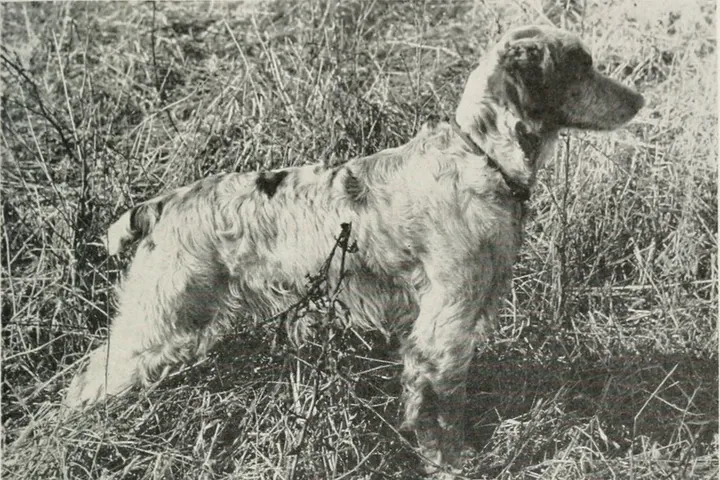
  3. Brittany Spaniel history, a Brittany standing on point in rough grass, United States, 1948
    A Brittany on point, from Bird Dogs in Sport and Conservation, published in the United States in 1948.

    1934

    To America

    The breed reached North America in the early 1930s, and the American Kennel Club recognised it as the Brittany Spaniel in 1934.

    What they still carryA field dog, valued for how well they point.

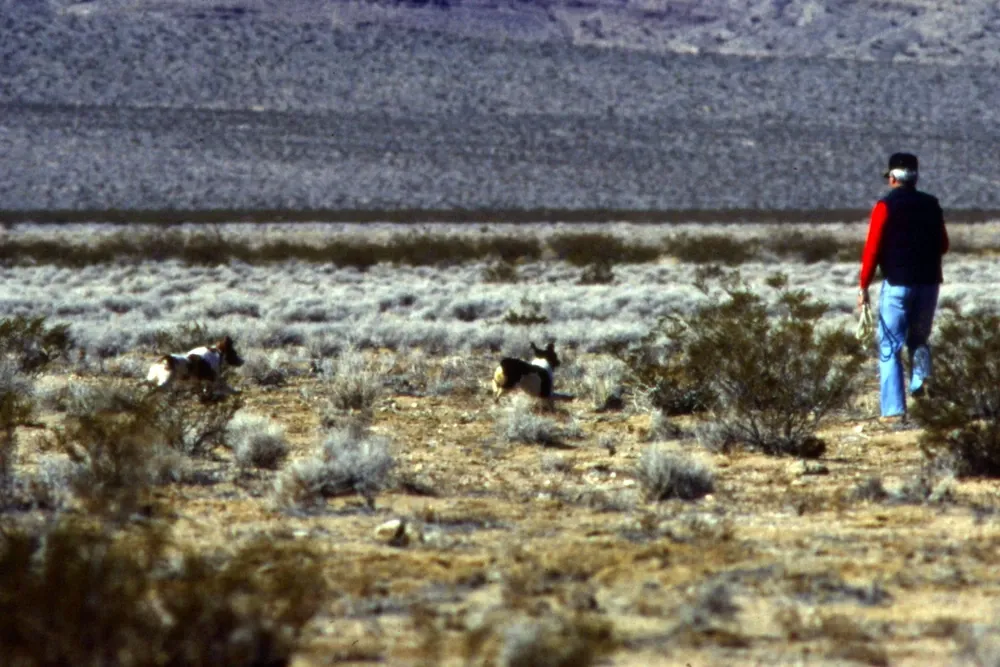
  4. Brittany Spaniel history, two Brittanys working ahead of their handler at a field trial, Nevada, 1982
    The Southern Nevada Brittany Club field trials at Jean and Roach Dry Lakes, Nevada, in 1982.

    1982

    The spaniel that points

    The American Kennel Club dropped "Spaniel" from the name, because the Brittany hunts like a pointer: they find the bird and hold still instead of flushing it.

    What they still carryThe freeze with one front paw lifted.

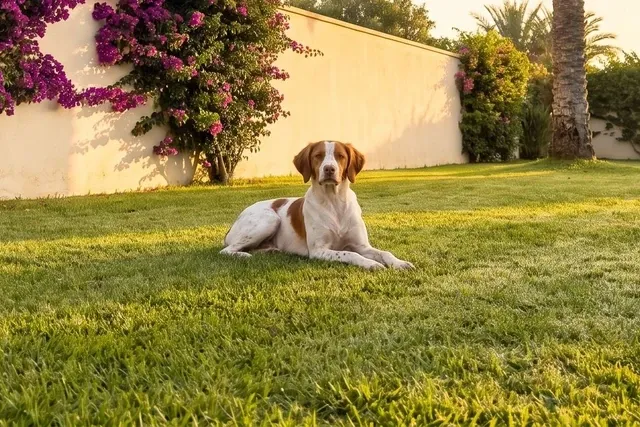
  5. Brittany Spaniel history, the breed today, an orange and white adult lying on a villa lawn under a date palm, Dubai, 2026

    Today

    In Dubai

    A family dog in villas and flats, a long way from the hedgerows, pointing at the pigeons instead.

    What they still carryA body built for cool, wet fields, in 45°C heat.

Brittany questions

The ones you type at midnight.

Most of these get asked late at night, by someone watching their dog and not sure what they are seeing.

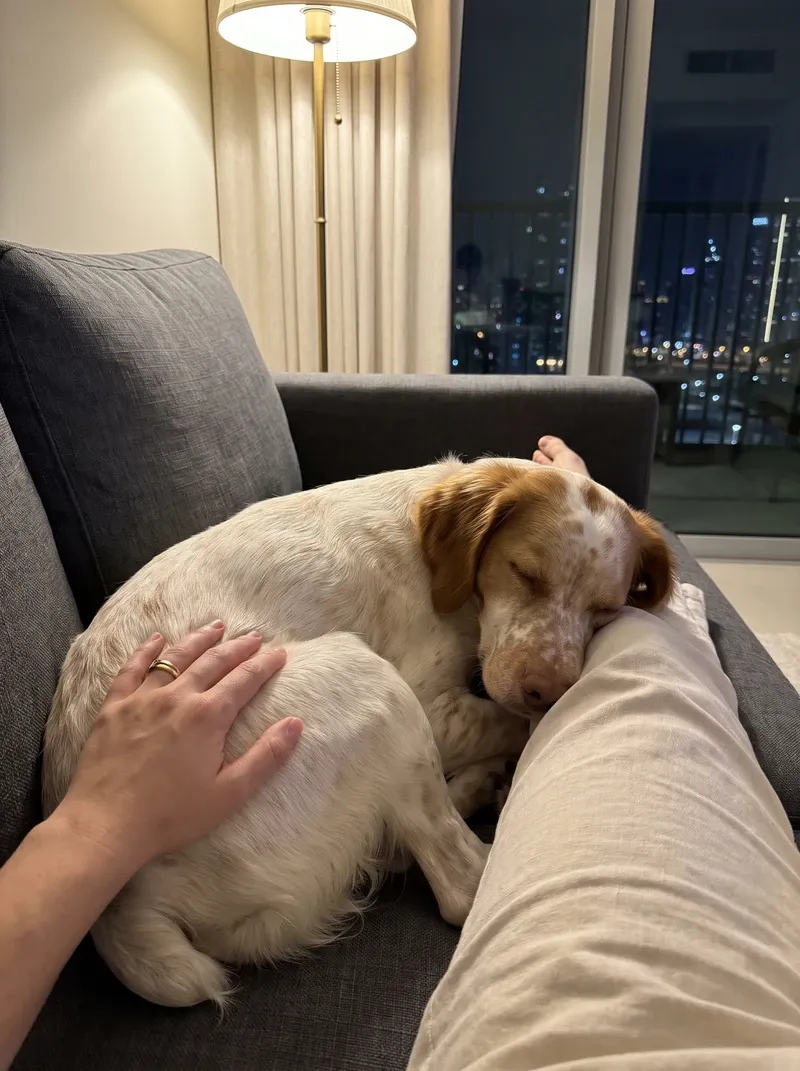
Brittany Spaniel in Dubai, a white and orange adult asleep against a pet parent's knee on a sofa, the skyline lit behind
How long do Brittany Spaniels live?

Brittany Spaniels usually live 12 to 14 years. Their hips, eyes and skin are worth watching from puppyhood.

How big is a Brittany Spaniel?

An adult Brittany Spaniel usually weighs 13.5 to 18 kg. They are lean, leggy and quick, built to cover ground all day.

Do Brittany Spaniels shed?

Brittany Spaniels shed moderately, with a heavier moult once or twice a year. Brush the feathering on their legs and belly twice a week.

What is an Epagneul Breton?

Epagneul Breton is the French name for the Brittany Spaniel. French breeders formed the breed's club under that name in 1907.

Is a Brittany Spaniel a good family dog?

Yes, the Brittany Spaniel is an affectionate, eager-to-please family dog for an active home. They take a cross word to heart, so calm, reward-based training works best.

Can a Brittany Spaniel live in Dubai?

Yes, a Brittany Spaniel can do well in the UAE if you plan around the heat. From May to September, walk before sunrise and after dark, and give their nose a job indoors on the hottest days.

What health problems do Brittany Spaniels have?

The Brittany Spaniel's record lists Hip Dysplasia, a damaged knee ligament, epilepsy, itchy allergic skin and eye disease from puppyhood. Arthritis, dental disease and an underactive thyroid follow from prime adulthood.

Why does my Brittany point at birds?

A Brittany Spaniel points because the breed was bred to find birds by scent and freeze to show the hunter where they were. Reward the stillness, and keep the lead on near roads.

Worried about them? Contact your vet today.