We’re hiring people who love them like we do. Join us careers@pawsandco.comSee open roles
UAE Government Licensed MOCCAE
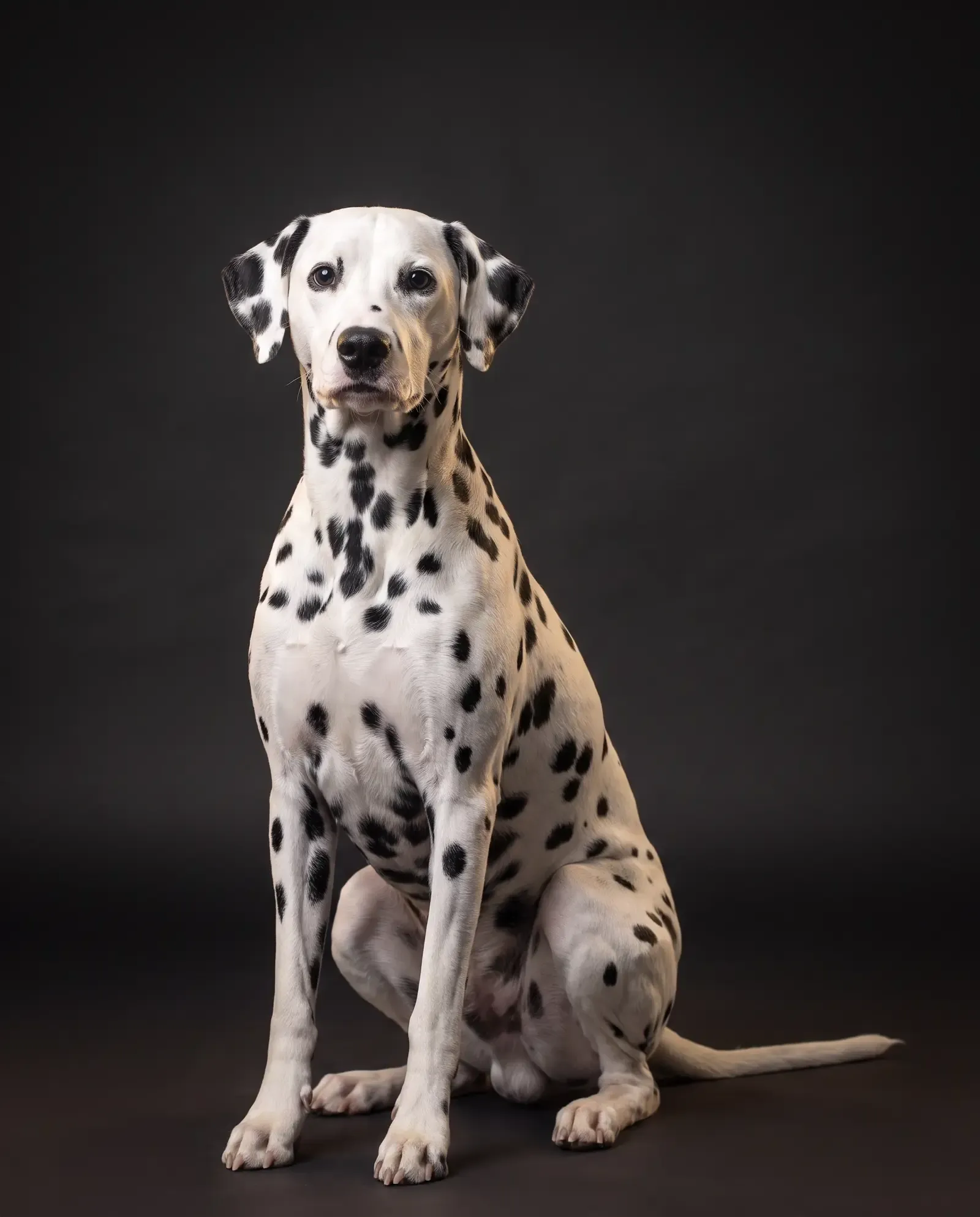
Dalmatian in Dubai, studio portrait of a calm black-spotted adult sitting

Breed guide  ·  Dogs

Dalmatian

He'd trot beside my bike all morning. I stop him before the sun is up.

Lifespan
11 to 13 years
Size
Medium
Weight
20 to 32 kg
Shedding
Heavy

Last updated 14 October 2026

Join the founding families. AED 1,999 of essential care for AED 199.

No payment now. We'll be in touch by email and WhatsApp as we open enrolment.

✓
Thank you.

We will be in touch soon to confirm.

Dalmatian traits

What they brought with them.

Tap a card to see what is going on.

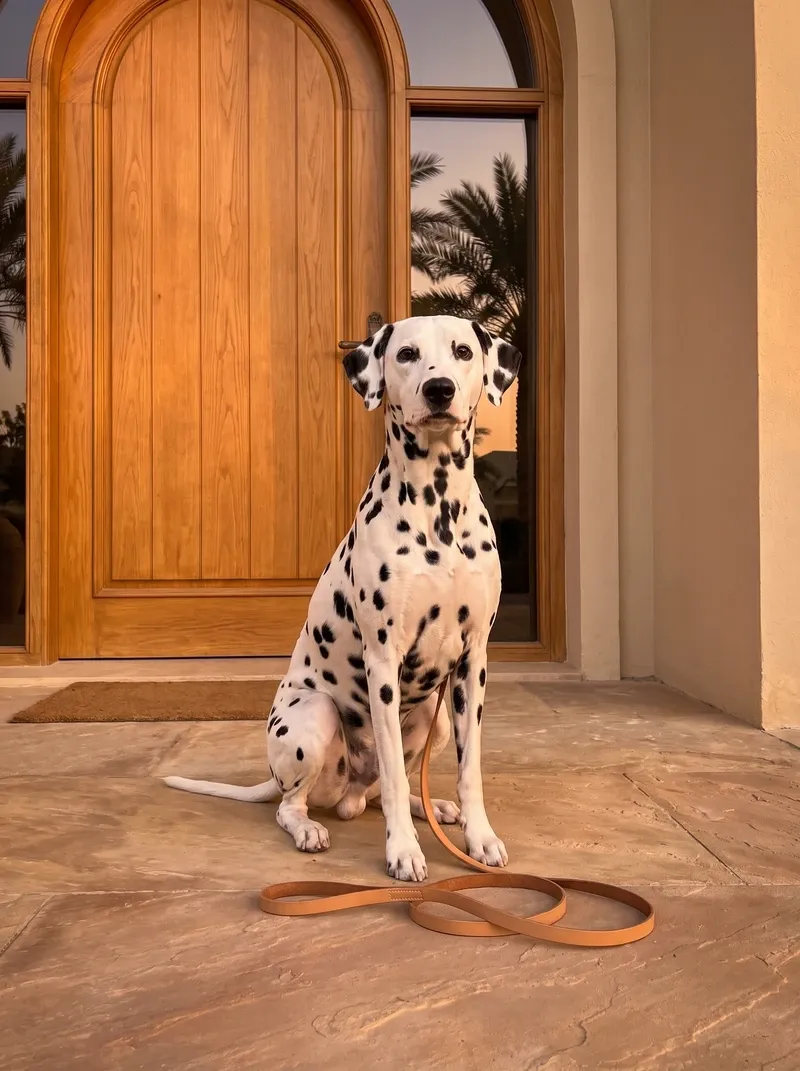
Dalmatian in Dubai, an adult sitting by a villa's arched front door at dusk, a lead on the floor, palms behind

At home

Why is my Dalmatian never tired?

Still fresh after a walk that leaves you tired, and pacing the flat by evening.

What's going onThey were bred to trot beside a carriage for hours, so a walk round the block barely touches them. A steady run in the cool, built up slowly once their hips are evaluated, comes much closer.

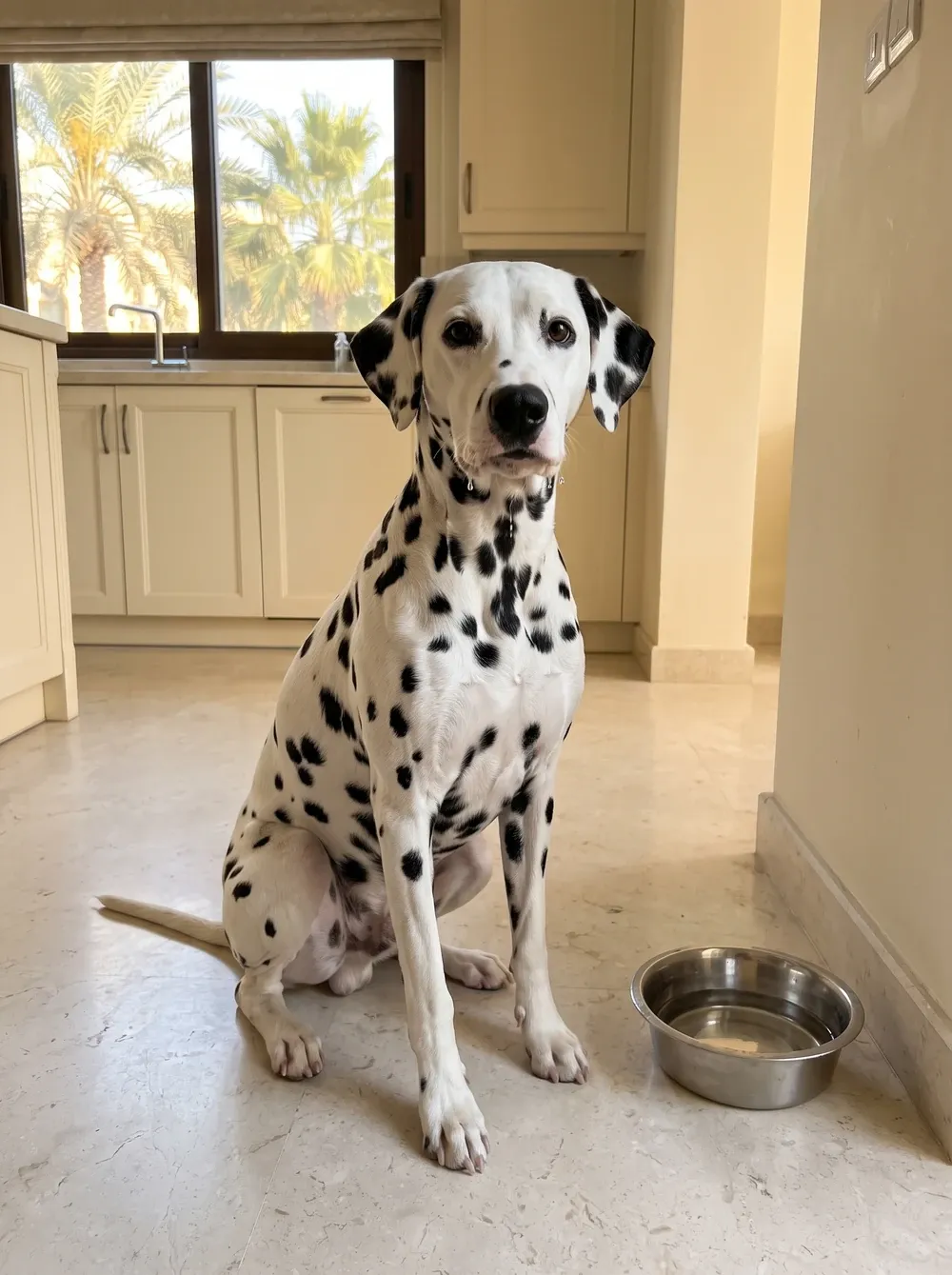
Dalmatian in Dubai, an adult sitting beside a steel water bowl on a cool stone kitchen floor, palms outside

At home

Why their water bowl matters

Water in more than one room, and walks planned around a drink.

What's going onAlmost every Dalmatian carries a gene change that sends uric acid into their urine, where it can form bladder stones. Plenty of water and a low-purine diet make stones less likely.

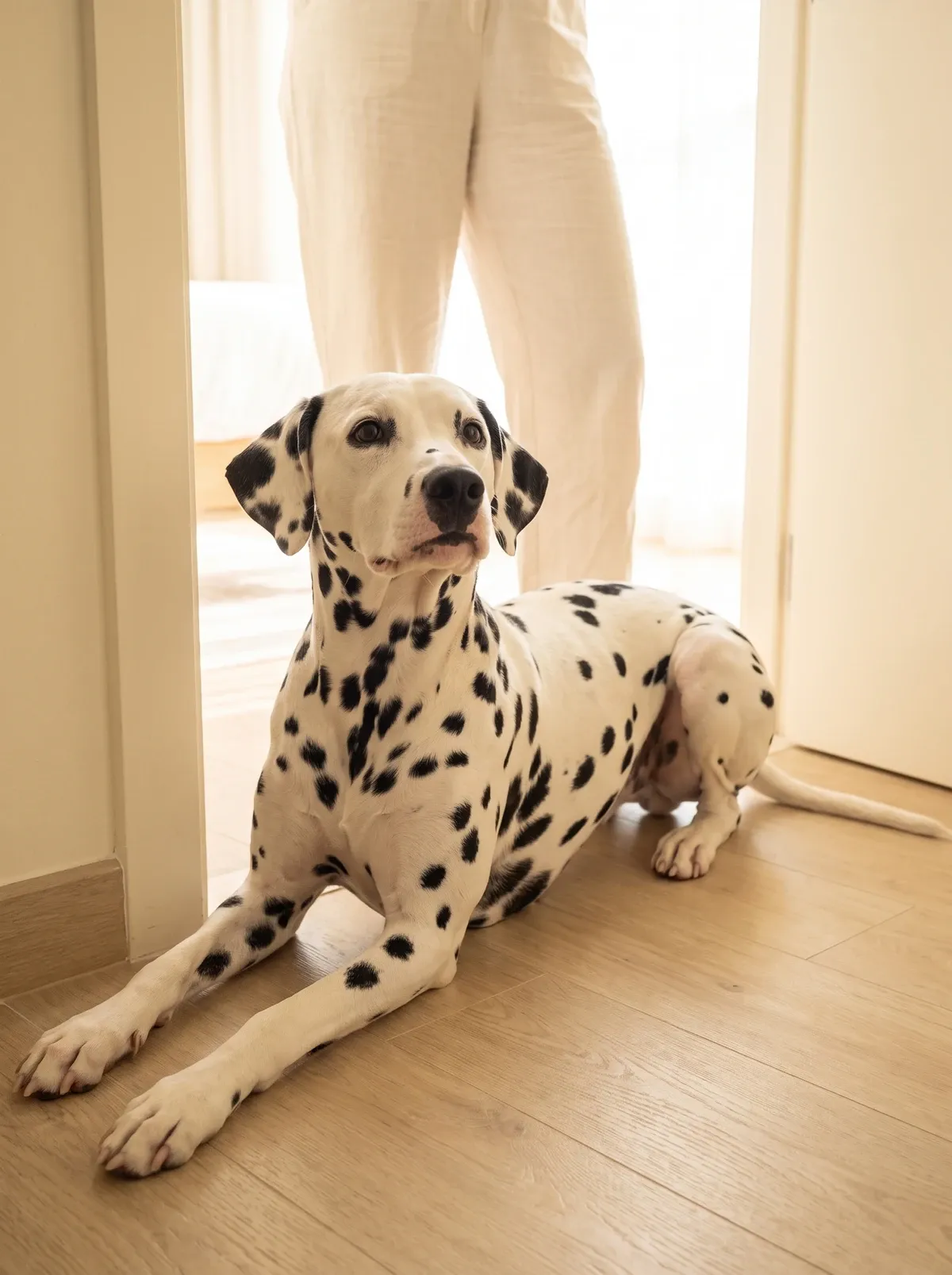
Dalmatian, an adult lying in a hallway doorway, watching their pet parent in the next room

At home

Why does my Dalmatian follow me everywhere?

Into the kitchen, to the bathroom door, and back to the sofa with you.

What's going onCoach dogs spent every hour with the horses and the coachman, and slept in the stable. They want to be where you are. A long day alone is hard on them, and a midday visit helps.

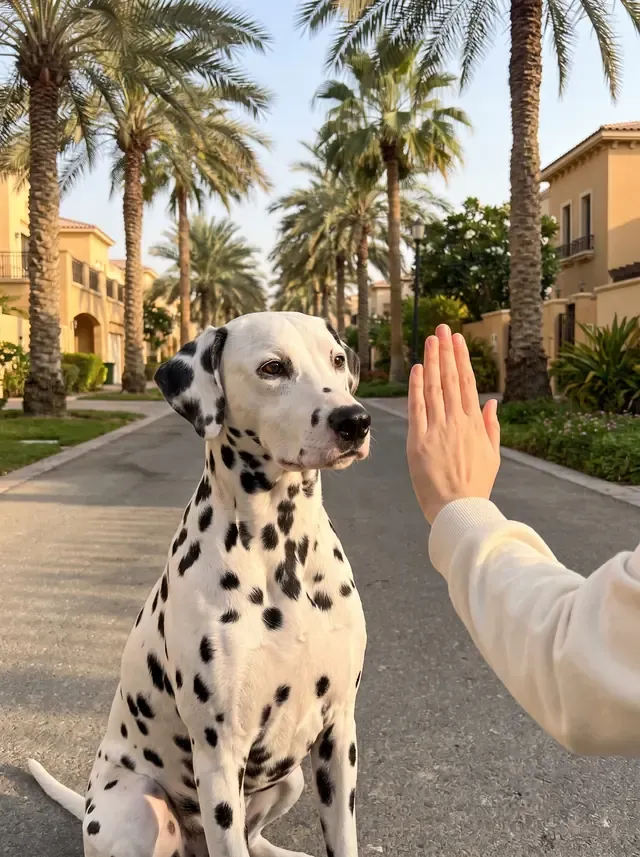
Dalmatian in Dubai, an adult sitting on a palm-lined villa street, watching a pet parent's hand signal

At home

Is my Dalmatian deaf?

No answer when you call from the kitchen, or slow to come back in the park.

What's going onAbout one Dalmatian in six, in a large UK study, is deaf in one or both ears. Teach a hand signal alongside every word, and wake them with a gentle touch, never a grab.

Dalmatian in Dubai, an adult trotting beside a jogger on a waterfront promenade at sunrise, the skyline behind

At home

Why does my Dalmatian chase bikes?

Pulling towards bikes, scooters and joggers, anything moving at speed.

What's going onRunning alongside is the job they were bred for. Give it to them on your terms, on a lead or a running belt, and teach them that fast-moving things on the road are not theirs to follow.

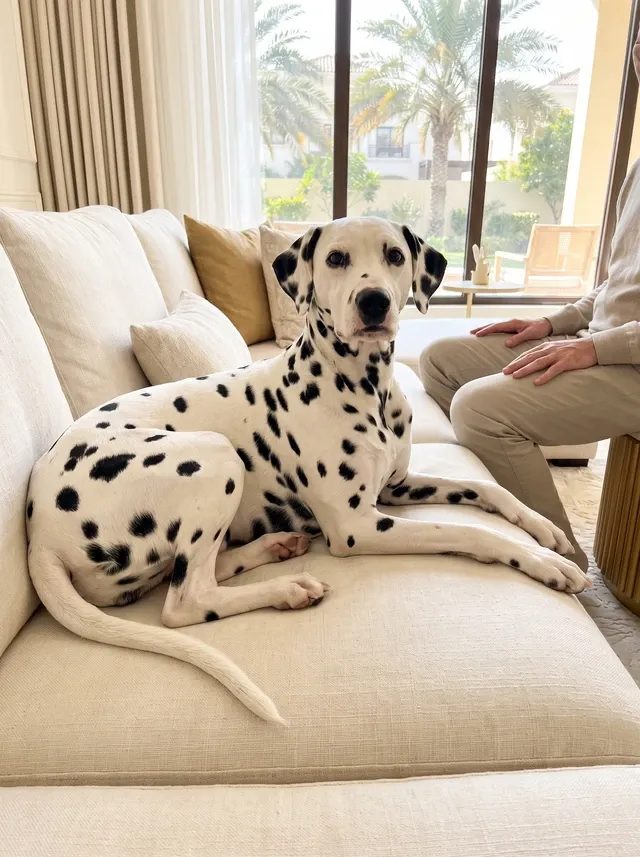
Dalmatian in Dubai, an adult lying on a cream sofa as a guest sits at the far end, palms outside

At home

Wary of the doorbell

A stiff, watchful look for visitors they do not know.

What's going onThey guarded the coach at night, and can still be reserved with strangers. Let visitors ignore them, and let the Dalmatian come to them in their own time.

A Dalmatian in Dubai

The bit nobody tells you.

Their day

Built for: Trotting beside horses for hours.

In Dubai: Often the day alone in a flat.

Their weather

Built for: Cool English roads, with water on the way.

In Dubai: A summer that makes running impossible for much of the day.

Their company

Built for: Nights in the stable with the animals and people they worked with.

In Dubai: No horses, and an empty flat until you come home.

The pacing, the chewed cushions and the howling at the door mostly come from that gap.

No routine closes it completely. You can get close, and the ten things below are how.

Your plan is built around their breed: the risks a Dalmatian carries at every age, and the care that goes with each one.

Join the founding families. AED 1,999 of essential care for AED 199.

Daily care for a Dalmatian

Ten things that make their life better.

Many of them are free, and most matter at every age.

  1. A walk rarely empties a Dalmatian, and a steady run is the closest they get to their old job. Their hips need to be ready first.

    From 2 years, once their hips are evaluated

    Under AED 200 for a running belt and leadIn your plan

    Why

    A walk rarely empties a Dalmatian, and a steady run is the closest they get to their old job. Their hips need to be ready first.

    What to do

    Wait until they have finished growing and had their hip evaluation, by age two. Then build up to a daily trot beside you, before sunrise or after dark, adding a few minutes a week, on sand or grass where you can. Stop at once if they lag behind or pant hard.

  2. Their body sends uric acid into their urine, where it can form stones. Dilute urine, emptied often, makes stones less likely.

    Every age

    Under AED 100 for extra bowls and a travel bottle

    Why

    Their body sends uric acid into their urine, where it can form stones. Dilute urine, emptied often, makes stones less likely.

    What to do

    A full bowl in more than one room, water on every walk, and a little water mixed into their food. Let them out to pee every few hours, and never leave them to hold on through a long day.

  3. Purines in food become uric acid, and most Dalmatians cannot clear it the way other dogs do.

    Every age, most of all from 4 years

    In your plan

    Why

    Purines in food become uric acid, and most Dalmatians cannot clear it the way other dogs do.

    What to do

    Feed the low-purine diet your vet recommends, read the label on every treat, and tell anyone who feeds them.

  4. A urate stone can block the flow of urine, and that is an emergency.

    Every age

    Free

    Why

    A urate stone can block the flow of urine, and that is an emergency.

    What to do

    Watch them pee. Straining, dribbling, blood in the urine, or asking to go out again and again with little coming out: contact your vet now, day or night. A blocked bladder cannot wait until morning.

  5. From June to September the heat takes most of their running away, and their energy does not take the summer off.

    Every age, most of all puppies and from 7 years

    Free

    Why

    From June to September the heat takes most of their running away, and their energy does not take the summer off.

    What to do

    Run only before sunrise or after dark, shorter than in winter, and carry water. Put the back of your hand on the pavement for five seconds: if you cannot keep it there, they cannot run on it. On the hottest days, swap the run for training, a food puzzle and a sniff walk somewhere shaded.

  6. A bored Dalmatian finds their own work, usually the cushions. Head work is the exercise the weather never cancels.

    Every age, hardest from 6 months to 2 years

    Under AED 150, once

    Why

    A bored Dalmatian finds their own work, usually the cushions. Head work is the exercise the weather never cancels.

    What to do

    Ten to fifteen minutes a day: new tricks, part of their dinner hidden round the flat, or a slow sniff on a long lead. Pay them with part of their daily food.

  7. They were bred to spend every hour with their people and their horses. The howling at the door comes from a long, empty day.

    Every age, hardest from 6 months to 2 years

    Free, or the cost of a walker

    Why

    They were bred to spend every hour with their people and their horses. The howling at the door comes from a long, empty day.

    What to do

    If you are out for more than a few hours, arrange a midday walk, a visit or daycare, and leave a stuffed chew. If they are distressed when you leave, contact your vet rather than trying to fix it at home.

  8. Deafness from birth runs in the breed, and a dog deaf in one ear often seems normal.

    From 6 to 8 weeks, then for life

    In your plan

    Why

    Deafness from birth runs in the breed, and a dog deaf in one ear often seems normal.

    What to do

    Ask the breeder for the puppy's BAER hearing test (a painless test of each ear) result. If there is none, ask your vet about one. Teach a hand signal with every word from day one, and wake them by touch or by stamping near their bed, never by grabbing them.

  9. Crowded puppy teeth and gum disease can start in their first months, and dental disease follows into adulthood.

    Every age

    Under AED 100 for a toothbrush and pasteIn your plan

    Why

    Crowded puppy teeth and gum disease can start in their first months, and dental disease follows into adulthood.

    What to do

    Once a day, with a dog toothbrush and dog toothpaste, never human toothpaste. Start with a finger brush while they are small, so it is a habit before the adult teeth are in. A professional dental clean every 6 to 12 months is in your plan from age two.

  10. A Dalmatian will keep running when something hurts, and itchy skin, sore hips and, later, lumps can all turn up.

    Every age

    Free

    Why

    A Dalmatian will keep running when something hurts, and itchy skin, sore hips and, later, lumps can all turn up.

    What to do

    Run your hands over their ribs, spine, hips and paws, and look at their skin. You should feel their ribs easily. Weigh them once a month and note any new lump.

Four of these are in your plan. The rest you can do at home.

Join the founding families. AED 1,999 of essential care for AED 199.

Dalmatian health by age

Their health, at every age.

In a Dalmatian, a change in their toilet habits or in how they hear is often the first sign that something is wrong. Choose their age to see what to watch for, and the care that goes with it.

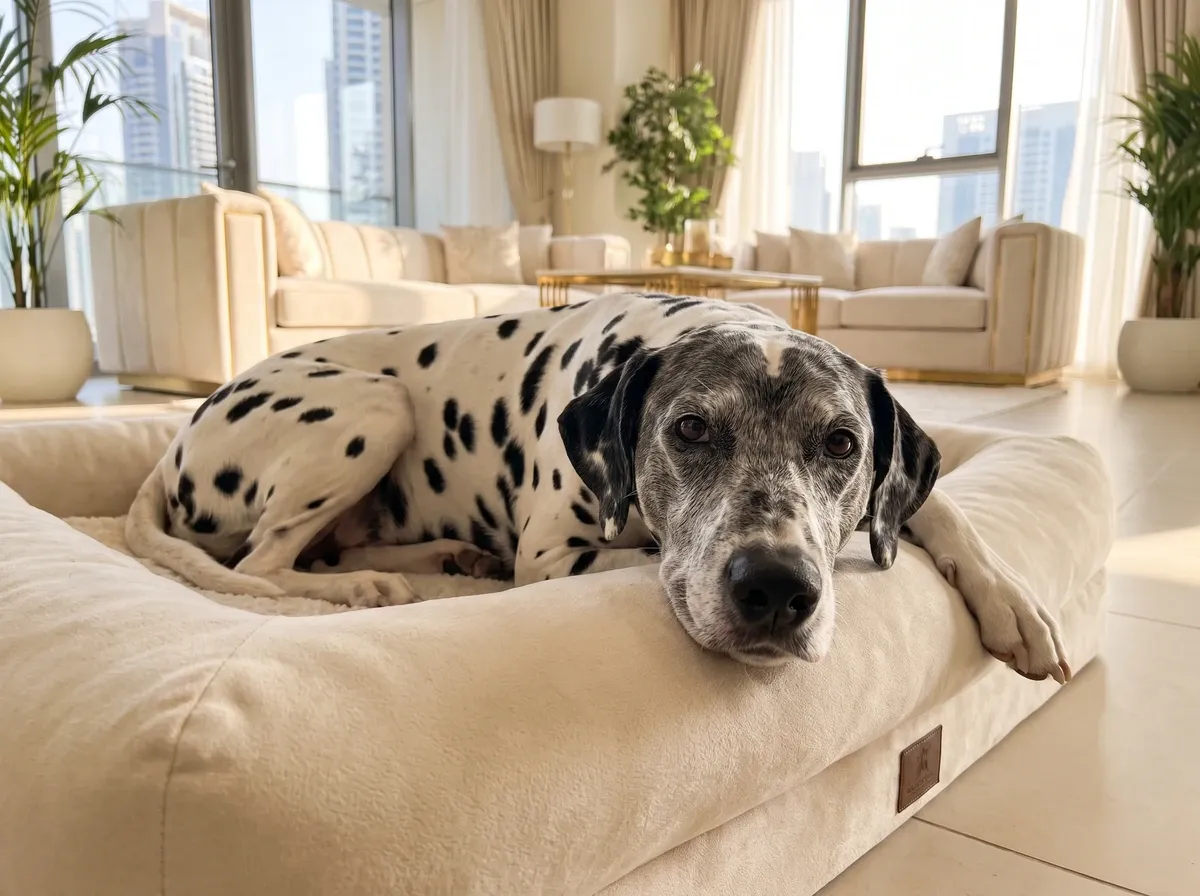
Dalmatian in Dubai, an older dog with a greying muzzle resting on a cream bed, the skyline outside

How old are they?

Their age

Dalmatian Puppy health

the first six months

What to watch for

  1. Early or congenital expression of Urinary Stones (Urate Stones, bladder stones made of uric acid)
  2. Early or congenital expression of Congenital Deafness (deafness from birth)
  3. Developmental or early clinical signs of Hip Dysplasia (HD, poorly fitting hip joint)
  4. Juvenile onset of allergies / atopic dermatitis (itchy allergic skin)
  5. Retained deciduous teeth (baby teeth that have not fallen out), malocclusion (teeth that do not meet properly) or early dental crowding

The care that goes with it

  1. Core vaccinations, microchip and Dubai Municipality registration
  2. Deworming, and flea and tick prevention
  3. Growth and nutritional evaluation, and early socialisation
  4. Baseline urate stone screening
  5. Early follow-up for any sign of deafness
The full care detail
  • Core vaccination programme, microchipping and Dubai Municipality registration. Titre testing discussion where clinically appropriate; not a substitute for completing the core vaccine series
  • Deworming and external parasite prevention tailored to Dubai exposure
  • Body Condition Score (BCS, a check on whether they are the right weight), Muscle Condition Score (MCS, a check on their muscle), dental, growth and nutritional evaluation, and early socialisation
  • Baseline screening focused on Urinary Stones (Urate Stones)
  • Early diagnostic follow-up for signs suggestive of Congenital Deafness

Their age

Dalmatian Juvenile health

6 months to 2 years

What to watch for

  1. Young-dog presentation of Urinary Stones (Urate Stones)
  2. Young-dog presentation of Congenital Deafness
  3. Emerging Hip Dysplasia (HD) with exercise intolerance or lameness
  4. Recurrent or persistent allergies / atopic dermatitis
  5. Early periodontal disease (gum disease) and dental crowding

The care that goes with it

  1. Urinalysis (a urine test) every year, with urine pH monitoring, and a low-purine diet
  2. A BAER hearing test (a painless test of each ear) result, from the test at 6 to 8 weeks of age
  3. Neutering or spaying, timed for a medium breed
  4. Hip evaluation by age 2, and a lean body to ease their hips
  5. Finding the cause of a limp that keeps coming back, rather than treating it again as hip trouble
The full care detail
  • Annual urinalysis and urine pH monitoring; low-purine diet to prevent urate stone formation
  • BAER (Brainstem Auditory Evoked Response) hearing test at 6-8 weeks of age
  • Neuter/spay timing discussion that accounts for medium-breed growth and disease risk
  • Hip evaluation (OFA or PennHIP) by age 2; maintain lean body weight to reduce hip stress
  • Investigate recurrent signs rather than repeatedly treating presumed Hip Dysplasia (HD)

Their age

Dalmatian Young Adult health

2 to 4 years

What to watch for

  1. Urinary Stones (Urate Stones)
  2. Congenital Deafness
  3. Hip Dysplasia (HD, poorly fitting hip joint)
  4. Allergies / Atopic Dermatitis
  5. Dental Disease

The care that goes with it

  1. Urinalysis (a urine test) every year, with urine pH monitoring, and a low-purine diet
  2. A BAER hearing test (a painless test of each ear) result, from the test at 6 to 8 weeks of age
  3. Hip evaluation by age 2, and a lean body to ease their hips
  4. Finding allergy triggers early, with a food elimination trial if skin trouble keeps coming back
  5. Daily tooth brushing, and a professional dental cleaning every 6 to 12 months
The full care detail
  • Annual urinalysis and urine pH monitoring; low-purine diet to prevent urate stone formation
  • BAER (Brainstem Auditory Evoked Response) hearing test at 6-8 weeks of age
  • Hip evaluation (OFA or PennHIP) by age 2; maintain lean body weight to reduce hip stress
  • Identify allergens early; conduct food elimination trial if recurrent skin issues are present
  • Daily dental brushing; professional dental cleaning every 6-12 months

Their age

Dalmatian Prime Adult health

4 to 7 years

What to watch for

  1. Urinary Stones (Recurrent)
  2. Hip Dysplasia (HD), Progressive
  3. Allergic Skin Disease
  4. Hypothyroidism (an underactive thyroid)
  5. Dental Disease (Advanced)

The care that goes with it

  1. A prescription low-purine diet, plenty of water, and urinalysis (a urine test) every 6 months
  2. Hip care: joint supplements, physiotherapy and weight management
  3. Allergy care with allergen-specific immunotherapy (a treatment that slowly builds tolerance to an allergen)
  4. A thyroid panel (a blood test for an underactive thyroid) every year, with treatment if it is confirmed
  5. Dental x-rays every year, and removal of any tooth that could spread infection
The full care detail
  • Prescription low-purine diet; ensure high water intake; regular urinalysis every 6 months
  • Hip management: joint supplements, physiotherapy, and weight management
  • Allergy management: allergen-specific immunotherapy (daily or monthly)
  • Annual thyroid panel (T4); levothyroxine if hypothyroidism is confirmed
  • Annual dental X-rays; extract compromised teeth to prevent systemic infection

Their age

Dalmatian Senior health

7 to 10 years

What to watch for

  1. Urinary Stones (Chronic)
  2. Hip Dysplasia (HD), Severe Arthritis
  3. Kidney Disease
  4. Cancer
  5. Cognitive Dysfunction Syndrome (dementia in older pets)

The care that goes with it

  1. Ongoing urinary care: a prescription diet, plenty of water and regular urinalysis (a urine test)
  2. Advanced hip care, such as hydrotherapy, acupuncture, anti-inflammatory pain relief and joint supplements
  3. A renal panel (kidney blood tests) twice a year, and a senior diet
  4. A physical examination every year, with their lymph nodes (the glands under the skin) felt for cancer
  5. Cognitive enrichment (games that keep their mind busy) and a steady daily routine
The full care detail
  • Ongoing urinary management: prescription diet, high water intake, regular urinalysis
  • Advanced hip management: hydrotherapy, acupuncture, NSAIDs, and joint supplements
  • Bi-annual renal panel; transition to senior diet with controlled phosphorus and sodium
  • Annual full physical examination with lymph node palpation for cancer screening
  • Cognitive enrichment and consistent daily routine to slow cognitive dysfunction progression

Their age

Dalmatian Geriatric health

10 years and over

What to watch for

  1. Chronic Kidney Disease (CKD, long-term kidney failure)
  2. Severe Arthritis / Mobility Loss
  3. Cancer (Advanced)
  4. Cognitive Dysfunction Syndrome (Advanced)
  5. Heart Disease

The care that goes with it

  1. Mobility support: orthopaedic bedding, ramps and physiotherapy
  2. Cognitive enrichment (games that keep their mind busy) and a steady daily routine
  3. Quality-of-life assessment
  4. Palliative care (comfort care)
  5. End-of-life planning with your veterinary team
The full care detail
  • Mobility support: orthopaedic bedding, ramps, and physiotherapy for arthritic dogs
  • Cognitive enrichment and consistent daily routine to slow cognitive dysfunction progression
  • Quality-of-life assessments
  • Tailored palliative and comfort-focused care plan
  • Compassionate end-of-life planning with your veterinary team

Breed predispositions indicate an increased risk rather than certainty of disease. What is right for them always comes from their own history and an evaluation.

Getting a Dalmatian puppy in Dubai

Before they come home.

Dalmatian in Dubai, a black-spotted adult standing on a sandy palm-lined villa path at golden hour

Standard or Low Uric Acid line

Ask about the line

Almost every Dalmatian carries the gene change behind urate stones. The Low Uric Acid (LUA) line comes from a single cross with a Pointer in 1973, bred back to Dalmatians ever since, and handles uric acid normally. Ask the breeder which line a puppy comes from.

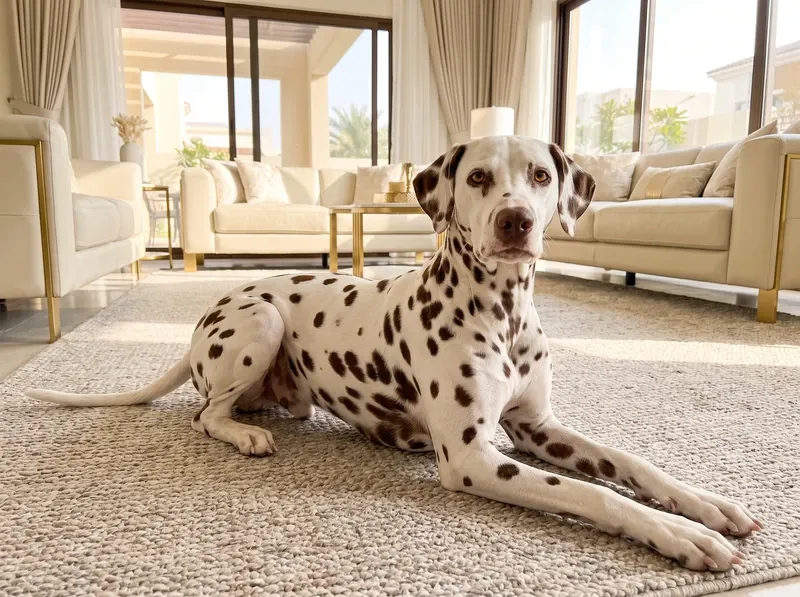
Dalmatian in Dubai, a liver-spotted adult lying on a stone-coloured rug in a villa living room, palms outside

Colours

Black spots or liver

Dalmatians are white with spots of dense black or warm liver brown. Spotted dogs like them have appeared in European art for centuries.

Dalmatian, a puppy asleep in a pet parent's lap on a cream sofa

The first six months

Caring for a Dalmatian puppy

Dalmatian puppies need their full vaccination course, microchip and Dubai Municipality registration first. Get their hearing test result, keep water close all day, and start hand signals alongside every word.

Puppy health, 0 to 6 months
Dalmatian, a young dog sitting beside a steel water bowl on pale kitchen tiles

Getting the home ready

Water in every room

Put a full water bowl in more than one room, and plan who lets them out to pee through the day. Keep cushions and shoes out of reach: a bored Dalmatian puppy finds their own work.

Ten things that make their life better
Dalmatian, a mother and puppy lying on a cream blanket by a bougainvillea wall

Before you commit

Ask for the hearing and hip results

Ask the breeder for the puppy's BAER hearing test (a painless test of each ear) result and both parents' hip scores, and keep them. If the breeder cannot show them, ask why.

The reception of a Paws & Co clinic, with long cream benches and a stone reception desk

Before the clinics open

Join the founding families

AED 1,999 of essential care for AED 199. No payment now.

When to see a vet

When it is not behaviour.

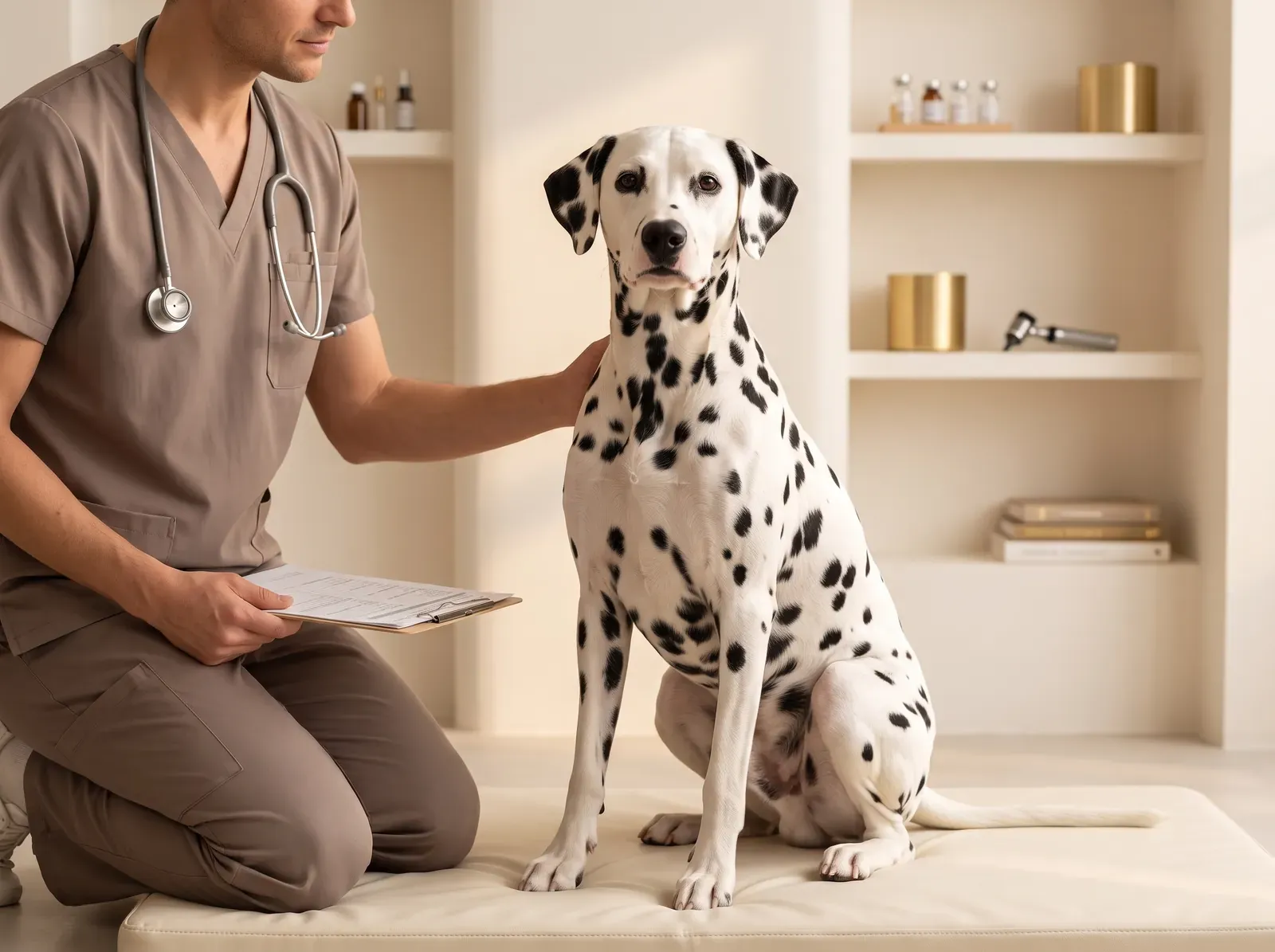
Dalmatian, an adult sitting on a padded mat as a vet in taupe scrubs rests a hand on their shoulder

Some of this is not a training problem, and treating it like one wastes time your dog may not have. If they are distressed when you leave, if they growl or guard their food, their toys or you, if they are frightened on the lead, or if anything about them changes suddenly at any age, contact your vet the same day. A tip from a website, ours included, is not the answer. If it cannot wait, contact your nearest emergency vet now.

With a Dalmatian, watch their toilet habits and their ears. A Dalmatian who asks to go out again and again, strains, or has accidents in the flat may have a stone, not a training problem, and that cannot wait. A dog who seems to ignore you, snaps when woken, or comes back slowly from the park may not be hearing you. In an older Dalmatian, new pacing or staring at night, when they never used to, can be the start of cognitive decline. Bloat (GDV, a twisted stomach) is most common in large, deep-chested dogs, so skip walks and hard play shortly before and after meals. A swollen, tight belly, retching with nothing coming up, sudden restlessness or drooling is an emergency: contact your vet now.

He'll keep asking for the bike ride. If he's straining when he pees, call your vet.
Dalmatian history

Before they were yours.

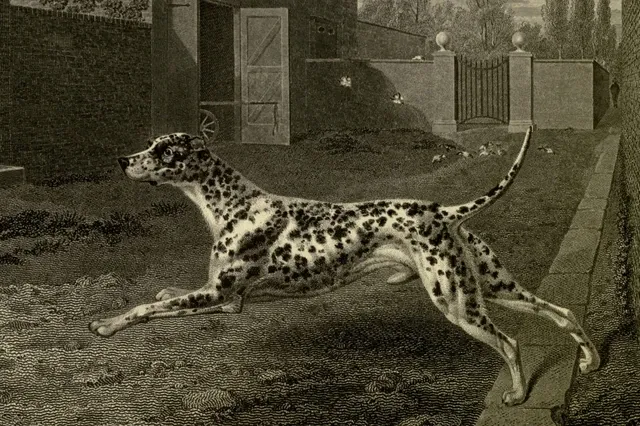
  1. Dalmatian history, a spotted dog running past a stable yard, an engraving, England, 1831
    A Dalmatian, painted by Philip Reinagle and engraved by John Scott for The Sportsman's Repository, 1831.

    1700s and 1800s

    The English coach dog

    In England, Scotland and Wales, Dalmatians trotted beside the carriage for hours, kept stray dogs away from the horses, and at night guarded the coach from the stable.

    What they still carryThe stamina, the urge to run alongside, and the attachment to their own people.

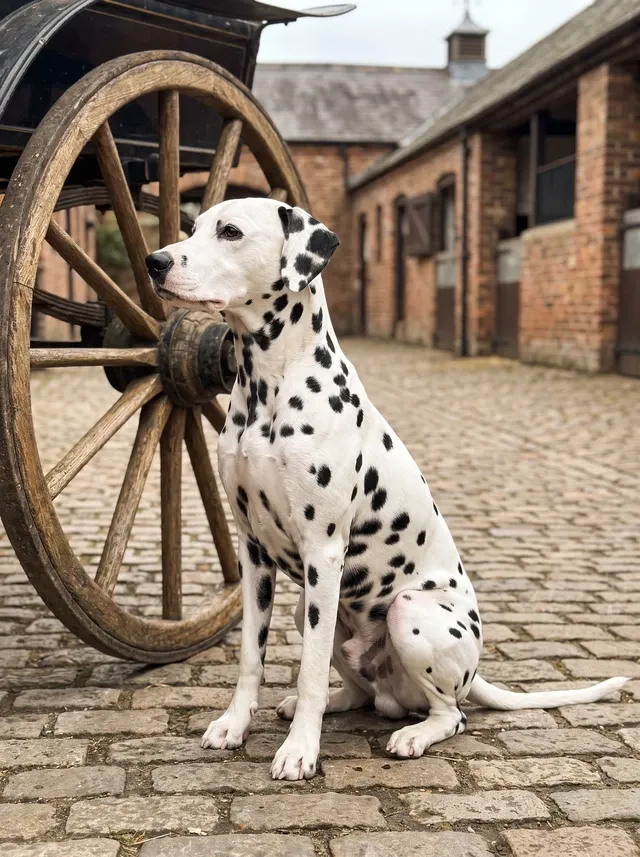
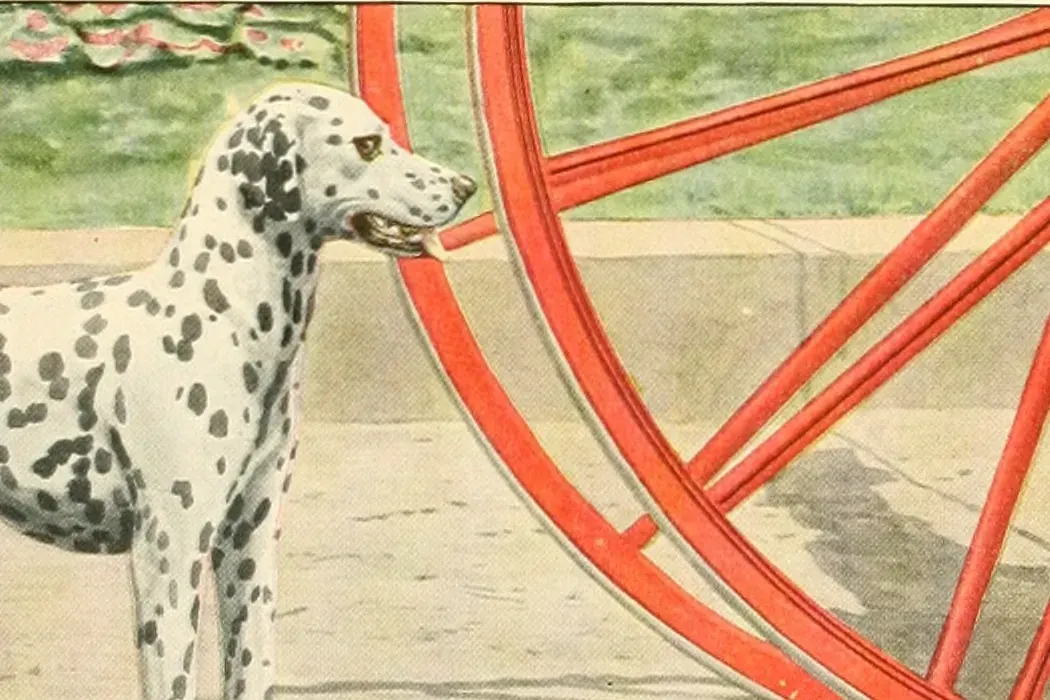
  2. Dalmatian history, a spotted dog standing beside a red carriage wheel, a painting, USA, 1919
    A Dalmatian beside a carriage wheel, painted by Louis Agassiz Fuertes for The Book of Dogs, National Geographic Society, 1919.

    The 1800s

    Ahead of the fire engines

    In America and Britain they ran ahead of horse-drawn fire engines to clear the road, then guarded the station and the equipment.

    What they still carryA calm way with horses, and a place as the fire station mascot.

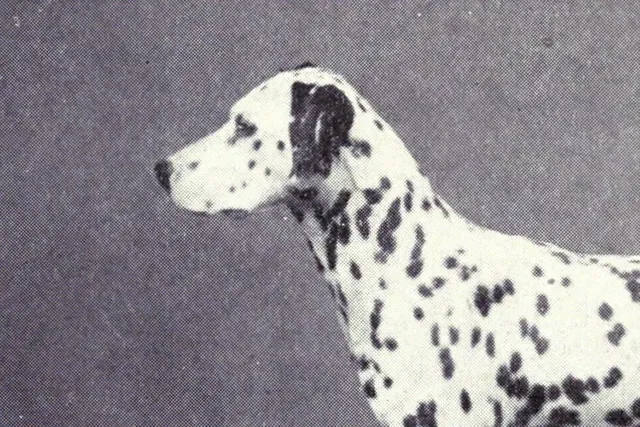
  3. Dalmatian history, head and shoulders of a black-spotted dog, a photograph, Lytham, England, 1915
    A Dalmatian photographed by Hedges of Lytham, from W. E. Mason's Dogs of All Nations, 1915.

    1888 to the 1920s

    Recognition, and the end of the job

    The American Kennel Club recognised the breed in 1888. Within a few decades motor cars and motor fire engines had replaced the horses, and the coach dog lost their work.

    What they still carryA running dog with no road to run on.

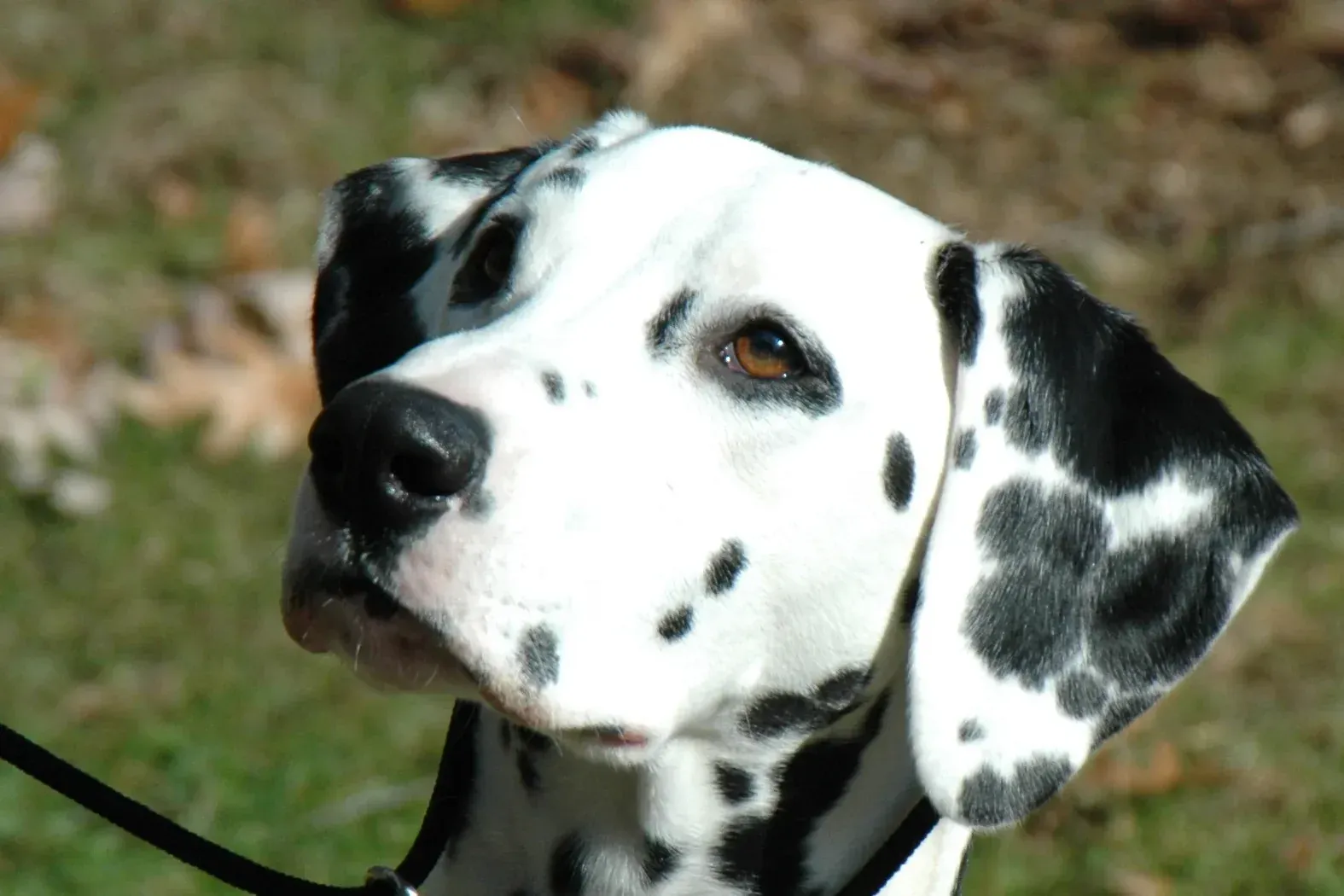
  4. Dalmatian history, head of a black-spotted dog on a lead, a photograph, 2007
    A Dalmatian photographed in 2007. Public domain, via Wikimedia Commons.

    1973 to 2008

    The uric acid question

    In 1973 Robert Schaible crossed a Dalmatian with a Pointer once, then bred back to Dalmatians, to bring in a normal uric acid gene. In 2008 researchers at UC Davis found the gene behind the problem.

    What they still carryWhy their water bowl and their diet matter so much.

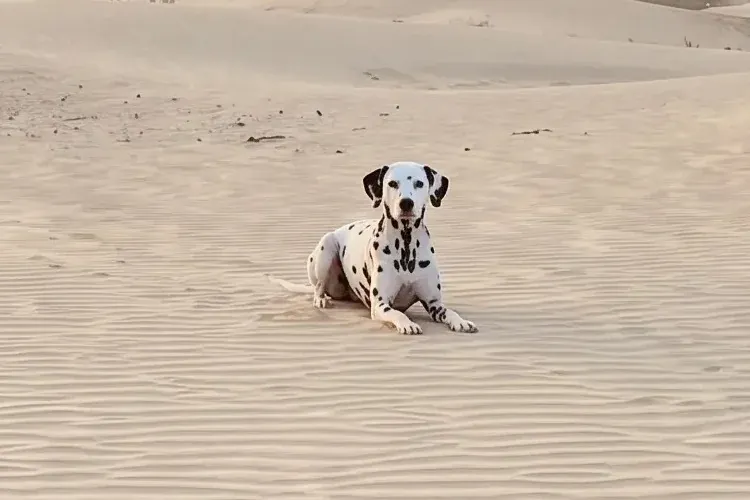
  5. Dalmatian history, the breed today, a black-spotted adult lying on rippled desert sand, Dubai, 2026

    Today

    In Dubai

    In the UAE a Dalmatian lives in a flat or a villa, in 45°C summers with no horses to run beside.

    What they still carryA body built to trot for hours in a cool climate, and a need for more water than most dogs.

Dalmatian questions

The ones you type at midnight.

Most of these get asked late at night, by someone watching their dog and not sure what they are seeing.

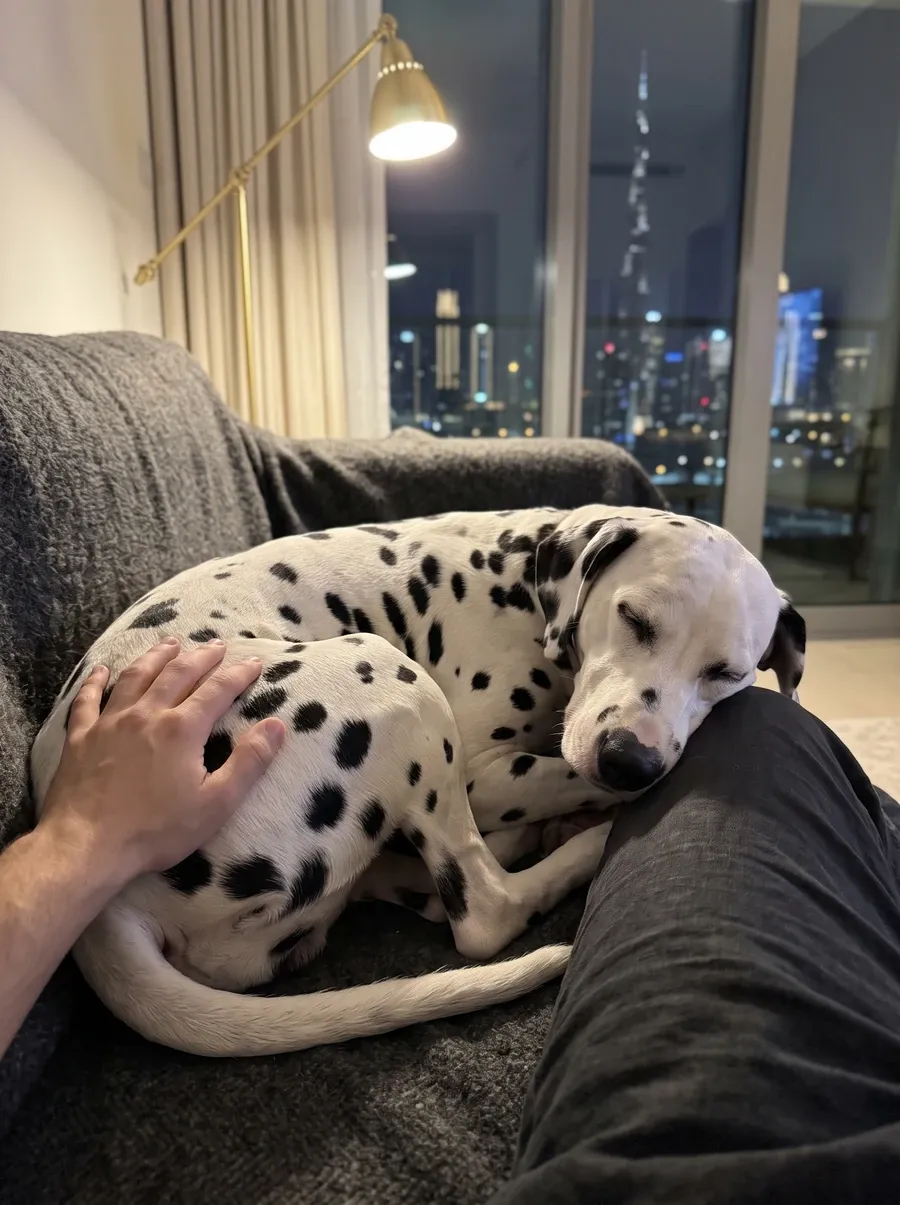
Dalmatian in Dubai, an adult asleep on a charcoal throw against a knee, a brass lamp and the lit skyline behind
Are Dalmatians deaf?

Some Dalmatians are deaf in one or both ears: about one in six, in a large UK study. A dog deaf in one ear often seems normal, so ask for the BAER hearing test result.

Why do Dalmatians get bladder stones?

Almost every Dalmatian carries a gene change that sends uric acid into their urine, where it can form urate stones. Plenty of water, regular chances to pee and a low-purine diet make stones less likely.

How long do Dalmatians live?

A Dalmatian usually lives 11 to 13 years. In a large UK study, half lived past 13.

How big does a Dalmatian get?

A Dalmatian is a medium-sized dog, and adults usually weigh 20 to 32 kg.

Do Dalmatians shed?

Yes. Dalmatians shed heavily, and all year round, despite that short coat. A weekly brush helps.

How much exercise does a Dalmatian need?

A Dalmatian needs more than a walk. Build up to a steady daily run in the cool once their hips have been evaluated, and add ten to fifteen minutes of head work.

Can a Dalmatian live in Dubai?

A Dalmatian can live well in Dubai with a summer plan. From June to September, run only before sunrise or after dark, carry water, and swap the rest for training and food puzzles.

What should I feed a Dalmatian?

A Dalmatian does best on the low-purine diet your vet recommends, with plenty of water. Purines in food become uric acid, and most Dalmatians cannot clear it the way other dogs do.

Is a Dalmatian a good family dog?

Dalmatians are loyal, playful and affectionate with their families, though they can be reserved with strangers. They need a lot of exercise and company, so they suit a home with time for both.

How do I care for a Dalmatian puppy?

A Dalmatian puppy needs vaccinations, a microchip and Dubai Municipality registration first. Then get their hearing test result, keep water close all day and use hand signals from the start. Hold off on runs until their hips are evaluated.

Worried about them? Contact your vet today.