We’re hiring people who love them like we do. Join us careers@pawsandco.comSee open roles
UAE Government Licensed MOCCAE
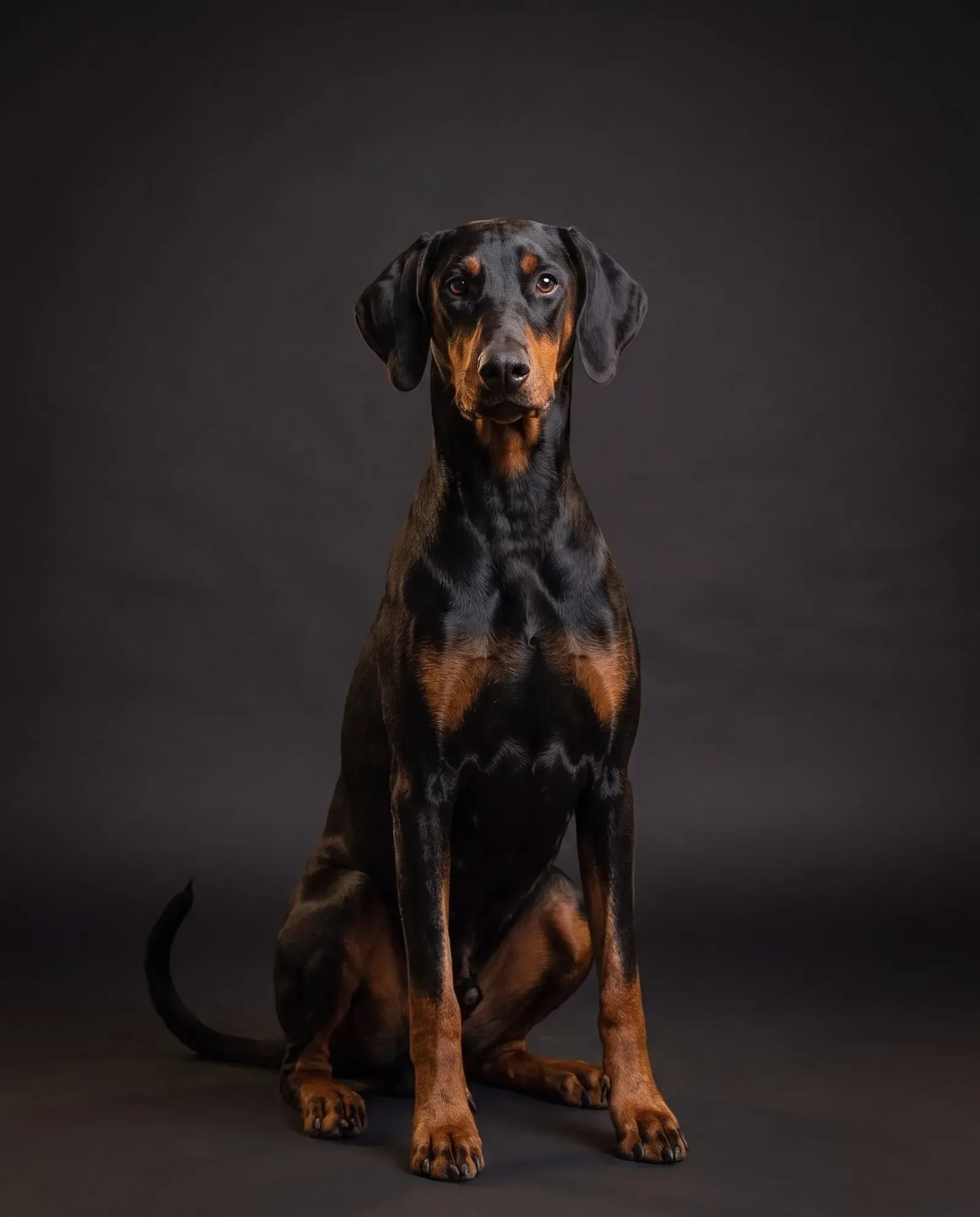
Doberman Pinscher in Dubai, studio portrait of a black and rust adult with natural ears, sitting

Breed guide  ·  Dogs

Doberman Pinscher

She was bred as a bodyguard. She's asleep on my feet.

Lifespan
10 to 13 years
Size
Large
Weight
27 to 45 kg
Shedding
Heavy

Last updated 14 October 2026

Join the founding families. AED 1,999 of essential care for AED 199.

No payment now. We'll be in touch by email and WhatsApp as we open enrolment.

✓
Thank you.

We will be in touch soon to confirm.

Doberman traits

What they brought with them.

Tap a card to see what is going on.

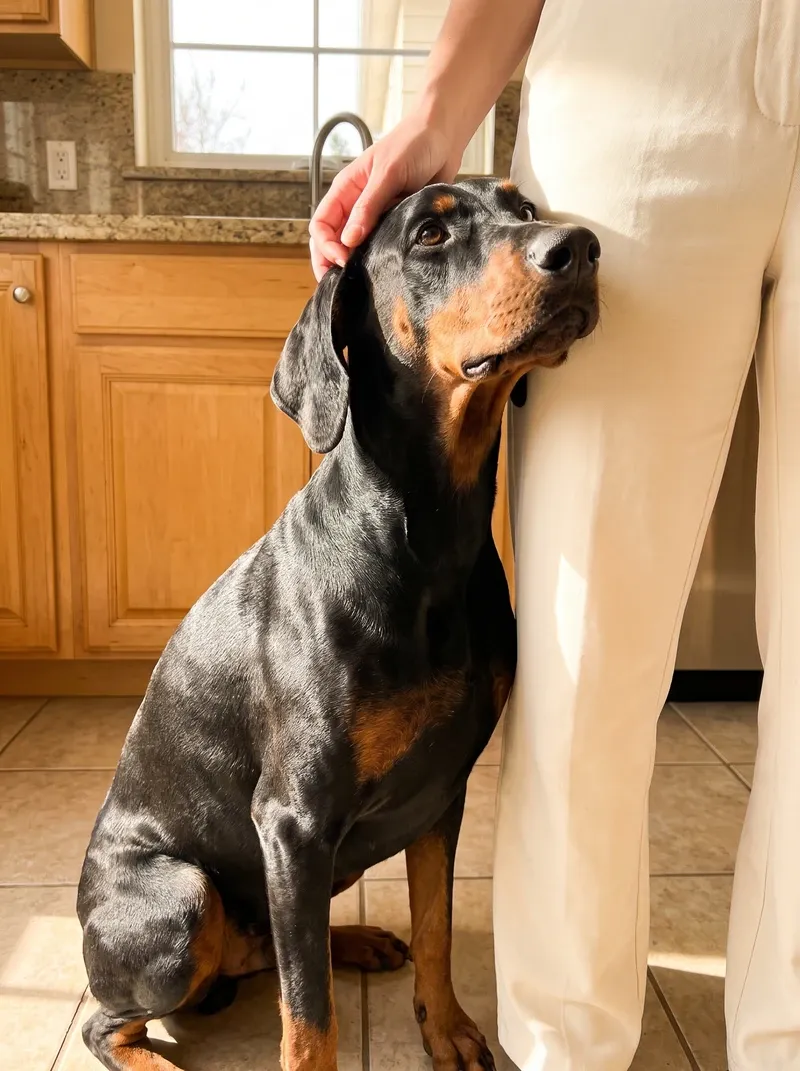
Doberman Pinscher, an adult sitting against a pet parent's legs in a sunny kitchen, a hand on the dog's head

At home

Why do Dobermans follow you everywhere?

Room to room, leaning their whole weight against your legs, waiting at the door until you are home.

What's going onA Doberman was bred to stay beside one person all day. They are not being needy. A long day alone is hard for them, and a midday walk or a visit breaks it up. If they are distressed when you leave, that is something to treat, so contact your vet.

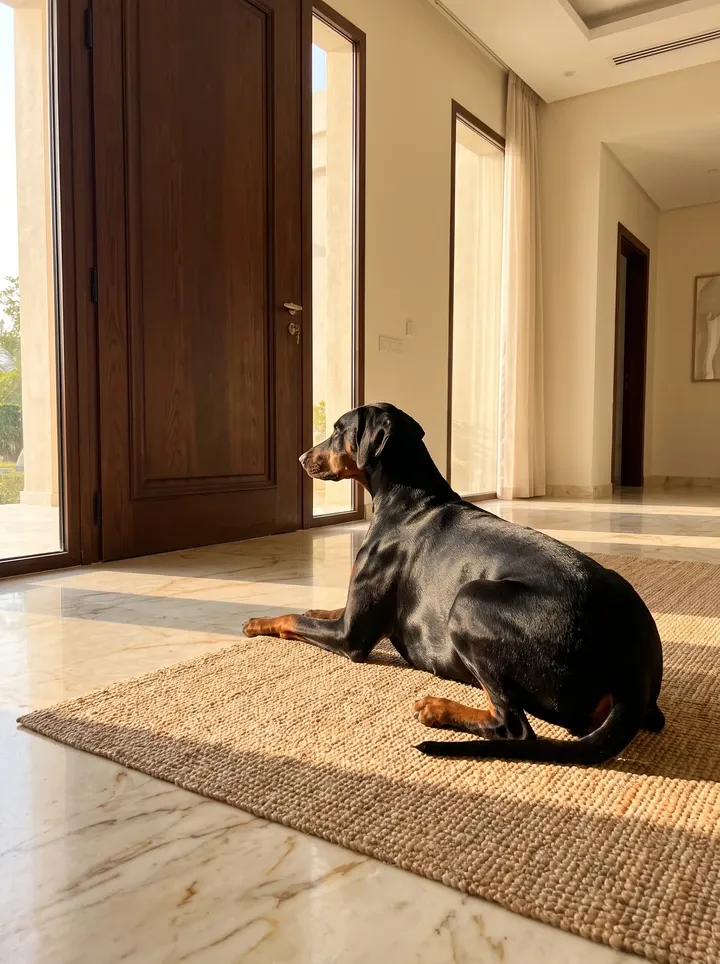
Doberman Pinscher, a black and rust adult lying on a mat in a marble villa hallway, watching the front door

At home

The Doberman guard dog at your door

A bark at the doorbell, the lift or footsteps in the corridor, then they stand between you and the door.

What's going onThey were bred to guard the person carrying the money. Give them a mat away from the door and a reason to go to it, and they have a job they can get right.

Doberman Pinscher, an adult stretched out on a cream sofa, head resting on a cushion

At home

Their heart is the big one

Bright, fit and full of energy, which is exactly how a healthy Doberman looks.

What's going onDilated Cardiomyopathy (DCM, an enlarged, weakened heart) is the breed's most serious health risk, and it can be silent for years. A baseline screening comes as a puppy, and their first full heart scan is due at two. A yearly scan is how it gets caught early.

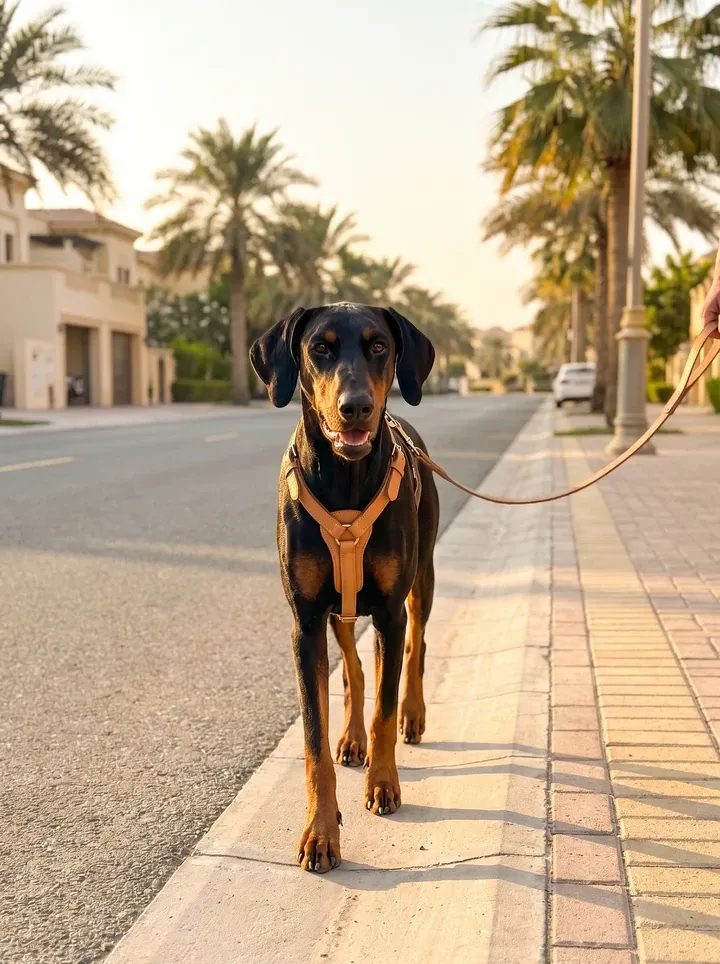
Doberman Pinscher in Dubai, an adult in a tan harness walking towards the camera on a palm-lined street at dawn

At home

Watch how they walk

A wobble at the back, scuffed nails, or not wanting to lower their head to the bowl.

What's going onIt can be Wobbler Syndrome (a squeezed spinal cord in the neck) rather than their legs. Tell your vet. A harness takes pressure off their neck on the lead.

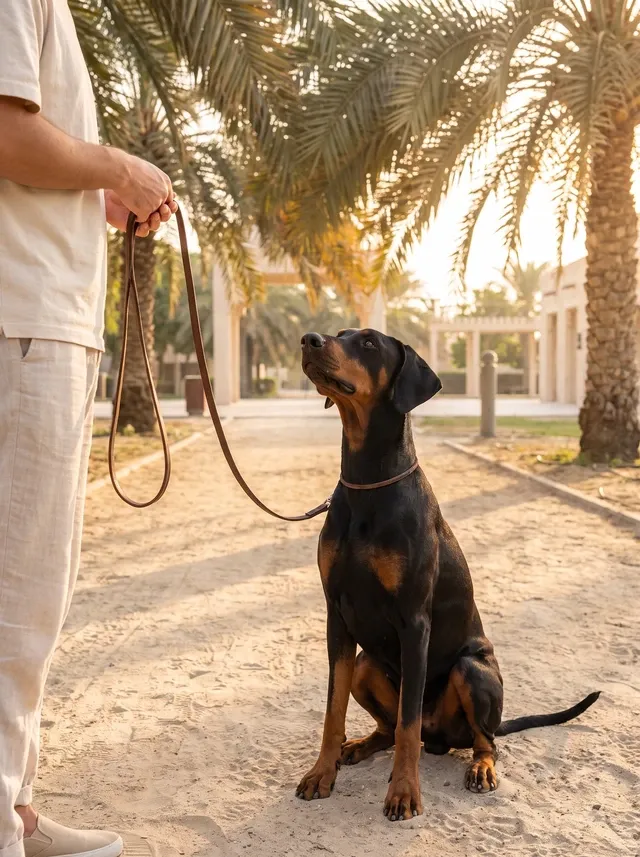
Doberman Pinscher in Dubai, an adult sitting on a sandy park path under palms, looking up at a pet parent

At home

They feel a tight lead

They stiffen when you tighten the lead, and go on alert when you are nervous about a dog coming the other way.

What's going onBred to work with a handler, they read your tension before you do. A loose lead and a low voice keep them calmer, and crossing the road early helps.

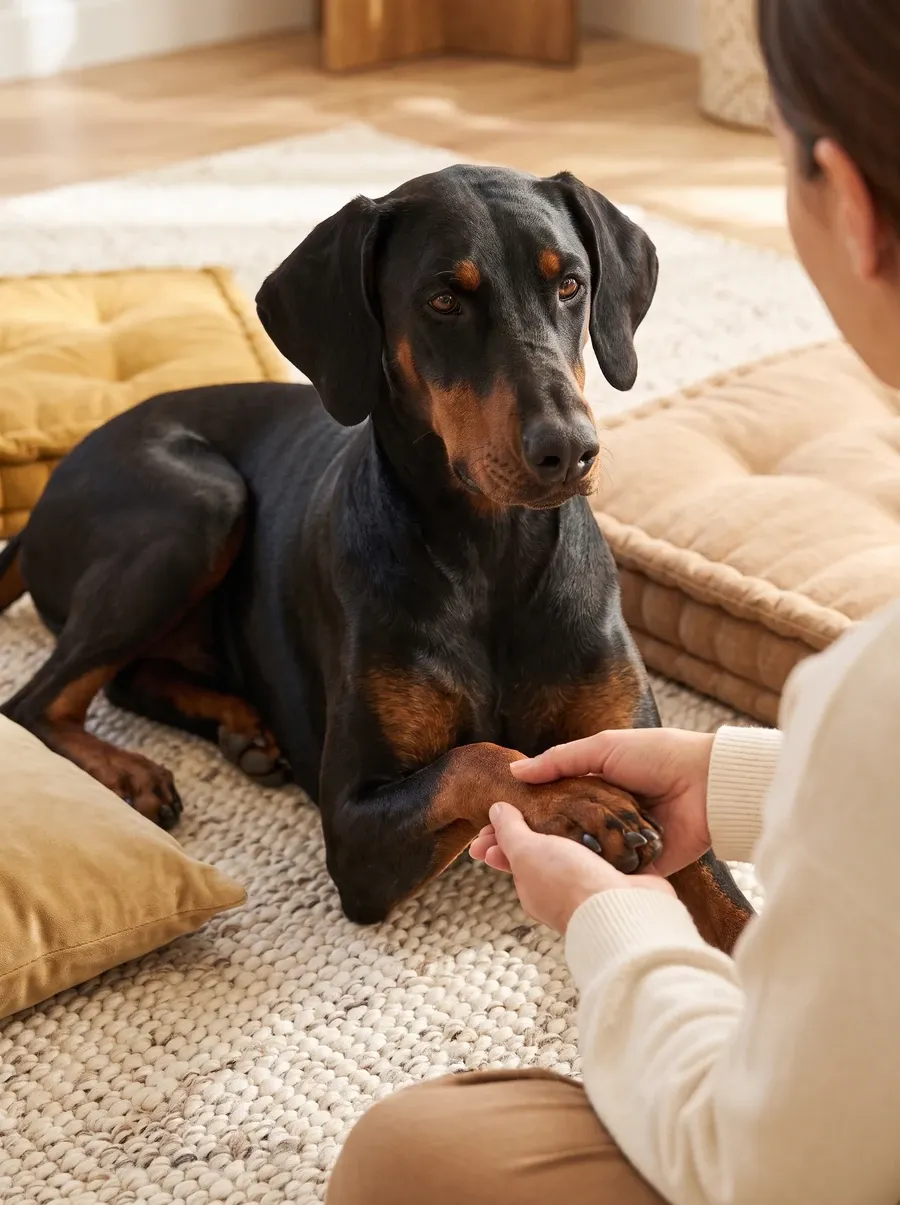
Doberman Pinscher, an adult lying on a woven rug among floor cushions while a pet parent holds a front paw

At home

Tell every vet about their blood

If a small cut ever takes longer than you expect to stop bleeding, this is why it matters.

What's going onAn inherited bleeding disorder, Von Willebrand Disease, runs in the breed. There is a genetic test, and every vet who treats them should know the result before any surgery.

A Doberman in Dubai

The bit nobody tells you.

Their day

Built for: Walking beside one person, all day.

In Dubai: Waiting in a flat while their person is at work.

Their watch

Built for: Watching everyone else.

In Dubai: A corridor full of strangers.

Their job

Built for: Keeping one person safe on their rounds.

In Dubai: A front door, a lift and a doorbell.

The pacing, the barking at the lift and the distress when you leave mostly come from that gap.

You cannot take them on your rounds. You can give them company, a job and a rule for the door, and the ten things below are how.

Your plan is built around their breed: the health risks for a Doberman at every age, and the care that goes with each one.

Join the founding families. AED 1,999 of essential care for AED 199.

Daily care for a Doberman

Ten things that make their life better.

Many of them are free, and most matter at every age.

  1. They will tell you someone is there. A rule keeps them out of the doorway.

    Every age, most of all 6 months to 2 years

    AED 100 to 400 for a mat or bed

    Why

    They will tell you someone is there. A rule keeps them out of the doorway.

    What to do

    Put a mat a few metres from the door. Long before any visitor, teach them that going there pays: a treat every time. When the bell goes, thank them once and send them there. While they are learning, have deliveries left outside. If they have lunged or snapped at anyone, contact your vet instead.

  2. They judge strangers by the people they have already met.

    Every age, most of all under 2 years

    FreeIn your plan

    Why

    They judge strangers by the people they have already met.

    What to do

    In their first months, let them watch all kinds of people from a distance they are happy at, with a treat for each, and let them leave if they want to. Carry them, or use clean ground, until their vaccinations are finished. Keep going through their teens.

  3. The lift is a small box where strangers walk straight at them.

    Every age, most of all 6 months to 2 years

    Free

    Why

    The lift is a small box where strangers walk straight at them.

    What to do

    Wait for an empty lift, or stand them in the back corner with you in front. Step aside in corridors and let people pass. Keep the lead short and loose near entrances and blind corners.

  4. They were bred to be busy beside a person.

    Every age, most of all 6 months to 2 years

    Free, or the cost of a walker

    Why

    They were bred to be busy beside a person.

    What to do

    Short training sessions, and their dinner hidden around the flat. If you are out for more than a few hours, arrange a midday walk or a visit. If they are distressed when you leave, contact your vet rather than trying to fix it at home.

  5. Their heart is their biggest risk, and tiring early on a walk can be the first sign of trouble, so it is worth noticing.

    Every age, most of all puppies and from 7 years

    Free

    Why

    Their heart is their biggest risk, and tiring early on a walk can be the first sign of trouble, so it is worth noticing.

    What to do

    From May to September, walk before sunrise and after dark. Put the back of your hand on the pavement for five seconds: if you cannot keep it there, they cannot walk on it. If they tire early, cough or lag behind, stop and tell your vet that day.

  6. A basket muzzle they are used to keeps a stressful moment calm, at the vet or anywhere else.

    Every age, easiest under 2 years

    Under AED 200

    Why

    A basket muzzle they are used to keeps a stressful moment calm, at the vet or anywhere else.

    What to do

    Teach it young and slowly, while nothing is wrong: show it, treat; nose in, treat; a second longer each day. A well-fitted basket muzzle still lets them pant, drink and take a treat. Never put it on for the first time in a hurry.

  7. Their heart is scanned every year from two. Make lying still easy for them.

    Every age, start as a puppy

    Free

    Why

    Their heart is scanned every year from two. Make lying still easy for them.

    What to do

    A few minutes, a few times a week: lift a paw, look in an ear, lift a lip, and practise lying on their side on a mat for a reward. Brush their teeth every day while you are there. Stop before they get uneasy.

  8. New guarding often shows between one and three years.

    6 months to 3 years

    Free

    Why

    New guarding often shows between one and three years.

    What to do

    Reward calm, every time. Walk them on a harness rather than a collar to protect their neck, and keep sessions short. Skip anything that hurts or frightens them, and never punish a growl: it is how they tell you something is wrong. If new guarding appears, contact your vet early.

  9. Hip Dysplasia (a poorly fitting hip joint) and Wobbler Syndrome (a squeezed spinal cord in the neck) both run in the breed.

    Every age, most of all while growing and from 7 years

    Free to AED 1,000 for rugs and a rampIn your plan

    Why

    Hip Dysplasia (a poorly fitting hip joint) and Wobbler Syndrome (a squeezed spinal cord in the neck) both run in the breed.

    What to do

    Rugs where they turn on marble, a ramp for the car, a harness on walks, and a lean body. Have their hips evaluated before they turn two, and their Von Willebrand test done before any surgery, neutering included.

  10. Faster breathing while they sleep, a cough or fainting can be their heart: for any of them, contact your vet the same day.

    Every age, most of all from 2 years

    FreeIn your plan

    Why

    Faster breathing while they sleep, a cough or fainting can be their heart: for any of them, contact your vet the same day.

    What to do

    Once a week, run your hands over their ribs, legs and neck, so you know what normal feels like, and weigh them monthly.

Three of these are in your plan. The rest you can do at home.

Join the founding families. AED 1,999 of essential care for AED 199.

Doberman health by age

Their health, at every age.

In a Doberman, tiring early, a wobble at the back or snapping when touched is often the body talking, not the mood. Choose their age to see what to watch for, and the care that goes with it.

Doberman Pinscher, an older black and rust dog with a greying muzzle resting on a soft bed

How old are they?

Their age

Doberman Puppy health

the first six months

What to watch for

  1. Congenital murmur or early cardiac abnormality related to Dilated Cardiomyopathy (DCM, enlarged, weakened heart), Early
  2. Early neurological signs or inherited risk related to Wobbler Syndrome (Cervical Spondylomyelopathy, a squeezed spinal cord in the neck)
  3. Developmental or early clinical signs of Hip Dysplasia (HD, poorly fitting hip joint)
  4. Early or congenital expression of Von Willebrand Disease (Bleeding Disorder)
  5. Retained deciduous teeth (baby teeth that do not fall out), malocclusion (teeth that do not meet properly) or early dental crowding

The care that goes with it

  1. Core vaccinations, microchip and Dubai Municipality registration
  2. Deworming, and flea and tick prevention
  3. Body Condition Score (a check on whether they are the right weight), growth, dental and nutritional evaluation, and early socialisation
  4. Dilated Cardiomyopathy (DCM, an enlarged, weakened heart) screening, as a baseline
  5. Early follow-up for any signs of Wobbler Syndrome (a squeezed spinal cord in the neck)
The full care detail
  • Core vaccination programme, microchipping and Dubai Municipality registration. Titre testing discussion where clinically appropriate; not a substitute for completing the core vaccine series
  • Deworming and external parasite prevention tailored to Dubai exposure
  • Body Condition Score (BCS), Muscle Condition Score (MCS), dental, growth and nutritional evaluation, and early socialisation
  • Baseline screening focused on Dilated Cardiomyopathy (DCM), Early
  • Early diagnostic follow-up for signs suggestive of Wobbler Syndrome (Cervical Spondylomyelopathy)

Their age

Doberman Juvenile health

6 months to 2 years

What to watch for

  1. Early clinical or screening evidence of Dilated Cardiomyopathy (DCM, enlarged, weakened heart), Early
  2. Typical age-of-onset presentation of Wobbler Syndrome (Cervical Spondylomyelopathy, a squeezed spinal cord in the neck)
  3. Emerging Hip Dysplasia (HD, poorly fitting hip joint) with exercise intolerance or lameness
  4. Young-dog presentation of Von Willebrand Disease (Bleeding Disorder)
  5. Early periodontal disease (gum disease) and dental crowding

The care that goes with it

  1. An echocardiogram (an ultrasound scan of the heart) and a Holter monitor (a 24-hour heart rhythm recording) at age 2
  2. A genetic test for Von Willebrand Disease (an inherited bleeding disorder) before any surgery, with every vet told the result
  3. Neutering or spaying, timed for a large breed
  4. Hip evaluation by age 2 (OFA or PennHIP, two x-ray scoring schemes), and a lean body weight
  5. Finding the cause of any hip trouble that keeps coming back
The full care detail
  • Baseline echocardiogram and Holter monitor at age 2, Dilated Cardiomyopathy (DCM) is the leading cause of death in Dobermans
  • Von Willebrand Disease genetic test before any surgery; inform all vets of bleeding disorder status
  • Neuter/spay timing discussion that accounts for large-breed growth and disease risk
  • Hip evaluation (OFA or PennHIP) by age 2; maintain lean body weight to reduce hip stress
  • Investigate recurrent signs rather than repeatedly treating presumed Hip Dysplasia (HD)

Their age

Doberman Young Adult health

2 to 4 years

What to watch for

  1. Dilated Cardiomyopathy (DCM, enlarged, weakened heart), Early
  2. Wobbler Syndrome (Cervical Spondylomyelopathy, a squeezed spinal cord in the neck)
  3. Hip Dysplasia (HD, poorly fitting hip joint)
  4. Von Willebrand Disease (Bleeding Disorder)
  5. Dental Disease

The care that goes with it

  1. An echocardiogram and a Holter monitor at age 2, if not done yet
  2. The Von Willebrand genetic test before any surgery, if not done yet
  3. Hip evaluation by age 2, and a lean body weight
  4. An MRI scan (a detailed scan of the spine) if they show neck pain or a stumbling walk
  5. Teeth brushed every day, and a professional dental clean every 6 to 12 months
The full care detail
  • Baseline echocardiogram and Holter monitor at age 2, Dilated Cardiomyopathy (DCM) is the leading cause of death in Dobermans
  • Von Willebrand Disease genetic test before any surgery; inform all vets of bleeding disorder status
  • Hip evaluation (OFA or PennHIP) by age 2; maintain lean body weight to reduce hip stress
  • Wobbler Syndrome evaluation: MRI if neck pain or stumbling gait is observed
  • Daily dental brushing; professional dental cleaning every 6-12 months

Their age

Doberman Prime Adult health

4 to 7 years

What to watch for

  1. Dilated Cardiomyopathy (DCM, enlarged, weakened heart), Progressive
  2. Wobbler Syndrome (Progressive)
  3. Hip Dysplasia (HD), Progressive
  4. Hypothyroidism (an underactive thyroid)
  5. Dental Disease (Advanced)

The care that goes with it

  1. An echocardiogram and a 24-hour Holter monitor every year, with heart medication if it is ever needed
  2. Wobbler care where it is needed: anti-inflammatory medication, physiotherapy, or surgery to take pressure off the spinal cord
  3. Hip care: joint supplements, physiotherapy and weight management
  4. A yearly thyroid panel, with treatment if hypothyroidism is confirmed
  5. Yearly dental x-rays, and removing any tooth that could spread infection
The full care detail
  • Annual echocardiogram and 24-hour Holter monitor; begin Pimobendan when indicated
  • Wobbler Syndrome management: anti-inflammatory medication, physiotherapy, or surgical decompression
  • Hip management: joint supplements, physiotherapy, and weight management
  • Annual thyroid panel (T4); levothyroxine if hypothyroidism is confirmed
  • Annual dental X-rays; extract compromised teeth to prevent systemic infection

Their age

Doberman Senior health

7 to 10 years

What to watch for

  1. Dilated Cardiomyopathy (DCM), Advanced
  2. Cancer (Osteosarcoma, Lymphoma)
  3. Wobbler Syndrome (Severe)
  4. Kidney Disease
  5. Arthritis

The care that goes with it

  1. Heart medication, as your vet directs, if heart disease is found
  2. A full physical examination every year, with their legs felt by hand for any early sign of osteosarcoma (bone cancer)
  3. Wobbler care where it is needed: surgery, or physiotherapy for comfort
  4. Kidney blood tests twice a year, and a senior diet
  5. Hip care: hydrotherapy, acupuncture, anti-inflammatory pain relief and joint supplements
The full care detail
  • Full cardiac medication protocol: Pimobendan, ACE inhibitors, anti-arrhythmics as directed
  • Annual full physical examination with limb palpation for osteosarcoma detection
  • Advanced Wobbler management: surgical decompression or palliative physiotherapy
  • Bi-annual renal panel; transition to senior diet with controlled phosphorus and sodium
  • Advanced hip management: hydrotherapy, acupuncture, NSAIDs, and joint supplements

Their age

Doberman Geriatric health

10 years and over

What to watch for

  1. Congestive Heart Failure (Advanced)
  2. Cancer (Advanced)
  3. Severe Neurological Decline (Wobbler)
  4. Chronic Kidney Disease (CKD, long-term kidney failure)
  5. Cognitive Dysfunction Syndrome (dementia in older pets)

The care that goes with it

  1. Mobility support: slings, physiotherapy, and help with bladder and bowel if their nerves are affected
  2. Kidney and heart care, with medication adjusted as things change
  3. Brain games and a steady daily routine
  4. Quality-of-life assessments
  5. Palliative care (comfort care)
  6. End-of-life planning with your vet team, when the time comes
The full care detail
  • Mobility support: slings, physiotherapy, and bladder/bowel management for neurological dogs
  • Renal and cardiac management with regular medication adjustments
  • Cognitive enrichment and consistent daily routine to slow cognitive dysfunction progression
  • Quality-of-life assessments
  • Tailored palliative and comfort-focused care plan
  • Compassionate end-of-life planning with your veterinary team

Breed predispositions indicate an increased risk rather than certainty of disease. What is right for them always comes from their own history and an evaluation.

Getting a Doberman puppy in Dubai

Before they come home.

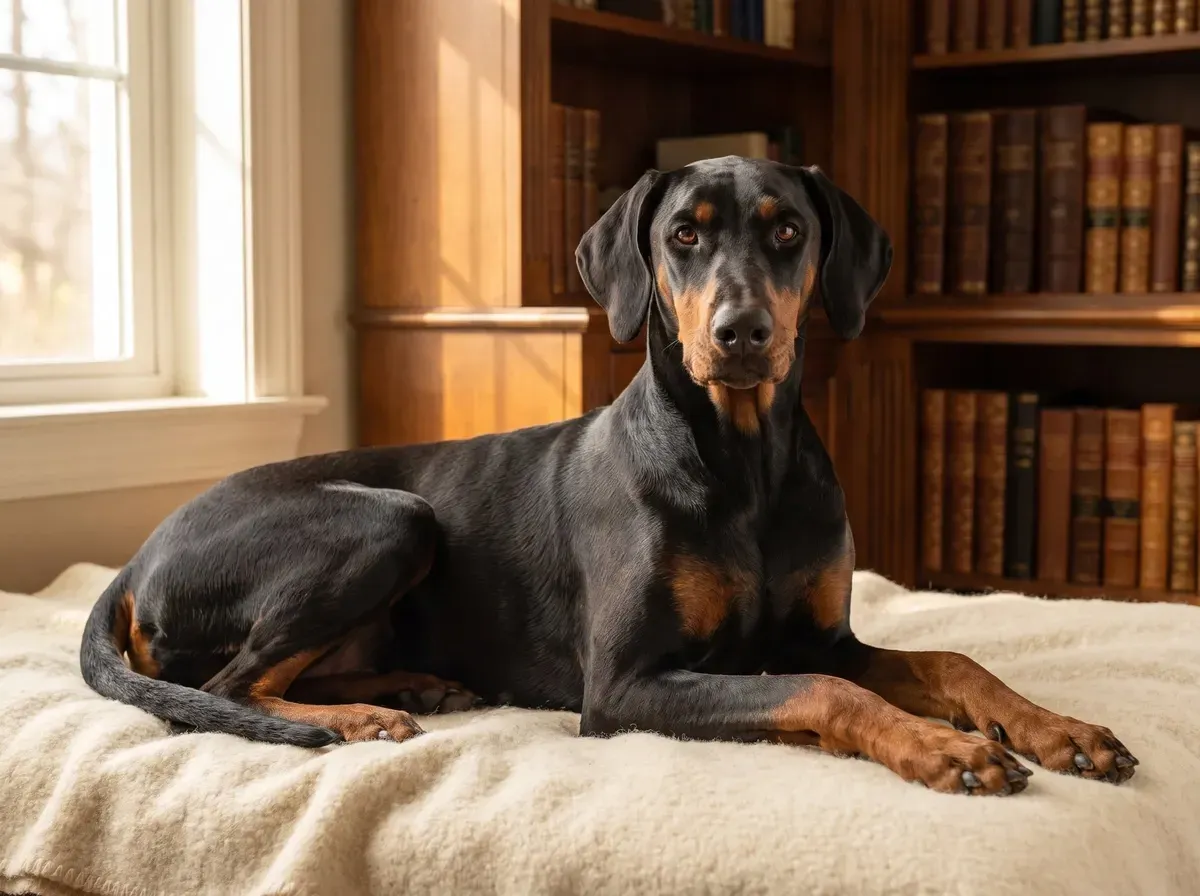
Doberman Pinscher, a black and rust adult lying on a cream blanket in a quiet study

European or American

Two lines of one breed

European and American Dobermans are the same breed, but the two lines have drifted apart in build and temperament since the breed reached America in the early 1900s. Ask the breeder which line their dogs come from, and meet the parents to see what that means in practice.

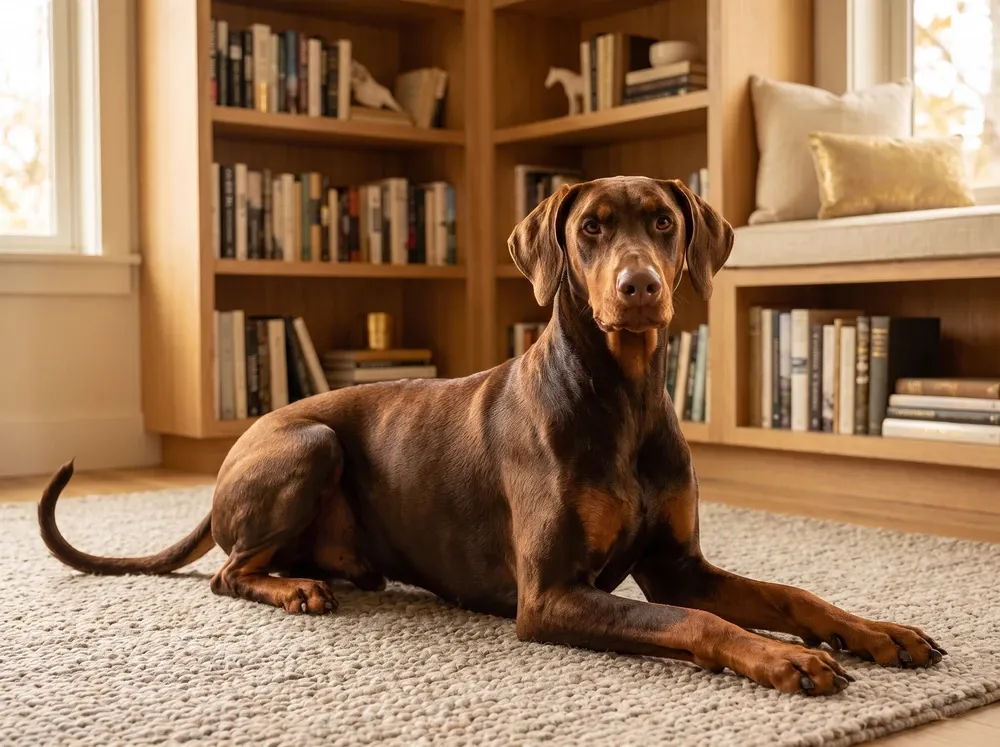
Doberman Pinscher, a red and rust adult lying on a woven rug in a reading room

Colours

Black, red, blue or fawn

Each comes with warm rust markings. Black and rust is the one most people picture, and a red Doberman, with rust markings on a deep reddish coat, is just as striking.

Doberman Pinscher, a black and rust puppy asleep in a pet parent's lap in a linen armchair

The first six months

Doberman puppy care

Their full vaccination course, microchip and Dubai Municipality registration come first, with a baseline screening of their heart and early socialisation. Watch how they walk as they grow, and get them used to a harness rather than a collar.

Puppy health, 0 to 6 months
Doberman Pinscher in Dubai, a puppy lying on a mat in a bright flat, the skyline through the window

Getting the home ready

A mat by the door, and company

Put a mat a few metres from the front door before they arrive, and rugs where they will turn on marble. Plan who will keep them company on long days: a midday walk or a visit makes a real difference.

Ten things that make their life better
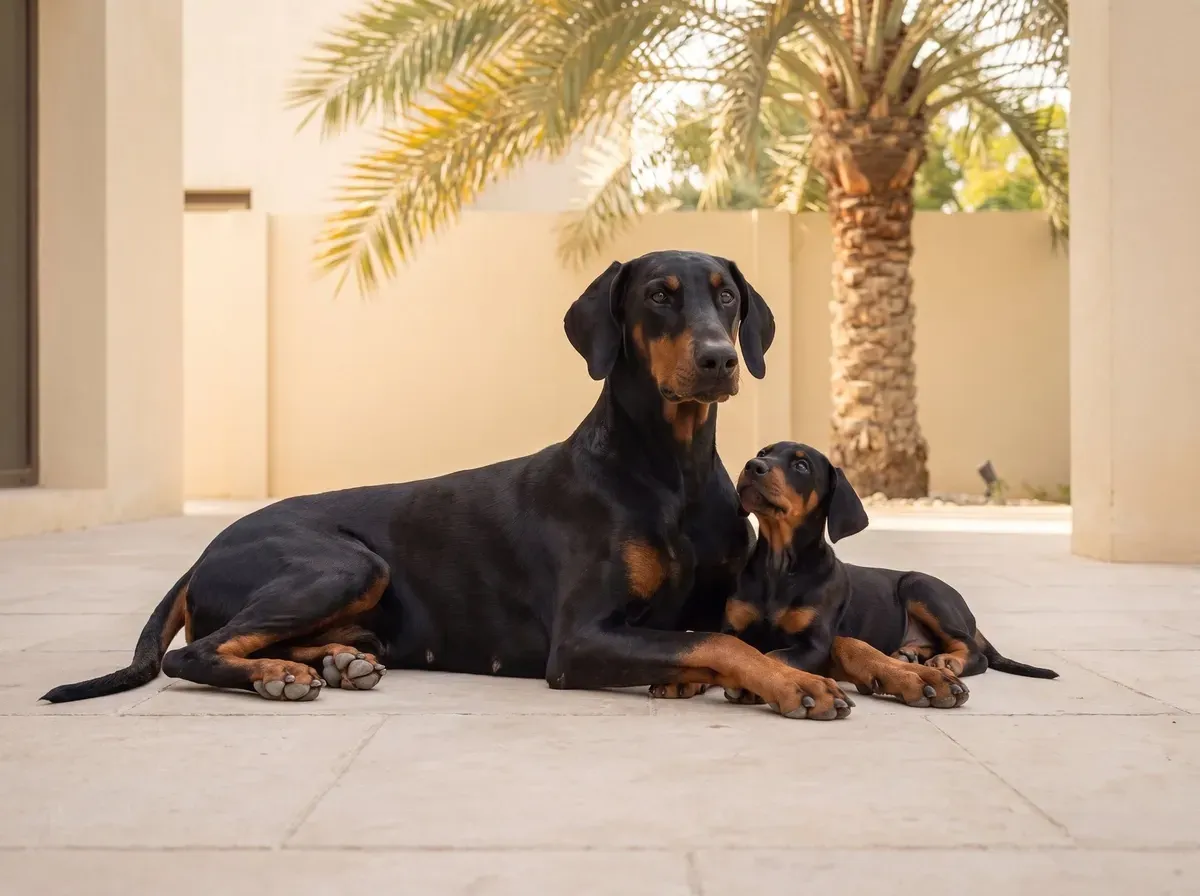
Doberman Pinscher in Dubai, a mother lying beside a puppy in a shaded villa courtyard with a date palm

Before you commit

Ask about the parents' hearts

Ask the breeder whether both parents have had their hearts screened, their hips scored and a Von Willebrand Disease test, and ask to see the results.

The reception of a Paws & Co clinic, with long cream benches and a stone reception desk

Before the clinics open

Join the founding families

AED 1,999 of essential care for AED 199. No payment now.

When to see a vet

When it is not behaviour.

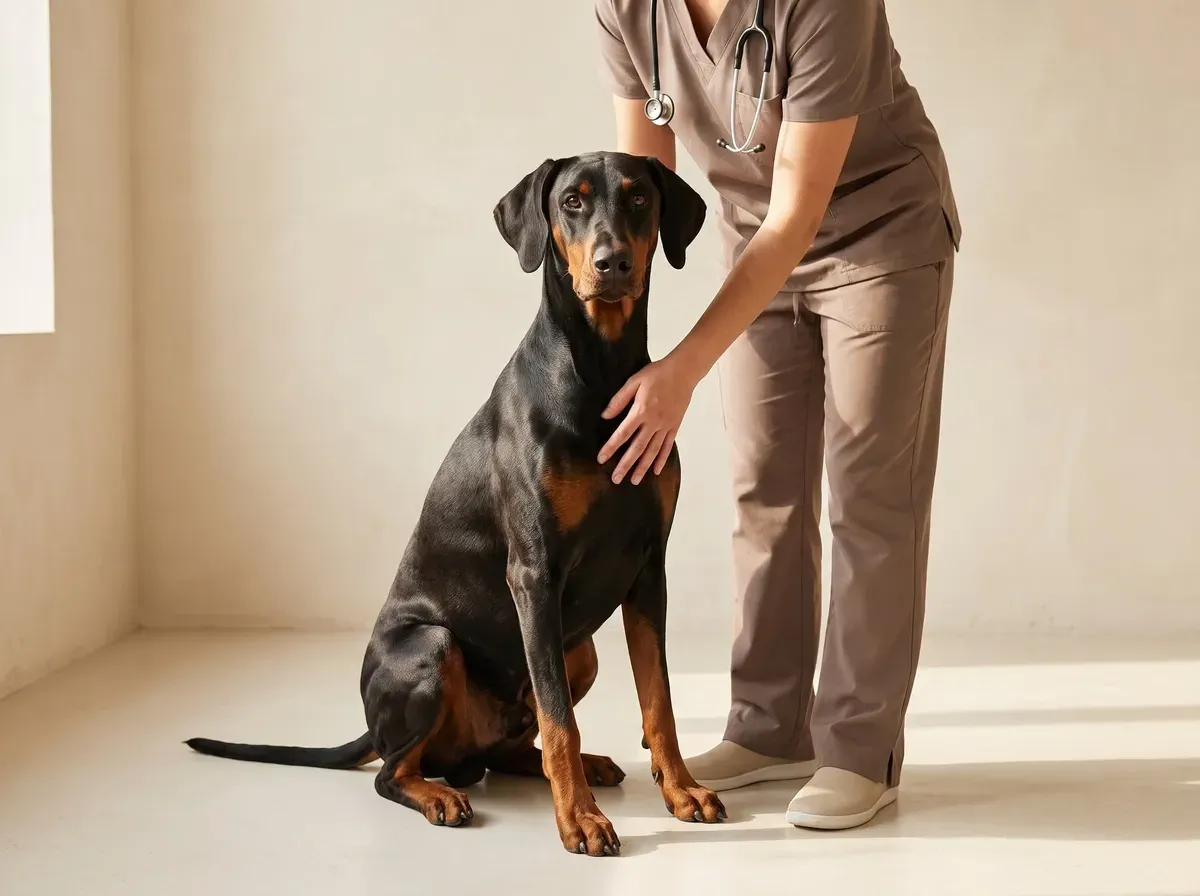
Doberman Pinscher, an adult sitting on the floor with a hand from a vet in taupe scrubs on the dog's chest

Some of this is not a training problem, and treating it like one wastes time your dog may not have. If they are distressed when you leave, if they growl or guard their food, their toys or you, if they are frightened on the lead, or if anything about them changes suddenly at any age, contact your vet the same day. A tip from a website, ours included, is not the answer. If it cannot wait, contact your nearest emergency vet now.

With a Doberman, watch their heart and their walk. Tiring early, a cough, fainting or faster breathing while they sleep can be Dilated Cardiomyopathy (DCM, an enlarged, weakened heart), so contact your vet the same day. A wobble at the back or a stiff neck can be Wobbler Syndrome (a squeezed spinal cord in the neck). A Doberman who suddenly snaps when touched may be in pain. Bloat (GDV, a twisted stomach) is most common in large, deep-chested dogs, so skip walks and hard play shortly before and after meals. A swollen, tight belly, retching with nothing coming up, sudden restlessness or drooling is an emergency: contact your vet now. It is easy to put the rest down to mood. Telling your vet early buys them time.

They'll keep sleeping on your feet. Once a year, take them for their heart scan.
Doberman history

Before they were yours.

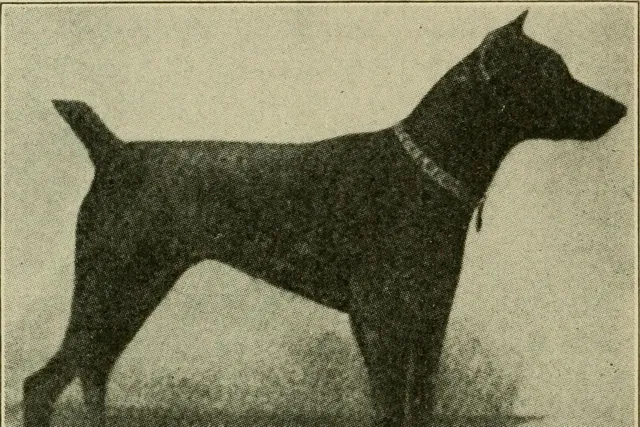
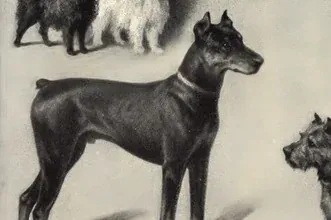
  1. Doberman Pinscher history, a dog with cropped ears standing side-on, Dogs as Home Companions, 1922
    A Dobermann, from Dogs as Home Companions by A. F. Hochwalt, 1922. Ears were cropped as standard then.

    The 1890s

    Apolda, a tax collector's dog

    Louis Dobermann, a tax collector in Apolda, Germany, bred a dog to walk his rounds with him and keep him safe while he carried money.

    What they still carryA dog made to stay beside one person and watch everyone else.

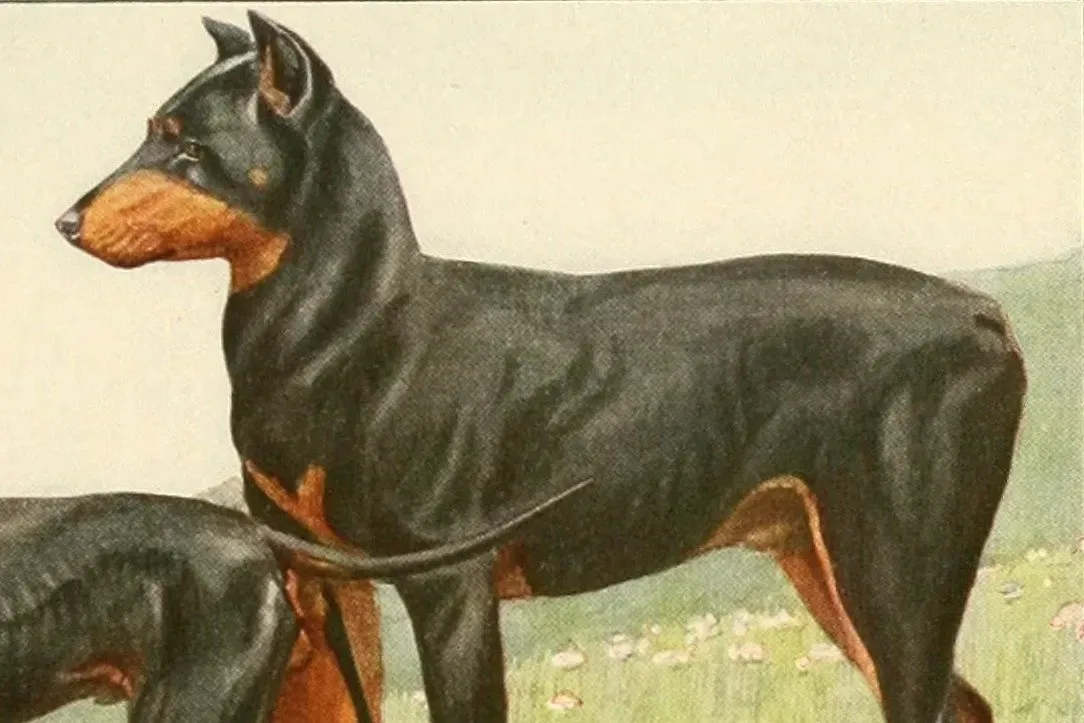
  2. Doberman Pinscher history, a painting of a black and tan dog with cropped ears in a meadow, Louis Agassiz Fuertes, 1919
    A Dobermann painted by Louis Agassiz Fuertes for The Book of Dogs, National Geographic, 1919.

    1894 to 1899

    The first club

    After Dobermann died in 1894, breeders in Apolda carried on. Otto Göller set breeding rules and founded the national club in 1899.

    What they still carryThe sleek look, and the start of a gentler family dog.

  3. Doberman Pinscher history, a drawing of a dog with cropped ears on a dog breeds plate, Nordisk familjebok, 1909
    A Dobermann on a dog breeds plate in the Swedish encyclopedia Nordisk familjebok, 1909.

    1908

    Across the Atlantic

    The American Kennel Club recognised the breed in 1908.

    What they still carryAn American line that later drifted from the European one.

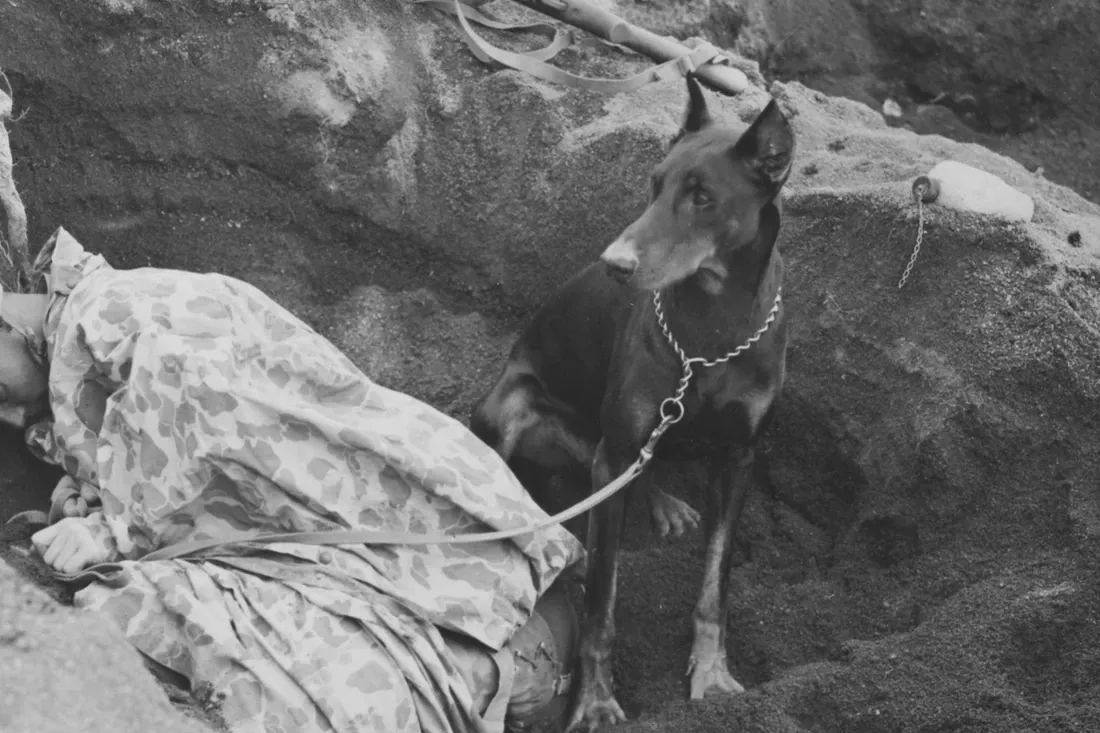
  4. Doberman Pinscher history, Butch, a Marine Corps war dog, on guard as a handler sleeps in a foxhole, Iwo Jima, 1945
    Butch, a Marine Corps war dog, on guard while his handler sleeps in a foxhole on Iwo Jima, 1945.

    The 20th century

    Guard, police and war dog

    Dobermans went on to guard, police and serve in the Second World War, where they worked alongside US Marines on Guam.

    What they still carryThe reputation, and a devotion to their own person.

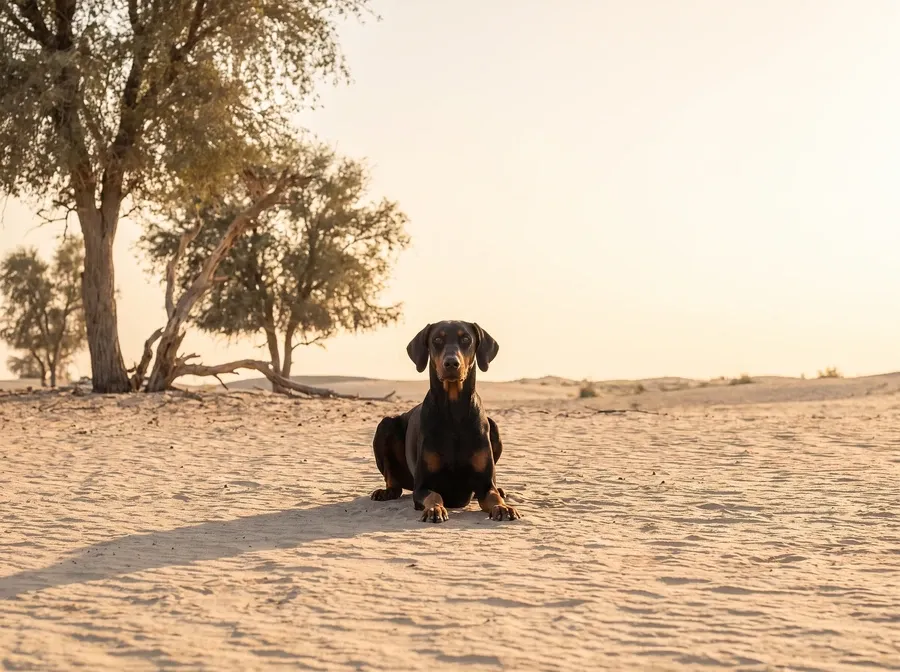
  5. Doberman Pinscher history, the breed today, a black and rust adult lying on desert sand among ghaf trees

    Today

    In Dubai

    In the UAE a Doberman is a family dog and a guard dog, often in a flat, waiting for their person to come home.

    What they still carryA dog bred to guard one person on the road, which is why company matters so much.

Doberman questions

The ones you type at midnight.

Most of these get asked late at night, by someone watching their dog and not sure what they are seeing.

Doberman Pinscher in Dubai, asleep on a cream dog bed at night as a pet parent reads, the skyline beyond
How long do Dobermans live?

Most Dobermans live 10 to 13 years. In a large UK study of more than 3,500 Dobermans, half lived past 11.

How big is a full grown Doberman?

A full grown Doberman weighs 27 to 45 kg. Males usually weigh 34 to 45 kg and females 27 to 41 kg.

Is a Doberman Pinscher the same as a Dobermann?

Yes, the Doberman Pinscher and the Dobermann are the same breed. The Royal Kennel Club calls it the Dobermann, and the American Kennel Club the Doberman Pinscher.

What is the Doberman temperament like?

Dobermans are loyal, intelligent and energetic, and deeply bonded to their own people. Well socialised, they are gentle and affectionate with their family despite the intimidating look.

Do Dobermans shed?

Yes, Dobermans shed quite heavily for such a short coat, all year round. A brush a few times a week keeps it down.

What colours do Dobermans come in?

Dobermans come in black, red, blue or fawn, each with rust markings.

Can a Doberman live in Dubai?

Yes, a Doberman can live well in Dubai with company, a job and walks in the cool hours. From May to September, walk before sunrise and after dark, and break up long days alone.

Why do Dobermans need heart scans?

Dobermans need heart scans because Dilated Cardiomyopathy, an enlarged, weakened heart, is the breed's most serious health risk and can be silent for years. After a baseline screening as a puppy, the first full echocardiogram and Holter monitor are due at two, then every year.

Why does my Doberman wobble when walking?

A Doberman who wobbles at the back or has a stiff neck may have Wobbler Syndrome, a squeezed spinal cord in the neck. Tell your vet, and use a harness rather than a collar.

Worried about them? Contact your vet today.