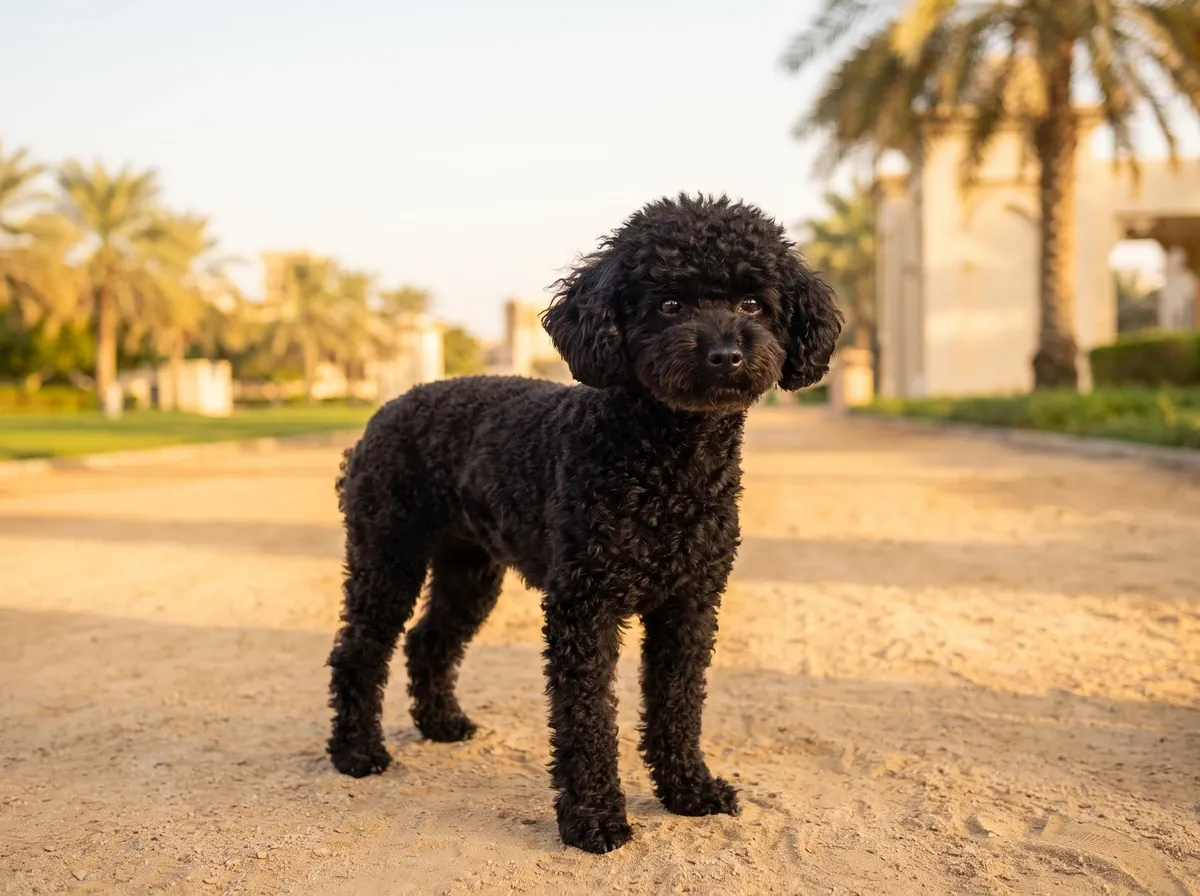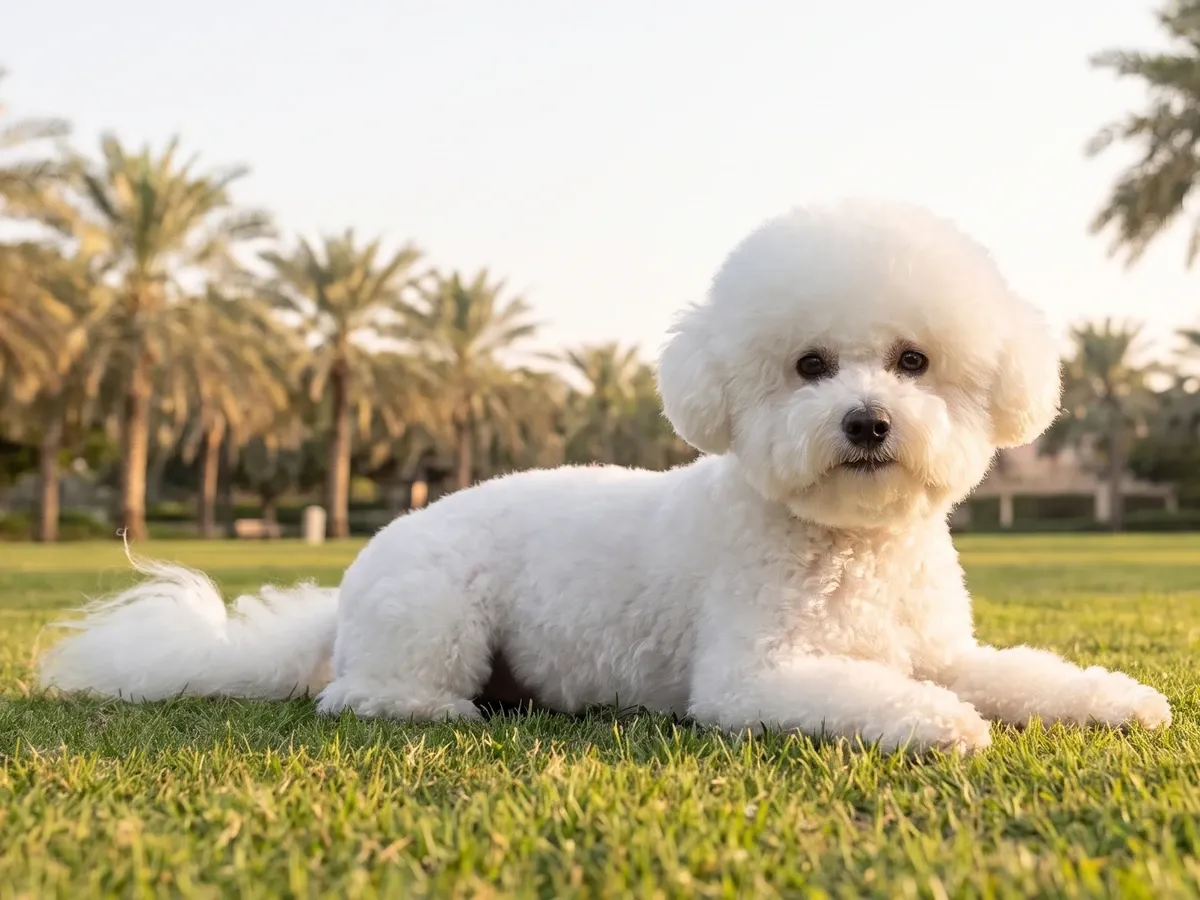

We’re hiring people who love them like we do. Join us careers@pawsandco.comSee open roles
UAE Government Licensed MOCCAE
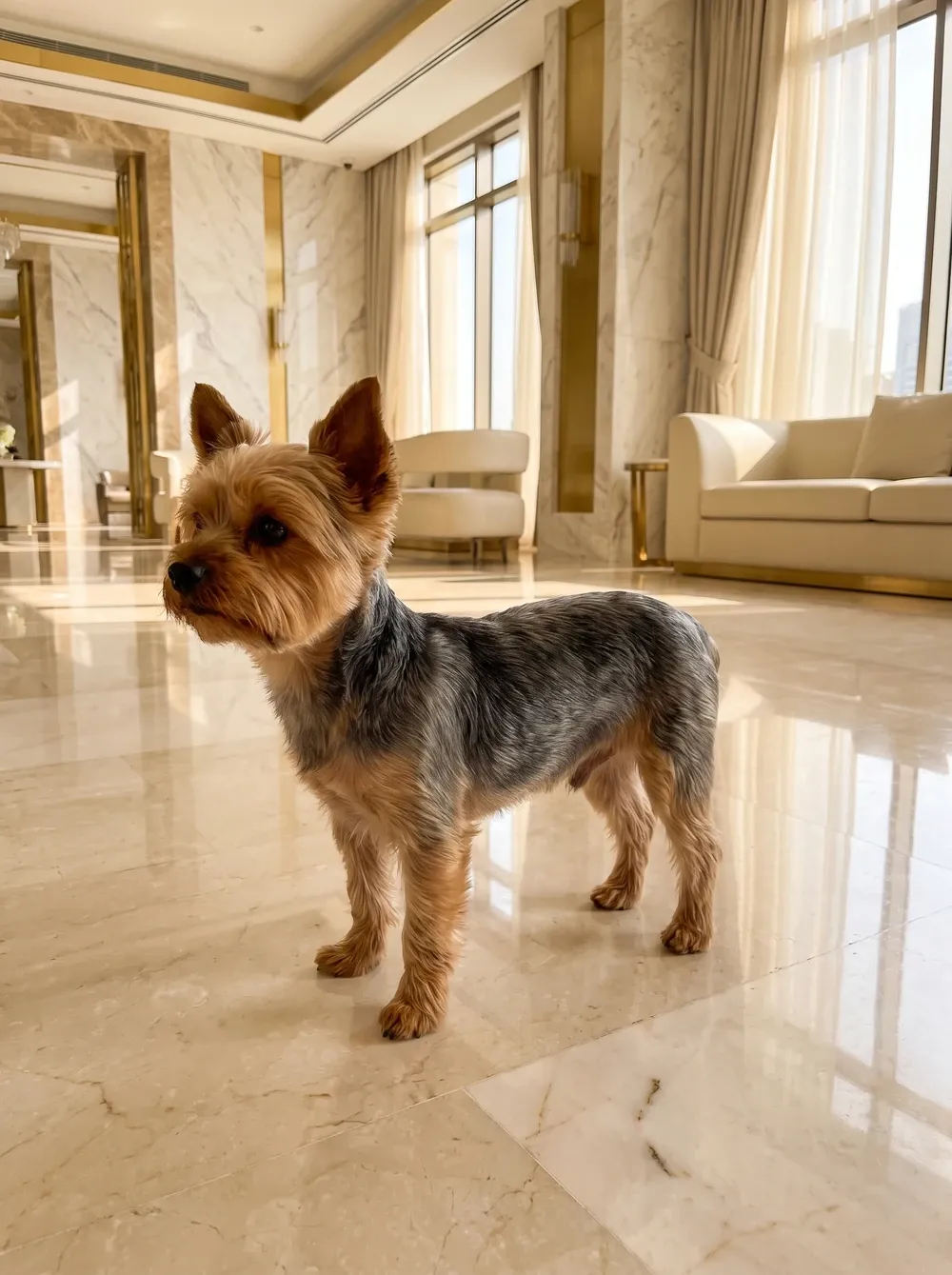
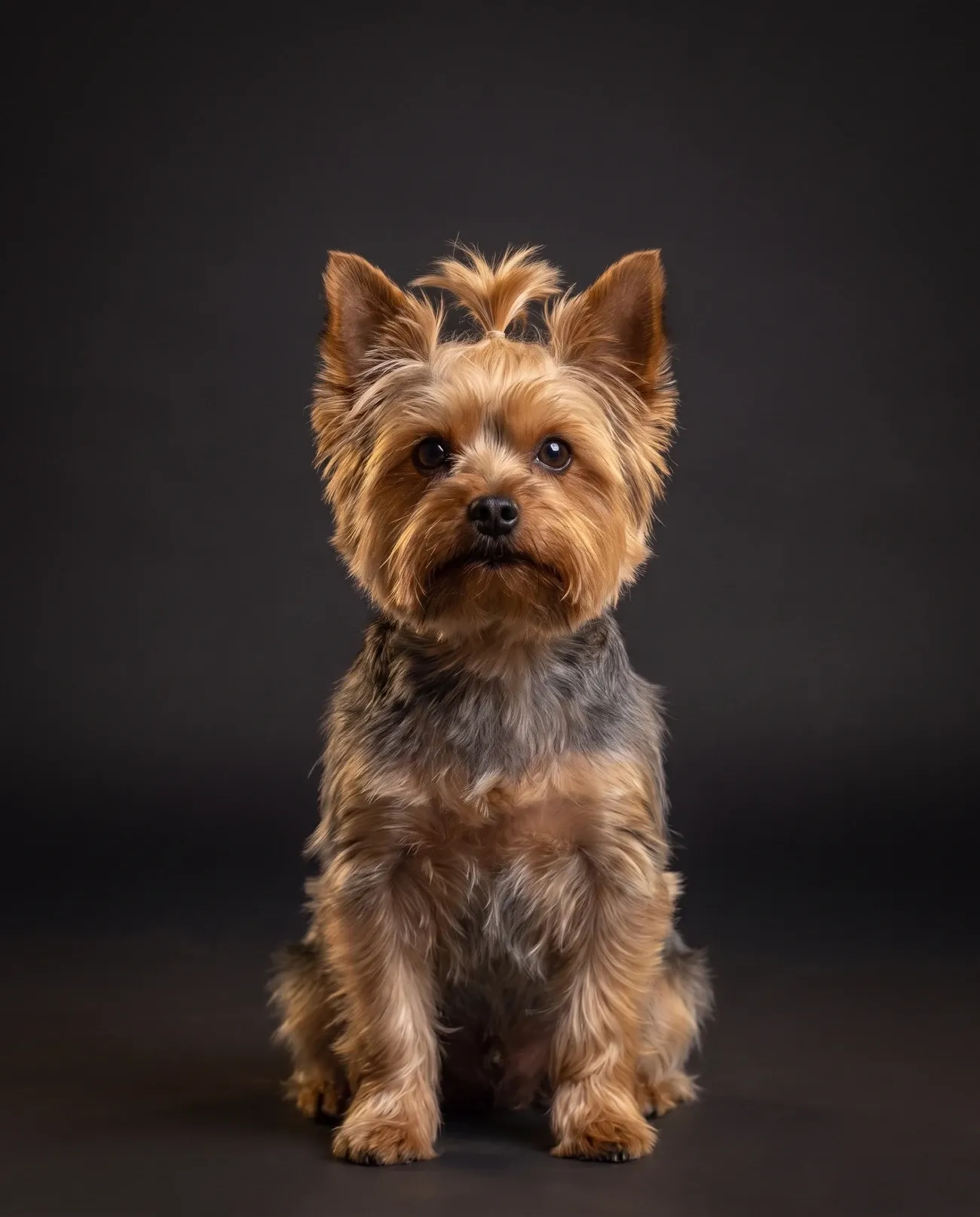
Yorkshire Terrier in Dubai, studio portrait of a steel blue and tan adult with a small top-knot, sitting

Breed guide  ·  Dogs

Yorkshire Terrier

He shakes every new toy until it stops squeaking. I buy the quiet ones now.

Lifespan
13 to 16 years
Size
Small
Weight
Up to 3.2 kg
Shedding
Very low

Last updated 14 October 2026

Join the founding families. AED 1,999 of essential care for AED 199.

No payment now. We'll be in touch by email and WhatsApp as we open enrolment.

✓
Thank you.

We will be in touch soon to confirm.

Yorkie traits

What they brought with them.

Tap a card to see what is going on.

Yorkshire Terrier in Dubai, an adult on a high balcony watching a pigeon on the glass railing, the skyline beyond

At home

Why does my Yorkie chase everything?

Fixed on the geckos on the wall, the pigeons on the balcony and the cats in the car park.

What's going onYorkies were bred to kill rats in Yorkshire mills, and the geckos and the cats set off the same drive. Keep them on a lead near cats and roads, and give them a toy to chase at home.
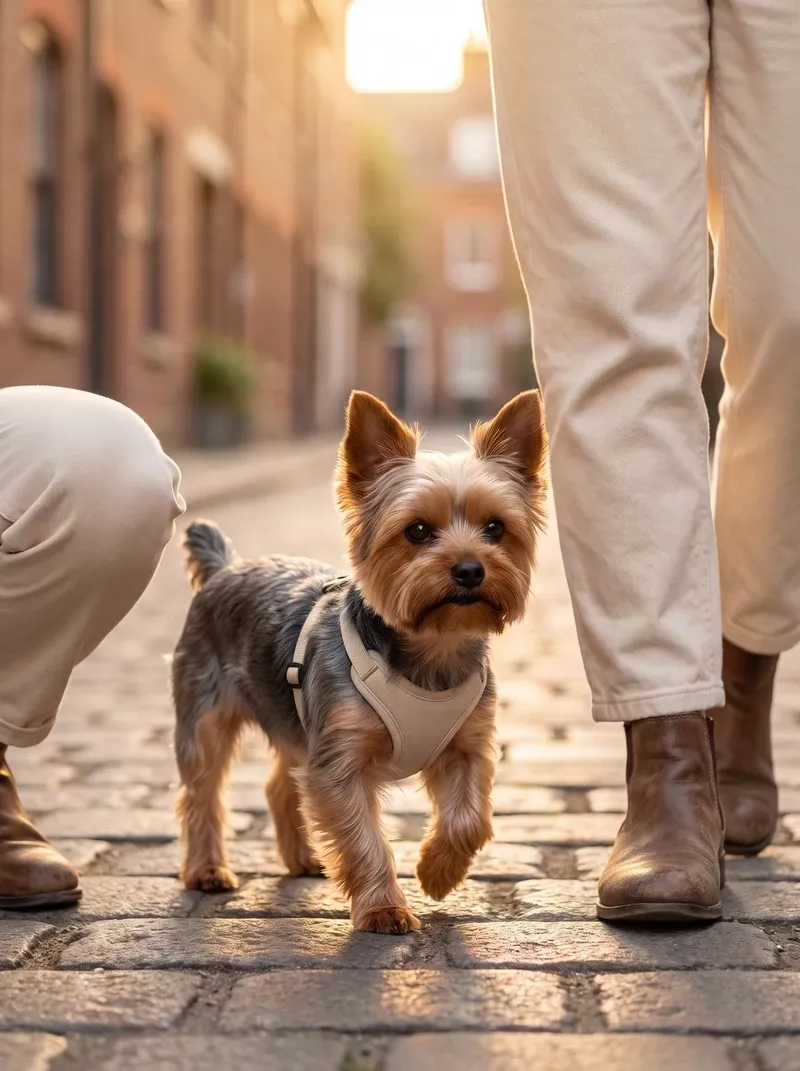
Yorkshire Terrier, an adult in a cream harness walking beside a pet parent on a cobbled street

At home

Why does my Yorkie honk like a goose?

A honking cough when they pull on the lead, get excited or have a drink.

What's going onTracheal Collapse (a weak windpipe) is on their health record. A collar presses on it every time they pull, so walk them on a harness and tell your vet about the honk.

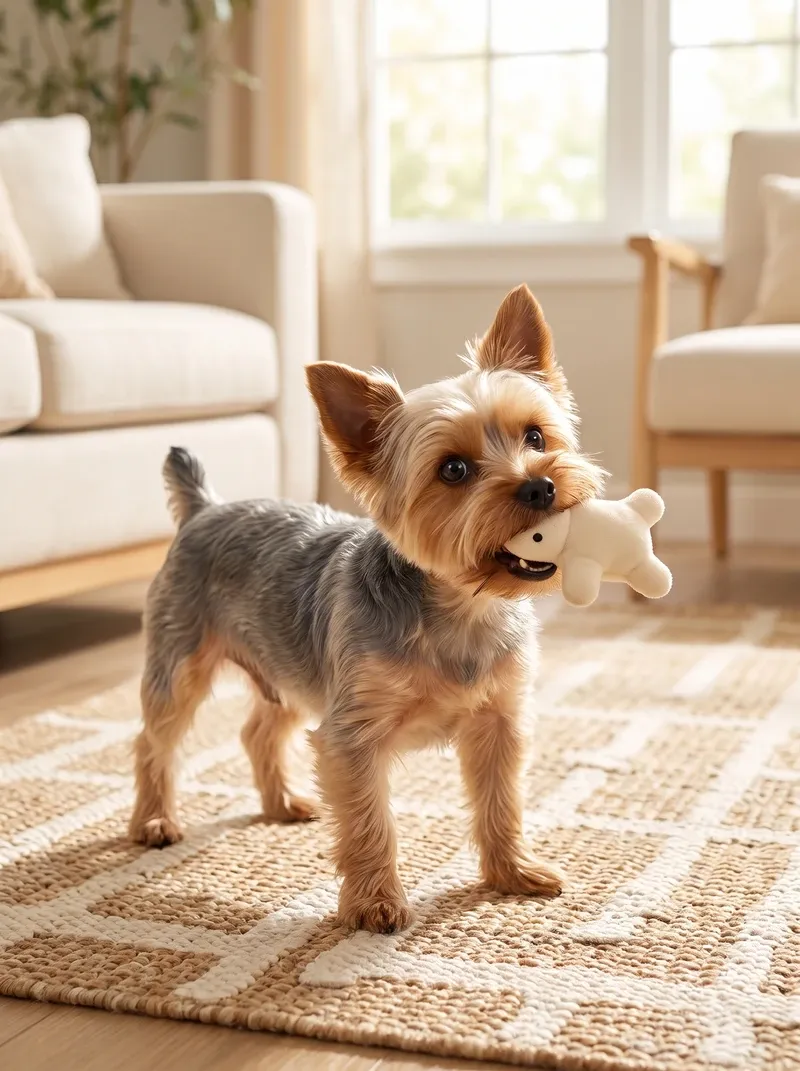
Yorkshire Terrier, a silver and gold adult carrying a soft toy across a woven rug

At home

They shake every toy until it goes quiet

A squeaky toy gets shaken until it stops squeaking, then taken apart.

What's going onThe grab and the shake are how a ratter finished the job. Give it somewhere safe to go every day: a chase game with you, and sturdy toys that are theirs.

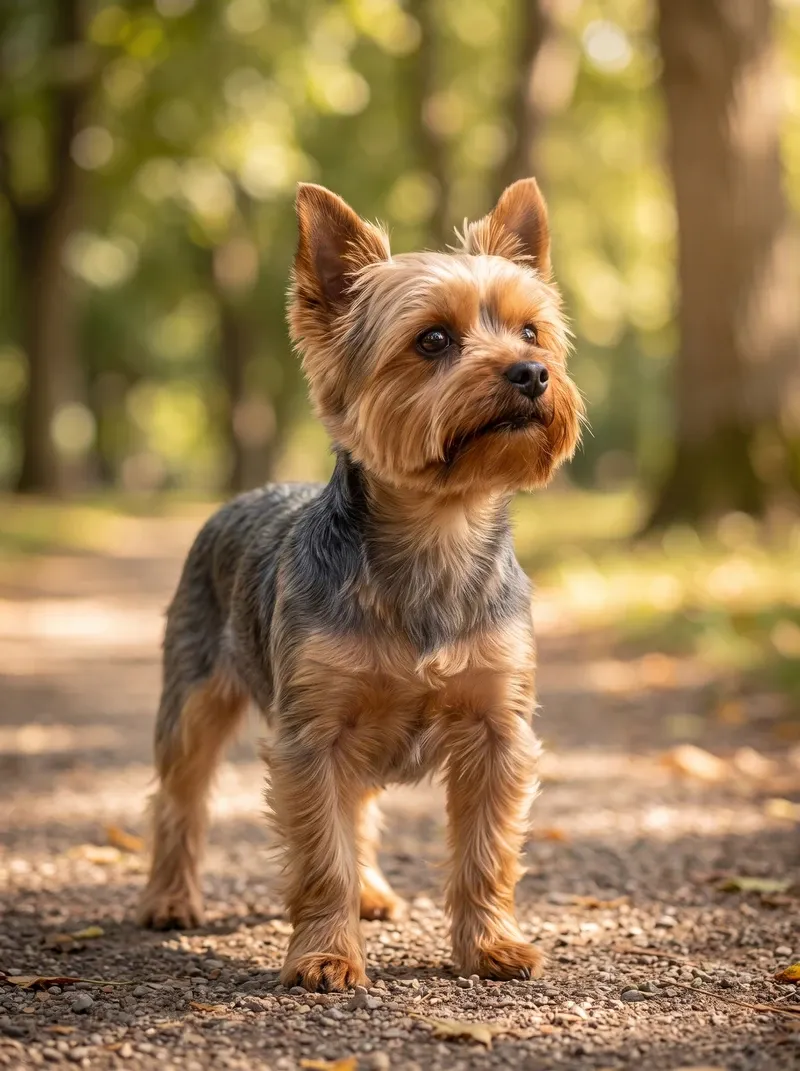
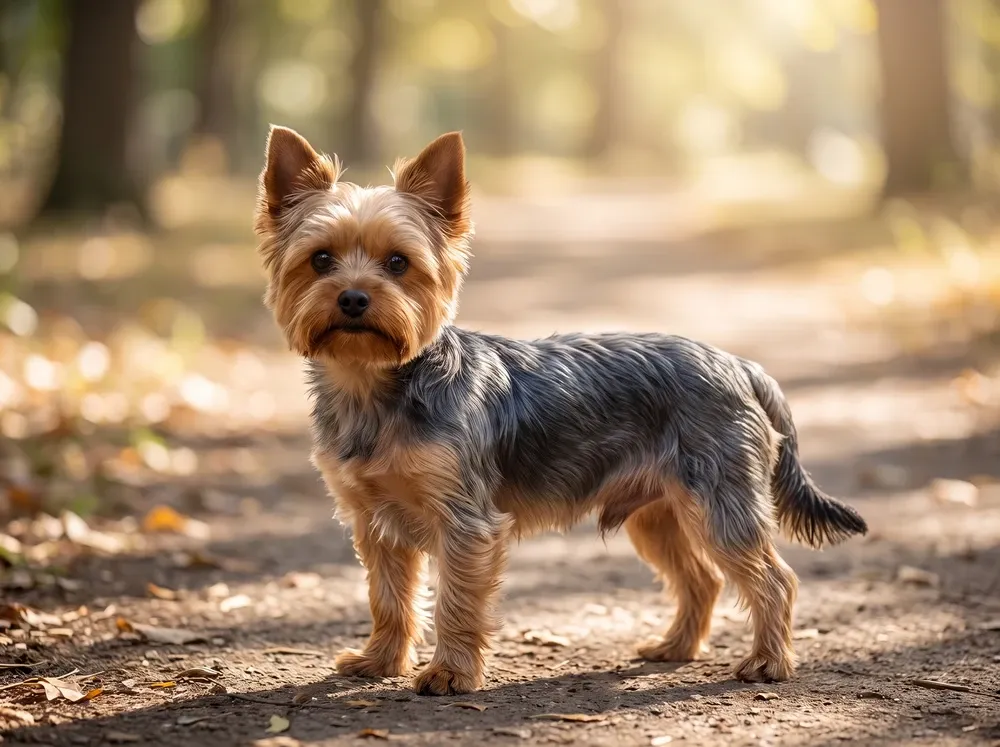
Yorkshire Terrier, an adult standing tall on a shaded park path, head up and alert

At home

They square up to the Great Dane downstairs

They face up to dogs many times their size, and take offence at dogs who stare.

What's going onThey were bred to face a rat in the dark and not back off, and they do not judge size. A big dog can hurt them in play without meaning to. Choose their friends and keep hellos short.

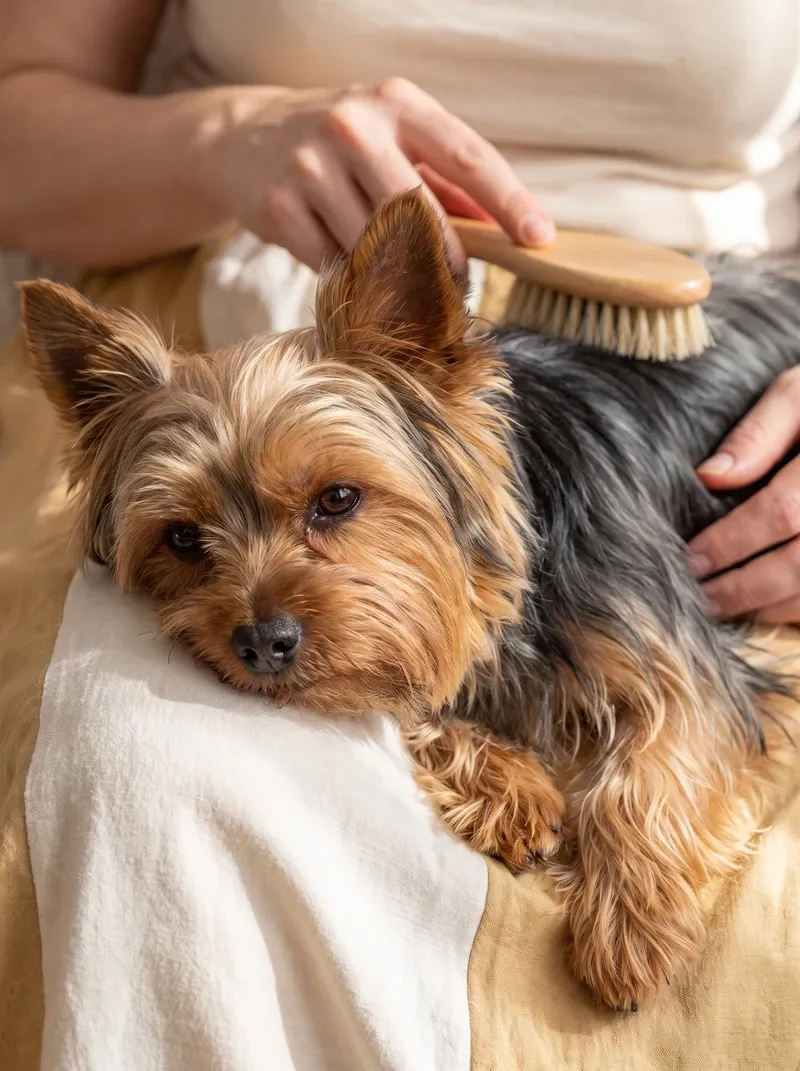
Yorkshire Terrier, an adult lying on a pet parent's lap while the long coat is brushed

At home

Why does a Yorkie need so much grooming?

A long, silky coat that tangles fast, and knots behind the ears if you miss a few days.

What's going onTheir coat grows like hair, not fur. Brush it through several times a week and keep it cut for the heat. Mats pull at the skin and hide what is underneath.

Yorkshire Terrier, a happy adult trotting across a pale wooden floor, one paw lifted

At home

Why does my Yorkie skip on a back leg?

A hop on a back leg for a step or two, then off they trot as if nothing happened.

What's going onIt can be a kneecap slipping out and back in. Yorkies carry on, so the skip may be all you see. Mention it to your vet rather than waiting for a limp.

A Yorkie in Dubai

The bit nobody tells you.

Their work

Built for: Killing rats in a mill.

In Dubai: Carried more than they walk.

Their size

Built for: A ratter, bred down to lap size.

In Dubai: Often treated as a lap dog first.

Their neck

Built for: A weak windpipe.

In Dubai: Often a collar that presses on it.

The barking, the bossiness with big dogs and the chewed-up toys mostly come from a ratter with no job to do.

You cannot give them a mill full of rats. You can give them a job, and the ten things below are how.

Your plan is built around their breed: the risks on a Yorkshire Terrier's record at every age, and the care that goes with each one.

Join the founding families. AED 1,999 of essential care for AED 199.

Daily care for a Yorkie

Ten things that make their life better.

Many of them are free, and most matter at every age.

  1. They will dig at the sofa either way. A place where digging is allowed saves the cushions.

    Every age, most of all 6 months to 2 years

    Under AED 150, once

    Why

    They will dig at the sofa either way. A place where digging is allowed saves the cushions.

    What to do

    Fill a shallow box with old towels or a snuffle mat, or a tub of play sand on the balcony. Hide part of their food in it while they watch, and let them dig it out. When they dig anywhere else, take them to their spot.

  2. Once they see a cat, they stop hearing you, and they are small enough to be hurt by one.

    Every age, most of all 6 months to 2 years

    Under AED 100

    Why

    Once they see a cat, they stop hearing you, and they are small enough to be hurt by one.

    What to do

    Keep them on a lead, clipped to a harness, anywhere cats or birds gather. Practise recall on a five to ten metre long line in a quiet, fenced place, and keep the lead on near roads until recall works when a cat runs.

  3. A ratter who gets to chase and shake something with you is calmer everywhere else.

    Every age

    Under AED 100

    Why

    A ratter who gets to chase and shake something with you is calmer everywhere else.

    What to do

    Drag a small, soft toy along a rug and let them pounce and shake it. Let them win sometimes. Teach "drop" by swapping the toy for a treat. Keep a puppy's games short and on a soft floor, and an older dog's slower and lower.

  4. Barking was part of the job, and shouting back sounds like joining in.

    Every age, most of all under 2 years

    Free

    Why

    Barking was part of the job, and shouting back sounds like joining in.

    What to do

    Let them bark twice at the door, say "thank you" calmly, call them to you and reward them. Close the curtains on the view they bark at most, and give them a chew when a delivery is due. New barking in an older dog, or barking at nothing, is worth telling your vet about.

  5. They will take on any dog, and a big one can hurt them in play without meaning to.

    Every age, most of all under 2 years

    Free

    Why

    They will take on any dog, and a big one can hurt them in play without meaning to.

    What to do

    Keep hellos with strange dogs to three seconds, then walk on. Lift them out of the way of boisterous dogs. Meet a few small, calm dogs often, and skip the busy dog park at peak time.

  6. Small dogs learn just as fast as big ones, and Yorkies learn fastest when it pays.

    Every age, most of all 6 months to 2 years

    Free

    Why

    Small dogs learn just as fast as big ones, and Yorkies learn fastest when it pays.

    What to do

    Three to five minutes, two or three times a day, paid with part of their daily food. Stop while they are still keen. Teach recall, "drop" and a cue for being picked up.

  7. A collar presses on a weak windpipe, and they walk close to the hot pavement.

    Every age, most of all puppies and from 7 years

    Under AED 150 for a harness, A groomer at Dubai rates

    Why

    A collar presses on a weak windpipe, and they walk close to the hot pavement.

    What to do

    Clip the lead to a harness. From May to September, walk before sunrise and after dark. Put the back of your hand on the pavement for five seconds: if you cannot keep it there, they cannot walk on it. Keep their coat brushed and cut short for summer.

  8. Crowded teeth and dental disease are on their health record at every age, and they are the number one risk.

    Every age

    Under AED 60 for a brush and toothpasteIn your plan

    Why

    Crowded teeth and dental disease are on their health record at every age, and they are the number one risk.

    What to do

    Brush once a day with a small, soft brush and dog toothpaste. Start with a few seconds and a reward, and build up. Watch for baby teeth that stay put once the adult ones come in, and mention them to your vet. A professional dental clean every 6 to 12 months is in your plan from six months old.

  9. A slipping kneecap is on their record from puppy to prime adult, and a hip problem called Legg-Calvé-Perthes Disease (loss of blood supply to the top of the thigh bone) from 4 years.

    Every age, most of all 6 months to 2 years

    Free to AED 500 for rugs and a stepIn your plan

    Why

    A slipping kneecap is on their record from puppy to prime adult, and a hip problem called Legg-Calvé-Perthes Disease (loss of blood supply to the top of the thigh bone) from 4 years.

    What to do

    Rugs on marble, a step up to the sofa and the bed, and lift them down rather than letting them jump. Keep them lean. If a limp does not pass, tell your vet. An orthopaedic evaluation (a joint and bone exam) is in your plan every year from age two to four.

  10. Skin allergies are on their record from 4 years, and their coat hides a lot.

    Every age, weekly from puppyhood

    FreeIn your plan

    Why

    Skin allergies are on their record from 4 years, and their coat hides a lot.

    What to do

    Part their coat and look at the skin, check between their toes and feel for lumps. Weigh them once a month, because extra weight makes their windpipe and knees worse. Tell your vet about any new lump the same week you find it.

Three of these are in your plan. The rest you can do at home.

Join the founding families. AED 1,999 of essential care for AED 199.

Yorkie health by age

Their health, at every age.

In a Yorkshire Terrier, a honk on the lead, a skip in their step or a shaky puppy is often the first sign that something is wrong. Choose their age to see what to watch for, and the care that goes with it.

Yorkshire Terrier, an older dog with a greying face resting on a soft bed

How old are they?

Their age

Yorkie Puppy health

the first six months

What to watch for

  1. Retained deciduous teeth, malocclusion (teeth that do not meet properly) or early dental crowding
  2. Developmental or early clinical signs of Patellar Luxation (PL, slipping kneecap)
  3. Early or congenital expression of Tracheal Collapse (TC, weak windpipe)
  4. Early or congenital expression of Hypoglycaemia (low blood sugar)
  5. Early or congenital expression of Portosystemic Shunt (a liver shunt, where blood bypasses the liver)

The care that goes with it

  1. Core vaccinations, microchip and Dubai Municipality registration
  2. Deworming, and flea and tick prevention
  3. Growth and nutritional evaluation, and early socialisation
  4. Dental and periodontal disease (gum disease) screening, as a first baseline
  5. Early follow-up for any signs of Patellar Luxation (PL, slipping kneecap)
The full care detail
  • Core vaccination programme, microchipping and Dubai Municipality registration. Titre testing discussion where clinically appropriate; not a substitute for completing the core vaccine series
  • Deworming and external parasite prevention tailored to Dubai exposure
  • Body Condition Score (BCS, a check on whether they are the right weight), Muscle Condition Score (MCS, a check on their muscle), dental, growth and nutritional evaluation, and early socialisation
  • Baseline screening focused on Dental Disease / Periodontal Disease
  • Early diagnostic follow-up for signs suggestive of Patellar Luxation (PL)

Their age

Yorkie Juvenile health

6 months to 2 years

What to watch for

  1. Early periodontal disease (gum disease) and dental crowding
  2. Emerging Patellar Luxation (PL, slipping kneecap) with exercise intolerance or lameness
  3. Young-dog presentation of Tracheal Collapse (TC, weak windpipe)
  4. Young-dog presentation of Hypoglycaemia (low blood sugar)
  5. Young-dog presentation of Portosystemic Shunt (a liver shunt, where blood bypasses the liver)

The care that goes with it

  1. Daily tooth brushing, and a professional dental clean every 6 to 12 months
  2. A harness, never a neck collar, to protect the windpipe
  3. Neutering or spaying, timed for a small breed
  4. Three or four small meals a day, to keep blood sugar steady, with tiredness and trembling as the warning signs
  5. A cough that keeps coming back fully investigated, rather than assumed to be Tracheal Collapse (TC, weak windpipe)
The full care detail
  • Daily dental brushing; professional cleaning every 6-12 months, dental disease is the number one health risk
  • Use a harness, never a neck collar, to protect against Tracheal Collapse (TC)
  • Neuter/spay timing discussion that accounts for small-breed growth and disease risk
  • Feed 3-4 small meals daily to prevent hypoglycaemia; monitor for lethargy and trembling as warning signs
  • Investigate recurrent signs rather than repeatedly treating presumed TC

Their age

Yorkie Young Adult health

2 to 4 years

What to watch for

  1. Dental Disease / Periodontal Disease (gum disease)
  2. Patellar Luxation (PL, slipping kneecap)
  3. Tracheal Collapse (TC, weak windpipe)
  4. Hypoglycaemia (low blood sugar)
  5. Portosystemic Shunt (a liver shunt, where blood bypasses the liver)

The care that goes with it

  1. Daily tooth brushing, and a professional dental clean every 6 to 12 months
  2. A harness, never a neck collar, to protect the windpipe
  3. Three or four small meals a day, to keep blood sugar steady
  4. Annual orthopaedic evaluation (joint and bone exam), to grade the kneecaps and plan their care
  5. A liver blood test called bile acids, if they grow slowly, vomit, or show signs in their nerves and brain
The full care detail
  • Daily dental brushing; professional cleaning every 6-12 months, dental disease is the number one health risk
  • Use a harness, never a neck collar, to protect against Tracheal Collapse (TC)
  • Feed 3-4 small meals daily to prevent hypoglycaemia; monitor for lethargy and trembling as warning signs
  • Annual orthopaedic evaluation to assess Patellar Luxation (PL) grade and plan management strategy
  • Liver function screening (bile acids) if stunted growth, vomiting, or neurological signs are present

Their age

Yorkie Prime Adult health

4 to 7 years

What to watch for

  1. Dental Disease (Advanced)
  2. Tracheal Collapse (TC, weak windpipe), Progressive
  3. Legg-Calvé-Perthes Disease (loss of blood supply to the top of the thigh bone)
  4. Patellar Luxation (PL, slipping kneecap), Progressive
  5. Allergies / Skin Conditions

The care that goes with it

  1. Annual dental X-rays, and damaged teeth removed before infection spreads to the jaw
  2. Tracheal Collapse (TC, weak windpipe) management: weight control, a harness, and medicines for the cough and inflammation
  3. A hip X-ray if they limp, for Legg-Calvé-Perthes Disease, which surgery can cure
  4. A lean, healthy weight: even a little extra makes the windpipe and the joints worse
  5. Finding what sets off their skin, and a limited-ingredient diet if food allergy is suspected
The full care detail
  • Annual dental X-rays; extract compromised teeth before infection spreads to jaw bone
  • Tracheal Collapse (TC) management: cough suppressants, anti-inflammatories, weight management, harness use
  • Legg-Calvé-Perthes screening: hip X-ray if limping observed in young adult; surgical correction is curative
  • Maintain strict healthy weight, even minor obesity dramatically worsens tracheal and orthopaedic conditions
  • Identify skin allergens; transition to limited-ingredient diet if food allergy is suspected

Their age

Yorkie Senior health

7 to 10 years

What to watch for

  1. Mitral Valve Disease (MVD, leaky heart valve)
  2. Dental Disease (Tooth Loss)
  3. Kidney Disease
  4. Tracheal Collapse (TC, weak windpipe), Severe
  5. Arthritis

The care that goes with it

  1. Annual echocardiogram (an ultrasound scan of the heart) from age 7, and heart medication when it is needed
  2. Blood and urine panels twice a year for the kidneys, and a kidney-friendly diet early
  3. A consultation about a tracheal stent if the collapse is severe and medicines are not enough
  4. Joint supplements and gentle, low-impact exercise for arthritis
  5. Dental care kept up for life, because mouth bacteria make heart and kidney disease worse
The full care detail
  • Annual echocardiogram from age 7; cardiac medication when indicated to slow heart disease progression
  • Bi-annual blood and urine panels to monitor kidney function; transition to renal-supportive diet early
  • Tracheal stenting consultation if collapse is severe and medical management is insufficient
  • Joint supplements and gentle, low-impact exercise to manage arthritis without respiratory stress
  • Maintain dental care even in senior years; oral bacteria worsen cardiac and renal disease

Their age

Yorkie Geriatric health

10 years and over

What to watch for

  1. Congestive Heart Failure
  2. Chronic Kidney Disease (CKD, long-term kidney failure), Advanced
  3. Severe Tracheal Collapse (TC, weak windpipe)
  4. Cognitive Dysfunction Syndrome (dementia in older pets)
  5. Cancer

The care that goes with it

  1. Fluid therapy at home for the kidneys, with appetite, drinking and energy watched every day
  2. Quiet days, with as little stress and excitement as possible, to ease their breathing
  3. A calm, familiar home, to support their mind and ease anxiety
  4. Quality-of-life assessments
  5. Palliative care (comfort care), and end-of-life planning with your veterinary team
The full care detail
  • Home fluid therapy for kidney support; monitor appetite, hydration, and energy levels daily
  • Minimise stress and excitement to reduce respiratory episodes in dogs with severe Tracheal Collapse (TC)
  • Maintain calm, familiar environment to support cognitive function and reduce anxiety
  • Quality-of-life assessments
  • Tailored palliative and comfort-focused care plan
  • Compassionate end-of-life planning with your veterinary team

Breed predispositions indicate an increased risk rather than certainty of disease. What is right for them always comes from their own history and an evaluation.

Getting a Yorkie puppy in Dubai

Before they come home.

Yorkshire Terrier, an adult in a short summer cut standing on a shaded park path

Show coat or summer cut

One breed, two looks

Show Yorkies keep the long, silky coat the breed was first shown in. Most family Yorkies wear it cut short, which is kinder in the Dubai heat. Mini and toy Yorkie are words for the same small breed, not separate types: an adult usually weighs up to 3.2 kg.

Yorkshire Terrier, a black and tan puppy lying on a rug, before the coat turns blue

Colours

Born black and tan, grown into blue

Every Yorkie puppy is born black and tan. As they grow, the black slowly clears to a dark steel blue against the tan, so the puppy you meet is not yet the colour of the dog they will become.

Yorkshire Terrier, a puppy eating from a small ceramic bowl on a kitchen floor

The first six months

Caring for Yorkie puppies

Their vaccinations, microchip and Dubai Municipality registration come first. Feed small meals at set times, because a puppy too excited to eat can run low on blood sugar. If they are weak, trembling or hard to wake, contact your vet now. A puppy who stays smaller than their littermates, vomits often, or seems wobbly or strange may have a liver shunt (Portosystemic Shunt, where blood bypasses the liver): tell your vet.

Puppy health, 0 to 6 months
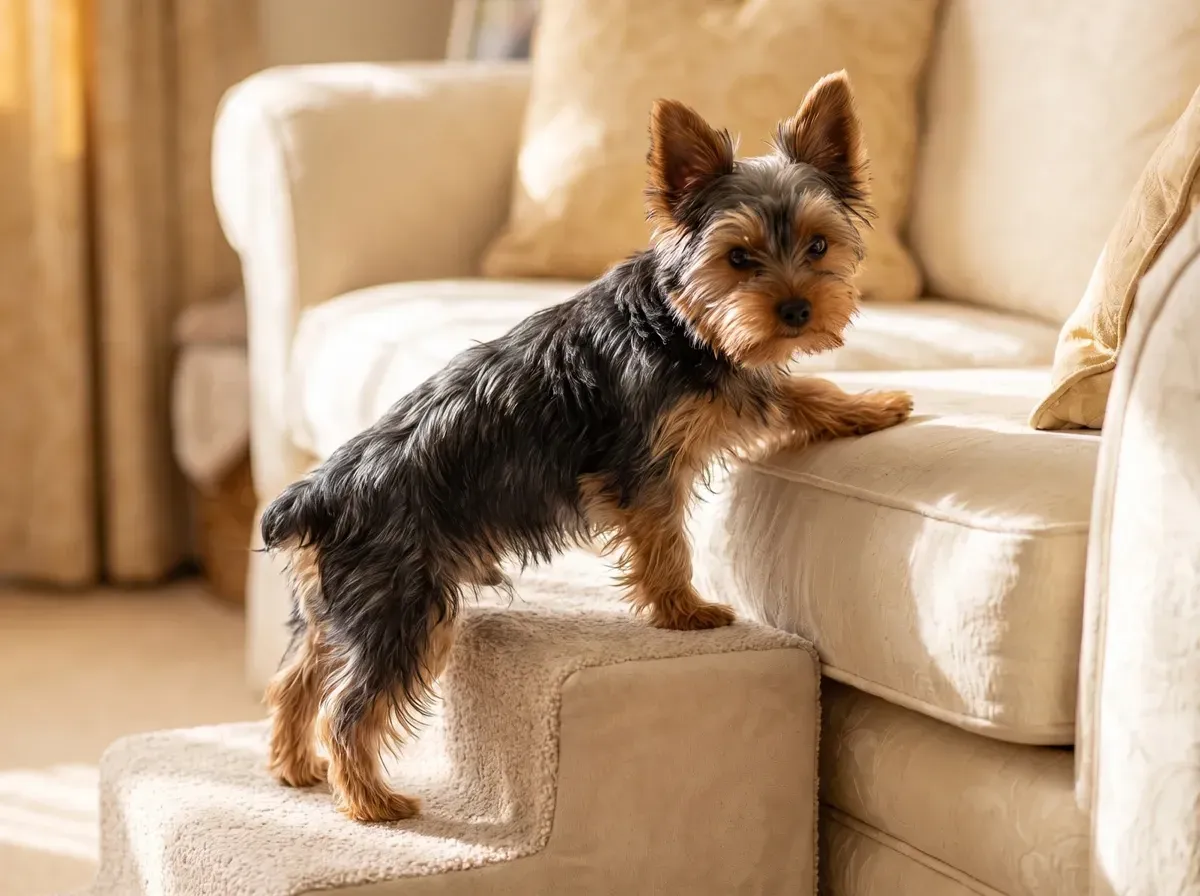
Yorkshire Terrier, a young dog climbing pet steps up to a cream sofa

Getting the flat ready

A harness, a rug and a digging box

Buy a harness, not a collar, put rugs down where they will run on marble, and a step up to the sofa. Set up a digging box with old towels, and the cushions have a better chance.

Ten things that make their life better
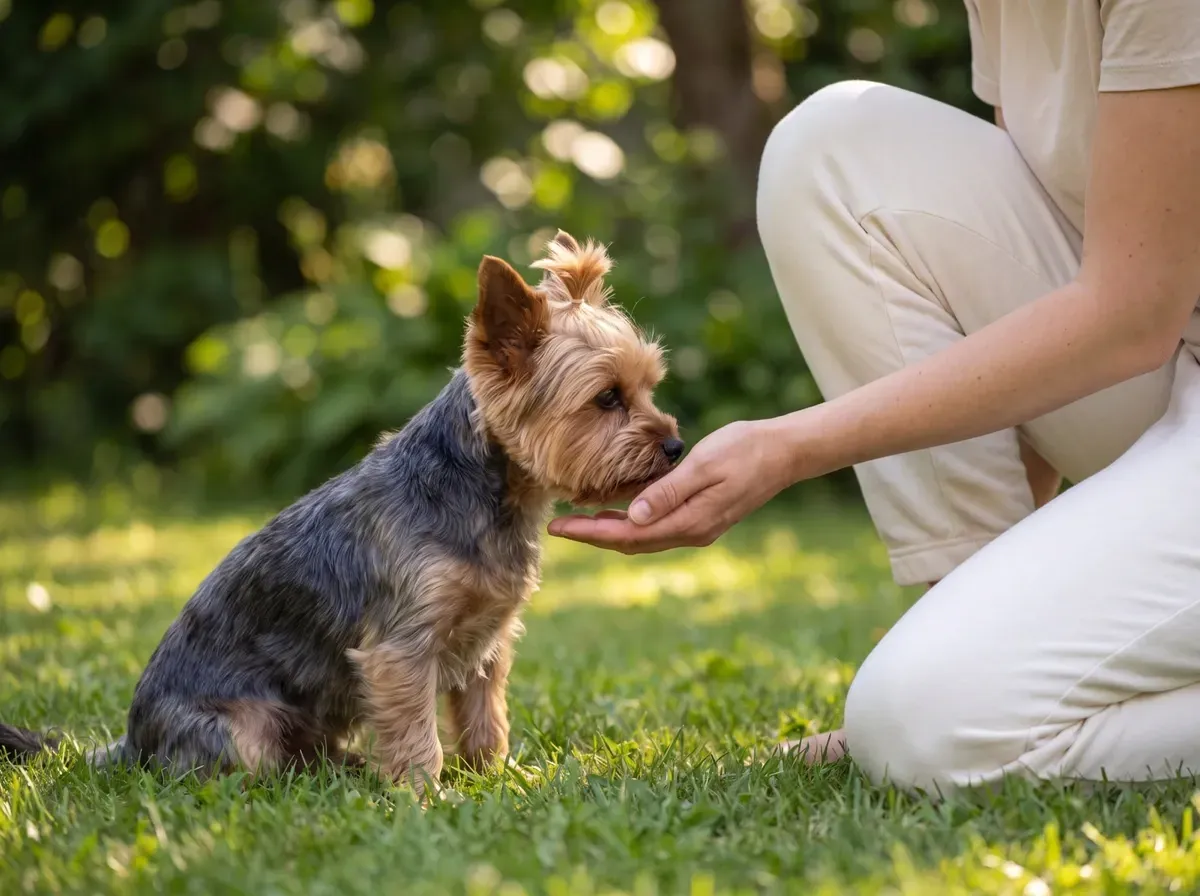
Yorkshire Terrier, a pet parent kneeling on a lawn to offer a hand to a calm adult

Before you commit

Ask about teeth, knees and windpipe

Teeth, knees and the windpipe are the big three on a Yorkie's health record. Ask the breeder what their vet has found in the puppy and both parents, and meet the mother if you can.

The reception of a Paws & Co clinic, with long cream benches and a stone reception desk

Before the clinics open

Join the founding families

AED 1,999 of essential care for AED 199. No payment now.

When to see a vet

When it is not behaviour.

Yorkshire Terrier, a calm adult on the table with a hand from a vet in taupe scrubs on the dog's back

Some of this is not a training problem, and treating it like one wastes time your dog may not have. If they are distressed when you leave, if they growl or guard their food, their toys or you, if they are frightened on the lead, or if anything about them changes suddenly at any age, contact your vet the same day. A tip from a website, ours included, is not the answer. If it cannot wait, contact your nearest emergency vet now.

With a Yorkie, listen to their breathing and watch their energy. A honking cough when they pull or get excited is often their windpipe, not a habit. A young Yorkie who is weak, shaky or hard to wake may have low blood sugar: contact your vet now. Bloat (GDV, a twisted stomach) needs the same speed: a swollen, tight belly, retching with nothing coming up, sudden restlessness or drooling. It can happen in any dog, though it is most common in large, deep-chested breeds. A puppy who stays small, vomits often or seems strange may have a liver problem rather than a delicate stomach.

They'll keep silencing their toys. If their bark turns into a honk, tell your vet.

Yorkie history

Before they were yours.

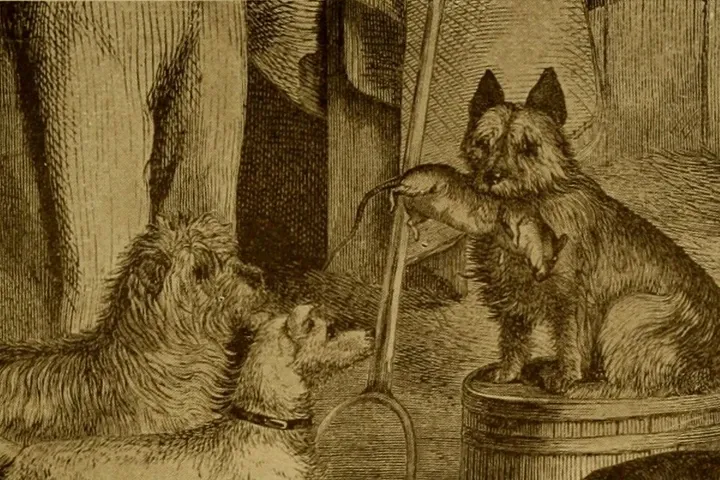
  1. Yorkshire Terrier history, an engraving of working terriers, one standing on a barrel, The Dog Book, 1906
    Terriers of the 1800s, from The Dog Book by James Watson, 1906.

    The 1800s

    The mills of Yorkshire

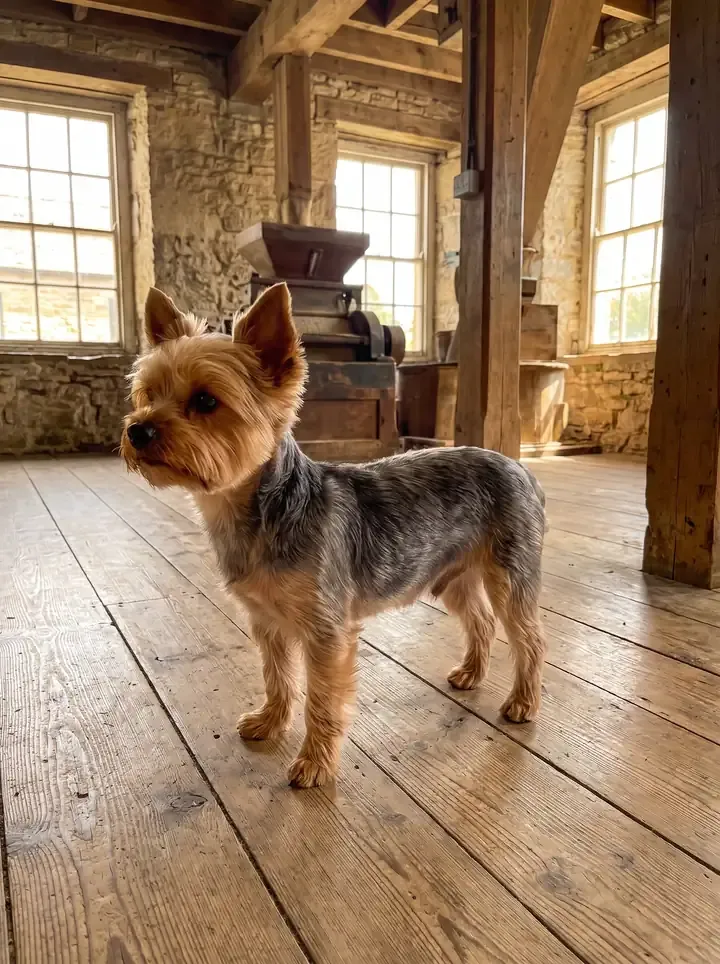
    Yorkies were working dogs first, killing rats in the mills and mines of Yorkshire, small enough to get into gaps a bigger dog could not reach.

    What they still carryThe rat-catcher's nerve, the barking, and the shake they give every toy.

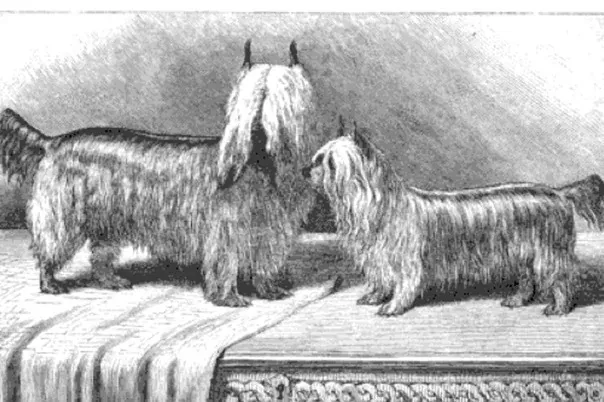
  2. Yorkshire Terrier history, an engraving of Huddersfield Ben and Katie, two long-coated dogs on a table, 1878
    Huddersfield Ben and Katie, from The Dogs of the British Islands by J. H. Walsh, 1878.

    Around 1865

    Huddersfield Ben

    A dog called Huddersfield Ben, born around 1865, is counted as the father of the breed. Ben won prizes at dog shows and in ratting contests.

    What they still carryA show coat on a ratter.

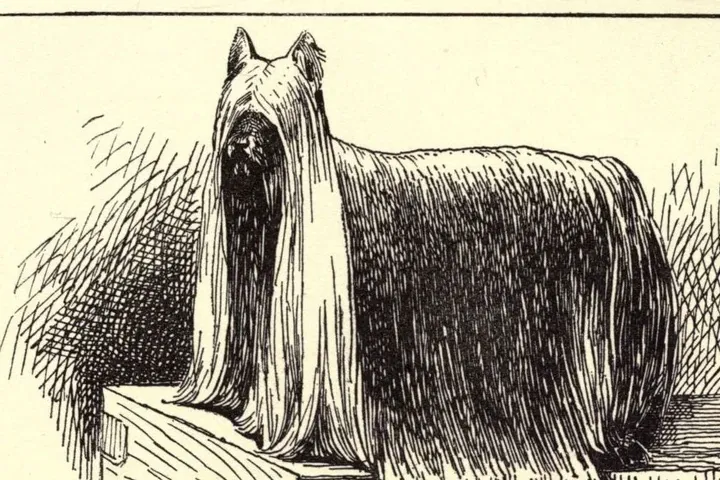
  3. Yorkshire Terrier history, a drawing of Ch. Ashton Queen, a long-coated dog standing on a show box, 1900
    Ch. Ashton Queen, from All About Dogs by R. H. Moore, 1900.

    1885 to 1886

    A name of their own

    The American Kennel Club registered its first Yorkshire Terrier in 1885, and The Kennel Club in the UK recognised the breed in 1886.

    What they still carryA coat that grows like hair, and needs brushing and cutting for life.

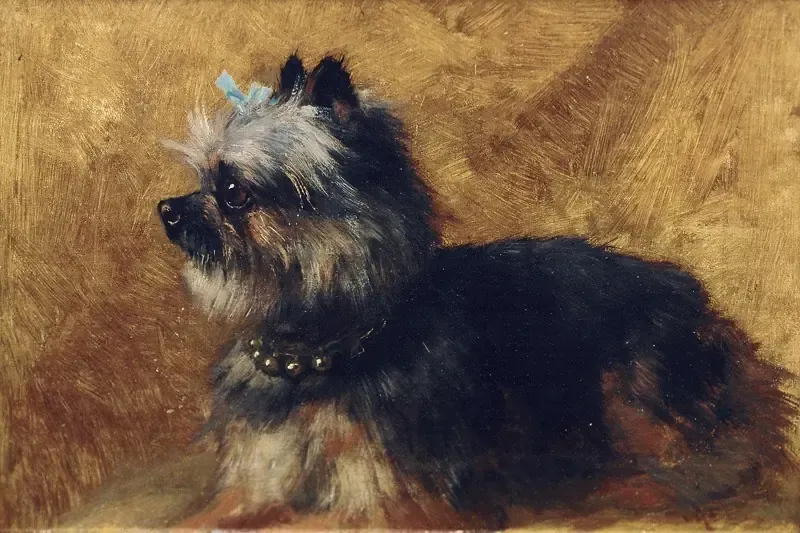
  4. Yorkshire Terrier history, a painting of a dog lying down with a blue bow, Henriette Ronner-Knip, 19th century
    A Yorkshire Terrier, painted by Henriëtte Ronner-Knip, 19th century.

    Late 1800s onwards

    From the mill to the lap

    The Yorkie became a fashionable lap dog in Victorian homes, and was bred smaller over time.

    What they still carryA toy-sized body with the ratter still inside, and the windpipe, knees and teeth that come with the size.

  5. Yorkshire Terrier history, the breed today, an adult in a bright flat watching a gecko on the wall

    Today

    In Dubai

    In the UAE a Yorkie lives in a flat or a villa, often carried through the lobby, still ready to take on anything that moves.

    What they still carryA mill ratter with geckos on the wall and cats in the car park.

Yorkie questions

The ones you type at midnight.

Most of these get asked late at night, by someone watching their dog and not sure what they are seeing.

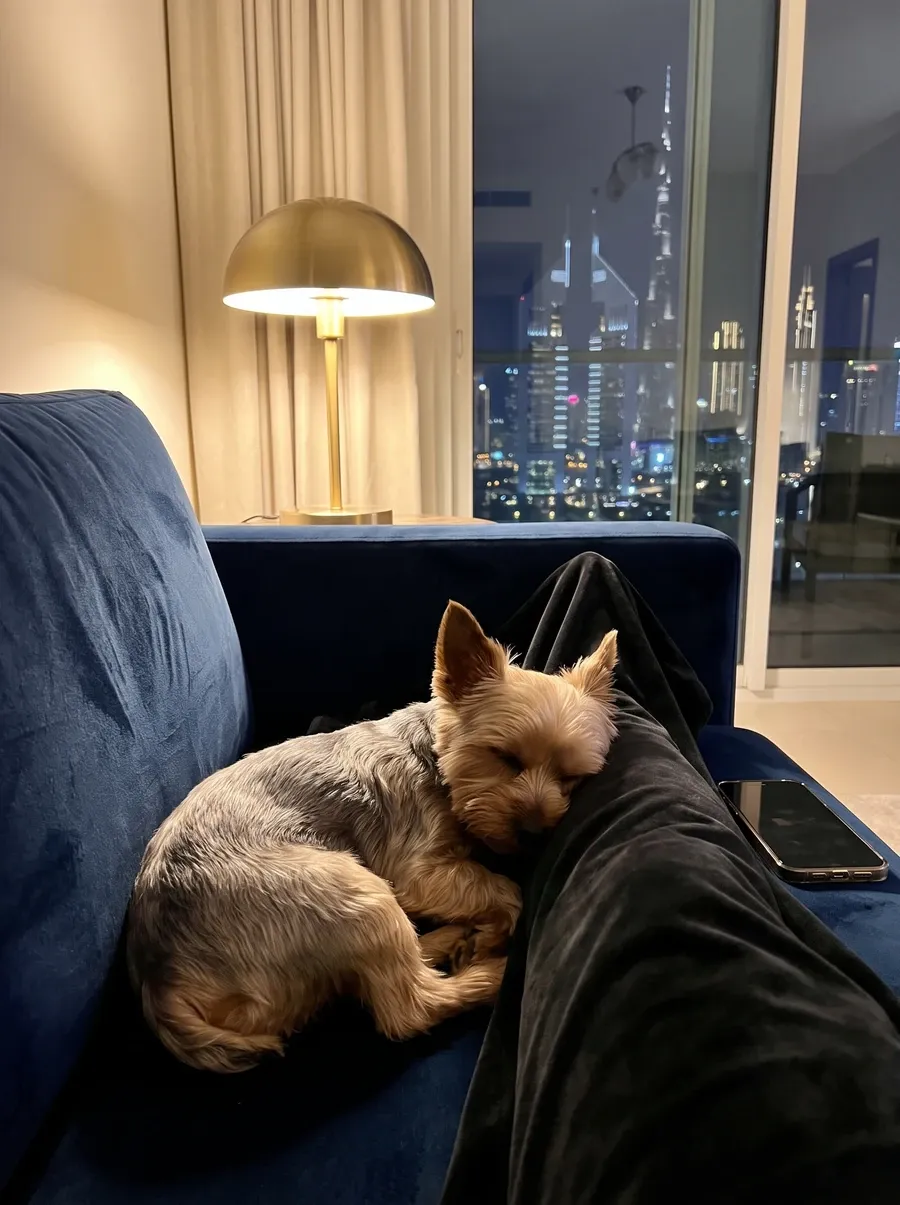
Yorkshire Terrier in Dubai, asleep against a pet parent's leg on the sofa at night, the skyline behind
How long do Yorkshire Terriers live?

Yorkshire Terriers usually live 13 to 16 years. In a UK study of Yorkshire Terriers seen by vets, half lived to around 13 and a half.

How big is a full grown Yorkshire Terrier?

A full grown Yorkshire Terrier usually weighs up to 3.2 kg. At that size, even a little extra weight strains their windpipe and knees.

What is the Yorkshire Terrier temperament like?

Yorkshire Terriers are bold and affectionate, and they stick close to their person. They learn fast but can be stubborn, and meeting plenty of calm people and dogs early keeps the barking in check.

Do Yorkies shed?

Yorkies shed very little, but that long, fine coat needs brushing several times a week to stay free of knots.

What is the best Yorkie haircut for Dubai?

In Dubai, a Yorkie's coat is easiest to live with cut short for summer. Ask your groomer for a cut you can brush through several times a week, because mats pull at the skin and hide what is underneath.

What colour is a Yorkshire Terrier?

An adult Yorkshire Terrier is steel blue and tan. Puppies are born black and tan, and lighten as they grow.

Why does my Yorkie cough like a goose?

A Yorkie who honks like a goose when they pull or get excited may have a weak windpipe, which is on their health record. Walk them on a harness, never a collar, and tell your vet.

Why is my Yorkie puppy shaking?

A Yorkie puppy who is shaky, weak or hard to wake may have low blood sugar: contact your vet now. Small meals at set times keep a young Yorkie steady.

Can a Yorkshire Terrier live in Dubai?

Yes, a Yorkshire Terrier adapts well to flat life in Dubai. From May to September, walk before sunrise and after dark, and keep their coat brushed and cut short for summer.

Worried about them? Contact your vet today.